Home Blog Page 528

SFSS presidents should be focused on their presidencies

0
I’m not angry, I’m just disappointed Photo courtesy of Joshua Davis via Unsplash

By: Nicole Magas, Opinions Editor

Giovanni HoSang’s decision to take a summer co-op at Microsoft’s Seattle office fresh into his first term as the president of the SFSS is a disappointment, sure, but at this point it’s hardly a surprise. After last fall’s presidential impeachment, and the lack of functionality in the SFSS in general, I have more or less stopped being shocked when something goes wrong within the society.

With all due respect to HoSang and the good works he has done with activism on campus, let me say this: he should not have run for president after accepting the co-op. There’s such a thing as having one’s fingers in too many pies. A co-op out of the country and the presidency of the SFSS would seem to be two mutually exclusive roles. Taking on both at the same time was unnecessary and overambitious.

Think about it: these are two very big achievements to have landed at the same time. Now think about who else could have potentially taken one of those positions: someone who might have benefitted from the experience, or someone who could have devoted their full attention to the demands of the job.

Do I blame HoSang for applying for and accepting the Microsoft co-op? No, not at all. It’s a tremendous opportunity and I wish him all success with it. What I do take issue with is him running for president knowing that he would be absent, then making what feels like last-minute contingencies to have his fellow board members pick up the slack.

The situation we have now feels like a betrayal. Still shaken by the controversies of last year’s board, having someone dedicated to student issues take the helm felt like a refreshing new start for the SFSS. HoSang’s remote work feels like more of the same sort of political maneuvering that makes voters so jaded with their leaders that apathy consumes passion.

For the next three months, it seems that the SFSS will be without its president. No one can predict how HoSang’s hopeful arrangement will work out, although it seems likely that, in line with some well-reasoned arguments made at the board table, his conflicting schedules will create undue headaches for his fellow board members. At the very least, we know that the SFSS is capable of functioning without a formal president in emergencies.

If we learned nothing else from last year’s board, it’s that a chicken with its head cut off can run pretty far without crashing into a wall.

Construction on Campus Update

0

Join the Club: SFU Knitting Club

0
Image designed by Joshua Sun

By: Mishaa Khan, Peak Associate

The SFU Knitting Club is a place for all types of knitters, from beginners to advanced crafters, and a frequent collaborator with the Women’s Centre, Health and Counselling and Out on Campus. SFU’s Knitting Club aims to give students a chance to de-stress, knit, and meet new people.  

The Peak conducted an email interview with Jennifer Chou, the founder and president of the club and SFSS Faculty of Arts and Social Sciences representative, to find out more about what SFU’s Knitting Club has to offer.

Chou said she created the club after doing her co-op with SFU Health and Counselling, where she noticed a lot of people were interested in learning how to knit at a table offered in the Creative Collective program. “I thought it’d be a long process, but it was actually pretty easy,” she recounts of her experience getting the club started. She writes “ I also didn’t know that there would be such a huge interest in knitting. I had always wanted to start a knitting club but it wasn’t until I got my co-op position at Health & Counselling that I got that push to.”

Her experience serves as an example to anyone who is interested in starting a club about something that they enjoy or are passionate about instead of waiting around for someone else to do it.

“Knitting was always a hobby of mine so I was really excited to share that and teach other people how to knit too,” Chou says. “I want to give others the opportunity to learn something they’ve always wanted to and to make something they can be proud of.” Chou also cites knitting as her way to de-stress and pass the time (for example, while taking transit) and it gives her a sense of pride.

The club hosts weekly drop-in sessions in the summer semester, where volunteers will be available to teach beginners how to knit as well as provide the materials required. The drop-in sessions alternate between the Surrey and Burnaby campuses. If you’re interested in attending, the confirmed drop-in dates this semester so far are May 23, May 30, June 6, and June 13. To find out more about the timing and location, you can check out their Facebook page.

You can bring your own projects to knit during these drop-in sessions, start a new project, or just practice. If you haven’t completed your project, you can either take it home with you and return the materials on another day or leave your project with the SFU Knitting Club and continue where you left off during the next drop-in session. A few examples of items knitted and crocheted during the drop-in sessions are shawls, stuffed animals, scarves, roses, mats, and rectangles.

Currently, the SFU Knitting Club is working on an exciting project where they will be partnering with The Door Is Open, provides a range of services and referrals in the Downtown Eastside, to distribute blankets. The club encourages anyone interested to stop by their drop-in sessions and knit a 5-by-5 inch square. These squares will then be sewn together to create blankets. If you can’t make it to any of the drop-in sessions, you can still contribute by making the square and passing it on to one of the club’s executives.

“I would like to also give students the option of donating $2 to have a knit square made in their name (with their initials embroidered on) so that the people who the finished blanket is donated to can see that a lot of people care,” Chou says.  According to the club’s Facebook page,

Over the past year, the club has put on events such as a Semester End Celebration event and a Valentine’s Day fundraiser. At the Semester End Celebration, SFU students, staff, and faculty are given the chance to knit and enjoy some great company and delicious food. For Valentine’s Day, the club sold knitted roses to fundraise for supplies for their club, such as yarn. The roses sold out extremely fast.

Chou expresses the need to recruit more volunteers to make more knitted/crocheted items for fundraisers, so they have adequate amounts of knitted items. She also hopes to expand the number of fundraisers the club holds. Their fundraising table is usually in the AQ.

“I’d love to sell more things like crochet bunnies, whales, bubble teas, carrots, cat hats (hats with cat ears), and so on,” she says. Chou also wants to expand the fundraisers to cover more areas, such as setting up an award or scholarship to highlight how the arts have positively impacted student’s lives.

Chou has many positive experiences volunteering in the club. She shares how one of the volunteers taught her to crochet, something she had always wanted to learn.

“I’ve found that when everyone is focused on a task, there’s less pressure somehow . . . like nobody is looking at you, and everyone’s comfortable in silence because everyone’s focused on knitting,” Chou recounts.

In spite of stereotypes, Chou emphasizes that the Knitting Club is a place for everyone. She expresses happiness that the club helps break stereotypes and proves that knitting is not just a feminine art for old ladies, but a fun hobby that anyone can enjoy.

“It’s also really easy to start a conversation, especially one centred around SFU (‘what’s your major?’) or knitting (‘what do you want to learn how to make?’)” Chou writes, commenting on the social aspect of the club, which presents a great opportunity to meet people from all different majors and areas of study. “It’s really heartwarming to see students who don’t know each other start talking like old friends.” she states.

If you are interested in joining the club, you can reach out to them through their Facebook page “SFU Knitting Club”, Instagram page, or by messaging Jennifer Chou directly.

RATE MY STUDENT

0
Photo curtesy pexels

Written by: Trevor Roberts, Peak Associate

Armin Sidhu – CMPT 371 Ability: 5.0   Teachability: 1.0

EXTREMELY frustrating to deal with, practically skipped EVERY lecture, only attended the midterm and final exam,,, like WTF?! Even after I made SEVERAL posts on Canvas stressing the importance of attendance. Certainly not the attitude I look for in a student!!!

The worst part was that he scored PERFECTLY on every assignment and test. I confronted him after the final to try to explain that his study habits would not get him far, but he seemed to be more concerned with some start-up he was in the process of selling. Would be a better student to have in a smaller class, it’s a shame most kids just don’t have what it takes to be successful.

Tags: Who’s That?, School≠Life, Zero Communication, Perfect Scores, Start-up Prick

Sandra Gomez – ECON 251 Ability: 3.0 -_- Teachability: 4.0  

Where to start…. Sandra is a good student but SO much work. Crazy high energy, will answer every question and ask twice as many. My Week 1 review of the previous course’s material lasted until the midterm because of her constant interruptions. Her final paper was supposed to be 3000 words, and ended up being 47 pages! There is no way to stop her enthusiasm, you can only control it and try to exploit it. In Week 8 I asked a discussion question to the class, walked to Renaissance for a coffee, and came back to her still talking. From Week 9 onwards she brought me a coffee first thing in the morning every class.

Tags: Gift of Gab, Perfect Scores, Get Ready to Read, Teacher’s Pet,


Vicky Zhang – CRIM 409 Ability 5.0 Teachability: 2.0

Interesting to say the least. Extremely knowledgeable, especially on forensic history and murder cases. Had trouble getting along with others in the class, generally very closed off. Wrote a 12-page paper on the Occult, which while extremely well written had little to do with the content of the class. When I asked what she was planning on doing with her degree she just laughed maniacally. However, she was one of the few students who was seemingly unaffected by several accidental deaths in the class. In fact her work got better over the course of the semester, so that’s something I guess?

Tags: Should I Be Concerned?, Zero Communication, School≠Life

Andrew Dickerson – BUS 244 Ability: 1.0 Teachability: 1.0  

Absolute nightmare. Attended less than half of the tutorials and lectures, then

tried cheating on the final exam by using a drone to check other students’

answers ????? Was already going to fail, however, as he plagiarized more than half of

his final paper (about 850 of 1500 words), which was copied directly from

Wikipedia with the links still in it. When I met with him to address it, he said

that I could just mark him on the parts that weren’t plagiarized. If by some administrative error you find him in your class, tell your department head to get him out and don’t take no for an answer.

Tags: CHEATER CHEATER PUMPKIN EATER, Who’s That?, Keep Away from Others, Doesn’t Get How School Works

SFU Burnaby’s first honest tour script

1
Photo curtesy of Alis

Written by: Nathaniel Tok, Peak Associate

Remember when you were in your first year staring in wonder at the trash in the reflecting pond as a cheerful tour guide made an obligatory canned joke about illicit activities in the avocado?  Well, now you’re in your sixth year, and the magic is gone, just like the guy you bought your faulty online Mastering Economics password from.

Meanwhile, your parents’ neighbour’s niece’s dog walker is entering SFU to do pre-med/business law with a concentration in Big Data Bioinformatics. Now he wants you to show him around because he missed his official I Am SFU orientation tour.

If you’re ever forced into the position of impromptu tour guide, remember to tell the good and the bad. For example, though SFU has no human nightlife, we do have a telescope to see nightlife in the sky. And the biggest thing to keep in mind? It’s not your job to make these kids depressed; that’s what grade releases are for.

At Student Central:

Welcome to the unofficial SFU tour, kiddo! This is actually the same place that the real SFU tour begins, so you know I am semi-legit.

So, this is Student Central.  In complete honesty, I have no clue what happens in this building. I just come here for microwaves on the second floor, aside from the one time I went to beg the SFU doctor on the floor below for a doctor’s note. I had missed my final because I went to the wrong room. Oops!

Speed-walking past WAC:

Opposite Student Central is SFU’s largest library! W.A.C. Bennett Library—what does it stand for? Fuck, I don’t know, who do you think I am?

Look, after six years at SFU, I still have yet to experience one hour of genuine studying at that place. But if you ever want the rush of the illusion of productivity, pack up every single highlighter and notebook you own and sit at a desk on the 6th floor.


Distasteful gesture towards the SUB

Here is the incomplete Student Union Building. My friends have a bet to see who will be finished here first, me or the SUB!

That was a joke. You’ll understand soon enough. Oh, what’s that? You’re finishing your double major in three years? Yes, great, good for you.


Enter the Academic Quadrangle

Our famous AQ. No, it is not a prison, it only looks like one.

Now if you’ll look to your right, you’ll see one of our biggest lecture halls, C9001. In a marvel of architectural engineering, SFU has managed to cramp the equivalent occupational capacity of a jumbo jet into a room the size of two single-family homes. Also like a jumbo jet, space is at a premium, and you’ll have to trip over everyone when leaving your seat to get out to find a washroom.

At least the AQ has sheltered walkways to every other building in SFU! Be sure to tell your UBC friends that when they talk about how good UBC is.


Take a left to RCB Hall:

Welcome to the home of all the disciplines that SFU didn’t know where to place. If you cannot see any further than one metre ahead of you, there is a reason. The RCB Hall is a visual representation of your second and third year at SFU when you feel lost. Your way forward is dark, and every so often you end up walking into a different major.

Did you like that? Did you enjoy that joke? It was pretty clever… OK.


Here is also where I leave you, as the doors at the end of this hallway leads to the bus loop. That’s literally the brightest part of my day, even though  it’s dark outside for half the year and HOLY SHIT GOD DAMN IT!

It’s snowing again.

Cold Case Files: Where Did the Fucks I Gave Go?

0
Photo curtesy of Wikipedia

Written by: Kelly Chia, Staff Writer

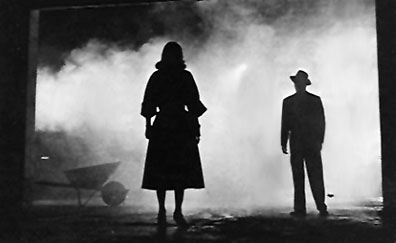
I sighed, placing a stick of scholastic burnout between my teeth and taking a long drag.

I had come a long way from the academic ingenue I used to be. She would scoff at my numbness. I may be the best detective in my field, but as an academic, I find myself unable to process anything longer than 200 words at a time. And yet, some small part of her must be beating in me, urging me to pick up this report again.

The case was the definition of hopeless; it was only a few months old, yet it had already been deemed unsolvable. I scrutinized the profile: the girl on the file was me. Her picture showed a smile so bright that it seared. I held the report and read the familiar bold text: #500, “The Fucks I Gave.”

I cursed under my breath in my cold, concrete crime-solving room. Where indeed my Fucks went, I only wish I knew.

I paced, nervous and insistent. My designated crime-solving room, the fifth floor of the Bennett Library, was quiet, perfect for my moods. Equally broody students leaning over textbooks judged my pacing as I clutched the report. I told myself that they just could not comprehend how one girl could lose all of her Fucks.

The case report stated that my will to live went missing at 4 a.m, on a cold Sunday morning. The location it was last spotted in? My own bedroom.

I’ve played over the memory a thousand times. I had burst into the room that evening in a cold sweat, but I was too late. The Fucks were gone. The scene of the crime was a disarray of strewn sweaters and empty teacups. I feverishly tossed book after book onto the floor, searching in my closet, under my bed, anywhere.

Nothing.

No Fucks.

I couldn’t even bring myself to care about the midterm I had the next morning.

I remember how it used to be when I was in possession of Fucks to give — I was a somewhat mentally stable student in their first semester. I fondly recalled how I colour-coded my notes, and planned out my outfits… But it was no use. Those Fucks were gone.

Right before they went missing, my Fucks were what kept me going during hard times where I thought I couldn’t write another page in my paper. My Fucks were with me when I tore through those first 20 pages of my readings, only to realize I had 40 more to read. Even then, it wasn’t until I calculated my GPA after the mark I was hoping to get that it completely ghosted me. I felt the emptiness bore in me now as it did then: how on earth would I possibly give a Fuck ever again?

I tried to talk to people about it while we lamented our lack of motivation, but they were ultimately too invested in their Fucks to care about mine. Some said that my Fucks had drifted off down the mountain, melting with the February snow. Others speculated that the self-deprecating language I had seen my fellow students adopt as a coping mechanism had scared my Fucks into accepting mediocrity.

I gulp down another London Fog, the bergamot burned. I held the file tightly because for the first time in months, I had received a promising tip that could clue me to my Fucks’ location: the reality check of the Fall term. I had heard from the anonymous tipper that there was a particularly stern TA that would brush me up to shape. I can only hope that it will be there that I find my Fucks.


Cryptids of SFU

0
Photo curtesy of rolexforums

Written by: Ahmed Ali

Exploratory Journal of Unconfirmed Science  

May 20th of the year 2019

I, Count Henry Hamilton Reginald III, embarked on a bone-chilling adventure into one of the world’s most isolated environments: The Mysterious Mountain of Simon Fraser. As the cryptozoologist spearheading this expedition, I intended to investigate the plethora of monstrous creatures who reside in the foggy shadows, but the cryptids I unveiled were so much more than myth.

Over-Achiever in the Basement

Bootecem Lickatus

Estimated Population: 2 per semester

Danger Level: May attack if it feels it’s study spot is threatened.
Habitat: The William Andrew Cecil Bennett library basement

Creature description: With a diet of mostly coffee with large amounts of sugar, these rare specimens are seen to be constantly reviewing indecipherable lines of chemistry, usually under the inane drive of getting into med school. In the cutthroat, dog-eat-dog world of science, where 40% is the average grade, you may stumble across a creature forced into the complete solitude of endless studying to maintain perfect grades. They have adapted to their no-calorie diet by remaining sedentary, hoarding study rooms for entire semesters, and sulking about on that bottom floor.  

Child
Miniaturium Horrorous

Estimated Population: Unconfirmed  

Danger Level: Unfathomable danger to those who wish to stay in adulthood

Habitat: 5th Floor AQ

Details: According to urban legends (all denounced by the official SFU website), children who become separated from their summer camp groups terrorize students on the fifth floor of the AQ. On nights when a student has found themselves in a dimly lit empty stretch of the AQ, they have turned to see a small, pinnie-wearing child. With a haunted look in their eyes, the child whispers, “I want to be like you when I grow up.” Students who have encountered this creature have said the only course of action is to run away, for if the child touches you, it’s rumoured they take your place as an adult, and you become the ghost.

The Grade Sucker

Evanescet Discipulus

Estimated Population: Uncountable. They keep themselves hidden until it’s too late

Danger Level: Could cause you to lose your mind when you cannot get a hold of them.

Habitat: Not the study room where the whole fucking group agreed to meet, apparently!

Details: One of the rarest specimens to ever supposedly exist, this creature is said to appear once, and only once, when a teacher says to get into groups. It’s said that one will know who this is when they disappear off the face of the earth after the first or second meeting, along with any pencils or notebooks you lent them that will never be returned. While not the most dangerous, they will enrage students and cultivate deep trust issues in humanity that the students will carry long into their future lives. So tread with caution…

Yarn mystery still to be unravelled

0
Image courtesy of flagelknittingfiles.blogspot.com

By: Ana Staskevich, Staff Writer

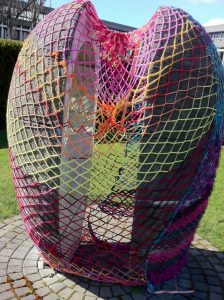
SFU has been a surprising target for quite a few “knit graffiti” pieces. Knit graffiti, also known as yarn bombing, is often described as a new installation of street art. Instead of painting objects, one knits or crochets to create colourful, entertaining displays. This type of art is meant to decorate streetscapes, drawing attention to the aesthetics that can also be used to promote types of activism.

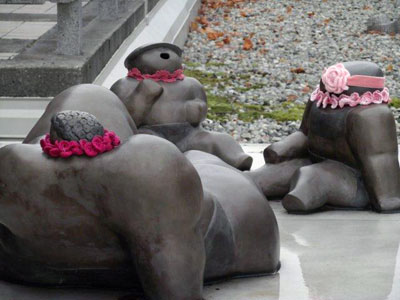
In the recent past, SFU has had a few of its notable art pieces “yarn-bombed,” such as the “On the Beach” statue. The statue definitely benefitted from the bright colors, as the reds and pinks created a fun contrast against the pale texture of the stone. Maybe not the most expected piece to get yarn-bombed, but it was definitely noticeable!

Image courtesy of flagelknittingfiles.blogspot.com

The infamous avocado sculpture also fell victim to yarn bombing years ago, along with the Terry Fox statue in the Academic Quadrangle garden, which sported a crocheted headband for a little while.

As far as we can tell, SFU has been the perfect place for yarn bombers to unleash their creativity. That’s why it was a pleasant surprise to see that in recent months, new yarn-bombing pieces have started popping up all over campus.

Fortunately, we were able to get in contact with the elusive Yarn Bomber that is responsible for these displays. While respecting their anonymity, we decided to conduct an interview to get answers to some of our burning questions.

Q: What gives you inspiration for your projects?

A: Mostly the Internet. Some people undertake incredible yarn-bombing projects, and I find a lot of inspiration in those. When I see certain art pieces at SFU or fixtures that people may ignore, like payphones, I really want to add to them so people are drawn or redrawn to them. There’s a lot of beautiful art at all three SFU campuses, but I feel like people don’t notice it. I want to add something colourful and new to art pieces so that people will notice them, maybe even for the first time. If people are surprised and amused by the yarn bombs, then I think the time I put into them is worth it.

Q: What type of yarn do you use?

A: Acrylic yarn, usually from Michaels.

Q: What got you interested in doing yarn bombing?

A: There’s a free book library near my apartment. One day, I found a book called Yarn Bombing: The Art of Crochet and Knit Graffiti by Mandy Moore and Lianne Prain (who is also an SFU alumna). I had recently learned to crochet, but had never heard of yarn bombing before. The book gave me so many ideas for ways to brighten up different spaces. I immediately thought of SFU Burnaby, and how drab our campus is. I thought it would be cool to bring some colour and life to it.

Q: Any hints for future locations?

A: I haven’t planned any yet, unfortunately. The Terry Fox statue has been on my bucket list for a while, but I know other people love to dress him up already. I might bring some yarn graffiti to the Burnaby campus bus loops and other art pieces on campus.

The identity of this secret Yarn Bomber remains a mystery, and it goes without saying that we may never find out. However, that shouldn’t stop us from enjoying their masterpieces and anticipating their future creations!

There are quite a few yarn-bombing sites still around, and we encourage you to check them out for yourselves! One of the crochet displays is located on the payphone in MBC, and the other one is located on the payphone in the AQ, right by Mackenzie Cafe.

Ranking Indoor Study Spaces

0
Image courtesy of Kitty Cheung

By: Kitty Cheung, Staff Writer

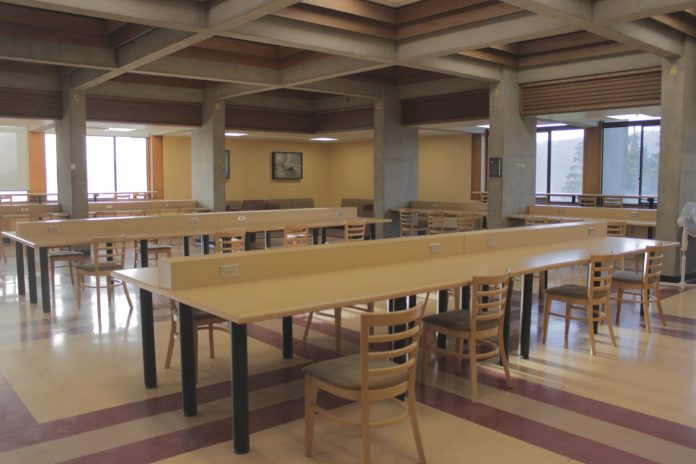
#1: WAC Bennett Library, sixth floor

  • Available seating and table space – 4/5 notebooks
  • Access to gendered washrooms – 4/5 notebooks
  • Access to gender inclusive washrooms – 3/5 notebooks
  • Traffic and construction noise – 5/5 notebooks
  • Comfort – 4/5 notebooks

If you’re anything like me, your dream work environment is a J.D. Salinger-worthy reclusive hangout. To avoid the most people while still maintaining good lighting, check out an individual table on the sixth floor of the library for a quiet, comfortable space.

*Gender neutral / wheelchair accessible washrooms are available on the first and seventh floors.

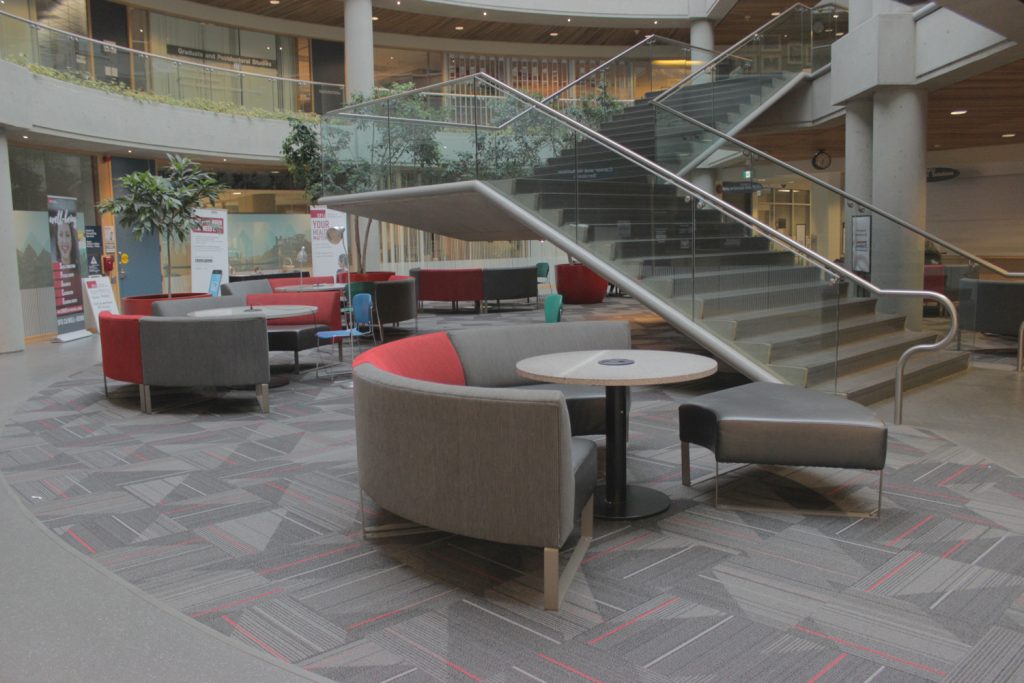
#2: Maggie Benston Centre (MBC) — bottom floor

Image courtesy of Kitty Cheung
  • Available seating and table space — 3.5/5 notebooks
  • Access to gendered washrooms — 4/5 notebooks
  • Access to gender inclusive washrooms – 4/5 notebooks
  • Traffic and construction noise — 4/5 notebooks
  • Comfort — 4/5 notebooks

During the day, the massive glass ceiling of Maggie Benston lets daylight reach even into the deepest crevices of this space. Once it gets darker, this area is also equipped with lamps which provide adequate lighting, even though they may cast harsh shadows on the pages of your textbook.

* Gender neutral / wheelchair accessible washrooms are available on all floors of MBC.

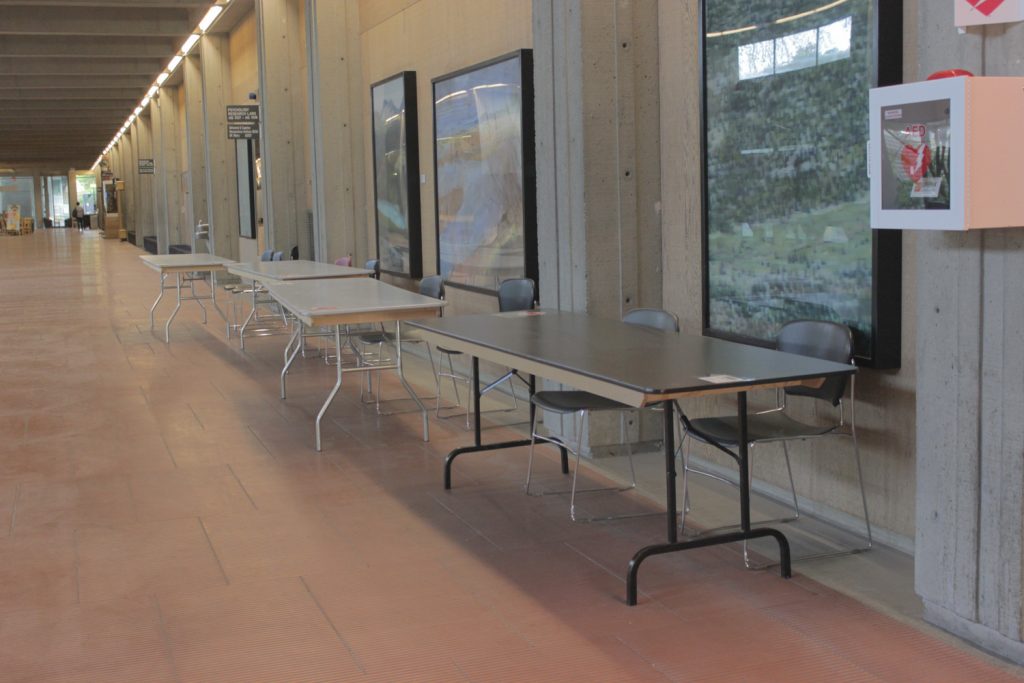
#3: Academic Quadrangle (AQ) — foldable tables

Image courtesy of Kitty Cheung
  • Available seating and table space — 3/5 notebooks
  • Access to gendered washrooms — 3.5/5 notebooks
  • Access to gender inclusive washrooms – 3/5 notebooks
  • Traffic and construction noise — 2/5 notebooks
  • Comfort — 1/5 notebooks

Lots of foot traffic throughout the AQ hallways makes this space distracting and noisy. The foldable tables and chairs are also as creaky and uncomfortable as a first-time tutorial.

*Gender neutral / wheelchair accessible washrooms are available at various high traffic AQ locations — some washrooms lack automatic doors.

Image courtesy of Kitty Cheung

#4: Academic Quadrangle (AQ) — Southeast Corner outside of Mackenzie Café

  • Available seating and table space — 1.5/5 notebooks
  • Access to gendered washrooms — 3.5/5 notebooks
  • Access to gender inclusive washrooms – 3/5 notebooks
  • Traffic and construction noise — 1/5 notebooks
  • Comfort — 1/5 notebooks

This space is plagued by scaffolding and construction noise. Good luck trying to get work done here as the AQ construction workers above don’t make for great study buddies.

*Gender neutral / wheelchair accessible washrooms are available at various high traffic AQ locations — some washrooms lack automatic doors.

Skoden Festival directors talk reconciliation, community engagement, and the festival’s first year

2
Images Courtesy of Skoden Film Festival and SFU School of Contemporary Arts.

By: Alison Wick, Arts Editor

Skoden is a one day Indigenous Film Festival happening Saturday, June 1 at SFU Woodwards. Skoden, an Indigenous slang term for “let’s go then”, promises to showcase Indigenous filmmaking in BC and to foster conversations about reconciliation and what it really means. In anticipation for their inaugural festival, I interviewed Carr Sappier (Wolastoqiyik) and Grace Mathisen, the festival’s directors and former SFU film students, over email about how the festival got started and why SFU needs it.

Alison Wick: When/how did you come up with the idea of an Indigenous film showcase at SFU? Was there a specific instance that made you realize the need for a showcase like this, or was it always something that you wanted to do?

Carr Sappier: It was something I always wanted to do. I just didn’t know it was going to happen so soon.

Grace Mathisen: It was Carr’s idea. We were studying together for a midterm when they told me about it. At the time, I was president of the Film Student Union, and I asked Carr for ways we could do more for reconciliation which led to a bigger conversation about how to be more proactive.

CS: You have to work actively with the community and involve the local community to practice reconciliation. I specifically remember you (Grace) asking, “What would you do?” and I told you my idea for what would become Skoden and you said, “Let’s do it.”

GM: SCA has an equity committee. I went to one of their meetings and told the faculty Carr’s idea. They were all really responsive to it. When I left the meeting, I texted Carr that it was happening.

CS: We were super surprised! We immediately had a team!

GM: It was crazy how quickly it all came together.

Why do you feel it is important that this is a part of the SCA/SFU and not simply an autonomous event?

CS: Reconciliation is a two-way thing between Indigenous and Non-Indigenous peoples. Our festival is one example of many to practice reconciliation proactively. Being organized by an Indigenous and non-Indigenous student equally, working with the community and involving people of all ages and experiences to be a part of this event. For us, youth plays a big role in this festival so involving them and giving them space in these practices, we ensure that they’re part of the discussions that are happening.

GM: It’s not important that this is part of the SCA/SFU. It’s important that SCA/SFU supports and hosts events such as Skoden. There’s a lack of Indigenous students in SCA, like one or less Indigenous students in the room. A lot of our courses have an Indigenous component and this is supposed to be an institution creating the next generation of artists. What does that mean when there’s such a small representation of Indigenous students in our classrooms?

How did you decide on the festival name (which is perfect by the way), were there other things you were considering?

GM: Coyote Beautiful.

CS: Oh yeah, that’s right! We came up with the logo first.

GM: We both love trickster heroes so the coyote was always there.

CS: We’re both queer, so having a male and female coyote made it two-spirit.

GM: Another option was TIFF (Trickster Indigenous Film Festival) which would’ve been confusing and hilarious.

CS: We ultimately decided on Skoden though because it encapsulated the spirit of our festival best and what we were trying to do.

You have some pretty big names in your program (which is really exciting especially for the first year) so I am curious about the submissions process — did you reach out to specific filmmakers to submit or did they all enter on their own? Were you mostly evaluating films individually or were you thinking about how they could fit into a larger program?

GM: We really have to thank Kathleen Mullen for that one. She is our festival mentor and she got us into contact with a lot of great artists and organizations.

CS: We narrowed down our range of films by having all of the Indigenous Artists be tied to BC in some way.

GM: We took submissions through filmfreeway, too. We made it free to be as inclusive as possible, but then we go over 800 submissions worldwide which was very daunting.

CS: We thought about the essence of Skoden and the qualities of a trickster. Films that embraced being creative, pushing boundaries, and themes of identity. It was also important that even though Indigenous people had to be involved in major creative roles, the films themselves did not have to be about Indigenous issues. When we created the program, we didn’t want to separate the artists by their skill level, like treating youth as a niche category, but interweaving all the films equally.

GM: We ended up separating the two screenings by what was family-friendly and what had mature subject matter.

What have you learned in the process of creating and organizing this festival?

CS: Truly understanding how much work goes into organizing this kind of event. Opening ourselves up to criticism and learning to be vulnerable and leaning on each other.

GM: How to make better spreadsheets on Google. But if I’m being serious, the ethics surrounding my involvement throughout this process and what it meant for Carr and I share this responsibility. Our mentors and professors put a lot of trust in us in regards to making this happen for which we’re very grateful, but has also made the possibility of screwing this up really terrifying. From the very beginning, we’ve had two major goals for Skoden: the first was to celebrate the art of Indigenous filmmakers and performers, the second was to create a safe space for more dialogues to occur surrounding reconciliation. In a way, we made this festival so that we could continue to learn.

CS: I remember Sempulyan (The Elder who will be doing the Land Acknowledgements and facilitating the Witness Ceremony) saying, we’re always going to be striving towards reconciliation. It’s an ongoing process. I’m paraphrasing, but we just have to keep ourselves open to the possibilities of what reconciliation can look like.

Do you plan on continuing the festival annually? If so, what are you hopes and plans for future festivals (if you have some)?

CS: I don’t want to let go of there being a student presence on the organizing committee. We both have plans for our own careers as artists after graduation, but we really want to engage with more students who want to be involved in Skoden and be able to pass those roles down to them.

GM: We’ve discussed this already between us, but there’s no way I’d do it without Carr next year. Not because Carr’s amazing (though they are), but because if I stayed on and Carr didn’t, I’d be colonizing on the issues I came to support. Carr’s from the east coast so they’re not sure if they’re gonna be here next year.

CS: We’ve laid down the foundation and worked out a lot of the kinks, but we’re hoping the committee can get more creative next year and have more resources and connections at their disposal. We want to grow, but we want to be smart about it.

What are you most excited about for the festival this year? What do you want people to take away from the day?

CS: The youth! [To see] their reactions to their films on the screen and [for them to] be able to meet other filmmakers and film students at SFU. If we can help facilitate connections between the youth and people in the industry, we’ve done our job.

GM: Fuck yeah.

Skoden is on June 1 at the Djavad Mowafaghian Cinema in SFU Woodwards. There are two film programs divided based on appropriateness: the family showing at 1 p.m. (Stoodis First) and the adult showing at 4 p.m. (Stoodis Next). Tickets are required for each screening and are being sold through eventbrite on a sliding scale to welcome everyone regardless of funds.

You can read more about the specifics of the festival itself in our preview “Skoden Indigenous Film Festival promises to showcase some of the best in cinema,” which can be found online and in print.