Home Blog Page 475

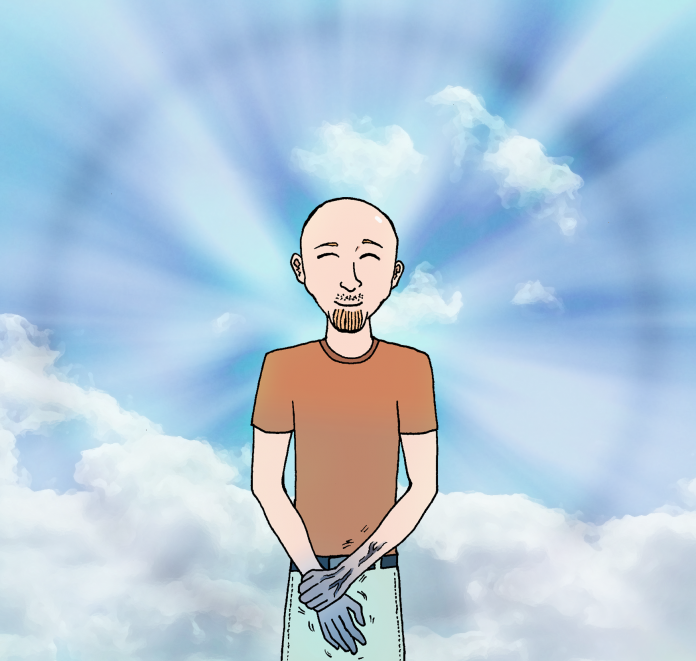
Meet the hero who ascended to godhood after lasting halfway through No Nut November

0

Written by Juztin Bello, Copy Editor

Walking on the moon. Winning consecutive Super Bowls. Letting someone else speak without interrupting. Throughout history, man has made the impossible possible time and time again. But for Ram McCaulkener, the moment of law-defying climax arrived on November 15 — the midway mark of No Nut November. 

Invented by someone with clearly too much time and not enough lube on their hands, No Nut November is a time where men willingly avoid masturbation and sex for a whole month. Though rules have varied by region and federation, most rules allow: boners for no longer than 30 consecutive minutes; one impromptu wet dream; and the viewing of pornography.

As an event that has seen too many men reach a premature completion, McCaulkener’s record-breaking 15-day stint has sparked plenty of attention online, primarily in the very necessary #GuysSupportingGuys Twitter hashtag. The Peak had the opportunity to sit down with McCaulkener to recount his journey from nut to nut-less, starting from his special first time. 

“I started doing it as a joke in high school with some buddies,” McCaulkener recalls. “It seemed kind of stupid at first; I mean, none of us could hold out for very long.” 

This lack of longevity seems to hold true for many men who find themselves thrusted into participating. Men’s Energy And Tonicity claims the first three-day period of this month-long event is the longest and hardest. Unfortunately, MEAT has been unable to provide tips for overcoming this hump, as No Nut November has reportedly beaten MEAT and its staff for countless years.

Despite many failures and a lack of confidence from sources, McCaulkener was not ready to call No Nut November a bust. In third year, a friend of McCaulkener’s challenged him to see who could last the longest.

“My ego refused to let me lose, and I knew what it took to beat him . . . There was no way he would see me coming.” Through a true test of will — which included a hospital visit and a break-up, both due to some literal and metaphorical blue balls — McCaulkener bested his friend by making it to Day 4.

Following his victory and a newfound inspiration, McCaulkener trained tirelessly for the next No Nut November; his regime included wearing a tiny* dog cone for a few hours every night and several attempts at brainwashing himself through self-induced aversion therapy. He had tried to give himself a nut allergy in hopes of making his training easier, but multiple doctors visits and Google searches led him to the conclusion that this was neither the proper route nor humanly possible. 

Riding on this perseverance, McCaulkener entered No Nut November 2019 with confidence.  

“This wasn’t about beating my friends or my meat anymore. This was about proving to myself that I could do what no man has ever done: have the mental, physical, spiritual, and emotional strength to go more than a few days without making the bald man cry.”

No Nut November 2019 started for McCaulkener at exactly 11:59 p.m. on October 31 (Day 0), after what he called “the white storm before the storm.” 

He remembers feeling lightheaded and dizzy on Day 3, his appetite escaping him. 

“I started not being able to look at food the same way,” he states. “I had to throw out all of my grapefruits, and I got rid of all of my oysters so I wouldn’t be tempted to shuck them.”

Things got dicey around Day 6. “My homie bent over in front of me, and it was almost all over from there,” McCaulkener painfully states. At this point, he was also avoiding touching certain fabrics, sitting on certain surfaces, and sleeping. 

By Day 11, McCaulkener was starting to push the boundaries of physics. “There was this thicc-ass tree at the park that had no business being that thicc. Next thing I know, I’m scaling a building to release some very built-up tension.”

Now, having reached the record-breaking Day 15, McCaulkener has ascended into the astral plane.

“I mean, now that I’ve ascended I feel like a whole new man. You know how moms get into those philosophical self-help books like Eat, Pray, Love and they feel enlightened and powerful afterwards? Yeah, I feel that, but like, 100 times better — and I didn’t have to read a stupid book.”

Additionally, McCaulkener has gained a few superhuman abilities. “All of my chakras have been unlocked and it’s really changed things for me. It started with levitation, and then I began moving objects with my mind. I’m like, if you took all of the X-Men together into one guy, and that one guy had all of these superpowers and also didn’t masturbate. That’s basically me now. It’s awesome.” 

Is the end of November it for him? McCaulkener doesn’t know, but he is certain about one thing: he must be the greatest, because no man has ever accomplished this before. And if anything’s going to eventually make him blow his load, it’s that. 

*McCaulkener asked The Peak to note that the use of the word tiny in this instance is used to describe the cone in comparison to the size of standard dog cones. The object with which it is used is not to be associated with the word or implied to be tiny whatsoever.
Your weekly SFU horoscopes: November 18–24

0
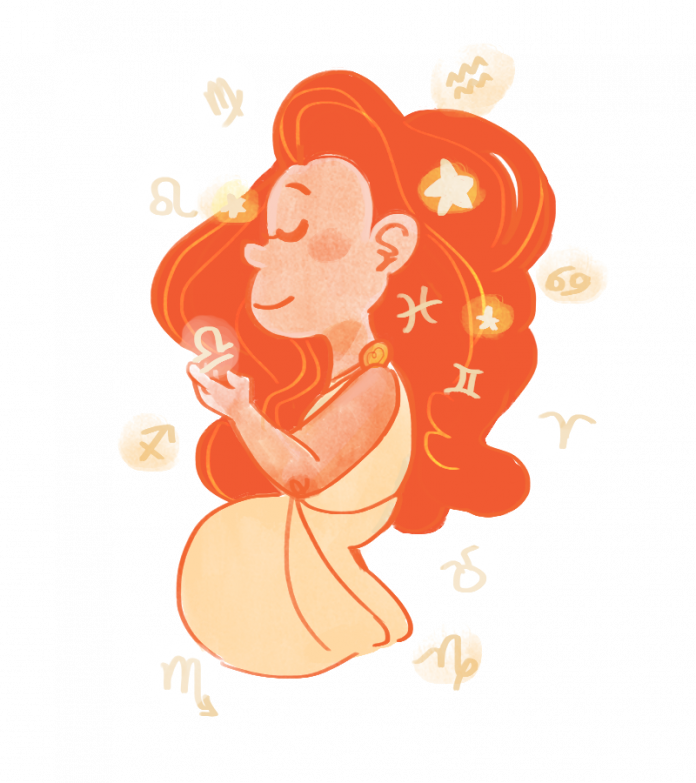
An illustration of a girl with long flowing hair. Astrological signs and stars shine around her.
ILLUSTRATION: Marissa Ouyang / The Peak

Written by Zach Siddiqui, Humour Editor

Aries — March 21–April 19

Find a day this week to bathe in tomato paste. It will neutralize the acrid, nauseating scent of clout-chaser on your body.

Taurus — April 20–May 20

It’s a good week to be upstaged. Take this opportunity to conserve your energies. Whatever the context may be, your nemesis will enjoy the spotlight only fleetingly. Someone is sure to leak video evidence of them performing “Hot Problems” by Double Take as a solo dance number inside an empty Wendy’s.

Gemini — May 21–June 20

Remember back when we told you to fly yourself to Vanuatu and build a new life for yourself? Good thing you didn’t go. If you escape your problems by fleeing to another country, who’s going to do the important work of escaping your problems by retreating into your own personal psychological cradle of introversion?

Cancer — June 21–July 22

Carry bread and clear water with you to every class this week, to be bestowed on all your fave discreet day-drinkers. Spread your sobering gifts to everyone — except those monstrosities who pronounce “drama” as “drah-ma.”

Leo — July 23–August 22

Unreachable, untouchable, unbreakable . . . that’s you this week. They can’t tear you down when your entire character is no more than a fiction written by someone with a humiliation complex and an appreciation for cute bone structure. 

Virgo — August 23–September 22

You might be a Gen Z sun, but you’re a Boomer moon. I know: it’s terrifying. It’s time to take a good analytical look at yourself and transcend that side of you, the way the Teen Wolf movie was adapted into a 21st-century teen drama with more CGI and less homophobia. 

Libra — September 23–October 22

Juliet Capulet was a visionary, but she had some possible areas of improvement to target. So this week, emulate her as far as fake-poisoning yourself and letting men fight to the death over your corpse. But when you awaken amid the bloodied bodies, by God, just take his expensive man-bling and run. 

Scorpio — October 23–November 21

You want to capture the attention of a room this week. So stroll into class with the word of the Lord on your lips: tell them all about the difference between the banana chocolate chip loaves at the Renaissance by Saywell Hall and the banana chocolate chip loaves at Higher Grounds by The Study.

Sagittarius — November 22–December 21

Your innovative mind is breathtaking. Don’t be scared to improvise solutions to your problems this week. There’s no need to look to a horoscope for guidance when you can come up with rushed bad decisions all by yourself. 

Capricorn — December 22–January 19

Looking to confront an old friend about unresolved issues? You could text them to meet for coffee. Or you could manipulate all your mutuals into relaying your dissatisfaction to them through a long, carefully predicted chain of “keep this on the DL, but . . .” If your lost buddy fails to contact you and apologize for their mismanagement of your Neopets account that one summer you were on vacation, it’s time to just dye your eyebrows and move on. 

Aquarius — January 20–February 18

Props to you, honestly: nobody has figured out that your love of dog videos and puppy therapy is like 36% an act. But the truth comes out this week. Sorry in advance for all rushes of acceptance and community you’re about to miss when your friends become that little bit less likely to tag you on Facebook.

Pisces — February 19–March 20

This week, you’ll probably partake in your favourite pastime: whispering rude things about someone you only pretend to condone as a conflict aversion technique. But you need to be cautious. What you haven’t yet realized is that you tend to stage whisper.

Deep thoughts from a bench: A short story from a vintage SFU photo

0
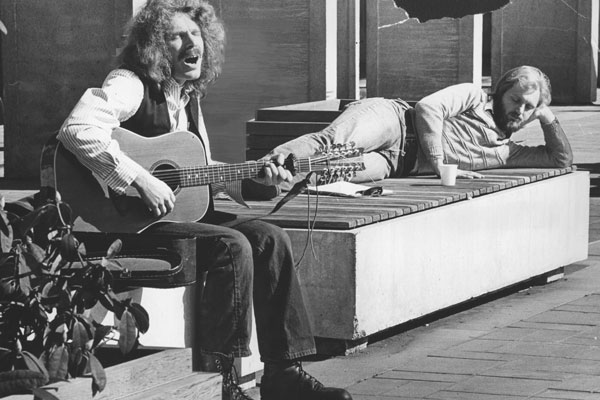
Photo: Vancouver Sun (1975) 

By: Jennifer Low, Peak Associate


What do you think SFU students were doing on campus 40, 50 years ago? In honour of National Novel Writing Month and inspired by the New York Time’s segment ‘Past Tense,’ The Peak asked writers to spin short stories based off of archival photos of SFU. Real photos. Fictional stories. All written by SFU students. Martin made his way across the empty courtyard and pulled his guitar out of its battered case. As he lifted the instrument, papers from his various classes spilled out and flew away in the breeze. Martin barely gave them a second glance. Instead, he took a paper cup and a clipboard out of the guitar case. He spent a few moments positioning them carefully on the bench. With a heavy sigh, he sat down, and hefted the guitar onto his knee. 


Four years, no major!” He sang, strumming a chord. Martin paused as he tried to think of a word that rhymed with “major.”

Workin’ hard, still a failure,” someone replied which caused Martin to lose his train of thought. 

He glanced up, annoyed as a familiar figure came into view: Bobby. Marty thought his grin far too wide for this early in the morning. 

“No major? I thought you said you were studying history?” Bobby said. “Also, you’re skipping class. Don’t you have a paper due today?”  

“No,” Martin defended, his voice raising. Bobby held up his hands in surrender before stretching out on the bench next to him. 

Martin frowned. Being a musician, he had always thought that being creative and having original thoughts came with the territory, but he was really starting to worry now. He hadn’t written good lyrics in weeks. In every song he wrote, his rhymes were poor and his ideas were lazy — just like his prof thought his paper was. It would be fine if it was just his songwriting, but now that his writer’s block was affecting his academics and endangering his scholarship . . . Martin pushed the thought from his head and focused on watching Bobby pick a few crumbs from his shirt and toss them into the foliage as if feeding imaginary birds. 

“Careful!” Martin said, fumbling with his guitar to slide his items away from the edge of the bench that Bobby had nearly knocked over.  

“So, what are you doing out here, Marty?” Bobby sighed, propping his head on his elbow. Martin thought he looked like he wanted to be painted like a model splayed out like that. “This some kind of activist or protest kind of thing?” 

Martin shook his head. “I’m composing a song about student life.” 

“And the empty cup?” Bobby smirked. 

“Well, if someone hears me and wants to show their support, I’m not going to deny the people what they want!” He paused. “Plus you know, once I’ve lost the scholarship, I’ve got to pay tuition somehow.” 

Bobby threw his head back and laughed, “That’s not how you’re going to attract the crowds, but with me sitting here, looking this handsome? Well, that’s another story! You got yourself a groupie, roomie!” 

Martin rolled his eyes. 

“As long you don’t disrupt my process,” he decided. Bobby nodded obediently and Martin turned his attention back to his instrument. 

Four years, no major—“ 

“Marty,” Bobby interrupted holding up the clipboard and marveling at the blank white paper. “You haven’t gotten anything written down!” 

“I know,” Martin said, annoyed. “That’s why I’m working. Just be quiet.”

“If you want some free advice,” Bobby said ignoring Martin’s annoyed glare, “I think you gotta loosen up, man. You’re putting too much pressure on yourself for it to be good and thoughtful and stuff.” 

Martin began to sing. Four years, no majo—” 

“Marty!” Bobby interrupted again. He pointed dramatically at the cup on the bench. 

“Do you realize that a cup is made to hold water, like a bathtub . . . but a boat is like the opposite, it’s made to be held by water.”

“What?” Martin asked distractedly, trying to remember the chord he was strumming. 

Bobby closed his eyes, “I don’t know, like do you ever just sit and think about stuff. Random stuff?” 

Martin tightened a string on his guitar and resisted the urge to scream at Bobby for being such a nuisance, “What do you mean?”

“Like, how it doesn’t matter what kind of drink you buy, they’re all just flavored water. Or, how like, one day we’ll wake up and be halfway through our lives and not even know it?”

“How did you come up with all these?” Martin asked in mock amusement.

“I was just thinking the other day,” Bobby replied, eyes still closed. 

For a moment, Martin and Bobby sat in silence. They listened to the sounds of the wind and basked in the sun. 

“Do you ever think about how sunlight is technically starlight?” Martin said slowly.

“If your shirt isn’t tucked into your pants, your pants are tucked into your shirt!” Bobby smiled.

“My right eye has never seen my left eye, except for in reflections,” Martin added. “And warm ice cream tastes the same as a warm milkshake.”

“Well,” Bobby said, tilting his head, “I guess that makes sense because milkshakes are liquid ice cream.”

“Letters are just drawings that everyone agrees on,” Martin thought aloud. 

“Zero is something that is nothing,” Bobby replied, nodding.

“You writing this down?” Martin asked after a moment. 

“No,” Bobby answered. 

“I wonder if we’re the first people to have ever thought these things.”

“Probably not,” Martin replied. “I wonder if all our thoughts have been thought before, like, how do we know if we’ve ever had an original thought because nobody keeps track?” 

“Yeah,” Bobby smiled. 

“I think I’m going to have another go at writing my paper,” said Martin. “Thanks Bobby.”

Locked in: A short story from a vintage SFU photo

0
Photo: The Peak (1989)

By: Kelly Chia, Staff Writer

What do you think SFU students were doing on campus 40, 50 years ago? In honour of National Novel Writing Month and inspired by the New York Time’s segment ‘Past Tense,’ The Peak asked writers to spin short stories based off of archival photos of SFU. Real photos. Fictional stories. All written by SFU students.


Brielle Chung woke up with highlighter splotching her cheeks. Groaning, her eyes sleepily adjusted to the dimly lit concrete walls. ‘Right, the AQ, Brielle thought, looking ruefully at her colourful notes. A university freshman, Brielle had just learned the secrets of plowing through time like a champion procrastinator. She had been stationed at the Education Building’s study lounge for a while, slaving away at a paper. It was easy to lose time here.

‘Wait . . . how long have I been here?’ Brielle thought, looking at a nearby clock. The hands pointed to the number two. She was on campus at 2 a.m.

Another long groan. Was there even a bus that would take her home this late? Brielle packed up her things, made her way towards an exit, and lazily pushed against the door. To her chagrin, the door stood stubbornly in place.

Oh no.Brielle tried the other doors along the walls, and realized yet again, they were locked. 

Walking toward an elevator, Brielle found a fire escape map of the AQ. Closely studying it, Brielle took out her notebook and scrawled down a quick layout of the floor and its exits, hoping one hadn’t been locked yet. She started walking and tried to open each door she found, one by one. Brielle crossed out every door that didn’t open on her diagram.

Soon, they were all crossed off. Brielle willed herself to shake off her escalating fears. 

‘The worst thing that will happen to you is that someone is going to unlock the campus at 6 a.m.,’ she reasoned. ‘You just have to wait four hours.’

She took in a deep breath in and continued walking forward, keeping herself busy. How long could four hours be anyway?

During the day, getting lost in the AQ would have been irritating at most. But at night, it unnerved Brielle. Accompanied by nothing but her backpack and the squeak of her sneakers against the tile flooring, she couldn’t help but notice how creepy campus was in the dark. The moon illuminated the shadows of plants and chairs. They jutted out, lurking in the corners of Brielle’s vision. 

How many times had she passed this corner? Had she been here before? She felt like she was going around in a circle, the floor looping almost seamlessly. Concrete blended into wood as she passed the same tables and chairs. It was hard to tell — the halls looked and felt the same.

Every time she turned her head, Brielle noted how many hiding places were around. Brielle’s eyes kept looking back and forth, paranoid. Whenever she passed a lecture hall, she peered inside to make sure there wasn’t someone there. Her eyes, red from exhaustion and alert from fear, couldn’t quite tell if there really wasn’t someone lurking in the dark with her.

Time passed slowly in the AQ. It was only after several laps or so into her exploration of the AQ that Brielle noticed the hall looked… different. Had the lounge chairs moved? Although that could just be her, she reasoned. It had to be her imagination. It had to.

But then, she heard a noise.

‘Maybe it was a raccoon,’ she thought. ‘They’d probably be scurrying around this time, right?’

But the noise continued, persistent. Thump. Thump.

Not willing to take any chances, Brielle stealthily made her way to Robert C. Brown Hall.

The building, with its low ceilings and tightly wound corners, was too quiet for Brielle. She felt her veins fill with adrenaline as she registered the thumps as what they really were; footsteps. Someone was with her.

She snuck quickly through the halls. She passed stairs and empty offices as she ran down further and further. The footsteps were more insistent now. Shit. Whoever was there, they knew she was here.

When she hit a dead end, Brielle realised she couldn’t evade the stranger any longer. Seeing a bathroom on her left, Brielle fled into it and made a beeline for one of the stalls. Carefully, she raised her feet onto the toilet seat, and waited. 

The claustrophobia of the stall was eating at her; the teal walls boxed her in, making her feel like trapped prey. She hugged her backpack closely for reassurance, willing herself to calm down. 

Just then, her notebook tumbled out of her backpack.

“Fuck, fuck, fuck,” Brielle quietly swore, picking it up as quietly as she could. It was then she heard the bathroom door quietly creak open. Had she not seen them trail behind her? How could she be so careless? How— 

“You need to get out now,” a gruff voice spoke suddenly.

Brielle stayed quiet, trying to conceal her cover. Her heart threatened to leap out of her chest, afraid of her impending doom. She was sweating bullets now — there was nowhere to run.

“I know it’s midterm season, but kids like you can’t be staying on campus! I need to clean these toilets,” the person declared, in a more annoyed voice.

Oh.

Martin Scorsese vs. Marvel: how superhero movies are changing Hollywood cinema

0
The Marvel Cinematic Universe media franchise began with 2008’s Iron Man. Image courtesy of Walt Disney/Marvel Studios / TechRadar.

By: James Conn, SFU Student

Comic book superheroes have been present in movies and television for decades now, spanning as far back as the 1950s with the Adventures of Superman and the 1960s with the Batman TV series. Theatrical adaptations of these superhero stories were also released throughout the 1970s all the way up to the present day. These movies and tv series cemented many comic book nerds’ love for the characters.

Prior to the 2000s, however, the superhero genre had always been viewed as more of a cult fandom. But after the theatrical successes of the X-Men (2000–2019), Spider-Man (2002–2007), and The Dark Knight (2005–2012) franchises, it was clear that casual media consumers were interested in this genre too. This was recently proven true again, when Marvel’s Avengers: Endgame alone made over $2.7 billion at the worldwide box office, making it the highest grossing film of all time

Despite these successes, various Hollywood legends have recently criticized comic book films and the Marvel Cinematic Universe (MCU), most notably Martin Scorsese, known for highly acclaimed films such as GoodFellas, Taxi Driver, and The Wolf of Wall Street. In an interview with Empire Magazine, Scorsese said of Marvel films, “[ … ] That’s not cinema. Honestly, the closest I can think of them, as well made as they are, with actors doing the best they can under the circumstances, is theme parks. It isn’t the cinema of human beings trying to convey emotional, psychological experiences to another human being.” Other filmmakers along the lines of Scorsese have supported his claims, including Francis Ford Coppola, who is known for directing The Godfather trilogy. Coppola has stated that Marvel films are “despicable.” 

Scorsese later doubled down on his original comment about MCU being more like theme parks than true cinema by stating that “theatres seem to be mainly supporting the theme park, amusement park, comic book films. They’re taking over the theatres. I think they can have those films; it’s fine. It’s just that shouldn’t become what our young people believe is cinema. It just shouldn’t.” 

While Scorsese and Coppola may be entitled to their opinions about the validity of their own beloved gangster films over the MCU, their views completely disregard the franchise’s success and the way it shifted the nature of filmmaking for Hollywood as a whole. James Gunn, director of the Guardians of the Galaxy films, correctly points out in an Instagram post that “superheroes are simply today’s gangsters/cowboys/outer space adventurers.” Gunn also remarks that years ago, many filmmakers thought the same way of newcomers Scorsese and Coppola and their gangster movies, as opposed to the popular westerns of the time. Knowing this history of cinematic trends, it appears that Scorsese and Coppola’s statements were made in disdain for the new genre dethroning their films from blockbuster status. In other words, these statements are simply the tired complaints from old filmmakers mad at young people for enjoying movies they don’t personally view as cinema. 

The massive success of the MCU — both critically and financially — has possibly threatened Scorsese and Coppola’s own storytelling. For one thing, it is easy to observe the new Hollywood trend inspired by the MCU: franchises that spawn multiple films, or a “cinematic universe.” Scorsese’s description of the MCU as a “theme park” makes sense when viewed through this lens; the Marvel films together act as an immersive, escapist reality that we are transported to when we enter a theatre. Even Robert Downey Jr. (known for playing Iron Man) sympathizes with Scorsese, although he disagrees. On a podcast with Howard Stern, he stated that superhero genre movies “denigrated” an older era of cinema, but that “when you [Marvel films] come in like a stomping beast, and you eliminate the competition in such a demonstrative way, you know, it’s phenomenal.” 

When taking this into consideration, Scorsese’s perspective can likely be attributed to a Hollywood that may be leaving him behind in favour of films adapted from pre-existing intellectual property, such as comic books. However, no single genre is superior to the other, because everyone’s tastes are subjective. This new wave of superhero films and the classic gangster movies of old are both fetishized and beloved in their own way.

Board Shorts: November 1

0
Image: Irene Lo

By: Paige Riding, News Writer

Note: The Rotunda groups discussion and vote that was at this meeting was covered in separate articles here and here.

World University Services of Canada (WUSC) Spring 2020 Referendum

The SFSS Board of Directors voted to hold a Spring 2020 referendum to increase the levy for World University Services of Canada (WUSC). The referendum will ask students to increase WUSC’s $2.50 per term levy to a doubled $5 for students enrolled in full-time classes, and from $1.75 to $2.50 for those enrolled part-time. 

The program supports refugee students in their endeavors to complete their post-secondary education at SFU. Without this increased fee, the program would not be able to continue to sponsor the number of undergraduate students they currently do.

Student Advocate position endorsed by Board

The Board of Directors voted in favour of endorsing a pilot project to hire a Student Advocate, and for Executive Director Sylvia Ceacero to present a business plan for the implementation of this position in the Spring semester. 

As part of this proposal, the Board heard from Laura Reid, SFU Ombudsperson, about what her position entails. The Ombuds Office is an “independent, impartial, and confidential resource for students,” according to their website. Located in Maggie Benston Centre room 2266, the Ombudsperson is not an advocate but a “confidential and impartial resource to learn self-advocacy skills.” While Reid cannot advocate on behalf of students, she can inform and guide graduates and undergraduates on what policies and approaches they should know about.

The advocate will work to ensure that the university treats graduate and undergraduate students fairly in disputes with the university such as academic or non-academic misconduct, housing appeals, parking disputes etc. They will also provide guidance on policies and emotional support during these kinds of disputes.

Board Approves a Coordinator for the First Nations Student Association

The First Nations Student Association (FNSA) received approval from the Board to hire a Coordinator to support their organization and regular operations. The Coordinator will be a paid employee financed from the SFSS’s general operating budget. Until now, FNSA has been completely run by students. 

“It has been very inequitable for the First Nations Student Association. As you can imagine, not having a Coordinator while being internal to SFSS is quite astonishing and shocking, to be frank. We look at areas such as Out On Campus and Womens’ Centre and they have multiple staff members supporting them,” said an FNSA representative that was present at the meeting.

Provincial Lobbying 2019 Report

Vice-President External Relations Jasdeep Gill and Vice-President Student Services Christina Loutsik reported on their recent lobbying trip to Victoria. While they met with many lawmakers and elected representatives, they mentioned that during their trip to Victoria, 22 parliament members canceled previously scheduled meetings with Gill and Loutsik.

On a more positive note, Gill said that “Premier John Horgan and Minister Melanie Mark did indicate that they are in support of dedicating funds to the needs-based grant program.” 

Gill added “they don’t just want to rebrand the current funds that they invest into the completion grants [ . . . ] they’d like to add additional money that would benefit student financial aid.” 

Further, she reported that some MLAs indicated that the interest on the federal portion of student loans may be eliminated in the future. The provincial representatives said that they plan to continue to push the federal government on this issue.

Gill and Loutsik also discussed the harm caused by the high tuition fees for international students, with the MLAs they met with. Part of the solutions they proposed included increasing the maximum hours an international student can work, from the current limit of 20 hours a week.

Tuition Freeze Now holds Town Hall to discuss affordability

0
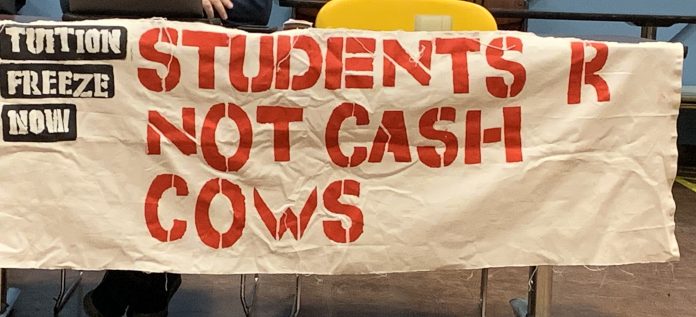
TFN’s slogan “Students are not cash cows” on a banner on display during the event

By: Paige Riding, News Writer

Tuiton Freeze Now, an activist group at SFU, held a campus Town Hall on October 29. The Town Hall was held in Forum Chambers in the basement of the Maggie Benston Centre, where TFN representatives and interested guests joined together with the goal of spreading information and discussing the direction of TFN’s future campaigns. Core goals for TFN in the near future include speaking to the BC government about a two-year tuition freeze and increased funding to post-secondary institutions. 

At the event, representatives from TFN presented statistics about tuition fees and the results of the surveys they conducted related to unaffordability for students (ongoing on their website). The survey results overwhelmingly showed students feeling that tuition was too costly at SFU, which lead to significant hardship.

Representatives from TFN also spoke about ways to campaign against further hikes on tuition in the future. TFN was at the forefront of protests in the spring semester, when SFU passed a 2% hike in tuition for domestic students, and up to a 20% increase for international students depending on their faculty. Since then, TFN has continued to campaign for better consultation with students with regards to the cost of attending SFU.

TFN organizer Quentin Rowe-Codner spoke to The Peak via email about the event. 

“Now that we have the information from the university on the next tuition hike, we can now start to structure and plan out how we’re going to go forward in terms of messaging, in terms of demands and that sort of thing.” 

In October, SFU held budget consultations with the SFU community to discuss the upcoming 2020 budget.

Following the presentation, there was a general discussion period in which attendees broke into groups to brainstorm ideas for future TFN campaigns. Some suggestions included targeting and gearing campaigns towards specific campus populations, like teaching assistants (TAs). In this way, TAs may be able to bring this information to their tutorials, speaking directly to students about the goals of TFN. Another group mentioned the benefit of having TFN advocates present and vocal at SFU Board of Governors meetings. 

TFN organizer Annie Bhuiyan also spoke to The Peak via email. 

“Even though we have certain representatives who are talking to the Board of Governors, talking to the administrator, telling us about what’s going on and representing us, we still don’t know anything,” Bhuiyan wrote. “And for the most part, from what we understand, they don’t really know much either, so it hasn’t been a completely democratic process.”

Bhuiyan continued: “That’s why we called the Town Hall: so we can be democratic about it. Also, tuition is already too high. It can’t keep going up higher. This is something we need to keep fighting against until we get a tuition freeze and then we can push for things that are more affordable like more supplementary funding— eventually free tuition.”

Rowe-Codner added, “We’re definitely going to try and get the word out a lot more because SFU doesn’t do a very good job at letting students know what’s happening with regard to tuition, so it’s really on us unfortunately to have to do a lot of that awareness spreading and information campaign.” 


Carpool group emerges on Facebook in response to transit strike anxieties

0
SFU students are banding together to carpool to campus

By: Jess Dela Cruz, News Writer

On October 28, Translink workers under Unifor issued a 72-hour strike notice against Coast Mountain Bus Company (CMBC). With SFU being largely a commuter campus, students rely heavily on transit to get to and from campus.

Shortly after the notice was released, Vice-President Finance & Administration Martin Pochurko sent a mass email to all SFU students regarding the strike. He wrote, “in the event of transit disruptions, operations at SFU will continue as usual [ . . . ] with that in mind, students, faculty, and staff who regularly rely on transit are encouraged to consider alternate transportation methods. ” 

Many students took to the myriad of SFU Facebook groups to discuss how their commute to school would be affected. Second year biology student, Natasha Wong, decided to address the panicked discussion many students were having on the strike. 

“[With] an influx of posts asking for rides to and from SFU all over [the Facebook] groups [ . . . ] I thought it would be best to centralize it,” she told The Peak in an email interview. Within one hour, she claims that over 400 members had joined. That number has now increased to over 1,200 members. 

The page’s description encourages members to make their posts in the following format: offering a ride/seeking a ride, area, day, and time. Many students from all over the Lower Mainland have offered to pick up others along their route, including specific skytrain stations or intersections. Some drivers required a certain amount of payment either per head or to chip in for gas money. For others, a cup of coffee would suffice. 

A student, who wished to remain anonymous, told The Peak how he used the carpooling group to find someone who could help them get to campus. 

“My driver has the same class time in the morning, didn’t look sketchy, and also happened to pass right by my house on her way to school.” The student added, “I actually really enjoy carpooling. My driver was super friendly and chatty, and it was a really nice change from sitting on the bus by yourself in silence. SFU has always been called the lonely commuter campus [ . . . ] in my experience so far, [this] has been a really good way to break the cycle.” 

Sixth year student and driver, Elda Hajdarovac, offered her assistance as a driver because “ I used to take transit in my first and second year and I know how hard it can be to try and get to campus. Plus I feel it’s a great way to create a sense of community and positivity in light of a difficult situation for all.” 

And while many students are providing or seeking rides, some students are wanting to show support and solidarity with the bus drivers. Third year Beedie student Sophia, along with her ethics class, used their class project assignment to spread awareness about drivers’ conditions. With this project, Sophia “hope[s] students can gain some empathy towards bus operators and voice their support and concerns to Translink, CMBC, and the cities affected by the strike.” The students did this with an information table at West Mall Centre with information, template letters, and Unifor petitions for students to participate in. 

The Facebook page is under: SFU Carpooling Group if you would like to provide a ride or require one to campus. 


Research Roundup

1
Courtesy of SFU News

By: Alice Fleerackers, SFU Student

A deep dive into digital addiction

sleeplessness, anxiety, relationship issues — these are just a few of a long list of outcomes associated with digital addiction, according to new research by SFU Beedie professor Leyland Pitt and his colleagues.

The study, published in the Journal of Public Policy and Marketing, examined the consequences of society’s growing reliance on digital devices, as well as the factors that contribute to it. 

Marketers and app developers, the researchers found, play a key role in encouraging digital addiction. Companies use tactics like gamification and “freemium” subscriptions to keep customers coming back for more, keeping them plugged in to their devices—whether they like it or not. 

The implications for health and productivity can be major. 

“Digital experiences, like social media, are linked to decreased productivity in the workplace and it’s already costing the U.S. economy $997 billion,” Pitt told SFU News. “Today, texting while driving is now six times more dangerous than drinking and driving.” 

But although digital addiction may be on the rise, the researchers believe there are solutions. They conclude their article with several public policy recommendations for how to combat the phenomenon, such as enforcing mandatory app labeling and disclosures in advertising. 

Signs of human life in Haida Gwaii more than 2,200 years earlier than expected 

A team of researchers led by SFU paleobotanist Rolf Mathewes has uncovered evidence of human life in Haida Gwaii dating back 13,000 years — more than two centuries earlier than previously believed.

The study, published in Vegetation History and Archaeobotany, was conducted at Kilgii Gwaay on Ellen Island, one of the oldest known archaeological sites on the archipelago. Past excavations of the site have unearthed artifacts and fossils from approximately 10,800 to 10,500 years ago, the earliest recorded signs of human activity in the area. 

But by analyzing sediment from an ancient buried pond at Kilgii Gwaay, Matthewes and his team were able to uncover evidence that humans were in Haida Gwaii long before then. 

“The most remarkable finding,” Matthewes told SFU News, “was when we discovered high concentrations of charcoal in the core that point to man-made fires 2,200 years before the known occupation.” 

The team’s work extends previous research in the area, providing a deeper understanding of the first people who called the coast home. 


How the SFU community reacted to the canceled ‘gender debate’ at Harbour Centre

0
The Transgender Pride Flag

By : Jess Dela Cruz, News Writer

Due to significant controversy and outcry from the public, an event that was scheduled to be held at SFU Harbour Centre on November 2, “How media bias shapes the gender debate,”  was relocated last minute to the Crystal Pavilion at the Pan Pacific.

SFU student groups and community members had been planning counter-events, protests, and writing open letters criticizing the SFU administration for holding the event in the first place, all urging them to do better by it’s LGBTQ2+ communities. 

Out On Campus (OOC), an LGBTQ2+ resource group, helped to organize a protest on the day of the event. Ashley Brooks, OOC Coordinator, worked with students on organizing the protest and creating signage to “educate passersby on why we were protesting.” The initial focus of the protest was on SFU’s decision to give the space and not on the attendees of the event specifically. Brooks emphasided how this approach would “minimize hostile interactions with the event attendees and would put further pressure on the university to improve its trans inclusion.” 

Brooks worked with Campus Public Safety “so that our group could know what to expect from those staff, and importantly, know what was unacceptable conduct.” Brooks also contacted the Vancouver Police Department given concerns over the possible sidewalk and road blockage that the protest may cause. Reportedly, this caused backlash from “grassroots activists who claimed that we were working with police to get external protestors arrested” which Brooks argues, “couldn’t be further from the truth.”  

High-level SFU administration, like president Andrew Petter and vice-president Jon Driver were  approached with concerns about the event, either in writing or in-person meetings, by the Simon Fraser Student Society (SFSS), Graduate Student Society (GSS), and OOC. Brooks stated that they “raised numerous concerns about the message that holding such [an] event at SFU would send to [the] trans community members.” However, the administration continued to hold the event, and wrote a letter on its website stating it’s support for ‘freedom of expression.’ 

Many departmental student unions did make efforts to publicly condemn the event and state their allyship with the trans community. The Gender, Sexuality, and Women’s Studies Student Union (GSWSSU) Executive Team released an open letter to SFU administration, faculty, and students that was distributed via social media. The executive teams from the Sociology and Anthropology Student Union (SASU), Criminology Student Association (CSA), Word Literature Student Union (WSLU), English Student Union (ESU), and History Student Union (HSU) were included at the end of the letter as supporters. 

Giving brief explanations of the panelists, the GSWSSU took their stance and wrote that “We call on you to take action, be allies to the LGBTQ2IA+ community, and stand up for what is right.” They also called out the university to “provide more financial resources and support to organizations on [the] campus which are actively working to affirm and uplift the trans community. Alongside the members of our SFU Community we will come together and call out our institution and the message they are sending by still continuing this event.” 

Vice-President of Operations of the WSLU, Kayla Tso, told The Peak, “I feel that it is important for all people to feel safe and included in their communities. Regardless of their gender, race, sexual orientation, religion, opinions, or anything else, the inclusion of everyone is the basis of human equality.” 

Katie Bruyneel, President of SASU, said “We were unhappy with the message this event was sending that SFU is a space that will allow this type of discrimination to take place . . . we feel very strongly that trans and gender-non conforming students belong at SFU and have the right to live and learn in spaces that support them and their needs.” 

The Teaching Support Staff Union (TSSU) also released a statement which reports, “As a feminist union, the TSSU denounces the #GIDYVR event, stands in solidary trans and non-binary people, and calls on the univeristy to cancel this event. We further stand with [GSWS, OOC,] and all other members and groups who have spoken out against this event. SFU must live up to its values and take accountability for the harm the event will cause to the communities on campus.” 

The Peak contacted Lara Campbell, chair and professor of the Gender, Sexuality, and Women’s Studies Department, for further details on the counter-event they held, “Supporting Trans Inclusion in Every Life,” three days prior to the protested event. She explained how “The Department decided to organize [the event]to articulate and amplify an alternative vision that reflected our core values: that gender and sex are not binary and that trans people are exactly who they say they are.” 

The reactions to their event was positively overwhelming and filled with support from members of the SFU community. They wanted their expert panelists and focus of discussion to cover health, law, Two-Spirit communities, municipal policy, anti-violence work, and religious faith. The panelists included Dr CJ Rowe (Sexual Violence and Prevention Office; Director, SFU), Lisa Salazar (Pastoral Leadership, Vancouver Coastal Health), Laura Track (Community Legal Assistance Society: Human Rights Protections for Trans People; Lawyer and Director of Education), Harlan Pruden  (Two Spirit Activism and local, national and international policy advisor), and Dr. Tiffany Muller Myrdahl (SFU Senior Lecturer: Trans inclusive municipal policies). 

The panelists main messages covered that though “counter-events are important and necessary, they cannot replace the hard, difficult, and day-to-day work that goes into building a truly inclusive world” says Campbell. She further described the main messages of the panelists who reminded guests the importance of treating other people with respect in everyday life, no matter where we are, through the relationships we have with other people. 

Brooks concluded his interview by saying that, “It’s a shame that SFU did not have the courage to stand up for what was right — and the trans community sees this.”