Home Blog Page 459

Little Mountain Gallery is the latest to suffer due to Vancouver’s increasing gentrification

0
Photo via Instagram
Photo via Instagram

by Marco Ovies, Arts Editor

The next time you walk past Little Mountain Gallery (LMG) you might notice a development application up on the building. Why is this important, you ask? Well, it’s because this is one of the few not-for-profit art and cultural spaces in Vancouver. This comes right on the heels of the City of Vancouver’s Making Space for Arts and Culture report which, according to their website, “lays out [their] long term vision to optimize City policies and tools to secure, enhance, and develop vibrant, affordable, and accessible arts and cultural spaces.” 

If LMG is redeveloped it will result in the loss of 2,000 square feet of space for artists to work and perform in, which is in addition to the almost 400,000 square feet of artist space that has been lost in the last 10 years. While the building owner has every right to develop the area, it goes against the promise the city has laid out to protect independant spaces like LMG.

These places need the lower rent that comes with older buildings in order to survive and cannot afford to exist in newer developments. And even if they were given a new space, the charm and history of LMG would be lost forever. 

Walking into LMG has a sort of hole-in-the-wall feel. Inside, the space features a small stage with around 60 folding chairs surrounding it. Beer is served out of cooler (but is always ice cold) and the entire space just feels homey. This is because the building has been around for almost a century. According to a board letter that LMG has drafted in response to the development application, the building was “built in 1930 [and] was originally the location of Curly’s Automotive Garage. Since then, it has been a sheet metal shop, plumbing and heating outlet, a soda pop bottle depot, and a seafood market before becoming a home for the arts in 2001 — first as the Butchershop Collective.”

The development of this property is the destruction of history. How do we feel about living in a city that consists entirely of condos and chain restaurants? LMG — alongside many other artist spaces — is a large part of Vancouver’s history and what makes this city great. If we don’t address the growing problem of gentrification in our city, then we will continue to lose places like LMG.

If you would like to see Little Mountain Gallery stay in its current location, please send a (respectful) email to Vancouver’s project coordinator Niall Coffey ([email protected]) addressing your concern.

Giovanni HoSang can’t pretend Fall Kickoff’s deficit doesn’t involve him

1
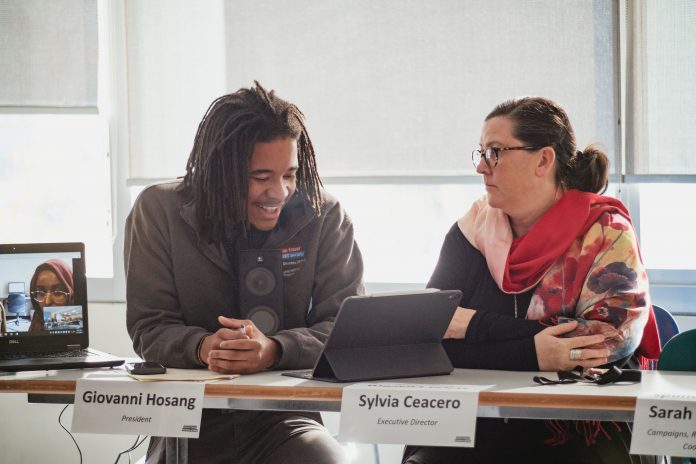
Giovanni HoSang should take responsibility for the SFSS’s actions. Photo: Chris Ho/The Peak

By: Lily Fontaine, SFU Student

I scream, you scream, we all scream because the Fall Kickoff deficit was $105,995. Like another Peak article stated, “the SFSS will have spent more to cover the losses for the concert than they did last year for the whole of the communication office ($103,000), Women’s Centre ($93,000), Out on Campus ($73,000), or Surrey campus office ($55,000).” Big yikes.

The even bigger yike is SFSS President Giovanni HoSang pretending this is the first he’s heard of it. When he was first interviewed about the deficit, HoSang stated that he felt rushed to make a decision, and was shot down when he wanted to ask questions about the budget and the deficit on the horizon. 

Cool story. Why didn’t you tell it before someone explicitly asked you about it when the event came under fire? 

Similarly, HoSang shared The Peak article he was quoted in on his personal Facebook. In a comment, he urged students to “Help call for accountability and keep pushing the good progressive governance [sic]” and called for putting “policies in place to make it not happen again.” As if asking questions, communicating with students, and policymaking weren’t part of his job, too. 

HoSang is the most recognizable, well-liked, and active SFSS president I’ve seen so far. He was elected fresh off of being the president of the Students of Caribbean and African Ancestry (SOCA). He spent a lot of time criticizing the SFSS for some very good reasons while he held that position, and it seemed that a lot of people who voted for him wanted change in an organization they mistrusted. But HoSang isn’t a subversive candidate anymore; he’s the SFSS’s president and he regularly chairs meetings, according to the minutes online. Why is he acting brand new? As president, HoSang saw Fall Kickoff’s planning and execution happen and was in a position to act proactively. 

I understand that HoSang may have wanted to preserve the Board’s unity or show loyalty to the organization at the time. I remember him being very vocal both on social media and around campus about Fall Kickoff, working hard to support the event and make it work. But now it just seems that HoSang is washing his hands of a mess he was part of. I don’t want to say that the captain always has to go down with the ship, but this captain literally watched someone take a sledgehammer to the ship’s hull, and is now jumping into a lifeboat.  

When I look in the comments of The Peak’s Facebook article, I see Jessica Nguyen, the VP of Student Life who did the lion’s share of Fall Kickoff’s organization, coming under significant — and at times unnecessarily rude or petty — fire. She organized most of the event, sure, and her response to The Peak’s questions about the deficit were pretty lacklustre. Fine. 

But let’s not forget to also keep the SFSS’s president accountable to the SFSS and its actions, just because he’s now delivering standardized lines about keeping the society accountable to students. 


A new corona virus is no excuse to break out the racism

0
Only four cases of novel coronavirus have been confirmed in Canada. Photo: Chris Ho/The Peak

Update (April 23, 2020): The headline and sections of this article have been updated from their original version in order to clarify information that was inconclusive or partial at the time of writing.

By: Nicole Magas, Opinions Editor

By now, “coronavirus” is practically a household term, spoken in hushed, anxious whispers, and accompanied by sidelong glances whenever a shy cough is heard in a crowd. But fear of the new 2019–nCoV bug — from the same family as Sudden acute respiratory syndrome (SARS) and the common cold — is just as viral as the illness it causes. This viral fear has already prompted a slew of racist sentiments in Canada — including at SFU — and it’s got to stop. Knee-jerk reactions and racialized panics don’t help the situation, and makes everyone feel less safe.

At the time of writing, four cases of novel coronavirus have been confirmed in Canada — three in Ontario and one in BC. In total, 106 deaths have been recorded worldwide. But it is worth putting this number into perspective: in Canada, an average of 3,500 people die annually of influenza. The seasonal flu rarely sparks the kind of hype and panic that outbreaks like SARS or nCoV do.While important differences between these pandemic viruses and the seasonal flu exist, before giving in to mass hysteria, we must ask ourselves if part of the differences in our reactions is due to a tendency to exoticize or racialize new virus strains.

The current nCoV virus is, at this time, considered to have originated in the Chinese city of Wuhan, and claims have been made that the illegal butchering and selling of wild animals is the cause of the outbreak. However, let’s not forget that historically, migrants have wrongfully been framed as unsanitary as a means to justify xenophobic policies of exclusion and discrimination. It is no stretch to assume that much of the panic over nCoV stems from a similar set of racist assumptions. We can’t claim to be morally outraged against an entire ethnicity over an outbreak of a new virus, while blithely accepting that thousands die each year in our own country of a similar, albeit annual, virus. The fact that nCoV is new and happened to originate in China doesn’t excuse being ugly and hateful toward the Chinese members of our community.

At the time of writing, the recent case of nCoV in Vancouver was handled swiftly and with incredible precautions taken to limit the spread of the virus. The affected individual, aware of the situation in China, self-quarantined and contacted health authorities before taking the appropriate measures to be diagnosed and safely treated. This was done in an environment of awareness, caution, and compassion. 

Now, imagine a situation in which people feel fear of racialized backlash and stigmatization over presenting even the most common of cold symptoms. It is far more likely in an environment of fear that people will avoid coming forward, take careful precautions, or get the treatment they need — increasing the risk that a virus like nCoV will spread unchecked. 

Thus far, nCoV has managed to spread as far as it has, simply because of our lack of knowledge stemming from its novel nature. We didn’t know what it was, its duration or incubation, method of transmission, treatment, etc. The more we find out about the virus, the easier it will be to contain it, but there’s no need to complicate this process by stymying knowledge through stigmatization and fear.

Our best protection against this new coronavirus is to practice the usual etiquette when we feel under the weather and wash our hands frequently. It wouldn’t hurt to introduce some compassion and respect into interactions with those around us, too.


Shai Gilgeous-Alexander makes NBA history with first career triple-double

2
Gilgeous-Alexander was traded to the Oklahoma City Thunder last year. — Photo credit / The Associated Press/Jim Mone

By: Nathan Washington, SFU Student

Ah, the illustrious triple-double. In the game of basketball, it is a demonstration of versatility and dominance on all parts of the court. For those that don’t know, a triple-double is achieved by having double-digit statistics during a single game in three of the following categories: points, assists, rebounds, blocks, and/or steals. To provide some context, in the 1,230 games that take place during an NBA regular season, there is an average of around 100 triple-double games per year, often by superstars such as Russell Westbrook and Lebron James. 

So, when the 21-year-old Canadian Shai Gilgeous-Alexander produced a 20-point, 20-rebound, 10-assist performance against the Minnesota Timberwolves on January 13, it was definitely an extraordinary achievement for a multitude of reasons. To be a young, developing player in the NBA with the ability to achieve such a game is an accomplishment on its own given that the league is known for its steep learning curve. Further, Gilgeous-Alexander became only the second Canadian to ever record a triple-double in an NBA game, the first being a guy named Steve Nash. 

On top of that, he joined another exclusive club with triple-double king Russell Westbrook, as the two players are the only guards to have 20 points and 20 rebounds in the same game in the last 30 years. The monumental performance was also historically notable because Gilgeous-Alexander passed Shaquille O’Neal to become the youngest player ever to secure a 20-rebound triple-double in NBA history. 

Gilgeous-Alexander has been thriving as a dangerous all-around player in just his second NBA season, which is his first with the Oklahoma City Thunder, and he is quickly developing into one of the premier young talents in the league. The young Canadian currently leads his team in average points-per-game with 19.9 and is the centrepiece of the crop of young stars from north of the border. This crop includes Jamal Murray, RJ Barrett, Andrew Wiggins, Dillon Brooks, and Gilgeous-Alexander’s cousin, Nickeil Alexander-Walker. 

Gilgeous-Alexander’s historic triple-double was another milestone in the rapid ascension of the Canadian basketball program from disappointment to major influencer in the global basketball community. Look for players like Shai Gilgeous-Alexander to continue to make their country proud with their strong play on the court through the rest of this season and beyond.

More non-disabled people need to put in the effort to clear snowy sidewalks

0
You might be able to step over that snow drift, but I can’t. Illustration: Tiffany Chan/The Peak

By: Sanam Prasad, SFU Student

As a disabled person living in Metro Vancouver, the snow like the dump we got in January makes my disability worse, with such things as stiff joints, trouble gripping items, and difficulty walking. It doesn’t help that many people don’t shovel their sidewalks, which forces people with mobility difficulties to stay indoors. 

I always thought sidewalks remaining uncleared was because non-disabled people don’t necessarily think that how people with disabilities physically move in the world is much different from how they move in the world. I constantly have to check to make sure that I’m not pushing myself too hard, or that I’m not walking on something that’ll cause me to hurt myself. The snow and ice are hazards as unshoveled sidewalks especially prevent me from leaving my house — particularly since I use a mobility aid.

Snowy sidewalks make it so that it takes me twice as long to get somewhere, because my cane isn’t exactly snow and ice-friendly. I constantly need to make sure that I’m not in danger of hurting myself while slipping and sliding on the sidewalk. For those who use a wheelchair, it’s much more likely that they won’t be able to leave the house at all for days or even weeks at a time during heavy snow, because wheelchairs aren’t built for snowy conditions. 

In the worst of the last snowstorm, I was only able to leave my house twice because the sidewalks in my neighbourhood weren’t shovelled, forcing me to stay indoors. I had to miss volunteering during Clubs Days, doing research, and even buying groceries. These barriers prevent people with disabilities, such as myself, from equally participating in society — barriers that are easily resolved with a bit of work and consideration on the part of non-disabled people. 

So when the snow falls, remember to think about your elderly neighbours or those with disabilities and shovel your sidewalk. It’s easy to dismiss the hazards caused by winter weather as a simple fact of life — reducing them for yourself and other people by doing something as simple as shoveling and salting the sidewalk in front of your home is equally easy.


Chilling Adventures of Sabrina swings into a new season with a fresh satanic squad

0
Courtesy of Netflix
Courtesy of Netflix

by Madeleine Chan, Staff Writer

She’s back, witches, and she’s not holding back. Part 3 of the Chilling Adventures of Sabrina has dropped on Netflix and things are amping up.

The new season comes off of the high of last season’s cliffhanger where Sabrina declares that she wants to save her boyfriend from hell. Big steps to follow, but the show carries through with its ambitious claims. Completely new storylines with all of the characters and the introduction of a few new ones injects the show with added energy.

The overarching season follows Sabrina as she navigates being the new ruler of hell and life as a teenage half-witch half-mortal. It kicks off with some interesting new dynamics, as the previously house-bound cousin Ambrose Spellman and former bully Prudence Blackwood travel abroad to hunt down their asshole of a former headmaster. I liked that they ventured beyond Greendale this season, as the constant backdrop of Vancouver forests and dimly-lit sets was getting visually tiring.

There are also three new characters that have been added to the roster. Sam Corlett plays Caliban, a hellish adversary and challenger of Sabrina’s crown — though I feel like he does nothing for the show besides add conflict and shirtless fervour. Another new character that I am more excited about is Mambo Marie, played by Skye P. Marshall. She’s a voodoo priestess that Ambrose and Prudence meet along their journey. Mambo Marie shows a different, more colourful side of magic that reminds the audience that heaven and hell aren’t the only two ethereal entities out there.

Despite these positives, the show does continue the not-so-great trend of sexualizing teenagers, like their sister-show Riverdale. Also, sometimes I feel like they prioritize dramatics and raunchy romance over congruent character development and cohesive plotlines. In addition, there are some remaining problems with how they treat their characters of colour, with examples from previous two parts like brutal torture and unnecessary sidelining.

I feel like overall, however, this show is doing a lot better in terms of representation than plenty of other shows on television nowadays. The show’s strong emphasis on varied representation and feminist voices — though sometimes so overt it’s cringey — gives it a unique and refreshing quality. I find that this is especially true of the non-binary character Theo Putnam, played by non-binary actor Lachlan Watson. This is because the third new character, Robin, is Theo’s love interest. Played by BC local Jonathan Whitesell, he brings a new romantic dynamic in relation to Theo’s character that is quite lovely to see, considering that there is little to no non-binary representation at all in screen media today. Watson described this great representation in a Q&A panel that I had the privilege to attend.

“It’s an honour to be able to play a role that is able to empower a lot of people. And, it’s something that I think I would need as a kid . . . To be able to be a human person, regardless of gender, and be able to have a love story and be able to tell that story, make it something really beautiful and powerful. I think that’s been an incredible experience.”

Other charming aspects like musical numbers (including a cute cover of Wheatus’s “Teenage Dirtbag”), the endearing innocence and heart of Ross Lynch as Harvey Kinkle, and the ever-present captivation of Hollywood-alums Miranda Otto and Lucy Davis, always impress.

If you haven’t already watched this satanic show, give it a shot, as this new third part of it brings a renewed originality, a stellar growing cast, and plenty of devilish delight.

SFU Women’s Basketball splits a pair of home games against Alaskan opponents

0
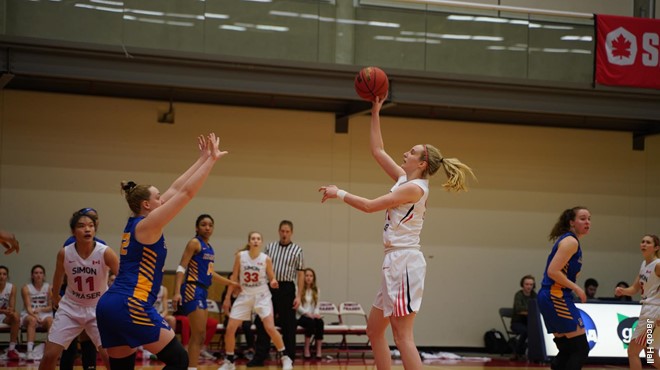
Jessica Jones scored 16 points in the win and just three in the loss. — Photo credit / SFU Athletics

By: Brandon Braich, Peak Associate

Returning from a short road trip, the SFU Women’s Basketball team split two games at home last week. 

The Clan started the week by hosting the University of Alaska Fairbanks (6–13, 1–9 GNAC) on Thursday, and easily dispatched their opponents in a decisive 93–61 victory.  

Fairbanks started strong and jumped out to an early 7–2 lead after a long 3-pointer by Sam Tolliver. However, the Clan responded soon after and controlled play for the rest of the quarter. Led by Ozioma Nwabuko’s 18 points on just 9 shots, SFU began to break the game open in the second quarter. Just before the halftime buzzer, Jessica Jones finished a layup in the paint and then followed it up with a 3-pointer to give the Clan a double digit lead heading into the half. 

Coming out of the locker room, the Clan quickly buried their outmatched opposition. A smooth layup by Sophie Klassen capped off a 21–2 run that effectively ended the game early in the second half. Klassen was a force all over the court, stuffing the box score with 6 points, 10 rebounds, 5 assists, and 3 blocks. 

It was an impressive performance on both ends of the court for SFU, as the team shot an astounding 48% from the field while forcing their opponent into a total of 19 turnovers. Stifling defence propelled the Clan all night long, as they scored 24 of their 93 points off of turnovers.

Jones had a strong game, recording 16 points and 2 assists while shooting three of 11 from beyond the arc. Kendal Sands was a spark plug off the bench and finished with 11 points on the night.

On the other side of the ball, Tolliver led the way for the team from Fairbanks, scoring a game high 22 points. 

Following the win, SFU turned their attention to the division-leading University of Alaska Anchorage Seawolves (19–2, 9–1 GNAC). In a battle between two of the top teams in the conference, the Clan was unable to continue its winning ways. After a tightly contested first half, the Seawolves pulled away in the second which led to a tough 87–66 loss for SFU.

Once again, the Clan got off to a slow start and quickly fell behind 13–2 just minutes into the contest. While the Clan settled down defensively soon after, they struggled to muster any offence and hit just four field goals in the first quarter. The final of those four buckets was a critical 3-pointer by Claudia Hart to cut the deficit to single digits. 

However, the Seawolves continued the onslaught in the second quarter and extended their lead to 19 after a pair of successful free throws by Safiyyah Yasin

While the game appeared to be slipping away, the Clan began to mount a comeback and finished the half strong, spurred by consecutive 3-pointers from Georgia Swant and Jessica Wisotzki. Ultimately, SFU was able to cut the deficit to 40–33 after a pair of successful Sophie Klassen free throws to end the half. 

A field goal by Nwabuko seconds into the half brought the Clan to within five points, which was the closest it had been since the opening minutes of the game. This was as close as SFU would get, though, as the Seawolves clamped down on defense to ensure the score was never closer than that. Alaska Anchorage dominated the rest of the quarter, outscoring SFU 28–14, and an impressive jump shot by Tennae Voliva gave the Seawolves a 19-point lead heading into the final quarter. 

In the final frame, the Seawolves demonstrated why they sit atop the GNAC standings by playing at breakneck speed while getting contributions from all over the line up. In the loss, Claudia Hart led all SFU scorers, finishing with 16 points and 6 rebounds. 

Ultimately, it was the poor shooting night that doomed SFU, as they failed to sink a single 3-pointer in the second half. In an email interview with The Peak, Head coach Bruce Langford noted the uphill battle they faced against the Seawolves because of their cold shooting.

“If you can’t hit open three’s, then you can’t beat anyone,” Langford said. “We struggled with the pace of the game. We had one good stretch but we were not able to maintain it.”

Despite the loss, SFU still sits third in the GNAC standings, and will look to get back to its winning ways at home next week against Western Oregon University.

Peak Sports Mailbag: Kyudo

0
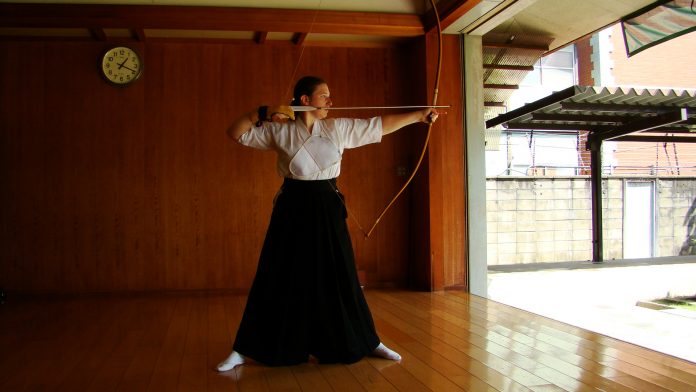
Nicole Magas, the Opinions Editor at The Peak, practicing kyudo. — Photo credit / Ariel Hudnall

By: Nicole Magas, Opinions Editor

Hello readers of The Peak sports section,

Welcome to the Peak Sports Mailbag. My name is Nicole Magas and I’m this week’s host of the kyudo-themed Mailbag. I practiced kyudo for about two years in Vancouver, Canada before I moved to Kyoto, Japan and practiced there for another year. I currently hold shodan (1st) rank in this martial art. This is the lowest rank of eight.

Thanks so much to all of our readers for submitting their kyudo-related questions, and my apologies if your question didn’t make it into this week’s edition. Usually, the Mailbag host will only answer three questions. Don’t worry though, as all questions submitted count for an entry into the raffle draw whether or not they are addressed in the Mailbag. Now, onto the questions!

Question 1: What does a kyudo tournament consist of ? – Cooper

This depends a little on how big of a tournament (international, local), and what kind of kyudo (the competition at Sanjusangendo — performed in vibrantly colored, traditional-style clothing — is a lot different from a regular tournament, both visually and physically). Speaking very generally, a tournament will involve members of a like-rank competing in groups of three to five. 

Kyudo is a very stylized martial art, often compared to standing meditation. As such, each individual motion — from one’s first step onto the floor, to the way one nocks an arrow, to the number and length of each breath taken — are as essential as hitting the actual target. Anyone can hit a target with enough practice and the correct posture. The beauty, and the great difficulty, in kyudo is in the path created between the archer, the bow, the arrow, and the target. 

Once the competitors have completed their entry, which will consist of bowing to the judges and the targets, they will line up and kneel in a line facing the judges, with the targets on their left. If they are shooting at close range (28 m), each competitor, starting with the one at the front, will stand and shoot, staggering when they stand, shoot, and kneel, in time with the sound of the string snap of those in front of them. This allows each judge to clearly see the current archer who is firing and to judge the correctness of their motions without being impeded by other archers in the line. If the shooting is long distance (90 m), competitors remain in a kneeling position while they shoot.

The number of arrows allotted to each archer will depend on whether or not they are in a team or individual competition, and on the individual guidelines and regulations of the tournament. The World Kyudo Tournament, for example, allows teams 12 arrows (four for each of the three archers) over two rounds, while individual archers are allowed four arrows.

Competitors are judged as much by how accurate their shots are to the center of the target, as they are by the poise, beauty, and intention of the motions performed in getting the arrow to its destination.

Question 2: What equipment is required to practice kyudo? – Murray

As with kendo, kyudo requires a large investment in specialized equipment for dedicated individuals. But, for those who are just starting out, comfortable clothing that is easy to move in, with a colour scheme of white top and black or dark colored pants without patterns, will do. Most established clubs will have equipment that can be borrowed once an archer is ready to start firing arrows (which can actually take quite a while).

At early levels, kyudo practitioners will want a set of keikogi, which consists of a white gi top, black hakama bottoms, white tabi socks, and a thick cotton obi belt. A specialized glove made from deerskin and resin called a yugake is used to draw the string back. In Kyudo, you do not pinch or pull the arrows or string with the fingers. Rather, the string is hooked on the hardened resin horn of the yugake where it is held in place with torsion strength as the archer pulls back. This specialized glove is therefore essential to correctly practicing kyudo.

The bow (yumi) and the arrows (ya) represent the largest investment, and can range between several hundred to several thousand dollars depending on the material. Specialized cases for both the yumi and the ya will also need to be purchased. Kyudo is a longbow form of archery, with the arrows drawn all the way back to the ear, rather than to the mouth as in western archery. As such, ample dry storage space is required to keep the equipment in good working condition. 

Small items for the maintenance of bows, strings, and arrows will also become necessary in the long run. 

Question 3: What are some of the similarities and differences between kendo and kyudo? – Dylan

Aside from the obvious difference in weapon (kendo uses a bamboo sword while kyudo uses a bow and arrow), the big difference between the two is how energy is expended. Kendo relies on a mixture of cardio and short-burst strength motions over short periods of time to score points between opponents. Kyudo, on the other hand, is a marathon-like activity that requires intense mental and physical concentration to perform slow, intricate actions that require strength, accuracy, and dexterity. A 15 minute round of shooting four arrows in kyudo can be just as exhausting as an hour-long bout of kendo.

The two are similar in that they both come from a tradition of self-improvement through physical discipline. An emphasis on the correctness of motions as much as the accuracy of strikes creates a deeper understanding of how the body works and for what purpose. They also both cultivate strength of character, as practitioners are encouraged to turn inward for self-improvement, rather than outward to external factors such as opponents. 

If you would like to participate in future editions of the Peak Sports Mailbag and be entered in a raffle for an end-of-semester prize, here’s what you can send to [email protected]

  • Sports-related questions that our weekly host will answer
  • Weekly theme ideas to guide our questions
  • Short (100–200 word) responses to our bi-weekly Reverse Mailbag (get paid $5) 

Or: sign up to host the Mailbag (and get paid)!

Thanks to all of you SFU sports fans for blowing up my inbox!

The next original Mailbag theme is: Wrestling

The host for the wrestling Mailbag is: Lauren Mason

Send in your questions to [email protected]

SFU Hockey extends winning streak to six games

0
Clan goaltender Patrick Zubick made multiple key saves to secure the win. — Photo credit / SFU Hockey Twitter

By: Michael Lenko, Peak Associate

Patrick Zubick thwarted his former team, the Selkirk Saints, for the second time this season to lead the Clan to a narrow 2–1 victory at the Bill Copeland Sports Centre. The win was SFU Hockey’s sixth in a row, which has allowed the team to solidify its playoff positioning with just over a month left in the British Columbia Intercollegiate Hockey League (BCIHL) season. 

In the first period, it was the visiting Saints that got on the board first. Dylan Heppler redirected a shot in front of Zubick to put the visitors in front less than one minute after the opening puck drop. The Clan dominated the pace of play for the remainder of the period, and fired 14 shots on net to just six for the Saints. However, the Saints managed to hold their 1–0 lead heading into the first intermission. 

The second period was far more equal with both teams trading chances. On an early SFU powerplay opportunity, first-year defender Jake Keremidschieff  beat Selkirk goalie Talon Kramer but hit the post as the Clan struggled to find its offensive touch. Keremidschieff capitalized on another opportunity later in the frame by slipping a point shot through traffic that found the top corner to even the score. The Saints almost regained their lead on a late breakaway opportunity, but Zubick was up to the task and turned away one of the 14 shots he faced in the period as the game remained tied heading into the third. 

A wild final 20 minutes of the game consisted of some fast-paced running and gunning, with both teams putting up multiple grade A chances. The Saints looked primed to take the lead on a dangerous odd-man rush, but Zubick stood tall and denied the Saints to keep the game tied. This particular save was vital, as just four minutes later SFU forward Kyle Bergh buried a chance in front to put the Clan ahead 2–1. Though the Saints pushed hard for a late equalizer with netminder Kramer on the bench for the extra attacker, their efforts came up short and the Clan secured their sixth win in a row. 

Zubick was extremely impressive in the win, stopping 28 of the 29 shots he faced. Zubick now sits third in the BCIHL in both wins and save percentage, while holding the league’s best goals against average. After a week off, the Clan will look to extend their winning streak to seven games when the University of Victoria Vikes visits on February 7.

The Week Ahead in SFU Sports: February 3–9

0
The SFU Athletics logo. — Photo credit / SFU Athletics

By: Dylan Webb, Sports Editor

A busy Spring semester of SFU Sports action intensifies this week with both basketball and wrestling teams, the track team, and the hockey team active. For fans looking to take in some Clan athletics in person, the men’s basketball team will play twice in the West Gym while the hockey team will host two games at the Bill Copeland Sports Centre. 

Women’s Basketball:

A short two-game road trip has the SFU Women’s Basketball team travelling to Lacey and Seattle in Washington State this week. After taking on St. Martin’s University on February 6 at 5:15 p.m., the team will play against Seattle Pacific University at 2 p.m. on February 8. 

Men’s Basketball:

At home this week, the SFU Men’s Basketball team will take on the two University of Alaska teams that they visited two weeks ago. After hosting the Anchorage Seawolves on February 6, they will take on the team from the Fairbanks campus on February 8. Tip off for both games is 7 p.m.

Hockey:

The SFU Hockey team will host two home games this week. After the University of Victoria Vikes visit on February 7, they will take on the Selkirk Saints on February 8. Puck drop is 7 p.m. at the Bill Copeland Sports Centre for both games.

Track and Field:

A busy weekend for the SFU Track and Field team has Clan athletes competing at the Gary Reed Indoor Track Meet in Kamloops on February 7–8 and in Portland versus Portland #2 on February 8–9

Women’s Wrestling:

The SFU Women’s Wrestling team will travel to Lebanon, Illinois on February 8 to take on McKendree University. 

Men’s Wrestling: 

A trip to Coeur d’Alene, Idaho to take on North Idaho College on February 7 is on tap this week for the SFU Men’s Wrestling team.