Home Blog Page 454

Coup easily becomes a game night favourite — especially for my dark side

0
Photo: Mind Games

by Ben McGuinness, Peak Associate

The addictive game Coup is part of the growing catalog of inventive, and sometimes conniving, games available. It joins the ranks of other modern classics like The Resistance and Secret Hitler due to how quickly it can ruin friendships. So, if you find joy in embracing your dark side by plotting attacks on your friends and lying through your teeth, then this is the game for you. 

A game of Coup goes like this: each player receives two character cards that no one else can see. Those cards are their two lives in the game, and each have different abilities players can use on their turn. For example, if you draw the Duke you can take three coins on your turn, while you can spend three coins to murder another player’s character if you have the Assassin. But the most basic action that can never be contested is to take one coin from the pot. Once a player reaches seven coins they can perform a coup which allows them to murder another player’s character without being blocked. 

Most moves are more complicated than that, however. The complicating factor is that you can lie through your teeth about everything you do — and you can be called out on it. For example, it is common for people to lie about having the Duke card when they don’t, simply because you can wrack up more coins and be the first to attack.

But any claim can be contested. If someone calls you out on claiming to have a card that you don’t, you will lose one of your two cards. At the same time, calling someone out when they weren’t lying will lose you a card. Once you lose two cards, you’re out of the game. Sometimes the boldest players might not look at their cards at all, making it easier to lie about any card that suits their strategy. Other players might choose to make you nervous with their unseemly honesty.

Coup is the type of game where the action happens fast, and you’ll probably spend a few minutes dissecting how you won or lost. For example: Jane attacked Tom out of revenge, but didn’t notice that Harry had so many coins to finish her off with! Peter lied about having the Duke just long enough to get the coins he needed to use his assassin. Hopefully your friend group has more diverse names than these examples.

What makes it a staple in my game nights is that it’s engaging yet very accessible, with the right balance between complex backstabbing opportunities and simple gameplay. With two cards per player and a small pile of coins, setup and takedown is easy. Although there are many nuances in the abilities on the cards and the lies or strategies they warrant, it isn’t hard for a new player to understand the basics within a few rounds. Each round should only take 5-10 minutes.

Coup easily contends for my favourite game, and any fan of a good old-fashioned game night should try it. Just make sure to warn you friends there will be no Sorry! or Scruples.

Coup is widely available at local comic book, game, and toy stores. It typically retails for about $20 CAD.

Yin/Yang Yoga offers a relaxing experience through meditation

2
For $114.25 per semester, SFU Students can access unlimited yoga classes. —Photo: SFU Recreation

By: Lubaba Mahmud, Staff Writer

SFU Recreation offers a wide variety of yoga classes to members of the SFU community through its Mind Body Spirit pass. Though many of the different offerings were tempting, I was especially intrigued by the description of the Yin/Yang Yoga class on the SFU Recreation website, which states that the goal of the class is to “allow you to feel present in the moment, to connect mind and body and soul, and deliver skills to help accept the yin and yang of daily life.” Since, like many of us struggling through another semester at SFU, my mind, body, and soul could use some reconnecting, I decided to give it a shot. 

I participated in the Wednesday offering of the class, which is taught by Bryony Ollier. Bryony created a very warm and welcoming environment for all participants. As explained by Bryony, Yin/Yang Yoga is based on a Chinese concept which combines and draws upon two types of energy — the softer Yin energy and the dynamic Yang energy. It is a restorative practice that focuses mostly on gentle breathing exercises. This form of yoga helps participants let go of stress through meditation and a touch of somatic therapy. Since Yin/Yang Yoga focuses more on holding poses for breathing exercises rather than putting participants through rigorous movements requiring extreme flexibility, the instructor explained that it is an especially good class for those that are new to yoga.

At the start of the class, Bryony noted that her specific goal for the class was for participants to loosen up and connect with the earth through therapeutic exercises such as guided, rhythmic breathing. She gave the class instructions that were meant to release bodily tensions that resist the earth. The soft and melodious background music created a soothing atmosphere that complemented the class well. However, since the class took place in the Education Building gym, it was a little hard to ignore the loud crowd noises from the bustling AQ above us. Because of this, I would recommend arriving early and reserving a spot near the front to make sure that you can hear Bryony’s instructions clearly. 

She also mentioned that each class is slightly different to cater to the varying needs of participants. Overall, it was a very relaxing experience for me to attend Yin/Yang Yoga, so I would recommend this class as a simple way to relieve stress.

If you’re interested, Yin/Yang Yoga classes usually take place from 12:30 p.m. to 1:20 p.m. on Tuesdays in the West Gym’s VIP Room and on Wednesdays in the Education Building gym. However, please check the website for possible location and/or date changes. Each class costs about $8 for drop-in, but if you have the Mind Body Spirit Pass, which costs $114.25 for students and is valid for the whole semester, you get unlimited access to any yoga and stretch classes offered by SFU Recreation.

SFU Hockey splits weekend series with Saints in Castlegar

0
SFU’s Takato Cox scored a hat-trick in the win. — Photo: SFU Hockey

By: Michael Lenko, Peak Associate

After losing a low-scoring battle in the first game of their road trip, the SFU Hockey team responded the following night with an offensive outburst led by Takato Cox. With the single win, the Clan took two of four points from their last trip of the regular season to Castlegar. The Clan now sits just two points ahead of the Vancouver Island University (VIU) Mariners for second place in the British Columbia Intercollegiate Hockey League (BCIHL) standings and have also played one more game than the Mariners. 

Weary from a seven-hour bus ride deep into the interior to face the Selkirk Saints in Castlegar, the Clan showed no signs of “bus legs” early in the first game of the weekend. SFU fired an impressive 18 shots on the Saints’ net, while only giving up four in a dominant first period. The period did not bear fruit for the Clan, though, and the score remained 0–0 heading into the intermission. 

In the second period, the Saints evened the pace of play and got on the board halfway through the frame, courtesy of a Dylan Heppler goal. The Clan’s McKullen Astill responded with a goal of his own with less than one minute remaining to even the score heading into the second intermission.  

After a tightly contested opening 40 minutes, Selkirk’s Jack Karran took over the game in the third period. Karran scored his first of the period less than a minute into the frame, and after the two teams played tight, defensive hockey for most of the period, Karran added his second with one minute left in the game. Seconds later, Karran finished off his hat-trick with an empty netter to cap off a career night for himself and an important win for the Saints.  

Despite heavily outshooting the Saints 44–26 in the first game of the weekend, the Clan found themselves on the wrong side of huge individual performances from Karran and Saints goaltender Tallon Kramer

In the second game of the trip, the Clan didn’t wait long to initiate their offensive outburst. A powerplay goal by Eric Callegari and the first of the night from Takato Cox gave SFU a quick 2–0 lead. The Clan was dominant in the first period for the second straight night as they outshot the Saints 18–7. 

The second period consisted of wild, back-and-forth action that surely gave both coaches a headache, as the teams scored a combined seven goals in the frame. The Saints opened the period with goals from Dylan Heppler and Garrett Hilton, and the Clan quickly responded with two of their own from Mathieu Jallabert and Takato Cox — Cox’s second of the game. Just a few minutes later, the Saints once again scored two consecutive goals, which tied the game at four. The final blow of the frame was struck just seven seconds before the buzzer to end the period, as the Clan took the lead on Jallabert’s second of the night. 

In a third period that saw both teams tighten up defensively, the Clan was able to nullify the Saints’ offense. This allowed Cox to finish off the first hat-trick of his BCIHL career into an empty net with just 15 seconds left. Andrew Henderson was strong between the pipes for the Clan and picked up the fifth win of his rookie season.

With a bye week looming before the team plays its final three games of the regular season on the road, it appears increasingly likely that the result of SFU’s final game of the season against the VIU Mariners on March 7 will determine playoff seedings and home ice advantage for both teams. Either way, it’s shaping up to be an exciting conclusion to the 2019–20 BCIHL regular season. 

The Week Ahead in SFU Sports: February 24–March 1

0
The SFU Athletics logo. — Photo: SFU Athletics

By: Dylan Webb, Sports Editor

While both basketball teams, the men’s wrestling team, the women’s golf team, the track team, the hockey team, and the softball team are in action this week, none of these teams will play at home. Both basketball teams are playing the final week of their regular season schedules, while the softball team will kick off its 2020 GNAC regular season schedule this weekend. 

Softball:

It’s a busy week for SFU Softball as the team kicks off its 2020 GNAC schedule with a trip to Bellingham, Washington for back-to-back doubleheaders against Western Washington University on February 29 and March 1

Women’s Basketball:

After a road trip to Alaska last week, the women’s basketball team will visit Western Washington University on February 25 at 5:15 p.m., and Montana State University Billings on February 29 at 6:30 p.m. These are the last two games of the women’s 2020 regular season schedule. 

Men’s Basketball:

Coming off a week in which they played the final two home games of their regular season schedule, the men’s basketball team will embark on the same road trip as the women’s team this week as both squads conclude their regular seasons. After playing Western Washington University on February 25 at 7:30 p.m., they will take on Montana State University Billings on February 29 at 6:30 p.m.

Track and Field:

The SFU Track team will visit Seattle, Washington to take on Seattle Pacific University on February 29

Women’s Golf:

Putting an end to a long off-season with their first tournament of the season, the SFU Women’s Golf team will head to Hilton Head, South Carolina for the Battle at Hilton Head Island on February 24 and 25

Men’s Wrestling: 

A long trip to Kearney, Nebraska for the NCAA Super Regionals on February 29 will occupy the men’s wrestling team this week. 

Hockey: 

After a bye week that saw the Vancouver Island University Mariners gain ground on the Clan in a tightening playoff race, SFU Hockey will play just once this week. The game against the Trinity Western University Spartans at George Preston Arena on February 28 at 7 p.m. will be the third-to-last game of the 2019–20 regular season for the Clan. 

I tried celibacy for a week

0
Illustration by Siloam Yeung

Written by Juztin Bello, Copy Editor

I’ll admit, I do enjoy leaning into the sex stuff a bit. Is it because I was sexually repressed and closeted as an adolescent and thus have gone/still go overboard with compensating for lost sexual experiences? Perhaps. Do I admit I have a bit of a problem? Maybe.

Then the perfect challenge arose — a co-worker saying to me, “You really can’t go a day without doing or saying something sexual, can you?”

And that’s how my week-long experiment began — something I never thought a young, hip, easily sexually aroused person like myself would attempt.

Going celibate for a week.

Day 1

Today I started my journey with perusing Grindr, Tinder, Hinge, Bro, Hornet, Chappy, and Scruff. I met up with a guy and we boned. It was rad. Then I remembered that I was supposed to be celibate. Whoops.

Day 1 (again)

OK, I actually managed to be celibate today.

Walking into the office, I definitely got some attention from my co-workers. I think they could tell I was radiating a purer and more chaste light, but that might have been because I was fully dressed like a nun.  

A couple of them playfully gave me a hard time. They said things like “why are you doing this?” and “this literally makes no sense,” and “you’re just doing this for attention,” and even “you’re an idiot; I don’t even like you.”

I can’t believe this is the kind of stuff celibate people go through every day. Remarkable.

Day 2

I’ll be honest, two (three, technically) days in and I’m kind of getting the handle on this. I’ve started picking up hobbies to fill the time I’d waste thinking or talking about sex — who knew you could do so much pointless shit besides trying to get raw-dogged?

Maybe this isn’t so hard after all!

Day 3

I feel like I’m losing myself. I don’t know who I am anymore. I can’t do this.

Day 4

Admittedly, yesterday was a bad day, but today I’m feeling better.

I’ve had to tell all of these guys who message me that I can’t talk to them because I’m celibate — I even started telling guys who haven’t even asked. I also told my parents, friends, co-workers who already knew, and random people I passed on the street.

Just doing what I can to spread the good word.

Day 5

I’ve now spent five days being celibate and I truly feel like I know what the lives of celibate people are like.

There’s a lot of doubt, self-restraint, and an understanding that it’s not that you can’t have sex, it’s that you choose not to. This experiment is truly teaching me a lot of very obvious things that I can’t wait to condescendingly explain to people in depth.

I really think people will respect me for trying this out, and hopefully that will make them want to fuck me. 

Day 6

Two days left, and I realize now how empowering being celibate is — and not just for people who legitimately want to be celibate, but also for me, a local hero. Why? Well . . . because . . . you know . . . There are . . . expectations? We live in a society that pressures people to . . . do . . . things?

Fuck, I don’t know. People say these kinds of things in BuzzFeed videos that do really well, might as well try throwing something like that in here.

Day 7 

So today was my last day, and I have to say, it’s crazy how normal not being an overtly sexual/sexually-driven person has become for me. It’s like people can just be like this all of the time. Truly wild. 

Honestly, I learned a lot about myself this week. I learned that every other sentence I say is/contains a euphemism for sex, buttholes, or dicks — I had to spend a lot of this week with my usually gaping mouth-hole closed. I also learned that you’re still allowed to eat and sleep when you’re celibate. And, most importantly, I learned that, much like Tinkerbell, I need to get absolutely clapped to survive. I think that’s how the quote goes, I don’t know. I’m not a Disney gay.

So I guess the question stands: would I ever do this again? Would I ever consider going celibate after a week of growing, learning, and becoming in tune with myself more?

Absolutely fucking not. This was bunk as hell.

I need to get laid. Now. 


SFYOU: Meet the professor engineering the Archives of Lesbian Oral Testimony, Elise Chenier

1
Photo: Cameron Duder

By: Meera Eragoda, Staff Writer

Name: Elise Chenier

Pronouns: She/her/hers

Department Affiliation: Professor in the SFU History Department

Hometown: Toronto, Ontario

Occupation: History professor, Director of the Archive of Lesbian Oral Testimony

It’s likely that the majority of people reading this have not heard about something called the Archives of Lesbian Oral Testimony (ALOT). The brainchild of Elise Chenier, an oral historian and professor at SFU, ALOT was founded in 2010 and is primarily a digital collection of audio and video recordings centring around people who have identified as lesbian at some point in their lives. The goal of ALOT is to bring to light both lesbian and queer women histories that mainstream history has largely overlooked. These narratives, as ALOT’s web page explains, “reveal what it meant for a woman to desire and love other women, and to survive and resist against a culture that treated them as sinful and deviant.” ALOT is meant to both provide a glimpse into the past, as well as help imagine the future.

A small amount of the collection resides in the Special Collections and Rare Books section of the W.A.C. Bennett Library, however, this section is just dedicated to Shirley Petten, the first woman in Canada to win the fight for same-sex benefits from the British Columbia Workers’ Compensation Board. 

The collections cover everything from the medical industry, to coming out, to kinks like BDSM. The wonderful thing about these archives growing on a primarily digital platform, is that it increases the accessibility of them — something Chenier has done intentionally. 

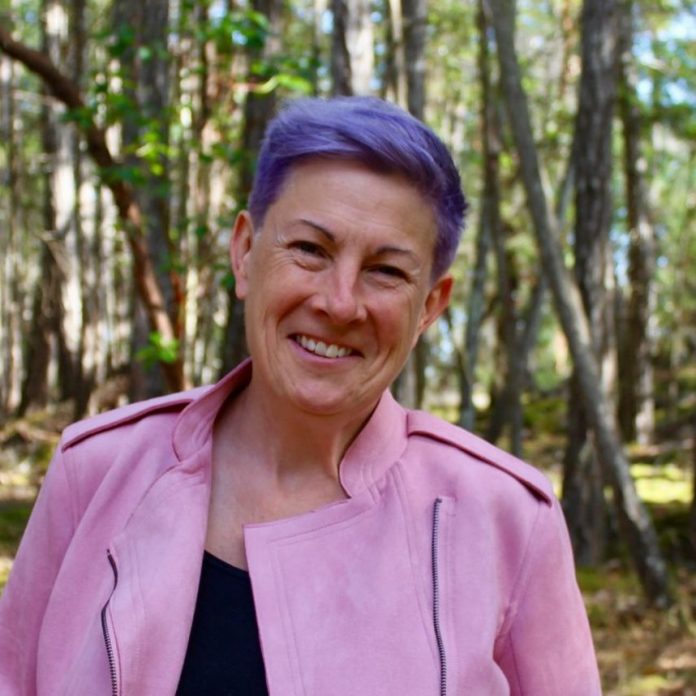
I asked Chenier if I could interview her further about ALOT, and we met in her office in the AQ on a rainy Friday afternoon. Chenier has a short, purple pixie cut and greeted me with a cup of tea in her hand, projecting an image that screamed both edgy and down to earth. The cushioned bench that I made myself comfortable on was right beside the window overlooking the observatory and resembled a reading nook, making her office feel more inviting than most.

Chenier started by talking about how she came to found the collection through research on her Master’s thesis titled “Tough ladies and troublemakers: Toronto’s public lesbian community, 1955–1965” which eventually evolved into the final publication “Sex, Intimacy, and Desire among Men of Chinese Heritage and Women of Non-Asian Heritage in Toronto, 1910–1950.” It was intriguing to see the evolution of her work and the value of oral history. The project, which can be found on interracialintimacies.org, is highly worth checking out.

Though the thread of Chenier’s research had changed, she realized, “I had all these cassettes. What was I going to do with them? Also, I knew the women who had made Forbidden Love, which was a documentary that came out in the early ‘90s, and they had said to me, ‘if you would like to use our research tapes (also cassettes) for your own research, you are more than welcome to.’ So I thought I should just digitize these, and it started with that idea. And then I thought, ‘why don’t I just put these online so that other people can use them?’”

One important thing Chenier noted, however, is that while some of the interviews conducted on the site are hers, the goal of the archives is not to go out and find people to interview. Rather, as she says, “an archive collects material that’s already been created. So my intention with this was to take these tapes that were just left in basements or attics or what-have-you [ . . . ] and make sure the work people had put into getting these stories, we didn’t lose again. Because you can’t get them back because most of the people interviewed are gone.”

Some examples of content she collected in the early days of the archive were tapes from a radio show and tapes from a gay cable television show from Alberta. Now the archives have expanded to include recordings from various places in both Canada and the US, including a tape of Angela Davis, a Black feminist activist (and one of my personal heroes), giving a speech at the Orpheum.

Chenier explained that the growth of the archives is dependent on her funding. She’s less restricted when she is able to hire a part-time archivist and is then able to put out calls for oral histories on social media and other platforms. Being an archivist, Chenier finds it vital to gather diverse experiences and makes sure to reach out to people both in Canada and the US.

She told me, “I certainly have [reached out to] people, especially [. . .] Black women because I really personally am very interested in the word ‘womanist’, which became popular in [black queer circles] maybe more ‘80s but I think it was around ‘70s.” 

Chenier hypothesized, “I think it spoke to a kind of, maybe an ambivalence toward the word lesbian, or maybe also a more expansive approach.” 

“I think it’s a big problem that the category ‘lesbian’ is racialized white and able-bodied, so we need to think about that. That’s why it’s really interesting, the word ‘womanist’, it intrigues me, how people are navigating it. And Two-Spirit is not the same as ‘lesbian’ so how do we navigate those kinds of things, right? And develop a deeper understanding.”

To Chenier, accessibility, remaining a grassroots project, and being woman-focused were and continue to be three fundamental aspects of ALOT, and she strives for inclusivity. 

The archives now contain content from people with a variety of identities, including gay men, in order to follow traditional archival practices and avoid breaking up collections of oral testimonies just because some of them may not be solely focused on lesbians. 

“If it was only gay men, we would say no, this is not the repository. But it has lesbians in it. If there’s some gay men in it, or straight people, we don’t care.” 

Ultimately, the goal is to feature the accounts of lesbians, which explains why the word “lesbian” remains in the project name.

So what exactly defines a lesbian? Who is able to donate their story to the lesbian archives?

Chenier explained, “Because we live in this moment, where for some people the word ‘lesbian’ is a dog-whistle to trans people, I always make a point of saying it’s a trans-inclusive project. So how do we define that? We’re not in the business of identifying people. If you feel your story belongs here, then donate it. If you don’t feel your story belongs here, then don’t donate it. It’s as simple as that. You decide.”

In an attempt to bring lesbian oral histories into the community, Chenier recently started hosting a reoccuring event called Lesbian Lives Live. The next event will be held at SFU, however, for all future events, Chenier will be partnering with Britannia Community Centre. 

The decision to move away from both SFU and the Vancouver Public Library (VPL) in the long-run comes as a result of both organizations allowing Meghan Murphy to book rooms in their venues. 

“[The] position of the university was that they were not going to back away from controversial speakers [ . . . ] I thought that was insufficient  [ . . . ] I hope it sends a signal to SFU.” 

Regarding VPL not refusing Meghan Murphy, Chenier says, “My understanding is that they’re in a legal bind [ . . . ] people are going to have to invest their resources to get creative about how they respond to these things and so far, I don’t see that happening.”

It is important for Chenier to hold Lesbian Lives Live in a safe space, and she was thrilled when Britannia agreed to cosponsor the event.

As Chenier describes it, Lesbian Lives Live is meant to “provide a multi generational space . . . where you can actually socialize and talk [ . . . ] And meet people across the generations. Young people are always so excited to meet older people.” Chenier’s passion for this project shines through as she exclaims, “It’s wonderful and I love it. I love it!”

Past events of Lesbian Lives Live have had guests such as Ma-Nee Chacaby, a Two-Spirit Cree-Ojibwa lesbian from Thunder Bay, and Mary-Woo Sims, a biracial lesbian who was also the first Human Rights Commissioner of BC.

The most recent Lesbian Lives Live event was held on February 16th at the Vancouver campus. It was a special polyamory-themed Valentine’s day edition. The guests included Anais West and Sara Vickruck, who created an “award-winning slam poetry musical” called Queer Poly Love Ballad. Chenier describes them as, “wonderful performers [ . . . ] full of energy and their piece explores polyamory.”

There will be more events monthly, and you can still check out ALOT for free, anywhere, anytime.

The top five hook-up spots at SFU Burnaby

0
Photo: Ahmed Ali / The Peak

Written by Juztin Bello, Copy Editor

Hello, Peak readers. It’s your favourite sinner here with the content that none of you asked for. A couple of months ago, I wrote an article about how I can’t have sex at home because I still live with my parents. No, that still hasn’t changed. Yes, my sex life still sucks.

I exposed the truth of having to hookup with people in rather precarious places like the park and in cars — both completely non-fictional and logical, of course. One thing I failed to include for you repressed SFU students, however, is the abundance of hookup-spot alternatives that exist right outside your lecture halls.

  1. The bathrooms between Taco Cantina and Menchies 

There are plenty of bathrooms at SFU that can be used for a casual nut-break, but this is by far the best. This bathroom is spacious, has great lighting, and positions its mirror in a convenient spot where you don’t have to see your “I’m being rammed from behind” face. Additionally, privacy is a guarantee, since this spot is between two dying businesses.

Maybe I’d be recommending a different bathroom if Triple O’s was still there, but unfortunately SFU students apparently lack the taste to keep good businesses open. As if choosing to hookup in a bathroom wasn’t indicative enough.

  1. Your TA’s office

Think you’re a rebellious student with a passion for getting back at authority? Want to hook up somewhere you know no one’s going to be? Then your TA’s office is the ideal hookup spot for you. 

With a desk full of blatantly unmarked and ignored papers for you to get thrown onto, your TA’s office is the perfect spot for you to act out your wildest naughty educator fantasies. You can try acting out some super seductive scenes with your partner, like asking to have your failing test score bumped up. Perhaps to a . . . 69? You might even turn this into a game to see how many different department offices you can hookup in. 

Plus, there’s no worry about getting caught here, because, surprise, no one goes to office hours. 

  1. History section of the library

SFU’s library is particularly popular for those who like the thrill of potentially getting caught. Here, you can get busy in more ways than one, and all that it takes is some canoedling against the bookshelves. Just like your legs during finals season, the library is open 24/7, meaning that rendezvous can happen at any time of the day. 

While any section of the library will do, the history section in particular is prime for getting down and dirty. Besides, there’s no better setting for someone to dominate you in than among books about terrible old white men doing the very same thing to the entire world.

  1. The Trottier Observatory

Now, this might not seem like an obvious choice for anyone looking to experience a big bang. If you play your cards right, the observatory can be full of all the black holes you can imagine. Ironically, the last thing you’ll have while you enjoy some company here is space. 

The ambience of this spot is definitely out of this world, and it’ll have anyone you bring here shooting for the stars. In addition, here at the observatory you can feel the pressure of something crashing into Uranus. Yes, you heard that right. I said what I said. 

Plus, maybe with a telescope this big, you’ll finally see just how little dignity you actually have. 

  1. The Student Union Building

Although this doesn’t exist yet, this space will be great for hooking up! I mean, it’s not like this space is going to be used to allow vacancy to clubs, groups, or other logical campus organizations anyway, right? Might as well use it for something!


Lesbian Jesus Hayley Kiyoko blesses us with new EP

0

by Madeleine Chan, Staff Writer

I’m not religious, but if I was, Hayley Kiyoko would be my god. 

Following her debut 2018 (#20gayteen) album, Expectations, I’m Too Sensitive For This Shit (ITSFTS) marks Hayley Kiyoko’s fourth EP. Affectionaltely named “Lesbian Jesus” by her fans, Kiyoko takes the queer experience and normalizes it through pop bops and danceable tunes. In particular, this five-track EP takes a deep-dive into her struggles with relationships, herself, and confidence.

ITSFTS starts with “demons,” which explores Kiyoko’s inner struggles through an infectiously intense beat and a spooky Halloween-esque atmosphere. Her experience with depression is especially highlighted in this song’s fearful and uneasy lyrics. This honest track makes a great opener and gets the listener deep into Kiyoko’s mind and music.

“L.O.V.E. Me”, the second song, emanates early-2000s vibes that proclaim a very strong and confident “love me or leave me” message. Out and proud, Kiyoko demonstrates confidence with her sexuality and self with this vibrant, boppy jam. The next song “runaway” is about giving a toxic person one last chance to say “something that won’t make [her] runaway.” Acting as a foil to “L.O.V.E. Me,” “runaway” shows the more anxious and troubled side of relationship struggles. 

Nearly a thematic continuation of the previous song, “I Wish” illustrates problems with a current incompatible lover and the longing desire for a new, better one. The stellar cinematic music video goes to the extreme by visualizing this message with Kiyoko and her friends having a seance to banish her lover from her memory. 

The EP wraps up with “she,” a celebratory look at Kiyoko’s past and future. The early 2000s vibe continues in both the song and the music video where Kiyoko’s young, closeted, dreamer self looks forward to her better, freer future. Her poster of NSYNC’s Lance Bass, who is also gay, even comes to life to lip-sync part of the song. The tune itself emanates freedom and joy, reflecting Kiyoko’s liberation with a funky, street-style rhythm, flowy synths, and anthemic chorus.

My only criticism of the EP is just that it’s an EP. It’s very short and has a run time of about 14 minutes, leaving me wanting more of these dreamy, danceable bops. I want a whole album to sink my teeth into, and to feel extended melancholic melodies and hopeful harmonies. I feel like it had the potential to be something greater than an EP, which will probably get less exposure than an LP. Considering that Kiyoko is also working on her next full-length album, and that these songs were originally going to be a part of it, I feel like a delayed release would have been a better exposé of her work.

To be fair, Kiyoko did say in a Rolling Stone interview that she’s now simply releasing what she writes instead of “disappearing and coming back.” I can’t knock her creative process – I guess I’m just a greedy fan who would rather drown in an hour of her smooth, satiating voice than wade in 14 minutes of short bops.

Despite its ephemerality, ITSFTS reconciles past, present, and future through plenty of 2000s callbacks and fun melodies for a slice of bite-sized bliss.

Election result announcement delayed for Board of Governors and Senate

1
SFU students are still waiting for the results of the Board of Governors and Senate elections

By: Gurpreet Kambo, News Editor

UPDATED 20/02/2020: Electoral Officer Steven Noel responded to The Peak‘s inquiry with the following statement: “There are some issues being considered by the Electoral Standing Committee. I do not have a time frame for when results will be released.”

___________

The announcement of the results of SFU’s 2020 Board of Governors and Senate elections have been delayed. According to an email that was sent out to all SFU students, the results were to be released as of February 18, 2020 — however, they have yet to be posted. The Peak has followed up with Electoral Officer Steven Noel for comment on the delay of the results.

The election had six candidates for two positions on Board of Governors (one graduate and one undergraduate), and 25 candidates for 16 positions on Senate. Voting occured from February 11 to February 14, 2020. 

This article will be updated pending response from SFU and/or the release of the election results.

5 Lesbians Eating a Quiche draws in the crowd with an immersive production

0
Screenshot via Facebook

by Yelin Gemma Lee, Peak Associate

When I first looked up the production 5 Lesbians Eating a Quiche in Vancouver, I was immediately skeptical. A play claiming to be about lesbians, written by two masculine-presenting names (Evan Linder and Andrew Hobgood) nearly 10 years ago? I was wary of the possibility of another poor representation of lesbians through a male lens. 

The venue, Go Studios, was smaller than I thought and I arrived in the nick of time to grab a seat. The people to greet me at the door were the actresses themselves, but get this — they were in character. 

“Oh Beverly! It’s so good to see you, come in come in! Vern, look who is here, it’s Beverly!” was exclaimed as I finished checking in. They handed me a sticker name tag that said “BEVERLY,” which, despite my best efforts, was not going to stick to my sweater effectively throughout the show. 

The play is set in a local community centre in 1956, on the day that the Susan B. Anthony Society for the Sisters of Gertrude Stein are having their annual quiche breakfast. Everything appears normal until a nuclear bomb hits their town and chaos ensues. I found myself unable to hold back my laughter for most of the play at all its symbolisms, sexual implications, and the pure absurdity of it all. The quiche was worshiped  as the god given treasure of “femininity” and the entire play revolved around the quiche and the sexual innuendos from it. The acting was seamless and beyond my expectations, and the director made excellent use of the small stage space by extending it to the whole room. I truly felt like I was taken to another place, despite the minimalistic set.

I soon discovered that 5 Lesbians and a Quiche was a semi-interactive play. We were not an audience watching a play, we were members of the Susan B. Anthony Society for the Sisters of Gertrude Stein. Part of the chaos that ensued after the supposed bomb hit the outside of this community centre was when the characters came out as lesbian. Not only that, but apparently everyone in the audience was a lesbian. At one point in the show, all the characters were going around the room clasping hands, looking audience members intently in the eyes or involving them in their story in some way — including me since I was in the aisle seat. 

I felt that the fact that the play was semi-interactive positively added to the play’s quality but shouldn’t that have been disclosed to attendees so that they could either prepare themselves or choose not to come? They had a section on the back of the pamphlet that listed pre-show announcements including that “we invite you to participate in this show respectfully and responsibly,” but that didn’t feel like enough of a heads up. Not to mention that “invite” sounds like more of a suggestion, which was definitely not the case.

All in all, I thought the play was a refreshing, imaginative hit of a feminist and queer comedy. But for a queer production, I felt that it was irresponsible to not be practicing consent on a basic but important level.