Home Blog Page 449

SFSS Election Slogan Generator

0

Written by Gabrielle McLaren, Editor-in-Chief

The first letter of your name

A: Inspire 

B: Aspire  

C: Uplift 

D: Free 

E:  Build 

F:  Lead 

G: Revolutionize 

H:  Dream  

I: Earn 

J: Audit  

K: Transform 

L:  Commit to 

M: Invest in 

N: Motivate 

O: Become

P: Innovate 

Q: Encourage 

R: Secure 

S: Ignite 

T: Achieve 

U: Abolish 

V: Impress 

W: Imagine

X: Awaken 

Y: Appease 

Z: Feed

Describe your pants

Blue:  Students 

Black: The SFSS 

Beige: UBC 

Grey:  Change

Green: The Deficit 

Burgundy: The World 

Patterned: Snacks 

Colourful: Tuition 

I’m actually wearing a skirt or dress: The Bears

I’m not wearing pants: The Gondola

The battle of wills between you and your TA — WHO will answer the discussion question?

0
Victor Yin

Written by Jennifer Low, Peak Associate

100 – Student

I’m sitting in class and I’ve made a terrible mistake. The TA’s just asked a question about the readings, the readings which none of us have so much as opened on Canvas. Accidentally, I meet his eyes. They’re gunslinger eyes, as if from the Wild West, his fingers so obviously itching to draw a pistol.

We’re about to be locked in battle.

We’re about to stare uncomfortably into each other’s eyes until somebody starts talking. 

Mom, I’m scared.

***

96 – TA

Come on! There is, literally, no right or wrong answer. Not everything is a trick question, people! Hey . . . Did one of you just sniff your armpit? Wow . . .

To be honest, I also just skimmed the readings, barely. One of you fools better have an answer, because, guess what, I’m an even bigger fool than you are.

***

92 – Student

Man, your eyes are piercing into my soul. Can you see the lack of knowledge in my helpless mind? Or . . . can you smell the scent of my illiteracy, instead? Might have to take another secretive self-sniff . . . 

You’re still looking at me. Why are you still looking at me? I literally haven’t talked since preschool. And now it’s 1:30 p.m. and my stomach is growling with nostalgia. 

***

91 – TA

Whoa. Was that my stomach again? That quinoa salad was not enough to last me all day. Maybe between tutorials, I can make it to Renaissance if I run really fast . . .

Or I could just leisurely go now, since, clearly, my students have the combined observational skills of a dead water buffalo! Did any of you even listen during lecture? I mean, it was super dry, and I also zoned out. But do I look like a dead water buffalo who needs to grub for undergraduate grades? 

Robert C. Brown has the worst lighting . . . My eye is twitching. I wonder if it’s noticeable.

***

84 – Student

You definitely heard my stomach gurgling that time . . . Stomach, stop drawing attention to yourself, the predator is closing in. 

Like, I do have a granola bar in my bag. But I think it’s bad form if I start eating and don’t answer the question. And I also think this bar spoiled nine semesters ago. 

He just winked at me, and I don’t know how to explain that I don’t love him, I’m just a socially awkward farm animal. 

***

80 – TA

At this point, I’ll take anything! I planned for us to spend 10 minutes on this discussion point! Someone speak! Anyone?!

***

69 – Student

Just move on already. Hunt me. Devour me and my sad, deer-in-the-headlights eyes, or give up. 

Pathetic.

***

00 – TA

“I guess no one did the readings,” he says with a chuckle. He laughs awkwardly, merrily, like Santa Claus. “Let’s move on to student presentations. Thank goodness for those.”

Self-Branding When You Have No Sense Of Self

0

Written by Lubaba Mahmud, Staff Writer

We’re all aware of how important the concept of “personal branding” has become. And we’re also aware of the insecurities it can bring about, especially for the less spirited amongst us. How do you brand yourself when you barely even have a sense of self? How do you make yourself stand out to employers as a “driven, passionate creative thinker” when you haven’t had a personality since you were 10 years old?  (It doesn’t help that that personality was “young, naive, and confused about how to spell ‘entrepreneur,’” does it?) 

Fear not! If you’re scared of what will happen when “being genuine” leads people to realize that you’re a soulless mannequin whose most notable achievement is using proper grammar in a text message, follow these easy pieces of advice to help you brand yourself — inexperienced student or not. 

That’s right: we’re going to churn out the illusion that you’re a polished, productive member of our esteemed capitalist society — even if your lack of drive, opinions, and motivations has left you with no real skills but procrastination. That’s how I landed a job at The Peak, so I know what I’m talking about.

Your FACEBOOK

  • Download some basic motivational quotes. Why strain yourself to be inspirational when someone else can do it FOR you? Spray mottos like ”HUSTLE HARDER” all over your biography and your cover photo. Throw in a stolen meme now and then, because coming off as too serious will just make people notice your one-dimensionality. 🙂

Your INSTAGRAM 

  • Ditch the cliché pictures of food. People can’t know that spice is the closest thing you have to emotions. Instead, describe yourself as a “street photographer” in your bio and flood your feed with random pictures from your transit with a bazillion hashtags.

Your LINKEDIN

  • Focus your profile on what you’ve categorized as your soft skills. This will give the sense that you actually have a heart. For example, “problem-solving” is a soft skill. Remember when it snowed hard and you made the emotionally wise decision to curse SFU from the soft comfort of your home? Bam, problem-solver!

Your RESUME

  • Format your resume correctly. Pepper your layout with tons of random colours, so your employer thinks you’re really creative and subversive. 😉 Who says black is the standard? Break the rules with bright pink subheaders, neon blue borders, vomit green contact info . . . It’s OK if it looks unreadable after all of this pizzazz. With fake skills like yours, maybe that’s how it should be!

Your INTERVIEW

  • It’s OK that you have no desires or achievements to speak of. Don’t waste time exaggerating some worthless career goals when asked about yourself: potential employers want to know that your interests fall outside the labour sphere. Leave the interviewer wanting more. They’ll be singing “I wish that I could be like the cool kids” as soon as they get the edgy, devil-may-care vibes off your blank stare and failure to adequately answer any of their questions, so you’ll be hired right away. 

Honestly, who needs to pay $400 for co-op workshops? Just send me a $4 cheque and I can give you more personalized tips, too. (I wouldn’t give out totally legit advice like this for free in THIS economy.)

The burden of the subscription payment model is bleeding young people dry

0
Subscriptions killed millennials’ financial security. Illustration: Cora Fu/The Peak

By: Nicole Magas, Opinions Editor

Just last month my computer did the thing that I hate the most: it updated. I had been dreading this particular update for a while as it locked me out of all of the programs that I frequently use until I paid the exorbitant ransom for the privilege of using my laptop as more than a $3,000 hotplate. As if my monthly bills weren’t already choked full of a dozen different subscriptions to various entertainment streams, now I also have to add subscriptions to basic utility software.

Some of my programs were kind enough to only ask for a one-time payment to open and re-access all the data that I’d already blithely stored in them — previously free of charge. Others have slipped down the dark road of the piecemeal economy, wherein users are slowly bled dry over the course of many months by the thousand tiny knife cuts made by the subscription payment model. These subscription-based pricing models require customers to pay a set amount at regular intervals for products or services. 

It’s no secret that the tech industry has been slowly shifting from one-time software license purchases to monthly subscriptions. This went largely unnoticed when the demand for the monthly pound of flesh– er, subscription fee — was exclusive to Adobe’s Creative Suite. It only affected the creative types after all, and if anyone is rolling in solid gold bathtubs of cash, it’s those damn artists. However, over time, even basic software like Microsoft Office has prodded customers down the subscription plank by removing more affordable one-time purchase options.

So what’s the big deal? Softwares update at a rapid pace, and it’s only fair that tech companies are paid for providing cutting-edge features on their services. While setting aside the fact that newer doesn’t always mean better, one glaring problem with a mass migration to the subscription model is that it creates huge barriers to entry — especially for young people who are increasingly being sucked down the whirlpool of non-standard employment. 

Consider striking out on your own and starting a small niche magazine. We’ll call her Alpaca Monthly. You don’t have the budget for print, and besides, you’re environmentally conscious, so digital it is! Even before you factor in the cost of design, labour, and licensing those sweet, sweet alpaca pics, the subscription fees for the platform software alone can run between several hundred and several thousand dollars. PER MONTH. And that’s even if you choose to avoid Adobe like the capitalist plague it is.

And programs like Adobe and Microsoft in particular have become so ubiquitous as file formats that they can be likened to utilities in the software world. This makes it next to impossible to collaborate on projects when members of a team are forced to use cheaper or free alternatives over more standard monthly subscription software services.

Millennials take a lot of heat for destroying countless pillars of consumption with our inabili– er, refusal to spend our mountains of disposable income. But comparatively, little outrage is being raised over the way that the shift to subscription payment models is making it even harder to save for that pipedream of retirement before 75. 

And if you’re sitting comfortably in bed, scoffing at me and saying, “This doesn’t affect me! Me and my seven roommates pool our pocket change each month and share passwords between us,” then I hate to break it to you, but we’re quickly losing that slight advantage, too.

Students using their money to pay for classes deserve to learn their way

0
I paid a lot of money for this laptop and I intend to use it. Illustration: Alex Vanderput/The Peak

By: Marco Ovies, Arts Editor

It was the beginning of the semester and I had just walked into my 400-person lecture. Being a fourth-year English major, I’m more used to my classes consisting of 10 to 15 people, but I was really excited to take this 100-level film course. So just like in every other class, I pulled out my reusable water bottle, my coffee, and my laptop, ready to get to work. That is, until the professor informed us that laptops are not allowed in his class. Apparently, they are not only distracting, but also rude because he likes to absolutely make sure we are paying attention. 

While I think it is fair to argue that laptops can be distracting, it’s not fair that this professor  assumed the worst of all of his students. I felt like I was being treated like a child — odd since I’m considered an adult in court and can purchase alcohol. But here was this professor telling me what I can and can’t use in his class with an almost smug smile on his face, watching us all put away our laptops in disappointment. 

It might seem like I’m complaining about a very small inconvenience, but at the end of the day, I spent a decent chunk of money to attend this class. I also spent a decent amount of money on this laptop specifically for school. So why am I not allowed to use the tools that help me learn best? 

According to an op-ed published in daily news outlet seattlepi.com, there are many benefits to using a laptop during lectures. It allows for more effective note taking, which enables students “to index and organize their study material automatically, quickly search for information by keyword and share notes with other students.” Personally, it gives me the ability to fact-check any information within seconds instead of waiting for the professor to notice my raised hand. 

By the time the lecture is over I’ve already forgotten my question, so having the ability to look up information myself in the moment is valuable. I find it especially difficult to be noticed in these large 400-people lecture halls, and quite often my raised hand remains unseen in the sea of students. 

Instead of being able to clearly read and look up material from my own screen, I am stuck squinting at the professor’s lecture slides, frantically writing and trying to keep up with the professor’s insanely dense notes, and desperately waving my hand to be noticed when I have a question. Then I leave class feeling not only exhausted, but disappointed that I had not learned anything properly — all because my professor was upset that I might be using Facebook instead of taking notes. 

If I wanted to be treated like a child, I would have gone to Chuck E. Cheese; it would be a lot cheaper than attending this lecture anyway. But instead, I am being told how I should or shouldn’t learn. 

I feel bad for the tiny first years who are taking classes for the first time. They expect to be treated like adults and are paying to attend this lecture. If I’m spending hundreds of dollars to attend a class, I should be able to at least use my laptop. At a bare minimum there should be a disclaimer in the course description saying that computers are not allowed. Because at the end of the day, it is my money I am spending to be here and I should be able to learn the way I want.


What Grinds Our Gears: These jerky bus rides are making me lose my mind — and my lunch

0
Image: Chris Ho / The Peak. Stock courtesy of Global News

By: Meera Eragoda, Staff Writer

My ongoing experience of being on buses has featured drivers braking every two goddamn seconds for my twice-a-day hour-and-a-half commutes. I don’t know anymore if this is my life or if I’ve died and I’m in my own personal hell.

If I’m standing, I’m being flung into the laps of strangers — and neither of us want me in their personal space. If I’m sitting, I’m either sliding practically off my seat, or the jerkiness of the brakes is literally making me nauseous. And no, I am NOT exaggerating this point. 

It’s gotten so bad that I now notice those magical bus drivers who manage to brake smoothly and make me feel like I’m gliding up or down the mountain on a beautiful, silky cloud. They are doing the Lord’s work and I make a point to tell them both (yes, there have only been two).

Clearly, there are no courses for bus drivers to take where they learn how to brake smoothly, or this problem wouldn’t be so rampant. TransLink really needs to make sure that their drivers know how to brake properly before being given a bus to operate. It would make a huge difference to the daily public transit experience.

Being on the bus these days is truly worse than being on a roller coaster. At least a roller coaster has the decency to give you a rush of adrenaline before the end of the ride.

The ball is still round and, no, you can’t eat it

0
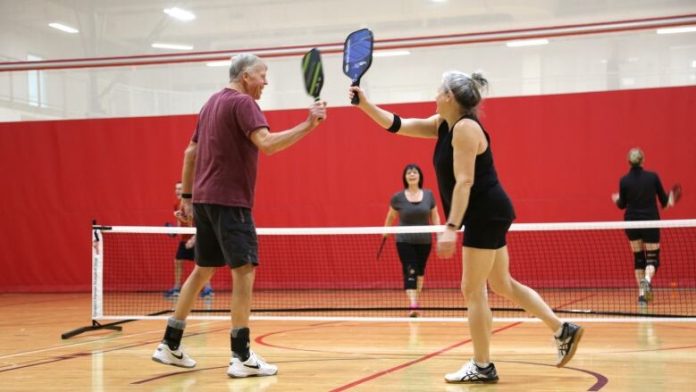
Many pickleball participants say they’ve become addicted to the sport. — Photo: CBC

By: Meera Eragoda, Staff Writer

If you’re like me, you’ve heard the word pickleball floating around, but you knew that looking into it would be as disappointing as an ice cream social with no ice cream. What I failed to consider is that ice cream socials can actually be fun, even without ice cream. Similarly, pickleball is a sport relished by many, despite not having anything to do with pickles.

Pickleball is played on a court that is identical to a badminton court in terms of size and markings. However, unlike in badminton, the net is lower and the area directly in front of the net, called the kitchen, is a non-volley zone (where players can only return the ball after it has bounced). Pickleball is played with a green plastic ball with holes, essentially a wiffle ball, and a paddle that resembles a ping-pong paddle. This sport is best described as a Frankenstein-esque mashup of tennis, badminton, and ping-pong.

Pickleball was invented in the 1960s by three families who spent their weekends on Bainbridge Island (what a life!), as a way to rustle up something for their kids to do on a day that was too gloomy for the beach. They had a badminton court but couldn’t find a birdie, so they used a ping-pong paddle and a wiffleball. The rules came out of an effort to tailor the game to the founding adults. One was very tall and had a strong serve, so the others insisted on the non-volley zone. The height of the net was measured to the waist of another of the participating adults.

As for the name, it may seem like a jar-ring departure from what the game actually is about. Nobody really seems certain where it came from. The major competing theories on the origin of the name are that it is either a reference to a pickle boat (where the crew consists of leftovers from other boats) or to one of the founding families having a dog named Pickles who frequently ran off with the ball.

A game that started out for the kids was soon co-opted by the adults. Now, pickleball’s largest constituency is drawn from an older demographic, though the young are starting to adopt it as well. It’s a social game that’s easy to pick up, is light on the joints, and is relatively low-cost compared to other sports. But don’t let this get you thinking that you can invite your pickleball-playing grandparents over to the court and smash them with ease. Given its emphasis on hand-eye coordination and strategy, rather than speed, agility, or fitness levels, age isn’t as much of a disadvantage as it can be in more strenuous sports. 

If you want to play pickleball in BC, information on how to do so can be found at www.pickleballbc.ca. Starter kits with a net, two pickleballs, and two paddles are about $70, with just the balls and paddles available for about $25. This sport is literally the epitome of good, wholesome fun, and who doesn’t want that? 

SFU Burnaby needs an emergency medical technician on site before another tragedy occurs

0
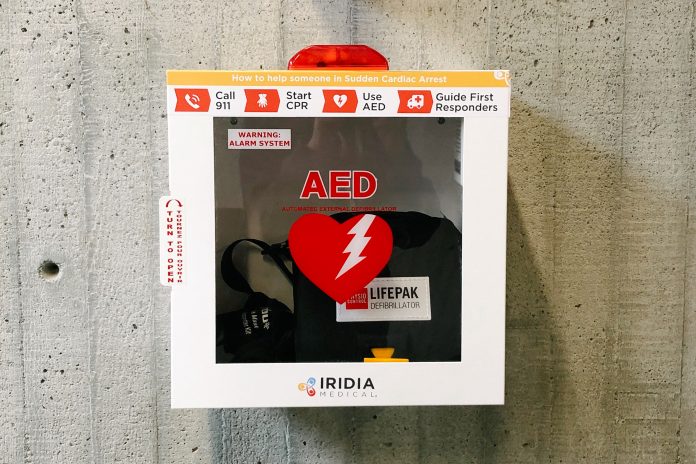
After two medical emergencies it’s clear we need a dedicated professional on campus. Photo: Ahmed Ali/The Peak

By: Kim Regala, Staff Writer

You’re sitting in lecture when a student in your class starts experiencing shortness of breath. Campus Security is alerted right away, but when they arrive, it’s clear that they are not entirely trained for the situation.

An incident where our school’s assigned medical team is not well-equipped for a medical emergency may seem hard to believe. However, it’s not far from a recent situation at SFU, wherein a student reportedly experienced a seizure and witnesses took to Reddit to discuss concerns about SFU Security’s response. This happened in the wake of the tragedy that occurred during the Fall 2018 semester, when a student suffered cardiac arrest during an archaeology exam. Unfortunately, qualified help arrived too late and the student passed away.

As medical emergencies continue to worry students, it’s about time that SFU pays closer attention to our inadequate options for medical safety. What we need is an emergency medical technician (EMT) onsite — someone whose sole responsibility is to handle these instances and is properly trained to do so. As medical emergencies can happen at any place or time — even to seemingly healthy young folk — we shouldn’t have to rely on individuals who may not have the right training to deal with situations like these.

In the event of a medical emergency, SFU’s emergency procedure urges students to call 911, preferably from a campus phone so SFU Campus Security can be notified as well. While this is typically the most optimal course of action for most crises, our school’s location makes this difficult in medical emergencies. With Burnaby campus situated on top of a mountain, ambulances can take longer than normal to arrive at the scene. 

Paramedics are expected to reach an average response time of nine minutes. Recent reports, however, suggest that this is only achieved in 50% of life-threatening calls in urban centres around British Columbia. Factor in weather conditions and limited roads that actually reach our campus, and there is a serious cause for concern for help to get here in time.

Considering these circumstances, it is especially important that SFU provides students with medical professionals onsite. We currently have to rely on Campus Security, whose expertise is limited to minor injuries, first aid, and urgent assistance. In response to email questions sent by The Peak, Andrea Ringrose, Director of Campus Public Safety, clarifies that all contract security officers have some level of first aid training, and that “permanent SFU Campus Public Safety (CPS) Supervisors are certified to Occupational First Aid (OFA) 3 level, an advanced level of first aid training and certification.” According to the ProSafe First Aid website, this level includes “identifying and managing” respiratory, circulatory, and environmental emergencies. 

However, Ringrose also notes that even with this level of first aid training, “security officers are not paramedics” and that they are trained as “initial response to medical emergencies, injuries and cardiac arrest until emergency services are on scene.” Additionally, Campus Security’s role is not exclusive to medical emergencies, which means that they may not have the experience necessary to deal with incidents that are less common than your typical sprains or cuts. 

Other institutions have already recognized the importance of having dedicated medical staff on hand in case of emergencies — for example, UBC. On top of having their own campus security, they also have the Occupational First Aid Team, a group dedicated specifically for handling medical issues on campus. This service is available 24 hours a day, and is reachable through landline numbers that can be found online. While students at UBC are also asked to call 911 in medical emergencies, the big difference is that UBC actually has a hospital on campus, so response times may be drastically shorter.

If our fellow BC university can offer immediate and proper medical help on campus in the event of an emergency, so can we. Instead, we have to rely on a team whose job is not first and foremost to attend to medical emergencies. Having an EMT onsite would be the best option to avoid any other tragedies on our far-flung mountain campus. Emergencies happen all the time — at the very least, our campus should be well-prepared for them.


SFU Women’s Basketball drops penultimate game of 2019–20 regular season

0
Western Washington dominated the Clan in all four quarters. — Photo: SFU Athletics

By: Dylan Webb, Sports Editor

There is some good news and some bad news when it comes to the SFU Women’s Basketball team. The good news is that a string of strong performances earlier in the season allowed the Clan to clinch a spot in the upcoming GNAC Championship tournament. The bad news is that the team has cooled off in the last few weeks by losing four of their last five games with playoffs just around the corner. 

After splitting the two games on their Alaska road trip, the Clan took off for Bellingham, Washington knowing that they had already secured a spot in the GNAC Championship tournament. Nevertheless, despite the confidence boost that earning a playoff spot usually provides, the team fell to Western Washington University by an enormous 29-point margin. Though the Clan benefitted from a relatively balanced offensive attack that included double-digit points from Justina Chan, Claudia Hart, Jessica Jones, and Jessica Wisotzki, they were no match for the offensive depth put on display by Western Washington University. The loss brought the team’s record down to 12–7 on the season, which has them in fourth place in the conference with just one game remaining on their regular season schedule. 

Having punched their ticket to the GNAC Championships, the final game of the season presents an opportunity to tighten up defensively and build some momentum in advance of the playoffs. More important than the result of the final game is the team’s confidence level heading into a championship tournament that will see the Clan face a University of Alaska Anchorage team that crushed them by more than 20 points in both meetings this season. The Seawolves have also won nine games in a row and lost just once in conference play this season, so they will obviously be a formidable opponent. 

As the 2019–20 season draws to a close for the SFU Women’s Basketball team, it’s safe to say that it was a successful one for the program. Finishing fourth in the conference to secure a berth in the GNAC Championships is an impressive accomplishment, even if it means the Clan will enter the championship tournament as a clear underdog. As many competitive athletes know, sometimes underdog status can relieve the pressure and allow a team to just play in and enjoy the moment. Hopefully this holds true and the Clan can pull off an early-March upset to claim the GNAC Championship trophy. The GNAC Championship tournament will take place at the Royal Brougham Pavilion in Seattle, Washington from March 5 to 7

The Week Ahead in SFU Sports: March 2–8

0
The SFU Athletics logo. — Photo: SFU Athletics

By: Dylan Webb, Sports Editor

It’s an exciting week for SFU Sports as the men’s basketball team takes part in the GNAC Basketball Championships. Meanwhile, the hockey team concludes its regular season with a Vancouver Island road trip, and the women’s wrestling team takes part in the National College Championships. The first home games of the season for the softball team will also take place, providing some live action for Clan fans on Burnaby Mountain. 

Softball:

The SFU Softball team will play its first home games of the 2020 GNAC season this weekend at Beedie Field against Montana State University Billings. The first set of back-to-back doubleheaders will start at 1 p.m. on March 7 and the second set of games will be played on March 8 starting at 12 p.m.

Men’s Basketball:

A long season of hard work and success for the men’s basketball team will culminate in a trip to the GNAC Men’s Basketball Championships in Seattle, Washington this week. While their opponent hasn’t been determined yet, the team will play its first game on March 5. The tournament is single-elimination format, so the Clan will need a win on March 5 to continue their quest for the title. 

Women’s Golf:

The women’s golf team is headed to Hayward, California this week for the Tim Tierney Pioneer Shootout on March 2 and 3

Women’s Wrestling: 

A long flight to Adrian, Michigan is in store for the women’s wrestling team this week as they look to continue their successful season at the National College Championships on March 5 and 6

Hockey: 

It’s a huge week for the SFU Hockey team as they travel to Vancouver Island to play the last two games of their regular season schedule. Home-ice advantage in the first round of the playoffs is on the line as the team looks to hang on to its second place position in the league standings. After taking on the last place University of Victoria Vikes on March 6 at 7:30 p.m., the team will head to Nanaimo for a showdown on March 7 at 8 p.m. with the team they will face in the first round of the playoffs, the Vancouver Island University Mariners.