Home Blog Page 411

Sodium Podium IV

0
There was much to be salty about this semester. Illustration: Reslus/The Peak

By: Juztin Bello, Madeleine Chan, Meera Eragda, Jessica Garcia, Danielle Li, Marco Ovies, Devana Petrovic, Paige Riding, Joy Tian
Illustration: Tiffany Chan/The Peak

The BMI scale? More like the BMBYE scale

CW: mention of weight, self-image

Alright kids, it’s time for a race. Now, everyone, line up. On your marks. Get set — wait, wait. Something’s wrong here. BIPOC individuals, take 10 steps back. Those with a larger frame, take another two steps back. Your wrist bones look too wide, back! Good. Now we’re looking fair.

At least, that’s what Belgian mathematician Adolphe Quetelet thought was fair when creating what would later become the body mass index (BMI) scale — a scale apparently used to determine body fat content in all individuals. Simply put, Quetelet believed that the ratio of your height and weight would be a good all-around way of determining if you had a “healthy” body fat content. But this system is more flawed than my first working drafts.

When making the index, Quetelet used predominantly European men as a sample. I’m no statistician, but I don’t think you can use such a limited sample size to represent all individuals in the world, dude. Also, other genders can apparently get fucked. We’re not representing you in this data, suckers.

I don’t have the space here to get into Eurocentric beauty standards being “the global norm” and the racist connotations behind this. In short, this scale is quick to place anyone who is not an average-height person with a slight build — traits often associated with those of European descent — much too close to the “overweight” side of the index. There are vastly different builds within and among different ethnic groups. This one Belgian guy didn’t care.

Further, it doesn’t differentiate between muscle and fat. If you’re significantly shorter or taller than “the norm,” your numbers will be skewed. Tough luck, I guess. Many medical professionals, schools, and more use this scale despite its blatant flaws. And this flawed system does little more than compare bodies in an unscientific, unhealthy way.

Overall, the scale is so problematic that it’s almost shocking that it’s still in use today. Just another aspect of life placing white men as the “ideal.” I need a drink.

Paige Riding


Things are bad enough right now without porch pirates

Illustration: Maple Sukontasukkul/The Peak

It has been difficult these past couple months. I’m stuck at home, separated from all my social circles, staring up at a grey rectangle of sky from my tiny basement suite windows. Pretty much the only thing that brings me any joy these days is the small fragments of retail therapy I can still engage in while under quarantine.

Or at least, I could be enjoying the delight of a package delivery if it weren’t for the packs of goddamn porch pirates roaming the streets. I’ve lost spatulas, books, and clothes for job interviews so far. I mean come on! Everyone is suffering through this global pandemic together and your response is to nip a pack of MUJI pens off of someone’s porch? Way to be an asshole, dude.

What makes this worse is that I literally never leave my house. I am always home. I have to be. Which means that the delivery people are just leaving packages right out in the open, no attempt to hide them, no attempt to knock, ring, smoke signal, nothing. And I get the importance of no contact delivery, believe me. But if you won’t knock on a window politely could you at least make an effort to hide the package somewhere other than the brightest, most open space on my goddamn front stoop?!

I have things to do. Textbooks to read. Zoom lectures to attend. I can’t be sitting outside from 6 a.m. to 6 p.m. on the off chance that my order of cartoon cat socks will arrive on the day Amazon says it will.

Can we all just agree to help each other out a little right now? I don’t want to have to become the neighbourhood privateer over summer break just to dish out some justice to suburban corsairs.

–Jessica Garcia


Stop taking advantage of your artist friends!
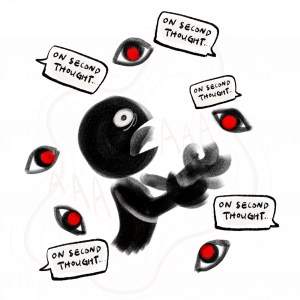
Illustration: Marissa Ouyang/The Peak

If you have an art friend who is trying to sell their work — don’t be the fucking asshole who tries to take advantage of them. I’m an illustrator, and I’ve experienced everything from casual NSFW requests to professors trying to scam my undergraduate ass. However, in all my time doing commissions, there is one guy who takes the cake for being the worst client ever. If you want to learn about everything you shouldn’t do, read on.

So I’ve just started doing commissioned work when a friend contacts me via Instagram asking for not one, not two, but 40 pieces of art for a video he’s working on. Someone is willing to support my passion financially, it doesn’t get any better than this, right? 

Psyche! A few months later, I’m laugh-crying as I stare into a never-ending hellscape that’s somehow worse than Itachi’s Infinite Tsukuyomi. 

In this hellscape, 40 illustrations morph into 50, then 60, then 70. Negotiations start, then finish, then start again. Somehow I ended up with less time than initially agreed to finish the pieces. His entitled ass found me on every platform, hassling me for updates while attempting to squeeze extra work in (again). He’s changed his mind so many times, I’m still haunted by the phrase, “Actually, on second thought . . . ” 

As I screamed into the endless void of this fever dream, I questioned why I ever gave him a “friend discount” in the first place. Out of misplaced sympathy, I’ve taken the time to critique his shitty project (which contains plagiarized jokes), and drafted free storyboards for him — which he later took credit for. 

To him and any other “friend” like him, I say: pay artists what they deserve for the work they do, asshole.

–Danielle Li


The size range for men’s clothing is XS, and yet they don’t make enough in that
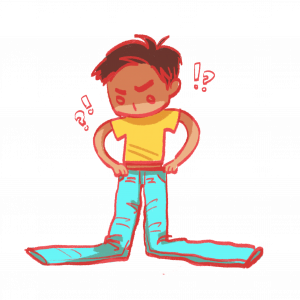
Illustration: Marissa Ouyang/The Peak

size 

Alright, let me start by saying I’m a short dude. And when I say short, I mean short. Not like short as in “in class photos I sit in the bottom row” — no, I’m not even on the bottom row, I probably wasn’t even invited to be in the picture because I’m that short. I have friends who sometimes can’t hear what I’m saying because they’re so much taller than me and need to bend over to hear me talk. I still wear my commemorative hoodie from the fifth grade because it still fits.

Long story short (ha) I’m 5’4, and I am constantly reminded of how short I am.

So you can imagine when it comes to shopping in the men’s section of any clothing store, I tend to struggle finding clothes that fit. My desired shirt size tends to gravitate towards XS and S, but very few stores carry XS in men’s clothing. Over the years, I’ve begun moving towards the oversized look; whether that’s out of changing my aesthetic or because it’s my only choice, who can really be certain. But when it comes to buying anything that goes on the bottom, I might as well walk straight to the children’s section and slap on a pair of boy’s 8–14+ jeans. 

Look, I’m a pint-sized man with a loud personality and a big heart — but I’m not trying to find pants to fit my heart, I’m trying to find pants that don’t swallow my short legs. There’s nothing more disheartening than looking at outfits online and being inspired to replicate them, but going to stores to discover pants are either too long, too baggy, or specific styles aren’t made in anything less than a 30 waist or 30 length. Basically, when it comes to trying to reach the looks I aspire to have, I always come up a bit short. 

This might be a tall order, but please, clothing stores, could you just come out with smaller men’s clothing? 

Juztin Bello


Please tell me how big this plant will grow
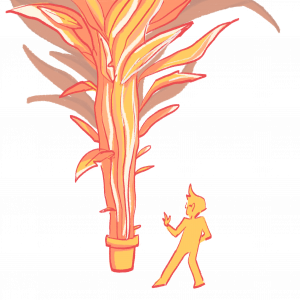
Illustration: Marissa Ouyang/The Peak

So lately, I have gotten into plants to the point that it is making it inconvenient to actually get any work done. As of writing this I have 16 plants all crowded around my one basement window. They’re cute, small, and the perfect size for a desk . . . at least for right now. 

I am growing three trees. You heard right, trees, like those big boys you see in the park kind of trees, and I had no idea I was even doing it. Why did nobody tell me that a palm plant is actually just the baby version of a palm tree? Shouldn’t there be some sort of disclaimer?

Nobody stopped me when I was buying my cute baby coffee plant at the store and was like, “hey buddy I don’t think you know what you’re walking into, those grow 10 feet tall.” 

10 fucking feet tall.

With plants becoming the latest trend for apartment decorating everywhere, some sort of warning is needed here. I can’t be the only one who has this problem . . . right?

–Marco Ovies


Do the whole chore properly or don’t do it at all, Kyle!
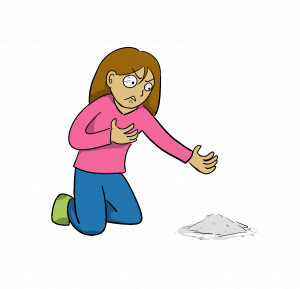
Illustration: Joy Tian/The Peak

I give off the impression of being a very easygoing person. Little do people know, there are many things that aggravate me, and every once in a while my annoyance is pushed over the edge by the tiniest thing. This causes me to sit back and start internally screaming for an entire day.

A recent such incident involved, unfortunately, my younger sibling. Anyone with siblings (especially younger ones) can relate to me here. Sometimes it just seems that their existence is annoying.

So here’s what happened:

For the sake of anonymity, let’s give my sibling a fake name and call him “Kyle.” Kyle and I don’t have a set list of rules of who does what chores in the house. It’s more of a matter of who wants to do what at a time that is convenient for them. This usually works. However, a problem I have is that when Kyle sweeps the floor, he leaves the pile of dust on the ground for someone else in the family to pick up.

Like, who does that?

Don’t you just love coming home to see a pile of dust on the ground after you’ve already accidently stepped into it? No matter how many times I tell him to stop doing that, he just ignores me like any younger sibling would. In fact, I think he’s doing it on purpose now. 

Long story short, people who choose a chore only to do half of it and leave the rest for someone else to finish is something I find really annoying. If anyone has any tips on how to get Kyle to listen to me, please let me know so I can stop crying. Thank you.

–Joy Tian


Speed up, slow skribbl.io players
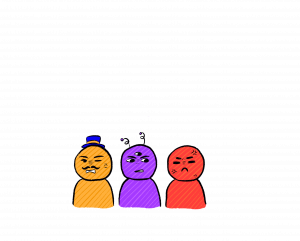
Illustration: Tiffany Chan/The Peak

Skribbl.io is a fun game to play with your friends in quarantine, but there’s always that one player who always refuses to draw the actual word until the last three out of 80 seconds.

You know, that person who etches a line drawing so painfully slow that you thought time somehow broke and you’re now living on a different temporal plane. They say that they’re “setting the scene,” but they’re really just adding unnecessary and confusing details, only to produce a drawing of a quality I could have made in the womb. I mean, the word “knife” doesn’t need to be accompanied by an elaborate murder scene for someone to be able to identify it.

Essentially, these people just want to screw everyone else over. They’re trying to make other players obtain fewer points by having them answer later, but guess what dumbass, you get points when everyone guesses faster, too! So really all you’re doing is trying to be a cunning bitch and making yourself lose points.

It’s called skribbl.io, not take-a-fucking-week-to-attempt-the-best-possible-thing-you-could draw.io. In the end, you’re not a bigshot artist, you’re just slow.

–Madeleine Chan


Wear a mask if you’re going to take public transit, it’s not that hard 
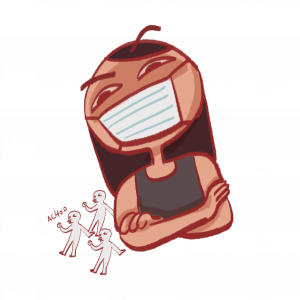
Illustration: Marissa Ouyang/The Peak

Call me naïve, but I thought a global pandemic would be a good enough reason for people to start being hygienically considerate in public places. So, when a couple of weeks ago I used public transportation for the first time again — leaving my house fully COVID-equipped with a mask, gloves, and hand-sanitizer — I assumed that it would be safe. Instead, I found myself in a SkyTrain car where people did not consider staggered seating, most were unmasked, and here’s the worst part: amid a respiratory virus crisis, a person open-mouth coughing (toddler-style). 

There I was, boiling in annoyance. Having spent the past couple months in crippling self-isolation to do my part in flattening the curve and then seeing someone so careless about the well-being and health of other passengers was infuriating. 

I understand that masks make it a little difficult to breathe, can be uncomfortable, and a bit of a hassle. But this pandemic is beyond our personal comfort. At this point, it’s selfish to not take these measures seriously. A face mask is at worst a little irritating, but the repercussions of not wearing one and spreading germs to people who cannot afford missing work or getting sick, is just irresponsible and downright screwed up. Even if the risk of infection is “low,” wearing a mask on public transit is a small price to pay to make other passengers feel safe. 

Some time has passed since this incident, and clearly I’m still alive and healthy. I will probably not be taking public transit anytime soon, though. I have only one thing to say: wear a fucking mask. 

–Devana Petrovic


My phone has enough processing power for a moon launch but it can’t accurately
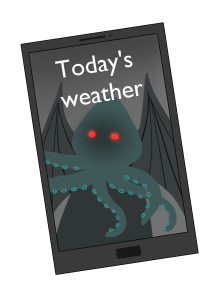
Illustration: Michelle Chiang/The Peak

predict the weather

Despite the fact that the weather has been pretty consistently sunny for the past week or so, living in Vancouver, that’s not the case 90% of the time. And that’s fine. We live in a rainforest, I get it. 

But lately, I’ve been riding my bike a lot and the one thing that would make a huge difference in my life is if weather apps could be accurate for at least a day. I feel like that’s really not asking for much. I just want to know if I can ride my bike for half an hour without getting completely drenched mid-ride, even though the weather app said it was supposed to be sunny for the whole afternoon, and it was sunny when I started my ride! 

Or if I want to go sit in a park, is it actually going to be nice enough to wear shorts? Do I need a sweater? Am I going to be too hot? Too cold? Honestly, I’ll take five hours of accuracy. A weather app that could be accurate for five hours would be amazing. I just don’t want to have to carry around 50 layers of clothing anymore. 

We literally have sent people into space — we walked on the moon! We can’t figure out how to make a weather app that can accurately predict the weather for even two hours? Am I just destined for a life of either being too hot, too cold, or getting rained on?

–Meera Eragoda
 

A Day in my Life: Remote Co-op Student

0
Photo courtesy of Eric Rothermel via Unsplash

Written by Kitty Cheung, Peak Associate

8:16 AM

  • Wake up to sound of CNN news blasts on coronavirus — thank you, family
  • Resent choice to move back home for the summer
    • But . . . where else could you have gone?

8:30 AM

  • Snooze alarm

8:35 AM

  • Snooze alarm

8:40 AM

  • SNOOZE. ALARM.

8:52 AM

  • Breakfast: I B U P R O F E N (1)

9:00 AM

  • Morning Zoom meeting! Create ambient noise for call via family argument outside bedroom door 🙂

9:34 AM

  • Accept the intrusive micromanagement from your mother that you think you deserve
  • Resist urge to look up Avatar: The Last Airbender memes 

11:57 AM

  • Open Zoom session for 12 p.m. staff meeting
    • Feel good about your punctuality!
  • Realize you need to download the newest version of Zoom, making you five minutes late 

1:03 PM

  • Lunch: H E A R T Y    C U P   R A M E N (1)

1:14 PM

  • Resume meeting; forget to mute yourself. 

1:15 PM

  • Receive Slack message from boss: “just looping you in . . . the sound of your noodle slurping is disturbing”

3:41 PM

  • Early Dinner: H U M I L I A T I O N (and reheated leftovers)
  • Browse Avatar: The Last Airbender memes on Reddit 
  • Make catty, passive-aggressive comments to your gamer sister
    • What you SAY: something polite about “lowering noise levels”
    • What you MEAN: “Self-isolation but for your voice. shut up”
  • For how many sedentary hours have I stared into darkness? Who will I become?
  • Think fondly about DIY craft and fashion YouTubers from your missing youth

5:00 PM

  • Work day done! Digital burnout just beginning 🙂
  • Maybe other things happened after this
    • But they are not important

Law of capitalist hamster wheel: your work day is the only day in the life that matters.

MISSING DOG: Last seen in the labyrinth of SFU’s website

0
PHOTO: Michelle Young / The Peak

Written by Michelle Young, Staff Writer

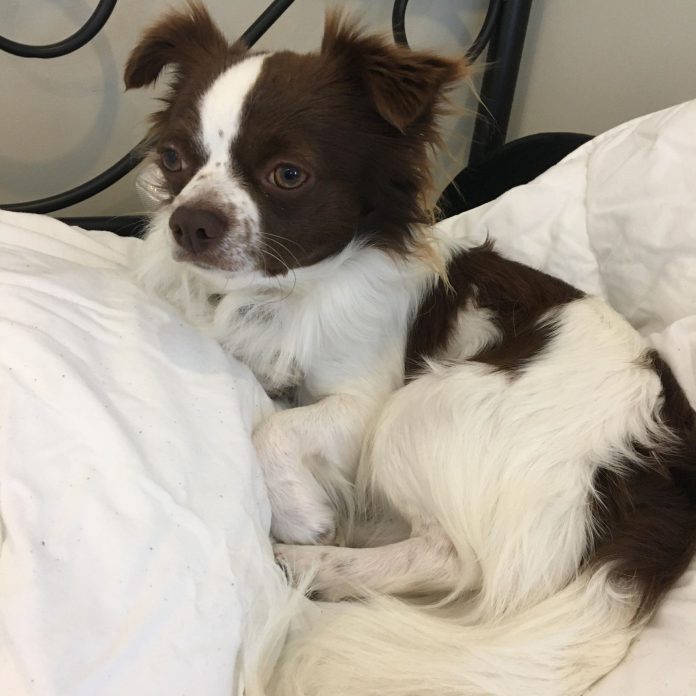
VANCOUVER, BC — A dog has been reported missing as of July 12. Spot, age two, was last seen July 11 around 5:45 p.m., exploring the SFU website, but has yet to return home. Spot is described as having bulging eyes and a spotted brown and white coat. 

“He is a natural and curious explorer,” said Annabeth Lingonberry, a second year psychology student and Spot’s owner. “He loves to explore the SFU website because there are so many hidden pages there! The navigation is also difficult to follow, so Spot enjoys the challenge. But I fear that Spot may have been redirected to one of the department websites, unknowingly,” Lingonberry added. 

The Peak reached out to students who also had trouble with the SFU website to find possible witnesses. 

“I was using Incognito mode to sign into goSFU when I thought I saw a small dog cross the screen,” stated an anonymous source, adding that it was at 1:30 p.m. the previous day. “But I got distracted by the 2020/2021 SFU Athletics & Recreation Liability Waiver notification. I stare at it uselessly every time I log in.”

Experts say that because users have to clear their cache and cookies to login to MySchedule it will be difficult to find and trace back Spot’s journey through the SFU website. A search party was supposed to be sent out for Spot. However, goSFU is currently down for system maintenance. 

“I believe I might have come across Spot when I clicked a link that led to a ‘page not found’ statement,” said Joel Smith, an admin on the student-run Facebook group “literally.never.go.SFU,” placing the encounter sometime in the evening of July 11. 

“I tried to use the search bar, but it only led me to pointless articles about SFU’s top rankings. There are just too many places he could be. I have yet to find Spot and want him to come home,” explained Lingonberry. 

The Peak tried to reach out to SFU for comment, but at press time, reporters were still wandering SFU’s subsections in search of contact information.

If anyone thinks they have seen Spot on the SFU website, goSFU, Canvas, department websites, library catalogue, now-defunct U-Pass BC login page, or any other section or subsection of SFU’s online presence, please contact Annabeth Lingonberry.

Your weekly SFU horoscopes: July 27–August 2

0
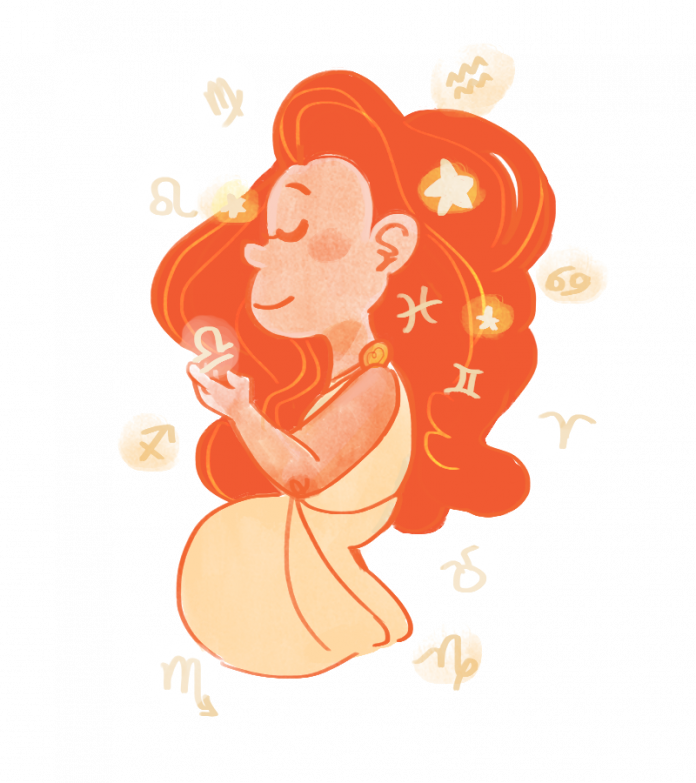
An illustration of a girl with long flowing hair. Astrological signs and stars shine around her.
ILLUSTRATION: Marissa Ouyang / The Peak

Written by Paige Riding, News Writer

Aries: In life, we have choices. Chrome or Firefox. Tea or coffee. Ketchup or mustard. In your case, if given the choice this week between hanging out with a Capricorn or anything else, I would suggest a relaxing game of squirting lemon juice in a brand-new paper cut.

Taurus: How far down the YouTube rabbit hole will you journey this week? Will you land on how-to videos about miniature garbage cans? ASMR videos of dogs eating watermelon? Blackhead extraction videos in a language you don’t speak? Who cares? Your brain is vegetating and your eyes are burning, and that’s all you need.

Gemini: TikTok is apparently stealing your clipboard information! Scary, right? You’ll want to look into that — go ahead, unlock your phone with your face or thumbprint so you can Google it.

Cancer: You’re like that one charger that only works when positioned a specific way. Whether you’re being held together with tape or sheer defiance, you get the job done and you’re only a fire hazard when other people keep using you. And that’s on them, Cancer. Not you.

Leo: J.K. Rowling and Daniel Radcliffe are both Leos. Not saying you’re much like those two. But it is a bit of a coincidence that you’re great at upsetting everyone around you by not knowing when to shut up — and you’re also probably a wizard.

Virgo: Remember to wash your face before bed. Of course you want to wash off any sweat, makeup, or pollution stuck on your face. But you also like those blissful moments where the water forces your eyes shut. Can’t see the haters, or the impending disasters looming all around you.

Libra: Do you clear out your email every single day, or are you a real Libra? The “14,032 emails” notification won’t go away with a passive aggressive scowl at your screen, but you really can’t find the energy to organize even this little part of your life.

Scorpio: Make like Florida during the pandemic and ignore those trying to hold you down this week. Too soon to make jokes like that? That’s what everyone was trying to tell the state about opening everything up, too.

Sagittarius: When you’re staring out a window like you’re in a Hop Along music video, show your good side. “Happy to See Me” plays, but the birds outside aren’t that stoked that you’re here. The birds deserve a real show in exchange for seeing your face screw up in a weird mixture of pain and melancholy.

Capricorn: This pandemic isn’t all bad. As you wear a mask out, no one can see you talking to yourself — since you’re the only one worth any of your time.

Aquarius: The Delta Aquarids meteor shower will be at its peak this week — and its meteors radiate from your constellation. If you’re patient (yeah, right), maybe you can plan a socially distanced date where you can mutually fail to actually see anything. Or just ghost at the last minute, so at least you can complain about the rock in your shoe instead of the lack of rocks in the sky.

Pisces: Make like your class syllabus and disappear in your computer’s files. Either others search for the one true you or they just download some Pisces(2).pdf phony with half the heart that you have.

Grad Minutes

0
Illustration by @Reslus

Written by: Michelle Gomez, News Editor

Stipend temporary position for COVID-19 related issues

The Council discussed hiring an additional temporary staff member for working specifically on COVID-19 related issues for the upcoming academic year. 

Director of Academic Relations Rahil Adeli explained that this position would be necessary considering the possibility of an entire academic year of remote learning, as well as the fact that the GSS Directors are “sometimes very highly overworked.” 

The new staff would work with the GSS Directors as well as the GSS COVID-19 task force to focus specifically on COVID-related issues. Additionally, a part of this position would involve connecting with and engaging incoming graduate students online. 

“There’s always so many projects I just feel I can’t really thoroughly work on [ . . . ] we hear from so many more students than we can really adequately help out,” said Matt McDonald, Director of External Relations. 

2020/21 academic year budget

Director of Finance Farina Fassihi noted some budget changes for the 2020/21 academic year due to COVID-19.

The amount allocated to on-campus services has decreased due to campus closure. On the other hand, bursaries that GSS offers have been increased. 

They will also allocate resources for a new Director position. 

Roundtable discussion 

At an open roundtable discussion, the GSS Council discussed SFU’s transition to remote learning and how the change has affected graduate students in their departments. 

Alexi Pauls, Chemistry Representative, noted that the chemistry caucus is concerned about lab safety. Particularly, Pauls noted that crucial information for students returning to labs — such as safety concerns or safety changes — has been going through faculty members, rather than directly to the students themselves. 

Geography Councillor Claire Shapton said that the geography department is “concerned about how we will communicate and also bond with new people in the department,” considering that their regular Fall retreat along with other events and meetups have been cancelled. 

History Councillor Joseph Burton discussed a lack of access to library materials and resources since the closure. He explained that many history students rely on microfilm, items from the special collections, and other archives that are only accessible in person. Due to a lack of access to these materials, Burton noted that many history students find themselves forced to change the timeline of their degree. 

Another issue Burton brought  up was security personnel on campus not being required to wear masks. 

Zora Feren, Communication Councillor explained that the students in the dual masters degree program have been struggling with their Fall plans. The program involves spending one year studying at SFU, and one year studying at a university in China. Feren explained that the cohort that is set to study in China in Fall 2020 has not yet been told whether or not they are going. 

Based on survey information and general discussion from the biology department, Alison Dennert (Biology Councillor) outlined the four main concerns for graduate students in the faculty: undue pressure to return to work, financial security, degree completion concerns, and mental health. 

Urban Studies Councillor Cameron Pearson brought up the issue of supporting students who are also parents, who could be struggling to balance their degrees as well as child care at this time. 

Powell Street Festival telethon takes intersectional importance to the internet

1
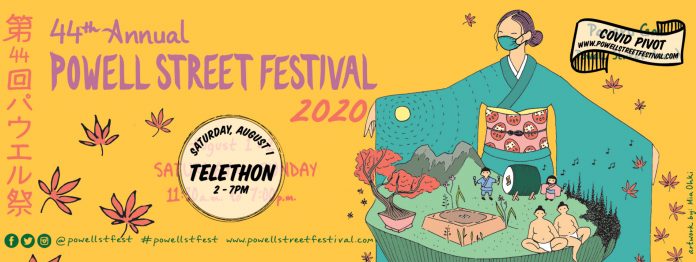
This year’s Powell Street Festival may be digital but is still packed with events. Courtesy of Powell Street Festival

By: Madeleine Chan, Staff Writer

Vancouver’s Powell Street Festival has been happening yearly since 1977 in the Downtown Eastside (DTES), and like many events, a pandemic isn’t stopping it this year. The festival will virtually kick-off on August 1 from 2 p.m. to 7 p.m. with live performances, and the addition of a telethon. 100% of the money raised will go to their new PowellStFest Community Kitchen program which will cook “200 meals for the unhoused and precariously housed in the DTES” every week. 

According to the Powell Street Festival website, it aims to celebrate Japanese Canadian history by showcasing Japanese Canadian artists, performers, and culture while engaging “the broader community through fun cultural activities.” They also do this throughout the year with events like the Hanami Cherry Blossom picnic and other community outreach initiatives. Their hope is to keep people aware of the continuing history of both Japanese Canadian and Indigenous displacement and to be “accountable as settler-colonizers.”

I had a chance to talk to SFU Writer’s Studio alumni and long-time Powell Street Festival volunteer Erica Isomura about the festival’s new format and the importance of demonstrating intersectionality.

The Peak: What is the Powell Street Festival telethon?

Erica Isomura: To give some context, Powell Street Festival has been happening at Oppenheimer Park in the DTES in what used to be known as quite a large Japanese Canadian community and neighbourhood, before the second World War and Japanese Canadian internment took place. So 44 years ago, the festival started at that park and it’s basically happened at Oppenheimer every year since then — except for years when we’ve moved to the street in solidarity with tent cities. This year, we are pivoting to a telethon in light of what’s happening with [COVID-19]. 

We’re raising funds for a new program that we’re going to be running in the fall called the PowellStFest Community Kitchen, which is going to be part of a broader community kitchen network in the DTES. [This] is supposed to plug into the existing programming that is happening but also recognize that a lot of the emergency funding that has been going to the neighbourhood because of [COVID-19] is running out. So the idea with the telethon is to raise money for more sustained programs year-round.

P: Why do you think the Powell Street Festival is important to hold this year, even though it’s all virtual?

EI: I think what I really like about the festival is that it really brings the community together in a way. The Japanese Canadian community is pretty dispersed in terms of not really having a centralized neighbourhood. I personally didn’t grow up with a lot of community outside of family, so it’s been really nice to connect to this festival that’s been around for so long and that has been a really great space for me to learn and connect with elders and with other older artists. It’s a legacy of the community. I feel like as an arts and cultural space to also be progressive and be aware of our community’s history and bring those values into the present is really important. 

But as a festival, even if you’re not political, it’s so inclusive and really has something for everyone, there’s really nothing like it. I just really appreciate what it offers. There’s so much joy. To be able to have it online I think is great in terms of being able to still build more connection in a time when people are isolated. Especially generationally isolated with [COVID-19], not being able to connect with lots of older people who are maybe immunocompromised. It’s just cool to see what people are going to be able to offer back through the program but also what people can connect to from home.”

P: Why do you think it’s important to demonstrate intersectionality and allyship with Indigenous communities and sovereignty?

EI: Obviously with what’s happening in the world, with so much light being shed on systemic racism and police brutality, it has really [highlighted] how many issues exist in our present day society that a lot of people have been talking about for many years. 

I think for organizations and  communities to show up and, to show solidarity is so much more, I don’t know if the word is empowering. But I think it can be really hard as an individual person who wants to make change without support from others. To be able to be in conversation with other people and learn alongside other people and learn across generations are things I really appreciate. As an accessible and family friendly festival, to be able to bring these values to the festival and try and encourage people who might not otherwise be thinking about some of these things in this way is impactful. 

We should be in this together to be making change and to create a better world than what we’re living in right now.

Check out the festival and donate to support the new PowellStFest Community Kitchen program at www.powellstreetfestival.com.

C19 Coalition answers student and worker questions in virtual Town Hall

1
Poster for the townhall event. Photo via Facebook courtesy of SFU C19 Coalition.

Written by: Devana Petrovic, Staff Writer

Updates from student and faculty organizations

C19 Coalition representative, Alison Wick, provided some background on the recently formed advocacy group. The Coalition was formed as an alliance between the Simon Fraser Student Society (SFSS), the Graduate Student Society (GSS), and the Teaching Support Staff Union (TSSU).

President Osob Mohamed gave updates on SFSS’s COVID-19 initiatives. She noted that the SFSS has “been loud and forward with the government [ . . . ] [pushing for] students to have access to things like the CERB.” 

Mohamed also explained that the SFSS is supporting students struggling financially, “hoping to open up a food hub, where [they] can actually provide fresh food to students during the course of this pandemic [ . . . ] also working with our health plan providers to [make] a fair alternative for international students who may not be in the country.” 

The SFSS’s main requests of SFU have been for decreased tuition for online classes and an elimination of the 2% fee on late tuition payments. Other key issues that the SFSS is considering include the UPass for the Fall 2020 semester and privacy concerns with regard to exam invigilation. 

GSS director of external relations, Matt McDonald, stated that the GSS has been “dealing with this [pandemic] in two ways: advocacy [ . . . ] and providing extra financial support and services for [GSS] members.” The GSS’s primary concern is the financial impact the pandemic has had on graduate students and in getting the administration to recognize the depth of these problems. 

McDonald explained that the GSS has “put a fair amount of money towards [their] own relief program,” which can be applied for on the GSS website; it also offers a family subsidy, a transportation bursary and an emergency food and grocery card. 

Questions

A general question asked to the panel was what concerns the coalition has going into the Fall 2020 and Spring 2021 semesters. 

“Our main concern is that this is not going away [ . . . ] so we need to stay on top of how things are changing,” answered Wick. She further explained that a main concern is how much the university puts the onus on students for academic progress and receiving financial aid, and that the coalition is looking to mitigate the uncertainty many students face with receiving bursaries and making tuition deadlines. 

A highly upvoted question asked how undergraduate students can support their sessional instructors. 

Orion Kidder (TSSU) said, “The administration counts on students not knowing what the issues are with sessionals and not being supportive of them [ . . . ] so, let the administration know [ . . . ] email [email protected] [ . . . ] directly.” 

Kidder also added that off-campus influence can make an impact, encouraging students to engage their parents in also contacting administration as “they hate hearing from parents because they know parents control money and their biggest concern is revenue [ . . . ] that embarasses them, that shames them, and makes them fear for their revenues.”

Hobbies: How I got into songwriting

0
Illustration: Sabrina Kedzior / The Peak

By: Marco Ovies, Editor-in-Chief

Ever since my parents forced me to take piano lessons when I was seven, music has always been such a big part of my life, . 10 years later, I ended up hating piano lessons, but gained a new appreciation for music. Being able to focus all my attention on learning a new song was a much needed emotional break from not only the ongoing pandemic, but also just problems that rise in everyday life. Eventually, I fell in love with the process of learning instruments. Naturally, I started to learn bits and pieces of instruments. Guitar, drums, bass, melodica, and even a bit of mandolin to name a few. I realized that I had become my own one man band, and with the marvels of modern day technology, I was able to record each instrument and create a song that I am almost proud of. 

Sitting down, taking out my computer, and focusing all of my energy into a song has been a good emotional outlet. It has almost become a diary of sorts, and I am able to capture my emotions better through sound rather than words (which is ironic since I’m paid to be good with words). Of course, I would never release one of these super personal songs, but I was still able to write probably the most basic song in the history of basic songs. So if you’re wondering how I did it, buckle up because I’m about to walk you through how to write a song. Keep in mind that while these are the steps I took, they aren’t necessarily the order you have to keep to. Listen to your creative process!


  • Choosing your recording software


I’m going to be honest, I’m a bit biased towards Apple products. GarageBand is a great place to start, and it’s also free. If you’re unsure how deep you want to get into songwriting, you should start there. Another free program that is also available for Windows is Audacity.

I quickly outgrew GarageBand, though, and ended up downloading Apple’s other music software, Logic Pro X. It is a bit on the pricey side coming in at $199, but it is a thousand times more powerful than GarageBand. It has tons of features like thousands (and I quite literally mean thousands) of different sounds to play around with, stronger editing features, and ultimately allows you more creative freedom than GarageBand. 

Of course there are plenty of music production software available, so be sure to do your research to find the one that will work best for you and the type of music you are trying to make. 


  • Make a groovy beat


I find creating a beat is a good start to any song. You can create your own beat by recording yourself playing the drums, you can use one of the hundreds of drum samples available on Logic, or you can use one of Logic’s AI drummers to help establish a groovy beat. 

Quite often I would start with one of these AI drummers, Gavin being my favourite (yes, they all have names) and then I’d end up changing the beat as the song evolved after adding in more instruments. You can get really creative with beats too. I once sampled the sound of a woodpecker banging on a metal pole, and it created a really cool sound. Anything can be a beat, so go crazy with it. 


  • Drop the bass


Now this is the part where you have to start making some real musical selections. Typically I would start by figuring out what chords I would want to use. My favourite chord progression is G, D, and C, which is probably one of the most common chord progressions out there. Another really common chord progression is C, G, Am, and F. If you only learn these four chords, you can play hundreds of some of the most popular songs out there.

Unless I had something super interesting already planned out in my head for how the bass would sound, I typically would just play the bottom note of each chord on every beat. But like almost everything I’m going to mention in this piece, the bass would quite often change after a burst of inspiration and turn into something super cool. While setting up the song, though, I like to keep things basic and go back to record more complex parts later. 

Don’t actually own a bass guitar? All music software comes with plenty of different bass samples that sound very accurate, and you can play with them directly from your computer keyboard. 


  • Guitars and more guitars (and then maybe some more guitar)


This one is pretty self explanatory, you play the same chords that you played for your bass. I liked to break it up by alternating between one long, drawn out chord or going crazy and playing eight strums for each chord (down, up, down, up, down, up, down, up). 

Most music softwares do come with guitar samples as well, but I personally have never heard one that has sounded as accurate as the real thing. If you need one instrument for songwriting, it would probably be the guitar. That being said, not all music needs a guitar, and it really just depends on the style of music you want to make. 


  • Time to siiiiiiiiiiiing 


The bread and butter of any song is the lyrics. Write about the person who broke your heart, the love of your life, a game of poker you lost, your cat, or literally anything. 

I have seen countless interviews with people who tend to romanticize the artistic process if the work is based on traumatic or hard experiences. Honestly, the subject matter of the song doesn’t matter as long as you’re having fun. I wrote a song about dabbing once, so I think that speaks for how silly you can get with it. 

Most songs have two verses, three chorus, and a bridge. Again, you don’t have to follow this formula exactly, but if you’re just getting started writing music, this is the most basic one out there. 


  • Get funky with it


Now that you have established some sort of melody, it’s time to play around with the song as a whole. Get some guitar solos in there, even if it’s just a reflection of the same notes that you sang in the chorus. Maybe even a cool synth line would add some depth to the song. My biggest misconception when I started writing music was that I needed to be singing the entire time. That’s not the case at all — get comfortable with letting your other instruments shine and showing off your real compositional talent. 


  • Master mastering your track


This is the more technical part of the song, and people spend years studying it. Meanwhile, I’ve watched a five minute YouTube tutorial so I might not be the best point of reference on this. I can, however, suggest some basics.

Check to make sure your volume levels are right because you don’t want to drown out your vocals with your sick guitar (unless you’re doing it intentionally, it’s your song). Try panning your instruments to different sides of your headphones as well.

 You might not think this makes a difference but it creates the feeling of a live band in the room with you. If you’re new to mastering, I recommend checking out the automatic mastering website LANDR. While it won’t sound as good as mastering the track yourself, if you have no idea what you are doing, it will definitely elevate the sound of your song. 


  • Now that you have given birth to your music child, get it out there


This part is surprisingly easy — anyone can get a song out on Apple Music and Spotify these days. Personally, I use the distribution service CD Baby to send out my song to all the major streaming services, and they do it all for around $10. 

Sounds too good to be true? Yeah, don’t expect to be making millions off of your latest single. For every one stream a song gets, I get around $0.005. Yes, that’s right, that is half of a cent for every play. That means if you want to make your $10 back you need to have your song played at least 2,000 times. Or, if you want to make your $200 back from buying Logic Pro X, you’ll have to get 40,000 streams. Honestly, that is the reality of making money from your music, but at least you’re getting paid! 

So here you have it, eight easy steps to write a song and you’re done. The most fun you’ll have with making music is the creation process, so take your time to enjoy it. It’s so easy to want to have a finished product as quickly as possible, but I have had way more fun writing and recording music than I ever did publishing it. You don’t have to write the next number one hit single, use it as a creative outlet and just have fun. And remember, if you become famous after taking my advice . . . please remember me.

Starry Nights keeps the wonder of the cosmos alive

0
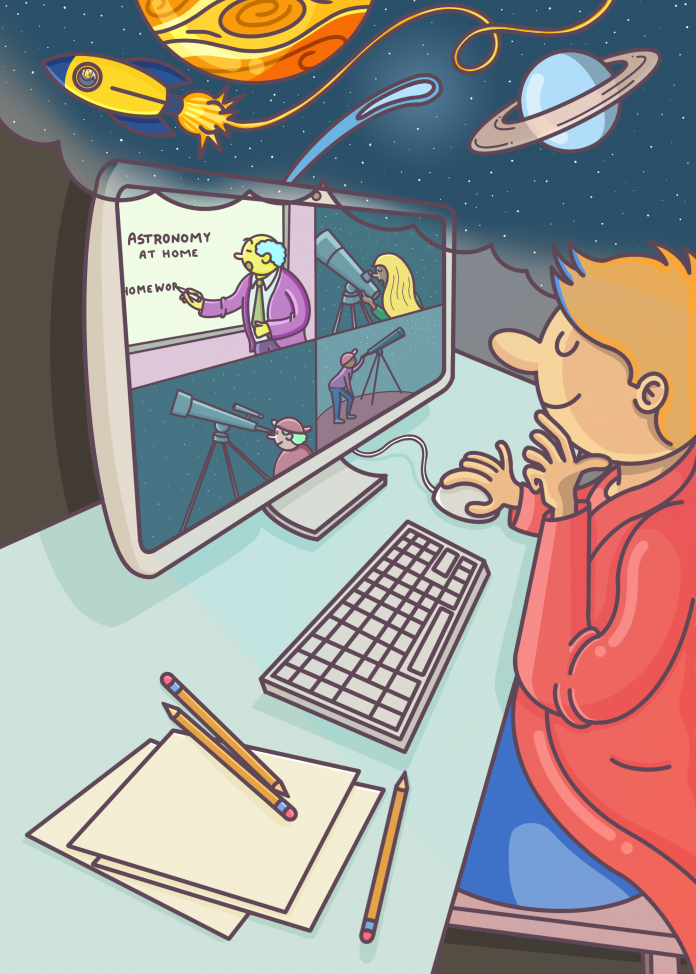
Illustration: RESLUS / The Peak

By: Madeleine Chan, Staff Writer

You may have noticed a shiny, domed building on SFU’s Burnaby campus while walking to and from the upper bus loop. Sadly, that area’s been cluttered with construction debris the past year, and I couldn’t even tell you what it looks like now. Regardless, that obscure building is the Trottier Observatory, home to a giant telescope. 

The Trottier Observatory itself is named after Professor Howard Trottier, who is known for his education and research on astronomy in the physics department. He usually hosts the Starry Nights events at the observatory where the public is invited to gaze upon the stars and learn about astronomy. 

This semester, they’ve transitioned the in-person events to livestreams on YouTube. The latest one was on July 10 and was the second socially distanced starry night event of the semester, but the first that I’ve ever attended in all my four years at SFU. And now that I have, I wish that I had attended more.

The livestream started at 10:30 p.m. with an introduction from Joanna Woo, host of the event. Woo is an astrophysicist, and a lecturer with the physics department. The stream was set up to have three small screens of live footage of the telescope and two views of the campus sky, along with a screen share of the program Woo was using to capture the night sky. Despite the late hour, she had an immediate excitement in her voice that made her passion about astronomy very clear. She later clarified that she is not a morning person, and that “staying up late is more [her] thing,” which I found both relatable and very apt for an astronomer. 

The first object, or space phenomenon, that Woo showed us was the Ring Nebula. It looked like a circular, rainbow light refraction — the kind that you might see when light passes through glass. She explained that nebulae are simply remnants of a dying star that has burned up all of its oxygen, and that this is what our sun will look like in the far, far future. Some other objects that we saw were a globular star cluster made of mostly red giant stars, a nebula that looks like the inner half of an apple, the Andromeda Galaxy, and Saturn itself.

Between every object, Woo brought up an interactive star map that marked all of the constellations, planets, nebulae, and more with various numberings. It was so cool how she could just pick any of them and the telescope would adjust its position to see it — not to mention that you could also see the telescope move in real time right beside it. Even though some of the objects that she visited were obscured by cloud cover, I still enjoyed simply viewing the map and watching the telescope move to capture it. 

We also got to see Jupiter and its four Galilean moons. Seeing our solar system’s largest planet as a less-than-penny-sized dot on my screen was somehow so nostalgic. It took me back to the wonder and excitement about stellar objects I had in grade two when I did a project on Neptune, and reminded me of the calm I still feel when I can see constellations through the city’s light pollution.

Throughout the night people were also asking a lot of genuine and inquisitive questions in the chat about the phenomena. Even though half the time I didn’t really know what they were talking about, I still enjoyed the excited learning that was happening. It made me wish I took that PHYS 190 astronomy elective that everyone always raves about so I could learn more about the sky that I spend so much time staring up at.

More than anything, I felt bad for Woo because a lot of the images weren’t rendering or were obscured by clouds. Woo seemed disappointed by this as well, and even apologized for the bad stargazing weather. But then she said something that really stuck with me:

“It’s actually kind of nice to have things that are not in our control sometimes. We do have things all lined up so well in our lives, and sometimes it’s healthy to be humbled by the fact that there are many things in our lives we can’t control, including the weather.”

Woo concluded the night with going back to Jupiter, even though it was now obscured by clouds. As she answered questions and started to wrap up the night, the clouds serendipitously parted and we got to see Jupiter one last time. It was a fitting end to a night of stellar exploration and education. The chat and Woo’s strong desire to see something beyond, to explore beyond the confines of their own preview, was so refreshing to see in the short-sightedness of our fast-paced way of life, and was what made this event so special. 

Starry Nights is a great way to jump into astronomy, or just be an avid star-appreciator like me.

If you missed the event and want to take an hour and a half to just stargaze and learn a bit about space, you can watch the livestream on the SFU Faculty of Science YouTube channel. As for me, I’ll be eagerly watching their Twitter (@sfu_science) to be updated on their next, wonderful night “under” the stars.

Blind Tiger Comedy’s initiatives are helping reduce barriers for BIPOC entering comedy

0
Improv pros and BTC's diversity coordinators Ronald Dario and Ese Atawo lead a comedy class. Courtesy of Blind Tiger Comedy

By: Devana Petrovic, Staff Writer

Blind Tiger Comedy (BTC), a comedy school in Vancouver founded by members from highly regarded improv groups Hip.Bang! and The Sunday Service, recently announced its further commitment to creating space for BIPOC (Black, Indigenous, and/or people of colour) performers in their courses. While BTC’s newer initiatives may appear to be following global trends on racial equality, it is important to note that the comedy school has always been active in increasing BIPOC representation and accessibility in their programs — an especially commendable feat considering how pricey acting and comedy courses typically range (on average $45 an hour if not more).

For those unfamiliar with the company’s past engagement in furthering equity in their programs, BTC has offered and continues to offer financial aid and diversity scholarships for people of colour, members of the LGBTQ2+ community, and differently-abled folks. They also host free one-hour drop-in improv classes every 3–6 months: POC Night hosted by Ese Atawo, and WTF (Women Trans Femme) Night. Involvement is open for people of all levels of experience. 

More recently, as a part of their continued diversity and inclusion efforts this summer, the Vancouver-based comedy school offered a beginner’s course reserved for BIPOC students new to BTC — a digital introduction to improv. The eight-week program includes a two and a half hour zoom session once a week with industry professional and instructor, Ronald Dario. The course is meant to delve into the basics of improv by providing students with proper terminology, scene etiquette, and the tools needed to advance improvisational skills beyond the online course. The typically three hundred dollar course also includes a final showcase after the course period, live-streamed online. 

BTC offered their introductory improv course exclusively to BIPOC, but also allowed the free-of-charge registration opportunity to experienced performers for whichever course they found the most fitting. This meant that any new BIPOC registrants were not limited to the exclusive introductory course, but could also enroll into any other program for free, regardless of the course level. Though the deadline to register for these courses has passed, the company encourages those interested to contact them — likely in case of any last minute dropouts. Additionally, BIPOC who have improv experience but have not taken classes at BTC are still able to peruse the list of upcoming classes offered on the BTC website and follow the instructions under the inclusion tab to check for eligibility and availability.

The efforts of BTC exemplify how other companies, organizations, and businesses can do their part to participate in racial justice, beyond just performative statements. In making the performing arts more accessible with initiatives like these, BTC is increasing BIPOC representation in the improv and comedy world — or at the very least, in the Lower Mainland comedy scene. 

Although their summer programs have begun, courses will continue to be offered in the fall. Anyone interested in enrolling with BTC in the future can sign up for their mailing list, or refer any registration-related questions to their general manager, Helen Camisa ([email protected]). For information on upcoming events, they are also on Instagram, Twitter, and Facebook.