Home Blog Page 376

Victims’ statements should be believed

0
Statistically, victims are most likely telling the truth. PHOTO: Cristian Newman / Unsplash

by Kyla Dowling, Staff Writer


CW: Discussion of sexual assault, rape, policy brutality.


In 2019, I sat in a room at the police station and told an officer about my sexual assault. “Why didn’t you report this sooner?” he asked me. I said I was scared. He asked me why. When I couldn’t get the words out, he raised his eyebrows and moved onto another question. I knew, in that moment, that although I was a victim of a crime, I didn’t stand a chance when it came to having that fact recognized. But I should have. 

Rape against women was first considered a “property crime,” meaning that the real offence was the rapist had robbed the woman’s husband or father. It was an act of theft, rather than one of violence. It took until the 1970s for it to be seen as a crime against women, and for marital rape to be recognized. Though it was progress, the system remains flawed. In 2014, a judge asked a rape victim if she had tried closing her legs. Until 2003, Philadelphia’s sex crimes division was referred to as the “lying bitch unit.” Even in my case, though one in every five women experience sexual violence, I was met with incredulity from the officer I spoke to. It didn’t matter that the percentage of false reports of sexual assault is between 2–8%. It made his job easier not to believe me.

That’s the problem right there: it is so much easier to not believe victims. People have this unquestionable belief in people they know and people in power. When a stranger accuses someone you care about of a harmful action, it’s easy to not believe the stranger. It’s hard to reckon with an allegation like this when you trust the person being accused. But when someone insists that the abuser is a “good guy,” all that says is that the abuser never harmed them — not that the abuser never harmed anyone. 

It gets worse when it comes to law enforcement. We’ve been taught that the police are supposed to be the good guys. They’re supposed to keep us safe. So for people who grew up with privilege and learned to call the police if they needed help, it makes sense that they wouldn’t want to believe that police are the ones doing the brutalizing. Even when it comes to the recent incident at SFU where the RCMP arrested a Black alumnus, there are people who instinctively believe that the arrest was justified. It does not matter to them how violent the arrest was. It does not matter to them that there have been countless pleas for campus security to stop calling the RCMP on students who are Black, Indigenous, or people of colour. People who grew up being told that the police system is good will likely continue to believe that because they cannot handle their worldview being shifted — but reflection on this is vital.

Aside from looking past their own personal experiences, people must examine their own prejudices. Victims of sexual assault, upon speaking about it, are often hit with a barrage of victim-blaming questions, including “What were you wearing?” and “Why did you drink so much?” These questions assume that the onus is not on their abuser for deciding to cause harm in the first place. These types of preconceived notions only perpetuate the problem.

Accepting that people are not who you thought they were is a difficult thing to do. But what’s more difficult is being a victim and reckoning with people telling you, directly or indirectly, that your words mean nothing to them. That you need more than your story and statistics to prove your point, when all your abuser has to do is exist. Victims need to be believed, no matter what.

Visit SFU’s Sexual Violence Support & Prevention Office and the SFSS Women’s Centre for more information and resources on sexual violence.


Pandemic puts Gaura Hari Karma-Free Meals Society’s hot and nutritious vegan meal program on pause

0
Gaura Hari Karma Free Meals relies on a team of volunteers for community outreach. PHOTO: Justin Twyford / Gaura Hari Karma Free Meals

By: Charlene Aviles, Peak Associate

Since 2004, the Gaura Hari Karma-Free Meals Society (GHKFM) has provided what GHKFM’s vice president Patrick Francis describes as “hot meals prepared with love and [ . . . ] spiritual devotion” to Vancouver’s Downtown Eastside and rural communities near the Indian cities of Mumbai, Pune, Hyderabad, and Udhampur. Their charity work in India meets the nutritional needs of marginalized groups such as orphans and other children in impoverished households, those in jail, and those living with disabilities. Based on the spiritual concept of karma, at the heart of their charity work is the belief that a vegetarian diet is good for the body and soul. 

Since 1992, the Veggie Lunch program, originally a student club, has provided $6 vegan meals to Simon Fraser University (SFU) students. The program has been an important source of funding for GHFKM’s other programs and given its popularity among the SFU community, GHKFM had prioritized maintaining the program in 2020. During an interview with The Peak, Francis reflected on the pandemic and “the domino effect” it’s caused for GHKFM. SFU suspended the Veggie Lunch program early in 2020 with the government’s public health restrictions on public gatherings following shortly after. This has meant that since March 2020, GHKFM’s large community events (such as those at the Downtown Eastside Women’s Center, the First United Church, The Dugout, and Oppenheimer Park) have stopped operating. The popular Oppenheimer Park event, which often attracted line ups with thousands of participants, was one of the events hardest hit by the suspension. 

These events are mutually beneficial to the volunteers, charity, and participants. Students often play an active role in volunteering, and in exchange for their time, they get practical experience in their field. Former volunteers, who were often students in training, offered several services at events including hair styling and yoga classes. At these events, attendees have the opportunity to receive services usually not afforded to them. 

Excluding tax breaks, GHKFM runs “independent of any government organizations.” According to Francis, interaction and connection with the public are integral to the charity thriving. This has become somewhat of a challenge in light of the public health restrictions, restrictions on accepting certain donations, and limits on who volunteers in the Hare Krishna Temple. 

Since the charity is “public-oriented,” they mainly rely on the public’s donations, which they stopped receiving. 

“As a charity, we can’t really afford to advertise ourselves the way some profit-driven entities can, so we really rely on public awareness,” he said.

Despite these obstacles, GHKFM remains hard at work and hopes for a brighter future in 2021. Francis acknowledged that the COVID-19 pandemic has taught them to “be prepared for any kind of situation that arises.” The public can support them through donations, distribution of goods, awareness through word of mouth or social media, and volunteering. If you are interested in volunteering, contact GHKFM. Volunteers may offer their time on a per event basis. Visit their website to donate via PayPal, debit, or credit card. 

Need to Know, Need to Go: January 11–17

0
Illustration of a blue calendar, with "Need to Know, Need to Go" written on top
Arts & Culture events to catch around the city. Image courtesy of Brianna Quan

By: Sara Wong, Arts & Culture Editor

Universal University? On Space and Inclusion in Higher Education | January 12, 12:00 – 1:30 p.m. | Zoom | Free with registration

SFU’s Morris J. Wosk Centre for Dialogue and Centre for Comparative Muslim Studies are hosting a virtual seminar exploring topics such as the connection between space and inclusion and how to prevent the terms “inclusion” and “diversity” from becoming rote and meaningless. The discussion will feature guest speaker Dr. Saladdin Ahmed, Union College political science professor and author of Totalitarian Space and the Destruction of Aura. Participants must register via Eventbrite to receive the Zoom link for the seminar. 

A New Resilience: Artist Talk and Tour | January 14 at 7:15 p.m. | Facebook Live | Free

Port Moody Arts Centre (PoMoArts) is launching a new gallery exhibition showcasing the work of Vancouver-based, multi-media artist Sonya Iwasiuk. Titled A New Resilience and inspired by the first wave of Ukranian immigration to Canada, Iwasiuk’s pieces reflect on “one of the most pressing current world issues people fleeing their turbulent homelands searching for peace and prosperity.” On the opening day of this exhibit, Iwasiuk will present a discourse and tour of the gallery on a PoMoArts Facebook Live feed. A New Resilience will be available for viewing both inperson and online from January 14 to February 15, 2021. 

Riley Park Winter Farmers Market | January 16, 10 a.m. – 2 p.m. | Free

Located at Nat Bailey Stadium, this farmers market is the largest in a series operated by the Vancouver Farmers Market (VFM) organization. Along with organic produce, the Riley Park Farmers Market vendors sell specialty cheeses, fresh bread, homemade desserts, alcohol, and more. The market features small, local artisans. There are also food trucks on site for attendees. A full schedule of vendor appearances, as well as a detailed outline of COVID-19 safety measures, can be found on the VFM website.  

A diary of what I did during winter break

0
PHOTO: Nick Fewings / Unsplash

By: Carter Hemion, Peak Associate

Day One (December 17)

Dear Diary,

Today I did the laundry that’s been piling on my chair for the last two weeks while pretending I haven’t been wearing the same sweatpants with a questionable stain on the ankle for three days straight. Turns out there was a $300 textbook under those clothes that I opened maybe once. Out of sight, out of mind? Who am I kidding? The textbook’s contents were never on my mind at all.

I also prepared a sourdough starter to leave overnight! Baking bread connects me to the bloggers who share their life stories before their recipes and I almost feel less alone.

Day Two (December 18)

Dear Diary,

Making bread is much more boring than I thought it would be. It took five hours and 47 minutes for the dough to rise. I watched it rise with YouTube conspiracy videos playing in the background. Who would’ve guessed that Robert Kardashian faked his death and became Ted Cruz, who is the actual Zodiac killer? I couldn’t make this shit up.

Now I’m sitting on the floor while my bread bakes. I’ve been googling why popcorn ceilings were made. I think there’s a face in mine, right above the oven. It’s kind of creepy. Hey, Siri, what are popcorn ceilings even made of? Are they sentient?

Day Five (December 21)

Dear Diary,

Today I walked to the store to pick up some vegetable stock so I can have soup with my bread. I decided to count the layers on my onions as I learned from YouTube that the Queen may be a cannibal, and apparently Finland may not actually exist.

There were 11 and 12 layers on the ones I chopped, respectfully. 

I also discovered there’s 11 cloves in my garlic, all of which I then minced while dissociating. Now I have to find another recipe that calls for at least eight cloves of garlic. 

Note to self: never again eat a spoonful of raw garlic “just to see.” Bad idea.

Day Eight (December 24)

Dear Diary,

Today I learned the taxonomic classification of all the birds that keep landing outside. I started naming them, too. My favourite is Ted Crows, the varied thrush, because it looks like he’s wearing a little necklace. I think he has a thing for Princess Screech, the robin.

Also, I know you’re not supposed to try to psychoanalyze anyone without a degree, but I really think my cat has narcissistic personality disorder. I’m worried. Last night, she looked right at me as she dipped her paw into my cup and then smacked my Lego Tim Horton’s off the desk. I spent two and a half hours building that with “Lego House” by Ed Sheeran on repeat, and she looked so smug destroying it in two seconds. 

It’s alright, though — I’ve got garlic bread!

Day ??? (I think it’s January now but don’t quote me on that)

Dear Diary,

I made carrot, zucchini, and raisin bread. Now I’m sick of bread. At least the face in the popcorn ceiling seems to be smiling about it. 

I was going to do laundry yesterday, but then I saw Ted poop on somebody’s car windshield just after they got in and it’s the most entertaining thing I’ve seen in weeks. Then I got too distracted when four firetruck red cars drove by in a row. Is that an omen?

I have to go — I’m on the seventh season of Supernatural now and I’ve got a cat begging for my attention. Not my cat, of course — she’s since taken over my room and claimed my bed as her own. This one is just another neighbourhood cat I’ve adopted since classes got out. I’m thriving.

COVID-19 vaccines approved and distributed to Canadians

1
PHOTO: Hakan Nural / Unsplash

Written by: Karissa Ketter, News Writer 

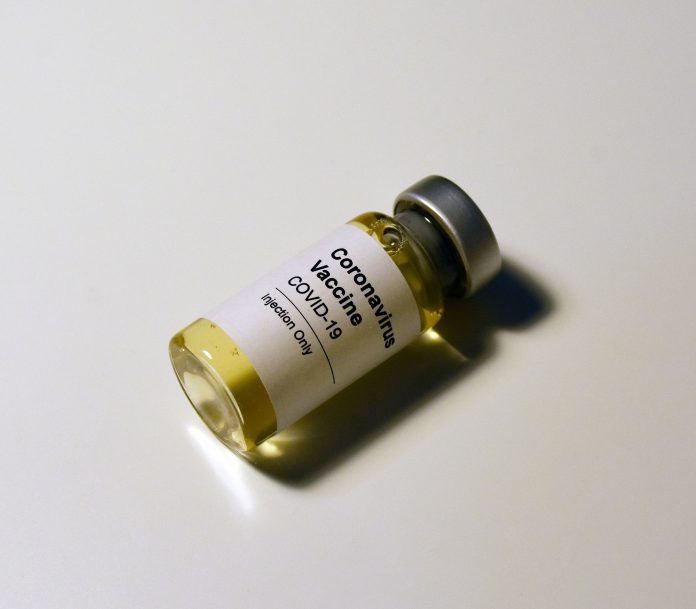
Canada has approved Moderna and Pfizer-BioNTech’s COVID-19 vaccines and has begun distributing them to Canadians. BC “hopes to have vaccine[s] available for all those who choose to [be] vaccinated by the end of 2021,” according to the BC Center for Disease Control (BCCDC) website. The COVID-19 vaccine will be free for all Canadians who wish to have it. 

The Moderna vaccine is currently approved for Canadians age 18 and up while the Pfizer-BioNTech vaccine is approved for people age 16 and up, reflecting the ages used in each respective trial. 

Distribution will be done in phases, beginning with residents and staff in “long term care and assisted-living residences,” in addition to “health care workers providing care for COVID-19 patients in settings like Intensive Care Units, emergency departments, medical/surgical units and paramedics.” Remote First Nations communities are also in the BCCDC’s first group to be vaccinated and they are predicting this group will be vaccinated by February. 

The BCCDC is aiming to vaccinate the second group from February to March. This will include “seniors age 80 and above,” along with “Indigenous elders and Indigenous seniors age 65 and above, people experiencing homelessness and/or using shelters, provincial correctional facilities, adults in group homes or mental health residential care, long term home support recipients and staff, [and] hospital staff.”

Both vaccines require two injections in the muscle of the upper arm in order to reach full effectiveness. Moderna’s second dose is required one month later while Pfizer-BioNTech’s second dose is required 21 days later. Dr. Supriya Sharma, Health Canada’s chief medical adviser, told Global News that a single dose of the Moderna vaccine will achieve 80% effectiveness against COVID-19, while the Government of Canada reports that a second dose will increase effectiveness to 94.1%.

Both of these vaccines are made with mRNA; the Government of Canada notes that “mRNA vaccines teach our cells how to make a protein that will trigger an immune response without using the live virus that causes COVID-19. Once triggered, our body then makes antibodies. These antibodies help us fight the infection if the real virus does enter our body in the future.” 

After Canadians are vaccinated, there are questions around what mask-wearing and physical  distancing protocols will look like. The United States’ CDC website notes that “while experts learn more about the protection that COVID-19 vaccines provide under real-life conditions, it will be important for everyone to continue using all the tools available to us to help stop this pandemic, like covering your mouth and nose with a mask, washing hands often, and staying at least [six] feet away from others.” 

Reported side effects during the clinical trial of Moderna and Pfizer-BioNTech vaccines were mild to moderate, according to the Government of Canada. They include “pain at the site of injection, body chills, feeling tired, and feeling feverish.” More severe side effects are rare and may be linked to pre-existing allergies. The Government of Canada suggests that Canadians speak with their healthcare practitioners about health conditions and allergies before receiving the vaccine. 

The potential for long-term side effects are unknown but are currently being studied by Moderna and Pfizer-BioNTech. Allegedly, they plan to continue monitoring clinical trial patients for the next two years and will communicate with Health Canada about any findings. 

Dr. Sharma also noted that the Moderna vaccine is more accessible than Pfizer-BioNTech’s because it doesn’t need to be stored at -70°C and can be stored in standard freezers.

SFU alumni reduce electric vehicle battery waste and provide renewable energy to remote Canadian communities

1
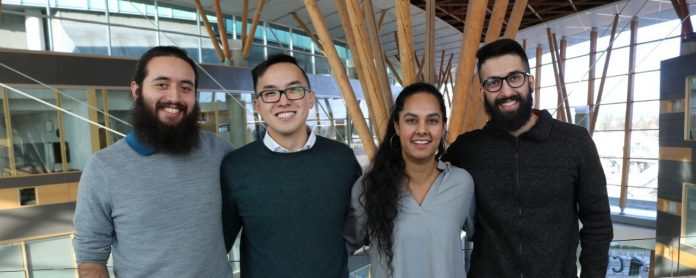
Photo courtesy of SFU News. Pictured left to right, SFU alumni Gabriel Soares, Edward Chiang, Sumreen Rattan, and Gurmesh Sidhu.

By: Charlene Aviles, Peak Associate & Harvin Bhathal, Features Editor

Over the past several years, the popularity of electric vehicles has steadily increased. This is due to the low cost required to run and maintain them, as well as the low environmental impact compared to gas-powered vehicles which rely on extracting and processing fossil fuels. As the demand for electric cars rises (sales of electric vehicles surpassed 2.1 million in 2019), their market is projected to dramatically increase. Though the pandemic may affect this projection in the immediate future, it’s clear the shift away from vehicles that run on fossil fuels has begun. However, as electric vehicle production increases, so does the concern over safe electric vehicle battery disposal.

Following the creation of an electric vehicle race team, Team Phantom, SFU alumni Edward Chiang, Sumreen Rattan, Gurmesh Sidhu, and Gabriel Soares founded Moment Energy (Moment) in 2019. They graduated from SFU’s Mechatronic Systems Engineering program and also participated in the Coast Capital Savings Venture Connection entrepreneurship program.  

Moment is dedicated to repurposing electric car batteries for energy storage to counteract the limits of intermittent renewable energy and facilitate the transition to renewable energy sources. Their initiative “prevents the mining of new lithium or the production of new lithium-ion batteries [ . . . ] [and] extend[s] the value and lifetime of the original battery.”

During an interview with The Peak, Sumreen Rattan attributed the Coast Capital Savings Venture Connection program and co-op (SFU Surrey’s interdisciplinary entrepreneurship program) as a source of confidence when starting the cleantech company. Moment participated in the Alaska Airlines Environmental Innovation Challenge, the Next 36 program, and won several awards including Royal Bank of Canada People’s Choice, the Scotiabank Outstanding Contribution to Society Award, the Clean Energy Prize, and the Connie Bourassa-Shaw Spark Prize. In November 2020, they won second place at the Zero Waste Innovation Hackathon.

At the University of Washington’s Alaska Airlines Environmental Innovation Challenge, university students formed teams to pitch their business plans and prototypes as environmental solutions to 250+ judges. Moment pitched their initiative of reconfiguring electric vehicle batteries for energy storage.

“We pitched the concept of having a circular economy or end-of-life batteries that come out of electric cars, and we really focus[ed] on the sustainability aspect of making sure these batteries aren’t prematurely recycled or sent to landfills. The really cool thing about a circular economy [is that it] takes [the battery] from being used in an electric car to being used in a second-life application with Moment, and then finally being sent to a recycler at the end of its life cycle.”

While recycling and repurposing batteries are both crucial in the circular economy chain, Rattan explained that reusing batteries prior to recycling them maximizes their full potential and reduces toxic waste. After Moment “reconfigure[s] the voltage level [and] add[s] in digital safety components, a battery management system, an enclosure, and additional things,” their repurposed batteries maintain 60–80% of their original capacity and reduce diesel dependency.

Explaining this further, Rattan said, “Let’s say that the Nissan Leaf battery was 24kWH [ . . . ] unless it comes out of the car, it’s usually between 16–18kWH, and then you can repurpose it.”

According to Rattan, “When these electric car batteries come out [of] the car, a lot of them still have 80% of their original capacity left, so that means that you can still use these batteries for 8–10 years or even more than that in a second-life application.”

“After [the batteries are] done in the repurposed second life, then we feel that it’s the best time for these batteries to be recycled [and] extract whatever materials are left [ . . . ] to build more batteries.”

When asked about the repurposed electric car batteries’ life expectancy, she explained that further tests are needed to determine the batteries’ longevity. She acknowledged that determining their longevity occurs on a case-by-case basis. 

“The number of years they survive in a second life completely depends on how the batteries are used [and] in what sort of application it is [in]. Based [on] some rough estimates, we can say that they would last between 7–10 years, and if it’s a low [performance] application, it can last longer.”

In August 2020, Moment collaborated with a University of Manitoba professor to start their pilot project at the Canadian Hydrokinetic Turbine Test Centre (CHTTC), a microgrid facility located in Seven Sister Falls, Manitoba that tests renewable energy set ups. 

“We basically sold them a pilot unit, which is being used to store solar and hydrokinetic power. They’re using our batteries to test the viability of hydrokinetic power.”

The project utilizes Moment’s 6.3kWH energy storage system. Rattan expressed her gratitude for the pilot because the data details their batteries’ performance. 

“On our end, we’re able to see how our batteries are performing, how they’re responding to being charged and discharged, so it’s really useful for us.”

Beyond the CHTTC, she mentioned that she is excited for this collaboration to lead to future initiatives with the UManitoba professor.

Moment also attributes their pilot project’s success to their supply-chain relationship with Nissan North America, who supplies them with used Nissan Leaf batteries to reconfigure and takes care of the spare car parts excluded from the reconfiguration process. Nissan’s support has helped Moment establish a good rapport with their clients. 

When reflecting on Moment’s relationship with Nissan, Rattan explained, “We’re excited that we’re the only Canadian company working with Nissan, which is a huge accomplishment for us.”

In preparation for transitioning remote communities from diesel generators to renewable energy, Moment analyzed case studies on remote Canadian communities and reconfigured the Nissan Leaf batteries for use in outdoor cabins and resorts. They are working in consultation with remote and Indigenous communities throughout British Columbia in order to “understand their needs, where their power infrastructure is lacking, and help bring in an environmentally friendly solution.”

“Two of our primary goals as a company are to help increase the transition to renewable energy and also reduce the world’s diesel dependency.”

In contrast to diesel generators, which are loud and pose a health concern for others, Moment Energy’s repurposed Nissan Leaf batteries are a cheaper alternative to lithium-ion battery storage and release no emissions

“We want to be a company that’s known for repurposing second-life batteries, a company that cares about the environment, cares about creating a circular economy for electric vehicle batteries, and one that’s here to help the transition to renewable power.”

Your Weekly Horoscopes Jan. 11–15

0
An illustration of a girl with long flowing hair. Astrological signs and stars shine around her.
ILLUSTRATION: Marissa Ouyang / The Peak

By: Kyla Dowling, Staff Writer

Aries: You just don’t feel alive anymore, Aries. After learning every routine on Just Dance and burning the polaroids of everyone who wronged you in 2020, you need more spice. My recommendation? Get a COVID-19 test just to feel something again. The nussy is a real thing. 

Taurus: You are about to receive a call to action, Taurus. The universe is once again calling on you to act as the winner in an argument started on a Reddit thread. Victory will be even sweeter when you retrospectively act it out in the shower.

Gemini: Some say that the happiest moments of our life were at the Scholastic Book Fair. While the rest of us were buying massive erasers, you were arguing with your teacher about buying the Twilight series in the second grade. Joke’s on them. You wound up with a vampire kink, anyway. 

Cancer: I hate to tell you this, but you’re struggling to do even the most superficial self-care. Your candle wicks need trimming. Your bath bombs aren’t the only thing crumbling. And you don’t sound poetic preaching on your story when everyone speed-clicks through the videos.

Leo: Now is a time of cleansing, Leo. Cleanse your aura with Raid. And for the love of God, delete your TikTok. You can’t do the ass shake in the 5 Seconds of Summer trend, and that’s okay. Just don’t make the rest of us watch you try.

Virgo: 2021 is here, Virgo, and it’s going to be your year. You’re waking up early and, most importantly, eating healthily. This year, you’ll feast on the souls of every group project member who has ignored your colour-coordinated master Google Doc. You’ll never go hungry again. 

Libra: You miss the pre-pandemic world, Libra. But most well-adjusted people don’t sit on the floor pretending they’re at an “indie concert venue” that is just someone’s studio apartment in downtown Van. And they definitely don’t make the experience more real by playing bad Mitski covers. But at least your tears are real, right?

Scorpio: The CSIS agent that tracks your search history just called. Uh, your horoscope was supposed to be something like “keep your head up” but I think the advice you really need to hear right now is this: Do not attempt to give yourself an ass tattoo of an anime girl. Please.

Sagittarius: Bumblebees have hair over their eyes and must comb through everything they see. You clearly aren’t a bumblebee, given how much you missed from last semester’s readings. I would give you some study tips, but now you’re just imagining life as a bee. At least they don’t have to pass university.

Capricorn: This week is going to be . . . well, mediocre at best, Capricorn. Sure, you’ll establish yourself as the baddest bitch in your Zoom classes, but most bad bitches don’t cry while watching anime on Saturday nights. Let’s face it — you’re not the main character. You’re a poorly drawn background character without a nose. 

Aquarius: The stars are speaking to you Aquarius, and they’re begging you to pick a damn aesthetic. You cannot be a cottagecore e-boy dark academia goth skater witch, okay? Your sweater over a collared shirt, flower-patterned skirt, Doc Martens, and pink streaks just don’t work — unless you’re a Taurus. Sorry.

Pisces: The hardest part about dating is learning about red flags. Red flags? Checkered flags at the racetrack? They’re the same thing to you, no? Side note: racetracks have racecars. Racecar is a palindrome. Like you, palindromes wouldn’t care if a relationship started and ended the same: badly. Now, about those flags . . .

The SFSS calls on SFU to re-implement pass/fail grading

0
PHOTO: Ahmed Ali / The Peak

Written by: Jaymee Salisi, News Writer 

The Simon Fraser Student Society (SFSS) is calling for SFU to implement pass/fail grading for the upcoming Spring 2021 semester and “retroactively for the Fall 2020 semester.” They are proposing that “students be allowed the choice to accept their final course grade or opt for a ‘pass/fail’ grading basis for an individual course.” This would mean that “P” and “F” grades would not affect students’ GPAs and passed courses would “count towards the total unit[s] required for a degree.”

The memo sent to the Senate by the SFSS outlines various Canadian universities, including the University of Calgary and Concordia University, which have introduced different grading systems, such as the pass/fail system. Vice President of University Relations, Gabe Liosis, said in an interview with The Peak that “SFU could be a leader across Canada” if the Senate chooses to take action on this issue.

The SFSS memo states that the pass/fail grading system should be implemented to reflect SFU’s commitment to equity, diversity, and inclusion — especially during the unprecedented times of the pandemic. They argue that this motion would alleviate the mental health strain that students are experiencing due to the pandemic.

The SFSS outlines concern for students’ mental well-being as “grading schemes have not been altered” to remote learning. Liosis stated that many students have reached out to him to express the stress that online learning has caused them. According to Liosis, many students work in different time zones, lack access to sufficient work environments, and experience burnout and social isolation. Furthermore, scholarship requirements, student loans, and other academic commitments prevent students from taking lighter course loads or taking any semesters off. 

Liosis stated that the SFSS’ efforts have been “met largely with great resistance from SFU [a]dministration.” Dr. Jonathan Driver, former Vice-President, Academic and Provost pro tem, stated that SFU sees “no reason to implement the pass/fail option” after the Spring 2020 term. 

Driver noted that SFU accommodates students in different time zones and those who are unable to attend live lectures online by encouraging instructors to adopt asynchronous learning for their courses. He believes that, at this point, students should be able to determine whether to take courses under the circumstances of the pandemic.

Others have expressed concern over the impact on proficiency that a pass/fail system would have on crucial professions such as medicine or engineering in which specific grades matter. Liosis addressed those who believe that the pass/fail grading scheme would be detrimental to graduate school opportunities. He said that while a large majority of students are not pursuing post-baccalaureate or masters degrees, many universities have stated they will review each student’s applications holistically and with regard to each individual’s experience with the pandemic.

Liosis said that the SFSS plans to continue working with student senators until the January 11, 2021 Senate meeting. He noted that “the fact that this motion made it onto the Senate agenda in the first place is an excellent example of what happens when students unite, using one voice, to push for a common cause.”

Read more about the SFSS’ campaign to implement pass/fail grading here.

Canadian government announces 2021 stimulus of a $10 Steam card and some foil balloons

1
ILLUSTRATION: Shaheen Virk / The Peak

By: Alex Masse, Staff Writer

The Canadian government held a press event today to discuss their new 2021 COVID-19 relief effort. A representative announced that the follow-up to their hefty $500 stimulus for single individuals living through eight months of economic disaster would be a $10 Steam card and some foil balloons.

“We were confident that the $500 would be sufficient rent coverage for a long duration of time,” explained the representative during the screened press conference. “After checking some ledgers from the 1960s that excluded Vancouver, the entirety of Ontario, and basically every other location but Quesnel, British Columbia, we were confident in this decision.” 

“While this is admittedly a slightly smaller compensation than our previous contribution to our strong economy and even stronger citizens, we hoped to reach more Canadians by pooling much of our COVID-19 relief money into sponsored PSAs. We got these advertisements on TikTok!” 

A journalist asked why the government was putting PSAs on TikTok when people were struggling to scrape by and that extra money could’ve gone literally anywhere else. 

“Well, you know, the youth,” the representative replied, making a gesture vaguely resembling a finger-gun. “They’re always going to parties and stuff. So we thought we would think like the youth and hire TikTok dancers to talk about how parties are bad. The youth need to stay strong and stay inside!” 

The press circle agreed that yes, it was the youth at fault and not the open, max-capacity restaurant they’d met up at an hour before.

A reporter questioned the dip in the relief funding allocated since 2020.

“With the dent in our budget, we decided to focus more on moral support during these trying times. You know this Steam gift card covers the popular multiplayer game Among Us twice over? You can buy it for you and maybe a friend, and then run around building your spaceships and stuff. Or whatever you do over there. Point is, you’ll be with friends. You are not facing this pandemic alone.”

The press circle murmured amongst themselves.

“See? We listen to the people!” The representative exclaimed. “We know you like to play Among Us, and now you can buy it a whole other time to make it run twice as quickly! Or, if you and maybe about seven other friends pool together, you can buy that new Animal Cross [sic] game! Be on an island catching bugs or whatever, while not catching the bug!” 

As soon as he’d said it, another representative joined him on the podium and whispered something into his ear. The representative cleared his throat, straightened his tie, and said, “Okay, I’m being told Steam doesn’t have Animal Crossing. It is, in fact, not made by Steam?” he hesitated, scowling and leaning over his podium as if in deep confusion. 

“But gaming aside, check out the complimentary foil balloons!” The representative gestured to a collection of sample balloons onstage beside him. 

“See, they all have charming little phrases for moral support: FLATTEN THAT CURVE and WE WILL SURVIVE THIS. A lovely little reminder that this is temporary and we can overcome this — together.” 

He was joined again by his coworker, who urgently whispered to him. 

“Oh,” he murmured. “So, hmm, someone’s found and is now auctioning a misprint of one of these balloons. Apparently it says, and I quote, FLATTEN MY CURVES. Please note this sale is in no way affiliated with the Canadian government.”

His coworker checked her phone and whispered something else. 

“Oh boy,” he said. “It’s been sold . . . for twice our 2021 national relief budget.” 

Silence fell over the press circle. Someone coughed. Several people shuffled away from the source. 

“. . . Anywho! You guys have fun,” the representative said. “No further questions.” 

Creative Collective: Drop-in Craft Time offers a community of inspiration and support

0
Illustrated by Alex Vanderput.

By: Brianna Condilenios, SFU Student

The premise for Creative Collective at Home is simple: participants do a craft of their choice over Zoom in the company of other students and a SFU Health & Counselling Services (HCS) host. This structure gives students the chance to connect with each other in a safe space while creating art together. Everything about these sessions is geared towards the comfort of participants. The host introduces themselves and asks attendees about the crafts they are creating in order to nurture a friendly atmosphere and help start dialogue. There is no pressure for students to keep their cameras on or to use the microphone and they can opt to use the chat box instead.

The session I attended was a drop-in session where participants could attend whenever they wanted. The event also encouraged the use of whatever supplies students had at home, even if all they had was paper and pens.

To help inspire students, SFU HCS provided a digital activity calendar of different craft ideas. Ideas varied from creativity through body movement in prompts like “choreograph a dance” to visual creativity in “create a bookmark with paper and coloured pencils.” My personal favourites were the ideas centred around directly cultivating healthy emotions towards ourselves or others with prompts like “create your bliss list” and “create a card of gratitude for someone in your life.” 

I appreciate being able to craft this way as it allows me to take care of myself and create excitement and joy by showing love to someone in my life. All of the activities on the downloadable calendar are focused on developing a healthy relationship with art by recognizing our feelings and expressing them.

The event emphasized the many ways creativity can be interpreted. For the host, creativity meant taking a piece of paper, folding it in random places, colouring it, and possibly adding some quotes. For me, it meant using old travel photos as a guide to write in my travel journal about past adventures. The possibilities were endless. 

I also appreciated the warm community support of this event. It goes a long way to have someone support your decision to participate in art without judgement. So often, people question the usefulness of art in modern life. and this can subconsciously cause us to feel shame when participating in artistic activities. Even if we try to ignore such voices, it’s exhausting to hear this negativity or try to justify ourselves to no end. But having a community of people, or at least one person, can help validate and support creative expression. Attending Creative Collective, I definitely felt like I could share my passion for journaling and be listened to. 

Another beautiful aspect of creating art collectively is being inspired by the creativity of others and potentially inspiring others with your creativity. During the event, I shared my book journal, my languages journal, my lyric/quote journal, my poetry journal, and my miscellaneous journal, as well as my journaling philosophy. I no longer write about every menial thing that happens to me but rather, things that ignite my curiosity or touch my heart in some way — meaningful experiences or thoughts. For me, this keeps journaling a passionate, exploratory activity instead of a passive chore. 

After sharing my ideas about journaling, the host told me that they felt inspired to dive into more diverse journaling practices. I was happy to share a hobby that is a source of such peace and love in my life, as well as a medium for self-growth. She also mentioned a free journaling workshop that provides a framework for reflection in processing the year that was 2020.

SFU HCS recognizes that many students may be experiencing Zoom fatigue and the idea of another Zoom call, even if it is for self-expression, may be too much. As a solution, they also provide asynchronous online resources for students to use. After looking through the resources, my personal favourite was Our Creative Community, a digital art gallery featuring creative pieces in response to a monthly prompt which students, faculty, and staff can contribute to with writing, imagery, or both. 

October’s prompt was “What does a peaceful place look like?” while the prompt for November was “What is your favourite part about autumn?” Viewing and reading through the responses treated my eyes to gorgeous paintings, my mind to indulgent writing, and gave me so many ideas for self-care. I felt so energized by the simple activity of absorbing what other people created, imagining the mindful, loving care that each person put into their work.

If you are looking for an accepting space and are open to exploring your creative genes, Creative Collective at Home is a lovely option. For more information, check out the Creative Collective part of the SFU HCS website.