Home Blog Page 336

It’s okay to be worried about the post-pandemic world

0
Many of us may experience post-pandemic anxiety. Photo courtesy of JING.FM

By: Ira Rishi, SFU Student

It’s probably safe to say that, for many of us over the last year, our social skills have been collecting dust. So naturally, there will be a certain amount of reluctance, fear, and anxiety as things reopen. We’ve all been so accustomed to seeing each other through screens that our return to in-person activities might be overwhelming.

Many of us are looking forward to the return to normal. But, it is likely to induce anxiety about being back in public spaces and what that means for our safety and health. It’s completely valid to feel hesitant or worried about engaging in activities that are supposed to be normal but were restricted because of the pandemic. We may exercise some caution in approaching any kind of physical interaction and we might still feel a little out of place as we venture back into the physical world again. We will encounter all kinds of people and social situations again — when people stand too close, those who hug tightly, people who are going to be partying hard, and those who will choose to stay home and binge-watch Schitt’s Creek (I don’t blame them). 

You may ask yourself, “Is it okay to shake hands now? Am I standing too close to this person? Is it okay if our hands accidentally touch?” While these thoughts may seem trivial, they can be pretty overwhelming, and it’s important we try to be mindful of the circumstances we’ve been through.

Some studies emphasize that the traumatic impacts of the COVID-19 pandemic on adults, children, and especially frontline workers, will be reflected even once we’ve returned to normal. Whether we’ve experienced fear over losing a loved one or struggled with general COVID-19 anxiety, our subjective experiences throughout the pandemic have exhausted us all at some point. 

It’s totally okay to feel anxious, overwhelmed, or confused as we combat the discomfort of having to socially readjust. There’s no shame in feeling exhausted after one social interaction or feeling scared of not being able to maintain a safe distance. 

Social and cooperative behaviour is something many of us thrive on. As exciting as the return to the real world may be, it can be just as overwhelming. But there is a good chance that everyone might be just as nervous as you. All your feelings, worries, and thoughts towards the post-pandemic world are valid. Remember: you are not losing your social skills; they’re just the same, but it might take you some time to get back into the same groove that you had before the pandemic.

SFUnexplained: There are aliens among us

0
Photo by: Chris Ho

By: Kyla Dowling, Humour Editor

The Day The Earth Stood Still, The 6th Day, The Fly II: what do all these movies have in common? 

They all were filmed on SFU’s Burnaby campus, yes. But that’s not all: these movies are also part of a massive conspiracy to hide the existence of a secret base underneath Robert C. Brown Hall that contains alien life. 

Think about it: Actor/heartthrob/immortal being Keanu Reeves starred in the 2008 movie “The Day The Earth Stood Still”. His first name, Keanu, when broken down into a numerical code based on the order of the alphabet, looks like this: 11+5+1+14+21=52. 

That’s right — 52, one number above 51, like Area 51. We all know that Area 51 is a top-secret American military base that shelters aliens. The only reason why the American government refuses to disavow this theory is because they’ve used it to create events like Alienstock, a “music festival” where they systematically wipe the attendees’ brains. Family members of those who went to Alienstock have reported that attendees unironically enjoy wearing neon clothing and dancing to electro-pop music. No normal person would ever admit to this — it has to be brainwashing.

SFU, though, is using a different strategy. By allowing our cold, concrete fortress to be used as a filming location for hit flicks like “Agent Cody Banks”, the school is hiding its secret alien base in plain sight. 

But that’s not all. SFU isn’t just hiding aliens beneath RCB; they’re actively integrating alien lifeforms into our society. Haven’t you ever found it strange that SFU is a commuter school with few, if any, social activities on campus? It’s the perfect first location to release aliens wearing human skin into society. With minimal social interaction and few ways off the mountain, SFU is the ideal place for aliens to learn about humanity and take helpful courses like “Death and Dying” and “Relationship Building”.

If you run into one of these aliens, be not afraid. They’re simply trying to learn about the hallmarks of being human, like watching The Office over and over again despite being unable to pinpoint what’s actually funny about it. The aliens can be identified by their red backpacks (in which they store their tentacles and other inhuman anomalies) and their inability to shut up about Sports (the name of their home planet).

Food for Thought: Arepas

0
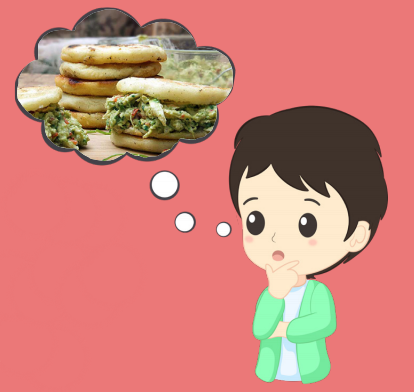
This Venezuelan dish is a simple and tasty meal. Illustration: Alyssa Marie Umbal / The Peak

By: Michelle Young, News Editor

Arepas y café con leche is a typical Venezuelan breakfast. Arepas are made from pre-cooked corn flour, water, and salt. As a staple food that can substitute for bread, they can be stuffed with almost anything you want. But they’re delicious when accompanied with plain butter, too. 

Making them is extremely easy, and there’s a variety of ways to do so. Plus, they’re gluten-free! For beginners without an arepa machine, I suggest frying them, though you can also bake them. The only thing you’ll probably have to go out and buy is harina pan — the corn flour — which you can find at any Latin grocery store. 

Regular cornmeal will not work, because it won’t absorb the water to make dough. There is white harina pan and yellow harina pan. The one you use typically comes down to personal preference. The white flour is often softer, and the yellow is usually crispier and saltier.  

To make arepas:

For eight arepas, put about two cups of harina pan in a large bowl. The bowl should be large enough to fit both your hands. 

Add around 2½ cups of water. 

Add a pinch of salt.

Mix all ingredients together until it forms a kind of dough (the harina pan will absorb the water fairly quickly). Use your hands to squish it together — once mixed properly, the dough should be somewhat moist but not sticky. 

You should now have a large ball of dough. Break it up into smaller, round pieces, and flatten these. Once flat, grease the pan over medium heat and fry them for about five minutes on each side. Now, you should have crisp dough patties — arepas. 

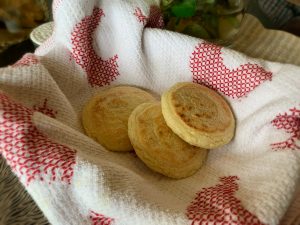
Let them cool off for a few minutes, and then split the patties horizontally. Now, you have a bundle of arepas made with care! Add whatever fillings you would like inside.

Photo: Michelle Young / The Peak

Typically, my family has arepas for breakfast, but they can also be served for lunch and dinner. My mom usually has her arepas with ham, cheese, and butter, while I have mine with plain butter. If we’re feeling fancy though, we’ll have reina pepiada and fill the arepas with avocado and chicken.

Food is often tied to culture and family, and arepas have definitely shaped my identity. My mom would often fry tiny ones for my elementary school lunches, bringing many stares from fellow classmates who asked me what I was eating. While the attention was unwanted, and at first made me feel out of place, it was a way to share a piece of me with others. 

Some days, I do get tired of eating arepas, but I never tire of watching someone eat it for the first time. Seeing their reaction to something that is so familiar to me, yet new to them, is always gratifying. Having my friends ask me if we were going to eat arepas at my house made me rush to request them from my mom. 

Arepas will always be in my heart as a part of family meals and shared cultural traditions. Though, it extends beyond that. It’s a way to bring my culture with me and to bring memories together with the people I love, regardless of our diverse backgrounds and experiences.

Being an Asian immigrant in Canada

0
Illustrated by Maple Sukontasukkul

by Nancy La, Staff Writer

One of the few memories l have from first immigrating to Canada was my sister teaching me the English alphabet. We had just landed in YVR less than 12 hours before and we were both jet-lagged, yet we still had to work on our English. I felt that being fluent in this language equaled approval and attention, so I continued to practice without complaining. 

Flash forward a couple of months and it seemed that my efforts to learn were not enough when I was still unable to speak more than a few words of English at school. As if that wasn’t disheartening enough, my inability to speak English somehow became an invitation for other kids to pick on me.

For the longest time, I hated recess and lunch. Those were the loneliest times since nobody wanted to hang out with me. 

So I commenced the mass effort of consuming all kinds of cultural productions to learn English. Whenever shows like Hannah Montana and iCarly were airing, I would whip out a notebook and studiously write down my observations on the actors’ accents and how they expressed themselves.

In hindsight, the picture of a younger me sitting in front of the TV taking notes on popular culture is hilarious. But it did make me more comfortable speaking English, so shout-out to Miley Cyrus for that. 

As I was devoting all my time toward learning English, I started to neglect my daily Chinese lessons with my dad. It got to the point where I started detesting the parts of me that made me Asian, because somehow being Asian — speaking the languages, eating the food, watching the shows — meant that I wasn’t trying hard enough to assimilate to Canadian culture.  

I had a hidden fear: I was worried that if I kept learning Chinese or Vietnamese, my English would have an accent. Of course, now that I am older (and a teensy bit wiser), I realize having an accent is not a bad thing, but back then I was 12 years old and still reeling from the immigration experience. 

Losing your language and identity starts slowly at first. Instances where I forgot a word or how to spell a character became more and more frequent until one day, I realized I could no longer communicate my feelings and thoughts coherently to my family. Ironically, though, all I could see was how my English was improving,  not the Vietnamese or Cantonese I was losing. I celebrated this loss, because it meant acceptance from my peers. 

I failed to see that it also meant isolation from my past, my culture, and my family. 

The ever-so-complicated relationship between me and the English language became even more inextricably intertwined as I declared my major in English a year ago. This meant more time spent buried in English texts and even less time keeping up with my Asian heritage, further cementing the idea that my Asian language and culture are separate from my academic life. I didn’t have negative feelings about English since I learned to separate the discrimination I went through from the language itself. The problems that I experienced, from social isolation to having to prove my fluency, stemmed from other people. English is just a language that’s supposed to help us connect with one another, yet to some, it is a tool to pick on others and discriminate against them. 

That still didn’t solve my issue with the other side of my identity problem: the inability to comprehend and understand Vietnamese and Chinese culture. This changed when I found out about SFU’s humanities department.

In the Fall 2020 semester, I took a humanities course on great texts in Asian thought and literature, where we had to read the classic Story of the Stone by Cao Xueqin and research various aspects of Chinese culture. This course made me understand that the Asian part of me is connected to the part of me that is fluent in English, and the two can actually coexist productively. For the first time in more than a decade, I got to use the little scraps of Chinese culture I have left in me! 

Another course, HUM 332, opened the door of possibilities for me to incorporate these different parts of me that I’ve previously separated. Being involved in the humanities meant I could do research on great Vietnamese figures like Bà Triệu or discuss China’s only female emperor, Wu Zetian. My limited knowledge of the culture that gave rise to these figures no longer felt like irrelevant little facts, but something that I could write about and get graded on. Being able to read Vietnamese or Chinese primary sources without translation gave me a little head start on research, something I never thought would come in handy at an English-based university.

I didn’t realize how trapped I’d felt until I realized there is a place for me and my Asian heritage at work and school. 

As I was relearning my languages, I became more and more aware of how knowing more languages placed me in sync with different cultural productions. Asian television, books, and music make for a more interesting version of me. I now have more shows to connect to instead of talking about The Office all the time. 

Recently, my niece and I were going over some Mandarin characters when I noticed she had a worried expression on her face. After some persuading, she finally admitted she was worried that learning Mandarin would mean she’d have a Chinese accent in her English, and that she wouldn’t have any friends if she spoke “bad” English. For a moment, I had a flashback to all the self-hatred and internal struggles that I went through when I was her age. 

I looked down at my niece and began telling her a story about a young girl who once had the same fears that she did. I told her about that little girl’s struggles and what she learned from those experiences.

For the first time in my life, I finally realized that there was value in the struggles that I went through. 

 

“Listen to This” is a great way to both enjoy and support the arts during COVID-19

0
The Arts Club is re-imagining the theatre experience. Image courtesy of Unsplash

By: Emma Best, SFU Student

The COVID-19 pandemic has impacted more than those visible onstage. Like many other industries, the arts have had to pivot in order to survive. It is through digital performances that theatre companies, such as the Arts Club, have been able to support local creatives working behind the scenes and continue the experience of theatre during these trying times. 

The Arts Club Theatre Company is currently running a collection of four audio plays in a series titled Listen to This. An audio play is exactly what the title suggests: a play told entirely through sound. Relying entirely on dialogue, music, and sound effects, audio plays emulate the feeling of theatre without the visual aspects of it. Each play in Listen to This is written by a local playwright affiliated with the Arts Club’s Emerging Playwrights’ Unit or Silver Commissions Project. They are available to purchase either individually or as a series. Alternatively, you can listen to them for free through weekly Apple or Spotify podcast episodes.

Unexpecting by Bronwyn Carradine follows a married couple: Annie and Josephine (Annie a writer and Jo a painter with a penchant for painting abstract vulvas). I found this play to be both funny and frustrating. A series of misunderstandings highlight the importance of communication in a relationship, and the tension created is released through witty characters and dialogue.

Available now through September 15.

Night Passing by Scott Button is inspired by true stories and takes place in 1950s Ottawa. It follows a young man named Elliot as he escapes his rural hometown in hopes of exploring his burgeoning sexuality. Undoubtedly the most serious play of the three available, Night Passing is a thrilling noir that had me anticipating and mourning each choice the characters were forced to make. It has also been expertly converted from a stage play to the audio format, partially told through the narration of the main character 25 years after the events of the play.

Available now through October 27.

Someone Like You by Christine Quintana is an adaptation of the play Cyrano de Bergerac, set in Vancouver during the COVID-19 pandemic. With so much of the comedy rooted in the shared experience many of us have had over the past year, I found this play to be incredibly relatable. The friendship and relationship at the centre of it highlights the importance of self-love and results in a refreshing and enlightening take on the classic (yet at times problematic) play on which it’s based. And, like Night Passing, the use of narration alongside the events of the play makes for an entertaining and engaging listening experience.

Available now through January 19, 2022.

My Father is the Greatest Man in the World by Tai Amy Grauman follows Rose, a now famous singer in Nashville who returns to her Métis family in Alberta. Pregnant with her first child, Rose goes to her father and looks to his past for answers about her child’s future.

Available September 15.

As someone who not only loves live theatre but has seen several Arts Club productions, I was eager to be transported back to a squeaky theatre seat (in my mind). Despite the lack of visuals, each play is told through well-written and descriptive dialogue, allowing the listener to easily picture each scene as it plays out. Meanwhile, the sound design — sound effects that emulate real movement such as walking, kissing, or birds chirping in the distance — further immerses the listener into each scene they experience. 

Those elements, along with excellent actors and original music, come together to tell compelling stories that are not only entertaining, but also incredibly accessible and easy to listen to. I tidied my room while I listened to each of these, but they also make great soundtracks for walks, drives, or simply laying in bed in the dark. And they are also an easy and enjoyable way to support the arts amidst all this uncertainty.

Monday Music: K-bops for what is hopefully the last COVID summer

0
"Monday Music" in giant yellow block letters with a red background
Monday Music: your weekly themed playlist. Image courtesy of The Peak.

By: Yelin Gemma Lee, Peak Associate

I have come to the realization that, since the second global rise of K-pop, the general public believes that South Korea only produces generic-sounding, unfathomably good-looking pop groups like Blackpink and BTS. Don’t get me wrong, I’m part of the Army too — I watch BTS’ reality show when I’m feeling blue because it’s so wholesome and reminds me of home. All that said, Korea’s vibrant music scene expands into more genres like R&B, indie, rock, and alt-pop. Here is a short list of some of my favorites for those summer drives and sun-soaked outdoor gatherings with your vaccinated friends.

1. Holiday” by So!YoON!

Image courtesy of Magic Strawberry Sound

Hwang So-Yoon is the guitarist and lead vocalist in the rock band SE SO NEON and she’s also producing genre-bending work as a solo artist. This song is about the insane speed at which the weekend goes by and needing a getaway so bad, you start carrying vacation mentality into your weekday grind. Sound familiar? Yeah, this song is how it feels taking a full course load in the summer semester. It’s got a funky, refreshing beat and makes me want to go for a long drive on a sunny day with all the windows down. When I can’t do that because I’m stuck in a three-hour Zoom seminar, Hwang brings me a little piece of that breezy, carefree energy.

Like this song? Check out “Forever Dumb (feat. SAM KIM)” by So! YoON! and Sam Kim 

2. AURA (feat. pH-1) (Prod. GXXD)” by Junny, pH-1

Image courtesy of mauve company

Junny, an R&B/soul singer with a syrupy and satisfying voice, pairs with pH-1, a Korean rapper, to bring you this absolute hot girl summer bop. Its flirty lyrics and energy will have you grooving and feeling a narcissistic level of confidence in its three minutes and 26 seconds. Even if you can’t dance (at all), you deserve songs that make you feel like hot shit. There are jazzy piano instrumentals in this song that make it feel really classic, although the beat adds a dominant, modern element. As long as you have promising dates sliding into your DMs as smoothly as this song is mixed, you’re all set.

3. Insomnia (feat. YAYYOUNG)” by Dvwn, YAYYOUNG

Image courtesy of KOZ ENTERTAINMENT

This sweet love song is mostly in English (you’re welcome) and one of the coolest duets I’ve ever heard. Dvwn is an R&B artist with such an unbelievable vocal range that it sounds like he is three different people singing throughout the track. I guarantee this is one song you’ll be singing along to, and adding to more than one playlist. It’s a good karaoke song for when you’re taking a cold shower because you did your readings in the sun for a little too long and almost got heatstroke. Remember, you’ve been indoors for the last full calendar year.

4. Big Love” by The Black Skirts

Image courtesy of DOGGYRICH

This indie rock band has my heart big time. If you’re down to get in your melancholic feelings and get sidetracked for hours reflecting on good memories, this band will take you there, guaranteed. Almost all of their songs are about love or nostalgia and have the most poetic, charming lyrics. “Big Love” is one of their more upbeat ones and captures the energy of being in love in the purest way. They actually just released a full-English EP that is right on brand with most of their other stuff — save it for a rainy day, or to start winding down in the evening. You don’t need a journaling prompt, you just need a verse by The Black Skirts.


Student takes months to realize they’re a vampire because of online classes

0
ILLUSTRATION: Maya Ramadhina / The Peak

By: Ana Arozarena, SFU Student

April 15, 2021 

Dear Diary, 

Not to be a hypochondriac but . . . I might be losing control of my life. Or maybe it’s allergies from when I cleaned the attic the other day. Either way, stuff has been weird recently. I decided to write it down here since, well, I don’t want to sound silly. I’m getting pale. Not an “iron-deficient” or “sickly orphan” shade of pale, either. I’m becoming . . . translucent? The purpleish tinge of my veins is popping through my skin— and not the kind of popping vibe I look for when I wake up to do my makeup for Zoom tutorials, honestly. Maybe I’m just seeing things, or maybe this is like that one episode of the Smurfs where Lazy Smurf gets bitten by a fly, turns purple, and goes on a rampage. I hope it’s the former, because I’m freaking out here.


May 2, 2021

Dear Diary, 

I got a little sidetracked. Huh. It looks like my last real entry about my social life here was about 12 years ago. To update you a bit— no, I did not marry my fifth-grade crush, Blake. In high school, he got a girl pregnant and then got mad when he realized he couldn’t customize the kid like it was a Sim, so . . . I guess I dodged a bullet there. I also got older, so now here I am in my second year of university. Rad. Unless you remember we’re in a global pandemic and it’s all online. And, well, the whole turning blue thing. Honestly, I’ve sort of forgotten how to write in a diary. Nobody ever reads these things, right? 


May 5, 2021 

Got sidetracked. Again. Maybe it’s Zoom fog, LOL. And all that homework. Does anyone even use “LOL” anymore? God, I am getting old. Kind of like you, Diary. You were in a dusty box alongside my aptly named childhood stuffed animal, Teddy. He’s not in the best shape, and there was a dying bat crawling around in the box, so I left him up there. Sorry, Ted. You’re still looking good though, Diary, despite my cringe-worthy fifth-grade handwriting. I, on the other hand . . . not so good. Been getting these awful migraines recently. Had to install blackout curtains. Strangely, the dark feels comforting. 


June 7, 2021 

Dear Diary, 

Here’s the deal: I think I might have turned into a vampire somehow. I know that sounds absurd. And no, I’m not just listening to “Blood Bank” by Bon Iver too much, okay? 

Over the past few months, I’ve become paler than ever. I can’t stand the sunlight. Food and drinks are unappealing. I justified it all for a time. After all, students get migraines. They get depressed. Who wouldn’t after staring at Zoom lectures on a screen all day? I haven’t been out much during the panorama either, which explains the whole translucent thing. But now, I just can’t deny it anymore. 

It happened on Monday. There I was, chilling in my Zoom box. Suddenly, I was gone. I tried fiddling with the webcam. Nothing. But by then, I had realized: the mean mug (really, the mug has the words “one mean mug” on it in faded blue letters) was still in the frame, floating precariously over my cluttered desk. So now, I’m faced with the reality that I no longer have a reflection. And maybe not even a soul. Despite my pleas for understanding, the school has been unwilling to accommodate. They say “go fix your webcam” and “we won’t reward you for avoiding class” and “you can’t be a vampire, you’re not even sparkling.” What would I be avoiding, the rush hour traffic from my bed to my desk? This vampire thing sucks

Signed, 

A bloodthirsty student who just wants to graduate already.

We need to care more about the COVID-19 crisis in India

0
The current crisis has impacted the efficiency of vaccine exports. PHOTO: Dado Ruvic / REUTERS

By: Ira Rishi, SFU Student

The impacts of the second wave of the COVID-19 pandemic have been deeply felt by India. Every day is a battle as the pandemic grows incessantly. As the rest of the world is also facing the misery unleashed by the ongoing pandemic, this is a battle that will have lasting economic impacts beyond just India. The world can no longer be negligent of the COVID-19 crisis being faced by India.

Regardless of race, gender, religion, caste, and wealth, India’s rampant COVID-19 crisis has spared no one. It has been amplified by factors such as a reduced fear of the virus, lack of sufficient resources to deal with the surplus of cases, and a sheer lack of leadership. In this time of need, we need more people to care about the devastating events in India — especially considering its historical and ongoing relations with countries like the United States and China. India has done its part and now needs aid from its allies. 

India is responsible for contributing around 4–8% of the world’s economic growth. Not only has the Indian economy been impacted, but the crisis has also had effects on the global economy, as well. India is also responsible for contributing to the vaccine development for COVID-19, and the current crisis has halted the export and manufacturing of the vaccines. India also holds up the economies of other countries by providing staff for back-office services, hence another indirect impact on the global economy. 

However, we shouldn’t only care about India’s COVID-19 crisis because of its significant contributions to the global economy. At this point, the situation has escalated beyond a health crisis; it is a humanitarian crisis now. The health care systems are overburdened and exhausted, there is a severe shortage of oxygen and spaces in hospitals, and there isn’t even enough room for people to rest in peace.

Most Indians have come together to look after each other, circulating requests for oxygen, plasma or beds. Despite being exhausted of its resources, India continues to fight this battle with vigour. People are coming together to fend off the atrocities caused by this crisis and are looking out for each other.

India’s reality today is not short of something being ripped from the pages of history. This is no longer something from which the world can turn away. It is more than just a crisis. We all need to come together and do our part to defeat this pandemic. This is a privilege check for those who can afford the resources to reduce their exposure to the virus, as many people don’t have the same luxury. This is a reality check for the rest of the world that we’re still in the middle of a pandemic and it is wreaking havoc upon many countries, people, and lives. 

Some relief funds looking for donations include The Canadian Red Cross, Khalsa Aid, ImpactGuru, CARE, Ketto, and OxygenForIndia. The Vancouver India Cultural Association has also set up a GoFundMe fundraiser. 

Taylor Waters turns personal experiences into trending songs

0
Waters, an independent artist, is a rising star. Image courtesy of @taylorwatersmusic via Instagram

By: Nancy La, Staff Writer

SFU alum Taylor Waters‘ musical career is gaining a foothold within the industry. Her hit single, “Little Sister, is trending on Spotify’s indie pop & chill playlist. She has also recently released two new songs, “No Excuses” and “Patiently.” 

In an interview with The Peak, Waters discusses the inspiration behind her songs and her experiences with being a musician during the COVID-19 pandemic. 

“‘Little Sister’ was one of my first ‘pop’ songs that I wrote,” Waters recalled about the song written for her younger sister. “The song is quite literal. It was more of a letter to her. Girls can be so mean in high school [ . . . ] So I just wanted to write something that would remind her how amazing she is. And that I would gladly kick some ass if needed.” 

Waters’ newer songs, “Patiently” and “No Excuses,” also tell a story. The former depicts Waters’ relationship with a friend who “had recently become something more” and was written as a “fantasy [of] what could possibly happen.” 

“I tend to over-romanticize situations, unfortunately,” Waters admitted lightheartedly. 

Waters mentioned that “No Excuses,” on the other hand, was written after that same friend “screwed [her] over.” 

Waters does not consider her style to be bound to any one genre. “I’m inspired by so many different artists, styles, and genres, I just let things happen naturally. I think this way of thinking has really allowed me to create songs that differ in style,” she said.

Indeed, Waters’ musical inspirations are very diverse. From Mahalia and Kiana Ledé to The Weeknd, Phoebe Bridgers, and Billie Eilish, Waters’ long-term inspirations are all musicians who break boundaries in the music industry.

“I really like writers who are honest, blunt, and sassy,” Waters said. 

Our conversation turned to how COVID-19 has affected Waters’ musical work. The answer was, surprisingly, not at all. “I’ve always been a bedroom pop musician anyways. I do almost everything in my room [ . . . ] It’s always been virtual,” Waters admitted with a smile. 

Bedroom pop, explained Waters, is a style of music that came from independent artists who may not have had the support of a production team to help create their music. “I think that this kind of pop does differ in its influence. It’s a lot more indie or alternative,” she said.

She also noted the accessibility of bedroom pop, saying, “It shows you don’t have to have a label or fancy studio to make cool art. Anybody can do it.” 

Along with her exposure on Spotify, Waters took part in CBC’s 2021 SearchLight competition — a competition for budding musicians to submit their music for a chance to win prizes such as studio time or development classes. Having her songs played on CBC radio in the northern BC region was a great experience for her. 

Though Waters mostly creates bedroom pop, she would really like to “start playing shows when [COVID-19] dies down.”

You can listen to Waters’ music on Spotify, SoundCloud, or YouTube.

Perfect Fit: Setting the atmosphere of your Zoom meeting

0
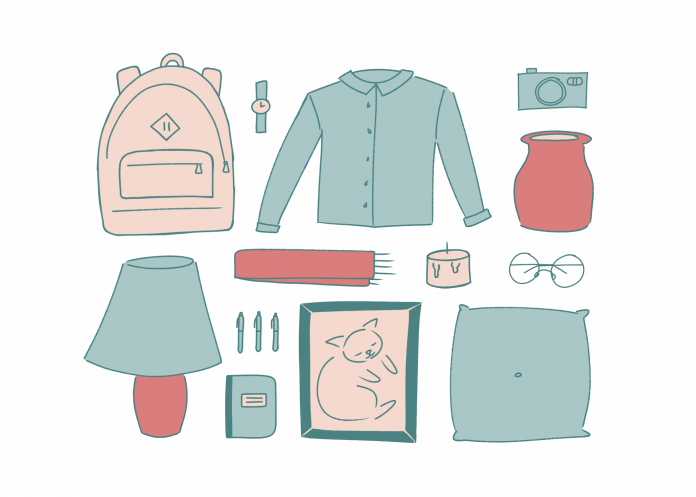
Illustration of fashion and home accessories (backpack, pillow, etc.) in shades of pink and blue
Refresh your life with these simple style recommendations. Illustration: Kitty Cheung / The Peak

By: Jaymee Salisi, News Writer

Getting ready for your Zoom call is not just about your outfit, but the overall image your webcam portrays of you. There is a certain ambiance within your little Zoom box, and it can impact the mood of the call. This is not to make anyone feel like they’re doing Zoom calls wrong, because we are all doing our best over a year into this pandemic, but if you’re looking for small ways to elevate your next virtual meeting, check out this list:

Something to sip on

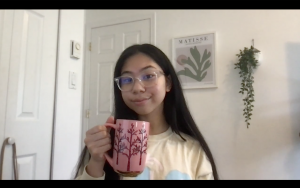
Photo: Jaymee Salisi / The Peak

There’s something about the person you see in your 11:30 a.m. lecture who has a different beverage every week. Whether they are drinking out of a homemade pink and green ceramic mug or a glass mason jar with a metal straw, their beverage becomes an accessory and it sets an immaculate vibe.

The best places to find cozy and unique mugs are local coffee shops. My personal favourite spot is Old Crow Coffee in New Westminster. Leaning into the use of bubbly earth-toned fonts on their mugs and selling woven nesting baskets for fruit, their merchandise is a mix of retro and cottagecore. 

I especially like this shop because they carry local brands and frequently support initiatives such as the Black and Indigenous Self-Care and Healing Fund and the Vancouver Black Therapy and Advocacy Foundation. You glow differently in that ECON 220W class when you know you’re supporting a business in line with your personal values.

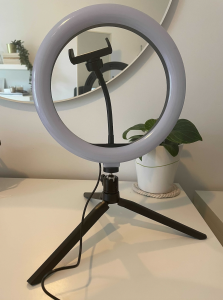
Good lighting = remote learning glow up

Photo: Jaymee Salisi / The Peak

I try to get as much natural light into my room as possible because I think it looks the most appealing, but my neighbours’ houses and 45-metre-tall trees have other plans for me. My laptop’s mediocre 720p camera quality and obnoxiously yellow room light are also not the most helpful elements.

So if your work-from-home situation is anything like mine, a ring light will be your saving grace. I found mine on overstock.ca for $40, which might be a bit much for artificial light, but the best remedy for a pixelated camera is allowing more light into it. And it can be used for multiple occasions too — like taking pictures during class while your laptop camera is off. You didn’t hear that from me though.

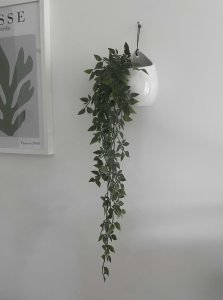
Give your background some backbone

Photo: Jaymee Salisi / The Peak

The universal struggle of our time: The Zoom background. 10 minutes before a meeting you will always find me shuffling around my room in search for the perfect background angle. Now that I’ve added some personalized elements to my room, the dramatics associated with this crusade have been significantly reduced.

Adding life to your background creates a story, making your Zoom persona more tangible. Due to my incapability of keeping a small cactus alive, I decided to fake it ‘til I make it with a couple plastic hanging plants from IKEA. Who would’ve thought the best way to liven up the atmosphere would be to add artificial plant life?

For unique pots, Facebook Marketplace is a great resource to add character into your decor. The beauty of online reselling is you can find some of your favourite items for under $15! 

I’ve found the most charming pots for $2 from thrift stores — it goes to show that less is more because I’ve received the most compliments on these items.