Home Blog Page 336

SFU department of history hosts a conversation on Liu Xiaobo

0
Photo Courtesy of SFU

Written by: Kelly Chia, Staff Writer

On May 27, 2021, SFU hosted an event featuring professors Jeremy Brown and Perry Link in a conversation. They discussed Link’s forthcoming biography, co-authored by Wu Dazhi. It is about Liu Xiaobo, a figure of political liberation in China. Liu won a Nobel Peace Prize in 2010 for his defense of human rights and died in 2017 while serving eleven years of imprisonment for subverting state authorities. 

This is the final lecture in the series Witnesses to History — the SFU department of history’s annual public lecture series. The series “focuses on eyewitness accounts and testimonies, and their importance of telling the stories of the past.”

“Liu Xiaobo is bigger than this world generally gives him credit for,” Link said. “He came up with a non-violent philosophy for bringing about social and political change that — in my view — ranks with Martin Luther King and Mohandas Gandhi.” Link said Liu’s goal was to change the regime through society by looking at “ordinary people with daily life problems.” He explained it was different from dialogue in the ‘80’s, as people wanted societal change among government authorities.

Co-author Wu Dazhi knew Liu personally. “They started working together in the early 2000s on what they called [ . . . ] Charter 08,” Link explained.

Charter 08 was a manifesto that advocated for “the gradual shifting of China’s political and legal system in the direction of democracy.” It called for a constitutional amendment that guaranteed human rights as “China’s successive political disasters have all been closely related to the disregard for human rights by the ruling establishment.” 

It was signed by 10,000 dissidents and human rights activists in and outside of China. Liu’s involvement resulted in his arrest in 2008

When Link approached Wu, he did not know enough to write the biography. Similarly, Wu did not know enough English for the project. Thus, Wu sent Link chapters to translate and edit. “She was the content provider and I was the carpenter, if I can put it that way,” Link said.

After criticizing China’s one-party system, Liu served two years in a labour camp and exited in 1999, where his friends said he became decidedly more empathetic. “This is reflected in his philosophy, where his goal is to change the regime.” 

Link noted the landscape for opposition is worse than it was a decade ago because of heavy surveillance culture. “The budget for maintaining what’s called — or maintaining stability — in China is bigger than the national defense budget. 

“If you started to cause trouble, for example, if you signed Charter 08 even though you weren’t a ‘mover or shaker,’ this system would come to you and the police [would] invite you to tea.” The police would then ask people to consider their safety and their family’s safety. Otherwise, they would be at risk of imprisonment, Link explained.

“There are no opposition ‘parties’ in China,” Link said in an interview with The Peak. He explained, “the current top leader, Xi Jinping, is using old means of repression” to stop opposition early on. He added that old repression referred to Mao, and new repression takes the form of technology. 

Link and Wu hope that with the release of the biography, people will uphold Liu as a leader of thought. Link and Wu are considering naming the biography Long March Toward Freedom. This is “an echo of Nelson Mandela’s book, Slow Walk to Freedom.” Replacing “to” with “toward” showed how Liu didn’t get to freedom as Mandela did, they explained.

Link, professor emeritus of East Asian studies at Princeton University has authored several books on Chinese language, literature, popular culture, and dissidence. The interview and lecture can be viewed here on YouTube.

Cecelia Reekie discusses mourning in the Indigenous community after discovery at Kamloops

1
Photo courtesy of Cecilia Reekie

Written by: Karissa Ketter, News Writer

Content warning: descriptions of residential school abuse, anti-Indigenous racism, and genocide 

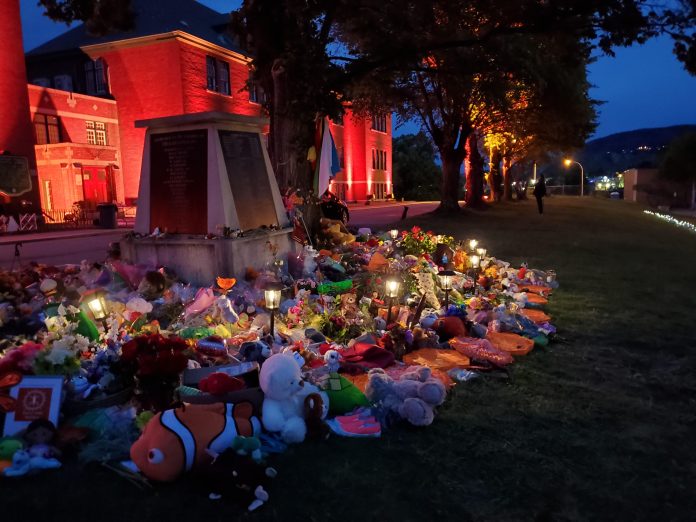
The remains of 215 Indigenous children were found near a residential school in Kamloops on May 27, 2021. Their identities are not yet known. While experts said it is difficult to “pinpoint with certainty the causes of death,” the findings revealed these are “missing Indigenous children who were unaccounted for in the known death toll” of the residential school system.

“When the news broke — and we were seeing it everywhere on social media — I was just heartbroken. And the grief is so intense,” said Cecelia Reekie, a Haisla Nation cultural presenter for the Langley School District. 

According to the Indian Residential School History and Dialogue Centre, the Kamloops school was the largest residential school in Canada. It was opened in 1890 by the Roman Catholic Church and was active until July 31, 1978.  

The residential school system was funded by the Canadian government. Catholic, United, and Anglican churches ran over 130 schools from the 1870s until the last school closure in 1996. 

“The purpose was to get rid of the ‘Indian problem,’” described Reekie. “We were in the way of the land. We were in the way of the resources.” 

In 1920, the Deputy Minister of Indian Affairs in Canada stated the objective was “to continue until there is not a single Indian in Canada” who had not been assimilated into the population. The Union of Ontario Indians explained that assimilation was “deemed to be the most effective way to ‘civilize’ the Indians.” Facing History explained that European imperialism inspired colonizers to force Indigenous peoples to conform to European society

The Canadian Encyclopedia estimates 150,000 Indigenous children attended residential schools. The estimated number of deaths is still unknown. The previous death toll for the Kamloops Indian Residential School had been 52 — the discovery of 215 remains demonstrated that the majority of childrens’ deaths went unreported and unregistered across BC.

“It was just heartbreaking. I was just so sad and felt so heavy, and they’re babies. They were somebody’s babies. I try to word it that way because I think that helps people understand,” said Reekie. She believes calling them “children” makes the discovery “too easy” for Canadians to accept. Understanding the victims as somebody’s babies helps to show people the devastation felt by families and communities, when their babies were never returned, Reekie explained.

While Canada acknowledges residential schools as cultural genocide, some have asked for them to be reclassified as a genocide. The United Nations defines “forcibly transferring children of the group to another group” as a form of genocide. While the Truth and Reconcillation Comittee (TRC) has already condemned residental schools as cultural genocide, “there is ample evidence” in reports that state “intentions, legislation, actions and legacies of genocide,” according to The Conversation

At the schools — which some consider to be internment camps — girls were forced into housekeeping tasks such as cooking, cleaning, and laundry. Boys were forced into labour such as carpentry, maintenance and agriculture. 

There are widespread reports of severe malnourishment, excessive punishment, neglect, physical abuse, sexual abuse, and mental torment. Disease outbreaks such as tuberculosis, influenza, smallpox, and measles were common due to malnourishment and overcrowding. 

“There will be many more babies across this country who need to be brought home. There wasn’t just 215,” said Reekie. “The truth must come out. We have to do all we can to ensure that every child who died in residential school has a name.”

Children ages four to 16 were forcibly removed from their parents to be taken to residential schools. They were given European names in effort to assimilate them with Europeans. Children were punished if they used their Indigenous names. Minister of Aboriginal Affairs Stephen McNeil told the CBC, “Their name, like much of their identity, was taken away from them.”

“This is a very pivotal time in Canada right now,” explained Reekie. “Around the world people are going to be watching Canada to see what we do.” 

Political leaders at all levels and the Catholic, United, and Anglican churches in Canada, “need to have difficult conversations about who they are and what they are and what they represent,” said Reekie. 

Vancouver Catholic girls’ school, Little Flower Academy (LFA), was opened in 1927 by the Roman Catholic Church as a residential school. LFA students called on the Roman Catholic Church to apologize for their participation and to stop “glorifying colonization.” 

In a statement released by LFA, they said, “It is our responsibility to teach the truth about the residential school system; to deepen our collective understanding of the intergenerational harm that the residential school system caused; to acknowledge the role of the Catholic Church within these schools.”

According to Reekie, it will be these difficult conversations where Canadians will be able to “break down those barriers, the same way schools need to break down their systemic racism.

“They have to be conversations and they have to be out in the open, so that, as Indigenous people, we can see those conversations happening, and we need to be a part of those conversations,” said Reekie.

For Reekie, a key part of this process is first giving Indigenous peoples space to grieve. “We need to stand with the Indigenous communities as they come to terms with this [ . . . ] We need everybody to stand with them, not just flying flags, not just wearing orange shirts.

“For those who already think they know the history, we need to continue to learn. We need to continue to understand. We need to have compassion, empathy with each other. I’m sure there’s many non-Indigenous people who are also feeling that the country that they thought they understood, maybe they didn’t understand as well,” said Reekie.

Reekie noted her disappointment in Justin Trudeau’s response to the uncovering of Indigenous children. “I would have thought that there would have been much more significant action than just words the last week. Words are wonderful, but it’s going to be the action that is really determinant in [ . . . ] what our country is going to look like.”

Justin Trudeau recently released a statement regarding Missing and Murdered Indigenous Women, Girls, and Two-Spirit People. After new policy recommendations, Reekie asked, “Why hasn’t this happened before? Why wasn’t it important before last Friday? Maybe we need to ask ourselves that — maybe we as Canadians need to ask ourselves, why has it taken 215 babies to get us moving?”

Reekie believes it is important for all levels of government to consider the 94 Calls to Action that the TRC published in 2015. These call on the federal, provincial, and territorial governments to reduce harm being done to Indigenous populations across a wide scope: child welfare, education, language and culture, health care, justice, and reconciliation. 

Reekie said it is crucial for the government to “find space for our people to have that voice and to be able to move [this country] in a direction that it’s not wanted to go, but it needs to go now.”

The Calls to Action in child care include ensuring social workers are well educated and trained in culturally appropriate environments for young children. It includes the understanding between the connection of the foster system and residential schools, and aims to keep Indigenous families together as often as is safe to do so.

Developing a culturally-sensitive education curriculum, honouring existing Treaties, and closing health gaps such as infant mortality, suicide, addiction, and chronic diseases between Indigenous and non-Indigenous peoples are also components of the 94 Calls to Action.

“A life lesson my dad taught me is to walk softly, and maybe we all need to just walk softly right now,” said Reekie.

Starting next week and spanning the remaining issues of this semester, The Peak will be publishing each of the 94 Calls to Action of the Truth and Reconciliation Commission.

Resources:

Professors discuss concerns regarding SFU’s reopening plan

1
PHOTO: Gudrun Wai-Gunnarsson / The Peak

Written by: Jaymee Salisi, News Writer

Following the BC provincial government’s reopening plan, SFU announced its plan to return to campus by Fall 2021. 

The university aims to bring back in-person classes for 70–80% of courses. They also created a four-stage plan outlining broad guidelines for campus density and available services. While also encouraging students to get vaccinated, SFU said they will:

  • Ensure enhanced cleaning practices and safety standards remain in place across the university
  • Work with TransLink to ensure safe transit service to campuses
  • Reopen campus amenities including food services, the Bookstore, computer labs, recreation services, and library services
  • Increase student programs and activities 

The plans are based on BC’s vaccine rollout projections aiming for 70% of adults to be vaccinated with the first dose of the COVID-19 vaccine by September 2021.

By then, SFU predicts public health orders will be altered and pandemic protocols will be reduced, which will allow in-person classes to resume.

The Peak reached out to various faculty for their thoughts. Director of public health programs Malcolm Steinberg said, “I am confident that a significant proportion of faculty, staff, students, and other persons on our campuses will be fully immunized by the Fall.

“We know that SFU will continue to follow public health guidelines and implement safety precautions recommended by the BC Centre for Disease Control, WorkSafeBC, the provincial health officer, and BC’s Restart plan.”

Steinberg said a key concern regarding in-person classes is the inability to effectively social distance on public transit. Further, Steinberg added SFU’s fourth phase of an 80–100% density level will be also challenging for social distancing precautions. 

“We will see a gradual return of faculty and staff to campus over the remaining summer semester with the likely expectation of approximately 80% presence on campus in the Fall. This should allow faculty and staff to make the adjustment to the return to campus,” Steinberg said.

Assistant professor of communication Sun-ha Hong said, “Of course, if we can return to campus safely, it’ll be fantastic. I know pandemic classes have been 50 flavours of hell for students.” 

Hong added it would be ideal to create a university environment that captures more than class content. 

However, he emphasised it depends on whether the return to campus would be safe, “We all hope that everyone can be vaccinated and things really are safe by September. But plans are not predictions, and there’s a long way to go before what we’re all hoping for September actually becomes reality.”

Steinberg added final directions about in-person classes will be made by the deans of each faculty. “Decision about which classes will resume in-person engagements will clearly depend on class sizes and the proportion of international students.”

According to Steinberg, SFU aims to center student experiences and concerns in the decision making process.

An undergraduate survey conducted from February to March 2021 showed a preference among 80% of students in maintaining some of flexibility with continued online learning. 

72% of students living outside the Lower Mainland expressed concern about returning to campus. They were mainly apprehensive about safety risks and travel restrictions.

The survey also showed a student preference for labs, tutorials, and experiential learning to be taught in-person.

Steinberg said instructors have expressed an inclination for remote teaching and hybrid approaches involving synchronous and asynchronous course content delivery. 

Hong explained that he has not been given more details regarding the plan from the university. “I don’t know yet for sure whether my own courses will be in-person or not, and what exact preparations need to be made.”

According to Hong, remote teaching has involved “untold hours of extra unpaid work for faculty.”

It is important to Hong that the university considers what returning to campus might look like for immunocompromised students, staff, and faculty. 

Steinberg said proof of vaccination will not be required so “it will be important to continue to encourage mask wearing in class situations where adequate distancing will not be possible.”

“We have to think through what it might look like for international students, with so many countries denied the same access to vaccines that US or Canada has had [ . . . ] We haven’t figured it out until we’ve figured it out for truly everyone,” Hong said.

Although the university has not yet developed official plans for potential COVID-19 exposures on campus, SFU members are expected to self-isolate for 14 days after exposure.

Steinberg said that on June 8, SFU launched a COVID-19 rapid screening pilot program eligible for students living on campus and varsity athletes to participate in. 

The program is a preventative measure which will “allow us to detect possible cases early on, prevent the spread and protect the safety of the SFU community.

Find out more about SFU’s plans to return to campus here.

Planned obsolescence sucks

0
I should be able to preserve my technology. AntonioGuillem / iStock

By: Kelly Chia, Staff Writer

Do you know how your phone has somewhere between two to three years before it starts slowing down? Or how you have to replace light bulbs every few months or so? That’s planned obsolescence in action, and it’s a gross industrial strategy. What this means is that companies will design their products to break down in a certain amount of time so customers will be encouraged to buy their newest products. And it makes me want to scream.

This is an age-old strategy. The oldest known case of planned obsolescence is the Phoebus cartel; from 1924 to 1930, several major lightbulb manufacturers made the lifespan for light bulbs shorter by 500 hours. The bulbs were of higher quality, but they cost more and sales increased as people replaced them more often. Companies have been making bank off products with set deadlines for a long time.

Think again about cell phones, which seemingly come with cameras that are far more professional than an average person needs. Is it really necessary to buy those upgrades? Probably not, but if your phone becomes sluggish, it’s easier to justify getting a new phone. I know towards the end of the three years I had my Samsung phone, the keyboard became really unresponsive. I would sometimes have to wait a minute as it caught up with the sentence I had texted. 

And it’s not a matter of how well someone takes care of their device: Apple is infamous for lawsuits about dropping performances in older phone models when new updates are out, and they’re likely not the only company to do so. 

Planned obsolescence also extends to things outside of technology, like textbooks that are reprinted with minor changes and exclusive codes, forcing students to buy the newest version. It’s frustrating when I can’t save $40 or more using a textbook that is only two years older than the one in the syllabus. This strategy forces students to spend more money for what feels like minor edits. And what about the garbage planned obsolescence encourages? All of this has environmental consequences — where consumer culture goes, waste is bound to grow. It all feels a bit helpless considering it’s so ingrained in our culture, and our actions amount to little compared to big corporate strategies. 

Even so, I find that learning about it and being aware of its presence can help, especially because planned obsolescence isn’t regulated in North America. Additionally, supporting bills that advocate for sustainability and a right to repair is one way to fight against planned obsolescence — especially as many cell companies shut down independent repair. Bill 197, for example, was introduced to amend the Consumer Protection Act for greater sustainability of consumer products. 

While it was unfortunately rejected, there will likely be another Bill 197 in the future that needs support. Until then, there are many initiatives we can support that reward companies for sustainable innovation and longevity.

SFUnexplained: Burnaby’s construction hides a monster

0
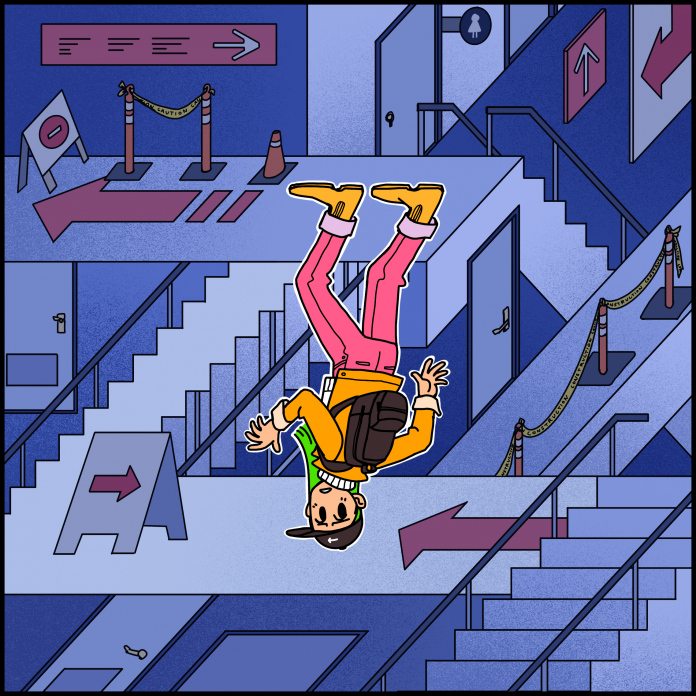
I’d be better off if I picked a random direction and hoped for the best. Illustration: Danielle Regas/The Peak

By: Carter Hemion, Staff Writer

Anyone who’s had the misfortune of studying classical mythology has likely heard the story of the Greek Labyrinth created to house the Minotaur, a monstrous half-man, half-bull creature. SFU is a real-life case of something similar, currently orchestrated by president Joy Johnson. 

If you’ve heard the rumours like I have, you know that SFU had a mishap in a lab that created an awful monster. Unfortunately, as SFU does not release information about animals on campus, we can only put together the details from careful observation. Maybe it was a zombie brought to life in the morgue. Maybe it was a radioactive mistake with McFogg the Dog. Maybe it once was a student living on Monster energy drinks for too long in the bottom of RCB. Regardless, SFU is trying to keep it locked away the only way they know how: by constructing a labyrinth. 

Its funding is obviously each campus’ bookstores, and even faculty are involved. Professors require students to purchase textbooks they wrote. They require students to pay extra to access their homework and PDFs. Students can’t even pass on or buy used textbooks because an updated edition is required every new term. What kind of reputable institution would do this to students all while refusing a tuition freeze and dragging out the fight for RA employment rights? It could only be a cover for something nefarious.

Sometimes I get frustrated with how expensive and inaccessible post-secondary education is, from SFU charging ridiculous tuition for international students to the extra hidden fees with classes. To keep calm, I just remind myself that SFU administration must have a reason for lining their pockets with the money I would have used to buy unnecessary things like dinner and new shoes. They do it all to serve us, the students, by hiding the monster in constantly changing halls. They’re so good at it we haven’t even seen the creature!

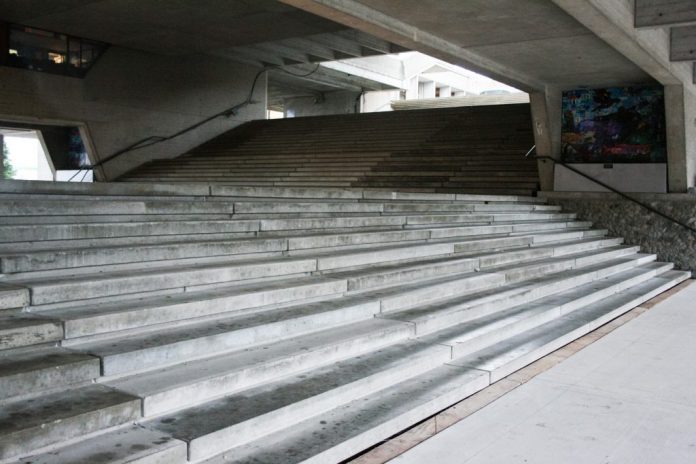
Besides, there must be a better reason for construction than SFU needing renovations. The levels of asbestos on campus are relatively safe, the lead paint is minimal, and there must be a valid reason the most recent physical access guide hasn’t been updated in almost a decade. Students have no need for unionising, protesting, contacting SFU administration, or taking any tangible actions to change our campus. We should simply accept the damages that come at our expense because there is absolutely no reason to doubt our university’s choices. Administrators aim to protect us from harm. Collateral damage is still acceptable, right?

Next time you hear an ungodly screech from a quiet hallway or catch something strange passing by in your professor’s Zoom background, remind yourself that the construction and closures of corridors are a great thing. They may be the only thing separating you from the beast of SFU.

What will you miss about remote learning?

0
ILLUSTRATION: Kitty Cheung / The Peak

building my schedule

By Maya Beninteso

While there are some aspects of remote learning I don’t like, there are a few perks I will miss. For one, I appreciate the flexibility of online classes and learning from the comfort of my home. It enables me to spend more time studying or doing something productive — like binge-watching Criminal Minds instead of using said time for commuting. I rarely feel pressed for time or rushed between Zoom lectures. 

Even though being home sometimes feels isolating, there is truly nothing like it. Studying in your room, dressed in flannel pajamas, while the rhythmic rain hits your windows is the epitome of comfort. This level of bliss is impossible to replicate while studying on campus. 

However, the best perk of remote learning has been the ability to improve my mental health. Before remote learning, I was always “on the go” and never had the opportunity to address some of my mental health concerns to their fullest extent. Since all of my extracurriculars and volunteering positions shut down, I had all this time on my hands. Once remote learning began, I decided to use the extra time I had to seek out resources and (online) counselling. v

Though there have been some positive aspects to online learning, I cannot say I am loathing the return to campus. Remote learning has been tolerable, but I’m looking forward to in-person classes again.


the doodle squad

By Kelly Chia

I’ll miss Blackboard Collaborate doodles! 

Pre-lecture, my professors would open up the room and we would go wild. It was kind of hard to bond with strangers, but when you’re drawing together, you form a connection. Doodling with this many people isn’t something you can do in real life; a class of 100 students would not be able to crowd around a whiteboard. Being able to see what everyone was doing and interacting in real-time made it special.

It felt much less awkward than any of the icebreaker games we’d play in tutorials because our doodles felt like a natural conversation. Classmates would adore my drawing of the “Surprised Pikachu” meme, and then in response, someone else would draw another Pokémon they knew. I learned that my classmates liked Animal Crossing, and we’d doodle our island codes so we could visit each other. Sometimes my professor would even open up the board so we could doodle during the lesson, and we’d draw small reactions. These doodles made the class experience memorable and interactive, and I’ll miss them a lot.


pause, rewind, and play

By Jacob Mattie

To be clear, online learning has been pretty rough. Staying motivated to study during a terrifyingly monotonous semester (or three) was, and remains, a massive challenge. But not unlike how allergy season brings with it some pretty cool flowers, online learning has been able to resolve some issues presented by in-person classes — namely, by giving us the ability to pause and rewind lectures. 

Being able to control the pace at which a professor covers the material is something I’ve found to be instrumental in taking ownership of my learning. Rather than having to choose between listening to the lecture and taking accurate notes, the structure of asynchronous classes has allowed for the possibility of both

Being able to rewind and revisit certain sections of a recording has been incredibly useful in cementing the more difficult topics and more forgiving of the unavoidable lapses in concentration. 

In all, the freedom to absorb the material at my own pace has made education feel a little less like being pushed through a curriculum, and a little more like being guided.


chatter box

By Nathan Tok

While everything hasn’t been perfect with online learning, one huge benefit is the chat. Whether in Zoom or Blackboard Collaborate or some other communication software, participation is easier with a dialogue shared with the whole class. When in lectures, especially big ones, the conversation can get dominated by the instructor or just a few people. 

The chat function can be incredibly useful for shy people who might have great ideas but don’t want to put themselves out there in front of so many people. The chat function allows us to capture at least some of those previously missed ideas when before, they were almost completely overlooked. 

The chat is unfortunately one feature we can’t bring back to the classroom. The closest thing we have in SFU is iClickers and other participatory apps like Tophat. But I haven’t seen an SFU class where people can communicate with each other and share cool stories or initiatives going around Vancouver and the world. I can’t tell you how many cool things I found just by someone sharing in the chat, whether it’s just the name of a band or a cool program. So let’s enjoy it while it lasts, and send those :)s in the chat.

Bewildered student confronts the peculiarities of food

0
Chris Ho / The Peak

By: Clarence Ndabahwerize, SFU Student

Burnaby, BC — A student having a dreadful Zoom lecture was admitted to a local hospital after engaging in an internal debate regarding his appetite. Due to the inevitable wandering thoughts associated with a Zoom class and an empty stomach, he decided he needed a snack. It’s worth mentioning that he had also subjected himself to some Pavlovian trickery by watching a MasterChef episode on another screen. When he went over to the fridge, he found a baguette. He quickly realized he couldn’t put the baguette in the toaster without risking the integrity of the baguette. 

You may be wondering how this is such a serious situation, but have you ever asked yourself whether cereal is soup or whether a hotdog is a taco? This young man quickly realized that if he sliced the baguette to put it in the toaster, it would simply become sliced bread. He just couldn’t handle the contradiction. 

He sat there for several minutes questioning what human baked such a monstrous piece of bread too difficult to put in a toaster. But, of course, he remembered that toasters probably weren’t a thing when the first baguette was baked. He also realized that everyone who sliced a baguette to eat it was doing it all wrong and that they had to strategically eat the baguette whole as he does. The Peak is waiting upon his discharge to confirm how exactly he does this. 

Of course, the problem was that he really wanted to have a toasted baguette and nothing else. He set out to resolve this most ungracious dilemma by putting on his thinking cap. In this case, it was a cowboy hat that he got on a trip to Texas, where he was chased by some spray-tanned acolytes of the red hat. 

For several hours, he was the embodiment of that meme with the lady doing the calculations. He thought about life and about bread and about toasters. He thought of ovens and flour and dough. He also thought about heat and the role of thermodynamics in baking a baguette. He thought of what it may take for a human to one day make a loaf of proper banana bread on the moon and on Mars. 

The young man thought and thought, tossed and turned, all while ignoring his grumbling stomach. Eventually, he realized he could put the baguette in the oven in its whole form and toast it. If you’re wondering how he got to the hospital, it turns out the oven had not been well-maintained since his attempt at recreating a recipe from “some-great-not-so-European baking show.” It became a bit explosive, so to say. 

After another bout of thinking in the hospital, he realized that he could have simply sliced the baguette, put it in the toaster, and saved himself the hospital visit. 

Unsurprisingly, the Zoom class went on despite the explosive flash seen in his video feed, as it was dismissed as a glitch. Nobody realized something was amiss until a fireman ended the call on his behalf.

Stop iconizing serial killers in popular culture

0
We don’t need another Ted Bundy film. Photo courtesy of People Magazine

By: Harvin Bhathal, Peak Associate

CW: Sexual violence, murder, misogyny

Ted Bundy is receiving yet another take on his horrific life in the form of a film. Chad Michael Murray — yes that Chad Michael Murray — has been cast to play Bundy in American Boogeyman.

According to the film’s synopsis, American Boogeyman follows the elusive and charming killer and the manhunt that brought him to justice involving the detective and the FBI rookie who coined the phrase ‘serial killer.’”

This film and the myriad of other Bundy-related productions, including 2019’s Netflix Original Extremely Wicked, Shockingly Evil and Vile, beg the question, “Why is the US film industry hell-bent on glorifying Bundy’s life?”

The answer stems from the country’s continued history of misogyny and violence, particularly against women and gender-diverse people. As a result, serial killers, such as Bundy, have become US pop culture icons. This also reinforces said patriarchal values.

The casting of Bundy also has consequences. Voltage Pictures cast Chad Michael Murray, a once teenage sensation from films/television series such as A Cinderella Story and One Tree Hill. In Extremely Wicked, Shockingly Evil and Vile, High School Musical star Zac Efron was cast to be Bundy. Both of these were intentional.

Bundy’s attractiveness and charm have been grossly exaggerated over the years. Casting Murray and Efron as him is disingenuous, and worst of all, it feeds into the false myth surrounding Bundy. In some cases, he would gain sympathy by pretending to be injured; in others, he would gain trust by pretending to be an authority figure. 

Bundy was a lying psychopath a psychopath whose perspective the US film industry insists on prioritizing

The problem with Bundy-related films is the depiction of the women he raped and murdered as passive victims and mere numbers. In a TED Talk, “How Crime Shows Undermine Your Empathy,” Carolyn Murnick questioned the skewed perspective of the men-centric focus in the consumption of murder as entertainment.

“The stories we tell about women’s lives matter and the messages that we are internalizing about women when we watch these shows [matter] even more.”

Bundy is known to have killed 36 women — women whose bodies were used as an outlet for misogynist violence, women who the film industry considers to be nothing more than a footnote in Bundy’s life. Though he has only confessed to 36 murders, experts believe that the real number could be closer to 100 or more.

Bundy is an icon in US popular culture because of these patriarchal values. He has been described by US media over the years as more of a celebrity than a monster, being referred to as “the new postmodern serial killer role model.”

When serial killers are exalted, it diverts attention away from their illegal, immoral crimes. Media productions such as Extremely Wicked, Shockingly Evil and Vile and the upcoming American Boogeyman create a spectacle around serial murder as opposed to the harsh realities that surround it.

By producing more Bundy-related films, the film industry is “elevating the monster,” as US audiences are “titillated by gore and extreme violence.”

In addition, these productions are not created for just any serial killer; only the ones whose crimes, appearance, and/or personality stand out. Whether warranted or not, Bundy fits all three of these factors (at least for his appearance).

Such works could potentially incentivize a serial killer to commit extremely violent, misogynist crime(s) to become an icon in US pop culture as Bundy has become. Even if they don’t, they still normalize misogyny.

Serial killers are often the subject of case studies that more often examine their lives rather than the consequences of their actions. Serial murder is an issue of power dynamics that involve gender and fear. 

If future productions about serial killers are to be created — and only with permission from victims’ families — producers should consider adopting a women-centric perspective as historically, they are the ones who have faced the consequences of serial murder.

Your weekly SFU Horoscopes: June 14–20

0
An illustration of a girl with long flowing hair. Astrological signs and stars shine around her.
ILLUSTRATION: Marissa Ouyang / The Peak

By: Tiffany Chang, Peak Associate

Aries: You will find yourself crawling on all fours trying to get back to your Zoom class after your feet fell asleep from a half an hour on the closest toilet. My advice: be the great multitasker that you are! Wiggle your piggies while taking the stinker, so those pins and needles aren’t as agonizing.

Taurus: Take a swift but thorough look over both shoulders before making your sixth (or 12th, or  905th) Etsy purchase this month. Everyone loves resorting to retail therapy, but not when the people you’ve spent every day with for the past 15 months are giving you the condescending “again?” stare.

Gemini: While eating Chinese takeout on the couch, you will find a positive fortune that almost makes sense and you’ll pray it comes true. I have this inkling that it’ll say something like: “School might be a little more bearable this semester. Like, I wouldn’t get my hopes up, but it could be marginally better, you know?”

Cancer: One word: Indulge . . . because you don’t very often. Rewatch the first season of Bridgerton in your PJs on Wednesday night after finishing the six 1000-word long Canvas discussion posts that needed to be done.

Leo: Put your affectionate side on full display! Sometime during this seven-day period, ask for a hug from a person in your COVID-19 circle. If they agree to it, don’t release them until four minutes has passed. Once you’ve let them go, look into their eyes, then walk away.

Virgo: Recreate the AQ with pillows to unleash your school spirit. Lie amongst them while wearing an SFU hoodie, then imagine yourself strolling aimlessly around. Once you’ve accidentally passed Mackenzie Café twice like you usually would, sit back up and reminisce about the good old days when campus halls were crammed with people.

Libra: Don’t forget, you like nice things. Prance around in your finest threads and jewelry for an hour. While you’re at it, pretend to be a Disney character. Take some inspiration from the new Cruella de Vil movie: go absolutely off the rails while blaming your behaviour on the fact that your mother was run off a cliff by dalmations. 

Scorpio: Go to a Gemini’s place and ask if you can join them for some Chinese food. Just kidding! You can’t do that right now, but you can order food from the same place. What will your fortune say? “Alleviate stress over exams by ranting to your classmate, only to realize you’ve talked for two hours and your food is cold.”

Sagittarius: Join a dating app and find someone who might be nice to talk to in person after this eon-long pandemic is over. The both of you might initially meet up starving for human connection, but won’t speak because you’ve forgotten how. 

Capricorn: You’ve always had it in you to do what every university student has dreamt of: express your frustration by blasting Christina Aguilera’s “Hurt” and sing right along at school. Since we’re at home nowadays, keep your camera and microphone on when you sing so that you can share the experience with classmates.

Aquarius: Pull out Monopoly and combat boredom with Rich Uncle Pennybags. Take advantage of the opportunity to be ruthlessly capitalistic by buying up every revenue property this board game has to offer. Making investments with fake money and plastic commercial buildings never felt better. Playing will also momentarily make you forget that you’re a broke student.

Pisces: We know you’d never admit it, but you like Starbucks just as much as everyone else. Take an old Starbucks cup and purposely spell your name on it incorrectly. Heck, give yourself a completely different name, like Steve or Darlene. It may be basic, but the cup will give you some sense of guilty-pleasure comfort during this time.

A focus on mental health is needed for post-pandemic life

0
Mental health support should not be behind so much red tape. PHOTO: Azat Bayandin / The Peak

By: Theresa-Anne Clarke Harter, Peak Associate

For those with certain mental health concerns, a return to in-person learning may mean heightened anxiety, social challenges, and more. Others may feel relieved at the thought of returning to school, as remote learning’s lack of designated learning spaces, proper equipment, and structure present unique challenges. But with this return, SFU needs to ensure they accommodate all students and offer proper mental health support. 

We will inevitably see a rise in mental health struggles among students as we return to in-person learning. In recent years, SFU has added the option of drop-in Health & Counselling advising sessions where students can be referred to supports that would best suit their needs. This service can be initially accessed almost immediately. Unfortunately, due to lengthy waitlists, it can be difficult to get help after your first session. 

During the pandemic, professors were often more understanding about late assignments and the struggles that come with learning online. This attitude needs to translate to SFU’s return to campus, as students will continue to have personal struggles that are just as valid. Students should be able to access help without rehashing trauma or sharing personal events with a near stranger. The inflexibility of academia doesn’t reflect real human needs. In fact, it often lacks empathy.

Students will undoubtedly need more support and understanding. We have yet to see the repercussions this shared trauma will have on ourselves and our communities. To engage healthily with our learning environment, SFU must improve their mental health supports. Investing more in these health supports could involve increasing funding for the Centre for Accessible Learning, Health & Counselling, and campus groups that advocate for marginalized students.

Another learning barrier I would like to see dismantled as we return to in-person classes is SFU’s bureaucratic application processes for accessing support. I recently had a personal experience with this while pursuing learning accommodations for my ADHD. Numerous forms — some that may require you to see a new doctor or psychiatrist just to prove a condition you’ve already been diagnosed with — can feel very invalidating. Not to mention, this presents barriers to people who experience executive dysfunction. The employees at CAL are lovely, empathetic, and helpful individuals, but it is the bureaucratic processes the institution inflicts on us that are the problem. This red tape puts up so many barriers that many students searching for help give up halfway through the process.