Home Blog Page 333

Resources for Indigenous students

0

For any Indigenous students needing support while dealing with the weight of the last few weeks, here is a list of resources compiled by the Indigenous Student Centre, First Nations Student Association, and the Simon Fraser Student Society

Support at SFU:

Indigenous Student Centre:

  • Connecting with an Indigenous Counsellor

Book an appointment with Indigenous Counsellor, email [email protected] and ask to book with Jennifer, HCS Indigenous Counsellor

  • My SSP (Student Support Program) 

1-844-451-9700 — ask to book an appointment with an Indigenous Counsellor

My SSP App for 24/7 support

  • SFU Health & Counselling

778-782-4615


External Supports:

  • Indian Residential School Survivors Society

1-866-925-4419

1-800-721-0066 (Crisis Line for immediate support)


  • First Nation Health Authority

There is mental wellness support that is provided through the First Nations Health Authority specifically for survivors and families who have been directly impacted by the Indian Residential School system. If you self-identify as Indigenous please reach out and request additional support. This is what it is intended for.


  • Aboriginal Wellness Program

604-675-2551


  • Child and Youth Aboriginal Mental Health Outreach – East Hastings Street

604-868-0368


  • Child and Youth Aboriginal Mental Health Outreach – Cambie Street

604-688-0551


Help Lines:

  • KUU-US Crisis Line Society

Adults: 250-723-4050

Youth: 250-723-2040

Toll-free: 1-800-588-8717


  • Tsow-Tun Le Lum Society

Toll-free: 1-888-403-3123

Main office: 250-390-3123


  • Métis Crisis Line:

1-833-638-4722


  • First Nations and Inuit Hope for Wellness Help Line:

1-855-242-3310


Further Support and Resources for Indigenous Students has been compiled by staff at the SFU Indigenous Student Centre and can be found on their Instagram @sfu_isc

The Real Patty Co. delivers Jamaican patties right to your door

0
These locally-made patties offer meat, veggie, and vegan selections. Image courtesy of @yothatssobomb via Instagram

By: Marco Ovies, Features Editor

The other day I had the privilege of ordering from The Real Patty Co., a business run by the Simon family in Surrey. They specialize in Jamaican patties, which are flaky pastries filled with seasoned meat or vegetables. They offer flavours like jerk chicken, veggie curry, and even vegan ground round. Let me tell you, they are all delicious. 

The Real Patty Co. sells and delivers their patties frozen. You then follow the re-heat instructions, and within minutes, you have a hot Jamaican patty ready to devour. Plus, it is super convenient to order. When you order on their website, the patties are delivered to your doorstep the next day. 

The Real Patty Co. was created in 2020 and started out as a quarantine project. 

Like many Canadians, our wages were cut significantly which caused us to get creative,” said the Simon family. “We decided to make and sell Jamaican Patties on our community Facebook page using a family recipe handed down from Mama Maureen Simon.” After a very successful year, the family is proud to announce that their side hustle has turned into a booming family business. 

I really cannot stress enough how delicious these Jamaican patties are. I am absolutely obsessed with the jerk chicken. I don’t know what Mama Maureen Simon’s secret is, but she has created the ideal blend of spices and flavours that I can’t stop thinking about. The pastry on the outside is perfectly flaky and the jerk chicken has just the right amount of kick. You can feel it, but it’s not overwhelmingly spicy. I’m salivating just writing about them. The Real Patty Co. does not just do delivery either; they visit farmers markets across the Lower Mainland. 

If you’re trying to support more local businesses during the pandemic, then The Real Patty Co. should be on your radar. Be sure to follow The Real Patty Co. on Instagram and Facebook to catch all the latest specials, promotions, and where they will be setting up shop next. To place an order, check out their website.

SFU Community-Engaged Research discusses inclusivity among youth

0

Written by: Jaymee Salisi, News Writer 

SFU Community-Engaged Research hosted “Holding space vs. making space: building youth-led community belonging.” The workshop aimed to examined inclusivity and platforming marginalized youth in community-centred research. It featured four speakers who discussed their experiences piloting the Youth Justice Lab and what it taught them. 

Over this six-week virtual lab, high school members conducted open conversations exploring decolonization, racial equity, and intergenerational activism. Acting as an inclusive space for students to learn about social issues, the project was made in partnership with the SFU Centre for Restorative Justice  and North Shore Restorative Justice Society (NSRJS). 

“Our goal, in coming to this new justice lab, was to foster meaningful youth engagement opportunities,” said Anne-Marie Parent, program manager of the Restorative Justice in Education Initiative.

Undergraduate student Emma Mendez said her group focused on decolonizing high school curriculums. This experience inspired her to continue working on social justice projects with NSRJS. “It really empowered me and transformed the way I saw community. It stressed the importance of community in the sense of fostering connections, respect, and accountability,” she said.

Mendez found the Youth Justice Lab easily accessible to those wanting to participate because it was free and only required participants to fill out an application form. She said the lab could improve on inclusivity in areas of internet access, closed captioning, and accomodation for people whose second language is English. 

“Not everyone has access to stable Wi-Fi or technology [ . . . ] I think we would need to bring people from these communities, and actually have a wider conversation about what their needs are,” she said.

According to Parent, it is also important that Youth Justice Lab fosters inclusivity by having educational conversations that decentre whiteness. She said they can do this by being intentional about platforming the voices of people with diverse lived experiences.

Youth advisory member Graham Best said the group of students created a set of community guidelines for constructive discussions. 

“For me, coming to this set of community agreements really helps the space to feel safe,” he explained, as it opens up discussion and encourages participants to learn about subjects such as income equality, poverty, and mental health support networks.

Looking forward to creating a second Youth Justice Lab, youth advisory member Graham Best aims to continue his process of learning and unlearning to create an equitable future.

Learn more about the Youth Justice Lab and their initiatives here.

What niche characterized your queer adolescence?

0
ILLUSTRATION: Van Mai / The Peak

By: Kelly Chia, Staff Writer

Have you ever realized you were queer and then realized the signs were definitely there when you were a teenager? This quiz will take you back to those endearingly embarrassing days. 

Warning: doing this quiz may induce memories of songs you only know because of Glee

  1. How did you spend your precious weekends? 

A) 2 a.m. at a Denny’s with your class of 30 as well as your stage crew, scream-singing the lyrics to the musical you just finished. It’s a tradition, okay? Don’t look at us like that.

B) You planned a picnic with your three best friends and baked a small cake to celebrate nothing in particular. Persephone herself would probably smile down at you!

C)You’re playing Stardew Valley mods because you need a little ~ variety ~ in your farming simulators.

  1. What quote still makes your heart soft?

A) “ . . .  And you know what they did? They danced!” You will never forgive Hadestown for destroying you inside out. Never.

B) “When my time comes around / Lay me gently in the cold dark earth / No grave can hold me down / I’ll crawl home to her,” because Hozier makes you scream like an actual feral wolf.

C) “We accept the love we think we deserve,” because as soon as you read it, you knew you would reblog that same damn quote with 50 different PicMonkey-edited sunset photos just to feel the sweet, sweet angst.

  1. What outfit would you don to face the bitter dungeon of high school?

A) A baseball shirt and leggings, the most comfortable thing you could find in your closet. You need a flexible outfit for all the finger guns you’re going to make that day.

B) A short-sleeved mustard yellow blouse with a long maxi skirt dotted with flowers. You are hoping to be mistaken for an actual peony by a cutie walking by.

C) A worn red plaid button-up, jeans, a beanie, and black boots. Your Sleeping With Sirens shirt was in the wash, unfortunately. (They were also an unfortunate pick for your emotional support emo band, kid.)

  1. Pick the Greek myth that hurt you the most.

A) Orpheus and Eurydice. THEY WERE SO CLOSE!

B) Medusa, because you were tricked into believing that she was the villain for such a large part of your life.

C) Patroclus and Achilles. Madeline Miller has your heart in knots for writing a love so tender.

If you picked mostly As, you were a theatre kid!

You really didn’t anticipate how much you’d grow to love your dusty high school theatre and the shows you found, but here you are. This is true even if you spend every moment as an adult embarrassed because of it.

Are you disappointed by how invested you were in a show that glorifies the founding fathers of America? Do you have a target with Ryan Murphy’s face on it? Maybe, but you found your goofy family in this room filled with asbestos. And you have every right to belt those sad Waitress songs all you want! 

If you picked mostly Bs, you loved cottagecore!

If you see one more frog in round glasses, you might start crying. You call your messy table maximalism, and you don’t think your poetry is really poetry. Your Spotify is pretty much a shrine to the one pop queen you’ve decided to worship and music you’d consider dancing barefoot in the forest to. The copious amounts of plants that you’ve adopted and named currently have the best shot at your inheritance.

And most importantly, your playlist has songs that make you feel the most queer emotion of all: yearning.

If you picked mostly Cs, you were deep into fandom communities!

Your villain origin story began when your favourite shows queerbaited characters right before your eyes — that, and you likely had a Homestuck phase. You feel a little betrayed by the internet for turning you into a gremlin, but you know that you can never find the same familiar kind of disastrous fandom energy anywhere else. 

Now? You’re an adult that plays Dungeons & Dragons because you want your character to develop and grow in the way you wish your favorite characters did. And you definitely play an elf or a tiefling.

Dear Peakie

0
PHOTO: Sara Brinkac / The Peak

By: Sara Brinkac, Peak Associate and Knower of All

Dear Peakie, I’ve been trying to find the perfect barbecue to buy for my dad. My budget is about $5. Please help. Sincerely, Broke Bloke

Hi Broke Bloke, buying presents for your dad is tough. But don’t worry; with my world-class advice, you’ll finally get that “I love you” you’ve so desperately been looking for. Now, I know you think you have to buy your dad a “proper grill” for Father’s Day, but that’s just a lie spread by Big BBQ. Those suits at George Foreman will have you believe that grilling has to be done in “specified” and “controlled” locations, but that is the furthest from the truth. 

During my time as head chef at the world’s most premier five-star Michelin restaurant, I strictly used the “Open Flame” method and grilled my way amongst the greats. Originating in 420 AD, the “Open Flame” method was first discovered by vikings during a routine town pillaging. The warriors felt a tad peckish. They quickly realized, not only could they roast a beautiful steak anywhere they pleased with the houses all aflame, but the controlled BBQs Sven was selling in their village were a total scam. So go ahead and give your dad that $5 bill as kindling, Broke Bloke. This Father’s Day, you will be giving your dad the gift of the most effective and portable barbecue on the market. And don’t worry if you run out of kindling. I find that my court transcripts always work great in a pinch. They really add a great “public threat” flavour to the steaks. 

Dear Peakie, I’ve just realized I don’t have an adequate villain origin story for when I eventually snap and take down SFU. What should I do? Signed, Foolella de Vil 

Hi Foolella, it’s tough to see such a growing disparity of villain backstories in our current economy. I completely sympathize. Fortunately for you, I spent about five years of my youth as a certified Evil Mastermind. While I was chairman of the board of “Villains for World Domination,” my dear friend Jeff gave me some great advice that I’d like to share with you: every villain backstory must have a sympathetic element. Whether it be the cruelty of society or the cruelty of your ex-wife divorcing you and taking your hard-stolen money, a villain has to go through a soul-removing event. Perhaps you once failed a final exam because a construction site blocked your path and made you late. From that day on you vowed to erect meaningless construction sites all over SFU to make everyone feel the same frustration you felt that dreaded day. Now you scrawl your name across campus haunting innocent bystanders, laughing in the face of completion dates, and making sure every SFU commuter knows the evil villain “Ledcor.”

Dear Peakie, I’ve gotten so used to texting people during the pandemic that I keep saying things like “LOL” and “poggers” when I talk to people in real life. Help! Signed, Bestie 

Hey Bestie, I’m sorry to say you are suffering from what we in the medical field call “Reverse Dictation.” While it is common to use talk-to-text to tell your phone what to say, prolonged exposure to LED keyboards can flip this cognitive function. When this happens, your phone begins to tell you what to say. Thankfully, your case is still in early stages — I once treated a man in stage-four Reverse Dictation who could only speak in 1s and 0s. Whenever he went to sleep, he would hum the Windows shutdown jingle. It was tragic.

Unfortunately, there is no known cure for Reverse Dictation, but we have found many ways to help people live healthy and happy lives with this affliction. Currently, the most effective treatment is what we call “irony.” Next time you feel the urge to blurt out “poggers,” play it off with a sarcastic expression and you will quickly turn the tables on any social missteps. For this to work, however, you really have to become a fully ironic person. That means dabbing, whipping, saying “ya-yeet” while throwing things, and playing Pokémon GO like 2016 never ended. Throw it all to the wind and no one will be able to tell what is social ineptitude and what is scathing commentaries on society. All the best Bestie and remember: if it’s not cool, it’s ironic.

Biodegradable printer ink cartridges developed by SFU students

1

Written by: Karissa Ketter, News Writer

SFU School of Sustainable Energy Engineering students created a refillable ink cartridge system for home printers. The product, SustainInk, is designed to “turn a traditional ink cartridge printer into a reusable, refillable ink reservoir.” 

SustainInk hopes to cut down on waste in landfills by eliminating the need for ink cartridges and making home-printing affordable for students.

Project lead Eddy Sanderson reported the team is using a 3D printer with biodegradable material to create the cartridges. The SustainInk reservoirs’ material can be biodegraded in 80 days in a commercial facility.

“We’re looking at trying to make a different kind of ink that is based out of algae so that it’s carbon negative,” added Sanderson.

According to Sanderson, many standard “printer cartridges aren’t properly recycled because some of the inks contain heavy metals that [can’t] be broken down properly — a lot of them end up in landfills where they further contaminate water systems.” Currently 20–30% of ink cartridges are recycled.

“We’re trying to remove the landfill aspect.” 

SustainInk is also focused on “looking at how to make printing more accessible for students because it’s extremely cost prohibitive.” According to Sanderson, printer cartridges have a 700% markup in the market. Alternative reports have stated the “average markup on ink cartridges is 1,000% to 2,000%.”

Sanderson explained once consumers buy a company’s printer, “[they’re] forced to continue to buy the same refills for that system. So it kind of strongholds you into a cycle of having to spend more than it’s actually worth.”

Their study found that the yearly cost of printing is roughly $700 of ink cartridges, whereas SustainInk could print the same amount for under $50 a year.

Ink reservoir printers start at roughly $800, said Sanderson. 

This project was inspired by the shift to online learning due to COVID-19. Many of the SustainInk team members had to purchase at-home printers. They quickly found that “buying an ink refill was almost as much as buying a new printer, which is not sustainable.”

The team responsible for SynthaSift includes SFU students Akash Bains, Ryan Cordoni, Erin Flood, Alia Gola, Dana Kadoura, and Aiden Rudy.

More information on SustainInk can be found on YouTube

It’s time to bust myths about asexuality

0
ILLUSTRATION: Maple Sutontasukkul/The Peak

by Carter Hemion, Staff Writer

Content warning: mentions of sexual assault

Asexual people are believed to make up at least 1% of the world’s population. By comparison, 1% of the world is about the same amount of people who have red hair, or about twice as many people living in Canada today. Despite this, asexual people are barely represented or talked about in media. When they are, they’re often misrepresented, and misinformation spreads far.

The definition of asexuality is a lack of sexual attraction. Asexuality can exist on a spectrum, which can include asexuals,  gray-asexuals (folks who are largely asexual but still have sex), and demisexuals, the latter of whom usually do not experience sexual attraction but may on occasion. 

Conversely, allosexuality refers to a sexual attraction to others. The umbrella term allosexual can include heterosexuals, homosexuals, bisexuals, and pansexuals, among others. Allosexuals experience sexual attraction to others frequently, while asexuals experience little or no sexual attraction. Both asexuality and allosexuality exist on spectrums and are experienced in a variety of different ways, yet myths continue to spread about asexuality.


Myth: Asexuals cannot love

Asexuals are often stereotyped to seem cold, anti-social, and emotionless in the media. However, a lack of sexual attraction is, well, nothing more than that. While people of any sexual orientation can be aromatic (experiencing no romantic attraction), that is not true for every asexual. For those who are aromantic, they can also experience non-romantic and non-sexual love for people in their lives, sometimes forming dedicated platonic relationships. Many asexuals date, fall in love, and get married. Some have children, whom they also love. All asexuals make friends and love the people in their lives, just like allosexuals can. 


Myth: Asexuals never have sex

Some asexual people can and do have sex for a variety of reasons. Some may enjoy the intimacy of the experience or choose sex as an act of love for their allosexual partner(s). Others may just enjoy physical arousal, or they may simply want to partake in the activity. Asexuality does not mean that a person cannot have sex. Some asexuals are sex-repulsed, some enjoy regular sexual activities, and many others fall on a spectrum somewhere in between. Asexuality also does not equal anti-sex attitudes, and asexuals can be sex-positive without experiencing sexual attraction or partaking in sexual activities. 


Myth: Asexuals don’t experience arousal

Despite a lack of sexual attraction, some asexuals do have a libido, and most can experience physical arousal. An asexual person may masturbate, consume pornographic content, or have kinks, fetishes, or fantasies without it changing their sexual orientation. While many asexuals may not be as likely to partake in these activities as often as allosexuals (or at all), involvement in these activities has no bearing on sexual orientation. 


Myth: Asexuality is unnatural or an illness

Asexuality is as normal and natural as any sexual orientation. It does not qualify as any kind of sexual dysfunction or mental illness. For the majority of asexuals, it is not a phase. There is nothing that makes asexuality unnatural or unhealthy; it is just one way of identifying sexual orientation.


Myth:  Asexuality is a choice

Being asexual is not a choice. While some people may choose to be celibate or abstain from sex, that isn’t the same as being asexual. Asexuals are not necessarily virgins, anti-sex, or avoiding sex entirely. Asexuals can choose to abstain from sex, but that is not the same as someone who has sexual attraction avoiding sexual activities. 


Myth: Asexuals are all closeted homosexuals

Because of a prevalent false belief that asexuality does not exist, people can assume that those identifying as asexual are lying about their sexual orientation. While it can be safer for some people to stay in the closet, identifying as asexual can be just as dangerous as identifying with other LGBTQI2S+ identities. Asexuals are not lying, and they need to be believed about their identities without question. 


Myth: Asexuals don’t experience oppression or discrimination

With all the misinformation about asexuality out there, it can be easy for some people to think asexuals never experience oppression or discrimination like other members of the LGBTQI2S+ community. Asexuals experience harassment because of the negative beliefs that asexuality is unnatural and a choice. Asexuals are sometimes even rejected by the LGBTQI2S+ community. Because of dangerous bigotry and false beliefs about asexuals, people of other identities commit sexual assault in violent attempts to change asexuals’ sexual identities. 

To connect with other asexuals or learn more about asexuality, see the Asexuality Visibility and Education Network at http://asexuality.org/.

SFU students develop laundry filter to mitigate plastic pollution

1
PHOTO: Marshall Williams / Unsplash

Written by: Karissa Ketter, News Writer

SFU School of Sustainable Energy Engineering students recently created a microplastic filter for laundry machines. In an interview with The Peak, Elizabeth Salvosa, team member for SynthaSift said it “filters microplastics from our laundry that would otherwise be introduced to the water system.” 

Laundry filter products such as Lint LUV-R and Filtrol were an inspiration for the team’s development, but the team noted SynthaSift is “10 times finer,” while maintaining competitive prices.

SynthaSift team’s study found that competitor products “functioned like your dryer lint bin and do not effectively filter out smaller [microplastic] particles.” 

According to Salvosa, their research report noted the “average family does 300 loads of laundry annually.” 

Some studies find that as many as 700,000 microfibres and microplastics will be released after each load of laundry. These particles are spread throughout the environment via waterways — The New York Times reports 9.25 to 15.86 million tons of microplastics can be found on the ocean floor.”

Clothing made from synthetic fibres release particles that “do not break down completely, and natural fibres are often treated with harmful chemicals or dyes.” 

Salvosa reported the development team plans on undergoing up to a year of household testing. “We want to ensure that the product is consistent with our projected usage and design before considering further development and market viability,” said Salvosa. 

“We have also talked to a researcher from another institution exploring magnetic mechanisms, which is promising.”

The original prototype was created via 3D printer using biodegradable polylactic acid, to minimize the environmental impact at each stage of design.”

Salvosa said the team “researched various mechanisms for filtration, and [SynthaSift] was one of the more viable options at this point in time.”

The team responsible for SynthaSift includes SFU students Daisy Chen, Braden Harding, Mishak Taggart, Cyrus Urbanowicz, and Changle Yu.

According to Ocean Clean Wash, clothes made from synthetic material contribute to 35% of the plastic pollution in oceans. The International Union for Conservation of Nature reports that 8 million tons of new plastic pollution enter the oceans each year.

These particles “have physical effects on wildlife and humans via the food chain,” according to SynthaSift’s report.

Microplastics in marine life can “block digestive tracts, diminish the urge to eat, and alter feeding behavior,” according to National Geographic. All of these can harm or kill marine life, as well as restrict their reproductive abilities, further limiting the size of the population.

The Center for Biological Diversity found that “thousands of seabirds and sea turtles, seals and other marine mammals are killed each year after ingesting plastic.” One study reports synthetic fibre particles have travelled throughout the arctic ocean and are found in arctic zooplankton, seabirds, and marine life.

More information on the SynthaSift Laundry Microplastic Filter can be found on YouTube

Biology students asked to download Grindr for research purposes

0
ILLUSTRATION: Janis Mcmath / The Peak

By: Carter Hemion, Staff Writer

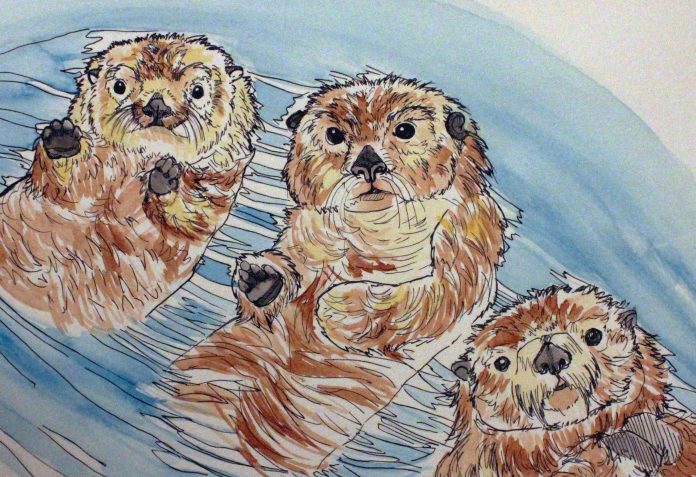
Biology students are claiming new identities after their REM 388 professor mistakenly assigned them a gay hookup app for homework. 

Borne out of a misunderstanding about gay connotations for words like “bear” and “otter,” Dr. Gayle Rain-Beau’s mistake caused students committed to learning about wildlife taxonomy to rethink their understanding of the course. As a result of this profound academic endeavour, various students started nicknaming themselves  “Cub4Daddy,” “B0ttm RN,” and “discrete ottr,” all words “appropriately related to animal instinct,” according to some students, but “completely and utterly wrong” to others.

Raine-Beau gave students the assignment of downloading Grindr over a Canvas email on June 8, though it took several days before the class group chat realized what had happened — many prepared to leave the assignment to the day it was due were in for a wild ride, so to say. 

Raine-Beau said assigning her students Grindr was “an honest mistake,” which she “regrets very much.” 

On June 13, Raine-Beau posted a public statement from her Notes app on Instagram. It read, “I overheard my students talking excitedly about seeing bears just 69 feet away from them with the app, and I couldn’t just let that pass by [ . . . ] I now have grown from my mistake, and I am sorry students were offended by the incident. I’m sorry if my words were taken out of context. It was not my intent to harm, but I did not invent the culture. Thank you.”

Students met Raine-Beau with a variety of responses. One student known by screen name “Cub4Daddy” stated with a wink he “had no idea that’s what the app was for.” He also disclosed that his midterm paper would be on bears, but did not specify which kind.

However, some SFU students have been deeply offended by the assignment. Raine-Beau’s TA Woody Cox reached out to The Peak personally to give a statement. He said, “I am offended to see a queer hookup app shared with so many students. It’s horrifying and offensive. How am I supposed to know who’s actually gay here? You think I wanna meet someone just to find out they’re a girl? And one of my students?” 

Another student, Anita Hoal, claimed the assignment was “very creative and educational.” She said, “I learned a lot about mating techniques and the kind of primitive animal instincts that survived through evolutionary developments.” She excitedly cited observations of “physiological arousal and perhaps even new evidence of mammalian lordosis behaviour in male Homo sapiens.”

SFU administration has declined to comment, but noted they would be sending out an email in two to three weeks regarding the assignment.

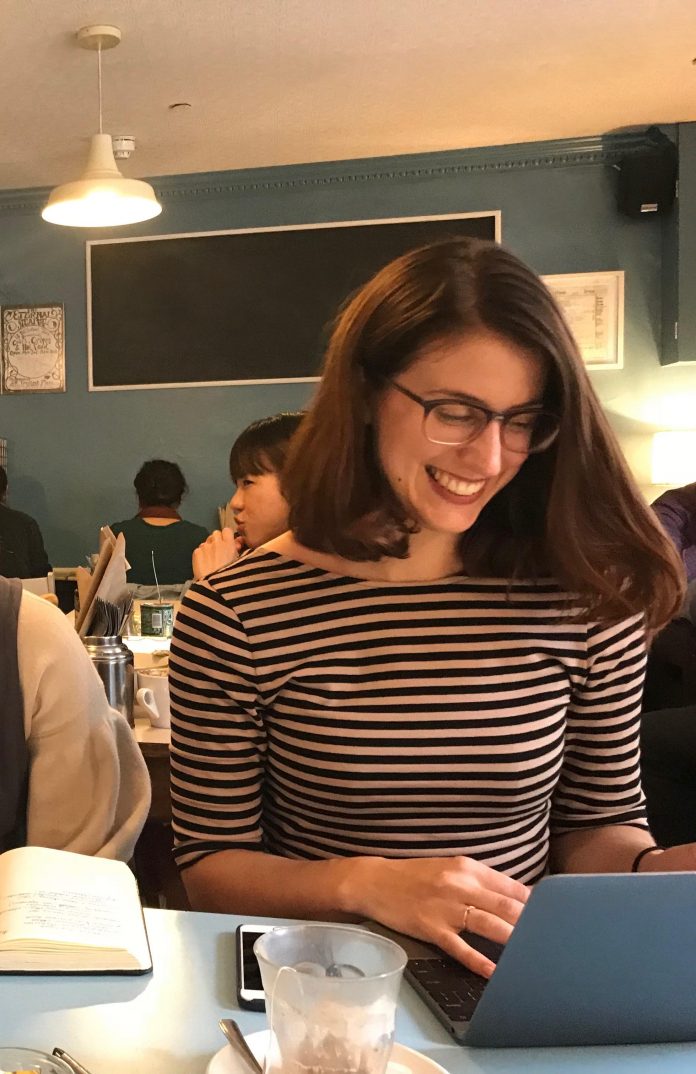
SFYou: Kandice Sharren on podcast production and education

0

by Nancy La, Staff Writer


Name: Kandice Sharren

Pronouns: She/her/hers

Occupation: lecturer/lead editor and project manager of Women’s Print History Project

Department Affiliation: Department of English 

Hometown: St. Albert, Alberta

Fun fact: Her current mission in life is to hold a freestanding handstand


Despite 2020 being an absolute roller coaster of a year, I have to admit that, academically, I’ve had quite a good time with online learning. This is due in part to meeting one of the most personable and understanding lecturers, Dr. Kandice Sharren, whose interactive teaching methods included lots of open discussions and audio podcasts. With those tools, she created a learning environment inclusive of different types of learners. I had the pleasure of sitting down with Dr. Sharren over Zoom for a chat about her work as an educator, researcher, podcaster, and her perspective on 18ᵗʰ century English literature. 


From Student to Lecturer

Dr. Sharren initially came to SFU as a PhD student, following her undergrad at the University of Victoria. Making the shift from student to lecturer might have been difficult but, due to the relationships Dr. Sharren had with her peers, it ended up being seamless. 

“It was a very smooth process. I felt that I have a lot of support moving into teaching my own courses as well because I had pre-existing relationships with other people in the institution.” 

Though the transition was mostly smooth, there were small adjustments that needed to be made. “I started having my own teaching assistants, which meant then I was in a position of authority over graduate students who had just been my peers, so that was an interesting dynamic to learn how to navigate,” she laughed. 

Learning to handle her new position of authority was not the only thing Dr. Sharren needed to navigate. The interview quickly evolved into a discussion of what it was like to teach online during a global pandemic. For her, the amount of work involved in teaching was much more than the screen time with her students.

“There’s just a lot of scaffolding that needs to go up around online learning and a lot of hidden administrative work. I felt like for every hour that I would expect to prep for class, there’s at least another hour of something else that I have to do related to the class.” 


Women’s Print History Project and Podcasting

Outside of her role as a lecturer, Dr. Sharren is the project manager and one of the podcasters for the Women’s Print History Project (WPHP) here at SFU. The WPHP is a bibliographic database containing information on 18ᵗʰ century books, though not scans of texts themselves. Through research on the project, the team at WPHP accumulated knowledge and information on various women authors and their works.

“When you’re working on the records in the WPHP, you spend a lot of time actually looking at the books. You kind of amalgamate this weird body of knowledge that is [ . . . ] not even reflected in the database itself,” she admitted with a smile. 

The team realized the database might be inaccessible to lay users and thus, the podcast was born. 

According to Dr. Sharren, the podcast serves as a helping guide to the massive amount of data on the website. In their latest podcast episode “Oh! those fashionable Burney novels!,” Dr. Sharren dives into the history of Frances Burney, who is known for her books Evelina and Cecilia. The podcast serves as an accessible way for people to discover more about the women featured on the Women’s Pring History Project website.

 “When you come at the database from outside the project, it is overwhelming and really hard to navigate. So we have been talking for a while trying to find ways to provide people with in-roads on how to use the data, how to search the data, and to understand the data.” 

But making a podcast was not as easy as it sounded. Dr. Sharren had never edited audio before and the learning curve was steep. “It’s weird getting used to hearing your own voice,” she reflected. “I feel like the past year, being in a pandemic, I have become so accustomed to hearing myself talk and watching myself on video.”  


On Education and 18ᵗʰ Century Literature

Our talk quickly led to a discussion of how she got into studying Romantic and 18ᵗʰ century literature. 

“Hilariously, I’m much more of a Romanticist than an 18ᵗʰ century-ist [ . . . ] but I actually don’t think I ever took a Romantic literature class until my PhD.”

Dr. Sharren depicted the 18ᵗʰ and 19ᵗʰ centuries as periods of time where there were a lot of problems, anxieties, and “violence enacted by European countries on the rest of the world.” 

She talked about how that realization affected the cultural products of the time, such as newspaper articles and art. “There was so much ambivalence going on about [ . . . ] what Britain’s place in the world [was] at that moment.” 

Interestingly enough, my first experience having Dr. Sharren as a lecturer was in a 21ˢᵗ century literature class. I was curious as to how she approached material that was drastically different to what she usually worked on. 

“It was really interesting because I got to teach a lot of books I love reading that I normally would not get to teach,” she said, giving the example of Ali Smith, an author she has been trying to teach for years. 

Due to the gravity of the content explored in the class (colonialism, terrorism, and Indigenous discrimination), I had a lot of anxiety and discomfort in enrolling in the course. It turned out my anxiety was unfounded since Dr. Sharren’s approach in handling these topics was professional and full of sensitivity and awareness.

“It feels really different when you’re talking about people who lived 200300 years ago versus people who are still alive now. It feels so much more immediate. I have a pretty decent grounding in how to talk about empire and race [ . . . ] in the historical context,” she said. “But when it moves into the present day [ . . . ] you suddenly become hyper-aware of all the ways that you can accidentally do harm in the context of teaching.” 

The second season of the WPHP podcast will be available on Spotify in June, and the WPHP will host a read-a-thon in July. For more information, visit WPHP’s website or Instagram.