Home Blog Page 33

2025 song of the summer shortlist

0
A composite photo of Sabrina Carpenter holding a dog, a SkyTrain, a photo of Alanis Morissette singing, and someone’s feet.
PHOTOS: Courtesy of @sabrinacarpenter / Instagram, Diego Mazz / Unsplash, @alanis / Instagram, Mehrdad Jiryaee / Unsplash (left to right) EDIT: Gudrun Wai-Gunnarsson / The Peak

By: Ashima Shukla, Staff Writer and Mason Mattu, Humour Editor

It’s June, and the vibes are off. We’re in a climate apocalypse, the billionaires are feeling victimized, the aux cord is haunted, and we still don’t have a song of the summer. Can Benson Boone save us? No. Can the “married in a year in the suburbs” or whatever guy save us? Certainly not. What shall a world-in-collapse do without a unifying bop?? 

We asked our very professional music reviewers, Mason and Ashima, to come up with The Peak’s shortlist for song of the summer! You’re welcome.  

Sounds of Vancouver: The SkyTrain” by CelGen Studios (selected by Mason)
We’re literally being trained like one of Pavlov’s dogs. Even when we’re not in a rush, as soon as we hear the aggressive “NEXT STOP” from our SkyTrain, we’re pushing and shoving like we’re some sort of celebrity. Let’s stay anxious 24/7 with this underrated banger. 

Hand in My Pocket” by Alanis Morrisette (selected by Ashima)
 Nothing screams 2025 like Y2K nostalgia and ungrounded optimism. Let the youth believe “I’m high but I’m grounded” meant microdosing shrooms and ASMR-induced nirvana. 

Who Let the Dogs Out” by Baha Men (selected by Mason)
This song is a public service announcement. Because this summer, we’re hoping NO ONE lets their dogs out. Let me make it crystal clear that NO ONE wants to see unclipped toenails in your Instagram posts. Thanks!!

Manchild” by Sabrina Carpenter (selected by Ashima)
In a world of pastel-Glinda-Grande-conservatism, Nara-Smith-apron-core-delusion, and Sydney Sweeney bath-water-soaps, this song is perfect for the girlies rethinking feminism. Because nothing screams empowerment like performative rebellion and satire that only props up the status-quo.

Welcome to Hell” by Black Midi (selected by our office nihilist
And if you’ve stopped asking questions altogether, this one is for you. Perfect for lying face-down on a hot sidewalk and realising that, this is the summer, babe. No skips. Just censorship, surveillance, and a bonus LSD trip (minus the LSD).

Hot-take: Shrek is anti-ogre

0
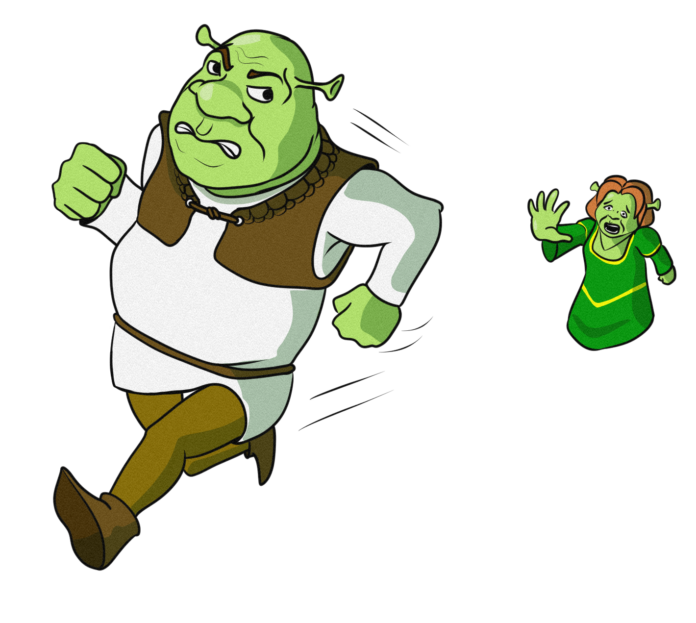
Shrek running away from Fiona. Both are in ogre form.
ILLUSTRATION: Cliff Ebora / The Peak

By: Zainab Salam, Opinions Editor

Let’s get this out of the swamp: Shrek is not the ogre ally you think he is. Sure, he’s an ogre. Sure, he lives in a swamp, eats eyeballs like olives, and has a roar that can clear out an entire Disney knock-off kingdom. But let’s not confuse identity with ideology. I am here to make a bold, probably an obvious claim: Shrek hates ogres, including himself, especially himself. 

You may be thinking, “But wait! Shrek taught us it’s OK to be different, that beauty is in the eye of the beholder, and that ogres are like onions!” Well, sure. But onions also make people cry. Shrek’s layers? Stinky

Here’s the love story: a classic grumpy/sunshine trope. A tale of a surly ogre who falls in love with a beautiful princess, who then turns out to also be an ogre. At first glance, it’s empowering, it’s feminist. By the 98th viewing, the fragments begin to make themselves present. The main fragment is that Shrek fell for the human Fiona

By this point, I can feel a bunch of you disagreeing with me — yes, I can. But I have the proof to dispel you from your erroneous ways of thinking. Exhibit A, your honours, the scene where Fiona confesses her ogre-ness to Donkey. Shrek overhears her say, “Who could ever love a beast so hideous and ugly?” Instead of hearing her out or allowing her to explain herself, he throws a FIT! Like, daddy chill

Even after discovering that Fiona is an ogre by night, Shrek doesn’t immediately say, “Cool, we can be gross together.” No. He mopes. He pouts. He hands her to Lord Farquaad, a man with the charisma of a soggy breadstick. 

To be honest, I almost wish that Fiona had married Lord Farquaad. At least he would’ve provided for her. He’s got the bob look going for him, and he has an army. Who cares about his milk-boarding habits in the cellar — It’s not like I am a gingerbread woman. 

And don’t even get me started on the sequels. In Shrek 2, Shrek literally drinks a magical potion to turn himself into a human just so Fiona will love him more. And guess what? He loves himself more, too! He struts, and smoulders. The ogre was thriving. The only time he’s ever confident and happy is when he looks like a medieval Liam Hemsworth, who happens to be the least loved Hemsworth. Yeah, Liam, I will never forgive you for what you’ve done to Miley

We need to call it what it is: internalized ogrephobia. Shrek, despite his gruff charm and thick accent, never really embraces his ogre identity. He tolerates the way some people tolerate beige. He accepts being an ogre the way I accept a parking ticket — grudgingly. He never wanted a fairytale ending with an ogre bride. He wanted a normal, non-sludge-covered life with a princess who had fewer warts. 

So the next time you watch Shrek, pay close attention. Behind the earwax candles and mud baths lies a bitter truth: Shrek doesn’t love ogres. And if Fiona had stayed human, Shrek wouldn’t have complained. He’d have probably installed a bidet and learned how to use a napkin.

Why local newspapers still matter

0
old newspapers
PHOTO: Coen Devlin / The Peak EDIT: Gudrun Wai-Gunnarsson / The Peak

By: Ashima Shukla, Staff Writer

I picked up my first copy of The Georgia Straight on a crisp fall afternoon, wandering through the East Vancouver neighbourhood I had just moved into. The air smelled of damp leaves, a woman was singing from the second-floor balcony, and I still didn’t know where to buy the good dumplings. Tucked into a rusty blue box near Victoria Drive, the paper felt like a time capsule and a relic. Thick with classifieds, live music listings, and bold headlines about local parks and politics — I couldn’t believe they were distributed for free. 

Holding that newspaper did something no algorithm ever had: it told me where I was, not just geographically, but culturally. It told me about experimental live music at the Biltmore and the story of resistance emerging from CRAB Park. It helped me better understand the place I was in, and with it, a sense of belonging to a rich history of local stories. Hidden in the newsprint, I hadn’t just found information, I had found a friend — an unlikely intimacy. 

In a world where clicks shape headlines, these little encounters brought me back into my reality. They made me reconsider: what happens when news serves community rather than capital? 

Local and student newspapers might not seem revolutionary. After all, they are slow to be published, some smell like dust, and are decorated with coffee stains and margin doodles. We find them discarded around the hallways and assume they are practice runs for aspiring writers building their portfolio. But in that slowness, in their physicality and long-term commitment to a place, they gently resist the way most of us consume news today. They don’t just report events, they participate in collective memory. While the world accelerates, they stubbornly stand still and ask us to pause — to hold, to remember. 

“The folded newspaper on your kitchen table doesn’t just say this happened; it says this matters.”

Consider Haida Gwaii, a temperate archipelago draped in fog and stories of resilience. Here, the sea presses up against the forest, and the islanders’ lives are shaped by wind, salt, and time — a place of mostly locally owned businesses. Here, The Haida Gwaii Observer ran locally from 1969 until it was sold to Black Press in 2014. This wasn’t just a matter of economics; the islanders lost a mirror that reflected to them their values and voiced their concerns. 

When the ferry ride to the mainland takes seven hours and things like milk become difficult to find, “go local” becomes a strategy for survival. Black Press’ ownership, tied to Big Oil, led to headlines that missed the nuance of kinship and ongoing local disputes. Simon Davies, former communications director for the Council of the Haida Nation, told J-Source that when journalists lack the awareness of decades of cultural annihilation and resource extraction, they “stomp around on top of material.” Davies added that they “don’t know the situation, don’t know the complexity, don’t know the families, don’t know the strife within the families.” That’s the difference between larger publications and local news: when residents can read a story and recognize it as their own. It’s what makes the work of community members like Stacey Brzostowski, who co-founded and runs the Haida Gwaii News from her kitchen, stand out. While algorithmic newsfeeds collapse geography and context and create an illusion of omniscience, her paper is rooted in the now, bringing the community together. 

The Observer is not alone in its disappearance. Since 2008, over 340 Canadian communities have lost local news providers and today, over 2.5 million Canadians live in postal codes with none or only one local news source. In the silence left behind, we are at risk of losing the ability of a place to remember itself. 

Cultural critic Walter Benjamin once wrote that modern time is “homogenous and empty” — a string of identical days to be filled with productivity. TikTok trends vanish in hours, news disappears behind paywalls. By contrast, the work of local newspapers lives on, allowing the past to surge into the present with urgency. The folded newspaper on your kitchen table doesn’t just say this happened; it says this matters. 

They record what the dominant media forgets: the lives of seniors, the questions of tenants, the songs of underground musicians, the legacy of local traditions.”

The Georgia Straight for instance, was born during the Vietnam war, the environmental movement, and a counterculture looking for a home. It reported police harassment, platformed scandalous art, and educated readers about climate change long before it was fashionable. Its power lay in its refusal to be just a “product” because really, it was making culture. Just as a dam alters the flow of a river and protest signs shift one’s perceptions, a local newspaper can reshape its community. That’s why sociologist Bruno Latour called some objects “actants,” things that don’t just exist passively but have the potential to initiate change. Local newspapers are actants too, they can change a community’s sense of self. 

The Ubyssey, UBC’s student paper since 1918, sued the university in 1995 after exposing a secret deal with Coca-Cola. Their win set new benchmarks for transparency across Canadian universities. This same spirit fuels The Eastern Door, a community paper in Kanien’kehá:ka which started with a print circulation of only about 1,500 copies. Under financial strain from the pandemic, they launched a bilingual site to preserve Elder stories in Kanien’kéha. Perhaps not traditional news, it became the site for cultural and linguistic revival for the community. 

Beyond present-tense media, these newspapers thus also do the work of cultural and political memory keepers. They witness, record, and remember with care that few institutions can summon. They create living archives of sidewalks and townhalls, of public parks and public grief. Take The Sprawl from Calgary — launched just before the 2017 municipal election — its purpose is not to dominate headlines but to deepen them. Funded by over 1,600 readers giving $5 a month, it tries to tell stories that other media don’t. And to tell them slower, to dwell, to notice. This commitment is present throughout the country. In Montreal, a banker named David Price launched The Westmouth Independent and here in Vancouver’s West End, a writer and publicist Kevin McKeown launched The West End Journal to chronicle the small stuff: sewers, rezoning applications, local artists. The news of ordinary life, with the trust that someone will care enough to follow it. 

In a time of sponsored content, disappearing stories, and infinite scrolls, unfolding a local newspaper and smearing your thumb across the newsprint is about joining a quiet ritual of remembering together. 

From the archived cover pages on The Peak’s office walls and the archived photographs of WWII veterans being welcomed back home on Crowsnest Pass Herald’s office door, local newspapers show up every day to document the mundane. As Pass Herald’s publisher Lisa Sygutek writes, “Local papers are the diary of their community.” They record what the dominant media forgets: the lives of seniors, the questions of tenants, the songs of underground musicians, the legacy of local traditions. They gather the evolving symbols, dialects, and concerns of a place before they are forgotten. 

So, we press ink into paper like our ancestors pressed pigment onto rock. We declare: we were here. In the pages of our community paper, we ensure we still are. And in doing so, we believe we can continue to be.


Independent Jewish Voices responds to SFU’s resource list for Jewish Heritage Month

0
This is an illustration of kippahs, tallits, a hebrew bible, lillies, and traditional foods like matzo ball soup, knishes, and latkes spread out on a table in an aesthetically pleasing way. There’s also a Palestine flag laying on the table, though not in the middle or overly prominent.
ILLUSTRATION: Jill Baccay / The Peak

By: Lucaiah Smith-Miodownik, News Writer

In May, SFU shared a collection of resources for Jewish Heritage Month. In response, Independent Jewish Voices (IJV) SFU issued a statement condemning the inclusion of links from the Anti-Defamation League (ADL) and the Centre for Israel and Jewish Affairs (CIJA), which are Zionist organizations.

IJV SFU, “a small collective of anti-Zionist Jewish students” on campus, was explicit in expressing that the ADL and CIJA alike “endorse the International Holocaust Remembrance Alliance definition of anti-semitism, which conflates criticism of Israel with bigotry against Jewish people.” According to IJV SFU, the “definition has been used to smear anti-genocide protestors and perpetuates Islamaphobia and anti-Palestinian racism.” Both organizations have published pieces denying that the state of Israel is committing genocide.

IJV’s statement included a call to action, asking “that SFU revise this resource list with an effort to preserve our university’s commitment to social justice and peace-building.” They added, “We expect that an institution of higher learning, such as our own, would have done more research to understand the nature of the resources they are distributing on behalf of the Jewish community.” 

The Peak spoke with Dina, a member of IJV. Dina compared the resources shared by SFU to the school’s stated commitment to the University Act, explaining that “the idea that this is just a non-political document on Jewish history is obviously not true and does go against [SFU’s] stated goal and position of being non-political and sectarian.” She added, “On top of that, I would argue that CIJA literally has Israel in its name — it’s an explicitly political organization. 

“We ask that SFU revise this resource list with an effort to preserve our university’s commitment to social justice and peace-building.” — Dina, Independent Jewish Voices SFU

“It’s really hard to claim that anything is non-political these days, especially when there’s a genocide going on. You can’t really be neutral in a situation like that.” While IJV reached out to SFU after the document was sent out, the university has yet to reply. SFU told The Peak, “The university often shares resources from the Canadian Centre for Diversity and Inclusion (CCDI), or other partner organizations, for those in our community who may be interested. The three-page document on Jewish History Month contained around 80 links to articles, groups, movies, books, podcasts, and social media accounts. The list is compiled by the Canadian Centre for Diversity and Inclusion and any questions or concerns about those educational resources should be directed there.”

Dina explained, “We as Jews have no problem in educating people when it comes to anti-semitism, when it comes to Jewish heritage. I just think that it is very, very important that when we’re doing so, we’re doing so in a way that doesn’t pit us against other marginalized groups.” She added, “I also think that there are a lot of aspects of Jewish history and heritage that are not talked about. It’s always very tied to Zionism and imperialist projects.

“Until I got involved with IJV, I didn’t know anything about the Bund, which was a socialist Jewish movement” founded in 1897. It was explicitly anti-Zionist and called for “the abolition of discrimination against Jews.” The Bund “fought for a democratic republic, women’s equality, social reforms, and an eighthour workday.” The movement also defended “Jewish identity, the Yiddish language, and the culture of Eastern European Jewry.”

“Things like that never get highlighted when it comes to Jewish history,” Dina said. Regarding what IJV is focused on at the moment, Dina shared that the organization is hoping to reach out to more Jews at SFU. She also spoke to her involvement in an ongoing project titled the 2025 University Scholasticide Response University Rankings, which involves ranking Canadian universities on “their complicity in genocide and their commitments to various goals and demands that students have laid out.”

SFU is second on the list for “most responsive to scholasticide,” with the ranking giving SFU an “A” for “divestment from or lack of investments in complicit corporations.” SFU has not divested from companies that supply arms to Israel, investing $7.2 million in 2024. University of Alberta, at the bottom of the list with a D+ in divestment, comparatively “has invested more than $130 million per year in at least 46 companies that are well-known violators of Palestinians’ human rights,” according to Just Peace Advocates. All universities that have been graded, the rankings note, would received an “F” had they not been graded on a curve.

SFU to share draft artificial intelligence policy this summer

0
This is an illustration of a robotic arm and hand touching its index finger to a human’s index finger (arm and hand also pictured), mimicking Michelangelo’s “Creation of Adam” painting.
IMAGE: Cash Macanaya / Unsplash

By: Corbett Gildersleve, News Writer

On January 31, SFU released a statement that their Artificial Intelligence Learning and Teaching Task Force started developing policy recommendations regarding the use of generative artificial intelligence (GenAI) like ChatGPT for coursework. Currently, SFU has no AI policy developed, but the task force will share its guidelines with the public this summer. The policy is anticipated to be implemented in the fall. 

These guidelines will consider “academic integrity, pedagogy and teaching innovation, governance and ethics, impact assessment and communication, and graduate studies.” The Peak corresponded with Megan Robertson, co-chair of the task force’s pedagogy and innovation subcommittee, about its progress and challenges. 

Robertson said each subcommittee has now “submitted information to the chair” of the task force, Paul Kingsbury. Kingsbury and special advisor Parsa Rajabi have compiled this information into a draft of recommendations, which is currently under review by the task force. 

Robertson said the subcommittee considered the different approaches professors take with AI, as some are “incorporating AI tools into almost every aspect of teaching and learning,” while others see “that AI tools are not effective for the goals of the course.” She also said that while AI has posed some issues pertaining to academic integrity, “the introduction of AI tools is an opportunity to rethink assignments, assessments, and exams. Advocating for instructors to have the time and space to reimagine their courses is an important part of my work.” Robertson is also an educational developer in the curriculum and instruction division at the SFU Centre for Educational Excellence, facilitating workshops with instructors to “develop and update resources” for teaching.

“One of the key recommendations of the task force relates to increased awareness and literacy about what AI tools are, how they work, and the opportunities and risks involved with using them.” — Megan Robertson, co-chair, pedagogy and innovation subcommittee

When asked about the well-known issue of GenAI “hallucinating” and providing made-up information, Robertson said, “One of the key recommendations of the task force relates to increased awareness and literacy about what AI tools are, how they work, and the opportunities and risks involved with using them.” Specifically, she said it was key to ensure “everyone has access to information about protecting personal information, intellectual property, and copyright” moving forward.

Additionally, “We know from research and use cases that people are least confident in AI outputs when they have knowledge and expertise in the area that they’re asking the AI to generate content about.” She suggested instructors can appropriately “model how they analyze and interpret ideas” with AI by disclosing why they chose to use it.

GenAI is not the only form of artificial intelligence that has been developed. Some examples include expert systems, machine learning, and neural networks. When asked if the subcommittee looked at other types as part of their work, Robertson said the task force “focused on how to develop guidelines and recommendations that will allow instructors to make informed decisions about their individual teaching contexts.” SFU stated they are “hopeful that the task force will approve the guidelines in the coming weeks” for community feedback, and that “information on the work being undertaken by the task force, as well as resources for students and instructors, are available on the AI strategy website.”

Reviewing AI policies and guidelines from other universities in Canada, many of them follow a similar format. The University of BC, University of Victoria, University of Alberta, University of Saskatchewan, University of Manitoba, University of Toronto, and McGill University all put the onus on the student, instructor, staff, and administration to decide whether or not to use GenAI. In the case of the University of Victoria, they do not allow the use of tools to detect GenAI use for assignments due to “how they collect and store student information and intellectual property.” 

Group work shouldn’t be mandatory in online courses

0
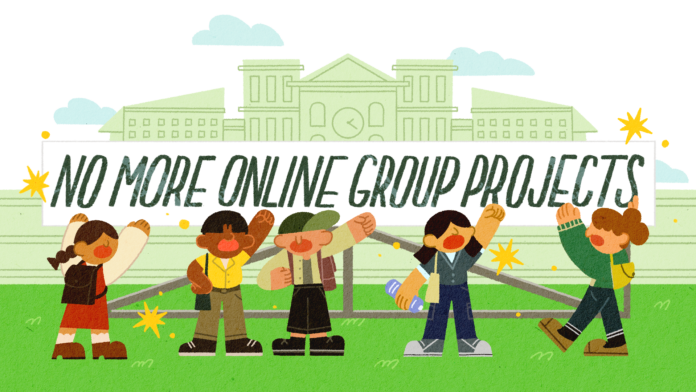
An illustration of a group of students huddled in a protest outside a university with signs that read: “No More Online Group Projects”
ILLUSTRATION: Cassandra Nguyen / The Peak

By: Yulissa Huamani, Peak Associate

Online courses are a valuable tool for students to relax their schedule and seek flexibility. This is especially true when students want to take a break from traditional in-person classes or reduce their course load — to stay on track and not fall behind while travelling or recharging. COVID-19 forced educational institutions to reimagine how education could be delivered — at times, this meant replacing in-person interactions with online platforms. Students have become familiar with how online classes work, how they are structured, and how to organize their time accordingly. 

While online courses are designed to offer flexibility, group work in this context can often do more harm than good. In theory, group work is meant to help students improve their skills in time management, role delegation, and conflict resolution. However, the lack of accountability and face-to-face interactions can increase pressure, anxiety, and stress on the rest of the team.

In addition, doing group work in an asynchronous course demands more time to collaborate and establishes classist assumptions about students’ availability. Some of those assumptions can include computer literacy, and access to an appropriate online learning environment and high-speed internet. Oftentimes, the group is built with members you haven’t met before, and everyone has different schedules, accessibilities, and responsibilities. Meanwhile, the main options for interaction rely on digital tools and platforms such as Google Meet, Zoom, and Calendar, among others. This would mean that students’ experience with group work will depend on the knowledge and experience each person has with these platforms. This can result in unequal collaborations and an unfair share of workload for each member

Online courses are meant to allow students to manage their time, learn at their own pace, and be graded based on their understanding of the course material.

Moreover, if one member does not submit their part on time, it immediately affects others. For instance, a challenging situation that can happen in group work is when a team member decides to stop answering messages. In an online setting, this might be further complicated by the hurdles that need to be overcome to contact them, hold them accountable, or solve the issue with the team member before a deadline. Obviously such a thing might occur in group assignments during in-person classes, as well. In general, conflicts like these can impact educators’ schedules because there will be complaints, requested extensions, and it ends up placing negative pressure on them. While simultaneously, places added pressure and work on the rest of the team members and creates frustration.

Students have their reasons as to why they decided to take an online course during that semester. For instance, students with disabilities, full-time workers, caretakers, or those who are living in a different time zone, could struggle keeping up with the material and let alone find a suitable time to communicate and cooperate with their team. Online courses are meant to allow students to manage their time, learn at their own pace, and be graded based on their understanding of the course material. Therefore, the grade shouldn’t rely on students’ ability to navigate scheduling conflicts with others or manage group coordination. 

Group work in remote courses shouldn’t be mandatory as it complicates collaboration and could negatively impact students’ grades. Alternatively, there are accessible ways in which we can seek collaboration during remote courses. Some of these are: discussions, panels, and virtual posts to receive feedback from classmates, among others. These are great tools that are more accessible and fair since they allow students to manage their time without being forced to rely on others’ availability and commitment with the project.

What Grinds Our Gears: Friend who guesses the movie’s plot

0
a photo of two people sitting on a couch, watching a movie. One person appears to have figured out the plot, while the other is annoyed.
PHOTO: Emily Le / The Peak

By: Rusham Verma, SFU Student

Never have I ever had a friend guess the plot twist of the movie I was showing them in the first 20 minutes. Oh wait, yes I have. And I’m guessing you have too. 

There’s always that one person in your friend group or family who just knows what’s going to happen in a movie or a show. It’s like they have some kind of psychic superpower. Not just that, you end up bending over backwards to convince them they’re wrong. About everything. And all you’re thinking is, “This is supposed to be my leisure time. Why am I working overtime to help someone else experience this show properly?” Isn’t showing someone else something you’re obsessed with, all about the experience? Not for them, I guess! 

Look, I get it. You’re smart and you know all about how movies work. But please don’t bring that type of energy into this house; maybe don’t catch the foreshadowing. We like to go with the flow and vibe. We want a bowl of popcorn, a soda in hand, and a movie plot simple enough that we don’t have to pause and dissect the literary devices. And hey, maybe we’ll even throw a five-star rating their way afterwards.

Avengers, assemble . . . for the Pentagon and its allies

0
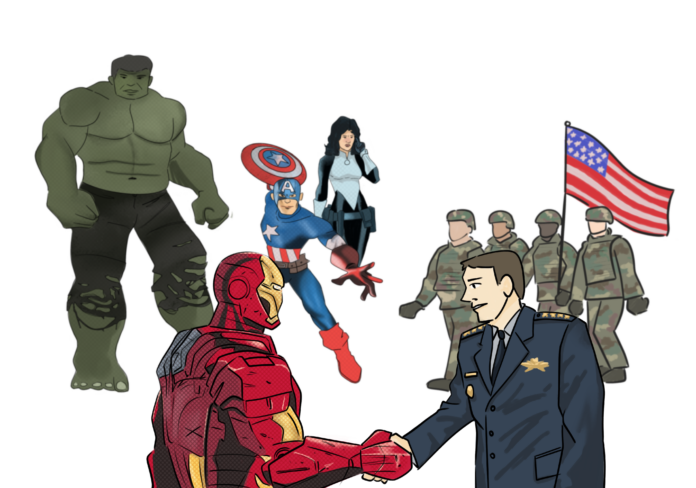
An illustration of an American military officer shaking hands with Iron Man in the foreground, in the background are a group of MCU heroes one one side and American soldiers on the other
ILLUSTRATION: VIctoria Lo / The Peak

By: Zainab Salam, Opinions Editor

The Marvel Cinematic Universe (MCU) has become one of the most dominant forces in modern cinema. Yet beneath the visual grandeur and pop-culture appeal lies a subtler narrative thread — one that blends the art of filmmaking with ideological messaging. The MCU pushes out pro-military propaganda, leveraging its immense cultural reach to reinforce particular narratives about American power and militarism

The root of this relationship runs deep. Since the inception of the MCU with Iron Man (2008), Marvel Studios has collaborated with the United States department of defence on several projects. These collaborations manifested as military personnel consults, and vehicles and locations supplemented by the Pentagon. However, they are not without strings attached — the Pentagon frequently influences scripts and portrayals. This symbiotic relationship results in films that often glorify the military while glossing over the role of the US in global geopolitics and the involvement of its military in controversial military operations around the world. 

Marvel operates as a covert outpost for the American military recruitment propaganda. With their movies, they regularly criticize the government and military, only to rely on and find a necessity in both. Take the Iron Man movies: Tony Stark’s storyline is that he realizes that arms manufacturing causes immense harm, prompting him to shut down Stark Industries’ weapons division. However, by Iron Man 2 (2010), Stark begins working more closely with military and intelligence officials. This encourages viewers to support more nuanced forms of militarism

“The inclusion of Sabra in Captain America: Brave New World (2025) is not a neutral creative decision — it also functions as a pro-settler colonialism and pro-genocide statement cloaked in the aesthetics of superheroism.”

Another example of this propaganda is Captain Marvel (2019), a film developed in close partnership with the US Air Force. Marketed as a feminist milestone, the movie follows Carol Danvers’ transformation from pilot to intergalactic superhero. However, the movie glamorizes the life of military personnel, suggesting that heroism and nationalism go hand in hand. This brand of storytelling actively works to rehabilitate the image of US military power. It also paints an image of a gender-inclusive military life. Unfortunately, that is an inaccurate depiction of the reality of women in the military. The US military remains riddled with sexism, gendered violence, inaction against said violence, and an institutional culture of antagonism towards not only women, particularly women of colour, but also soldiers identified as transgender and queer.

This pattern of aligning heroism with state power doesn’t stop at American militarism — Marvel’s latest decision to include the character of Sabra in Captain America: Brave New World (2025) posits a willingness to extend that narrative to its close ally, Israel. It functions as a pro-settler colonialism and pro-genocide statement cloaked in the aesthetics of superheroism. Sabra, a Mossad agent in the comics, represents an arm of the Israeli state that has been deeply involved in the violent displacement, surveillance, and genocide of the Palestinian people. By incorporating this character into a mainstream, globally beloved franchise, Marvel effectively normalizes and valorizes the Israeli occupation of Palestinian land. It recasts agents of a violent apartheid regime as defenders of justice, thereby erasing the lived realities of ongoing ethnic cleansing and settler violence

Furthermore, this inclusion reflects a broader ideological alignment within the Marvel franchise, one that is deeply entangled with settler colonial values. The MCU, in many ways, is a product of the US, a settler colony built on the ongoing dispossession and erasure of Indigenous Peoples across Turtle Island. Most of its films are shot on Indigenous lands without acknowledgement given towards their communities, notably in Atlanta, Georgia, and Australia. This is against the backdrop of the systematic violence, resource theft, and cultural suppression that Indigenous communities continue to face every day. When a franchise produced in a colonial context so readily uplifts a figure like Sabra, it reveals a troubling consistency: a willingness to erase the brutal foundations of state imperialism if it fits neatly into a heroic narrative. As viewers, especially in settler-colonial states, we must question what it means to consume this content uncritically. Who gets framed as a hero? Who is absent from the screen, or reduced to a threat? When pop culture normalizes settler colonialism both at home and outside, it doesn’t just reflect our political values — it shapes them. 

It’s worth scrutinizing the MCU’s values and ideologies it perpetuates. In blending high production value with pro-military and pro-settler colonialism narratives, the MCU illustrates how popular art, as a form of soft power, serves to shape public sentiment and political views in powerful ways.

Five subtle recession indicators you NEED to know

0
a photo of a television set with the island from Lost on it. The words “Lost” are on the screen.
ILLUSTRATION: Stella Laurino / The Peak

By: Petra Chase, Peak Associate

Recession indicators are all the rage. We took a Buzzfeed “What recession indicator are you?” quiz, and apparently, we’re Lady Gaga (ra-ra-ra-rad!). Lipstick sales, Mariah Carey going grocery shopping, and flash mobs are also on the list

The Peak contacted an SFU economics professor to speak on this phenomenon, to which they responded, “You can request a statement through Cameo for $10. I also do birthdays. You can pre-book me for Christmas carols,” — to which we responded, “Recession indicator!” 

Here are five more gentle reminders our economy is nearing collapse.

Decline in oat beverage sales
Milk Statistics Canada reported that oat “myllke” sales are in decline. Sorry, for legal reasons, we can’t use the word “milk” (AKA the dairy industry will sue). Even bisexuals are ordering it less (yeah, Milk Statistics Canada is thorough about demographic data). Do you know what it means when bisexuals are sacrificing their daily oat m**k lattes during Pride month? Things are BAD.

Labubus
With their mischievous grins and versatile eyes (open, closed, and winking), Labubus are the collectible plushies everyone wants hung from their Stanley cup. An article called “Labubu Dolls, Economy Falls: A Symbiotic Analysis” in the Journal of Radical Marxism explains that collecting dolls and trinkets during tough times signifies a longing to return to childhood. Also, in season five episode 83 of the workplace sitcom The Office, business-minded assistant to the regional manager Dwight Schrute bought the town’s stock of Princess Unicorn dolls and sold them to desperate parents to make a profit. 15 years later, Schrute’s resourcefulness continues to inspire side-hustling Marketplace Labubu resellers who are making bank. And who can blame them in this economy?

Increase in three kids stacked on top of each other in trench coats
Investigative journalists at The Peak have concluded there’s been an increase in parents stacking three small children on top of each other, draping them in a trench coat, and plopping them into corporate jobs so they can get an early pension. Many of these kids have gone undetected, even in leadership roles, due to the rise of anti-intellectualism and the smartest kid being strategically placed on top. While it’s unclear how many are currently disguised as grifters, we’re also investigating under one Jordan Peterson’s trenchcoat after the personality was flummoxed during a Jubilee debate. He asked his opponent to clarify what conjunctions and interrogative words mean, leading some experts to propose he is actually a six-year-old on another six-year-old’s shoulders. 

Hobbyhorsing is a thing
Remember when horseback riding was affordable? JK, it’s always been a rich people sport, BUT you know things are bad when even upper-income equitarian enthusiasts (AKA horse girls) from Philadelphia are resorting to galloping through obstacle courses on wooden toy horses. Apparently the sport originated when a child asked their mom for horseback lessons and was told, “We have horses at home.” Though hobbyhorsing has been around since the early 2000s, said Philadelphians organized the first school competition last month, showing that it’s gaining popularity.

Everyone’s watching or rewatching Lost
Aren’t we all a little bit lost during an economic recession? Comparing egg prices in the supermarket, tattooing our toenails. It’s no wonder we’d want to get lost in six seasons of Lost, the hauntological action mystery that revolutionized the early 2000s. The show explores questions of destiny versus free will through the morally complicated survivors of a plane crash as they unlock the mysteries of an island and a curious number sequence. During an economic recession, the fluctuating prices are also confusing numbers that make us question faith and science, so we can relate.

Brighter Side: When a song finds you

0
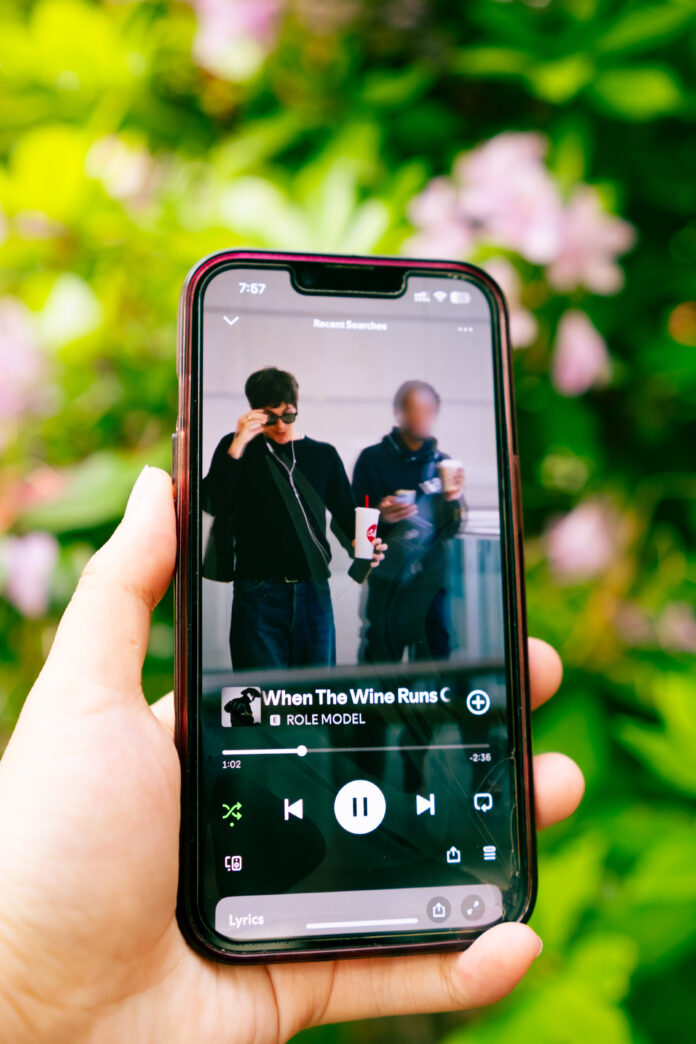
A photo of a person holding a phone with a music app playing “Sally, When the Wine Runs Out” by ROLE MODEL
PHOTO: Emily Le / The Peak

By: Rusham Verma, SFU Student

Imagine you’re on a road trip wi your playlist on shuffle. Then, that song comes on. Yes, the one that seems like it was made for this exact moment on the road. The windows are down, the wind’s flowing in your hair, and it’s just you and the open road. The day suddenly feels brighter. More promising. 

Now imagine a different scene: you’ve just been through a breakup and are sulking in bed. A generic playlist plays on shuffle. Your eyes are puffy, and your chest feels heavy; you’re not quite sure how to process such pain. Then, “You’re Losing Me” by Taylor Swift starts playing. Listening to the lyrics, you realize how deeply they echo your feelings. A small smile tugs at your lips. At least someone gets it, you think. 

For someone else, the perfect song may play when they get to know their crush’s name is Sally, and the song “Sally, When the Wine Runs Out” by ROLE MODEL starts playing in their earphones. Now, that might be too on-the-nose, sure. But for them? It feels like a sign. 

So, when the perfect song finds you at the right time, whether it’s a coincidence or cosmic timing, just take the hint. Roll the windows down, feel it, and be the main character.