Home Blog Page 3

Vancouver’s SkyTrain is now Bitcoin-powered

0
PHOTOS: Diego Mazz / Unsplash (skytrain) and Courtesy of @kensimcity / Instagram (Ken Sim)

By: Ashi, senior writer for imaginary infrastructure 

In a move described by aides as “inevitable, visionary, and definitely not a parody of governance,” mayor Ken Sim announced Thursday that Vancouver’s SkyTrain system is soon to be powered entirely by Bitcoin. Not metaphorically. Not financially, even. The trains, he says, will now run on pure belief. 

Sim, a self-described financial expert, takes his job as the city’s unofficial Bitcoin mascot rather seriously. In fact, this long-time evangelist for crypto solutions to non-crypto problems has previously appeared on at least seven YouTube channels dedicated to Bitcoin, spoken at the Virgo Crypto Summit, and repeated (patiently and faithfully) that Bitcoin is the greatest invention in human history.  

“A 20th-century mindset of electricity that comes from somewhere has trapped transportation for far too long,” Sim told The Peak. According to city documents (Sim’s doodles) obtained by a Freedom of Information Act request from The Peak, each SkyTrain car will now be tethered to the blockchain, drawing energy from the collective faith of earth’s billionaires and the raw metaphysical force of scarcity. Commuters may notice minor changes, including a new announcement in Sim’s voice reminding riders that any delays due to market volatility are only temporary. Compass Cards are now gone. Riders must scan a QR code and wait for the blockchain to validate their existence. Flares fluctuate minute to minute. And in the event of a sudden, unscheduled stop, passengers are advised to stay inside and loudly insist nothing is wrong.

Funding for the project will come from Sim’s personal donation of Bitcoin worth $10,000 and strategic budget cuts. The arts, culture, community services, planning, urban design, sustainability, and various city jobs have been trimmed or frozen, freeing up resources to expand the Vancouver Police Department’s crypto enforcement department and ensuring trains run on “trust me, bro” vibes. 

Conventional currency systems, Sim continued, are “basically a Ponzi scheme,” unlike Bitcoin, which is . . . different . . . somehow. For those with a profound distrust of institutions, Sim insists that Bitcoin is backed by math and the City Council. “Trust me, bro,” he explains. 

None of this, Sim insists, has anything to do with his personal investments, his friendships with billionaires, or recent political endorsements of Bitcoin elsewhere. Clearly, this project is for the people. After all, a whopping 29% of them approve of his performance as mayor. Which, when counted by blockchain, actually equals 100%.

The environmental rationale for the SkyTrain overhaul is, according to Sim, “rock solid.” Using “inverted sustainability,” he argues, the massive energy demands of Bitcoin mining are actually good for the planet because they encourage the construction of renewable energy projects. Somewhere. Eventually. By someone. Just not by him. 

“Demand creates innovation,” he said, “And if a few glaciers melt along the way . . . well, that’s what the bros call liquidity.” 

Crypto YouTuber Julian Figueroa applauded the decision. “Everyone who spends time in Vancouver will inevitably hear someone on the SkyTrain talking about the lack of affordable housing . . . This doesn’t fix that, obviously. But Bitcoin, eh?” he told The Peak.

“I have hope,” Sim concluded. “Not just for Vancouver, but for the world.” That hope now hums quietly, encrypted and immutable, always just one technological breakthrough away from solving housing, climate change, and the meaning of life itself. 
Community-Engaged Research Initiative celebrates fifth anniversary

0
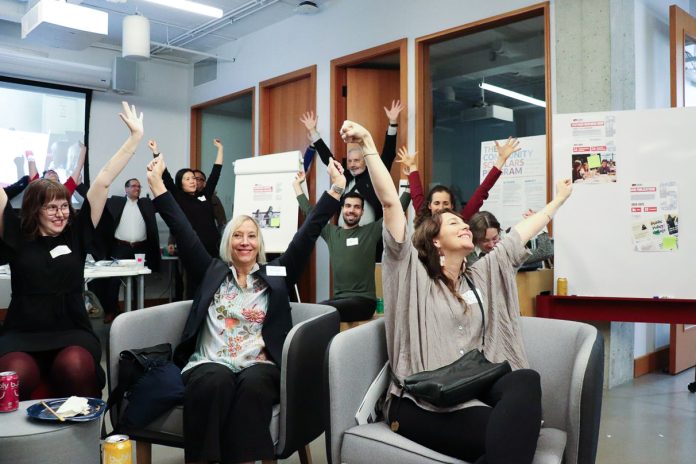
Ten people raise their arms in the air in celebration. Some of them sit in chairs, while others stand near the back of the room.
CERi staff celebrate their fifth anniversary. / PHOTO: Kiara Okonkwo / CERi

By: Lucaiah Smith-Miodownik, News Writer

SFU’s Community-Engaged Research Initiative (CERi) marks its five-year anniversary of “community-driven research.” The organization focuses on “the capacity of SFU’s researchers and students to engage respectfully and ethically with community organizations, Indigenous Nations, community members, and leadership.”

CERi places community members who are directly affected by social issues at the forefront of their projects. Otherwise,

“When universities or other institutional researchers go into communities to investigate and explore the challenges communities face, the research doesn’t necessarily serve the direct or immediate interests of the community,” 

— Stuart Poyntz, co-director, CERi

Research that is not community-engaged may focus on “its own ends and its own ambitions” without prioritizing community needs or addressing challenges.

As CERi recognizes half a decade of community-focused work, The Peak is taking the opportunity to look back at the organization’s highlights. The Peak reached out to the organization for an interview, but did not hear back by the publication deadline. One of CERi’s accomplishments is the 312 Main Research Shop, “which offers low- or no-cost research services to local non-profits, providing access to academic resources and training to support community-driven projects.” The project is “inspired by the ‘science shop’ model widely practiced in Europe,” and allows SFU graduate students and faculty to work with community partners on addressing concerns. The shop has inspired over 14 community partnerships, including the Downtown Eastside Climate Resilience Roadmap. The roadmap “looks into the current and projected climate impacts to Downtown Eastside residents and organizations.” It also focuses on “further developing a strategic guide that integrates best practices in the social sector to minimize climate risks and emissions, alongside equity, health, housing, and other organizational goals.”

CERi also collaborated on the Indigenous-centred Knowledge Exchange, which “matches community-identified knowledge needs and strengths with institutional research support, ensuring research directly benefits and empowers Indigenous communities.” The initiative “provides funding to support researcher costs and offers community-based opportunities such as youth internships and the involvement of knowledge keepers (Elders, artists, youth activists, etc.) on a case-by-case basis.” One publication tied to the knowledge exchange describes “a practical application of a Two-Eyed Seeing approach in knowledge synthesis as part of Phase I of the First Nation Health Authoritys ‘Indigenizing Harm Reduction Study.’Two-Eyed Seeing “refers to learning to see from one eye with the strengths of Indigenous ways of knowing and from the other eye with the strengths of Western ways of knowing and to using both of these eyes together.” A full list of manuscripts connected to the exchange can be found on the Centre for Collaborative Action on Indigenous Health Governance site.

The initiative also worked on “Quiet Alarm: A Review of CBC’s Climate Reporting, a collaborative effort with the Climate Emergency Unit aimed at better understanding CBC’s approach to climate reporting. Doing so allowed the organizations to “make the case for reforms related to committing more resources and daily reporting to the causes of, solutions to, and urgency of, the climate crisis, connecting the dots between extreme weather events and fossil fuel combustion, and being more critical of false solutions that delay climate mitigation.”

Those interested in learning more about CERi’s work can view their five-year report on their website


Students express frustration over Canvas outage during finals season

0
The Canvas dashboard is open on a student’s laptop. The student holds the side of the laptop’s screen with their left hand, while the other types.
PHOTO: Prerita Garg / The Peak

By: Niveja Assalaarachchi, News Writer

From 11:00 p.m. on December 14 to 4:00 a.m. on December 15, 2025, SFU Canvas experienced a service outage that left students unable to upload assignments or access course materials.

Students took to the r/simonfraser subreddit to express their frustration and anxiety around the situation, given that the outage occurred during final exams and projects. A user who created a thread on the situation said, “This outage directly affected our ability to study and prepare for exams.” They also stated that the incident is “not something students should just be expected to absorb and move on from.” 

The user, who said they planned to email SFU about their grievances, also stated the university should take full accountability for the outage. They said it was imperative that SFU implement accommodations for students affected by the incident.

“We pay a lot to be here. Reliable infrastructure during finals should be the bare minimum.”

— Reddit User, r/simonfraser 

In a statement to The Peak, SFU noted the outage was “unfortunate,” recognizing the impact it would have on “a student’s ability to submit assessments or otherwise prepare for their examinations.” The university did not mention why the outage occurred. They stated that the outage “was short in duration and impacted a small number of users.” 

SFU said instructors were informed about the issue with the platform at the time and were told to help students facing difficulties. In terms of academic concessions, like deadlines, SFU said that “students were instructed to connect with their instructors directly regarding deadlines.”

This is not the first time that SFU’s online services have faced accessibility issues, with an issue affecting students’ ability to enroll in courses through MySchedule in November 2024. They also denied that the issues had any links to the university’s financial situation, which has seen cuts to services. Regarding the MySchedule incident, SFU said it was caused by “an upgrade made to the software by the vendor.”

The university also mentioned that the Canvas outage occurred on the on-premise version of the platform. SFU has since fully moved away from this version in favour of a cloud-based platform, starting from January 1.


Scheduling conflicts can exacerbate financial hardships

0
The screen of a computer that showcases a “No Result” message; signalling the inability of adding two courses into the student’s schedule due to a time conflict. The photo is black and white
PHOTO: Jamal Allad / The Peak

By: Zainab Salam, Opinions Editor

There’s nothing quite like logging on goSFU, or looking up course outlines to plan a perfect semester with all the necessary courses for graduation, just to see that your major’s courses fall all at the same time. Like seriously, who thought of doing that! I can’t even pick a specific instance of this happening, because it has happened way too often at this point in my degree. Just this semester, the psychology department is offering PSYC 100 and PSYC 102, which can be taken concurrently, at the same exact time: Thursdays, 2:30–5:20 p.m. To me, this issue causes problems that ultimately further impact many students’ financial situations. 

To specify, I am pointing at the consequences of this scheduling issue on student financial aid. In cases where a student needs full-time student funding, they must maintain the required minimum threshold for full-time studies to be eligible. Meaning, a student must be enrolled in a minimum of 9 credits to be eligible to receive the full-time funding — or 6 credits if they are a student with a permanent disability. A fiscal report by the Canada Student Financial Assistance Program, which operates alongside StudentAid BC, details an increase in the total number of loan recipients. Just from 2023 to 2024, there had been a total of 66,720 recipients of the Canada Student Loan in BC. Considering that SFU is one of a handful of post-secondary institutions in BC, I feel safe to assume that there are those who rely on student aid funding to acquire their education at SFU. As such, SFU must bear those students’ systemic hardships in mind when planning the semester. 

Every time I encounter this issue, I can’t help but wonder how many other students have faced further dilemmas. When required courses conflict, students are left with tough choices. Choices that may delay their graduation, overload future semesters, or lead to having to take unnecessary elective courses to remain under full-time status. How many of us have had to take an elective course to add credits to be eligible for student aid?  

It’s understandable that occasional course scheduling conflicts occur. Departments may face room shortages or enrollment pressures. However, I believe the university needs to be a bit more mindful of such situations to alleviate some of the issues that students face. For example, offering more distance education versions of mandatory courses would provide students increased flexibility to plan their schedules more efficiently, with the added benefit of helping those with disabilities!   

As a person who has relied on student aid to get me through my undergraduate degree, the financial pressures that I have faced have contributed to my stress. And I have heard way too many stories from my peers that concur such a negative impact on our quotidian routine.

I think it’s time that we recognize that, like everything else, course scheduling isn’t just a bureaucratic process, but extends to impact students’ personal lives.

And as such, care must be implemented.  


The elbows up cult is ruining cooperation in Parliament

0
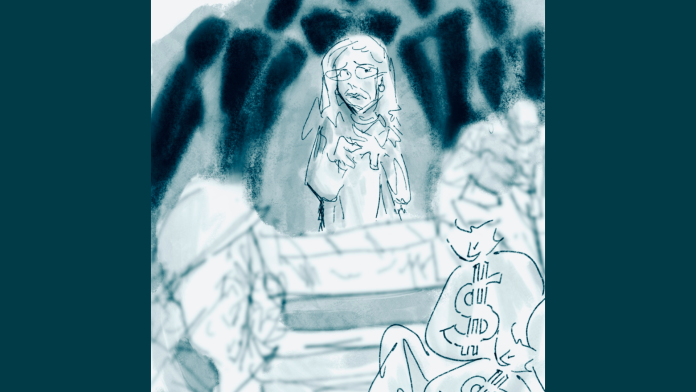
Green party leader, Elizabeth May fearfully standing, surrounded by unidentifiable MPs looming around her. There are few bags of money that sit on a table in the forefront of the illustration.
ILLUSTRATION: Sonya Janeshewski / The Peak

By: Mason Mattu, Section Editor 

In a minority government, cooperation with other parties is essential to ensure stability and unnecessary elections. Budget votes are where this cooperation becomes non-negotiable, as they are confidence votes. Which means if a majority of members of Parliament do not agree on the budget, it would lose the confidence of Parliament, thus triggering an early election. Thanks to the affirmative vote from Green Party Leader Elizabeth May, and several abstentions from various members of Parliament, Prime Minister Mark Carney’s government narrowly survived a confidence vote by passing its budget. However the events preceding this vote expose a dangerous turn in Canadian politics — one that erodes political compromise and transgresses over minority government norms.

“I don’t like the budget,” May bluntly admitted in an interview with CBC. Her support was not an endorsement of the government’s disastrous budget that is riddled with right-leaning spending cuts and corporate handouts. Instead, it was based on fear-mongering from the Liberals with no concrete concessions or compromises made to earn her vote. All she got was a non-binding verbal promise to commit to our Paris climate targets (which Carney doesn’t seem to be steadfast on committing to, given his interest in an Alberta-West Coast pipeline).

Carney’s government embraces further right-leaning policies such as reckless pipeline expansions and handouts to Canada’s top 1% — they are intimidating other parties to go along with their plan under the false notion of keeping our “elbows up.” They use a phrase to call left-leaning parties into line to stand against a common enemy. By doing so, he is effectively asking them to suspend their demands and focus on his vision for Canada’s future — one that doesn’t align with the other parties’ values.  

What you will hear from Carney’s Liberal government and its supporters is that anyone who did not support their budget doesn’t want to build a “Canada strong.” Due to threats of sovereignty and the unlikely potential of Canada’s Conservative Party forming government, it is, in Carney’s view, the responsibility of left-leaning opposition parties to vote on Harper-era fiscal priorities born out of a lack of compromise. This framing is simply ridiculous.

In reality, it is Carney with his elbows down. If an elbows up approach was to be truly embraced, there would have been a call for unprecedented collaboration in Parliament.

That would include listening to the voices of opposition parties to ensure the stability of our political sphere and recognizing that, in a minority government, it is the responsibility of the party in power to appease opposition parties. 

For example, in the previous government, former Prime Minister Justin Trudeau made concessions to the New Democratic Party (NDP) to ensure the survival of his minority government — thus securing the stability of the country. Through this partnership, the NDP stipulated Trudeau to pass pharmacare, dental care, and anti-scab legislation — to which Trudeau yielded. This exemplifies how the previous government prioritized cooperation and didn’t lead by fear. 

Prime Minister Carney’s government does not display a similar strategy. For example, his declaration before the budget vote — that his government is prepared for an election while refusing to amend his budget — paints a very grim future for Canadian politics. The NDP had asked the Liberals to include “substantial investment in jobs, housing, and healthcare.” The Bloc Québécois wished to see interest-free mortgages for first-time home buyers and increased old aged security benefits. Carney met with the leaders of other parties, seemingly pretending to hear their concerns about the budget and what he would have to do to earn their votes. 

Instead, what is developing is a culture of fear and intimidation — where parliamentarians are pressured into voting for a budget that doesnt align with their values — such as what happened with May, when she had voted for a budget that betrays the Green Party’s principles and embraces right-leaning policies. By using the threat of a Conservative victory in an election as a reason why his government deserves support, Carney is actively going against established minority government political norms of cooperation. Until he decides it’s time to cooperate with other parties, we’ll keep on having extremely close confidence votes. We’ll continue to be politically unstable. 


A summer Christmas in Costa Rica

0
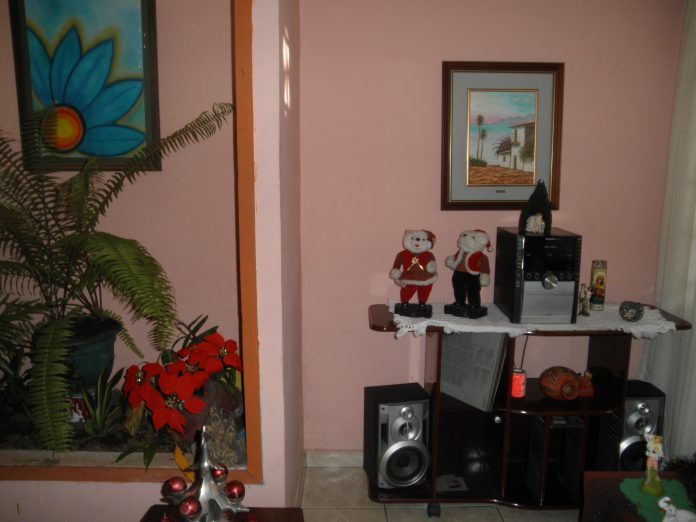
The interior of a living room with Santa bears on display next to a radio and bulky speakers on an antique coffee table. There is also a Pointesettia plant, and tropical art on display on peach-pink painted walls.
Courtesy of Maya Barillas Mohan

By: Maya Barillas Mohan, Staff Writer

“Pura vida” is the unofficial national motto of laid-back, cloudless Costa Rica. It is the one-size-fits-all response to life’s greatest satisfactions: good food, weather, and company. Because Costa Rica is 10 degrees from the equator, it gets 12 hours of daylight starting just after 5:00 a.m. Locals wake up with the sun and have lengthy coffee breaks. “Puntualidad” is not a high-mileage word in this language. 

The Costa Rica I visited annually since I was small was detached from the hubbub in the capital, and I was allowed to teeter across the streets unsupervised to buy syrupy mangoes at my leisure. Fashion trends in shops lagged behind what the malls back home sold, and buildings were painted tropical hues that bordered on gaudy. An upbringing exposed to North American tastes rendered Central America rustic to me. Costa Rica was affectionately a time capsule where people still held newspapers at arms’ length on park benches and the Toyota Echo, discontinued in 2005, persisted. 

Visits to my dad’s hometown became shorter, summertime affairs to accommodate school holidays, and then tapered in frequency. Canadian Christmas at home felt like a perfect postcard, anyway; waking up to see a thirty-foot evergreen doused in fresh snow is almost beyond Hallmark parody. 

The last Christmas I spent in Costa Rica, in 2013, my parents and I lived in New York. We brought six iPads and a Mac desktop monitor as gifts. It had been my dad’s way of showing his family how good America was treating him. The lavish gifts were patriotic; the “American Dream” of surplus, realized! Now, in the waning 2025, I ask my uncle if he still remembers. His face splits open into a smile visible through creased eyes in the rearview mirror. “We still have the monitor,” he says. Pura vida intact, I think to myself, briefly ashamed of the impatience I have for my own technology. 

Pitch black outside, I fall into an oblivious sleep. Once out of the hermetic ride from the airport, I am disturbed to see that Christmas in Costa Rica seems to have become a lurid, LED-riddled commercial event. Harsh blue icicles flicker dizzyingly and entire panels of wrought-iron gates are wrapped in infinite twinkling bulbs coloured red, yellow, green, and white. Open-air sitting rooms supplement rustic nativity scenes with light displays mimicking snowflakes falling. 

Costa Rica is not a culture that has a Santa Claus. (Good) children have always been delivered presents from Niño Dios (Baby Jesus), with some leaving polite letters in their nativity scenes, a Catholic tradition. Cement houses are now complete with 6-foot inflatable Santa Clauses, and some of the fancy ones are motorized to dance under the hot breeze. Santa is not equipped with a weather-appropriate wardrobe. He dons a fur-trimmed suit but never breaks a sweat, acclimatizing to his new home with ease despite sticking out like a sore, red thumb. 

Set beside the evergreen nativity scene, a neighbour flaunts a tinsel Rudolph. Before the literal bells and whistles, Christmas had been primarily a celebration to congregate within family potlucks and attend Misa de Gallo (Midnight Mass). We brought a fruitcake one year and it was met with the amusement of a posh dog breed, its existence curious. Western traditions supplement Costa Rican ones, not supplanting them; my family still made a seemingly endless supply of tamales. 

A santa Claus action figure standing in front of a traditional nativity scene on display in someone’s house, where the three wisemen are lined up in front of a barn. The barn is decorated with garland and twinkling christmas lights.

Perusing the market, every Canadian novelty has an attempted counterpart. It’s never been easier to dress up like a North American. Crowds choke sidewalks and traffic looks like string lights in the hilly distance. High-sheen Hyundais and Fords are cramming the battered Suzukis off the narrow, twisty roads, and crossing the street requires more faith than it used to. My Christmas visit is a microcosmic reflection of a greater development I never even considered prior.

My dad’s hometown seems to reject its desired modernity like one might get a fever after a tattoo.

The commercial side of Christmas is a symptom of North American sensibilities I never found all that sensible, but here it was. Shopping in Sarchi, a district popular for kitschy trinkets and artisan wood furniture, I braced myself for a mini version of Pacific Centre in place of the warehouses stocked with hand-painted glasses and wood inlay cutting boards. Luckily, all the whimsical and sometimes lopsided local-made souvenirs were still available in scores. Isn’t it ironic that my most expensive purchase was a glistening plaque emblazoned with that homely motto “Pura vida?” 

Merging North American and Latin American sensibilities should overthrow me with joy as someone who is a product of both cultures. I feel on edge instead. Costa Rica’s appetite for North American trends seems to be growing faster than it can keep up with. A sleek McDonalds now stands arrogantly. The inclusion of a McPinto, a McVersion of a traditional beans and rice dish, seems mocking. 

A sleek McDonalds stands solitarily within an expansive tropical Costa Rican landscape. A motorcycle is parked outside and the parking lot sits empty in front of the green, hilly distance.


NTKNTG: Events to go in early 2026

0
PHOTO: Ann H. / Pexels

By: Maya Barillas Mohan, Staff Writer

Clothing Swap

1661 Napier St, Vancouver

Saturday, February 7, 10:00 a.m.1:00 p.m.

Cost: Free

Revamp your style in the new year while keeping textiles out of landfills. Bring up to 10 items to the swap after filling out a brief survey. The swap is hosted by Threading Change, a youth-led organization “created to address systemic injustices and inequities” in the fashion industry. Fashion and education are coalesced in this event to promote sustainable shopping habits. If you are looking to define your personal style by resisting fast fashion microtrends and taking inspiration from those near you, this clothing swap is right up your alley!

Owl Information Session

Online 

Thursday, January 8, 7:30–9:00 p.m.

Cost: Free

On January 8, Nature Vancouver, a natural history society, will be hosting a Rocky Point Bird Observatory (RPBO) online presentation, presented by Ann Nightingale, former RPBO president and an expert on bird migration. Those interested can request a Zoom link via email a few days in advance. The presentation will cover owl identification, ecology, and seasonal presence for spotting in the region. The audience can also learn about volunteer programs, such as the Nocturnal Owl Monitoring program, which might give some inspiration to partake in owl conservation in the region. 

Studio Session – Free Acting Workshop 

640 West Broadway, Vancouver

Sunday, January 11, 12:00–2:00 p.m. 

Cost: Free

Get your first (and free) taste of acting in a two-hour session at the Studio for Actors acting workshop on January 11. This workshop will cover acting techniques and training approaches used in full-length acting courses, including scene study fundamentals that may prove useful for increasing your emotional range and reducing nervousness or tension. This workshop might even instill confidence for a presence on the stage and even contribute to your professional development, whether you are a hobbyist or a professional!

Creative Writing Open House 

Online

Thursday, January 15, 5:00–7:45 p.m.

Cost: Free

Get a range of expert advice from highly accomplished authors across multiple styles of writing. Choose between honing non-fiction skills, like research and interviews from editor and former journalist Christina Myers, or learning fiction writing techniques like crafting characters and scenes from award-winning author Carleigh Baker. The workshop also invites participants to uncover either strategies to dismantle writer’s block and get words on the page with Loghan Paylor, author of The Cure for Drowning, the third-bestselling queer novel in Canada in 2024, or learn how to infuse contemporary experiences and personality into poetry with award-winning poet Raoul Fernandes


Quantum Fish School explores our indeterminate futures

0
PHOTO: Audrey Safikhani / The Peak

By: Clara Xu, SFU Student

The fourth floor of SFU’s Goldcorp Centre for the Arts is currently home to a small school of paper fish, swimming in a glass cabinet at the intersection of two hallways. These fish are part of Quantum Fish School, an art exhibition created by researcher-artist and SFU Indigenous studies professor, Dr. Zoe Todd. As the founder of the Institute for Freshwater Fish Futures, Todd studies the relationships between “Indigenous sovereignty and freshwater fish futures and freshwater fish well-being in Canada,” using Indigenous knowledge, science, and art to “re-centre freshwater fish in the collective imagination and governance of our communities across the country, with an explicit focus on honouring Indigenous legal-ethical relations.”

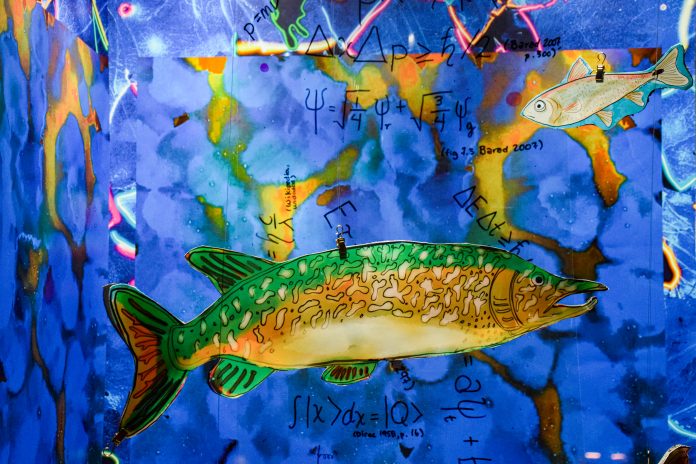
Quantum Fish School explores the relationship between fish and their ability to survive throughout times of high indeterminacy, times when the future is uncertain and subjected to numerous possibilities. The exhibition features various foam and paper cut-outs of illustrated freshwater fish found in Canada, including the brook stickleback, the northern pike, and the bull trout. On the back walls are splotches of blue, layered on one another, and some yellow-orange lines glowing in the background. Between the hanging fish cut-outs and the wallpaper is a plastic sheet covered in formulae. Upon further research, these are formulae used in quantum mechanics, a brand of mechanics that describes physics theories at atomic and subatomic levels. It cannot predict atomic results with certainty, but gives probabilities of what might happen — what Todd refers to as indeterminacy.

It was a quiet afternoon in the building when I went to see the exhibition, given that it was a couple days away from Christmas. Quantum Fish School felt like a pillar of calm amongst the concrete walls of the Goldcorp Centre for the Arts. The wallpaper gave the exhibition a feel that is whimsical, oceanic, fluorescent, and futuristic all at the same time. I felt a sense of peace when observing the fish, but the more I observed, the more questions I had. My first few questions involved the formulae written on the plastic sheet. What were they about? What was the relationship of these formulae to the fish? How were these formulae derived from the fish? 

Then I began to reflect on the fish, as I could not name any of them from a glance. I wanted to know why they were chosen to be displayed in this exhibition. Were these ancient species of fish that survived various extinction events? Were these fish local to the Lower Mainland, or generally to BC? Quantum Fish School made me realize I felt out-of-touch with not just fish, but with nature in general. It would be easier to name company logos than what freshwater creatures reside in the Lower Mainland.

Quantum Fish School successfully prompted me to reflect on my knowledge on local nature and my values regarding climate change and the rapid loss of biodiversity across the world.

This fish school serves as a reminder for all not to lose our crucial connection to our environment, and to stay vigilant to the knowledge that nature provides us, whether that be from Indigenous ways of learning or from observational science.

The exhibition will be open until January 31, 2026, at the Goldcorp Centre for the Arts.


A conversation with Lucien Durey

0
PHOTO: Courtesy of Lucien Durey

By: Katie Walkley, Peak Associate

On January 22, SFU MFA alum Lucien Durey will perform his show, So Many Feelings, at Djavad Mowafaghian World Art Centre, joined by singers Caroline Ballhorn, Chance Lovett, Amanda Sum, and Mark Wolf. This show goes beyond the norms of performance with a call-and-response between the call of the silent lip-syncing videos of the performers and the response of them singing live to the audience. The footage spans over 12 years and was all filmed on the same camera, and so, along with the live concert, audience members get to watch a seamless progression of Durey aging a decade. In the following interview, he discusses his openness to include personal and humorous elements into his art.

The following interview has been edited for concision.

Do you intentionally aim for a feeling of intimacy in your work?

In my work in general, I really have tried to not shy away from the personal. Sometimes there is a feeling in art that you are not supposed to talk about your personal relationships or things that are not grounded in academic or concrete ideas. Details from my personal life always creep into my personal work and I am not afraid of that.

What are the visuals in your performance?

The piece itself is like a reverse lip-sync. Everyone who is singing live in the space is singing to their own image pre-recorded. So it’s a silent video of people mouthing the songs. It creates a weird feeling as an audience because you are conflicted about where your attention is supposed to go. So the experience is that they’re watching a figure mouthing words in various settings, but meanwhile there’s a live singer moving around the room singing what they’re seeing on screen. It’s disorienting as a viewer to see.

What made you want to create that disorienting feeling?

It was an evolution. I started the project when I was a grad student at SFU in 2013. The first iteration of it was singing a song in a bathtub, as it filled with water. It was experimenting with ideas of performance and giving myself physical challenges while singing. 

What kinds of songs do you perform?

In the past I’ve had original songs. In this iteration it will all be cover songs. It’s lots of cheesy, retro songs like Marvin Gaye’s Sexual Healing and ABBA’s Knowing Me Knowing You.

“The whole project tries to straddle sincerity and comedy at the same time”

 — Lucien Durey, Producer and Performer of So Many Feelings

So there are these poignant emotional moments, but they’re not where you expect to see them. There’s kind of a melancholy feeling to the whole thing. Because of that disorientation where you’re choosing between the live and recorded performer, something happens where you are affected in ways you weren’t expecting. 

When using cover songs, everyone has their personal associations, which is also why I gravitated towards using cover songs more than my own compositions. You hear Bruce Springsteen’s Tougher Than the Rest and it has a very specific association for people. Then you hear it performed differently in a kind of a cappella way and it changes the performance, but it still has the personal associations that we each put on songs that we know by heart.

Why do you think that humour is important in performance art?

It’s more honest. It’s more palatable. There’s something about a full scope of feeling that feels more true. We only really know what pain feels like because we know what laughter feels like. 

Catch this 45-minute show for $10 on the evening of January 22, and stay updated on Durey’s future endeavours by following him on Instagram @luciendurey.

Chaiiwala of London comes to SFU Burnaby

0
PHOTO: Courtesy of Elaine Quan

By: Noeka Nimmervoll, Staff Writer

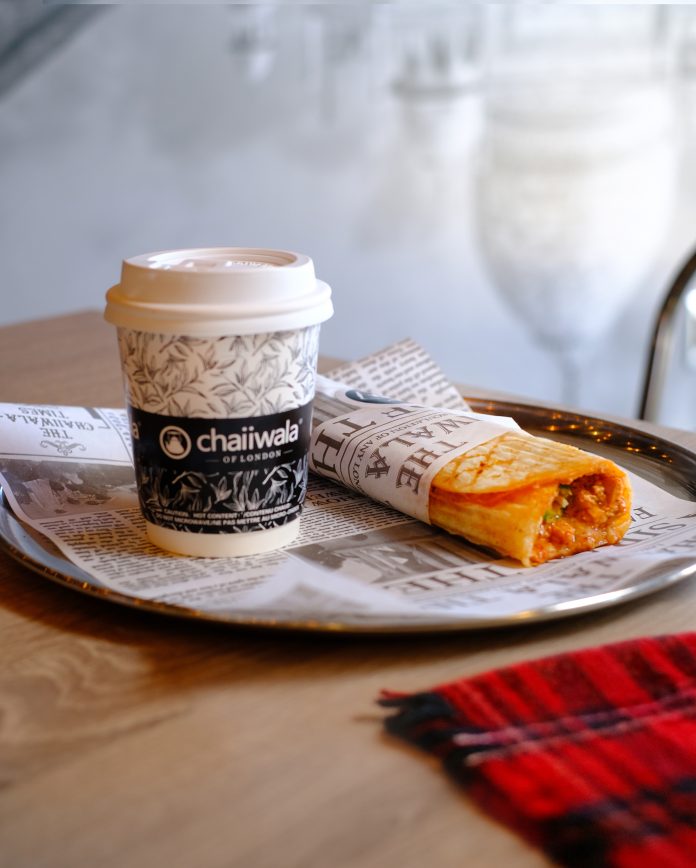
Chaiiwala of London, a fast-growing chai enterprise, is coming to SFU Burnaby. A chai café serving a wide variety of South Asian street food, this franchise entered Canada in 2021 under the ownership of Shiraj Kothiwala and Ajmal Gundhra, and now has 22 locations across Canada. Chaiiwala strives to provide an environment of community and connection. Located on Burnaby Mountain at 9055 University High St, Unit 5, the café will officially open on January 9. From January 10, they are offering an ongoing 10% off for all students that frequent the café, applicable with their student ID. The Peak conversed with Ali Alogaili, franchisee for Chaiiwala SFU Burnaby, via email to learn more. 

“Chaiiwala is all about warmth and inclusivity. We want students to feel comfortable coming in, staying a while, and making it their spot. It’s a place where you can study, catch up with friends, or just take a break,” said Alogaili. Chai culture of South Asia is rooted in these everyday rituals of conversation and community connection over an affordable and delicious beverage. The shop specializes in karak chai, an authentic cup of chai made with black tea, milk, sugar, ginger, and select whole spices, taking a lot of practice to make the drink just right. 

Chaiiwala’s opening day will boast a 50% off deal on masala chips, samosa chaat, aloo tikki chaat, all wala wraps (meat and veggie wraps with naan or paratha) and toasties, butter chicken roll, and butter chicken poutine. Chaiiwala’s full menu, blending of East Indian, East African, and British cuisines, aims to bring accessible culinary delights to Canadians — and now SFU students — who want something different than traditional café foods. 

The seeds of Chaiiwala began as a single chai stand in New Delhi in 1927. Decades later, in 2016, the recipes and passion of the original founders were revived by their ancestors, starting from a single UK shop in Leicester called Sip of East. They went on to develop their franchise, and opened a shop in Dubai in 2018 before their expansion to Canada in 2021. The company currently has ambitions to open 100 Chaiiwala locations across Canada by 2030.

“Even as we grow, the focus stays on quality, consistency, and creating a great experience. Each location still feels connected to its local community, and that’s something we take seriously,” — Ali Alogaili, Franchisee for Chaiiwala SFU Burnaby