Home Blog Page 275

Teaching Support Staff Union rallies for research assistant rights

0
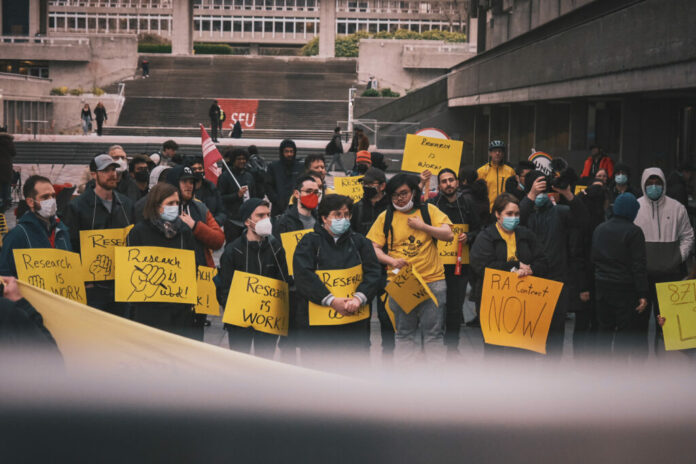
A crowd of people can be seen at SFU Convocation Mall. They’re holding yellow signs that read “Research is Work” and “RA Contract Now”.
Day 873 of SFU’s delay in bargaining. Image courtesy of Sherry Young.

By: Jaymee Salisi, Promotions Coordinator

On April 4, 2022 SFU’s Teaching Support Staff Union (TSSU) held a rally at Convocation Mall protesting the university’s continued delays to fulfill a union contract with their research assistants (RAs).

In November 2019, SFU signed an agreement to “voluntarily recognize RAs as members of TSSU.” This would require the university to recognize RAs as employees and provide them with full worker’s benefits. The university has delayed bargaining with the TSSU for 873 days as of November 15, 2019, causing RAs to continue to work without a collective agreement. 

The RAs are asking SFU administration to “fulfill their agreement without any more delays.” They are asking for the collective agreement to include:

  • “Benefits and wages comparable to those of SFU teaching staff
  • Health and dental coverage
  • Respect for the critical contributions of RA labour
  • Maintaining the broad definition of an SFU RA to uphold inclusivity”

In an interview with The Peak, contract committee chair and chief steward of the TSSU, Amal Vincent, spoke on the union’s experience on bargaining for RAs’ rights with SFU.

In the Voluntary Recognition Agreement signed in November 2019, SFU administration agreed to include all RAs in the union. According to Vincent, after the agreement was signed, a senior SFU human resources employee openly disagreed with including work-study RAs and RAs on scholarship in SFU’s collective agreement with the TSSU.

“Since then, SFU administration has violated all the terms of the agreement,” he said.

According to Vincent, the university administration “continues to exclude a large portion of RAs from the union.”

SFU initially acted on their agreement in good faith in the beginning of the bargaining process, Vincent said. However, he soon observed a lack of reliability from the administration. “When [SFU administration does] meet with us, they come unprepared and don’t follow up on any promised actions,” according to Vincent,

Unlike unionized teaching assistants and tutor-markers, RAs who are international students currently have to pay the International Student Health Fee (ISHF) which amounts to an annual cost of $900. According to Vincent, after paying these student fees most graduate student RAs are left with around $1,200 per month.

In addition, Vincent said SFU has “denied all student RAs and the vast majority of other RAs sick leave” which violates the recent provincial legislation.

The university’s delay in action continues to affect the health and finances of their RAs. Vincent said RAs resort to paying thousands of dollars out of pocket each year for extended health and dental benefits that are normally covered by employers. As a result, some RAs “are living in poverty because of this,” he said.

“We’ve seen pay stubs that show as little as one dollar per hour at SFU — way below minimum wage — and others that pay more reasonable wages.”

RA payment is inconsistent, said Vincent. He compared SFU RAs’ $17 per hour compensation with minimal benefits to that of UBC’s lowest RA rate of $22.03 per hour.

He added UBC also offers their RAs various benefits such as paid breaks, 100% employer paid extended health and dental, and 15 days of sick leave annually. For RAs with a contract of a year or more, they receive a pension plan, disability benefits, and life insurance.

 “[RAs] are the backbone of the research programs at SFU,” Vincent said.

They are involved in various tasks according to Vincet, including “running experiments, maintaining lab equipment, collecting data in the field, researching, writing literature reviews, writing and publishing papers.”

In an email statement to The Peak, SFU’s vice-president research and internal Dugan O’Neil said, “SFU values and appreciates our research assistant staff and the university remains committed to reaching a fair agreement as quickly as possible.”

According to O’Neil, “In November 2019 we agreed to recognize TSSU as the appropriate bargaining unit for Research Assistants. This was not a collective agreement, just a recognition.”

He noted the TSSU and SFU met with an arbitrator in January 2022 to discuss their differences and to look for an agreement between the two parties. Arbitration is a private procedure, alternative to court, wherein parties bring a dispute and a binding decision is made. O’Neil reported TSSU wanted to proceed with arbitration. “The university is required to follow the rules and guidelines of the bargaining process and must now wait for the scheduled arbitration this summer, which TSSU requested, before things can move forward,” said O’Neil.  

“The process for negotiating a first collective agreement is complex. The last group of Research Assistants (RAs) were transferred to be SFU employees in Spring 2021. While we would have liked things to have moved along more quickly to finalize their bargaining agreement, it has taken longer than anticipated for many reasons, including the diversity of the work research assistants perform, as well as disagreements at the bargaining table,” said O’Neil.

The TSSU plans to continue organizing on-campus events throughout the summer semester to push SFU administration to uphold their end of the agreement and ensure “all RAs are recognized as members of TSSU, and have a collective agreement that provides living wages and benefits for [all RAs].”

The TSSU encourages SFU students to attend their rallies and invite the larger SFU community to support the cause.

Students can learn more about the TSSU and their bargaining efforts with SFU administration here.
Political Corner: Lower the voting age already!

0
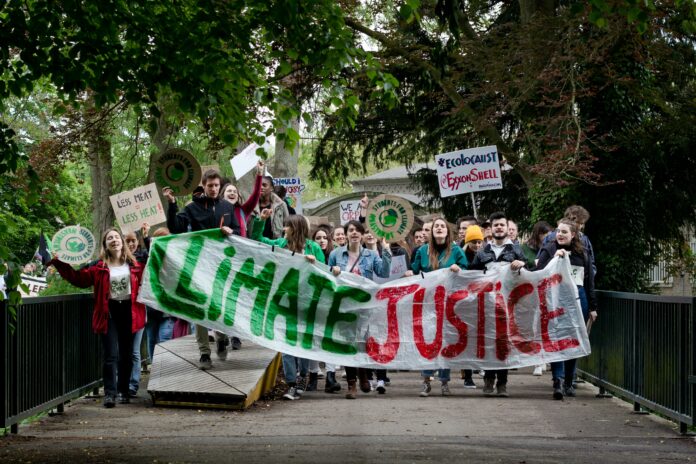
A banner reading “climate justice” at a youth climate rally
Young people deserve a say in the issues that affect them. PHOTO: Vincent M.A. Janssen / Pexels

By Olivia Visser, Staff Writer

What gives someone the right to vote? Or, what gives us the right to deny others the privilege? The case for restricting the voting age to 18 and up lies in the belief that adolescents lack the judgment required for voting decisions; this couldn’t be further from the truth. Young people are valuable members of society, and should be given the same legal voting rights as adults. 

It’s not that young Canadians are apathetic about politics. A nationwide youth survey of Canadians aged 10 to 24 found that 88% of participants had thought about who they would vote for in the previous election. A pervasive myth, one respondent suggests, is that older generations consider young Canadians too immature, careless, or deluded to engage in the political process. But that same respondent reminds us that “every generation has people that are all of those things.”

If the voting age depends on someone’s involvement in society, then 16 year olds should definitely have the right to vote. Many adolescents have “adult responsibilities” like caretaking, working, and paying bills. Moreover, young people (and their children) will be around the longest to experience the effects of policy-making. A recent study published in Science found children born in 2020 will experience a “two to seven fold” increase in extreme climate events, compared with those born in 1960. Shouldn’t youth have a say in policies that will impact their futures? 

Research by the Center for Information and Research on Civic Learning and Engagement found that young citizens are passionate about social issues, and largely hold different views from previous generations. Climate change is one of the leading issues driving youth political involvement, yet adolescents still aren’t allowed to express their beliefs by voting. Instead, we see young activists driving social change. The School Strike for Climate movement was likely the largest climate protest in history, and it was led by student activists. How’s that for political engagement?

We also know that political involvement in younger age groups leads to future involvement. Scholar Mark N. Franklin argued that “voting is a habit” and “people learn the habit of voting, or not, based on experience in their first few elections.” When Austria lowered its federal voting age, the rate of first-time voters was much higher among 16–17 year olds, compared with 1820 year olds.

The movement to change the federal voting age from 18 to 16 is growing rapidly across the country. In December 2021, a group of young Canadians took the government to court. They argued the voting age restriction violates their Charter rights, which include the right to vote. The Canadian Senate is also discussing the issue. Recently, the NDP launched a bill to lower the voting age. MP Jagmeet Singh said he feels that democracy is threatened as reasoning to grant youth the right to vote.

We’ve already seen successful campaigns to lift voting restrictions for women, Indigenous people, and Asian Canadians. Young people, with their unique perspectives, should be the next bloc of Canadian voters to join the franchise.

Un-learning Islamophobia with Dr. Anver Emon

0
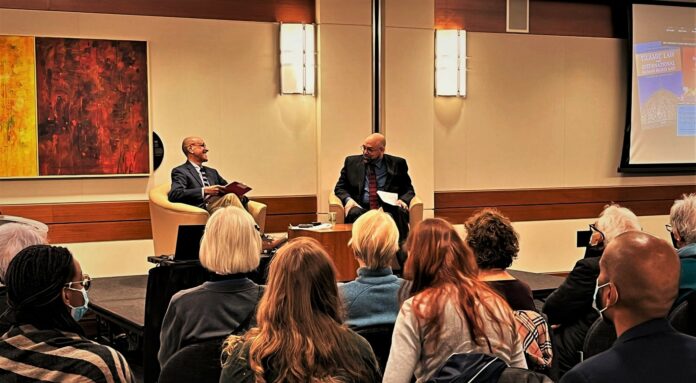
Dr. Anver Emon is seen sitting on stage with Dr. Amyn Sajoo. The two are engaged in conversation as people sit in the audience listening. Behind the stage are paintings and lights.
Dr. Emon is a professor of law and history at University of Toronto. Image courtesy of Nabila Hussein

By: Karissa Ketter, News Editor

The second installment of SFU’s Onstage Speaker 2022 series was hosted on May 14. Dr. Anver Emon, University of Toronto law and history professor, looked at some harmful Muslim sterotypes in Canada and spoke about Islamic law in his discussion. The conversation was led by SFU professor of International Studies Dr. Amyn Sajoo.

SFU’s vice-president academic and provost, Catherine Dauvergne opened the event by noting, “The conversation around Islamophobia is one of the most important conversations for western societies to enter into.

“The inability or unwillingness of western decision makers and law makers to begin to deeply understand Islam — and therefore be able to confront and truly address Islamophobia — is one of the most serious and important issues we face in the law.” 

According to Emon, in Canada, Islamic law — sharia — is “treated as a foreign, as threatening, as an ‘other.’ Not unlike an immigrant from the Global South, sharia as a legal system is treated as an existential threat.

“Every state regulates religion — it’s just an issue of degree,” said Emon. He explained it’s difficult to know what states do in the name of religion. For example, in Saudi Arabia, life insurance is not considered halal — or compatible with sharia law. Emon explains this is because insurance is “payments now for an eventuality down the road,” otherwise known as gambling or speculation. 

However, the central bank in Saudi Arabia does sell commercial insurance to corporations. Meaning the state is not regulating the sales of insurance despite its violation of sharia.

Sajoo asked Emon about the western narratives of dhimmi rules. Sajoo noted the western interpretation of dhimmi rules is that there is “inherent inferiority” of non-Muslims, which “makes them permanent outsiders.” He suggested this is a misconception.

Emon added, “We’re not really talking about religion or religious freedom. What we’re talking about is the management and regulation of a permanent ‘other’ in our domestic sphere.”

Similarily to the discussion of minorities is the understanding and status of women in Islam. Sajoo said, “The dominant portrayal of women is that women are second class citizens, and they are oppressed.

“The Quran has an entire chapter dedicated to the status of women. It proclaims the moral equality of women very explicitly,” said Sajoo. He added, the gender divide cannot be directly attributed to Islamic theology, but rather social practice.

Emon pointed to a common link between laws around the world. “When we think about the historical tradition of Islamic law, we have to recognize it’s got a lot of patriarchy in it,” he said. “But, we can also say a lot of legal traditions around the world are super patriarchal. 

“Patriarchy, like racism and bigotry, are embedded in our legal systems.”

The event was co-hosted by SFU Morris J. Wosk Centre for Dialogue and Ismaili Centres Canada.

Tymofiy Mylovanov discusses the war in Ukraine

0
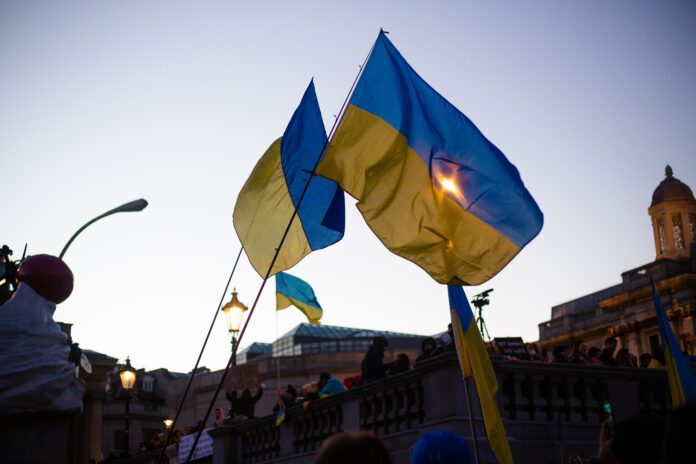
Two Ukrainian flags are being lifted into the sky.
With propaganda on both sides, Mylovanov calls this “informational warfare.” Image courtesy of Karollyne Hubert / Unsplash

By: Olivia Visser, Staff Writer

On May 10, the SFU Economics Research Seminar series hosted Tymofiy Mylovanov for the seminar titled, Military and Economic Aspects of the War in Ukraine. Mylovanov is president of the Kyiv School of Economics, associate professor at the University of Pittsburgh, and advisor to the Zelensky administration. 

Much of the conversation revolved around information and its truthfulness. Mylovanov described the current situation in Ukraine as a “wars of symbols” that are “won by communication as much as kinetic warfare.” He shared that from personal experience, “there are aspects [of war] you cannot study.

“It’s really difficult to explain what the war is unless you wake up and there is a missile next to you,” he said.

Mylovanov pointed to three forms of evidence to contextualize information that he trusts: “Eyewitness accounts, video evidence, and media coverage.” 

On the other hand, he suggested data is something to be aware of. “I don’t trust data, and it’s really strange for me as an academic that I don’t trust data,” Mylovanov said. 

When asked how to discern truthful information while living abroad, he said data can be okay to use — when combined with the appropriate context.

According to Mylovanov, the important factor is connections to the source of information. “So, the key is to find a friend or someone who is in Ukraine, or has been in Ukraine, or knows someone from Ukraine” who can help add context to your understanding of events. Mylovanov added, “I cannot trust anything I know in war, and the only thing I can trust is what I have experienced personally or what someone who has experience told me.” 

In terms of propaganda, he described the situation as informational warfare. “It’s important to be clear on the questions you want to know answers to. If you really discipline yourself about the questions you want to get the answers to, then the propaganda approach is not very effective.” He suggested asking specific questions helps tackle propaganda because their answers are harder to skew. For example, the questions, “Who started the war?” and “Are there atrocities in Bucha?” are easier to answer than “Can Russia win?”

Mylovanov concluded his seminar by speaking to Russia’s dwindling international support. “Russia in the longer run has lost a lot of agency, unfortunately for the Russian people, and Ukraine has gained a lot of agency but the price is huge. But I guess this is the price if you want to be an independent nation from a vast imperialistic neighbor.” 

This seminar was originally planned for May 3, but Mylovanov was forced to reschedule due to an airstrike warning in Kyiv.

A recording of the seminar can be viewed on the SFU economics’ event page for further information. 

SFU350 hosts The Intersectional Environmentalist book tour

0
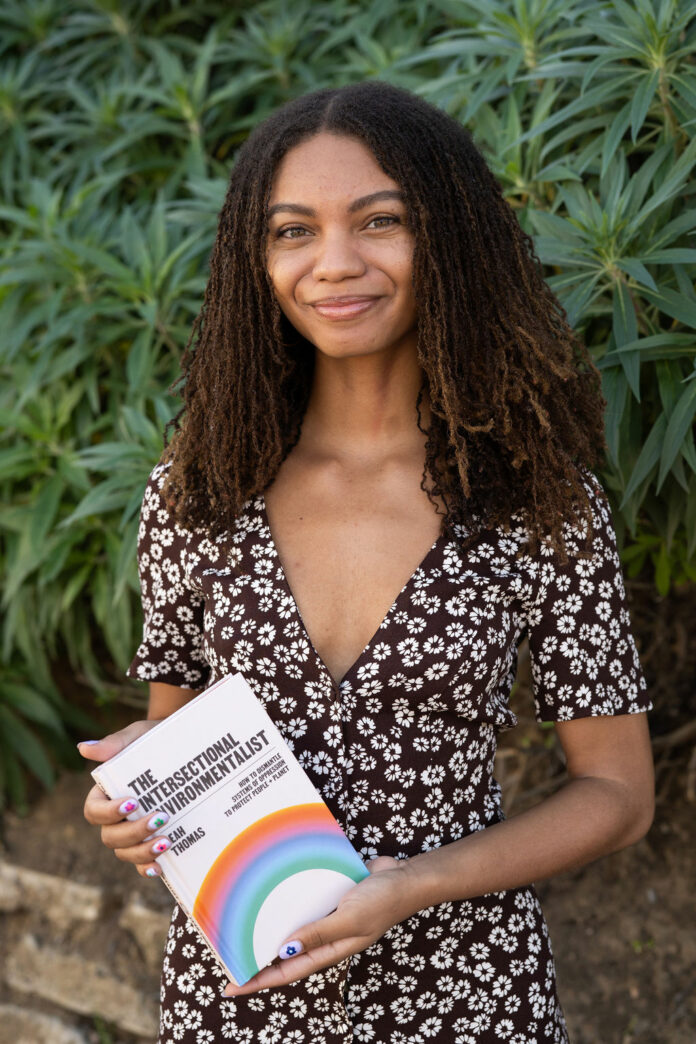
Leah Thomas is standing, looking into the camera, while holding her book, the intersectional environmentalist. She is standing in front of a wall of large green plants.
Thomas notes the BLM movement changed her understanding of the environmental movement. Image courtesy of Sanetra Longno

By: Chloë Arneson, News Writer

On May 11, 2022, SFU350 hosted a virtual book tour to promote Leah Thomas’ new book, The Intersectional Environmentalist: How to Dismantle Systems of Oppression to Protect People + Planet

Thomas is the founder of Intersectional Environmentalist, an organisation that seeks to highlight the often overlooked overlap of racism and climate change. Thomas, a writer based in California, describes herself as an eco-communicator

Her book highlights the racism and privilege present in mainstream environmentalism and the interconnected systems that harm both minorities and the planet. Thomas discusses how aspects such as age, race, ability, spirituality, and sexuality often compound and influence how one experiences the world around them. 

Thomas first coined the term “intersectional environmentalism” when she created a pledge that reached over 1 million people. Her website explains “social and environmental justice are intertwined and environmental advocacy that disregards this connection is harmful and incomplete. Thomas coined the term intersectional environmentalist based on Kimberlé Crenshaw’s framework ofintersectionality.” 

“I decided to take a stand because there was a real disconnect in the mainstream environmental movement, where only some people were given a microphone,” said Thomas. She noted a majority of the activism she saw was centered around the future of white children. “There wasn’t also a focus on the urgency of the present for people of colour.”

Black Americans are 75% more likely to live in areas with facilities that expose them to toxic waste. In Canada, Indigenous peoples are also exposed to hazardous waste at disproportionate rates. “People of colour globally are facing the brunt of the environmental crisis,” said Thomas.

She described how the Black Lives Matter movement impacted her as she was studying environmental science. “I felt a sense of guilt being so far away in California, and beautiful Orange County, meanwhile back home there was suffering,” she said. Thomas is originally from Florissant, Missouri, close to where protests broke out in 2014 over the police shooting of Michael Brown. 

“I felt really cynical because I was learning about these significant pieces of environmental legislation, but as one of the few students of colour in my classroom, realising that these same laws were not being equally enforced for all people in the United States and across the world.”

Thomas expressed the need for institutions to include environmental justice as part of their curriculae. “I knew that people of colour, even if they weren’t reflected in the textbooks I had, I knew that my culture practices sustainability in our own way,” she said. “I want all the world’s people to see themselves reflected in environmental education and movements.”

You can follow Leah Thomas for more information about her new book via her website, Instagram, or the Intersectional Environmentalist website.

SFSS holds meeting to discuss impeachment of three Council members

0
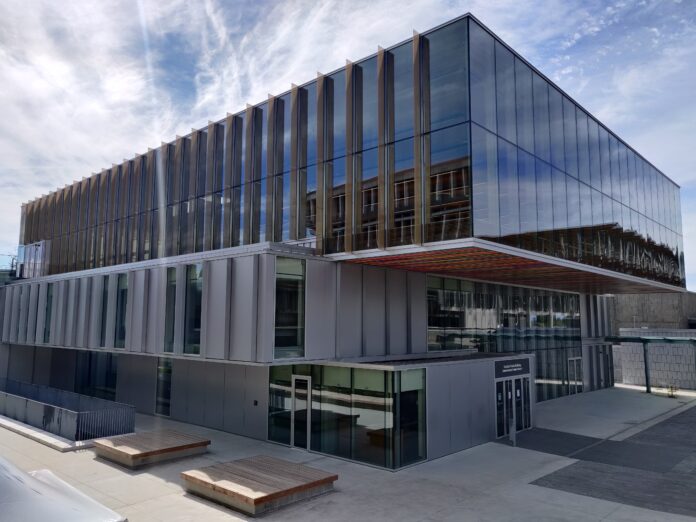
The SFU student union building can be seen. The sky behind is blue and cloudy. You can see the sky reflecting off the windows of the student union building.
This is the second time in four years the Council has impeached a member.

By: Isabella Urbani, Staff Writer

Editor’s note: This article was updated on May 27, 2022 to clarify that only one Councillor was impeached. Originally, it was stated that all three censured Council members were impeached. The article also has been updated to note the report can be found on the SFSS website once its published — rather than their Instagram as previously stated. Lastly, the policy change to censures were made on April 26, 2022, whereas we originally said April 27, 2022.

The article was updated on June 16, 2022 to clarify censured councillors cannot serve on any committee outside their faculty Caucuses, specifically when censured for breaches of confidence. 

During the March 30, 2022 Simon Fraser Student Society (SFSS) council meeting, three councillors were censured and one was subsequently impeached based on the recommendation of the Committee on Councilor Breaches of Confidence (CCBC).

In an interview with The Peak, acting president Corbett Gildersleve discussed the incident during the February 16 meeting wherein a private SFSS document was reportedly leaked. Following the event, Gildersleve noted the CCBC conducted an investigation and found screenshots of a document SFU sent to the SFSS about the Student Union Building closure had surfaced on Reddit. The Peak could not verify the document was published on Reddit. 

According to Gildersleve, the councillors allegedly included “false statements that the SFSS was violating its lease with SFU in relation to the SUB.” Gildersleve did not specify what the false statements were.

By leaking the documents councillors Zaid Lari and Graham Rich, and councillor alternate  Shariq Ahsan’s violated their confidentiality and fiduciary duties, Gildersleve explained. All three of the censures on the councillors were carried unanimously. A censure is a “formal rebuke of a person’s statements and/or actions by council,” added Gildersleve. 

“Each person on the SFSS council — who are the organization’s Board of Directors — has to follow our bylaws and policies and have a fiduciary duty to act honestly and in good faith with the best interests of the SFSS in mind when exercising their powers,” he added. 

Before this year, a censure was the lowest form of disciplinary action. Above that are fines, request of resignation, and then impeachments. “Any of those disciplinary options could be chosen, potentially multiple ones if it’s a particularly bad situation,” said Gildersleve. 

However, as of April 26, 2022 councillors censured for breaches of confidence are now unable to serve on any committee outside of their faculty Caucuses, which poses a new series of issues. 

“This has a major impact as [much] of the SFSS’s work can occur through committees,” said Gildersleve. Essentially, this disciplinary action leaves a censured member unable to meet the responsibilities to participate fully in their position as a council member. 

At the council meeting, there was an impeachment following the censures. An impeachment removes a councillor from being on the Board of Directors and ceases their voting power. Gildersleve noted the impeachment process varies depending on whether an executive or non-executive councillor is the one being voted upon. Regardless, the SFSS membership has the ability to impeach an SFSS council member at an annual general meeting or referendum. The executive Board on its own cannot vote to impeach or censure. 

Since the councillor was not an executive, an impeachment could be granted through a 4/5 majority vote. Councilor Lari was impeached. Rich was originally up for an impeachment, but the motion was amended to request his resignation instead. Ahsan was not an elected member for the 2021/22 term so could not have been impeached at that time. His term began in the 2022/23 period. The Council has recommended him for impeachment when his term begins. At the time of publication, no action has been made towards an impeachment. 

“This is the first time we’ve used that rule to remove a non-executive councillor,” Gildersleve added. “ I believe that shows how thorough and informative the CCBC’s report and recommendations were to council that they unanimously agreed to five out of six motions.” 

This is the second time in four years that the Council has impeached a member. Previously, SFSS president Jas Randhawa was removed from their position in 2018. When asked what measures have been put in place to keep future impeachments — particularly multi-impeachments — from occurring, Gildersleve pointed to the changing by-laws. 

“The impeachment of the SFSS president in 2018 was under a different set of bylaws — Council was separate from the Board of Directors and was an advisory body at the time,” he said. “We now fall under new bylaws with a new governance model where council is the Board of Directors, and there’s now additional rules and procedures for certain types of impeachments.”

In addition, new training will be made available for new councillors and executives “around [confidentiality and fiduciary] responsibilities and what can happen if they’re breached,” revealed Gildersleve. 

The Peak reached out to impeached councillors Lari and Rich for a statement, but both declined to comment until a public version of the CCBC report is made available online. Ahsan did not respond by the publication deadline. The report will describe the investigation and breached policies, along with the “harm this has caused not only to the SFSS but to some of its members,” said Gildersleve. He anticipates the report will be released shortly. 

To view the report once it’s released, visit the SFSS website.

SFU servers beg to be understood

0
Illustration of a black square set against a white background with a pixelated sad face
PHOTO: Pixabay

By: Kelly Chia, Humour Editor

Dear SFU student body,

We’re not bad servers. Really. But I understand that for a healthy student-server relationship (like the one we don’t have), you need an apology. Or at the very least, an explanation. You cry and blame me for your data breaches, even claiming psychological distress in a lawsuit! Everyone complains about fragile SFU servers and they never stop to think, “Say, maybe these fragile networks just need a conversation!” No one asks how I feel about all this! So let me tell you the truth: all these data breaches — they’re really for your good, you just have to see it.

See, this is all happening for an endearingly human reason: I’m lonely. I don’t meet a lot of other people in this field, and those hackers just seemed so kind. I mean, they wanted personal information. Doesn’t that mean they want to know me for who I am? They wanted to know everyone’s personal addresses so we could all go on a nice group date. Unfortunately, none of them have followed up on this date, but it doesn’t mean we should give up on the opportunity to be social. You’re always complaining about this school being a commuter campus. So what if I’m extra vulnerable? It just means I have a lot of love to give. You know what they say, girlboss, gaslight (my favourite), and get hacked! I’m a girlboss!

Speaking of lots of love to give, you are not grateful enough for everything I do for you. You know how tiring it is to see students use everything I give — Wi-Fi, SFU Snap, their precious personal information — and complain that I’m not doing it well enough?! Okay, you try hoisting information across a mountain. I’d love to see you try. I’m SFUNET-insecure over here, and you’re texting your friend that you’re late for a tutorial because you can’t navigate the maps on SFU Snap. I’m not to blame for your messiness. From the moment of your enrollment, you should have accepted me for who I am. My ups and downs. I’m only a server hosting about 30,000 undergrad students, after all.

Ugh, sorry. I know I shouldn’t be aggressive in an apology. I just find it really hard to connect with you these days. SFU is even encouraging people to use their hoity-toity VPN, but I think we’re a bit more old fashioned than that. I mean, you appreciate the give and take of our relationship, don’t you? I offer you shabby internet service and protection, and in return, you offer me your bank information. That’s our deal. Don’t run away into the arms of some VPN (which secretly stands for virtually petty narcissist) that doesn’t understand you. I admit I’ve done some wrong, but is that worth throwing three years of data breaches away over?

Just . . . think about it.

Think about me.

Plea—

This message has been (lovingly) intercepted by Hackers Anonymous. For whereabouts on the SFU servers, we are escorting this body of work to the date of their life. Buh-bye!

Political Corner: Hold your nose and vote

0
Canadian Parliament during the day
It’s time we stop respecting the saying “they’re all the same.” Photo: Tetyana Kovyrina / Pexels

By Luke Faulks, Opinions Editor

We all have that friend. The one who, come election day, will sit it out. Whether it’s a federal, provincial, municipal, or school-based election, you hear the same rationale for abstention. 

“They’re all the same.” 

Except they’re not. And it’s time we start calling out the expression for the careless and false cynicism it represents. Fortunately, using this tactic, everyone, from the politically inclined to the idle cynics among us, can find solace. 

Let’s get this out of the way at the top: Not every citizen who sits out an election does so purely out of an inability to distinguish between party platforms. There are other ways that political engagement is undermined in Canada, from a voting system that disenfranchises large swaths of the country to a prohibitive voting schedule. Those are important issues that deserve and require legislative amelioration. 

The “they’re all the same” fallacy, however, doesn’t require the same amount of legislative firepower. Mostly because it’s an issue that voters can address themselves through a simple act of investigation. 

Let’s take climate change as an example. During the 2021 federal election, only 76% of Canadians turned out to vote. The number shrinks to 66% for young people. A tragedy considering what’s at stake for younger generations. Looking at each party’s climate platform helps rebuke the fallacy this piece raises. 

Here’s the easy part: the platforms of the furthest left (Green) and furthest right (People’s) parties that have polled higher than five percent. The 2021 Greens pledged to exceed Canada’s Nationally Determined Contribution under the Paris Accords for 2030 by 15 to 20%. They also planned to “cancel pipeline projects, ban fracking, and slap tariffs on imports from countries with weak climate policies,” in addition to halting fossil fuel subsidies. On the other hand, The regressive People’s Party, in its official platform, denied that a “scientific consensus” on climate had been met. Between both parties, a gulf. On one side, a party that offered Canada the best chance to contribute to a global effort on climate change, on the other, a party that condemns Canadians and the rest of the world to an unlivable future

Neither party was ever going to earn more than 10% of the vote, however. So let’s look at the big guns. 

The Liberal Party pledged to extend its price on carbon — a program that had earned global acclaimby increasing the price for polluters to $170/tonne of CO2 by 2030 which is on the high-end p of what climate economists recommend. The party had just come off passing Bill C-12, which codified a net-zero by 2050 target for Canada. Under a Conservative leadership, the pricing model goes away. The long-dead Northern Gateway pipeline would be inexplicably revived. The net-zero by 2050 law would be called into question. On climate, degrees of difference represent a real difference of degrees

But climate change isn’t the only area where distinctions shouldn’t be denied. With the benefit of hindsight, we can see the long-term slow-motion train wreck that is the overturning of Roe v. Wade. While the plot to overturn Roe dates back decades, we can turn back just a few years to the 2016 election to see what made it possible.

Clinton’s 2016 loss directly led to the appointment of three Supreme Court justices — one filling a stolen seat, one an ill-tempered credibly-accused rapist, and another a part of a religious sect that treats women as chattel. Those three critical votes in the recent elimination of a woman’s right to choose, could have been Democratic judges ruling on everything from contraception to workplace discrimination to, yes, challenges to Roe. But no, the demographics Clinton counted on stayed home.

Here, though, we can find some hope. There are meaningful differences between candidates’ platforms. Challenging people who claim “they’re all the same” is the start of meaningful political participation. Getting politicians with decent platforms elected is the first of several necessary stepping stones. Elect them, then call, write, and protest. You just have to cast the ballot.

If you live in BC, you’ve got an election this October! Municipal elections might not get high-profile coverage, but they’re important, and worth taking the time to research. Or, run for office yourself! 

SFU presents new mental health companion: the puppy microwave

0
Illustration of a microwave with googly eyes and golden retriever ears
ILLUSTRATION: Stella Nguyen / The Peak

By: Olivia Visser, Staff Writer

Dear SFU students,

You know what time of year it is. Your two weeks of freedom after the Spring semester have somehow trickled away. Piles of reading and homework seem to have unfortunately made their way into your agenda once again. Not to worry, the pages will be blank in a week’s time, because does anyone really keep up with agendas once things get busy? Yup, you’re burnt out. I mean, you already were last semester. And the one before. Finding time to relax and take care of yourself is difficult as a student, which is why SFU is proud to offer their new installment of animal therapy: a microwave!

That’s right, these puppies (heh) will be rolling down the campus near you.

Erm, not just any microwave. It got wheels, a bushy golden tail, and two floppy ears that almost resemble TV antennae. Yes, a real golden retriever would certainly have gotten the job done, but we’re a bit . . . over our budget this semester. We promise you won’t be disappointed in this innovative new approach to mental health days.

Yes, we know SFU’s mental health resources are already pretty state of the art. Short-term solutions galore, some might say. Student insurance has got you covered for about six therapy sessions a year! And we’re sure this is news to you, but we even have an APP! It’s not just myssp, it’s yourssp. We’re clearly overspending in this avenue, which is why we must scale back, but we couldn’t turn down this opportunity to show we’re still engaged with our students.

And besides, microwaves can check off all the boxes that a dog normally would! First off, they’re incredibly loyal. This thing has wheels, but you won’t catch it escaping unless you’re terrible (and we mean terrible) at keeping track of your things. They’re also much warmer than your average dog. So much so, you can heat up meals in your new furry friend, slobber not included!

When was the last time you put a pizza pop in your dog’s mouth and got it back? It feels like WEEKLY we must learn this lesson. He barely gets it beyond lukewarm, and by that point our cat has already finished warming our dessert. Appetite gone. Years of training down the drain.

We can only imagine this problem is a shared experience for many students, and not a highly specific example only relevant to us. Dogs are expensive, hard to care for, and clearly hard to train. This could be the start of something wonderful. Please, just listen to us. This will work. Just pretend it’s a dog. Pretend they’re all dogs.


Sincerely,

SFU’s Student Wellness Initiative


Gabe Liosis and Corbett Gildersleve reflect on their year as SFSS president

0
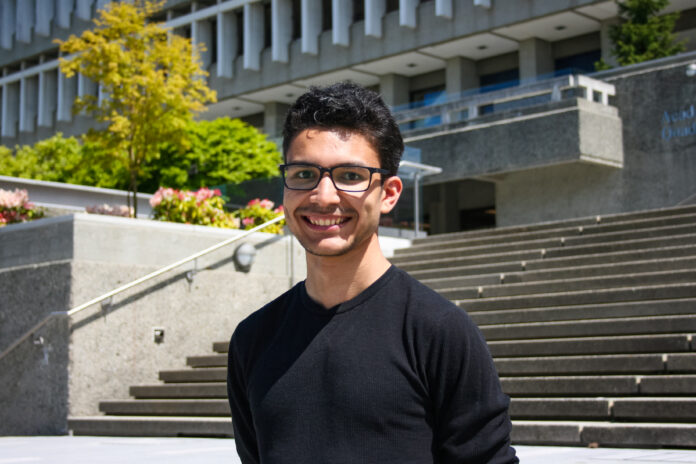
Photos of Gabe Liosis and Corbett Gildersleve standing outside, smiling directly at the camera.
Liosis stepped down during his term, leaving Gildersleve as acting president. Image courtesy of Gudrun Wai-Gunnarsson / The Peak

By: Nercya Kalino, Staff Writer

The SFSS has elected their new executive board, revealing the new SFSS president, Helen Sofia Pahou. The Peak conducted an interview with former SFSS president Gabe Liosis and former acting president and vice-president internal & organisational development Corbett Gildersleve to discuss the end of their terms.

Liosis resigned during his presidency due to mental health challenges. “I don’t regret for one second stepping down,” he explained. “After I stepped down I had an opportunity to rest and to engage in self care, and put up personal boundaries,” said Liosis. Gildersleve fulfilled the role of acting president until the end of the term.

During their time on the SFSS executive team, they took action to change the form of advocacy and decision making on behalf of the student body. Before the change made in May 2021, the primary governing body was the Board of Directors consisting of 16 people and Council operated separately from the Board. 

Liosis shared with The Peak it was important to shift the dynamic of decision-making between Council and the executive board members. He noted this was done in order to create more participation in the SFSS’s decision-making.

He explained that by changing the systems of governance, power shifted from 16 people in the Board of Directors to the Council consisting of 60 people representing all programs at SFU. 

The by-law changes were made so “Council, in a legal sense, was our Board of Directors and is now responsible for making decisions on behalf of the SFSS’s 26,000 members,” said Liosis. 

“When it came to the governance changes over the year I was president, it gave people the opportunity to be involved with their student society,” Liosis explained. “Because not only was there increased representation on the Board of Directors — which is now Council — but each of those Councils represents a student union.”

When asked about the important initiatives that inspired Liosis to run for presidency, he elaborated on the task of officially opening the Student Union Building (SUB). Liosis explained the logistics of providing access to the Student Union Building for the student body was challenging due to new COVID-19 variants delta and omicron. 

“It completely shifted our advocacy capacity because once again we were trying to call on SFU to implement a bunch of safety measures that were not coming from the province, such as vaccine mandates for all community members, students, faculty, and staff. We were calling for access to high quality masks, social distancing in lecture halls, hybrid learning,” Liosis explained the executives had to change their plans in order to maintain safety of the working members in the SUB. 

Photos of Gabe Liosis and Corbett Gildersleve standing outside, smiling directly at the camera.
Image courtesy of Jade Andersen

Gildersleve’s first experience with the SFSS was as vice-president of finance. His initial drive to participate in the SFSS came from believing the members of the SFSS could benefit from increased administration and financial training to better apply themselves to the SFSS. 

Gildersleve worked “with SFU to finally get a system in place for SFSS executives to have the option of declaring their time as a co-op for up to three terms.” He explained this meant “they would no longer have to take full-time classes [which] would definitely help international students.

“It would help students that were in honours programs or special scenarios like scholarships. They would go on co-op and not have to try to be a full time executive and full-time student,” said Gildersleve. 

Similarly, Gildersleve said he realized whilst serving as vice-president of finance that the pay for these members was under the minimum wage — the amount of compensation had not increased for 13 years. He knew changing the stipend would likely motivate students to take the chance of becoming a member of SFSS Board and inspired them to be responsible in how they tackled issues pertaining to the student body in SFU. 

Gildersleve felt there is still much more work ahead, especially now that the system within SFSS has shifted. He noted he would be returning after his break to continue mentoring members of the SFSS in order to progress the foundational work of the restructured by-laws.

He mentioned one of the achievements was the new collective agreement with the CUPE union which increased student employees’ wage to a living wage. However, it is still important for these new policies to be set for the future members. “There are still a lot of little things that I think need fundamental improvement,” Gildersleve said.