Home Blog Page 271

SFU Surrey petitions to be the new It campus

0
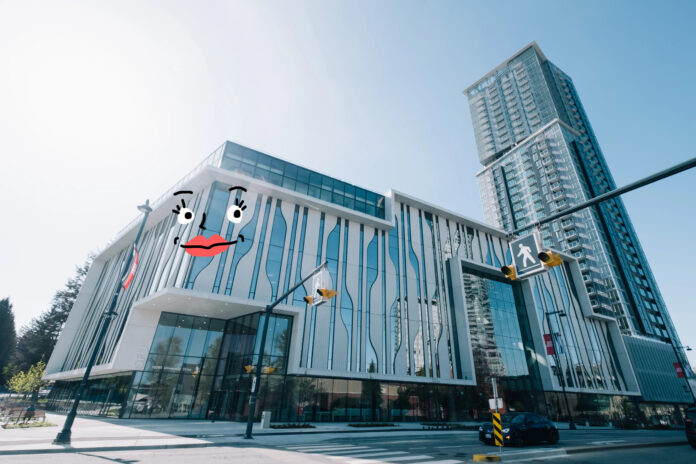
A photo of the SFU Surrey campus with a hot pink bow doodled on the top of the campus
Campus queen SFU Surrey needs, like, everyone to pay attention! PHOTO: Chris Ho and Gudrun Wai-Gunnarsson / The Peak

By: Yasmin Vejs Simsek, Staff Writer

Fellow campuses, I’ve included some flattering prelude from my fellow campus, UBC, who had this wonderful, original stuff to say about me. 

SFU Surrey is flawless.

I hear the campus is insured for $1,000,000,000.

I hear the campus advertisement was shot . . . in Japan.

One time, the mall at SFU Surrey had a fire alarm that canceled all classes . . . It was awesome.

The Peak has a HUGE crush on SFU Surrey! They even made a whole issue based on it!!


So now that you get my IT factor, I want to invite you to have lunch with me every day, for the rest of the semester! You know, I don’t do this very often, but it’s time I tell you all the truth about the other campuses. Sure, the Burnaby campus has got that grungy, prison-y vibe going for it and the Vancouver campus has a grool location, but no one can deny which campus is the most fetch. I am NEXT LEVEL. I have working wi-fi and an Orange Julius. I mean, what loser doesn’t want to go shopping after class? And really, I don’t know who Burnaby thinks it is. That freaking avocado statue is like, so yesterday. It’s the ugliest fucking statue I’ve ever seen. It doesn’t even wear pink on Wednesdays. I think, really, the two other campuses are just jealous of me and that’s why they’re trying so hard. But I can’t help that I’m popular.

When you come to my campus, you don’t have to worry about getting hit by a bus. The SkyTrain comes all the way to the door, basically. And you can eat whatever food you want, carbs, muffins, or just be like, whatever, I’m getting cheese fries. I don’t judge you! The limit does not exist to the types of food you can get here. During Christmas, we sing Jingle Bells and I have candy canes for everyone, not like a certain other campus I know. When you give to one of your besties, you’ve got to give to them all, that’s just like, the rules of feminism. Basically, I am just such a good friend, and I just want you to have a mean time here. Come admire my gardens . . . my Embark gardens, that is. You can come frolic in the sunshine all day long, without any of that grody, dark academia fog. Euch.

Raise your hand if you have ever been personally victimized by the Burnaby Campus. Yeah, same. It thinks it’s sooooo hot because it gets car-fires and all the tank farms a campus could ever need — um, the right answer is ZERO. I’ve started pretending I’m sick every time Burnaby calls. I just feel like with that attitude, it should just stay on the mountain!

You know, I don’t understand why students keep flocking to Burnaby. It’s depressing and impossible to get to. Students are squeezed together in the classrooms like sardines. Don’t even get me started on Vancouver with their tiny, spread-out campus with only a few programmes attached to it. I have space, I am more central, I welcome all programmes, I am the superior campus! Burnaby and Vancouver campuses know it. They’re like, obsessed with me. No wonder. Who’s been getting the new buildings, who’s been getting all the praise, who will be taking over all of SFU before you can say Convocation Mall? 

You’ve guessed it! SFU Surrey! Peace out. Love letters directed to Campus, Surrey only, please.

Horoscopes: May 30–June 5

0
An illustration of a girl with long flowing hair. Astrological signs and stars shine around her.
ILLUSTRATION: Marissa Ouyang / The Peak

By: Kelly Chia, Humour Editor, Supposed Seer

Aries:
Hey Aries, I have a secret for you. Mercury? They’re coming out of retrograde this week, and it turns out it’s all because of you! I even heard whispers from the stars that they think you’re cute. So hey, if nothing, you’ve got an interplanetary crush going for you!


Taurus:
Have you ever just wanted to let LOOSE? Just be FERAL? I have observed many versions of you, young Taurus, and I think you need to just go to the cliffside and scream-sing a sea shanty. I promise it will be healing, even if the seagulls come after you.


Gemini:
Oh my, have we entered Gemini season? You have to let everyone know, and the best way to let everyone know is to suddenly fabricate a twin. Everyone will be delighted to hang out with you and the cardboard cutout version of you! Hurray!


Cancer:
Cancer, make friends with a crow. You’ll recognize him at first sight! I can’t explain any further, but your destiny starts with you and your friendship with Reginald VII.


Leo:
Ah, yes, Leo, the stars have prophesied your many great heroics across the universes! In this one, you are to become the hero of TikTok. You rescue everyone with your fantastic dance content (and humble home cooking videos). Go forth, the world is waiting for you!


Virgo:
Have you listened to Yellow by Coldplay lately? The stars are telling me that you need to be more sentimental. Why not try your hand at writing a power ballad? I think you can do it.

Libra:
Libra, you should go up to the scales of justice and slap it silly. It’s done enough judging, don’t you think?


Scorpio:
Scorpio, the planets have aligned for you to live your dreams. Yes, you should move to New York! You would charm everyone there, and have a fabulous 10–11 season sitcom show featuring you. What do you mean it’s not your dream? Mars said so.


Sagittarius:
It’s time for people to know how geniusly curated your Spotify playlists are, Sagittarius. In every universe, your music taste is impeccable. Just don’t show them the ones you’ve made for your DnD characters. They might be a bit too sad.


Capricorn:
You know, Capricorn, for everyone talking about how serious you are, I think you have a great sense of gravitas. Try asserting to everyone that you are their father this week. I see nothing wrong with this arrangement.


Aquarius:
Aquarius. Hmm, I can’t see you very clearly. Please visit your nearest aquarium so I can divine your future next week. Stars are going home early today, sorry! I do have this sympathy coupon from Denny’s, though. Enjoy!


Pisces:
Pisces, you’ve discovered it! You’ve found the solution to Nirvana! It’s —

Quarantine Qapsule showcases powerful pieces created by Asian Canadian artists in the pandemic

0
Computer screen with a tan coloured webpage open, graphic of an hourglass on the screen with a lock motif in the corner and “Quarantine Qapsule” text
Quarantine Qapsule is featured in explorASIAN festival’s programming. Nazmus Sakib / The Peak

By: Olivia Visser, Staff Writer

Created in 2020 by Toronto-based actor Nightingale Nguyen, Quarantine Qapsule is a digital art archive that aims to “archive the Asian Canadian experience during the pandemic.” The archive highlights various different works such as visual art, music, film, and more. This year’s Vancouver Quarantine Qapsule is a part of explorASIAN 2022’s programming and is hosted in partnership with Emily Carr University of Art. It expands upon the submissions collected when the project originally began in Toronto.

As someone experienced in researching archives, I was immediately struck by the self-representational aspect of this space. Strict institutional archives can limit an artist’s self-expression, but this space defies those restrictions. All artwork in the collection is non-juried “to allow [artists] to understand the power of community and self-documentation.” Giving people agency over their artwork’s presentation is important because it allows them to define their own representation. Most pieces touched on themes of deep emotions and isolation. This showcased a growing need for community representation amongst marginalized groups.


Isolation by Yasmine Ross

Isolation is a melancholic short film about the psychological experience of quarantine. Artist Yasmine Ross describes it as “an honest portrayal of the up and downs, the raw and reflective moments, and the often overwhelming loneliness that the pandemic has beautifully forced us to experience.” I was mesmerized by the film’s moody shots and deep shadows, then found myself inexplicably connected to the subject’s solitude. The piece exemplifies how the pandemic has exacerbated life’s monotony and contributed to widespread mental health problems.


Kodama Bones by Silke Seiler

In another piece, Silke Seiler employs realism and abstraction to depict driftwood against a stormy blue backdrop. Kodama Bones is a beautiful representation of nature in the midst of the pandemic. The depth of such a simple object is really captivating. According to the painting’s description, Kodama Bones highlights that the “enjoyment of outdoor spaces and sports has skyrocketed as a response to social distancing.” Seiler’s biography says her paintings tribute ancestors who were Japanese internment camp survivors and shipbuilders. 


Misfortune Cookies by Pamela Chen

Pamela Chen’s multimedia piece Misfortune Cookies explores negative self-concept through the motif of fortune cookies. Chen writes, “As food is strongly tied to family and culture, the fortune cookies represent Asian adaptability through a lens of ‘otherness’.” Painted onto an 100% cloth rag and embellished with real gold leaf, this work uses the “Americanized idea of Chinese food to voice negative commentary.” Some of the messages peeking out of the cookies include “quit while you’re ahead” and “don’t get your hopes up.” 


Not Your Puppet by Katrina Abad 

Katrina Abad describes her digital illustration Not Your Puppet as a “response to discrimination and fetishization.” Her piece showcases a dejected-looking child operating a marionette puppet. At first glance, the attention given to the subject’s facial expression is impressive, and the touches of bright red framing the scene are very striking. Upon further inspection, I noticed that I somehow missed the detailing on the puppet theatre: two uniquely illustrated blue bears holding up the sun and the moon. The artwork’s details are almost overshadowed by the sorrowful expression of the child overhead. Abad writes that children are taught to “face racism and discrimination by keeping our heads low,” but “staying silent and obedient can no longer be an option.” She created the illustration as a response to the increase in Asian hate crimes following the pandemic

It’s important to uplift the narratives of Asian creators, especially since anti-Asian racism has been rising during the pandemic. Centring the voices of local Asian artists is a powerful way of bringing attention to perspectives that are often absent from popular media. Through this archive, I expanded my understanding of not just different Asian communities, but the individual lives of community members. 

As a disabled person, I found it more effective to browse the digital material comfortably and at my own pace. On top of that, I find it quite fitting that a pandemic-inspired gallery invites solitary viewership from the accessibility of your home. 

The archive can be viewed indefinitely through Quarantine Qapsule’s main webpage, where you will find easily navigable links for different art mediums.

Monday Music: You went partying with Drake, now this is what you listen to

0
"Monday Music" in giant yellow block letters with a red background
Monday Music: your weekly themed playlist. Image courtesy of The Peak.

By: Yasmin Vejs Simsek, Staff Writer

In my personal opinion, grime is one of the best things to come out of the UK. This relatively new genre of music (2000s) that stems from a mix of garage, jungle, and hip hop has its epicenter in London. So here you have five songs by Black artists from the grime scene to get you out of your Drake phase and into a whole new world of rap.


Big for your boots by Stormzy

Photo Credit: #Merky Warner ADA

How could one start a suggestion of grime music without the biggest top boy of all? Stormzy once protested the rise in knife-crimes and racial inequality in Britain by performing at Glastonbury with a stab-proof vest designed by Banksy. He got tens of thousands of people to scream “fuck the government and fuck Boris” while performing “Vossi Bop.” Yet he is soft enough to make this hit song with the lyrics, “You’re never too big for Adele.” Enjoy this masterpiece that’ll big you up to seize the day. In grime lingo, to “big up” means to feel important.


Red Card by JME, Skepta, Jammer & Shorty

Photo Credit: Boy Better Know Collective

This number has some of the big shots from BBK behind it. If you want to feel like you own the campus when you walk through it to your dreaded summer classes, this is the soundtrack for your day. You can almost see the make it rain meme happen to this song. It’s utterly adorable how these men who seem so tough on the outside sing lyrics about Mario Kart and Haribo. 


16 Shots by Stefflon Don

Photo Credit: Polydor Records

I had to include the queen of grime: Stefflon Don, who dominates the international women rap scene. Arguably this song is not grime but Stefflon Don mixes her background in grime with Jamaican dancehall and the result is chef’s kiss. Even though it’s a tad hard-hitting, it’s all about self-defence and protecting the ones you’re closest to. This is an amazing empowerment song for women. 


Aladdinby Not3s

Photo Credit: Relentless Records

This song helps you envision yourself wearing your sunglasses, cruising in your imaginary BMW, with your arms in the air through the open window. A lot of grime is about confidence and this song is no exception. It’s interesting because most of these artists are in their early-mid 20’s. Their talents back their arrogance, so if you’re ready to big up with the mandem, now you know the way.

Food for Thought: Dried Fish

0
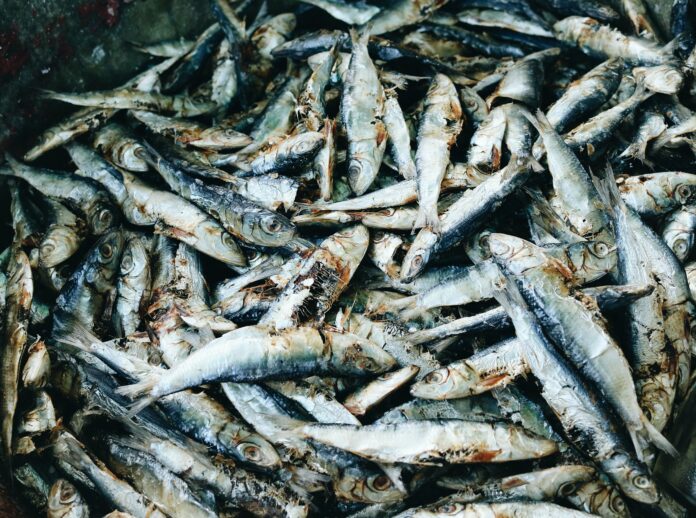
Birds-eye view of a pile of dried fish
Fried fish is a staple food in Malawi, East Africa. Zeshalyn Capindo / Unsplash

By: Nercya Kalino, Staff Writer

Growing up in Malawi, East Africa, dried fish wasn’t my favourite. Now, as an adult, I have grown a nostalgic longing for it — I even miss the smell of it. There is something about dried, fried, roasted, and stewed fish that takes me back to my childhood days. I remember sitting by the burning charcoal with my mom constantly calling out from the kitchen if I was watching the pot. It took a while for me to distinguish between different types of fish, methods of cooking, and the variety of flavour profiles. Whether it is small, long, and curled fish or darkened fish from the sun, they all have a traditional way to cook them to amplify the taste preserved from the drying process. 

I love small dried fish made from usipa, which resemble sardines. Its pungency reminds me of my childhood when I would squirm at the lifeless creature on the plate. The fish would be piled on one side of the plate with other traditional foods such as nsima and bean stew. Reflecting on my childhood dishes, it is curiously not the fancier meals my mother cooked, but rather the food I neglected eating as a child that I miss the most.

I trust my mother’s hands when it comes to preparing dried fish as its handling requires a higher level of experience. Historically, we have used trays to lay fish in the sun with the number of days depending on the fish type. These methods have since evolved to fish farmers using solar power in greenhouses to make the drying process healthier and more efficient. I also appreciate dried fish because of the fish farmers who rely on the process of dried fish and marketing for profit. In Malawi, fish farmers will dry fish to prolong the selling period.

Dried fish varies in price due to its size and rarity depending on the season, but for the most part, dried fish is affordable. Dried fish is more of a traditional dish rather than a snack, depending on the type. The smell of these fish (kampango, kapenta, and usipa) is distinct to lovers of fish and is the heart of Malawian food culture. In Malawi, chambo is quite popular with tourists as this type of fish is tender, tastes great fried, stewed, and roasted — it never disappoints. 

Dried fish is also present in other cultures of African descent. The simultaneous intersection and diversity of ingredients and preparation methods across cultures is something I have come to appreciate. In Malawian culture and among other south eastern countries, they normally cook dried fish such as kapenta by soaking and gutting the tiny fish that you fry with little oil. In western African cultures, they use dried fish as part of a larger stew consisting of meat and vegetables such as banga.

Dried fish is a distant memory now, as I only get to eat it when I visit home. Back at home, buying fish is also a culturally immersive experience. Some of the fish used is accessible here as well, but to prepare and cook it in the same way is a challenge. Regardless, I would definitely like to learn how to cook it from my mother someday.

Dried fish falls on the side of food experiences that I believe tourists are not super keen on exploring, but I think there is so much to appreciate in the taste, cultural importance and labour behind dried fish. If given the opportunity, would you give it a try?

Introducing Colour Tongues, Vancouver-based indie rock band

0
Colourful and neon gradient illustration of feminine features underneath a helmet
Colour Tongues’ sound mixes dream pop and indie rock in their new LP. Colour Tongues

By: Kimia Mansouri, SFU Student

The four-piece indie rock band, Colour Tongues, preemptively celebrated the May 19 release of their album, Midnight Island, with a live show at Fox Cabaret on May 11. Based out of Vancouver, the band consists of James Challis (lead singer and guitarist), Dan Lavergne (bass player), David Taylor (drummer), and Graeme Meekison (lead guitarist). The band got together in 2017 and released their EP, Almost East, in 2018. Since then, they have performed all over Canada.

Listening to Colour Tongues is like an immersive experience where you can feel the beats and the pop melody. The rhythm helps you escape your earthly troubles for a few minutes. Their music reminds me of bands like The Night Cafe, my bloody valentine, and Rare Monk. Colour Tongues is indie rock meeting dream pop, so there is a fair amount of reverb on the guitars but great clarity when it comes to the guitar solos. The sonics overtake the lyrics, so whether you’re listening to them live in a venue or through your earbuds at your desk, you feel compelled to move your body to the sounds. 

You can expect catchy tunes, great melodies, and an early 2000s dream-pop theme from Midnight Island. The instrumentals overshadow the lyrics to a point where it can be difficult to know what the singer is saying if you don’t already know the lyrics. Their full-house show at the Fox Cabaret was an interactive and groovy experience for people who are ready to move their bodies to a wall of music. The high energy stage presence of the members was matched by equally electric energy from the audience. Amidst the audience, I couldn’t help but bop my head to their music which radiated fiery rock ’n’ roll spirit. 

Produced by Matt Di Pomponio, Midnight Island, which has been three years in the making, is a seven-track album about the stages of relationships; first love attempts to save the relationship, heartbreak, and self-reflection. The title of the song with the same name as the album is inspired by “the fear of wanting to fall for someone only to be [weakened] by the doubt of truly giving yourself over to them.” The album speaks to the youth in us and reminds us of the possibilities ahead. 

“By the end of the album, we want you to feel like you did before the world got too big, and to recognize that you can get back there,” said Challis in the press release.

One more interesting thing about this album is the cover, which was inspired by the 90s video game, Metroid. Growing up, Challis and his friends thought the powerful hero of the game was a man but was later revealed to be a woman. The album artwork reveals feminine facial features in colourful gradients. 

While you’re listening to Midnight Island on streaming platforms, the band is preparing for a tour in Ontario starting on May 24 in Toronto, followed by stops in Hamilton, Guelph, Kingston, and Oshawa.

Nicole Bizovie and the Dovbush Dancers

0
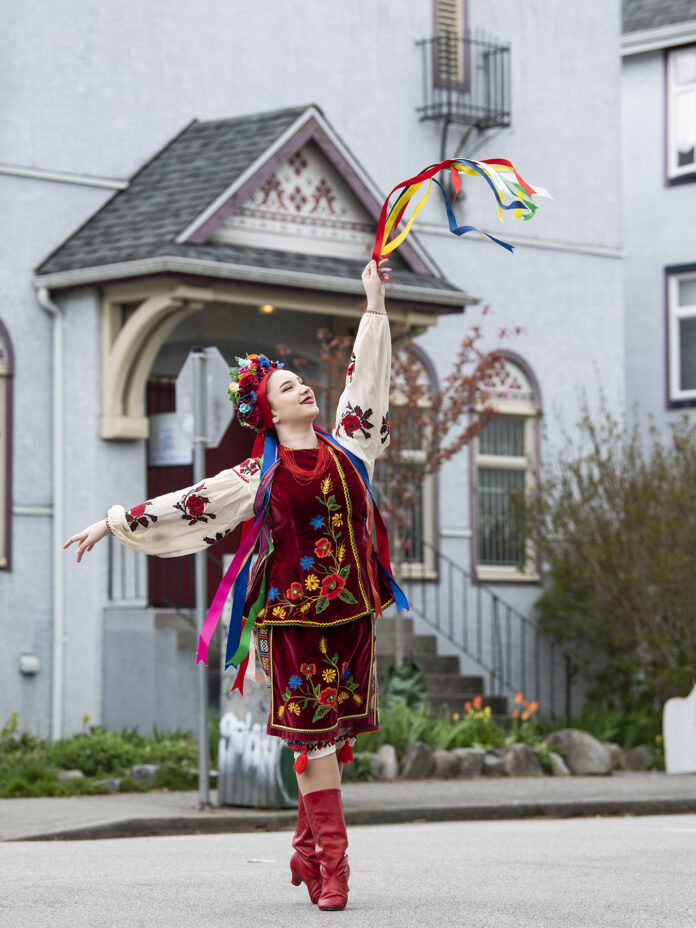
A young Ukrainian dancer is pictured in her colourful traditional dance costume in front of the Vancouver Ukraine Cultural Centre building
Nicole Bizovie in front of The Ukraine Cultural Centre. Tallulah Photography / @tallulah_photo / tallulahphoto.com

By: Yelin Gemma Lee, Arts & Culture Editor

For many of us, dance means marvelling at the beauty of performances as an audience member or moving your body at the club. But for SFU health science student Nicole Bizovie, dance has kept her connected to Ukrainian culture and community all throughout her life. 

Bizovie has been going to the Association of United Ukrainian Canadians (AUUC Vancouver) at the Ukraine Cultural Centre since she was just three years old. Growing up in the Dovbush School of Dance, she officially joined the Dovbush Dancers at age 14. Bizovie explained to The Peak that dancing and being a part of AUUC Vancouver keeps her rooted in her Ukrainian culture. 

Bizovie said the elements of this dance — like costumes and choreography, “pertain to particular regions throughout Ukraine. So you learn about the history of your culture through dance which is an interesting way to learn about it,” said Bizovie. “Just being around people in your community really connects you with it.”

The Dovbush Dancers were on a performing hiatus throughout COVID-19, with dance Zoom calls twice a week when their in-person rehearsals would normally be. Though things weren’t the same throughout these socially distanced rehearsals, Bizovie expressed pride and gratitude to be able to remain connected. 

“A lot of the Ukrainian dance studios in the Lower Mainland didn’t operate throughout COVID-19. So we were one of the only ones who were actively practicing,” said Bizovie. 

Since then, the Dovbush Dancers have been back to in-person rehearsals and recently did their first performance closing for Ukrainian designer, Tetyana Golota, at Vancouver Fashion Week. As the Dovbush Dancers operate out of the Ukrainian Cultural Centre, they’ve been working together to help host numerous fundraisers for the Russia-Ukraine war

Some of these include medical supply and cash donation drives in partnership with Maple Hope Foundation and Ukrainian Patriot, perogy sales, and a craft and bake sale. Bizovie said they also have a large fundraising event coming up on June 11 called “Big Bands for Ukraine” in partnership with the Polish community. Bizovie, who supports administration at the cultural centre, said they have been receiving a lot of love and support during this difficult time for her community.

“The community in Vancouver has been extremely supportive [ . . . ] The amount of support I get weekly from strangers offering their services, offering to volunteer, looking to help in any way. It’s been super overwhelming and amazing.”

Bizovie said AUUC Vancouver, or the “Hall,” continues to be a safe space for her with therapeutic mental effects. Watching older clips of their performances, I was taken aback by the joy and hope exuding from the dancers and with each dance delicately spinning out an enchanting story. 

“I always think of the Hall as a second home, because it really is. I’m there three times a week, sometimes more, and I’ve been doing that forever and ever my whole life,” said Bizovie. “It’s always been a kind of escape for me. Whatever’s going on in my life, good or bad, school, friends, anything — it doesn’t matter as soon as I get into the hall. As soon as I go to the hall for dance, my mind is blank. I’m just existing.” 

To learn more about the Dovbush Dancers, check out their Instagram or website. To learn more about and obtain tickets to the upcoming fundraiser “Big Bands for Ukraine,” visit their Eventbrite link.

SFU students and staff co-host symposium to discuss Scarborough Charter

0
The photo is of four Black panellists engaging in conversation onstage. Behind them is a screen that reads Scarborough charter. The screen also has another panelist joining in virtually.
They discussed the responsibility universities have to create accessible spaces for Black knowledge and community. PHOTO: Chloë Arneson / The Peak

By: Chloe Arneson, News Writer

On May 14, 2022 SFU and UBC co-hosted a symposium titled, Community Making and Black Flourishing Through the Scarborough Charter. The discussion was part of a two-day event to discuss the Scarborough National Charter on Anti-Black Racism and Black Inclusion in Canadian Higher Education. 

The forum sought to discuss the recent signing of the Scarborough Charter, a pledge signed by over 50 universities and colleges across Canada to promote Black representation in academia and fight anti-Black racism within higher education. The charter was signed in November 2021. By signing, UBC and SFU signified “commitments to move from rhetoric to meaningful concrete action to address anti-Black racism and to promote Black inclusion.” 

Dr. Malinda Smith, professor of political science at University of Calgary, said, “The charter emerged in the aftermath of a moment of racial reckoning.” This came “after decades of Black activism and advocacy,” she added.

The charter’s action plan hopes to facilitate new anti-racism initiatives in governance, research, teaching and learning, and community engagement at the postsecondary level. Some of these actions include “reviewing and revising dispute resolution processes,” creating accessible spaces for Black students, and reducing gaps in Black representation across academia. Some of their recommendations suggest creating accessible spaces for “Black belonging, knowledge development and sharing.” Additionally, ensuring a position exists in senior administration dedicated to addressing and combating racism. This includes offering anti-Black racism education for all students, staff, and faculty. 

The charter notes the responsibility higher education institutions have “in constructing the bodies of knowledge about historically groups and acknowledging the ethical responsibility to [ . . . ] support community capacity building.”

The event featured four panels made up of Black students, activists, scholars, and university administrators from both UBC and SFU. After a land acknowledgment and warm welcoming from Afro-Indigenous councillor Orene Askew, UBC president Santa Ono, and SFU president Joy Johnson joined virtually for welcoming remarks.

In her opening statement, Johnson said, “SFU signed the charter, we made the commitment, and now we’re grateful to embark on the journey of creating real systemic change.”

Dr. June Francis, special advisor to the president on anti-racism at SFU, explained there will need to be a significant amount of energy, prioritization, money, and resources dedicated to combating anti-Black racism. 

“I think the fundamental issue [ . . . ] is the level to which these institutions were constructed to explicitly exclude us, to explicitly support white supremacy, to explicitly put up structures and barriers that we somehow negotiated around this. We’re here not because they invited us in through the door, but we crawled in through any hole because that’s who we are,” said Francis. She believed when institutions signed the charter, they “haven’t really thought about how much they’ll have to blow it up and transform it.”

Tiara Cash, one of the panelists at the event, said, “Institutional racism is insidious, it’s the type of racism that is meant to make you tired.” This sentiment was echoed throughout the event. 

Binta Sesay is an equity and inclusion assistant at UBC who spoke on her experience as a Black student at UBC. “There’s a lot of listening, but just surface listening. Not listening to change,” said Sesay. One of the barriers Sesay has noticed is “the process of implementation [ . . . ] from a foundation of white supremacy.” Universities tell students they hear them and will make changes, but according to Sesay no action is made. During this process students get exhausted which results in students giving up.

“This is us telling the university what we need,” she continued. According to Sesay, if the decision makers at post-secondary institutions listened to what they are asking for, “it is enough to make the change we want to see. This is us expressing how fed up we are, but also expressing the unsung heroes that kept us open to these conversations and holding on.”

The full video recording of this event can be found on UBC’s website.

SFSS passes Palestinian Issues Policy

0
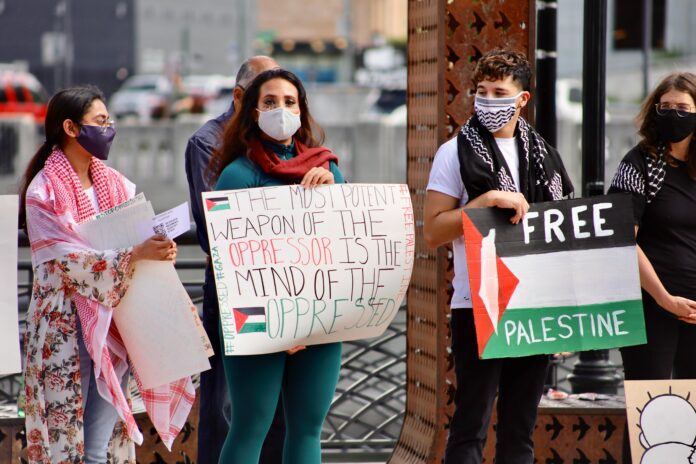
Protestors are standing holding signs that read “Free Palestine” and “The most potent weapon of the oppressor is the mind of the oppressed.” An individual in all blue is staring at the camera, while those around them are looking in their direction.
Student activists share their responses to the new policy passed by the SFSS. Image courtesy of Manny Becerra / Unsplash.

By: Olivia Visser, Staff Writer

On April 20, 2022, the Simon Fraser Student Society (SFSS) council passed a Palestinain Issues Policy with a unanimous vote. 

The Palestinian Issues Policy was suggested by the SFSS Free Palestine Working Group in response to the SFSS statement on the Israeli Colonization of Palestine. 

The policy establishes systemic advocacy for Palestinians by denouncing the war crimes carried out against Palestine by the state of Israel. It also allows for the consolidation of SFSS resources to lobby the Canadian government for further action.

In an interview with The Peak, student organizer and Free Palestine Working Group member Parsa Alirezaei, and Free Palestine Working Group member Tuleen Awad discussed the importance of this policy. 

Awad and Alirezaei said because of the Israeli occupation of Palestine, Palestinian students are “constantly met with collective punishment and incarceration.” 

According to Alirezaei and Awad, SFU has been complicit in Israeli settler-colonial practices and noted that such practices would not be possible without the “support of other settler colonies’ institutions. 

“Academic institutions, by their very nature, are part of an apparatus built to legitimize certain ideas that maintain the power structures of the status quo. This is constantly in conflict with their propensity for critical investigation and insistence on building a better world. By not supporting Palestinians, institutions like SFU risk betraying their socially conscious façade,” said Alirezaei and Awad. 

Previous vice-president equity and sustainability Marie Haddad echoed similar intentions in the SFSS press release, stating solidarity with Palestinians is “essential to improve the conditions of Palestinian students within membership and Palestinians in the occupied territories who are drastically being impacted and silenced.”

According to their press release, the SFSS has previously passed issues policies to clarify their “approach to social justice” regarding “financial, socio-political, and academic advocacy.” Past initiatives include policies on climate justice, Indigenous inclusion and reconciliation, and Black History Month. 

When asked about the importance of taking an official standpoint, current SFSS vice-president equity and sustainability Rea Chatterjee said, “70 universities have already passed these motions in solidarity.” SFU members must “understand that we are part of a larger movement.”

Establishing an official policy in support of Palestinians creates a safer space for conversations that have not always been protected on an institutional level. Alirezaei and Awad mentioned that “Canadian institutions, students, staff, and faculty are often targets of smear campaigns conducted by the Israel lobby. Canadian universities have often been complicit and rarely provide the necessary protection that their own members require.” 

Locally and abroad, smear campaigns are a tactic used to control public opinion by damaging someone’s reputation. Palestinian Canadian writer Dr. Khaled Barakat was the victim of a smear campaign in April following an article published by the National Post.

The SFSS noted in their press release, “This policy serves as a framework to not only normalize and center Palestinian discourse and struggle but will serve as a catalyst for further actions that SFSS and many other student unions are able to take going forward.”

Activists recognize the policy is only one part of a global movement to support the plight of Palestinians. When asked about further action that SFU should take, Alirezaei and Awad said, “Cut off all ties with Israeli institutions and institutions complicit in upholding Israeli apartheid; and as stated previously, support students, staff, and faculty when they speak out against Israeli actions.” 

Chatterjee said, “SFU can hold itself accountable to it’s commitments to decolonization by actively speaking out against the injustices that Palestinian students, staff and faculty face as well as publicly denounce Israeli acts of terror.” 

Alirezaei and Awad encouraged students to join local movements supporting Palestinians, and pressure institutional powers to take supportive action. 

“There are so many ways to become involved, Chatterjee commented, citing Samidoun and Students for Justice in Palestine among other organizations. “The student base is huge and willing and we can truly mobilize so we become a part of this larger movement.”

BC students rally to demand tuition freeze

0
Numerous protestors are seen crossing the street. Most are holding signs that read “Free Tuition” and “We Are Not Cash Cows.” Others hold umbrellas while one individual is holding a megaphone.
Sude Guvendik discusses the toll tuition increases have on international students. Image courtesy of Sima Jamali.

By: Chloë Arneson, News Writer

On April 14, 2022, students and workers from UBC, UVIC, and SFU participated in a rally to put a stop to tuition increases. The protest, organized by Tuition Freeze Now (TFN), started outside Metrotown skytrain station and proceeded to the Minister of Advanced Education and Skills Training’s office on Nelson Avenue in Deer Lake, Burnaby.

According to TFN’s press release, the group’s main concern is that BC universities have become “a place for the rich, and not the working class.” 

The Peak spoke to Sude Guvendik, president of the International Students Advocacy Group, to learn more about the campaign. The group is part of the larger coalition that organized the rally. The coalition includes the SFSS, SFU350, SFU Disability and Neurodiversity Alliance, and groups from UBC and UVIC. 

“[We want to] urge the provincial government to take swift action to stop the exploitative systems of higher education,” said Guvendik. 

The campaign hopes to achieve a tuition freeze and create a commission to investigate the possibility of free post-secondary education for all BC students, according to their press release

TFN’s press release stated students are struggling financially to keep up with increasing tuition. Teaching support staff union chief steward Amal Vincent explained in the press release tuition has increased by 2% for domestic students and 4% for international students. Fees for undergraduate students have increased over 200% over the past twenty years, making it three times more expensive than it was in the 1990s. 

“As tuition increases the campus community changes. The most marginalized students are excluded and on top of the list are international students,” Guvendik said. 

Guvendik explained students are “dealing with mental health issues because of financial burdens and fear of being kicked out of school because of not being able to pay tuition.” 

Several students spoke at the rally. “It was amazing seeing all of these students unite against injustice,” Guvendik said. “We’re uniting in our struggles saying we need to do something about this.

“As a student here, tuition is more than just a number. It affects the everyday lives of students, especially international students [ . . . ] It’s so hard to make ends meet when you’re an international student working part-time,” said Guvendik.

For international students in Canada that are looking to work part-time, there is a work limit of 20 hours per week during regular school semesters. International students can work full-time throughout scheduled breaks between semesters. 

SFU undergraduate student Rea Chatterjee stated in the press release that with the cost of living in Metro Vancouver on the rise, “basic expenses such as housing and food make it nearly impossible for students to save money and start planning for life after university.”

They further noted, “Governments and post-secondary educational institutions have a responsibility to provide the public with quality education without having to break our backs to afford it.”

SFU vice-president academic and provost Catherine Dauvergne said in an email statement to The Peak, “We recognize the increasing cost pressures that everyone is facing with inflation and the rising costs of housing [ . . . ] We encourage SFU students who need support to contact the Financial Aid and Awards Office to discuss available options.”

Dauvergne noted, “Student affordability is an ongoing priority for SFU and something we continue to address in partnership with student groups and our government partners.”

Tuition Freeze Now plans to attend the 2022 BC Budget Consultation to advocate for the need to fund accessible education. “We are not cash cows and we refuse to be cash cows,” Guvendik stated.

To find out more about TFN’s campaign, visit their website.