Home Blog Page 252

Community organisations put out a call to action to protect women amidst housing crisis

0
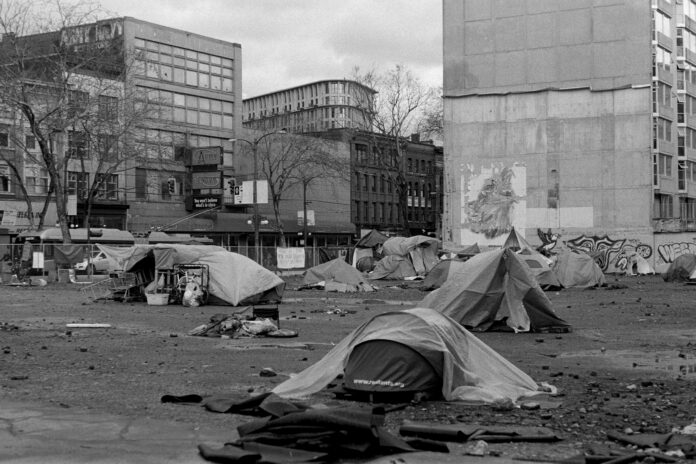
This image is of the downtown east side in Vancouver. Multiple tents can be seen in the middle of an abandoned lot.
Indigenous women are especially affected by this crisis, making up 45% of women experiencing homelessness. PHOTO: Randy Laybourne / Unsplash

By: Chloë Arneson, News Writer

Content warning: This article mentions acts of gender-based violence and violence against Indigenous peoples. 

On August 16, several organisations published a joint press release titled, “Women are not acceptable casualties in the response to the housing crisis.” The organisations who collaborated included the Downtown Eastside Women’s Centre, Battered Women’s Support Services, WISH Drop-In Centre Society, and Atria Women’s Resource Society. They condemned the city’s disregard for womens’ safety as the city sweeps homeless encampments in the downtown eastside. 

These encampments, also known as “tent cities” have lined the sides of several streets in Vancouver for many years, offering residents a sense of safety, security, and community. Marie Jameson, who lives in one of these encampments, told North Shore News about the importance this community serves in her life. “These are our neighbours,” Jameson said. “They’re our families. If someone gets sick, we look after them.”

On July 25, Fire Chief Karen Fry issued an order to remove all of the tent cities in the downtown area, citing safety concerns around fire hazards. Vancouver mayor Kennedy Stewart told the Vancouver Sun he supported Fry’s order. He noted Vancouver has recently opened 1,100 units of shelter-rate housing. As city crews continue to dismantle shelters, concerns are being raised as to how this will affect the hundreds of unhoused individuals who are left with nowhere to go. 

The press release condemned “those acts of violence, as well as the continued lack of strategy to address the homelessness crisis.” Specifically, they call upon the city for “a concerted, nuanced action that prioritises women’s safety. 

“Women are among those at greatest risk in encampments,” they said. Alice Kendall, the executive director of the Downtown Eastside Women’s Centre, discussed how their organisation sees an increase in gender-based violence due to tent cities. They explained tent cities occur due to overlapping issues including “the housing crisis, opioid crisis, deadly drug supply, lack of appropriate mental health care, and deteriorating access to general health services.” 

“No sustained effort has been made to address the systemic, institutional conditions that give rise to the extreme levels of intimate partner, domestic, and sexualized violence experienced by women in the community,” said Angela MacDougall, executive director of Battered Women’s Support Services. “Considering all this violence, the last thing we need now is the Vancouver Police Department coming to the neighbourhood to bust heads of impoverished and unhoused people.” 

Indigenous women are especially affected, facing both racial and gender-based violence. “These hardships intersect with centuries of sexist and racist colonial policies. And like everywhere, gender-based violence goes often unchallenged, unreported and unnoticed,” the release states.

The community of women-serving organisations is urging the city to create a “structured, concerted, anti-sexist, trauma-informed response” to the crisis. “We cannot settle for tent cities that re-emerge and grow each year,” they state. “Women’s safety cannot wait. Women deserve to be and feel safe in their communities and in public spaces, and women deserve to be safely and appropriately housed.” 

The fallen members of Vancouver’s sports world

0
A drawing of an orca trying to hold up a basketball, frisbee, and roller skates.f
I’m not one to point fingers, but one businessman played a role in two teams leaving the city. I’m just saying! ILLUSTRATION: Angela Shen / The Peak

By: Isabella Urbani, Sports Editor

The Vancouver Grizzlies (1995–2001)

We can’t start talking about forgotten Vancouver sports teams without starting with the Grizzlies (aka the team with the perfect powder blue jerseys people love to parade around in downtown). In theory, the idea of having a basketball team and hockey team play out of the same arena the one and only General Motors (GM) Place — was great. Plus, the Grizzles were in operation when Michael Jordan was still playing basketball. Surely, people would flock out to see those games? In practice, a horrible nightmare. 

How bad was it? Well, the original owner, John McCaw Jr., was from Seattle. That didn’t go over well when it came time to acquire local sponsors for the club. The attendance wasn’t anything that stood out on paper for the first few years, but it went rock bottom when the team could barely keep their attendance record beyond 13,000 in a 19,000 arena in their last two years. The real cherry on top was Vancouver never receiving the first overall pick in the NBA draft. This left the team with little to no starpower, and when they eventually got the second overall pick in the 1999 draft, their selection refused to play for the team. Go figure. 

The Vancouver Voodoo (1993–1996)

How the Vancouver Voodoo could fold with a name like that is beyond me. A+ for alliteration. I bet you’re surprised to find out that this was a roller hockey team one of the twelve founding roller hockey teams in the professional Roller Hockey International league. The league folded three years after the Voodoo’s demise. Just like any other professional sport, the games were aired on television during its brief three-year existence. However, what was unique to this sport was many retired NHL players flipped over to play roller hockey when their career was over. Former Canuck Jose Charbonneau spent a year during the Voodoo’s inaugural season playing for the team while he was still a Canuck. Not to mention, the team itself was also co-founded by former Canuck player Tiger Williams

A familiar foe actually played a role in the Voodoo’s disbandment. It was none other than McCaw Jr.! In 1996, the Voodoo started playing at GM Place after playing at both the PNE and the Pacific Coliseum. However, when McCaw bought out Orca Bay Sports & Entertainment, who owned the Voodoo, he put an end to the team. However, the team did finish in first place in their division each year. Post-season? That’s another story. 

The Vancouver Riptide (2014–2017)

I don’t know if you can call this one an oldie, but it definitely wasn’t a goodie. The Riptide finished their final season in the American Ultimate Disc League (AUDL) with only one win in 14 games. The team’s poor showing combined with a lack of community-wide viewership, despite coverage on television, forced the owners to pull the team from the city. In an official statement regarding the decision, co-owner Jim Llyod voiced his frustration about pouring “hundreds of thousands of dollars” into a team the “BC market does not fully embrace.” That may be the case, but the Riptide were also the 10th team in AUDL history to drop out of the league, so maybe there’s a bigger problem there.

SFU student finds bumble bee species declining due to changing climate

0
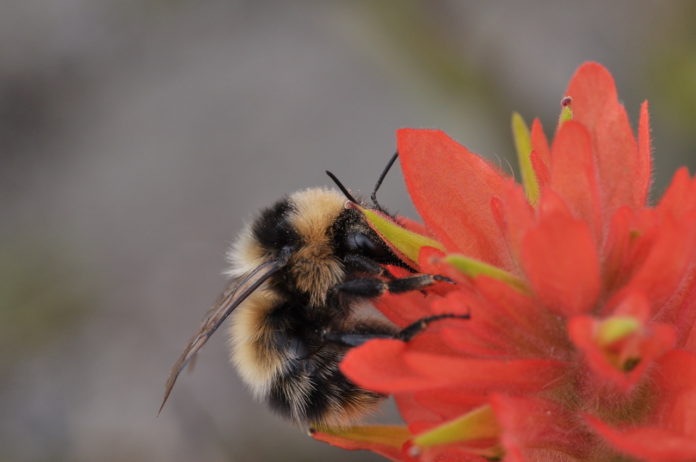
The photo is of a bee sitting on a flower.
Climate change subjects bees to temperatures that are beyond their limits. PHOTO: Sarah Johnson

By: Nathan Tok, Peak Associate

SFU biological sciences masters student Hanna Jackson and her research team recently published a paper in the scientific journal, Biology Letters, on how climate change affects bumble bee populations in BC.

The Peak reached out to Jackson in an email interview to find out more about this landmark study.

According to Jackson, BC has a higher speciation of bumble bees and given their importance in the ecosystem and food production, it was important to understand how they’re being affected.

Jackson explained, “Bumble bees are particularly effective pollinators. Many plants rely on them for pollination that allows them to reproduce and keep our ecosystems functioning.”

Jackson and the research team collected information on all bumble bee observations within North America from 1900 onwards. They also collected data regarding temperature, precipitation and flower abundance variables. A statistical model called an occupancy model was used to see how these environmental variables affected the bumble bee species.

Jackson and the team created two occupancy models. The first looked to see if speciation increased or decreased over the past 120 years. The second model examined how temperature, precipitation and floral resources predicted speciation.

The team found that 37 out of 46 species of bumble bees were adversely affected by temperature changes. Jackson said, “We did note that many of the species that were most negatively affected were species that live in boreal (more northern) climates.

“It is possible that warming temperatures have [led] to bumble bees being subjected to temperatures that are above their limit, leading to that species leaving that place that is now too hot,” explained Jackson.

As bumble bee species tend to be adapted to colder climates, Jackson said, “The negative effect of increases in temperature is not surprising [though] bumble bees’ responses to their environment is very different from species to species.”

As BC is home to a diverse range of bumble bee species, Jackson thinks a few species will increase their range as the climate changes. Though most will find their range inhibited by the changing climate.

Jackson believes the community has a role to play to prevent the decline of bumble bee populations. “People can help by planting gardens with native flowers that bumble bees rely on for food,” she said. Additionally, she suggested participating in community projects. “One easy example is the app iNaturalist where people can take pictures of species they find and scientists can identify them and then use these records in their research.”

Jackson’s research article is available on the Royal Society Publishing website.

SFU commits to offering a living wage to entire SFU community

0
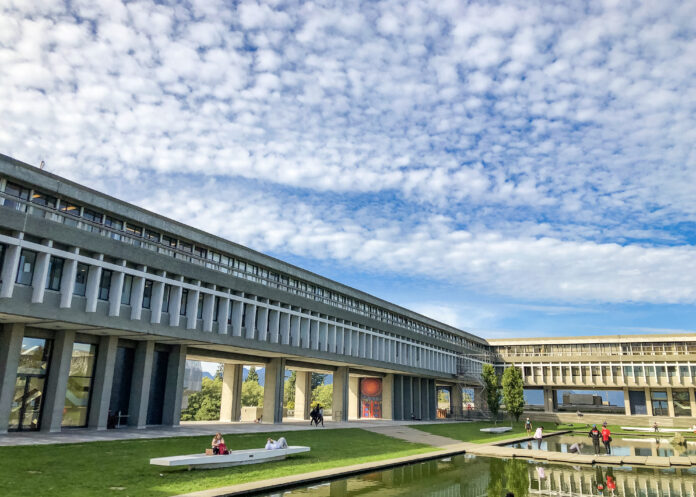
The photo is of the SFU Burnaby campus. The Academic Quadrangle and the reflection pond can be seen.
The community voiced the need to include worker voices in decision making processes. PHOTO: Allyson Klassen / The Peak

By: Pranjali J Mann, News Writer

This month, the SFU Board of Governors passed a motion to begin the certification process for becoming a living wage employer. 

According to Living Wage for Families BC, living wage is calculated by providing an estimated “bare-bones calculation” for wages as needed by the employees to meet their expenses. Under this wage rate, “employers take into account their employees total wage plus benefits. If employees receive non-mandatory benefits, the living wage rate is reduced.” 

SFU’s announcement aims to address the issue of low wages among their food and services workers and “will explore the creation of a program that supports educational opportunities for contract workers, provide access to additional campus benefits where applicable, and find other ways to enhance inclusion for contract workers as members of our campus community.”

The living wage and benefits are set to reach the contract workers in “a phased approach as contracts are renewed over the next three years.” 

To understand the announcement and its benefits, The Peak reached out to Yabome Gilpin-Jackson, SFU vice-president, people, equity, and inclusion. She said, “This move underscores our commitment to listening to our people and taking meaningful action that will have a positive and substantial impact on the lives of workers in our community. Moving toward becoming a living wage employer is an exciting step on our journey to greater economic equity and social inclusion.”

Contract Worker Justice Campaign 

The Peak interviewed Kayla Hilstob, a member of the Contract Worker Justice (CWJ) campaign coalition at SFU. She said, “Having a living wage is a very positive thing [but] outsourcing is really the root of the problem. And so, workers can have better wages, which is great, but their hours are usually cut, they are laid off seasonally, they have to apply for [employment insurance] all the time. Their benefits are worse than their counterparts at different universities. So yes, it does touch on one of the problems, but it’s not the main problem and there are all sorts of other problems that stem from outsourcing.”

Explaining the underlying issues with outsourcing workers, she said universities will select the lowest bidder to reduce their costs when looking for an external company. “What that means is cutting wages, cutting benefits. So, whoever can provide basically the cheapest workforce to the university, will get the contract. That in itself is the problem and that’s why workers are being paid less, having less benefits and have access to much less of the facilities on campus or basically none.” 

Hilstob’s interview also highlighted the problem of invisible labour and poor “working conditions that have a lot of arbitrary power imbalances” contract staff are exposed to. Some of the key matters included not having enough time off, inadequate uniforms, and allegations of discrimination, she explained. 

Workers’ voices

Similar problems surfaced in The Peak’s conversation with some workers within the cleaning and food services. One anonymous worker alleged they were given inadequate breaks in the heat. The interview took place in another language and has been translated to English by a fluent speaker. “They just give us a five minute break. That too, we have to call five minutes before taking the break. And after the five minute break, you have to inform them that.” They added their request for 10 minute breaks have been declined and are assigned two to three floors per person. The Peak was unable to independently verify this due to the publication deadline. 

The Peak also spoke with Nouha, a dining hall staff member. She indicated parking and daycare are key areas of concern for her. “I have a few women right now. They’ve done their job, but they don’t have any childcare. And they need some, at least for one day or two at the daycare. Who do we approach for that kind of help?” 

Nouha revealed the current wage is incapable of keeping up with inflation. She said, “Even though they gave us good pay, it’s not enough without the living wage.” Nouha added they receive a $0.40 raise in their second and third year of working, but that it does not account for inflation.

Hilstob noted the lack of direct involvement of the workers’ voice in the decision making process. She said, “When they did a study on outsourcing at the university, they published through Deloitte. They just published it. They didn’t speak to a single worker when they did a study about outsourcing.” Another worker said, “Someone should be there to listen to our problems. They should be solved right away. Nobody listens to our issues. Who should we tell them to — some higher officials or bosses? No one has ever made an effort to listen.”

Lastly, Hilstob stated, “We consider this announcement a win, but it’s not enough. Our goal is ending outsourcing and we’re not stopping until we win this goal [ . . . ] And so, we hope that students, staff, faculty, more contract workers, anybody else who wants to be involved in this campus community — we hope that you will join us!” 

This is a developing story that The Peak will cover in future issues. For more information on the CWJ campaign, visit their website.

“X: Psychiatric Solitary Confinement” gives patients their voices back

0
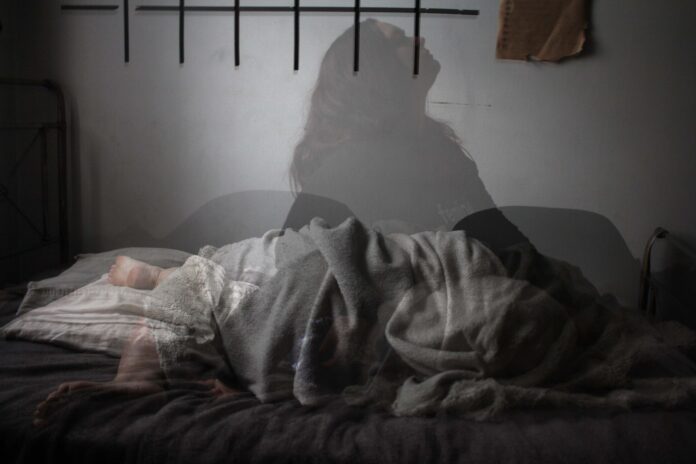
A women lying down in bed
PHOTO: Megan te Boekhorst / Unsplash

By: Roshi Chadha, SFU Student

Content Warning: Mentions and descriptions of psychiatric solitary confinement, traumatic experiences, mental health policies, and mistreatment of mental health patients

On July 7, SFU department of English hosted X: Psychiatric Solitary Confinement, a live performance by Erin Soros, SFU Shadbolt fellow. This event was conducted through Zoom and focused on mental health policies around solitary confinement for psychiatric patients. The discussion and Q&A portion of the event was moderated by Harsha Walia, an activist and author from South Asia with a home base in Vancouver. 

Previously, I had never thought of the plight that mental health patients go through within different psychiatric wards across the world. As someone who plans on working within the healthcare field, I knew this was an important topic to learn about. 

The event had accessibility features like live transcription, links to various articles and resources related to the event, spoken words by performers in the chat, and audio description throughout the performance. As the event could trigger audience members’ traumatic experiences, a content warning prefaced the performance and they welcomed anonymous questions from participants.

As the event unfolded, I tried to imagine entering a room with no sound. Suddenly a voice tells you, “No window, no lamp for reading. You cannot read, no clock. The one light in the ceiling is inescapable.” 

There were several performers who voluntarily joined Soros to help her run the event through their voices and powerful words. Many of them had also experienced forced mental health treatments and had joined to share their opinions and thoughts. This had a powerful effect of conveying solidarity to the audience. 

The performance started with the description of a person who is isolated in a dark room. As one of the performers said, “Words like ‘solitary confinement’ [are] borrowed from the realms of prison and its punishments.” As mentioned during the performance, restraint and seclusion are two different words in literature but in psychiatric language, are used interchangeably. This conveyed how convoluted the whole psychiatric model is and why there is a need to address these social concerns. 

I could feel the tension, uncertainty, and sadness as the performers kept on explaining the sufferings of someone who goes into confinement. “Come back. You cry to the wall. Come release me.” The performance showed their need to be released and free in the outside world. As they uttered the words, “No dialogue no movement,” I imagined it must feel like everything comes to a standstill for a person held in there. What kind of life or treatment is this? 

After an incredibly powerful performance, some audience members shared their experiences with one another, followed by a Q&A session. Soros discussed the legal challenges around BC laws. She explained how the government fought against the Council of Canadians with Disabilities’ charter challenge to the Mental Health Act. Now, the topic of solitary confinement is being challenged under the Canadian Charter of Rights and Freedoms, drawing on principles from the United Nations Convention of People with Disabilities. Soros concluded the event by highlighting the importance of being a witness and how she hopes to be a witness for others who go through these actions of ill treatment and be a voice for them. 

Redirecting Responsibility: Corporations are causing climate change, not individuals

0
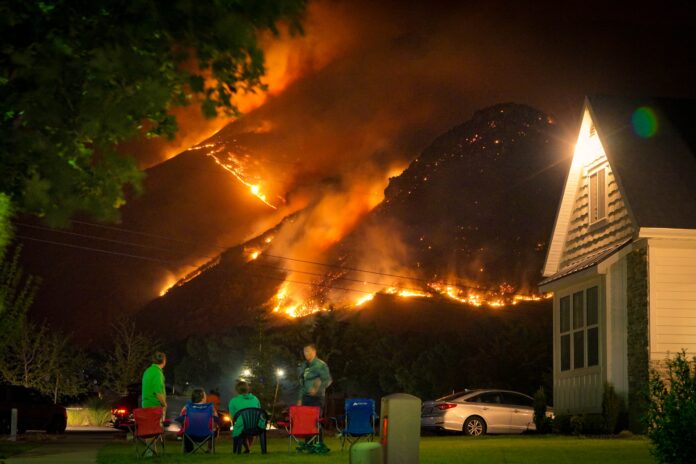
A group of people sit on a front lawn at night, directly overlooking a massive forest fire at night.
Individual efforts have minimal impact when our government refuses to regulate corporate greed. PHOTO: Mike Newbry / Unsplash

By: Annalisse Crosswell, SFU Student

The climate change conversation is constantly evolving. It’s gone from “does it really exist?” to “why should I take responsibility?” to “someone has to take responsibility but who is it going to be?” If you asked questions about climate change in the late ‘90s, you were likely told we’re simply overdue for an ice age. However, 20 years later climate change is a reality impossible to ignore, with more people choosing to contribute to the solution rather than passively letting the problem persist. It’s going to take more than individual citizens’ choices to turn this around. Now, more than ever, corporations need to do their part to fix the climate disaster they overwhelmingly contribute to.

Our individual efforts to combat climate change are already impacting corporations. Despite the fact that documentaries like the 2014 film Cowspiracy were probably the first time many young people considered issues like water consumption in agriculture, research says that the US plant-based foods market grew 20% in 2018. This positive impact is visible four years later in the expansion of vegan aisles at the supermarket and the number of environmentally conscious businesses now operating in cities like Vancouver.

Corporations still fail to make sustainable choices on their own, and it’s evident in reports calling out brands like H&M for “greenwashing,” a term used to describe the practice of falsifying or exaggerating sustainable company practices. The shipping industry alone accounts for almost 3% of global emissions  while also causing an enormous amount of damage to ocean life. One of the most prominent shipping companies, Maersk, was recently caught in greenwashing allegations. The company claims it purchased eight ships that could be carbon neutral, but experts allege that this isn’t possible. Something needs to change, whether it comes from within the decision-making ranks of corporations or through government intervention.

At the end of the day, most corporate decisions are made on the basis of financial gain. One avenue for demanding corporate responsibility is through our consumer voices and habits. This is done primarily through our purchasing power, where we choose products that reflect positive values and boycott products we disagree with. The other important solution, of course, comes from our elected government. Through governance, not only can corporate responsibility be mandated, like through minimal packaging mandates and taxes, but it can be integrated into governmental processes as well by choosing sustainable products, partners, and practises. Vancouver may be enacting this now through its plastic bans, but this is just a stepping stone in one city.

Younger generations today are unable to enjoy the notion of a future within their lifetimes, and they’re becoming increasingly angry about that. Given that Gen Z’s consumer trends and business models seem to be environmentally conscious while corporations create far more emissions than an individual ever could, it only makes sense to turn to their generation for help. While it would be nice to think corporations might make these changes out of the goodness of their capitalistic hearts, the reality is that we don’t have time to wait for their initiative. Stronger government mandates regarding zero-emissions vehicles and plastic use need to be put in place. This needs to happen quickly if we want to see a future beyond the apocalypse we keep envisioning in the media.

Dangerous Heights: We need to respect local mountains

0
A wide angle photo of the rocky Golden Ears Mountain ridge.
Responsible recreation should extend beyond our trail practices alone and towards Indigenous justice. PHOTO: Lukas Mann / Unsplash

By: Olivia Visser, Opinions Editor

For those living in BC, local mountains may appear accessible enough to negate their risks. Towering peaks over 1,500 meters high are an hour’s drive from most major cities, and can be summitted in three to eight hours. What sounds like an alpine hiker’s paradise is also what contributes to a yearly influx of millions of outdoor enthusiasts entering our province, many unprepared for danger.

The outdoors is for everyone, but certain precautions must be taken to ensure nobody gets hurt. New hikers might be unaware of the famed “ten essentials” designed to remind people of the tools needed for emergency survival. These include things like extra clothing, a first aid kit, food and water, and a light source. Others might intentionally overlook certain essentials in favour of packing light. While it’s easy to assume you won’t be the “unlucky” one, accidents can happen to anyone, regardless of ability or experience.

Another aspect of safe outdoor recreation is researching your destination beforehand. Some rocky peaks require extensive experience to safely travel, and even then, they’re still dangerously exposed. In the winter, research is especially important as an average of 23 people die in BC every year from winter recreation accidents. Avalanche skills training courses are crucial to navigating snowy backcountry terrain, as is keeping an eye on avalanche forecasts.

Danger doesn’t always come from exposed peaks or unstable terrain, though. The Grouse Grind was named one of the top 10 most dangerous hikes in the world because it’s underestimated by unprepared hikers. The challenging 2.9 kilometer trail is almost entirely vertical and can catch unsuspecting travelers off guard. According to Outside Magazine, over 80 technical rescues, meaning rescues that involve targeted skills and gear, occur on the Grouse Grind every year.

With high temperatures like we’ve seen in recent years, hiking also becomes more strenuous. North Shore Rescue (NSR) issued a warning during last year’s heat wave after an experienced hiker passed away from heat exhaustion while hiking Crown Mountain. NSR urged hikers to “be realistic” about their activity in the heat, and to bring double or triple the amount of fluid they think they’ll need.

Most importantly, BC’s hiking culture often overlooks important Indigenous histories. From mountains being named after colonizers who never even visited BC, to hikes that travel through sacred Indigenous territory, being aware of our impact on the land we travel is paramount. Our research should involve looking into local Indigenous rules and regulations, as well as their histories.

For example, t’ak’t’ak mu’yin tl’a in7in’a’xe7en (popularly known as Black Tusk) has a rich history for the Sk̲wx̲wú7mesh Úxumixw. The ancient stratovolcano spire is said to have formed when a Thunderbird flapped its wings angrily in response to quarreling between two villages. This caused the volcano to erupt, which buried the village of Spo7ez in a landslide. Survivors returned with the message that everyone needed to work together to foster peace.

Viewing locations like t’ak’t’ak mu’yin tl’a in7in’a’xe7en as a mere photo destination perpetuates colonialist attitudes about nature that exclude Indigenous peoples. Respecting these mountains involves taking precautions while we travel, like packing out litter and protecting plant life by sticking to official trails. However, our efforts only scratch the surface unless we make an attempt to understand the cultural significance of Indigenous land. Only then can we truly appreciate the beautiful landscapes we’re surrounded by.

Dining with Sophistication: Culinary reviews by Reginald Trashpánda III

0
An illustration of a snooty raccoon critic in glasses.
ILLUSTRATION: Maple Sukontasukkul / The Peak. Another soaring attempt in the journey of fine dining!

By: Nercya Kalino, Staff Writer

Rating: ★★★★★

Location: SFU Surrey, AKA Nirvana

Food: Literally everything you could ever imagine. Ever. Five star experience, my friends. Taste the stars at this lovely campus!

It is I, your beloved Reginald Trashpánda III, whilst all of you peasant folk were on your holidays, I took the initiative to go on a conquest. By the grub, it is not what I expected. You see, your campuses provide a splendid variation of taste. How does one think I became Reginald Trashpánda III? My travels have provided me with the knowledge I will now share with you, my followers. After an exhausting two weeks of bin surfing and adventuring, I begrudgingly must admit that SFU Surrey has a lot more to offer than the Burnaby campus.

As you all are aware, the campus is right in the city center, which by default means more bins. Now I am not being greedy, but hear me out. There is a whole world in the “mall,” as you humans call it. The back alleys, the endless garbage, and oh, the compost . . . It’s so moving, so many delightful delectables.

The first night we arrived, the other fellows welcomed us and took us to the main heart of it all. The fast food bins. The restaurants had large portions of meat — raw, cooked, dry, packaged — I will leave it to your MEATY imagination. There were also a large selection of fruits, wasted from grocery stores: gifts for moi. The prepackaged foods — some old-fashioned popped, stale, wet, let’s not forget the exploded cans. Quite frankly, I do not know where to start. It was textures, colors, smells, and all to my choosing. A magnificent cornucopia of dreams I could once only imagine!

My favorite spot was, by far, the fruit section in the bins. Nothing there surprised me except for the amounts, these luscious nuts and dried fruits had me immersed. At one point, I did not think I would make my way back to reality. It was a fantasy. The rotten mangoes, the oozing watermelons, and the bags of moldy oranges were all for taking. I think I need at least a week of fasting to regain my posture, but as of now, my blessed belly is dragging along the floor.

There you have it, it was not as much as this campus deserves, but I wanted to take the time to appreciate the SFU Surrey campus for showing me the limitations I once set for myself. Who knows, I might visit again really soon to impart with you more expert culinary reviews.


How about I don’t develop emotionally?

0
Illustration of a person shrugging at a nebula behind them

By: Maya Beninteso, the Emotionally-Mature™ Peak Associate

To whoever, or whatever, the fuck is out there,

Hey, remember me — the person you keep on presenting (unwanted) opportunities for character development? The person who does not want to play the game of life on “hard mode,” as the kids are saying these days?

Well, it’s me. And I am done.

I’m over your frivolous attempts to have me grow as a human. Call it denial, but I’m fine just the way I am, and, I’m fine (or . . . no, I’m not — it’s not your business!). Don’t get me wrong, I understand the value and, no doubt, the stability that comes with being well-adjusted. But imagine how boring life would be, how boring I would be if I were well-adjusted. What on earth would I do in the morning? Make my bed? Meditate? Start assignments that are due in two weeks? I refuse. I like my chaotic mornings — it’s my normal. I look forward to the hour I spend in bed trying to figure out what I should do first, followed by taking a two hour reflective shower (sorry, environment) while listening to Taylor Swift. Although I know all too well that this isn’t an itinerary that exudes efficiency, it’s predictable as in . . . lacking change. See an emerging theme here?

Ah, yes, change. It’s marketed as this wonderful thing that we should strive to achieve, but I detest it with my entire being. My sole argument is that there’s a time and a place for change. Do I want my grades to change? Yes. Do I want to emotionally develop as an individual? Absolutely not! That would require effort,  introspection, and breaking cycles I don’t quite want to address right now (hence why I ghosted my therapist, sorry Reginald). This isn’t even a procrastination-type situation, just leave me alone! Stop sending wise NPCs on this “journey we call life” to brainwash me into being mature. Let me cry when I get a [insert subjective bad grade because I don’t feel like being judged by you, too]. I deserve to feel bad! Let me place my entire self-worth on my academic progress. Because, after all, it was ultimately the fear of failure that got me here in the first place. It may not be healthy, but my, what is anxiety if not useful. My point is that it’s hard to go full nihilist into “nothing-I-do-matters-because-I’m-on-a-floating-rock” when you are constantly pushing opportunities for growth onto me.

Maybe you should change, huh? Thought about that? What if I conjured up unwanted opportunities for the sake of your growth? For example, when you decided to abruptly end my friendship with the only human I ever started a conversation with in lecture. The only lesson I learned is one that most already know: never talk to neighbouring students in a lecture hall, only turmoil will ensue. You wanted me to work through the pain and come to some grand life-altering lesson that I would remember forever, right? Well, too bad. I told you, I have no intention of personal growth, or what have you. None. You know, it’s okay to give up sometimes, people give up (on me) all the time!

Listen, I used to try and help others who appeared to be struggling, too. I wanted to help people, but helping others distracted me from my problems. Maybe you should seek help, dear universe.

To summarize, number one, stop the character development attempts. I’m an adult, you’re too late, this is permanent now. Number two, get help.

Not-so-sincerely,

Maya

Horoscopes September 5–11

0
An illustration of a girl with long flowing hair. Astrological signs and stars shine around her.
ILLUSTRATION: Marissa Ouyang / The Peak

By: Max Lorette, puts the “ho” in horoscopes

Aries:

Have you remembered to pack an umbrella in your backpack yet, Aries? Don’t forget you live in a temperate rainforest; the weather can change with a drop of a hat. Plus, we all know that you forgot to check the forecast before leaving the house today.

Taurus:

The Stars are warning you to stay clear of the top floor of the Bennett library this semester. There is a monster that lurks deep in the reference section that preys on naïve Tauruses much like yourself. Don’t say I didn’t caution you!

Gemini:

Stuff as many pens in your bag as you can this semester, Gemini. You never know when that one hot person in your lecture might need to borrow one. This could be the start of a beautiful new romance, my beautiful Gemini! Actually, while you’re at it, make sure that you pack plenty of gum as well. Can’t be too careful!

Cancer:

This semester, The Stars challenge you to reduce your coffee intake. No, seriously. Five cups in one day is really pushing it. The Stars are seriously concerned about you. Oh dear, it looks as though you’ve vibrated into an entirely different dimension — better luck next semester I suppose.

Leo:

With the final days of summer soon upon us, The Stars have told me to remind you that it’s important to appreciate the warmth and sun while you can. Pretty soon, much like your mental state, darkness will creep upon the land. Might as well work on your tan in the meantime.

Virgo:

Did you remember to buy all of your required textbooks? No seriously, did you remember to buy all of your required textbooks? Did you remember to buy all of your required textbooks???!!! Better check again before the bookstore is overrun with first years. Happy Virgo season!

Libra:

There is no better time for reinvention than the dawn of a new semester, my darling Libra! Why not get a new haircut? Why not put on a fake accent in your classes? That way, you can easily slip into witness protection when you need your next assignment extension.

Scorpio:

Dress to impress on your first day of classes! That way, when you inevitably run out of inspiration, hopefully, your fellow scholars will simply remember how sharp you looked back in September. I reckon they’ll even forget the Supernatural shirt you wore during finals week.

Sagittarius:

Sagittarius! This is your reminder to craft yourself a perfect playlist for the Fall season. Romanticize the absolute hell out of your otherwise dull and boring university experience. Real talk, sometimes it’s the little things that help you get through gruelling academia.

Capricorn:

Don’t forget to review your essay formats before you write your next paper, Capricorn. Nothing is more frustrating than trying to remember how to cite in APA after you’ve been conditioned to Chicago your entire academic career. Especially when you’re going to inevitably be trying to wrap up all your citations at 4:00 a.m. the day before your essay is due.

Aquarius:

Don’t forget to reward yourself after your accomplishments, Aquarius. It can be easy to get wrapped up in the next goal, but the Stars have told me that you’ll be less hard on yourself if you take the time to appreciate each feat. For example, the next time you do well on a test, why not get nipple piercings at Claire’s? What could possibly go wrong with that? (Note: they don’t actually pierce your nipples. Trust me, I’ve tried.)

Pisces:

This semester, the stars have advised you to pick up a new hobby to keep your spirits up. Fall term always feels pretty hard, but the right hobby can totally brighten your weeks up in between endless assignments! For example, my favourite thing to do in my spare time is your mom!