Home Blog Page 238

Four COVID-19 safe events

0
Illustration of a cartoon character sitting in a relaxed position on a couch and sipping a juice box, with a laptop open in front of them. The home is decorated brightly, and a dog lies napping on the couch.
Highlighting fun activities to do in the comfort and safety of your home or socially distanced from others! ILLUSTRATION: Nazmus Sakib / The Peak

By: Hannah Kazemi, Peak Associate

BC has lifted restrictions on masks, vaccine cards, and reduced quarantine times. The impacts of COVID-19 on the lives of people with disabilities and immuno-compromised conditions have only increased. These communities are largely being left behind by society, as the heightened risks in public space continue to be ignored by public health. With variants running amok, hospitals becoming overwhelmed, and increasing reports of long COVID, it’s clear the pandemic isn’t over.

Here are some accessible, socially-distanced, and remote events available for people to enjoy safely. Check out these awesome ways to stay connected, entertained, and active throughout the pandemic! 

Barre Fitness | Admission: free

Is your stamina running low from not being able to access your gym right now? Get your blood flowing and try out a new activity at the same time! Barre Fitness offers live and pre-recorded virtual barre classes! You don’t need a real ballet barre to participate — grab a chair, get to a fairly open space, and join a Barre Fitness session from the comfort of your own home. Find a schedule of live Zoom sessions on their website as well as pre-recorded classes on their YouTube channel via their website. Find a session that interests you and try out a new hobby!

When: Anytime

Where: Virtual


Twilight Drive-In | Admission: varies

If you have access to a car, the Twilight Drive-In Theatre is a great way to watch a movie (or two!) with your friends while remaining truly socially distanced from other groups. Watch one film, or stay late and catch a double feature! Prices start at $25 for one car with one person, and go up by $10 for each additional person in your car. The drive-in also offers deals so that you can maximize your movie-watching experience! Tuesdays are Couple’s Night, where you and your significant other can enjoy a film plus get two drinks and a popcorn for only $42, and Thursdays are Carload Night, where you pay a flat fee of $40 for a car with 3–5 people. So grab your close circle of friends, some popcorn, and your comfiest pillows and blankets to build a movie-watching fort in the trunk of your car. See the schedule of upcoming movies on their website.

When: Every night until further notice

Where: Twilight Drive-in, 260th St. and Fraser Highway in Langley


Yyoga | Admission: varies

Yyoga, a Vancouver-based wellness company, offers a series of pre-recorded yoga sessions that you can purchase online. View their packages online and choose from a series of single-session or multi-session workshops. From yoga for beginners to breathwork yoga sessions, they have something for everyone. They also offer a three-day virtual yoga and meditation retreat, which you can purchase and participate in from the comfort of your own home. See their website for a list of workshops and prices.

When: Anytime

Where: Online


Honda Celebration of Lights | Admission: free

Celebrate 30 years of fireworks by watching one of three firework shows that take place at English Bay! This year, the shows are all going to be livestreamed,so tune in to the stream on your phone to watch and listen live to the spectacular displays of colour, music, and lights. Play the show in the background while you’re having a chill night in or drive somewhere where you can park your car and take in the show away from crowds while listening in on the radio.

When: July 23rd, 27th, and 30th

Where: Online

Hidden Gems: Beloved Local Eats

0
pan fried egg noodles
Highlighting the best local restaurants in Lower Mainland. Photo Courtesy of @laksakingvancouver (Instagram)

By: Yelin Gemma Lee, Arts & Culture Editor

Are you sick of frequently going to the same restaurants all the time or trying something new but disappointing? Fret no more, I have a foolproof list of delicious local eats, all of which are on my all-time favorites list. Although unfortunately, some of them didn’t survive the impact of COVID-19, here are some who are still running. Go show these local restaurants and hole-in-the-wall eateries some big love!

Laksa King / 2546 E Hastings St, Vancouver 

Photo Credit: @laksakingvancouver

Located a short block or so away from Iron Dog Books, this is the place I go for lunch whenever I’m on my way to pick up some books. This restaurant has an 80s neon diner theme going on, with a Southeast Asia-focused menu serving Burmese, Thai, Singaporean, and Malaysian classics. Their Roti Canai is as flaky as your ex and the peanut sauce that it comes with is a perfect balance between sweet and savoury. I order their Chicken Laksa as a main dish every time. Its coconut curry broth is perfect, especially with the chili oil dancing on top of the soup if you order yours spicy. I find coconut broths can either be too rich or watered down, but this one is the most balanced I’ve found in the city with a clean aftertaste. Laksa King offers take-out and delivery through Uber Eats and Doordash.

Emilio Finatti Pizzeria / 551 Sherling Pl, Unit 1160, Port Coquitlam 

Photo Credit: @emiliofinatti

Thin crust pizza pictured on a wooden table
Photo Courtesy of @emiliofinatti (Instagram)

I’m quite loud about this on my social media whenever I get to go to Emilio Finatti, but this is hands down the best pizza in the Lower Mainland. Their toppings are always so fresh, I wouldn’t be surprised if they said they had some kind of greenhouse garden back there. The best part about this place is their honey butter crust. You heard me correctly. They drizzle honey butter on their crust and it perfectly complements the puffy thin crust and the fresh toppings. They have a bunch of pizza dips, all of which are made in-house, and inexpensive but delicious homemade cupcakes! The pizzeria is located in a brewery-filled area of PoCo, and located steps from Provincial Cocktails, where you are encouraged to sip delicious cocktails and get pizza walked over from next door. Vice versa, if you want to stay and eat at the Pizzeria, pre-bottled cocktails from Provincial are available for purchase — we love to see locals supporting locals! Emilio Finatti offers curbside pick-up and has their own delivery service with orders accepted and prices determined depending on distance. They have their full COVID-19 safety plan available on their website to review before you visit.

Ramengers / 1043 Brunette Ave, Coquitlam 

Photo Credit: @ramengers_feat_smokingpig 

Bowl of ramen with pork, egg, and perilla toppings
Photo Courtesy of @ramengers_feat_smokingpig (Instagram)

My favorite ramen place in Metro Vancouver happens to be sandwiched in between a Hells Angels building and a gas station. From the food, to the people who run this place, to the general vibe of the establishment — every bit of it tickles my fancy. The restaurant is Marvel themed, with posters and a figurine collection decorating the haunt. There is a literal punching bag in the middle of the room, and although kicking isn’t allowed, the staff don’t blink twice if you start practicing your right hooks and jabs while you wait for your food. Run by no more than three staff, six days a week, the menu is one page and there are no modifications or additions. Things are irresistibly simple here, with a quiet but attentive waiter who is there all the time with expertly crafted food. The ramen broth is refreshing and rich in flavour, their egg is always perfect, and the smoked pork on top is so soft it flakes apart when you poke it with your chopsticks. I usually order the Spicy Ramen, and don’t recommend you order the next spice level unless you are strong with spice. If you come with friends, order their Korean Chicken to share as an appetizer, as it is one of the highest caliber. Ramengers does not do delivery but they are happy to accommodate for take-out!

What Grinds Our Gears: Photo albums are falling by the wayside

0
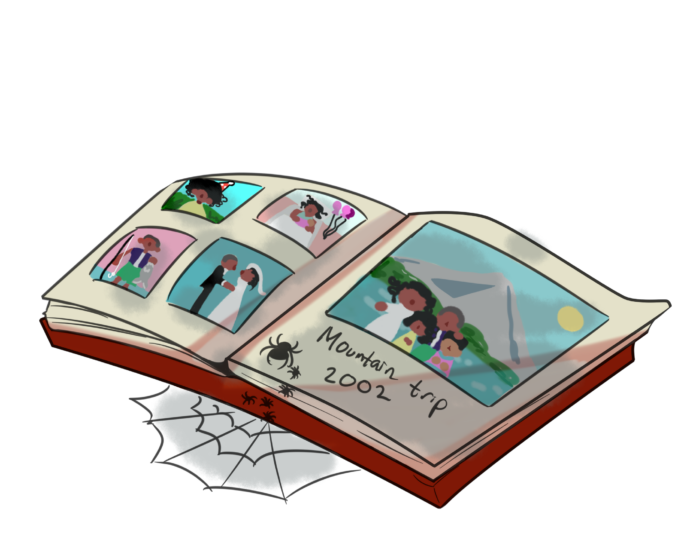
Old dusty photo album
Holding onto nostalgia one 4x6 at a time. ILLUSTRATION: Jaimin Bai / The Peak

By Hannah Kazemi, Peak Associate

Growing up, I loved pulling out my mom’s photo albums and looking at her pictures. I loved seeing how she did her hair in the 80s and dressed in the 90s. I’ve been to places I don’t even remember, but the photos I have will always remind me.

I recently had the alarming thought that my kids might never get to experience that feeling. They’ll never get to live vicariously through photos of my adventures!

I feel like a super boomer by saying this, but I think smartphones are killing photo albums.

Don’t get me wrong — I love my phone and its ability to store thousands of photos and videos. And I love that I can take fake film pictures and use an old-timey filter on them. 

And that’s all nice, but the storage is ephemeral. What the fuck is the “cloud?” What if I lose my phone and nothing is backed up? What if my accounts change and I can’t access anything in thirty years? What happens when Facebook and Instagram go out of business in 2028?? How will I prove to my kids that I was young, cool, and hot once??!! 

We shouldn’t be so quick to move past photo albums. My kids deserve to know I was once young and cool and hot, and because of these photo albums, they will! I’ll keep them in a closet collecting dust until I decide to relive my 20s and show them all of the adventures I’ve been on, the people I knew, and the person I was and I can’t wait for that day. 

Halifax welcomes over 300 Ukrainian refugees to Canada

0
The photo is of Ukrainian people fleeing from their country. In the centre of the photo is a women with her arm around a small child. They are holding multiple bags of luggage and are surrounded by others with more luggage.
Over 120,000 applications from Ukrainian refugees have been approved to receive authorization for emergency travel. PHOTO: UN Women / Flickr

By: Chloë Arneson, News Writer

On June 2, a charter flight carrying 319 Ukrainians arrived in Halifax. Nova Scotia residents and host families greeted those arriving with welcome posters and gifts. 

To help Ukrainian citizens flee Russia’s invasion of Ukraine, Canada secured charter flights into the country while working closely with provincial governments and settlement organizations to support their arrival. 

This flight is the third federal charter carrying Ukrainian refugees to arrive in Canada. This marks over 900 people seeking refuge as a part of the Canada-Ukraine authorization for emergency travel program. The first flight brought 328 Ukrainian refugees to Winnipeg, Manitoba on May 23, and the second brought 306 people to Montréal, Québec on May 29. Between March 17 and May 25, over 120,000 applications for the program have been approved. 

In attendance was minister of immigration, refugees and citizenship Sean Fraser, premier of Nova Scotia Tim Houston, and Nova Scotia minister of labour, skills, and immigration Jill Balser. Fraser commented on the horrific conditions caused by the invasion. “Those who want to stay, you are going to be welcomed with open arms. People have been watching the challenges that have been playing out by this latest invasion [ . . . ] there are people here who want to support you,” he said. 

Yevheniia Alosha, one of the 319 people who arrived in Halifax, expressed her gratitude for the support. “I’m very happy to be here [ . . . ] my son will go to kindergarten and we will have some peace,” she said. 

Fraser announced that those seeking refuge in Canada will now be able to apply for financial assistance to aid in their transition to address their basic needs such as transportation and housing. Other support initiatives to support Ukrainians will include the Ukraine2Canada travel fund, where Canadians can donate to help bring 10,000 people fleeing war to Canada. 

The Canadian government released a call to action appealing to Canadian businesses to support displaced Ukrainians arriving in Canada by providing donations for those in need. In their press release, they stated, “Canada remains a steadfast ally of the Ukrainian state and people, stands in solidarity with them, and supports Ukraine’s sovereignty, territorial integrity and independence.”

Bill tabled in Legislative Assembly for abolition of prolonged solitary confinement in BC

0
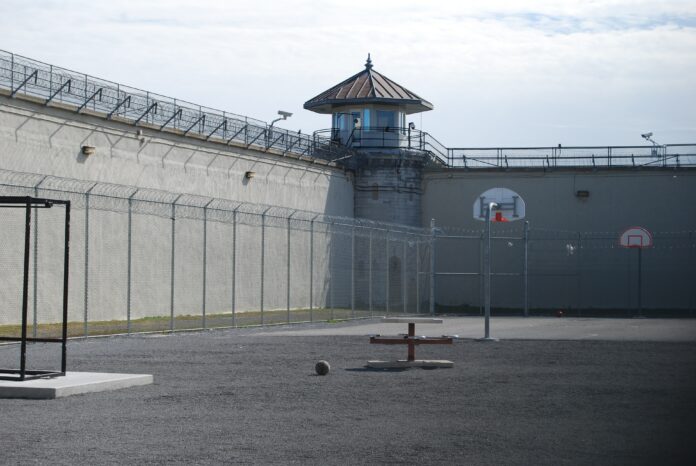
The photo is of the outside of a Canadian prison. A basketball sits in front of a basketball hoop in a gravel field, surrounded by fencing. No people can be seen.
BC’s current rules have a 15-day limit on solitary confinement. PHOTO: Larry Far / Unsplash

By: Pranjali J Mann, News Writer

On June 1, MLA for Saanich North and the Islands, Adam Olsen tabled a bill for the abolition of “prolonged solitary confinement in provincial correctional facilities.” According to the BC Green party’s media release, solitary confinement is “any confinement, seclusion, or segregation of individuals for more than 22 hours a day without meaningful human contact.”

This proposal to the Legislative Assemby in Victoria noted, “Solitary confinement of more than 15 days is considered torture” by the United Nations (UN) Standard Minimum Rules for the Treatement of Prisoners. These are international principles which draw from the unjust prison system Nelson Mandela was subjected to. 

Following the UN’s rules, the BC NDP Government made an “amendment to the BC Correction Act Regulation in 2020 that introduced a 15-day limit on solitary confinement.” To get a greater understanding of this bill and what it entails, The Peak interviewed Ian Morrison, Convenor for the Campaign for the Abolition of Solitary Confinement.

Commending the bill proposal, Morrison noted it to be “a step in the right direction [ . . . ] In the issue of prison reform, BC just happens to be strongest. And it’s something that I think the British Columbians should be proud of.”

Morrison called upon other legislative members to support this bill because “it’s in accord with international principles and it’s a step towards the prisoner to become, on release, a productive citizen.” The Prison Policy Initiative has found extended periods of solitary confinement is detrimental to mental health, causing feeling of distress, social deprivation, exclusion. The Prison Policy Initiative is the result of an International Symposium on Solitary Confinement which focused on analyzing incarceration in the United States and around the world. They found that “since humans are naturally social beings, depriving people of the ability to socialize can cause ‘social pain.’” The briefing highlighted prolonged isolation increased risk of premature death, along with increased risk of developing specific psychiatric syndromes and psychological consequences such as anxiety, depression, and hallucinations. 

Morrison further emphasized this issue is in the “common interest in the safety of the community, from people who are in correctional systems to come out, able to respond as healthy, contributing citizens, as opposed to recidivism, which creates a kind of a cycle of bad things.” 

Additionally, Morrison noted solitary confinement often targets racialized individuals, specifically Indigenous peoples.  He said, “With respect to Indigenous peoples, it is not the prison system that causes them to be over represented. It is the justice system.” He revealed a similar disproportionation was seen in the case of people of color. 

The BC government reported that “Indigenous people comprise nearly 6% of BC’s adult population, and yet they represent 35% of the people in adult custody.”  

“The issue needs to be better understood. I mean, it’s an important societal issue, the courts understand it. But, some politicians are just not tuned in to it. And politicians are often responsive to public opinion,” said Morrison.

Morrison stated the issue is very central and requires more public attention. He said that to most people, inmates “are invisible. They’re not part of your consciousness.” 

What Grinds Our Gears: Watching TV in class

0
Typing on a laptop
Binge-watching in class is shitty. PHOTO: Glenn Carstens-Peters

By: Yasmin Vejs Simsek, Staff Writer

I get it, class can be — and often is — super boring. And I’ll admit that I’ve taken the occasional opportunity to check out Instagram to see which of my friends are on their way to Spain, leaving me to fend for myself in this rollercoaster Vancouver weather. Sometimes I even feel like I can make a snoozy class more productive by catching up on a never-ending list of weekly SFU emails. But I have enough respect for my fellow students to sit in the back of the class so as to not disturb, on the off chance that someone finds this class interesting. The problem is that some jackals don’t have that kind of respect for their peers. Some will straight-up watch TV.

We fly so far past the line of OK when someone whips out their 15” laptop and decides to whittle away the hours by binging Netflix. Sure, I love episode 20 of the third season of The Office as much as the next person, but all in due time, my friend, all in due time. I’m fighting an inner battle every minute of this class to stay focused. When you watch TV right in front of me, I’m a lost cause.

What’s even worse is how incredibly nice some of those classmates are. When they notice I’m watching behind them, they have the temerity to charitably put on subtitles for me. Possibly the nicest thing anyone has ever done for me, and it’s the straw of distraction that breaks my focus’ back. How can I learn about qualitative data methods when Michael Scott is throwing watermelons off a roof? 

I need you to shut it down and give me a win over my weak-ass backbone so I can actually get my money’s worth at this institution. Close up the series and let me have something to show for my years’ worth of procrastination. Just remember to send me the episode number so I know where to watch from when I get home.

In defence of the Burnaby campus

0
Luke’s lovely photo, quite possibly.
Get outta here with your “prison architecture” comments! PHOTO: Amirul Anirban / The Peak

By: C Icart, SFU Student

We’ve all complained, but it’s time to face it: the Burnaby campus is a uniquely beautiful place to go to school. Our main campus tends to be known for its concrete buildings and brutalist architecture. But it’s so much more than the go-to for movies that need a chilly, foreboding atmosphere. The campus has a rich history, a gorgeous conservation area, fantastic art, and unrivaled views. 

SFU is a commuter school, so most students attend class and immediately go home. That sucks! Partly because it undermines school spirit, but more importantly because it means that students don’t get a chance to fully explore what the campus has to offer. We’ve got so many hidden gems. A personal favourite of mine is the Djavad Mowafaghian courtyard next to Blusson Hall. It has a lovely fountain, picnic tables, and a ton of greenery making it a nice place to chill with friends between classes or a very relaxing outdoor study spot. Top that, Habour Centre!

The Skwxwu7mesh (Squamish) place name for Burnaby Mountain is Lhuḵw’lhuḵw’áyten, meaning where the bark gets pe[e]led in spring.” This name refers to the bark of the Arbutus tree that the Skwxwu7mesh people have seasonally harvested for generations. It’s a testament to a rich regional tradition that’s deeply rooted in an appreciation of the environment. It’s a tradition that we as students should continue by valuing the campus’ surroundings. 

SFU’s location atop Lhuḵw’lhuḵw’áyten also means students get to casually enjoy a breathtaking view of the mountains from many places. The sixth floor of the AQ and the SUB ballroom are some of my favourite spots to snap a pic. The outdoor seating at West Mall Centre is also a fantastic spot.

If you want to spend even more time admiring this location, stay after class and head to the conservation area. The rose garden and eco-sculptures are stunning, and so is the view of the Burrard Inlet and the Vancouver skyline. It’s also an unreal spot to take photos during cherry blossom season. It’s the perfect area for a picnic and to catch the sunset. For those who prefer more active study breaks, the Burnaby campus is surrounded by gorgeous trails. Whether you’re into running, biking, or leisurely walks, there’s a trail for you.

Students who aren’t in the mood to explore the rainforest may be interested in grabbing a public art guide at the SFU gallery on the third floor of the AQ and discovering the diverse art this campus offers. The guide leads you through three walks across the Burnaby campus and allows you to admire a selection of works from the Simon Fraser Art Collection. My favourite is the second walk which highlights a number of Indigenous and anti-colonial pieces in the AQ, including Insurgent Message for Canada, a digital print by Edgar Heap of Birds that reads “IMPERIAL CANADA WHERE IS YOUR STATUS CARD?” 

With the proposed gondola finally approved, we’re one step closer to resolving one of the actual problems with the Burnaby campus: that commute! Enough with the think-pieces about how our campus is “one big design flaw.” The Burnaby campus absolutely rules. Everyone else is just jealous.

Local Chinese student bravely claims watching movies is therapy

0
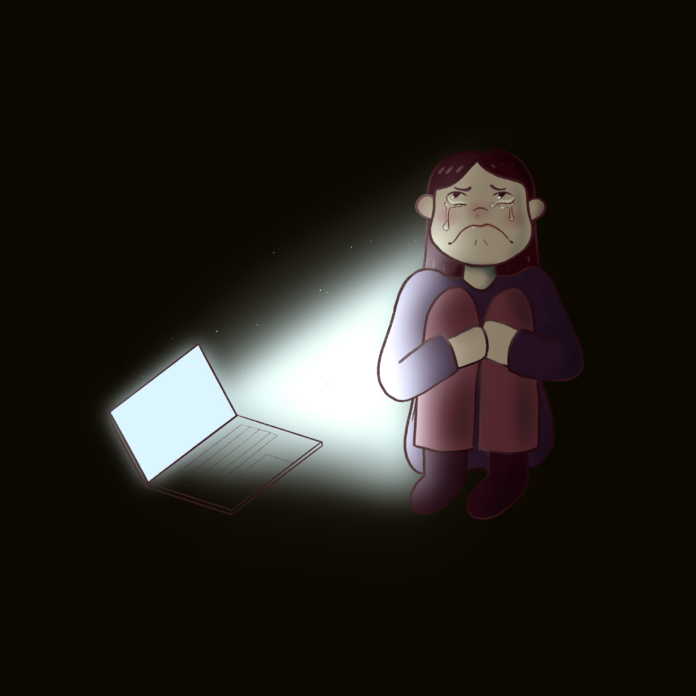
A person with tears down their face. They're sitting in a dark room lit with the glow of a computer screen. The computer/laptop screen can be seen in the foreground.
Or you could just talk to your parents. Hmm. ILLUSTRATION: Stella Nguyen / The Peak

By: Kelly Chia, Humour Editor

This week, The Peak scouted a student who was looking for an interview or a conversation about her experiences, “depending on our feelings and inclinations to heal.With a fond look towards Turning Red playing on her iPad, she confessed to watching the film in a “sort of marathon” to absorb the endorphins. She claimed the experiences as equivalent to three sessions of therapy. We asked her more about her experiences.

“Now, I know what you’re thinking,” the student began.“Your cultural experiences aren’t just generational trauma and it can be harmful to perpetuate that idea and pander our trauma to white audiences!” 

Kelly, or whatever her name might be, whipped a finger towards us. “You stop that talk right now, I’m not emotionally prepared for conversations about so-called ‘nuance.’” She turned her head back to her YouTube Movies playlist, where her mouse moves towards Everything Everywhere All at Once.

Another student, wishing to be anonymous, hurriedly approached us and whispered, “She’s been like this for ages,” they said, eyeing Kelly. “I’ve tried to ask her to just talk to her parents, but she says that eventually they’ll begin the process of emotional mitosis through movie watching,” they remarked. According to empirical evidence from our top sources, when a Kelly watches a movie with generational trauma, she gets an observable endorphin boost during the films’ infamous apology scenes — the hallmark of recent generational trauma movies featuring people of colour. 

“I’m just a girl, sitting in front of YouTube Movies, asking for Michelle Yeoh to personally apologise to me,” Kelly whispered reverently, as if on written cue.  

We ask if Kelly has considered family therapy, but Kelly waived the suggestion immediately, citing “Chinese parents.” The Peak declined to comment on the number of healing spaces available specifically for race and ethnicity, as she increased the volume of yet another musical number about being “free” from controlling parents. 

“This right here? This is all the therapy I need to fix the challenges I have with talking to my parents,” Kelly nodded decisively. “It’s so important that we have accurate representation,” she said, seemingly deciding to watch Crazy Rich Asians

“What do you mean it’s healthier to appreciate that parents and children can have vastly different experiences and understandings of the enormous sacrifice of immigration?” Kelly scoffed. “Oh, but I do have a pitch on my poems about offering sliced fruit as apologies if you’ll just listen—”

Do we need a “new left” after the Roe ruling?

0
Far-right court rulings, workers being abuse, and the impacts of climate change
Does a failure to address critical issues like abortion, climate change, and labour rights mean we need a new approach? PHOTO: Lori Jang, The Peak

By: Olivia Visser, Staff Writer, & C Icart, Peak Associate

The end of Roe v. Wade, the latest of a slew of rulings by a far-right US Supreme Court, underlines the need for a concerted, long-term effort by left-wingers to effect progressive change. Just like how right-wingers worked for half a century to construct a judicial framework willing to overturn Roe, the left might need a new movement to effect meaningful, long-term change on issues like labour rights, climate change, voting rights, and protections for minorities. 

Olivia: Ever since I found myself involved in politics, I’ve heard others stress the importance of civility. According to them, the “other side” won’t be as receptive to someone perceived as overly passionate about a social cause. My thoughts? Civility has gotten us nowhere. From politicians refusing to take solid action on crucial issues to social media “slacktivism,” it’s clear by now that the modern left is not working. There’s a trend of steadily increasing far-right ideology in Canada, and I don’t think a moderate approach will secure a healthy and happy future for our future generations. From climate change to democratic backsliding, western countries are suffering the consequences of left-leaning citizens getting too comfortable in their privileges while thinking they’re contributing to change through performative activism. And so it’s time the left stops relying largely on so-called “regular” civilians to champion progressive causes, day-in, day-out. 

The overturning of Roe v. Wade is a pressing example but only one of many that show our politicians aren’t getting the job done. We should have the genuine support of those with privilege and political power, instead of their performative and reactionary gestures. Don’t think abortion could ever be restricted in Canada? I’d say think again. One Conservative MP, Arnold Vierson, celebrated the Roe v. Wade decision and described abortion as “the greatest human rights violation of our time.” The silence from the rest of the Conservative party does not necessarily mean they disagree with the ruling, but perhaps that they’re waiting for a better opportunity to act against our country’s abortion rights. 

C: The overturning of Roe v. Wade is devastating. That being said, I think it’s essential to avoid a knee-jerk reaction about what the left should start doing because it obscures the work already being done. So many citizens have been doing the work for so long regarding abortion rights and many other social justice issues, like LGBTQIA2S+ rights and climate activism. I agree that we need to be patient, deliberate, and strategic. But to me, that means not attempting to reinvent the wheel every time something negative happens. 

The left consists of experts, activists, and community organizers working against existing power structures. Issues like systemic racism in politics can be part of the reason marginalized Canadians may favour non-electoral political activities. Marginalized leftists face obstacles getting into politics or feeling like they don’t belong once they get a foot in the door. For instance, in her farewell speech to the House of Commons, NDP MP Mumilaaq Qaqqaq said the racial profiling she regularly experienced from Parliamentary Protective Service made her feel unsafe. We need to pressure politicians, but we also need to recognize that systemic issues can get in the way of us having the politicians we want. 

Specifically touching on Roe v. Wade and what it means for Canada, we know that abortion is already decriminalized in Canada. The task is to keep it that way while improving abortion access. We need to stay vigilant against the creation of legislation that could open the door to politicizing and criminalizing abortion in Canada, but we have a decent legal framework for abortion in this country. That framework includes Section 7 (iii) of the Canadian Charter of Rights and Freedoms, which explicitly affirms Canadians’ right to abortion as part of their “personal autonomy and [ . . . ] ability to control his or her own physical or psychological integrity.” We don’t need a “new” anything. We need to start listening to activists and supporting their efforts.

Olivia: I’d argue that in many ways our government’s left is not representative of actual leftist values, and I’m sure you’d probably agree with me there. Activists have been doing hard work without recognition for a long time, and you’re right that marginalized people face significant barriers in politics. It feels like the left has gotten complacent by settling over and over for the “lesser evil,” which has contributed to systemic inequalities and poor governance. I, for one, can’t count how many times I’ve heard people say they’re voting for Trudeau because it’s the “safer” choice. 

By “new left,” I mean one that listens to the people who are already doing the work, so I agree with you there I just don’t think we have enough of that listening being done right now. I’m also not sure that leaving abortion legally untouched in Canada is necessarily a good thing. I do understand the argument that rights-based legislation might make it easier to restrict abortion in the long run, but I also think it could just as easily go the other way. By avoiding a clear stance on the issue, abortion remains a grey area in Canada, and we open ourselves up to even more difficulties in accessing the crucial service. Making abortion a legally protected right would help increase its accessibility, which remains a huge barrier. People often suffer when healthcare is left almost entirely up to the discretion of provincial governments. For instance, rural areas in Alberta, Saskatchewan, Ontario, and Manitoba have no public access to abortion. The R. v. Morgentaler case resulted in abortion being decriminalized, but we still have no legislation to protect fair and equal access to the service. 

C: You’re right. I agree that it is sometimes challenging to find leftist values represented. The deeper we dive into this conversation, the more I have a problem with the vague term “the left.” What is that? Right-wing reactionaries fear-mongering about “the left” and “the liberals” paints a far more unified picture of leftist politics than what it actually looks like. 

I think settling for the “lesser evil” is more of a centrist approach than a leftist one. Many leftists argue against that practice for the reasons you’ve named. The big way to fight the approach is through advocating for electoral reform, a failed Liberal promise. I think leaving abortion decriminalized is a clear stance; a clear stance that abortion is healthcare. By creating legislation, we separate it from other healthcare procedures by politicizing it. The Canada Health Act exists, and it promises universal healthcare. When that is not happening, that is not a policy failure or proof that we need legislation. It means that our governments are failing to enforce a regulatory framework we already have. We don’t need a new framework; we need consequences to be systematically imposed on provinces that do not uphold the Canada Health Act. Abortion should not be treated as a single issue. Many of the barriers that citizens face regarding reproductive justice are connected to other forms of marginalization. A legal rights framework is not the best way to address these inequities.

Olivia: Where we disagree is that I think abortion is already a political issue, and there’s no turning back from that at this point. It’s been made a political issue by the people who fight to criminalize our rights because of their personal beliefs. The US’ lack of federal legislation enshrining the right to abortion is in part what led to its overturning. Avoiding legislation in Canada to try and depoliticize abortion doesn’t make a clear stance, it opens it up to restrictions. Moreover, something being healthcare does not necessarily ensure unrestricted access. Abortion should be a single issue, just as other issues that are still healthcare-related are single issues. The process of Medical Assistance in Dying has its own legislation and understandably, its own restrictions. Someone going through the process must see two physicians and undergo a waiting period of 90 days after being cleared as eligible. If the same process applied to abortion, there would be serious humanitarian consequences. The Canadian Health Act does not do enough to protect equal access to healthcare because its very framework relies on the undefined phrase “reasonable access,” which counts on provincial interpretation. Decriminalization is not enough to make abortion accessible. To me, viewing it as the end goal of abortion legislation underlines a need for leftists to take bolder institutional stances. It’s very difficult to challenge corrupt systems with a non-systemic approach.

C: Abortion has been politicized, but it shouldn’t be. We don’t want the conversation to be about who is for or against abortion in the same way we don’t have conversations about who is for or against hip replacements. We agree that people need them, and we focus on finding better ways to provide them. I say that abortion is not a single issue because the folks with the most difficulty accessing abortion in Canada include those living in remote areas, people living in poverty, racialized, LGBTQIA2S+, disabled and undocumented individuals.

For this reason, I want to ensure we look at abortion as inherently connected to reproductive justice, gender justice, racial justice, and economic justice. This reminds us that the right to choose is not only about abortion. Even today, Indigenous women are being sterilized without their consent in Canada. Decriminalizing abortion does not inherently make it accessible, but neither does legislation. While the overturning of Roe v. Wade has brought this issue to the forefront, it is not a new issue. Sexuality and reproductive health (SRH) advocates across Canada have been doing the work and provide great insight into what still needs to be done. That includes increasing funding to provinces to expand SRH and implementing comprehensive health education in all Canadian schools. If you want to support them, I encourage you to read the BC Reproductive Justice Manifesto and reach out to your MLA and MP to ensure that addressing and funding SRH is a priority for them.


Experiences of older South Asian migrants in Hong Kong

0
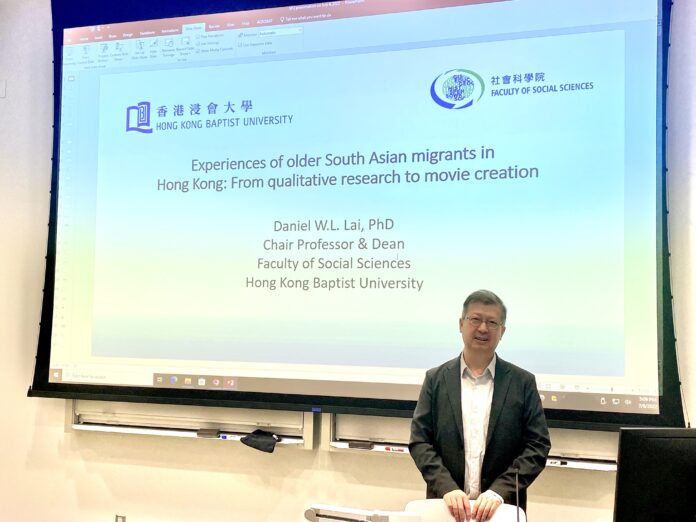
Professor Lai is standing in front of a projector screen that reads: Experiences of older South Asain migrants in Hong Kong: From qualitative research to movie creation. He is looking at the camera smiling.
Lai is the dean of the faculty of social sciences at Hong Kong Baptist University. PHOTO: Sarah Qiu

By: Nercya Kalino, Staff Writer

On July 6, SFU’s department of gerontology held a free public lecture presented by Dr. Daniel W. L. Lai, dean of the faculty of social sciences at Hong Kong Baptist University. Lai is also an adjunct professor in the department of gerontology at SFU. 

The presentation discussed the experiences of older South Asian migrants in Hong Kong. Lai’s mixed method research investigated ethnic Chinese and South Asian populations. Mixed method research is the use of more than one research methodologies such as qualitative and quantitative research processes. The topic highlighted ethnic minority groups whose needs are commonly ignored. Lai noted this is caused by the lack of attention to the systemic inequalities in Hong Kong.

The cost of private healthcare and the long wait times for access to public healthcare leaves people with few options. “Not seeking treatment is not just related to cultural norms but is also related to the systemic issue of cost. Hong Kong has a public health system, public hospitals, government funded community health clinics but unfortunately the waiting list is long,” Lai stated. 

He explained these limitations come from the wait for public healthcare and the cost of private healthcare, because older people are more likely to not have access to private family doctors. While the government has a health care coupon with limited appointments for private family clinics, those clinics will most likely not accept them to avoid the administrative burden that comes with getting them approved. 

Lai shared the process of the qualitative research which drew on the motivations of migration, challenges, and strengths of the aging South Asian population. This highlighted the experiences of the South Asian families in Hong Kong. The study involved 46 South Asian people who were 55 years and older. 

Lai explained the hindrances of the language barrier that is associated with accessibility of health care for immigrants. “Interpretation services in the health care system are very limited, most of the time people have to refer to finding family members and we all understand the difficulties of finding family members to do the translation [ . . . ] the time, privacy issues, those sort of things.” 

Lai shared the findings of the research that looked at the older South Asian minority groups, looking at their experiences and behaviors as well as stories told from their day to day living. He used an interviewing process that was conducted with the help of partner organizations to gain access to these South Asain minority groups. 

“Interestly enough, admittedly, I would say the majority of the medical staff work under high pressure because the people, the number of patients they deal with everyday, I think is almost triple or quadruple compared to the numbers of the rest of society,” Lai stated. He explained that due to the number of people seeking care, only a few minutes are spent with each patient, which is often not enough to understand the patient’s background. 

Another theme Lai discussed was the barriers in the healthcare delivery system. He noted most of the participants did not explicitly indicate racial discrimination within the qualitative section of the research. They indicated the medical services are not adequate and mostly unavailable due to the waitlist. They also suggested providing access to interpreters would be helpful. 

“When we are talking about social support, [there] are structural issues they are facing in terms of expanding their social network,” said Lai.