Home Blog Page 231

How are athletes and coaches managing high expectations for the upcoming season?

0
Photo of soccer player Ali Zohar kicking a ball in a game.
Regardless of the rankings, both squads are looking to spring off the back of last year’s performances. PHOTO: Paul Yates / SFU Athletics

By: Simran Sarai, Sports Writer

The start of the fall season always brings excitement to campuses across the league, with teams preparing for long months of competition, all striving to be the best of the best. Three SFU sports teams have earned recognition from coaches across their leagues. Men’s soccer and the men’s and women’s cross country teams were each ranked first in their respective Great Northwest Athletic Conference (GNAC) Preseason Coaches Poll.

With high expectations set at the beginning of the season, The Peak reached out to athletes and coaches to learn about how the teams were managing their expectations, responsibilities, and workloads for the upcoming season.

Men’s Soccer

The men won nine of their 16 games during the 2021 season, and have only dropped one game this season to previous NCAA Division II champions, California State Los Angeles. We spoke with head coach Clint Schneider about his thoughts on the ranking and the season ahead. Schneider spoke on how he felt about the first-place ranking: “It really means absolutely nothing.

“The goal here is to win a national championship, and that’s it. Anything short of that isn’t good enough.”

Teammates and midfielders Ali Zohar and Conrad Cheng spoke about their expectations for the season ahead after a strong season last year by both players. Zohar played every game for SFU and earned Second Team All-Conference honours, while Cheng was named GNAC Newcomer of the Year and earned First Team All-Conference honours.

Speaking to The Peak, Zohar, who will be competing in his second season for SFU, laid out his plan for managing the high expectations that he, the team, and coaching staff have for the 2022 season. His key to success include “putting the work in on the field, having a good mindset, having a good work ethic on and off the field, [and] leading by example for everyone.”

With more responsibilities as a returning player, Zohar spoke about how he manages disappointment while also hoping to set examples for newer players in the 2022 season. “You just have to be mentally strong [ . . . ] Even if you do lose this game, you have to be ready to play the next one. Stay motivated no matter what, knowing that we’re working towards something bigger than just one game.

Cheng highlighted the difference in team atmosphere from last season to this season. “Last year we were really struggling, we never really clicked on the field, so we were just scrambling for wins [ . . . ] This year, there’s a massive mentality change. 

“Coming into this season, everyone is on the same wave-length. It’s super positive in the dressing room right now, everyone is super hungry. You can see it in practice, you can see it in games [ . . . ]  We’re so far ahead of where we were last year.”

Cheng credits the team-first attitude that has been prevalent already this season as one way the team’s expectations have changed from last season. “This year, it’s 100% team oriented. All that matters to everyone right now is just winning. I really don’t care about how we win games or how we get to the win, it’s just all about getting the win.”

Men’s and Women’s Cross Country

Both teams had a historic 2021 season, winning the GNAC Championships, and the women advancing all the way to the NCAA Championships. The Peak spoke to sophomores Kate Cameron and Charlie Dannatt on how they’re managing their expectations after a record-breaking season.

Cameron spoke about handling personal expectations after a breakout freshman season to the national championships with her teammates. Her biggest difference from last year to this year is not feeling intimidated to put herself at the front of races. “I have a bit more confidence in the first few races than I did last year. I put myself at the back, thinking that was my place as a freshman.” 

Conversely, Dannatt was measured in his excitement for the ranking. “We just need to prove that we are number one throughout the season and actually run up to what we should be running, and make nationals hopefully.”

In terms of managing expectations, Dannatt spoke about lessons learned from last season. “We got to the end of the season last year, a few of us were burnt out, and had probably raced too hard too early [ . . . ] This year we’re going to try and keep things in perspective and really make sure we’re hitting the end of the season the hardest.”

Dannatt also shared his thoughts on managing a bad result in a team sport that has a significant individual aspect. “Not everyday is going to be your day. You just have to look at the training that you’ve had and the consistency that you’ve had, and remind yourself that you are not just the value of the results that you had on that day. You’re the value of all the training you’ve put together up to that point so far, and all the hard work you’ve put in.”

Head coach Brit Townsend was flattered by the ranking, but realistic about the level of preparedness needed by the women’s team this season with a smaller, younger team. “I think the women’s team, it will be challenging to live up to the rankings, but I said that last year and we ended up at nationals.”

Speaking on the men’s cross country team, Townsend said, “I think we have more depth than ever. I think our team could actually be better than last year, even though we were very very good last year.”


Call for greater actions on International Overdose Awareness Day

0
This photo is of Vancouver city streets. A few people and cars can be seen in the distance.
Support systems and community efforts are in place to end stigma. PHOTO: Andrea Cau / Unsplash

By: Pranjali J Mann, News Writer

International Overdose Awareness Day (IOAD), marked on August 31, recognizes the global effect of drug overdose and commemorates those who lost their lives. The campaign was initiated by Sally J. Finn in Melbourne in 2001. 

A report from the First Nations Health Authority last year highlighted that the opioid toxicity crisis overrepresented and disproportionately harmed First Nation communities.  

The Union of British Columbia Indian Chiefs (UBCIC) called for urgent collective action by all levels of the government. UBCIC president, Grand Chief Stewart Phillip said, “The overdose crisis is a symptom of unaddressed, long-term problems that only holistic and systemic changes can address.” Pointing towards the connections between substance overdose, issues of poverty, and housing instability, he called for “safe and affordable housing, mental and physical health systems free from racism and discrimination, accessible socio-economic services to support people in crisis, and a full spectrum of culturally appropriate substance use services to meet the needs of all people who use drugs.”

According to CBC Newsstatistics from earlier this year, there are an average of six people dying daily due to increased drug toxicity in BC. The key findings of the government of Canada’s June 2022 report also found an upward trend of deaths during the pandemic as “toxicity of supply continues to be a major driver of the crisis.” 

Chief Don Tom, UBCIC vice-president, noted colonialism and its legacy in systems as the root cause of the issue. UBCIC’s secretary-treasurer, Kukpi7 Judy Wilson, also said, “We are outraged by this human rights crisis and demand that Vancouver, British Columbia, and Canada work collaboratively with First Nations to preserve the lives and dignity of this community. We will continue to advocate and support those families who lost loved ones to overdoses for meaningful change in all our communities and Nations.”

BC Civil Liberties Association (BCCLA) reverberated the need for collective effort from various community organizations and levels of government. Their press release noted their demands of “implementing progressive and comprehensive drug laws and policy, ending the criminalization and stigmatization of drug use, and expanding and scaling up harm reduction programs and measures, including an increase in safe injection and safe inhalation sites, and safe supply programs.” The association indicated other measures including “full decriminalization of all drug possession for personal use, and sharing or selling of drugs for subsistence,” and providing an all encompassing safe supply to tackle the issue of drug overdose. 

Vancouver’s recent decision to decriminalize drugs is set to reduce the stigma around drug-related support, according to the government of BC’s website. Decriminalization would “remove barriers to treatment and connect people with lifesaving support without the fear of prosecution or the risk of using drugs alone,” according to the BC government press release

Horoscopes: September 19–24

0
An illustration of a girl with long flowing hair. Astrological signs and stars shine around her.
ILLUSTRATION: Marissa Ouyang / The Peak

By: Hannah Kazemi, Staff Writer

Aries

Go for a mocha this fall, Aries. It’s the perfect blend of sweetness and deep richness which energizes you just enough to make it through a productive day of studying and writing lecture notes. Start the semester with style, I say.


Taurus

Sweet, sweet, and more sweet is what you look for in a Starbucks drink. I see a pumpkin spice frappuccino calling your name, Taurus, with double the whipped cream and cinnamon on top. You like to be extra in all aspects of your life, and your choice of coffee is no exception.


Gemini

Iced chai lattes everyday, baby! You like to be ✨different✨so you choose the drink that sounds the most pretentious. This is Leo behaviour, you perfectionist.


Cancer

You’re a matcha girlie, which means you like the taste of grass. It doesn’t matter how much honey, oat milk, or hot water you add to grass. I don’t judge, Cancer, but just know that you have bad taste. Anyways, back to my bean water.


Leo

You’re extra AF and have a thing for dramatics, so a strawberry acai refresher with coconut milk (AKA a “Pinkity Drinkity”) is the drink for you! It’s sweet, refreshing, and embarrassing to order out loud at the age of 22, but the annoying teenager in you never died so you must order it every time.


Virgo

You don’t like the taste of coffee (anyone who says they actually do is lying), so you order a hot chocolate at Starbucks when you’re craving a ✨fun✨drink. Your friends make fun of you for it but you don’t care — a hot chocolate is a classic and it’ll never let you down.


Libra

You like to keep things simple and embrace the foggy, cold, and wet weather that we have on the way. Sipping a london fog on a rainy morning fits your vibe perfectly, and is a cost-effective way to get your caffeine intake for the day. You can button up that tweed blazer snugly, my little academic!


Scorpio

You’re a basic bitch in the fall and start ordering a caramel apple spice (basically glorified apple cider) as soon as September hits. You don’t really have a go-to drink the rest of the year but in the fall, there’s nothing better.


Sagittarius

You go to Tim’s, not Starbucks — for good reason too. Who can afford to spend $5 on a fancy coffee when you could get a (shitty) bagel AND a double-double for less than that??


Capricorn

Starbucks is out of cold brew the one day you remember to wake up early enough to make it there before class. You order an iced pumpkin spice latte instead of the pumpkin cream cold brew you dreamed about. You like to make people’s lives as miserable as possible; so, you ask to substitute half the pumpkin for white mocha and add pumpkin cream instead of whipped cream on top. It doesn’t even taste like coffee anymore, which is exactly what you were going for.


Aquarius

The strawberries and cream frappuccino brings you back to your childhood with every sip and is your go-to any time of year, even though it’s full of sugar and does nothing to satisfy your coffee craving. Starbucks changed the way they make this drink last year so it doesn’t quite hit the same as it used to, but the nostalgia is enough to have you coming back for more.


Pisces

Ever since Starbucks got rid of the cool lime refresher you’ve had a personal vendetta against them, but you just can’t resist their shaken passion tea lemonade. It brings you so much joy you mostly forgive Starbucks for their poor decision (but never forget).

Top five ways to figure out what to do when you walk into the wrong classroom

0
Stock image of a student entering a classroom, looking visibly confused.
PHOTO: CollegeDegrees360 / Flickr

By: C Icart, Staff Writer

The fall semester has started, and students are again faced with the tremendous challenge of finding the right classroom. We’ve all done it. Confidently walked into a lecture hall, sat down in the front row — because we’re getting straight As this semester — and unpacked our things. Felt prepared only to be humbled ten minutes in when the prof is most definitely not teaching that intro course we signed up for. It’s okay, I get it. The AQ is basically a never-ending hallway of identical-looking classrooms. But now that you’re in the class, what do you do to avoid the embarrassment of walking out with your head down? Here are five tips for you.


  1. Enroll in the class

You’re already in the classroom. This may be a sign from the universe that you are meant to take the class. Log into goSFU, drop the course you were enrolled in, and enroll in the new one instead. Don’t have the prereqs? Don’t worry. When you explain to the professor how the universe led you to their classroom, they’ll definitely waive them.


  1. Create a distraction

Biodegradable glitter is perfect for this sort of scenario. All you have to do is throw it in the air. While the entire class is mesmerized by the iridescent masterpiece raining on them, follow the instructions of the ever so iconic Julie Chen Moonves: “Gather your belongings and walk out the front door.”


  1. Tell the professor to teach the material you need

Tuition is expensive. Considering the amount you’re paying, professors should bend over backwards to teach you. Simply raise your hand and let the professor know which topic you would like them to introduce, and they should be happy to accommodate you.


  1. Wear camo

This one requires a little bit more planning, but it is essential if you want to avoid what could be the most mortifying situation of your life. Wear camouflage so no one can see you in the classroom. This way, if you need to leave because you misread your SFU Snap app, no one will even know you were there to begin with. Alternatively, a John Cena costume will also do the trick.

  1. Assert dominance

Nothing is embarrassing if you are not embarrassed. Proudly stand up, interrupt the professor and loudly announce that you will be leaving. Make eye contact with everyone around you and dare them to say anything or even smile a little bit. Don’t turn around; slowly back out of the classroom with your arms spread out, making yourself look as big as possible. T-pose on your classmates. Move to higher ground if you need to. You are the predator and they are the prey: make sure they know.


SFU350 set to receive award

0
This photo is of the outside of the SFU Academic Quadrangle. The reflection pond is visible and there are students sitting on the grass.
After challenges navigating SFU’s systems, this recognition is boosting club morale. PHOTO: Allyson Klassen / The Peak

By: Minahill Nasir, SFU Student

SFU350 is set to receive the SFU Chancellor’s Distinguished Service Award this October. Earlier this year they also received other recognitions like the FENV Changemaker Award and Thakore Visiting Scholar Award

The Peak interviewed Liam Mackay, one of the core leadership team members at SFU350 to learn more about their success. Mackay is in his fourth year studying environmental science.

SFU350 is a student-led club on campus which promotes climate action. Last September they released the Climate Emergency Declaration campaign letter to the SFU Board of Governors. One of the main demands in the letter was to establish a student-led climate hub. The vision for the climate hub was a student-led space where students, faculty, and staff are included in conversations related to projects. Mackay explained they hope to make collaborations between faculty and students “a lot more seamless” within the space. 

The City of Burnaby awarded SFU350 an Environmental Star Award which is “an award for smaller scale actions that serve to catalyse larger initiatives.” According to Mackay, they won this award “because we catalysed SFU to take larger actions.” Mackay also noted his excitement for The Chancellor’s Distinguished Service Award, because it has “never been won by a club, typically it has been won by alumni or individuals who performed a distinguished service for the university.”

Mackay explained how the news of receiving this award changed the atmosphere in the club. 

“We felt like we were getting real acknowledgement from the university, some real recognition. It was really exciting because as a student group we had all these challenges in the previous year trying to navigate the university and all of a sudden the university is saying, ‘you know what, we are going to recognize these efforts and we are going to award you this distinguished service award,’” said Mackay.

Last year, SFU350 painted a mural in the Convocation Mall at SFU Burnaby to promote climate awareness. They were originally told by SFU those involved would face disciplinary action. However, that was later revoked and SFU released a public statement saying, “student misconduct will not be pursued.”

The Gandhi Student Peace Award, won this year by SFU350 “normally honours SFU students who have been active in the volunteering community [ . . . ] it doesn’t necessarily need to be related to climate change, it just needs to be related to peace, justice, and human rights.” 

SFU can help SFU350 by supporting the remaining five of the seven demands in their Climate Emergency Declaration, according to Mackay. Two of their main demands of SFU was to declare a climate emergency and divest from fossil fuels. SFU announced in November 2021 they are aiming to be fully divested from fossil fuels by 2025. Then, in April of 2022 they officially declared a climate emergency.

“That letter was all encompassing, it took a few years of consultations and drafting and coordination between various groups to create the letter. It’s not just a one off thing, it was meant to be a prescriptive letter,” said Mackay. “What I mean by that is that sending this letter off almost gave a blueprint for SFU to see what the student body wants in terms of climate change and climate justice. These seven demands were very [clearly] described in the full letter.”

Two-Minute Drill: Kassie Muanyam

0
Photo of Kassie Muanyam watching her shot after a swing on the golf course.
Two legends, one choice: Is Muanyam picking Tiger Woods or Phil Mickelson? PHOTO: Belinda Lin

By: Isabella Urbani, Sports Editor

Kassie Muanyam is a junior on the women’s golf team, majoring in psychology and minoring in business with aspirations to become a lawyer. Before SFU, she was a member of her high school golf team that placed second at the BC School AAA Championship in 2018.

Q: What’s something from/about Nanaimo (your hometown) that you think is better than Burnaby?

A: In Nanaimo, there’s a ton of beautiful beaches, lakes and mountains. The beauty of living on an island is everything is generally within 10 minutes or less from my house!

Q: Golf just introduced walkout songs. What song are you picking?

A: “All of the Lights” by Kanye West.

Q: SFU women’s golf just came out with a list of superlatives. Which one are you being assigned to?

A: Most likely to become a musician.

Q: Go to karaoke song and why?

A: “Breakeven” by The Script. Can’t go wrong with that song.

Q: Hidden talents/something no one knows about you?

A: I play the guitar and the piano!

Q: If you could have lunch with any celebrity (dead or alive), who would it be?

A: Robert Downey Jr., he’s had a pretty interesting life and seems like a great guy — plus he’s Iron Man.

(Ahem, ‘used to be’ Iron Man.)

Q: If you could change anything about golf (rules, scoring, etc.), what would it be?

A: Probably the out-of-bounds rule. The current rule is if you hit your ball out of bounds, you take stroke-and-distance relief — you play another ball from where the previous stroke was made and take a penalty stroke as well. I would change it so you would play out-of-bounds the way you would play if you hit into a hazard.

Q: Tiger Woods and Phil Mickelson are teeing off. Who are you taking and why?

A: Both great players and huge figures in golf, but I would go with Tiger Woods. I’ve always admired him, he’s [incredible] on the course and I always find myself rooting for him no matter what.

Q: Most memorable golf memory?

A: My first time competing with SFU at a tournament we won [ . . . ] in Utah; experiencing college golf for the first time was really fun.

Q: If you could play any other sport for the day, what would it be and why?

A: I’d probably choose basketball, just cause it’s always fun and also a team sport, which would be a switch up from golf.

I AM MARIO: Based on a true story

0
A looming silhouette of Mario in the distance. A person in a red shirt salutes cheerfully, and a thought bubble with Mario's signature moustache is seen over their head.
ILLUSTRATION: Kelly Chia / The Peak

By: Max Lorette, Peak Contributor

I have loved Mario since I was young. It was infatuation at first sight when I got my first Nintendo DS and played Super Mario Bros. I ruthlessly threw bananas at any foes I encountered on the road in Mario Kart. There was something so enchanting about him, with his effortless Italian swagger, his denim overalls, and, of course, his glorious moustache. I was a-chanted!

Over the years, we’ve formed a truly special bond. When I find myself in  times of trouble, I have looked towards that beautiful plumber for comfort. He is so reassuring, and his perseverance lets me believe that I, too, can jump toward my goals. When all else goes wrong, I hear him in my mind, crying out “Mamma Mia!”

However, I fear that recently, my comfort character has become less of a comfort and more of an obsession.

It all started last week. I was ascending the stairs of Saywell Hall when I tripped and toppled forward. “WAAAOOOOOH—” I cried out in instinct, before realizing I sounded just like my idol. My cries echoed down the stairs, just like Mario’s voice echoing through the sewers in World 1–2 on Super Mario Bros.

The day after, I was downtown browsing the overpriced vintage shops. I pulled out a pair of denim overalls and a red shirt. Before I knew it, I had spent $150 in order to cop the mere essence of Mario’s style.

Once, I hated the taste of mushrooms. Now, I could eat them by the bucketful. They make me feel more powerful. Mushroom pizza? No. When you are Mario, you can have mushrooms any time!

I shudder to tell you the state of my driving as of late. Let’s just say none of my friends are willing to carpool with me, unless they willingly travel well above the speed limit — the speed of Rainbow Road. My brother fears me every time I pick up a banana peel, wondering if I’ll toss it in front of the car for a wild ride.

All this being said, I had not realized how far I had fallen until last night. It was a dark and stormy evening when my phone rang. “Hello?” The gruff voice on the other line had said, “I am looking to speak to—”

Before he had even finished his sentence, I had already begun to respond, “It’s-a-me! Mario!” It felt so wrong . . . but it felt so right! I . . . I had become Mario.

Who was I, a mere mortal, before the blue denim? This red cap, this beautiful and vivacious mustache? Only one way to find out: I must beat up a gigantic turtle.

How much farther can I fall? WAAAAOOOOOH!!!!

What it’s like recruiting players: An off-season of a coach

0
Photo of a soccer coach explaining something with his coaching board
The recruiting process can take anywhere from months to years. PHOTO: Nyugen Thu Hoai / Unsplash

By: Simran Sarai, Sports Writer

The Peak often asks athletes about how they made their way to SFU and what their recruitment journey was like. This time, we decided to sit down with Brit Townsend, head coach of the SFU men’s and women’s cross country and track and field program, to find out what the recruitment process is like from the coach’s side.

How long do you spend looking at potential recruits?

It really depends on their performance. Some take a lot longer to convince and to recruit. They reach out to us or we reach out to them. Some of them have a lot of opportunities from other schools, a lot of offers we have to compete with. Others come on as a walk-on. Some come on as we’ve recruited them and they’re scholarship athletes. It can be long or it can be short.

What’s the longest time period you’ve spent looking at recruits?

It can take a couple of years of watching people’s progress [ . . . ] We have some limitations on when we can contact people with the National Collegiate Athletic Association (NCAA). But that doesn’t mean we can’t watch them, and that doesn’t mean we can’t follow their performances and see how they’re progressing, which is what we do.

What are some of the considerations of being the only Canadian NCAA school when recruiting athletes? Are there any barriers you might find or any special considerations?

I actually think it’s a huge benefit. We can offer a student-athlete the benefit of a Canadian education, way of life, culture, and the opportunities and experience of competing in the NCAA against the top schools. In our sport, we compete a lot against Division I schools, so they get that opportunity as well, which is pretty special. They can be closer to home and in an environment that they’re familiar with. A lot of people have said that they want to combine the NCAA experience with a Canadian education.

When you’re reaching out to potential recruits, what does that process look like? What are some of the steps you might have to take as a coach?

It differs. They contact us, we follow up, [and] we give them a lot of information about the NCAA and about SFU. We stay in contact with them. If they’re a top recruit, we invite them out for a visit at the university, we tour them, and we have them meet with an academic advisor. Sometimes they come out for a competition. 

We had several people come out and we took them for lunch and a tour of the university during the Canadian National Championships, which were in Langley [ . . . ] Our sport is very different because we have a lot of different event areas that we look at [ . . . ] sprints, hurdles, distance runners, people that can double in cross country, [and] jumpers and throwers. It is really broad, and my assistant coaches help me identify potential athletes in those different event areas.

How does scholarship allocation work?

Scholarships are based on performance and I make the decision. If they’re in other event areas, I look to my assistants to give me some guidance as to how much they would fit into their event area and how productive they would be. It’s all based on performance. In track and field, it’s a little easier than in some of the other sports. You’re basically going, okay, you run that fast or jump that high, where does that fit in with the Greater Northwest Athletic Conference or with the NCAA? It’s pretty easy for us to make those decisions.

Professor investigates chemical compounds to control honey bee parasites

0
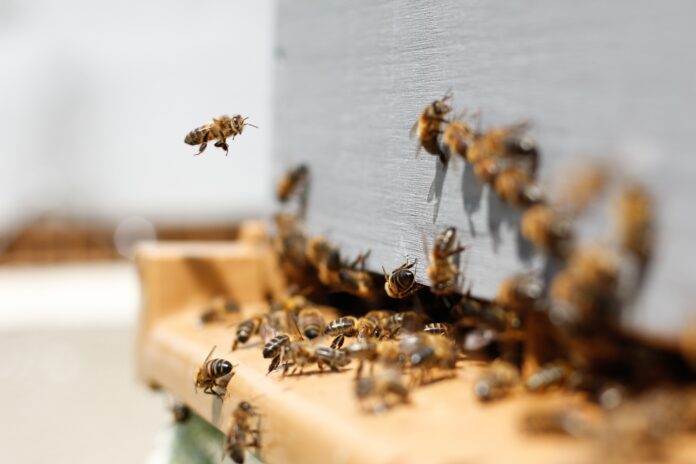
The photo is of a bee hive where multiple honey bees are entering and exiting a beekeeper box.
Varroa mites can infect and collapse entire colonies. PHOTO: Damien Tupinier / Unsplash

By: Charlene Aviles, Peak Associate

Bees play a crucial role in agriculture, especially in pollinating crops. SFU chemistry professor Dr. Erika Plettner has been researching chemical compounds to control varroa mites, which are parasites that threaten honey bee colonies. 

The Peak interviewed Plettner to learn more about her research.

“The varroa mite only attacks honey bees [ . . . ] but some of the viral diseases and other pathogens that honey bees might carry, can spread,” said Plettner.

Plettner added, “The injuries that the mites do to the bees don’t heal, and they can be the entry point for secondary infections and diseases. And this can really lead to a sudden collapse of the colony and a loss of the colony.”

Plettner explained without enough pollinators to pollinate crops, farmers import beehives and bees. Imported beehives are a temporary solution to offset the lack of pollinators. However, it is a costly and time-consuming option for beekeepers, which leaves many crops unpollinated in the meantime.

To address the varroa mite problem, Plettner and her team have been testing chemical compounds to control the mite population. They compared the chemical compounds’ effectiveness to a control group. She added this is a timely concern, considering beekeepers usually treat their hives for mites in the fall.

“What you really want in this case is that you want the compound to really work well on the mites but without having really acute effects on the bees. This is what the therapeutic ratio is, and this is true for any medicine,” said Plettner. She explained the therapeutic ratio as having a high effect on the area you’re trying to treat but a low effect on the host of the disease. In this case — a strong effect on varroa mites while leaving honey bees unaffected. 

Plettner hopes the research would provide beekeepers with more options for treatments against varroa mites. She highlighted the importance of rotating between different treatments to prevent the varroa mites from developing immunity.

Plettner explained using the same compound would cause the mites to develop a resistance — causing the therapeutic ratio to become smaller. “At some deep level every compound will have what is known as a sort of ‘background effect’ or ‘non-lethal effect’ that could in the long term be a problem,” said Plettner.

The team is currently in a trial phase of the study and is continuing to “assess the efficacy of this treatment.”

Food for Thought: Adobo

0
Plate of pork adobo
PHOTO: Adobo / FOX

By: Charlene Aviles, Peak Associate

Growing up, I wasn’t as connected to my Filipino roots as I am now. I didn’t grow up speaking Ilocano or Tagalog, and had visited the Philippines only a few times. But my parents and grandma wanted to pass on the culture to me, and their main way was through food.

Finding authentic Filipino food was always a challenge, but my family always tried their best to replicate authentic flavours you’d find back in the province they grew up in. Adobo, a classic dish found throughout the Philippines, is one that frequents our kitchen and my belly, even now. Not only do its recipes call for accessible ingredients, its cozy and familiar taste makes everyone feel at home. If you haven’t tried Filipino food before, this is a great place to start!

Adobo is a Filipino dish cooked in a vinegar and garlic marinade. It’s cooked with different proteins, depending on which region you’re from. In Cavite’s banana flowers adobo (adobong puso ng saging), they incorporate shrimp. While in Ilonggo regions, they have a vegetarian version with water spinach (apan-apan adobabo). 

Adobo’s Spanish roots trace back to the early 1600s and the name “adobo” comes from the Spanish wordadobar,” which means marinade. Despite adobo existing in Filipino culture before Spanish colonization, no one seems to know the dish’s traditional name before the Spanish label. While they have the same name, the Filipino version has a vinegar base, unlike the Spanish adobo sauce with its spicy ingredients, such as chili peppers.

Because of the Philippines’ hot tropical weather, Filipinos traditionally preserved their food with vinegar and salt. As Chinese traders brought soy sauce to the country, more Filipinos started incorporating it in their adobo recipes.

As a child, my grandmother would always make us her famous chicken adobo for lunch. As soon as I smelled the aromas of vinegar and soy sauce in the kitchen, I knew she was making her signature dish. Whether we’re on vacation or at home, the taste of her chicken adobo makes everyone feel comforted. The bold flavours, like the acidic vinegar and the tangy soy sauce, pops in your mouth. Her cooking is hard to replicate, so sometimes relatives will call her asking for the recipe, and she’ll share it — if we promise to keep it a family secret. 

How to cook your own chicken adobo, according to All Recipes:

Ingredients:

  • 2 tablespoons vegetable oil
  • 3 pound chicken
  • 1 large onion, sliced
  • 2 tablespoons minced garlic
  • ⅔ cup soy sauce
  • ⅓ cup white vinegar
  • 1 tablespoon garlic powder
  • 2 teaspoons black pepper
  • 1 bay leaf

Recipe:

  1. Heat the oil in a pan over medium heat. Cook chicken until golden brown and set aside.
  2. Cook onion and garlic thoroughly in the pan. 
  3. Add soy sauce, vinegar, garlic powder, black pepper, and bay leaf.
  4. Add chicken back to the pan on high heat. Bring to a boil. 
  5. Reduce heat to medium and simmer while cover until cooked.