Home Blog Page 228

New Music: Poolblood’s debut album, Mole, is a soothing blend of genres

0
Maryam Said sits against a white background looking to the side.
PHOTO: Jibril Yassin

By: Aditi Dwivedi, News Writer

Breaking through the symmetry of the traditional forms of music and storytelling, Toronto-based artist Poolblood just released their debut album, Mole, on January 13. An experimental blend of punk, folk, indie, and pop, Mole is a vibrant harmony of musicalities coming together to give life to Maryam Said’s voice and lyricism: an unending ode to love, loss, and self communion.  

Poolblood draws inspiration from the likes of Fiona Apple and Cat Stevens, striving to explore the depths of human vulnerabilities. A collection of nine tracks, Mole is a knotted thread of friendship, expression, and time, which reflects fickle yet necessary emotion in every taut strand.

Said’s tender voice hums, “I’ll look up at the sky / and see it smiling back at me” like a solemn lullaby in the opening track, “<3”. In “null” and “beam,” loud electric guitar distortions carry undertones of unease, struggle, and a gentle rebellion with lyrics like “whisper in my ear / I’ve lost my point of being here.” The unexpected beauty of cello, horns, and flute peppered across the album envelopes the melodies in the sombre warmth of the concluding track. All the elements merge into one sound and succeed in producing what Said describes: “noisy and dreamy, cloud music.” The album is carefully crafted to be placed outside the neatly packaged boxes of genres.

Mole depicts not only resolved feelings expressed in asymmetrical verse and rhythms, but also the very process of its creation; the spirit of backyard jamming, cozy recording sessions, and once scribbled lyrics.

Before I closed my eyes and opened my heart to Poolblood’s music, I envisioned a colour wheel capturing the gradual shift of warm to cold hues, ardently following the rules of colour theory. After listening to Mole, I could sense the spokes shifting, the warm and cold hues saturating, brightening, and narrowing in on the seldom represented yet stunning tints. 

The stories of life are rarely symmetrical. Poolblood’s Mole is a deeply personal attempt to capture the non-linearity of memories, recollection, and the struggles associated with loss and life. Proudly presented on an explosive spectrum of music, it calmly prods its listeners to come to terms with its complexity. Said’s Poolblood is on their way to slowly but surely establish a strong footing in the music industry.


The Seawall is detrimental to the environment and our wallets

0
ILLUSTRATION: Angela Shen / The Peak

By: C Icart, Staff Writer

Several significant weather events have characterized the past few weeks in Vancouver. It all culminated with king tides: “extremely high tides that happen about twice a year when the sun and moon’s gravitational forces reinforce each other” — ​causing flooding. Some parts of Metro Vancouver saw record-high water levels in December. This led to the Park Board closing part of the Stanley Park Seawall between the Lions Gate Bridge and English Bay. It’s also worth noting that last January, that same area sustained significant damage from a king tide. 

On December 27, the Park Board tweeted: “Stanley Park Seawall improvements we’ve made to address climate emergencies, similar to last year’s storm surge, have been successful.” Thus, the city is well aware of climate change’s continuous impact on the Seawall. 

So, can our beloved Seawall survive future king tides? Sure, for a while. But at what cost? I want to preface this by saying that the Vancouver Seawall is the first part of the city I fell in love with when I moved here. It’s stunning, and I’ve run along stretches of it more times than I can count. But there’s a significant case for tearing it down. In 2019, videographer and urban planner Uytae Lee made a video explaining it for CBC

The Seawall was built to protect Stanley Park from erosion. And honestly, it does an excellent job at that. But, as Lee says, while the Seawall protects what’s behind it, it damages what is in front: seawalls are bad for the environment as they negatively impact marine life and the intertidal zone in front of them. Lee’s video includes a helpful animation that explains how the Seawall lowers sand levels in intertidal zones, causing habitat loss. 

Climate change means increasingly extreme weather, which causes more damage to the Seawall over time. In addition, rising sea levels will likely result in the wall needing to be made higher. None of this is free. The repairs from last year’s king tide cost around 1.5 million dollars. As king tides become a more frequent problem, this will be a recurring cost. Tearing down the portion of seawall around Stanley park alone to rebuild it would cost 130 million dollars. Raising the Seawall around False Creek is estimated to cost up to 850 million dollars

So, what now? At the end of his video, Lee touches on the Seawall’s prominent place in Vancouver’s identity as a city. After all, it is “the world’s longest uninterrupted waterfront path.” But he also acknowledges that there are other ways to create an accessible coastline that don’t include a wall. Notably, he references Ali Canning’s landscape architecture master’s thesis, where she explores new ways to interact with Vancouver’s shoreline, including boardwalks and seaside paths. We don’t need to give up enjoying the coastline, but it’s time to abandon the Seawall. 

The BCCDC stresses the importance of getting a flu vaccine

0
A nurse puts a bandaid on a patient, shortly after vaccination
CDC / Unsplash

By: Hannah Kazemi, Staff Writer

A new report from the BC Centre for Disease Control (BCCDC) found the flu vaccine has “cut the risk of influenza illness by about half” — specifically 55% — so far during this year’s flu season. The Peak sat down for an interview with Dr. Danuta Skowronski, epidemiology lead for influenza at the BCCDC, to learn more about the province’s knowledge about vaccine effectiveness. 

Skowronski is also the lead of the Canadian Sentinel Practitioner Surveillance Network (SPSN), and a clinical professor for UBC’s School of Population and Public Health. Skowronski said the 55% decrease in influenza risk was determined using data from BC, Alberta, Ontario, and Quebec. It considered reported cases between November 1 and mid December. The BCCDC report stated BC has seen higher vaccine effectiveness this season compared to previous years against the H3N2 subtype of Influenza A, where vaccine effectiveness has typically been much lower and the epidemics much more severe.

“This has been an unusual influenza season with some unusual characteristics, notably that it has peaked earlier than in typical influenza seasons where we might see the peak sometime in January or February,” Skowronski told The Peak. The Government of Canada’s Flu Watch reported over 9,300 laboratory detections of influenza over December 4⁠–10, 2022. In the same week in 2021, only 55 cases were reported. 

In late December, BC was in the downslope of the epidemic curve, but she noted this doesn’t mean flu season has come to an end. “Whether ultimately [an earlier flu season] will translate into a greater burden this year compared to other years where the epidemic comes later, we still have to determine that.”

Skowronski emphasized the best time for those who are vulnerable to get vaccinated is before the epidemic peak so that protection levels are highest. She explained this includes “people with underlying comorbidity of any age [ . . . ] especially heart and lung conditions.” 

She also noted it is a good idea for otherwise healthy individuals to get vaccinated during the downslope. She said, “Anyone who wants to avoid a miserable illness — and influenza is a miserable illness — can receive that direct protection by being vaccinated.” However, the benefits of getting vaccinated at this stage of flu season “is greatest for those who are at highest risk of severe complications.” 

Vaccines are available for everyone older than six months in BC, according to Immunize BC. Immunize BC recommends getting a flu shot every year, because the strains it protects against may change as new variants form. The BCCDC calls the flu a “highly changeable virus” because new variants form over time to produce new subtypes. Getting a flu shot each year ensures protection from the dominant strain each season.

Skowronski discussed preventative measures that can be taken to further stop the spread of influenza if you become sick. “Everyone can contribute by, for instance, staying away from public settings” when ill to “take yourself out of circulation to help prevent the spread.” If isolation isn’t possible, “don a mask.” Using a “mask in close settings is also another layer of protection that can be applied,” she said. 

When sick, she noted it is important to cough and sneeze “into the crook of your elbow sleeve rather than into your hands to avoid contaminating the hands,” and “washing hands on a regular basis.” 

For more information on receiving your flu shot, visit immunizebc.ca.

Queerbaiting and the fight for queer rights

0
PHOTO: Markus Spiske / Unsplash

By: Daniel Salcedo Rubio, Features Editor

Queerbaiting is when a show leaves a character’s sexuality ambiguous while implying the possibility of non-heterosexual relationships or attraction, without ever confirming or denying it. It’s easy to speculate it as a marketing strategy to appeal to the LGBTQIA2S+ community without the possible repercussions of a more conservative audience.

The term queerbaiting, at its core, used to only refer to fictional characters, but as of late, some have broadened it to include real people. Billie Eilish was accused of queerbaiting back in 2021 after releasing the video for her song “Lost Cause” and posting a series of photos on Instagram with the caption “i love girls.” Another recent example comes from actor Kit Connor, who played bisexual character Nick Nelson in Netflix’s Heartstopper. Connor, at the time of the release of the series, hadn’t officially revealed his sexuality to the public, which caused speculation about his sexuality and queerbaiting accusations in social media, eventually causing Connor to tweet “I’m bi, congrats for forcing an 18-year-old to out himself. I think some of you missed the point of the show. Bye.”  While we have to fight to ensure actors of the LGBTQIA2S+ community have access to equal opportunities, we shouldn’t be bullying others to come out before they are ready to do so.

I’d like to think queer-coding characters without actually delivering queerness is something we should all be against. The LGBTQIA2S+ community is not a trend a studio can simply take advantage of: accurate and significant representation of queer identities is a necessity that should be taken seriously and not just see as a marketing strategy. This, however, should not be directly expanded onto real people. Sexuality is a spectrum and discovering where one stands is a personal journey that should only be questioned by the one traveling it. 

I understand the pain that is behind queerbaiting accusations. Some people might think it’s unfair that Noah Beck and Darren Criss, who both have denied being gay, are able to express themselves wearing fish nets and heeled black boots, while those same outfits have been historically demonized when worn by out members of the LGBTQIA2S+ community. For some, it might feel as if queerness is only accepted by the mainstream media whenever it is portrayed by straight people or for straight consumption. I understand that some people might feel like straight people are taking advantage of our historical and ongoing fight for our rights. I understand that coming out is and has always been an act of social and political activism. However, this same historical fight and years of activism has brought all of us — not only members of the LGBTQIA2S+ community — the freedom to express our identities in less conventional ways. For some, coming out might be a part of their journey, and thus, staying in the closet might feel counter-progressive — but one’s queer identity isn’t bound to public knowledge.

Generations of LGBTQIA2S+ people have fought for the type of visibility and freedom we are seeing today. I’m not sure what Marsh P. Johnson would think of Rupaul’s Drag Race and the show’s host, but I’m confident she would rejoice in knowing that a drag queen-lead program has broken into mainstream media and is consistently nominated to the Emmys. Younger generations identify as increasingly queerer. In 2012 only 3.5% of Americans identified as members of the LGBTQIA2S+ community, and in 2020, that number increased to 5.6%, with Gen Z being the highest with 15.9% identifying as queer or transgender. Queer visibility and acceptance have steadily increased: in 1999 only 35% of the U.S. population supported same-sex marriage, 22 years later that number has doubled. And thus, for reasons like these, queerbaiting allegations against celebrities fall in a gray area. To some people, coming out no longer holds the same historical socio-political activism as it did in the past. Many actors and media personalities are setting up barriers between their work and private lives. 19-year-old Billie Eilish made it clear that “her sexuality is no one’s business but her own.” This is a valid approach to sexuality. Celebrities have just as much a right to decide for themselves when and if to come out of the closet, and queer people who remain in the closet are just as valid as those who are out.    

This is not to say that coming out is a thing of the past or that LGBTQIA2S+ people are finally free to be whoever they want to be. Drag Story Hour has been systematically attacked by protestor groups all across the US, LGBTQIA2S+ hate crimes in Canada are on the rise, with a 41% increase in 2019 over the previous year. And these statistics only account for western countries. LGBTQIA2S+ Activists in the Middle East and North Africa are still facing state-sponsored repression and social stigma. We are still fighting, but as with any other movement, our fight is evolving along with society, and as such we have to stop, think, and reassess how to move forward from here. Speculating about someone’s sexuality has never been acceptable, and alleging someone is queer or not queer based on stereotypes is not only counterproductive, but plain wrong. Someone’s queerness has never and will never be in direct relation with any mannerisms: we are a diverse community, and reducing our queerness to stereotypes minimizes our identity.

How oil and gas companies greenwash the public

0
Car exhaust while leaving a smoke.

By: Victor Tran, SFU Student

Oil and gas greenwashing — the act of falsely promoting the environmental benefits of fossil fuels — is a widespread and harmful problem. In Canada, tar sands companies have been particularly guilty of this type of false advertising. Despite the clear environmental impacts of tar sands extraction, including land destruction and greenhouse gas emissions, these companies have deceitfully sought to present themselves as leaders in sustainability and climate action.

One prominent example of tar sands greenwashing in Canada is the “Environment” section of the Canadian Association of Petroleum Producers (CAPP) website. This section lists a number of supposed sustainability initiatives by tar sands companies, including investments in renewable energy and carbon capture and storage technologies. However, a closer look at these initiatives reveals that these technologies are still in their start-up phases and substantially small in scale, compared to 70 megatonnes in tar sands emissions every year.

Another example is the Oil Sands Fact Book published by the CAAP. This book is often cited by oil and gas companies as a reliable source of information. It downplays the environmental impacts of tar sands extraction and emphasizes the supposed economic and social benefits of the industry. However, independent research has shown that the economic benefits of tar sands are often overstated, while the environmental and social costs are understated or ignored.

The problem of oil and gas greenwashing is not limited to the tar sands sector. Many companies in the oil industry have engaged in similar tactics, using vague corporate social responsibility statements and glossy marketing campaigns to present themselves as environmentally responsible. However, the reality is often very different. For example, Aramco, the largest oil company in the world, proudly announced a carbon capture project under a recent marketing campaign. The project is marketed to capture 30 million standard cubics of CO2 daily to eventually extract more oil to sell. A report from ClientEarth said the company plans to “produce and sell the equivalent of 27 billion tonnes of carbon dioxide between 2018 and 2030.”

What can be done to combat oil and gas greenwashing in Canada and beyond? One solution is to increase transparency and accountability in the industry. Governments and regulatory bodies can play a role in this by requiring companies to disclose the full environmental impacts of their operations and by setting clear, science-based standards for sustainability. In addition, consumers and investors can also exert pressure by supporting companies that are truly committed to sustainability and by divesting from those that are not.

Ultimately, the fight against oil and gas greenwashing is part of the larger battle of addressing the climate crisis and transitioning towards a clean energy future. While it may be tempting to believe the false promises of these companies, it’s important to recognize the reality of their environmental impacts and take action accordingly. Only by holding the industry accountable and supporting genuine sustainability efforts can we hope to achieve a more just and healthy planet for all.

Hidden Gems: Local artisans to shop online

0
Collage of photos of items from various artisans.

By: Saije Rusimovici, Staff Writer

Le Petit Laser Design Co
Order online and pick-up free in East Van or Kerrisdale
Image courtesy of @lepetitlaserdesignco on Instagram

Inspired by making decorations for her son’s first birthday party, Joyce made a full-time job out of her creative outlet by starting this small boutique. Le Petit Laser Design Co specializes in hand-crafted wooden designs, from personalized ornaments to wall decor. Joyce’s shop is a great place to look for memorable keepsakes for new parents (including pet parents!) or unique tokens of appreciation. Stamps are also available for any book lover wanting to personalize their home library. 

JQ Vancouver
Order via Etsy 
Image courtesy of @jqvancouver on Instagram

JQ Vancouver has been operating since 2013 and specializes in curating a collection of 18k plated handmade jewellery. These elegant pieces include stackable necklaces, customizable beaded letter bracelets, and unique keychains. Some of Chelsey Alexander’s designs include gold lockets, shimmery butterfly pendants, and chain link bracelets. Perfect for any jewellery lover, the simplicity and variety of designs make this the perfect shop for anyone looking to add some sparkle into their lives. 

BU Candles
Order Online
Image courtesy of @bucandlesbyjacob on Instagram

Since 2021, Jacob Stretton has been promoting awareness of inclusive employment with his natural hand-crafted soy candles. As someone with down-syndrome, Stretton’s mission is to showcase that “every light deserves to shine.” Valuing self-care, wellness, and sustainability, BU Candles has created a variety of eco-friendly candles perfect for gift giving. From seasonal aromas like Sugar Plum and White Cranberry, to fresh scents like Mystic Pear, there is something for everyone. By supporting BU Candles you are supporting their social change and sustainability efforts. 

Fifth of May Cause Shop
Order via Etsy
Image courtesy of @fifthofmayshop on Instagram

Based in Coquitlam, Shirley L. has raised nearly $900 from a portion of her geometrical accessory sales to donate to local cancer research centres in honour of her aunt. Crafted from a combination of wood and silicone, Shirley offers a selection of lanyards and keychains in neutral colour palettes. 10% of all proceeds are donated to cancer research. By purchasing from Shirley, you are not only receiving a unique piece, but making a contribution to the fight against cancer. 

Retrophiliac 
Photo courtesy of @retrophilicart on Instagram

Autistic, self-taught artist, Margaux Wosk, celebrates neurodiversity with mixed media collections inspired by pop culture of the ‘60s– ‘90s. They aim to eliminate the stigma surrounding what autistic and disabled people are capable of. Wosk has created several collections of enamel pins, patches, stickers, and other accessories, receiving attention from institutions around the world. Support Wosk by purchasing through their website, on Etsy, or find them in one of over 20 retailers.

Protect Our Province BC calls for immediate unrestricted access to Paxlovid

0
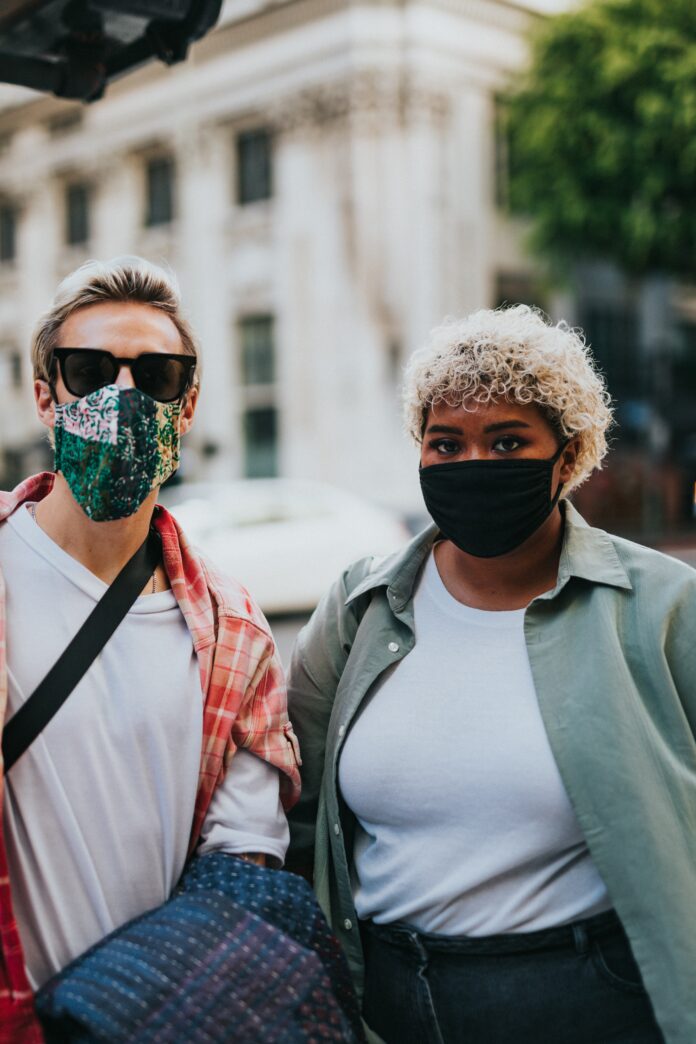
This is a photo of two individuals in masks. They are standing next to each other and looking into the camera. They can be seen from the waist up.
PHOTO: Nathan Dumlao / Unsplash

By: Aditi Dwivedi, News Writer

With the onset of the winter season, and a surging triple-demic of respiratory illnesses, the organization Protect Our Province BC released an open letter addressed to the provincial leaders. The letter calls for the immediate relaxation of BC’s restrictive eligibility policies, and increase in access to Paxlovid, for the treatment of mild to moderate COVID-19.

Paxlovid, also known as Nirmatrelvir and Ritonavir, is an oral antiviral medication developed by Pfizer, to stop the virus from multiplying and encourage a faster recovery. Paxlovid has proved effective against Omicron and its sub variants, in both vaccinated and unvaccinated patients. However, some have noted that Paxlovid is being drastically underused in BC despite its potential for positive outcomes

Dr. Lyne Filiatrault, a retired emergency physician and a member of Protect Our Province BC said in an interview with The Peak, “Your access to tools in the fight against COVID-19 should not be determined by the province you live in.”

In provinces such as New Brunswick, the requirements for access to Paxlovid are being 18 years and older and having one medical condition. In BC, there are a few specific requirements for access. This includes an age of 70 years and older, and three medical conditions, people who are “clinically vulnerable,” or those who are Indigenous, among others. BC has the most specific criteria compared to other provinces in the country.  

Filiatrault said  the public health leaders of BC believe patients are primarily contracting mild COVID-19 infections. However, the number of COVID-19 related deaths this year in BC is more in number than the deaths of 2020 and 2021 combined. Filiatrault noted, “I think it aligns with the entire management of the pandemic in BC.” She further stated the provincial administration of BC “have been gatekeeping the access to rapid antigen tests, access to PCR tests, access to four doses, and now to Paxlovid, and it’s almost been all along the pandemic.”

The federal government granted access to 70,000 doses of Paxlovid to the province of BC but until September 2022, only 12,000 of those doses could be prescribed to patients under the eligibility criteria. One of the potential solutions suggested by the Protect Our Province BC is to also allow pharmacists, along with clinicians and family doctors, to prescribe the medication, like other provinces of Canada have done.

On December 16, the BC CDC website for clinicians was updated with a broader list of conditions to be met for access to the medication. However, Filiatrault said most clinicians, pharmacists, and potential patients are not aware of these changes because they were brought in quietly, and without adequate publicity. Additionally, she pointed out they are “also including some of the social determinants of health, though limiting it to a single racialized community or Indigenous community; they are not looking at other communities of colour that are marginalized. We are calling on them to expand that.”  

Like most drugs, Paxlovid has limitations and potential risks for its users. For instance, patients with liver and kidney problems should not be prescribed the drug. According to Protect our Province BC, a discourse around the disadvantages and positive effects of the drug needs to be established which is only possible once medical practitioners and patients gain required awareness about the drug. 

Studies are currently investigating whether Paxlovid might be helpful for prevention of long COVID and the reduction of related symptoms like heart diseases, blood clots, and neurocognitive disorders. 

CONFESSIONALS: I have an emotional support jacket and it totally makes sense

0
A photo of a woman facing away from the camera, her hand raised in a peace sign, and the jacket in full view.
PHOTO: Krystal Chan / The Peak

By: Kelly Chia, Humour Editor

We don’t give enough recognition to the true underdogs in our lives. We really don’t, and if we’re entering the new year as honest people, we need to be honest about who really has our back. No, it’s not your childhood best friend that you’ve known for a decade! It’s your jacket! Obviously! You adorn it every time you bravely venture out the door, of course. I’ve named mine Moonie, because like the moon, we are also going through a phase, à la jacket. And I think it makes me look and sound quite mysterious, thank you.

I am not alone in my closeness with my beloved coat. I know we all do it, I’m just brave enough to say it out loud. Yes, every autumn, we turn to our closet, we pick one jacket, and that jacket stays with us through rain, sunshine, and the three other tumultuous weather patterns we can expect while living in Vancouver. It doesn’t really matter if it doesn’t have a hood, or isn’t particularly good for the rare -15 winter days. What matters is the vibe. The message. And the message is, “I want to hide inside a fleece jacket that’s actually masquerading as a blanket for my morning classes!” 

When I walk onto campus with my silly little fleece jacket that I have worn fifteen days in a row, and will continue to wear until the season turns over, I am actually expressing my deep longing to burrow deep in the safety and comfort of childhood days. So you must understand, not only is my decision a fashion statement, it is also an art piece. Like an onion, it has layers, and if you would only be so curious as to ask, I could indulge you in the deep machinations of my mind. If at this point in my very touching confessional, you find yourself asking, “What is a comfort jacket?” I would urge you to look deep into your heart. See the jacket that has seen you through your toughest days. 

For example, Moonie was there for me when classroom temperatures were so cruelly irregular, they forced me to continually take my jacket on and off. The semi-thin jacket lining is just perfect for the fickle Blusson classrooms, and I can drape it over my shoulders, like a fancy little cloak. That’s the kind of comfort I’m looking for in my jackets: escapism. Every single one of us, I swear on my neverending undergrad degree, has had this experience. 

So give your jacket a close hug tomorrow before you put it on and face the world again! Adventures await the both of you.

New Year, Same Old Me?

0
PHOTO: Sincerly Media / Unsplash

By: Saije Rusimovici, Staff Writer

What are your goals? At the beginning of a new year, it’s difficult not to succumb to the pressures of maximizing your success in the coming year. Our Instagram feeds become flooded with overly positive content coaching us on how to make 2023 the best year yet, Tiktok videos reveal “ultimate guides to goal setting,” and wellness blogs promote the “2023 reset” for health and fitness. Social media sets us up to compete with each other, and also with ourselves. What begins as an intentional effort to make positive changes ends up being a short-lived attempt at improving our lives. 

This year will be different. We tell ourselves a version of this every year. But what really stops us from achieving our goals? After coming up with an idea of what we think will make us happy, we often overcompensate by setting goals inspired by an unachievable standard. We should not shape our goals to reflect what society makes us think we need to be happier. Instead, at the start of a new year, we should re-examine our values and base our resolutions around the things in our lives that already bring us contentment.

This year, instead of setting formal goals, I have compiled a list of twenty-four things I hope to do before 2024 based on values like kindness, adventure, and community in mind. In addition to professional, academic, and financial goals, this list includes trips I would like to go on, restaurants I would like to try, movies I’d like to see, and other activities I hope to do in the upcoming year. Some of these items include: take a road trip to Seattle, pay off my car, join a recreational sports league, eat at an Indian restaurant, participate in a writer’s contest, and visit a part of BC I’ve never been to. The purpose of this bucket-list style format is to eliminate the pressure I have the tendency to put on myself when setting goals. It is not only a reflection of the things I want to achieve, but the values I want my year to be based around.

Be intentional. Reflecting on my resolutions going into 2022, I noticed that the things I accomplished were the smaller, almost vague goals I knew I had motivation to achieve but was not so sure how I would execute. I knew that I wanted to make money as a writer, but I didn’t specify a timeline or outline how I would do this. Instead, I specified the publication I wanted to write for and took proactive steps to achieve this — attending meetings, finding things I was interested in writing about, and then cultivating my writing skills with the help of my editors while working freelance. Now a staff writer, I have turned a long-sought-after dream into a reality. 

Other people’s goals are not your goals. A good goal is not determined by someone else’s definition of what a new year’s resolution should be. As individuals, we each have different ways of integrating the things we care about into our lives. Your goals should strengthen your attributes, allow you to improve on things that mean something to you, and pertain to the kind of lifestyle you want to live. It shouldn’t be according to what you think you should do because someone else has become successful doing it too.

Goals should have value. We each have our own set of values that are unique to us. These values that we want to carry in our everyday lives should be integrated into our goals. Former Forbes contributor, Dawn Graham, discusses how many of our goals often begin as “shoulds” as a response to societal pressure. By refocusing on our values, we can develop goals that are both purposeful and attainable. 

Goals should be fun. Not every goal you have needs to be extreme, nor measured by the unrealistic expectations we put on ourselves to make ourselves happy. Attempting to do things that are too complicated or unfeasible to complete in a year’s time does not make sustainable goals. When it comes to healthy habits, work-life balance, academic achievements, and strengthening relationships, it can take more time to make effective changes. Lighten up your goal-setting by including activities and challenges that will not only contribute to your success, but your own personal happiness (these can range from finding a new job to taking a road trip!). 

It is also important to consider the things that could happen this year that you didn’t plan for or anticipate. There is no way to be prepared for everything. So, instead of planning every detail, and setting yourself up to climb the highest mountain, go through 2023 enjoying the scenery. In taking the time to notice things throughout your journey, you never know what you might find or what might find you. 

The realities of ethical fashion

0
multiple green shirts on cloth hangers
PHOTO: Keagan Henman / Unsplashed

By: Nercya Kalino, Staff Writer

Fast fashion in the clothing industry has become a prominent collective discussion over the years. More people are citing concerns over the ethical practices of clothing companies and the impact behind what they wear. Younger generations have grown to understand that the impact of clothing trends and brand names goes beyond our individual purchases. We are also curious to know if the brands we buy from take the initiative to keep their business practices ethical, with some of us growing wary of ethical fashion’s price tag as the cost of living makes necessities difficult to afford.

Most young people are living in a time where their branded fashion options are largely unethical, at least to some degree. Fast fashion is by far the most frustrating component of the clothing industry. The term refers to “design, manufacturing, and marketing methods focused on producing” large quantities of clothing for the lowest possible cost. Most businesses choose this option to increase profits. If a company can use child labour, poor working conditions, underpay workers, or use cheap production methods to satisfy your “drip” — many will do it. 

Other household brands such as H&M and American Eagle fail to fully transition their production practices to fit a sustainable approach, despite their claims. While these more affordable brands might have a sustainability page, they don’t reveal that not all their items use the same production practices. In a sense, it’s a generalization of their ethics to avoid being called out. 

For instance, H&M is currently facing a greenwashing lawsuit citing the issue of misrepresenting sustainability practices. According to The Cut, they’re being accused of using vague language like “close the loop” and “a conscious choice,” despite using fossil fuel-based synthetics for their fabric. It’s a case among many other brands that do the same, but have not been called out yet. As consumers concerned about the environment and the ethical practices behind clothing production, there seems to be a dilemma because we don’t want to contribute to the problem. However, many companies that brand themselves as truly ethical charge much more for their products. Not everyone can afford these brands, which is why we have to adapt with what we have. There are still ways to support sustainability without breaking the bank, such as buying less and repairing. 

Fighting back against the principles of fast fashion means we must take the initiative to make our clothing worth its dollar. Second-hand clothing is often an accessible option for people with lower budgets, and it doesn’t directly contribute to the fast fashion industry. Focusing on proper care of clothing reduces the amount of money you spend on replacing wardrobe items, allowing garments to last longer. It’s also worthwhile to invest in higher-end ethical brands if you can afford it, since clothing bought from such brands tends to reflect its cost in longevity and quality.