Home Blog Page 210

SFU awards professors for powerful media communication

0
This is a photo of a lecturer standing in a lecture hall speaking to students
PHOTO: Yan Krukau / Pexels

By: Natalie Cooke, News Writer

Editor’s Note: The article was updated on March 24, 2023 to correct that Sharon Mah is not a professor, she is a staff member with the faculty of health sciences.

The SFU Newsmaker Award recognizes achievements and excellence in media and communications. This year, there were five winners of the award: Darren Byler, John Clague, Andy Yan, Lara Aknin, and Sharon Mah. The Peak interviewed the award winners to learn more about their impacts in the media.

“The award provides an encouragement to academic experts to develop relationships with media and to speak out authoritatively on societally important issues.” As an earth sciences professor, Clague is often called on by the media to comment on natural disasters and earth science issues. He explained to The Peak, “I enjoy being an SFU media ‘go-to guy’.” He explains the science of natural disasters and hazards to all ages “in an understandable, jargon-free way.” Clague has worked on communications regarding the 2021 atmospheric river disaster in BC and the February 2023 earthquake catastrophe in Turkey and Syria. He has also worked on communicating human-induced climate change.

Winning the Newsmaker Award left Clague feeling “stunned.” He said, “It means a lot to me to be recognized in this way because, while I am a scientist first and foremost, I am a one who is accessible and cares very much about communication and people.”

The Newsmaker Award recognized a variety of topics this year. While Clague focused on earth sciences, other award winners vary in their specialties. Psychology professor Aknin specializes in human happiness and social connections. Her work as the chair of The Lancet’s COVID-19 mental health task force showed findings that mental health early in the pandemic was better than what most people believe. However, Aknin noted “that some groups suffered substantially more than others — and need our attention.”

Other research in her lab is intended for people “to recognize that engaging in kind or helpful behaviour can improve our own happiness.” Aknin shared, “I’m both delighted and humbled that findings from our Lancet COVID-19 task force and my lab are reaching those who can benefit.”

The manager of communications and marketing for SFU’s faculty of health sciences, Mah, was another award winner. She works within the overall theme of communications and storytelling. “My role is to facilitate storytelling throughout a broad range of media. Sometimes I am writing these stories, and sometimes I’m working with the SFU Media Relations team and the vice-president research and international and health sciences’ partners to put our faculty, staff, and students in front of reporters, podcasters, or radio producers [ . . . ] I’m working with my team to try and make sure that as many stories as possible find their audience(s).” 

The award not only recognizes strong researchers and communicators, it also promotes truthful and factual communication. Mah distinguished her work as evidence-based, which means the research can be verified and trusted. “People want to be [able] to make informed decisions for themselves about their health and the health of their communities — it’s up to us to provide them with reliable information that is accessible and engaging.”

“Misinformation has been a problem for hundreds, even thousands, of years, but the problem has become more serious over the past few decades in the ‘echo chamber’ enabled by instant access through the web and social media,” said Clague. “Trusted voices are needed to counter misinformation. I strive to be one of those voices.”

To read more about the winners and their achievements, visit SFU News. The Peak also contacted Darren Byler and Andy Yan for interviews, but did not receive a response by the publication deadline. 

Alice Mũrage discusses the diversity among Black people in BC

0
This is a photo of the Academic Quadrangle on the SFU Burnaby campus.
PHOTO: Allyson Klassen / The Peak

By: C Icart, Staff Writer

Alice Mũrage is a health researcher, health sciences PhD candidate, part of the Gender and COVID-19 project, and the director of the African Ancestry Project. The Peak attended a talk where she presented her findings from her report for the African Ancestry Project. The project is “a community research and dialogue project she initiated in 2020 in partnership with the BC Black History Awareness Society.” In the event hosted by the SFU faculty of health sciences and BC Centre for Disease Control, Mũrage discussed the health implications of her findings. 

Mũrage noted, “The idea of the project is really to highlight the diversity of Black people. This was done by engaging 162 participants in a survey, and then in focus groups and interviews.” These participants came from a wide range of backgrounds. The group as a whole “spoke 56 different languages.” 

Mũrage acknowledges that although race “is socially constructed, it is something that has real-life consequences.” In addition to race, “Black people have other factors that are really dominant in their access to healthcare, in their healthcare outcomes.” 

According to Mũrage there are gaps in the way data about race is collected in Canada. For instance, she highlights the various terms “used in health research to identify Black people” such as “Black Canadians,” “African Canadians,” and “African, Caribbean, and Black (ACB).” The first two are “not very representative because it has the implication of nationality. Not all Black people in Canada are Canadians or have the rights that come with citizenship.” The term ACB, while being more inclusive, has been criticized by Dr. Jude Cénat for its lack of specificity as it may be “potentially including people from Africa who do not identify as Black and people from the Caribbean who identify as Latino.” 

The distinction between how Black people are categorized in studies, and how they personally identify, stood out to Mũrage. “There is an assumption that everybody who is categorized as Black actually identifies as Black, but I realized this is not the case.” She found that “nationality or continental affiliation” was a common way for individuals to self-identify. In addition, generational connections impacted people’s cultural identity. For instance, identifying as a first-generation immigrant versus a multi-generational Canadian. 

By digging deeper into the issue of self-identification, Mũrage found that “participants spoke of the Black identity as an identity that is contested [ . . . ] This identity changes and you need to adapt and take it on as it changes. So, it becomes an identity that was described as one that was imposed.” This can be true for some individuals who have grown up in Canada but also, people who have lived experience in places where they are not a racial minority. “Immigrants from Africa, for example, said that ‘for the first time, I actually realized I’m Black when I came here.’” Mũrage noted not every Black person views being Black as an identity.

For some, “Black identity was also noted as an identity of erasure. That it really erases whatever identity in terms of culture in terms of nationality that people come with.” Mũrage highlighted a quote from a participant that said, “I think the moment I stepped foot into Canada my identity as an African was erased because when people see me, they see the colour of my skin, which is Black. So I am referred to as Black not as African, not unless I speak up and say so.” For Mũrage, these findings are important for researchers across several fields “because as you go into your research, this is the diversity of Black people you will be engaging with if that is your population of interest for your research.”

For more information on Alice Mũrage’s work, consult her report on the BC Black History Awareness Society’s website. 

Memorable Moments: Italy wins the 2020 EURO Cup

0
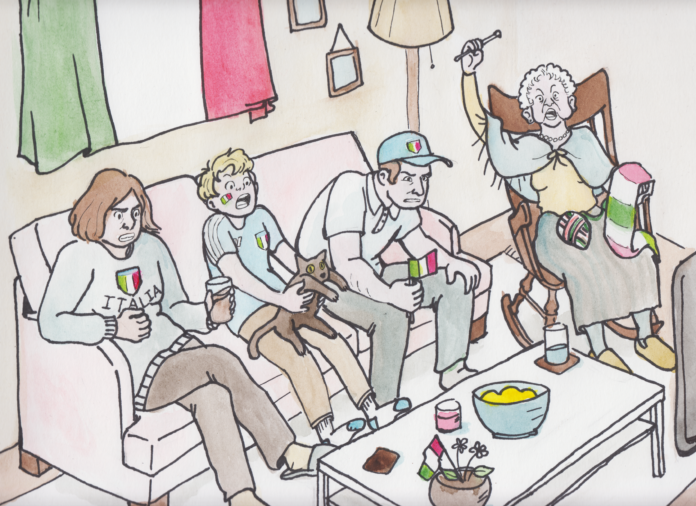
Illustration of a family gathered anxiously on the couch with Italian flags all around them.
ILLUSTRATION: Noah Jozic / The Peak

By: Saije Rusimovici, Staff Writer

The tension in the living room was thick. Nobody uttered a word. It was as if we were in that stadium halfway across the world, the weight of our goalkeepers’ task heavy on our shoulders. For my grandfather, this team meant everything. The living room was decorated with banners and scarves he had collected over the years. The pride of the Italian flag dangled from several corners of the room. It was the first soccer game my family had watched together in years, brought together by not only an exciting match, but something to celebrate since the start of the pandemic. 

In 2020, Italy had become one of the worst affected countries by the COVID-19 pandemic. The death toll had been at its highest since World War II, with 10% of these deaths being attributed to COVID-19. The Italian national football team represented something more than just a gold medal to the people of Italy — they were a symbol of hope. 

We were on the edge of our seats. The score was 1–1; Leonardo Bonnuci’s sole goal in the 67th minute was keeping Italy’s chances of winning the championship alive. I still get goosebumps when I think about the penalty shootout. My family and I stood in a line, our arms wrapped around each other like the players on the field watching Bukayo Saka, an excellent midfielder for Arsenal, prepare for his shot on Italian goalkeeper Gianluigi Donnarumma. Saka had to score to keep the shootout going. 

When Saka came in and pummeled the ball hard to the right, meeting the hands of Donnarumma — it was all over. None of us had really processed what had happened until we saw the goalkeeper emotionally embraced by his teammates. The reaction after that was something I will never forget. 

The joy on my grandfather’s face was like something I’d never seen. He’d picked my grandmother up off her feet and spun her around. We ran out to the balcony and started cheering, banging pots and pans as if our team would be able to hear us all the way in England. Our Italian neighbours rushed out to greet us, yelling and screaming with excitement.

In the week that followed, the Italian national team returned to Italy, bringing the Euro Cup to Rome. After several lockdowns in Italy, isolation, and pain brought on by the pandemic, the victory was an inspiration, uplifting the Italian people at home and abroad. 

Prior to the tournament, national team head coach Roberto Mancini said, “The national team is a symbol of a country that in difficult moments has always known how to get up again.” 

And they did.

This week at SFU

0
Photo of an SFU women’s softball player pointing their bat at the camera.
PHOTO: Jacob Hall / SFU Athletics

By: Simran Sarai, Sports Writer

Home Games

Saturday, March 18: track and field at Simon Fraser High Performance No. 1 Meet (all day) 

  • Taking place at the SFU Stadium on Terry Fox Field
  • Outdoor Season Opener

Away Games

Monday, March 13 to Tuesday, March 14: men’s golf at California State East Bay Tim Tierney Pioneer Shootout (all day).

  • Finished sixth at the event last year 
  • Coming off a seventh-place finish at their previous invitational 

Saturday, March 18: softball vs Western Oregon at 12:00 p.m. and 2:00 p.m.

  • First meeting against Western Oregon this season
  • Won all four games against Western Oregon last season 

Sunday, March 19: softball vs Western Oregon at 12:00 p.m. and 2:00 p.m.

  • Last road trip before kicking off a four-game series at home 

Sunday, March 19: women’s golf at Colorado St. Pueblo Pack Spring Invite (all day).

  • Looking to beat their fourth-place finish at this invite last year 
  • Finished seventh at their previous invitational 

HUMSU invites you to creatively “witness” humanity

0
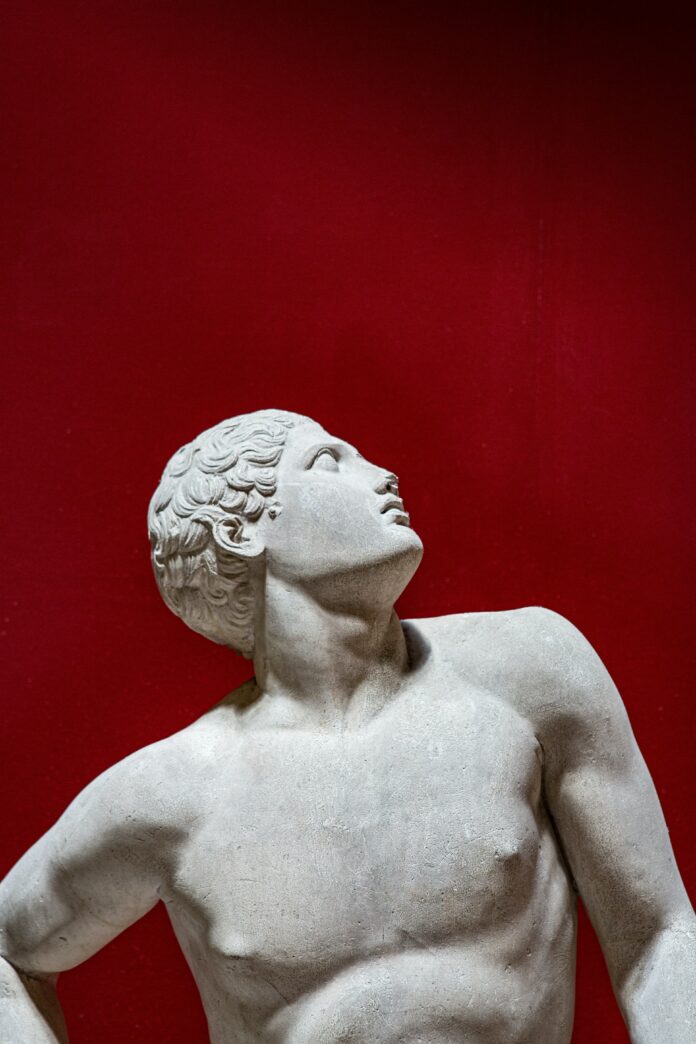
A human statue looking up behind a red background.
PHOTO: Wilhelm Gunkel / Unsplash

By: Petra Chase, Arts & Culture Editor

Editor’s note: Sara Wong, who was interviewed for this piece, is a former Peak employee. The Peak acknowledges and has taken steps to prevent conflicts of interest or potential bias from influencing the article.

SFU’s Humanities Student Union (HUMSU) invites SFU undergraduate students to submit their creative writing, academic essays, and visual art to their contest, “Witness to Humanity.” Bringing students across faculties together under their shared and unique experiences of being human, the theme is all about reflecting on the history of humanity with a modern perspective. From the “delightful” to the “atrocious,” there is a vast pool of inspiration to find creative inspiration from. 

The department of global humanities at SFU intersects with many different fields, which is part of the appeal for many students. “Humanities is such a broad, interdisciplinary subject,” Sara Wong, president of HUMSU told The Peak. “I love that it can be applied to so many different areas of study, but I feel like sometimes that’s also its Achilles’ heel. Since humanity equates to being human, it’s easy to discount ‘witnessing humanity’ as an uncomplicated, everyday experience [ . . . ] The thought behind the contest theme is to dispel the idea of looking at humanities as abstract.”

For each category, a winner will receive a $100 visa gift card, a feature in a future publication, and an “award of excellence” certificate. All of this will be announced and celebrated at the 2023 Humanities Showcase next month. The contest gives the opportunity for students to explore the themes from different artistic approaches: creative writing may encompass poetry, short stories, and prose. Visual arts can include anything from sculptures and paintings to graphic design. The guidelines recommend interpreting historical resources into your piece, which can encompass a “seemingly infinite amount of information.”

The winners will be announced at the HUMSU gala ceremony in April, which is “for students, by students; celebrating the arts and bringing community together.” The English Student Union and History Student Union are co-sponsoring the event. The gala is free to attend for contest participants and follows a formal dress code. Everyone in the SFU community is invited!

HUMSU is still finalizing the details of the upcoming “Witness to Humanities” publication, but it draws inspiration from their past academic journal, inter/tidal. “I’m proud of all the events and initiatives we’ve spearheaded, especially while navigating the COVID-19 pandemic, but this contest feels like we’re really taking things to the next level,” said Wong. While she noted that she and the HUMSU vice president are graduating soon, she said, “HUMSU’s future is solid with [the new members] around, and hopefully that includes more contests or opportunities to recognize student work.”

All submissions are due by March 24 at 11:59 p.m.. Follow HUMSU on Instagram for updates, at @sfu.humsu. View the guidelines and more information in the Google doc in their link tree.

Parents at games are too much

0
Illustration of a person in a sea of screaming parents on the bleachers.
ILLUSTRATION: Christina Cao / The Peak

By: Isabella Urbani, Sports Editor

I’ve never seen as many physical altercations as I have at a children’s hockey game. You would think parents would be supportive of their children, perhaps even a bit concerned for their safety when they’re skating on blades. But no, it’s the complete opposite. 

Some parents have zero regard for their children’s safety or enjoyment. Despite still learning how to skate without falling over, parents coach their children, very loudly, from the bleachers — and it’s never done through positive reinforcement. It’s always to shamelessly point out their children’s mistakes as if that will motivate them to make the correction. Parents shouldn’t even vocalize their children’s mistakes in the first place. It’s up to kids to work out certain kinks in their games, no matter if their parents have any playing experience or not.

If you want to have a conversation with your child about their game, do so in the privacy of your car, and not right in the open. It’s bad enough that your kid has to be subjected to this treatment, let alone have a crowd be witness to it. There’s also no use in reminding these parents that this is a children’s game because they adamantly believe National Hockey League scouts have a record of every single game their children have won. 

These types of parents make the game horrible for everyone involved. They berate the officials during the game, the coaches who try to help their child succeed, and the parents on the other team who try to calm them down. The last thing they respond well to is people trying to calm them down. It’s like inviting them to take their anger out on you in the form of cheap shots, entirely forgetting about their children’s game in the first place. I can tell you right now, your child doesn’t even care about this game as much as you. No one does. 

It’s natural to want to see your child succeed, but overly invested parents do more harm than good. At this age, not every single player is looking to go professional or has the slight inclination to do so. They’re kids after all! This should be something fun they look forward to on the weekend after school. The last thing they want is to feel the pressure to perform to a certain level to make their parents happy. It not only puts a strain on the relationship between a child and their parents, but on the child’s relationship with the sport itself. 

Growing up in and out of the rink, I think overbearing parents act like this to project their childhood insecurities and shortcomings onto their children. Their children are an extension of themselves on the ice. They see each loss their children experience, big or small, as their own failure. Because hockey players typically don’t receive agents until they are at least teenagers, it’s up to parents to act as their own children’s “agents.” And up to that point in their life, there isn’t much agent work to be done. Children typically play on teams located closest to them. But some parents truly believe their children’s success is attributed to the choices they make and the teams they put their kids on. 

It’s sad that what starts from a place of well-being can escalate into something bigger than the game itself. If you find yourself yelling anything other than cheerful excitement during a hockey game, particularly a child’s one, check your emotions. Go for a walk. As a fan, I acknowledge that you can become that immersed in a game, but that shouldn’t be an excuse for your actions. Remember why you’re at the game in the first place, and who you are there to support. If that doesn’t make you reconsider your actions, I don’t think you should be watching in the first place.

BC becomes the first province to offer free prescription contraception to all residents

0
This is an illustration of two hands passing one another a pack of birth control pills and an IUD
ILLUSTRATION: Amanda Eng / The Peak

By: Aditi Dwivedi, News Writer

On February 28, the BC government released the provincial budget for the upcoming year and announced its commitment to make prescription contraception free for all people who menstruate  starting April 1, 2023. The current program is a pilot program — it will last for three years, and may be renewed in the future.

Katrine Conroy, the minister of finance, allocated $119 million to the program for the course of three years. The program will fully cover contraception options including oral hormone pills, contraceptive injections, copper or hormonal intrauterine contraceptive devices (IUD), subdermal implants, and Plan B (also known as “the morning after pill”).

In an interview with The Peak, Dr. Ruth Habte, a campaign organizer for AccessBC and Sara Eftekhar, an AccessBC campaign volunteer, talked about the BC government’s decision to include this program in the budget and the role AccessBC played.

AccessBC is an organization which started at the grassroots level in 2017 by founder Dr. Teale Phelps. Since then, a growing team of members have dedicated their time to raise awareness about contraception in BC. The organization mobilized through public campaigns and social media, collaborated with researchers working in this field, and interacted with government officials to implement policies to create access to contraception.

According to Habte, the “budget announcement is a victory for gender equality and reproductive justice in BC, especially for patients struggling to access the contraceptive of their choice.” She stated this decision will benefit people by “preventing pregnancies, treating pelvic pain conditions like endometriosis, as well as heavy menstrual bleeding and fibroids.” 

Eftekhar added, “All forms of birth control are not just for preventing unwanted pregnancies.” She explained other uses of contraceptives can be treatment of medical conditions like PCOS or used in hormonal therapy.  

Eftekhar highlighted how universal free contraception will impact the issue of period poverty. Some people who menstruate cannot afford the cost of tampons or pads. Eftekhar said, “When you have some form of birth control, sometimes you don’t even get your period so you end up saving a lot of money as well, and this is really important because of inflation and the rising cost of living.”

Additionally, a study by Options for Sexual Health in 2010 provides evidence that more than $95 million can be saved annually if universal, no-cost contraception is provided in BC. They cited examples like Spain, Sweden, and Denmark where free contraception has been successfully implemented. 

Habte and Eftekhar expressed their concerns for the distribution and accessibility of the contraceptives to marginalized communities. According to Habte, some clinicians and physicians might “morally object to providing contraceptives” or might not be able to provide some contraceptives that require additional training. For instance, not all physicians are able to offer implants and IUDs. Eftekhar, on the other hand, pointed out how rural communities, especially Indigenous communities, do not have access to these contraception or adequate healthcare due to the lack of clinics and pharmacists in their regions. She spoke about her “work in a rural Indigenous community,” where she “saw youth who had to hitchhike to their nearest clinic to get access to birth control.” They hope the government will address these problems during the implementation of this program. 

While AccessBC is celebrating the decision as setting an example for other provinces, they acknowledge the challenges they continue to face; they have seen backlash from the public for “promoting the idea of promiscuity,” overlooking the ongoing impact of COVID-19, and the opioid crisis. Eftekhar noted how they “want to make sure that there is some way the government is monitoring this policy and they are evaluating it to make sure it’s effective in the long run.”

Find out more information on the availability of free prescription contraception on AccessBC’s website.

OCD has shown me how harmful mental health misconceptions can be

0
a person dusting their neatly organized bookshelf, with a thought bubble that reads “I’m so OCD”
ILLUSTRATION: Ananya Singh / The Peak

By: Saije Rusimovici, Staff Writer

Content warning: brief mentions of self-harm and suicide.

The last place I expected to meet another person with OCD was in the stands at a baseball game. Three of us sat there together cheering on the local men’s team. “. . . I’m just so OCD about that kind of stuff,” one of them said. “No, you’re not. I’m medicated.” The other girl said firmly, shutting down her statement. I looked up at her wide-eyed. Me too. Until then, the only person I knew with obsessive compulsive disorder was Howie Mandel, who has been very open about his experience. It was the first time in years I hadn’t felt alone. After this encounter, I turned to social media to connect with more people with OCD. The lack of formal education for conditions like OCD is concerning, and it contributes to people using the disorder as an adjective. Are you really “so OCD,” or just particular about certain things?

OCD is not an adjective. The number of times I’ve heard people use the phrase “I’m so OCD” is truly disheartening. Symptoms of OCD can be so severe that it could impact one’s ability to go to school, hold down a job, or even leave the house. Having experienced the effects of this disorder since I was a child, my response to people calling themselves “OCD” whenever they have the urge to straighten a picture frame or set the table a certain way is this: just stop

When I was 11-years-old, I experienced the feeling of impending doom for the first time. Fascinated with YouTube, I decided to post a video of myself singing. This was in 2011, when the online world was expanding quickly, and middle-school aged children were constantly being lectured about the dangers of cyberbullying. The gnawing, cold-sweat inducing sensation trapped me in a state of fear about people’s reactions. The worst part was that it felt like I would feel this scared forever. I didn’t think that something terrible could happenI was convinced that it would happen, so I deleted the video. 

Obsessive compulsive disorder is a chronic, usually lifelong disorder. It causes people to experience unwanted, uncontrollable, recurring thoughts and feelings (obsessions) that lead to behaviours to alleviate the anxiety brought on by these sensations (compulsions). A compulsion can be physical or mental, and often presents itself in the form of a ritual that may or may not relate to the subject matter of the obsessions. Obsessions can present in many ways — not just contamination obsessions, like many assume. Common OCD obsessions include intrusive thoughts and worries about sex, violence, self-harm, or the harm of others, gender, sexual orientation, or suicide. 

In my case, some of these obsession and compulsion combinations included driving back and forth to make sure I didn’t hit anyone, changing my clothes multiple times a night for fear they were dirty, and walking back and forth because there were certain places I felt I could and couldn’t walk on the sidewalk. I’d also go up and down stairs, and constantly seek reassurance from family and friends that nothing bad would happen to me if I didn’t do these things “properly.” When you call yourself “OCD” simply because you’re particular about organizing your desk, you overlook the impact this disorder has on individuals. The phrase perpetually contributes to misunderstanding, and makes many people afraid to be open about their diagnosis.

Seeking help was not easy. It took me over 10 years to get the support I needed, due to a collective lack of knowledge about the condition. No name was ever given to my diagnosis until I was nearly 18-years-old. I didn’t start taking medication to combat the effects of the disorder until that point, and before then I would struggle to get through each day without doing my compulsions. If I tried to ignore an obsession, it would prevent me from sleeping, eating, engaging in social events, and going to school. I often avoided places that I thought would trigger an obsessive thought as a result. 

My family and friends were supportive, but when I was younger people made jokes about my situation due to miseducation. It was only after I started doing my own research and connected with online platforms that I was able to educate myself and the people in my life about the disorder. I didn’t want to take medication for the longest time because there was so much stigma about what antidepressants supposedly do to people. I was also ashamed of not being “strong enough” to deal with whatever was happening on my own. After starting medication, all I could think about was that my obsessions took years away from me. 

I’m grateful for the online platforms that acted as educational tools and support systems throughout my mental health journey. Some resources that helped me navigate the ups and downs of obsessive-compulsive disorder include Alegra Kastens and Jenna Overbaugh, who dedicate their accounts to providing genuine first-hand experiences and advice about OCD. 

Social media has provided me with the mental health knowledge that formal education lacks, but there’s still a lot of work that needs to be done to destigmatize OCD. We need to provide accurate and usable resources for children displaying symptoms of the disorder, so we can collectively work to support those who are struggling. We also need to shut down improper uses of the acronym, “OCD.” 

Going undiagnosed for so long, there were many times where I felt hopeless and alone. I hope the growth of online platforms means more awareness about the impact of obsessive compulsive disorder and pushes towards formalizing mental health education in Canadian schools. Beyond that, I hope we can all play a part in destigmatizing the condition through our language.

Need to Know, Need to Go: March 11–April 2

0
Illustration of a blue calendar, with "Need to Know, Need to Go" written on top
Arts & Culture events to catch around the city. Image courtesy of Brianna Quan

By: Petra Chase, Arts & Culture Editor

Vintage postcard writing workshop (free)
Saturday, March 11, 3:00 p.m.–5:00 p.m. / Geist office at 111 West Hastings St., Vancouver
Canadian quarterly publication, Geist and their writer-in-residence, Christine Lai, invites you to join this complementary writing workshop inspired by their affinity for vintage postcards. After a “brief discussion on the history of the postcard,” participants will use vintage postcards to inspire three writing sessions. Take home the three postcards attached to your new writing and consider entering Geist’s 18th Annual Literal Literary Postcard Story Contest. Be sure to sign up soon as spots are limited. 

Bboyizm | In My Body: A dance exploration of aging (tickets from $35)
Friday & Saturday, March 17 & 18, 8:00 p.m. / Vancouver Playhouse, 600 Hamilton St., Vancouver
Presented by Dance House, and created and choreographed by Yvon “Crazy Smooth” Soglo, In My Body is an “examination of the effects of aging in a dance genre known for intense athleticism, bravado, and the show of invincibility.” Soglo was inspired by his own realizations of his identity as a “b-boy forever” as he ages and his physical abilities shift. With spoken word poetry narrations, it’s performed by hip-hop dancers across three generations, and is complemented by multimedia effects as well as music by DJ Shash’U

Paradise or the Impermanence of Ice Cream (tickets from $25)
March 23–April 2, various times / The Cultch, 1895 Venables St., Vancouver
Presented by New Zealand’s critically-acclaimed Indian Ink Theatre Company, this one-man show blends comedy with drama, puppetry, Bollywood disco, and advanced sound design. It tells the story of a man “flung between limbo and his past, where a rebellious young woman holds the key that may guide him to paradise.” Jacob Rajan, an award-winning actor, co-writer, and co-founder of Indian Ink, plays seven characters. Rajan takes the stage with a “life-size and life-like” vulture, puppeteered by Jon Coddington. Time Out said “. . . it is one of the best one-man performances you will see. For something new, funny and delightfully interrogative of the human condition, see Paradise or the Impermanence of Ice Cream.”

The avian flu is significant, even if it doesn’t spread to humans — yet

0
close up of a chicken on a farm
PHOTO: Finn Mund / Unsplash

By: Victor Tran, Peak Associate

As the world continues to grapple with the COVID-19 pandemic, another virus is quietly spreading among livestock across the globe — the avian flu, or H5N1. While the transmission risk of H5N1 to humans is reportedly low, its case fatality rate is 56%. This should be enough to prompt caution as we watch the current outbreak unfold. H5N1’s significant impact on wild animal populations and livestock farmers cannot be ignored. The potential implications for our food supply are alarming, given the current state of food insecurity and high cost of living. If anything, the frequent and recent mutations of COVID-19 should be a cautionary sign that viruses are unpredictable, and we need to be prepared for the worst. Could H5N1 become the next pandemic? 

H5N1 is a type of avian influenza (bird flu) caused by infection with Highly Pathogenic Avian Influenza (HPAI). These viruses — which include subtypes H5, H7, and more — spread naturally among birds worldwide, and can infect domestic poultry and other animals. There have been several outbreaks of avian flu in the past two decades. The 2004 HPAI outbreak in Canada cost the government $380 million and 17 million birds. As more birds are killed to lessen H5N1’s spread, the poultry supply struggles significantly, driving up the cost of products. The US has seen a 60% increase in egg prices, while Canada saw a 16.5% increase. Furthermore, HPAI viruses have been detected on the outside surface of eggs and inside some egg yolks, which may increase the chance of human transmission. 

This outbreak carries inherent risks of becoming the next pandemic. Since HPAI is notorious for rapid mutation, these mutations affect pathogenicity, resistance to drugs, and the host range of the virus — which means possible adaptation to humans. For now, the human transmission rate remains low. Most cases of human infection result from prolonged, unprotected, and close contact with infected birds or contaminated environments by saliva, mucus, or poop. Fortunately, human-to-human transmissions are rare and have not yet resulted in widespread infection. 

On the other hand, H5N1 raised the alarm bell among scientists as new cases of mammal transmission were recently detected. Between June and July, a case of H5N1 infection resulted in over 150 dead seals in Maine. While it’s possible the seals could have eaten infected birds, close proximity and mass death suggests mammal-to-mammal transmission. Another outbreak on a Spanish mink farm provides more evidence of possible mammal adaptation. Scientists found the strain affecting the minks had a distinct difference — the PB2 T271A mutation. This mutation doesn’t exist in strains affecting birds, and was seen in the swine flu H1N1 virus responsible for up to 575,400 global human deaths in 2009. Transmission from bird to mammal is one thing, but transmission among mammals presents a step closer to potential pandemics.

As more avian flu cases emerge, the chance of pandemic-causing strains increases. One way such virus strains emerge is through reassortment, the mixing of genes from different viruses. For example, if a pig were infected with human influenza and avian influenza, these two strains can reassort and create a new virus that is able to infect humans and capable of human-to-human transmission. 

While the transmission risk of H5N1 to humans may be low right now, its impact on wild animal populations and livestock farmers cannot be ignored. The potential implications for our food supply are alarming, particularly in the context of increasing food insecurity and the high cost of living. Paying close attention to the virus as it spreads might prepare us for potential human transmission, or allow us to avoid it entirely. The government should closely and monitor all cases of H5N1, and strictly require that farmers report any potential infections. This should also include measures like protecting animals through vaccination, rather than killing them off, if possible. Similarly, the WHO should be monitoring the avian flu so that previously approved vaccines for people can be updated and distributed, if needed. The avian flu presents a potential risk of becoming the next human pandemic. It’s essential that we take action to prevent the spread of the virus and limit its impact on our environment, agriculture, and society.