Home Blog Page 205

Who killed the school spirit?

0
Black and white image of a student looking at the camera with a magnifying glass.
PHOTO: cottonbro studio / Pexels

By: Kelly Chia, Humour Editor

Dear students,

I write about a most precarious incident at your school. There are only two crimes that happen at this institution you call home . . . real ones, and the ones that you never forget. And this one, I have not been able to stop thinking about. The greatest crime committed at Simon Fraser University? Heartbreak. [Pause for dramatic effect.]

At least, that’s what I felt. My name is Simon Solves, and I am the finest detective, certified investigator of brilliant scrutiny — or BS for short! But on this foggy day, I found myself staring at the Koi pond just mooning over what happened to the school spirit. The coroner darn well announced the death of the school spirit at 11:59 p.m. last Tuesday, you see. And they suspected . . . foul play.

The case? Impossible on the outset. How do you assess the death of something intangible? Well, you start by looking at the students. Never mind those people laughing at the fire pits, or having fun with their friends. They don’t exist in Simon Solves’ eyes.

No, the real students suffering through the drudgery of academia! I mean, look at them as they gaze worriedly at Canvas. You see, that was suspect #1. Canvas . . . if you replaced “can” with “murder,” the program’s name suddenly sounded sinister. Combine that with the time of death, and you have an understanding of the “final destination” for the school spirit . . . FINAL PAPERS! 

I brought my suspicions to the nearest raccoon I could find, for I have always thought of them as the wardens of truth. “Pip pip,” the raccoon said wisely at me as it washed its paws in a puddle. But I knew what it was really saying: “You are on the wrong track, buster.”

I will not lie, students. I grieved. For me. For the school spirit, which I had affectionately named, “Schoolie.” I could see the desperation on the students’ faces as they commuted down from the campus, wondering what happened to their once joyful camaraderie. Oh, it broke my heart. But then, the raccoon dropped a slip of paper at my foot: “SUB,” it read.

“SUB . . . SUB . . . I paced around. Yes, there was a building named the “SUB,” but it was more complicated than that. Why would my friend not spell out the full name? Why only the abbreviation? 

Then it hit me. The word I heard floating around student grades recently. “Sub-par!” Of course! If it was not Canvas that murdered the school spirit with malevolence, it was the exams! I rushed to the nearest office I could find! Unluckily, that office was locked deep in the bowels of the Maggie Benston Centre.

“I have discovered what has killed the school spirit!” I announced proudly to the receptionist. They stared at me, no doubt in awe at my reputation. I was Simon Solves! I solved everything, allegedly! 

“I deduce that your assessments have been killing the school spirit . . . a death by a thousand cuts!”

The receptionist tilted their head to look at me, as if studying my face. Would the truth reveal itself now? I chuckled at the thought! They then looked wanly at me, placing a McFogg mask on their desk.

“Mr. Solves . . .  I am afraid the answer is more complex than you expect.”

Well? Are you not intrigued? I was as well! But then I was promptly shunted out of the office for disruption of peace! The nerve. Or, was it a tactic to throw me, Simon Solves, off the scent?! 

I would find this out in due time, but now I must leave with what the folks in my office describe as a, “Peak-hanger.” If you leave some tips and friendly compliments, perhaps I may have more to tell you about the very tragic tale of Schoolie . . .

Love,

Solves
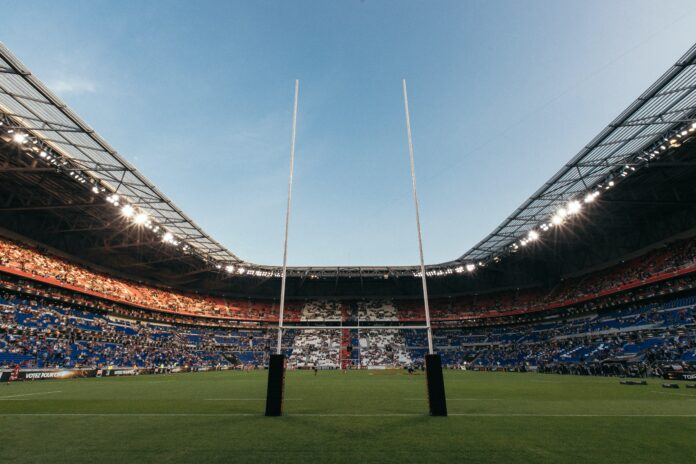
The Lingerie Football League exploited women

0
photo of a football field.
PHOTO: Thomas Serer / Unsplash

By: Simran Sarai, Sports Writer

Despite drawing in women from a variety of sports, the validity of the Lingerie Football League’s (LFL) conduct should be questioned. Prior to its 2009 launch in the US, lingerie football was something people could purchase to watch during the Super Bowl half-time show. As one of the sole professional sports leagues for women in Canada at the time, the league eventually expanded to include Canadian teams, like the BC Angles. 

In its sole season in Canada, each team played two away games with travel costs covered by the league. But that’s as many benefits as players would get. While women athletes around the world were voicing their demands for equal pay — the LFL had women competing and performing for free. Players weren’t even allowed to compete without paying a registration fee. 

Athletes competed with hardly any protective gear or clothing. They faced backlash from the communities they competed in, who voiced their displeasure that women were being asked to compete professionally in lingerie to pursue their athletic endeavours. Former Angels player Stevi Schnoor also wasn’t a fan of wearing the team’s “one size fits all” attire.

“How is this going to fit me and the girl I’m looking at next to me?”

Her teammate Kate Marshall explained how the lack of protective clothing encouraged models to try out for the team, rather than women who were looking for an athletic league of their own. You literally had people like myself who had been in athletics for a while” and “models who just kind of thought it would be fun.”

Marshall compared the Angels tryout to a “Sports Illustrated photo shoot,” holding the league’s uniform responsible for undermining the level of competition.The uniforms often caused unwanted exposure, but they were prohibited from wearing anything underneath their uniforms to avoid capturing another company’s “brand apparel” on television. Coaches cited worries about the predatory nature of other coaching professionals who might see the LFL as an opportunity to harass the athletes.

Many athletes wore the uniform, as “uncomfortable” as it was, to be able to play professionally and in hope of future, paid opportunities. 

There’s no question that the LFL was trying to “upsell” the sport to men with its team names. Before BC, the team name “Angels” was used in Major League Baseball by the Los Angeles Angels. Sounds kind of fitting considering that Los Angeles is the city of angels. So riddle me this: what’s the correlation between angels and BC? There’s a very different connotative meaning behind this use of the word — which alludes to the mysticism of women and their hypersexualization by men. 

While the LFL was marketed as a progressive opportunity for women to develop their athletic skills, it failed to empower women. Instead, it contributed heavily to the very issues that women in sports had advocated against for decades. Rather than providing women with a genuine opportunity to showcase and improve their skills, the LFL ultimately served as a money-grab for those who wanted to take advantage of the male gaze, without even paying the women involved for it. 

Q&A with Accessibility as Creative Practice intern, Keimi Nakashima Ochoa

0
An illustration of three masked individuals holding paint brushes wearing colorful clothing.
ILLUSTRATION: Alyssa Umbal / The Peak

By: Nercya Kalino, Staff Writer

SFU Galleries is hosting a series of workshops for creatives with access needs led by 2023 Accessibility as Creative Practice intern, Keimi Nakashima-Ochoa. The first workshop, which took place on February 25, was for immunocompromised artists. Taking place at Audain Gallery, with masks required and rapid tests requested, two more workshops will be held throughout the spring and summer: one for sensory-sensitive folks, and another for disabled LGBTQIAS2+ people. “Pals and partners” are also invited to participate and all skill levels are welcome. The Peak had the opportunity to interview Nakashima-Ochoa to reflect on the first workshop and discuss future plans.

The Peak: May you please share a bit about yourself and artistic background? 

Keimi Nakashima-Ochoa: I am a racialized immigrant settler. I am a Disabled, bilingual, learner, worker, and artist. My work and worldview have been shaped through my ongoing learning of disability justice and Black feminism. My art practice incorporates a lot of different things, including creative access, reading, writing, weaving, and printmaking. I spent most of my youth in Amiskwacîwâskahikan. I have been building my life on these ancestral lands of Xwməθkwəy̓ əm, Skwxwú7mesh, and Səlilwətaɬ people and families for nearly six years now. 

Why is accessibility in creative practice important? 

Accessibility and creativity are inherently linked. Though concepts of “accessibility” are pretty new in mainstream culture, Disabled communities have had to navigate ableism with boundless creativity and imagination for centuries. I am someone who has both been making art and living with chronic pain most of my life. Incorporating ways of meeting more needs into arts organizations has been both natural and necessary for my survival within them. The more people that can access and survive arts spaces, the better those spaces will be — having more perspectives and ideas only adds to what cultural institutions can provide. 

Who are these workshops geared at? 

The three workshops are designed to connect folks intentionally through parts of their identities, by creating in community. The first workshop was centered around those who are immunocompromised, and we gathered with measures that focused on keeping things more sanitary, including things like medical-grade masks and single-serving snacks. Our next workshop will be focused on supporting those who are sensory-sensitive and have specific special interests, but may not necessarily identify as Disabled. Our third and final workshop will be a gathering for those who are rooted in the political nature of Disabled, queer, and racialized identity. 

Can you tell me a bit about what went into putting these workshops together? Were there any challenges and how did you overcome them? 

A core aspect of these workshops is that they are small, so that the social aspect is more engaging than overwhelming. That being said, the small scale still requires thorough planning ahead of time, especially while planning on the basis of meeting specific needs. There have definitely been challenges that have come up in the planning process. I think the biggest challenge being that universities — and their affiliates — have all historically served large groups at a standardized level. While that is changing, clear communication, and openness to doing things differently, have been key aspects to moving this project forward. 

As an Accessibility as Creative Practice intern, what are some things you look forward to learning through this opportunity? 

I’ve definitely been learning a lot about navigating a gallery that is attached to a university, and the processes that require it. I’ve had the opportunity to work through/with a couple of public galleries or artist-run centers, and a university library, but I’ve never worked with a university gallery! As an alumnus of another lower mainland university, I’m grateful for the opportunity to gain insight into more cultural and learning institutions. 

For those who are unable to participate in these workshops, what other options would you recommend for them to experience open-ended artmaking centered around care? 

Everyone deserves care. Unfortunately, care is not the norm in capitalist, white supremacy culture, so it can be challenging to find. I’ve been able to access and learn so much more about care through Disability Justice spaces. There are lots of local folks who are immersed in Disability Justice. Vitoria Monteiro, an SFU alumni who will be leading the next workshop of this series with me, is another artist creating spaces with care. I have learned so much from Kay Slater about care, and they host lots of different art spaces. There are too many others to name, but disabled-ness is generally well suited for the online world, and all it takes is a little bit of research to re-frame how we think about care, especially in relation to artmaking. 

CMNSU presents Careers in Communication

0
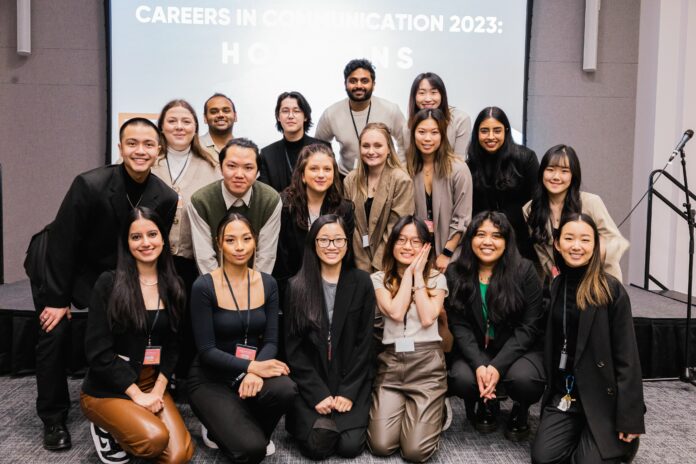
This is a photo of the communication student union executive board. The students are huddled together and smiling for the camera
PHOTO: Linda Jolly

By: Saije Rusimovici, Staff Writer

Editor’s note: Saije Rusimovici, who wrote this article, is an executive member of the SFU communication student union. The Peak acknowledges and has taken steps to prevent conflicts of interest or potential bias from influencing the article. 

On March 10, the SFU communication student union (CMNSU) hosted “Careers in Communication.” This event provided SFU students with the opportunity to network with over 20 industry professionals in the communication field, ask questions, and learn about potential career paths. Industry professionals included employees from Microsoft, Arc’teryx, Worksafe BC, and Herschel Supply Company. 

The communication student union is a group of 18 communication students. CMNSU president Kirtana Menon conceptualized the first communication-centric case competition at SFU last year. This event was held online. Careers in Communication 2023 is the first in-person networking event hosted by CMNSU.

Students participated in a case competition. Teams of 3–4 worked together to find a solution to a real-world communication challenge that may occur in the workplace. Groups had to strategize to find a creative and effective approach that would be applicable in a professional circumstance. 

This year’s case competition was sponsored by Grace Hui, communications manager at Electronic Arts. The theme of the case centred around the gaming industry. Competitors were challenged with using communication strategies to promote inclusivity and equity when their larger, fictional company was acquiring a smaller company. 

Menon recounts her experience putting together this event with the CMNSU team. 

“Hosting [Careers in Communication] was a dream come true for me,” Menon said. “I am so glad that I was able to lead a team that created a space to pick up technical skills, along with networking opportunities.” 

When asked how Careers in Communication played a role in empowering students, Menon described how the case competition was an opportunity for students to apply their skills to a corporate world problem. Networking sessions included interactive panel discussions and “speed dating” style discussions with an industry professional. 

“It was such a full circle moment seeing so many successful industry professionals working at top firms [interact with students] that actually spent their university years volunteering at clubs like CMNSU or taking on communication degrees,” Menon said. “Gives you so much hope that you too will end up there one day!” 

To learn more about Careers in Communication & other events presented by CMNSU visit their website or Instagram @cmnsu

WGOG: bugs in glasses

0
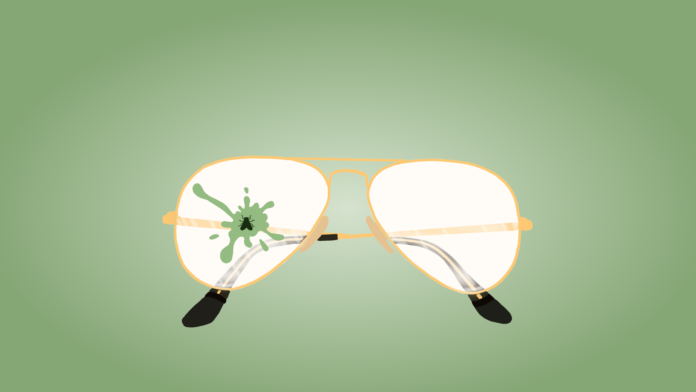
illustration of a pair of aviator-style glasses with a fly splattered on the front of one lens
ILLUSTRATION: Raissa Sourabh / The Peak

By: Isabella Urbani, Sports Editor 

This piece goes out to all my fellow glass-wearers. 

My glasses are practically glued to my face, and yet, at the end of each day when I take them off to sleep, there’s always so much dirt on the lenses: pesty little lashes that mock the dwindling numbers on my eyelids, eye crusties, and a ridiculous sheen of oil and sweat on the frames. 

Sure, okay — I guess I could pull out my handy-dandy eyeglass wipes and clean them off at the end of each day or whenever the dirt gets so bad it appears as floaters in my vision. That’s a realistic option. But bugs? Absolutely fucking not. How, you ask? How does a bug manage to press itself in the minimal space between my glasses and FRICKIN’ EYELID? YEAH, I’LL TELL YOU HOW. 

Blind spots. My glasses may be snug on my nose, but the gaping spaces on the sides of my face? Bugs mistake it for an invitation to my barbecue because they’re ALL UP IN MY GRILL. 

It doesn’t happen often, but a chill goes down my spine even imagining the little buzzing sounds their little wings make when they get too close to my ear. Imagine hearing that sound, and then feeling those wings flap against your eye

I’m one bug in my glasses away from feeling no remorse this summer when I sentence them to death after I accidentally leave the bathroom window open again, just to smush them.  

Censorship concerns over the Online Streaming Act are misguided

0
dimly lit photo of the YouTube site open on a laptop
PHOTO: Leon Bublitz / Unsplash

By: Petra Chase, Arts & Culture Editor

The content we see online in Canada is about to change. Since 1991, Canada’s Broadcasting Act has regulated Canadian broadcast content. The Act requires that 35% of broadcast content consists of Canadian content. Today, online streaming platforms like Spotify, Netflix, and YouTube possess more cultural power than radio or television. Bill C-11, or the Online Streaming Act, aims to bring the Broadcasting Act’s same content priorities to the online world. 

The bill prohibits user-generated content from being regulated, meaning individuals will not be regarded as entities with any obligation under the act. Under Bill C-11, the Canadian government can “impose financial penalties for entities who violate parts of the Act.” Despite panic over social media users being censored, the responsibility is placed on platforms to ensure Canadian content appears more often for Canadian audiences.

The Online Streaming Act could help bring exposure to marginalized and smaller online creators in Canada, emphasizing the importance of platforming content from Indigenous, racialized, and diverse cultural backgrounds as well as accessible media. As regulators, the CRTC would have the authority to enforce that platforms push content from marginalized creators. However, some BIPOC groups argue that the bill doesn’t do enough. Funding and consulting with BIPOC, for instance, is much needed to successfully reach this objective.  

YouTube and TikTok creators have adamantly opposed the Online Streaming Act, testifying in the Senate over its threat to their livelihoods. YouTube even produced a video warning Bill C-11 will hurt Canadian YouTubers by negatively impacting discoverability through forced recommendations that lead to less engagement. The Canadian online creator community echoes this rationale. 

While it’s valid for content creators to be concerned with Bill C-11 negatively affecting their engagement, frustration should be directed at the platforms, not the bill. YouTube’s algorithm has yet to take effective measures against far-right content and conspiracy theories. While they did tweak the algorithm against it, they continue to platform and monetize creators who spew hate speech. They’ve also been accused of systemically discriminating against Black creators through their algorithm. If YouTube really cared about its content creators, their actions would speak louder than their words. YouTube’s campaign for its creators is clearly disingenuous and distracts from the real reason they oppose the bill: it’s a threat to their cultural and monetary power. 

Unsurprisingly, as with anything involving government regulation, conservatives have adamantly opposed the bill, citing concerns over censorship. Some expressed concerns over its ambiguity, leaving it up to the CRTC how regulations will be implemented. 

While some concerns about Bill C-11 are valid, others overlook the dangerous precedent of tech giants dominating the online world. Concerns about censorship should really be directed at them. As it enters its final stage in the Senate, let’s keep in mind who this bill is meant to help — Canadian creators, not corporations.

It’s time to talk about running and disordered eating

0
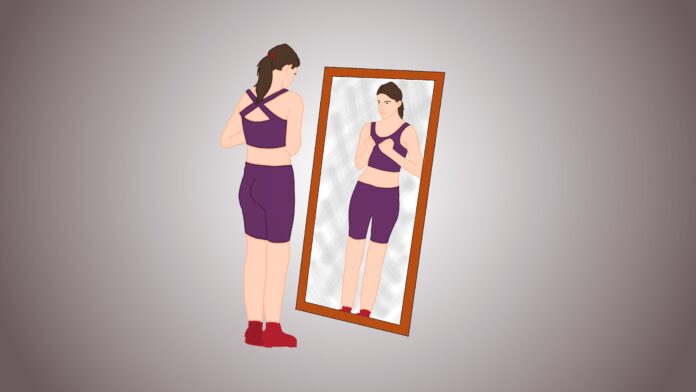
illustration of a runner looking at themselves unhappily in the mirror.
ILLUSTRATION: Raissa Sourabh / The Peak

By: C Icart, Staff Writer

Content warning: descriptions of disordered eating.

Last year, I published one of the most vulnerable pieces I’ve ever written. It was an article on recovering from what I called a “fitness obsession.” In that article, I wrote: “I was going on runs more often than eating meals, and it was catching up to me. My anemia got so bad, I always felt like I was on the verge of fainting.” This week, my doctor told me my hemoglobin levels had normalized. It felt like such a win. But I can’t stop thinking about how common my story is. In 2016, one million Canadians had been diagnosed with an eating disorder. 

Around the same time I was at my lowest point, one of my favourite professional runners, Allie Ostrander, announced “she entered treatment at the urging of Brooks Running and USA Track and Field.” Since then, she’s taken a break from professional running, returned to competition with a bang, and signed a contract with the athleisure brand NNormal to transition from long-distance to trail running. 

Athletes often face increased risks of developing an eating disorder because of the pervasiveness of fatphobia in the industry, and the pressure to perform in athletic competitions. This affects even those who exercise recreationally. Among runners, there’s often a goal to hit a certain “racing weight” — meaning lighter is faster. While it might sound logical that carrying less weight makes it easier to run, losing too much weight can hinder performance and health. If you’re not fueling yourself on the inside, no matter how hard you train, you won’t experience consistent results when you run either. Restricting your caloric intake decreases your metabolic rate. So while you may be eating less, your body isn’t able to burn as many calories. 

The obsession with thinness in running is not just a pursuit of performance. Unfortunately, body shaming is incredibly common in the sport. Even athletes at the top of the sport deal with comments from commentators, fans, and coaches. Sports nutritionist Jennifer Sygo says “in order to reverse the faster-is-thinner mentality, it has to start from the ground up.” Misinformation about sports nutrition needs to be countered with more education for both athletes and coaches. This applies not only to the training environment a coach and their athlete foster, but risk prevention. Both coaches and athletes should be taught how to identify potential warning signs and feel comfortable reaching out for support through their team or a trusted professional. 

Disordered eating among runners remains an important problem, but it’s one that we can overcome. If this article resonated with you — know it isn’t easy, but working towards a better relationship with running, food, and your body is possible. The only weight you need to drop is the weight of pursuing unattainable body goals. That’s what I did, and now you can catch me lacing up and flying across a sidewalk near you. 

The internet has a sexism problem

0
ILLUSTRATION: Christina Cao / The Peak

By: Olivia Visser, Opinions Editor

Content warning: mentions of sexism and sexual assault. 

Over the last year, our social media feeds have been regretfully subjected to content about Andrew Tate. The former kickboxer-turned-influencer, who is currently detained in Romania under suspicion of human trafficking and sexual assault, rose to fame for controversial statements that encourage violence against women. He galvanizes social media users who harbour existing resentment towards women, contributing to online echo chambers of misogyny and toxic masculinity. This rhetoric isn’t unique to Tate, though. Over the last decade, people have grown more comfortable with putting their hatred on digital display. Tate has accelerated this process, but he’s only one piece of a widespread problem. 

Tate’s content attracts young men who feel like social outcasts. To appeal to his audience, he frequently brings down women and blames them for social inequalities, under the guise of evolutionism. Tate isn’t a scientist, nor does he appear well-researched in evolutionary psychology. That doesn’t stop him from making claims about the nature of attraction and relationships. “I’ve never had trouble with a woman obeying me. She just wants to — it’s natural,” he said in a podcast. He followed this comment by telling men that if “their” “woman” doesn’t submit to them, she doesn’t respect them. These comments are tame compared to others he’s made, but that isn’t my point. We all know Tate is sexist — he’s said so himself. So why do so many men look up to him?

Many of Tate’s followers fall prey to ridiculous “alpha male” and “red pill” ideologies. Self-proclaimed alpha males believe men should display physical strength and emotional callousness, while “hustling” to pursue monetary success. The term “red pill” is a nod to the 1999 film The Matrix; the protagonist is offered a choice of swallowing the red pill to reveal humanity’s artificial structure, or the blue pill, which allows him to live in ignorance. Right-wingers have since adopted this scene as an analogy for a supposedly feminist-run society. The Guardian explained that the red pill subreddit allows men to “revel in their loathing” for women. The page has since been banned from Reddit, but reports indicate most posts were a slew of anti-women complaints, pick-up-artist techniques, and even sexual assault denial. These types of posts circulated the internet well before Tate’s rise to fame, although he’s definitely contributed to the increasing normalization of misogynistic rhetoric. 

Internet misogyny is a fitting example of how confirmation bias creates echo chambers. Confirmation bias refers to people’s “tendency to process information by looking for, or interpreting, information that is consistent with their existing beliefs.” It’s a factor in all kinds of prejudiced attitudes. If someone largely consumes media revolving around how awful women supposedly are, they’re more likely to develop false and problematic ideas about women as a whole. This is how characters like Tate influence and hold onto followers. Their success depends upon an audience with equally degrading views about women — and it works. Many schools have reported large numbers of boys as young as 10 looking up to Tate and repeating his talking points. This is why it’s so important to shut sexism down whenever it appears. Men should especially take a more active role in combating this harmful rhetoric.

The comment sections of Tate’s videos are also ripe with sexist viewpoints and praise for the influencer. “The biggest mistake men do is listening to women . . . end of story,” someone commented. It’s easy for some to feel sympathetic towards men who get caught up in alpha male or red pill discourse. Many see them as lonely, socially awkward, and simply misguided. There may be a small ounce of truth to this, but the reality is no one should use their loneliness as a justification for hatred. What these men miss is that few women are interested in dating someone who spends their time spewing misogyny online. Maybe women don’t like you not because they’re selfish or stuck-up, but because you don’t respect or understand them. These ideologies don’t benefit troubled men — they further isolate them from society.

Tate isn’t responsible for online misogyny as a whole, but he encourages and validates those who blame women for their own shortcomings. It only harms men to tell them women work against them, or that their value is rooted in whether they can dominate others. Instead of perpetuating this dangerous rhetoric, men can benefit from listening and understanding the issues women face every day. Understanding each other’s struggles puts our views through a different perspective, one in which respecting and valuing each other as individuals is commonplace over outdated notions of dominance and control. A “high value man” is one who respects women, and rejects BS dichotomies about masculinity and femininity. 

Canadian housing crisis discussed by SFU professor

0
This is an aerial photo of the suburbs of Burnaby
PHOTO: Roshan Raj / Unsplash

By: Natalie Cooke, News Writer

The Peak attended the recent event, “Understanding Housing Inequality in Canada,” presented by the faculty of sociology and anthropology. The lecture was run by Dr. Yushu Zhu, an assistant professor of urban studies and public policy. her research “focuses on housing and community issues against the backdrop of urbanization and globalization.”

Zhu acknowledged the rising issues with home ownership in Canada: “Homeownership is becoming more and more unattainable for Canadian households, especially for younger generations.” A 2022 International Monetary Fund report was used as a reference to show “Canada is among the hottest housing markets around the world experiencing the greatest increase in home prices since 2013.” 

Zhu mentioned government intervention in the housing crisis is highly beneficial for any household, regardless of income. “Stronger state involvement in the housing sector, alleviates housing affordability stress for both income groups,” said Zhu.

According to Carole James, BC minister of finance: “Years of government inaction allowed the housing market to spiral out of control, hurting hard-working people who are simply trying to build a life for themselves.” She said untaxed earners and foreign owners were able to invest in real estate because of the missing safeguards. 

However, Zhu noted, “Over the past few years, there’s been gradual re-engagement of the federal government in supporting social housing supply and policy, providing more funding, financing, and policy support for new housing supply.”

Therefore, to improve housing affordability and conditions, the Government of BC has placed several measures including: raising foreign buyer tax, preventing tax evasion, creating a speculation and vacancy tax, and more. 

Forbes Advisor stated, home ownership in Canada is largely taken up by non-residents, which creates higher housing prices. The foreign home ownership ban went into effect at the start of 2023. “The act prevents non-Canadians, and corporations controlled by non-Canadians, from purchasing residential property in Canada for two years,” in an effort to free-up housing opportunities for Canadians. 

Zhu explained neoliberalism promotes market citizenship rather than equal benefits for all, and one’s opportunities in society are based on their role in the labour market. She added income is a “predictor of housing outcomes in a highly commodified society.” This allows groups with higher income to “enjoy more housing choices and greater bargaining power in the private market.”

Thus, Zhu emphasized the unbalanced opportunities between income groups: “Private market would always respond to the housing needs and demand for the higher income groups, leaving the housing options and housing supply more limited for low and moderate income households in the market.”

Statistics Canada reported in 2016 that “people in poverty were twice as likely as the total population to live in unsuitable housing; 884,955 people in poverty (18.0%) lived in unsuitable housing, compared with 8.9% of the total population.” 

To learn more about Zhu’s work on housing inequality and housing vulnerable populations, visit the Community Housing Canada website.

Why I no longer call myself a “peakbagger”

0
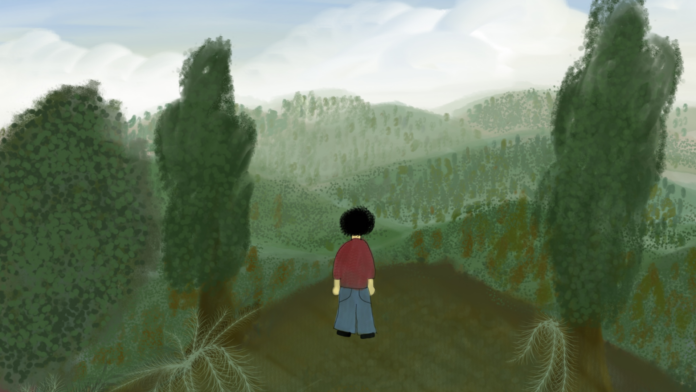
illustration of someone standing on a grassy mountain-top
ILLUSTRATION: Ananya Singh / The Peak

By: Olivia Visser, Opinions Editor

Content warning: brief mention of ableism.

I’ve been fascinated with mountains ever since I can recall setting my eyes on one. There’s something so bold about local peaks that I’ve never been able to fully capture in words. In my teenage years, I realized people actually hike up these seemingly unreachable summits. When I began doing so myself, I was hooked. 

BC is home to a sizable population of outdoor enthusiasts. Within this group, there’s a smaller, yet considerable, community of people who call themselves “peakbaggers.” A peakbagger is someone who hikes and climbs with the goal of reaching summits. The word “summit” refers to the highest point of a mountain; peakbaggers rarely end their hikes below this point. Those who participate in the hobby often keep a long list of their “successful” climbs, and follow strict rules to help them progress as a peakbagger. For instance, most peakbaggers refuse to “repeat” a hike, as they believe it takes time away from developing their ever-growing list of climbs. You’re considered a noteworthy peakbagger not for your experience with difficult climbs or personal obstacles that you overcome, but for the sheer quantity of summits you’ve attained. 

To many people, these ideas sound silly. In retrospect, they do to me as well. However, peakbagging appeals to those with an obsessive drive to progress and crush personal goals. When I first started out, I was enchanted by the idea of having some sort of “proof” of my dedication to a hobby. I wanted to be one of those people who was well known for sharing their trip reports on forums and social media. I wanted to hike with people who had similar goals . . . until I didn’t. 

Many of my experiences hiking with dedicated peakbaggers gave me a sense of disillusionment. Some of my old hiking partners were obsessed with travelling as quickly as possible, spending a short period of time on the summit, then descending at a speedy pace. Others showed no interest in accompanying me on hikes they had already completed, so I was forced to go alone. Hiking started to feel like a chore, rather than a fun activity. That’s not to mention the difficulty of mountaineering with a disability. I’ve been blocked by people on Facebook for disclosing medical issues, which led to a perpetual fear of sharing important information about my illnesses. Hiking should be for everyone, but it doesn’t always feel that way in the peakbagging community.

I’ve also come to the realization that peakbagging is inherently colonial. It views hiking as a sort of transactional experience, driven by a sense of entitlement over mountains. Mountaineering has a long history of being a form of colonization itself. More often than not, early colonists were the ones responsible for giving mountains their English names. The first mountain climbers in the 19th century would seek out prominent peaks to be known as the mountain’s “first ascender.” Nowadays, peakbaggers still search for unclimbed peaks to attach their legacy to. 

The bare minimum a hiker can do to pay respect to the land is to research its history. Most mountains have names and stories relative to local Indigenous peoples. Some are sacred locations which deserve to be understood as a place of connection rather than a line in your growing list of hikes. Let’s face it: peakbagging is a trend. It may bring some excitement to feel like you’re accomplishing something unique and physically demanding, but it can also reek of entitlement and egoism if you’re not careful. I’d argue I have more fun now that I’ve learned to relax and enjoy nature at my own pace, without feeling the need to constantly share my accomplishments with others.

Settlers don’t own the mountains they climb, and it’s absurd to behave as if we do. There’s joy in developing a reciprocal relationship with nature, where we don’t carelessly take from the land but give back to it in small ways. Beyond doing internal work on your relationship with the land, you can conduct research, pick up litter, practice sustainable travel, and center Indigenous voices. It’s past time we decolonize mountaineering.