Home Blog Page 199

It’s time to talk about running and disordered eating

0
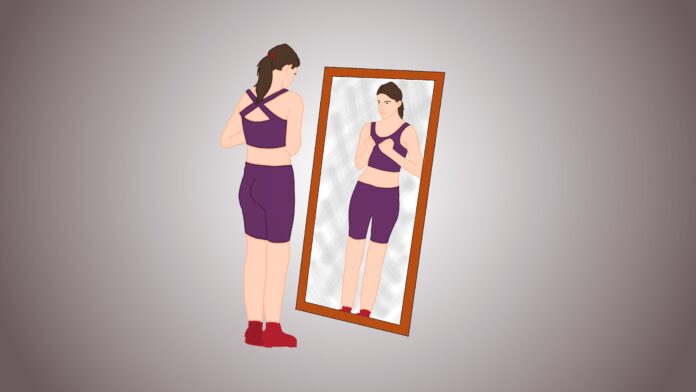
illustration of a runner looking at themselves unhappily in the mirror.
ILLUSTRATION: Raissa Sourabh / The Peak

By: C Icart, Staff Writer

Content warning: descriptions of disordered eating.

Last year, I published one of the most vulnerable pieces I’ve ever written. It was an article on recovering from what I called a “fitness obsession.” In that article, I wrote: “I was going on runs more often than eating meals, and it was catching up to me. My anemia got so bad, I always felt like I was on the verge of fainting.” This week, my doctor told me my hemoglobin levels had normalized. It felt like such a win. But I can’t stop thinking about how common my story is. In 2016, one million Canadians had been diagnosed with an eating disorder. 

Around the same time I was at my lowest point, one of my favourite professional runners, Allie Ostrander, announced “she entered treatment at the urging of Brooks Running and USA Track and Field.” Since then, she’s taken a break from professional running, returned to competition with a bang, and signed a contract with the athleisure brand NNormal to transition from long-distance to trail running. 

Athletes often face increased risks of developing an eating disorder because of the pervasiveness of fatphobia in the industry, and the pressure to perform in athletic competitions. This affects even those who exercise recreationally. Among runners, there’s often a goal to hit a certain “racing weight” — meaning lighter is faster. While it might sound logical that carrying less weight makes it easier to run, losing too much weight can hinder performance and health. If you’re not fueling yourself on the inside, no matter how hard you train, you won’t experience consistent results when you run either. Restricting your caloric intake decreases your metabolic rate. So while you may be eating less, your body isn’t able to burn as many calories. 

The obsession with thinness in running is not just a pursuit of performance. Unfortunately, body shaming is incredibly common in the sport. Even athletes at the top of the sport deal with comments from commentators, fans, and coaches. Sports nutritionist Jennifer Sygo says “in order to reverse the faster-is-thinner mentality, it has to start from the ground up.” Misinformation about sports nutrition needs to be countered with more education for both athletes and coaches. This applies not only to the training environment a coach and their athlete foster, but risk prevention. Both coaches and athletes should be taught how to identify potential warning signs and feel comfortable reaching out for support through their team or a trusted professional. 

Disordered eating among runners remains an important problem, but it’s one that we can overcome. If this article resonated with you — know it isn’t easy, but working towards a better relationship with running, food, and your body is possible. The only weight you need to drop is the weight of pursuing unattainable body goals. That’s what I did, and now you can catch me lacing up and flying across a sidewalk near you. 

The internet has a sexism problem

0
ILLUSTRATION: Christina Cao / The Peak

By: Olivia Visser, Opinions Editor

Content warning: mentions of sexism and sexual assault. 

Over the last year, our social media feeds have been regretfully subjected to content about Andrew Tate. The former kickboxer-turned-influencer, who is currently detained in Romania under suspicion of human trafficking and sexual assault, rose to fame for controversial statements that encourage violence against women. He galvanizes social media users who harbour existing resentment towards women, contributing to online echo chambers of misogyny and toxic masculinity. This rhetoric isn’t unique to Tate, though. Over the last decade, people have grown more comfortable with putting their hatred on digital display. Tate has accelerated this process, but he’s only one piece of a widespread problem. 

Tate’s content attracts young men who feel like social outcasts. To appeal to his audience, he frequently brings down women and blames them for social inequalities, under the guise of evolutionism. Tate isn’t a scientist, nor does he appear well-researched in evolutionary psychology. That doesn’t stop him from making claims about the nature of attraction and relationships. “I’ve never had trouble with a woman obeying me. She just wants to — it’s natural,” he said in a podcast. He followed this comment by telling men that if “their” “woman” doesn’t submit to them, she doesn’t respect them. These comments are tame compared to others he’s made, but that isn’t my point. We all know Tate is sexist — he’s said so himself. So why do so many men look up to him?

Many of Tate’s followers fall prey to ridiculous “alpha male” and “red pill” ideologies. Self-proclaimed alpha males believe men should display physical strength and emotional callousness, while “hustling” to pursue monetary success. The term “red pill” is a nod to the 1999 film The Matrix; the protagonist is offered a choice of swallowing the red pill to reveal humanity’s artificial structure, or the blue pill, which allows him to live in ignorance. Right-wingers have since adopted this scene as an analogy for a supposedly feminist-run society. The Guardian explained that the red pill subreddit allows men to “revel in their loathing” for women. The page has since been banned from Reddit, but reports indicate most posts were a slew of anti-women complaints, pick-up-artist techniques, and even sexual assault denial. These types of posts circulated the internet well before Tate’s rise to fame, although he’s definitely contributed to the increasing normalization of misogynistic rhetoric. 

Internet misogyny is a fitting example of how confirmation bias creates echo chambers. Confirmation bias refers to people’s “tendency to process information by looking for, or interpreting, information that is consistent with their existing beliefs.” It’s a factor in all kinds of prejudiced attitudes. If someone largely consumes media revolving around how awful women supposedly are, they’re more likely to develop false and problematic ideas about women as a whole. This is how characters like Tate influence and hold onto followers. Their success depends upon an audience with equally degrading views about women — and it works. Many schools have reported large numbers of boys as young as 10 looking up to Tate and repeating his talking points. This is why it’s so important to shut sexism down whenever it appears. Men should especially take a more active role in combating this harmful rhetoric.

The comment sections of Tate’s videos are also ripe with sexist viewpoints and praise for the influencer. “The biggest mistake men do is listening to women . . . end of story,” someone commented. It’s easy for some to feel sympathetic towards men who get caught up in alpha male or red pill discourse. Many see them as lonely, socially awkward, and simply misguided. There may be a small ounce of truth to this, but the reality is no one should use their loneliness as a justification for hatred. What these men miss is that few women are interested in dating someone who spends their time spewing misogyny online. Maybe women don’t like you not because they’re selfish or stuck-up, but because you don’t respect or understand them. These ideologies don’t benefit troubled men — they further isolate them from society.

Tate isn’t responsible for online misogyny as a whole, but he encourages and validates those who blame women for their own shortcomings. It only harms men to tell them women work against them, or that their value is rooted in whether they can dominate others. Instead of perpetuating this dangerous rhetoric, men can benefit from listening and understanding the issues women face every day. Understanding each other’s struggles puts our views through a different perspective, one in which respecting and valuing each other as individuals is commonplace over outdated notions of dominance and control. A “high value man” is one who respects women, and rejects BS dichotomies about masculinity and femininity. 

Canadian housing crisis discussed by SFU professor

0
This is an aerial photo of the suburbs of Burnaby
PHOTO: Roshan Raj / Unsplash

By: Natalie Cooke, News Writer

The Peak attended the recent event, “Understanding Housing Inequality in Canada,” presented by the faculty of sociology and anthropology. The lecture was run by Dr. Yushu Zhu, an assistant professor of urban studies and public policy. her research “focuses on housing and community issues against the backdrop of urbanization and globalization.”

Zhu acknowledged the rising issues with home ownership in Canada: “Homeownership is becoming more and more unattainable for Canadian households, especially for younger generations.” A 2022 International Monetary Fund report was used as a reference to show “Canada is among the hottest housing markets around the world experiencing the greatest increase in home prices since 2013.” 

Zhu mentioned government intervention in the housing crisis is highly beneficial for any household, regardless of income. “Stronger state involvement in the housing sector, alleviates housing affordability stress for both income groups,” said Zhu.

According to Carole James, BC minister of finance: “Years of government inaction allowed the housing market to spiral out of control, hurting hard-working people who are simply trying to build a life for themselves.” She said untaxed earners and foreign owners were able to invest in real estate because of the missing safeguards. 

However, Zhu noted, “Over the past few years, there’s been gradual re-engagement of the federal government in supporting social housing supply and policy, providing more funding, financing, and policy support for new housing supply.”

Therefore, to improve housing affordability and conditions, the Government of BC has placed several measures including: raising foreign buyer tax, preventing tax evasion, creating a speculation and vacancy tax, and more. 

Forbes Advisor stated, home ownership in Canada is largely taken up by non-residents, which creates higher housing prices. The foreign home ownership ban went into effect at the start of 2023. “The act prevents non-Canadians, and corporations controlled by non-Canadians, from purchasing residential property in Canada for two years,” in an effort to free-up housing opportunities for Canadians. 

Zhu explained neoliberalism promotes market citizenship rather than equal benefits for all, and one’s opportunities in society are based on their role in the labour market. She added income is a “predictor of housing outcomes in a highly commodified society.” This allows groups with higher income to “enjoy more housing choices and greater bargaining power in the private market.”

Thus, Zhu emphasized the unbalanced opportunities between income groups: “Private market would always respond to the housing needs and demand for the higher income groups, leaving the housing options and housing supply more limited for low and moderate income households in the market.”

Statistics Canada reported in 2016 that “people in poverty were twice as likely as the total population to live in unsuitable housing; 884,955 people in poverty (18.0%) lived in unsuitable housing, compared with 8.9% of the total population.” 

To learn more about Zhu’s work on housing inequality and housing vulnerable populations, visit the Community Housing Canada website.

Why I no longer call myself a “peakbagger”

0
illustration of someone standing on a grassy mountain-top
ILLUSTRATION: Ananya Singh / The Peak

By: Olivia Visser, Opinions Editor

Content warning: brief mention of ableism.

I’ve been fascinated with mountains ever since I can recall setting my eyes on one. There’s something so bold about local peaks that I’ve never been able to fully capture in words. In my teenage years, I realized people actually hike up these seemingly unreachable summits. When I began doing so myself, I was hooked. 

BC is home to a sizable population of outdoor enthusiasts. Within this group, there’s a smaller, yet considerable, community of people who call themselves “peakbaggers.” A peakbagger is someone who hikes and climbs with the goal of reaching summits. The word “summit” refers to the highest point of a mountain; peakbaggers rarely end their hikes below this point. Those who participate in the hobby often keep a long list of their “successful” climbs, and follow strict rules to help them progress as a peakbagger. For instance, most peakbaggers refuse to “repeat” a hike, as they believe it takes time away from developing their ever-growing list of climbs. You’re considered a noteworthy peakbagger not for your experience with difficult climbs or personal obstacles that you overcome, but for the sheer quantity of summits you’ve attained. 

To many people, these ideas sound silly. In retrospect, they do to me as well. However, peakbagging appeals to those with an obsessive drive to progress and crush personal goals. When I first started out, I was enchanted by the idea of having some sort of “proof” of my dedication to a hobby. I wanted to be one of those people who was well known for sharing their trip reports on forums and social media. I wanted to hike with people who had similar goals . . . until I didn’t. 

Many of my experiences hiking with dedicated peakbaggers gave me a sense of disillusionment. Some of my old hiking partners were obsessed with travelling as quickly as possible, spending a short period of time on the summit, then descending at a speedy pace. Others showed no interest in accompanying me on hikes they had already completed, so I was forced to go alone. Hiking started to feel like a chore, rather than a fun activity. That’s not to mention the difficulty of mountaineering with a disability. I’ve been blocked by people on Facebook for disclosing medical issues, which led to a perpetual fear of sharing important information about my illnesses. Hiking should be for everyone, but it doesn’t always feel that way in the peakbagging community.

I’ve also come to the realization that peakbagging is inherently colonial. It views hiking as a sort of transactional experience, driven by a sense of entitlement over mountains. Mountaineering has a long history of being a form of colonization itself. More often than not, early colonists were the ones responsible for giving mountains their English names. The first mountain climbers in the 19th century would seek out prominent peaks to be known as the mountain’s “first ascender.” Nowadays, peakbaggers still search for unclimbed peaks to attach their legacy to. 

The bare minimum a hiker can do to pay respect to the land is to research its history. Most mountains have names and stories relative to local Indigenous peoples. Some are sacred locations which deserve to be understood as a place of connection rather than a line in your growing list of hikes. Let’s face it: peakbagging is a trend. It may bring some excitement to feel like you’re accomplishing something unique and physically demanding, but it can also reek of entitlement and egoism if you’re not careful. I’d argue I have more fun now that I’ve learned to relax and enjoy nature at my own pace, without feeling the need to constantly share my accomplishments with others.

Settlers don’t own the mountains they climb, and it’s absurd to behave as if we do. There’s joy in developing a reciprocal relationship with nature, where we don’t carelessly take from the land but give back to it in small ways. Beyond doing internal work on your relationship with the land, you can conduct research, pick up litter, practice sustainable travel, and center Indigenous voices. It’s past time we decolonize mountaineering. 

SFU Rugby and Quadball host “Decades of Drag”

0
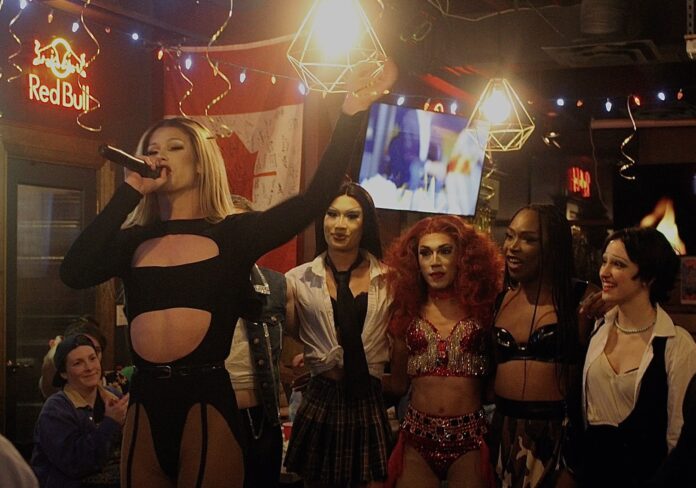
This is a photo of four drag queens performing at Biercraft. One is holding a microphone and looking at the audience.
PHOTO: Mars de Menezes

By: Natalie Cooke, News Writer

The Simon Fraser Rugby Football Club partnered with the SFU Quadball Team to host “Decades of Drag.” The event was a night of drag, drinks, and dancing at Biercraft on Burnaby Mountain. Drag queens performed dances to music from across different decades. With the intention to promote diversity in sports, all proceeds went towards QMUNITY, an organization workingto improve queer, trans, and Two-Spirit lives.”

The Peak interviewed Jess Picco, the women’s representative of the Rugby Club, and Brooke Davis, the captain of the Quadball Team. They spoke about how the event came to be, its purpose, and next steps for these sports teams. 

Picco said a drag event at SFU was an idea the SFU rugby community has been considering for some time. “There’s a lot of people within the community who identify with the LGBTQIA2S+ community. It was definitely an idea that people would be excited about, but no one had really taken it to action.” Picco also noted UBC Drag is a key component of UBC campus life, and “that was something missing within SFU.”

Davis mentioned, “The whole point of it being a drag show is that we’re bringing two worlds together: both sports and the queer community.” They emphasized the need to create a space to “broaden the community” and welcome people who have been searching for an inclusive environment. 

Picco noted the Rugby Club provided her with a supportive community, and she hopes sports can do that for everyone. “The reason that I am playing rugby and want to continue with the sport, even after finishing my studies, is because of the people,” she said. “I could be who I was authentically, and love who I wanted to love.” 

Davis also appreciates the experiences they have had through SFU sports, as it allowed them to discover who they are and “find a welcoming community within the SFU campus.” 

However, both players stressed the importance of inclusivity across all sports at SFU. Davis said, “I don’t think that enough teams acknowledge the variety of pronouns that people use to identify themselves.”

Davis said, “You never know what new player can make a difference on a team and regardless of their background, be open to the change that they can make when they join a team.” 

Picco shared that while athletes and students need to be welcoming of all identities, it’s still a work in progress. She noted events such as the drag show is a good start to making a difference. 

To donate to QMUNITY, visit their website at www.qmunity.ca

This week at SFU

0
action shot from the SFU men’s basketball game.
PHOTO: Ethan Cairns / SFU Athletics

By: Isabella Urbani, Sports Editor

Home Games 

Thursday, February 16: women’s basketball vs Seattle Pacific at 7:00 p.m. (West Gym)

  • Black History Night 
  • Lost to Seattle Pacific this season after conceding 17 points in the first quarter

Saturday, February 18: women’s basketball vs Montana State Billings at 7:00 p.m. (West Gym)

  • Senior Night 
  • All-time 12–10 record against Montana State 

Away Games 

Thursday, February 16: men’s basketball vs Central Washington at 7:00 p.m. 

  • Lost to Central Washington 72–65 earlier this season 

Friday, February 17 to Sunday, February 19: softball at the D2 Cactus Classic

  • Opponents include: Mercyhurst (Pa.), Georgian Court (N.J.), Minnesota Crookston, and a back-to-back against Franklin Pierce (N.H.)
  • 3–2 at the tournament last year 

Saturday, February 18: men’s basketball vs Northwest Nazarene (Idaho) at 6:30 p.m.

  • Played to their closest loss of the season against Northwest Nazare, 64–62

Sunday, February 19: women’s wrestling at the National Collegiate Women’s Wrestling Championships (Regional)

Won the NCAA Regional Championship last year

Canada’s women’s soccer team still fighting for equality

0
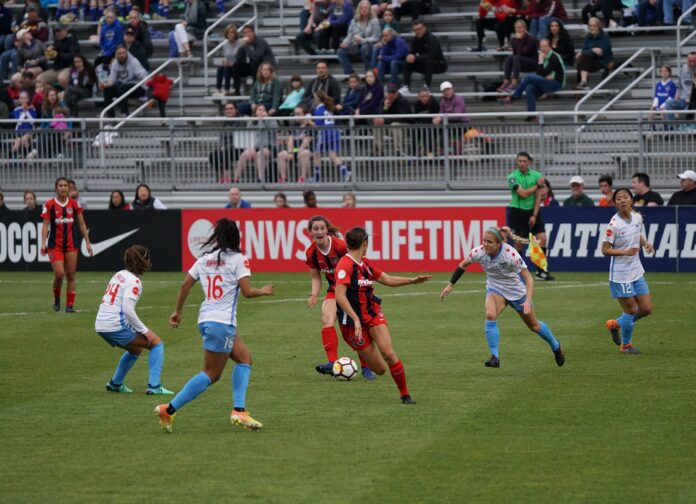
photo of a women’s soccer game.
PHOTO: Jeffrey F Lin / Unsplash

By: Simran Sarai, Sports Writer

Any young woman who grew up playing sports knows that getting society to take you, your teammates, and your competitors seriously remains an uphill battle.

The plight of women’s soccer in Canada is no stranger to this unforgiving landscape. Despite qualifying for eight of the nine Fédération Internationale de Football Association (FIFA) Women’s World Cup tournaments since 1991, the reigning Olympic champions are once again fighting for equal pay and opportunity. This comes just months ahead of the 2023 FIFA Women’s World Cup.

So what exactly went down? Here’s a brief overview. In 2020, the Canadian women’s soccer team won Olympic gold for the first time ever. The momentous occasion can be attributed greatly to the successes of longtime Canadian soccer legends like Sophie Schmidt and Christine Sinclair. The latter of whom has 189 international goals — the most in internal competition as of April 2022. 

Flash forward to 2022: the Canadian men’s team qualified for their second-ever FIFA World Cup, elevating soccer’s popularity in Canada. However, in June 2022, the men’s team refused to play in an international match, citing a lack of transparency around finances, and asking for increased funding as a result of newly acquired contracts ahead of the 2022 World Cup. The men’s team also asked Canada Soccer to deliver an equal pay contract for both them and the women’s teams.

The women followed up with demands of their own, but the issue would remain at large throughout the remainder of 2022. In early 2023, with five months left before the 2023 FIFA Women’s World Cup, the Canadian women’s team announced their intentions to strike, just days ahead of the SheBelieves Cup.

The women’s team was striking because Canada Soccer has cut the national program’s funding for the 2023 year — which happens to be a World Cup year. These funding cuts are affecting the adult and youth programs, and have already resulted in the women’s squad being trimmed from 28 players to 20. Adding to the same financial transparency issues present in 2022, players also shared that they had not received any payment for 2022 from Canada Soccer, in a letter released on February 10, 2023. 

On the same day, the men’s national team also released a letter of support, standing in solidarity with the women’s team and calling for intervention from the federal government should Canada Soccer fail to negotiate fair agreements. Canada Soccer responded to the women’s letter saying that they would consider legal action should the team decide to not play in the SheBelieves Cu. While this forced players to return to practice, they did so with their logos covered and jerseys turned inside out.

On February 16, the Canadian Soccer Players’ Association told Canada Soccer to take down a previous statement of theirs on Twitter. The post in question referred to confidential details about the “retroactive pay agreement” between Canada Soccer and the Canadian women’s team. Both parties agreed to not disclose this information publicly without the permission of the other. The coming days and weeks will bring further information on what options players have to fight for fair compensation, but until then, the public has been weighing in on the issue.

If the national soccer program’s fight for equal treatment didn’t say enough about the culture surrounding women’s sports in Canada, then the comments left on some of the stories covering the ordeal certainly do. Comment sections were ripe with misogyny and a lack of knowledge. Some commentators minimized the accomplishments of the women’s program. While others argued that the women’s team needed to see the same popularity as the men’s before being compensated.  

We might think we can solve the undervaluing of women’s athletic accomplishments by ensuring young girls are put in the same sports as boys. But those actions lose their meaning when our children grow up and find the systems they play within are perpetuating a culture of inequitable treatment. 

Letter to a Legend: Carolyn Waldo

0
photo of a swimmer poking their head above water.
PHOTO: Raj Rana / Unsplash

By: Natalie Cooke, News Writer 

Carolyn Waldo was the first Canadian woman to win two gold medals at an Olympic Games, and she did it all while getting a late start to the sport. 

Waldo started artistic swimming when she was 11-years-old to overcome her fear of swimming after a near-drowning experience when she was three. Growing up in Montreal, Waldo spent six–eight hours a day training. When she was 18, she moved to Calgary to compete for the Calgary Aquabelles, and made her first appearance at the 1984 Olympics, picking up a silver medal. For the next four years, Waldo was referred to as the “Golden Girl,” winning every competition she competed in. After winning gold at the 1988 Seoul Olympic Games as both a solo and duet competitor, Waldo retired. 

Artistic swimming, also known as synchronized swimming, made its debut at the 1984 Los Angeles Olympic Games. It’s been referred to as the combination of gymnastics and ballet underwater. In Olympic competition, competitors can compete as a duo or in a team. Up until 1992, when Waldo was still performing, swimmers could compete individually — which kind of defeated the purpose of synchronized swimming. The sport as a whole has moved away from the term “synchronized swimming” to acknowledge that synchronization is just one aspect of artistic swimming. 

At the upcoming 2024 Paris Olympic Games, for the first time in the history of artistic swimming, a maximum of two men can compete on a team. As always, competitors must perform two routines: technical and free. Technical routines require certain skills to be done in sequential order throughout the 2:30–2:50 second performance, depending on if it’s done by a team or in a pair. While also timed, the free routines allow for total creativity. 

Like Waldo, I had a late start to the sport of artistic swimming. She showed me that the underdog, someone unlikely to win, can become the “dark horse” — the hidden ace. This knowledge gave me the confidence to pursue my passion, rather than shy away from the fear of failure or inadequacy. 

I start my most recent solo routine with the same beginning pose that began her gold medal routine. Before I dive into the water, I remember that just as Waldo did, I’ll swim my routine with confidence, grace, and vigour.

Dear Peakie

0
A photo of someone looking prim in an office chair with a thick book in their hands.
PHOTO: Pexels

By: Saije Rusimovici, Staff Writer

Dear Peakie,

Holy crap, my assignment is soooo late and I don’t know what to do!!! I feel like the most irresponsible person in the world, and if you entrust me with another deadline, I will likely crumple and become ash. WHAT DO I DO? HOW DO I REPENT?!

Sincerely,

Unfashionably Late

Dear Unfashionably Late, 

Trust me — you are not the most irresponsible person in the world. I get it, we all have our priorities. But it’s time to download Google Calendars, stat. It’s all in the details,  my friend. Don’t pretend like you didn’t have the time to do your assignment last weekend. We all saw that Instagram story of your night out on the town. But do not fret, my dear reader. This is a problem that can be solved by a strong cup of coffee and a family-sized bag of Cheetos. Once you’re fueled by snacks and a good dose of caffeine, you’ll be well on your way to success — but if I see your name in my inbox again, I will not be as obliged to respond. Now let’s get cracking! 

Best of luck, 

Peakie

Dear Peakie,

I feel like asking something no one has ever asked you before — this is definitely not a pointed insider question written to target you specifically — are you a fan of birds, and if so, which one?

Sincerely,

Chirp All About It

Dear Chirp All About It, 

Well, hello, my loyal reader. Thank you for taking an interest in my personal life — it’s nice to feel like a real person once in a while. My relationship with birds is . . . well, a complicated one. I often think fondly of my aunt’s pet that chirped from the morning all throughout our family functions. Yet, I recall the waddling pigeons on the downtown streets and I shudder just a little (it’s the aggressive flapping that bothers me). Also, I hear that geese will attack you if you get too close?!? Let’s put it like this: I love birds as much as I love all animals. But I choose to observe from a distance. A very far distance.

Regrettably, 

Peakie 

Dear Peakie,

I am trying to brand my budgeting habits as “recessioncore,” but I don’t like, super believe in it. I am on my fifth loaf of bread and I have started to view yeast as an enemy. How can I be cute in trying times like these?!

Sincerely,

Asking the Important Questions

Dear Asking the Important Questions,

Ah, the joys of inflation. Fear not my dear reader. It is totally acceptable to have tightened the purse strings a little, especially in the financial conditions we live in these days. My advice is to romanticize that early morning commute on the train (because really, who’s paying for the combined parking and gas these days) by reading a thick paperback and sipping a homemade matcha latte. And don’t worry — as we’ve seen on TikTok, a simple meal can sometimes turn into a viral cooking hack. Just add more cream cheese onto dried spaghetti.

Sincerely,

Peakie 

Free Tax Clinic: Say goodbye to tax stress and hello to free filing!

0
A window with white marking on it stating "Pay your tax now here!"

by: Vee Babbar, SFU Student

Editor’s note: Vee Babbar, who wrote this article, is a member of the SFU Accounting Student Association. 

Filing taxes is essential for university students in Canada, regardless of their income level. It gives you access to government benefits and credits, carries forward unused credits, lets you avoid penalties, and builds RRSP (Registered Retirement Savings Plan) contribution room. By filing taxes, students can make the most of their available financial resources and plan for their futures.

If you’re feeling overwhelmed by a new tax burden and you’re already swamped with assignments and exams, the SFU Accounting Student Association (SFU ASA) and the Canada Revenue Agency (CRA) can provide some relief. The Community Volunteer Income Tax Program (CVITP) is a joint initiative between the ASA and CRA that offers free tax-filing clinics for students and low-income individuals.  This tax program is held annually to provide students with the assistance they need. The deadline to participate is March 25th.

The SFU ASA is a student-led association that supports students through networking events, job and volunteer opportunities, case competitions, and workshops. The association’s motto is to “Aspire,” “Share,” and “Achieve.” SFU ASA offers opportunities for students to develop practical skills and learn more about accounting.

The suggested maximum income levels for eligibility are:

  • Up to $35,000 for individuals (plus $2,500 for each additional dependent)
  • Up to $45,000 for couples (plus $2,500 for each dependent)

Eligible taxpayers include Indigenous people, low-income individuals and social assistance recipients, students, and seniors.

However, volunteers cannot prepare tax returns for the following:

  • Those with employment expenses, business, or rental income/expenses.
  • Those who are self-employed (own a business).
  • Legal representatives submitting tax returns of a deceased person.
  • Those who have returns that claim capital gains or losses. This can be defined as selling any property, like stocks, bonds, land, and equipment used in a business, for more (gains) or less (losses) than its adjusted cost base.
  • Those with major investments like RRSP, stocks, mutual funds, or Registered Education Savings Plans (RESP).
  • Those with investments outside of Canada.
  • Those who filed for bankruptcy.

Emily Le, the Director of Marketing at ASA said there are over 80 volunteers working with the CRA and ASA to process roughly ten returns each. The team filed over 800 returns last year for over a thousand members of the SFU community.

Being a tax volunteer myself, I went through a training package for volunteers and assistance networks in the program. The CRA provided training videos to volunteers, with the option of contacting a professional to receive additional assistance when needed. Not to mention there’s an option to specify your volunteer preference for your tax filing.

According to Selena Situ, a volunteer from last year’s CVITP program, “Participating in the CVITP was one of the most rewarding experiences I have had in post-secondary. I gained personal tax training from the CRA while having the chance to help low-income individuals and families.” Lily Li is another former volunteer who can vouch for anyone needing tax assistance this season. “The ASA tax team created a supportive environment which kept all volunteers on track with their deliverables.” They’re committed to providing the best service possible, thanks  to the extensive CRA training volunteers receive.

So why struggle with complicated tax software or pay high accountant fees when you can rely on the ASA to file your taxes for free?

Don’t miss out on this opportunity to get the tax assistance you need. Sign up here. 

Or check out the link in the bio on the SFU ASA’s Instagram page, @sfuasa

For any questions regarding the application, reach out to the Project Managers for SFU ASA at [email protected]