Home Blog Page 193

Need to Know, Need to Go: May–June

0
Illustration of a blue calendar, with "Need to Know, Need to Go" written on top
Arts & Culture events to catch around the city. Image courtesy of Brianna Quan

By: Petra Chase, Arts & Culture Editor

Arts in the Garden
Where: 13 garden spaces in the North Shore
When: May 27 and May 28, 12:00 p.m.–5:00 p.m.

What better way to spend a sunny day than at a community garden party with music, art displays, workshops, activities, and performances rooted in the land? This 24th annual event features 75 artists responding “directly to place and environment.” Find the list of all thirteen garden locations on the North Van Arts website, with each location following a theme reflecting a local gardener’s work, ranging from organic to “feathers and fungi.” Specific accessibility info for each garden is displayed on each web page. There will be “workshops exploring the relationship between birds and mushrooms in partnership with Wild Bird Trust of BC,” like the mushroom olfactory play workshop and fungi-inspired meditation at Maplewood Flats. There’s so much more to peruse on their website!


Bottled Lightning album launch
Where: The Fox Cabaret at 2321 Main St, Vancouver
When: May 30, doors open at 7:00 p.m., show at 8:00 p.m. 

Tawahum, a Łutsel kʼe Dene and Plains Cree poet and musical artist, released their long-awaited album, Bottled Lightning, on March 5. This debut hip-hop album is full of nimble, powerful spoken word and rap about their arrest over their land protection work battling the front lines of the Trans Mountain pipeline, “a project that is both a violation to Indigenous rights and our climate.” They’ll be joined at the Fox Cabaret with album collaborators: Kimmortal, Khingz, HK Higher Knowledge, and Adrian Avendaño on the drums. There will also be performances from Ḱesugwilakw and Dani Lion. Tickets are $15 and you can contact Tawahum on Instagram at @Tawahum for discount codes, as “no one [will be] turned away for lack of funds.”


Indigenous Artisans Market
Where: Bill Reid Gallery at 639 Hornby St, Vancouver
When: June 10, 11:00 a.m. to 4:00 p.m.

Support local Indigenous artists at the Bill Reid Gallery of Northwest Coast Art’s trademark event. A walk away from SFU’s Vancouver campus, the event will feature art from “a variety of mediums, including weaving, carving, jewelry-making, beading, painting, and printmaking.” And while you’re there, check out their current exhibits: Bright Futures and Matriarchs Seen and Unseen, as well as the permanent SFU Bill Reid Collection of the Haida artist and sculptor. Look out for more information on their website on individual vendors, as they will be announced soon! Find more information about accessibility on their “Accessibility” page.


Kariton Art Gallery: Chromatic Dreamscapes and Solitude 
Where: Kariton Art Gallery at 2387 Ware Street, Abbotsford
When: Chromatic Dreamscapes runs until May 27 & Solitude runs until June 30, Thursday to Saturday, 11:00 a.m. – 3:00 p.m.

The Kariton Art Gallery has two exciting exhibits on display currently. Chromatic Dreamscapes compiles “a whimsical alphabet series by Glenna Lundberg, bold colours and patterns by Amelia Ilnicki, and the dreamy surrealism of Jacqueline Stuerzl.” Solitude features the work of Adele Fussi, a senior and Indigenous artist who discovered a love for painting during the start of the pandemic. Fussi “claims it must be her Cree heritage that inspires her to paint the majestic Coastal and Rocky Mountains.” Both exhibits are also available online. You can also purchase the artists’ works and visit the online gift shop at the gallery’s website!


rEvolver Festival
Where: The Cultch at 1895 Venables St, Vancouver
When: May 24–June 4, various times 

Upintheair Theatre, a non-profit theatre company dedicated to “lifting and empowering the next live performance generation,” is organizing a festival consisting of 10 shows by artists “who share a common aim to reinvent conventional theatre modes.” From drag, dance, and comedy, to an interactive website experience and online karaoke night, there are both in-person and remote options. Mainstage titles include Discounted Hotpot Centre (an “immersive culinary experience” — free hotpot served after the show) and Catfish (an “earnest exploration of identity and self-love” in ASL and English). Tickets range from $15–$30.


Confession Publique
Where: Scotiabank Dance Centre at 677 Davie St, Vancouver
When: May 26 and 27, 8:00 p.m.

This award-winning contemporary solo dance was created by Mélanie Demers and performed by Angélique Willkie, exploring “themes of privacy and secrecy, delving into the marshy depths of the psyche in a revolt against the vulgar self-exposure that bombards us every day.” Willkie shared, “We explore the spaces between things and how to navigate them. As a Black artist and woman, I don’t fit into the definitions imposed by society. That’s an important part of my collaboration with Mélanie. We’re both interested in the grey areas.” This performance is hosted by plastic orchid factory, an “artist-run organism that uses the body as a site for research and expression.” Tickets start at $10.


Capitalism impacts more than just the finances of the unhoused

0
A group of people pictured around each other, hands extended toward the center to do a cheer.
PHOTO: Dio Hasbi Saniskoro / Pexels

By: Izzy Cheung, Staff Writer

Content warning: brief mention of domestic violence.

Vancouver may not be the most expensive Canadian city to live in anymore, but that doesn’t mean the cost of living here is reasonable. On average, a single person’s monthly costs even out to around $1,400 without rent. Housing is an entirely different beast, with two-bedroom rentals in Vancouver going for around $2,850 a month. With this in mind, we must be more attentive and empathetic toward the needs of unhoused communities, rather than ignoring them.

The term “unhoused” tends to strike up a specific image — one that focuses on people’s outer appearances and ignores their humanity. Often, this generalization isn’t intentional, but something we have been conditioned to think due to recurring depictions in media and culture. This image fails to consider the different experiences encountered by those who have become unhoused. Being unhoused doesn’t equate to being out of work, and it certainly doesn’t make someone a non-contributor to society. 

We are raised to believe the unhoused are responsible for their own circumstances, when there are so many other factors that contribute to becoming unhoused, such as: cost of living, health issues, and displacement due to domestic abuse. However, it’s not often considered that the unhoused have little-to-no control over the circumstances that place them in their position. Why is this the case? 

Social power can come from finances (having a job, owning a house), social status (connections, popularity), or knowledge (education, literacy) — and often an individual’s ability to obtain these is dependent on their background. Those who come from privilege are granted better access to the resources that will help them gain power, such as being able to pay their way through university, allowing them to take the extra steps needed to earn money. 

North America is a capitalist society that prioritizes the accumulation of wealth. At a young age, we’re often taught that we need to go to school, get a high-paying job, and work until we are “successful.” When people are financially successful, its viewed as well deserved. Under capitalism, individuals who aren’t actively going out and accumulating more capital are deemed as unproductive, and therefore deserving of being unhoused.  

Because capitalism requires the extraction of labour, it preys on the unhoused by using them as an example of unproductivity. It shifts the responsibility of one’s well-being to the individual. This fuels societal beliefs that depict the unhoused in a negative way. In reality, systemic structures like housing prices, social stigmas, and more, bar more and more people from making enough money to sustain a living. Because they are pictured as not prioritizing job hunting — and are often much more scrutinized for using their hard-earned money — the unhoused are unfairly thought of as “not contributing” to society. 

Moreover, the social construct of safety and class discriminates against unhoused communities. These social constructs are used to justify violence toward the houseless community because of the misconception that being unhoused is simply a result of bad choices that are easily overcome. Being unhoused is not a product of choice, it is a product of a system that doesn’t care for people properly — one that prioritizes the capital gain of upper class ranks, rather than helping out those in need. It’s a reverse-Robin Hood system that only we can fix by fighting against the stereotypes embedded in our society. We need to learn to separate media images of the unhoused from the actual people being incorrectly represented. 

We’re all being taken advantage of by the same systems, but some experience these effects more than others due to the situations they have been placed in. We live in a flawed society that produces flawed beliefs about those who do not “align” with the beliefs of the system — and it’s about time we recognize that. People in positions of power make the decisions for those whose lives they’ve never lived a single day in. Unhoused people deserve to have policies and solutions in place that genuinely prioritize their long-term well-being, rather than having to fight for their basic human rights and dignity. This could include solutions like social housing or subsidized housing, rent control, and requiring employers to pay a living wage. As a marginalized group, policies should be put in place to protect them rather than making them more vulnerable

Burnaby announces more funding towards constructing First Peoples’ Gathering House at SFU

0
This is a photo of the construction site for the First Peoples’ Gathering House. An excavator is sitting on the ground scoping dirt.
PHOTO: Harsahil Dhillon / The Peak

By: Eden Chipperfield, News Writer

On April 22, 2023, Burnaby’s acting mayor, Sav Dhaliwal, announced $5-million of funding for constructing the First Peoples’ Gathering House at SFU Burnaby.

The construction and funding of the First Peoples’ Gathering House at SFU is part of the city of Burnaby’s commitment towards Truth and Reconciliation. “As a city, we are committed to working with Indigenous peoples, particularly with the First Nations on whose territory the City of Burnaby is now located, to build positive and meaningful relationships,” commented Mayor Mike Hurley

The Peak interviewed Raven King Stierle from the SFU First Nations, Métis and Inuit Student Association (FNMISA) regarding the construction and purpose of the First Peoples’ gathering house. 

“The [First Peoples’ Gathering House] shows that SFU is making efforts towards reconciliation and that they recognize the responsibility they have to provide Indigenous students, faculty, and community members with a safe environment for us to thrive in,” Stierle explained. “It’s a relationship, and they’re [SFU] showing us that they’re invested in a relationship with us.”

On Orange Shirt Day in 2020, SFU held a ground awakening ceremony for the First Peoples’ Gathering House. At the time, treasurer Kali Stierle told The Peak, “There was no proper outreach to hearing Indigenous student voices and [ . . . ] a lack of representation at their meetings of Indigenous students [ . . . ] They need to be hearing what is proper protocol within the Host Nations, especially when it comes to creating a ceremonial space.”

Ouri Scott is the lead designer of the First Peoples’ Gathering House project. Scott is noted as one of the first Indigenous women architects who focuses on incorporating Indigenous design and culture in their work within BC. “The intent for this building is to create a ceremonial space on campus, and there are so many design elements that make it that,” commented Stierle. “We’ll be able to smudge and hold the ceremony inside. There’s space for carvers to create their art, space for dancing and drumming.”

SFU president Joy Johnson commented on SFU’s commitment to reconciliation: “Reconciliation is a shared responsibility. I am grateful for every partner and collaborator helping us build a safe and welcoming cultural space for Indigenous students, faculty, staff, and community members.” The project is part of SFU’s Truth and Reconciliation commitment report, Walk This Path with Us.  

“It was a journey to where we are, to get where we are, to get the relationship to where it is now. The FNMISA was open about how we felt consultation was going earlier in the project, and we advocated for our voices to be heard,” Stierle explains. “SFU has been receptive, and we’re happy that they are making an effort and showing they’re open to doing the work needed.”

The original conception of building the First Peoples’ Gathering House was through discussions with Indigenous Elders and Local Nation Knowledge Keepers. SFU News noted these discussions worked to recognize Indigenous students’ journeys, cultures, and experiences with higher education. The building is designed in the Coast Salish tradition. It will include a ceremonial entry, a Great Hall for holding significant events of up to 300 people, an Elders room, a classroom, and more facilities. 

Matt Kieltyka, assistant director and external communications at SFU, provided a statement on behalf of the university regarding the First People’s Gathering House. “The host Nations have a deep, long, and connected history with the mountain campus but historically there have been few dedicated spaces across SFU’s campuses for Indigenous peoples to gather, study, and connect with one another. These spaces provide a sense of belonging, where Indigenous students can thrive, feel safe and welcome. For newcomers/settlers, they foster a greater understanding of Indigenous peoples and culture, provide a dedicated place to attend campus-wide cultural events, and elevate the shared journey of Truth, Reconciliation and Indigenization.” 

The Peak asked Stierle what SFU students and staff can further do to educate themselves on the purpose of the Gathering House. “Read the SFU report Walk This Path with Us Report to understand why this space is being built on campus. Read the TRC Commission Calls to Action. Understand why we need this space, and what this is a response to: the ongoing colonization of Indigenous Peoples by Canada,” noted Stierle. 

Renting alone? In this housing market?

0
Poster with an alien illustration that says “I can’t stay! I need to pay the rent. #CasaDeBalneario”
PHOTO: Max Böhme / Unsplash

By: Izzy Cheung, Staff Writer

BEAUTIFUL 0 bed 0 bath apartment in Downtown Vancouver! 

Channel your inner downtown material girl, and rent this beautiful private apartment in the heart of Vancouver! Situated only steps away from Waterfront station, you’ll enjoy 400-square-feet of space that treats you to scenic views of Coal Harbour from the 35th floor of the building (elevator not included). Minimum 25-month lease. 

Your favourite part of this apartment will definitely be the door! With only one doorknob, this unique feature allows for complete privacy from others within the building (limited locking capacity, key not included). You’ll also love the windows, which are included in the monthly rent. 

The excellent floor plan, designed specifically by us, sees that convenience is king in this apartment. Not only will you be able to sleep in your living space — you won’t have to worry about getting up to use the bathroom! The toilet and sink, which both work properly, can be found beside the refrigerator. One of the nicest amenities of this apartment is the state-of-the-art shower curtain! 

Access to public transportation is only a couple blocks away — by “blocks,” we mean roadblocks, since there’s always some construction going on down here. Renting this apartment will also give you access to one underground parking space (only available on Thursdays, Sundays, and Wednesdays, as the other days are rented out to a different tenant — space downtown is expensive nowadays, you know!) 

The ample balcony space (6ft) allows for just enough room to entertain you and your closest friend! (Your closest friend being your neighbour, with whom you’ll share the balcony). As there are very few warm months in Vancouver, we’ve taken the liberty of removing the air conditioning from the apartment, reducing your monthly fee by a whopping 2%. Talk about being the hottest commodity! 

This apartment is ideal for students. Not only do the grey walls resemble SFU classrooms, but it’s also an exceptionally reasonable $4,500 per month (move-in and strata fees not included). 

If downtown living isn’t your vibe, check out our next posting! 

Quaint, PRIVATE 1 bed 5 bath cottage with lots of privacy! 

Step away from the hustle and bustle of the city and enjoy the gorgeous views of nature from our quaint cottage. Only (236) minutes away from the local market, this house puts you directly in the thick of the countryside, where you can truly connect with nature. Space reigns supreme here, with at least 500-square-feet of land belonging solely to you! (And us, since we’re the owners — but you don’t have to worry about that). This living space will allow you to truly reach deep and discover your roots as a citizen of planet Earth. 

Unlike a small apartment, this house comes with not one but TWO doors! The main entrance has one doorknob, while the back door has three. Keys only work at the main entrance. Moreover, to gain a better appreciation of nature, this house only has one window, which is located in the second bathroom on the second floor. Go outside and touch grass; there’s plenty of it around you! 

This house boasts some of the best kitchen floors in the world. Made from an oiled, varnished, and panelled cedar, the hardwood will ensure that you only slip on it a couple of times a week rather than every day — just make sure you wear socks with grippies

Rent for this house comes to $2,136 per month, with a $1000 increase per guest. $3000 fine if entering the basement — if you come in the basement while activities are in process, talk to us, and we can reach an agreement. 

Compose yourselves for another Dear Peakie

0
Woman jamming out to music in her earphones
PHOTO: Marcelo Chagas / Pexels

By: Maya Beninteso, Peak Associate and Peak Swiftie (not yet trademarked)

Dear Peakie, 

Mother’s Day just passed, and my bio mom is frustrated that I also sent a card and flowers to Taylor Swift. How do I explain that while she will always be my mom, Taylor Swift will never stop being MOTHER to all the Swifties and me?

Sincerely, 

STREAM THE MIDNIGHTS ALBUM NOW


Dear STREAM THE MIDNIGHTS ALBUM NOW,

That’s quite the champagne problem you’ve got there. As an experienced Swiftie myself, I know this all too well, seeing as I went through this with my bio mom, too. That said, there is only one correct solution, and unfortunately, it will take time. Firstly, drop everything now, apologize and explain how much you love your bio mom. Then, you’re going to carefully classically condition your bio mom (hear me out, okay?). Play a Taylor Swift song in the background whenever you do something nice for her. Slowly but surely, your bio mom will associate Taylor Swift with being happy (which should’ve been her normal reaction from the start, tbh). Not only will you have a bio mom that understands the importance of MOTHER, but she will also likely send Taylor Swift flowers next Mother’s Day.

It’s exhausting always being the Anti-Hero,

Peakie


Dear Peakie, 

I was wearing headphones on the SkyTrain and forgot to get off at Production Way-University. I couldn’t hear the voice saying “last stop” over the medieval folk rock I was listening to. Where is the train taking me? Will I ever be able to escape? Am I trapped forever (hopefully not because my playlist only has 368 songs . . .)? Please help me. 

Sincerely,

Lost In Both Song and Metro Vancouver 


Dear Lost In Both Song and Metro Vancouver,

“Where is the train taking me?” That does seem to be the ultimate question, and the answer is simple: you are the conductor. You’ve given up control of your life, and need to regain it. Harness it. Embody it. The train isn’t taking you anywhere; you’re simply letting it. My advice? Stop the train, and stop this external locus of control nonsense. Otherwise, enjoy the remaining songs on your playlist and don’t stifle your sobs during the jarring Spotify advertisements (repression isn’t your friend). 

Dance to the beat of your own drum,

Peakie 


Dear Peakie, 

Ever since the first season of Glee, I always knew I was destined to express myself through song. However, my physics professor disagrees. He has asked me to stop suddenly bursting into song during his lectures and said it was “inappropriate” for me to recreate the Montero music video in class. However, I disagree because that is my process as an artist, and I’m not doing the lap dance part, just the part with the pink wig. How do I get my professor to respect my talent?

Sincerely, 

Rachel Berry is My Idol


Dear Rachel Berry is My Idol,

Thank you for calling me when you need.

I’m assuming you’re a gold star student and already know Newton’s third law, where every action has an equal or opposite reaction. It seems that you’ve encountered an opposite reaction, which, honestly, there shouldn’t be in this scenario. Maybe your prof needs a lesson; consider this your call to action. If Glee has taught anyone anything (besides that, Don’t Stop Believin’ is OP), it’s this: a lesson plan fixes everything. The theme, you may ask? Don’t Rain on My Paradeof course — where the objective is to see things from the perspective of others (a skill in which your prof possesses a great deficit). Perform to your heart’s content, and if your sweeping performance doesn’t persuade him right away, just don’t stop believin’. 

No slushie facials from me,

Peakie

CONFESSIONALS: I still play Candy Crush

0
Person holding phone, smiling at the screen, surrounded by candy
ILLUSTRATION: Christina Cao / The Peak

By: Isabella Urbani, Staff Writer

I never thought I’d be in this position. I was merely a child when the game launched in 2012 — the same year the world was allegedly supposed to end. But . . . what if it did? What if Candy Crush is all we have left? You ever wonder why NO ONE has beaten the game? Not even the OG’s. I know what you’re thinking. It can’t be. But it is. 

Look at your phone. Really, look closely. You see it, too, don’t you? That tacky blue icon. Those three candies enshrined in a glowing light. Kind of like a halo. A halo shrouded in DARKNESS. 

Listen, I don’t know how the app got on my phone, either. Last thing I remember, I was making some sly remark about how easy the game is and wondering how anyone could ever want to play more than a single lev . . . 

How am I on level 240 already? OKAY, SERIOUSLY, WHAT IS GOING ON?!?! 

240 levels in one day? That’s enough screen time for today. You know what? I’m done playing this ridiculous, captivating, addictive game for li—

Oh my gosh, that’s so cute! You can send friend requests? 

What the heck? Snap out of it. This is an app, for crying out loud! I’m acting like a millennial discovering Facebook. Decline. But, oh, look! They sent me a life. How sweet. Maybe I should message them and ask how their parents are doing; it’s been a while since we last ta—

CURSE YOU, GAME!!! I DON’T EVEN KNOW THIS PERSON. STOP MAKING MY YA WATTPAD FANTASIES COME TO LIFE!

I just need to walk away. Yeah, that’s a good idea. I’ll just walk away from my phone and . . . No. That won’t work. I need my phone. I’ll just delete the app. YEAH, THAT’S IT. One click of a button and woof, that wasn’t so hard after all. I can’t believe I wasted so much time worrying that the app was actually alive. Can you imagine? 

Is exactly what I would have said if the app had ACTUALLY deleted itself. 

I think it’s upset with me now. The app is glowing red. It wasn’t glowing red before, was it? Maybe it’s an update. Do they even update apps this old? 

But why is it the only app on my phone that prevents me from deleting it ? Did Apple buy Candy Crush or something? It’s probably like that U2 album that was pre-downloaded on iPhones. 

HOW AM I ON LEVEL 500?!?!!!!

I’M NOT EVEN PLAYING RIGHT NOW. The game’s gone meta. THE GAME’S GONE META. I’m candy-crushing even when I’m not candy-crushing. I’m not rearranging my food cabinets to reach my favourite cereal; I’m trying to release the seven Gummi Dragons in 20 turns. 

19, 18 . . . blinks count as moves now? I’ve been commodified. It’s like I’m living in my own personal Henry Ford and Frederick Taylor nightmare. That’s why no one ever talks about playing Candy Crush. It’s not because of the embarrassment. It’s because they can’t. How would anyone know? 

I MUST WARN THE OTHERS WHILE I STILL HAVE TIME. Do exactly as I say:

Stripped Candy. Wrapped Candy. Colour Bomb. Jelly Fish. Coconut Wheel. 

Now go, spread the word. 

I don’t want two-factor authentication

0
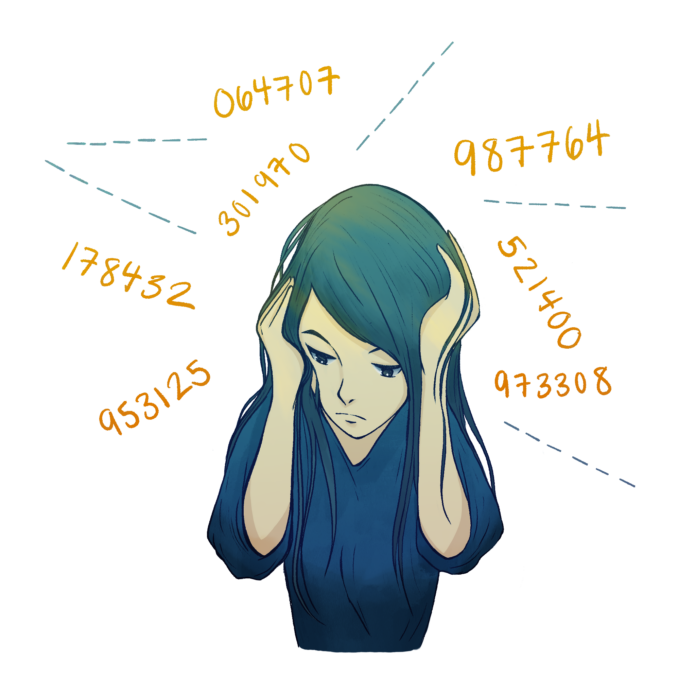
Student holding head in hands surrounded by number representing the MFA authentication codes
ILLUSTRATION: Alyssa Umbal / The Peak

By: Saije Rusimovici, Staff Writer

Mission: Impossible — Rogue 2FA Code

Whoever developed two-factor authentication (2FA) must have been trying to hide some serious shit. The service requires an alternate method of sign-in, like a code sent to your email or an alternate password. This might not be too bad if the password was something simple, instead of a combination of numbers so complex I doubt a codebreaker could understand. As for alternate passwords, I’ve locked myself out of my Apple ID, like, five times in the last three months. What makes anyone think I have the brain power to keep yet another password stored up there? Yes, yes, I realize I could write them down, but I usually use Goodnotes, and I’m sure we’re not far away from throwing a few passwords to log onto that too (as if anyone wants to see my sparse health science lecture notes from three semesters ago). Now, this may have come in handy for secret agents like James Bond and Mission: Impossible era Tom Cruise. But for an average person like me!? 2FA is stressful and a painful waste of time. 

Since when did logging into my Canvas account become as complicated as getting into a CIA database? I mean, I feel honoured that my information is important enough to require multiple passwords to access it. If anyone wants to look at my mediocre grades, they can go right ahead and have a little laugh. Honestly, swiping out of Canvas to open my email browser to find my authentication code somewhere among thirty-five unread emails from Joy Johnson is more stressful than anything else. 

Any hacker would be disappointed after stumbling upon my college-kid-sized lump of money embarrassingly divided between my checking and savings accounts. The rest of the money is long gone into the corporate hands of The Juice Truck at Whole Foods (they’re just so good, though . . . ). Thank goodness for the copy-and-paste feature that makes it easier to sign in with the overly complicated code hidden in an excessively detailed email. My memory isn’t what it used to be. I can’t even remember my credit card PIN, let alone three different authentication codes in one afternoon. In a way, it’s reminiscent of the “I am not a robot” prompts on Google (though if a robot was trying to hack into my accounts you could be sure I have something to hide . . . ).

Large-scale fishing has serious ethical implications

0
someone pulling in a fishing net on a boat
PHOTO: Fredrik Öhlander / Unsplash

By: Nercya Kalino, Peak Associate

Fish farming has complicated impacts on the environment. Most of us don’t have the slightest idea what processes fish go through before they land on our plates. When you learn what happens behind the scenes in the fishing industry, it becomes harder to see eating fish as appetizing. Over the years, the practice of open-net cage farming has been an ongoing concern between Indigenous peoples and the Canadian government; the government has been urged to abide by restrictions on farms along the BC coast. In 2018, Pacific Wild released a statement about the farm operations in the Musgamagw Dzawada’enuxw Nation territory. They said the fish farms located in that territory were “operating without free, prior, and informed consent of the nation, violating the UN Declaration of the Rights of Indigenous Peoples.” This has been a progressing problem for a long time, and it’s only one of many violations in the industry. 

Ethical farming of any kind of meat is crucial to the future of sustainable eating. Fish are no exception. With open-net cage farming, wild fish are exposed to chemicals, parasites, and fecal infestation from waste in the ocean and crowded living conditions. Living Oceans stated that, in “BC alone, salmon farms produce the same amount of waste as a city of half a million people,” and fish farms are the “perfect environment for disease transmission,” which can easily spread to wild fish and negatively impact local populations. 

This is quite concerning. Mass farming has been an inevitability of the fish industry, and it contributes to many people’s livelihoods — but it shouldn’t exist without extreme caution and regulations. The BC government recently examined the issue of rights violations on Indigenous territories. In 2022, they released a statement concerning sustainable aquaculture to embrace reconciliation with Indigenous communities, protect jobs, and respect wild salmon. There was a new policy made about open-net cage farming effective this coming June. The policy will only grant tenure renewals for open-net cage farms operators who ensure  “their operations will not adversely impact wild salmon stocks” and agreements with Indigenous peoples. This is a good sign. 

But fish farming is a complex issue in terms of ethics and economies. The Union of British Columbia Indian Chiefs wrote about the history of fish farming and how it’s impacted their community; farms often invade burial islands sacred to Indigenous people. On top of that, “those nations on whose waters these fish farms are located experience immediate and destructive impacts.” Some of these impacts include the “destruction of traditional harvesting grounds, and the poisoning of water and marine resources.” 

There are a few actions consumers can take to avoid contributing to harms caused by mass fish farming. Many brands display the Ocean Wise symbol on their packaging to indicate ethically farmed fish, but it’s also important to research individual brands to ensure their ethicality. It can also help to reduce your consumption of larger fish species like salmon and halibut in favour of small species like sardines and mackerel. Samantha Renshaw, “Science Lead at Ocean Wise,” also stressed the importance of supporting small and family-run fisheries. The next time you find yourself with fish on your plate, ask yourself how it got there, what it was exposed to, and what that means to you. 

New initiative opens to support mental health and substance recovery

0
This is a photo of a group counselling session. Many people of diverse backgrounds are sitting in a circle of chairs in a large room.
PHOTO: Tima Miroshnichenko / Pexels

By: Eden Chipperfield, News Writer

On May 2, the Canadian Mental Health Association (CMHA) of North and West Vancouver hosted a Consumer Involvement and Initiatives Program at the Segal Centre to celebrate the opening of the Recovery College YVR. This community centre offers free courses surrounding mental health and substance use. It is the first of its kind in the Lower Mainland to focus on inpatient care and outpatient rehab. 

Inpatient care consists of the individual admitting themselves into a program with a “controlled environment to address substance use disorders, co-occurring mental health conditions, and other behaviors that may be causing them difficulty,” according to Addiction Center. This program offers the individual residence in a treatment centre and constant medical or emotional support. 

In comparison, “Outpatient treatment is generally considered to be less restrictive than inpatient programs.” These programs involve the indivudal attending short daily treatment sessions, multiple times a week. This type of care “allows more flexibility for work and life needs, as well as an opportunity to readjust into the world with support.”

According to the Centre for Addiction and Mental Health (CAMH), most mental health services specifically focus on individuals with severe and continuing mental health problems. This leaves 20% of Canadians unaddressed when they face mild to moderate mental health and substance use issues. CAMH reported, “People with mental illness and substance use disorders are more likely to die prematurely than the general population. Mental illness can cut 10 to 20 years from a person’s life expectancy.” 

Speakers who attended the event included Julia Kaisla, the executive director of the North and West Vancouver CMHA brand, the honourable Jennifer Whiteside, the Minister of Mental Health and Addictions, and Andrew MacFarlane, the Regional Director of Mental Health and Substance Use of Vancouver Coastal Health as well as MJ, a recovery college peer support worker with lived experience. 

The Recovery College YVR classes include art therapy, pet therapy, mediation and self-management for addiction. They also offer specialized language sessions, such as the Farsi speaking women’s group. 

 For more information on the Recovery College YVR programs, visit their website at recoverycollegeyvr.ca/. 

Polite ways to tell your dentist you don’t want to chat while their hand is in your mouth

0
Patient receiving a dental check-up
PHOTO: Anna Shvets / Pexels

By: Hana Hoffman, Peak Associate

Shwshdf bfftjjrrhjjdj hhrrgscdrr. That’s the sound of my best conversational pronunciation during dentist appointments. Picture this: you’re laying on a bed, your head feels closer to the ground than the rest of your body, you’re wearing scratched and sticky sunglasses, the dental hygienist is flushing your mouth with fluids, and they’re constantly asking you questions you can’t physically or verbally answer. I’m sure we’ve all been there, but I just wanted to rant a little further about it since it’s getting to my last nerve (and so is the numbing needle in my gums).

To be honest, I sometimes can’t tell whether a dental hygienist is trained in teeth maintenance or client interviews. All these different tools fill my mouth with water, air, and weird-tasting chemicals, which then drip down my chin and neck. Yet, they constantly ask about my life and then ramble about their experiences and advice. I do try my best to answer, but I usually end up choking and almost drowning in my own spit. Do they really expect me to talk understandably while I can’t move my tongue or lips? Please, I’m no ventriloquist.

Adding on to that, I keep hearing the same questions every. single. appointment. Yes, doctor, I study at SFU. Yes, I have a younger sister. No, I’m not 19 anymore; I’m 20 now. Yes, I brush my teeth daily. Like, bro . . . I’m not sure how many more times I can repeat myself before I lose my mind.

And here’s the worst experience: being flooded with questions during wisdom teeth removal. Is tooth surgery really the best time to be asking questions? Pretty sure the better way to reduce pain is to focus on the TV on the ceiling rather than trying to engage in a one-way conversation with the dentist — unless there is no TV, in which case I don’t know how anyone would survive. It’s funny when they ask me how my day is going. Just look at me bloody gums, scraped teeth, watery eyes . . . yeah, I’m totally doing great and how about yourself?

Whether you’re in for a cleaning, a tooth removal, surgery, or a tightening of the braces, you don’t deserve to embarrass yourself by mumbling back in gibberish. Dental hygienists should hold their horses until after the dental work is done. Or, even better, chat before starting.

To prevent these awkward conversations, I have a few ideas in mind. Firstly, the copycat method. Just interrupt the dental hygienist’s sentence, tell them to start copying whatever you say, and go silent. Then they’ll copy your silence! Secondly, confuse the dental hygienist with your made-up hand gestures. Every time they ask you a question, answer it the best you can using every body part but your mouth, and they won’t know what you mean, so they will give up on starting a conversation. Thirdly, play dead. In other words, pretend to fall asleep during the appointment so that they will stop talking since there would be no point in doing so.

I’ve also got some tricks up my sleeve, literally. Idea 1: Pull your phone out of your sleeve to use Bluetooth. Let the dentist deal with your cavity while you keep calm, listen to music through your earbuds, and block out any questions the dental hygienist asks you. Idea 2: Pull your DS out of your sleeve so you can turn it on and play Mario Kart music out loud. Your dentist will start bobbing their head to the beat and forget about all the conversation topics they had in mind. Idea 3: Pull your earmuffs out of your sleeve and put them over your head. Block the voices and tool noises so you can silently relax.

I hope these strategies will come in handy to everyone who is not a ventriloquist. If they don’t work, my final bit of advice is to floss and brush as much as possible so you’ll never need to go to the dentist!