Home Blog Page 173

The ABCs of tipping in an expensive city

0
ILLUSTRATION: Alyssa Umbal / The Peak

By: Izzy Cheung, Staff Writer

A few weeks ago, I went out with a couple friends for dinner at a newer restaurant in our neighbourhood. The food was great, and service was amazing, but what surprised me the most was the numbers we saw on the bill. Prices for everything in Vancouver are through the roof nowadays, but shrinkflation wasn’t the reason for my shock. Before we paid, they made sure to inform us we didn’t need to add a tip to our bills. This was something I’d never seen before at a sit-down restaurant, and it comes to mind now that I’m hearing more conversations about getting rid of tipping system all together. 

Having worked in customer service, I’m all for tipping. It can be really difficult working in an industry that deals with all sorts of people during all occasions, for example, baristas working in the mall during Christmas. The amount of times I tried to work while someone was yelling in my ear about how their coffee wasn’t a specific temperature right to the degree truly made me wonder why I was even working as a barista . . .  although, those weekly tip bonuses made things worth it. The money I made off tips put me at a higher hourly wage drawing fun little designs in peoples’ coffees than what I now make working two salaried jobs.

That being said, tipping systems can be pretty unfair to servers, and with recent inflation, to the general public as well. Tipping doesn’t take different working conditions into consideration. For example, servers, kitchen staff, and delivery drivers all might heavily rely on tips, yet their work conditions vary significantly — servers are required to directly interact with customers, kitchen staff are heavily responsible for food safety and quality, and delivery drivers might brave challenging weather conditions or unsafe roads. These differences in work type might make the final total compensation from tips feel unjust to some workers. This isn’t just unfair to workers, but the expectation to tip when you yourself have a low income might feel like an additional punch to your finances. 

A: Are we always supposed to tip service workers?  

There’s no specific rulebook for tipping a certain percentage at certain establishments — all of that is based on your own decisions. Most don’t tip fast-food workers, but what about baristas? You might tip your Uber driver, but do you tip your tattoo artist? Despite there being no rules, for many service workers, tips make the difference between paying rent or not

When a service worker heavily relies on tips to get a livable income, then yes, gratuity is kind of expected. While tipping is seen as an optional gesture of appreciation, in the case of workers who depend on tips to make ends meet, a tip becomes a vital means of support — if your finances allow it, it’s highly encouraged that you tip them. A tip is typically given to workers who perform a service, such as bartending, hairdressing, or serving. Following societal customs, most people tip on bills at sit-down restaurants, at your hairdresser’s, or after getting a ride from an Uber — but other circumstances can be difficult to gauge, which takes me to my next point.

B: But who counts as a service worker? 

It’s hard to define who a service worker is without relying on using those same words in their description, but in essence, that’s what service workers are those who provide you with a service. This includes food service (waitstaff or delivery), transportation services (uber or taxi drivers), or beauty and aesthetic stylists (hairdressers, nail technicians, tattoo artists, etc.). But as of recent, tipping has been creeping into other type of services beyond the conventional scope of a service worker. Gilbert Mofleh, a mechanic from Ottawa, and Tudor Liquor Store in Surrey, are commerces where tipping isn’t usually expected. Both have the tipping option enabled on their card payment machines, though neither expect people to tip. 

C: Can you NOT tip at a restaurant? 

Realistically, no one can force you to tip when eating at a sit-down restaurant — but you’ll probably be treated to some glares on your way out. However, outside of gratuities, many service workers barely get paid a living wage, which is why some have suggested scrapping the tipping system for higher wages. This shifts the responsibility of providing a living wage from consumers to employers. 

D: Different ways of splitting tips among workers

For an individual service worker, a high tip-income often reflects excellent customer service. However, each establishment’s breakdown of gratuities is different. While I was working at a coffee shop, tips weren’t recorded for each individual worker; instead, we tallied up the total amounts tipped per week, calculated how many hours were worked in total (combining the hours of all employees), and split the money based on the average amount that was tipped per hour. So, if we made $500 in one week, the total amount of hours worked by all employees was 100, and I worked 10 of those, then the hourly tip count would be $5 — meaning that I would have made $50 that week. One of my friends, who works at a restaurant, does things differently; their establishment splits gratuities based on each day — part of the gratuities go to the kitchen staff, and the servers split the rest evenly based on their hours. Each place does things differently, but the gratuity system doesn’t have to be this complicated. 

E: Every area tips differently 

When it comes to tipping, different countries have different social expectations. Some countries don’t tip, while others tip around 10%. Canada falls around 15–20%, which is one of the higher values compared to the rest of the world. Québec, in particular, is infamous for having high tipping expectations, with the expected percentage ranging from 18–20%. 

F: Fast food = take-out? 

Is tipping on takeout orders a thing? You’re not directly being served, but the kitchen staff still have to make your order, and servers still have to package it — so really, even though it sounds different, it’s logistically not much different from fast food. Despite this, a survey by Research Co. shows that 53% of Canadians never tip whenever they take their food to go. This action might be slightly contradictory with other answers in that same survey, where 70% agreed that “Food servers cannot get by on their salaries alone — it’s important to tip them.”

G: Generalization kills the system   

Our gratuity “system” bases a lot of its factors on generalization. I’ve even been generalizing in this piece — it’s hard to go in-depth into every single customer service experience. Because of this, there are many things tipping doesn’t take into consideration. For instance, if two servers work a busy shift, but one of them does takeout, chances are they’ll take tips from the person who did most of the dine-in serving. In a similar vein, if you get excellent customer service at a fast food establishment, would you tip there? Most fast food places don’t offer tipping options on their machines, so you’d likely have to offer cash. And if you did, how would an establishment track that? If a server gives great service but has their tip physically stolen (which has happened to me before), then the server takes the financial brunt despite providing their labour. Tipping is an intricate, complex system that really has no specific rules — which brings me to the final letter of this condensed alphabet. 

H: Higher wages for service workers 

Tipping can be made simpler by increasing the wages of customer service workers. In fact, many have expressed a desire for higher wages instead of sticking to current tipping models due to inflation on food and menu items at restaurants. Scrapping the tipping system and implementing higher wages would make things easier for individuals who need a service done for them. Having the expectation to always provide a tip also puts other low-income people in an economic strain. At the same time, some might think tipping can act as a motivator for service workers to provide better service, but even if that were the case, it shouldn’t replace higher wages and should only be supplementary to a living salary.
TSSU engages strike action at Surrey campus

0
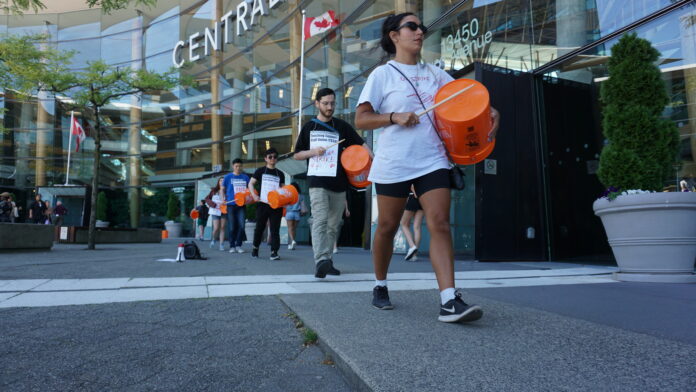
This is a photo of the picket line at the SFU Surrey campus. Picketers are pacing in front of the main entrance, they are holding signs that read “ON STRIKE”
PHOTO: Sadia Nasrin

By: Olivia Sherman, News Writer

Editor’s Note: The Peak would like to acknowledge and apologize for misgendering one of our interviewees. Their correct pronouns have been added to the web-version of the article.

On July 19, the Teaching Support Staff Union (TSSU) took strike action at SFU’s Surrey campus. Their actions included picketing outside the campus and teaching assistants (TAs) stopping work. These measures are part of the ongoing strike among TSSU members across all three SFU campuses, which officially began on June 12.

“We are striking to address overwork and striking to address unpaid work, we’re striking to address wage theft, we’re striking to get wages and raises that actually keep up with inflation,” said Dalton Kamish in an interview with The Peak. As well as being a PhD candidate in the School of Communication at SFU, Kamish is a member of the TSSU, acting as a trustee and member of both the strike committee and bargaining committee. Kamish is also a research assistant (RA).

Kamish said the July 19 strike’s location was significant. They noted members of the Surrey campus “sometimes feel left out.” To help, “we made it a point the past few weeks to spend more time in Surrey doing more outreach, because they want to be more involved in the strike actions.” 

Kamish discussed the importance of including RAs in the TSSU and the ongoing strike movement. “RAs have been wanting to join TSSU [ . . . ] for years now,” Kamish explained, for reasons including extended healthcare coverage, healthcare for international students, and job protection. “So right now, RAs can just be fired at will for no reason. Like, if the next day your supervisor decides they don’t like you anymore, they can just fire you for no reason.”

Kamish explained RAs have been engaging in a card signing campaign. Cards can be signed either on the Burnaby campus or online through the TSSU website. A signed card represents a declaration that the worker wants to be represented by the TSSU. Once 55% of these cards are signed by RAs willing to be members of the TSSU, RAs will “become part of the certified bargaining unit,” granting them “more rights under the purview of the labour board.”

As a member of the TSSU bargaining committee, Kamish said negotiations with SFU administrators are far from over. “We’re still very far apart on our major issues,” they said, citing the TA compensation model as one of the main points of contention between the union and administration. The TA compensation model, Kamish explained, does not include compensation for the various class sizes a TA must instruct. 

Kamish mentioned how TAs are compensated the same amount for teaching courses with five or 500 students. “It doesn’t account for the extra time and the extra preparation, the extra emails that go along with more students,” they added.

While bargaining has been slow, there has been progress. “We have seen some minor, but not insignificant [ . . . ]  movements since we began strike and job actions, like picketing,” Kamish explained. “But the reality is that strikes work, pickets work.”

Kamish noted the ongoing strikes should be a unifying act, rather than a divisive one. They stated SFU administration has been reportedly “trying to pit undergrads against their own TAs,” and there is a severe divide between “different groups of people who actually have a shared interest with each other, and it’s very frustrating to see.

“We hear from our undergraduates all the time: ‘Why are you guys on strike? You’re cancelling class.’” Kamish explained, “We love what we do. We don’t want to be on strike. We’re being forced to go on strike by the employer who won’t offer us a contract that will meet our actual needs [ . . . ]  I would argue it’s part of one’s education here at SFU to participate and be involved in this workers’ movement right here on campus.

“Our power as workers is our labour. This university works because we do. And the most power we have is withdrawing our labour, making this university stop working. Because that is the only way to get the employer to take us seriously, to get them to offer us a contract that will meet our needs.”

This is a developing story The Peak will continue to cover. For more information, check out the official TSSU website at https://www.tssu.ca/

We can’t forget disabled queers during pride

0
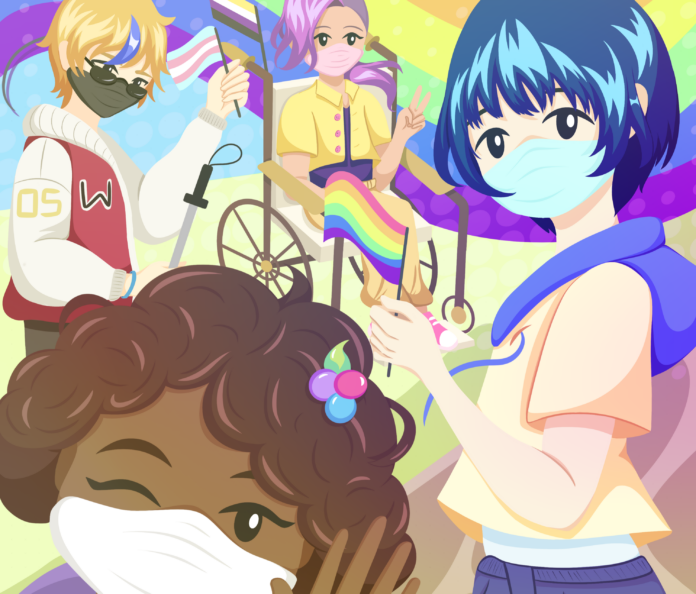
Illustration of disabled people at Pride, some in wheelchairs, holding a white cane, and wearing masks
ILLUSTRATION: Alyssa Umbal / The Peak

By: Michelle Young, Opinions Editor

Editor’s note: This piece was written before the Vancouver Pride Society announced an accessible viewing zone with mask mandates in place, in response to community concerns. 

Vancouver Pride is coming up this August. It’s supposed to be a time for 2SLGBTQIA+ people to celebrate identity and strengthen bonds in the queer community. But for many, it doesn’t feel that way. 

In 2019, Forbes reported on a slew of accessibility issues surrounding Pride events. They highlighted how “parades can often be difficult for people with mobility issues because of uneven, long routes, extreme heat, and tight, narrow spaces.” Further, they added that smaller events often lack American Sign Language (ASL) interpretation, closed captioning, and accommodations for sensory issues. The Vancouver Pride Society has addressed a few of the above concerns: rerouting Pride to a more accessible route, adding ASL interpretation, and a low-sensory zone. However, this isn’t enough. 

The 2SLGBTQIA+ community is no stranger to marginalization — as many might already know, Pride began as a form of protest. Fighting for queer rights was, and continues to be, an act of necessity and resistance. In the 1980s, the AIDS epidemic killed thousands, which sparked die-in protests to bring attention to it, which was largely ignored by the US government for years. While die-in protests didn’t originate with the AIDS epidemic, this early understanding of HIV — both its transmission and how it disproportionately affects the queer community — shaped Pride’s disease control for years to come. It sparked HIV prevention programs, and rapid testing allowed for early HIV detection at later Pride parades. 

As of 2021, gay and bisexual men represent 56% of people living with HIV. Mpox (formerly known as monkeypox) also disproportionately affects queer men. The community’s experience with disease control allowed preventative measures like distributing safe sex supplies and seeking vaccination and early treatment to help with disease mitigation during the Mpox outbreak in 2022. That’s to say, the 2SLGBTQIA+ community is no stranger to organizing and protecting one another. Health, politics, and identity are deeply intertwined. 

However, many queer and disabled people have been vocal about feeling excluded from the community. They report feeling abandoned and betrayed. Pride organizations consistently use the language of equity, diversity, and inclusion to make themselves appear progressive. As reported in Xtra Magazine, “Concepts like ‘safer spaces’ and ‘harm reduction’ meant to ‘keep each other safe’ now seem to come with the caveat: except from COVID-19.” In a community largely affected by immunodeficiency, we should be doing more to protect one another from COVID-19 and other contagious illnesses. 

Like much of the rest of the world, Pride events have tucked COVID-19 in a corner as a thing of the past. The way COVID-19 cases have been reported on has changed to give the illusion of a pandemic that’s in a “better place” than it was three years ago. However, the little evidence that is available, points elsewhere. In 2022, there were more COVID-19 deaths than in 2020 and 2021. This doesn’t seem to be common knowledge. With less testing, it’s difficult to have a true grasp of current COVID-19 cases, which is why it’s important to not be overly reliant on one source of data. Independent reports, such as the ones by COVID-19 Resources point to higher levels of COVID-19 than official numbers. Spearheaded by a team of professors and researchers, these reports are made up of a plethora of information, putting together hospitalizations, deaths, and will soon be incorporating wastewater data. As of mid-July, COVID-19 outbreaks continue in hospitals throughout the province. The virus poses risks that go beyond the acute phase of infection.  Further, with ongoing variants and asymptomatic cases, vaccination alone isn’t enough to drastically reduce transmission. 

Most events are void of any COVID-19 mitigation measures, and when asked, organizations typically respond saying they’re “following provincial guidelines” or “cannot mandate masks.” Safety has been thrown out the window in favour of unsafe parties. Outdoor spread is also a concern in crowded spaces where airborne particles can remain for hours, infecting large groups of people. Celebrations don’t need to be all or nothing, but they can be more inclusive than they are now. 

While the inclusion of certain accessibility requirements — such as providing shade — are not mandated by law, they are still necessary. So I ask, since when does the queer community take their guidance from the government? Never. The government has continually oppressed the 2SLGBTQIA+ community. Limiting love, marriage, and ignoring the mortality from the AIDS crisis has deeply scarred this community. Further, the US government has taken their own measures to protect themselves from COVID-19. If it’s such a non-issue for the rest of the population and COVID-19 is so over, why have they upgraded ventilation guidelines and continued testing requirements? The level of betrayal around Pride events doing the same to vulnerable, immunocompromise queers is unreal. Disabled queers have been extremely vocal in how unsafe pride events disproportionately affect the community and asked for mitigation efforts, yet we continue to be ignored and dismissed. We should be allowed to celebrate Pride safely. 

When provincial restrictions were still in effect, organizations rushed to make every event as accessible to everyone as possible. We can do better because at one point, it was already standard. Further, a small number of organizations continue to acknowledge these harms and create accommodations accordingly

This isn’t the first time the 2SLGBTQIA+ community has harmed those with intersecting identities. Historically, queer spaces have not always been welcoming to queers of colour. Experiences from the 1980s show that Black men were stereotyped in gay bars. In 2022, Canadian Black folks have also said they were called racial slurs and fetishsized in queer spaces. When disabled queers of colour reported seeing unsafe queer celebrations even while pandemic restrictions were in place, a Black trans person noted this made them doubt how the 2SLGBTIA+ community would protect them against trans or racial violence, if they wouldn’t even wear a mask. 

The 2SLGBTQIA+ community is made of intersecting identities, with different people facing multiple forms of oppression. This is a part of why intersectionality and anti-oppressive action is so important for all social justice issues. 

The Vancouver Pride Society asks people to refrain from wearing scents, but masks are not required across their events. This ignores a whole group of people who should be protected. To be clear, scents should be limited at events to protect those with sensitivities and provide a space that doesn’t threaten their well-being. However, the same should be said for illness mitigation. Similarly, while ASL interpretation is a great step forward, audio descriptions of the events at Pride are often lacking. Over the years, we have moved forward. Organizations acknowledging past harms and trying to expand their access is a good thing, but we can’t cherry pick and decide what is “necessary” and what isn’t when those who are directly affected are asking for more. Defensiveness and pointing to the official “guidelines” is not helpful. These guidelines do not mandate ASL interpretation or scent reduction — like masks, they are solely suggestions — and yet those are good policies to have in place for accessibility. The world has already left us behind, but in this community, we’d like to have something to celebrate. 

Why all SFU research assistants must act now to finally win a union

0
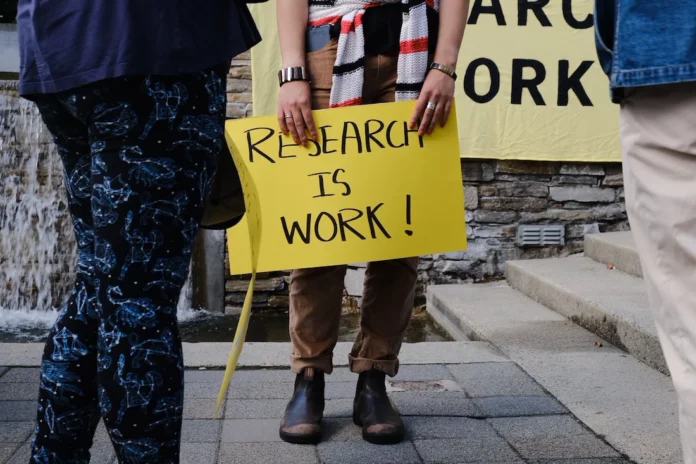
A sign reading "research is work"
PHOTO: Sherry Young

By: Kelvin Gawley, SFU Student 

Editor’s note: While this piece was published in The Peak’s Features section, it was edited by Opinions Editor Michelle Young. This is in place of Features Editor Daniel Salecdo Rubio, who is both a teaching and research assistant, to avoid conflict of interest.  

In 2019, research assistants at SFU made a bold declaration: “research is work!”

While that may not seem like such a controversial statement to anyone who has spent hours toiling over a lab bench, poring through archives, or analyzing reams of data — it’s a lesson SFU still refuses to learn four years after the union drive in 2019, where SFU signed to recognize Teaching Support Staff Union (TSSU) as the RAs’ bargaining agents.

As a member of the TSSU, I am writing to implore research assistants to help us all. Research assistants (RAs) just have around one week left for SFU to finally recognize the vital work we do. We have until August 11 to cement our rights as workers by signing union cards with the TSSU. 

It doesn’t matter if you’re a student or not, whether you spend an hour a week compiling literature reviews or 40 hours on an archeological dig, if you’re an aspiring professor, or eager to leave academia behind as soon as possible. If you’re being paid to do research at SFU this summer semester, you can make history by building a union that will fight for you and generations of RAs to come.

This final push is the culmination of RAs fighting together for our rights for years. Our modest demands — for health benefits, job security, and fair pay — have not changed since day one. But SFU still refuses to meet them. 

After we signed cards in 2019, the university said it would “voluntarily” recognize our union. SFU soon broke that promise when it tried to kick many RAs out of the TSSU, claiming they don’t count as workers. 

We refused to be divided, so we fought back.

Last year, we took our fight to arbitration, and won. The arbitrator said the university’s “approach was not in the spirit, intention, or words of the [recognition] agreement.” He said the administration’s “behaviour is not a credit to SFU as an institution or its organizational capability to act in a manner on which contracting parties can rely with confidence.”

Sadly, SFU has acted like a sore loser. They still refuse to recognize us as workers and negotiate a fair contract. But we’re not backing down, either. 

SFU broke its agreement to recognize us as union members. It has refused to engage in meaningful bargaining for four long years. And it has ignored the arbitration ruling.

All the while, RAs have continued to perform the vital work that makes SFU work every day. 

It’s time to put an end to the school’s endless delays and evasions so we can all concentrate on doing the research we love. To do that, we still need every RA who is able to sign a card by August 11 at the very latest, but the sooner the better.

If a large majority of us sign cards now, we can file for certification with the BC Labour Relations Board (LRB), which was cut out of the process when SFU “voluntarily recognized” our union in 2019. The LRB has the power to force SFU to finally recognize our union and negotiate a deal with all research assistants.

Over the last three months, TSSU organizers have spoken to more than a thousand fellow RAs on and off campus. Several hundred have already signed, but those who haven’t often tell us they are too busy to think about it.

The truth is, we’re all swamped — especially as the semester winds down — but if everyone who is planning to “get around to it eventually” keeps putting it off, we won’t reach the threshold we need to finally put this issue to bed.

This is our last chance to get over the line. You can sign a card online right now.

Many RAs who have told us they are hesitant to sign have cited common misconceptions about the reality of the campaign, and unions in general. When they get the facts, they often change their minds.

Here are some frequently asked questions:

SFU says it can’t afford to pay RAs more. Why bother asking?

SFU’s research funding has more than quintupled over the last 20 years. Between 2016 and 2021 it increased by nearly $62 million per year. Yet, SFU’s data shows pay for RAs has remained flat during that time. 

Where is all that money going?

Instead of paying researchers their fair share, SFU’s administration takes a large cut of every grant. SFU’s compensation report notes president Joy Johnson was paid more than $300,000 for the 2019–20 fiscal year. That jumped to $389,000 the next year. Last year, Johnson was paid nearly half a million dollars ($484,690).

In a single year, SFU’s five top executives took nearly $2 million from the university.

Will the union come between me and my research supervisor?

Studies have shown unionization doesn’t hurt the relationship between research assistants and supervisors. In fact, it has the opposite effect: “Union-represented graduate student employees report higher levels of personal and professional support, unionized graduate student employees fare better on pay, and unionized and nonunionized students report similar perceptions of academic freedom.”

Will my supervisor punish me if I sign?

If you are worried you will face consequences for standing up for yourself, that’s when having a union standing behind you can be the most powerful. Most importantly, signing a card is confidential, so your supervisor won’t know if you sign.

What is there to win?

RAs have been left without basic employment rights that all other TSSU members have, such as extended health and dental benefits, a month of paid sick leave, tuition deferment, payment of health fees for international students, and more. Unionization also means regular wage increases and having someone in your corner to advocate for you when you run into a problem at work. Having a union allows us to fight for these basic rights — and build on them for a better future!

To sign a card, visit https://www.researchiswork.tssu.ca/sign/ to sign online or for more information about how to sign in-person. 

Turn the bass down and crank up the transit etiquette

0
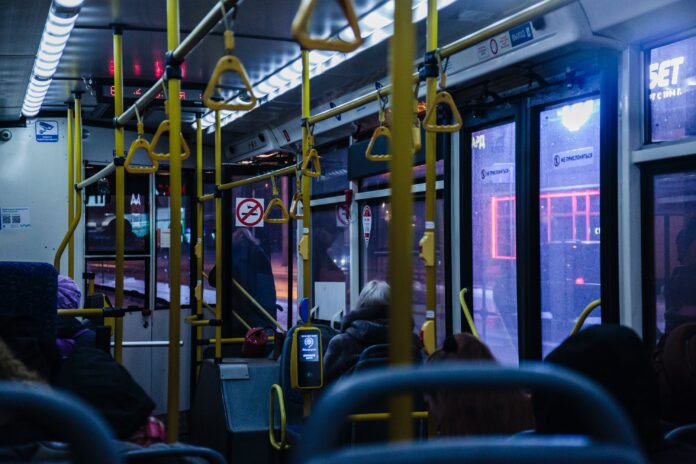
The inside of a bus
PHOTO: Aleksandr Popov / Unsplash

By: Eden Chipperfield, News Writer

It’s a quiet Tuesday morning at the SkyTrain station. The sun peeks over the mountains as commuters bundle up in their coats, bracing themselves for the day ahead. As the train pulls up and the doors open, people hurry inside, hoping to find a seat for their journey. Then, as the doors slide close, the loud beat of obnoxious music fills the train with headache-inducing rhythms that pound into the heads of all. The same goes for loud and personal conversations. Not only is this inconvenient, it can have negative effects on other passengers.  

I don’t mean to be rude, but regardless of the time of day, hearing Skrillex blasting on the train is neither fun nor wanted. The number of times I see either a BeatsPill or a Bose speaker taken out of a bag to play the worst music I’ve heard is incomprehensible. Everyone is affected, and no one is amused. Some riders may become overwhelmed from sensory overload because of the amount of over-stimulation occurring in a small, confined space. 

Deeply personal conversations can be triggering, and it’s probably better to relocate those conversations to parks or spaces which aren’t as confined, if private areas are not accessible to you.  

According to TransLink, priority seats are for the elderly, people with disabilities, pregnant people, and those with injuries. It’s only a seat for someone to sit in if the above categories apply — and it is not a seat for your purse or backpack. A backpack on a seat is the unspoken code on the transit of “I don’t want people sitting next to me,” however, if the bus is full, please remove the pack and kindly offer someone the seat beside you. It’s astounding how a packed bus can have multiple seats occupied by backpacks, laptop bags, or purses that force people to stand, causing an unpleasant trip. Being considerate is vital, and priority seating is for those who need it. You might sit in one of these seats, thinking, “I’ll just get up when I see someone who needs it.” However, it’s important to keep these seats open for those who have invisible disabilities, and may not be comfortable asking you to stand up. Anyone who doesn’t need priority seats shouldn’t take them, because you never truly know just by looking at someone whether they need it or not. 

I have many gripes about transit etiquette in Metro Vancouver. I know that most commuters are respectful people who consider those around them. However, it goes without saying that others must be reminded about how to act appropriately when transiting with other people. So please be polite to those around you, and don’t forget to thank the bus driver!

What Grinds Our Gears: The pineapple on pizza debate

0
A pineapple pizza
PHOTO: bckfwd / Unsplash

By: C Icart, Humour Editor

In the year of our Lord, 2023, I came across a Hinge profile that specified the user’s opinion on pineapple on pizza . . . Hawaiian pizza has been around since 1962, the pineapple on pizza debate has existed on the internet since at least 2009, and the memes peaked in 2016. SO GET YOUR EXPIRED MEME OFF YOUR HINGE PROFILE. Enough is enough! Your meme is so old, it’s going to give you meme poisoning. Your meme is so old, it knows how VHS works. Your meme is so old, that if you squint a little, you can see it in the background of some nativity paintings. 

You acting like your opinion about Hawaiian pizza is a personality trait makes me sick (it’s true, just this week, my doctor diagnosed me with a hateritis flare-up). I’m looking for a HUSBAND (gender-neutral), and you’re wasting my time talking about pineapples? I’m swiping left. 

The pineapple is a symbol of colonialism as it was often brought back by colonizers from the places they had gone to. It’s quite fitting, isn’t it? Considering you stole your sense of humour from mid-2010s Buzzfeed? Do you work for the pineapple industry? Are you contractually obligated to talk about pineapples wherever you go? What you put on your pizza is between you and Uncle Fatih. Leave me out of it. 

How to Obtain W Rizz as an SFU Student

0
Very calm, very cool. Nothing wrong here. Illustration: Siloam Yeung / The Peak

By: Alex Ileto, SFU Student

1. Reserve their favourite spot on the bus by sitting there literally all day.
If you’re also a slave to TransLink like me, there is a spot on every type of bus and SkyTrain that you have designated as the prime spot. It’s that seat you make a beeline to as soon as the doors open on the SkyTrain — you know the one. You’ll be the person who has the coolest views and the easiest time getting off the bus. What better way to be their object of envy?

2. Show them that washroom on campus you’ve been gatekeeping since 1st year. 
As someone who tends to spend long hours on campus, sometimes you just need to take a dump. It’s a totally normal feeling to have, but what I don’t think is totally normal is having a go-to place to discharge. To express vulnerability, tell them your secret spot and revel in the praise they give you after your thoughtful recommendation.

3. Tell them you’re taking them to the aquarium and bring them to the koi pond.
A fairly cheap alternative to the Vancouver Aquarium in Stanley Park, head over instead to the koi pond for a romantic outing. It’s a win-win situation. You can take out that special someone to enjoy the serene swimming of the remaining koi (the ones that haven’t been snatched by the birds, of course) and also make the most of your tuition.

4. Brave the asbestos on the 5th floor of the library to get a book they’ve been wanting. 
This is solely for anyone who would like to rizz me up. I’ve been wanting to read “Happy Hour” by Marlowe Granados for a while now, but lo and behold — out of all places, it’s chilling on the asbestos floor of the library which is completely off-limits. In short, I can’t get my hands on that book. So if anyone is willing to confront asbestos and snatch that book, please let me know.

5. Bring them to the on-campus gym and hit literally all of your personal records (PRs). 
This is for all the gym bros and girlies out there. Prove to them that you’re an absolute weapon and annihilate all of your past PRs in one go. It might be a good idea to also hire people to stare at you in awe during your lifts.

6. Hack into their goSFU and give them an earlier enrollment day.
Speaking from personal experience, enrollment day always sucks. I can never get into the classes I actually want, goSFU always decides to crash on me, and if I can get on a waitlist, I’m 24th in line. Do your crush a favour and use your hacking skills (or a comp sci kid) to give them an earlier enrollment day.  

7. Carry them up and down the 4th and 5th floors of Surrey campus. 
This goes out to all my Surrey campus regulars. For whatever reason, the escalators at Surrey campus end on the 3rd floor and students are left to hike up the stairs to access the 4th and 5th floors. Fear not, for the Rizzler is here to be your personal escalator to bring you to the top of Surrey campus. Maybe hitting all those PRs came in handy . . .

8. Grab them an iced capp from Tim Hortons just before the morning rush. 
Who doesn’t like a refreshing drinkity in the morning? The answer is . . . no one! So save your crush the hassle by grabbing an iced capp before the rush.

9. Make a study playlist for them to block out the noise of their inner demons. 
As finals season quickly approaches, help them brace themselves from the chaos and swirling of emotions by making a playlist to shut out their inner demons. May I suggest a song for mothers who slay (“Do Not Touch” by MISAMO), a song that makes you do the stank face (“Come On Let’s Go” by Tyler, the Creator), or a soft melody that can be played in a meadow filled with sheeps (“Old With You” by Grent Perez).

10. Pretend you’re a UBC student. 
If all else fails, don a UBC hoodie and take a stroll across campus. As a UBC student, it is implied that you are not only smarter, but harder, better, faster, and stronger than any SFU student could ever be. Not to mention, you have infinite W rizz. So take the temporary L and fake it ‘til you make it.

The dos and don’ts of attending concerts

0
An illustration of a crowd of people at a concert with rock hand signs in the air, with their mouths open like they’re singing loudly. They look like they’re having a good time.
ILLUSTRATION: Andrea Choi / The Peak

By: Hailey Miller, Peak Associate

With many tours hitting the road this summer, now’s the time to implement a refresher on concert etiquette. Concert connoisseurs and amateur attendees alike need to be well-versed in what’s respectful and expected.

Don’t: Arrive late and ignore the opener.

Nothing’s worse than someone who walks in when the set has already started and disrupts the entire aisle. They narrowly attempt to squeeze between the seats, unsuccessfully trying not to make contact with fellow attendees’ knees. Once you’re there, pay attention to the show! Opening acts deserve as much recognition, no matter how famous they are, because they work just as hard to showcase their talents and make a name for themselves. More often than not, you’ll stumble upon a new artist whose style expands your musical tastes.

Do: Prepare and follow proper protocols.

Just as performers must prepare for a show well in advance and keep their health in check, fans should, too. Venue-specific protocols include bringing an appropriate-sized bag and following venue safety regulations. While health-related protocols should still be in place, you can still do your part to reduce risk of illness, like masking up — no one wants to get sick, whether it be from flus, COVID-19, or any other contagious disease. The last thing audience members want to worry about is getting sick. If you’re unwell, you and your fellow audience members won’t be able to enjoy the show, so stay home! Don’t put a damper on someone’s evening by spreading your germs and passing your illness to someone else.

Don’t: Be glued to your phone or talk during the show.

Nothing’s more disrespectful than someone who talks the entire time, is too preoccupied with their phone, and is only there to be seen. If you’re at a show just to disrupt everyone around you (artists included), you’re better off staying at home and watching the recorded version instead. Concerts aren’t the place to have a side conversation, or to scroll through your phone and take footage of the entire show. This blocks the view for others. Alternative artist Mitski spoke out last year asking fans to put down their phones to “embrace the present moment” and “experience magic.” Don’t waste your time and money if you’re not a true fan who’s there for the full experience.

Do: Respect the people around you — performers included.

Whether it’s your first show, or you’re a well-seasoned concert-goer, be considerate toward everyone. Respect the security guards, venue hosts, artists on stage, and fellow attendees alike. Remember, performers are on stage to do their job, and believe it or not, the venue is a professional setting. Throwing things on stage, pushing others, or making inappropriate comments at performers and stage crew is unacceptable. A clip went viral recently of fans screaming objectifying remarks at indie artist Clairo like “you’re so hot,” while she was clearly uncomfortable, and singing about “being sexualized in the workplace.” It seems like concerts are one of the few settings where such boundaries are ignored, and this needs to change.

Don’t: Disrupt others or leave your seat unnecessarily 

There’s no greater way to ruin someone’s evening than by disturbing their night and obstructing their view. Constantly leaving your seat just to get a drink is a sign of disrespect towards performers and attendees alike. Don’t leave the show early or be so inebriated that you have to be removed from the venue. If you’re tall, don’t block those of us who are short, and don’t hold a humongous sign, either. Don’t invade peoples’ space by drunkenly dancing into them, spilling food and drinks.

Do: Enjoy yourself and applaud the artists.

Concerts allow us to forget about life’s demands and stressors for a few hours, and to take in every moment while we can. The more you enjoy yourself, the more the artists do, too. So, applaud every song, dance the night away, and sing every lyric so loud that you’ll awake with no voice the next morning. That’s how you know you’ve had a great time.

So, as they say after the encore, thank you and good night! 

Transphobia is way too accepted in BC

0
PHOTO: Karollyne Videira Hubert / Unsplash

By: Isabella Urbani, Staff Writer

Content warning: mentions of transphobia.

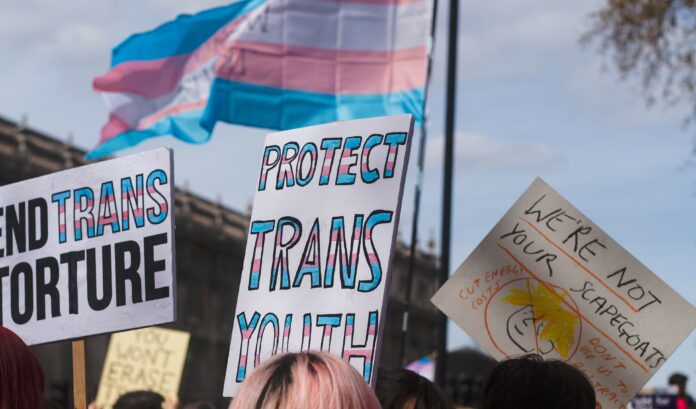
Institutions give too much power to transphobes. This society has shown it allows and tolerates transphobia. It protects transphobes more than it protects trans people. We need to do better in protecting trans folks because the heteronormative social constructs we live in put them in danger. 

Just last month during a track meet in Kelowna, a grandfather from the bleachers hollered “Hey! This is a girls’ event, why are boys throwing?!” to two nine-year-old girls. The man believed two of the contestants were either “boys or transgender” due to their pixie haircuts. When we make assumptions based on appearances, society begins to regulate how even cisgender bodies should look. This has real-world consequences that puts trans and gender non-conforming people in danger. 

Regardless of whether someone is cis or trans, if a person doesn’t meet these “conventional” standards, they’re vulnerable to transphobes who feel like their sense of security is being challenged. 

Transphobes have close-minded and dichotomous thinking. Anti-trans rhetoric has fueled the narrative that somehow, transgender people are a threat. Birds of a feather flock together. Transphobes find strength in other transphobes, and when they gather enough confidence, they attack. They lash out at people, challenge them in public, and might even use physical force. Just a month ago, an anti-2SLGBTQIA+ rally was held in Guildford, where multiple people were harassed, yelled at, and threatened. Incidents like this are why it’s so crucial that we shut down transphobes.

The man from Kelowna shouldn’t have felt comfortable sizing up these children in the first place, but our society has shown they tolerate this behaviour. He hurt the confidence of those children. A parent of one of the girls said their child was so bothered by what was said, they couldn’t focus on the race, and cried for the rest of the day. The other girl sprinted off the field after the encounter. Ironically, while this man was supposedly acting with the intent of protecting cisgender girls, he harmed them even more due to his ignorance and assumptions on gender presentation. I vividly remember being asked if I was a “boy” in elementary school because I had hair on my arms. To this day, I have to battle myself to wear short-sleeved shirts in the summer for something said to me years ago. 

What does this say about us as a society if people feel comfortable demanding to know or telling people what gender they should be. The fact that transphobes feel comfortable enough to say this, means we’re doing something wrong as a society. Transphobia is rising and it’s not just in the US — it’s here, right in our cities.

Our priorities are completely out of whack. Keep calling out transphobes. Don’t let them believe for a second there isn’t a place for trans people. Take time to reflect on your positionality and your beliefs. Does your opinion actually hold any validity or are you just regurgitating what people have told you? Be better. Do better, and don’t be the reason why a transgender person reroutes their daily life because you’ve shown them that you’re unsafe.

Fusion Festival returns to Holland Park

0
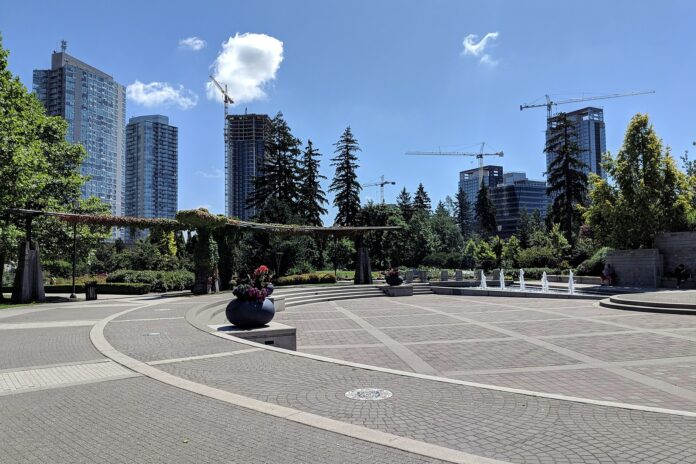
This is a photo of Holland Park. The park has stone courtyard, surrounded by grass and trees.
PHOTO: Wikimedia Commons

By: Saije Rusimovici, Staff Writer

The Surrey Fusion Festival is back in Holland Park this summer on July 22–23. This year’s theme is “Dance Around the World.” Fusion Festival not only provides an opportunity to try various culinary creations, but also celebrates the diversity of the community. The family-friendly event runs from 11:00 a.m.–10:00 p.m. on both days and includes a variety of activities for people of all ages. 

“The Surrey Fusion Festival serves as a vibrant showcase of the diversity within the Surrey community,” said Jenna Kuzemski, senior marketing and events specialist at the City of Surrey. “As a free festival that attracts over 90,000 attendees over two days, it brings together people from all walks of life, fostering a sense of unity and community pride.” 

Kuzemski highlights how Surrey Fusion Fest “promotes social cohesion, respect, and celebration of diversity” not only in Surrey, but the entire Lower Mainland. Some of Kuzemski’s favourite aspects of the event are tasting authentic dishes from all around the world, in addition to watching amazing performances throughout the festival. 

Both local and internationally recognized performers take one of nine stages. This includes JUNO award winner D.J. Shub, an Indigenous artist known for his electronic beats. He is just one of several Indigenous performers taking the stage. This lineup also includes Indigenous experimental duo PIQSIQ and Indigenous country singer Don Amero. Also performing are internationally renowned Punjabi artists Gurnam Bhullar and Ikky. Entertainment includes dance performances by V3, a traditional Vietnamese ensemble, Surrey International Folk Dancing Society, Grupo America, Higher Ground Dance Company, and many more. In total, there are over 50 different groups performing over the two days. 

One of the other highlights of Fusion Fest includes a selection of 50 food and beverage pavilions representing a different culture. Select pavilions will also be selling traditional art pieces. Pavilions include delicious food from across different countries including Cambodia, China, Fiji, Honduras, Jamaica, Mexico, Philippines, Ukraine, and more. Beer and wine from around the world will be offered at The Cantina and will be served from 12:30 p.m.9:00 p.m. on both days. 

The Indigenous Village offers the opportunity not only to try out Métis cuisine, but “to learn about Indigenous cultures through education, workshops, cultural sharing, and contemporary performances.” The Indigenous Market offers handmade artwork and crafts created by local Indigenous artisans. 

Other activities include amusement rides presented by Shooting Star Amusements, including favourites like the Zipper, the Spider, Zero Gravity, and many more. Several bouncy castles will be set up around the park for kids. Admission to the event is free, and ride tickets are available for purchase on-site. There will also be free face painting and kids’ crafts provided by the Downtown Surrey BIA

For more information about Fusion Festival, visit their website at surreyfusionfestival.ca.