Home Blog Page 173

Local advocate talks dispelling drug stigma

0
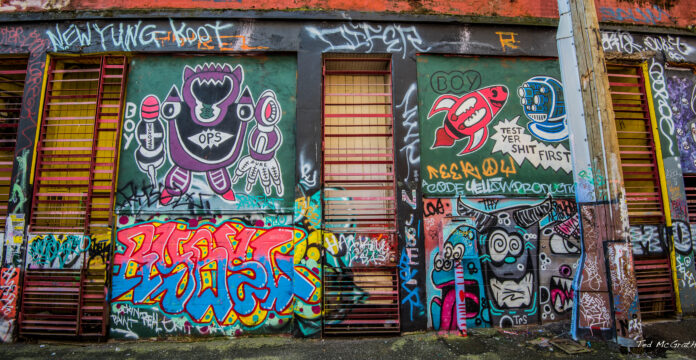
This is a photo of an alley on the Downtown East Side in Vancouver. The alley is covered in graffiti. The art reads, “Test your shit,” and “Naloxone.”
PHOTO: Ted McGrath / Flickr

By: Olivia Sherman, News Writer

For Nicole Luongo, substances like alcohol and heroin are only separated by the thin line of what society deems moral or legal. Luongo is a systems change coordinator for the Canadian Drug Policy Coalition (CDPC), which aims to reduce the stigma faced by people who use drugs. 

Luongo, who has an MA in sociology from the University of British Columbia, focuses on “medical sociology,” or “the medicalization of deviant behaviours.” She explained in an interview with The Peak how “behaviours that are seen as anomalous” are often “made medical through policy and law,” and how those restrictions act as “a form of social control. 

“Our dominant understanding of [people actively using illegal drugs] is that they’re either criminals or sick people, or some combination thereof,” Luongo said. This is a misunderstanding she and the CDPC have been working to change through “public education and coalition building.” 

Luongo challenges our concepts of morality surrounding drug use by comparing it to regularly exercised habits.  “Looking back 100 years when alcohol was illegal, people would go blind from drinking gin made in bathtubs. And once we legalized alcohol, we were able to manufacture it in a way that had quality controls throughout the supply chain.” 

She argues alcohol prohibition is no different than drug prohibition, and both can be solved by proper manufacturing, regulation, and fear reduction. “I tend to ask people, ‘What is the difference between something like heroin or crack, and alcohol?’ and often the response is ‘Well, one’s legal, one’s not,’” Luongo said. “Often people kind of come to the realization that what the danger and risk they attributed to the drug itself is often actually embedded in the drug policy environment.” 

Luongo’s efforts with the CDPC aim to dispel the narratives surrounding drug use. She said certain drugs, such as cocaine, meth, and heroin, have been criminalized for so long, people “just accept that these drugs are inherently dangerous.” It’s this misunderstanding that leads to an “enormous amount of resistance to changing legislative and regulatory frameworks that would actually make drug use much safer.”

Luongo said the best efforts to aid with drug use and addiction often fall flat. Some anti-stigma campaigns focus on “framing [people who use drugs] as sick people in need of help,” Luongo said. She said labelling people “as having a chronic brain disease that they have no control over is actually very stigmatizing.” 

Another ongoing campaign is safe supply, a harm-reduction strategy that seeks to replace the street market drugs with prescribed drugs from a doctor. “So rather than [acquiring] opioids from the illegal street-based market, they might be able to go to a prescriber and get a prescription for opioids,” Luongo explained. “Although that is a win, the implementation of it has been very fractured, very incremental, and very inadequate.” 

Luongo explained how the safe supply campaign has long been steeped in misconceptions, and has trouble with accessibility and logistics. While BC does have safe supply in place, it’s limited to urban environments, and many provinces across Canada do not have safe supply at all. “Well over 100,000 people in the province who have been diagnosed with opioid use disorder [ . . . ] less than 5,000 actually have a prescription. So it’s very difficult to access if you’re outside of an urban area.

“In this realm, there’s very rarely things that are unequivocal wins. They usually always come with caveats. You have to be a bit of an incrementalist, unfortunately, which is not what I would prefer, but it’s just kind of how it is.” 

Luongo said governmental policies haven’t been effective at quelling misconceptions of drug use or lowering consequences stemming from drug use. Politicians haven’t done “any real favours because they are kind of over-selling what is actually available.” She noted certain areas, like the Downtown Eastside, have been “managed through policy and law to create this space of concentrated suffering.” 

While conservative groups lean toward “erroneous solutions” such as criminalizing and stigmatizing people more, Luongo explained more left-of-center groups tend to reassign blame to the conservatives. Luongo admitted she is “in this very uncomfortable position of needing to critique the current governments, but not critique them in a way that [her] criticisms will then be picked up by right-wing parties.” 

Luongo herself has a history with drug use, mental health struggles, and houselessness. This “lived experience at the intersections of illegal drug use” fuels her advocacy for people who use drugs. Given this history, Luongo describes how facing “politicians and bureaucrats” and members of the public who are “resistant to changes” can be painful. 

“It’s difficult and hurtful because I know how my life has been shaped by drug prohibition and negatively shaped. And so I am very personally invested in this work, and it means a great deal to me, and I see myself in every [person] who is stigmatized.”


BREAKING NEWS: Air Canada reveals flight delay can be shortened if all passengers chip in to duct tape broken wings back together

0
Air Canada planes on the tarmac at Toronto Pearson International Airport.
PHOTO: David Preston / Unsplash

By: C Icart, Humour Editor

Sunday afternoon, two Air Canada planes crashed into each other at YVR Airport. While that may sound bad, an Air Canada spokesperson has asked everyone to “stop being so dramatic.” The collision between an Air Canada Rouge Airbus A319 and a Jazz Air Canada Express Q400 (don’t worry, we don’t know what that means either) resulted in broken wings for both aircraft. Still, the spokesperson “doesn’t think it’s a big deal because no one died anyway, which totally could’ve happened, but didn’t.”

Footage of the collision on the tarmac has been circulating online, and the spokesperson has been encouraging folks to heart-react to it as “both planes literally look like besties giving each other a love tap.” Air Canada will not apologize for the delays as “delays are part of the Air Canada experience, and we like to delay as many flights as possible to keep our customers on their toes and give them reasons to call us and listen to our lovely hold music.”

The spokesperson would like to remind everyone that while being delayed for several hours and potentially missing a connecting flight sucks, “a few hours is nothing in the grand scheme of things, and this event makes for a great story to tell your grandkids one day when enough time has passed that you’re no longer cranky about it.” In addition, they stated that the real problem is that “nobody wants to work these days,” and “if every passenger got their fucking ass up and worked together to duct tape the wings, this whole thing would’ve been taken care of much sooner.” 

Unfortunately, we could not ask further questions as the spokesperson told us they were “fucking tired of these ridiculous little interviews, especially after yesterday’s vomit fiasco.” A quick Google search on our end — what? You thought I was doing legit journalism? — has revealed that they tried to get passengers to sit on vomit-covered seats that they had “cleaned” with coffee grounds and perfume. While this sounds unbelievable, I can assure you it is one of the parts of this article that is not made up. In a previous video interview with another news source, the same spokesperson can be heard mumbling, “passengers flying out of Las Vegas should not be such babies about puke.”

The airline is grateful for C-18 regulations and Meta “end[ing] news sharing on its platforms in Canada” as it has prevented countless Canadians from knowing about these incidents (how embarrassing would that have been?). Our speedy Googling has also revealed that the Air Canada tagline is “fly the flag,” and we’re assuming they’re still encouraging everyone to keep doing that even though they cannot confirm or deny they will continue to fly their planes.

Considering that Air Canada blunders seem to be a daily occurrence, we will consider this a developing story, and if we’re in the mood, we may provide updates.

A summer of SFU athletics updates

0
A poster of two players from each of the men’s and women’s basketball teams.
PHOTO: SFU Athletics

By: Isabella Urbani, Sports Editor

Men’s basketball 

Recruitments

  • 2018 Canadian Basketball U15 silver medalist Victor Bonsu: averaged 23 points per game last season. 
  • Irish Coquia: won three championships with his high school team, which was co-coached by an SFU alum. SFU head coach Steve Hanson referred to Coquia as one of the “most dynamic and accomplished athletes in BC high school history.” 
  • Burnaby’s Sasha Vujisic: transferred to SFU after sustaining an injury playing for U SPORTS’ Thompson Rivers University in 2021. This season will mark his first time in the NCAA. 

News

  • SFU will host the NCAA Div. II Tip-Off Classic for six men’s teams from November 3–5 at the Langley Events Centre. 
  • The Toronto Raptors, Canada’s only professional NBA basketball team, will be holding a day of their training camp on October 6 in the West Gym.

Women’s basketball 

Recruitments 

  • Bree Neufeld: averaged 21 points, nine rebounds, and three steals as the captain of her basketball club, BC United. 
  • Natalie Charity: from Britain to BC, Charity is looking to replicate the same success she had with her high school basketball team, advancing to two championships and being given player of the week honours twice. 

News

  • SFU alumni Marie-Line Petit, a member of the women’s basketball team that advanced to the Sweet 16 for the first time in NCAA program history, is named assistant coach. 
  • SFU will host the NCAA Div. II Tip-Off Classic for six women’s teams from November 3–5 at the Langley Events Centre. 
  • Upcoming senior Jessica Wisotzki represented Canada at the 3×3 U23 international competition, finishing second. In her final game last season, she recorded her 1,000th point as a Red Leaf.

Awards

  • Senior Sophie Klassen was one of 18 SFU athletic recipients of the Academic Achievement Award for having a 3.5 CGPA, and a Faculty Athletic Representative Scholar-Athlete Award for having over a 3.85 CGPA as a kinesiology major. 

Cross country 

News

  • Senior Emily Chilton won SFU’s Excellence in Leadership Award for her work in SFU’s student-athlete advisory committee to address athlete mental health.
  • Emily Chilton was named SFU’s nominee for NCAA Woman of the Year for “academic achievements, athletics excellence, community service, and leadership.”
  • SFU men’s and women’s teams picked to finish second in the coaches’ preseason polls. 

Awards 

  • Cross country and track and field runner, Emily Chilton, was a recipient of the Academic Achievement Award and won her sixth Faculty Athletic Representative Scholar-Athlete Award for having over a 3.85 CGPA, as a biomedical physiology major. 
  • Sophomore Mitchell Gibbs, sophomore cross country and track athlete Ella Marion, senior cross country and track athlete Joel Perriard, and senior cross country and track athlete Jordan Schmidt were recipients of the Academic Achievement Award. 
  • Junior cross country and track and field runner, Charlie Dannatt, is one of two winners of SFU’s Athlete of the Year.

Golf

News

  • Former Div. II athlete Krysta Schaus named SFU men’s and women’s golf assistant coach.

Awards 

  • Senior Ryan Stolys wins SFU’s senior award, recording the school’s 11th-best stroke average.
  • Ryan Stolys was a recipient of the Academic Achievement Award and won his sixth Faculty Athletic Representative Scholar-Athlete Award as a computer engineering major. 
  • Senior Aidan Goodfellow wins SFU’s award for courage after coming back from shoulder and Achilles’ heel injuries.
  • As an engineering science major, Freshman Aneesh Kaura is the only first-year to win a Faculty Athletic Representative Scholar-Athlete Award. 

Men’s soccer 

Recruitments 

  • Michael Hennessy: finished third in scoring in the Fraser Valley Soccer League Premier Division while playing for the Whitecaps U-19 team. 
  • Bernardo Poniaczykilloz: transferring from McMaster University, where he won a championship with his team to advance to the U SPORTS league championship. This will be his first season in the NCAA. 
  • Hanish Ogden: fellow transfer from UVIC who played in all three of his team’s matches at the U SPORTS league championship. 
  • Koji Poon: spent the summer with the Whitecaps U-19 team, winning the championship, and scoring a goal in his seven appearances. 
  • Ty Pound: represented BC at last year’s Canada Summer Games. 
  • Devi Romero: Captain and MVP of his high school soccer team. 
  • Twins Kyle and Ryan Torresan: Athletes of the Year at their high school.
  • Cole Toupin: BC Soccer’s 2022 Player of the Year winner; captained his high school and club team. 
  • Deyan Vujovic: Led his club team in goals. 

News 

  • SFU men’s soccer spent nine days playing three games against teams in Norway for their preseason. 
  • Anticipated to finish first based on coaches’ preseason poll. 

Awards 

  • Junior Mark Talisuna is one of two winners of SFU’s team sports Athlete of the Year. 
  • Senior Matt Hobson was a recipient of the Academic Achievement Award and a top-10 student-athlete scholar, as a molecular biology and biochemistry major.  

Women’s soccer 

Recruitments

  • Noémie Merlen: transfer from Div. I school, Flordia International University. 
  • Jensa Napier-Ganley: Advanced to the finals of the BC championship with her club team, and captained both her basketball and soccer team in high school. 
  • Mikayla Tupper: transfer from Div. I school, University of Miami. Scored the first goal in history for her club team. 

News 

  • SFU Red Leafs picked to finish fifth in the coaches’ preseason poll. 

Awards 

Softball 

Recruitments 

  • Monica Bourque: this season’s only pitcher to be recruited. Named top pitcher at last year’s U-17 Canadian Championship. 
  • Taylor Henley: club team finished second at the 2018 national championship. 

News 

  • Stacy Fournier named official head coach of the softball team, after operating as the interim coach. 

Awards 

  • Junior Alex Ogg is the women’s team sports Athlete of the Year. 

Albums from Juno award-winning Canadian artists

0
A collage of three album covers. The album cover of Blame My ex by The Beaches is divided into multiple squares of the same image: one of the band members with a platinum blonde bob and red varsity jacket half-smiling. Our roots run deep by Dominique Fils-Aimé features a closeup of Fils-Aime with dark green leaves in her braided, slick-back hair in front of a green backdrop. Prisms by G. R. Gritt features Gritt in an earthy tie dye shirt and beanie with an orange, fume-y atmosphere surrounding them.
PHOTOS: Courtesy of The Beaches, Ensoul Records, and Minotan Music

By: Hailey Miller, Staff Writer

The album cover of Blame My ex by The Beaches is divided into multiple squares of the same image: one of the band members with a platinum blonde bob and red varsity jacket half-smiling.
PHOTO: Courtesy of The Beaches

The BeachesBlame My Ex
Available September 15

Toronto-based alternative rock band, The Beaches, are about to release their anticipated album Blame My Ex. Pre-released singles, including “Everything is Boring,” “Blame Brett,” andWhat Doesn’t Kill You Makes You Paranoid,” hint at a strong taste of what’s to come. Though they have been around for a decade, it wasn’t until the past few years that they began making waves, and Blame My Ex will surely catch the attention of today’s rock-seekers

The Beaches’ modern approach to rock creates a distinguished sound that houses electrifying chords and riffs paired with a care-free attitude and catchy hooks. Not many artists in today’s industry can successfully accomplish this magnitude of talent while still creating their own path, and the hits on Blame My Ex are no exception.

The Beaches are paving the way for young women in rock, exemplifying the means to stand out in today’s music industry. Headlining tour dates in support of their forthcoming album take place later this fall, including their show on November 12 at the Orpheum. Check the band’s website for more details.

Our roots run deep by Dominique Fils-Aimé features a closeup of Fils-Aime with dark green leaves in her braided, slick-back hair in front of a green backdrop.
PHOTO: Courtesy of Ensoul Records

Dominique Fils-Aimé Our Roots Run Deep
Available September 22

French-Canadian R&B/jazz artist, Dominique Fils-Aimé’s album Our Roots Run Deep features 14 songs including pre-released singles. “Cheers to New Beginnings houses a raspy lead vocal accompanied by lilting harmonies. “My Mind at Ease explores the idea of omitting negative thoughts from one’s mind and coming to terms with being at peace with oneself. The latest single, “Feeling Like a Plant,” features soft drums and maracas, and a soulful rhythm evident of Fils-Aimé’s Haitian background. 

Our Roots Run Deep follows Fils-Aimé’s 2021 album trilogy, Three Little Words, which previously encompassed the exploration of African American music culture, femininity, and bringing forward change for the future. Her 2023 album is said to be somewhat of a spin-off of the previous trilogy, though this time with a more narrative approach to follow up her previous works. 

Fils-Aimé will surely continue creating powerful tracks to receive the recognition she deserves. Following the release of her album, she’s set to tour Québec and Ontario this October. More information is available on her website.

Prisms by G. R. Gritt features Gritt in an earthy tie dye shirt and beanie with an orange, fume-y atmosphere surrounding them.
PHOTO: Courtesy of Minotan Music

R. Gritt — Prisms 
Available October 13

Indigenous Two-Spirit artist, G. R. Gritt’s second album Prisms is full of queer love songs and powerful storytelling of unity within art. The record showcases an up-beat electro-pop influence with catchy grooves — an approach that’s quite different from the softer alternative, blues, and folk directions in their previous works. 

Their latest single, “Our Names,” featuring spoken word poet Smokii Sumac, features catchy drumming, smooth vocals, a subtle record scratch, and hip-hop influences. It’s sure to get stuck in your head and have you up and dancing right from the first beat. “There is medicine in singing and sharing our truths. I wanted to find a way to encourage understanding and empathy for our lived experiences,” Gritt said.

Prior to the release of “Our Names,” Gritt’s single “Turnin’ It Up” feat. Tessa Balaz (the first that was released off of Prisms) also features electro hip-hop elements that display their crossover in genres. Each single is an easy listen that gets you in the groove. More information regarding the Prisms release is available on Gritt’s website

Listen to The Peak’s regularly-updated “Peak Discovery” playlist on our Spotify profile, featuring an eclectic mix of rising Canadian artists.

Food for Thought: Coffee’s mystical origins

0
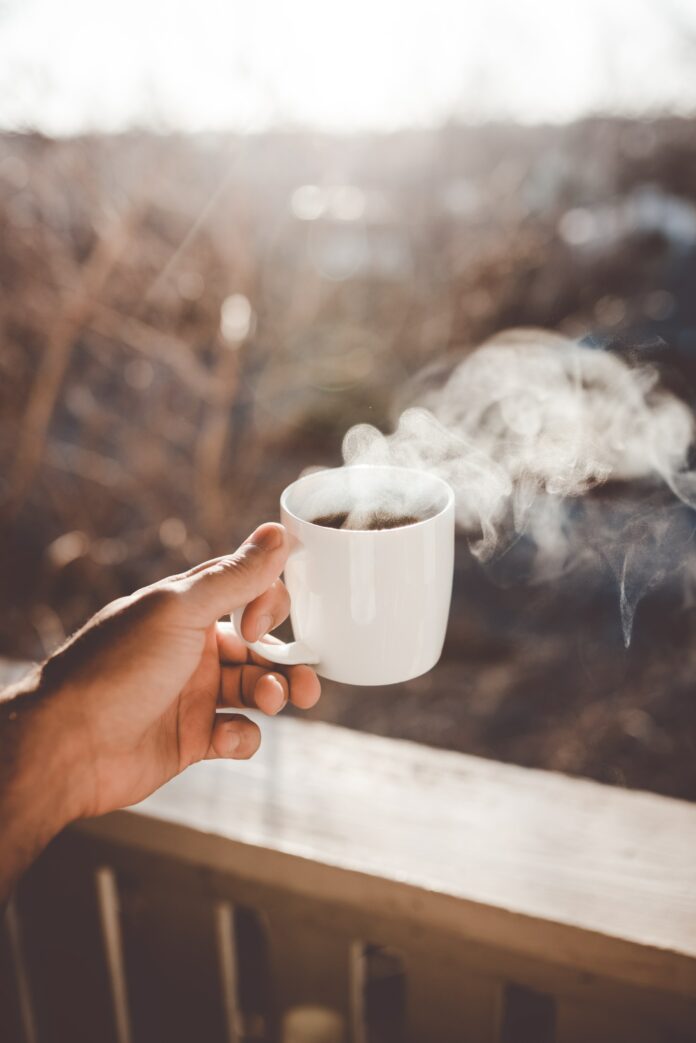
A white mug full of steamy coffee.
PHOTO: Clay Banks / Unsplash

By: Sude Guvendik, Staff Writer

The rich, inviting smell of coffee is like a magical wake-up call for your senses. But did you know that without the Sufis, those aromatic coffee beans might still be hidden away in Ethiopia or Yemen? 

The exact beginning of coffee is a bit of a mystery, but experts believe it started in Ethiopia. One famous story is about a man named Khaldi, who was a goat herder. He stumbled upon coffee when he noticed his goats were stimulated after eating coffee berries. They refused to sleep! Intrigued, Khaldi shared his discovery with a monk who brewed the beans and found himself wide awake during his late-night prayers. That’s how the legend of coffee began to spread.

Now, let’s talk about the Sufis; they follow the spiritual path of Sufism, which is a facet of Islam. Within Sufism, there is an emphasis on the inner and spiritual dimensions of the Islamic faith, centring on the pursuit of personal and direct encounters with the presence and love of God. They played a crucial role in coffee’s history, but not many people know about it. These folks called coffee “qahwa,” which used to mean wine. To Europeans at the time, it was known as the “Wine of Islam.” The Sufis wanted to stay awake during their nighttime spiritual practices, so they brewed and drank coffee. 

You might have heard of “Mocha,” which sounds like a delicious chocolatey coffee. Well, it’s also the name of a busy port in Yemen. This port played a huge role in coffee’s early trade. Yemen’s climate was perfect for growing coffee, and its ports, especially Mocha, became the world’s coffee exporters. While there are different stories about coffee’s journey from East Africa to the Middle East, everyone agrees that Sufi mystics, if not the original coffee creators, were a big part of its early history. 

The enchanting fragrance of coffee, coupled with its distinctive capacity to arouse both the intellect and emotions simultaneously, played a crucial role in enabling the practice of dhikr. Dhikr means uniting the soul and the spirit through the act of mindful remembrance, achieved through the repetition of specific phrases, words, or prayers designed to invoke the presence and mindfulness of Allah (God). Later, the Persians added their roasting techniques to make it taste even better.

To me, coffee is more than a fragrance; it’s a journey through time and culture, a connection to my upbringing in Istanbul. Coffee wasn’t just a beverage there. It was the heartbeat of our mornings and evenings, and an essential part of life. Growing up in Istanbul, surrounded by the bustling energy of the city and its rich history, coffee was a ritual, a tradition, and a source of inspiration. 

Every local bookshop in the neighbourhood would offer free coffee to anyone who walked in to seek knowledge. Coffee and books, in my world, were inseparable companions. They went hand-in-hand, like old friends sharing stories.

As I sip my coffee now, the memories flood back: dusty pages of books alongside cats meowing and finding comfort on the shelves, all while I dove into different universes with the stories I discovered. Coffee wasn’t just the fuel of the reader, but the spark that ignited our imagination. The scent of freshly brewed coffee in those bookshops was like incense, wafting through the air, inviting us to explore worlds beyond our own.

In ancient Yemen, coffeehouses became gathering places where people could meet, chat, listen to music, and even make secret plans. In a mostly Muslim society, these places were more acceptable than taverns. 

In bookshops, coffee was also about oral history. People would share spoken poetry, recite tales of ancient heroes, and discuss the stories that shaped our culture. Inspiration flowed as freely as the coffee, where each sip catalyzed creativity. I can still hear the hushed conversations, the laughter, and the profound discussions. It was a symphony of voices, each one adding a unique note to the melody of the moment. Coffee was the glue that bound us, and the stories we shared were the threads that wove our community together.

Coffee has been connected to religion for a long time, met with both praise and skepticism. Sufi Muslims loved coffee for its energy boost during nighttime prayers. Jews have sipped black coffee while studying the Torah. Some Wiccans and Pagans have used coffee grounds for divination. But not all religious leaders agreed with these practices. In the 16th century, some Muslim leaders in Mecca even debated whether coffee might be too strong and wanted to ban it.

Coffee had its doubters in the western world, too. Italian Catholics in the 16th century were unsure about it. Some even wanted to ban it. But when Pope Clement VIII tried it, he said, “This devil’s drink is so delicious . . . we should cheat the devil by baptizing it!” So, coffee got the Pope’s blessing.

Even today, some religious groups, like followers of the Latter-day Saints Church, Seventh-Day Adventists, and Rastafarians, don’t drink coffee. Some people view caffeine like they do alcohol or tobacco, while others follow rules in their religious texts.

As I take another sip of my coffee, I can’t help but think about those days in Istanbul, where the scent of coffee intertwined with the pursuit of knowledge, where every cup held the promise of a new adventure in the pages of a book. 

In the end, we can all agree Sufis had a big hand in spreading the wonderful aroma of coffee around the world. So, next time you enjoy a hot cup of coffee, take a moment to savor it. Let the enchanting aroma transport you to a world of inner peace and love.

Opinions in Dialogue: Unpacking beauty standards and its effects

0
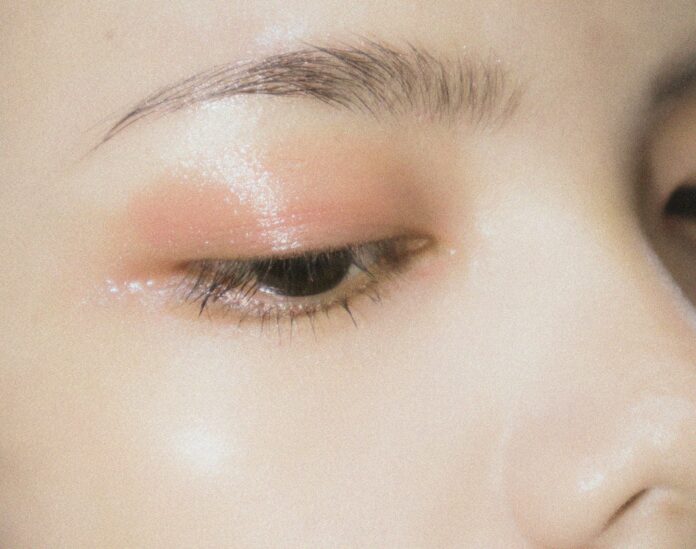
Close-up of an eye, with shimmery pink eye shadow and mascara
PHOTO: Linh Ha / Unsplash

By: Izzy Cheung, Staff Writer and Gurneet Lohcham, SFU Student

Perceptions of beauty tend to change depending on where you are. Notions of “ideal” and “desirable” features change over time, too. Media, pop culture, and even colonialism can play a role in what is defined as “beautiful” across different cultures. Some people may use skin whiteners, while others use a tanning bed. In reality, there are multiple forms of beauty — which is subjective — but beauty standards can still weigh on our perception of self. In what ways do we view different beauty standards, and how does this affect us?   

Izzy: Growing up in Vancouver, the beauty standards I’ve been exposed to have typically been very North American and Eurocentric. As a young child, race wasn’t really a thing to me — some people had dark hair, like me, and others didn’t. There was no such thing as an “ideal” or “perfect” look, and that was a simple concept to me. I didn’t start to really put thought into what I — as a Chinese Canadian girl — looked like until I was in middle school. This change came when I developed my first real crush on someone who was a different race than mine. He had blonde hair, bright eyes, and tanned skin like all his other friends. It was then I began to wonder why my hair was so dark and so straight, why my skin was so pale, and why my eyes were smaller and darker than everyone else’s. As I look back now, I find it ironic (and almost amusing) that the very traits I questioned about myself were considered to be beautiful in China at the time.   

Gurneet: I also grew up in Vancouver, and as a little girl I never really placed much importance on how different or similar I may have looked to my peers. However, growing up in a Sikh household was very different than the life I saw outside my home. I remember being treated a certain way because I didn’t look like the other girls in my school, which was very odd to me because many of my peers were also from different backgrounds. I didn’t understand how people who were South Asian themselves could see me as so different from them. I thought going to a new high school would change that, because there’s no way high-schoolers would be that childish and silly. But, I ended up in a school where I was one of five South Asians. It seems that most girls tend to start thinking about the way they look when they start having crushes. And that was the same with me. I, too, had a major crush on a boy from a different background. It was the same thing: blue eyes, blonde hair, and in a band. That’s the first time I put makeup on. 

Izzy: Same with me — one of the big reasons for why I started wearing makeup was because of a guy (which I have my qualms about, but that’s a topic for another day). Middle school was when I started trimming my eyebrows, wearing eyeliner, and experimenting with mascara. In my own mind, my features were too “light” or “gentle” compared to my peers, and makeup became a way of “resolving” that. This has always intrigued me, because so many different cultures use makeup in order to enhance or reduce specific features in order to align with their respective beauty standards.

I’ll be the first to admit that I used to care a lot about what other people thought of me. I used to wear winged eyeliner in middle school, but began applying less and less every day because social media made it seem like winged eyeliner was only something that “emos” wore. Thoughts like that followed me through highschool, where I started buying trendy clothes — like the iconic Adidas Superstars and bomber jackets that ruled this time period. I started doing my makeup a certain way so I wouldn’t stand out. At the end of the day, I feel like we’ve all had a period in our lives where we want to fit in so badly — but we shouldn’t compromise our own happiness to do so. 

Gurneet: I completely agree; sometimes we get so wrapped up in being accepted by others that we forget who we are. I remember seeing girls in my highschool with their eyebrows done, legs waxed, makeup on, and thin figures. Coming from a South Asian household, I wasn’t allowed to wear makeup or partake in hair removal until much later in life, because my family still followed what they were taught in India. This was the idea that girls should be “simple.” If they wore makeup or removed body hair at an early age, they weren’t “good girls.” It became very difficult to love myself because I wasn’t fitting into the “popular” group at school, which was what so many people cared about at that age. Looking back, I realize that many of those who were a part of that group were never true friends. When I started wearing makeup, it still wasn’t enough for my crush or my peers to stop making fun of me for not looking the ideal way. It shouldn’t require a change in physical appearance to be respected. Had I been as confident in myself as I am now, highschool would have been a much different experience where I wasn’t so worried about catering to everyone else. It’s really difficult being a part of two cultures, one where the ideal woman is much different than the other. In the South Asian community, girls are often meant to be quiet and family-oriented, but in school I learned the importance of girls being independent, confident in themselves, and having the freedom to express their thoughts openly. 

Izzy: Yes! Often, many of us will base our own appearances or even how we act around how we think others will perceive us. But just like differences in each cultures’ beauty standards, we need to remember that “beauty” is a subjective term. Art is subjective and dependent on the eye of the beholder — and I think beauty needs to be held to the same standards. 

Gurneet: If only more of society and media understood that. The world would be a little less cruel. But not many people realize that, at least I didn’t until in my 20s. But I’m still thankful for all my experiences, good and bad because they’ve all taught me to love myself.

SFU professor discusses the power of healing food systems

0
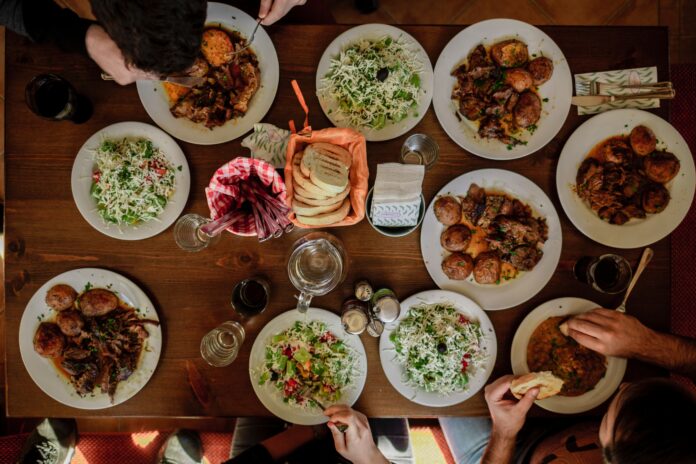
This is a photo from above a dinner table. The table has many large plates, filled with food.
PHOTO: Stefan Vladimirov / Unsplash

By: Eden Chipperfield, News Writer

On August 28, a new documentary, Food is my Teacher, premiered on CBC in Alberta and BC. The documentary explores how food is a significant part of identity, culture, and personal healing. Food is able to uniquely heal one’s body, spirit, and the earth.

The Peak connected with co-writer and co-director of Food is My Teacher, Tammara Soma, to learn more about the documentary’s message. Soma is also a research director and co-founder of SFU’s Food Systems Lab. “My documentary shows that there are amazing community leaders and organizations that are [ . . . ] using food for bringing people together, to heal broken relationships, and to reconnect people to the land,” she said

Soma is proud of her Muslim identity and has expressed that food has helped heal the relationship between her beliefs and identity. She discussed how she learned from the teachings of Islam that food should be guaranteed for all people. According to Soma, “there is an abundance of food, but an unwillingness to share” with the global population. She added the relationship between her and food has recovered through spiritual teaching and learning: “I learned from reconnecting with my spiritual teachings. Now instead of focusing on inches and pounds, or the size of my clothes, I’m focusing on how I can be of service to others.”

The Community Kitchen and Embark Learning Garden at SFU have impacted Soma’s research and exploration. “As one of the few scholars at SFU working on food systems issues, I routinely use the Embark Learning Garden as a site to bring my students to learn more about gardening, urban food production, and just overall to connect to nature.” Soon, Soma is hoping to use the Community Kitchen as a place of training and awareness for students to learn about the power of food and the benefits of healing our food systems. 

The documentary features discussions about how society is facing a crisis of food accessibility and problems with food waste. “Our food system is not based on the principles of justice and balance, and because we have put profit over people, we need a different approach,” explained Soma. The students at SFU are “passionate about making a difference in the world,” regarding equitable and sustainable food systems. They inspire Soma to do this work. She hopes the documentary will embolden the public to do the same. 

The Peak asked Soma how communities and governments can come together to discuss the importance of a sustainable food system and indulge in food healing. “It is clear that the current system and the consolidation of power is not working, so we need to go to the grassroots and hear directly from the people doing the work on the ground,” said Soma. “Diversifying our food system, and making it more resilient can help us heal the food system,” Soma mentioned. This would also restore local biodiversity, as currently, the world we live in is a monoculture society — meaning that single agricultural crops are grown in large fields.  

Soma hopes the takeaway from Food is My Teacher will inspire unity and motivate viewers to understand how to live in peace with one another, care for the planet, and protect our animal and plant relations. “I want us to envision and mobilize a different food system that is both equitable and sustainable. In the documentary, I show amazing people doing that on the ground, and I hope they become a source of inspiration,” said Soma. She believes we need a new food system based on the “principles of justice and balance.

“We have put profit over people, we need a different approach,” said Soma. 

Soma will be teaching REM 357 Planning for Sustainable Food Systems, in Fall 2023, and hopes students will be encouraged to take her course, adding she often brings food to share with the class. 

For more information on REM 357, visit SFU’s website at www.sfu.ca/outlines.html?2023/fall. 

A love letter to my menstrual disc

0
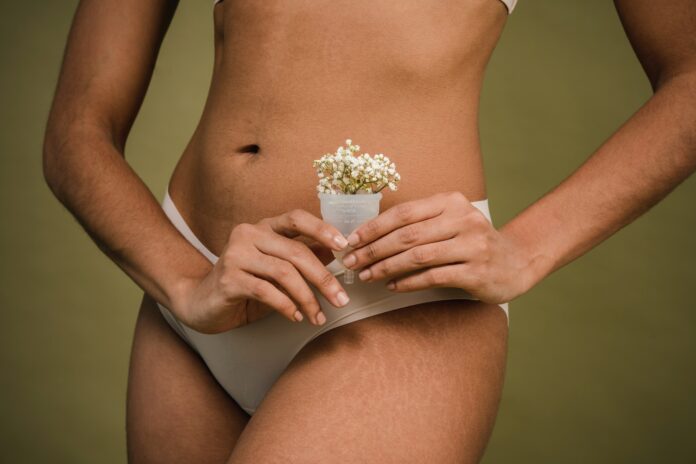
Photo of a woman from her abdomen to her thighs. She is wearing beige underwear and holding a menstrual cup filled with small white flowers.
PHOTO: Sora Shimazaki / Pexels

By: C Icart, Humour Editor

Sooooo, we just met, but I just KNOW we’re soulmates. No, for real! What can I say? I’m an Aries; I’m passionate! So initially, I was sort of seeing pads and tampons, but they are NOT cheap dates, let me tell you. Plus, I saw the Riverdale finale, and that got me thinking maybe I could be in my quad era. But then I realized that, just like the Riverdale writers, I don’t know anything about polyamory. So, I’m sticking to casual dating and monogamy instead. 

Oh boy, the first day I didn’t need multiple bathroom breaks to switch my pad, I KNEW I was ready to settle down. Our romance is as steamy as the boiling water I sanitize you in. Our love is as deep as the squat I have to do to insert you. Our relationship is as secure as how your rim fits behind my pubic bone. 

So far, you’ve been hella reliable. I won’t lie to you. At first, I was scared. I’ve been burned before! You get close, let your guard down, and the next thing you know, you’ve accidentally stained your friend’s couch! So, what am I supposed to do? Just blindly trust this piece of silicone? Nah, I did tell you that if you wanted to be my lover, there’d be a probation period (get it?). I was still going to see my period underwear at the same time. What? I needed to keep my options open.

That’s always the most challenging part, you know, learning to trust again. But you’ve been helping me grow as a person. Before you, I didn’t know how to tuck things behind my pubic bone. And who knew the cervix was all the way back there??? What? Was I supposed to be listening in health class? Until now, I’d kind of always been a long nailed-lesbian (yes, we exist!), but you’ve been making me reconsider. Taking you out requires a bit more finesse than my claws can provide. I’ve got to treat you right; you are a bit of a diva (get it?).

You’re not clingy at all. I can wait up to 12 hours before checking on you, and you don’t start making a mess to get my attention. But at the same time, we do everything together: sleep, work out, shower . . . I have a feeling we’re going to go on A LOT of dates in the upcoming months. #IrregularPeriodLife. 

Oop, sorry! I just got your text saying you’re ready to help me ride the crimson wave again. See you soon!

Nutritious Nibbles: Homestyle mac and cheese

0
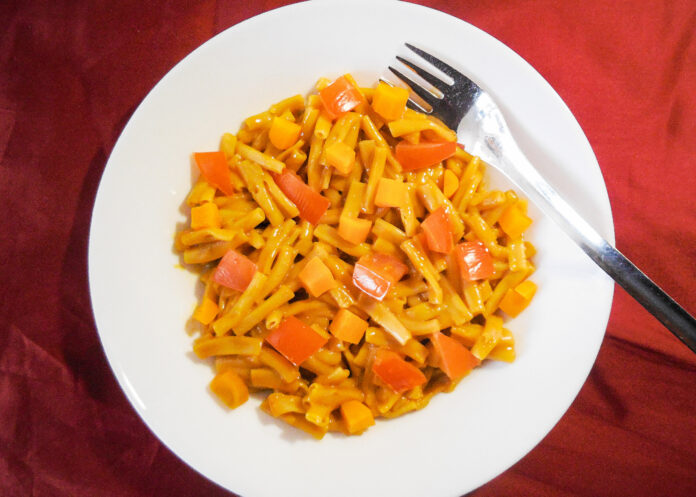
A bowl of macaroni and cheese.
PHOTO: Shirlyn Zobayed / The Peak

By: Gurneet Lohcham, SFU Student

I’ve always loved to cook, but as a busy university student with very little time to do so, I’ve had to come up with ways to enhance my food while maintaining minimal time commitments to prepping and cooking. Who doesn’t love an easy lunch or dinner idea, and what’s better than Home Alone’s Kevin McCallister’s mac and cheese dinner? Unlike him, I like to make my mac and cheese with a spiced twist, adding in some extra flavour to elevate the taste. It’s quick, it’s filling, and it’ll make your inner child very happy.

Prep Time: 5–7 minutes

Cook time: 10–12 minutes

Total Time: 15–20 minutes

Yields: 2 servings

Ingredients

  •       1 box Kraft Mac & Cheese
  •       ¾ cup shredded cheddar cheese 
  •       1 cup spinach
  •       1 cup broccoli
  •       1 tablespoon butter
  •       ½ teaspoon garlic powder
  •       ¼ teaspoon black pepper
  •       ¼ cup milk (any of your choice)
  •       1 and ½ teaspoon Everything Bagel seasoning
  •       1 teaspoon taco seasoning
  •     Optional:  ½ cup any cooked, shredded, or chopped chicken breast

Equipment

  • Saucepan
  •       Shredder
  •       Measuring spoons
  •       Knife and cutting board

Directions

  1.   Bring water to a boil in a medium saucepan. As the water is heating, wash your spinach and broccoli, then chop your broccoli into bite-sized pieces.
  2.   When the water is boiling, dump your macaroni pasta into the saucepan and let boil for 7–8 minutes, stirring occasionally. Strain the water and set the macaroni aside.
  3.   In the empty saucepan, bring 1 cup of water to a boil and throw in your chopped broccoli. Boil for 2–3 minutes or until broccoli is somewhat soft, to your liking.
  4.   Strain the broccoli and set aside.
  5.   In your saucepan, mix in the macaroni with the broccoli. Add the packaged cheese mix and shredded cheese and stir until combined.
  6.   Microwave your cooked chicken for 1–2 minutes to heat up and add to dish (optional).
  7. Add in your butter, garlic powder, black pepper, milk, seasonings, and spinach. Stir until combined.
  8. Stir in your spinach last, so it doesn’t get soggy. Mix until all cheese is melted and your macaroni is creamy.
  9. Enjoy your homestyle mac and cheese! 

Linguistic imperialism is violence

0
PHOTO: Khalid Alshehri / Unsplash

By: Sude Guvendik, Staff Writer

Content warning: mentions of colonialism and generational trauma. 

The dance of language and power is a historical saga of dominance that’s often sugarcoated with euphemisms. Nowhere in history is this more apparent than when colonialism started, where language was used as a form of cultural suppression. Language is the essence of culture and identity, shaping how we perceive our place in the world. This is where linguistic imperialism rears its ugly head — a form of violence as insidious as it is lasting. Look back into the past, and the aggressive manipulation of language leaps off the pages of history, bleeding into the present. 

Language carries the stories, memories, and experiences of generations. Ngugi wa Thiong’o, a prominent Kenyan writer, academic, and social activist, argues the wounds inflicted by linguistic violence fester long after colonizers depart, leaving scars that disrupt cultural identity. Under colonialism, original languages and cultural practices are twisted, changed, or lost. The colonial order disrupts the natural evolution and continuity of a culture. These changes are more than surface-level; they strike at the core of cultural identity, causing confusion, identity crises, and a sense of disconnection from one’s heritage.

Imposing colonial languages was, and continues to be, a deliberate strategy to maintain cultural dominance. The push to replace Indigenous languages with colonial ones wasn’t just convenient, it was a power move. Prohibitions on Indigenous languages were a declaration of supremacy. This cultural colonization aimed to erase entire ways of life.

In Canada, the imposition of English and French, and the suppression of Indigenous languages have a profound and lasting impact. A breakdown in communication between generations within Indigenous communities damaged cultural ties. Elders, who hold vital oral knowledge and stories, often still struggle to connect with younger generations. This communication barrier not only disrupts intergenerational cultural transmission but also weakens the fabric of community bonds.

Systemic barriers emerged as Indigenous children were barred from using their languages in schools and official settings. Schools became institutions of cultural erasure, where Indigenous languages were banned, and students were forced to embrace the language and culture of colonizers. The colonial education system upheld the colonial order. This calculated suppression contributed to the suppression of Indigenous identities.

Replacing Indigenous languages with colonial ones amounted to more than just linguistic change; it encompassed a deliberate strategy of cultural colonization and heritage erasure, and diminished the richness of entire ways of life.

Frantz Fanon, a central figure in the fields of post-colonial thought, psychiatry, and activism, captured the essence of existence with his assertion that “to speak is to exist.” Within this framework, language can be used as a tool of colonial violence, yielding a trail of widespread devastation. The act of erasing languages translates to the erasure of entire histories, struggles, and narratives. 

We need to break the chains of linguistic colonization, and we should have done it by now. This requires the dismantling of systems that perpetuate linguistic oppression to nurture cultural diversity. By exposing these systems, we strike at the walls of history with a metaphorical sledgehammer, reclaiming our identities. 

It is a collective responsibility to engage in self-reflection and dismantle linguistic colonization. This shared commitment includes creating an environment that celebrates a mosaic of cultural identities.

When faced with the widespread impact of harmful systems, Ngugi wa Thiong’o suggests revitalizing language through stories and literature — which uniquely capture diverse experiences. This can extend to Indigenous knowledge here in Canada, to return a sense of balance by reconnecting with their heritage.

Decolonizing language and education isn’t a mere suggestion; it’s a rallying cry for reclaiming identities and restoring the vibrant tapestry of cultures that have been trampled upon. This isn’t just about linguistic liberation; it’s about rewriting narratives, reclaiming agency, and carving a space in a world that’s rightfully ours.

When we peel back the layers of linguistic imperialism, we uncover a tangled web where language, culture, and power are intertwined. By confronting these complexities head-on, we inch closer to a world where language ceases to be a tool of control and becomes a bridge that celebrates the glorious diversity of human cultures. The journey to linguistic decolonization is a journey of self-discovery, reflection, and unyielding commitment — a journey that holds the promise of a world that’s more just.