Home Blog Page 166

The final edition of summer SFU athletics updates

0
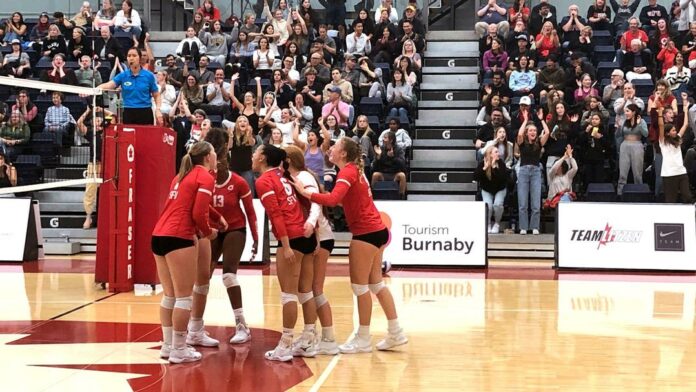
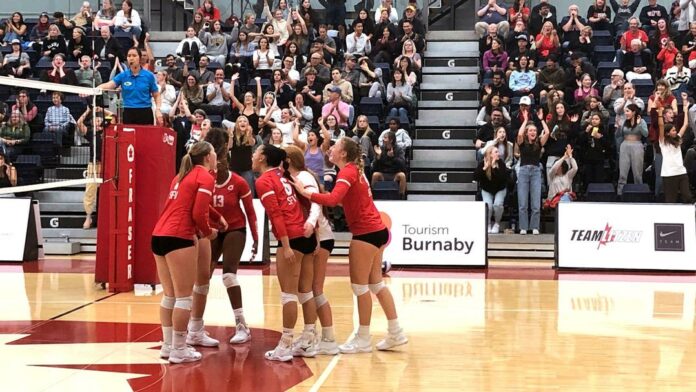
Photo of the volleyball team gathered in a huddle congratulating each other on the court.
PHOTO: Steve Frost /bSFU Athletics

By: Isabella Urbani, Sports Editor

Volleyball 

News 

  • Former professional volleyball player, Sarah Chase, joined the volleyball team as an assistant coach. 
  • The volleyball team was picked to finish fourth in their division this season in the pre-season coaches’ poll. SFU finished fifth in the standings last season. 
  • Juniors, Brooke Dexter and Jocelyn Sherman, were named to the Great Northwest Athletic Conference Volleyball Preseason All-Conference Team.

Awards 

  • Dexter finished tied for eighth for the Nadine Caron Top 10 Scholar-Athletes. She had a 3.97 CGPA as a biological sciences major. Dexter earned her second Faculty Athletic Representative Scholar-Athlete Award for having a CGPA of over 3.85, and was one of 18 athletes to be recognized with an Academic Achievement Award.
  • Junior, Kohl Peters, won her third Faculty Athletic Representative Scholar-Athlete Award for having a 3.86 CGPA as a criminology major. Peters is also an Academic Achievement Award winner.
  • Junior, Hanna Kolof, was named an Academic Achievement Award Winner for having a CGPA over 3.5 as a kinesiology major. 

Wrestling 

Men’s recruitments 

  • Ethan and Owen Kennedy: twins from Alberta, who will compete in the 125-pound weight category.
  • Isaiah King: wrestler from Las Vegas, Nevada, making the trek up to Burnaby to compete in the 125-pound weight category. 
  • Shahbaaz Singh: reigning 71 kg, U-19 Greco-Roman champion from Alberta, who will compete in the 157-pound weight category for SFU. 

News

  • The wrestling team started the season as part of the Rocky Mountain Athletic Conference

Awards 

  • Sophomore, Owen Gudmundson, finished tied for third for the Nadine Caron Top 10 Scholar-Athletes. Gudmundson had a 4.18 CGPA as a molecular biology and biochemistry major. As a result, Gudmundson earned his second Faculty Athletic Representative Scholar-Athlete Award, and was a recipient of the Academic Achievement Award
  • Junior, Elijah Lazar, was also named an Academic Achievement Award winner.
  • Sophomore, Paige Maher, won the 72 kg weight category silver medal at the 2023 Junior Pan American Championships. Maher represented Canada at the U-20 World Championships in Jordan in August.
  • Sophomore, Sam Pereira, won the 92 kg freestyle weight category silver medal at the 2023 Junior Pan American Championships. Pereira represented Canada at the U-20 World Championships in Jordan in August.
  • Sophomore, Ivy Threatful, placed fourth in the 53 kg weight category at the 2023 Junior Pan American Championships. 
To be long but not for too long

0
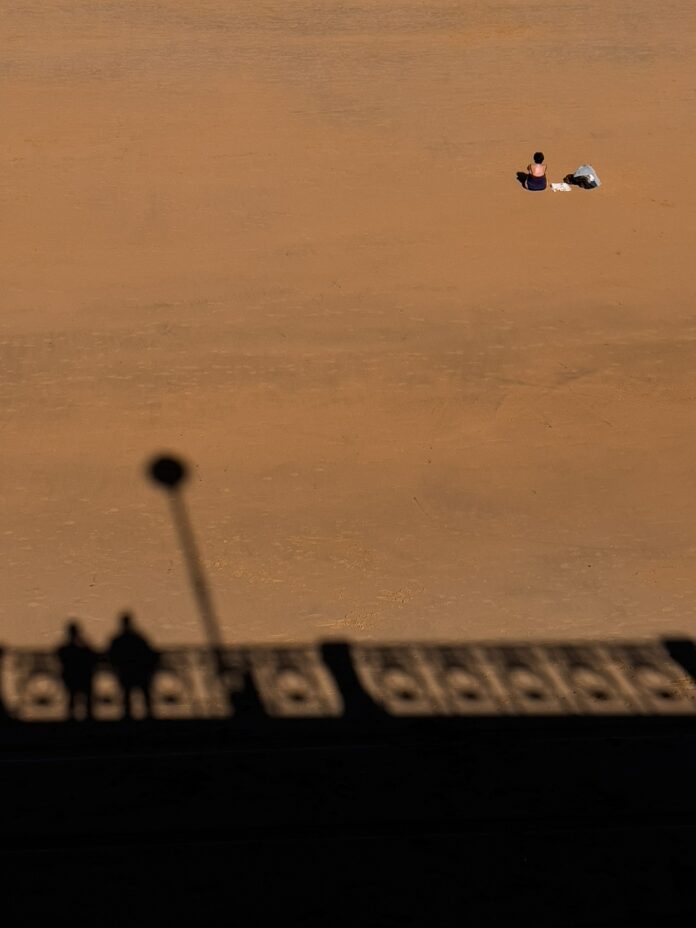
A person sitting alone on a large expanse of a sandy beach. Behind them is a shadow of two people standing together on a bridge.
PHOTO: Alev Takil / Unsplash

By: Sude Guvendik, Staff Writer

A contemplative poem that delves into the complexities of human belonging, exploring the various paths we take in our search for connection and the ultimate realization that true belonging transcends the physical realm.

In the tapestry of life, we seek our place, 
A quest for belonging in this boundless space; 
in the hearts of strangers and familiar grace, 
We navigate the puzzle, this human chase.

Some find solace in the streets they’ve known, 
Where roots run deep, and history’s sown, 
In close-knit towns or a family’s zone, 
A sense of belonging, like a heart’s true home.

Yet, others wander, like stars in the night, 
Through foreign lands, in search of light, 
In the differences and the foreign sight, 
They discover belonging, a pure delight.

But is it possession, or a fleeting thrill, 
To claim that we own, and our hearts fulfill? 
When we tether ourselves to another’s will,
Are we truly belonging, or just standing still?

The soul, a traveller, in endless quest, 
For the one connection, that feels the best, 
Yet, even when found, in love’s warm nest, 
The void may linger, an uninvited guest.

Belonging evolves, so don’t be longing for that, 
Make peace with your mind as you tip your hat, 
To the truth that we’re here, but not for long, 
Temporary beings, in a world so strong.

Why bother fitting into moulds so tight, 
When the body belongs to one mould’s light, 
The essence of belonging transcends the physical, 
It’s a connection to the divine, deeply mystical. 

In each other’s souls, we find the reflection, 
Of the sacred, the eternal, the divine perfection.

So cherish the bonds that life bestows,
In the highs and lows, and wherever it goes,
For in the tapestry of love that grows, 
True belonging is where the soul truly knows.

What’s In & What’s Out: Current fashion favourites

0
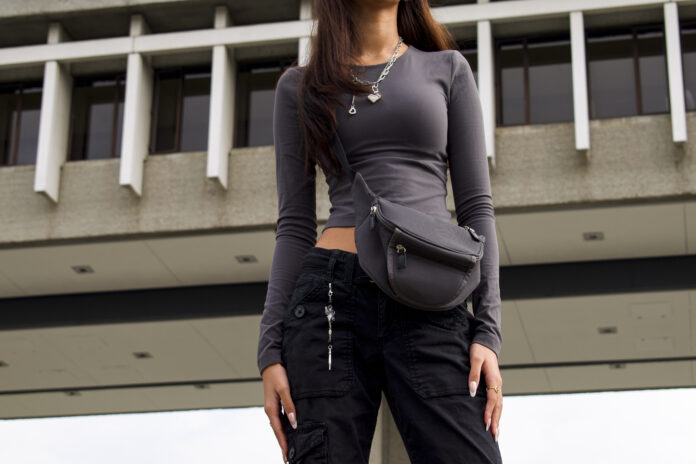
Torso of a person wearing dark gray shirt and black cargo pants with a chunky silver chain necklace and a black sling bag. They are standing outside of a blocky concrete building.
PHOTO: May Chee / The Peak

By: Tian Davidson

I’m an avid fan of fashion, and get my inspiration from TikTok and Pinterest — places where trends change rapidly and you can discover new ideas. With so many trends coming “in” and “out,” I have strong opinions about what trends my closet is going to consist of this fall. Remember, fashion is all about finding what works for you; you are the fashion icon no matter what you choose to wear. Who knows, you might just bring an old trend back to life!

IN: Black rectangular sunglasses
These chic sunglasses are showing up all over my feed right now, and for good reason: anyone can find them at the thrift store, and they elevate nearly any outfit, too. Baggy jeans, an oversized hoodie, and these statement sunglasses? You’ve got yourself a cool fit using the staples already in your closet. You can feel like a celebrity in disguise when you wear them with a face mask. 2000’s hiding-from-the-paparazzi look anyone? Even though summer is ending, you can enjoy the last sunny days rocking these bold frames.

OUT: Bucket hats
Many people have been loving bucket hats. However, I find it so hard to wear them with my big headphones. Especially attached to cute headset accessories, like little cat ears and tie-on crocheted sprouts, these bucket hats just block the view, and the music. As someone who refuses to use small earphones, bucket hats are inconvenient.

OUT: Tote bags
Before you grab your pitchforks and hunt me down for saying tote bags are a dying trend, it’s for good reason: tote bags are not a trend at all, but a staple of anyone’s closet. Calling tote bags a trend is equivalent to calling backpacks a trend: they’ve both always been around and are here to stay. Tote bags in particular are easy to accessorize with custom prints, so it’s no surprise they’ve become a closet staple. They’re also very affordable compared to other bags, and an easy way to support a local artists’ work.

OUT: Fjallraven KÅNKEN bags
Speaking of backpacks, Fjallraven KÅNKEN bags were popularized in the time of scrunchies, puka shell necklaces, and hydroflasks. While backpacks are useful for many students for their versatility, comfort, and organization, this one’s preppy style doesn’t match my current streetwear aesthetic. Besides, they aren’t very affordable. I still love the cute design though!

IN: Over-the-shoulder drawstring bags
I love that these bags are becoming more popular for their casual design and versatility. They pair well with my y2k fashion looks. You can easily pair this bag with any fit, and it’s great for any scenario, from sports, to school, to work because of how much space this bag can provide while still looking fashionable.

IN: Baggy pants. 
I cannot stress enough how versatile these pants are, whether you want to pair them with a hoodie or with a fitted shirt. In the first few weeks of the fall semester, I’ve seen so many people rocking oversized pants on campus. From cargo pants to fresh jeans, baggy pants are a great way to play with proportions. Whenever I wear baggy pants and a smaller sized shirt, not only do I look a bit taller, but I’m also so comfortable (not sweatpant-level comfort, but still great). The baggy cargo pants and hoodie combo is an easy fit if you’re looking for a budget-friendly outfit that’s perfect for the autumn season.

While it’s great to experiment with your wardrobe, please remember not to go out and impulsively buy clothing online. Try to look for environmentally-conscious sources for your new closet best friends, such as secondhand stores and online resellers. You could even borrow some from your friends or family if they fit!

Innovative Indigenous artists

0
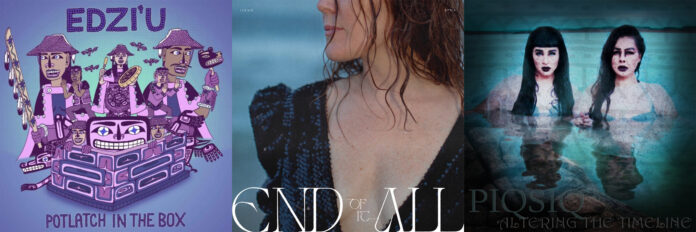
A collage of three album covers: Potlatch in the Box, The End of it All, and Altering the timeline.
PHOTOS: Courtesy of Edzi’u, Courtesy of Iskwē Music Inc, Courtesy of Coax records

By: Saije Rusimovici, Staff Writer and Petra Chase, Arts & Culture Editor

Indigenous Peoples have been making music on this land since time immemorial. Music of diverse styles have long been a central part of social, cultural, and ceremonial life for the many Indigenous cultures living in so-called Canada. Today’s Indigenous musicians carry on these traditions and innovate by incorporating non-Indigenous influences. Here are three Indigenous artists to start listening to.

Edzi’u 
Content warning: forced assimilation of Indigenous people.

Tahltan and Tlingit experimental musician, Edzi’u, transports listeners by enmeshing ambient sounds, words of wisdom, and her own angelic voice. Their debut album, Potlatch in the Box, reflects the “wrongs of the past,” particularly the Canadian government’s potlatch ban. As part of the Indian Act, Indigenous peoples were banned from practicing this celebratory tradition for nearly 100 years. Through spoken word and dialogue samples, tracks recount the horrifying tragedies of that period. “Can you Introduce Yourself in the Language” explores the “destruction” of Indigenous languages.” Edzi’u also stresses the album’s “positive power,” seen in the themes of resilience in “Warrior Song” and “2Spirit,” in which their Auntie Dwayne talks about the role of two-spirit people in potlatches. The work is soul-stirring; Edziu’s humming with the piano is like a gentle lullaby in “You Don’t Wanna Know Me.” “What Does Nation Mean?” is a collage of a conversation with a child talking about their nation, against a gentle windy ambience. Potlatch in the Box opens with a customary welcome from Raven Clan, sprinkled with laughter and sounds of nature. Edzi’u put thought into every detail: be sure to look out for the imaginative Easter eggs from the album’s cover art within the tracks! 

Iskwē

CBC has named Iskwē (ᐃᐢᑫᐧᐤ in Cree) “one of the most powerful performers in the country,” and for good reason. The Cree-Dene-Irish singer, EDM producer, and activist has been releasing music consistently since 2017, dipping her toes in everything from electronic pop to bluesy folk. In 2019, her energized ballad,  “Little Star,” won a JUNO award, and she’s gone on to perform globally. Listening to her 2023 single, I Get High ft. Nina Hagen,” I was immediately drawn in by the smooth rhythm and rasp of her voice. It’s a song I could listen to on repeat with the windows down on a long drive. Her 2022 collaborative album with Tom Wilson offers emotive bluesy duets like the jazz-tinged “Blue Moon Drive” and “Stir the Ashes.” Her 2017 debut album, The Fight Within, remains a powerful collection about Indigenous struggles in Canada. Iskwē wants listeners to feel “empowered to be a part of change.” She continues to pour her heart into her work; her most recent single,End Of It All,” details the ending of her marriage: “We tried, and we tried, and we tried, but the end of it all came anyway.” See her perform live at The Pearl on November 10! Find more tour dates on her website.

PIQSIQ

I first heard the Inuit duo, Kayley Inuksuk Mackay and Tiffany Kuliktana Ayalik, live at Surrey Fusion Festival this summer. It was one of those situations where I literally had to stop what I was doing, turn around, and search for where the music was coming from; it was the unique throat singing of Mackay and Ayalik. Throat singing is the “world’s oldest form of music,” a “guttural style of singing or chanting” usually performed by two women facing each other. The closeness of the sisters is reflected in their intimate duets. They grew up in Yellowknife, Northwest Territories, their roots in Nunavut’s Kitikmeot and Kivalliq Regions. Much of the inspiration for their music draws from the “environmental extremes” of their home, where they were exposed to very short summers and long, dark winters. Their 2019 album, Altering the Timeline, is a good place to start listening. 

A love letter to the night

0
PHOTO: Thula Na / Unsplash

By: Hailey Miller, Staff Writer

I am a night owl through and through. I can’t help that I’m in my absolute prime following the hours past midnight. The depths of darkness cascade through the night, blanketing the stars before twilight emerges and morphs into the break of dawn. I am as nocturnal as an actual owl. The eerie sounds of night are the soundtrack to my life. They call my name, enticing me with each constellation that dazzles upon the sky. I do my best work between late night and the hours that precede dawn. I guess you could consider this my own version of the witching hours. I thrive during these hours, concocting potions of passion and emitting spells of creativity — there is no greater time to write a song, do an assignment, or aimlessly comb through my thoughts. 

I’m a sucker for the city lights and the night life — from live music to catching up with friends, the hums of the pubs abuzz with chatter and clinking glasses, the radiance of the marquee lights, and the neon signs in all their fluorescent beauty. The resonance of rhythms and lyrics of live music serenade me in the distance — from sold-out stadium shows to crowded bar gigs. The streets that whisper our names and the outings that tempt our souls. The late night tastings of fine dining with the clinking of expensive silverware. The contrary: a quick grab-and-go bite to eat from a real hole-in-the-wall serving up grub long past midnight. The hollers of “last call” and the screeching of stools being stacked on top of tables upon close. The late night movies that end as the lights are shut off and the last kernel of popcorn pops. The late night study sessions in coffee shops, kept awake by caffeine and the camaraderie of fellow students’ studies. The night shift workers and the party animals alike, alongside the ambience of a night out.

There is something about these late-night experiences you just can’t find during any other time of day. There is a particular peculiarity that comes along with being a night owl — a knack for the moonlit hours, a sense of longing for the dark once the day breaks. I can’t turn off the nocturnal side of my brain; being a night owl is ingrained in me. I feel it in my blood, as it trickles through my veins. It pulsates, it radiates, as the clock ticks and the time passes by. If nocturnal energy was celebrated, I’d be thriving in every which way. Yet somehow, I am energized by the night. The passions penetrate and the creativity flows. I do my assignments late at night because we all know diamonds are made under pressure. I chat with friends who ask why I’m still up, and I respond with the same inquisitive curiosity and a questionable answer. Why is it that we excel during these hours?

I know this schedule is not ideal — believe me, I don’t need a reminder or a judgemental remark. Being a night owl is not the picture of sleep health — I know it, and I get it. I contradict all my other healthy habits by staying up long past dark, so, don’t take this late-night advice. Don’t follow in the footsteps of us nocturnals in our streetlight shadows. We are the evening adventurers who would rather be anywhere but in bed fast asleep — the ones who can’t sleep regardless of how many hours we get, or how early we go to bed. It doesn’t matter if I get four hours of sleep or 12, I’ll still be living my night owl dream. Kudos to all the productive early birds out there, but I’ll choose basking in the glory of my nighttime extravaganza of staying up late any night of the week. So, here I am, exposing my bad habits and calling myself out so you don’t have to. At this point, it’s not just a bad habit, but rather, a lifestyle. One that, clearly, I’ve unintentionally abided by regardless of the circumstances.

I’ve tried to be a morning person, really, I have, but I am just not cut out to be an early bird. I don’t even begin to function until the late morning hours. I know, I know, “just go to bed earlier,” you’ll say. If morning started around noon, then that would be a different story, but midnight is my afternoon. I’ll live vicariously through the productive early birds who get the worm and finish half their day’s worth of chores and tasks before I’m even up and out of bed. I’ll save the late-night laundry for my midnight escapades and check items off my to-do list while the crickets cheep. I’ll revel in the liveliness of the city streets and the at-home nightly creativities alike. When morning comes, I’ll sleep past the rooster’s crow and the hustle and bustle of the early morning rush hour in the sunlit glow. If I’m feeling adventurous, I’ll get up to watch the sunrise — but I’d rather catch the sunset instead. I’ll cozy up in bed until the day’s demands call my name and the song of my alarm clock strikes a single chord before I hit the snooze button. Until then, I’ll take a double shot of espresso, and I’ll see you at noon. 

Diaspora Citizenship: Palestinian Journeys

0
This is a photo of the conference centre at SFU Harbour Centre.
PHOTO: Aria Amirmoini / The Peak

By: Sude Guvendik, Staff Writer

Content warning: mentions of displacement. 

Saeed Teebi is a Canadian writer who was a finalist for the Atwood Gibson Prize for Fiction and shortlisted for the 2021 CBC Short Story Prize. Teebi recently engaged students and faculty at SFU for a conversation about the themes of citizenship-as-belonging and identity within diaspora communities. The event, titled “Diaspora Citizenship: Palestinian Journeys,” was co-sponsored by SFU international studies and featured an exploration of Teebi’s celebrated collection of stories, Her First Palestinian.

Teebi’s work has garnered attention for its exploration of Palestinian identity and the experiences of Palestinian diaspora communities in Canada. During the event, Teebi discussed his motivation for writing Her First Palestinian, highlighting the need to feature Palestinian characters and narratives in the Canadian literary landscape.

The concept of belonging is “very precarious” for Teebi. He described it as a “highly localized feeling to belong in small places and in small settings.” He emphasized the profound importance of language as a guardian of history, underlining how language, with its intrinsic ties to memory, preserves spaces and narratives that may exist both in tangible and intangible forms. 

Teebi explained that “we will return” is a mantra often passed down through generations as a symbolic thread connecting diasporic Palestinians to their ancestral land. This idea of return is not just a political aspiration; it’s a fundamental part of their personhood, selfhood, and dignity. It represents the unwavering belonging to their homeland, a connection that has been sustained through decades of displacement and struggle. 

The Palestinian occupation is regarded as prolonged and unlawful Israeli control over Palestinian territories, including the West Bank, Gaza Strip, and East Jerusalem, leading to the subjugation and disenfranchisement of the Palestinian people. Supporters of the Palestinian cause contend that ending this occupation is crucial for realizing the Palestinian right to self-determination.

The commitment to the idea of return is not solely about the practicality of physically returning to Palestine, given the complex geopolitical realities. Many elderly Palestinians in the diaspora may never see their homeland again. However, Teebi underscored the importance of recognizing that holding the belief has immense cultural and psychological significance. Believing in the possibility of returning to Palestine offers hope, even though many elderly Palestinians in the diaspora may never physically go back due to complex political reasons.

Teebi shed light on the character of Nadia, a central figure in the narrative of his debut work. Nadia, a white Canadian lawyer in a romantic relationship with a Palestinian, plays a pivotal role in the story by exemplifying a remarkable willingness to embrace a different perspective. 

Nadia’s emotional voyage is closely intertwined with her discovery of historical records inscribed in Hebrew, which bear witness to Palestine’s existence prior to the establishment of the state of Israel. This revelation acts as a poignant turning point for her character as she challenges her preconceptions. This moment prompts a comprehensive reevaluation of her own understanding of the region’s complex history.

“I always knew I wanted to write something that had to do with my Palestinian identity and featured Palestinian characters,” Teebi explained in a CBC article. “On the Canadian literary landscape, there’s not a lot of that. It was important for me to feature those kinds of characters.”

Teebi’s desire to bring Palestinian voices to the forefront is a reflection of the broader conversation about representation in literature. While his stories are rooted in the Palestinian experience, they are “pretty universally applicable to other peoples in diaspora or other immigrants,” Teebi said. “But to engage those kinds of characters was important to me.”

The event provided attendees with a unique opportunity to delve into Teebi’s literary journey and the impact of his work on discussions surrounding citizenship, belonging, and diaspora experiences. Through his stories, Teebi invites readers to explore Palestinian experiences in Canada and the broader diaspora. 

Her First Palestinian is available at Massey Books. Visit their website at www.storestock.massybooks.com. The full version of this article can be found at www.the-peak.ca.  

Global climate strike gains thousands of supporters across Vancouver

0
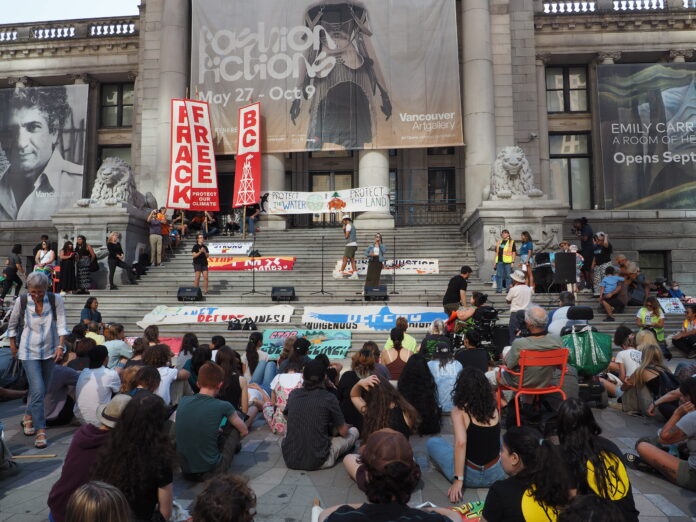
This is a photo of the strike, being held outside the Vancouver Art Gallery. Numerous people are gathered outside the gallery, holding signs that show support for the climate protest. The largest signs, placed behind the speakers, read “Frack Free BC.”
PHOTO: Olivia Sherman / The Peak

By: Olivia Sherman, News Writer

Content warning: mentions of forced assimilation 

On Friday, September 15, thousands marched across Vancouver as part of a global initiative, Global Fight to End Fossil Fuels, to protest against climate change. The march started at Vancouver City Hall and ended at the Vancouver Art Gallery, where song, dance, and speeches took place. Vancouver’s climate strike joined dozens of countries and hundreds of cities around the world in protesting fossil fuels, pollution, and climate inaction. 

Co-hosting Vancouver’s strike was the organization Sue Big Oil, an initiative to hold politicians and lobbyists accountable for consequences derived from fracking and oil. The David Suzuki Foundation, Fridays for Future, For Our Kids, and other organizations were part of the fight. 

Marissa Nahanee, a Sḵwx̱wú7mesh (Squamish) and Nisga’a Indigenous ambassador, opened the rally at the art gallery with a traditional Sḵwx̱wú7mesh welcome, and led the crowd in a celebratory song. Between speeches, musical artists performed in solidarity with protestors. Performances included hip-hop, folk, and a drag show from Vancouver drag queen Batty Banks

Severn Cullis-Suzuki, co-founder and executive director of the David Suzuki Foundation, showed solidarity with the protesters. At age 12, Cullis-Suzuki spoke out against climate change at the 1992 UN Earth Summit, and her advocacy has spanned her whole life. “We’re here today, along with our [family] around this earth, to call an end to fossil fuel supremacy,” she said at the September 15 rally. “Humanity is now in uncharted territory.”

To extract liquefied natural gas, deeply-embedded rocks must be injected with high-pressure “fracking fluid” to gain the oils within. There are 25,000 fracking wells across BC, which require freshwater from local lakes and rivers to make fracking fluid. A spokesperson for the BC Oil and Gas Commission told The Narwhal that natural gas companies used over 4.2 billion litres of water in 2020. A 2021 study from the University of Toronto found that these chemicals, when released into the environment, can “cause or exacerbate health problems including birth defects, cancers, and asthma.”

Fracking companies often receive drilling credits, which cover part of the drilling and completion costs for wells, and can reduce royalties. According to Wilderness Committee, “14 of 15 of the top fracking companies in the province receive more in drilling credits than they pay in taxes and royalties.” 

“We want politicians to show some political courage or get out of the way,” said Janelle Lapointe, an Afro-Indigenous climate activist and interim director of public engagement and mobilization at the David Suzuki Foundation. She continued, “The BC NDP and the federal Liberal government are telling us they believe the crisis, they understand the severity of the crisis, yet they’re meeting with oil and gas lobbyists every single day.” 

Lobbying is the act of influencing the decisions of a government toward the interests of an individual or private group, such as oil and fracking. Though this persuasion is considered legal, environmental activists have had concerns about external influences over politicians for decades.

“Even though a lot of us are here today out of fear, out of sorrow, frustration, and uncertainty, I hope we leave with a lot of love in our hearts, and lead with love,” Lapointe noted. 

Lifelong Indigenous environmental activist, Cedar George Parker, elaborated on the need for love and hope in the face of fear. “This really is a story of hope to move on and continue on.” He added, “It all comes down to hope.” 

He described how growing up on a reservation and being taught to protect and respect the world around him allowed him to grow up surrounded by love. “We really need to Indigenize the policies that Canada put in place to assimilate and put us down,” Parker stated. “We need to humanize our education system, we need to humanize the way we think, we need to humanize the way we look at the land, look at the water, and a way we can be prosperous.

“Be brave as you can be with every footstep moving forward. Be brave as you can be when we’re standing up to [the] industry [ . . . ] standing in the face of fear, because our youth are worth it.” 

Opinions in Dialogue: Inequities in healthcare

0
An IV drip

By: Tejasvita Saini, SFU Student and Antonia Chircea, SFU Student 

Content warning: mentions of anti-Indigeneity, medical trauma, forced sterilization, and transphobia. 

Healthcare perpetuates many inequities. From sexism, racism, queerphobia and transphobia, to ableism — it can be hard to access the care you need due to systemic barriers. In what ways do these barriers show up for patients? What ideas and prejudices perpetuate the mistreatment of certain groups in healthcare, and how can this be solved? 

Tejas: We hear so much praise of Canadian healthcare, but many overlook the complex systemic inequalities that people of colour, women, people with disabilities, Indigenous people, and 2SLGBTQIA+ people face. The praise of Canada’s healthcare system silences the voices of those who do face inequalities in healthcare.

Antonia: As a person who works in healthcare, I’ve seen how outdated ideas and prejudices directly impact a person’s ability to access the care they need. New doctors time and time again turn down people seeking gender affirming care as a result of inexperience. Which, in this case, brings up the question: what is being taught to doctors in school? Despite the fact that the medical field is one where change should be embraced, I have seen many doctors hesitate to try new drugs or procedures. This tendency to stick to old ideas leads to a plethora of topics typically being taught from a white, cisgender, man’s perspective.

Tejas: In Saskatchewan, a doctor was able to forcefully sterilize new Indigenous mothers by coercing them. Many women were asked for their “consent” for this procedure while they were in active labour, under the influence of pain drugs such as an epidural. They were also given disinformation like the procedure being reversible. The lawsuit notes this happened to at least 20 women, some of whom did not consent and were sterilized anyways. 

These violent, anti-Indigenous procedures occurred between 2005–2010, continuing a decades-long trend of forced sterilization. While many may think we have moved toward reconciliation and that anti-Indigenous sentiment is just a dark part of Canada’s old history, they would be shocked to find themselves ignorant to the reality of discrimination and injustice toward Indigenous people, and especially Indigenous women.

Antonia: While many people may brush off the example just given as an extreme that certainly can no longer be happening, when looking deeper we can see that microaggressions toward Indigenous people are still worryingly prevalent. Around 44% of First Nations people said they felt discriminated against from the years 2014–2019, according to Statistics Canada. 

This discrimination tends to come to light in the medical system when Indigenous folks ask simple questions regarding certain aspects of healthcare. Dealing with government paperwork is not easy. When a majority of people ask for clarifications regarding these forms they have no problems receiving a response. Unfortunately, the same cannot be said for Indigenous peoples. When an Indigenous person comes in and inquires about anything, I often see them met with eye rolls and sarcastic scoffs from doctors and receptionists alike. Naturally, this creates a barrier to information, which is completely based on prejudice.

Tejas: Healthcare can be a very sensitive and crucial part of someone’s life. Nobody likes going to the doctor or the hospital, but they deserve a doctor and medical staff who ease their anxieties — not build upon them. Not only is this leading to a skew in the treatment of certain groups like Indigenous people and trans people, but it’s also making these communities more apprehensive to use Canada’s universal health care and seek access to a basic human right.

Antonia: On top of Canada not being able to provide adequate care to those whose lands we live on, we also seem to have difficulty providing care to other marginalized groups. While in Canada there are organizations that provide trans youth with gender affirming items such as binders, we cannot deny that trans people still face numerous barriers stopping them from getting the gender affirming care they need. 

While cis people have easy access to a wide array of hormonal contraceptives not requiring any parental consent, trans people in Canada still require parental approval to even begin the process of physically transitioning. For youth, this involves taking puberty blockers for a few years before the individual decides if they want to stop taking hormones altogether, or swap to taking estrogen or testosterone. A glaring issue with hormonal transition needing parental consent is the fact that some parents refuse to help their children start their transition, and as a result many trans children have no option other than to live in mental anguish until they are old enough to access this care on their own. Not to mention that the process of receiving hormone replacement therapy itself is fraught with more barriers than it should be, the first being doctors. As was mentioned above, doctors tend to receive an education focused on gender binaries, and many new doctors are too nervous and inexperienced to help trans people start their transition, thus turning them away. 

More experienced family doctors tend to scoff at the large amount of paperwork required, and they too end up turning people away. It is for that very same reason that many walk-in clinics also tend to turn away trans people seeking care. All of these factors combined make it virtually impossible for trans people who are of age to even start their transition, much less those who are younger than 18. If the process was more streamlined, perhaps this wouldn’t be an issue, yet the system itself is the one causing these barriers, and ultimately it needs to be the one to change.

Tejas: Not only are trans people facing discrimination within the healthcare system, but they’re having trouble finding access to a doctor with the proper training and mindset to treat them. This tells us that the problem is not in just a few “bad” doctors but in the very way people are taught to be doctors. How can doctors treat patients who have been fundamentally excluded from their training and knowledge? Is Canadian healthcare universal when so many groups are excluded from receiving care within it?

Horoscopes October 3 – 8

0
An illustration of a girl with long flowing hair. Astrological signs and stars shine around her.
ILLUSTRATION: Marissa Ouyang / The Peak

By: Chloë Arneson, Peak Associate

Aries
March 21–April 19 

Alright, Aries, it’s time to get your head in the game and narrow down this roster. You’ve been scouting all summer, and it’s time to start hosting tryouts. Playoffs are just around the corner, and you know your aunt Jessica is going to ask when you’ll finally bring “someone special” around for Christmas. Since you’ve already drafted your top picks, make sure your game is strong enough to take you to the championships. 

Taurus
April 20–May 20

Oh, Taurus, we know cuffing season can be rough. This week, try not to sweat the big stuff because your steadfast determination will bring out your inner baddie. You’re going to be in the gym, practicing self-love, and showing the world you’re committed to you. Just stay clear of those rom-com clips that keep popping up on your TikTok feed. 

Gemini
May 21–June 20

Alright, tough guy, hot girl summer is over. We know you’re flirty and fun, Gemini. The stars are saying this cuffing season, it’s time to clear the roster and focus on what matters to you, whether it’s that super cool book you think will make you more mysterious or that three-page paper you have due next week. Put those Tinder notifications on silent and hop to it.

Cancer
June 21–July 22

The stars are speaking to me, Cancer. They’re telling me to deliver you a message. They’re saying, “get your money up, not your funny up.” Forget that weird ex that broke your heart — it’s time to be in your bag. We know that you can get emotional, and we love that about you, but as the months get colder, instead of running to somebody’s arms, try burning some of that cold, hard cash to stay warm, and we promise you’ll feel better. 

Leo
July 23–August 22

It’s fall baking, silly little arts and crafts, and embarrassing guilty pleasure movies. Not your vibe? Well, my ear to the ground says cuffing season might be a little cliché, and with your trailblazer attitude and individualism, why don’t you try what the kids are calling “feral girl fall.” I saw the term on Twitter. It’s up to you to decipher what that means. 

Virgo
August 23–September 22

You’ve seen all the romantic propaganda, and you aren’t fooled. We all know cute couples’ activities are a government conspiracy to stimulate the pumpkin patch economy. The stars are steering you far away from Valentine’s Day consumption and cutesy Christmas gifts to save you money, Virgo. Make sure to tell all the happy couples in your life that you’re above it all because you’re so enlightened. 

 Libra
September 23–October 22

We know you’re in your lover era, Libra. Go ahead and post those insufferably cute pics of you and your bae that make the rest of us want to throw up. You deserve it. Your matching Halloween costumes and rainy day movie nights are giving cringy millennial couple, but it’s okay because we’re all just jealous. 

Scorpio
October 23–November 21

The stars are telling you it’s time to rethink your game plan. No more watching movies late at night with Tinder dates you’ll never see again. From now on, you’ll go to museums, aquariums, and cute brunch places with Tinder dates you’ll never see again to make sure you’ve farmed enough soft-launch content to last a lifetime. 

Sagittarius
November 22–December 21

Hey, hot stuff. You don’t need any dating advice; you’re the cuffing season champion. A Sagittarius knows the perfect combination of telling you that you have a nice ass and spinning you away to talk about life under the stars. As winter gets cold, you know exactly how to spend all the extra time indoors. 

Capricorn
December 22–January 19

This is a shameless ad calling all Capricorns. I am single, and it’s cold out. Your hard-working mentality and calm, grounded attitude are exactly what I’m looking for as exam season threatens to make me pull all my hair out. You’d still love me if I was bald or a worm, right? Call me. 

Aquarius
January 20–February 18 

Your best friend is tired of hearing about that one person you swore you’d block, Aquarius. Getting a text at 11:00 p.m. is NOT a sign from the stars. That wasn’t even a situationship; it was a deceptionship. You’re better than this. 

Pisces
February 19–March 20

Now for you, Pisces, the stars seem to want to encourage a little bit of that delulu energy. Did they leave you on delivered for three days but view your story? They’re just working up the courage to confess their love. 

This week at SFU

0
Photo of an SFU soccer player with the ball during the game.
PHOTO: Paul Yates / SFU Athletics

By: Isabella Urbani, Sports Editor

Home

Thursday, October 5: women’s soccer vs. Northwest Nazarene (Idaho) at SFU Stadium at 6:00 p.m. 

  • First homestand of the season. 

Saturday, October 7: women’s soccer vs. Central Washington at SFU Stadium at 3:00 p.m. 

Saturday, October 7: men’s soccer vs. Western Washington at SFU Stadium at 6:00 p.m. 

Away 

Monday, October 2–Tuesday, October 3: men’s golf at the Wildcat Classic in California 

  • Men’s team won their opening invitational of the season for the second year in a row.

Thursday, October 5: volleyball at Montana State Billings at 6:00 p.m.

  • 2–0 against Montana last season. 

Friday, October 6: cross country at the San Fransico State Invitational at 3:30 p.m. 

  • Men’s team finished third and women’s team finished fourth at the last invitational.

Friday, October 6–Saturday, October 7: swimming at Idaho & Grand Canyon 

  • Men opened up the first swim meet with a win, winning 10 out of 11 events. 

Saturday, October 7: hockey vs. Okanagan Lakers at 7:00 p.m. 

  • SFU has split their roster into two teams: one playing teams in their current league, and another playing exhibition games against teams in other leagues and divisions. 

Saturday, October 7: hockey at Colorado College at 6:00 p.m. 

  • Second match-up this season against a Div. I hockey team. 

Saturday, October 7: volleyball at Seattle Pacific University at 2:00 p.m. 

  • Final road game before a two-game homestand.


The Rundown 

Cross country 

  • Saturday, September 16: men’s and women’s teams finished first at this season’s opening race in Washington.
  • Saturday, September 23: men’s team finished third and the women’s team finished fourth at the Bill Roe Invitational in Washington. Sophomore, Rachael Watkins’ 12th place finish was the highest among the women, while senior, Sebastian Brinkman’s second place finish was the fastest among the men. 

Women’s soccer

  • Thursday, September 21: women’s team lost 2–0 on the road to Western Washington. 
  • Saturday, September 23: women’s team won 1–0 on the road to Montana State Billings. The lone goal of the game was scored by freshman forward, Kiera Scott, at the start of the second half, and was assisted by junior midfielders, Kate Cartier and Isabella Muzzolini. Goalkeeper, Sarah Loewen, made four saves for her third shutout of the season. 

Record: 2–2–1

Volleyball 

  • Thursday, September 21: women’s team swept Alaska 3–0. Sophomore, Eva Person, served five aces and combined for 25 assists. 
  • Saturday, September 23: women’s team swept Alaska Anchorage to extend their win streak to three games. Junior, Jocelyn Sherman, led SFU in kills (11) and aces (three). 

Record: 8–4