Home Blog Page 164

Dr. Lyne Filiatrault discusses masks in healthcare

0
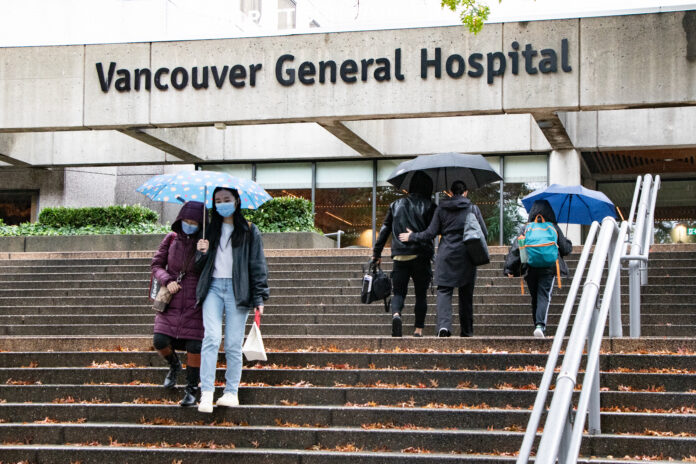
This is a photo of the outside of Vancouver General Hospital. As it is raining outside, there are people walking in and out of the building holding umbrellas.
PHOTO: Aria Amirmoini / The Peak

By: Eden Chipperfield, News Writer

On September 27, BC provincial health officer, Dr. Bonnie Henry, and health minister, Adrian Dix, announced mandatory masking would be re-established in healthcare environments as COVID-19 cases are rising at a rapid rate. Starting October 3, masks became mandatory once again in healthcare settings.

This decision came after the BC government had announced they would remove mandatory masking protocols on April 6, 2023. The public immediately began to voice their concerns. This included an open letter addressed to the BC section of emergency medicine from Protect Our Province (PoP) BC. They pressed physicians who work in BC emergency environments to wear masks for multiple reasons, including protecting themselves, their colleagues in the emergency departments, patients, and visitors. With COVID-19 rising significantly again in the province and the flu season approaching, PoP urged the BC section of emergency medicine to take action. During the week of September 2430, there were 877 reported cases.

To discuss the contents of the letter and the severity of the situation the province is facing, The Peak connected with Dr. Lyne Filiatrault, a retired emergency physician and a member of PoP, as well as a co-author of the open letter

Filiatrault explained there are three factors that contribute to the increase in COVID-19 cases: the environment, the host, and the virus. “For environment, we’re congregating indoors. We have not addressed ventilation air filtration. There is no airborne mitigation in any settings right now except now in the green state of the health care,” said Filiatrault. “So our immunity to infection is essentially gone because the vaccine that we have now protects for a shorter duration of time against infection.” 

“It’s important to know COVID-19 never went away,” said Filiatrault. She likened COVID-19 particles in the air to wildfire smoke. “The fire might be burning in Kelowna, and yet here, sometimes in New Westminster or Burnaby, you could see the air. There were fine particles in the air.” The particles of wildfire smoke are visible in BC, which Filiatrault used as an analogy to show how even invisible COVID-19 particles can spread throughout the province and affect entire populations. 

Filiatrault also stressed that the media is complicit in spreading public health’s messaging that schools were a safe environment. “They were never safe.”  Filiatrault explained how, since the return to school, COVID-19 cases have spiked significantly. Children are the “primary, or the index case, for viral transmission in households,” and a major reason why COVID-19 is spreading from family to family. She expressed concern that schools are not addressing “ventilation and air filtration,” as well as children no longer having to wear masks in their classrooms.  

The virus constantly evolves into new variants because of the lack of personal protection. Filiatrault addressed vaccination status from the past year: “The vast majority of people were last vaccinated last fall [ . . . ] there was a big rush after we started to vaccinate our seniors in long-term care in assisted living,” she explained. Since then, “nobody has had a booster.  

“The clinically extremely vulnerable as well were invited in the spring. So you had the high-risk groups in long-term care, clinically extremely vulnerable, that did get a spring bivalent booster. But the vast majority of British Columbians did not. Our immunity to infection is essentially gone.” 

Shortly after the interview with Filiatrault, the BC provincial government announced they will start to send COVID-19 booster invitations this fall. They will begin with “seniors, residents in long-term care facilities, Indigenous peoples, pregnant people, health-care workers and people with chronic health conditions,” before moving onto the general population

Filiatrault and other members of PoP have called out politicians and health authorities on the lack of response to the worsening situation. “Public health officers across Canada have not followed the signs and have been basically at the mercy of politics, and the politics in each province is dictated by short-term focus. The focus of a politician is reelection in four years.”

The Peak inquired how individuals can protect themselves and access masks during the new wave of COVID-19. Donate a Mask “is a volunteer-run charity that ships free N95 equivalent respirator masks to anyone in Canada who requests them” with a form on their website. Filiatrault also recommended Community Access to Ventilation Information, a group that supports the increased usage of CO2 monitors to monitor air quality. Lastly, they recommended Corsi Rosenthal boxes, which can be built from the home, to help filter the air from airborne particles.

The rules of curling as explained by a non-curler

0
A photo of two players curling across the ice.
PHOTO: SHVETS Production / Pexels

By: Hailey Miller, Staff Writer

Here’s to the sport of curling — the underrated activity of throwing granite rocks down a rectangular sheet of ice, and sweeping the stones as hard as possible toward the bulls-eye target at the opposite end. Seems safe, right? Supposedly, I should know a thing or two about the sport, considering that I have family who play it, but, do I pay attention to the game and know the rules inside out? Not exactly. 

So, what even is curling, and how do you play it, you ask? Well, curling is a team sport where two teams play against each other. Groundbreaking, I know. Apparently, there are a few types — traditional curling, mixed doubles, and wheelchair curling. According to the World Curling Federation, traditional curling consists of four members per team, whereas mixed doubles is, you guessed it, a pair of two — and usually mixed gender. It goes without saying that the wheelchair version of the sport is, well, for those who play in a chair. Someone really needs to come up with an adapted version for those of us who stand with bad balance. And, by “someone” I mean me. Just kidding. Can you imagine me sliding down the ice with my crutches, chasing down a rock at full speed, yelling “hard!” just as I’m about to lose my balance? 

To play this little thing called curling, each team member must throw a hefty granite rock that’s about the weight of a boulder all the way down the ice toward the target zone. These rocks are painted different colours to differentiate between teams. Each teammate has to throw two consecutive rocks down to the target at the other end of the ice. Now, I’m not talking about a bowling throw here. Hurling a granite rock at high speed takes great effort and skillful technique. The “thrower” crouches down into a deep lunge position, wearing a foot slider and shoes with traction for the ice. They give the rock their best thrust, and once it begins spiralling its way down the ice, two other members (from the same team) sweep the living hell out of the ice until the rock gets closer to its target. This is called the house,” because what better way to name this marking than the home structure of a miniature-sized boulder hurling down the ice at full speed? As the stone flings toward the target, the thrower continually yells “haaaaard” until the rock stops. If you ever feel the urge to let out some steam, curling just might be the sport for you! 

Team members’ positions consist of lead, second, third, and fourth. The lead throws the first two stones, and consecutively the second throws the next two, and so on and so forth until the fourth member throws the last two. There are eight throws, which are called “ends.” Opponents try to knock each others’ stones out of the target zone — or house — and by the end of each round, whichever team has their stone closest to the target and not knocked out of the house gets the point for that end. The particularly interesting thing about curling is that the players actually do the tallying of these points themselves. The team with the most points at the end of the ten ends wins the game. At least I think that’s how it goes, but don’t ask me, I’m not a pro. 

Xiao Lu and the “fight for authorship” over her art

0
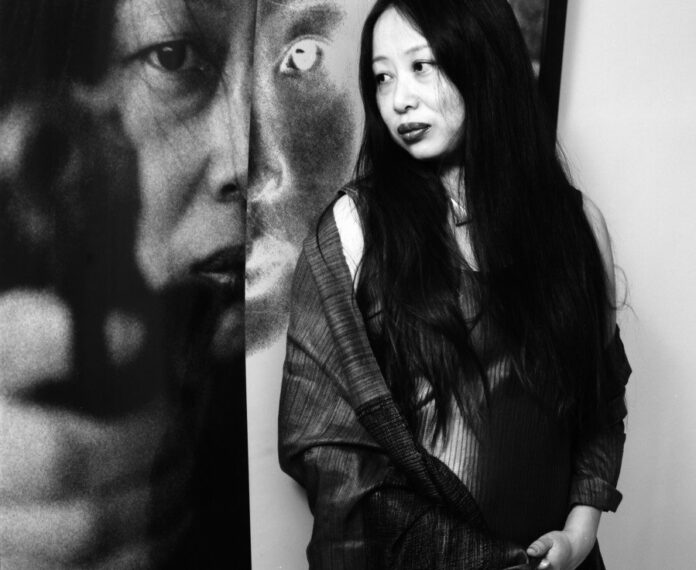
Black and white portrait of Xiao Lu.
PHOTO: Courtesy of Xiao Lu

By: Izzy Cheung, Staff Writer

Content warning: mentions of gunshots used for art-making. 

Note: quotations taken from Xiao Lu were translated from Mandarin to English by a translator at the event. 

Nestled deep in Sun Wah Centre on Keefer Street is Centre A, a public art gallery displaying “contemporary Asian and Asian-diasporic perspectives.” On September 29, the gallery hosted a talk by Chinese-Australian artist, Xiao Lu, done in partnership with SFU’s David Lam Centre. The presentation, delivered in both Mandarin and English, captured the stories behind some of Lu’s most thought-provoking works of art, such as “Polar,” “Holy Water,” and “Skew.”  

Lu is an artist who does performance works, installations, and other forms of art. She studied at the China Academy of Art (formerly the Zhejiang Academy of Fine Arts), with a specialization in oil painting. However, her graduating work, “Dialogue,” was an extra-credit installation that didn’t use a single brush of paint. The installation came about due to Lu’s “[reflection] upon some personal and emotional struggles.” She noted that the piece features the backs of a man and a woman displayed on two separate telephone booths with a telephone standing between them, showing the “impossibility of dialogue.” This piece underwent many changes over the course of time, but also became key in her fight for authorship over her works of art. 

The “unusual” aspect of “Dialogue” became a main reason for faculty members to see the installation. She recalled how one teacher called the visual composition “too clean,” which caused her to consider placing a “break” in the glass. Open discussion resulted in her decision to use a gunshot to break the glass. 

Initially, Lu had been interested in firing a bullet into the work during the exhibit. To do so, she reached out to a friend in the firing squad who ended up sneaking a gun; however, they were unable to meet up for this exchange. 

On February 5, 1989, during the opening day of the China Avant-Garde Exhibition at the Beijing Art Museum, Lu fired a gunshot into the installation. However, as police didn’t see the actual shot being fired, they made the assumption that the man she was with had fired the gun, and apprehended him instead of her. This resulted in various news publications and sources inaccurately reporting that the exhibit was created by Lu and her friend, rather than Lu herself. 

The struggle over authorship of “Dialogue” was only made greater by the patriarchal systems of the contemporary Chinese art world, which fought against her individuality as a woman and the authorship she was asserting with her own creation. The public exhibition-turned-movement, “Bald Girls,” which was done in conjunction with artists Li Xinmo and Jiny Lan, and curated by German-Chinese Yong Xian, stood as a “feminist exhibition” that helped Lu “awaken.”   

“When I had to fight for authorship in 2005, I had to open myself up,” Lu said. “Not only [to] confront myself, but confront the world around me and connect directly with society on all sorts of different levels.” 

Lu’s novel containing her experiences in regaining her authorship, titled Dialogue, can be found on her website, xiaoluart.com

SFU should revive their Latin American courses

0
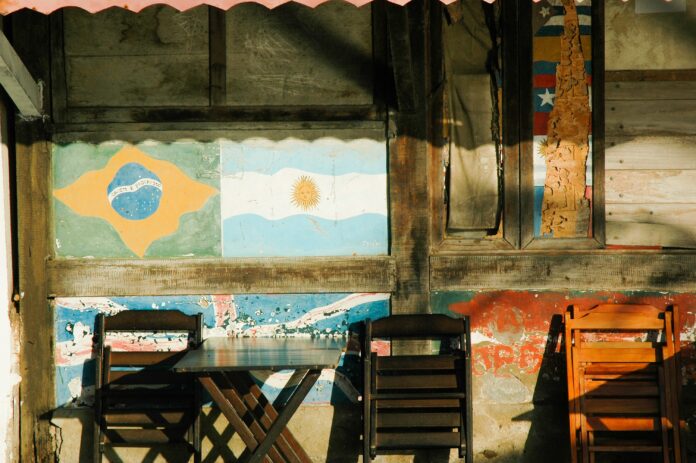
The flags of Argentina and Brazil painted on a wall
PHOTO: Roberto Huczek / Unsplash

By: Michelle Young, Opinions Editor

In 2020, SFU suspended their Latin American studies program. There was little explanation for this, and since it’s been three years, I can only assume they aren’t prioritizing its return. As someone who had been hoping to further understand my own heritage through these courses, to say I’m disappointed is an understatement. 

Growing up, I was given a history education that was centred on colonial Canada and Europe. Sure, learning about World War II is important world history. However, our classes were lacking. Beyond little recognition of Indigenous perspectives, I knew little about where I came from. I only knew what my parents and family told me. Venezuela was once a rich country until an economic collapse. 

The things I knew about Venezuela are what I heard about on the phone from my family who still lived there: there is less food, less electricity, and crime is rising. But there were so many things I didn’t know or understand about Latin America. As a child, I didn’t know how deeply white supremacy had influenced Venezuela. I didn’t know how Brazil’s bossa nova was influenced by samba. I didn’t know some Colombians didn’t want Venezuelans migrating to their country. There is so much I still don’t know about Latin America

SFU has some very specific history courses. They have one on “Imperial Japan,” “Japan from 1603 to 1867,” “History of Greek Civilization,” “The Ottoman Empire and Turkey,” “Victorian Britain,” and much more from many parts of the world. However, in their entire catalogue of history courses, there is only one course that even touches any part of Latin America. You might say that’s because there are Latin American studies courses you can take individually, outside the program. There are two. They are both upper division and require you to take the lower division prerequisites, which no longer seem to exist. I only know because I have been checking for years to see if I could enroll in them. 

The program likely needs to be revisited anyways, since the curriculum is generalized at best. The courses in the program seem far off from what it’s supposed to focus on. Lower division courses include subjects like “Introduction to Business” and “Introduction to Communication Studies.” I’ve only taken the latter, and while it may be helpful to the general program, it had nothing to do with Latin America. There are only three courses in this entire program listed as having a “primary Latin American focus” — two of which are those upper divisions locked behind a non-existent prerequisite. The other one is “Archeology of The New World,” which examines “prehistoric cultures of North and South America.” That’s a lot of cultures to cram into one course. 

In comparison, the Global Asia program is much more tailored and specific to, well, Asia. It includes courses like “The Nikkei Experience in North America,” “Women in Japanese History,” and “Nationalism, Democracy and Development in Modern India.” The program should be specific to the plethora of cultures and countries in the continent. 

While not as prominent as the US, there are still Latin American communities here, in Vancouver. I would love to learn more about the Mexican Revolution, the Pinochet government, the history of Indigenous peoples in these places, and more. I’m very lucky to live with the privileges I do because my parents immigrated. However, I would love to explore Latin American culture and literature in an academic setting without trying to dig out whatever I can find through the internet. I’ve tried to make a specific effort to engage in these things to appreciate all the diversity of the area. As much as I’ve enjoyed indulging in films and books I’ve found on my own, I would revel in a professor who could just tell me, “Hey, you know this? It was really important to this time period in this country, I recommend reading up on it.” 

Latin American history is important. Through studying it, we further understand issues like immigration and colonialism. While most people are likely aware that Latin America isn’t all about spicy food (plus not all of our food is spicy, and can vary by region), I’ve noticed a large disconnect in how well others are generally informed. Sometimes this manifests as a preconceived notion of Latinas, or other times it’s thinking all of Latin America is made of rural villages. While there are definitely cultural similarities, there is especially a lack of understanding about how diverse these countries really are. 

At some point, I took a Japanese history course and learned so much — not only about Japan, but also about how their position relates to other countries globally. It helps put things into context, and even just one course that’s more accessible to students can be a step in the right direction. There are still lots of places I want to learn about, but in these cases, the academic option is actually there. 

The complete discardment of the program has made it feel like SFU frankly doesn’t care about Latin American history or our communities. The silence from SFU sinks a hole into my stomach. While they rightfully commemorated Asian Heritage and Islamic Heritage Month, there is nothing on Latinx Heritage Month. Does SFU think we don’t exist? Sure, a statement from a university who isn’t properly compensating their research assistants might not mean much on the front of commitment. But I’d like to at least be acknowledged, because we are present. We are here.

“Whites-only moms and tots” ad causes outrage across Metro Vancouver

0
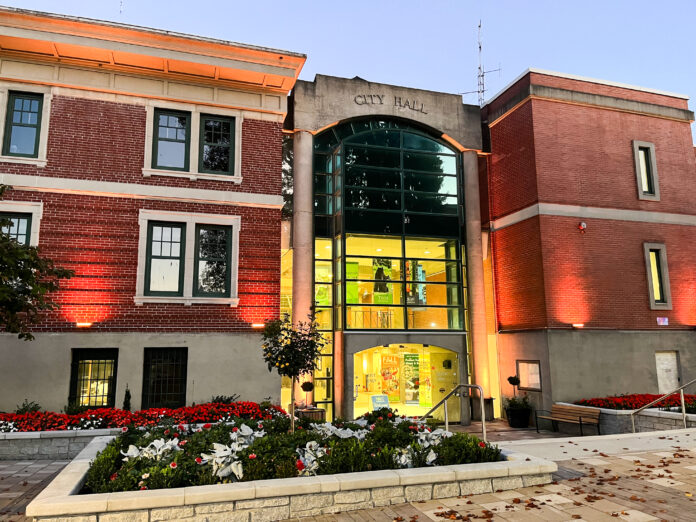
This is a photo of the Port Coquitlam city hall. The building is made of bricks, and the entrance has large windows. There are flowers outside the building in large flowerbeds.
PHOTO: Jonadan Cheun / The Peak

By: Saije Rusimovici, Staff Writer

Content warning: mentions of racism and white supremacy.

On September 23,  partially removed signs advertising a “whites-only” playgroup for “proud parents of European children” looking to “escape forced ‘diversity’” were found at Coquitlam Centre mall and in Port Coquitlam. The City of Port Coquitlam released a statement in response to the “hate-motivated incident” on September 25. They “condemn this in the strongest terms and promote an environment without hate.” The City urges anyone to report incidents like these to local law enforcement.

Upon learning about these signs, Port Coquitlam mayor, Brad West, declared that bylaw officers immediately began to search the area for the racist signs, which had apparently already been taken down by another party. West said in a media statement, “this vile garbage isn’t welcome in our community, or anywhere else.” 

The flyer for the “whites-only” playgroup alarmed Syreeta Moore, Black mother and long-time resident of Port Coquitlam. She had been deeply angered by the signs posted so close to her home. “I was really upset because my daughter is 20-years-old. This is her community that she was raised in, and that sign was a block away from my house,” Moore said in an interview with Vancouver Sun

The group had promoted themselves on Telegram, a messaging app. According to a report from the Institute for Strategic Dialogue (ISD), there are thousands of members linked to white supremacist groups on Telegram. “Our mission is to support privacy, free speech, and peaceful exchange of ideas. Calls to violence are not welcome on our platform,” a Telegram spokesperson told CNN. Yet, the ISD refers to the platform as “a safe space to hate” in their report, mobilizing white supremacist movements.

Tara Preece, a friend of Moore’s, joined the group and screenshotted several of the members’ conversations. Moore told the Vancouver Sun her initial suspicion was that the group chat was “just one jerk out there” trying to “stir the pot.” After seeing what Preece had found in the group, Moore concluded it was well-organized and “took some time and effort” to put together. Before the group was shut down, it had attracted over 200 users. 

Since the extensive media coverage and public outrage regarding the signs, the group has been shut down. Moore commented that she knew this extent of racism existed, but said, “to see it like this, is different.”

Coquitlam RCMP urges residents to report hate-motivated incidents “whether experienced or witnessed” to report.RCMP.ca. They are working in an effort to support a “culture of inclusivity and belonging” and maintaining public safety. You may also anonymously report an incident by calling 1-800-222–TIPS (8477) or online at solvecrime.ca.

My mom made me break up with my watermelon toothpaste

0
Purple toothbrush with yellow bristles and pink toothpaste on it.
PHOTO: Ksenia Chernaya / Pexels

By: WatermelonToothpasteLover, SFU Student

Disclaimer: I am not an employee of any toothpaste company, nor am I one of the 10 dentists who give out toothpaste recommendations. I am just a devastated student forced to side with the enemy.

Recently, my mornings have gotten ten times worse. I wake up to my alarm, fall asleep, and repeat that process until the millionth alarm has pissed me off enough to get out of bed. I stand up and contemplate skipping class before heading to the bathroom. And there it is, sitting next to my sink. That red, blue, and white tube of mint toothpaste. I gag at the mere sight of it. It tastes vile. If I had the money, I would sue whoever decided mint would be the default flavour of toothpaste.

In short, that godforsaken teeth bleach on my tongue is like nails on a chalkboard to someone’s ears. It’s disgusting. It’s shit.

Now you may ask, “Why would you use it if you think it’s shit?” You think I want to? If I could have it my way, I would burn every single mint toothpaste factory to the ground. But no. I have to use it since I am now a full-grown adult.

“Watermelon toothpaste is for kids. You’re not a child anymore,” my mom said. “You’ll never get a girlfriend if you keep acting this way.” Joke’s on you, mom. I’ll probably never get a girlfriend anyways, regardless of how fresh my breath smells. She also said “adding sugar to your mouth defeats the purpose of toothpaste.” Tsk tsk, mother. If you had actually paid attention when shopping, the label reads “sugar-free.” All her points are invalid, and she’s dead wrong. Of course, I’d never say that to her face. I don’t want my ass to get beat.

Before anyone says my mom is right, hear me out. Watermelon toothpaste is unbeatable. Two-in-one cavity prevention? The delicious taste of fresh watermelon after a heavy summer BBQ? What more could anyone ask for? Sure, the taste of mint may be “refreshing,” but nothing hits the same as that sweet, sweet saccharin (once again, not sugar). If it’s safe for children, it’s safe for me. What does mint toothpaste have that watermelon doesn’t? Nothing.

My mom knew her talk with me was in vain. I would never voluntarily part with my watermelon goodness. So, one day, when I was in class, she swapped out my yummy watermelon with revolting mint. I almost had to call an ambulance for myself when she told me she had thrown it out. I was too shocked to cry. My one true love was gone forever.

But I’m strong. I’m brave. I’m a big boy. I can do this. I just don’t want to. Maybe gaslighting myself into thinking it’s just the frozen version of watermelon will make it better. But NOTHING will ever replace my beloved watermelon.

For the readers who are going through or have been through my situation: stay strong. I’m with you out there. We can get through this together, one step at a time. Although we may miss the old toothpaste flavour, we will eventually get used to the new one. I believe in you all.

Climate change fuels human-caused wildfires too

0
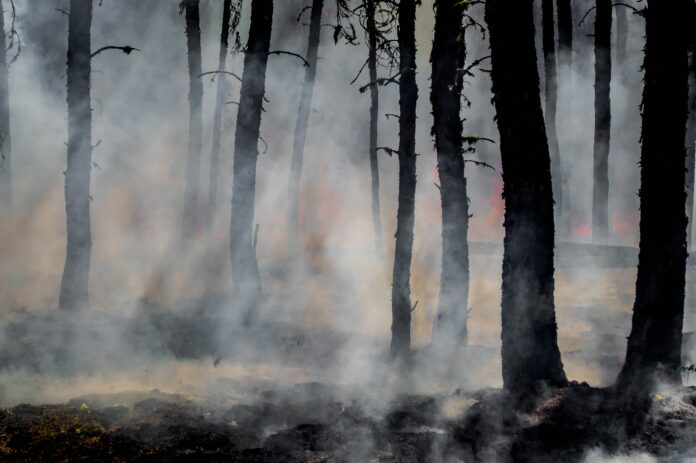
A smokey forest, after a fire
PHOTO: Joanne Francis / Unsplash

By: Olivia Visser, Copy Editor

You don’t have to look far to find news about wildfires impacting communities across Canada. It seems like every year BC experiences its “worst wildfire season” on record, and the issue isn’t just local. Greece, Spain, and Hawaiʻi endured devastating fires this year, among other locations. What’s concerning isn’t just the fact that many sit back and act like nothing can be done in the long-term — news headlines and social media posts severely underscore the role climate change plays in large-scale wildfires, arson or not. 

Recurring extreme heat events result in “dry weather” and dry vegetation, which is a perfect environment for wildfires to both ignite and spread. Climate Atlas of Canada explains that the increasing number of hot summer days makes BC forests “much more flammable.” They also point out extreme heat provides a suitable climate for the destructive mountain pine beetle, which has damaged over “18 million hectares of forest” since the 1990s, further drying up vegetation. Resources Canada asserts these “fire-prone conditions” could double the “area burned by the end of this century.” And don’t kid yourself into thinking this is a problem for the future — we’re watching these predictions unfold in real-time.

Large-scale wildfires have occurred in BC for hundreds of years, before colonizers ever stepped foot on this land. Indigenous fire keepers have used traditional knowledge to “cleanse” dry, fire-prone land for ages. Today, Indigenous fire knowledge holds significant value that finds itself overlooked following colonialism. Many of today’s fire suppression techniques actually exacerbate forest fires, compounding the effects of climate change. Indigenous peoples have long been excluded from forestry decisions, which disproportionately impacts their communities. Including Indigenous input is a step towards a more sustainable and decolonial approach in our forest management response. 

Some believe historical fires are evidence these most recent fire seasons are “natural” climate events. However, the last 40 years point to a more concerning “era of mega-wildfires,” according to The Globe and Mail. BC’s wildfire season summaries reveal the area burned by wildfires each season has increased from 265,000 hectares in 2003 to 1,354,284 in 2018. Numbers vary each year, but the continuous upward trend points toward a serious problem. The BC Wildfire Service told CBC that 1,458 of this season’s fires were caused by lightning, compared to 450 human-caused wildfires. Why are people giving more attention to human factors than the climate crisis itself, which exacerbates these factors? 

News outlets are often preoccupied with platforming all ideas, without context, regardless of their credibility. A recent headline from National Post, titled “Stop blaming forest fires on climate change,” illustrates this point. And if you’re wondering whether headlines like these are simply clickbait, the text boasts equally reactionary rhetoric: “Eco-activists and environmental NGOs want us to believe that there is a climate crisis.” (Spoiler alert: there is). Other publications like CBC are more forthcoming about the science behind wildfire events, but they still can’t entirely divert the damage caused by misleading content. It also doesn’t help that even the most credible publications still use titles that undermine the climate crisis; CTV News published an article last year titled, “Nearly all fires started so far this year were human-caused.” 

Of course, there is truth behind claims of human-caused wildfires. Publications generally aren’t lying when they state these facts. Brazil’s ongoing Amazon arsons come to mind, but BC forests also suffer from arson, as well as preventable fires from folks who throw cigarettes on the ground or have illegal campfires. Since climate change contributes to ideal wildfire conditions, something as small as a tossed cigarette can start a large-scale wildfire rather than a smaller bushfire. But when news sources only briefly elaborate on climate change in a single paragraph halfway down the page, can we really expect most readers to thoughtfully examine the facts, or even care at all? 

A 2022 study for the Journal of Consumer Psychology found that 59% of people who share links on X (formerly Twitter) don’t even open the articles they post. Headlines that prioritize human involvement in wildfires are like gold to climate deniers. You don’t need to actually read an article to share it and say to yourself: “See? The climate crisis is exaggerated.” Excessive or unbalanced coverage of human-caused wildfires doesn’t just foster complacency, either. It feeds into “climate hoax” conspiracies, ending up on social media timelines as evidence climate activists are overreacting. 

In a more extreme example, when wildfires devastated communities across Maui this August, social media users claimed the fires were intentionally set by the Hawaiian government. Another tweet from a popular US-based account claimed to have “irrefutable evidence” of “directed energy weapons” being used by the Chinese government to cause wildfires. Replies ranged from people agreeing but questioning China’s involvement, to pointing out that “Oprah’s place was untouched in the surrounding destruction,” as if that means anything. And while it’s easy to assume these people are a loud minority, climate change is increasingly becoming a partisan issue, even though Republicans like George H.W. Bush promoted environmentalism and cautioned against what was then-known as “global warming” in the 1980s. 

Fast forward 40 years, and the climate situation has only deteriorated. Politicians have taken anti-climate stances to stir division, and news companies have happily hopped onto the clickbait bandwagon to soak up shares from conspiracists. There’s no single solution for climate change, but it’s clear the way we approach these conversations isn’t working. News companies: it’s time to do your part in dispelling misinformation, even if it comes at the expense of your extremist readers. There’s no reason why climate change should be excluded from wildfire coverage. Social media users: be careful about the media you consume and share. Go beyond “thoughts and prayers” and make climate activism a priority on your timeline and in your personal life when possible. Indigenous peoples have been caretakers of this land since time immemorial, and it’s time to recognize that.

It’s easy to feel defeated when corporations and governments are the main contributors to climate change, but don’t let yourself forget that real change often follows community activism. You do have a voice amid the climate crisis. Attend protests, have conversations, support mutual aid, and pressure your local government to divest from the fossil fuel industry and recognize Indigenous sovereignty. 

Check out the links below for local non-profit and grassroots organizations fighting climate change:

BC Climate Alliance

Coast Protectors

Fridays for Future Canada

Indigenous Climate Action

SFU350

Stop TMX

Wilderness Committee 

350 Canada 

Ethọ́s Lab and CDM work toward inclusivity in XR

0

This is a photo of the SFU Vancouver campus. The lobby contains the security booth, seating for students to study, escalators, and a location directory.
PHOTO: Amirul Anirban / The Peak

By: Eden Chipperfield, News Writer

In October 2022, a partnership was struck between the Centre for Digital Media (CDM) and Ethọ́s Lab. The goal of the collaboration is to “increase the representation of Black youth and girls in extended reality (XR)-based digital futures.” They’re working toward this goal by developing an XR Media Lab program. The partnership is backed and supported by Unity Special Impact and Meta Immerservice Learning, who provided the Higher Ed XR Innovation Grant. They hope to reach over 300 marginalized young individuals and connect with over 190 secondary school instructors over the next five years. 

XR is a type of media that “combines the physical world with digital experiences.” Examples of XR include filters used on Snapchat and the 2016 hit Pokémon Go. XR is an interactive environment that users can experience in real-time. 

The CDM is an organization founded through collaborations between SFU, University of British Columbia, British Columbia’s Institute of Technology, and Emily Carr University. CDM’s vision is to “create world-leading digital media programming that focuses on society’s most important challenges,” including the underrepresentation of Black youth in digital media. 

Ethọ́s Lab’s mission is to further invest and indulge in representation, particularly in young individuals, to address cultural problems and improve inequalities through programming in classes, including “workshops, interactive events, mentorship, internships, and field trips.”

The Peak connected with CDM, who provided a statement regarding the partnership with Ethọ́s Lab, to see how the collaboration will impact today’s youth to create a more equitable future in digital media. The company reports that since the program’s beginning in 2022, the partnership has already reached over “200+ underrepresented youth and 150+ high school educators,” well within their goal of five years. 

Ethọ́s Lab’s mission is to improve the representation of the Black community by connecting youth with programs and skills in a variety of fields. They hope this will change cultural landscapes in areas like “science, technology, engineering, arts, and math (STEAM) fields.” The lab described the Ethọ́s Lab Blackathon, which encouraged Black, Indigenous, People of Colour (BIPOC) and women-identifying students to attend. In the case of the most recent Blackathon, Ethọ́s Lab challenged students to create a solution to package theft. The purpose of the Blackathon is to encourage those participating to find innovative designs and solutions and highlight Black designs and ideas. 

“By leveraging the infrastructure, people, and knowledge at CDM, we will be able to develop and deliver XR curriculum that has scale and build capacity for underrepresented youth,” says Anthonia Ogundele, founder and executive director at Ethọ́s Lab.

The partnership has already received positive feedback from the community. A parent noted, “Not only did [my child] learn new STEAM skills, but she grew in confidence immeasurably. [She] saw herself represented and welcomed as she immersed herself in the warm, diverse community. She has been inspired to truly dream big by the Black excellence she witnessed. I feel emotional thinking about what Ethọ́s Lab has done for my child.”

Intimacy and Distances bridges the gap of the pandemic’s isolation

0
A collage of art pieces from the exhibit.
PHOTO: Amrit Kamaal / The Peak

By: Matthew Wong, SFU Student

From my 224 square-foot tower, I gazed longingly out the window. I was pale and drained, and no visitors came to my room except for three daily meals, unceremoniously slipped through the door. And of course, neither my family nor friends would dare face me; we were in quarantine, and I had contracted COVID-19. 

The days of pandemic shutdown sometimes feel like a distant memory now, even though COVID-19 and its impacts continue to hurt our most vulnerable communities. COVID-19 is not over, but the shutdown of 2020 has created permanent social scars for some. I don’t think anyone will ever forget the isolation and seclusion that came with quarantine.

I recently had the pleasure of visiting Centre A’s exhibit, Intimacy and Distances by Maiko Jinushi, and was in awe of how succinctly and beautifully she had put that isolation into poetic displays of art. Born in 1984 in Kanagawa, Japan, Jinushi quickly found a love for art as a form of expression. With a Master of Fine Arts in painting at Tama University, she currently resides in Tokyo with exhibits appearing around the world. Jinushi expertly weaves words and visual mediums to explore concepts beyond us, and tell the stories of how people live. In an interview, Jinushi told The Peak,For the exhibition, I was thinking about emotions and intimacy through digital technology, which is getting more common in our daily lives.” 

In her highlight piece, Lip Wrap, Air Hug, Energy Exchange, a minimalistic animation plays as a girl laments about the anxiety and isolation she feels from lockdown. Asking herself if it would be possible to connect with people online, she wonders how she can exchange intimacy without physical touch; if there is some “condom for kissing, making it milder and less attached?” The quarantine deprived many of physical closeness, but perhaps the loneliness taught us other ways to connect to each other, much like the girl in this poem. 

The animation is simple in its execution but chock-full of subtle details. Along a blank backdrop, much like empty space, narrow and modest lines meld beautifully with the poem. The conservative use of colour depicts a juxtaposition of intimacy and distance, with black and white drawings symbolizing isolation, and colour adding a spark of connection.

In her piece, A Detective in Mexico City, Jinushi directs a video in which couples are secretly recorded as they walk and hold hands throughout Mexico City, while the poem, Generación de los párpados eléctricos (Generation of Electric Eyelids) by Roberto Bolaño, plays. Later, the same locations are visited, except they’re empty. The duality of intimacy and distance is painfully raw, combined with Bolaño’s poem ranting about an ex-lover. The recordings are done on a shaky phone camera, much like the recorded moments of our own lives. These memories serve as the only proof of the presence of the couples in these places, as the quarantine had long left them deserted.

Despite being connected to each other through the digital world, it can be difficult to bond with others through a screen. We’re not the same people online, and that’s what Jinushi attempted to capture in her piece, Fashion and Death. “I wanted to visualize these multiple personas, like a cubism painting, but with moving image,” she said. She accomplished this by using one actor to play the two roles of Fashion and Death. The actor moves across the camera facing either the audience or a mirror, showing how the two characters are one of the same. Representing separate personas, they go on to tell stories of themselves and their childhoods. For this piece, Jinushi had to quickly return to Japan, so she only had time for one take due to the quarantine, and thus, she gives us a glimpse into the first, unrehearsed rendition of her work. The improvisation is a crucial part of the charm of this piece.

Intimacy and Distances contains a number of other pieces, and this article could never do it justice. So, I encourage you to visit the exhibit yourselves, on until November 10. Jinushi uses words to tell a story, but constructs a far more detailed narrative through images, videos, paintings, and more, which she calls a “visual form of literary experience.” 

Even through physical isolation, I won’t forget the mundane interactions that added sparks of intimacy to my life, nor the connections I made with people. Even if those connections are through my own “electric eyelids,” I still treasure the people that the pandemic brought into my life, and I thank Jinushi for gracefully putting it into art.

Create & Enter: Writing opportunities

0
A filled-out notebook being flipped open.
PHOTO: Yannick Pulver / Unsplash

By: Petra Chase, Arts & Cultures Editor

PolterGeist writing contest
Deadline: November 13 at 11:59 p.m. PST

Geist, a Canadian literary magazine of all things fact and fiction, is looking for “stories that give voice to ghostly echoes and make homes in eerie landscapes.” A play on the namesake, the word geist translates to “spirit,” “wit,” or “ghost.” Submissions can be non-fiction or fiction, as long as they’re 500 words or less. In addition to getting published both in print and online, there are cash prizes from $150$500 for three winners. Entry includes a one-year subscription for $25 and each additional entry is $5. As a subscriber, you’ll get mailed a quarterly print issue!

Solastalgia volume II submissions
Deadline: November 27 at 11:59 p.m. PST

Solastalgia is a youth-led, Vancouver-based “eco-engagement and climate action zine.” Their first volume, available on Issuu, tackled eco-anxiety and grief. For their next volume, they want contributors to consider, “What gives you optimism, agency, or sense of community in the face of our shared reality?” and “What sparks your active hopes and radical imaginations of a better future?” On top of poetry and prose, they’re open to drawings, paintings, graphics, photos, collages, and more! Canadians aged 1530 can submit, and receive a $150 honorarium. Find out more on their Instagram, @gensolastalgia, or contact [email protected] for more information.

SLC Undergraduate Writing Contest
Deadline: Opens November 27 and closes January 7, but each category closes after 25 submissions are reached 

It’s time to start writing your academic papers with SFU’s Student Learning Commons’ annual writing contest in mind! Open to undergraduate students, papers must be between 1,2502,500 words and also submitted to an SFU course in 2023. There are four categories: first year, middle years, fourth year plus, and the plurilingual prize category. First and second place in each category win $200 and $150, and there will also be honourable mentions. Find out more about eligibility, deadlines, criteria, submissions, and the judging process at journals.lib.sfu.ca/index.php/slc-uwc/contest.