Home Blog Page 154

Shorter series damage storytelling

0
Someone watching Netflix on TV
PHOTO: Mollie Sivaram / Unsplash

By: Kaja Antic, Sports Writer

Streaming services have negatively affected the entertainment industry in multiple ways, and one example is how companies like Netflix and Max continue to shorten TV seasons. This has been an issue since the late 2000s and expanded in the early 2010s, as programs went from an average of 20 episodes per season to a staggering nine-episode average in 2017. The increase in shorter seasons goes hand-in-hand with the rise of streaming services as platforms prioritize the quantity of new TV shows over the quality of longer seasons.

Personally, I am not a fan of shorter series as they give the audience a limited amount of content, and often leave viewers feeling disconnected from the show’s themes and characters. On top of that, they often limit character development, leaving much of the show’s substance unfinished. One argument for shorter series is they make for more effective linear storytelling. This line of thinking comes from shorter seasons not needing to add filler episodes, which are often seen as unnecessary to the overall plot. While some may be relieved at the death of filler episodes, I am personally less than pleased. These episodes often expand on storytelling and character development that is now left on the cutting room floor of shows with limited runs.

In 2019, Netflix spent $12 billion on programming for its international network spanning over 158 million users at the time. With the COVID-19 pandemic creating isolation restrictions, the use of streaming services increased worldwide, and most online video streaming entities reported a minimum 10% increase in registrations in 2020. From 2019–2023, there was an estimated 76.7% increase in video streaming. While Netflix isn’t the only platform paying their workers unfairly, the rise in streaming goes hand-in-hand with profit. Despite services receiving more money, they are more interested in churning out a plethora of series rather than investing in longform, quality television. 

Another issue is that actors and writers are being employed for shorter periods of time, and not being compensated over the long term through residuals, a point of contention during the recently concluded SAG-AFTRA strike. Residuals are essentially payments for media participation after the initial compensation has already been paid to the participants. On traditional cable TV, these residuals largely come through re-runs of episodes. With streaming, there are no guidelines for how the participants are compensated for views on these platforms.

Profits decrease for performers, but not for streaming platforms, given actors’ limited access to work and consumers’ limited access to content from their favourite shows. Some residual cheques from large corporations such as Disney can only yield a few cents, despite the company earning over $82.7 billion USD in 2022 alone. These limited series not only damage the quality of in-depth storytelling for viewers, but also damage those on screen who are not fairly compensated for the work they do.

Many of these streaming services began producing their own shows exclusive to their platforms, which set the scene for programs in the years that followed. Netflix is notorious for creating this trend, and has debuted shows like Emily in Paris and Blockbuster. Sure, they have decent titles, but the amount of poorly made series outpaces the good ones. Streaming appears to be more focused on their growth as a corporation, churning out multiple titles, and less concerned with what’s actually being put out, as long as audiences engage in endless consumption.

Forgoing the issue of binge-watching culture halting the excitement of weekly episodes, these shorter seasons don’t allow for episodes that genuinely flesh out characters and secondary plots. What happened to the art of random late-season musical episodes

There’s no time to fully develop shows in their limited episode span, but there is also an ongoing issue of companies like Netflix cancelling shows after one or two seasons with little explanation. Many of these shows cancelled in recent memory feature marginalized communities, like Netflix cancelling popular shows centred around queer women like First Kill and I Am Not Okay With This, but continuing to represent queer men in shows like Heartstopper and Young Royals.

Since there’s only a limited amount of runtime for these shorter series, there’s not much content to be viewed when series are popular, which leaves even less money for actors. With the threat of cancellation always looming, there’s no guaranteed job security for those performing in the industry. 

There are certain shows on traditional cable TV that continue with longer seasons, such as classic procedurals like Law & Order, though many modern-day programs run for a fraction of the time popular programs did less than a decade ago. I’m not asking you to commit to hundreds of episodes, or even 1,000 episodes in the case of One Piece — just more than ten episodes to sustain a 365-day hiatus would be great.

Let’s talk about International Day of Persons with Disabilities

0
A woman with a mobility aid, smiling
PHOTO: Vlada Karpovich / Pexels

By: Hailey Miller, Staff Writer

December 3 is International Day of Persons with Disabilities (IDPWD). This day recognizes people with disabilities — the world’s largest minority — by shining light on the inequalities we experience while also celebrating our lives as individuals navigating society. Though I agree these issues are important and need awareness, there is a difference between awareness and inclusivity. 

Disabled people still face many accessibility and inclusion issues today. Inaccessible places are everywhere — schools, workplaces, restaurants, venues, and even medical facilities. When it comes to inclusion and wanting to live our lives alongside everyone else, it’s difficult to do so when we have to manoeuvre around accessibility issues daily. Structures that exclude disabled people include: no ramps or let-down access for wheelchairs, no elevators, no handrails on stairs, no access to braille, subtitles, or audio adjustments, and a general lack of accessible technology. How are disabled people supposed to participate if we can’t even get through the door or follow conversations? It’s important for us to have as much access to spaces as everyone else, rather than stopping efforts at “awareness.” 

Some places are more accessible than others, just as acceptance and inclusion towards disability around the world varies. We should be aiming to create better standards for universal accessibility. The Rick Hansen Foundation — whose mission is to remove physical barriers in daily life — does a phenomenal job at assessing accessibility standards, having these implemented in public spaces, and creating an accessible standard that should be followed and included everywhere. These guidelines can create a starting point for public spaces.

I used to wear my disability on my sleeve. Now, I don’t stress about explaining it to others. As someone who was born disabled, there are certain instances in life where I no longer care much about it. This is not to say that it doesn’t matter, but rather, that I don’t see my disability as being the sole characteristic that defines me. Of course, we all have our struggles and challenges, but there is so much more to our lives than being defined by disability. Accessibility and inclusion are the backbone of tangible action. IDPWD attempts to uplift disabled people without acknowledging all the diverse facets of our lives. What is especially important is the matter of society allowing disabled individuals to live their lives as anyone else, and this is where accessibility, inclusion, and advocacy are of utmost importance. 

Without accessibility, inclusion is an extreme challenge, but it is also a standalone issue. Including disabled people in workplaces, community groups, and regular day-to-day endeavours is immensely important. This is more than just knowing someone with a disability or including them in your life. Inclusion means workplaces are willing to hire a disabled person, get to know and understand their needs, and provide appropriate accommodations for them. It is actively working against ableism in all facets of life. 

As someone who has dealt with a physical disorder all my life, I understand many of the struggles and challenges we face. I know the hardships of navigating day-to-day life, advocating for myself, requesting accommodations, noticing accessibility issues (and recognizing where accessibility is well-implemented), and experiencing issues like inequality and lack of inclusion. The reality is that this day has not served disabled people as it should. Awareness, without action, does not serve people. 

IDPWD should involve more than just shining a light on individuals with disabilities and bringing awareness to our lives and accomplishments. Disabled people are just as worthy of every opportunity in life as able-bodied people are. It is accessibility and inclusion that continually need to be implemented and improved. They allow us to live our lives to the full extent that we are capable of — we simply deserve these things as basic human rights. 

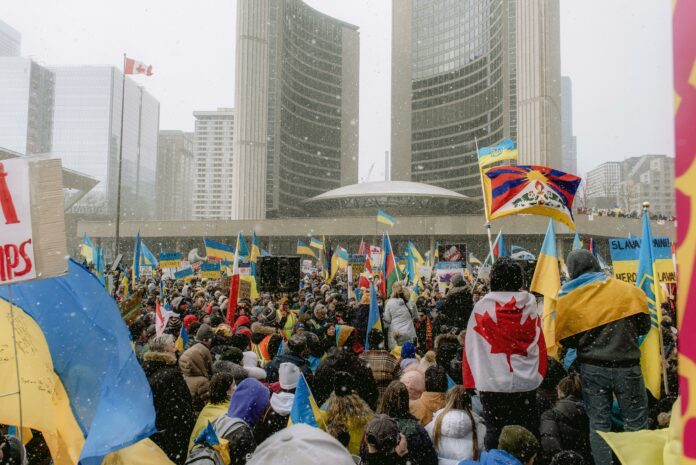
Bill S-276 hopes to mark September as Ukrainian heritage month

0
This is a photo of a protest, which happened in Vancouver to support Ukraine. The crowd is varying multiple Canadian flags, and multiple Ukrainian flags.
PHOTO: Harrison Haines / Pexels

By: Saije Rusimovici, Staff Writer

On October 19, a new bill proposing the implementation of Ukrainian Heritage month was introduced in the Senate by Senator Stan Kutcher. Bill S-276 is an opportunity for Canadians to “celebrate, reflect on, and learn about the many contributions made by Ukrainian Canadians to Canada’s unique social and historical fabric.” If the bill is passed, the month of September will be dedicated to acknowledging Ukrainian heritage in Canada. September was chosen to honour the first recorded arrival of Ukrainians in Canada 125 years ago.

Canada has the third largest Ukrainian diaspora in the world. There have been six documented waves of Ukrainian immigration to Canada, beginning in the early 20th century. After the Second World War, thousands of Ukrainians settled in parts of Eastern Canada, with their relatives to follow in the 1980s. Most recently, nearly five million Ukrainians have been forced to leave their homes due to the invasion of Russian troops in 2022. 

Senator Kutcher was born to Ukrainian refugees who arrived in Canada following the Second World War. He stressed that the important contributions made by Ukrainian Canadians, throughout history and in the present, have helped form the country we live in today. The prairie provinces of Canada saw the most Ukrainian immigration, leading to a large population of agricultural workers. Additionally, Ukrainian Canadian communities set up many public benefits and “local cultural-educational associations, fashioned after Galician and Bukovinan models.” 

“This bill is an opportunity to recognize our Ukrainian heritage and provide opportunities for learning and celebration each year.” He noted it’s important to dedicate this month to celebrating Ukrainian heritage and the importance it holds in the fabric of the country. 

Senator Kutcher told The Peak that for him, this is an opportunity to “acknowledge the fact that our country was built by hands of many colours and our anthem is sung by voices of many tongues.” He emphasized the importance of learning from the experiences of others, openly recognizing “the joys and sorrows of the past and the present.” For Senator Kutcher, growing and developing as a multicultural country relies on creating mutual respect for each other. 

Placing an emphasis on learning from each other’s experiences, Senator Kutcher insisted that we must “reach out and celebrate the rich tapestry of our nation and find those bonds that pull us together.” 

Senator Kutcher described several ways in which we can encourage integration and education of different cultures. “I think that learning about all of the different cultures that make up Canada should be a necessary part of school curricula,” he said. He also mentioned the importance of celebrating art, music, and dance specific to different cultures. “Encouraging the production of cultural festivals that can welcome all residents of this country to learn about and celebrate all our different cultures and backgrounds,” he added. 

BorderPass aims to improve international students’ academic endeavours

0
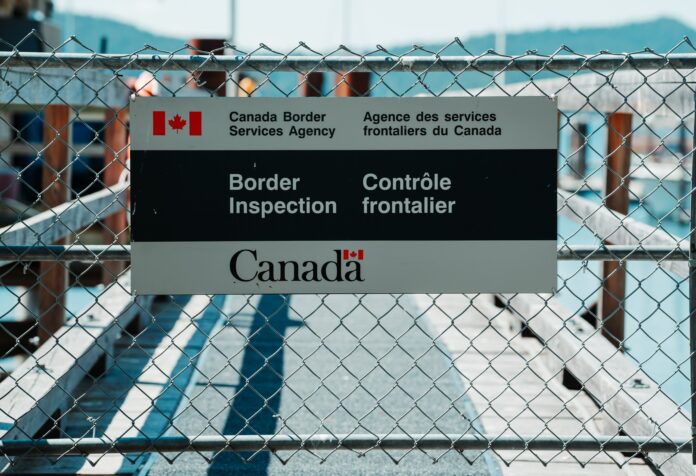
This is a photo of the Canadian border. Specifically, a sign on a metal fence reads, “Canadian Border Inspection.”
PHOTO: Hermes Rivera / Unsplash

By: Hailey Miller, Staff Writer

International students in Canada face a variety of challenges, including financial burdens, language barriers, affordable housing, health care, and academic pressures. BorderPass is a Canadian company that helps international students with the systemic challenges they face when studying abroad by dismantling these barriers. Specifically, they help international students attain a study permit and create successful applications. 

The Peak interviewed Josh Green, co-founder of BorderPass, to ask about the company’s services and how they can help international students’ experiences abroad. Green explained that BorderPass helps “align whatever [students’] academic goals are with reaching their immigration goals.” This includes things like working after graduation or staying in the country they studied in.  

Green noted that outside of Canada, organizations give unrealistic expectations regarding the international student experience and application process. To counter this, BorderPass lists expectations and provides legal services for students “to put their best foot forward.” He further stated that it’s “a journey to become a permanent resident” in Canada. The company works to support students in staying within the parametres of their study permit, preparing for post-graduation, and finding employment. 

“BorderPass international students are given access to legal-level services that otherwise they wouldn’t be provided with,” Green noted. Aside from this, they are provided “realistic expectations,” and knowledge of what it’s like to study abroad in Canada.

“Institutions can focus on resources in other ways that are more beneficial to them,” rather than having to worry about the immigration process for the students attending these institutions. In turn, Green said this helps “enhance their international student experience and outcomes.” He noted that they have seen an abundance of need “to provide better support for international students.”

Centennial College in Toronto was the first post-secondary institution in Canada that implemented the use of BorderPass. Since then, Green stated that this implementation has helped students by answering their legal questions, and notifying them if more documentation needs to be included or altered. He also noted that many students have the same problems and concerns, so BorderPass works to help them navigate these challenges. Most recently, Borderpass responded to inquiries regarding travel for the upcoming winter break

When asked if Green has seen interest in BorderPass from other post-secondary institutions across Canada, he explained that many have reached out to inquire about their services, wanting to learn more about the benefits to students and how BorderPass works in different capacities to enhance the student experience.

The Peak reached out to SFU for a statement on the university’s thoughts about BorderPass. The university stated that they are aware of BorderPass, but will not be using their services because they already have “similar supports in-house.” They explained, “SFU International Services for Students has a team of Regulated Canadian Immigration Consultants and Regulated International Student Immigration Advisors on staff that provide immigration-related support to all international students.” They offer individualized advising services on all campuses alongside online resources, information sessions, and newsletters.

International human rights lawyer discusses genocide and conflict

0
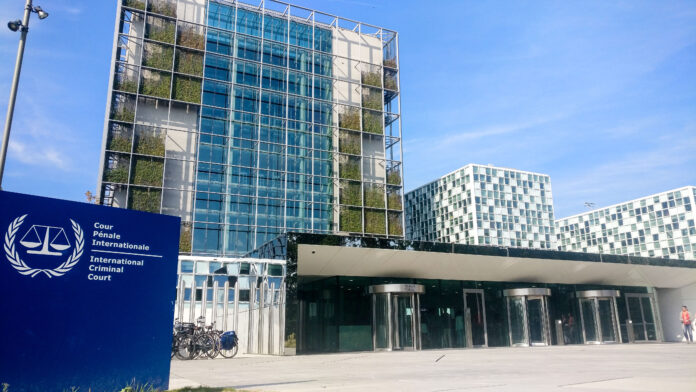
This is a photo of the International Criminal Court building in Geneva. The sign is clearly visible, in front of the building.
PHOTO: jbdodane / Flickr

By: Olivia Sherman, News Writer

Content warning: mentions of violence and genocide. 

Payam Akhavan is an international human rights lawyer and special advisor to the prosecutor of the International Criminal Court (ICC). He’s best known for his work with the United Nations (UN) investigating conflicts and protecting survivors of genocide. The Peak attended Akhavan’s panel, titled “A Search for Justice,” where he discussed recent global conflicts. 

Akhavan described the search for justice as a journey, best understood “not as intellectual abstraction, but experiential knowledge, through encounters with injustice.” Despite his work trying to bring justice to others, Akhavan feels a “profound sense of futility,” even with his victories, because the damage to people is already done. “Justice is imperative, someone must be punished, someone must be held accountable for what happened. But on the other hand, you realize that justice is not going to bring back [ . . . ] lives that are forever extinguished.” 

While Akhavan may be successful in reaching justice for victims, he does not measure this as success, “because, technically, it’s already too late.” 

Working with the UN, Akhavan investigated sites of violence and conflict in Croatia, Cambodia, Rwanda, Guatemala, Bosnia, and Timor Leste. He defended victims and survivors of genocide in Iran, Iraq, and Muslim Rohingya people in Myanmar. As an advocate and counsel, Akhavan served on the European Court of Human Rights, The Supreme Court of Canada, the ICC, and the Supreme Court of the United States. Akhavan is also the co-founder of the Iran Human Rights Documentation Centre, a non-profit that documents the state of human rights in Iran. 

In order to bring justice to those impacted, Akhavan needs access to the scene of the conflict, such as “the village in which homes were burnt, [and] people were massacred.” He also needs as many testimonies and witnesses as he can get, which can often be impossible in cases of mass deaths because all possible witnesses have been killed. “International criminal justice is not about the ‘whodunnit murder mystery,’ where one person has been killed and the question is who pulled the trigger [ . . . ] those who are most responsible are typically not those who pulled the trigger, it’s those who ordered them.” 

ICC testimonies, for this reason, must be fact-based. Akhavan looks for the who, what, when, and where of an act. “If you have a witness on the stand, the witness cannot come and tell her story for the court. The court is not interested in the fact that she has suffered. The court is interested in whether she can testify.” He described the questions the prosecution will ask as “very clinical, very precise,” in order to get the exact details of an event. 

Akhavan said defining actual terms, such as genocide, can be ambiguous at best. Yet, “if you don’t call it genocide, it’s not worthy of attention.” Akhavan said there is a very narrow definition of what genocide really is. “Not just extermination, not simply mass destruction or mass murder, but an intention to destroy a group as such.” While it is important to clearly define these terms, debating over labels like genocide, mass murder, or crimes against humanity does not “absolve responsibility” from those committing the violence.  

Despite the state of global conflicts, Akhavan has optimism for change. “International law is a work in progress,” he said, but noted people are changing their ways. He said genocide-resilient societies built on empathy are needed. He wishes to see a future in which he is “unemployed happily,” where his job as a legal “trauma surgeon” is unnecessary. “We have to do what we can, sometimes against all odds, because the alternative is despair.” 

Study shows fast fashion’s detrimental effects on the planet

0
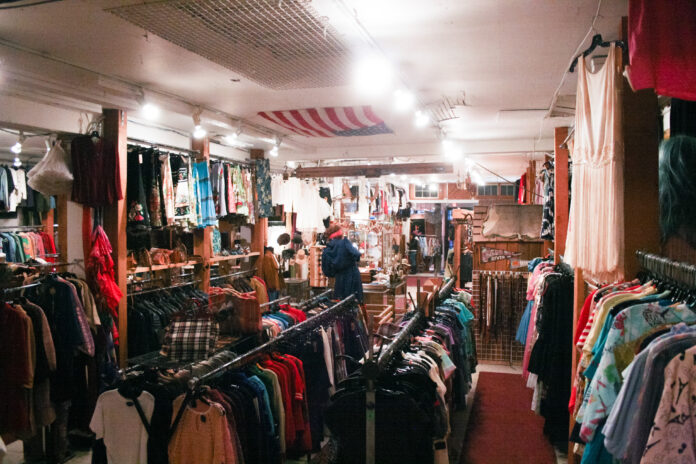
This a picture of a person looking through clothing racks in a thrift store.
PHOTO: Gudrun Wai-Gunnarsson / The Peak

By: Eden Chipperfield, News Writer

Fast fashion has taken over the world. With the rise of social media platforms like TikTok, trends come in and fade out quickly, encouraging individuals to buy cheap clothing to wear for short periods of time. Fast fashion is a product of the clothing industry’s shift in the last 30 years where clothing has become cheaper and more accessible. This is because the fashion industry has prioritized rapidly producing high volumes of clothes for extremely cheap, by exploiting the labour of workers. 

 Fast fashion pollutes the Earth with fossil fuels and microfibers that are shed from the clothing and enter the oceans. Brands like Shein, H&M, and Uniqlo all share a responsibility for their part in the fast fashion industry contributing to climate change. 

A recent SFU study examines how the “allure of fast fashion comes at a significant environmental cost, and encourages consumers to adopt more sustainable alternatives.” The study was written by SFU PhD student, Yunzhijun Yu, SFU visiting PhD student, Claudia Lizzette Gómez Bórquez, and SFU professor of marketing, Dr Judith Lynne Zaichkowsky. The report outlines the problems with fast fashion and makes suggestions to point the fashion industry toward sustainability. 

The Peak interviewed Dr. Judith Lynne Zaichkowky to discuss the study’s findings and the research team’s hope for a green, cleaner future fashion world. 

“The negative effect of fast fashion on the planet does not only involve the production aspect of textiles but also on the disposal side,” said Zaichkowky. “The textile dyeing industry is the second largest polluter of the world’s clean water and hence the manufacturing and disposing of fast fashion clothing substantially harms the environment in the process.” 

Water waste is a significant issue regarding fast fashion. According to Ontario Nature, one cotton T-shirt takes over 3,000 litres of water to manufacture. As Zaichkowky discussed, the toxic dyes from the clothing pollute waterways. The harmful chemicals affect the populations in countries with large textile industries like Bangladesh, Cambodia, and Vietnam, explained Zaichkowky.  

In 2018, over 11.3 million tons of clothing were discarded. “It has been reported that the vast majority of Vietnam’s water system has been polluted, resulting in 80% of the total illnesses in Vietnam,” said Zaichkowky, citing a 2017 study from Thi-Nham Le and Chia-Nan Wang. 

“Eco-conscious clothing is, understandably, less affordable than fast fashion,” said Zaichkowky.

Since the cost of eco-conscious clothing may be high, thrifting second-hand clothes may be “an excellent solution.” However, Zaichkowsky noted an issue with thrifting clothes is that there must be time spent to find apparel that fits in thrift stores. Often, items are purchased and not tried on before the purchase is made, leaving clothing in the backs of consumers’ closets to be donated again in the future. 

To limit clothing waste, Zaichkowky recommends trying on clothing before purchasing. Also, buying clothes limited to a few select shades of colours that suit the individual may help cut spending. 

The Peak asked how individuals can change their habits to include eco-conscious fashion choices. “They need the mantra of less is more. They need to try on garments before purchase and forget the online purchase and delivery of items they are unable to try on for fit and suitability before purchase.”

What happened to McFogg the Dog?

0
McFogg the Dog as a dj. He’s wearing headphones and using turntables.
ILLUSTRATION: Alyssa Umbal / The Peak

By: Mahla Rae, SFU student

Many know about SFU’s loss of the beloved mascot McFogg the Dog. It’s often controversially referred to as a harder loss than the dissolution of our own football team. But what happened to McFogg after he left SFU? What path did he go down? What is he doing today? A critical investigation launched into these questions, and the conspiracies about McFogg’s current whereabouts leave us with more questions than we began with. 

A dive into recent McFogg sightings resulted in a number of students reporting to have seen him in the past month. McFogg was spotted at more than one Vancouver nightclub as “McFogg the Dawg,” an up-and-coming artist and DJ. However, follow-ups on these reports have proven to be inconsistent, with some students saying his sets hit hard and others saying they would rather listen to an A&W playlist. 

From another of these alleged sightings, McFogg was seen stumbling through the woods surrounding SFU, often barking and yelling at raccoons. In one instance a student recalled what they could only assume to be McFogg shouting, “You don’t scare me, you masked garbage thief,” followed by the sound of “aggressive” bagpipe playing. If you’re out there, McFogg, we hope you’re okay. 

Other rumours say that McFogg ran into UBC’s Thunderbird at a yearly mascot convention, and something sparked between them. A few students supporting this rumour claim that after a lot of work on their relationship, McFogg is now a stay-at-home dad supporting the Thunderbird’s career and raising their McChicks. These rumours have caused controversy, with many students dismissing them as mere speculations considering McFogg’s long-lasting rivalry with the Thunderbird. One anonymous fifth-year psych student agreed, saying the “enemies to lovers” trope is far too “basic” for our McFogg. 

The last of the reports indicate that after his time at SFU, McFogg left the country entirely to become a scholar. These reports came from mascots around the world mentioning sightings of him at their schools. They believe that after leaving SFU, McFogg became consumed with revenge and spite for the title-based pride of the academics after years of being taken as a joke. It’s said he used this spite as fuel and struck out to earn the highest titles at the most prestigious schools. Handsome Dan, the bulldog of Yale University, claims that not only is McFogg there currently earning his doctorate in philosophy, but that they have become close confidants and have a weekly pickleball match. Other sources say Handsome is lying for popularity, citing that bulldogs are notoriously bad at pickleball and Handsome has been referred to as a “pathological liar” in the past. These sources have requested to remain anonymous. 

This search for McFogg, and for answers, concludes with indefinite possibilities. When it comes to McFogg the Dog no source is truly trustable, as many would say just about anything to claim to know or even just have met him. McFogg is a man of many talents and no scenario is truly impossible for him to end up in. Wherever you are McFogg, we love you, we miss you, and we won’t stop searching until we find you. 

This week at SFU

0
photo of an SFU basketball player under pressure at the hoop.
PHOTO: Wilson Wong / SFU Athletics

By: Isabella Urbani, Sports Editor

Home Games 

Tuesday, November 21: women’s basketball vs. Minnesota State Moorhead at West Gym at 2:00 p.m. 

  • Free admission to the game.
  • The women’s team went 0–3 at their first tournament of the season. 

Friday, November 24: hockey vs. Okanagan Lakers at Bill Copeland Sports Centre at 7:00 p.m. 

  • SFU lost their last match against Okanagan 6–3.

Away Games 

Friday, November 24: men’s basketball vs. Regis (Colorado) at 4:00 p.m. 

  • The men’s team went 0–3 and 1–1 at their first two tournaments of the season.

Friday, November 24: women’s basketball vs. Concordia (California) at 1:00 p.m. 

  • The women’s team is 1–1 all-time against Concordia; SFU lost to Concordia last season 90–86.

Saturday, November 25: men’s basketball vs. Metro State of Denver at 2:00 p.m. 

  • Last game before the men’s team play their first divisional opponent of the season.

Saturday, November 25: women’s basketball vs. Point Loma Nazarene (California) at 12:00 p.m. 

  • The women’s team is 1–2 all-time against Point Loma Nazarene; SFU lost the last meetup 68–65

Saturday, November 25: hockey vs. Long Island University at 4:00 p.m. 

  • SFU lost their last game 3–1 against Div. 1 school, Robert Morris.

Sunday, November 26: hockey vs. Arcadia University at 4:00 p.m. 

  • Last away game before SFU returns for their first home game since September 23. 

Local artisans to support this holiday season

0
A collage of three beaded items from the three artists mentioned in order: First is white and pink big heart earrings with bear paws in the middle. The second is a stone with a dainty white beaded necklace. The third is bright colored, bold sized flower earrings with little pearls in the centre.
PHOTO: Courtesy of @amanda_ruth_bead on Instagram, courtesy of @zanobysadj on Instagram, courtesy of @tripokbeatnik on Instagram

By: Saije Rusimovici, Staff Writer

Amanda Ruth Beads
Amanda is a member of Swan River First Nation in Alberta, and on top of running her business, is a social worker who works with Indigenous children in foster care. A variety of handcrafted items are available on Amanda’s website, including gorgeous beaded-patterned pendants and Kokum scarves. These are Ukrainian floral scarves that Indigenous matriarchs adopted when Ukrainians arrived in Treaty 6 Territory, as the style was “a natural complement to the floral patterns found in Cree, Dene, and Metis beadwork.” Her art has been featured in the Bill Reid Art Gallery’s Indigenous winter market and at Hobiyee, a celebration of the Nisga’a new year at the PNE Forum. You can also check out Amanda’s jewellery making tutorials on Youtube, and follow her on Instagram @amanda_ruth_beads.

ZANO by Sadj
This local Vancouver-based artist has a collection of colourful, bold products available on their Etsy shop. The owner, Sadjeda, is a French Muslim born and raised in Réunion Island. ZANO comes from the Creole word for earrings. You can find a beautiful assortment of earrings with abstract shapes like sharp triangles and half-ovals overlapping, and sizes that are the perfect present for anyone who wants to make a fashion statement. The style of jewellery is unlike any you would find in a typical fashion conglomerate. Quality and care is evident in the craftsmanship of every piece. The pearl-studded, earthy-hued Gaia earrings are currently featured on their Etsy shop. Pieces like these can be paired with almost everything and worn timelessly. Prices range from $29–79. What’s even better is that all pieces on their storefront include free shipping! Check out some of their featured items on Instagram @zanobysadj. 100% of the earnings from purchases of Palestine-inspired items will be donated to organizations in Gaza.

Tropik Beatnik 
Embrace your inner child with jewellery from the Philippines! Pinay artist Carla Cruz features “unapologetically quirky” designs inspired by Filipino culture. Handcrafted using polymer clay, Philippine pearls, and upcycled fabrics, each of the pieces are bold and beautifully designed. The vibrant colours used in Carla’s collections reflect the brand’s statement of celebrating Filipino excellence. Their mission is to source “jewellery from Philippines-based designers and artisan brands to build bridges with the diaspora and dispel the colonial myth that ‘imported is better.’” The pieces are playful, yet can still be dressed up and worn in the adult world. I particularly love the “Pearly Sampaguita” collection. You will definitely turn heads wearing these bright pieces! Prices range from $34–74. Check out the shop on their website.

Media to uplift Palestinian narratives

0
Gaza marked on a map
PHOTO: CHUTTERSNAP / Unsplash

By: Hailey Miller, Staff Writer

Content warning: mentions of genocide, violence, and war.

Editor’s note: this article was updated on November 24, 2023, to re-word instances of naming the Palestinian genocide a “conflict.” The word “conflict” assigns equal blame to both Israel and Palestine for the unfolding of the siege on Gaza and fails to place the blame on the oppressor.

In light of Israel’s brutal siege on Gaza after Hamas violent attack on Israel on October 7, it’s important to understand these events are not isolated incidents and both “sides” do not have equal power. Conflict has followed the colonization and oppression of Palestinians for nearly a century, and the history is long and cruel. Palestinian perspectives are often marginalized and even silenced in the media. Here’s a list of media to expand your understanding of the longstanding history of the Israeli occupation and ongoing genocide, and the immediate need for a ceasefire now.

Books

Palestine Speaks (2021)
By: Mateo Hoke and Cate Malek

This book is an “oral history collection” of narratives from individuals living on the occupied land of the West Bank and Gaza — two Palestinian territories — and discusses their lives amid the longstanding crisis. It includes narratives by a journalist, fisherman, settlement administrator, and a marathon runner. It also includes a perspective from Ghassan Andoni,  an Arab-Christian physics professor and activist from Bethlehem who co-founded the International Solidarity Movement and advocates for non-violent resistance. As a religious minority, Palestinian Christians face annihilation from this genocide, have endured violent persecution, and Israel’s occupation restricts them from accessing holy sites.

Seeking Palestine (2023)
By: Penny Johnson and Raja Shehadeah 

This anthology of essays features the voices of 15 Palestinian authors with the theme of “exile and home.” They reflect upon their lives as they wait, live, and seek a Palestine safe from oppression and Israeli state violence. The collection contains a variety of forms, from poetry and humour to essays, all of which help understand what living through Israel occupation means.

Erasing Palestine (2023)
By: Rebecca Gould

Gould explores the history of anti-semitism and how it has been redefined, especially within the internal politics of Britain, which is then related to global phenomena.  She discusses how “the redefinition of antisemitism has functioned as a tactic to undermine Palestine solidarity.” The Palestinian movement is anti-Israeli colonization, not anti-Jewish. Anti-semitism is prejudice, hatred, and discrimination against Jewish people, while many Jewish people do not support Israeli violence and the occupation of Palestine.

All books are available from Massy Books, and you can browse their selection of “Books for Palestinian Justice and Freedom” on their website.

Films and Documentaries 
Al-Nakba: The Palestinian Catastrophe 1948 (1998)
Where to watch: YouTube 

In a series of four episodes, this documentary explains the history between Israel and Palestine and the displacement of Palestinians during the Nakba, a catastrophic event in 1948 in which Israel, backed by Britain, brutally “expelled at least 750,000 Palestinians from their homes and lands and captured 78 percent of historic Palestine.” Nakba means “catastrophe” in Arabic, and also refers to the continuation of this ethnic cleansing and occupation since then. The film features testimonies of Arab and Israeli witnesses during the catastrophe. 

5 Broken Cameras (2011)
Where to watch: YouTube, Amazon Prime, Apple TV+

This documentary features the sights and violent destruction of protests that happened in the Palestinian village of Bil’in, Gaza, since 2005. Palestinian farmer and cameraman Emad Burnat’s footage captures the struggles and resistance surrounding the West Bank barrier being built, which created separation among Israelis and Palestinians, and affected those living and farming near the Gaza-West Bank area. Each camera represented one chapter in the long fight.

Born in Gaza (2014)
Where to watch: Netflix

This documentary explores how violence affected the lives of 10 Palestinian children following the 2014 war in Gaza, and the horrors the children faced under Israeli occupation. It highlights how the Nakba has robbed children of a childhood they deserve, which we can see with the current siege of Gaza, with over 5,000 children dying in the past month alone.

Gaza Fights for Freedom (2019)
Where to watch: YouTube

Filmed during the Great March of Return protests, Gaza Dights for Freedom features footage of countless demonstrations among civilians fighting for their freedom and rights. Over 200 unarmed civilians were killed by Israeli snipers during their 2018 fight and protests.

Farha (2021)
Where to watch: Netflix 

Farha explores the violence in Palestine in 1948, where a father leaves and hides his 14-year-old daughter in a pantry to try and keep her safe, promising to return. While the film is fictional, it depicts a story that is sadly similar to the experiences of Palestinians today. When the film was released, the Israeli government campaigned to have it removed, as it exposes the violent and unjust reality of their occupation of Palestine.

Podcasts 
Available on all podcast platforms

Guerrilla History
This podcast covers global history and discusses how wars have shaped the world. The latest episodes feature the catastrophes of the Palestinian genocide.

Unsettled 
Unsettled follows the events of the October 7 Hamas attacks alongside conversations and viewpoints on the Israel occupation of Palestine, including interviews with Shahd Safi and Arie Hasit. Safi has stated that the people of Gaza are in need of electricity, fuel, flour, and bread. Hasit and his family have been spending time in bomb shelters.

Frontburner: A Compounding Crisis in Gaza 

This CBC podcast series is currently featuring many of the issues in occupied Palestinian territories following the latest events and catastrophes. This specific episode focuses on the crisis regarding the lack of food, shelter, medical care, and safety, and how more needs to be done to help the people of Gaza.

CJPME
The Canadians for Justice in the Middle East (CJPME) podcast features conversations with guests, including “journalists, human rights leaders, UN experts.” In their 55 episodes thus far, they’ve tackled “issues related to Israeli apartheid, Canada’s response to Israel’s far-right government, Islamophobia, and pro-Israel media bias.” Some highlights include “Canadian Media and Pro-Israel Bias” and “The Islamophobia Industry in Canada.”