Home Blog Page 135

This week at SFU

0
PHOTO: Sebastian Brinkman / SFU Athletics

By: Isabella Urbani, Sports Editor

Home Games 

Thursday, February 22: men’s basketball vs. Central Washington at West Gym at 7:00 p.m. 

  • 50% discount on admission 
  • Recorded back-to-back wins, their longest win streak of the season, on February 1 and February 3

Saturday, February 24: men’s basketball vs. Northwest Nazarene (Idaho) at West Gym at 7:00 p.m. 

  • Black History Night and 50% discount on admission 
  • Lost 69–51 earlier in the season to Northwest Nazarene 

Sunday, February 25: men’s golf vs. Fraser Valley in Pitt Meadows 

  • Day one of two 
  • Second and last competition of the month 

Away Games 

Monday, February 19–Tuesday, February 20: track and field at the GNAC championships in Spokane, Washington 

  • Women finished third and men finished fifth at the conference championships last year 

Tuesday, February 20: softball vs. Stanislaus State (California) at 3:00 p.m. and 5:30 p.m. 

  • Last played Stanislaus State in 2015 to an 8–1 loss
  • Sixth game the team is playing in four days (February 16–20)

Thursday, February 22: women’s basketball vs. Seattle Pacific at 7:00 p.m. 

  • Final road trip of the season 
  • Scored 83 points three times in their last five games 

Friday, February 23: lacrosse vs. University of California (Berkeley) at 7:00 p.m. 

  • First game of the season 
  • SFU won their 10th Pacific Northwest Collegiate Lacrosse League title last season

Friday, February 23–Saturday, February 24: track and field at the University of Washington for the Ken Shannon Last Chance Meet 

  • Final meet of the season 

Saturday, February 24: lacrosse at Santa Clara University at 12:00 p.m. 

  • Beat Santa Clara 10–9 last season 

Saturday, February 24: women’s basketball vs. Montana State Billings at 1:00 p.m. 

  • Lost 74–60 earlier this season to Montana State 
  • Montana State lost their first game to a conference opponent this season on January 27 

Saturday, February 24: conference hockey team vs. Okanagan Lakers at 6:15 p.m. 

  • Last game of the season 
  • Beat Okanagan the last time they played, 4–3

Sunday, February 25: lacrosse vs. Nevada at 12:00 p.m. 

  • Beat Nevada 24–4 last season 

Dip into a real hell with Gadfly instead of imagining sham ones

0
Black and White photo of Gadfly - band members posing
PHOTO: Gudrun Wai-Gunnarsson / The Peak

By: Kimia Mansouri, SFU Student

A three-member punk rock band has been sending earthquakes throughout Vancouver’s metal scene, and they plan to release a new album this summer. Named after a book by Ethel L Voynich, Gadfly is an unlikely phenomenon that rose out of the smoke of resistance, spreading the ashes of doom metal, Persian metal, punk, and heavy rock onto the stage. Holding the Molotov, Homa Khoshnavas on lead vocals and guitar, along with Nigel Young on drums and vocals and Raine Menard on bass, have redefined the metal genre in the local scene. 

While Young tended to laundry in the background of the Zoom call, I inquired about the band’s genre-defying music. Menard responded, “I really enjoy the instrument chemistry. I think the basslines are so much fun, and it changes a lot — the songs are very dynamic for the most part [ . . . ] a lot of the time, there’s a lot going on, so it’s kind of hard to put it in a box and say it’s one genre.”  

Gadfly brings a unique sensuality to metal. I’ve attended multiple shows over the past year, but most recently saw them perform in October at the Green Auto Body. As usual, it was a versatile night of moshing, grooving, and headbanging that compelled bodies to move in unholy ways. The songSpine Stabber” starts strong and heavy with its instrumental but then finds a sweet riff that seductively has you listening with your whole body. The stillness of the first verse and the drums captivate you. Then, all at once, you’re released into the darkness within. The band engulfs you in their flame, transforming the whole venue. 

Granted they usually get likened to Black Sabbath, Khoshnavaz compared Gadfly’s sound to bands like Acid King, Jucifer, and Spoon Benders, and I would add Acid Mammoth, Windhand, and Hot Garbage to that list. 

The origin of Gadfly goes back to Iran, where singing is forbidden for women. 16-year-old Khoshnavaz started an underground band with a different name, and her bandmates who were almost a decade older fired her over the age difference, eventually inspiring the song, “Rapture.” After moving to Canada with new bandmates, Khoshnavaz released the EP Gadfly in 2021. While it was going well for the band, Khoshnavaz admitted that meeting Young changed things; the band found its sound, improved its stage presence, and started getting more recognition upon releasing their iconic album, Apranik, in 2022. 

“No one cared at first, and then all of a sudden, everyone is starting to care,” Koshnavaz commented on the experience. “Like our last show at Red Gate, we sold out, and we didn’t think we would sell out. And also, people started singing with us, and I was like, ‘What the fuck? Who do you think we are?’” The two met Menard at LaSalle College on “band recording day” through Michael Foster, Menard’s music engineering instructor who’s worked with Gadfly on multiple occasions. After a jam session, Menard quickly filled up the vacant spot as Gadfly’s new bass player. 


According to Khoshnavaz, one of the reasons behind the “doomy” element of their music is the usage of Persian scales. “Phrygian is basically Shur in Iran, which is kind of like a mix of Persian and Arabic scales [ . . . ], but then you can also use Chahargah, which is another Persian scale you can use on western instruments, that I also use,” Khoshnavaz explained. We can expect some of these influences in the new album but not as prominent as before, and most songs, if not all, will be in English this time around. “It still has a bit of the Persian tone, but not as much as the last album. Cause I feel like the last album [Apranik] was kind of my redemption for getting out of Iran finally [ . . . ] I’ve seen people trying to mimic the sounds in Farsi, and try to sing it, but fail really hard.”

Despite facing sickness, financial restrictions, and delays, Khoshnavaz and Young have been integrating their different songwriting methods for the LP, with psychedelic rock and faster tempos suited for moshing and dancing. Along with Menard, the band is experimenting with different mastering techniques for variety. Overall, they’re excited for the upcoming shows, and performing at new venues for bigger crowds. They’ve just released a new high-reverb single, “Influencer,” along with a music video for when you’re fed up with the facade of the status quo. As for the album, it’s expected to be released in the summer, but before then you can catch them opening for DZ Deathrays at The Pearl on March 20. Buy tickets on their website.

The everlasting effect of brilliant sampling: J Dilla’s Donuts

0
An illustration of J Dila
ILLUSTRATION: Aliya Nourlan / The Peak

By: Yildiz Subuk, SFU Student

Sampling in hip-hop had been around since the early days of the genre, but producer J Dilla took it a step further and composed an album entirely through the use of sampling. Donuts, released on Dilla’s 32nd birthday (February 2006), has become a staple in lofi hip-hop. The lofi hip-hop circuit has various live stations, filled with beats to relax and study to. There are a ton of artists who experiment with the genre today, but the pioneers of the genre include artists such as MF DOOM, Nujabes, and, of course, J Dilla.

J Dilla (James Yancy) was born in Detroit, Michigan in 1973. His parents were musicians, and by the time he turned 11, he began making his own beats. His parents brought gospel, jazz, and classical influence into his life, which he would later apply to his hip-hop production. Since his early years, Dilla’s production has become influential and in-demand, and he’s collaborated with artists such as A Tribe Called Quest, The Roots, and Common

Sampling in music refers to the process of taking a portion of one sound recording and reusing it as an element in a new recording or piece of music. Lofi hip-hop beats are sample-heavy, and are composed of vinyl crackles, laid-back drum patterns, ambient sounds, and minimalistic arrangements, creating a nostalgic and tranquil atmosphere. What’s special about Donuts is it’s made entirely from samples. All vocals, drums and melodies are rearranged, flipped, and fused together to comprise a wholly new track. On one of my favourite tracks, Mash,” Dilla used three samples: “Golden Apples (Part II)by Galt MacDermont, “Dance Contest by Frank Zappa, and “Season of the Witch by Lou Rawls. With just these three tracks, Dilla flipped, resequenced, altered, and fused the samples in a way no one else could. As a result, we get a track made up of a mellow piano sequence, minimalist drums that invoke ease, and chopped up vocals to add personality. 

Dilla has handpicked various other tracks, ranging from neo-soul and jazz, to funk, hip-hop, and more, in his works. With the use of an MPC 3000 (a classic drum machine and sampler), Dilla made his most definitive album. Before Donuts, Dilla had produced various other iconic hip-hop tracks, most notably including “Didn’t cha know by Erykah Badu, “Runnin by The Pharcyde and “Love is…”by Common. Dilla sadly passed away three days after the release of Donuts, but his influence lives on through the souls of every loop, vinyl crack, and minimalist drum pattern we hear when we sit back and listen to something nostalgic and relaxing. 

WGOG: Stop nerfing my emotionally complicated women!

0
ILLUSTRATION: Sonya Janeshewski / The Peak

By: Kelly Chia, Editor-in-Chief

From my first days in the gaming community, I’ve noticed that characters who are women will often get more flack for being rude to the player, and I think that’s really unfair. When I first played Persona 3 Portable, (I’m a Kotone truther, nerds!) Yukari Takeba seemed pretty rude. But if you take the time to explore her character, you’ll find that she meaningfully portrays her struggles through her anger, wariness, and overall character arc. It bothers me when players dismiss her as a “bitch” because she’s trying not to experience more loss in her life. It made the friendship I established with her character more meaningful as a result — she truly trusts me. So it bothers me that apparently, Yukari’s lines have been rewritten in the new adaptation of the game to make her “more appealing.” 

Be serious: when a character has experienced some serious trauma, do you expect them to be kind and accommodating about it? Maybe that says more about you than the character! When it comes to femme characters, it feels like I see more critiques about how kind they are to the player character even if they have understandable reasons for their attitude. Players have a lot to learn in understanding that just because a character doesn’t like them, doesn’t mean their story isn’t worth it. Especially women. Stop saying you want more emotionally complicated women in the media when you can’t handle a woman being a little mean to you.

Health is more important than productivity

0
PHOTO: Olena Bohovyk / Unsplash

By: Izzy Cheung, Staff Writer

Success is a subjective term. However, many of us see this word as being connected to finances and job security. In an economy that has taken multiple hits, job searching has become even harder for soon to be or newly graduated post-secondary students. Despite attending a post-secondary institution, students are often not guaranteed jobs. While full-time studies are sure to be more than enough of a time commitment, many of us work multiple jobs, involve ourselves in clubs, and network to set ourselves up for our futures. As a result, students believe they need to overcompensate, mentally and physically, to put themselves in the best position to “succeed.” This process of prioritizing our careers before our own health only helps promote the “hustle culture” that can be detrimental to our well-being.

BBC says hustle culture tells us there’s always “more money to make, a bigger title or promotion to secure and a higher ceiling to smash.” While this may seem like a productive way of advancing within an industry, it can also be problematic. 

A big reason we’re hesitant to take a sick day is the feeling of mistrust from our employers. This results in more employees showing up to work sick, otherwise referred to as “presenteeism.” There’s nothing wrong with wanting to be responsible, but when constant work begins to impact your physical health, maybe you should take that as a sign to pump the brakes. 

In a study conducted by BambooHR, almost 90% of the surveyed participants noted that they have worked through an illness during a twelve-month span. The research also highlighted how younger employees are more likely to work while sick compared to their older counterparts, with 92% of Gen-Z employees and 93% of Millennials claiming to have worked while ill. While you may think you feel fine, chances are your productivity is being hindered if you show up to work while sick. Being in confined spaces alongside your coworkers can result in the transferring of germs between one-another. If you’re not being as productive while sick, and you pass this on to your coworkers, then how much work is really getting done? The Harvard Business Review notes that presenteeism “can cut individual productivity by one-third or more.” While we may think that constantly working means we’re always being productive, this isn’t always the case. 

Hustle culture also extends beyond individual employees, and shapes the systems we work within. Respondents in BambooHR’s study noted their sick leave requests aren’t always honoured, with 25% being asked to work even when ill. Moreover, various companies’ sick time rules were recorded as being “unspoken.” 75% of the study’s participants claimed that their company’s rules around sick leave are unclear, with 63% wanting defined paid time off policies. Taking sick leave can be a precarious situation for those who may need it more often, such as individuals who are pregnant, elderly, or disabled. With this uncertainty, they may feel pressured to not even request the time off at all, resulting in detrimental health outcomes. 

Even if you choose to work online, studies have shown that working while sick still isn’t worth the consequences it may bring. Research indicates that individuals who go to work sick more often have a higher chance of becoming sicker for longer periods of time. If you’re stressing yourself out over deadlines and assignments, the effectiveness of your immune system can decrease, lowering your ability to recover from sicknesses at later dates.   

At its root, hustle culture is harmful even if we’re indulging in it as part-time workers. The work culture we operate within makes us prioritize constant productivity. However, it’s time to put our health first. If our greatest concern is being productive to stay employed, shouldn’t we want to nurture our well-being? 

New exhibit opens at SFU Burnaby library

0
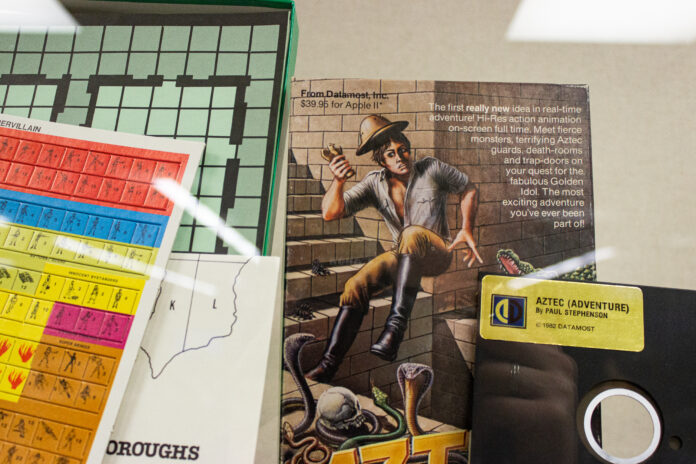
This is a photo inside the SFU archives. Most prominent in the photo is an antique video game cover.
PHOTO: Gudrun Wai-Gunnarsson / The Peak

By: Olivia Sherman, News Writer

The SFU Special Collections and Rare Books (SCRB) department within the SFU Library is home to thousands of manuscripts, books, papers, and photographs from throughout history. The newest exhibit in the department, Archival Oddities, features an array of items from the archives that are out of the ordinary. The Peak spoke with David Kloepfer from the Special Collections department on the exhibit and its significance. Since the SCRB’s founding in 1965, Kloepfer said efforts have been made in gaining “material to support research, teaching, and learning at SFU and beyond.”

In 1965, the SCRB was an off-branch of SFU’s English Department to house their collection of experimentalist publications. The SCRB now works within the library to support research and learning. Kloepfer’s intent with the newest exhibit was to “give a peek inside our collections and show off a variety of interesting objects.” 

The objects in the exhibit transcend mediums, which reflects “the university’s wide-range of academic interests,” said Kloepfer. Special areas of interest include Canadian politics, environmental and 2SLGBTQIA+ activism, Indigenous authors and artists, book publishing, arts, and immigration. 

An example of the archive’s focus on immigration is the Doukhobor Collection. The Doukhobors are a community of Russian-speaking Ukranians who fled their homelands due to persecution, settling in Canada in the 20th century. The items from this community in SFU’s possession include iron nails, hand-woven textiles, and carved wooden spoons. 

Kloepfer noted, “We thought most people are probably unfamiliar with our archive and would assume we hold almost exclusively books and paper archival records.” For Kloepfer, “The exhibit was an opportunity to give a peek inside our collections and show off a variety of interesting objects. All the staff in the department contributed by selecting items they had come across in their work.”

Some of the other peculiar items in the exhibit include avante-garde and beatnik poetry, such as Rob McLennan’s poem Death and Trauma, which includes a plastic bag of soil. They also have Richard Brautigan’s poem Please Plant this Book, which includes seeds and instructions on garden cultivation. Mark Laba’s untitled poem includes a dried worm. 

Items in the archives were acquired from specialists like Kloepfer through donations. “Many kind people are interested in donating their beloved archival material or books to us, and we appreciate it,” he said. The archives also “purchase books and archival material that support our collections policy. We buy material from institutions, businesses, individuals, book sellers, and others,” Kloepfer explained.

“These items illustrate that archives are not just about preserving the past, but also about exploring the unexpected and the unconventional.”

The exhibit Archival Oddities can be visited on the third floor of SFU’s WAC Bennett Library on Burnaby campus. 

Burnaby refinery causes smoke to spread across Vancouver

0
This is a photo of the Oil Derricks and Train Tracks near Vancouver’s port.
PHOTO: Maggie & David / Flickr

By: Olivia Sherman, News Writer

On January 21, the Burnaby Refinery experienced a technical issue with one of its processing units, resulting in smoke, a strong odour, and fumes spreading into Vancouver. Despite being owned by a Calgary-based company, the Burnaby Refinery provides a quarter of BC’s gasoline and fuel. 

The Burnaby Refinery is located on the shore of the Burrard Inlet, and a 15km/hr wind blowing eastward spread the chemical smell to metro Vancouver. At that time, the refinery notified the Burnaby RCMP and Burnaby Fire Department of the issue. After multiple community complaints of chemical odours and poor air quality, Vancouver fire and rescue services chief Karen Fry warned the public of a “hydrocarbon, industrial event” making its way to Vancouver. 

The Peak contacted a spokesperson for the Burnaby Refinery for more information. Due to the cold weather in late January, the refinery experienced a “disruption in unit operations” and issued a “controlled shutdown of the refinery as a precautionary measure,” the spokesperson said. “An issue occurred in one of the refinery units, a pipe became blocked, which resulted in a strong odour and visible plume coming from the unit stack.”

A statement from the Burnaby Fire Department provided to CTV News said the odours didn’t pose any health risk to the public. However, according to a 2022 report from WSP and Golder, an environmental consulting firm, the three main chemicals emitted from refineries are sulphur dioxide, benzene, and butadiene — the latter two being carcinogenic. Despite the public safety advisories in the Vancouver and Burnaby areas being lifted later in the afternoon, the air quality bulletin remained in place until 2:40 p.m. due to the smoke and smell. 

Members of the community expressed concern for their health. In an interview with CBC News, resident Melina Auerbach asked, “What are citizens supposed to do when there is a noxious-smelling, chemical-smelling fume and you have to spend hours trying to dig out the information?”

350 Canada, an environmental activist organization fighting for the end of fossil fuel usage, started a petition after the flare-up at the refinery. The petition calls for a “full independent investigation into the incident,” the assurance of “timely public health warnings” for future issues, and “accountability from Parkland Corporation.” At the time of writing, the petition has 2,355 signatures. “This crisis sends a clear signal that it’s time to accelerate a just transition to a renewable energy economy.” 

The Burnaby City Council is submitting a request for an investigation into the incident from the BC Energy Regulator (BCER).

“Burnaby residents and residents of other parts of our region had their lives disrupted by the incident at Parkland refinery and they deserve a full and transparent account of what happened on January 21,” said Burnaby Mayor Mike Hurley in the City of Burnaby press release. “Municipalities only have a limited set of tools to hold industry accountable, but it is our role to advocate on behalf of our residents and demand answers and accountability in the wake of this incident.” 

The mayor and Council are also demanding a reimbursement of $30,000 for the labour of the firefighters who responded to the incident on January 21. The refinery spokesperson responded to The Peak regarding this demand: “We value our longstanding relationship with the City of Burnaby, and we will continue to directly engage with them as we keep the lines of communication open.” 

Sonia Furstenau, leader of the BC Green Party, said to the National Observer, “it seemed that the orientation was to protect the reputation of the refinery and that protecting public health wasn’t the first priority.” Furstenau said she’d like to see “absolute transparency” about the chemicals in the refinery. 

“The well-being of our neighbours is a top priority and we’re proactively working with regulators to keep the community safe and informed,” the Burnaby Refinery spokesperson stated. “An internal investigation is underway to better understand the event.”

Cancer care needs a revolution

0
Photo of a black stethoscope surrounded by white pills against a grey background
PHOTO: Markus Frieauff / Unsplash

By: Olivia Visser, Copy Editor

Content warning: discussions of cancer, death, and medical assistance in dying.

As of 2019, cancer is the second-leading cause of death worldwide, and the diagnosis rate in people under 50 has increased by 80% over the last three decades. In Canada, cancer is the leading cause of death, with two in five Canadians being diagnosed and one in four dying from the disease. Improving cancer care, which involves prevention, early detection, and treatment, is of utmost urgency. February 4 was World Cancer Day, and while many people’s first encounter with cancer is their own or a loved one’s diagnosis — cancer care begins with awareness, which goes beyond just knowing what cancer is. It’s also not intended to scare or fear-monger. Knowing what to do if you or a loved one receives a diagnosis is important, as is knowing how to mitigate your risks. Given cancer’s prevalence within our increasingly strained healthcare system, one thing is clear: cancer care must be revolutionized.

The deadliest types of cancer typically receive the lowest amount of funding. Research has found that cancer funding is skewed toward cancers such as breast cancer and leukemia, which have high incidence rates and low mortality rates compared to other common cancers. This may be due in part to the utilitarian idea that funding curable cancers is more productive than trying to cure terminal cancers. Yet, considering that many terminal cancers have poor prognoses because they are detected too late, the lack of funding feels degrading and inhumane. Don’t misinterpret the pleas for increased funding as pleas to reduce resources for other cancers, either. All cancers deserve quality treatment. However, brain cancer, for instance, receives less than 3% of total cancer funding. Glioblastoma is the most common type of brain cancer, accounting for just over 50% of primary brain cancers — meaning cancers that originate in the brain. The median survival time for this type of cancer is 14 months, and the incidence rate in Canada is four in 100,000 people. Of these people, only 6.9% will survive five years past their diagnosis date.

One of the major issues with cancer treatment is that each type of cancer is unique and requires its own standard of care. It’s why experts often correct people who speak about finding a “cure for cancer,” as if one singular cure would suffice.

Aggressive cancers, with their lower funding levels, have standards of care that are far from adequate. The standard of care for most cancers typically involves surgery followed by a combination of radiation and chemotherapy, which aims to slow or stop cell division by killing tumour cells. For glioblastoma, treatment may slow tumour growth for a brief period, but advocates have pointed out that this type of cancer requires a different standard of care that is yet to be implemented. A brain cancer vaccine that uses a patient’s unique cells to attack the disease has shown promising results in preliminary studies. However, without enough funding, it could be a very long time before this technology reaches the public.

Among other cancers, pancreatic cancer is also starkly underfunded. The five-year net survival rate for this type of cancer is around 5–10%. One of the main reasons pancreatic cancer is so deadly is that it usually doesn’t produce symptoms until it reaches an advanced stage. However, experts believe it’s potentially curable if caught early. There is currently no standard early screening test for pancreatic cancer, but that doesn’t mean there never will be. Increased cancer funding is imminently needed for aggressive tumours, and this involves both treatment and early detection.

Spending more resources on early detection would drastically reduce cancer death rates and improve survival times. About 50% of cancers are already advanced when diagnosed, which contributes to high mortality rates. Breast, prostate, and cervical cancers are often diagnosed early due to regular screening protocols, but many other cancers don’t receive the same level of proactive care. Researchers are working hard to reduce cancer deaths and provide better outlooks for patients. For example, a new blood test is in the works to detect brain cancer early on. If effective, this would be groundbreaking for detecting brain cancers before they advance to later stages.

One action any individual can take is emailing their local MP to push for increased funding for these deadly cancers. Additionally, if you have a family history of cancer it’s crucial to speak with a doctor about risks and potential genetic testing, as well as early screening services. Mammograms are recommended for any person with breasts over the age of 50, but can be done for people 30 and younger who are at a higher risk of developing breast cancer. The same is true for prostate exams. Pap smears should also be performed every three years for people with vaginas between ages 21–29 who are sexually active. For trans folks who may be uncomfortable seeking out care from their regular physicians, Trans Care BC is an organization with access to trans-affirming sexual health resources.

Coupled with healthcare system strain from the ongoing COVID-19 pandemic, cancer care in Canada is on a downward spiral. In BC, wait times to see an oncologist are significantly higher than the rest of the country. Many patients have been reporting disease progression after having to wait months to see an oncologist. Some have opted for Medical Assistance In Dying because of treatment delays. One woman told CTV News she was given a ten-month wait to receive chemotherapy after being diagnosed with stage four adrenal cancer, which spread during that time. The Canadian government has also been paying to send hundreds of people with aggressive cancers to the US for treatment, as our healthcare system cannot keep up with the number of patients requiring immediate intervention.

The state of cancer care in Canada is devastating for everyone, but marginalized and low income folks receive the short end of the stick. Most working class people cannot afford or crowdfund enough money to travel abroad for better care, and the Canadian government doesn’t cover experimental treatments. A recent Canadian Cancer Society survey also found that the monthly costs for cancer patients are around $300 a month. This is on top of bills and necessities, and can increase significantly depending on the type and severity of cancer.

On an individual level, we should do what we can to mitigate risk. This involves attending regular cancer screenings and reducing our exposure to notable cancer-causing agents, known as carcinogens. The American Cancer Society has a list of “Known and Probable Human Carcinogens,” which is worth having a look at. It’s also important to note that fear shouldn’t be your motivator when it comes to preventative care. Carcinogens usually only pose a major risk to people with high levels of regular exposure or who possess genetic predispositions, but avoiding them to a reasonable degree is a worthwhile effort. Additionally, if something about your health feels wrong and you aren’t being taken seriously by medical professionals — demand a second opinion. Cancer can be preventable and even curable, and self-advocacy is a huge mitigator.

BC Premier David Eby recently acknowledged that the current cancer wait times are “unacceptable,” and vowed to change the system. However, it’s not enough for us to say something needs to change. It’s not even enough to increase the number of oncologists in the province. Cancer cases are rising significantly due to a multitude of factors such as inadequate diets, excessive alcohol and tobacco use, physical inactivity, and environmental toxins. These factors are amplified for marginalized and low income people who cannot afford quality foods, and may work jobs that expose them to carcinogens. Cancer is a systemic issue, and it’s deeply intersectional. One of the biggest ways this country must improve health equity is by vastly increasing funding and support for what is now the leading cause of death — but it doesn’t have to be.

If you or a family member have recently been diagnosed with cancer, BC Cancer offers support such as free counselling, information about financial resources, and more. A list of local MPs and their contact information can be found at www.ourcommons.ca/Members/en/search?province=BC.

Two accounts from writers of the Botchford Project

0
PHOTO: Izzy Cheung, The Peak

By: Izzy Cheung, Staff Writer & Isabella Urbani, Sports Editor

The Botchford Project is a media mentorship program that helps budding sports journalists in the Lower Mainland. This opportunity was created in honour of Jason Botchford, a member of Vancouver’s sports journalism scene, who sadly passed away in 2019. The project, which is now in its fifth year of operation, acts as a way of continuing his legacy through the next generations of sports media professionals. It’s overseen by Jason’s wife, Kathryn, and several Vancouver Canucks media members. 

Chosen participants are tasked with pitching a story they will then gather information on by attending a Canucks morning skate, interviewing a player, and watching a game from the press box. From there, participants will write, edit, and submit their stories to the Canucks, who will then publish it on their website as part of the project. The Peak has had two writers partake in this amazing opportunity — here are their stories. 

Izzy’s Project  

My Botchford Project experience started at 11:00 p.m. on a Thursday night, when I first got the selection email from a Canucks communications department representative. From there, it was a frantic dash into my dad’s room to give him the news. The rest of the preparation came in the following days through storyboarding calls, emails, and DMs on X.

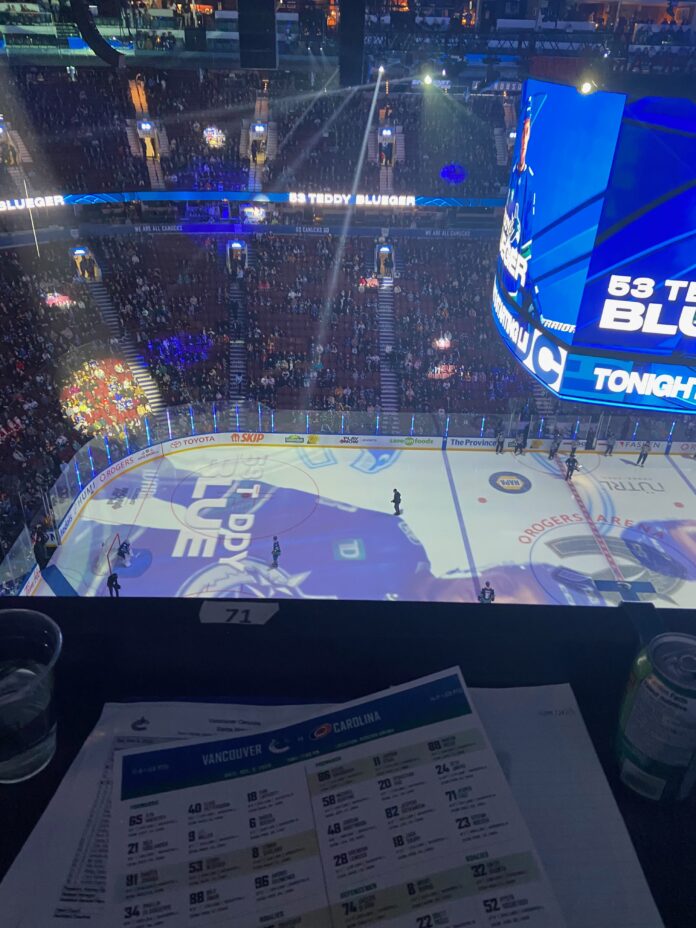
The day of the project was a rainy one; it was also the day of a matchup that pitted the Vancouver Canucks against the Carolina Hurricanes. By the time I was making my morning coffee and fretting over whether I should wear lace-up boots or Blundstones, I’d already drafted up the premise of my story. 

Once at the arena, I met my fellow Botchford compatriots as well as our mentors outside the media entrance. Walking through the empty concourse was a vast difference from the hustle and bustle that I’d usually experience in Rogers Arena. If anything, that made it more jarring. 

We only ended up spending around 20 minutes watching the practice before we were shepherded down to the media room, where Canucks head coach Rick Tocchet held his pre-and-post game media. From there, we were brought to the Canucks locker room. The player I was set to interview, Nils Höglander, was already available to chat, so one of our mentors brought me over to him and introduced us. Five questions and five minutes later, my phone’s voice memos app was filled with potential quotes, and I was all set to start writing. 

After all our interviews were done, we sat through Coach Tocchet’s pregame media availability. The first part of the day concluded with a brief tour of the press box, where we were shown the seats that we would be occupying during the game. 

With the practice happening mid-morning and the game not taking place until 7:00 p.m., my project partners and I had a stretch of time in which we could grab lunch. We ended up finding a nearby cafe and grabbed coffee while sharing our respective life stories. Our curiosity eventually got the best of us, and we headed back to the arena very early in hopes of taking in more of the press box. 

Our early entrance into the press box was a fortunate one. We ended up being able to meet Al Murdoch, the Canucks’ PA announcer. As media members began to filter in, we were introduced to more people. Seeing as it was Hockey Night in Canada, the press box was relatively busy, crowded with media professionals from other cities. We got to eat dinner alongside media members before another gentle request resulted in us meeting the current voices of the Vancouver Canucks, John Shorthouse and Dave Tomlinson. 

The game was a nailbiter, ending with a 4–3 win for Vancouver. We got to see a particularly noticeable goal created off a hardworking shift from Brock Boeser and Nils Höglander. We also spotted a Sedin (the three of us were trying to guess whether it was Daniel or Henrik) sitting a couple boxes down from where we were. 

After the game, we were guided back toward the elevators in hopes of being some of the first to arrive at the media room for postgame coverage. With the help of media members, each of my project partners and I got to ask a question during the media session, culminating in a fantastic end to the day. 

Isabella’s Project 

I don’t remember my project with the same details as Izzy. It was two years ago, which with the way time has been moving, could have been five years ago for all I know. What I do remember was being in complete and utter awe, and being called Isabelle throughout the night. I’ll never forget that.

I also rocked a custom t-shirt that had “Bro. Do your dekes.” on it, which was the phrase Jason coined when referring to Pettersson’s nifty moves during his first NHL game against the Calgary Flames. He eventually printed it out on a shirt and wore it, so I did my due diligence to match the font as best as I could, and wear it during pregame skate to pay tribute. My fellow participants and I also visited Jason’s bench outside of the arena prior to the game, and left him his favourite drink, root beer flavoured Beaver Buzz Energy. 

The night itself was a balancing act. I tried to soak it all in, without forgetting to relish the moment. I did my best to not feel like a fish out of water, without appearing as though I wasn’t appreciative — I most certainly was. I tried to contain myself in my seat as the Canucks scored, while media members nonchalantly leaned back in their chairs. I felt rather embarrassed when I had to halt myself mid-stand up from celebrating. Thankfully, I wasn’t at the point of near return where my knees had locked and I was fully upright. Then, I’d owe a shy and probably clumsy apology to the people behind me.

Frankly, I never thought I could make a career out of writing about sports. I had wanted to so desperately. Call me naïve, but I just didn’t think it existed. I didn’t have the media in mind when I rushed to finish all my homework so I could be worry free when I turned in to watch the broadcast at 7:00 p.m. in the living room. But when the idea came to combine my passion for sports and writing, the first person whose work I read was Jason’s

Jason never made media feel imposing for any young journalist. He was an individual without a bone of jealousy or a breath of ignorance. He was someone who was truly happy to be of assistance. I aim to find that level of sureness in myself and my career.

That night, the Canucks won — which wasn’t my overall highlight, but a blessing nonetheless, as I had to wait until after the game to speak to the subject of my article. Goaltender Thatcher Demko was just as tall and dialed-in post-game as you’d expect. As lovely as he was for my first interview with a professional hockey player, the true highlight of my night, by a country mile, was removing my name tag from the table to reveal that I was sitting in Jason’s coveted spot. To this day, I get goosebumps on my arms and tears well in my eyes when I think about this very moment. There’s simply no words. Just an overwhelming warmth in my heart.

In my application, I admittingly told Kathryn that I was looking for some validation at this point in my career — a sign that I hadn’t hastily jumped into this decision because I happened to love sports. It sounds a little silly, as it’s the perfect criteria for the job. But, I felt like I was never going to live up to what I had envisioned for myself. I later wrote in a message to Kathryn that the Botchford Project was the validation I needed.

I knew there would be hardships following that night, and oh boy, were there more than I care to admit. Sports, especially hockey, is still very much a boy’s club, and hostile to women who don’t get the same luxuries or affordances. The moral of the story is life moves on, and so do I, with a vengeance. But true to what I said that night, I already had my validation. I had the strength; I had the nod of support. I’m forever indebted to Jason and his family because that vote of confidence did wonders.

Applications for the project open up each November and close at the end of the month. Alongside the application, which will ask you a few questions about yourself, the opportunity, and any ideas you have, candidates will need to provide some samples of their work. These articles don’t need to come from a publication — they can be written on the fly, as well. For anyone who’s interested in applying, especially those who don’t have any media experience, don’t be afraid! That’s the aim of the entire project. Based on my experience, your passion for sports and willingness to learn is far more important than your past job descriptions — even if you’re not majoring or have majored in journalism or a parallel field of work.  

Black excellence in sports as told through media

0
front cover of Kobe Bryant’s autobiography
PHOTO: Courtesy of MCD Books

By: Hailey Miller, Staff Writer

Content warning: anti-Black racism and enslavement.

Films and Documentaries

Remember the Titans (2000)
Where to watch: Disney+, Amazon Prime Video, Apple TV+

Based on a true story in Alexandria, Virginia in 1971, Black football coach Herman Boone sets out to integrate two high school football teams with fellow coach Bill Yoast. Along the way to finals, the Titans face racial prejudice. The team is discriminated against and seen as unworthy among other teams due to being interracial after many civil rights battles for Black Americans throughout the 1960s. Despite the backlash, they remain at the top of their division throughout the season, and end up at finals. The film focuses on the struggles the players face, the bond they grow, and the change they make in history as an interracial football team.

Glory Road (2006)
Where to watch: Disney+, Amazon Prime Video, Apple TV+

This true story follows the journey of basketball coach Don Haskins and his team as he embarks on building a racially diverse roster for the Texas Western Miners in 1966. Due to the aftereffects of enslavement in the Southern United States, the lineup sparks controversy elicits racist acts from the community in the lead-up to the NCAA Championship. When two Black players on the team — Bobby Joe Hill and Harry Flournoy — begin dominating the court, a dispute raised by the community results in increased racial tension and division. The film explores the challenges the team faces to keep their head in the game and make history.

Venus and Serena (2012)
Where to watch: Amazon Prime Video, Apple TV+

This documentary film focuses on the life of Venus and Serena Williams, and the hardships and challenges — including racism and sexism — they’ve faced throughout their careers despite their unmatched levels of success. The film features real footage of the Williams sisters throughout their lives from growing up to going pro. The documentary explores their successes amid discrimination and racial prejudice as they cement their legacy as two of the best tennis players in history. 

Black Ice (2022)
Where to watch: Crave

This Canadian documentary features stories of Black NHL players, including P.K. Subban, Wayne Simmonds, Akim Aliu, and Matt Dumba, and the racist comments and backlash they received despite their acquired success. The film acknowledges the Coloured Hockey League, which was an all-Black men’s hockey league in the Maritimes that was a safe space for athletes in a predominantly white sport. 

Books: 

Sting Like a Bee: Muhammad Ali vs. the United States of America, 1966-1971
By: Leigh Montville (2017)

This biography follows the journey of Muhammad Ali at the height of his career, and his life and activism both within and outside boxing. This riveting read draws upon the struggles Ali faced as he fought for his rights — and those of other Black athletes and individuals — while shining light in the face of adversity. From refusing to join the military in Vietnam due to his anti-war views, to becoming a heavyweight champion, this biography explores an in-depth portrait of Ali’s life and social impact.

The Mamba Mentality: How I Play
By: Kobe Bryant (2018)

In his memoir, Bryant draws on his personal and professional life, including his career as a Los Angeles Laker. He recalls his time on the Olympic team, and the method he single-handedly appointed to his basketball success, Mamba Mentality: trusting in the process based on the work you’ve put in. Bryant’s autobiography is filled with insight and experiences, from start to finish, as he acknowledges the hard work that resulted in his success.