Home Blog Page 123

Hate mail for my oral contraceptive

0
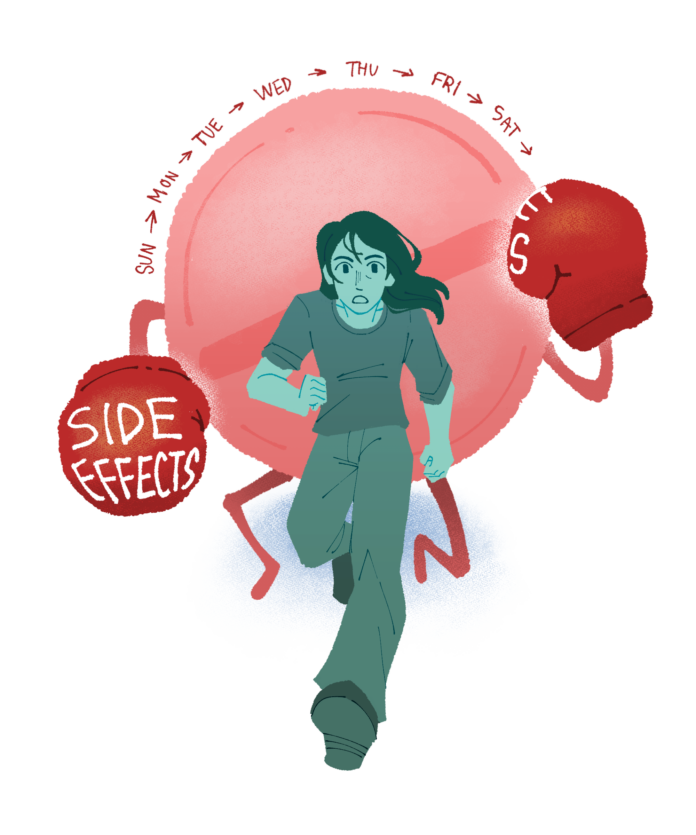
ILLUSTRATION: Jill Baccay / The Peak

By: C Icart, Humour Editor

Dear bitch — I mean pill, 

Listennnn, before anyone comes for me for coming for you, I will acknowledge that you don’t screw everyone over. But just because you’re playing nice with other people does not mean I don’t get to call you out for just sitting there in silence while my doctor told me “there’s basically no side effects” to me taking you. You knew that was a lie! I bet you were sitting in your little blister pack giggling, knowing the havoc you were about to wreak on my body. 

When you came home with me for the first time and I made you promise you’d regulate my periods from hell, you had your fingers crossed behind your back. That’s the only explanation! You worked perfectly in the beginning so I would trust you. You’re just a little conniving tablet. I let my guard down and BAM! You hit me with the breakthrough bleeding

I will not stand for this level of backstabbing (or should I say uterus stabbing). In true “girl’s girl who is not a girl” fashion (don’t worry my fellow enbys know what I mean by that), I will be exposing you, so you don’t dupe someone else. I tried to come to you directly to squash this and you convinced me I just needed a higher dose. Well, the lie detector test I secretly gave you determined that that was a lie! 

I wrote your name in my Burn Book and warned everyone about you so no one can downplay the side effects of combination birth control pills to unsuspecting teenagers and young adults ever again.  

Hate you forever,
A girlie who’s tired of 14-day periods

Cleat Cute is the 2SLGBTQIA+ offering to the growing sports romance genre

0
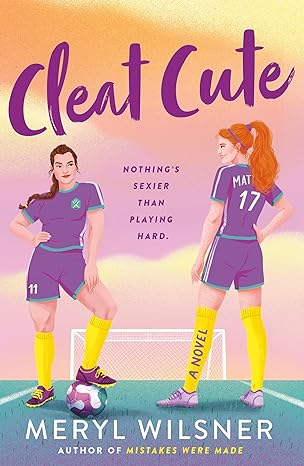
an illustrated book cover of two women soccer players staring at one another on the soccer field
ILLUSTRATION: Courtesy of St. Martin’s Publishing Group

By: Kaja Antic, Sports Writer

Want a new sports-related book to read this Valentine’s season? Look no further than Meryl Wilsner’s 2023 novel Cleat Cute. Marketed as “Ted Lasso meets A League of Their Own,” this sapphic rivals-to-lovers romcom embraces the drama of women’s soccer in a story that will be sure to win you over. 

The two main characters come from very different backgrounds, but end up at the same US Women’s National Team training camp ahead of international competitions. 

Phoebe Matthews is the rookie, a recent college graduate from rural Indiana who clashes almost immediately with her idol, Grace Henderson. Phoebe is outgoing, chaotic, and a standard class clown — everything Grace isn’t. 

Grace is in her 10th year on the US national team, feeling like her career is nearing its end even though she’s only 26. She debuted at 16 as Phoebe watched from home, only four years her junior.

Focused on making the national team, Phoebe has bigger plans for training camp instead of trying to woo her idol. She heads into her first season with the fictional American Women’s Soccer Association (AWSA) New Orleans Krewe — the team Grace also happens to captain. However, a lost bet forces her to make the first romantic move and kiss Grace. While the kiss ignites feelings between the two, they don’t talk about it

Phoebe moves to New Orleans ahead of the Krewe training camp a month later, preparing for this new chapter in her life as a professional soccer player. Grace is also there early, and is persuaded by Phoebe to show her around the city, as it’s her first time living outside of Indiana.

The two develop a tentative friendship when Grace takes charge as Phoebe’s tour guide, showing her all the places in the city she had already called home for years. In addition to this, the two also begin a friends-with-benefits arrangement, adding more steamy aspects to the extremely entertaining story.

As training camp begins and the American international window grows closer, conflicts arise between the two. Grace is sidelined with an injury early on — missing a key international tournament leading up to the women’s World Cup — and is forced to adjust to life outside of soccer for the first time in decades. Phoebe is assumed to take her place in the lineup for both the Krewe and the US national team.

Grace struggles with this adjustment, and with the support of Phoebe, mends both her injury, and hesitancy toward relationships due to unresolved past conflicts. Phoebe also has her difficulties, from having to hold a part-time job as a waitress at a diner to her pursuit of a permanent spot on both the Krewe and national team lineups.

The queer representation in this book is outstanding, with multiple characters being part of the 2SLGBTQIA+ community aside from Grace and Phoebe. Phoebe’s younger brother Teddy is trans, and her diner coworker Dallas as well as Krewe goalkeeper Ash are both nonbinary. Grace’s sister Harmony is pansexual, and multiple players on the Krewe and the national team fall under the queer umbrella.

There is also a focus on neurodiversity as Phoebe deals with ADHD and the pressures of being in the closet as a professional athlete, even though in the book the sport is largely accepting of queer individuals. Phoebe has been publicly out as a lesbian for as long as she can remember, while Grace is only out to her family and close friends and still struggling with her image in the public eye. 

Even if you aren’t a sports fan, this book is fantastic. There isn’t a lot of previous soccer knowledge required to understand what is going on. If you’re looking for a spicy WLW, happily-ever-after set in the exciting world of women’s soccer, Cleat Cute is a must-read. 

Top 10 television crushes, ranked

0
A person holding a TV remote.
PHOTO: Bermix Studio, Unsplash

By: Saije Rusimovici, Staff Writer 

Ah, young love. Who doesn’t reminisce about our teenage years, living vicariously through our OTP (one true pairing) couples on our favourite CW shows? We scarcely minded that the actors portraying these characters may have been 10 years our senior. We were only concerned about whether or not our favourite ships would make it through to the next season, only to be completely shattered when one of them didn’t, or worse — got killed off for no reason.  

But I’m not just talking about our romantic crushes — our platonic crushes also made us swoon. For me, these were the women characters who inspired me to study hard (whether or not some, ahem, questionable methods were involved), get that promotion (because who wouldn’t want an Emily in Paris-esque marketing job?), or had “that girl” energy we desperately wanted to emulate.

10. Spencer Hastings (Troian Bellisario), Pretty Little Liars

I don’t know anyone who didn’t want to be Spencer when I was in high school. She was the straight-“A” student dating the boy-next-door/sort-of-carpenter (when he wasn’t moonlighting as the illusive “A” of course). If Spencer had it, we wanted it. Even though the show went on for about two-and-a-half seasons too long, we were always ready for Spencer’s next big breakthrough. There’s a reason my go-to pre-exam playlist is called “study like Spencer Hastings.”

  1. Stefan Salvatore (Paul Wesley), The Vampire Diaries

The younger vampire brother earns number nine because even though I’m not the biggest fan, you can’t deny he was one of the biggest teenage heartthrobs of the 2010s (sorry Robert Pattinson!). Stoic yet sensitive (in spite of some bad blood-bingeing habits, IYKYK), he’s too good of a guy to be left off this list. I mean, he’s not bad on the eyes, either. 

  1. Reggie Mantle (Charles Melton), Riverdale

Yeah, totally accurate representation of what a high school sophomore looks like right? #dreamon

  1. Chandler Bing (Matthew Perry), Friends

Chandler was the character that could always bring a smile to my face. Not to mention his adorable relationship with Monica. #relationshipgoals

  1. Damon Salvatore (Ian Somerhalder), The Vampire Diaries 

Major heart eyes for the bad-boy of the two vampire brothers that made me swoon as a teenager. Sexy Damon Salvatore was without a doubt Elena’s epic love (sorry Stefan, you still made the list though!). Sixteen-year-old me couldn’t help but fawn over the shirtless scenes. So, so many shirtless scenes . . .

  1. Barry Allen (Grant Gustin), The Flash

The iconic superhero show, filmed in Vancouver, wouldn’t be the same without one of the most adorable, loving main characters on television (let’s hope he’s not fast at everything he does, if you catch my meaning). 

  1. Jane Villanueva (Gina Rodriguez), Jane the Virgin

What’s not to love about Jane or Gina?! Confident, hilarious, body-positive, and a writer (and in my opinion way too good for Raphael). 

  1. Jackson Avery (Jesse Williams), Grey’s Anatomy

Move over, Dr. McDreamy. Jackson Avery has been one of my top TV crushes ever since I first saw him on Grey’s Anatomy. He was great on that show. Though it could be the shirtless scenes clouding my judgement . . . Relax, it’s not like I still daydream about him, okay? At least, not recently . . . 

  1. Maya Lopez (Alaqua Cox), Echo

BEST. MARVEL. SUPERHERO. EVER! Not only is Maya absolutely badass in combat (cannot wait to see her take down Fisk’s empire), she also is a character that (finally) brings both Indigenous and disabled representation to the Marvel screen — it’s about time!

  1. Simon Bassett (Regé-Jean Page), Bridgerton

Simon Basset is the clear winner of this little ranking. Want to know why? Go watch Season 1 of Bridgerton. You’ll understand. 

Monday Music: The stages of a love affair

0
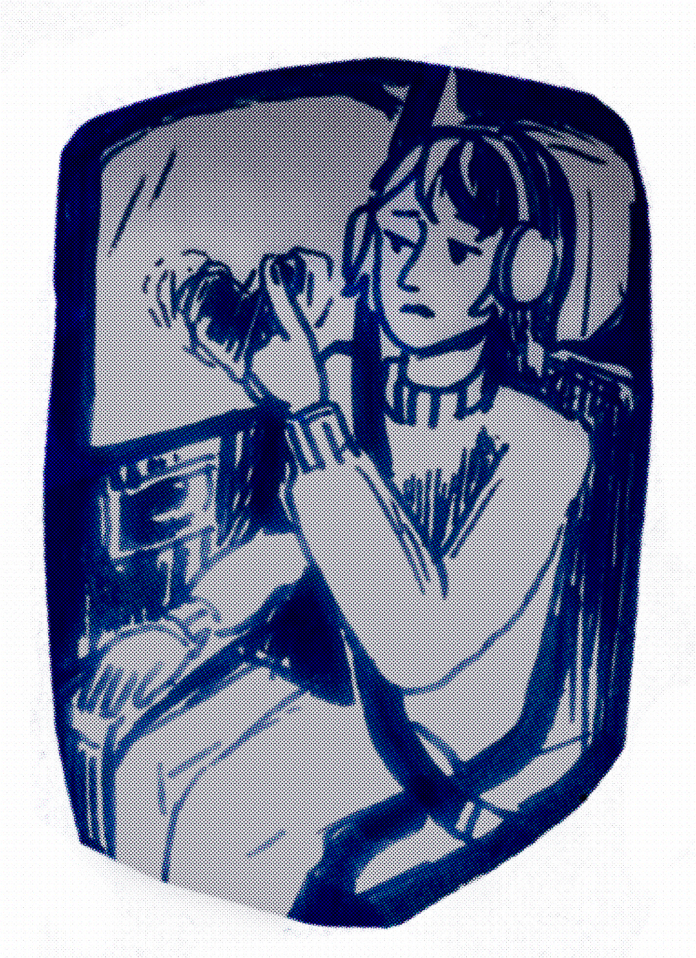
A person listening to music in a car drawing a heart in a foggy window
ILLUSTRATION: Angela Shen / The Peak

By: Eden Chipperfield, News Writer

“FMF” by Uncle Strut 

Sometimes, that person you’ve been waiting for has been by your side or in your circle all this time. Perhaps it’s the sexual chemistry or the butterflies you get from being next to them subtle glances and smiles that only the two involved can translate. Uncle Strut is a Vancouver indie rock band I had the fortune to see live as an opener for BabyJake this October. Their response and call song, “FMF,” (which stands for Fucking My Friends) brings fun to the topic with the upbeat guitar strumming and grooving rhythms to vibe to.

“What I Need” by Hayley Kikoyo feat. Kehlani

Pop-icon Hayley Kiyoko and R&B empress Kehlani dominate in this pop-layered track that explores queer love, intimacy, and being accepted. Kiyoko and Kehlani lament about not wanting to keep their partner a secret, singing, “What I need is for you to be sure.” Kiyoko explained in an interview with Sway Calloway, “I’m in a place in my life where I need to be with a woman who knows what they want, and I don’t have time to play the games that I’ve literally been playing for 26 years.“What I Need” pairs well with summer nights and rolled-down car windows. 

“Heaven” by Pink Sweat$

The honeymoon phase will be in full force when tuned into “Heaven” by Pink Sweat$. Keyboard notes and samples of angelic harp transport you to an environment where you’ll drift away with thoughts about your lover. Fantasies of forever are laced with the lyrics as Pink Sweat$ promises his suitor, “you know I don’t want no one else.” This R&B track can be reminiscent of first moments together, from long talks to the first “I love you” and all the in-between. 

“Pendulum” by FKA Twigs 

An alluring, slow-burn rhyme sets the tone for “Pendulum” by electronic artist FKA Twigs. The knowledge that someone may not be the right one can eat someone up inside. With processed sounds and mixing, this song conveys being swung back and forth by feelings and thoughts of wanting more than what may be given by a partner. Pulling at heartstrings, “Pendulum” captures that when love loses its momentum, how difficult it can be to admit it to a partner, or even harder, yourself. 

“Confidant” by BabyJake 

Feelings of betrayal and hurt come through BabyJake’s bittersweet lyrics, discussing the end of a relationship when a partner no longer confides their emotions in the artist. Sometimes, as this song insists, the best course of action is to cut contact. BabyJake asserts his self-assurance through lyrics like “I’m not your friend, not your only confidant,” encouraging the subject to find comfort and solace in others. The song soothes with smooth R&B rhythms and hip-hop beats to feed broken souls. 

Listen to the full playlist on our Spotify, peaksfu.

Breaking the cycle of sexual shame

0
woman in black dress standing near white wooden door with her back facing the camera
PHOTO: Hala Al-Asadi / Unsplash

By: Sarah Reynolds, SFU student

Content warning: discussions of sexual trauma.

Yes, I’ve cried after sex, often to me for what seems like no reason. I wasn’t crying because the sex was bad, or I was in pain, or I regretted it. I cried because the sex felt good

I was 21 when I lost my virginity. This could mean something different to everyone, and there is no right or wrong time or way to categorize your first sexual experience. Regardless of what a “first” sexual experience means to you, a plethora of emotions can come along with it. For me, it was a deeply emotional experience that seemed to swallow me whole. I was in a loving, committed relationship with a partner I deeply connected with. And yes, I very much enjoyed the sex. Yet, for some reason I still felt a sense of shame. 

I didn’t expect to feel this way. Consciously, I know sex can be an important aspect of human life, and that it can be very pleasurable physically and emotionally. I spent my teenage years considering myself to be quite sex-positive, talking enthusiastically about sex with my friends, fawning over sex scenes in television shows, and even having open conversations with my mom about sexual health and safety. Despite having been diagnosed with a chronic anxiety disorder, I figured that as long as I was comfortable and in a healthy relationship with a partner I would be the perfect picture of emotional stability when I had sex for the first time.

My subconscious, on the other hand, wasn’t so easily convinced. 

I began to realize I had a lot of internalized preconceptions about sex I never consciously thought about or outwardly projected. Society plays a significant role in shaping our perception of sex. Whether it be pushing us to have it, warning us not to, or labelling the entire topic as “taboo,” social stigma often contributes to our subconscious attitudes. Taneasha White, an author who wrote on sex stigma, explains, “women and feminine-identified folks are often taught their sexuality is something to be hidden and protected,” reinforced by the historical connotations of “virginity.” 

This “sexual stigma” can come from various sources. Dr. Sara C. Flowers notes that internal attitudes or notions can result in “feeling shame about having a period, our body shape or size, being diagnosed with a sexually transmitted infection (STI), or our gender identity or sexual orientation.” But society and our environment also play a significant role in perpetuating sexual stigma. Despite how much I denied that some of these beliefs had no effect on me, they obviously did.

For someone with a chronic mental health condition, it can be even more difficult to navigate intrusive thoughts of a sexual nature while trying to enjoy a healthy sex life. Sexual obsessions can be a symptom of Obsessive Compulsive Disorder. They cause a person to have intrusive thoughts, likely contradicting their moral values. Sexual obsessions are often assumed as taboo in nature. They can occur at any time during or leading up to sex. Sometimes this may contribute to the avoidance of sex altogether, or even compulsive sexual activity used as a response to “disprove” intrusive thoughts. From my own experience, I have triple-checked clearly unbroken condoms and broken down post-orgasm for fear that feeling sexual pleasure meant I was “doing something bad.” This sort of shame not only totally kills the mood for you and your partner, but also increases the risk of further depression and anxiety.  

It’s difficult to break free from the cycle of shame that can, in many cases, severely impact not only our relationship with sex and our partners, but also our relationship with ourselves.

Everyone has different upbringings and experiences that influence the way we perceive sex. With that being said, there is no “one-size-fits-all” approach to escaping the shame that often looms over us when it comes to sex. But what we can do is focus on addressing some of the underlying causes of the shame we feel and use resources to combat this in hopes of eventually adopting sex-positive attitudes within our own sex lives. Some of the strategies I’ve used to break free from some of the shame I experience around sex and sexual pleasure include having open dialogue with my partner, recognizing unhealthy obsessive-compulsive patterns, and practicing all different forms of self-care and self-reflection. While these strategies work for me, those who have experienced a traumatic sexual experience may benefit much more from talking to a professional. Sex therapists can help individuals or couples address obstacles in their sex lives. When we break free from these sources of shame, we can work towards building healthy relationships and pleasurable sex lives. 

Bisexual people are bisexual

0
Photo of the bi flag
PHOTO: Delia Giandeini / Unsplash

By: Cynthia Piña, Peak Associate

Content warning: mentions of biphobia.

Sometimes it feels like bisexuals have to fight multiple battles: the internalized homophobia within themselves, biphobia from society, and the biphobia from those who should be allies. Homophobia and transphobia are both real, distinctive, and intersectional. However, biphobia, for decades, has been brushed off as being unreal. The argument goes that because bisexuals may appear straight — they are privileged — and this erases many of the struggles that are unique to bisexuals. 

Biphobia is rooted in specific myths related to bisexual people. These myths can include the idea that bi people are trying to be trendy or are more likely to cheat on their partner. Some lesbians say they won’t date bisexuals because they’ve “been with men,” they feel concerned that bisexual women will leave them, or just outright wouldn’t date a potential bi partner. Just like we shouldn’t judge straight partners for their sexual past (or lack thereof), queer people shouldn’t judge each other for theirs. Straight people also hold reservations about bisexuals and a 1996 survey found that 40% of straight people rated bisexuals as “less acceptable than lesbians” or gay men. 

The same study quoted a post-secondary student who said, “I feel they are the people who spread AIDS. I think they should be either heterosexual or homosexual.” This isn’t an isolated incident, as this stigma is still being reported on in the 2010s. The reality is that bisexuals aren’t more likely to transmit AIDS, nor does their orientation say anything about whether or not they practice safe sex. While there is lacking recent research on bisexual people in comparison to other orientations, stigma related to bisexuality still persists today. The research that is available shows bisexual people are more likely to be suicidal, more likely to have chronic health issues, and more likely to experience intimate partner violence.

I battled within myself for years to accept that I loved women and would consider multiple genders as a romantic partner. However, part of the reason I stopped coming out to people was gay friends asking when I would date a woman, hearing off-hand comments about bi people not being queer without sexual or polyamorous experience, and straight friends commenting about “how great it must be to have access to threesomes.” It is exhausting, fetishizing, and if straight people know who they love without having to date them, then bi people should be allowed the same affordance. 

Automatically believing that a couple who appears to be straight and cisgender, are actually straight and cisgender, assumes someone’s identity. The reality is that you will never know by looking at two people whether they are queer or not. Maybe both of them are bi. Maybe one or both of them are trans or non-binary. If people say they are bisexual, they are bisexual, and I’ve had enough of listening to both queer and straight people spew their prejudices about bisexual people.  

Continuously, I’ve seen several examples where bi women are either harassed for liking men, harassed for exploring their identity, or “queerbaiting as lesbians.” While I’ve observed this over the years, I’ve noticed a particular spike in this behaviour just at the start of 2024. Unlike what Megan Fox once suggested in 2009, women are not “dirty” for liking men. Lesbians are not “cleaner” or “more pure” than bi women. Similarly, bi women are not “dirty” for liking women or other genders. While my experience centres on being a bi woman, I also acknowledge that bi men can face higher rates of stigma and are seen as “less acceptable” overall. 

Bisexuality is a real orientation. Bisexual people often do face aspects of homophobia, in addition to biphobia. I’m not arguing that one is more oppressed than the other, but that we also face stigma and do not experience life as heterosexual people do. When we say we are facing barriers, please believe us. 

Opinions in Dialogue: The commodification of Lunar New Year

0
Photo of a dancing lion
PHOTO: Mick Haupt / Unsplash

By: Izzy Cheung, Staff Writer and Kelly Chia, Editor-in-Chief

Content warning: mentions of racism. 

With all the Christmas hype leaving our local malls, storefronts are now being swamped with limited-edition Lunar New Year promotions. Anything from red-and-gold advertisement schemes to special collections based on the upcoming Year of the Dragon are prevalent in big-name chain stores, restaurants, and more. However, we should also consider what exactly these products do. Are they truly helpful to our cultures and communities, or are they just another way for companies to make profit?

Izzy: These promotions have positives, of course — they provide visibility to different cultures and foster more inclusive environments. Integrating celebrations like Lunar New Year and Diwali into our festivities brings awareness and makes society more diverse. This element of visibility can help individuals who may be looking to reconnect with their culture. Having these collections in stores can make one feel seen or included while growing up in predominantly western cultures. 

Kelly: Visibility can feel good, but cheap diversity can also disguise corporate greed. This has been so prevalent with the queer community and larger corporations that it’s been dubbed “pinkwashing.” Like any campaign set to target cultural groups, we have to consider what these companies are actually doing for our communities. I roll my eyes at Lululemon’s new Lunar New Year collection. After their founder’s comments about naming the brand Lululemon to make fun of Japanese people, and his icky views on diversity? No thanks. These large industrial companies only see us as a financial asset, and don’t care for our holidays — what have they done to invest in Lunar New Year that we can’t already manage on our own to celebrate?

Izzy: Let’s face it, every holiday has been commodified at this point, regardless of cultural or community relevance. Not everyone who celebrates Christmas is Christian, which isn’t a bad thing. A study done by the Chartered Professional Accountants of Canada revealed that Canadian consumers were expected to spend an average of $645 on gifts in 2023 compared to the $589 that was tallied from 2022. This copious amount of spending during the Christmas season can also extend into Lunar New Year. 

Like other holidays, Lunar New Year is a celebration of culture. While the prospect of gift-giving isn’t as prevalent during Lunar New Year, money is still exchanged. Families gather to exchange red envelopes, which are typically given by elders to younger members of the family. In other words, if you’re a kid, you’re getting a lot of money for new toys. Even those in their mid-to-late twenties, depending on specific circumstances, are bound to get a good chunk of red envelopes filled with small dollar bills. What better way to spend that than on a limited-edition Year of the Dragon makeup set? I’m not saying it’s necessarily bad to buy these things — in fact, I’m a sucker for holiday promotions. If we didn’t have “Year of the Dragon” or “Year of the Tiger” limited merchandise, I wonder whether the Chinese zodiac would gain as much visibility. 

Kelly: As you say, it’s inevitable that holidays become commodified under capitalism, but I think that it also gives us reason to be more discerning about where we spend our money and time. While it’s nice to see our holidays celebrated at a larger scale than we were used to growing up —  especially after such a large rise in anti-Asian hate crimes over the last few years — it’s also a reminder for us to be skeptical about a company’s intentions. Our interest in them can stop at the window storefront, because, frankly, their interest in serving our communities are as deep as our pockets.

Sure, I can’t help that my heart swells when I see round, red paper lanterns and balloons around this time of the year. I want Lunar New Year joy to be shared with everyone, and seeing more about the holiday in children’s books and storefronts makes me feel like there’s more interest in getting to celebrate our diasporic holidays. 

These days, I spend Lunar New Year, like you, eating dim sum with my family. I delight in walking around Aberdeen centre, seeing all of the children in their qipaos, as we watch the Lunar New Year celebration. Bigger companies that don’t understand the heart of our holiday don’t deserve our money — it’s not about printing a new zodiac design onto luxury items, it’s about spending time with the people you love. 

Izzy: Families gather to appreciate each others’ presence while eating traditional dishes such as har gow. It’s a holiday that, at its core, can be executed with a shared space and a favourite dish. In other words, it doesn’t need the extra flair that comes with the themed collections put on by big-name retail chains.  

It’s true that having a brand sell limited-edition holiday collections acts as a way of generating profit. Special collections are labelled that way for only one reason: because they’re unique, different, and their stock is limited. The more scarce a product is, the more likely you’ll want to get it. Of course, because of spikes in spending during Christmas, January and February end up being slower shopping months. But they can be fun to indulge in and bring a new addition to the fun of celebrating Lunar New Year.    

Kelly: Admittedly, whenever the games I play release a new Lunar New Year skin, I love looking at them. But then, sometimes I feel uncertain about how they’ve portrayed a character too sexually in my cultural clothing, and East Asian women don’t need more help being hypersexualized. Corporations that don’t do their research on nuances like this are so common that even writing this feels a bit too pedestrian to complain about. Of course, that can be said about every business and every holiday, but companies with torrid histories and relationships with their marginalized communities shouldn’t get to just call these promotions a diversity win. 

Ultimately, I don’t want my holiday to be dialed down to a promotional sale either, especially when there are better places to spend our money: toward people who look at my community with care and love. Donna Seto, for example, created a lovely set of Chinatown storefronts. Her paintings show the beautiful buildings and restaurants that made Chinatown feel like home. These are the artists and businesses I’d love for people to pay more attention to, with rich histories behind each craft. If you’re making purchases to learn more about Lunar New Year, or because you care about the holiday, be more conscientious of who that money goes to!

Izzy: It can be heartwarming to see culturally-diverse holidays being represented within windows of storefronts, even if their purpose is to continue bringing money in for themselves. We can improve visibility by supporting local businesses and artists who celebrate Lunar New Year and epitomize the meaning of culture. Original, handmade products can help imbue the holidays with feelings of love and community that a mass-produced product wouldn’t be able to encapsulate — most of the time these products aren’t made with the same amount of care. If you’re going to purchase Lunar New Year themed collections, consider buying from predominantly East and Southeast Asian artists and businesses instead of a big-name brand.

Council Chats: BASS requests designated common space in the SUB

0
This is an illustration of a graphic that reads “Council Chats.” The image also has two text boxes to symbolise messages being sent.
ILLUSTRATION: Andrea Choi / The Peak

By: Eden Chipperfield, News Writer

The Peak attended the bi-weekly Simon Fraser Student Society (SFSS) Council meeting via Zoom on January 31. The agenda for the meeting included discussions about a Business Administration Student Society (BASS) common room space in the Student Union Building (SUB) and the renewal of Simon Fraser University eSports Association’s (SFUEA) gamers’ lounge equipment. 

BASS advocates for a permanent home in the SUB

The Council received an amendment to the agenda item, “BASS Common Room Space in the SUB.” The new amendment discussed finding a space among the standard rooms available in the SUB to host meetings for various affiliated clubs and events. BASS umbrellas over 14 undergraduate clubs, including Ascent SFU, Finance Student Association, Young Women in Business SFU, and Enactus SFU. According to BASS councillor Meha Sidhu, the association represents over 4,200+ students and 300 student leaders. 

The BASS councillor presented a detailed proposal regarding how the club needs a suitable space to host events and hold meetings for the society as well as the other 14 clubs. BASS could not secure a room in 2019 when offices were being assigned because a BASS councillor needed to be on campus to make the request. The goal for a new room is “to promote accessibility and community in our spaces in a space big enough for more than two people,” said Sidhu.

Vice-president of events and student affairs Ayooluwa Adigun asked how operations for BASS had run previously with such a limited space. Sidhu responded, “We use a very small tutorial space once a week [ . . . ] I’ve personally been in it and it’s not large enough to host more than two people at a time.” During the presentation, Sidhu remarked that the space BASS currently occupies in West Mall Centre (WMC) is threatened to be taken away yearly. “We are fighting with our faculty reps to keep this space,” said Sidhu. 

Moreover, an overarching goal for BASS is to reach a broader audience for events to encourage undergraduates to get involved in the Beedie program community.

Indigenous studies student union councillor Evan Accettola brought up that the Council previously turned down TEDxSFU for a similar request, and suggested the SFSS advocate for BASS to keep their original room in WMC if unable to secure a room in the SUB. 

Vice-president internal Ashley Flett responded to Accesttola’s question by recognizing, “Faculty student unions who have space in the SUB are taking away from bookable spaces for students.” However, “we are prioritizing the kinds of groups we give [the room] to and faculty student unions have the priority.” Other student unions, such as the Science Undergraduate Society (SUS) and the Society of Arts and Social Sciences (SASS), have offices within the SUB, and a BASS addition would be comparable, added Flett. Discussions regarding the motion were postponed and will continue at the following Council meeting, where BASS can provide more details on room statistics for a space in the SUB. 

SFUEA Gamers’ Lounge Equipment Renewal Motion

The SFU eSports Association (SFUEA) also delivered a presentation to the Council regarding the equipment currently leased to SFUEA from Memory Express. The agreement for rented equipment was enacted on February 1, 2023, and will end on February 1, 2024. “Losing equipment such as the PlayStation and computers will negatively impact the student community,” the motion stated. The motion continued that after researching the costs from several vendors, the most “fiscally responsible procurement option” was an arrangement with the SFSS to procure equipment from multiple vendors. According to an SFUEA survey, respondents wished for more functional peripherals, including keyboards, mice equipment, and higher quality noise-cancelling headphones. 

SFUEA recommended purchasing the computers and peripheral equipment outright. They suggested buying new PCs and equipment from an unnamed vendor, or having further discussions with the SFSS Space Oversight Committee on upgrading and improving the gaming lounge. The Council then held an in-camera meeting to discuss private details that could not be disclosed to the public due to the legality of renting equipment from external companies. Following the in-camera meeting, the Council unanimously decided the motion should be carried.  

Educators combat gender-based violence in North Vancouver high schools

0
This is a photo of the North Vancouver shoreline.
PHOTO: Paul Van Buekenhout / Adobe Stock

By: Olivia Sherman, News Writer

Editor’s Note: This article was updated on March 14, 2024, to correctly note Adeyonu and Simsek are WAGE funded employees of the North Shore Women’s Centre. 

Content Warning: Mentions of gender-based violence and sexual assault. 

Flip the Script is a curriculum from experts and advocates to teach high school girls about sexual assault and gender-based violence. The North Shore Women’s Centre (NSWC) in North Vancouver runs a program with this curriculum in local high schools. The North Shore Women’s Centre is a hub for inclusion, care, and expertise in women’s health and well-being. 

The Peak spoke with two NSWC researchers and project coordinators, Oreofeoluwa Adeyonu and Yasmin Vejs Simsek. Adeyonu and Simsek are both graduate alumni of SFU and WAGE funded employees with NSWC. The WAGE grant is a federal fund from the government of Canada for reputable organizations that encourage women’s equality, independence, and freedom from abuse and violence. 

Simsek and Adeyonu explained the process of the twelve-hour long curriculum. “We go in being very honest” about gender-based violence, Adeyonu said. Flip the Script focuses on “acquaintance-based sexual assaults,” which is when the perpetrator is someone previously close to the survivor, such as a neighbor or coworker. Simsek explained how the most common safety advice for young girls is to “carry bear spray, or hold your keys in your hand or talk on the phone when you’re walking late at night.” However, these strategies don’t account for how the majority of sexual assaults are committed by acquaintances such as friends, family, and other trusted individuals. “Sexual assault is about power and control, it’s not necessarily about the sex, it’s not about what age you are,” Adeyonu added. 

Educators like Adeyonu and Simsek go into local high schools with the main tenets of Flip the Script, which are to “Assess, Acknowledge, and Act,” as well as how to recognize and maintain healthy relationships and sexuality. The first course, “Assess,” teaches girls to assess the level of danger they are in. Flip the Script’s second course, “Acknowledge,” focuses on acquaintance-based assaults. This course offers space to recognize and process the mental toll of realizing when a trusted acquaintance has betrayed your trust.

The third course, “Act,” lets participants roleplay scenarios, including basic self-defense strategies, both physical and verbal. The last lesson teaches students about healthy relationships and sexuality. “If you don’t know how to talk about what you do want, how do you know how to talk about what you don’t want?” asked Simsek. 

“One of the biggest things we tell them is that we’re just reinforcing their own strengths and capabilities, so it’s what they already know,” Adeyonu said. “All survival is successful resistance.

“In an ideal world, I don’t want to be teaching teenagers how to defend themselves, how to acknowledge when they’re in potentially risky situations. I shouldn’t have to do that. They shouldn’t have to give me twelve hours of their week for me to teach them that this is what the world is,” Adeyonu said. “However, we are not in an ideal world.”

Safe Dates is a similar program to Flip the Script, but is more gender neutral than Flip the Script’s focus on violence against women and AFAB people. Safe Dates has been used to teach high school boys about consent, abuse, and healthy relationships. 

Flip the Script requires educators to be trained and well-versed on the topic of gender-based violence in order to teach students, meaning educators like Simsek and Adeyonu must go to high schools to teach the curriculum. Unlike Flip the Script, Safe Dates doesn’t require trained educators because the program can be carried out by high school teachers through the Safe Dates manual.

This raises a few problems, Adeyonu explained. First, due to the high cost of the Safe Date manual, the NSWC only has three books in circulation to loan to high school educators. Second, teachers often do not have the time to carry out the course. “One of the big things is that teachers, educators, and admin in schools are already overworked,” she continued. “They don’t have much time to then be taking time out to do Safe Dates while we’re doing Flip the Script.

“I think it’s important that we educate everyone,” Simsek said, but noted the difficulties with a limited budget, time, and access. Flip the Script educators have had issues contacting high schools in order to teach students. Simsek continued, “We are offering the program for free, the WAGE grant pays us to offer it for free [ . . . ] when things are free, people forget about them and won’t take it as seriously.”

“The only way sexual assault stops is if there are no perpetrators. And as long as there exists perpetrators, there continues to exist a reason for us to teach girls,” Adeyonu said. 

VIU professor receives grant to research health gaps relating to pelvic pain

0
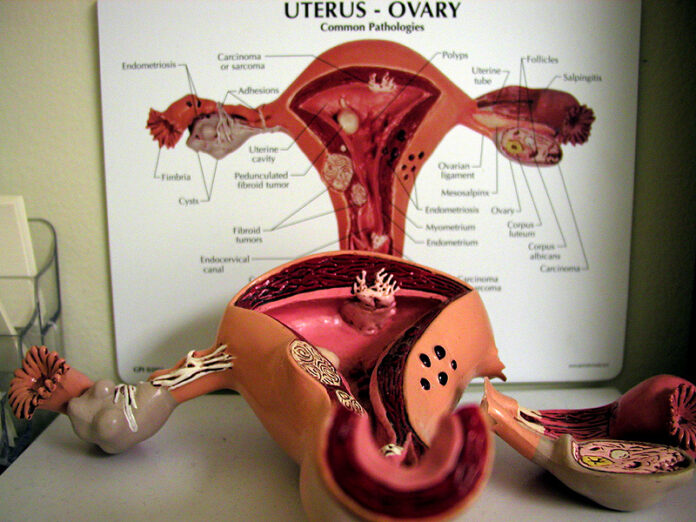
This is a photo of a plastic biology model of a uterus. The model is sitting on a table with medical diagrams behind it.
PHOTO: sharyn morrow / Flickr

By: Eden Chipperfield, News Writer

In 2021, the Journal of Obstetrics and Gynaecology Canada reported that endometriosis affects around 1 million people in Canada. Endometriosis is a chronic disease that affects individuals with a uterus and causes extreme pain, including during menstruation, when being sexually active, and when using the washroom. Diseases like endometriosis and pelvic inflammatory disease have historically been overlooked by the healthcare industry, which often dismisses concerns from those who have uterine pain.        

For Dr. Whitney Wood from Vancouver Island University, the days of overlooking pelvic pain are coming to a close. Wood and her research team are centring their focus on the historical dimensions of women’s health that have led to present-day gaps within healthcare systems. The team will focus on examining pelvic conditions like endometriosis and urinary tract infections from the 1960s to the 2000s.

“When clinicians and health systems focus exclusively on pregnancy and childbirth, we run the risk of overlooking many health issues that aren’t specifically tied to reproduction,” said Wood. “When these health issues — including a range of conditions tied to often chronic, feminized, and invisible pain experiences — are not a priority, gaps in care arise.”

According to Wood, “Medical practitioners and society have a long history of overlooking these pain experiences.” Harvard Health Publishing reported those who suffer from pelvic discomfort and endometriosis are often dismissed by the healthcare industry, and even told, “Don’t dwell on the pain, and don’t try to fix it.” Longstanding gender bias in the healthcare industry leads to pointing the finger at other health suspects before considering the pain those with uteruses experience. Patients have reported the pain they experience is brushed off as a “bad period” by doctors, and they leave with even more questions. 

According to the McKinsey Health Institute, cisgender women “will spend an average of nine years in poor health,” which impacts their ability to “be present and positive at home, at work, [and in the] community.” Gaps in healthcare also include transgender patients who are often not provided with proper care. This is primarily due to discrimination, barriers in health systems, and a lack of understanding and knowledge from healthcare providers. 

The research team is carving out information from past decades to project voices from the past using Rise Up!, an archive of digitized feminist activism. The archive details feminist movements and discussions up until the 1970s. “We are adopting a range of historical methodologies, including a close reading of medical journals, feminist periodicals, and popular magazines and newspapers published between 1970 and 2000, complemented by oral history interviews with care providers, activists, and those who have lived experience of pelvic pain,” said Wood. The Canadian Institutes of Health Research supports the project through a grant of $577,575 extending into 2028. “This funding will support on-the-ground historical research, the digitization of new historical sources, and patient-engagement activities to ensure that the histories we record reflect the priorities of folks with lived experience of pelvic pain,” shared Wood.