Home Blog Page 1153

Erotica, eh?

0

WEB-girl mountie-deviant art-hawkstone

Last month, the Canadian Radio-television & Telecommunications Commission (CRTC) issued several warnings to Toronto-based adult television channels AOV Adult Movie Channel, XXX Action Clips, and Maleflixxx, as they were failing to meet the required 35 per cent Canadian content threshold. This apparent non-compliance may mean suspension or loss of license for these three adult TV channels.

Since releasing these warnings, the CRTC has received a great deal of criticism for pursuing a seemingly trivial issue. However, these violations should be taken seriously as Canadian content has proven to be beneficial.

Some are of the opinion that Canadian content regulations, as laid out by the Broadcasting Act, should not apply to certain varieties of television, such as pornography. This mentality is often backed by the assumption that the Internet has made porn a borderless industry.

Canadian porn is irrefutably beneficial to the Canadian economy.

While the web has doubtlessly expanded the industry, all televised programs should still adhere to the rules of Canadian broadcasting, as these rules were established for legitimate reasons. Airing Canadian-made programs that reflect our attitudes, values, and creativity allows us to display Canadian talent in entertainment, employ local resources, and distinguish ourselves from American programming.

While it may be hard for some to imagine how Canadian porn can be culturally beneficial, it is irrefutably beneficial to the Canadian economy. Hiring Canadians to shoot, act, edit, and write porn keeps jobs in Canada. Upholding the 35 per cent threshold is important to anyone in film, radio, or television.

Before the act was created, the majority of content on television and the radio was of either British or American origin. At first many stations were hesitant to accept the Broadcasting Act, wanting to “play the hits” rather than find unknown Canadian talent.

By pressuring companies to seek out Canadian content, Canada was able to create an industry that became profitable to us. Since the establishment of the Broadcasting Act, channels such as CBC have flourished.

Some say that there is not enough interest in Canadian porn for a real industry to exist, but this is simply not true. Last year, Northern Peaks, an Edmonton-based company, went above and beyond as 50 per cent of their scheduled programming was Canadian-made pornography. This year it was reported that the Québécois porn industry was thriving and beginning to rival those of LA and Amsterdam. Why neglect a growing industry?

While having the US so geographically close can be great for weekend excursions, it’s important we don’t let Canadian culture succumb to American influence. Instead of mimicking American programs, Canadians should try to differentiate themselves from their southern neighbours. Who’s to say that porno can’t take place at a sugar shack in Quebec or in a lighthouse in Nova Scotia?

The CRTC was created to enforce the regulations surrounding broadcasting and Canadian content. These rules reaffirm more than just Canadian identity; they help support jobs and industry in Canada, as well as prevent the total domination of American media that would otherwise occur.

While Canadian porn seems odd and insignificant, the CRTC’s prosecution of their non-compliances is valid. We as Canadians should pride ourselves on homegrown talent and creativity.

Satellite Signals

0

surrey

Surrey

Last week was election season for the Surrey Campus Committee (SCC), a branch of the SFSS based out of SFU’s Surrey campus. An online vote was held April 1 and 2. The following candidates were elected for a term from May 1, 2014, to April 30, 2015. Taylor Theodore, Chief Officer; Sukhman Thind, Surrey Affairs Officer; Aman Taggar, Promotions and Outreach Officer; and Jessica Leung, Campus Life Officer. Joanne Yoon, Jaskirat Aujla, Juzer Antria, Hitesh Advani, Jessica Thandi, and Dhruv Arora were elected as General Officers.


WEB-woodward

Woodward’s

SFU’s Centre for the Contemporary Arts has named Howard R. Jang as its new cultural unit director. Jang is currently the executive director of Vancouver’s Arts Club Theatre Company, and has participated in The Canada Council for the Arts as a board member since 2012. He plans to use his background as an artist and administrator to both inspire innovative thinking and build community-driven partnerships on behalf of SFU.


vancouver

Harbour Centre

On Wednesday, April 2, George Nicholas put on a presentation that questioned the ethics of research practices used to gather information about the heritage of indigenous peoples. The discussion around who “owns” or has the right to benefit from Indigenous heritage is a hot topic at local, national, and international levels. Nicholas proposed that collaborative research models where the community is directly involved in deciding the direction of the research must be implemented immediately, if protection of Indigenous heritage is to be effective.


SFU inducts 2014 Athletics Hall of Fame class

0

At the Diamond Alumni Centre last Monday, SFU Athletics named six athletes, one coach, one builder, and one team to the Athletics Hall of Fame.

Eugene Gyorfi (swimming and diving), Jim Jardine (football), Sara Maglio (soccer), Andrea Schnider (basketball), Ed Sernoski (wrestling), and Harold Willers (track and field) were the athletes inducted.

Former men’s basketball coach Stan Stewardson, trainer Jack Taunton, and the 2001-02 women’s basketball team were also inducted.

Gyorfi, already an established swimmer before joining the Clan in 1981, led SFU to the 1983 NAIA team championship, while earning three individual titles of his own that year. In 1984, he earned another three, making him one of SFU’s most decorated swimmers ever.

Jardine was with SFU’s football team at its inception, recruited by the Clan’s founding athletic director, Lorne Davies, who was on hand at the ceremony as well. Despite being brought in as quarterback, Jardine switched to defensiveback where he’d anchor the Clan’s secondary throughout his college career. The Clan’s original Minister of Defence became a BC provincial court judge after graduation.

Sara Maglio, named an NAIA All-American four times, was a star in her time with the Clan. She won a national title in 1996 while leading the team in scoring. Maglio would join the Canadian national team, playing in the 1999 FIFA Women’s World Cup.

Schnider, who played for renowned head coach Alison McNeil from 1988 to 1992, was a two-time All-American from 1991 to 1992. She was also on the first Clan squad to qualify for the NAIA Championships, and is still the NAIA all-time assists leader with 926.

Ed Sernoski won two NAIA wrestling titles in 1986 and 1988 at 150 lbs. He also earned a team championship in 1988, a year for which he holds the Clan single-season win-loss record, with a dominant 73–3 season. He went on to become the Canadian champion at 74 kg, and represented Canada in the 1989 World Championships.

From 1978 to 1980, Willers was a three-time NAIA champion in the hammer throw, and continued his collegiate success after graduating, winning four Canadian Championships in the event from 1981 to 1984.

Coach Stewardson led the SFU men’s basketball program for nine seasons, from 1975 to 1979 and again from 1984 to 1989. He groomed some of Canada’s best talent, including Terry Fox and Jay Triano, two other Clan Hall of Famers. He is also a recipient of the Metro Vancouver Basketball Foundation’s Lifetime Achievement Award and has been inducted into the Basketball BC Hall of Fame as well.

Dr. Jack Taunton began his sports medicine career at SFU, serving on the Clan’s medical staff. Since then, his career has grown immensely and he served as Chief Medical Officer for the Vancouver 2010 Winter Olympic and Paralympic Games. With Taunton at the helm, the event was named by the IOC as the best sport medicine platform in Olympic history.

The 2001-02 women’s basketball team were SFU’s first Canadian Interuniversity Sport Champions. The Clan racked up 35 wins on the year, and went the full season without a single loss. The team was named the Basketball BC and Sport BC Team of the Year that season and was later elected into the Burnaby Sports Hall of Fame.

Meanwhile, the late Tim Jones became the first inductee of  the Terry Fox Honorary Inductee category since Fox himself. Jones died suddenly in January of this year, but was the volunteer team leader of North Shore Rescue (NSR), a Vancouver-based search and rescue operation, and was also the paramedic in charge with the BC Ambulance Service. Jones raised over $1 million for NSR, and served with NSR and BC Ambulance Service for over 30 years. His son Curtis accepted the award on his behalf.

Ancient clam gardens mean mollusks thrive

0

clam garden-Eleanor Qu
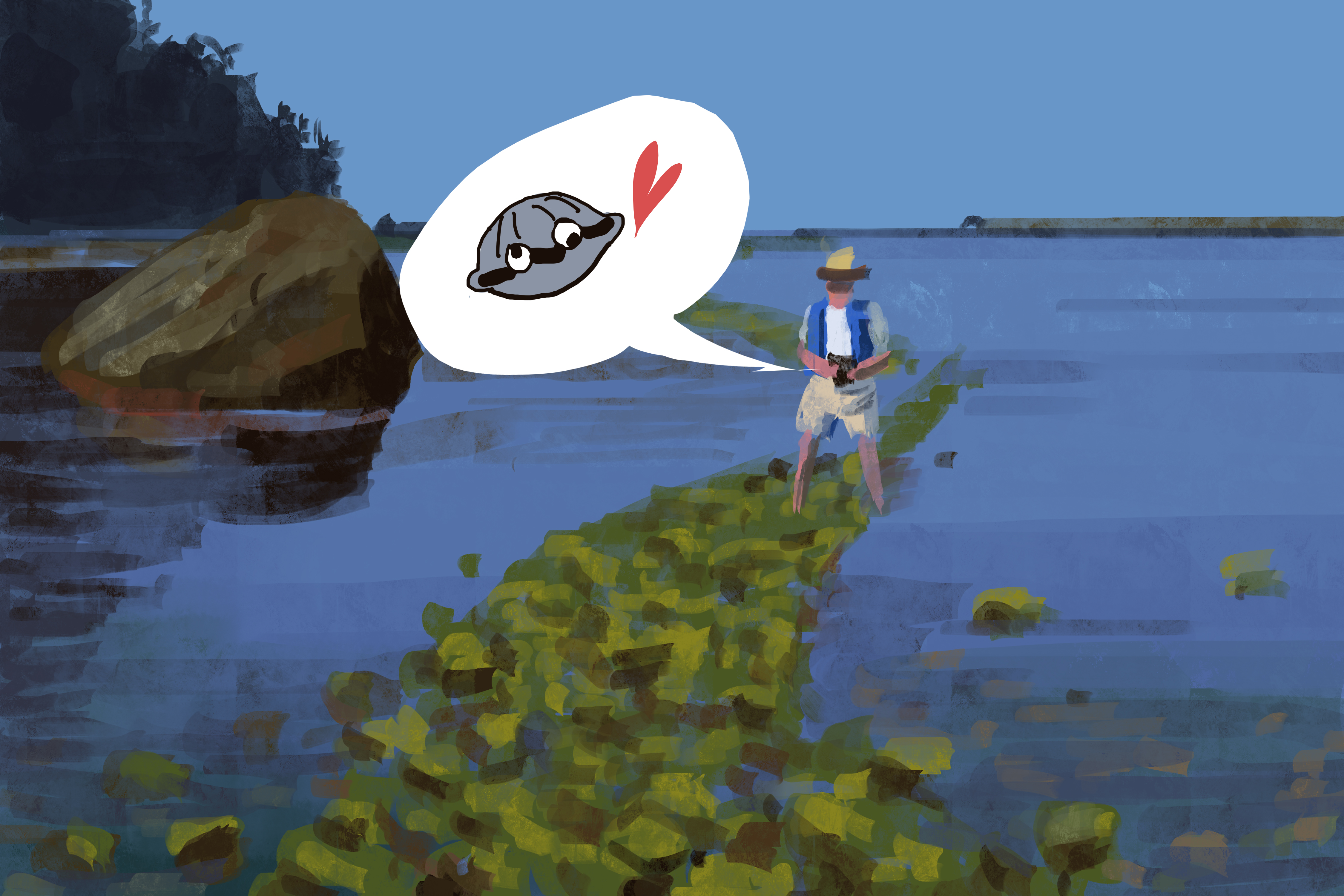
Thanks to a three-year study conducted by a research team from SFU, the number of clams found along BC’s coastline has the opportunity to grow more substantially, due to an ancient practice already in use throughout British Columbia’s coastal regions.

The team, comprised of Amy Groesbeck, Dana Lepofsky, Anne Salomon, and Kirsten Rowell, began their project after hearing of First Nations’ clam gardens located along the coastline. These ancient clam gardens have been traditionally used for the harvesting of clams, and were said to be more productive than more normative approaches to harvesting the food supply.

Lepofsky, an SFU professor of archaeology, said, “Given the sheer size, number, and time depth of shell middens along coastal British Columbia, it makes sense that there was a system in place to manage clams so they could be sustainably harvested in abundance over the generations.”

The team conducted their research in order to see if these ancient techniques were able to yield a greater crop than regular beaches. The method is simple and has been passed down by First Nations oral traditions throughout the ages. Humans construct clam gardens on a specific area of the beach to benefit the growth of clams. In a sheltered segment of the coastline, rock walls preserve the area for the clams to reproduce and thrive.

“Clam gardens are truly an astonishing example of human ingenuity and why ancient indigenous wisdom matters to the modern world,” said Salomon, assistant professor of resource and environmental management.

Rowell, a biologist from the University of Washington, said, “Our work shows that ancient Northwest aquaculture techniques appear to be efficient and productive. For the clams under study, we found that there is a real growth benefit, higher densities and better survivorship, which could translate into a significant difference in local food security.”

The researchers’ study found that clams in the enclosed and protected gardens grew almost twice as fast, were more likely to survive, and quadrupled in numbers when compared to normal beaches.

In the future, more researchers and archaeologists will continue to search for clues as to when and how these clam gardens came into use in the distant past. The team has since created the Clam Garden Network to work with researchers and First Nations community members across the province. Said Salomon, this network will hopefully allow researchers to “unlock further mysteries surrounding clam gardens.”

Take it easy on introverts

4

As a predominantly social species, we humans have gradually constructed our society into one which values those who are outgoing and social, more so than those who possess a more reserved and silent nature: introverts. And with the popularization of social media, interconnectivity and technological surveillance, things are becoming even more skewed.

Being an introvert, social interactions have never been easy for me. It didn’t help that I was born shy and grew up somewhat sheltered. I developed a tendency to spend and enjoy time alone, and avoided any and all unnecessary socializing.

With our rapidly growing population and technologies, the world’s only going to get more interactive, and introverts like myself are going to find it harder and harder to stay within their comfort zone. It’s up to you to be considerate, and do what you can to make the introverts in your life feel welcome and safe.

It’s not that introverts don’t enjoy company; we just prefer our socializing in small doses.

Many aspects of our lives are dependent on successful interpersonal communication. Whether it’s searching for employment opportunities, finding a romantic partner, or maintaining good family relationships, social skills are required of all of us on a daily basis. Naturally, those who are more outgoing are generally favoured by our society.

Introverts, on the other hand, are left out of this brave new world. But it’s not our fault — we just function differently than our extroverted counterparts.

Unlike extroverts, introverts don’t become energized when they engage in conversation. In fact, quite the opposite happens: the more we socialize, the more drained we become. After a while, we have to be left alone to recharge our batteries before we can get back out there and face other people. It’s not that we don’t enjoy company; we just prefer our socializing in small doses.

Even engaging in conversation can be difficult for an introvert. They have to try their best to be charming and pleasant — body language and facial expressions are often key to deciphering the intentions of the others, along with the person’s tone of voice and eye contact.

Misinterpret any of these cues, and you run the risk of misunderstanding what others are trying to say.

Then there’s the actual content of the conversation. They want to sound witty, but not overly smug or offensive. They want to be engaging and interesting, but if you overdo it you’ll just end up being annoying. Conversely, if you don’t say enough, people might perceive you as boring, or just think you’re not interested.

In many ways, having a conversation is like driving a car. As a driver, you have to be mindful of a multitude of signs and traffic lights, and as a conversationalist you have to be mindful of a flurry of facial expressions and body language, as well as tones of voice and other social cues. Whereas extroverts have a natural talent for this, many introverts still have their learner’s license.

This doesn’t mean introverts don’t have the capacity to learn, but in our high-speed, technology obsessed world, it’s becoming tougher to get a head start.

If you’re an extrovert who has an introvert in your life (and you almost certainly do), make sure to stay within the speed limit. They’ll thank you for it.

Softball continues to struggle

0

The Simon Fraser softball team hosted Western Washington University last weekend in an offensive-laden doubleheader that saw the visiting Vikings take both matches. The teams combined for 35 runs over the two games, but the Clan scored only 11 as the Vikings ran away with both contests.

In the first contest, WWU jumped out to a 6–2 lead; the Clan mounted a minor comeback, pulling within one in the bottom of the fourth, but it was never really close. The Vikings scored two in the fifth, two in the sixth and four in the seventh to blow the out Clan 14–7.

“The fans got their money’s worth in the first game,” said head coach Mike Renney. “It was a slugfest but we made too many errors against a good team and Western Washington is on a roll right now. They’re arguably one of the top teams in our conference so full credit to them.”

The Vikings currently sit third in the Great Northwest Athletic Conference (GNAC) with a 9–5 conference record, well ahead of the last-placed Clan, who are now 2–12 in GNAC play after the two losses. The disparity between the two clubs was just as evident in the second match.

Western Washington steadily built up a 4–0 lead into the fifth before SFU brought any runners home. Up 4–2  after five, the Vikings blew the doors open in the sixth and seventh, taking a stranglehold on the game with a 10–2 lead. SFU would add two in the bottom of the seventh, but it wasn’t nearly enough as the Clan fell 10–4.

It didn’t help that the Clan lost one of their key athletes in the first game. Junior shortstop Danielle Raison left the game, suffering an apparent knee injury while running the bases.

“It was really tough to have to re-group after losing our starting shortstop and our top hitter right now to a serious knee injury that will be diagnosed in the coming days,” said Renney. “I think our athletes did as well as you could hope to bounce back from that but I’m sure it was an underlying factor today.”

Renney added, “We’ll get back on the practice field on Monday and get to work on the long list of areas we identified over the course of this doubleheader that we need to work on and that will only make us better in time, but time is running out on this year.”

The Clan are only about halfway through their season, but after losing Raison and currently being planted firmly at the bottom of the GNAC, 2014 is looking like a lost year. At the very least, it’s a season on which to improve.

Track and Field gets underway on new season

0

As spring begins to dawn on the mountain, the SFU track and field teams hit the track running this past weekend, competing in their first outdoor track and field competition of the year.

The majority of the team travelled crosstown for the UBC Open, while several athletes competed south of the border at the CNW Spring Break Open. Thirteen Clan athletes earned at least provisional qualification to the Great Northwest Athletic Conference (GNAC) meet, while five earned automatic standards. Twelve additional athletes sit top-10 in their GNAC event rankings, and will be looking for those qualifying standards in the upcoming weeks.

The Clan were led by freshman Joel Webster, whose 200m time of 22.02s puts him second in the conference standings. Jumpers Mercedes Rhode and Ella Brown also sit second in the GNAC in the long jump and triple jump events, with leaps of 5.27m and 11.57m respectively. Robyn Broomfield followed Brown with a lead of 11.08m in the triple jump, good for fourth in the conference standings, while Charlotte Crombeen and Kye Fedor sit sixth and eighth in the long jump.

Cameron Proceviat’s time of 3:53.48 in the 1500m was good enough for third in the conference rankings with Oliver Jorgensen close behind in fourth, while Kirsten Allen and Rebecca Bassett sit in fourth and fifth on the women’s side. The pair ran times of 4:37.41 and 4:38.21, leading a large Clan contingent at the UBC Open, that saw Emma Chadsey and Peggy Noel finish outside qualifying standard, but eighth and ninth in the rankings.

Hammer throwers Peter Behncke and Ryley Carr earned automatic qualifying standards to the GNAC meet at the CWN Open, with tosses of 48.95m and 46.47m respectively. Behncke sits in fourth on the men’s side, ahead of Luca Molinari in eighth, while Carr’s throw put her in sixth spot on the women’s side. Selina Byer and Michelle Stuart sit in seventh and eighth in the conference javelin rankings after their first competition of 2014, despite both coming off injuries.

Men’s long jumpers Alex Wu and Dkay Ayivor earned provisional qualifying marks with jumps of 6.66m and 6.59m, just ahead of Jerry He and Daniel Voloshin who sit seventh and eighth in the GNAC.

Chantel Desch’s 400m run of 59.59s at the CNW Open was good enough for an eighth place ranking, while Stuart Ellenwood’s time of 50.82s on the men’s side puts him in ninth. Taylor Blue sits in ninth in the women’s triple jump event while Natasha Kianipour is tenth in the women’s 100m standings as the Clan head into their second weekend of the outdoor season. The team will soon travel to California and Washington as they attempt to improve on their inaugural marks of the season, and earn more spots in the GNAC meet.

Landslide that took 30 lives in Washington could happen here

0

WEB-Oso landslide - Washington State Patrol

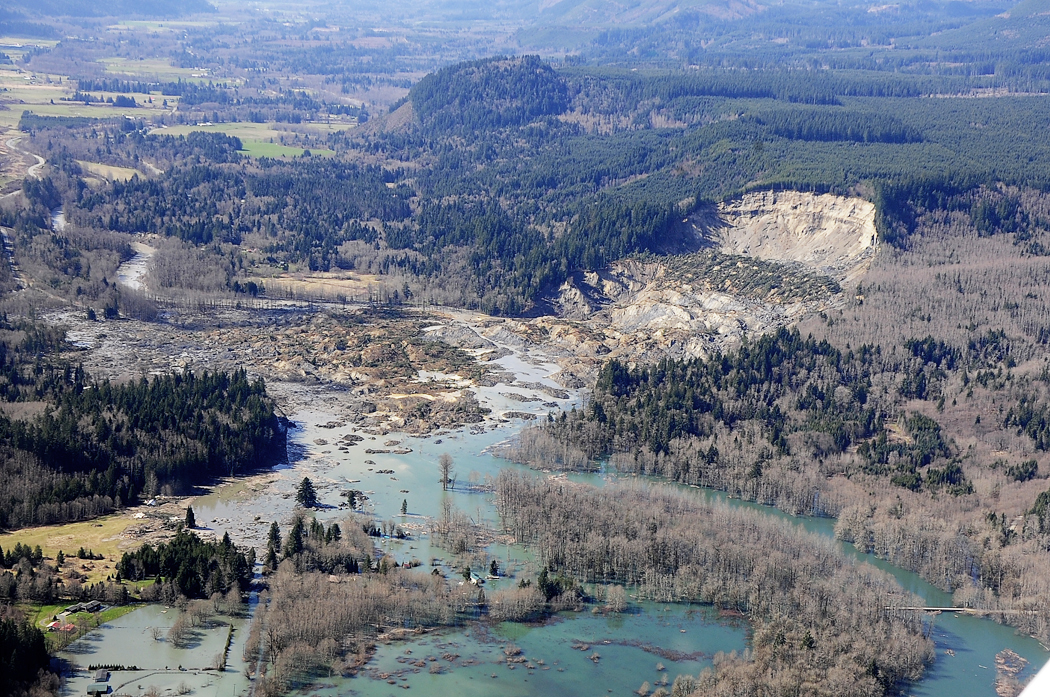
An SFU professor claims that a series of devastating landslides that struck the town of Oso, WA on March 22, causing numerous fatalities and severe damage to the area, could occur here in BC.

Residents who were in the area at the time sustained varying degrees of injuries and many were rescued from the debris. Nevertheless, as of April 3, 30 people are confirmed dead, with 22 still missing, as reported by CNN and BBC.

SFU earth science professor John Clague believes that a similar event could hit even closer to home. As a region that shares many physical traits with the neighbouring state to the south, BC is also at risk of undergoing a similar ordeal.

Despite the suddenness of the actual event in Oso, the disaster was not a complete surprise. The National Weather Service issued a warning in the Seattle area on March 4, nearly two weeks prior. “Cumulative rainfall over the last week has soaked soils to the point where the Washington landslide risk is at elevated levels,” explained forecasters to the Seattle P-I.

The Oso area has a history of landslides. As Clague noted, the area is filled with many beautiful flat surfaces and valleys that attract residents and visitors alike; however, the location also contains many bluffs with loose sediment that could potentially dislodge under heavy rain conditions.

“Landslide” is an umbrella term for different slope movements — sliding, creeping, slumping, toppling, and falling. Though landslides can occur due to various reasons, heavy rainfall is a major culprit. The landslide that hit Oso was a mudflow. As Clague explained, “The bluff that failed [in Oso] is not rock, it’s loose materials — essentially silt, sand, clay, and any kind of water saturated loose materials — that are inherently unstable.”

In a report with Global News, Clague stated that, “We [the residents of British Columbia] have to be aware that we do live in a country with this wet unstable topography where we are going to get landslides.” He continued, pointing out Chilliwack Valley as a potential location where a landslide event might occur due to its topographical similarities to Oso.

Landslides are hard to prepare for and harder still to react to, given the short time frame in which they occur. One definite sign that the ground is on the verge of breaking loose is ground stress. If someone happens upon an area, even a few days before an impending landslide, they will hear cracking from the ground, Clague explained. In some cases, there may be slippage and possibly chunks of sediment dislodging or breaking free.

In any case, if there is any sign of a landslide, the best course of action is to run away. If the landslide is heading downward, the best direction to run is uphill, towards higher ground, or to the opposite side of the valley or highway, advised Clague.

While there is no definite cause for concern at the moment, Clague warned that we should nonetheless be aware of the potential hazards in the place we call home.

Salt and Paper: Margarita Remix

0

Processed with VSCOcam with f2 preset

Sometimes there are days when I think I should just scrap dinner and go straight to the night cap. Without fail, a day or two before payday the fridge begins to look rather empty — save for a couple of stalks of wilty kale and sticky jam jars — and that remaining splash of red wine looks pretty good.

Other days, things just don’t really go as planned and the last thing you feel like doing is standing in front of a stove sautéing onions and crying because you twisted your ankle running for the bus (it happens).

I get it. As much as I love cooking and baking and all things food-related, some nights I just want to say “no,” reach for a glass, and call it a night.

Plus, the sun is making it’s way through the clouds, and you know what that means: it’s margarita weather. Let’s get real: laying out in the sun with a good book and a strong drink sounds much more appealing than slumping in front of a laptop for hours on end.

With exams coming up, I have a feeling that I’m not the only one craving citrusy, salty, and sweet tequila over ice. So whether it’s an empty fridge, a swollen ankle, a heavy textbook, or just a craving for liquid sunshine, grab the bottle and put down the cutting board.

This is a bit of a grown-up version of the margarita, using grapefruit instead of lime and with the addition of Lillet, which can be found in most liquor stores (and is also delicious on its own).

Processed with VSCOcam with f2 preset
Serves 1 

• Grapefruit wedge, for the glass

• Kosher salt (or get fancy with vanilla salt)

• 1 1/2 ounces tequila

• 3/4 ounce Lillet blanc

• 3/4 ounce grapefruit juice

• 1/4 ounce simple syrup

• 3 dashes bitters (can be found in most grocery stores)

• Grapefruit peel, for garnish

Run the grapefruit wedge along the rim of a glass, then roll the glass in salt. Add tequila, Lillet, grapefruit juice, simple syrup, and bitters to a cocktail shaker; add ice and shake until the outside feels frosty. Pour into glass and either add the ice from the shaker or fresh ice. Add the grapefruit peel. Cheers a friend to your hard work.

Recipe adapted from food52.com

Smiling vs. telling me to smile

0

Kayode-Mark Burnham

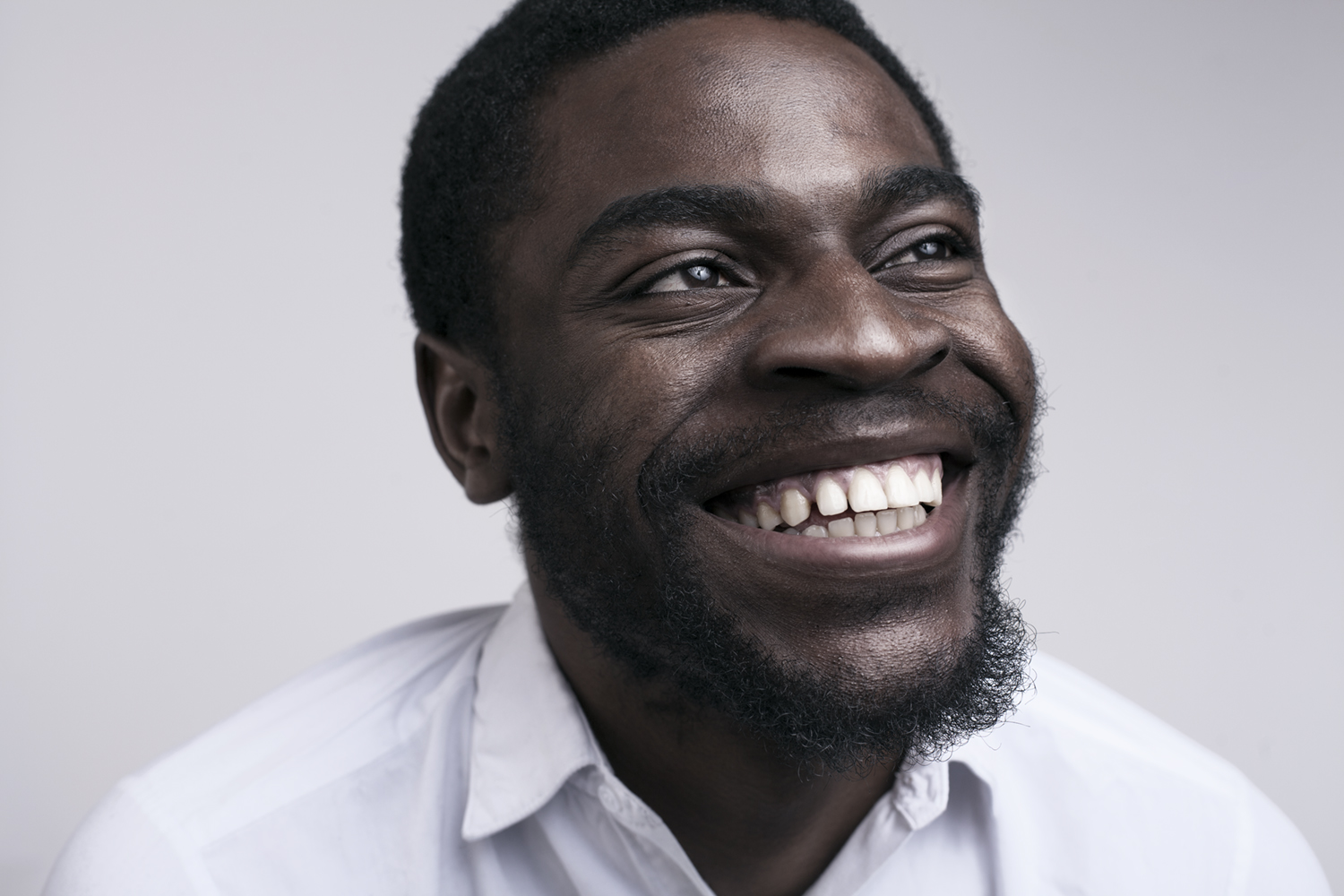
Woohoo: smiling

Who is going to argue that smiling isn’t flippin’ great? Someone who has a serious misconception about how to live life, that’s who.

I used to think I smiled too much. I remember doing so as a teen in less-than-comfortable situations (and, as a teen, I found nearly every situation as such). The negative attitude I developed toward smiling came from using it to put on a persona. Smiling was a way to avoid being myself, to just be agreeable, to be accepted by others. It was an indication of that fear of unacceptance.

Smiles don’t have to be that way. Smiling can be a kind of surrender, a moment of vulnerability, a moment to be shared. It can be a moment to genuinely engage with someone else because your smile is a window into you.

If you’re holding back a smile, are you holding back opening up to someone? Give it a try. You might find freedom in that vulnerability.

Boohoo: telling me to smile

Don’t tell me to smile.

Sometimes I look a little glum. Maybe it’s my face: it might sag a little around the edges; maybe my forehead is a little low. Maybe it’s because sometimes I am a little glum.

It’s okay to be unhappy sometimes. It’s okay to go through periods of sadness, or of seriousness. That’s a part of being human.

But not smiling doesn’t necessarily indicate depression. And even if it does, so what? The stigma that makes depression something that others feel they must call out and chastise is surely what perpetuates it for many.

The next time you want to tell someone to smile, ask yourself why you’re assuming you know that person. Ask yourself why someone else’s emotions are such a threat to your own self-security.

And if you see non-smilers, tell them you like their shirt, and that they should never stop being themselves. It’ll go a lot farther.