Home Blog Page 113

Investigating the Myth: Is Vancouver really that boring?

0
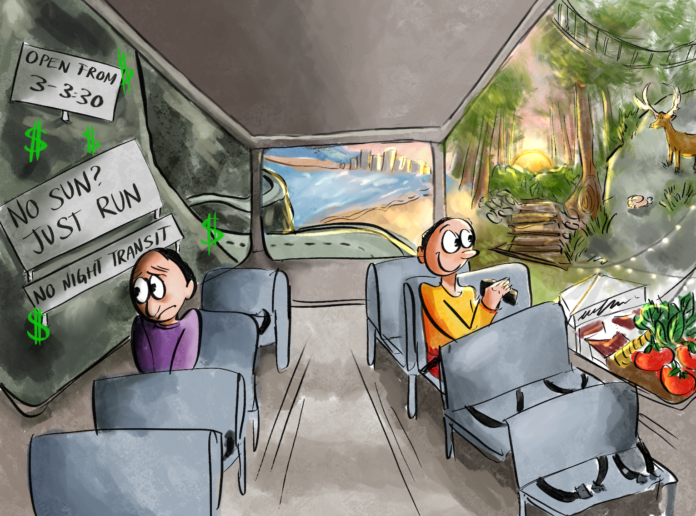
An illustration of a bus with two people looking outside the window.
ILLUSTRATION: Sonya Janeshewski / The Peak

By: Hailey Miller, Staff Writer

The everlasting debate over whether Vancouver is boring has circulated the city for as long as I can remember. Is it really that boring, or have you just not figured out how to navigate the entertainment options, nightlife, and city-nature harmony? Between comedy clubs and live music that make the nightlife a little more lively, quaint coffee shops, and outdoor activities, there’s lots to do, but is it for you?

While there’s a lot more that the city could offer, there’s also lots to do — you just have to find what you like, and go for it. Whether you’re a city chick, an outdoorsy adventurer, or a combination of the two — like myself — there’s plenty of opportunities for fun. So, let’s dissect the great debate and compare and contrast between what makes Vancouver lively, and what makes it lifeless.

First, let’s discuss the pros, and why I think Vancouver isn’t boring. 

The city has an abundance of opportunities and events. Let’s talk city life first. You’ve got countless patios (rain or shine) to enjoy drinks with friends like, Social YVR or Mahony’s Tavern. Enjoy festivals, including the Vancouver Mural Festival, where you can admire murals, or join Vancouver Pride, in which you can celebrate Pride culture with various events, including the parade. Seasonal highlights include the Vancouver Cherry Blossom Festival happening in the spring or the night markets open during the summer, like the Richmond Night Market, the largest nightmarket in North America. 

Vancouver has many artsy neighbourhoods and streets that contribute to its entertainment and live music scene. Hit up a show in the Theatre district, along the Granville Street strip — the most lively of them all. Take the Expo Line to ChinaTown–Stadium, and take a stroll down North America’s third-largest Chinatown, visit the Dr. Sun Yat-Sen Classical Chinese Garden, sightsee alongside False Creek, overviewing Science World, and end the day swinging by Rogers Arena or BC Place for concerts and sports. If you want a place to spend your afternoon, evening, and midnight, visit Davie Village, Vancouver’s gaybourhood, with cuisines from all over the world, and local gems like Little Sister’s Book and Art Emporium, where you’ll be able to lose yourself in their collection of queer books. Continue the day into the evening and spend the night bar hopping or checking out a drag queen show at The Junction Pub. Also consider Vancouver’s music scene, featuring jazz clubs, like Frankie’s Jazz Club, venues like the Biltmore or Fox cabarets, or intimate performances of local musicians at secret locations, hosted by Sofar Sounds. Vancouver is only third to Montréal and Toronto when it comes to live music.

“Being coined ‘no-fun city,’ Vancouver has conjured up a reputation of being bland and boring, yet somehow still lively and full of opportunity”

Is active adventure more your type? No problem. Vancouver has a lot to offer outside of nightlife. The city has a plethora of activities that the rest of the country surely turns their nose up at, regarding our mild climate and vast outdoor offerings. From sea to sky, you’ve got anything and everything in-between. Go for a short hike and kayak combo in Deep Cove, or challenge yourself with the Grouse Grind and take a photo with local celebrity bears, Grinder and Coola. Take your friends to Buntzen Lake or Kitsilano Beach and make a picnic and lake/beach games day out of it. Definitely expensive, but few things beat taking a scenic gondola ride. While the Grouse Gondola might be more accesible, the Sea-to-Sky Gondola has that pacific-northwestmagic to it, even the ride there is enchanting! Or, if you need a break from society, there are plenty campsites near the city, or in the neighbouring islands — nothing beats a weekend camping adventure in quiet island. The mountains are calling your name, and so is the ocean — when there’s no E. Coli to report, of course. 

However, there are some issues here and there that do bore down the city. Predominantly, it’s the early closing times of venues, bars, clubs, and the like. 

If you want to stay out late into the night, chances are, you’ll be out of luck. They’ll be kicking you out right at close and you’ll be scrambling to find someplace else to go — few places remain open past 1:00 a.m. or so. 

Don’t get me started on the lack of transit options available to get to and from the city. Even if you want to stay out late and there are enough things to do, it’s near impossible transiting home at any hour past 1:00 a.m. If you’re hoping to take SkyTrain back, you better book it to the platform before the last train leaves the station for the night, which is sooner than you’d like. Either that or you have to pay an outrageous price for an Uber — a huge strike to the nightlife.

The nightlife is supposed to begin after midnight, not be wrapping up once the clock strikes 12. This isn’t a Cinderella story. Some of the latest clubs close by 3:00 a.m. or sooner. Catch a late show if you’re lucky, but will the hassle of getting a ride home at that hour be worth it? I’m like Alanis Morissette with “one hand in my pocket and the other one is hailing a taxi cab” that never shows up.

Being coined “no-fun city,” Vancouver has conjured up a reputation of being bland and boring, yet somehow still lively and full of opportunity. Having been to New York City, I’m the first to admit that Vancouver is no Big Apple when it comes to nightlife, but it has a lot of other naturesque and outdoorsy activities to offer. Lack of nightlife? I would argue yes and no. Yes, because everything shuts down a little too early, and no, because we have a vast music scene full of artists and venues that are unique to the city. Sure, there are many evening shows, but don’t expect an all-nighter in what might as well be ghost city shortly after dark. We have countless markets and events if you’re more of a daytime person, and outdoor activities that put just about any other city landscape to shame. Vancouver isn’t totally boring, but surely, it could do much better.
Palestinian solidarity belongs at Pride

0
PHOTO: Alisdare Hickson / Flickr

By: Petra Chase, Editor-in-Chief

Content warning: mentions of violence against children and 2SLGBTQIA+ communities.

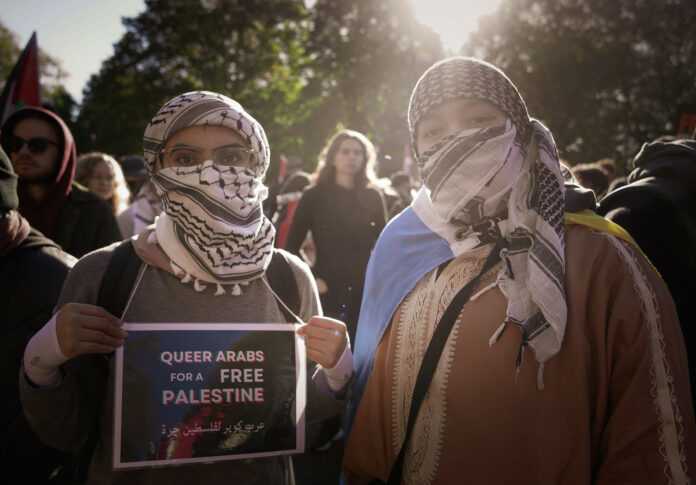
This summer, Pride parades across the country saw activists protesting the ongoing Palestinian genocide. People have called these protests selfish, saying Pride is “not the place” for them. The participation of corporations and politicians who are complicit in Israel’s genocide is what really deserves outrage. Power-hungry entities like Scotiabank and TD Bank use empty slogans and rainbows to pretend they care about equality and liberation, while they blatantly support Israel’s brutality. Pride’s roots lie in resisting systems of oppression across borders and intersecting identities. Palestinian liberation has always been a queer issue.

Certain outlets have responded to the recent protests by calling Queers for Palestine “incoherent” and “ironic.” They believe Pride and Palestinian liberation are contradictory because of the existence of anti-2SLGBTQIA+ sentiments in occupied Palestinian territories. The go-to talking point used to dismiss queer people who advocate for Palestinian liberation is to tell them to try surviving in Gaza as a queer person. “They’d be killed!” one online magazine parrots. I don’t deny that homosexuality is criminalized in Gaza and queerphobia exists in Palestinian society. However, this response shows a stark double standard.

I can’t believe this has to be said: the persecution of queer people doesn’t justify a genocide. Israel has bombed hospitals, schools, and killed over 40,000 people. If there is a genuine concern for the lives of queer Palestinians, you would think stopping Israel from killing and displacing them should be a priority. Despite Israel presenting itself as a beacon of hope for queer Palestinians, same-sex marriage is illegal in Israel. 

Even if Israel is safer for queer Israelis, queer Palestinians have a much different experience there. They are not only discriminated against on the basis of their sexuality and gender, but also denied basic freedom in their homeland under Israeli apartheid. According to Vice, intelligence sharing between the Palestinian Authority in the West Bank, racism towards Arabs, and a lack of basic legal rights means few queer Palestinians seek asylum in Israel. Because Israel may share their information with Palestinian agencies, it also means there is a risk of queer Palestinians “being outed in their own community.” 

Pride’s roots lie in resisting systems of oppression

Homophobia and transphobia are not distinct to Palestine. When people say you’d “get shot” in Palestine, it hinges on a racist and Islamophobic depiction of Palestinians as inherently violent. Hate-motivated gun violence is a real issue for 2SLGBTQIA+ communities around the world, especially in the US, where gun ownership is legal. Trans people continue to have their rights stripped away in North America. Your right to live safely shouldn’t depend on the predominant beliefs where you live. It’s because of deeply-ingrained racism that violence against Arabs and Muslims is normalized.

Disguising colonial violence as social progress is nothing new. It’s also thanks to colonialism that homosexuality is criminalized to begin with, as “the law was inherited from the British” in 1936 due to the British Mandate Criminal Code Ordinance. The west has historically used depictions of colonized people as uncivilized to fuel a narrative of western aid, and Israel is no different. Last year, two months into Israel’s escalated genocide, a photo of an Israeli soldier holding a rainbow flag in Gaza circulated online, which was shared as if it were a win for the queer community. Just like we’re seeing at our corporate-co-opted Pride parades, this is textbook pinkwashing: using queer identities for public relations purposes. Promoting a supposed queer-friendly image to excuse killing and traumatizing a population, including children, is foul and goes against everything queer liberation stands for. 

The inclusion of Palestinian solidarity at Pride isn’t new; in 2010 the Toronto-based grassroots organization Queers Against Israeli Apartheid made its first appearance at Pride. Organizations like Rainbow Refugee, who help people fleeing discrimination based on their gender identity or sexual orientation, demonstrate the importance of transnational solidarity, and communities sticking up for each other.

While we can celebrate how Pride parades demonstrate more public acceptance towards queer identities, we still have a long way to go before queer people are liberated. This is all the more reason to stand in solidarity with queer Palestinians. They should have the right to live safely in their own homes, and feel welcome at our Pride parades. As Palestinian author Elias Jahshan noted, “in terms of real liberation, we cannot achieve that until we have a free Palestine.”

I’m not looking for your unsolicited medical advice

0
ILLUSTRATION: Cliff Ebora / The Peak

By: Hailey Miller, Staff Writer

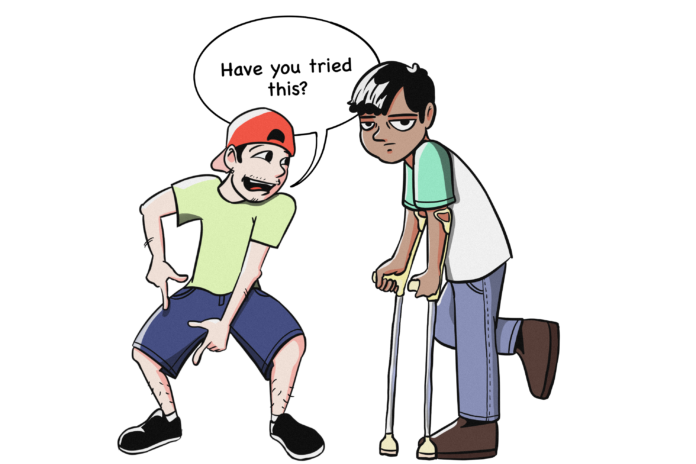
Unwelcome medical advice is inappropriate in any situation, yet people with disabilities and chronic health conditions have to put up with it on a regular basis. As someone who was born with a permanent physical disability, I’m no stranger to unsolicited comments made by people who think their unprofessional advice will be helpful. From opinions on certain treatments, to taking a certain medication that’s supposedly a “cure-all,” I’ve heard everything there is to hear about every medical advancement under the sun — whether it’s relevant to my disability or not. I’m 100% sure your unsolicited advice won’t help me. 

Unsolicited medical advice can do more harm than good, and can dehumanize people with disabilities and chronic illnesses who are doing their best. Many of us are already undergoing more treatments, have more appointments, and take more medications than you’d believe humanly possible. We’d rather go about our lives without the unwanted opinions of those who have no medical training beyond a quick Google search or WebMD. Often, their ignorance comes from the idea that every person with a certain condition must be the same as the next, because they know or have heard of someone with the same condition. This is not the case. No matter what disability or illness someone has, we’re all unique — and disabilities affect everyone differently.

My personal experiences are worth more than the suggestions of a know-it-all. One of my biggest pet peeves is when people tell me I should try stem cell therapy. Although this may help people with certain conditions — such as some cancers and autoimmune disorders — it won’t do anything for me. Some treatments are just not necessary and can even cause further harm. What works for me is staying active and fit, stretching, and incorporating as much movement as possible so I can stay mobile. However, this also isn’t a catch-all solution for people with disabilities or chronic illnesses. 

Your unqualified opinion isn’t going to get us anywhere but backwards.

I walk predominantly with forearm crutches when I’m in public because I need extra support and balance in crowded spaces and when carrying things. Growing up, I also used a posterior walker for a few years, and I spent four years of my life using a wheelchair. The moment I got out of it, I vowed to myself to never use one again. That’s my personal preference — everyone is different. Despite this, I’ve had multiple strangers throughout my life tell me I should try a walking frame, a different style of crutch, a different mobility device, or they’re just baffled as to why I’m not in a wheelchair and am mobile with my condition. 

These reactions are not only degrading to my physical mobility, but they’re also completely dehumanizing. I’ve worked my ass off to get to where I am today, and to be told by Average Joe on the street that I should theoretically be worse off or try something else because I’m not cured is laughably unbelievable. There’s no cure for what I have — and clearly there’s no cure for their unsolicited remarks, either.

Any kind of unsolicited medical advice — no matter what the treatment, for whatever condition — is unacceptable. Supporting a loved one and helping with appointments, medications, and symptoms is one thing, but your unqualified opinion isn’t going to get us anywhere but backwards. Sometimes, doing too much causes more harm than good. Unsolicited medical advice overlooks those of us who have experienced our disability or illness for longer than you can imagine. So, next time you interact with a disabled or chronically ill person, remember, we’ve already heard it, we’re doing what we can, and we’re just living our lives.

Shit people say to my disabled ass

0
PHOTO: Courtesy of Hailey Miller / The Peak

By: Hailey Miller, Staff Writer

As someone who was born disabled, nothing makes me cackle more than the ridiculous remarks of arrogance that grace my everyday life. Happy Disability Pride Month — whether you celebrate it or not. I, frankly, never give it much thought. I do, however, love a good statement that keeps human decency more off-kilter than my Humpty Dumpty balance. Considering all the bullshit that spews out of your mouth, some of you aren’t disabled, and it shows.

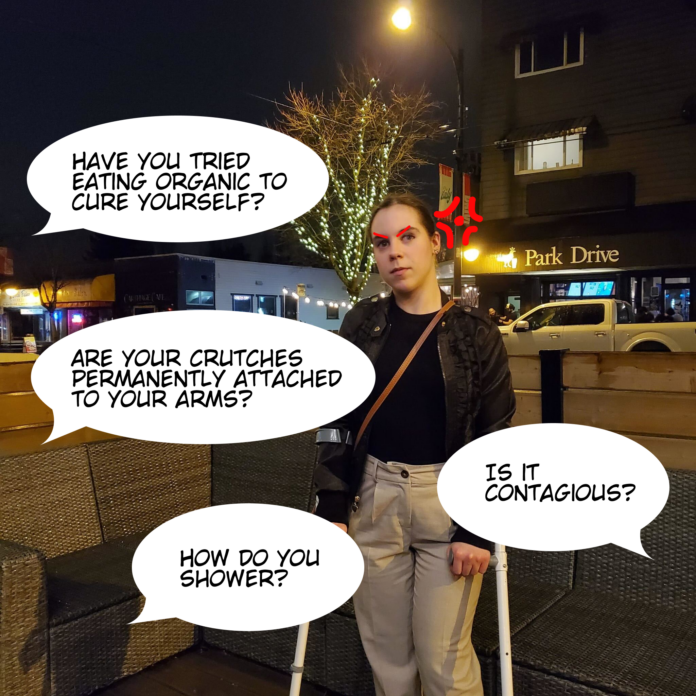
“Have you tried eating organic to cure yourself?”

Someone clearly didn’t pass organic chemistry. As a vegetarian of nearly 20 years, I’ve eaten organic almost every day. If you think eating a single organic vegetable is gonna do the trick, please! Who’s the laughing celery stalk now? I’ve been eating more vegetables than you’ve ever consumed and haven’t seen any progress yet. Will report back when I’m cured . . . which won’t be ‘til I’m dead.

“Are your crutches permanently attached to your arms?”

Of course they are! I oh-so-conveniently have them surgically attached by the cuffs and sleep with them like they’re the lover I don’t have. Who needs a sex doll when you can spoon with not one but two sticks?! 

“How do you shower?”

I turn on the water, grab my bar of soap that cleanses all the bullshit away, shampoo that makes my hair as shiny as my scintillating clapbacks, and conditioner to make the condescending comments slide right off my spastic muscles. I have a little shower singalong-dance party to “None of Your Fucking Business” written by yours truly. Available on all streaming platforms, alongside “No Scrubs” and “Shower Beer” — which I will desperately need to get through this cringe-worthy inquiry. If you must know, I sit on a chair and contemplate all the ridiculous remarks while penning my wittiest responses in a shower stall that’s slipperier than a Slip ‘N’ Slide.

“Are your legs broken?”

I’m so glad you asked! I was just about to put weight on them. Don’t you see the invisible casts? There’s this new technology called invisi-cast, which makes them nearly impossible to see. You have to get so up-close-and-personal to see them that you’d notice my legs were never broken in the first place. Talk about a medical advancement!

“Is it contagious?”

Achoo! Oh, yes, highly contagious! You better keep your distance and watch your step. You don’t want to get what I have. Just kidding, you can’t catch it if you weren’t born with it. Pff, amateurs. Alas, it’s as incurable as your arrogance. If you stumble, you’ll tumble right into disability land where you’ll be diagnosed with a hefty dose of “Don’t mess with this disabled chick.” Get out of my way, or I’ll trip you up with my spell-binding sticks!

“I’ll pray for you.”

Okay, you do you. That’s really not my thing, but whatever floats your boat. Sprinkling some holy water on me isn’t gonna do the trick to cure me, but you believe whatever you believe, and I’ll be over here, living my best disabled life. Contrary to popular belief, a disabled chick such as myself doesn’t actually want to be cured. Hot girl summer called, and my spasticity answered — soaking up the sun and not giving a fuck!

“Can she have a drink?” asks the wait staff, to someone else at my table, when I’m at a restaurant and simply want to order a drink like a sophisticated bitch.

I really just want to sip my Pinot in peace, but instead, I’m being served an extra side of shock and an interrogation of my ID that’s scrutinized more than a criminal record check. How dare a disabled chick have a valid government photo ID when she doesn’t drive, yet still want to order a nice beverage free from bullshit? Actually, at this point, just bring me the bottle. I’m feeling extra pissed tonight and my disability income doesn’t cover tips for shitty service.

SFU medical school appoints a dean and receives $33.7 million

0
This is a photo of a science anatomical model of a human brain.
PHOTO: jesse orrico / Unsplash

By: Hannah Fraser, News Writer

On July 9, BC Premier David Eby announced that the new SFU medical school in Surrey will receive another $33.7 million to renovate an “interim space at an existing building” at SFU Surrey. This is on top of the $27 million in operational funding and $14 million in startup costs SFU has already received from the government. 

The announcement comes after Dr. David J. Price was appointed as the medical school’s founding dean the week before. Price is a “practicing family physician and professor in the department of family medicine at McMaster University, where he served as department chair for 15 years until 2021.” The school was approved by SFU in May and expects to accept its first cohort in 2026. 

The Peak interviewed Dr. Maria Hubinette, vice-president academic for the medical school. She said the medical school would start by holding classes in interim spaces in the SFU Surrey C and E Buildings. Hubinette doesn’t anticipate this will limit the space for existing SFU Surrey students to take classes. Classes will be held in these buildings before the new medical school’s building is finished and ready to open for classes in 2029. 

While all other medical programs in Canada are four years, SFU’s medical school program will span three years. Hubinette said this structure will allow students to have the same instructional time as the regular four-year program while joining the workforce sooner. 

“We’re trying to think about what healthcare is going to look like in the future and not only what it looks like right now.” — Maria Hubinette, acting associate dean for SFU medical school

The school’s partnership with the First Nations Health Authority and Fraser Health Authority has helped the team plan for “clinical learning sites.” Hubinette said the school is committed to incorporating Indigenous Ways of Knowing into the classes and program as a way of “questioning the way that things have always been done.” Indigenous Ways of Knowing “help educate people about the vast variety of knowledge that exists across diverse Indigenous communities.”

Hubinette mentioned the program will be community engaged, with “structured learning experiences” to understand the “broader determinants of health that you don’t see when you’re only in a doctor’s office,” such as income, social status, physical environment, and access to health services.

“We’re trying to think about what healthcare is going to look like in the future and not only what it looks like right now, so we’re thinking a little bit about how to set ourselves up to be more transformative and how to future-proof what we’re doing.”

Details about admissions are expected to be released in fall 2025. The school is still waiting on accreditation with the Committee on Accreditation of Canadian Medical Schools (CACMS), which will permit them to advertise the program and open admissions. According to CACMS, accreditation involves institutions “voluntarily undergo an extensive peer evaluation” in which the CACMS judges if they meet the “national standards for educational quality.”

“We’re really, really excited to get going on more details,” said Hubinette. Premier Eby said SFU’s medical school will be the “first new medical school in Western Canada in 55 years and aims to address the province’s ongoing doctor shortage by adding more family doctors.”

Burnaby Pride Festival held on July 20 at Bonsor Field

0
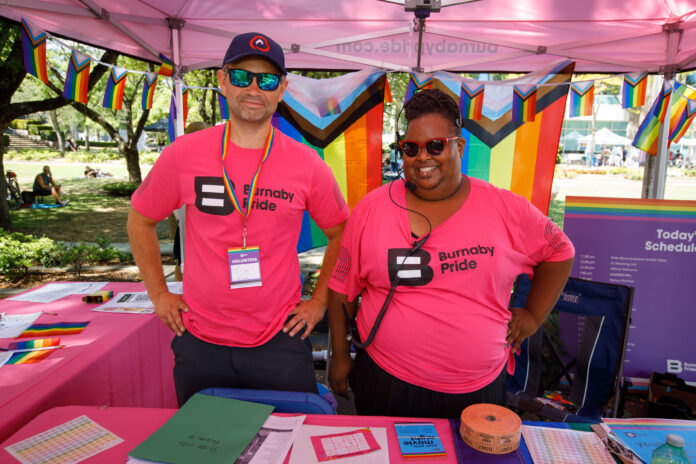
This is a photo of Athena Affan and another Burnaby Pride organizer. They are standing by a table, surrounded by pride flags, wearing “Burnaby Pride” t-shirts.
PHOTO: Sarah Race / Burnaby Pride

By: Hannah Fraser, News Writer

On July 20, the seventh annual Burnaby Pride Festival celebrated the “diversity of our local 2SLGBTQIA+ communities, families, and supporters.” The festival was held at Bonsor Field and had live music, drag performances, family-friendly activities, and more.

Burnaby Pride kicked things off at 12:30 p.m. with a pre-show DJ set by DJ Moaning Lisa. The day featured musical performances, with queer artists like Hollow Twin, houseguest, Haleluya Hailu, SIESKI, and The Rainbow Concert Band. houseguest is an “all-trans indie rock band” formed in 2023 and The Rainbow Concert Band is Vancouver’s “first and only” 2SLGBTQIA+ concert band formed in 1990. 

The Peak interviewed Athena Affan, Afro-Caribbean chair of Burnaby Pride. Affan said Burnaby Pride began in 2018 to highlight community organizations offering services to support the 2SLGBTQIA+ community, such as Trans Care BC and Rainbow Refugee. Trans Care BC “connects trans people, their loved ones, and clinicians with information, education, training, and support.” Rainbow Refugee is a “Vancouver-based organization that promotes safe, equitable migration” for “people fleeing persecution based on their sexual orientation, gender identity, gender expression, or HIV status.” With the same goal of highlighting community organizations like these, the festival featured over 40 booths this year.

Comedians Joanne Tsung and Sasha Mark, who “co-hosted Burnaby Pride for the past three years” also joined the festival, putting on comedy performances. Affan said this year, Burnaby Pride featured kids’ events, where children listened to a story about inclusion and made shadow puppets to recreate the story on their own.

“We’re always trying to make new relationships and try to support community partnerships to offer different kinds of activities during the Pride,” said Affan. “We know that the community is really broad and diverse in terms of interests.” 

The Burnaby Pride Festival aims to “hold space in the community and show Burnaby that 2SLGBTQIA+ people are here, we’re visible,” she continued.

“One of the unique issues we have in Burnaby is that we don’t have a lot of dedicated queer spaces.” Affan said she wants to “create a sense of community, make opportunities for folks to come together, and be together in Burnaby” for those community members who “don’t really know how to find each other.” 

“2SLGBTQIA+ people are here, we’re visible.” — Athena Affan, chair of Burnaby Pride

Affan added, “For the community at large that’s not queer, they can come to our event, they can talk to and engage with community booths, they can see some performers, and in that way, we hope to increase awareness of the community in a way that isn’t putting a huge burden on our community members.” 

Drag performers put on a show at the end of the festival, including performances from Bebo, Batty Banks, Beardney Spears, Genesis, and SKIM. To highlight a few of the performers, Bebo is a “POC trans Bollywood performer,” whose act featured “Indian cultural and Bollywood-themed dance forms through drag which is not often showcased in the Canadian Drag scene.” SKIM is a “non-binary lesbian drag king” who has performed globally and is an “active member of the House of Rice and founder of King Sized — a drag king-focused show.”

On July 15, Burnaby Pride held a Flag Raising event at Burnaby City Hall to “proudly raise the intersex progress Pride flag” together. They also hosted a free “Pride at The Planetarium” event on July 17 at the BCIT Planetarium, “celebrating the beauty of space and the diversity of our queer community.”

Affan hopes Burnaby Pride can march in the Hats Off Parade, a “grassroots festival celebrating the best of the Burnaby Heights community since the early 1980s,” next year in June “to bring some glitter and colour and awareness.”

For more information about Burnaby Pride, visit their Instagram @burnaby_pride or website, burnabypride.com.

What Grinds Our Gears: Mosquitos

0
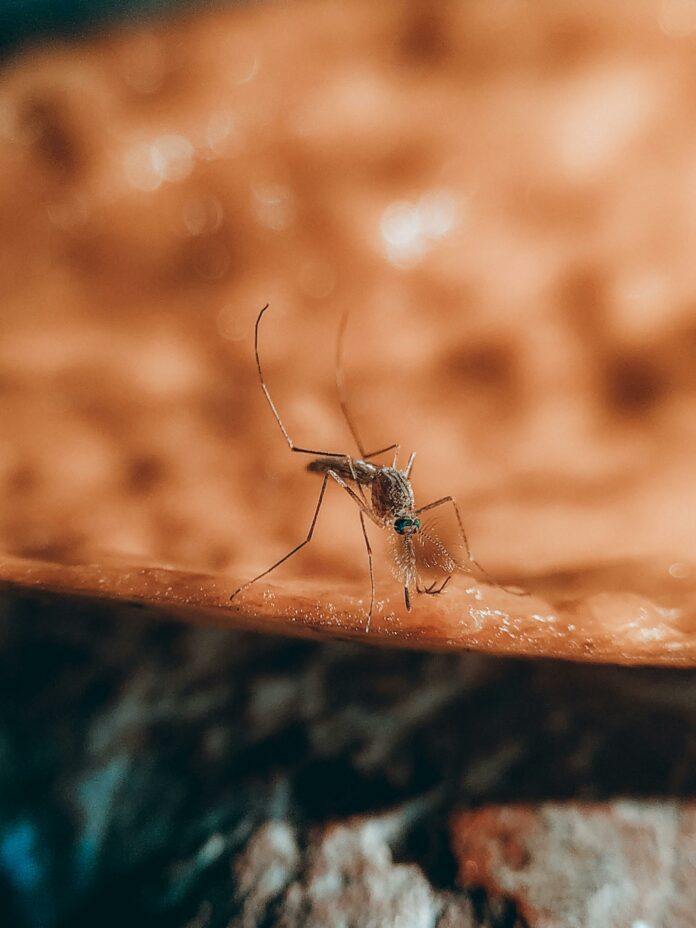
A mosquito with its hind legs up
PHOTO: Prashant Gautam / Pexels

By: Izzy Cheung, Arts & Culture Editor

Picture this: you’ve just spent a long day enjoying the lovely summer weather. You’ve been baking in the sun, dipping in and out of the water to cool down. As you’re heading back home, you feel a sudden itch on the side of your arm. You reach towards the itchy spot, realizing with horror that you’ve been bitten by the worst bug known to mankind — a mosquito. 

I may not like insects, but mosquitos are especially detestable. Those tiny little bites can ruin a great summer’s day, especially if you’re nibbled at more than once. Any time a tiny mosquito pricks me, my bitten body part swells up like no tomorrow. I once had a bite on my leg swell to the size of my palm. I had to ice my leg down for a good week before the swell began to quell. 

I’ve tried everything. Repellents, natural oils, fly swatters, you name it. Still, those pesky annoyances always find a way to nibble at me. I have never been a fan of mosquitos, and frankly, I never will be. Mosquito, you’re not Edward Cullen — people aren’t lining up along the block begging for a bite from you. Watch out for the next time you come my way, I’ll be armed with bug spray.

How to spend a day at . . . Chilliwack’s District 1881

0
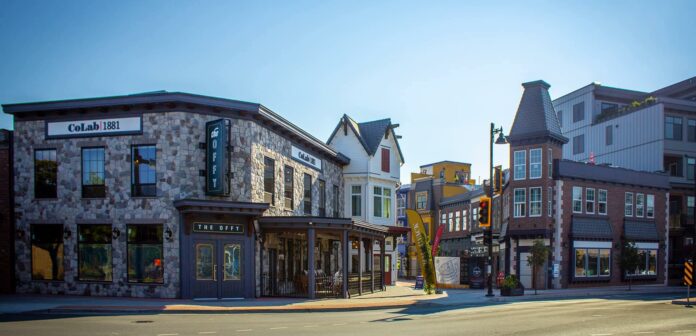
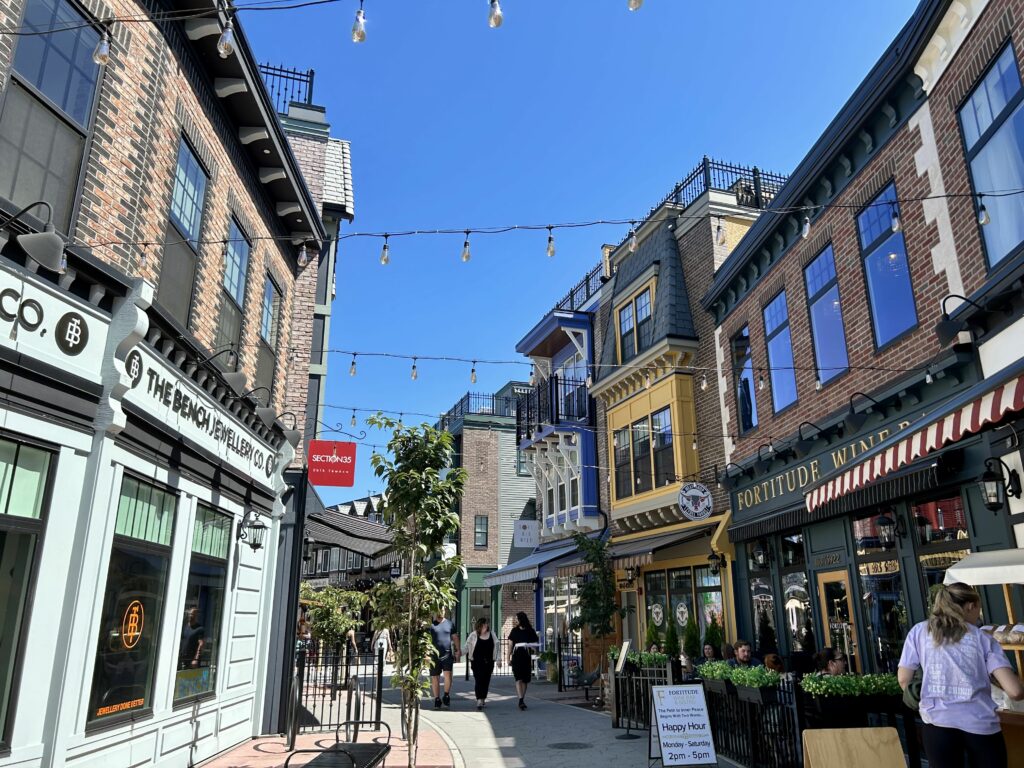
Brick and cobblestone buildings line an alleyway adorned with restaurant patios and small stores. Through the alley, more colourful buildings can be seen.
PHOTO: District 1881 / Facebook

By: Kaja Antic, Staff Writer

The first time I saw Chilliwack’s District 1881 on social media, it was being compared to Disneyland. Walking through the narrow pedestrian alleyways, the brick façades of the nearby shops and restaurants give off a Main Street USA vibe. 

This compact shopping centre is about an hour from SFU’s Burnaby campus via the Trans-Canada Highway, and can be reached by transit when taking BC Transit bus route 66 — the Fraser Valley Express — which departs from Lougheed Station.

PHOTO: Kaja Antic / The Peak

It was busy when I went, but didn’t feel overcrowded at all, as visitors flitted between the small shops and restaurants. Lots of the shops allow you to bring your furry friends along — dogs of all sizes pranced around the district, happily taking in the sights alongside their humans. 

PHOTO: Kaja Antic / The Peak

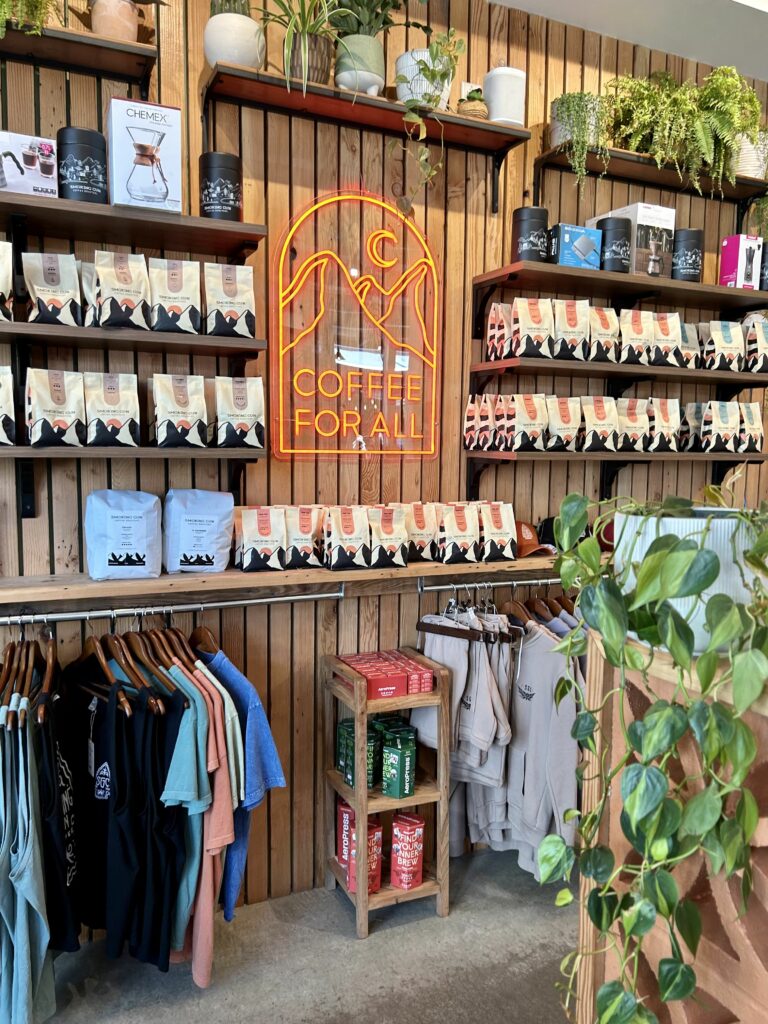
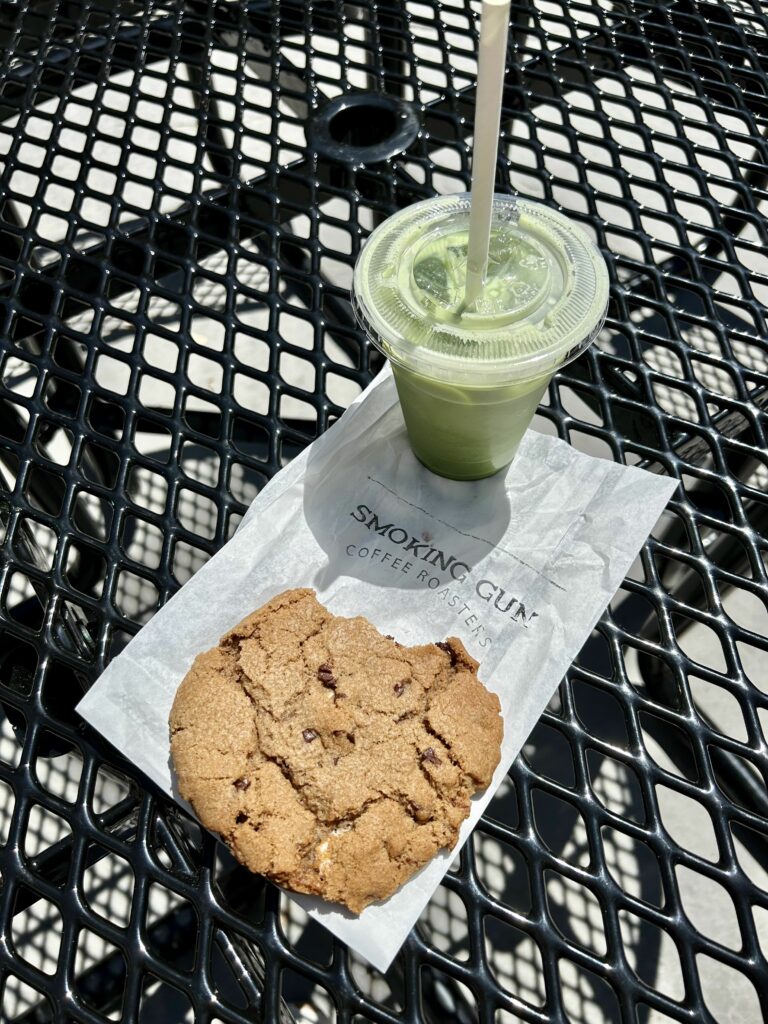
There is no shortage of options for eating and drinking in District 1881. I checked out the Smoking Gun Coffee Roasters Café, a bright, charming coffee shop with its own merchandise line. I tried an iced matcha latte with oat milk, and it was one of the best I’ve had. The café also had plenty of food options, from breakfast sandwiches to vegan and glutenfree baked goods. I paired my latte with a vegan s’mores cookie, which was a soft and tasty reminder of campfires in summers past.

PHOTO: Kaja Antic / The Peak

There are many more restaurants featuring various cuisines, and those with patios were practically buzzing as patrons enjoyed the food, beverages, and warm weather. You can find Mexican cuisine at Hugo’s Mexican Kitchen, Italian cuisine with Elevated Pizza Co. and the Azzurri Italian pasticceria, along with seafood at Bow & Stern. There’s also the breakfast-focused Uptown Grill, the classy Fortitude Wine Bar and The Offy bistro, and craft brews galore with added pub classics from Bricklayer Brewing and Field House Brewing.

Lots of boutique-style clothing stores dot the alleyways, with many featured products made in the Fraser Valley. The gift shops don’t feel like the traditional tourist trap you may see around Downtown Vancouver, as the souvenirs are either locallysourced products or inspired by the surrounding area in some way. 

PHOTO: Kaja Antic / The Peak

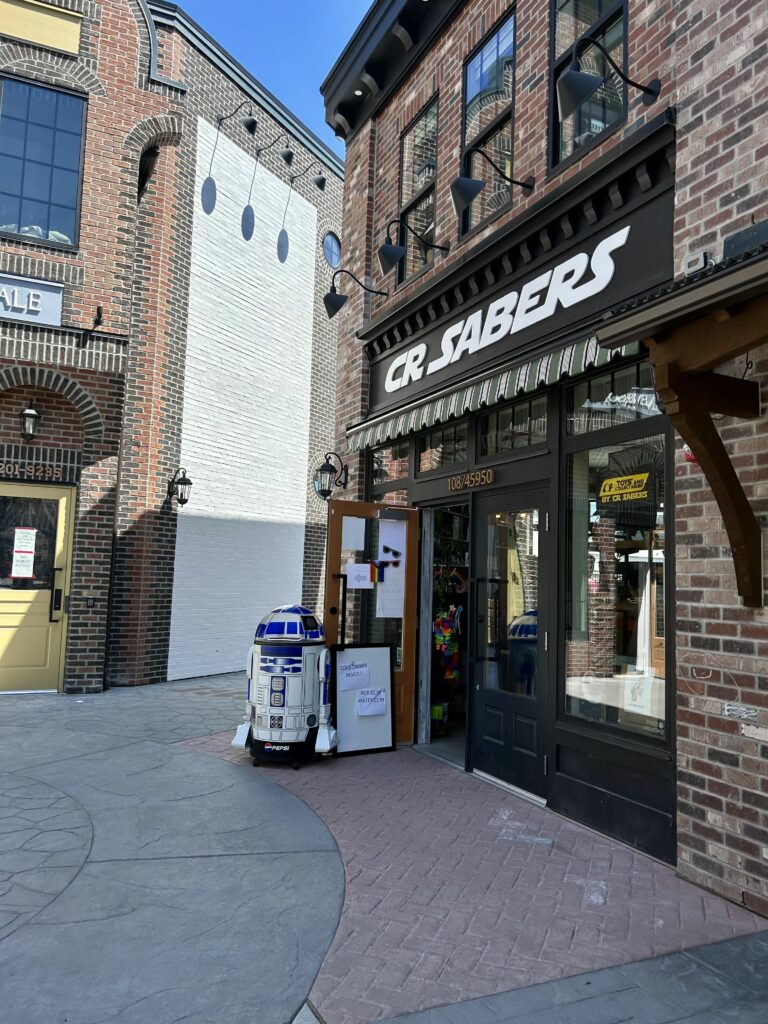
You can window shop for clothes at Magnolia & Oak and Hunni’s, or check out my personal favourite — CR Sabers, which has retro video games, cosplay accessories, keychains, and lots of lightsaber parts. It’s paradise for gaming, comic book, and Star Wars enthusiasts.

PHOTO: Kaja Antic / The Peak

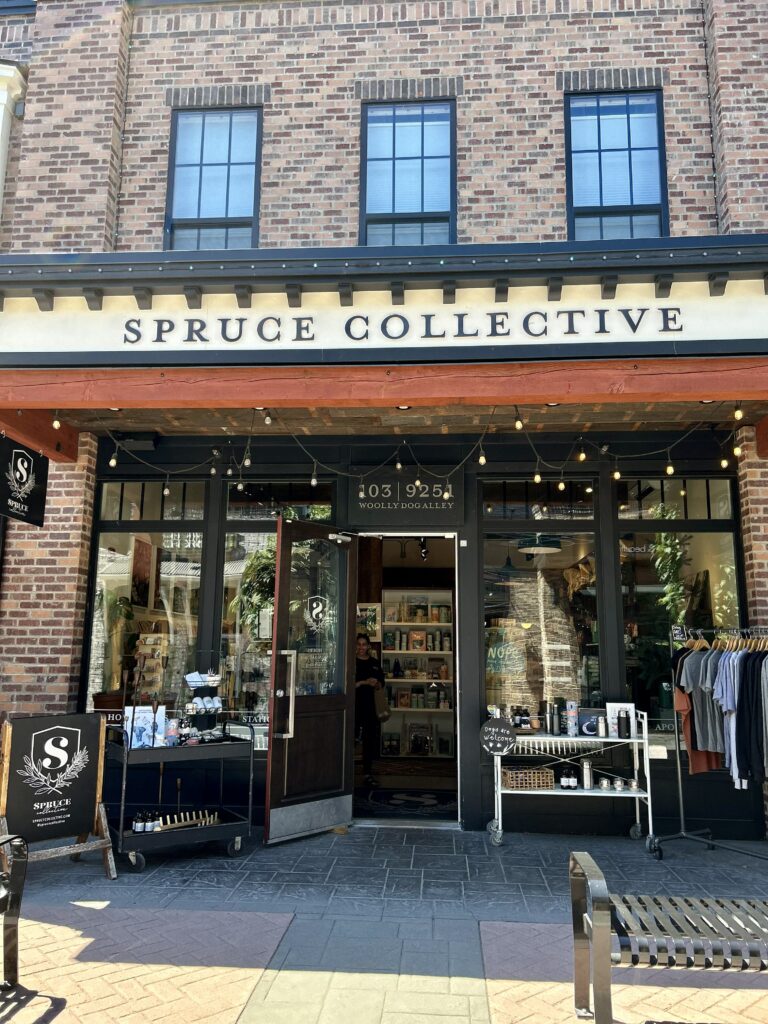
Spruce Collective carries a lot of West Coast-inspired goods, from clothing to stickers to puzzles. It also holds lots of home goods and décor, with many candle scents for the fragrance fans reading this. The Local Space is full of products made in Canada, and hosts a loyalty points system for those who love to shop local. 

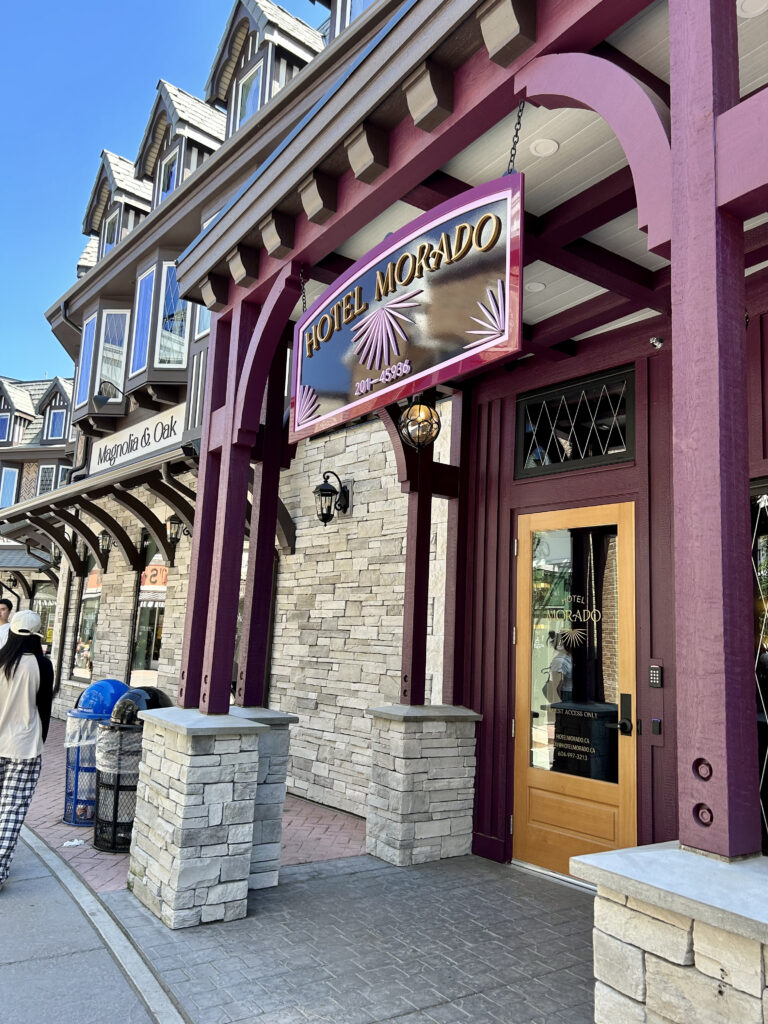
It’s not just shops and restaurants in this area either. You can get your hair done at Cros. Studios or Private Barbershop, and get a new tattoo or piercing at Memento Mori Studios. You can also check out the rows of claw machines at the Happy Claw arcade, or the Insta Muse instant photo studio for a self-serve hit of dopamine. You can even stay the night at the stylish purple-clad Hotel Morado, located right on Thunderbird Lane.

PHOTO: Kaja Antic / The Peak

With so much to eat, drink, see, and do in District 1881, it’s certainly worthy of a day trip from Metro Vancouver. Take advantage of the summer weather in the next couple months, wander around the different shops and restaurants in the district, and enjoy the natural landscape surrounding it. Chilliwack may seem a bit far from the greater Vancouver area, but this quaint quarter is worth all the hype, especially for those who want to support local businesses. District 1881 is a must-do for your summer 2024 bucket list!

SFYou: Raccoon City’s host, Katie Wilkie!

0
PHOTO: Yasmin Hassan / The Peak

By: Yasmin Hassan, Staff Writer

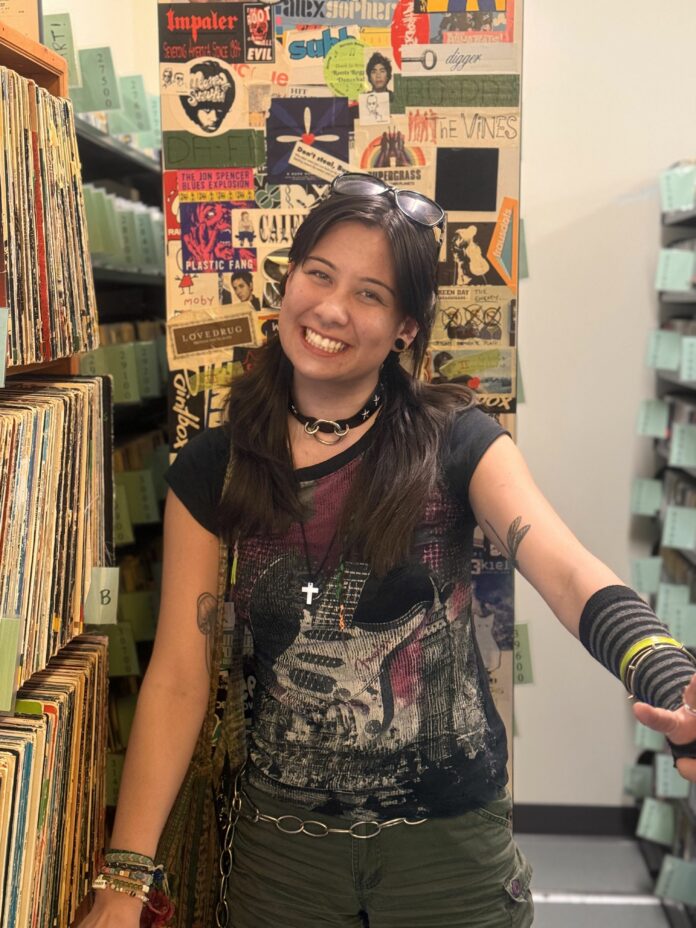
On a sunny afternoon, I drove up to the SFU Burnaby campus, jamming along to all sorts of music and listening to a friendly voice on Racoon City, one of CJSF’s radio programs. As I hurriedly parked my car and made my way to the Student Union Building, I found the CJSF studio and office on the first floor; a quaint, exceptionally decorated space filled with music and pop culture memorabilia. I had heard their voice, I had listened to their music choices, but I had yet to see the face behind the sound. When I entered the office, Katie Wilkie was sitting on a couch awaiting my arrival. From the first time I listened to her show to the time I actually met her, I already knew we would be great friends!

PHOTO: Yasmin Hassan / The Peak

CJSF is our own campus radio station. They officially began back in 1974 as the Simon Fraser Campus Radio Society, beginning to transmit only to Shell House and Louis Riel House (now closed) residences on campus. Now, they transmit to most of the Greater Vancouver region. Their programming mostly focuses on diverse and alternative content, amplifying voices, points of view, and music rarely heard in mainstream media; they’re run by both paid staff and several volunteers from campus and the community. 

Wilkie is a fourth year student here at SFU, finishing up her degree in education. She is a connoisseur of “music, art, and entertainment.” A jack of all trades, she enjoys snowboarding and surfing, as well as crocheting and fabric art. “I really love anything related to outside; anything related to music; anything related to racoons,” she told me. Some of her favourite artists include SZA and Tyler, The Creator, which immediately piqued my interest as a fellow fan. She told me how Ctrl by SZA was one of the album’s that “got her into music” and “into the depths of lyricism and all the different types of avenues of music.” 

PHOTO: Yasmin Hassan / The Peak

Racoon City, airing since March 2023, features a wide range of music, from underground to well-known artists. I asked why the show is called Racoon City. “I love answering this question. It’s because of the deep racoon infestation at SFU” — it seems like I wasn’t the only one who had asked. “I just kept seeing raccoons everywhere all over SFU and I knew my radio show was going to be at SFU,” she explained. “It was literally racoon city up here,” she said, recounting tales of her friends who live in residence who have had first-hand experience with the mischievous yet adorable trash pandas.

Wilkie incorporates her own exploration of life into her show, giving it a personal touch. She frequently attends concerts of various genres, from well-known artists to underground shows.”

Wilkie’s journey as a radio host started back in September 2022, when she walked by the CJSF room and was immediately intrigued. She began doing open-mics at the station, and through that she got to learn about many “local artists, Canadian artists, [women] artists, and queer artists.” Some of the local artists Wilkie has featured include Nanaimo’s Apollo Ghosts, Kelowna’s Yukon Blonde, and Vancouver’s We Hunt Buffalo. The community radio station gave her “many more outlets to look for cool music.” Eventually she decided she needed her own show, and so she pitched it to Robin Eriksson, the program coordinator, who gave it the green light!

When asked about people who have influenced her, she spoke about the “powerful lady-boss” Robin! “We did a meeting one time on how I can improve my show and she just knows what it’s like to be a woman in a male-dominated space . . . it was interesting to gauge her perspective.” Wilkie told me how Robin was a big influence on her being at CJSF, and it warmed my heart. She also mentioned how her family has supported her: “My dad is a really big influence on my show because he’s my number one fan, and he’s the one who asked me to post my shows online.”

PHOTO: Yasmin Hassan / The Peak

Wilkie incorporates her own exploration of life into her show, giving it a personal touch. She frequently attends concerts of various genres, from well-known artists to underground shows. “On Monday or Sunday, I’ll just recap my week,” she explains, from show reviews she watched during the week like Jujutsu Kaisen to musical performances or new albums she has listened to. “I came up with Racoon City before Racoon City started,” she said, explaining how one of the most memorable moments was the first time airing the show, when all her hard work finally came to fruition. 

Another moment I loved hearing about was the Mother’s Day episode, in which Wilkie’s expressed how her daughter “understood what it’s like to be a woman in the workforce that moms everywhere occupy all the time. They go underpaid, underrecognized, underappreciated consistently.” 

PHOTO: Yasmin Hassan / The Peak

When asked about how she connects with the SFU community, she said, “I connect to them through the way I talk. I’ve been told that I have a really positive attitude towards my show so I’m always telling people to have a good day and that they’re doing great.” She’s always promoting SFU clubs and businesses as well as the local music scene, saying “whichever show I’m going to, you can go to, too!” I remarked that despite the fact I didn’t know her personally, I felt as though I was listening to a friend talking on the show. She laughed and agreed with me saying, “If you’re listening, you’re a friend.”

The specialty of radio is something that can’t be replaced. The exclusivity of having a show live is something that truly garners FOMO. If you’re ever looking to listen to something new, old, popular, or niche; tune in to Raccoon City with Katie Wilke, airing Tuesdays from 12:00–1:00 p.m.

The Canada Disability Benefit is not enough

0
Someone with a visible mobility aid looking at an empty wallet with a disgruntled facial expression
ILLUSTRATION: Sonya Janeshewski, The Peak

By: Yasmin Hassan, Staff Writer

Content warning: mentions of medically assisted death.

It’s long-past time to talk about how many disabled Canadians struggle to financially support themselves. In BC, groceries alone can cost around $1,263 a month, which is an even harder hit for the 16.5% of disabled Canadians living in poverty. The new Canada Disability Benefit is an upcoming benefit for disabled folks who meet certain qualifications. While it’s a step in the right direction, the monthly payment of $200 is barely enough to cover basic needs in this tense economy. 

BC’s Persons with Disabilities assistance program grants eligible single recipients a maximum of $17,802 a year. Advocates have talked about how this forces disabled people to continue living in poverty, as the low-income threshold in Canada is $25,252 for a “single adult household.” Those unable to work due to their disability have no choice but to live below the poverty line. Those who can work are only allowed to make $16,200 before their benefits are clawed back, which is still not enough to survive on. The new benefit claims it will “reduce poverty and support the financial security of working-age people with disabilities.” With payments starting July 2025, it will grant a maximum of $2,400 annually per person, which is something, but it’s certainly not significant. 

The high percentage of disabled Canadians who live in poverty tells us the money being provided isn’t enough. Not only is the new benefit insufficient, but it’s also relatively difficult to acquire in the first place. To receive the benefit, you need to be receiving the Disability Tax Credit. However, the credit can be difficult to acquire — Global News reports that only 40% of disabled Canadians receive it. Some medical professionals refuse to sign off on the program, and the requirements are challenging to navigate, with many applications being wrongfully rejected due to “inconsistencies in how applications are reviewed.” 

Some disabled people have talked about how the lack of access to basic necessities makes Medical Assistance in Dying (MAiD) feel like the only option left for them. “We are hearing from people saying ‘maybe this is the month we are going to consider MAiD with dignity because the government is not supporting us to live with dignity,’” one advocate told CBC. People shouldn’t have to choose between life or death because they can’t afford to live. Disabled people already face barriers like systemic ableism and inaccessibility. Their health and well-being should be prioritized — but instead the government treats them like an afterthought. 

Getting support for those who need it is not easy, nor is it timely. Finding caregivers, treatments, and all the other basic necessities that people need to live involves long wait times and headaches. Jacquie Holyoak, a former medical assistant with fibromyalgia, thinks disabled Canadians “fall through the cracks,” which doesn’t sound too far off with the underwhelming funding provided from the new benefit. What we really need is better allocation of tax dollars. Instead of the government signing multi-billion dollar deals with auto manufacturers and hosting the World Cup, they should direct that money toward support for people who need it. 

Organizations like grassroots-based Disability Without Poverty are helping to end poverty for those living with disabilities in Canada. They entail a clear set of demands that would help change the benefit for the better, like easy application and inclusive eligibility for “permanent or temporary, stable or progressive, or episodic” conditions. No one should struggle to put food on the table because of a disability. If you can, reach out to politicians of all levels and ask them to raise the benefit amount.