Home Blog Page 1101

Letter to the Editor

0

Dear editor,

In Adam Bielka’s op-ed “TA-dating article unfairly persecuted,” the author unfairly persecuted what was, in my opinion, a fair and justified response to a senseless article. I believe that Mr. Bielka repeats some of the naïve assumptions made by the writer he is defending, Robert Nanni.

I also graduated from the “not terribly significant” University of Western Ontario and was a TA there. I am familiar with the controversy and take offence that Mr. Bielka accuses those who responded to the original ‘TA dating’ article of not reading it. It seems he didn’t read their responses very closely either.

Social media did not drive the so-called Nanni ‘witch hunt.’ As someone who read the original article and knows people who responded to the article early on, I witnessed the very sound and informed commentary the article received from parties with a vested interest in TA-student relationships, and are concerned about an already pervasive problem with sexual harassment and assault on university campuses.

However, I am more astounded by Mr. Bielka’s minimization of the issue taken with this article regarding sexual harassment. I will cite the Human Rights Policy this university uses in determining whether certain behaviours can be considered instances of sexual harassment.

Sexual harassment is considered to be behaviour of a sexual nature by a person who, firstly, knows or ought reasonably to know that the behaviour is unwanted or unwelcome,  and secondly, interferes with another person’s participation in a university-related activity, or thirdly, leads to or implies job or academically-related consequences for the person harassed.

One of the naïve assumptions I ascribe to Mr. Bielka relates to his belief that power-relations go only one way between a TA and a student, conflating the issue of the TA objectification and delegitimation with an inability by the ‘all-powerful’ TA to assert control over a situation where a student shows sexual interest towards him or her.

First of all, TAs are not all of the same age, with the same level of experience, cultural background, or personal histories. I have worked alongside many graduate students fresh out of their undergraduate degrees, who are no more than 21 or 22 years old.

Because of the nature of labour exploitation in universities, TAs may be entering the position with little or no teaching experience, let alone training on how to navigate situations which Nanni encourages in the article. Younger TAs may very well be struggling with self-esteem in their new position of authority, and be unsure of what actions to take in scenarios involving students.

To the UWO community, it came as a surprise that an article written in The Gazette would so blatantly undermine this relationship and make a mockery of education in the university. If the union had its way, every student reasonably ought to know that sexual advances by their TA are unwelcome because it’s universally understood that TAs play an integral role in their education.

Furthermore, there are people pursuing academic careers for whom TA-ships represent crucial teaching experience, and who can be affected adversely psychologically, should the behaviour Nanni encourages have triggering effects for a sexual violence survivor. To call these concerns exaggerations, I’m sorry to say, is another example of ignorance relating to silence around issues of sexual assault and harassment.

Overall, Mr. Bielka’s article reflected uneducated and ignorant opinions surrounding TA-student relationships at universities, and brushed off the contradictions this article has with etiquette in the graduate community.

Sincerely,

Siobhan Waters, SFU Student

Community members advocate for preferred names on student IDs

0

Two SFU community members, in collaboration with members from SFPIRG and Out on Campus, have started a campaign to create a university policy which would allow students to have their preferred names on their student ID cards.

Lucas Crawford, Ruth Wynn Woodward lecturer in the Department of Gender, Sexuality, and Women’s Studies (GSWS) and a transgender individual himself, is embarking on a campaign with GSWS student Nathan Lyndsay to make self-identification more comfortable for transgender students at the university.

The issue concerns the university’s current policy which does not allow students to use their preferred names on their IDs. According to Crawford, this is not feasible or even always safe for transgender students.

“The problem with the current lack of policy I would say is it is one of safety, and one of access, and one of choice. And by that I mean that it should be up to a transgender student when and if they want to disclose their transgender status to other people,” Crawford said.

Beyond formal activities, such as registering for classes or paying tuition, students at SFU use their ID cards in places such as the library, the bookstore, and the cafe. These are all situations in which a transgender student might have to disclose “a really intimate piece of [their] past, [their] old name,” said Crawford.

In addition to transgender individuals, the ID issue also concerns international students who may prefer to be called by a different name, as well as students who go by names other than those on their birth certificates.

Lyndsay told The Peak that the only place he has ever seen his preferred name appear is on the online Student Centre and on his email.

“I looked into it, emailed some people in the department, and they told me that the university requires that you use your legal name on your student ID because it can be used as a secondary piece of legal ID,” he said. “I can understand that, but I think there should still be a trans policy.”

Although legally changing one’s name might seem to be a solution to the problem, Lyndsay explained that many students can’t afford to undergo the process.

He echoed Crawford’s concerns that the current situation carries a risk factor for trans individuals: “It makes it unsafe. It puts someone at risk of being outed, [facing] violence, feeling uncomfortable, having to explain your identity to people. You don’t always want to be on the defensive all the time.”

To cast a spotlight on the issue, the two threw an ID Modification Party with Out On Campus on September 17. At the event, students were encouraged to laminate over their current student ID cards, replacing their “wrong” names with their preferred names. “I think [the event was] a first step to a long-term solution that needs to happen,” Lyndsay said.

Next week, Crawford and Lyndsay are meeting with Tim Rahilly, associate vice president, students, and Mark Walker, SFU’s registrar, to propose changes to the university’s policy.

Crawford said he believes the university could have an effective policy in place for students arriving at SFU in fall 2015.

Regarding the meeting next week with administration, he said, “I’m hoping that we can show them just how exciting for SFU it would be to take the lead on this issue, and I hope that we can [work towards] figuring out how to move forward with the new initiative.”

Protesters rally against pipeline proposal

0
Protesters rallied at the site where Kinder Morgan intends to build a helicopter pad for equipment transportation.

Protesters flocked to Burnaby Mountain on Saturday, September 13 to oppose Kinder Morgan’s survey, which is investigating how they can triple their pipeline operation in Burnaby.

Kinder Morgan is conducting the survey despite the city’s opposition to the project — demonstrated recently in an injunction filed by the city. The injunction was rejected last Wednesday by a BC Supreme Court judge.

Event speakers included SFU professor of English, Stephen Collis, Burnaby Mayor Derek Corrigan, President of the Union of BC Indian Chiefs Grand Chief Stewart Phillip and Carlene Thomas with the Tsleil-Waututh First Nation Sacred Trust, among several others. During the event, several protesters chained themselves to Kinder Morgan’s Westridge Marine Terminal.

The speakers expressed their concerns for both the local and global climate. Many noted that the protest on Burnaby Mountain reflected the need to stand up against climate change altogether.

Collis set the mood for the event, describing the proposed pipeline expansion as “three times the amount of diluted bitumen and crude oil [. . .] loaded into three times as many tankers here in our harbour, [dumping] three times as much carbon into our atmosphere,” saying, “That is not acceptable.”

Collis told The Peak that SFU students need to interrogate the meaning of “living exactly where climate change is happening.”

In response to questions about society’s increasing need for oil, Collis said, “We need energy, but oil is not the only way to get energy.”

He continued, “There is a way of carefully transitioning [. . .] from fossil fuels to a replacement, but [Canadians are] not starting that transition. In fact, we’re going the other way.”

Mayor Corrigan then spoke about the support he feels from the city in his decision to oppose this project. According to polling, Corrigan said, “70 per cent of the people in Burnaby are supporting us in the efforts that we are making, and more are being added each and every day.” For him, the protest represents a stand “against the kind of corporate interests that are tending now to control so much of our culture.”

Corrigan believes the opposition also marks a desire to preserve the park. The city bought the conservation area from SFU years ago, which was done “to ensure that we were [. . .] the guardians of this conservation area.”

Of Kinder Morgan specifically, Corrigan cited concerns that the corporate “Goliath” would deem the mountain unsuitable to house the pipeline expansion, resulting instead in a push for it to be routed through the conservation area.

He said that the destruction to the people, the city, and the wildlife of Burnaby caused by a tanker spill in the inlet would mean that “no one would want to come to British Columbia to see what was one of the most beautiful cities in the world.”

He continued, “We’ve just increased [oil spill] odds by seven times as a result of this project.”

Grand Chief Stewart Phillip similarly showed distrust of the corporation and concerns for the environment. “A spill is a spill is a spill,” he said. “We know the absolute devastation that that will wreak on this beautiful land, and how devastating and destructive it will be to so many tens of thousands of lives. And yet KM and their cronies in government could [not] care less.”

He called on “the power of the people,” to hold government and companies accountable.

A final environmental assessment report by Kinder Morgan is due to cabinet on January 25, 2016.

Men need to get on board with male contraceptives

0

In a publicly issued release, the Parsemus Foundation declared that male birth control will be widely available by 2017.

Parsemus is an organization that currently possesses US property rights for Vasalgel, the trade name for “reversible inhibition of sperm under guidanc” (RISUG). RISUG is a procedure involving the injection of a synthetic polymer into the male vas deferens. This polymer prevents sperm from penetrating the female ovum, thus nullifying the opportunity for pregnancy. It is cited as quick, painless, and reversible.

Although no major media outlets have followed up with Parsemus — with the public release mostly circulating among smaller online news outlets — the simple mention of male birth control forces us to re-examine a number of questions, most notably whether men will be obligated or even willing to undergo the procedure.

Because the most effective options for contraceptives, beyond surgical procedures, were products exclusive to women, men have been able to discard much of the birth control burden. Even if a man wanted to assume a larger responsibility, options were relatively limited, with the most effective procedure (vasectomies) being quite invasive.

But assuming Vasalgel or an alternative does become readily accessible in the near future, promising all the effectiveness of a vasectomy without its invasiveness, the contraceptive unavailability argument will become moot. Should a couple wish to have intercourse without the intent to conceive, there will be a means for the male to take responsibility for pregnancy prevention.

Because most contraceptives are women-exclusive products, men can discard the birth control burden.

Supposing that the effectiveness of the contraceptive and its inconvenience to the user is equal for men and women — who is then responsible for assuming the contraceptive burden? 

In examining the impact of an unplanned pregnancy, it is rational to suppose that this would disrupt the woman’s life more than the man’s. Even ignoring the physical inconvenience of carrying a child to term, a pregnancy can threaten the health of the mother herself. Also, women often find themselves in the financially disadvantageous position of being removed from, or unable to enter, the workforce. Men are able to avoid these consequences.

There is also the risk that a woman’s partner might leave her before she carries a child to term. Despite laws requiring that absent partners pay child support, there are many scenarios where the pregnant woman cannot determine who the father is, or is unable to contact him, leaving her financially despondent.

The logical conclusion is that responsibility should fall on the man. If a man wants to be participatory and, quite frankly, considerate, he should be willing to accept male birth control should his partner reject female birth control. Men should take proactive measures to avoid putting women at risk.

As facts about the health implications of Vasalgel-like procedures become more publicly known, the idea that they might not be as dangerous or disruptive as female hormonal contraceptives would place even more responsibility on men. If men wish to engage in a responsible relationship, they must be willing to accept the true responsibilities of a male role and avoid putting their partners at risk as much as possible.

Community members advocate for preferred names on student IDs

0

Two SFU community members, in collaboration with individuals from SFPIRG and Out on Campus, have started a campaign to create a university policy which would allow students to have their preferred names on their student ID cards.

Lucas Crawford, Ruth Wynn Woodward lecturer in the Department of Gender, Sexuality, and Women’s Studies (GSWS) and a transgender individual himself, is embarking on a campaign with GSWS student Nathan Lindsey to make self-identification more comfortable for transgender students at the university.

The issue concerns the university’s current policy which does not allow students to use their preferred names on their IDs. According to Crawford, this is not feasible or even always safe for transgender students.

“The problem with the current lack of policy I would say is it is one of safety, and one of access, and one of choice. And by that I mean that it should be up to a transgender student when and if they want to disclose their transgender status to other people,” he said.

Beyond formal activities, such as registering for classes or paying tuition, students at SFU use their ID cards in places such as the library, the bookstore, and the cafe. These are all situations in which a transgender student might have to disclose “a really intimate piece of [their] past, [their] old name,” said Crawford.

In addition to transgender individuals, the ID issue also concerns international students who may prefer to be called by a different name, as well as students who go by names other than those on their birth certificates.

Lyndsay told The Peak that the only place he has ever seen his preferred name appear is on the online Student Centre and on his email.

“I looked into it, emailed some people in the department, and they told me that the university requires that you use your legal name on your student ID because it can be used as a secondary piece of legal ID,” he said. “I can understand that, but I think there should still be a trans policy.”

Although legally changing one’s name might seem to be a solution to the problem, Lyndsay explained that many students can’t afford to undergo the process.

He echoed Crawford’s concerns that the current situation carries a risk factor for trans individuals: “It makes it unsafe. It puts someone at risk of being outed, [facing] violence, feeling uncomfortable, having to explain your identity to people. You don’t always want to be on the defensive all the time.”

To cast a spotlight on the issue, the two threw an ID Modification Party with Out On Campus on September 17. At the event, students were encouraged to laminate over their current student ID cards, replacing their “wrong” names with their preferred names. “I think [the event was] a first step to a long-term solution that needs to happen,” Nathan said.

Next week, Crawford and Lyndsay are meeting with Tim Rahilly, associate vice president, students, and Mark Walker, SFU’s registrar, to propose changes to the university’s policy.

Although the university has yet to discuss the initiative, Rahilly told The Peak, “I look forward to speaking about this and SFU will do its best to respond to concerns while balancing our role of protecting the authenticity of student identity and credentials we issue.”

Crawford said he believes that the university could have an effective policy in place for students arriving at SFU in fall 2015.

Regarding the meeting next week with administration, he said, “I’m hoping that we can show them just how exciting for SFU it would be to take the lead on this issue, and I hope that we can [work towards] figuring out how to move forward with the new initiative.”

Raccoon Prank Scares Students!

0

SFU is known for its raccoon problem, but usually they aren’t this scary.

How glorious it is: an inter view with The Glorious Sons

0

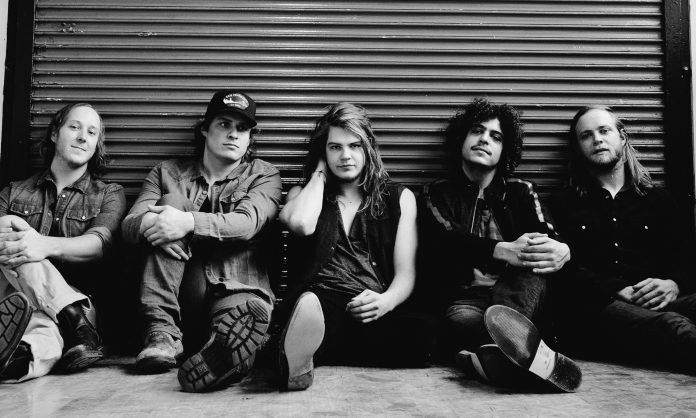
Kingston Ontario’s The Glorious Sons will soon release a new album, The Union, just days after they play in Vancouver. Brett Emmons, the band’s singer and keyboardist, says the group’s growth is reflected in this, their first full-length album.

“We’re maturing as musicians and as people,” he says. Brett was invited by his brother and Glorious Sons guitarist, Jay Emmons, to sing for the band after quitting post-secondary school in Halifax to pursue music. According to him, the group has been the same close-knit five guys since then.

“Everybody’s open to everybody’s ideas,” he says, “and we’re all just trying to do the same thing: write great music that means something to us and means something to others.”

Their new album is driven by hard rock beats, distorted blues riffs and melodies, biting yells, and group vocals. Jay, described the album as spanning from “acoustic, to campfire, to ballad, to straight-up rock.”

The sound could be said to stand somewhere near ’70s and modern rock, similar to that of The Black Keys or Kings of Leon. This straight-up, classic sound is also common among many current Canadian bands, including The Sheepdogs, or locals Yukon Blonde and Bend Sinister.

Brett names both Kings of Leon and The Abbott Brothers as band influences, and says the classic Allman Brothers and Rolling Stones make for much of their touring music. He admits to being “a super fan of Bruce Springstein and Jackson Brown,” as well.

These influences only emerge “in hints” in their music, Brett explains. While they love many different bands, they’re not the type to copy others’ sounds; they’re more interested in bringing ideas to a jam session and exploring them. “It’s all about writing what you want to write; it’s not about trying to sound like anybody or trying to recreate the magic of Springstein,” says Brett.

This love is evident in the new album, with songs that stick together cohesively, yet don’t get stale on their own, and don’t sound like carbon copies of each other. The album tells a story of a passionate, creative group who care about making music, first and foremost.

Brett is thankful for the rock and roll roots The Glorious Sons draw influence from, as well as the appreciation he sees of this in Canada. “I think it’s really loved by the country, and it’s one of the best music scenes around,” he says. “I believe that basically everything we have today has at least been touched by rock and roll. Everybody’s been influenced by the Beatles.”

While many older people love classic rock, it is still appreciated by Canadian youth, who have proven that they “would rather be listening to that than anything else,” he says. Jay echoes the sentiment, saying that Canadian rock is a staple that a lot of Canadians listen to “to help get through the day.”

When it comes to breaking into international scenes, Jay and Brett both allude to doing so, but right now they’re focused on what they have. “We’re young and we’re hungry,” says Brett, but right now he’s thankful for their “real audience” in Canada.

He concludes, “We love playing rock and roll, we love a good audience, and we love when people hear our music.”

The Glorious Sons will release The Union on September 16, and perform at The Commodore on September 13.

Album review: The Gaslight Anthem – Get Hurt

0

The fifth album from these New Jersey rockers, Get Hurt marks a change in the band’s tone with a less celebratory mood and more of a personal, melancholy feel. The album is said to be inspired by vocalist and guitarist Brian Fallon’s divorce from his wife of 10 years, and that makes a lot of sense with songs like “Break Your Heart,” “Dark Places,” and “Ain’t that a Shame.” There are no upbeat songs about the radio to be found here, but there is plenty of pour-your-heart-out, passionate rock ‘n’ roll that shows another side of their sound.

The aggressive first single, “Rollin’ and Tumblin’” is a cathartic ode to the angry post-breakup state of uncertainty and depression. Fallon sings about wondering which pills to take, breaking his own heart again, and rolling and tumbling into a state of depression.

“Get Hurt” was the first single that I came across on the radio, and it being such a shift from their previous album, Handwritten, I wasn’t sure what to think of it. After a few listens I began to understand and appreciate the meaning behind the song, and although it’s still not my favourite off the record, I think it’s an example of the strong, personal songwriting throughout the album.

My favourite track, “Break Your Heart,” is one of those delicate songs that could bring you to tears under the right circumstances. You can hear the emotion flowing from Fallon as he sings “I trusted somebody way and back when. And I loved her like fire until it drove me insane.” Unlike any of their previous work, this is a beautiful song that shows the depth of their range as a rock group.

Their third single and opening track, “Stay Vicious,” is a rousing song about needing to be saved and looking for something to ease the pain as Fallon sings “I have pills for this, and tabs for that. And something that used to resemble a soul.”

This intimate collection of songs is a departure from their previous work, but it is instilled with their unique mixture of folk, rock, and Americana influences, including a great harmonica intro on “Mama’s Boys” and a nod to the traditional folk song “Swing Low, Sweet Chariot” on “Red Violins” as they sing “Chariot swing low, if you come for me.” Along with their clever, emotive songwriting this mélange is what makes their work so compelling.

Empathizing with evil in The Drop

0

Leaving uneasy after seeing The Drop, I looked down and noticed red ink had stained my hands like the bloodguilt the hero (and I) had experienced. None of it would wash off!

Where are the movies with protagonists we can emulate? Does everything have to be so dark and bleak? Where are the positive messages? Certainly there should be places for both condonable and condemnable protagonists, but we have neglected one for the other.  Director Michael R. Roskam’s film conforms with the current trend of morally dark protagonists that have taken hold of mainstream and art-house films.

Bob (Tom Hardy) is a bartender for a Chechen mob owned establishment that is used for laundering money. Our hero is isolated, lonely, and guilt ridden. He goes to church every day but never takes communion. He lives alone without any family and becomes wrapped up in a stray, abused dog that he finds in a trash can. I instantly felt for this man.

Evidently, some gruesome burden weighed on his conscience. His enigmatic nature is cryptic and difficult to read. Once we discover his motivation, his past, and his thinking, we realize we have been tricked into empathising with evil. When the shift in perspective comes in the third act, Bob is no longer a hero but precisely the opposite. However, the film’s tone never seems to shift with the new found knowledge. The closing shot is a kind of happily-ever-after visual that hints at something redemptive without the protagonist ever needing to change. I was repulsed.

Such a character would have been inconceivable during the reign of the Hayes code in the Hollywood studio system during the 1920s. This form of voluntary censorship (although surrounding pressures made it coercive) was put into place for the movie industry to regain its moral standing after a few celebrity scandals at the time. Movies coming under this code were positive and focused on good, moral members of society. Admittedly, the Hayes code had some morally questionable flaws: the inability to critique the clergy or the banishment of on-screen interracial relationships. Censorship is never the answer.

However, the ‘free speech’ state of filmmaking today has swung us the other way. We revel in this kind of darkness and have become desensitised to evil. Hollywood is just there to supply the demand. In the 20’s that meant primarily making safe and inoffensive films with messages strongly influenced by the Christian community; now it means more movies like The Drop.

None of this is to say that Roskam has made a bad film. It’s alright. The Drop is technically proficient and competent, but its storytelling utilises a laborious pace. It is painfully mediocre despite the best efforts of the A-list cast — James Gandolfini as the ex-owner of the bar who now works for the Chechens, and Noomi Rapace as the woman whom Bob befriends to help him take care of the stray dog.

The blameless Hollywood hero is dead and I have killed him; we have killed him. The blood is on all of our hands and until there is a societal shift, like Bob, we will be unable to wash away the guilt.

Art imitates life in a Fringe show about actors who work at a restaurant

0

Sometimes life imitates art and vice versa in a serendipitous feedback loop. Pippa Mackie is an actor, and she also works in a restaurant; not the other way around. The line between these two parallel lives is becoming a bit blurred lately as she performs her new show, Industry: The Food Must Go Out, at the Vancouver Fringe Festival. “The vibe is a chef, a busser, and a server walk into their own restaurant, it’s closed down, and they want to have some fun — that’s really what the show is,” said Mackie.

The show is performed at Edible Canada on Granville Island, the hub of the Fringe Festival, and the circumstances couldn’t have been more perfect for this show. Mackie works with chef Nik Bunting, a sketch comedian, and server Lauren Jackson, who is a fellow theatre school grad. Mackie has had an idea brewing for a while to do a show involving life in the restaurant industry, but a couple of months ago it all started to come together when she thought about doing a show at her workplace.

“It’s worked out extremely well, and it’s really a dream because I have had this idea for a while. To do it in an actual restaurant once it’s closed is amazing.” Their manager, doubling as executive producer of the show, was very supportive of the idea, and the three of them began working at the restaurant by day and rehearsing there by night. “We’re up until 4:00 a.m. rehearsing. I can party until 4:00 a.m. just fine, but being genuinely creative at 4:00 a.m. is really, really insane,” laughed Mackie.

Being an actor and having a second job in the restaurant industry is so common it’s a cliché, she explained. “When I tell people I’m an actor, they’ll ask ‘which restaurant do you work at,’ and I used to be ashamed that I had an answer for them,” she laughed. “The show has made me really open up about it and kind of appreciate what this world is.”

With their combined 30 years of restaurant experience, Mackie, Bunting, and Jackson have a huge collection of stories to draw from, and now that she’s writing a show about working in the industry, Mackie said she is constantly coming across new material. “When you’re writing a show you start really hearing things. If we could make the show three hours, we would.” The show is just under an hour, and they have tried to cover all aspects of working in a restaurant.

“I think we’re doing a pretty good job of encompassing everything because I’ve been support staff most of my career, Lauren Jackson has been a server most of her career, and Nik Bunting is a chef. I’ve dish washed before and so has Nik, and I’ve also worked on line very briefly. It’s not just the front of house people; it’s the stuff that happens in the back too which is so insane.”

Mackie explained that the industry is sort of like a club where everyone seems to know everyone else. She actually referred both Bunting and Jackson to Edible Canada, before she even started working there, and their other co-worker, Emmelia Gordon who guest stars in the show as a hilarious bumbling personification of a hangover, got Mackie another restaurant job and worked with Mackie on their previous Fringe show The Progressive Polygamists. “It’s incestual really,” laughed Mackie, “which is funny I said incestual because we did a show about polygamy.”

The show pokes fun at all kinds of things: from the “infamously foul-mouthed cooks” to Mackie’s own dietary restrictions (she’s a dairy and wheat intolerant pescatarian who’s allergic to strawberries and cats). “Restaurants are the most accommodating they’ve ever been. You can go to a steak restaurant as a vegan,” said Mackie. “You have to try and please everybody — that’s one of the more interesting things about working at a restaurant — if you have eight tables you’re serving, you have to please them all at the same time. It’s pretty intense.”

All of the stories in the show are taken from real life. “So much of it is so ridiculous — but it actually did happen,” she said. The actors also play themselves, which is more vulnerable than playing a character. “It’s your heart on the line when it’s your own writing, your own producing, your own acting. It’s a very personal show,” admitted Mackie. “You just want it to be everything you imagined in your mind.”

There are a few things that acting and serving in a restaurant have in common. “There’s something really dramatic about working in a restaurant,” said Mackie, “it is like being on stage, once you start serving a table you have to finish it. You do have to have a personality that can address a group of people and be confident in that, so I think it does require a certain amount of confidence.” Although they don’t have to memorize lines, they do have to memorize orders, and timing is everything.

The show’s timing between different scenes was just right. “We kind of have these fantasy moments. Like a different interpretation of what a brunch shift feels like,” said Mackie. Their interpretation of brunch is the kitchen as the trenches where the cooks stay as the servers go out on the front line into the battlefield. It’s a war zone and sometimes they lose people or tragically cook someone’s eggs wrong. These fantasy moments were a very nice balance to the more personal monologues and segments of audience participation.

“We have a blind tasting during our show and one lucky audience member will be chosen,” said Mackie. “We’ve given ourselves all these tasks during the show, things that are kind of risky. I think that’s what this business is about — both the performance business and the restaurant business — is that they’re both risky in different ways.” Whereas a chef will risk serving a new dish, they’re taking risks with audience participation.

“We don’t know what they’re going to say, and we don’t know what we’re going to say back to them. We know the activity they might have to do, but we really don’t know where it will take us.” It’s all in the spirit of the festival, and Fringe is a great place to experiment and interact with the audience. “The Fringe Festival crowd are some of the best audience members you could ever ask for — they’re very engaged, they’re very excited,” said Mackie.

Watching the opening night performance, I think the audience loved the interactive aspect of the show, and they also loved being able to hold up their pre-paid colour coded piece of paper and have a drink brought to them. It’s a casual atmosphere and the show is so engaging and funny that you may even forget to use that drink card.

While this show is for anyone who’s ever worked in the restaurant industry, it’s also for the general public who may learn a thing or two about how to be a good customer and how to ensure the staff won’t make fun of you in the back. One quick tip: don’t pronounce the wine wrong. If you don’t know, just don’t say it. Another thing that makes it into the show is the hated hot water with lemon order. This is a sure fire way to get on a server’s bad side, along with showing up a few minutes before closing.

“It’s an ode to what we do, and so much of it we’re hoping to be relatable for people who work in the industry. I’m really interested to see which jokes get which laughs because we have so many that are catered to the industry,” said Pippa. While I’ve never worked in a restaurant, I found this show at times hilarious, poignant, and artfully structured in a way that there was never a dull moment.

“Being a professional actor, sometimes I can get used to my costume being all pressed and ready in my dressing room and I just show up half an hour before a show,” said Mackie, “I act, and then I leave, but the Fringe is always a reminder of how much goes into creating a show.”

With all their hearts and souls into the writing, producing, and acting of this show, it shows as they combine their parallel lives and art imitates life, imitating art. “I’m so excited about this show — for so many different reasons. It really is a bucket list kind of show. It amalgamates so many things, and I love food and wine, and I love to perform and write, and I love the Fringe.”

Industry: The Food Must Go Out will be performed as part of the Vancouver Fringe Festival at Edible Canada Bistro Sep 6-14. For more information, visit www.vancouverfringe.com.