


Go back

Book vs. Show: The Handmaid’s Tale

Pitting the television adaptation of The Handmaid’s Tale against the original novel

By: Ahad Ghani, Peak Associate
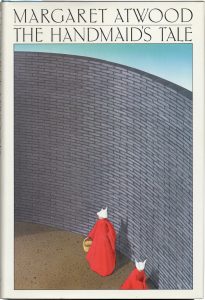
 

The Handmaid’s Tale by Margaret Atwood (1985)

Atwood’s dystopian novel, The Handmaid’s Tale, is the story of a young “handmaid” in the Republic of Gilead, formerly known as the U.S., whose only job is to provide a wealthy household with an offspring.

     Even though the novel tells a unique story, it is socially relevant today. While a lot has changed since its publication, it’s not hard to imagine a future similar to that of Gilead where men use women as vessels to carry out their “duties” and fulfill their “biological destiny.”

       The novel explores themes such as patriarchy, love, and femininity. It is a thought-provoking and disturbing story that serves as a cautionary tale to all.
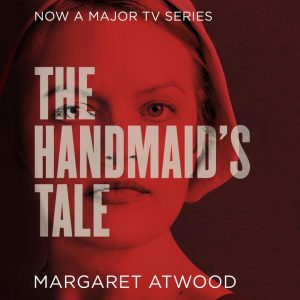
 

The Handmaid’s Tale (2017)

        The TV show remains faithful to Atwood’s novel to quite an extent, whilst updating itself with more diverse characters, as well as modern-day technology. It’s suspenseful, and it’ll get you hooked from the first episode. The cast are the highlight of the show, especially the actors portraying Aunt Lydia and Serena Joy. Occasionally, the show deviates from its titular character Offred and follows other characters, a positive change from the novel.

        The haunting imagery compels one to draw parallels between the show and modern-day American society. Dealing with issues such as sexism and sexual assault, it’s not always easy to watch, but the end result is worth enduring some of its brutality.


Verdict

           It is rare that an adaptation is as good, if not better, than its novel. The Handmaid’s Tale (2017) achieves just that. In fact, season 2 of the show, which goes completely off-book, is even stronger than season 1. I highly recommend checking both the novel and the TV show out.


Was this article helpful?
0
0

Leave a Reply

Block title

Celebrating Tamil Heritage Month in Canada

By: Heidi Kwok, Staff Writer Content warning: mention of genocide. January 2026 marks the 10th anniversary of Tamil Heritage Month in Canada. A decade ago, its designation was passed unanimously in the House of Commons to “recognize the contributions that Tamil Canadians have made to Canadian society, the richness of the Tamil language and culture, and the importance of educating and reflecting upon Tamil heritage for future generations.” The period from mid-January to mid-February (or “Thai”as known in the Tamil calendar), in particular, was chosen due to its significance to the Tamil community, coinciding with Thai Pongal — a four-day harvest festival celebrating the Sun God, and farmers, along with ancient rituals, feasts, and the enjoyment of a boiled sweet rice known as pongal. Tamil is a South...

Read Next

Block title

Celebrating Tamil Heritage Month in Canada

By: Heidi Kwok, Staff Writer Content warning: mention of genocide. January 2026 marks the 10th anniversary of Tamil Heritage Month in Canada. A decade ago, its designation was passed unanimously in the House of Commons to “recognize the contributions that Tamil Canadians have made to Canadian society, the richness of the Tamil language and culture, and the importance of educating and reflecting upon Tamil heritage for future generations.” The period from mid-January to mid-February (or “Thai”as known in the Tamil calendar), in particular, was chosen due to its significance to the Tamil community, coinciding with Thai Pongal — a four-day harvest festival celebrating the Sun God, and farmers, along with ancient rituals, feasts, and the enjoyment of a boiled sweet rice known as pongal. Tamil is a South...

Block title

Celebrating Tamil Heritage Month in Canada

By: Heidi Kwok, Staff Writer Content warning: mention of genocide. January 2026 marks the 10th anniversary of Tamil Heritage Month in Canada. A decade ago, its designation was passed unanimously in the House of Commons to “recognize the contributions that Tamil Canadians have made to Canadian society, the richness of the Tamil language and culture, and the importance of educating and reflecting upon Tamil heritage for future generations.” The period from mid-January to mid-February (or “Thai”as known in the Tamil calendar), in particular, was chosen due to its significance to the Tamil community, coinciding with Thai Pongal — a four-day harvest festival celebrating the Sun God, and farmers, along with ancient rituals, feasts, and the enjoyment of a boiled sweet rice known as pongal. Tamil is a South...
