Home Blog Page 98

What Grinds Our Gears: The job market

0
Hands typing on a laptop keyboard with a Google Doc open.
PHOTO: Glenn Carstens-Peters / Unplash

By: Cam Darting, Peak Associate

Why is the job market so terrible right now? From no jobs being available to them having too many requirements, it seems like this weird epidemic has no end.

Most of us at SFU are just broke students in need of money. Most of us can’t work more than part-time, and many turn to jobs like serving. But the qualifications needed to become a server? Ridiculous. Why do I need 2–3 years minimum of serving experience to become a server? That’s one year away from a 4-year degree! I’m sorry but it makes no sense. How am I supposed to get experience when experience is a requirement!?

Speaking of chances, the chances of getting a job after graduation seem to be at an all time low right now. What are we supposed to use our degrees for now? At this point, the issue is beyond qualifications and more so about the scarcity of jobs. So many graduates are fighting for the same position, it’s like a depressingly realistic Hunger Games.

AI should not replace human talent

0
A laptop in a dark room. The screen has blue coding on it, and the keyboard is lit up in red.
PHOTO: Rahul Pandit / Pexels

By: Cam Darting, Peak Associate

I often ask myself if artificial intelligence (AI) can predict the future, and tell us whether or not it will leave humans jobless. I don’t want to ask an AI software this, because I don’t want to give it any ideas. This area of the unknown seems to be a rising issue in many fields today, with it now being very prominent in the advertising field.

From commercials to graphics, AI is increasingly being used to generate advertisements. One example is the hotel booking app Trivago, and its ad that replaced 20 actors with one actor speaking different languages. Instead of hiring different actors for different languages, the company is now using AI to translate their ad campaigns. At first glance, AI may seem like a way for companies to be efficient. However, it poses a threat to those employed in advertising and translation fields. With AI being able to generate content at a quicker pace, workers like voice actors and actors are left in an unstable position. 

To compare how AI impacts livelihoods, let’s look at a different period where new technology was introduced across industries. During the industrialization period, it was thought that new inventions would cause unemployment, but this proved to be the opposite. Industrialization led to more job opportunities by providing workers more skills to learn. Some people argue a similar situation could be on the horizon, with AI opening up space for more employment opportunities. However, AI and machines are two very different things. AI can expand without human labour and undergo constant improvement, whereas machines are generally created for a limited use. AI threatens the very jobs it creates.

If they aren’t willing to pay for and work with humans, we shouldn’t be willing to support them.

Because of AI’s flexibility, it can threaten creatives by pulling from datasets that include their work, replicating comparable skills to humans. While AI can’t replace human talent, it can be alluring for repetitive tasks that require speed and efficiency. Quality aside, it can allow corporations to produce more content at a speed that outpaces human labour. AI can be a useful tool, but it should be just that — a tool. AI should be used to enhance a product, not create it. For instance, AI has been used to streamline tasks like cancer screening and assistive technology development. 

Experts predict that “90% of online content will be AI-generated by 2026.” We need to ask ourselves when what we deem as “innovation” is enough. Technological innovation shouldn’t trump the livelihoods of workers and creators. 

When big companies opt for AI-generated voiceovers or models because of cost and efficiency, we as a whole should hold them accountable for their ignorance and greed. If they aren’t willing to pay for and work with humans, we shouldn’t be willing to support them. If companies wish to use AI in the process of advertising, they should be willing to face the consequences if we as a society take a stance against it.

Surrey tenants march to halt demovictions

0
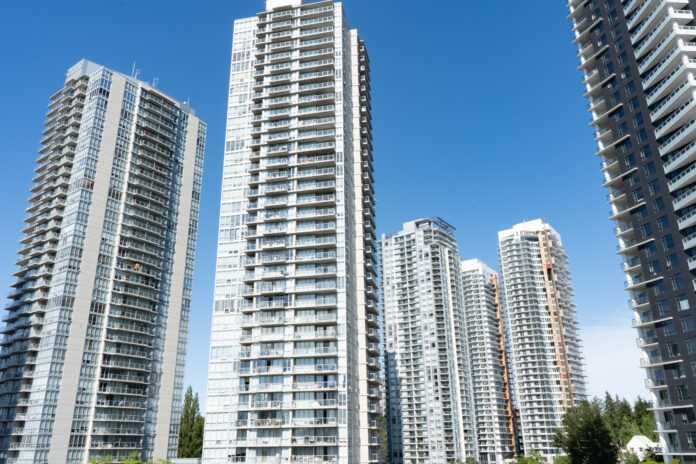
Photo of high-rise apartments in Surrey.
PHOTO: Elyana Moradi / The Peak

By: Hannah Fraser, News Writer

On May 27, a rally was held outside Elizabeth Manor, Surrey, demanding the city stop the property’s planned demoviction, in which over 50 families would be evicted. Demoviction, as in demolition-eviction, is “when a landlord evicts tenants from a building so that it can be demolished and redeveloped into new apartments or condos.” Tenants of Elizabeth Manor who were part of the rally also marched to Surrey City Hall in protest of the loss of affordable housing in the Lower Mainland.

The rally was led by ACORN (Association of Community Organizations for Reform Now), a “community union of low and moderate-income people” fighting for “social and economic justice.” In a press release, ACORN Tenant Leader Arun Mulalka said, “If I got evicted my rent would almost triple, who can afford that with expenses skyrocketing right now? I have a five-year-old daughter who is starting school in September, my whole life is here in this neighbourhood.” For the past five years, Mulalka has lived with his family at Elizabeth Manor, paying $935 for a two-bedroom apartment.

In 2024, Surrey has an average of $2,422 rent for a two-bedroom apartment. Low rental vacancy causes “thousands of tenants” to be “displaced by demovictions” and compete for housing — driving the prices up, according to CBC. Demovictions of affordable housing are happening across BC, without a promise of affordable rentals elsewhere for tenants.

“If my family loses our home, where are we supposed to go?” — Arun Mulaka, ACORN Tenant Leader

In light of the protests, the landlord of Elizabeth Manor has taken back eviction notices given to residents. 

According to Surrey Now-Leader, the city claimed it was “premature to have issued eviction notices to remaining tenants” considering the project hasn’t been “presented to Council and the applicant is still going through the permitting process.” ACORN reported that as “the developer is still planning on going to City Hall to get approval to redevelop Elizabeth Manor,” they are “calling on the the City of Surrey and Mayor Brenda Locke to urgently meet with tenants to discuss [their] concerns and ACORN’s proposed solutions to the demoviction crisis.”

ACORN leaders met again on June 10 at Surrey City Hall to request a meeting with Mayor Brenda Locke and the city councillors. They expect their perspective to be considered before Locke and the councillors consider the demoviction application. 

New plan protects Blueberry River First Nations land and upholds Treaty rights

0
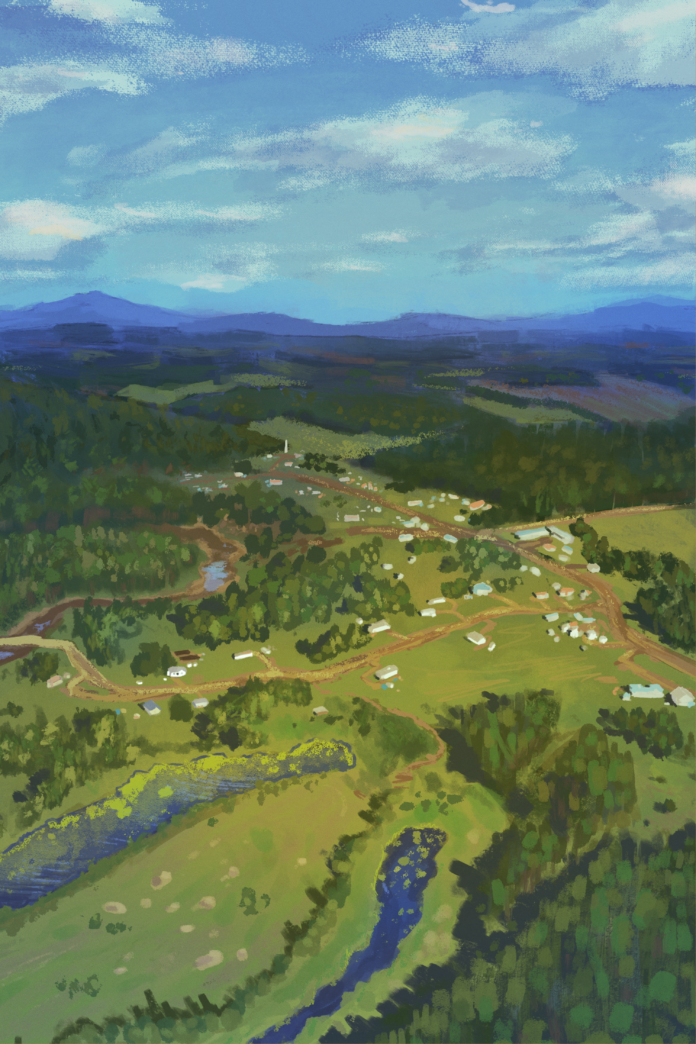
An illustration of a landscape of blueberry rivers first nations territory, with a large green field, mountains, and a small village.
ILLUSTRATION: Angelina Tran / The Peak

By: Yasmin Hassan, Staff Writer, and Petra Chase, Editor-in-Chief

On May 30, the BC government and Blueberry River First Nations announced a three-year pilot plan to support Indigenous land restoration and protect Treaty rights. The Gundy High Value 1 Plan will reinforce Indigenous peoples’ involvement in decision-making regarding industrial development on and surrounding the land. 

Blueberry River is a self-governing First Nations community made up of “Beaver and Cree cultural groups,” located in Northeastern BC, where “each culture contributes to creating one strong, proud, and determined First Nation.” They are signatories of Treaty 8, which is a historic agreement between settlers and Indigenous peoples across BC, Alberta, and Saskatchewan, and the Southwest portion of the Northwest territories.” Since it was signed in 1899, it legally requires all activity on these lands to respect “Indigenous way of life,” which includes a “healthy environment upon which [Indigenous] rights depend.”

The new plan comes after BC breached Treaty rights in 2021. The BC Supreme Court sided with Blueberry River First Nations, who brought the legal challenge to court. The provinical government was found to have permitted industrial over-development such as logging and oil and gas activities, which hindered activities like hunting and fishing. In January 2023, BC and Blueberry River First Nations signed the Blueberry River Implementation Agreement that set up a partnership for taking care of “water, land, and resource stewardship.” The agreement ensures that Blueberry River First Nations members can meaningfully exercise their Treaty 8 rights, while those who rely on resource industry jobs in the region can also have a sense of reliability. 

The Gundy plan is one in a series that sets new rules for developers that stress the involvement and protection of Treaty 8 Nations. Specifically, it focuses on “two watershed management basins, Cameron River and Blueberry River” in Fort St. John. It also includes a “robust framework for carrying out new oil and gas development.” The plan will involve regular reviews during its implementation.

“Finding balance to sustain the future lives of our members, Elders, and youth for generations to come is an important factor in reconciliation.” — Judy Desjarlais, Chief of Blueberry River First Nations

Judy Desjarlais, Chief of Blueberry River First Nations stated in the joint announcement, “Finding balance to sustain the future lives of our members, Elders, and youth for generations to come is an important factor in reconciliation.” 

The economic and environmental reconciliation representatives for Blueberry River Resources, an independent operation that seeks to “offload a majority of economic and restoration duties from the Blueberry River First Nations administration,” stated, “Through strong industry partnerships, our combined efforts sustain traditional practices, such as hunting, fishing, trapping, guiding, horsemanship, praying, and gathering medicines.”

In a statement to The Peak, the Ministry of Energy, Mines and Low Carbon Innovation said BC is “committed to working with Blueberry River First Nations toward effective and efficient ways to balance the interests of Nations, the province and petroleum and natural gas tenure holders.” 

They go on to say that ensuring this plan goes through well is essential for a “sustainable environment, robust cultural values, as well as a vibrant local economy,” which helps not only the individual, but the community as a whole. 

The Peak reached out to Blueberry River First Nations for an interview, but they were not available for comment by the publication deadline.

Horoscopes June 17 – June 23

0
An illustration of a girl, stars and astrological signs strewn in her hair.
ILLUSTRATION: Marissa Ouyang / The Peak

By: Cam Darting, Peak Associate

Aries
March 21–April 19 
Anything but a G-string
As an Aries, you’re fun, energetic, and the life of the party. At Pride, you’ll be jumping up and down, dancing, and because of this, we need to ensure the goods are intact. So, DON’T WEAR A G-STRING (especially if you have a penis). You do not want that thing flopping out and about like a fish outta water. YIKES!

Taurus
April 20–May 20
You can rock anything
As a Taurus, you are graceful and diligent. The heavens trust that you will exude elegance no matter what you wear. OK, actually, the heavens retract that. Wear anything but a fursuit. This summer is going to be so hot, you don’t want to overheat. No meowing and woofing for you this Pride season.

Gemini
May 21–June 20
Rainbow face paint
This is the perfect chance for you to hide your two-faced personality. You already wear a mask when you talk to people; what’s one more? Make sure to pick the most durable, sweat and waterresistant paint (you’ll need it).

Cancer
June 21–July 22
A bedazzled backpack
You, my friend, are nurturing, caring, and loving. I know you’re gonna wanna pack everything from food to a first-aid kit because you wanna be prepared. This is why you need to wear a bedazzled backpack. It’s cute, it’s gay, and it’ll fit all your essentials — even that pink vibrator of yours ;).

Leo
July 23–August 22
Nothing
This suggestion is not for kids or people who are afraid of public indecency charges. But, for the rest of you Leos, what better way to grab people’s attention than wearing nothing? When I say nothing, I mean NOTHING. Those little pubes of yours have got to go. If it’s not looking like Mr. Clean’s head, you’re doing it wrong.

Virgo
August 23–September 22
A T-shirt that says “love wins”
My favourite prude. As the most conservative of the signs, you get a T-shirt. Boring? Yes. But it’s OK because so is your personality <3

Libra
September 23–October 22
Red lace underwear
The stars suggest adult Libras strut in lace underwear. As our favourite romantics, we know for sure you’ll use your charming personality to bag yourselves a partner for the night. For added drama, you can wait for the late-night Pride parties to begin before you reveal your little red number. 

Scorpio
October 23–November 21
Sunglasses
Shade, shade, shadeeeeeeee. As the shadiest sign known to man, you better wear some sunglasses for all the reading you’re about to do this Pride. From the outfits to the people showing up, you’re gonna have an opinion, and it might not be the nicest.

Sagittarius
November 22–December 21
A fan/a>
You betta work, Ms. Sag. As a fun and energetic friend, you will be the life of the parade. You need something as big as your personality to accompany you, hence the fan. CLACK, CLACK, CLACK. That is all the crowd is gonna hear from you, opening that gigantic fan all day. 

Capricorn
December 22–January 19
A rainbow flag
Chances are, you’re gonna transit to the parade, and you don’t wanna be covered in body glitter and temporary rainbow tattoos. This is why the heavens have given you a rainbow flag to wave. It’s easy to hold and can be quickly tucked away so you don’t get hate crimed! You can blend in with the queers and blend in with the homophobes. You’ll be like Hannah Montana, living a double life.

Aquarius
January 20–February 18 
BODY GLITTER
Sorry, I just got dazzled by how much glitter will be all over your body, Aquarius. It’s perfect for you because you’re prob one of the only signs who can rock this. BTW, when I say body glitter, I mean ONLY body glitter. Aquariuses need to let their nips breathe. NGL, you might get arrested for public indecency, but at least you’ll have Leo to keep you company!

Pisces
February 19–March 20
All rainbow fit
We all have that one friend who’s overly supportive. That’s you, Pisces. Because of this, you’ll want to show how much you love your 2SLGBTQIA+ friends, which is why you’re given all rainbow to wear. Is it a lot? Yes. Is it tacky? Yes. Is it sooooo Pisces? YES.


BC’s decision to recriminalize drugs makes a bad problem worse

0
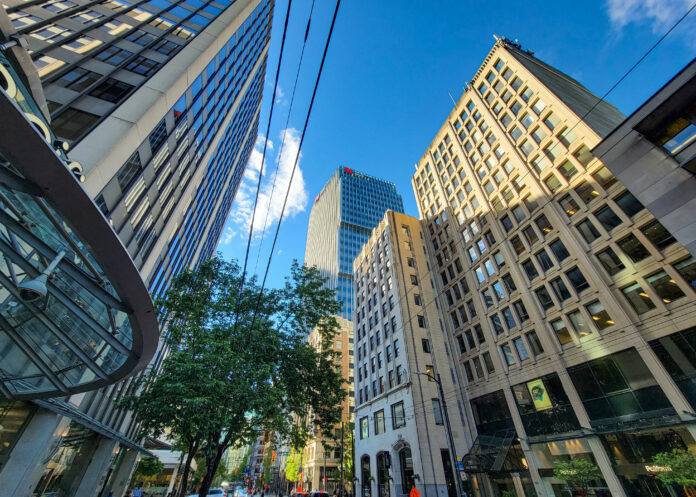
Skyscrapers on a Downtown Vancouver street as seen from below.
PHOTO: Amirul Anirban / The Peak

By: Sofia Chassomeris, SFU Student

Content warning: mentions of overdose and death.

Since declaring the crisis eight years ago, BC has lost over 14,000 people to overdose, with Indigenous people making up nearly “six times the rate of other BC residents.” According to CBC, “toxic drugs are the leading cause of death for people aged 10–59” in the province. Complete prohibition of these drugs, while it may seem like an attractive idea to elected officials, does not work. Two years ago, BC was granted a historical exemption to the Controlled Drugs and Substances Act to decriminalize “small-scale possession of illicit drugs” for a three-year pilot project. This May, BC recriminalized these substances, which is a major step backwards.

Drug decriminalization is an important harm reduction policy. It can help prevent overdose by understanding that people who use drugs can face difficulty receiving medical or social care if the threat of criminal prosecution continues to loom over them. Decriminalization paves the way for constructive and rehabilitative solutions for those who use drugs, while having a criminal record poses significant barriers to social reintegration. Harm reduction ideologies recognize that addiction is not a moral failing but a result of larger social and economic structures. In practice, harm reduction shifts the focus from punishment and abstinence to compassion, support, and safe pharmaceutical alternatives. Most importantly, harm reduction practices treat people who use drugs as people, first and foremost. This is extremely relevant given the stigma around people who use drugs and the social connotations of being criminalized.

Harm reduction practices treat people who use drugs as people, first and foremost.

Two years after decriminalization, BC recriminalized the use of drugs in public spaces. A CBC article notes that while possession of 2.5 grams or less and use in private residences is still decriminalized, use in public spaces is what the amendment seeks to prevent. Although the government may argue this is the most practical solution, I wholly disagree. I do not trust the VPD or RCMP, organizations with a gruesome history of violence toward marginalized members of the community, to make unbiased and just decisions regarding who is a danger to public safety. This amendment also seems entirely targeted. We know that the opioid crisis disproportionately affects people who are unhoused or experiencing unstable housing; making their legal safety contingent on using drugs in a private residence is just diabolical. 

The Select Standing Committee on Health’s report from the Legislative Assembly of BC recommends that drug trafficking enforcement should be part of a broader response. Rather than prioritizing law enforcement, they request that “overdose and mental health calls be redirected to more specialized responders where possible,” and recognize a larger continuum of care is necessary to provide significant solutions. Strictly medical views of substance use are deceptive in that they avoid discussions about the things that harm drug users the most, such as drug laws and excessive use of police force to impose them. In reality, the actual harm experienced by people who use drugs is a by-product of social, economic, and racial inequality, on top of the physiological and mental effects of addiction. Drug criminalization disproportionately impacts Indigenous people due to factors like racial profiling and overpolicing, compounded with systemic healthcare and social barriers. They’re also overrepresented in overdose statistics, making up 10% of mortalities. This is why harm reduction policies alone cannot alleviate what is ultimately a consequence of colonialism — but that doesn’t make them meritless. 

Giving the police even more authority to assess who is a danger to their surroundings will do further irreparable damage to the lives of people who use drugs. Where instead they could be met with empathy and understanding, they are met with punitive force and aggression. This is a critical mistake from the provincial government, especially when the opioid crisis is ravaging our most vulnerable communities. This amendment will only put more people in danger. With BC’s next provincial election only four months away, I urge students who are eligible to register to vote and become involved in community and regional politics — it will not fix the problem, but it may bring us closer to creating meaningful solutions.

Residential school deniers show us colonialism is still rampant

0
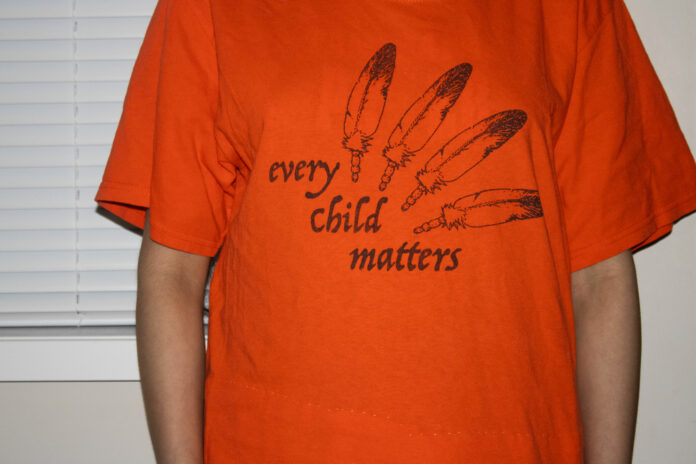
an orange every child matters shirt
PHOTO: Prerita Garg / The Peak

By: Olivia Visser, Opinions Editor

Content warning: mentions of unmarked graves, genocide, death, and abuse.

When more than 200 unmarked graves were discovered at Kamloops Residential School in 2021, a movement to uncover the extent of residential school graves gained traction. As evidence pointed to the existence of thousands of unmarked graves, a disturbing number of residential school deniers came out of the woodwork and into the public eye — so much so that if you search “residential school graves” on Google, you’ll be met with misinformation on the first page. 

Popular conservative news outlets like National Post have published multiple articles hinging on denialism, including one titled “Canada slowly acknowledging there never was a ‘mass grave.’” Other fringe publications have claimed there’s “no evidence” supporting unmarked graves, and have even called them a “social panic.” Kimberley Murray, a member of Kanehsatà:ke First Nation and Independent Special Interlocutor, commented last year that the rise in residential school denialism coincides with increased reconciliation efforts. Her office’s interim report from last year mentions that “many international experts point out that denialism is the last step in genocide. The fact that a significant portion of the population disagrees on the nature of residential schools is evidence of colonialism’s lasting legacy.

For the past decade and a half, so-called Canada’s running narrative has been that residential schools were a “dark side” of the country’s history. But these institutions weren’t just a side of Canada’s colonial legacy — they were foundational to it. Residential schools were part of a large-scale forced enfranchisement operation, meaning attendees lost their Indian status and any protections from the Indian Act. The forced assimilation into so-called Canadian culture estranged people from their cultures and families, causing severe intergenerational trauma. Viewing residential schools as a singular historical event is harmful. It minimizes individual experiences, overlooks continuous systemic injustices, and opens up opportunities for denial. 

Residential school denialism isn’t just the idea that residential schools didn’t exist, but rather encompasses talking points that are considered socially acceptable enough for even major newspapers to publish. Frequent attempts to downplay the extent and role of residential schools undermine the collective trauma experienced by over 150,000 children. Arguments that “only” 32% of “school-age status Indian children” attended these institutions diminish how large a number that really is. Similarly, the claim that these mass graves were not “deliberately concealed” or “the result of homicide” overlooks the fact that many Indigenous children still went to these schools to die — be it from neglect, illness, or abuse. When semantics take priority over the voices of survivors, something is deeply wrong. 

There’s no shortage of evidence for how genocidal residential schools were, yet conversations about their legacy were less prominent in popular media before 2021. The surge in discussions about these institutions outside an academic setting is a good thing. However, it’s still not enough to merely recognize that residential schools existed. History is not a fixed point on a graph — the impacts from events continue on. Studies have found that many residential school survivors and their descendants experience poor physical and mental health to this day. Residential schools were often falsely advertised as positive schooling opportunities for Indigenous people, yet many survivors were never taught to read or write, which set them up for difficulty in the workforce. Comments that downplay the government and Catholic church’s responsibility in these schools are steeped in cruelty and misinformation.

For a government that supposedly cares enough about Canadian news content to blacklist it from social media platforms, it’s telling that they’re also willing to fund publications that set reconciliation efforts back decades. Canada’s Department of Justice recently began talks of “legal mechanisms” to tackle residential school denialism, which could potentially include persecution. The European Union has similarly outlawed Holocaust denial, and Canada followed suit in 2022. Criminalizing residential school denialism could be a step in the right direction, especially if it prioritizes news outlets. At the same time, Canadians also have an individual responsibility to address the harms of the system they live under. Michael Eshkawkogan, an Anishnaabe man from Wikwemikong, said, “There is room for conversation with people who downplay or misunderstand what Indigenous people experienced in residential schools.”

When we see denialism in our news feeds, we should use it as an opportunity to uphold truth — reconciliation is meaningless without it. If someone you know makes a claim that minimizes residential schools, call them out. If a credible publication you read downplays any aspect of residential schools, email the editor-in-chief and consider not supporting them. Continual self-education is also important — don’t expect Indigenous people to do that labour for you. Recognizing and dispelling misinformation and denialism means we must all know what truth is. 

Hidden Gems: Indigenous-owned businesses

0
PHOTO: Elyana Moradi / The Peak

By: Prerita Garg, SFU Student

Tradish’s The Ancestor Café

23433 Mavis Ave., Fort Langley
Open Wednesday–Sunday, 10:00 a.m.–5:00 p.m.
Online: tradishcanada.ca

Tradish’s The Ancestor Café is the ideal spot for those looking to try out some delicious delicacies from Indigenous cultures. Their plant medicine jams, such as their smoky juniper cherry and chamomile pear, are crafted to help treat ailments like chest congestion and high blood pressure. This café also offers blueberry lavender baked bannocks, the three sisters bannock tacos, raspberry dandelion tea, Spirit Bear coffee, and more. These delectable goodies are crafted by Chef Sarah Meconse Mierau, whose goal is to “nurture a deeper appreciation for Indigenous culture through culinary experiences.” Explore their online ordering option to ship these culinary delights to your home. 

Wickaninnish Gallery

#14 1666 Johnston St., Vancouver
Open every day 10:00 a.m.–6:00 p.m.
Online: wickaninnishgallery.com

The Wickaninnish Gallery is a premier destination for buying Indigenous artwork and is located in the heart of Granville Island. Featured artist Mike Matilpi is of Kwakwaka’wakw descent and has been carving ornate jewellery since 1993. Wickaninnish Gallery offers home decor including fleece blankets and handmade ceramic pots, as well as kitchen supplies such as coasters featuring depictions of animals in formline design (the unifying black band prevalent in Haida art). Their enchanting dream catchers are made from stones and feathers. Dream catchers were first created by Ojibwe peoples as a means of protecting each other from bad dreams. With a rich 37-year legacy, this gallery is an essential stop for those seeking cultural immersion and timeless craftsmanship.

Spirit Gallery

6408 Bay St., West Vancouver / Shop online
Open every day 10:00 a.m.6:00 p.m.
Online: spirit-gallery.com

Spirit Gallery is home to a shop a multitude of charming gifts. Take a look at their intricately designed hand carvings of ravens or bears on colourful masks and paddles, silver sun earrings or gold hummingbird bracelets, and prints featuring clever formline design like an Angry Raven. You can also buy plushies, playing cards, and board games. Their puzzles are priced between $12$22, making them a great gifting choice. The gallery features the exceptional work of Klatle-Bhi, who is known for his masks, totem poles, and other sculptures. 

What Grinds Our Gears: Unyielding bikers

0
PHOTO: Brent Olson / Unsplash

By: Petra Chase, Editor-in-Chief

I love my bike, and I love how bike-friendly Vancouver is. From Stanley Park to Spanish Banks, we’ve got the “world’s longest uninterrupted waterfront path” available to us, with mountain views. I would have no complaints if it weren’t for the fact that CROSSWALKS MEAN NOTHING TO PEOPLE.

I hate to say it, because cyclists already have a bad rep among drivers, but they can be self-righteously impatient. I, too, feel annoyed when people walk in clearly marked bike lanes, but at least I don’t pick and choose which markings I follow! But there’s this phenomenon: bikers don’t stop at crosswalks, even if people are waiting in heavy-traffic areas. There are no cars here! Who do they think the crosswalk on the bike path is for?

To make matters worse, when I actually stop for pedestrians at crosswalks, they don’t go. They just stare at me in disbelief, probably because they’ve literally never had a biker stop for them before. So, there’s now this awkward dance: I’ll motion them to go, they’ll politely refuse and motion me to go as if they’re doing me a favour (I’ve already halted). Then, after giving them a few seconds to make up their mind, they somehow always decide to actually go as soon as I start. I end up stopping again and they run as if the floor is lava. It didn’t have to be like this!

The worst is when I stop at a crosswalk for folks but no one else does, so I’m just sitting there while bike after bike passes, everyone for themselves. Crosswalks are few and far between, so it’s not even that inconvenient to stop in the pedestrian-heavy areas, where they’re designed to get walkers to their designated paths safely which is great for everyone sharing the path! 

The Bright-er Side: summer semesters

0
someone with a cheerful look on their face, SFU burnaby campus backdrop, sun shining
ILLUSTRATION: Cliff Ebora / The Peak

By: Kaja Antic, Staff Writer

This summer I decided to take courses on the main Burnaby campus for the first time in my SFU career, and so far, I’ve really enjoyed it. 

Scaling Burnaby Mountain watching the Burnaby skyline meet the bright blue atmosphere is unmatched. Sometimes you’ll see a deer or even a bear along the winding roads, the animals welcoming you to the natural beauty surrounding the campus. 

I know SFU’s brutalist architecture style seems depressing to many, but there’s something about the vines spread across the library’s exterior walls that makes it seem like an inviting grand fortress.

As I watch fellow students and community members walk through the campus on a nice day — enjoying the AQ pond, reading outside, not worried about being judged for their caffeine source of choice — the concrete blocks become bright and beautiful. 

It’s also wonderful to not worry about forgetting my jacket, and when I’m done a full day of class, there’s still plenty of sunlight for my travels home. There’s a certain aura of lightness to the semester, even if you’re taking a particularly difficult course.

I understand some have reservations about the summer semester, whether it be to work or get a break from schooling. Still, the energy of the semester can brighten up the grey experiences of the previous months, and I highly recommend at least visiting the campus paths during this season to get a taste of the beauty often clouded during the traditional school year.