Home Blog Page 923

This November, don’t grow a moustache because ‘it’s cool’

0

How many of you have heard of Movember? No, not ‘no-shave-november,’ Movember. The purpose of it is to grow a moustache and raise money for prostate cancer research. Individuals who simply grow a moustache because ‘it’s no-shave-November’ completely miss the point.

According to the Movember website, the movement began in Australia in 2003, when a group of friends challenged each other to bring the moustache back into fashion. By 2006, they had created a foundation and had turned the challenge into something that backed a cause — men’s health.

Movember’s Australian origin was probably the best thing that could have happened to the movement due to the sheer number of backpackers that travel the country every year. Young travellers partake while abroad and bring the idea home. In 2007, the participating countries included Australia, Canada, New Zealand, Spain, UK, and USA. Last year, there were over 20 countries involved on every continent around the world and, as the website says, “the Movember Foundation was ranked 72nd out of the top 500 NGOs (non-governmental organizations) in the world.”

As of 2014, Movember has raised over $677 million worldwide and funded over 800 men’s health projects. There are corporations donating time, money, and logos to sponsor the movement. Most importantly, there are people, like myself, willing to look like 1970s porn actors for a month to raise some money for a good cause.

Unfortunately, there is a growing group of men who think that November is a good excuse to simply grow facial hair rather than to support the cause that Movember showcases. I’ll admit that Movember is a contributing factor to the increased acceptance of facial hair in the social zeitgeist, and I recently started sporting a beard that I’m actually enjoying.

But, the idea behind Movember is not to grow a trendy beard just to feel included. We should be growing a ‘mo to raise money and awareness for prostate and testicular cancer research, and to create a conversation about men’s health. To me, the guys who stop shaving for no reason are like those people who give away free cookies during girl guide cookie month. Sure, you get free cookies, but ultimately the idea takes away from the people who sell cookies for a cause.

Maybe you want to join in because your father’s brother’s nephew’s cousin’s former roommate is participating, I get it. Well then, be like Yoda: “Do, or do not.” Join the cause and visit to the Movember website to sign up. Ask your friends, your parents, your workplace, and your profs if you’re feeling gutsy enough, for a small donation, and perhaps donate $20 yourself! Don’t worry, you’ll still afford a ticket to Star Wars by December.

When it comes down to it, the people that just grow facial hair in November because it’s ‘cool’ take away from those of us who really want to make an effort to actually partake in such a strong movement. They cheapen the efforts we put in, and raise the ambivalence level of the general public.
Those sexually assaulted deserve convenience

0

In the event of a medical emergency, the last thing a victim should be worried about is whether or not the medical facility they arrived at will have the appropriate equipment and trained staff to effectively assist them. Unfortunately, for many sexual assault victims in British Columbia, this is a reality.

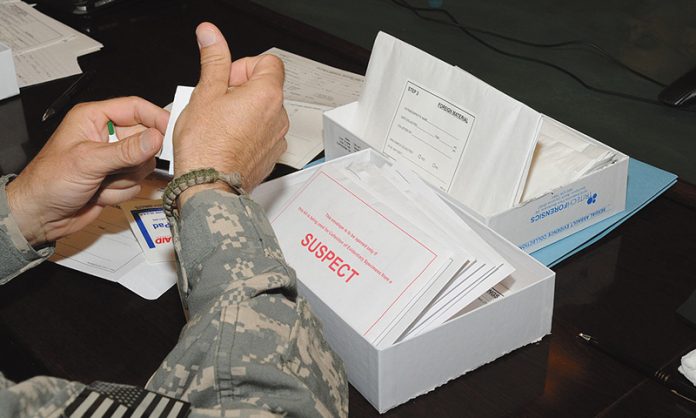
Our current lack of so-called ‘rape kits’ (or sexual assault forensic examination kits) results in a lack of evidence to aid the police who investigate the crime, making it much harder to prosecute the offender. Needless to say, these kits should be accessible to all victims of sexual assault regardless of where they are.

Out of the hundreds of medical facilities in BC, only 12 are capable of administering the kits, meaning most do not have the correct equipment or trained forensic staff. Victims outside of Metro Vancouver are forced to travel long hours to facilities such as Vancouver General Hospital to wait for assistance, only to wait over a month for tests to be completed.

Furthermore, to transport a victim via police car to an appropriate facility does not help people overcome the feelings of being blamed as an assault victim. Commonly, victims will be transported in the back of a police car for the lengthy drive, which makes them feel more like criminals themselves; a person who feels blamed for being sexually assaulted may also be discouraged to report the crime at all.

The inaccessibility of the examination kits to victims who live in smaller towns also devalues the offended, as the lack of resources in their area suggest that their health and safety are not as important as those who live in the city. Regardless of where one lives, accessibility to such equipment in today’s society is vital and a necessity.

Squamish counsellor Susan Chapelle, an assault survivor herself, is advocating for increased rape kit access throughout Canada. She recently reached out to Vancouver Coastal Health to address the issue and has requested funding for a forensic nurse in Squamish (where the closest facility equipped with a rape kit is Vancouver General Hospital), but she received an unsatisfactory response.

As sexual assault is one of the most common serious crimes, frankly it is appalling that the government has not addressed this issue. Sexual assault reports are complex, but it has been estimated in North American college surveys that nearly one fifth to one quarter of women have been assaulted. Will this be another violent crime against women that is swept under the rug, similar to the lack of attention given to missing and murdered indigenous women?

This issue is not unique to British Columbia, either. With a greater population than our own province, even Ontario only has about 35 facilities that can administer rape kits. In some rural areas of Canada, the kits have to be brought in by the RCMP. Clearly, this accessibility issue is a nationwide problem.

The lack proper medical attention simply means that the evidence needed to prosecute offenders will barely exist. To make rape kits available at all medical facilities across Canada is necessary in order to protect future victims, and bring to justice the wrong-doers.

I won’t stop eating meat, and you shouldn’t either

0

No food is more more perfect than bacon. Its fatty, salty, meaty goodness can cure many ailments, such as hangovers and waking up on the wrong side of the bed.

But with the World Health Organization’s (WHO) recent reclassification of bacon and other processed meats as carcinogens in the same class as cigarettes and asbestos, this most holy of pork products could be taken away from us — but, more likely, it will probably just be relabeled to convey the risk. 

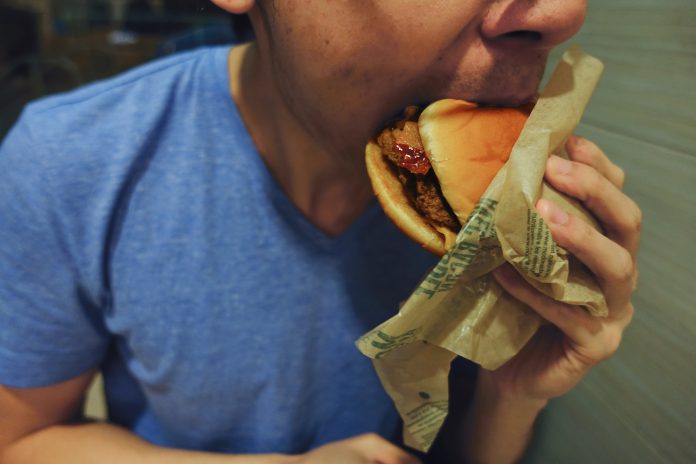
As most of us are aware, bacon isn’t exactly a health food, which is one of the many reasons that it is so enjoyable. And even in the wake of the WHO’s study, I am still going to gobble down bacon and other processed meats; I enjoy eating them, and would classify myself as a casual processed meat-eater. I don’t eat them everyday, but when I do, I enjoy the hell out of them. They can add the right amount of smokiness to a burger, or turn a bland maple doughnut into something special.

My health concerns surrounding processed meats aren’t that they will give me cancer, because at this point in my life I am fully resigned to the fact that everything will give me cancer. Instead, it’s the heightened cholesterol, hardened arteries, and the other cardiovascular results of overeating fatty processed foods that are scarier to me than ordering my eggs with a possible side of cancer.

Don’t get me wrong, I love learning more about the world around us through scientific research, but the way the media presents the story falls under complete sensationalism. ‘Bacon causes cancer: What you can do to keep your family safe!’

While the evidence does show a link between eating large amounts of processed and red meats, the type of cancer that could be developed from consuming large amounts of these foods is colorectal cancer, which already has a low developmental risk.

Yes, cancer is a disease that should be taken seriously, but it is influenced by many factors — some of which we understand far better than others. There are so many carcinogens present around us that we should all have cancer by now, yet we don’t. The real issue here isn’t if we are playing Russian roulette every time we order a bacon cheeseburger, it’s that we still don’t understand the underlying causes of cancer well enough to make any sort of sweeping generalizations about these causes other than asbestos, cigarette smoke, and overexposure to UV radiation.

So I will continue to eat my bacon cheeseburgers, bacon and eggs, and maple bacon doughnuts. Though I will still only treat myself to these things once in a while, since the risk of heart disease is scarier to me than the risk of cancer. I will continue to support cancer research, and I will continue to not take at face value what large media outlets tell me about science, because most of the time it’s bloated crap.

Satellite Signals

0

Woodward’sWEB-woodward

SFU Woodward’s is putting on a lecture and performance event with Lief Hall titled “Mythology, Gender and Cyber-virtual Identity in Pop Music Performance.” On Nov. 9 starting at 8 p.m., Hall will take attendees through an exploration of how gender is shaped in popular culture by influences like mythology and science fiction.

vancouverHarbour Centre

Visiting professor of humanities Ferenc Erős will deliver a paper on the psychoanalytical effects of the Iron Curtain’s long-standing division of Europe. “Psychoanalysis Behind Iron Curtains” will take place on Friday, Nov. 13 from 7 to 9 p.m.

In describing the event, Erős elaborated, “I am focusing on the mostly untold story of the Hungarian psychoanalysis behind the Iron Curtain, its (self)liquidation [sic] in 1948, its underground survival until the 1970s, and its revival in the 1980s.”

Students throw pies for men’s health

0
SFSS President Enoch Weng is pied in the face at the kickoff event. - Photo by Lisa Dimyadi

The SFU “Mo-tivators” and SFU’s chapter of sorority Alpha Pi Phi, in collaboration with the Simon Fraser Student Society (SFSS), hosted the Movember Madness Kickoff last week on November 5 with a pie-a-thon and a hot shave to raise money and awareness for the Movember Canada Foundation.

The Movember movement challenges men to grow their moustache out for the month of November to raise money for men’s health issues like prostate and testicular cancer, mental health, and physical inactivity.

SFU students lined up in Convo Mall and donated money to throw pies at members of the SFU community. Both the Mo-tivators and Alpha Pi Phi brought in volunteers from the SFSS, Finance Club, Enactus, and many others to step up and take a pie to the face.

The Mo-tivators mobilized a group who donated money for a hot shave. Participants also had their photos taken in a Movember moustache photo contest.

This was the first event of its kind at SFU. Approximately 125 students attended and raised $850 for the Movember Canada Foundation, not quite reaching the event’s goal of $1,000. The funds will be used to build awareness, mobilize support, as well as invest in medical research.

This was the first event on campus of its kind put on by Alpha Pi Phi and the first as an organization for the Mo-tivators. Fundraising is the best way to “create the community that SFU desperately needs,” said Alpha Pi Phi President Panteya Niazi.

Movember fundraising is “something the entire campus could get involved in,” according to Morgan Reimer, Alpha Pi’s external programming officer. She encouraged all SFU students to get involved with Movember movements because “men’s issues don’t get enough attention.” The Alpha Pi Phis and the Mo-tivators plan to make Movember events an annual tradition at SFU.

The SFU Mo-tivators club was founded this year by a team of five business students. Founding member Jeevan Takhar said it is best if people learn “early on” about the real threat of testicular cancer, which is the most common form of cancer for men between 15 and 34.

Takhar urges other students to take the initiative and get involved, suggesting that SFU students should “make their own Mo-space.” Donated funds will count toward SFU’s fundraising for the Big Mo on Campus contest between Canadian educational institutions.

Next year, the Alpha Pi Phis’ and the Mo-tivators’ Movember campaign will be “even bigger, with even more groups involved,” promises Niazi. Both the Alpha Pi Phis and the Mo-tivators expressed a wish to work with the SFSS, as well as other SFU student groups, for future events.

Board Shorts

0

Student presents on average graduation time

Computing Science student and OpenSFU contributor Edward Ning gave a presentation titled “Time to Graduate: Is 6 Years Okay?” to the board. He explained that the average time of degree completion at SFU was over five years, and around half of students at the university are part-time, meaning they take less than nine credits.

Ning suggested this was due to poor course scheduling, a result of the faculties’ suggested schedules for students not lining up with reality. He also criticised the lack of a central authority to avoid issues like course conflict. He added that the “SIS [Student Information System] sucks.”  Ning recommended that the more information be gathered on how students feel about the time it takes to graduate and about their “course scheduling habits.”

Said Ning, “If the education product offered by SFU is subpar, someone has to hold them accountable.”

Clan put forth terrific effort in home defeat

0
SFU linebacker Jordan Herdman ended the game with an impressive 14 tackles.

The SFU Clan Football team (0–8) suffered a hard-fought 30–24 defeat to the Central Washington Wildcats (4–5) on a cold and rainy Senior’s Day. Playing their last home game of the year, the Clan hoped to avenge a 40–7 defeat earlier in the season to Central Washington. The young SFU squad pulled ahead 7–3 early in the second quarter on a one-yard touchdown from Ante Milanovic-Litre.

The momentum continued when the Clan defence blocked a Central Washington University (CWU) field goal attempt. In an unexpected turn of events, Clan quarterback Ryan Stanford threw an interception on the very next play. In response, defensive back Robin Weathersby decided the Clan needed the ball back and picked off CWU’s Justin Lane on the very next play. Both defences then held firm to close out the half.

CWU then took a 9–7 lead to open the second half scoring on a Quincy Carter two-yard touchdown run with the extra point missing wide left. The Clan responded right away with Stanford connecting with DB Justin Buren on a spectacular 75-yard catch and run for a 14–9 lead. After forcing a punt, the Clan offence had their best drive of the day. The offensive line dominated the line of scrimmage, with Milanovic-Litre busting off huge chunks of yardage. This eventually led to Milanovic-Litre’s second touchdown run of the day. The touchdown was aided by a huge block by Michael Couture as the Clan soared to a 21–9 lead.

The turning point of the game followed as CWU’s dangerous return man Jesse Zalk took the ensuing kickoff 95 yards to the house. The Clan managed to earn one first down on the ensuing series before punting the ball out of bounds at midfield to give CWU outstanding field position. The Wildcats took advantage by easily marching down the field and scoring on Quincy Carter’s second touchdown of the day. Weathersby then broke up the two-point conversation to keep the score a tight 22–21 for CWU.

On the ensuing drive, the Clan marched down the field and Marcus Johnson connected on a clutch 44 yard field goal attempt. The kick gave SFU a 24–22 lead. Milanovic-Litre scampered for a 27-yard run on the drive, leading Stanford and Buren to connect on a key third down completion. Despite another impressive pass breakup by Weathersby, CWU moved down the field with ease. Central Washington’s Justin Lane then connected with Justin Peterson for a 25-yard touchdown and the two-point conversation to take a 30–24 lead with just under 10 minutes left in the ball game.

After two unsuccessful offensive drives and big defensive plays by safety Ben Minaker and defensive back Robin Weathersby, SFU buried CWU deep with a coffin corner kick at the five-yard line with 4:35 remaining. CWU decided to play it safe and ran down the clock. The SFU coaches elected not to use one of their two remaining timeouts on fourth down and let 40 seconds run off the clock. With 2:10 left, the Wildcats boomed a deep high kick which the SFU returner did not attempt to field. This flipped the field position battle creating a long field for SFU’s dramatic attempt for last-minute glory.

Beginning at their 29 yard line, the SFU offence struggled to put together any big plays.  On fourth and fifth from midfield, Stanford threw deep, hoping his receivers would make a play. The ball bounced down the field, but a flag for pass interference extended the game. From the 28 yard line, Stanford delivered two excellent passes downfield that were dropped by his receivers. On fourth down with 38 seconds remaining, the Clan’s last gasp fell short as CWU picked off the ball and subsequently kneeled, ending an intense ball game.

The Clan fought hard, but were undone by big plays and that huge special teams return. Ante Milanovic-Litre led the offence with 145 tough yards on 21 carries and with two touchdowns. Stanfield completed 16 passes on 39 attempts for 235 yards with a touchdown and an interception.

Charlie Brown stars in this uplifting story of perseverance

0

For those of you, like myself, who are not familiar with Peanuts, it is pretty much the greatest comic strip ever thought of in the history of the world. At its peak in the ’60s, Peanuts had won over 355 million hearts in 75 countries. It dominated the Sunday newspapers every week. What made it so popular?

Charlie Brown, the main character of the comic strip, was a failure. Anything he did turned out to be a failure. He never could kick a football, his baseball team always lost, he could never approach his crush, and above all, he could never fly a kite because the “stupid Kite-eating tree” always prevented him. He was a “blockhead,” as Lucy, his frenemy, so often puts it. Some days he’s excited and motivated with self-confidence, and others he’s cautious and pessimistic — not wanting to ruin his day with more failures. His character, simply put, is like everyone.

Overall, the movie felt like a bunch of mini-stories pasted into one movie — which makes sense, given that Peanuts was a newspaper comic strip. At the start, Charlie Brown is hopeful on the first day of winter to fly his kite. This time he can do it! Nope. After failing like always, he is debilitated and he reminds himself he’s a loser along with his peers.

However, a new girl moves into his neighborhood, and Charlie is optimistic that he can start over with a clean slate and make a real friend. After the new kid joins the class, Charlie is in love. It’s the “little red-haired girl” from the comic strip. However, he cannot work up the courage to talk to her. Throughout the story Charlie devises plans to impress her so he can talk to her. Through various schemes like winning awards and doing favours, he attempts to impress his crush. His integrity in these situations is questionable, but only he knows his true motivations.

But through honesty, compassion, and kindness, Charlie Brown proves himself a hero and ends up a winner. And what’s more? An equally compelling side-story of Snoopy as a flying ace trying to save the girl from the evil “Red Baron” is a perfect analogy of Charlie’s journey of resilience and self-belief.

The message was absolutely beautiful, and I felt my chest lighten seeing that there was finally a family movie teaching kids that being nice, compassionate, and honest is cooler than winning. That no matter what material or worldly failures meet you, if you are a good person you will end up a winner. And as the credits rolled, I realized I too would be a winner if only I remained a good person.

And thus, I had a new view on life (well, student life): GPA does not define me or you. What you think, what you do, how you behave everyday at home, on campus, and by yourself is what determines your success and your quality of life.

Megan Trainor’s “Good to Be Alive” was a perfect song to end the film that left me with a tingling feeling as the lyrics coursed through me: “Feels good, don’t it? Feels good, don’t it? You only got one life; live in the moment.” Heed this advice and go watch this movie with your friends and loved ones for a great laugh and an uplifting story.

Cock is a riveting minimalist drama

0

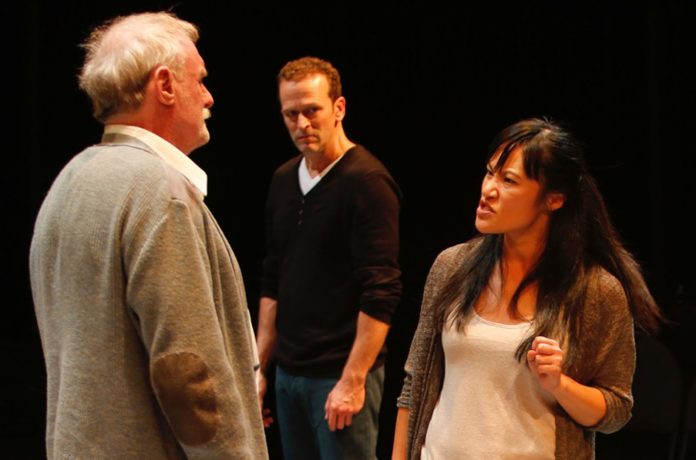
Cock was fast, intense, and impressive. Put simply, this play was breathtaking. Stephen Drover directs Rumble Theatre’s newest performance on Granville Island, presenting a series of hard-hitting questions and relaying issues with Western ideals.

Written by Mike Bartlett, Cock showcases a steady long-term relationship between two men that quickly takes a left turn when they hit a rough patch, during which time the protagonist, John, falls in love with a woman. Nearly half of the 90-minute play focuses around a dinner attended by John, the man he loves, the woman he loves, and a surprising guest.

I can imagine you’re already booking tickets for the play the day after your last midterm. But what if I was to tell you that’s not even the best part? It’s hard to name just one, but one of the most interesting and important parts of the play was the lack of anything and everything not human: there was nothing more than eight sets of staggered seats surrounding a small platform. Drover didn’t use a single prop, a single drop of music — nothing. Distractions, he calls them.

Although the play portrays man vs. man conflict threefold, the real battle Cock embodied was man vs. self. John, the illustrious protagonist, is not remembered for his humour or his quirks, like his boyfriend. He is not known for the boldness and self-assuredness that his girlfriend embodies. No, John embodies each and every single person who has ever questioned who and what they are.

The need to know where we fit in this world is not merely scary, but destructive. Throughout the play, John sees himself only through the lenses of those with whom he interacts — never through his own. Cock speaks to the differences between the known, the common, and the habituated versus what we legitimately want in life. Through varied perspectives, such as biology and politics, Cock discusses the problems with self-actualization and how heavily involved society is in this personal phenomenon.

Despite tackling these tough topics, Drover never fails to make us laugh; he seamlessly integrates elements of humour into each and every act. The play is also wonderfully honest. Whenever an awkward moment occurred or whenever there was an opportune moment for a sarcastic remark, they were realized perfectly. Drover added an aspect of reality to his show that often gets misplaced in performances. This was appreciated by the audience, who were engaged throughout.

Drover has a masterpiece on his hands. The cherries on top were the actors: Nadeem Phillip, Shawn Macdonald, Donna Soares, and Duncan Fraser shared chemistry that was impossible to miss. The ways in which they drove me to the edge of my seat in pure angst of what was going to happen next was more than brilliant. All four shared an extreme chemistry that really made me believe that love isn’t the only thing you should be fighting for. You should fight for you.

Cock is presented by Rumble Theatre October 29 to November 8. For more information, visit rumble.org.

Jan Martens keeps his dancers jumping in The Dog Days are Over

0

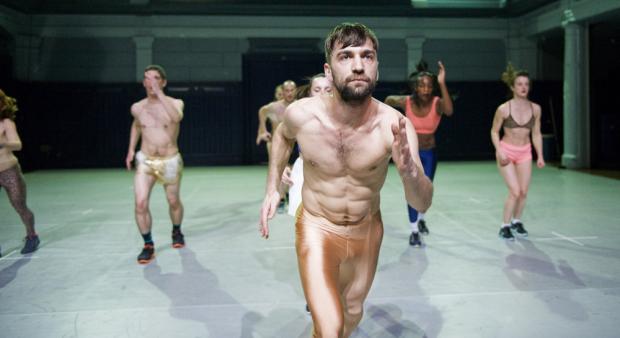
The Dog Days Are Over dazzled at the Scotiabank Dance Centre. This contemporary dance piece by Belgian choreographer Jan Martens created a buzz in the Vancouver dance community with its daring attempts to push the human body to its limits.

Simply, choreographer Jan Martens’ dancers jumped onstage for 70 minutes without stopping. They moved in and out of complex formations, sweated through their costumes, grimaced, laughed, and shouted out counts. It was a wave of energy, and their sheer determination swept over the audience and filled us with awe. As the piece went on, we saw the cyclical unraveling and reclaiming of each individual’s mental and physical stamina. The form of the jumping evolved, but never stopped until the performers (and audience) were overcome with exhaustion.

“I felt concerned,” one audience member told me after the show. Another was more critical: “It was tedious at times.” To be clear, The Dog Days Are Over was not a relaxing show to watch. At the start, the theatre was fully lit and bare, with six female and two male dancers at the back of the stage. Once they put on socks and running shoes, they formed a straight line and began to jump.

The next 30 minutes adapted these modest hops into kaleidoscopic choreography, rearranging the bodies in engaging and surprising ways. After a near-blackout, the jumping took on new quirky and bizarre body designs. This is when the dancers began to shout their counts, their strain and conviction audible as they spurred each other on to continue.

In this minimalistic piece without narrative, and few lighting and sound cues, what held my interest were the unique bodies of the dancers themselves. Their costumes showed off their form: bare stomachs and legs compressed and stretched with every leap, glistening with sweat. On their faces, we began to see more and more personality as they struggled to complete just one task — simply, to keep going.

In the post-show talkback, Jan Martens revealed that this was exactly his goal for the piece. He explained, “through their mental exhaustion, the humanity comes through.” Rather than making shapes or telling a story, the dancers perform their sheer effort. And in this sense, The Dog Days Are Over achieved something fully translatable: the synergy of mind and body under strain.