Home Blog Page 912

Food Fight: Original’s offers authentic Mexican cuisine

0

To celebrate Dia de los Muertos, my friend and I decided to try the newly opened Mexican restaurant in New Westminster Station, Original’s Cafe Mexicano. We were not disappointed.

As soon as you walk inside, you notice how refreshingly spacious and colourful the place is. You enter through a small cafe space with an espresso counter, and further into the restaurant is a more sophisticated atmosphere with a bar and elevated seating. The restaurant is a harmonic hybrid of modern and traditional, featuring trendy yet timeless Aztec walls, cultural decor pieces, gorgeous urban furniture, traditional music, and charming Dia de los Muertos decorations.

My friend and I had a full-course meal, and we thought our stomachs were going to explode afterwards. I do not recommend doing what we did — their main course was plenty filling on its own. We had tortilla soup as an appetizer, which was delightful, but quite hefty. If you’re there with a friend, and you really want an appetizer, I suggest that you plan to share a delicious main dish. The menu is authentic and gorgeous, and contains many options for meat-eaters, from chicken to lamb, and quite an inviting array for vegetarians as well.

Unfortunately for vegans such as myself, there is literally cheese in everything — but, without counting the cheese, many meals are vegan-friendly, full of nutrients, and equally as delightful and filling as a meat dish. The refried black beans, for instance, were amazing, of a perfect consistency and anything but mundane.

The dessert is nothing short of legendary. I ordered a coffee and a chocolate cake, and my friend opted for a horchata latte and flan cake. We were both blown away by the quality of the beverages and dessert. Their coffee was smooth and rich, and even though I drank it black, there was no wince-inducing bitterness. It perfectly complimented the chocolate cake, which was flavorful but not too sweet, and the perfect texture between airy and dense.

My friend described the horchata latte as a “gentle hug from a cinnamon sheep,” and I laughed for about 10 minutes straight. What is horchata, you ask? It is a traditional beverage made of almonds, rice, cinnamon, and other spices that essentially tastes like a smoother and milkier chai latte without the dairy. We agreed that we would swing by again even just to order the dessert and coffee.

To top it off, the servers were kind and thoughtful, helping us decide between the many choices offered by the menu. Our food was brought promptly and there was a timely balance between the courses. I highly recommend this restaurant for an authentic yet modern dining experience.

MOV presents past, present, and possible future of Nunavut

0

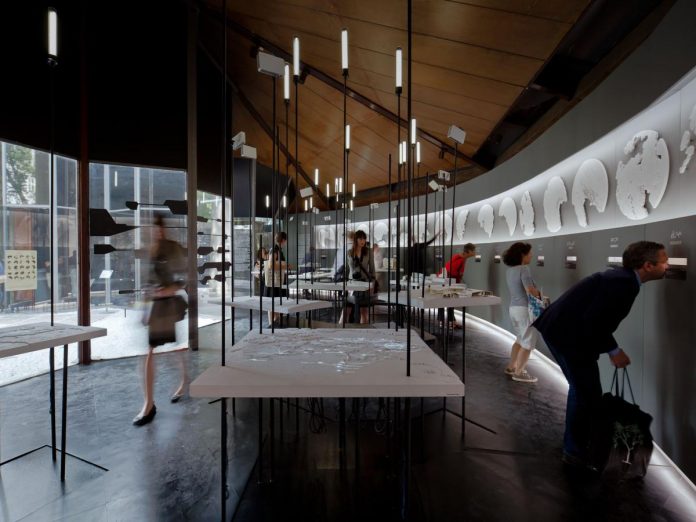
Arctic Adaptations: Nunavut at 15 is an architectural exhibit currently on display at the Museum of Vancouver (MOV) until December 13 which explores and reflects on Nunavut through the lens of architecture and the built environment.

Organized and curated by Lateral Office, a Toronto-based architecture, urbanism and landscape design studio, the exhibition was originally shown in 2014 at the 14th International Architecture Exhibition at La Biennale di Venezia, the world’s most important and prestigious event for contemporary architecture. Arctic Adaptations also won an honourable mention from the jury, the first such honour for a Canadian project.

Taking as a starting point the curatorial call of the Biennale, the exhibition is a response to the effects of modernity in the 20th century, which erased national characteristics in order to create a universal language of space.

Arctic Adaptations consists of three distinct but interrelated elements, examining at the past, present and future of architecture in Nunavut, a space normally defined by its expansive absence of human presence. The past is represented by 13 soapstone carvings of buildings in Nunavut. These trace significant developments in the territory’s architectural past, from the introduction of prefabricated housing, modernist interventions, and contemporary public architecture.

The urbanized present is represented through three-dimensional topographic maps and photographs of all 25 of Nunavut’s communities. The maps, carved from white stone disks, are particularly captivating. They include every building in the community, using stone to stand in for landforms, grooves for rivers, small lakes, and airport runways, and the gaps left by negative space for larger bodies of water. These near-minimalist depictions of land and space are both intriguing and other-worldly, captivating the essence of how compact yet disperse Nunavut is.

The adaptive future is depicted through five animated architectural models which focus on recreation, health, housing, education, and the arts. Combining projections and physical models, they look at the issues through regional, local, and human scales. In so doing, they capture a glimpse of the unique challenges that affect the province. This part of the exhibit is the result of competitions at five Canadian architectural schools, where the winning students were then paired up with local organizations and architecture firms in Nunavut. They then worked together to develop the student’s chosen ideas.  

This aspect of inclusion and collaboration is reflected not just in the adaptive future, but in the involvement of Nunavummiut (people from Nunavut) at every stage of the process, from consultation to production. The photography of the present was organised by a local photographer, and photos were taken by residents of those communities, while the soapstone carvings were similarly sourced by local talent.

The approach to the exhibit reflects the focus on the impact of modernity. Throughout the 20th century, southern knowledge, policies, and architecture were imposed on the territory, greatly affecting its condition.

It’s a small, but excellent exhibit, providing a strong introduction to Nunavut’s built environment by exploring its architectural past, present, and possible future. In some ways the exhibit succeeded too well, in that I found myself wanting to know more about the area and its architecture. Most of Canada knows very little about our youngest territory, and one easily leaves the MOV more curious than they were upon entry.

Comic Connoisseur: Annihilator is an outlandish and peculiar odyssey

0

Ray Spass is a Hollywood screenwriter with a penchant for hard narcotics, wild parties, and black magic. Tasked with writing the most important screenplay of his career, Spass comes face to face with two bitter realizations in the process of completing his story on a tight deadline.

First, his writer’s block can’t seem to get him past his opening act, and worse, he has been diagnosed with an inoperable brain tumour that could kill him at any moment. Thrown into a depressive downward spiral, Spass opts to end his life, but is stopped by Max Nomax — who just happens to the main character of his screenplay.

Now, try and follow me here, because this is where things can get confusing: as it turns out, Spass’ tumour is not a tumour at all: it’s a concentrated packet of information Nomax desperately needs. It’s up to Spass to remember or imagine the rest of his screenplay to help unlock the information inside of himself. Time is also of the essence, as Sass’s deadline for his script fast approaches coinciding with the deadly threat of a super enhanced assassin on the hunt for Nomax. Trust me when I say that’s just the tip of the iceberg for this eccentric escapade.

Annihilator is what I would best characterize as a high-maintenance work of art. One’s understanding of events, characters, and general themes is not meant to come easy. It can be a challenging graphic novel to sift through, filled with puzzling perceptions and even more bizarre dialogue. However, a sense of deep reward and satisfaction is to be garnered from achieving an understanding of this complex work. Just keep in mind it might not come about on the first try.

Frazer Irving’s artwork is by far one of the most captivating draws of the whole crazed chronicle. Irving’s artwork is unlike anything you’ll see in mainstream comics. Every page is gritty, demented, and nightmarishly cerebral — made all the more macabre and alluring with a colour pallet of orange, pink, purple, and blue.

For those familiar with the work of Grant Morrison, this is yet another walk on the wild side we have come to expect from the anarchistic visionary. However, for the uninitiated, Annihilator could be the equivalent to Mr. Toad’s Wild Ride after three lines of Peruvian blow with a hallucinogenic garnish of magic mushrooms.

It isn’t hyperbolic to say that Annihilator is one of the most unique sci-fi comics of the last decade — if not of all time. However, that distinction does come with a catch. Annihilator is an all-around challenging read that will test the literary prowess of even the most scholarly-inclined. Unapologetically disorienting and masterfully mind-boggling, Annihilator is comparable to a night on the town with a full inventory of pharmaceuticals coursing through your veins; you might not comprehend what you were doing, but you’ll remember the events well after they’re over.

Cinephilia: James White showcases a different side of New York City

0

If cities are character actors, New York usually plays one of two roles: the wingman for romances with cultured hipsters, or a desolate backdrop for loners who don’t fit the “New Yorker” label. The capitalist capitol of North America has birthed rom-coms like When Harry Met Sally and social commentaries such as Taxi Driver, while, even this year, The Intern portrayed the Big Apple as a sweet pie of opportunity, devoid of any real diversity.

Artificial representations perpetuate what I like to call “cinematic gentrification.” They push the poor and the ostracized to the edges, only occasionally showcasing them as stereotypes. Josh Mond’s directorial debut, James White, is a small yet truthful portrait of the city.

In the first scene, we glimpse a dark subculture: James (Christopher Abbott) is inebriated in a bar, dancing, stumbling, and flirting. The place — dark, but lit in vibrant neon hues — is packed. Eventually, he stumbles out the door, and the mid-day sun brightly overwhelms our eyes.

James jumps into the back of a cab and wakes up in front of his mother’s apartment. Inside, the home brims with acquaintances: his father has just died and James has shown up late and drunk to a commemorative lunch. With every passing moment, we sense the pressure mounting, as though he is carrying a stack of bricks on his head, slowly compressing him downwards.

Even if he could hold onto a job, he can’t seem to get one. The hospital is overfilled and understaffed, and although the setting is barely visible — often left exclusively to corners of the widescreen frame — it presses against James from all sides.

Only when he escapes to a Mexican resort is there reprieve. Filmed primarily in long shots with extreme amounts of negative space, we get a sense of relaxation from these scenes. The crowded New York streets have led James to vacant beaches and unoccupied roads, but after a few nights with a girl who also lives in New York, James receives a tragic phone call. His mother’s cancer has spread with a fury; she needs him to come back. The vast spaces have become claustrophobic, and he is once again squashed into small specks on the screen.

Although there is a tight focus on James (literally), Josh Mond has crafted a relatively plotless story that spans months, chronicling the mother’s failing bout with cancer. James White becomes not just a profound character study but also an introspection into the lives who support the main character: the dying mother, a long-time best friend, and the girlfriend he met in Mexico. Over a span of several months, these characters drift in and out of the story, leaving us to wonder if they’ve abandoned James entirely, and leaving him not understanding their concern.

Counter-balanced with Abbott’s enormous, raw performance, every scene is like a balloon inflating, waiting for the actor to pop it. Large performances tend to feel showy — audiences often sense the artifice — but with Abbott, we never catch him acting. He has embodied every cell of this man’s nerves.

Born and raised in the city, James is, in a way, an archetypal New Yorker. He is a writer. He is cultured. He seeks love. Yet he is precisely the kind of unattractive person never seen at the movies. Characters like James are being gentrified at the cinema, pushed out from our frame of view. We walk past them every day, and perhaps there is little we can do, but our movies have turned our heads away for us.


Once is a powerful love story told through music

0

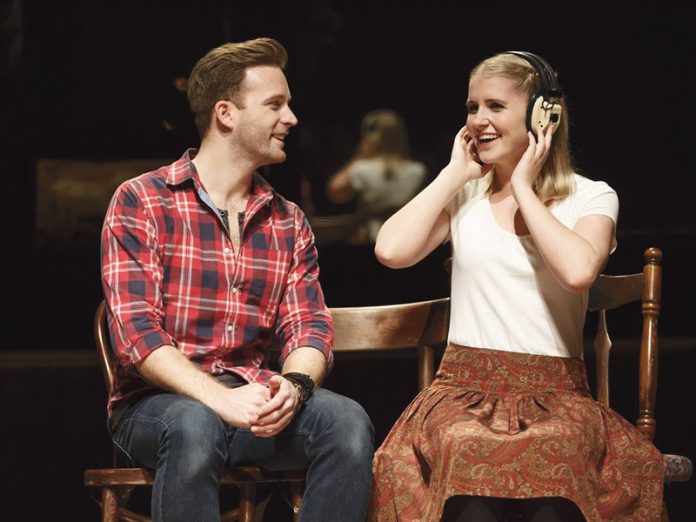
The music of Once is powerful. It has the special quality of leaving you feeling transformed, uplifted, and inspired when you leave the theatre, and although that may sound like an exaggeration, I have experienced it first-hand twice. With a unique on-stage bar open before the show and at intermission, this production made a cavernous theatre feel intimate and a single soft voice emanating from the stage feel immensely important.

I’m always surprised by the number of people who haven’t heard of Once. Released in 2006, the film that this musical is based on is a heart-wrenching love story  set in Dublin between an unnamed heartbroken Irish musician (Glen Hansard) and a younger Czech immigrant (Marketa Irglova). Before making the film, the two were making music together as The Swell Season, and gradually fell in love despite their age difference (Hansard was 37, and Irglova 19).

The couple wrote and composed all of the songs in the film, and their song “Falling Slowly” won an Oscar in 2007. It’s a real-life love story captured on film, put to song, and now produced as a touring musical.  

Their relationship has since ended, but they continue to make music on their own, and they are two of my favourite musicians. It’s hard to watch Once the Musical without comparing the performers to Hansard and Irglova, especially having seen them both live, but the musical is its own entity, with a slightly changed plot and a life of its own.

The heart of the story — the songs — are what carry the show, so of course whoever plays the two unnamed leads must also be musically gifted. The “Guy” is played by Liverpudlian Stuart Ward, and his passionate strumming of the guitar made it clear that he is a talented musician in his own right. The “Girl,” played by Dani de Waal, is much more comical in this performance than in the film, and overall the plot incorporates a bit more slapstick and humour, but Waal’s voice adeptly carried the lilting, emotional ballads she performed alone on stage with the piano.

The ensemble was brilliant, dancing around the stage with their banjos, accordion, violin, and bass. And the set was stunning: a beautiful semi-circle of wood-paneled walls lined with a collage of variously sized mirrors.  

While this Broadway Across Canada production was moving and poignant, it was not quite up to the standard of the production I saw at the Phoenix Theatre in London in 2013. Perhaps the experience of seeing it in a smaller space enhanced its power, but overall, that show seemed to embody more of the magic of the story. Despite that, I highly recommend this show, and the music of both Hansard and Irglova. I guarantee you will get something out of it.

Once is presented by Broadway Across Canada from November 17 to 22 at the Queen Elizabeth Theatre. Tickets start at $40. For more information, visit vancouver.broadway.com.

Why British Columbia may not be the best place on Earth

0

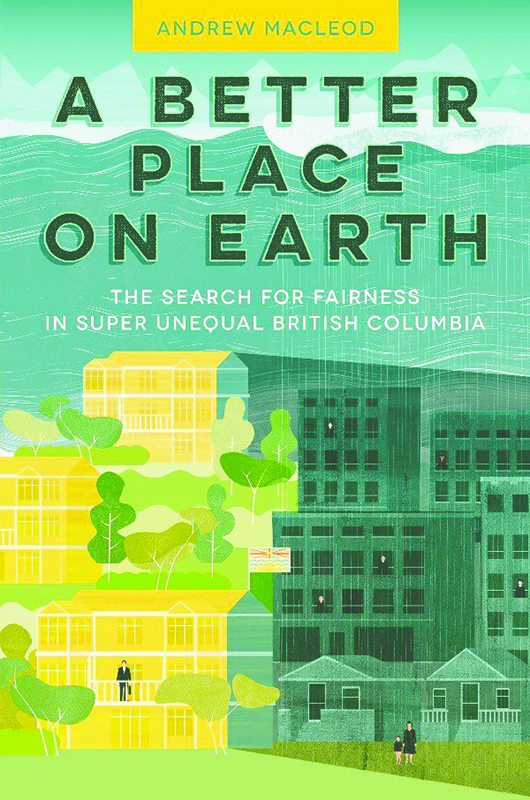
Andrew MacLeod’s new book, A Better Place on Earth: The Search for Fairness in Super Unequal British Columbia, is a fearless stab at our province’s social, political, and economic institutions that simply don’t consider impoverished and homeless people enough. It was a shocking and deeply personal read: the cities and streets it talks about are so familiar. It’s unbelievable how much we don’t know.

MacLeod pushes aside the  curtain that conceals the staggering numbers involved in impoverished, addicted, disabled, or homeless citizens and how their needs (mental and physical) are not nearly being met.

It’s more than any one person living on the street, or even the crowds on East Hastings. MacLeod interviews individuals who are directly affected by these issues, and their heartbreaking stories point towards a very unequal British Columbia. This practical examination is a call for privileged citizens to raise our influential voices to represent those who are too often ignored.

The majority of the book is a critical exploration of what is held back from the impoverished citizens of British Columbia. I will admit that it is not an easy read, nor a quick one. The topic is upsetting, and the statistical, political, and economic conversation is hefty to take in. But MacLeod takes up a pattern throughout the book that makes the points much easier to process, following a political or economic fact or theory with a personal story from a local who has experienced the issue firsthand.

This technique enables readers to make the direct connection from numbers and politics to human neglect and suffering. MacLeod isn’t afraid to point fingers at politicians and powerful people who let our most vulnerable citizens down.

My favorite thing about this book is how practical it is. I love the “Seeking solutions” chapter, and the way MacLeod restores hope after breaking down our faith in responsible politicians and organizations. He lists and expands on ways to reduce inequality in British Columbia: create well-paying jobs, raise the minimum wage, reform the tax system, provide affordable child care, and so on.

The book ends with a couple of hard-hitting statistics on inequality. As MacLeod lays out, the percentage of the world’s total wealth owned by the bottom half of the global population is just one per cent, yet the percentage of the world’s total wealth owned by the top 10 per cent of the population is 87 per cent.

MacLeod’s A Better Place on Earth is a well-researched, cautionary call for great changes to be made by each of us, to “pull back stratospheric incomes and create a fairer society.”

TEDxVancouver 2015: big ideas in a bigger venue

1

This year’s TEDxVancouver theme of identity fits well with almost any topic. When it comes down to it, almost everything shapes and has an effect on our identity. There were some speakers that dealt directly with this subject in a very personal way, and others spoke of subjects that affect our identity as humans on a larger scale and change how we view our species. What all the speakers had in common was a passion for their subject and the 3,200 audience members were thoroughly captivated by this exceptional line-up of speakers.  

One of the important aspects of TEDxVancouver is the atmosphere of the event venue overall, so I was a bit skeptical that Rogers Arena was going to be able to provide this same inviting, warm atmosphere that the Queen Elizabeth Theatre did last year, but I was pleasantly surprised. The main concourse was transformed into the Conversation Concourse with unique vendors, a fashion pop up shop, an urban record lounge, and a beautiful art exhibit. The only downside was how crowded this area became during the breaks between programs. It was nice to wander around and explore these unique displays, but it was sometimes hard to move at all.

The seating area itself felt quite intimate, with only a semicircle of seats used on one side of the arena and a small floor area of couches set up to feel like a rustic living room. The stage was dressed in unique wooden sculptures, and there were giant red balloons floating on either side. What must have taken hours to put together looked seamless.

Given the identity of Vancouver, the crowd was treated to a relaxing mini yoga session with deep breathing and meditation. We all breathed a collective sigh of relaxation and let our minds rest in between such stimulating ideas.

Dr. Lara Boyd, a faculty member at UBC, shared her research on neuroplasticity. It turns out that everything you do changes your brain, and it is never too late to adjust your behaviours and alter your brain. It was fascinating and hopeful to hear how flexible and resilient our brains are. Similarly, I enjoyed learning about Marina Adshade’s economic story of society’s belief that women aren’t interested in sex. She explained that once women became more dependent on men for financial stability, especially during the industrial revolution, they needed to represent themselves as faithful wives, so the trend became a disinterest in all things sexual to dispel any fears that they would be adulterous after marriage.

For all the environmentalist weed smokers in the crowd, Dan Sutton explained that cannabis grown indoors on the black market has an enormous carbon footprint and should be grown in greenhouses. With the shift to legal cannabis operations he is hopeful that production will be done outdoors or in greenhouses where the plants can see real sunlight rather than in warehouses with energy sucking lamps.

One of the most emotional talks of the day was Coyote’s story of always struggling to decide which bathroom to use. Either way, the fear of harassment is all too real. It was especially disheartening to hear of a four year old tomboy girl pee her pants when she was told to not use the boys bathroom by her preschool teacher, and was bullied out of the girls’ room by her classmates. As Coyote said, gender neutral bathrooms are a quick fix to give many people a safe place to relieve themselves while we work to change the attitudes that lead to harassment in the first place.

Another speaker who had the crowd on the verge of tears was Scott Williams who represented Canada in the Special Olympics. His passionate speech about those with intellectual disabilities having a place to finally feel accepted at the Special Olympics touched everyone’s heart.

A couple of the speakers were interviewed by the event’s host, Riaz Meghji. Mohamed Fahmy sat across from Meghji and talked about his experience in prison and his “exclusive” access to the terrorists he spent time with there. Speaking the day after the Paris attacks, his words about security, freedom, and the dangers of giving up civil rights such as with Bill C-51 were top of mind for everyone.   

Meghji also interviewed Kaitlyn Bristowe in a much lighter conversation about her experience on The Bachelor and The Bachelorette. She explained that her goal was to build a personal brand through being on the shows, but she ultimately found love, and her fiance Shawn Booth was front row cheering her on.

The final speaker of the day was patriotic, inspiring, and simple. Canadian women’s soccer coach John Herdman told us the story of how he came from New Zealand to lead a team that had finished dead last in the World Cup to win a bronze medal at the 2012 Summer Olympics only nine months later. I can see why. His talk was motivational in a way that made sense and was simple enough to remember and repeat almost like a mantra. He explained that he made the players realize why they were playing soccer and start working as a team by never letting each other down.

He provided a thoughtful analysis of “Oh Canada” and explained that everything we need to be good Canadians and citizens is in there. He urged us to find our “true north,” our purpose, and to just “be good.” It may sound a bit too simple, but he elaborated, suggesting that if you can be good in all aspects of your life, not just at work or just on the field, then you will reach greatness. He also provided what was probably my favourite quote of the day: “be good and the universe will give you things.”   

Hofesh Shechter Company returns to Vancouver with Barbarians

0

By way of Israel’s Batsheva Dance Company, Hofesh Shechter is now based in the UK with his own contemporary dance company. It’s been six years since his work was presented in Vancouver by Dance House, and dance lovers have been itching to see more of his choreography. As local dance artist and choreographer Vanessa Goodman explained before the show, Barbarians is a trilogy made up of three distinct works, each with its own self-imposed choreographic challenge for Shechter.

In the first section, the barbarians in love, Shechter wanted to create a science fiction-inspired work because he felt that was not something he would ever voluntarily do. It was a stark, clinical piece of choreography with sudden lighting changes and the dancers moving surreptitiously around the stage in what resembled white hazmat suits (minus the gas masks). As the spot lights follow the group, moving as one unit, they flashed off and then back on to reveal the group in new formations.

An eerie, robotic voiceover shared cryptic messages that lead to a somewhat gratuitous punch line of “I am you” — turns out it was the voice inside your head. Shechter’s voice joined the conversation and there was a humorous exchange that had the robot voice denigrating his work, saying things like “You just had to put yourself into the work, didn’t you Hofesh.” While this conversation elicited laughs from the audience and seemed quite self-effacing on the surface, the longer it went on, the more it seemed self-aggrandizing. Shechter eventually says that he is a cliche of a man just looking for a thrill; the statement left me wondering whether this is truth or a finely constructed resemblance of the truth that becomes a cliche by virtue of being inauthentic.

After this lengthy voiceover section, the dancers left the stage before a seemingly unrelated segment saw them return wearing nothing while standing still facing the audience in a line across the front of the stage.

tHe bAD changed the tone drastically with its mix of different upbeat dance and hip hop music and smorgasbord of dance styles blended together. Five dancers in metallic gold, full body unitards graced the stage and performed a marathon of choreography that never let up. Switching rapidly among various contemporary dance style and influences, the movements melded together and by the end were something new yet with hints of each of the other styles. For the creation of this piece, Shechter said that he wanted to create without thinking too much, just allowing whatever happened. The effect is a hypnotic bombardment of movement, sound, and light that makes you want to get up and join them.  

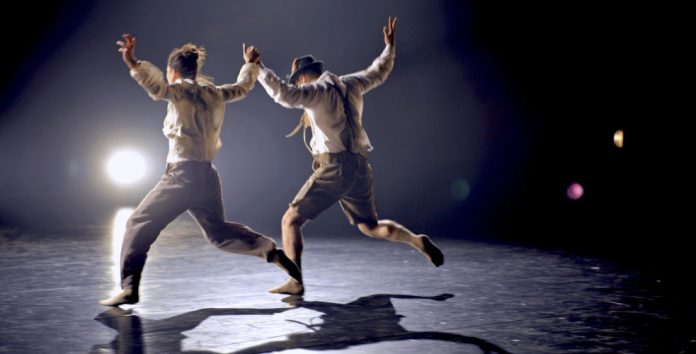
The final piece of the trilogy, two completely different angles of the same fucking thing, was a duet that began with a heart-warming, romantic tone and soft piano music, but became uncomfortably aggressive and suggestively abusive. The male dancer, dressed in lederhosen, seemed to be physically controlling the female, and while they seemed to continually regress into peaceful, slow dancing together, there were unnerving moments within the choreography that confused the message of the piece for me. This section is said to be the crux of the whole evening, but I failed to see how other than that dancers from the two previous pieces joined the couple on stage as he seems to have an epiphany and change his ways.

Sports Briefs

0

Volleyball

Christina Howlett has been selected to the GNAC All-Academic Team. The sophomore from Delta, BC led the team with a 4.00 cumulative grade point average in business. She has 203 total kills on the season, which places her third on the team.

Women’s Golf

Head Coach John Buchanan has announced that Bethany Ma has signed her national letter of intent to play for the women’s golf team. Ma is the captain of the Pacific Academy Senior Golf Team, and was able to lead the team to its first ever high school championship; like Howlett, she holds a 4.0 GPA. She was also chosen to represent Canada at the 2015 Aaron Baddeley International Junior Golf Championship.

Football

Jordan Herdman has been named the GNAC Defensive Player of the Year for the second straight season. The redshirt junior from Winnipeg, Manitoba finished the season with an average of 14.8 tackles per game, good enough to place first in the GNAC conference and fifth in all of Division II. Jordan was also named to the All-Conference First Team, also with his brother Justin.

Soccer

Two players on both the women’s and men’s soccer team were named to the GNAC All-Academic Team. Brandon Watson, goalkeeper on the men’s team, carried a 4.11 GPA in Kinesiology, while Robert Hyams had a 3.57 GPA in Economics. On the women’s side, forward Olivia Aguiar had a 3.83 GPA in Kinesiology, and Devon Kollmyer had 3.90 GPA in Molecular Biology and Biochemistry.
With files from SFU Athletics

Canada’s men’s soccer team set off on road to Russia in style

0

If you enjoy heartbreak, disappointment, and pulling your own hair out, then being a Canadian soccer fan is the thing for you. However, Canada was able to pull off a rare win on Friday the 13th (of all days), a 1–0 result at BC Place against perennial bogeymen Honduras. With a little bit of luck, the men in red will hope to use this win as a springboard to advance into the 2018 World Cup in Russia.

The match played at BC place was the first the team has played in British Columbia in a decade. For the past decade, most of the games have taken place at Toronto’s BMO Field, with a few Edmonton and Montreal matches sprinkled here and there. But after the success of the Women’s World Cup here in Vancouver, the Canadian Soccer Association knew they had to bring the men’s team to the west coast, and it paid dividends. Over 20,000 boisterous fans helped propel the team to victory over Honduras.

Canada’s soccer history has long been intertwined with that of Honduras. Indeed, the last time Canada’s men’s team played a match in BC, it was against Honduras at Burnaby’s Swangard Stadium in 2005; Canada lost 2–1.

The last time that these two sides met was even uglier for the Canucks. It was October 16, 2012. San Pedro Sula was the venue, and a berth into the final round of qualifying for the 2014 World Cup was the prize. Canada only needed a draw to progress, but what ensued can only be described as a shellacking. The reds were on the tail end of an 8–1 beat down, and this thrashing severely smashed the spirits of Canada for years.

Look no further than the following year Canada had as proof of how bad the Hondurans handicapped the team: in 2013 the team played 13 games, won zero, and scored just one goal.

However, Honduras hasn’t always spelled doom and gloom for Canada. Les Rouges’ victory over Honduras in St. John’s in 1985 granted Canada its only spot in a World Cup; and Friday’s 1–0 win at BC Place will definitely be counted alongside Canada’s most historic victories.

The game-winning goal was scored by MLS Rookie of the Year Cyle Larin. Other players who stood out were Portland’s Will Johnson, who assisted the goal, as well as Atiba Hutchinson of Turkish club Besiktas and Junior Hoilett of QPR, playing his first competitive match for Canada. We’ll be looking to them to continue contributing against the other teams in our group: El Salvador and powerhouse Mexico.

What was most impressive about this win was that throughout the match it was clear that Canada was the better team. There was no luck involved; the Canadians had more possession, more shots, and more heart than their counterparts. Not to mention that the frenetic fans in the stadium had Canada’s back for the whole 90 minutes.

The support was so good that Canada’s coach, Benito Floro, said after the match that he wishes Canada’s next game would be at BC Place. Here’s to hoping that his wish comes true.