Home Blog Page 89

Why do we live in a world where the only reward for hydrating is a large amount of piss?

0
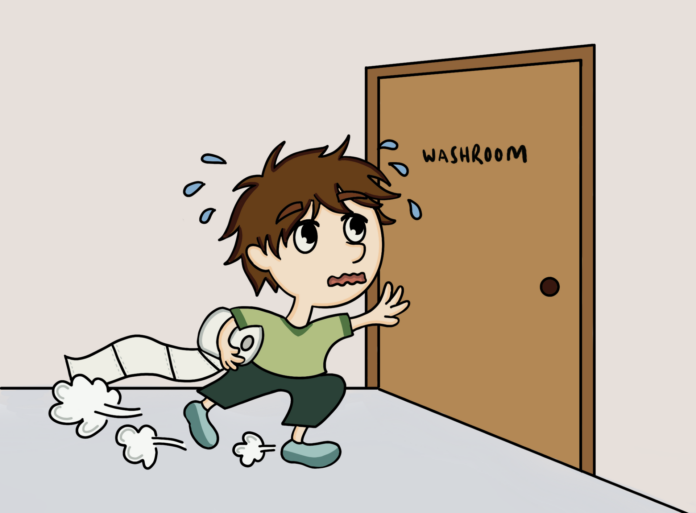
Person running towards a washroom while holding a roll of toilet paper.
ILLUSTRATION: Victoria Xi / The Peak

By: C Icart, Humour Editor

Calling all members of the overhydration nation! 

Why did you recruit me? I can’t live like this anymore; I have things to do other than constantly running to the bathroom. There is such a thing as performative hydration, and I’m calling it out today. There are THREE main ways this doctrine manifests online (which is the same as everyday life, duh). 

  1. WaterTok
This phenomenon taught us there is no consensus over what is and is not water. How many sugar-free Skittles drink packs can you add to your water bottle before it’s no longer water? In some ways, it’s similar to this question that also rocked the Internet: what corpse2water ratio would you not be willing to swim in? In other ways, it’s not similar at all, and I just wanted to squeeze that question in there. Edit: I’ve been asked to explain this for those of us who are not constantly surfing the web for little hits of dopamine. Humans sometimes swim in bodies of water that definitely have corpses in them, like oceans, but would not swim in a pool with a corpse in it. Thus, there is an acceptable corpse2water ratio to swim in. What’s yours? Discuss. Now let’s get back to our regularly scheduled programming. WaterTok makes drinking water (or juice or punch or wannabe KoolAid) an event, and the FOMO is causing me to chug more water than there was in Finding Nemo.

It’s hard to believe that just earlier this year, people would bodycheck strangers at Target for this stainless steel bottle. Then, they would decorate it and attach fancy accessories to remind you they’re not poor. Many WaterTok beverages have been made in Stanley Cups. People attribute this behaviour to the cult of consumerism, but I think there’s a much darker truth behind this all. You know how some of us are just possessed by demons that make us overwater our plants? I think there’s a demon of overhydration that controls certain segments of the population. (Yes, I’m aware that that sentence made me sound like the type of person who would buy M.I.A’s tin foil hat that allegedly “blocks 5G waves”). 

3. 75 Hard

The 75 Hard challenge is the cockroach of fitness trends. It won’t dieeeee. I have beef with the entire thing, but I gotta stay locked in and talk about how this challenge is clearly pushed by Big Water. Why is it making people drink one GALLON (3.8 litres for the metric girlies) of water a day? I’m not a bio major so I cannot tell you how big my bladder is but it is not that big! Why is 75 Hard called a mental toughness program? It should be called a bladder toughness program! I have never had that much water in a day and I have still had days where my pee came out so clear I could bottle it and call it Dasani. 

I never thought I’d say this, but clearly some of y’all have too much access to safe drinking water. You have forgotten how to act. I know you want to fight back against beverage companies like BlueTriton (Nestlé in a trenchcoat) extracting water in our communities for profit at the expense of the land and people. But chugging it all at once is not the solution. I am breaking free from the overhydration movement once and for all and I’m sure my toilet paper costs are going to go down too #FrugalEra.


Campus shopping experiences at New Gen Markets

0
A rack of colourful clothing perched under a tent in front of a skytrain station.
PHOTO: Courtesy of Amrit Kamaal / The Peak

By: Amrit Kamaal, Peak Associate

Step into a cute and quaint world of shopping at New Gen Markets! Many SFU students may already be familiar with this market, as they’ve set up stalls on the Burnaby campus many times this year. One too many times I’ve been late to lectures, work, or even missed a bus due to these small businesses’ alluring products. As “a new generation of small biz’s uniting,” this market provides opportunities for shoppers, vendors, and those looking to build connections with one another.

Every few weeks, New Gen Markets will park themselves at a new or frequented area to give their customers an opportunity to shop in a variety of settings. Their locations vary from being in the city’s most populated areas, such as Robson Street, to universities such as UBC and SFU. I visited their marketplace on June 9 at Surrey Civic Centre. There were so many wonderful stalls to check out such as fine jewellery from Juve Collection and AW DESIGNS, as well as divine handmade candles by Loft & Light Atelier. Juve Collection is an AQ staple and the perfect place to grab accessories like a gold pendant or delicate leg chain to spruce up your outfit before heading to class.

You can satisfy your hunger with some of New Gen’s foodie favs like delicious cookies from Connie’s Cravings, drinks from the popular mobile tap bar The Rollin’ Taps, and mouthwatering elotes (Mexican grilled corn) from Los Elotes, a reoccurring must-have. Many of these food stalls also offer pre-made snacks, such as pastries and cookies, which are perfect for indulging in mid-transit ride.

What sets New Gen apart from other markets is its modern, trendy vibe and aesthetic. It combines elements of traditional flea markets while supplying unique and innovative products focusing on the most recent or popular fads.”

Each of these businesses have their own story and sustainable practices, from handpicked ingredients to reselling new items from older materials. New Gen combines elements of traditional flea markets while supplying unique products focusing on the most recent or popular fads, and brings them to university campuses for students to check out in their free time. Products can range from sporty, hand-picked fashion must-haves at Baldylox Thrifts to reusable press-ons from Kelly’s Choice.

New Gen’s other business, New Gen Social, hosts events to help entrepreneurs and business networks flourish through immersive experiences. They launched their first “Mix and Mingle” event in May, where business owners can connect.​​ They also offer appetizers and a free drink — the only requirement is to purchase a ticket through Eventbrite

It’s great having markets like these located only steps away from our lecture halls — taking a short break to peruse some local products might introduce you to your next favourite local business! Don’t fret if you missed their visits to SFU, as you can sign up to their newsletter and follow their Instagram to get notified of the next pop-ups to add to your calendar.

AI isn’t just unethical, it’s inaccurate

0
A laptop open to the ChatGPT website.
PHOTO: Matheus Bertelli / Pexels

By: Hailey Miller, Staff Writer

The use of artificial intelligence (AI) is unethical, and it takes away from our originality and skill development. There are many reasons to avoid AI chatbots and writing assistants, but what’s the point of using them when they’re often extremely inaccurate in the first place? 

AI platforms like ChatGPT and Grammarly were never great to begin with, but as of recent months they’ve been going further downhill. A 2023 study shows that ChatGPT has become less accurate over time and reports on certain information — notably medical and legal — with a level of inaccuracy that’s deeply concerning. ChatGPT and other AI platforms such as company chatbots have also reported information that isn’t real, or events that never happened. An Air Canada chatbot gave bad advice for plane tickets to a customer, and, as a result, the airline company had to pay compensation based on their misleading information. 

Using a more personal example, if you ask ChatGPT about the ghost at The Peak’s offices, it’ll reply with this: “The office ghost at The Peak, Simon Fraser University’s student newspaper, is a lighthearted and longstanding legend among and contributors. The ghostly presence is often playfully referenced by members of The Peak as part of the newspaper’s lore and culture.” For your reference, this has never been a topic of conversation among staff.

Any work generated with AI will never compare to properly-researched content.

The inaccuracy of AI is not only legally concerning and confusing — it’s harmful. It has significant consequences that aren’t good for any usage, whether professional, academic, or creative. We can’t rely on or trust inaccurate content. When AI is used in pieces of writing, it’s evident the work is not original. AI is a waste of time — it fails to provide accurate information, struggles to write a proper draft or paper, and is often too robotic to sound genuine.

The risk of misinformation and falsehoods makes it difficult to know what to believe when using AI. Since it generates information from many unidentified internet sources, there’s a chance your result will be inaccurate or even plagiarized from someone else’s work. In the academic world, AI takes away our ability to learn and absorb content. Unlike properly researching information from books or scholarly databases, most AI software doesn’t disclose sources for their responses. We will never learn about the world around us if we rely on inaccurate or incomplete information, and any work generated with AI will never compare to properly-researched content. It isn’t fair that those who choose not to use AI do all the difficult work and research, only to have their work either stolen by AI or in competition with those who used it.  

Consequences stemming from AI errors need to be taken seriously. Corporations and organizations found to be using AI should face social pressure to stop their use of these programs. Education institutions should create universal mandates surrounding AI usage, and hold students accountable. If you really care about the quality of your work, you should avoid AI at all costs — it’s not helping you as much as you may think.

The avian flu pandemic needs more attention

0
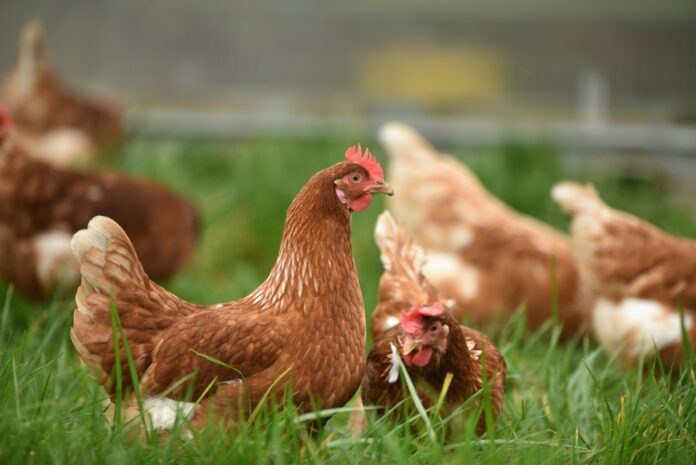
A brown hen standing on grass.
PHOTO: Thomas Iverson / Unsplash

By: Kaja Antic, Staff Writer

Avian influenza, specifically the highly contagious and infectious subtype H5N1, has seen increasing cases worldwide since 2020. As its name suggests, the virus is primarily found in birds, but it’s also been found in at least 26 mammals since its classification in 1996. Humans have also contracted the H5N1 avian flu, with the World Health Organization (WHO) reporting 889 human cases between 2003 and 2024 — 463 of those cases being fatal. While some continue to ignore the ongoing COVID-19 pandemic, there is another taking hold across the globe that also deserves attention.

The Canadian government has stated that it’s “currently responding” to rising global cases of H5N1. Since 2022, there have been 3,150 positive cases of the virus in Canadian wildlife, and since 2021, over 11 million domesticated birds have been impacted by H5N1. While there have been no reported cases of human-to-human transmission of the virus, the WHO has stated that there is an “enormous concern” with the rampant spread of H5N1, describing it as a global animal pandemic. There have been an estimated tens of millions of affected poultry, with large crossover with mammalian infections. Mammalian infection can lead to higher chances of human infection, which should be concerning considering the 52% mortality rate.

H5N1’s transmission is primarily through materials like feces and saliva, which differs from COVID-19’s airborne quality. Most human cases of H5N1 are seen in agriculture or livestock workers, but “anecdotal reports” have included people with “exposure to raw or undercooked contaminated poultry products.” Even though H5N1 exposure is less likely in daily life, the high mortality rate should be more worrying to government health officials than it currently is. Canada may not have had a confirmed human case of the H5N1 in a decade, but scientists have noticed mutations resulting in previously unaffected species being infected with the virus. Typically, mammals are exposed to H5N1 by eating contaminated poultry. However, an outbreak at a Spanish mink farm in 2022 was the result of “mammal-to-mammal” transmission. And while humans outside the livestock industry are at a low risk of infection, viruses are known to evolve — often unexpectedly.

“Canada may not have had a confirmed human case of H5N1 in a decade, but there is still a large risk as the virus continues to adapt and mutate.”

By now we are aware of actions that should be taken during a global pandemic, yet it seems like the world is slow to catch up. With the slow action taken against COVID-19, you’d think governments would hesitate to make the same mistakes — though it seems unimportant in the offices of world leadership. There have been trials since 2006 testing a potential vaccine against the H5N1 virus subtype, though there has not yet been a large-scale roll out of preventative vaccinations. The European Medicines Agency currently has three authorized vaccines meant to prevent a pandemic: Foclivia, Adjupanrix, and Pandemic influenza vaccine H5N1 AstraZeneca. The American Food and Drug Administration has also approved a vaccine named Audenz, though there has yet to be any widespread vaccination efforts in the US. 

Only recently has Finland made available vaccinations for those who are 18 years or older and have an increased risk of contracting the virus, such as working with domesticated farm animals. There have been suggestions for widespread H5N1 vaccines, though this would not necessarily limit the viral spread between animals, and could have negative implications for trade regulations. 

The avian flu is not new, and yet, the preventative measures taken to reduce spread, increase awareness, and produce vaccines is not adequate to combat the highly transmissible and highly deadly virus. With the COVID-19 pandemic, reports found that the initial response from governments and health officials was delayed. As the H5N1 strain of the avian flu has been known for decades to have many negative effects on humans and animals, you would think there would be quicker action to combat the ever-evolving pandemic.

With millions of animals and hundreds of people affected by the H5N1 pandemic worldwide, there should be more action taken to prevent even more horrific outcomes, especially after the continuous lack of preventative action for the COVID-19 pandemic. While H5N1 may not be an immediate threat to humanity, it very well could be one day, and the world needs to take proper action before the circumstances get that dire.

SFU research group helps people create air filters for wildfire season

0
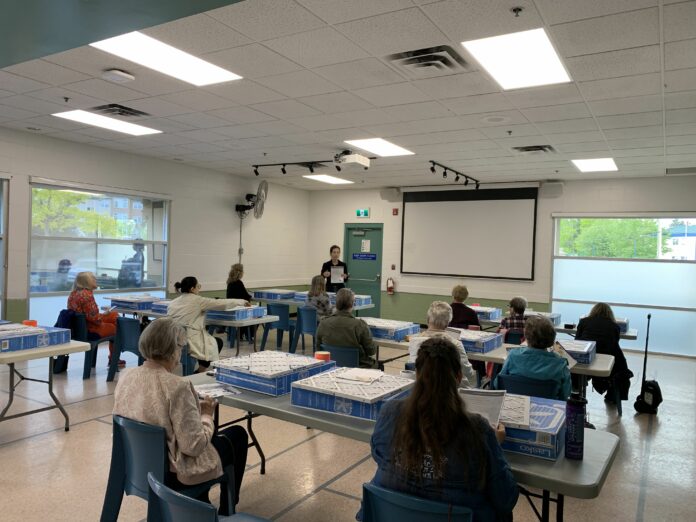
This is a photo of the Pacific Institute on Pathogens, Pandemics and Society holding a workshop to build DIY air filters in a classroom-type setting.
PHOTO: Pacific Institute on Pathogens, Pandemics and Society

By: Hannah Fraser, News Writer

The Pacific Institute on Pathogens, Pandemics and Society (PIPPS) is a research institute based at SFU Burnaby. They have now “led 25 workshops helping people build more than 500 air filters to clean the air in their homes and reduce exposure to fine particulates from wildfire smoke.” 

Dr. Anne-Marie Nicol, associate professor in the faculty of health science, said to SFU News that while wildfire smoke makes its way indoors, “indoor air quality is often overlooked.” This smoke can cause long-term health issues like “lung cancer, chronic obstructive pulmonary disease, exacerbate asthma, and make life miserable for people with existing lung disease.” 

With funding from the BC Lung Foundation, the City of Vancouver, and more, Dr. Nicol and her team have built “simplified versions of the Corsi-Rosenthal box.” The box is a cost-effective “DIY method of building your own air filter” and is made with a box fan, air filters (MERV-13), and duct tape. It costs less than $100 to create a single air filter this way. 

For many “renters and people in group-living or subsidized housing,” sophisticated air filter systems can be costly, and people in the Okanagan are often subject to smoky air from wildfires. In just March this year, there were two wildfires that came as an “absolute surprise” to Lumby Mayor Kevin Acton. “It is really early in the year for something like this. I don’t think I’ve ever seen it before, actually,” he told Global News.

PIPPS plans to lead 25 more workshops in “Lillooet, Rock Creek, Oliver, and Osoyoos” this summer to surpass the “500 units built last year.” They also want to “pilot the viability of the workshop in smaller, rural and Indigenous communities, where access to extra supplies may be difficult.” The Peak corresponded with Dr. Nicol and Riley Condon, a research assistant with PIPPS, for more information. 

It costs less than $100 to create a single air filter this way.

Dr. Nicol said the inspiration behind the project was reading Dr. Angela Eykelbosh’s research review on homemade air filters being effective at reducing exposure to COVID-19. Eykelbosh is an environmental research scientist with the BC Centre for Disease Control, whom Dr. Nicol has worked with. 

The homemade air filters PIPPS are building help remove PM2.5 from the air. PM2.5 is a “fine particulate matter” that is a mix of “smoke, soot, liquid, or solid particles in aerosol” that can “travel deeply into the lungs” and into the bloodstream. “PM2.5 is the main problematic constituent that’s found in fire smoke,” said Dr. Nicol. Research assistant Riley Condon said PM2.5 can cause heart attacks and strokes

A November 2022 study demonstrated that these DIY air filters are effective as they reduce “simulated wildfire smoke in a controlled chamber environment.”

Condon explained that the PIPPS team created a DIY guide on how to make the air filters and how to organize workshops to help others create the air filters. She also said that on July 2, Dr. Nicol and Prem Gundarah, another research assistant with PIPPS, held a workshop for the First Nations Health Authority.

“People have lots of great questions, and we have answers, as scientists we have answers, we just need to get them into the hands of people who can use those answers,” said Dr. Nicol. She said many individuals who don’t have access to the internet and aren’t used to looking online for help are at the workshops. This is most often experienced by Canada’s rural, Indigenous, elderly, and new immigrants.  

Dr. Nicol noted that these are often the individuals disproportionately impacted by environmental exposure, so it’s great to be able to help them in person. “We’re democratizing information and helping make it available to everybody,” she continued.

Advocates demand removal of earnings limit for disabled individuals

0
Person in wheelchair communicating with a colleague in the cafe
PHOTO: SHVETS production / Pexels

By: Hannah Fraser, News Writer

A coalition of over 50 small business owners, non-profit leaders, and advocates have written an open letter demanding the BC Minister for Social Development and Poverty Reduction “remove the earnings limits for people receiving disability assistance so that they can earn a living wage.”

Those currently receiving disability assistance can receive a maximum of $17,802 in benefits alone in a year. However, these benefits are “clawed back” if a disabled person makes more than $16,200 a year. Altogether, a single person with a disability could receive a maximum of about $34,000 a year, equivalent to $17 per hour

Over the last two years, Metro Vancouver’s living wage has increased from $20.52 to $25.68 — an increase of 25%. The living wage is calculated to include the cost for a person to cover basic expenses in their city, such as food, housing, clothing, and transportation.

The Peak interviewed Anastasia French, provincial manager for Living Wage for Families BC, for more information.

“If you are disabled, you face additional costs, and yet the government wants you to be surviving on less,” said French. She noted additional costs include medication, specific heating or cooling requirements, more expensive groceries if facing dietary restrictions, and equipment like mobility aids.

The coalition asked Minister Sheila Malcolmsom to “use the 2024 update to the BC Poverty Reduction Strategy to remove the earnings exemption.” The strategy “sets a path to reduce overall poverty in BC by 25% and child poverty by 50% by 2024.”

In the press release, Chantelle Spicer, campaign manager for the BC Poverty Reduction Coalition, said the limit “keeps people with disabilities trapped in a cycle of poverty.” 

The Peak reached out to the Ministry of Social Development and Poverty Reduction, who stated the “government understands how important earnings exemptions are.” The Ministry explained that in January 2024, they increased the earning exemptions. They added that they also recognize the difficulties brought about by global inflation which “is making life more difficult, especially for people on income and disability assistance.” 

“The earnings limit is a rule that is targeted squarely at a population known to be vulnerable and which denies us basic dignity.” — Steve Wright, a disabled worker from Disability Alliance BC

The Ministry referred to alternative social structures such as the 80,000 affordable home projects they have delivered or are underway, minimum wage increases, reducing childcare costs, and more. Yet, the Ministry acknowledged, “While good progress has been made, there’s more work to do to make life better for people and their families.”

“There are many employers that want to pay their disabled staff a living wage,” said the coalition in their open letter. “However, these employers find themselves having to pay their disabled staff less or offering them fewer hours than their non-disabled peers, so their staff do not lose access to their disability payments and other entitlements such as housing.”

Steve Wright, a disabled worker from Disability Alliance BC, was on disability assistance from January 2008 until late 2023, when he reached his earnings limit in 2023, which halted his disability assistance. “While on disability assistance, I was made to feel other, and at times, experienced the crushing powerlessness of my livelihood being beholden to a faceless governmental ministry,” he said.

“I kept working because I was able to at that time. But my ability to work is never guaranteed because I am severely mentally ill. Disabilities are not often set in stone. They are erratic beasts that can alter our existence at any time and which can hinder our ability to work.” Wright added that if his ability to work changed after he reached the earnings limit, he would be “bereft of options. 

“We are abandoned and left without support by the very government that declared us in need of sustained financial support to begin with.”

The current disability assistance policies force people to “choose between working beyond our abilities and possibly harming ourselves; ceasing work before reaching the earnings limit; or being left without any income at all. The earnings limit is a rule that is targeted squarely at a population known to be vulnerable and which denies us basic dignity,” Wright expressed.

Minister Malcolmsom said, “The BC government’s new and ambitious 10-year, cross-government poverty reduction strategy is anticipated to come out at the end of this month and considers ways that government may be able to further improve direct income supports for people in BC.”

Yet, according to Wright, “The only way this can change without a meaningful and substantial increase of the disability assistance rate to the equivalent of a full-time living wage is to remove the earnings limit.”

Not a message from the president: Everything I missed in the 2023–24 community report

0
Businesswoman handing paperwork to her colleague.
PHOTO: Andrea Piacquadio / Pexels

By: Kaja Antic, Staff Writer

As we come to the end of this mundane, troublesome, and cost-ineffective academic year, it’s time to jog down memory lane and remember everything that happened this year. And yes,  I mean everything.

You have heard a lot from our administration this year as we steadfastly fought against paying our staff fair wages and tirelessly drew programs from a hat to see what to cut next. Lots of work was done for the betterment of our salaries!

We remain committed to our core values in the creatively named What’s Next: The SFU Strategy. We may have had some commitment issues in the past, but we promise this time is different! Just don’t ask the football team, cleaning staff, dining workers, or TSSU members, for example.

While faculty and staff contribute to this strategy, I will continue to take credit for it all! Without further ado, the most outstanding achievements of my administration — whether I should be proud of it or not:

Upholding Truth and Reconciliation

    • Continue to use the name Simon Fraser to represent the university. Why should I cut my pay to change a silly name? It’s not like it’s John A. Macdonald University. Get over yourselves! Simon was one of the good ones!
    • Addressing colonialism by continuing to fund it through our support of Israeli military equipment, something a university that claims “budget issues” every month should definitely invest in.

Engage in Global Challenges

    • Divert our Board of Governors meetings online to avoid facing any consequences for funding an ongoing genocide.
    • Avoid difficult conversations on our contributions to the Israeli military industry by refusing to directly mention pro-Palestine protests during convocation ceremonies.

Make a Difference for BC

    • Cutting the Interpretation and Translation and English Language and Culture programs to aid in the estrangementof newcomers to the Lower Mainland.
    • Closing the climbing wall to make students pay full prices at other climbing gyms in the province rather than accommodating their needs ourselves. Why on earth would we do that?
    • Contributing to the destruction of greenspaces by interrupting an environmental conservation area to build the long-overdue gondola.
    • Continuing to contribute to the rising cost of living in the area by increasing tuition and laying off staff. These contributions are crucial for the padding of my retirement fund!

Transform the SFU experience

    • Close half of the athletics building, no one was using the pool anyway!
      • Correction: we do have a swim team! Their space is just hidden away, and if we can’t see it, we can cut it! The football team should’ve just gone somewhere else.
    • Refuse to elaborate on the “red leaf” branding. No, you are not getting your mascot back. McFogg the Dogg is at a lovely farm in the Okanagan. Leave him alone!
    • Scale back our cleaning team to make campus feel more like home. What? It’s not like you clean your bathroom at home every day, so why should we?
    • Removing our Woodward’s Cultural Programs so we can spend more money on conferences that are totally for advancing the university and not just for us to pad our LinkedIn connections lists. What more culture do we need anyway? We even have an Italian program, haven’t we done enough for you people?

Thank you

You all have sparked joy in my life this academic year unless you are one or more of the following: 

TSSU member, cleaning staff, any member of any union, student-athlete, Health and Counselling user, mascot lover, current faculty member, current graduate student, current undergraduate student, raccoon in the convocation mall, alumnus who doesn’t give us money, searching for friends/life on campus, international student, against our questionable military investments, or English (we have to stay with our Scottish roots that we only occasionally acknowledge).

See you all again soon, you’re stuck with me for another term!

Insincerely, 

Jojo Jameson
Not the SFU President

Saturday Fight Night: The vengeful Ah Choo vs. the undefeated Seasonal Allergies

0
Woman wearing a black and white polka dot dress sneezing into a tissue.
PHOTO: Andrea Piacquadio / Pexels

By: Izzy Cheung, Arts & Culture Editor

Snee: Welcome back to another installment of Saturday Fight Night! My name is Snee, and tonight, I’ll be one of your co-hosts for this magnificent mid-summer matchup. 

Zee: And I’m Zee, the other half of the broadcast. Boy, do we have a doozy for you all tonight! This square-off has long been in the making, dating back to the first time these two entities crossed paths. 

Snee: That’s right, Zee! Under the bright spotlights of our stage, directly inside that boxing ring, these two are about to settle a beef that even Alberta can’t produce. Now, let’s meet our competitors! 

Zee: Coming out of the right side, donning a snot green silk robe, we’ve got the challenger themselves — Ah Chooooooooooo! 

Snee: Ah Choo comes into this fight with a bone to pick. They issued the challenge after countless years of pestering. It started with tickles in their nostrils and even escalated to scratches in their throat!

Zee: Scratches IN the throat? 

Snee: You heard me, Zee! That’s why Ah Choo couldn’t take it anymore — they had to settle things once and for all, before they stuck a spoon down their throat in a fit of itchy anger. 

Zee: That’s a tough case, Snee! 

Snee: It really is. Now, coming out of the left side, sporting dandelion yellow, we have Seeeeeeasonal Allergies! 

Zee: Seasonal Allergies has been a force in the fighting industry for years. Nobody’s beaten them. 

Ding ding! 

Snee: And the bell has been rung! Here comes Ah Choo with a quick right hook —

Zee: Oh, but Seasonal Allergies dodges it! Ah Choo makes another quick move, trying to sweep out Seasonal Allergies’ feet from underneath them —

Snee: But Seasonal Allergies pummels Ah Choo right in the face! Yow, that looked painful. Those eyes are going to be itchy for a long time. 

Zee: Oh, but Ah Choo looks mad now, Snee. They look like they’re seeing red. 

Snee: I think those are just the allergies, Zee. 

Zee: Doesn’t matter now — here comes Ah Choo with a wild charge! They’re running like a bull! 

Snee: But Seasonal Allergies handles that deftly with a blast of boogers! Oh boy, somebody better get the clean-up crew down there. 

Zee: Ah Choo is out of control! Look at that sneeze! 

Snee: They just sent themselves backwards with the force of that thing! 

Zee: Oh, no — Ah Choo is down. The fight is over. 

Snee: No, no, it’s not — Seasonal Allergies is advancing on Ah Choo. But, Ah Choo is already down! 

Zee: Nothing can stop them once they’ve started, Snee. Not even overpriced medication

Snee: Well, that’s a whole lot of sneezing and nose-blowing from inside the ring, Zee. I think that means our work here is done. 

Zee: How long do you think Ah Choo will be like that for? 

Snee: It’s hard to tell, Zee. It could be forever. 

Zee: Well, that’s all from Saturday Fight Night, then. I’m your co-host, Zee. 

Snee: And I’m your other co-host, Snee. We hope you enjoyed this week’s fight . . . though it wasn’t much of one. 

Zee: It never is when Seasonal Allergies is your opponent.

Getting shipped away at Junction Public Market

0
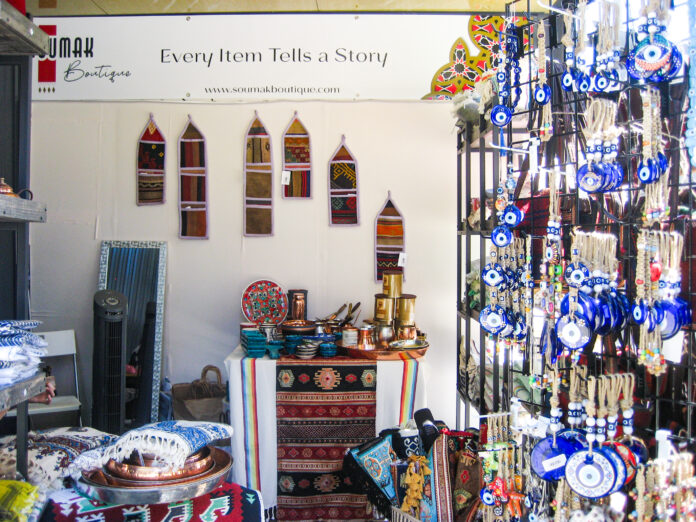
A small storefront adorned with copper dishware, ornately woven rugs, and charms with a blue eye. A banner at the top says “every item tells a story.”
PHOTO: Zobia Khalid

By: Yasmin Hassan, Staff Writer

What hides among the looming towers of Vancouver’s Financial District? The Junction Public Market, that’s what! It’s not something that immediately catches your eye but the search for it is all worth it. With free entry and opening Tuesdays–Sundays (and holiday Mondays) from 11:00 a.m. to 7:00 p.m., what’s not to love? It’s a short walk up from Waterfront station and is nestled right atop Granville Square, which overlooks the water by Canada Place. I suggest taking transit or walking part of the way as pay parking around the area is quite pricey! Let’s delve into what this quaint nook of a market has to offer, shall we?

“In this intimate outdoor space, so many walks of life all came together to enjoy the sun, the market, and the bustling city that surrounds it.”

If you’re sensing a common theme here with my market reviews, yes, I love being by the water! Something about browsing for trinkets while listening to the faint sound of seagulls and seeing the summer sun glimmering on the currents of the strait just does it for me. 

PHOTO: Zobia Khalid

When I first approached the market, I was mesmerized by the array of vendors that were set up in a maze-like fashion, all in shipping containers (what an ode to the shipping dock that was just in view!). I first ventured over to Neo Naturelle, as their skincare and natural soaps caught my eye. Then, I perused Soumak Boutique, which sold gorgeous handmade Middle Eastern crafts ranging from bags, to rugs, to ivory mosaic chess sets. Another vendor I found interesting was All The Good Things From BC, which offered an array of T-shirts, art pieces, and more. This shop gives back to the community by donating to the Indian Residential School Survivors Society and BC Parks Foundation. The last one that caught my eye was EGG Atelier, which I happened to see at the Shipyards as well! They offer cute handmade crochet creations that I couldn’t help but ogle over.

PHOTO: Zobia Khalid

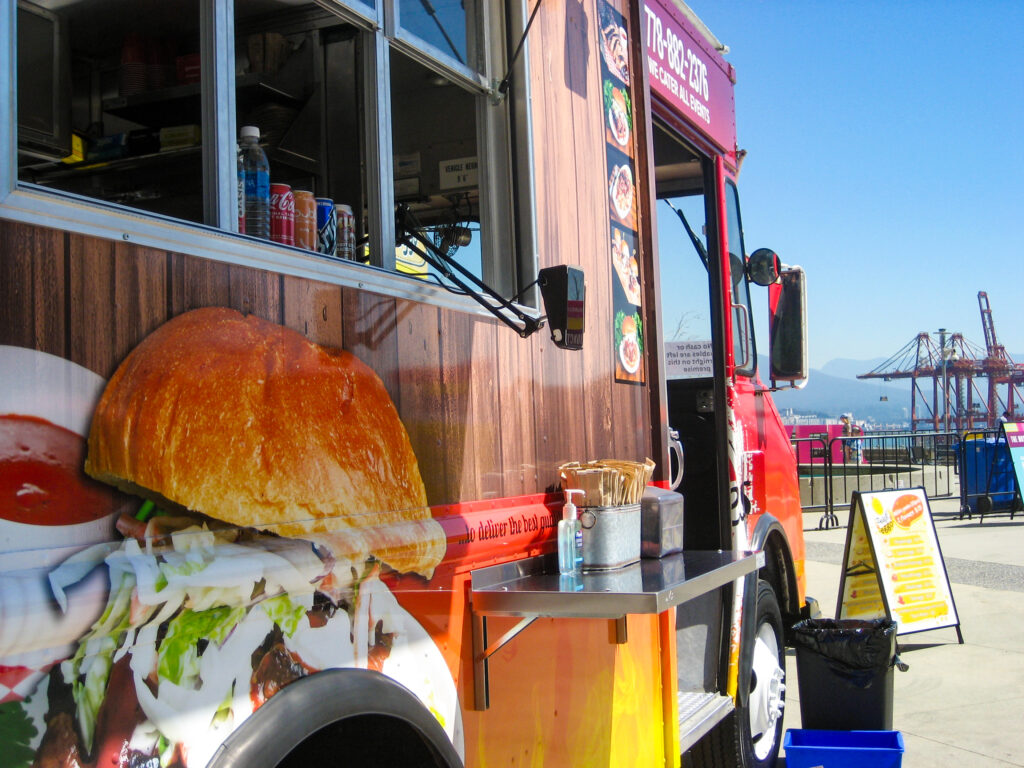
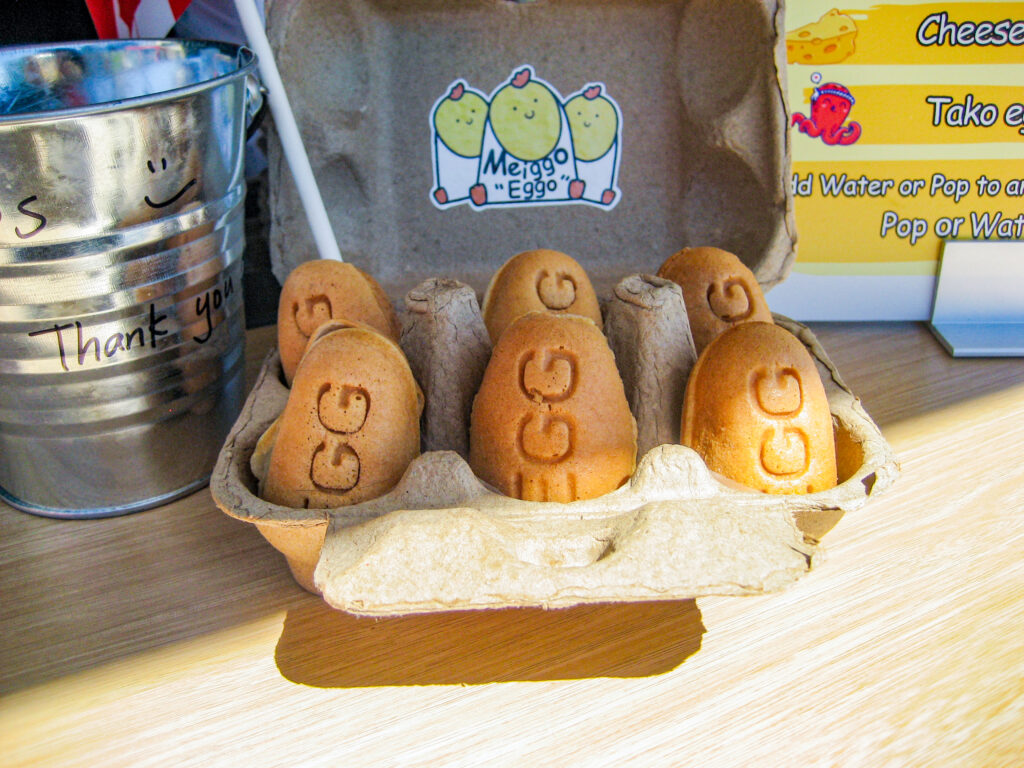
I started indulging in the market’s culinary delights by quenching my thirst at the Sipping Container. I had a refreshing can of Wards Cider, which is grown and made here in the Okanagan. I wanted to get something hearty, so my friend and I tried out Yo-Bones BBQ. He got the pork back ribs, but since I can’t eat pork, I opted for the BBQ pulled chicken sandwich. He said that the ribs were phenomenal, and as much as my sandwich was messy to eat, it was the best tasting mess I’ve had in a while! Finally, I decided to seal the deal with a sweet, egg-shaped custard cake from Meiggo Eggo. The time I happened to go — around 1:30 p.m. during their second week of opening — there weren’t many food vendors open, but the website has a list of them all! 

PHOTO: Zobia Khalid

As I sat down to enjoy my dessert, I noticed the crowds of people all sitting in the shade around a tree, shying away from the hot rays of sun. There were transit operators and office workers taking a lunch break, people passing their time, or friends sitting in a circle and enjoying their food from the market. In this intimate outdoor space, so many walks of life all came together to enjoy the sun, the market, and the bustling city that surrounds it. If you happen to be downtown, take an hour or two to stop by and indulge yourself in the market’s local culture and food. You’ll thank me later!

Need to Know, Need to Go: Vancouver-based arts events

0
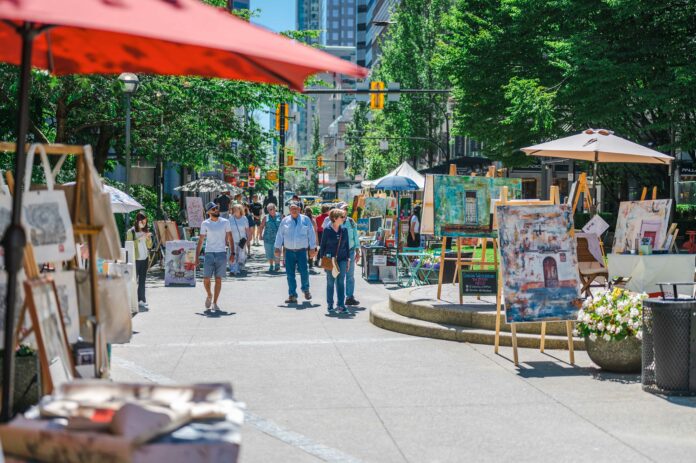
Colourful paintings on easels displayed along a busy street in downtown Vancouver.
PHOTO: Art Downtown

By: Hailey Miller, Staff Writer

Vancouver Art Book Fair

When: July 26: 11:00 a.m.–9:00 p.m. and July 27: 10:00 a.m.–6:00 p.m.
Where: Roundhouse Community Arts and Recreation Centre, 181 Roundhouse Mews, Vancouver 
Admission: Free!

The Vancouver Art Book Fair will showcase a variety of authors locally, across Canada, and around the world. Local authors and artists featured include Cathy Busby, Dawn Lo, Feiya Zhang, and Daniel Robert Hawkins. This event will be held in the heart of Yaletown for the start of the weekend, and will be followed by a symposium on July 28 at Emily Carr University of Art & Design from 10:00 a.m. to 5:00 p.m. The weekend will present programs, performances, and projects from over 100 authors, publications, and galleries — including works from books, magazines, zines, and more!

CREATE! Eastside Arts Festival

When: July 22–28, various times
Where: Various locations in the Eastside Arts District
Admission: Varies

For an entire week, the Eastside Arts Society will present CREATE! Throughout this arts festival, a variety of events, hands-on artistic programs, classes, and experiences will be open to the public. This includes art studios, live mural painting, public art installations, and more. While there, you can also enjoy the beer garden, craft breweries, and food trucks. From Strathcona to East 4th avenue, immerse yourself in the arts, try your hand at a workshop, enjoy live performances, and support local artists.

Art Downtown

When: Wednesdays July 3–Aug. 28, 11:00 a.m.–5:00 p.m.
Where: Lot 19, 855 W Hastings, Vancouver
Admission: Free!

The Vancouver Visual Art Foundation presents Art Downtown, the 5th annual free event that will showcase the work of local artists like Taisha Teal, Maria Ramirez Osses, and more. This also includes performances by artists who have yet to be revealed, so be sure to visit to see which musicians pop up every week. This event will provide an open space for visitors to enjoy the summer weather while also celebrating local artists by learning about their various cultures and art forms. Art Downtown was created as an “open-air gallery and artist studio” that helps unify individuals with the arts. 

Slip Slap Trip Wack

When: July 26: 5:00 p.m.–8:00 p.m., and July 27 and 28: 10:00 a.m.–4:00 p.m.
Where: Russian Hall, 600 Campbell Ave., Vancouver 
Admission: Adults: $15, Youth: $5, Children under 12: $5 or entrance with any toy or book. Tickets available at the door.

For three days, Leaky Heaven will be producing Slip Slap Trip Wack. This show will bring the imaginary worlds of eight to 12 year old children to life from artists and youth who live near the Russian Hall, where the showcase is taking place. The performance will encourage collaboration from the audience by having them watch and participate. The concept behind the piece is a reminder for kids to be kids, and for adults to find joy in the little things and not lose their sense of playfulness and light. Taking inspiration from Our Gang and The Little Rascals of the 1920s, Slip Slap Trip Wack will have you reminiscing about your childhood while joining in on the fun.