Home Blog Page 87

The taxing effects of long transit rides

0
A person (or group of students) on a translink bus/skytrain with perhaps a thinking bubble thinking about how it's been over an hour transit ride to SFU (maybe a clock to signify that they're thinking of passing time?)
ILLUSTRATION: Aliya Nourlan / The Peak

By: Yildiz Subuk, Staff Writer

A long commute can be jarring. It has the ability to disorient and reshape our days. I have experienced numerous headaches and frequent fatigue when I arrive at school or when I get home. I commute from Richmond to the Burnaby campus at least three times a week each semester to attend my classes. Transiting has, over the years, become a routine. Not only do I go to sleep the night before and mentally prepare for school, but I mentally prepare for a long commute the next day as well. The transit time for me is roughly over three hours total. For the past three years I’ve been transiting to campus, and it is only during times of reflection that I notice how much of an impact my commute has on me.

Spending so much of my day in transit usually leaves me needing to decompress. As soon as I get to campus I feel as if I’m too mentally exhausted to get to class. I’d usually arrive a few minutes early and find a space to sit and do absolutely nothing — anywhere I can put my feet up and close my eyes for a few minutes is ideal. After classes end I find myself taking a moment to do the exact same thing, before commuting home. Long commutes bleed into my day. I often feel dizzy or sore, and my head aches from the noise pollution during the commute. When I used to take the R5, the frequent trips on that route often left me with a lingering sense of motion sickness. By the time I got home, I’d feel too exhausted to do anything else. The time I’d spend cleaning my room, going on a run, or interacting with my family, is often taken up by the need to decompress. I am too burnt out to organize all the books scattered around my desk, or fold the ever growing pile of laundry that eventually forms a tower on my chair by the end of the week. Homework becomes a dreadful and endless series of tasks I don’t even want to focus on. I feel frustrated with myself for not having enough energy to do these tasks. I sit in bed, feeling as if I am falling behind. 

Making transit productive has become a goal of mine since my first year. Instead of dreading the commute, I have tried countless times to use it as an opportunity to catch up on certain things. I have finished TV shows, movies, and listened to all sorts of albums as I’d go back and forth from home to campus. Through this, I invested in a good pair of headphones that are comfortable, and have great noise cancelling features. I’ve also started using transit as the perfect opportunity to read. Initially, I’d get a little dizzy trying to read on my way to campus, but once I started listening to audio books and reading at the same time, I managed to get through a lot of novels and nonfiction works. I also began doing my readings for school on transit, reinforcing my pursuit of making my commute time as productive as possible. 

To some extent, these strategies worked. However, I’ve found myself still feeling exhausted and often frustrated with myself. I get irritated with poor scheduling, or feel the need to remind myself that I need to muster up more energy or I will fall behind. Sometimes, while watching or reading), I’m too mentally exhausted or sleepy to pay attention to what I’m doing. The ways I’ve attempted to cope with this “transit tax,” as I call it, help a little, but never quite removes the physical or mental exhaustion once I get home. 

To anyone who has experienced something similar on transit, here are a few solutions I’ve come across from my last three years of lengthy commuting:

1. Allow yourself the time to decompress. 
Many of us have a lot of tasks that need finishing once we arrive home, but there is no point in doing those tasks if you’re already too exhausted. Remember, you just spent an entire day at school — forcing yourself to be productive when exhausted will likely lead to burnout. 

2. Do as much work as you can on campus.
If a long commute means you’ll be too tired to do anything when you get home, attempt to do school work on campus before leaving — it’s easier to focus in a studious environment rather than after a long commute.

3. Catch up on books, TV, and music
If you don’t get too bus sick, try to catch up on your favorite content. Transit is often time that needs to be filled up. Fill it up with something you can enjoy.

4. Take a break from school. 
Let me be clear, I’m not encouraging anyone to skip school. If you have the capacity to take a day off from school from time to time, do it. I have found that, for some classes it is easy to catch up, especially those where the professor uploads notes, or those which require you to do readings. Don’t make this a habit, but use it as an occasional opportunity to rest and take a break. While you may be missing classes, you are saving time by also missing a long commute.

5. Hack your commute. 
Sometimes Google Maps does not give the best routes. Attempt to see if there are other ways you can get from and to campus. Personally, I don’t like to ride the bus for long periods of time, but Google Maps always suggests taking the R5 from downtown to SFU, which can take up to 50 minutes per ride. I’ve found that taking the SkyTrain, which has more connections but takes less time, works way better for me. Also consider sharing a ride with anyone who might leave nearby, who knows, you might end up making a new friend too!

Transit is taxing. Do not feel ashamed for being too exhausted to do anything when you get home, or when you feel the need to take a break from school. Allow yourself room to rest, and acknowledge that a long transit can have a significant effect on your day.


How the Red Leafs fared this late spring season

0
Sprinter Marie-Éloïse Leclair holdng up three fingers while running with a baton in her hand.
PHOTO: Nevaeh Capetillo / SFU Athletics

By: Kaja Antic, Sports Writer

As the summer season comes to a close, it’s time to take a look back on the trials and triumphs the Red Leafs faced these past few months. 

Softball
Overall record: 11–31
Conference record: 6–18

The Red Leafs softball team started their season back in February, going 2–4 at the South Central Regional Challenge in New Mexico. They then went 3–5 from mid-February to early March against non-conference opponents, and carried a losing record at the Stanislaus State Tournament of Champions in California. Against teams in the Great Northwest Athletic Conference (GNAC), the Red Leafs only earned six wins against 18 losses, placing sixth out of the seven competing GNAC softball teams and leaving them on the outside of the playoff picture. Overall, the Red Leafs had a fourth-best .271 batting average, a sixth-best 4.81 earned run average for the effectiveness of the pitchers, and the lowest number of catches in the GNAC, with 1224 throughout the season.

Men’s golf
GNAC Championship results: 2nd
NCAA Division II West/South Central Regional Championship results: T-12th

In April, the Red Leafs men’s golf team punched their ticket to the NCAA Division II Regional Championships with a second place finish at the GNAC Championships. Senior Michael Crisologo earned the top spot in the conference championship with a 13 under par 200 strokes, only one more than the tournament record. The Red Leafs lost the top spot overall to the Western Washington University Vikings, who clinched first in the tournament with eight strokes less than the SFU group. At the NCAA Division II West/South Central Regional Championship, the Red Leafs tied with Colorado State – Pueblo for 12th, with a score of 27 strokes over par, and 29 strokes overall between the two schools and the overall winner, Western New Mexico. 

Women’s golf
GNAC Championship results: 1st
NCAA Division II West Regional Championship results: T-11th

The Red Leafs women’s golf team shined brightly at the GNAC Championships in April, winning the conference title for the second time in two years. SFU carried a 14-stroke difference over Western Washington University, and Freshman Dana Smith earned the individual top spot. Smith carried a two under par, 142 stroke score, setting a new record for the GNAC women’s tournament. At the NCAA Division II West Regional Championship, the Red Leafs tied for 11th with Midwestern State University, with a 50 over par and 914 stroke scorecard.

“The Red Leafs women’s golf team shined brightly at the GNAC Championships in April, winning the conference title for the second time in as many years.”

Outdoor track and field

At the GNAC Conference Championships, the Red Leafs showed up strong. The women’s 4x400m relay team earned first place, while Red Leaf sophomore Jarrett Chong took first place in the men’s javelin throw. As well, senior Megan Roxby won the women’s 1500m run, junior Claire Bosma won the women’s 400m dash, and junior Marie-Éloïse Leclair took the titles for the women’s 100m and 200m dash. In the NCAA Division II Championship, Chong placed 15th in the men’s javelin throw, Roxby placed seventh in the women’s 800m run and sixth in the women’s 1500m run, and Leclair placed seventh and fifth in the women’s 100m and 200m dashes, respectively.

The underappreciated visual poetry of Satyajit Ray

0
a drawing of the director, Satyajit Ray, behind the scenes of a movie set
ILLUSTRATION: Den Kinanti / The Peak

By: Yildiz Subuk, Staff Writer

“What interests me is density, how much can you tell, how telling can you make your images.” — Satyajit Ray  

Satyajit Ray was a Bengali filmmaker, composer, and writer from Calcutta (now known as Kolkata, India). During the early 1950s, Ray was an advertiser interested in telling stories that mattered to him. He had no funding for a film, so he managed to borrow a 16mm camera, gather a crew of amateur actors, and began filming in a village near Calcutta, called Boral. The village was rich with nature, from large fields with the occasional train passing in the background, to illustrious forests and serene ponds, all of which evoke an emotionally-dense reaction just through images. This film would eventually be released as Pather Panchali in 1955, his first feature and the first installment of The Apu Trilogy.

A bildungsroman (which translates to “novel of education/formation” in German) isn’t just a coming-of-age story, but often depicts the psychological changes and influence of society on character during different transitional periods of their lives. According to film critic Terrence Rafferty, The Apu Trilogy is akin to a bildungsroman. It shows the formative years of a young boy living in a village, near the beginning of an industrial era in India, and his transition into an adulthood that extends into fatherhood.

The trilogy begins with the film Pather Panchali, which tracks Apu’s adolescence. A young boy caught up in various adventures, Apu is filled with a burning childlike curiosity. He is deeply shaped by the women in his life (mother, grandmother, and sister). Through the perspective of this curious boy, the audience is exposed to village life in India, filled with hardships and struggles, but also a community with complex bonds and multidimensional love between family members.  

In the second film, Aparajito, Apu is now a teenager, eager to unlock his potential as an academic. His family has moved to the village, and Apu has slowly realized the world is full of loss, and requires a sense of reconciliation and growing spirituality to keep moving forward. Aparajito continues Apu’s story by showing the same boy grown up and transformed by the trauma he faced in the previous film. With Apur Sansar, the third film, Apu is now a grown man who grapples with career choices, love, and fatherhood. Each film shows Apu at a transformative state in his life. A sense of home and existential meaning shifts during each installment of the trilogy, as we see Apu experience heartbreak and loss, but find ways to push forward.

This trilogy explores the complexity of what seems to be a simple story of a working class man. Ray’s films feel wholly unique, not just due to their locations and images, but the approach as well. Visually poetic, each film is composed of almost an overwhelming amount of beautiful shots, capturing characters in different atmospheres and locations. Ray had no access to studios, or even a proper film crew, so he made do with what he had at his disposal. He asked individuals he came across to act in his film. Instead of relying on artificial lighting, he used natural light to his advantage by shooting in interiors that allowed sunlight to a certain extent, or shooting in different parts of the day in different weather conditions. These strategies resulted in atmospherically rich shots, invoking the beauty of natural landscapes.  

Ray’s approach has had such a tremendous effect on numerous filmmakers, from Wes Anderson to Martin Scorcese. Despite his brilliance, his films were not seen by a large Indian audience at the time, due to them being in Bengali (a language not spoken commonly by many Indians at the time). But, in retrospect, his films have stood against the test of time, as Ray received an honorary academy award in 1992 for his work as a filmmaker. With The Apu Trilogy, we are shown shots that tell a story, a portrayal of everyday life, with no words needed for explanations. They’re made by a filmmaker whose approach proves that a film’s timelessness can be found in more than just a large budget and studio.

Welcome to SFU!

0
Notebook with camo pattern with label on the front that reads “SFU’s declassified school survival guide.”
ILLUSTRATION: Sonya Janeshewski / The Peak

By: Tam Nguyen, Staff Writer

Congratulations, your nightmarish high school experience ends with you getting into SFU! Let’s be honest, this is the best-case scenario given that UBC doesn’t want you, and you’re not cool enough for Toronto and Montreal. As a result, Mom finally loves you, and Dad, as usual, isn’t there. 

Now, how will you thrive for the next four years (make it six, actually) of university? Don’t worry, I barely survived my first year and here’s how I did it: 

1. Academic excellence 
Go to Rate My Professors before you impulsively enroll in any courses. As my Viet ancestors said, “Do it wise or do it twice.” 

Don’t get distracted by the comments about which professor gives interesting lectures. What you really need to know is which professor WON’T screw you over with their absolutely off-topic exams and high horse attitude when you ask them for help during office hours.

2. Club days 
First of all, don’t join the Burnaby Mountain toastmasters club. I invested in a new toaster and came with bread and butter just to find out it’s a club for speechmaking (misleading, much?).  If you are in computer science AND a gender minority, join as many support groups as possible; they come in very handy later. If you are, like, cool or whatever, join The Peak!

3. Dorm, sweet dorm
A private dorm room costs $10M per semester and you don’t even have enough space for TikTok dancing to “Diet Pepsi” by Addison Rae. You should look into selling your left kidney right now.

4. Statistical facts about computer science students
The computer science student body consists of 40% San Francisco-Tech-Bro wannabes, 5% Asian they/thems, and 55% apolitical.

5. Cheap groceries 
Go to Nesters Market around the corner, grab anything you want, and waltz right out the door. Just don’t pay; it’s not that deep. Nesters Market also has a pharmacy partnered with Studentcare to provide partially-covered antidepressants you will likely need from attending SFU. How convenient, lucky us!    

6. Cheap eat
The only place that’s worth a dime to eat around campus is Donair Town. For $10, you get a wrap that fills you up till you can leave this cursed place for some actual decent meals.

7. Snow day
Yeah, that’s not happening at SFU. No excuse, gear up soldier, you’re gonna climb up the mountain cause buses ain’t running

8. Pray non-religiously before your course registration appointment
You will NOT get into the course you need to graduate, cause it’s the system, baby! Don’t feel too bad, all the hot girls go through this phase.

9. Friendships
If you can’t find a best friend within five minutes of being on campus, don’t be sad yet. Lectures, labs, and clubs sometimes aren’t the greatest places to make friendssimply we are misanthropists, and it has nothing to do with you. It takes time, so keep searching and you will find your people eventually. 

10. Dating
Girls flock to me cause I’m funny, so I don’t know how to advise people with an average sense of humor. Style your hair better, I think. 

11. Special guests
SFU students and raccoons coexist, so leave them alone when you see them strolling around the AQ. 

12. DO NOT enroll in any 8:30-morning class 
Doing so is a surefire way to ruin your circadian rhythm. But seriously, only people without a life (i.e. MATH 151 and 152 professors) choose that time to teach about integrals.   

13. Student activism 
You want something to change at SFU in terms of the university’s investment approach? Maybe less shares of war contractor companies? Send an email to [email protected]. SFU, Canada’s top university for innovation, is waiting to see what UBC does so they can copy them. 

Hope you find these guidelines useful. And yes, I’m roasting both myself and you, but mostly you. Anyways, enjoy your new journey at SFU, and I wish you best of luck (you’ll need it)! 

Hidden Gems: Vancouver’s best matcha

0
A plain white wall decorated with simple black writing that lists a menu that reads “black (espresso),” “white (espresso+milk),” and “green (matcha+milk).”
PHOTO: Amrit Kamaal / The Peak

By: Alex Ileto, Peak Associate

cowdog coffee
3720 Oak St., Vancouver
Open every day 8:00 a.m.4:00p.m.

With cowdog’s recent rise to social media fame (they truly conquered “brat summer”), this spot may not be a hidden gem, but it’s too good to not shoutout! Their unique line of signature drinks sets them apart from any other café in Metro Vancouver. Switch up your usual matcha latte order and try their sweet strawberry matcha latte or fun and fizzy passionfruit matcha tonic. Say “hello” to the always-friendly owners, make some friends in the inevitable order line (it moves quickly), take a seat to admire their beautiful florals, and treat yourself to a cowdog matcha drink. (P.S. they don’t charge extra for oat milk!) 

93 Coffee
1789 Comox St., Vancouver
Open MondaySunday 8:00 a.m.9:00 p.m.

Don’t let their name fool you because although their coffee is amazing, their matcha drinks are something special. Nestled in Vancouver’s West End, this authentic, family-run Japanese eatery serves up delicious curry rice, omurice, and, of course, matcha drinks galore! The rich quality and subtle sweetness of their matcha drinks makes them one of the best in town. 93 Coffee’s matcha game is truly hard to beat.

Creekside Coffee Factory
3000 Lougheed Hwy. #103, Coquitlam
Open MondaySaturday 8:30 a.m.9:30 p.m. and Sundays 8:30 a.m.6:30 p.m.

I can no longer gatekeep my favourite, go-to Coquitlam café. Their smooth, lime-green matcha lattes are clearly made with care. Pair this classic drink with a freshly baked scone or a grilled chicken sandwich. Craving the matcha without the latte? Grab a scoop of their creamy green tea gelato. With optimal seating, power outlets a-plenty, and life-size teddy bears, Creekside Coffee Factory is the perfect place for a fall study session paired with some great matcha.

Oidé Coffee
1548 W 2nd Ave., Vancouver
Open TuesdaySunday 8:00 a.m.4:00 p.m.

Next time you visit Granville Island, make sure to stop by Oidé Coffee a couple blocks away. Their matcha powder, imported directly from Kyoto, Japan, is whisked to perfection, creating a vibrant green latte. Oidé has managed to eliminate any bitterness from the matcha, bringing out its rich, umami taste. It’s no wonder their matcha has been crowned “the best in town” by many. Did I mention the baristas are latte art experts? So snap a pic, take a sip, and enjoy Oidé.

The CRA revokes charitable status of two organizations supporting Israeli military

0
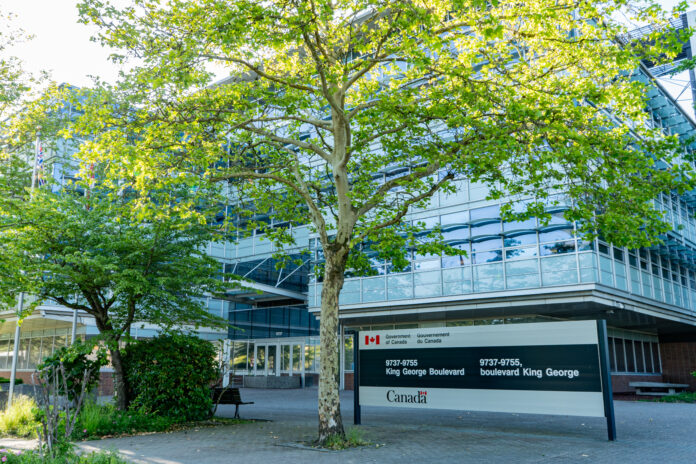
This is a photo of the outside of the Canadian Revenue Agency Building in Vancouver.
PHOTO: Elyana Moradi / The Peak

By: Sofia Chassomeris, News Writer

On August 10, the Canada Revenue Agency (CRA) revoked the charitable statuses of the Jewish National Fund of Canada and Ne’eman Foundation of Canada. Both organizations will no longer be exempt from income tax or receive subsidies as registered charities. This is because they failed to abide by the Income Tax Act

This action follows years of lobbying from activists such as Just Peace Advocates (JPA) for the CRA to conduct investigative audits on charities that have donated to the Israeli military. JPA claims that these organizations have been subsidizing “charity donations going to an apartheid state committing war crimes and genocide” using Canadian tax dollars. The CRA has allowed the Jewish National Fund to do so since 1967, and the Ne’eman Foundation since 2011. The Income Tax Act states that charities cannot issue tax receipts or claim tax deductions for donations that support the armed forces of another country.

In a statement to The Peak, the CRA said, “The confidentiality provisions of the Act prevent the CRA from commenting on specific cases.”

The Jewish National Fund regarded the CRA’s decision to revoke their status as “wrong and unjustified,” claiming they are focused on funding “projects to build the social infrastructure of the land of Israel.” CBC indicates that the CRA made this decision in response to “a complaint” that said the Jewish National Fund “used charitable donations to build infrastructure for the Israel Defence Forces (IDF),” including funding “infrastructure projects on Israeli army, air, and naval bases.”

Just Peace Advocates’ analysis of the Ne’eman Foundation’s tax returns shows that millions of Canadian dollars were also donated to organizations associated with the IDF between 2016–2022. JPA has criticized the CRA’s slow call to action but ultimately applauds the decision. 

The Peak interviewed Dr. Miles Howe, professor of critical criminology at Brock University in Ontario, who has written on the “phenomenon of Zionist Philanthropy” and “the synchronicity of tax-deductible gift-giving with Palestinian erasure.” In his work, he discusses how Zionism promotes and finances the elimination of “Palestinian people from the territorial boundaries of what Zionism conceives of as biblical Israel.” Zionism is a “nationalist movement” aiming to create a “Jewish national state in Palestine.”

“Don’t be intimidated by what initially appears to be a very strong movement against you.” — Dr. Miles Howe, professor of critical criminology at Brock University

Howe said living under occupation includes open-air prison conditions and Palestinians being displaced from 78% of their land. “What possible justification is there for that?” he asked.

Howe’s recent petition to parliament states that these charitable donations “may well be Canada’s most important contribution to Palestinian dispossession.” While the removal of these charities’ statuses is considered by Just Peace Advocates as a “massive shift in how Canada views the Israeli occupation,” dozens of charities continue to make significant annual contributions. The Peak also interviewed Karen Rodman, executive director of JPA, for more insight. 

“Within the movement, it’s easy to say ‘wow, we got a victory!’” Rodman added,“But we don’t usually declare victories very easily, we call them ‘partial victories.’” JPA’s open letter to the Minister of Revenue Marie-Claude Bibeau and Prime Minister Justin Trudeau brings these charities to attention as they continue to “funnel a quarter billion dollars a year to projects in Israel.

When asked about how students can get involved in pro-Palestinian activism, Howe said, “Don’t be intimidated by what initially appears to be a very strong movement against you.” He added, “There’s going to be a need for research, legal action, healing, direct action [ . . . ] and there’s going to be a need for education.” 

On September 5, the International Day of Charity, activists across Canada rallied at CRA offices to get the attention of the federal government and further protest the use of tax dollars in funding a genocide against Palestinians.

Horoscopes: September 9–15

0
An illustration of a girl, stars and astrological signs strewn in her hair.
ILLUSTRATION: Marissa Ouyang / The Peak

By: Amrit Kamaal, Peak Associate

Aries
March 21–April 19
Honey, congrats on hitting 1 million views on a TikTok lipsyncing about how “demure and mindful” you are for wearing an Aritzia pantsuit to get coffee. With your newfound clout, it’s written in the stars that you should book a one-way ticket to LA and join the Creator Rewards Program. It’s practically written in the stars that you’ll become the next Charli D’Amelio (just make sure you can stomach escargot). 

Taurus
April 20–May 20
Your summer consisted of so many camping trips that you consider yourself one with nature at this point. Sure, your bragging about your self-proclaimed “relationship with mother nature” and your monthly Instagram screen time being an hour during an icebreaker comes off as pretentious, but that’s OK! According to the stars, you are the ideal candidate for dealing with the future raccoon takeover

Gemini
May 21–June 20
You thought, “I’ll get it this summer,” but did you? Every summer, you promise you’ll finally get your driver’s licence, or at least your learner’s permit. But to this day, the only cards in your wallet are your U-Pass, an expired credit card (you forgot where the new one is), and a gift card to the SFU Bookstore (so Brat). Bestie, you’ll lock in eventually. The stars say that you will get your licence next summer

Cancer
June 21–July 22
Makeup blindnessis taking over, and now strangers on the Internet are giving you unsolicited advice. Sure, your makeup routine consists of using your winter concealer that’s three shades lighter than your skin instead of foundation. But, that has nothing to do with blind people and everything to do with the fact that you can’t afford new makeup. You can totally still market this look, though. Call it “the summer I discovered concealer.” The stars predict we found SFU’s next it girl in the making. 

Leo
July 23–August 22
You’re very determined, and you’ll do anything to achieve your goals, especially if it includes dedicating hours of your life to lining up the day before the grand opening of some mediocre American fast-food chain. Maybe it’s written in the stars that you’ll use this perseverance to get a job or not have to cram your midterms this semester.

Virgo
August 23–September 22
You didn’t go out much, or at all, and just spent the summer binging shows on Netflix, Crave, and even Tubi. Even if your summer feels ruined, your semester won’t be! The stars show you re-watching your recorded lectures like a hawk; just do a split screen with a gameplay video or Grey’s Anatomy

Libra
September 23–October 22
You spent your summer trying to write the perfect One Direction fanfiction on Wattpad to secure a book-to-film adaptation like The Idea of You. Unfortunately, your work gave off Colleen Hoover energy instead (the bad prose part, not the romanticizing abuse part). Keep writing, though; the stars see your fanfics being used unironically for The Peak’s humour section. 

Scorpio
October 23–November 21
You were the definition of Summertime Sadness this season. You had multiple situationships trying to find the “electric feeling” Lana Del Rey described. The stars got your back though, when all else fails, you’ll be roaming the campus hand-in-hand with your ex again for a while. 

Sagittarius
November 22–December 21
You pride yourself on being the self-proclaimed mean girl of the group, so it’s totally not annoying for your friends to apologise for your out of pocket behaviour at PNE Playland because someone bumped into you. It’s OK, the heat got to you! The stars show when winter hits, your friends won’t need to excuse your outbursts.

Capricorn
December 22–January 19
Your wallet is a heck of a lot lighter from the amount of spending you did this summer, disguising it as “saving.” Sure, you got a fresh wardrobe from all the summer “sales,” but make sure you set some money aside school-wise. Your tablet is on its last legs right now, and the stars don’t exactly see it lasting one last semester.

Aquarius
January 20–February 18
I don’t care that you quit your job, put the scissors down. You wanted those Sabrina Carpenter bangs for the summer but came out looking like Emma Roberts instead. Your curtain bangs look like closed window blinds but no worries! The stars see you rocking those curtain bangs when they finally reach your chin for the fall semester of 2026. 

Pisces
February 19–March 20
You somehow managed to skip every lecture in your summer semester to the point where you don’t even know what the professor looks like. We can fix that though, the stars show you coming on campus to capture that Gilmore Girls aesthetic with your latte and the Canvas login screen open. 

SFU Pipe Band wins third overall at 2024 world championships

0
This is a photo of the pipe band competing in Glasglow this year.
PHOTO: @sfupipeband / Instagram

By: Caitlin Kingsmill, News Writer

The SFU Pipe Band brought home a bronze shield after placing third overall at this year’s World Pipe Band Championships in Glasgow, Scotland on August 16 and 17. This marks their return to the top three for the first time since 2012. The group is just “one of four bands from outside the United Kingdom to have ever won first place at the championships,” which they have now achieved six times. 

The pipe band was formed in 1966 and consists of 45 players, led by pipe major Alan Bevan and lead drummer J. Reid Maxwell. In first place at this year’s world championships was Scotland’s Inveraray and District, with Northern Ireland’s Field Marshal Montgomery in second place. Pipe bands involve bagpipers, side drummers, bass drummers, and tenor drummers, with the first pipe band in Canada being formed in 1759, brought by the Scottish.

The Peak interviewed Robert MacNeil, president of the SFU Pipe Band Society, for more information. MacNeil began as a member of the band in 1981, shifting into an administrative role in the ‘90s. “The thing that has kept me interested all along is the pioneering things that the SFU Pipe Band has done and how it meshes so well with the mission of the university,” he said. MacNeil explained that SFU has always been a university that “sets its own path,” and so has the SFU Pipe Band.

MacNeil described the feeling of returning to the top three this year as “wonderful!” He attributed the band’s success in Glasglow to their steady improvement in competition since the COVID-19 pandemic began. In previous years, the band typically performed its best on the second day, but “this year was the reverse,” said MacNeil. “I think it gave the players [ . . . ] this feeling as if we can do this, we played two good runs, we can do it on the Saturday,” he continued.

While the world championships only last for two days, the players’ commitment to the band is year-round. “If you’re joining the band, you’re essentially reshaping your life around that,” expressed MacNeil.

“SFU as a community really has found its place over a number of decades and to represent that organization worldwide is really easy for us, and we’re really proud to be able to do that.” — Robert MacNeil, president of the SFU Pipe Band Society

Individual players are also expected to rehearse on their own and in small groups, teach in the Robert Malcolm Memorial Pipe Band youth development program, and adjudicate for competitions. The Memorial Pipe Band, also based at SFU, teaches piping and drumming to “foster the playing and performing of Scottish music by youth aged six to adulthood from all cultural backgrounds.”

The band’s youth development program plays a large part in finding committed players for the SFU Pipe Band. Since the program’s inception in 1994, many students in the program also ended up playing for the pipe band. “That’s a tremendous motivating factor for any parent that wants to get their kids involved in music work,” said MacNeil. “They can see if their child works hard and has dedication, how they can start as a beginner and eventually make it up to the SFU Pipe Band.

“There’s a lot of players playing in the SFU Pipe Band today that got that start as a beginner in our system and it’s very rewarding to be able to see these players come through.”

MacNeil also reflected on the importance of having a strong administrative team to support the band in its success: “The administration’s support has to be at the same caliber as the music that is being generated by the band, which means that if the band is operating at this top level, we have to have an administrative structure that supports that,” he said. 

“SFU as a community really has found its place over a number of decades and to represent an organization worldwide is really easy for us, and we’re really proud to be able to do that,” expressed MacNeil. “So we want to give credit also to the community up the mountain that is also doing exceptional things.”

Scotiabank subsidiary divests from Israeli military technology company

0
This is a photo of a Scotiabank building with the word “Scotiabank” also written in Chinese on the building.
PHOTO: Victoria Lo / The Peak

By: April Smith, SFU Student

Scotiabank recently reduced its holdings in Israeli military technology company Elbit Systems following a series of protests that took place across Canada spanning March through June. According to the US Securities and Exchange Commission, their holdings have dropped from shares valued at $237 million in May to $113 million in August. In March, 1832 Asset Management, the subsidiary responsible for making these investments on behalf of Scotiabank, also reduced its holdings in Elbit.

This comes after increasing pressure from activists across Canada. In an interview with The Peak, Tamer Aburamadan, a local Palestinian activist, described his role in the most recent series of protests as a movement organizer. He and many other organizers helped orchestrate a pressure campaign that would target several Scotiabank locations, pushing the bank to completely divest from Elbit.

“Unfortunately, Canada is complicit in many ways with the ongoing genocide in Palestine, both at the governmental level, but also the corporate institutional level. The investment in Elbit Systems is a good example of that and there should be no profit off genocide and off the murder of civilians in Gaza and elsewhere,” said Aburamadan. 

“Therefore, the need is there to apply outside pressure,” he continued, explaining the rationale behind the protests. According to their most recent quarterly financial report, Scotiabank’s total assets were valued at over $1.4 trillion as of July 31, 2024.

On March 15, protesters gathered at over 28 Scotiabank locations across the country. Protests were held in cities including Toronto, Regina, Nanaimo, and Vancouver. The most recent day of action, on June 25, saw similar protest activity.

“Unfortunately, Canada is complicit in many ways with the ongoing genocide in Palestine, both at the governmental level but also the corporate institutional level.” — Tamer Aburamadan, local Palestinian activist

Scotiabank stated they are not responsible for the subsidiary’s decision to divest and that it was a decision made irrespective of the protests. They said the decision was based only on “investment merit” and they do not “directly hold the shares” or “interfere in the independent investment decisions of its portfolio managers, including at its subsidiary 1832 Asset Management.” The Peak reached out to Scotiabank for a statement but did not receive a response by the publication deadline.

“We’re disappointed because we’d prefer that they acknowledge that investing in weapons manufacturers and profiting off the murder of innocent civilians is not in accordance with their values as a company and their mission and vision. But unfortunately, they decided not to go down that route,” stated Aburamadan, regarding Scotiabank. 

While the progress made to push Scotiabank to divest has been motivating to people like Aburamadan, he explained that many activists across the country will not stop applying pressure until the share is reduced to zero. Scotiabank currently holds 1.44% of Elbit shares. Aburamadan says upcoming protests to target Scotiabank are in the works.

“I would encourage all Canadians to raise their voice and join in whatever way they can because being involved, being active, and speaking on behalf of your values does work and there are things that you can do to stop the ongoing bloodshed and genocide.”  

SFU alum debuts Naked City

0
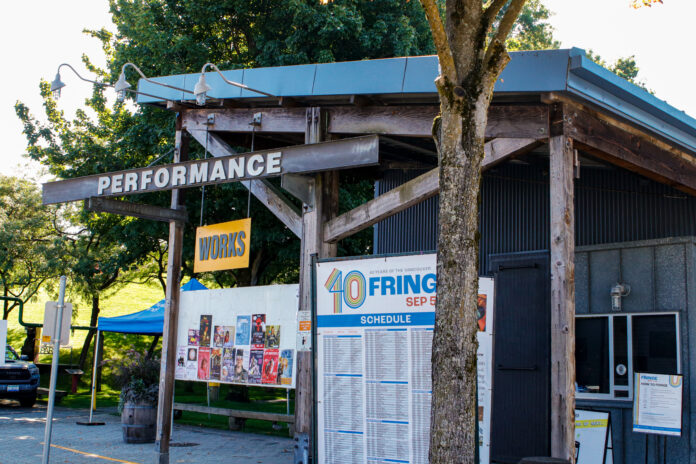
exterior of the play's venue, Performance Works
PHOTO: Katelyn Connor / The Peak

By: Yasmin Hassan, Staff Writer

What makes urban landscapes so unique in every city and dwelling around the world and in Vancouver? This is one of many questions that director and producer Pamela Subia prods at in her play, Naked City. The Peak had the pleasure of chatting with Subia about her play, and how it was influenced by her experiences adjusting to a new city.

An SFU alumni who graduated with a degree in engineering, Subia “always wanted to be an artist but didn’t have time.” After finishing school in 2022 and finding a full-time job, Subia was finally able to delve into the wonders of art, as she always wanted. Naked City is Subia’s first play. Having coincidentally contributed to The Peak during her time at SFU, she took interest in the arts by attending events and surrounding herself with people from arts backgrounds, like the MFA program, and joining clubs. “SFU really helped me have the resources to become more than just an engineer,” Subia said. “Kind of like seeing how I could be more than just my degree.” 

Coming from Ecuador and arriving in Vancouver at 18 years old, Subia noted that in Latin America, people are “super close and a little intrusive in each other’s lives. 

“In Vancouver, I feel like there’s a me that I am when I am in Vancouver. And then there’s like, how I become when I enter a new city.” — Pamela Subia, director and producer

“There’s a little more distance,” Subia said of Vancouver. “People are more reserved, there’s a little bit more asking before everything.” 

Subia’s play explores how the dynamics of cities change effortlessly, as if the people affect the city and the city affects the people. “People idolize cities.” She added, “When you’re in France, people talk about people from Paris. When you’re in Spain, people talk about people from Madrid. And my country, people talk about people from Quito and people from Guayaquil. So there’s kind of this idea of how people are in certain cities.

“In Vancouver, I feel like there’s a me that I am when I am in Vancouver. And then there’s like, how I become when I enter a new city,” Subia added. “What is the source? Who created that identity for every city, and why are we doing that?”  

When she first came to the Lower Mainland, Subia tended to stay on Burnaby Mountain while living in residence. “It was just: dining hall to my room, then hanging out with my friends.” Because she didn’t leave campus, Vancouver “didn’t exist” to her. 

“You meet this new group of people and it’s now interesting, and then you feel lonely and then it’s not interesting anymore,” noted Subia when relishing her self exploration of the city. Although she was enchanted by the surrounding nature we have here in the Coast Salish territories, when Subia began engaging in the social scene of the city like going to “events, going to gigs, going to theatre,” she tried something she was missing out on. 

The play all started when a friend of Subia’s told her that the Fringe Festival was a lottery, which prompted Subia to put her name in the ballot. 

The play is a medley of all sorts of literal and metaphorical ideas. Influences from the likes of Akira Kurosawa’s Dreams and the Ecuadorian tradition of los años viejos — masked dolls that are burned at midnight every year to celebrate the new year — and so much more. Though I could’ve dissected more about the influences and themes, Subia was careful not to spoil too much of the play, and for good reason! It’s one thing to read the inside scoop, but something entirely different when actually witnessing the play in all of its glory. 

Check out Naked City at Performance Works from September 5 to 15.