Home Blog Page 861

Other SFSS Presidential Candidates

0

Screen Shot 2016-03-18 at 2.05.13 PM

The Avocado

  • I’ll decide once and for all what I am
  • Free sex ed
  • List of sex positions inscribed inside me
  • Stop making fun of me

raccoon

Raccoon

  • More garbage around campus. We need food, and garbage pickup is too efficient for us to scavenge with current levels
  • We demand a separate raccoon residence
  • New faculty of raccoon studies.

jerkslarge1

Chad Douchewinkle

  • Dining hall serves all-you-can-drink beer
  • Beer gardens on campus
  • No open liquor laws on campus
  • More keggers

sauron1


The Dark Lord Sauron

  • Increased advocacy
  • Clearer communication
  • Increased student services
  • More student engagement

dog

Spot the dog

  • “Woof”
  • “Ruff”
  • “Bow-wow”
  • “Bark”
Photo credits:
Intoconnection (Youtube)
The Peak (Youtube)
Guy W. Wicke (Flickr)
OhMyGeek! (Youtube)
Albert Herring (Wikipedia)

SFSS election ballot includes two referendum questions for students

1
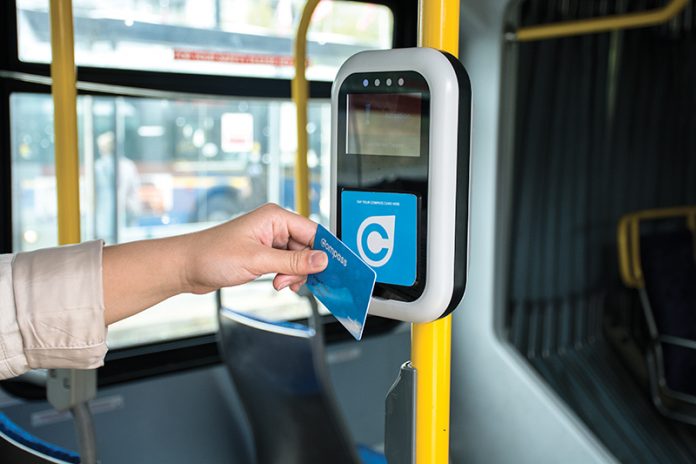
The U-Pass is one of two issues being brought to referendum during the 2016 SFSS election.

In addition to the 15 positions that students will be voting on in the Simon Fraser Student Society (SFSS) election, there are also two referendum questions that could slightly affect how much students pay in fees.

The first question is whether or not to increase the U-Pass fee collected from students as tentatively agreed upon by SFU along with other post-secondary institutions and TransLink. The second question proposes scrapping the student levy taken for Schools Building Schools.

Both of these referendums require five percent of the undergraduate student body to vote in order for them to count, regardless of the amount of yes or no votes. With 24,001 students in the current student registry, that means that 1,201 votes will need to be cast. 

Question one: U-Pass

“Whereas the current U-Pass BC Agreement expires April 2016;

Whereas the current and proposed U-Pass BC fees are:

Current fee: $38.00 per month of study

Proposed year 1 fee: $39.50 per month of study (May 1, 2016 – April 30, 2017)

Proposed year 2 fee: $41.00 per month of study (May 1, 2017 – April 30, 2018)

Whereas a “no” results for this referendum will result in SFU undergraduate students no longer having access to the U-Pass BC;

Are you in favour of authorizing the Simon Fraser Student Society to collect a mandatory fee of $39.50 per month of study for the participation of students in the U-Pass BC Program beginning May 1, 2016 to April 30, 2017 and $41.00 beginning May 1, 2017 to April 30, 2018?”

This referendum comes since the current U-Pass agreement is set to expire, as it was a two-year deal that was struck in 2013. This current deal is also for two years, meaning it that should it pass it will expire again in 2018.

The proposal laid out was agreed upon by representatives from all schools and TransLink, and is the contract to which students have to agree. Should the vote not pass, it does not mean that a new proposal will be struck.

It is a $1.50 increase each of the two years, meaning that students will pay $3 more than they currently do for their U-Pass at the end of the proposed agreement.

There are fears that if not enough students vote or students vote no to this, they will lose their U-Pass until 2017.

According to Darwin Binesh, VP of Student Services, “Even if you get a ‘yes’ vote and 99 percent majority but less than five percent of eligible cast ballots, it doesn’t count. It’s not binding; we lose the U-Pass.”

Question two: Schools Building Schools 

“Whereas Schools Building Schools, a Canadian registered charity, currently collects an opt-out levy of $1 per term from full time SFU undergraduate students and $0.50 per term from part time SFU undergraduate students, which was voted upon in a referendum held in 2012;

Whereas, Schools Building Schools no longer wishes to receive financial support from the students of Simon Fraser University;

And whereas the SFSS is unsatisfied with project and financial information provided by Schools Building Schools;

Are you in favour of authorizing the Board of Directors, by ordinary resolution, to cease the collection and remittance of any funds to Schools Building Schools on behalf of the Simon Fraser Student Society?”

“This is a formality,” said VP External Kathleen Yang when describing this referendum question at the Burnaby SFSS debates.

As it stands currently, students pay either a $1 or $0.50 levy per term — depending on if they are full time or part time students — that goes towards Schools Building Schools, a student-led organization that build schools in Africa.

The reason that Yang is calling this a formality is that both sides have agreed that ending the levy is a suitable call, as they are moving in different directions than originally intended when the deal was first struck.

Both sides are encouraging students to vote yes; however, it is still a decision that falls on students, and needs five percent response to have any action taken.


Recent sexual assaults prompt RCMP action

0
A map showing four of the five sexual assaults that have happened in Burnaby. - Photo courtesy of CKNW.com

Since Jan. 29 of this year, five sexual assaults have occurred on Burnaby Mountain and in the greater Burnaby area, prompting the Royal Canadian Mounted Police to form an official task force to investigate. According to Staff Sergeant Major John Buis, a sexual assault spree of this calibre has never before happened in the Burnaby area.

The assaults first began on Jan. 29, then occurred on Feb. 18, March 1, March 5, and March 6.

During the March 1 attack, an unknown male attacked a woman on Springer Avenue while she was walking home from a Hastings street bus stop at 1:55 a.m. Approaching her from behind, he attempted to pull her into the bushes.

Fortunately, she was able to fight him off, causing him to flee northbound. The suspect is described as a caucasian male, taller than 5’8” with a medium build, and wearing dark clothing.

The most recent assault took place in the middle of the day at 2:50 p.m. The suspect, described as a white, 5’7” male wearing a soft dark hoodie, attempted to sexually assault a woman while she was walking on a popular trail near the Lake City Way SkyTrain station. The suspect once again was a stranger to the victim.

Luckily, a man whom the police referred to as a “good samaritan” noticed the attack and was able to scare the man away. Police are in search of the good samaritan, who is estimated to be around 50–60 years old, asking him to come forward to help their investigation. The survivor of this assault is receiving treatment in the hospital.

According to an RCMP police report released on March 7, it is “too early to say if the incidents are linked,” but the “similar characteristics” of the assaults are what prompted the creation of the task force. According to Sergeant Major Buis, the similarities are that “the suspect targeted women who were alone in areas where there were not many people.”

The force is led by investigators from Burnaby’s Serious Crime Section. Additionally, the RCMP has partnered with the Vancouver Police Department, collaborating on recent sexual assault cases.

The RCMP would like to remind Burnaby citizens to be vigilant when walking alone in trails, as well as walking alone at nighttime. Sergeant Major Buis is “confident” that the RCMP will catch the suspect soon. In the meantime, the Community Response Team is increasing bike patrols on trails, and General Duty Officers have partnered with Transit Police to “conduct more, highly visible patrols in and around transit stops and stations at night.”

The Peak reached out to Campus Safety & Security Services to find out more, but they declined to comment.

If you have any tips that may help the investigation, call the Burnaby RCMP Sexual Assault Task Force at (604) 294-7922, or if you wish to remain anonymous, you can call 1-800-222-TIPS. You can also visit their website: www.solvecrime.ca.

University Briefs

0
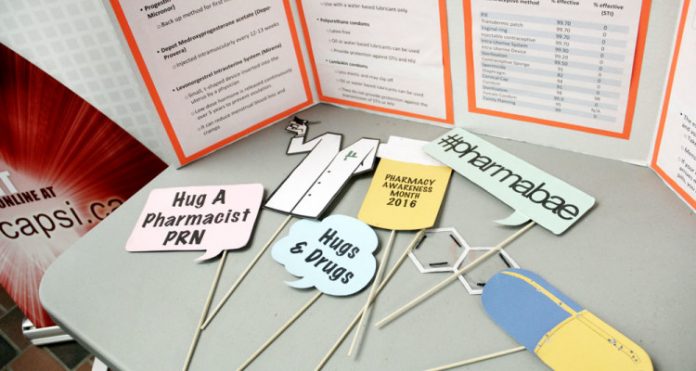
The University of Saskatchewan wants to celebrate pharmacists.

One for One Movement at UBC to Support Syrian Refugees

[VANCOUVER] – UBC’s One for One Movement is looking to assist Syrian refugees in British Columbia by striving to raise $1 from each UBC student, donating all proceeds towards the Immigrant Services Society of BC (ISSofBC).

Initiated by a group of first-year students, organizers have asked for donations at the beginning of lectures, and hosted a soccer tournament. As yet, the group has raised over $1,400 towards the ISSofBC Welcome Centre, opening this spring to provide beds, a health care clinic, English classes, and support services for refugee families. The ISS has taken in over 2,000 government assisted Syrian refugees since November.

With files from The Ubyssey

U of S Pharmacist Awareness Month

[SASKATOON] – College of Pharmacy and Nutrition students at the University of Saskatchewan are hosting their annual Pharmacist Awareness Month this March. The nationwide initiative endeavours to educate students and the public about the various streams of pharmacy.

Members of the Canadian Association of Pharmacy Students and Interns are hosting numerous events aiming to engage U of S students and promote the college. Events include information booths throughout campus where pharmacy students are available to answer questions, a presentation from the Cancer Society of Saskatchewan surrounding sun safety, a mentorship night featuring pharmacist and dietitian mentors, and a “Mr. Pharmacy” pageant.

With files from The Sheaf

Ontario universities form Consortium for Manufacturing Research

[ONTARIO] – McMaster, Western, and the University of Waterloo will be teaming up for a $50 million project for advanced manufacturing research, with the Ontario government funding $35 million over the next five years.

All three universities have expertise in advanced manufacturing, such as the development of new manufacturing materials and hybrid materials, as well as the infrastructure needed for such research. The consortium intends to combine the resources and strengths of the three universities, alleviate manufacturing unemployment in Ontario, and provide opportunities for university students to participate in research and gain industrial experience.

With files from The Imprint

Swing through Vancouver

0

[dropcap]B[/dropcap]eing asked to step out of your comfort zone is one of the most terrifying things you can ask of someone. It’s something that I — and probably most of you — have struggled with.


Two years ago, I was introduced to this idea of social partnered dancing — more commonly referred to as East Coast Swing Dancing. At first, I didn’t think to much of it. I was in my first semester at SFU and experiencing all the challenges and anxieties one faces as a freshman. I tried to convince myself that trying this out would take too much effort — learning to dance, let alone swing dance, just sounded exhausting and time consuming. I hid within my comfort zone. . . there is no other way to describe it.

But deciding to push past my comfort zone and learn how to swing dance, I will never regret. I wish I could tell you that there was some life changing moment where I was encouraged to become more outgoing and try something new. . . but that moment doesn’t exist, at least not for me. One day I woke up and was just tired of my same-old same-old and decided to give swing the chance it deserved.

Learning the steps and the motion took time and perseverance, but it was worth it. It made me grow as a person and become more confident. I learnt to enjoy myself on the dance floor, regardless of how good I was. My comfort zone shattered, and I am a better person for it.

Whether you claim to possess two left feet, or even five right feet, the swing dancing community welcomes you and encourages you to join in the fun. If you are looking to try something new and push your personal limits, check out these swing hot spots for a guaranteed good time!


Rhythm City StrutTia Young - Swing Dance Men

Every Thursday, Rhythm City Strut opens it doors to swing dancers around the Metro Vancouver. The dance floor is large and smooth, and hosts many dancers of every level and age. Once a month there is an amazing live band, so always look out for that!

Price: On band nights it’s $14 in advance and $18 at the door.

Time: Thursdays

7 p.m.–9 p.m.; intro to swing dancing classes offered

9 p.m.–12 a.m.; regular dancing

Location: St. Michael’s Hall, 2474 Prince Edward Street, Vancouver


Royal City Swing

TGIF! Tired of staring blankly at a Word doc in attempt to finish a paper for a class you hate? Free your mind for a few hours and try Royal City Swing. Being walking distance from Sapperton SkyTrain station, this venue is very accessible.  There is no better way to spend a night than with a bunch of welcoming strangers who will teach you a thing or two.

Price: $7 with valid student ID

Time: Friday nights; beginners lessons start at 7:45 p.m. and the party begins at 8:30 p.m.

Location: 318 Keary Street, New Westminster


Suburban Swing

Located in Abbotsford, this event is a little harder to get to. But if you ever make it out this way or if you live in the area, I strongly recommend checking this place out! The dance floor is big and smooth; you’re definitely in for a treat.

Price: $8.50 with valid student ID.

Time: Sunday nights; lesson commences at 7:45 p.m., dancing from 8:30 p.m. until midnight

Location: ASAA Hall, 33889 Essendene Avenue, Abbotsford

‘Sexy’ restaurant dress codes violate human rights

0

[dropcap]W[/dropcap]orking as a restaurant server is a hard job. You are constantly on your feet, you have to deal with rude customers, and all while maintaining a smile. And if you’re a woman, this job can be made more difficult if the dress code demands you to dress in a sexualized manner. Many female servers are made to wear outfits that reveal more of their bodies, though these dress codes are not demanded of their male counterparts.

It’s absurd to require anyone to wear sexualized outfits in the restaurant industry, but sadly, it’s a prominent trend. And some women have made human rights complaints against these sexist dress codes.

Apart from being objectifying, these outfits can hinder a server’s ability to do her job. Mobility is not a top priority for sexy clothes, and it’s not easy being on your feet for eight hours while being restricted by an unnecessary high heels or super tight skirts. It’s obvious to me that by making practical uniforms, employees will be able to do their jobs more efficiently.

Having an improved quality of service allows restaurants to do better business, and by requiring women to wear ‘sexy’ outfits, employers are saying that female servers are only worth as much as their body — their skills as a server are secondary. It’s blatant objectification, and it’s unacceptable.

A dress code’s purpose should be to provide consistency and professionalism in the workplace.

I would like to stress that how you dress your body should be a choice. If you are comfortable in tight, short clothes, or high heels, then there’s nothing wrong with wearing them, but the issue arises when it is a requirement for a job in which your body’s appearance is irrelevant to what that job entails.

A dress code’s purpose should be to provide consistency and professionalism in the workplace. Restaurants may want to create a specific environment by encouraging certain uniforms, but demanding for servers to dress revealingly is not okay. The restaurant industry should not be similar to the sex industry.

Does having scantily clad women even add that much value to your restaurant experience? I understand that having attractive people around your place of business would be, well, an attractive quality. But do restaurants need to provide something for customers ogle at while they scarf down their dinner? If you need to rely on the looks of your servers to attract customers, then I am concerned about the quality of the food you serve.

This demand for sexualization of female servers is disturbing. Creating different standards of dress for men and women is an unnecessary distinction, and reinforces antiquated ideas of gender roles. Sexualizing uniforms not only hinders servers’ abilities to do their jobs comfortably, but holds us back from reaching total equality.

COLUMN | GUESS AGAIN, GRANDPA: Millennials eat out all the time, and it’s making us broke

0

[dropcap]I[/dropcap]f you asked me what I do when I hang out with friends, I would probably tell you that I love to go out to eat. Eating out has become the new normal. Nothing in the fridge? Let’s do take-out. Didn’t pack lunch? Let’s buy food on campus. Going on a date? Let’s go out to some restaurant and class it up in a suit or dress.

Going to a restaurant is a pretty normal thing to do, with the only potential surprise being the bill at the end. But since wages are much higher than they were 40 years ago, it’s no wonder the price of everything is going up alongside our purchasing power, making eating out so much more enticing.

My grandpa pointed this out to me when I announced that I was not going to be present at a family dinner yet again. I had made plans to see a friend, and going to dinner seemed like a logical thing to do. Of course, I wasn’t at home for dinner most nights out of that week, and I had forgotten to make lunch as well, meaning I would have to buy lunch while at school.

“You’re wasting a lot of money on food,” he told me bluntly. “It’s also incredibly unhealthy for you.”

At this point I wanted to let him know that I was going to see a vegetarian friend and that would we be having a strictly veggie dinner, but I let that slide.

A 2013 survey by The Food Institute found that millennial homes spend 10.6 percent more on food than Baby Boomer homes when eating out. This extra chunk of money not only illuminates our increased spending, but highlights some very key issues that may indicate that our grandparents had it right all along.

All those tasty family recipes might go up in smoke if millennials don’t know how to fry an egg.

More than likely, you have come across reports that eating out can lead to obesity and other health problems due to our constant ‘on the go’ lifestyle. Where cooking gives you a clear sense of exactly what is going into your food, we have no idea how much salt, sugar, and fat go into restaurant dishes. All of this makes the food we eat extra delicious and incredibly easy for us to consume, resulting in increased calorie intake of nearly 20 percent since the 1980’s, according to a study by Dr. Stephan Guyenet in 2012.

But aside from eating out more, the fact is that millennials have seemingly less culinary knowledge than their grandparents do. All those tasty family recipes might go up in smoke if millennials don’t know how to fry an egg. Despite the rise in popularity of Gordon Ramsay cooking shows, cooking is more of a hobby than a necessity, with our cooking repertoire hovering around only seven dishes.

The relationship between these two points creates a negative feedback loop. If we don’t have the desire to learn how to cook, at the end of the day we will opt for the easy way out and pay $15 for something decent. Our grandparents only ate out on extra special occasions, and saved a lot of money doing so. They also wasted less, learned more about sustaining a household, and potentially saved themselves from early onsets of diabetes or chronic obesity.

So the next time your grandpa asks if you want to join him in the kitchen, say yes and try your hand at cooking.

Comics!

0

The First Rule of Crossfit (Destiny Hsu & Jacey Gibb)

Comic_FirstRuleCrossfit

Creator’s Pet (Destiny Hsu)

CP_025

2Mystic Man 12 vs blizzard lizard wizard


SFU lose to Trinity Western in playoffs

0
Adam Callegari (#36) scored two goals in the team’s second and final game of the series.

Last weekend was the start of the BCIHL playoffs, and SFU took on Trinity Western University. The teams had played some heated games over the season, and this series was no exception. However, the Clan lost the first two games of this best of three series — the second one in overtime — marking an early end to the season for the team.

The first game at SFU’s home rink, at the Bill Copeland Sports Centre, started off with a flurry of goals. Cody Stephenson and Ryan Bakken scored for Trinity, while Brendan Lamont and Mathew Berry-Lamontagna scored for the Clan.

However, Trinity scored two unanswered in the second, with Florian Niedermaier and Mattias Schmidt shorthanded gave the visitors a commanding 4–2 lead. SFU did try to stage a comeback with Lamont’s second early in the third. But it was too little too late as Jacob Mills made it 5–3 for the visitors, before they added an empty net to make it 6–3.

This meant the second game the next night out at the George Preston centre was do or die for SFU. They needed a win to keep their season alive and send the series to a third game back in Burnaby. They got off to a better start, with Tyler Basham and Adam Callegari scoring for SFU to give them a 2–1 lead after one. Basham scored again early in the second to make it 3–1, but Trinity Western came storming back — goals from Niedermaier and Kaleb Denham tied it at three. Callegari added another late in the period to give SFU the lead, heading into the third, before Jamie Russell knotted things up to send it to overtime.

That’s when the heartbreak happened. Despite SFU controlling most of the play during the extra frame, Trinity Western forward and Burnaby native Matthew Vela scored after an SFU defensive zone draw.

“You never like to be in this situation, but the best you can do is to keep your head up, [we] played a hell of a game,” said SFU Head Coach Mark Coletta afterwards. “At the end of the day, the guys coming back next year have to take this and use this as motivation and be the best they can throughout the summer and coming into camp.

“You don’t want to feel this every year, and so until the group coming back understands that it’s not just a monthly thing, it’s a process, it’s a yearly thing, it starts tomorrow — next year.”

The goal marked a tough end to the season for SFU, with five of their past six games ending in a loss.

New app focuses on Chinese international students

0
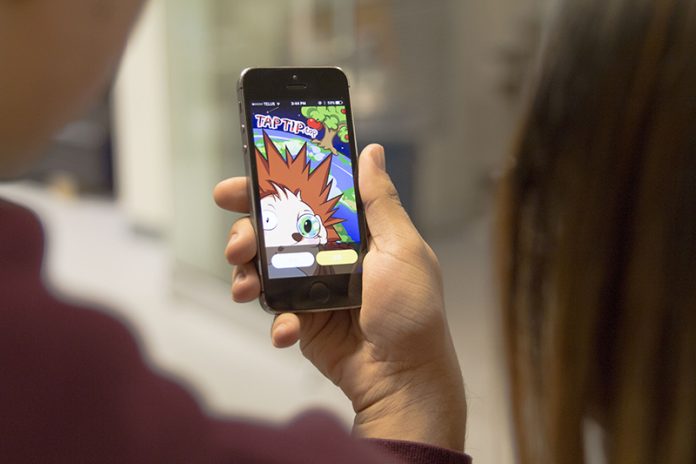
Tap Tip features posts mainly in Chinese and caters to Chinese international students.

Online communities can bring people together or push them apart. For the creators of Tap Tip, a social media app, their goal was to bring Chinese international students together across various post-secondary institutions in British Columbia, including SFU, Fraser International College (FIC, which is housed on Burnaby Mountain), UBC, and the University of Victoria to name a few.

The Peak talked to Vincent Wen and Fred Wong, two out of 16 members of the Tap Tip administrative team who oversee the content that is posted on the app’s message boards. The app, which was released last December, focuses on two themes: Tap, which has posts about daily life, the community, and relationships; and Tip, which has posts about academic life and is generally “more impressive” according to Wen, a computer science student.

When asked how Tap Tip compares to Chitter, another anonymous confessions posting app for university students, Wong discussed how “Tap Tip focuses on very conservative, Chinese values” while “Chitter is very Western.”

Even though the app is focussed on Chinese international students, the content that is posted on the app gives insight on the struggles that all international students can identify with, such as the language barrier, making friends, and being able to keep up with grades. However, despite this seemingly harmless content, there are other facets of the app that showcase more controversial posts.

One of the biggest problems that administrators like Wen and Wong have seen on the app is the rise of advertisement-like content, such as the sale of assignments. When asked how Tap Tip administrators can mitigate the rise of this activity, Wen says that it is the individual’s responsibility to make sure that they are posting content that is positive.

“[This activity] is definitely unfair and illegal [. . .] we can delete this app but we can’t solve this problem. If they want to buy assignments they can go anywhere. It’s not our app’s problem, it’s the individual’s problem.”

Wen and Wong also discussed how while they personally do not condone this type of content, they opt instead to boost more positive and innocent posts so that they receive more attention, pushing posts like these advertisements out of view.

Despite the push of conservative ideals, Wen and Wong admit that there is some content that is less than conservative, especially by way of romance. Wen explained how some Asian students are introverted, and having an app like Tap Tip that is presented in their language enables them to communicate with others and ask questions regarding relationships. The anonymity of the app, Wen continues, enables users to be “honest.” But the creators agree some of the questions have been noted to be hypersexualized — something uncharacteristic of Chinese conservative values.

Regardless of the nature of the posts, Wen and Wong stress the fact that Tap Tip will not delete posts or ban users: “[Poor content] is unavoidable. We’ll only delete it if it is spam, but this kind of content is posted every day. It’s hard to control.”

As for whether or not they see the possibility of being shut down by administration, Wen and Wong do not see it to be an issue, as the app is meant to be a platform to “express one’s opinions.” But most importantly, Wen says that Tap Tip will hopefully help ease Chinese international students into their new environment.

“The school’s website is in English, and it [puts] tons of reading pressure for ESL students,” Wen said.

“With the daily life comments, students can see what the school is actually like before coming.”

A tool to help the transition for Chinese international students, Tap Tip has plans to continue expanding its app accessibility to other schools and hopes to install other subsequent features so as to give prospective students an opportunity to get a taste of what studying abroad is like before they arrive on campus.