Home Blog Page 860

Five TV shows that went on way too long

1
Some shows just need to end before they jump the shark.

We’ve all have that one show.

You know, that one. It was on the air for a decade, but hasn’t had a good season since the third. It’s the same show that you have such a strong emotional attachment to that not even massive cast turnover and poorly executed sub-plots could make you stay away. If you are the fan of a terrible TV show that didn’t deserve to continue, and/or if you’re an easy crier, I don’t recommend you keep reading this piece.

Anyways, we all have that show. And if your show is on this list, I’m sorry. But the truth is these five shows just turned into utter shit as the seasons went by. And as a student journalist, I need to call them as I see them. Let’s get started.

5. Two and a Half Men

What started out as a show centred around weird, perverted humour that actually merited a chuckle or two became a hot mess by the time it went off air in 2015. Truth be told, this show should have wrapped up in 2009, before Sheen even got the boot. But they wanted to prove that even as an older show, they still had stamina. Spoiler: they didn’t.

4. Supergirl

This never should have made it past the pilot episode. Mediocre acting and been-done-before plot secures this show’s ‘gotta be canceled’ status. It has been a true disappointment. I’ve said it once and I’ll say it again: if you want to give us a badass female superhero, write her the new role AND story she deserves (see Agent Carter). Don’t just take old stories and put a women in the dude’s shoes. It’s boring and offensive.

3. Grey’s Anatomy

I can already hear the angry 19-year-old girls with pitchforks beating at my door. But honestly, we all need to take a deep breath and think long and hard about the state of this show. Once everyone calms themselves and puts down the glass of grapefruit-infused rosé, its hard to disagree with me on this one. This once very clever and dramatic show about doctors is now just a rollercoaster that takes you on a ride from hell for 60 minutes at a time.

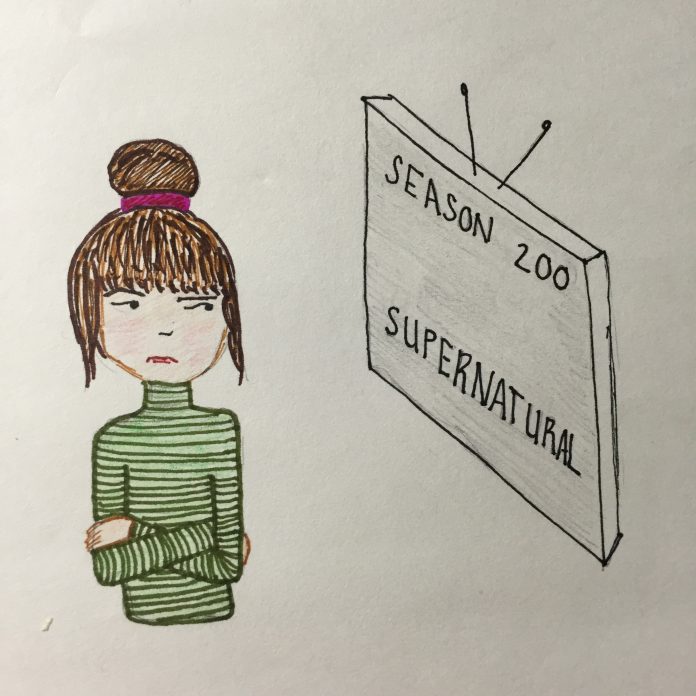
2. Supernatural

What is this show even about? I thought it was about two brothers fighting supernatural monsters, but honestly the latest seasons are over the top and just bizarre. . . this show could be about anything at this point. Everyone has died and come back to life so many times I wonder if the producers believe in the sanctity of life at all. This show is out of steam and material, and no amount of good-looking actors can change that. Get off the air already.

1. How I Met Your Mother

This show was that one show for me. I watched every episode religiously from 2005 straight through 2014 when the show finally went off air. With mixed emotion and pain in my heart, I will admit this show turned into total garbage. By the time they had milked the franchise for every last joke, there was nothing left for the finale. This is ultimately why the show also receives the honour of “worst series finale” on top of “show that should have ended way sooner.” The show jumped the shark in season four and never really recovered. So I’m sorry, HIMYM, but you will always be remembered as the show that disappointed a generation.


The Laramie Project to feature two SFU alums

0
The Tomo Suru Players are responsible for bringing The Laramie Project to Studio 1398.

From March 30 until April 3, with a preview on March 29, Tomo Suru Players will be performing their production of The Laramie Project at Studio 1398. First performed in 2000, The Laramie Project is a play depicting the actions surrounding the death of Matthew Shepard, a young gay man from Wyoming brutally murdered in a hate crime.

In an interview, Gerald Williams, director and founder of the Tomo Suru Players, discussed the motivations for the curation of this project. While speaking with a group of young actors, he realized that “many of them had never heard of The Laramie Project.” In that moment, he said, he understood that “the memory of this project is something that could be lost.”

“It’s such an important point in, I believe, the history of human rights,” stated Gerald. He continued, “I believe that part of the point of The Laramie Project is [that] it carries on. It resonates today as it did 20 years ago, it needs to be passed on generation to generation.”

With this production in particular, Williams stated, “The goal was to have the actors feel it. If the actors feel it, if there is that level of satisfaction and growth with them, everything else works.” Another massive goal of the production, says Williams, is “getting young people to see it.”

In an attempt to make this goal a reality, Tomo Suru Players are looking for sponsors for their Youth Sponsorship Packages. These packages give young people connected to LGBTQ+ and anti-bullying campaigns an opportunity to see The Laramie Project. They currently have 40 tickets to give out through community groups, schools, colleges, and universities — including SFU.

Working on a project like this certainly takes its toll. When Williams first heard about the tragic death of Matthew Shepard, he was living in Japan. “You think, ‘people don’t do this, in this extreme. . .’ apparently, we do. [. . .] Even though we touch the depths of horror, it ends positively,” says Williams. In an attempt to help foster an environment of open discussion, after each performance, the creative team and actors will be conducting a live talk with the audience.

Two such actors are SFU alumni Kelly Sheridan and Tony Giroux. The unique perspectives they have brought to the production were directly influenced by their time at SFU.

Sheridan states, “I was in the theatre program at SFU at the time when he [Shepard] was murdered, and Matthew Shepard and I would be almost the same age if he was still alive today.” Sheridan also brings a knowledge of the show stemming from her viewing the original off- Broadway production by Tectonic Theatre company, as recommended by an SFU professor

Giroux first learned about Matthew Shepard’s story in a class at SFU. “Part of the lecture was on how Matthew Shepard had been branded in the media,” he said. “It’s interesting to hear about it from a more analytical point of view in school, and now it’s really cool to be diving into the more emotional aspect of it.”

The importance of the piece comes from the real life events that it discusses, and the ripple effect those events had in society. As Sheridan argued, Matthew Shepard is “up there with Harvey Milk and Stonewall.” She went on, saying his story has “reverberated through our culture, where people who haven’t heard about him experience the effects of his murder, and the subsequent trial, because it’s changed the way that we perceive bullying.

“It’s easy to think that what happened 20 years ago doesn’t happen now,” Sheridan continued. But she warned, “There are opinions, there are values that are just as strong as they were 20 years ago [. . .] it’s important that we keep having that conversation.” The Laramie Project promises to be just that conversation starter.


Tickets are $30 for adults, $20 for students/low income, with half price tickets for the March 29th preview.

Fuller House comes into its own after shaky start

0
Fuller House is a cheesefest, but in the best possible way.

The ’90s was the golden era of sitcoms. We had Friends, Fresh Prince of Bel Air, and of course, Full House. The reign that these shows had over the TV landscape may have ended, but their legacy lives on through catchphrases repurposed into memes on Twitter. Now, through the magic of Netflix and YouTube, a whole new generation can enjoy the quality TV that once existed.

But in the same way many movies have terrible sequels, the Full House crew decided to take a gamble and invade the millennial entertainment market with a spin-off. The term ‘spin-off’ is not used lightly here: the new Netflix original, entitled Fuller House, takes the original story line and spins it round and round. It’s like getting off of an incredibly fast rollercoaster: your surroundings still look the same, but slightly distorted.

Set 20 years later, Fuller House actually starts with the original Full House credits in all of their ’90s glory. One by one, the original characters enter back into familiar territory with recycled jokes, proving to the universe that somehow, they are immortal.

The show follows DJ Tanner-Fuller (Candace Cameron-Bure), a widow with three boys. As her family begins to move on with their lives, DJ begins to see how difficult it can be to raise three children on her own. By the end of the premiere episode, her younger sister Stephanie (Jodie Sweetin) and best friend Kimmy Gibbler (Andrea Barber) move in with her to help her raise her family.

Sound familiar?

In the first episode, all of the catchphrases and jokes come back to life in a very surreal way. We welcome back Tanner family man Danny (Bob Saget) and his clean freak ways, “Have mercy” Jesse Katsopolis (John Stamos) and his all-American wife Rebecca Donaldson (Lori Loughlin), big kid Joey Gladstone (Dave Coulier), and even Jesse and Becky’s twin boys Nicky and Alex make a cameo appearance without blonde mops on their heads (Blake and Dylan Tuomy-Wilhoit). And who can forget DJ’s sandwich-chomping ex-boyfriend Steve (Scott Weinger), who tries to rekindle their romance despite his lack of hair?

However, noticeably absent was “You got it, dude” Michelle (Mary-Kate and Ashley Olsen). In addressing Michelle’s absence from the show, the characters broke the fourth wall — or rather, demolished the fourth wall — as they faced the audience somberly after stating that Michelle was “building her fashion empire in New York.”

Despite the premiere being a big cheesefest, the season continued on fairly strongly, bringing in independent storylines and new characters. The show has also been modernized to appeal to a 2016 audience, citing Donald Trump as a swear word, and including a Bachelorette-esque season finale.

Aside from the obvious attempts to be a sitcom that belongs in this day and age, Fuller House remains true to its strong sense of family and its commitment to keeping it PG. The fans enjoyed it so much that Netflix ordered a second season, to be released sometime next year. Hopefully it will be able to tie up many of the unfinished storylines that season one gave us, like if Michelle Tanner will ever return to San Francisco, or if DJ and Steve will ever be together for real.

Fuller House is a old meets new reboot with a lot of potential in future seasons. But regardless of how successful it gets, “holy chalupas” will never replace “oh Mylanta.”

An interview with poet and musician Saul Williams

0
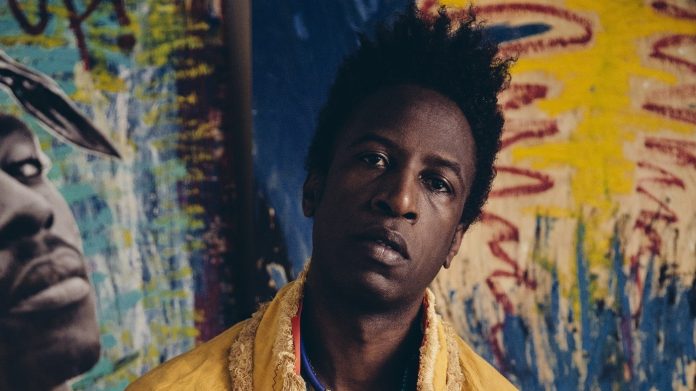
Saul Williams wants to “[provide] music and fuel for activists.”

Passion. Intensity. Purpose. These are some of the words that come to mind when listening to artist Saul Williams perform.

Hailing from New York, Williams is a master of many trades. He is a rapper, slam poet, musician, and actor. Regardless of what or where he is performing, his words and the meaning behind them always pack a powerful punch.

Williams credits a lot of his creativity to his safe and privileged upbringing. In email correspondence with The Peak, Williams reflected on his childhood and how it enabled him to spend “a lot of time in [his] head.

“I felt safe enough to read, dance, imagine, dream,” Williams recounted. “The richness of the culture I was part of by growing up in the African American church, the hood, [New York] during the birth of hip hop. . . all of it informed me.”

Ever since his debut album Amethyst Rock Star in 2001, Williams has been telling stories that are inspired by what he sees and hears around him. His latest album, MartyrLoserKing, continues to push boundaries and aims to connect the “first and third worlds” through words, music, and multimedia.

Spending time writing and recording MartyrLoserKing in Senegal, Reunion Island, Haiti, Paris, New Orleans, and New York gave him a host of different perspectives. His album connects these unique places together to tell a story that must be told.

With provocative and forthright words about various hard-hitting topics like poverty, race relations, and violence and brutality, Williams often earns the title of ‘activist’ in discussion. When asked whether or not he views himself as an activist, Williams said he sees himself more like a “chef who gets pleasure from feeding activists.” His work, he says, reflects his world and the thoughts that occupy them, and he is interested in “providing music and fuel for activists.

“I want them to be well fed, the same way the system works to feed the bellies and morale of soldiers,” stated Williams.

While each track contain powerful words, the intensity and overall feeling varies from track to track; for example, “Horn of the Clock-Bike” has lyrics sung over the same motivic passage being repeated over and over on the piano, creating a slightly hypnotic feel that plays to the meekness of a martyr. In contrast, “Burundi” opens with very majestic strings, followed by forceful and percussive words that slice through the drum beats in the background.

His words mix effortlessly with hypnotic beats, powerful percussion and mbira (thumb piano) strokes, giving Williams a sound like no other that will keep you inspired. With regards to MartyLoserKing, Williams himself calls the vision that he has of the album “ahead of its time.”

Williams’ creative process, according to him, happens just “like that.” When asked how he knows whether a piece will become a song or poem, he says he lets the creative process take over, “I can never predetermine the outcome.” He treats the experience as if he were raising a child, ensuring that the “ideas are nurtured and fed” in order for them to grow: “If a poem calls for music I provide it. If a musical idea decides it’s ready for words, I provide them [and] try not to get in the way.”

From his early beginnings as a slam poet to coming onto the world stage with thought-provoking pieces, Saul Williams is taking the world on a wild ride under his wing, and he shows no signs of stopping.


(with files from http://saulwilliams.com/bio/)

ALBUM REVIEWS

0

M. Ward – More Rain 

By Beau Bridge

Listeners who are familiar with M. Ward will enjoy the gentle Americana-blues tunes and occasional hard-road offerings on the singer-songwriter’s 2016 release More Rain.

The album is filled with many of the archetypal M. Ward niches of blue electric-guitar solos over Bob Dylan-esque fingerpicked progressions and indie hit-kit back ups. Songs like “Confession,” “Girl from Conejo Valley,” “You’re So Good To Me,” and “Temptation” remind of the old FM stereo roadies made for cars on the highway. On the other hand, songs like “I’m Listening (Child’s Theme)” and “Slow Driving Man” will suit those more somber, rainy days spent alone.

Needless to say, this album was made to live up to its name and its surprising title track (simply a recording of rain, falling for one minute) — it’s an album that stays optimistic upon acknowledging that the rain has not stopped, but has and will likely continue.


Chairlift – Moth      

By Jessica Whitesel

Moth is only Chairlift’s third full-length studio album, even though the band has been together since 2005. This lack of output is due to the fact that the members of the band have gone on to pursue solo work.

Overall, the album doesn’t seem to have a cohesive direction in terms of production, writing, or style. This could be to the amount of time between their last release in 2012 or the amount of solo projects that members have done. The most notable of these solo projects has been Patrick Wimberly’s production work with Das Racist.

In any event, this album is somewhat of a mixed bag in terms of what you get from it. Some parts are absolutely beautiful and catchy, and then other parts are experimental — but not in a good way.

Highlights include: “Polymorphing,” “Ch-Ching,” and “Moth to the Flame.”


SFU student Jennifer Lai moonlights as pop-punk guitarist

0
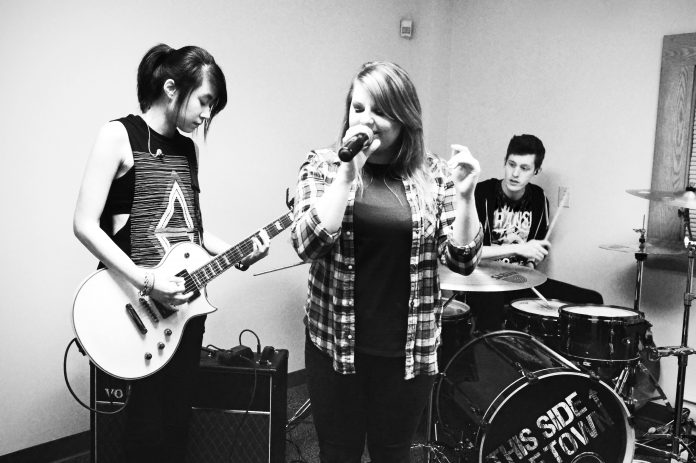
This Side of Town owes its creation and much of its success to the Internet. (L-R: Jennifer Lai, Melaine Dawn, and Chris Kavanagh.)

Being ‘indie’ in the music industry implies more than just a musical genre — it also means being responsible for handling the business aspects of one’s own career. The obligation of establishing one’s musical image, including the daunting tasks of booking tours, promoting singles, and paying for recording sessions, is placed in the hands of the band members themselves. This is the case for This Side Of Town, a Vancouver-based punk band that exemplifies the meaning of ‘indie.’

The band describes their sound as an amalgamation of modern pop vocals and early 2000’s punk influences, reminiscent of Paramore and A Day to Remember. About their beginnings, Jennifer Lai, lead guitarist, said, “I started playing guitar at 15 and 16. [. . .] I didn’t take it seriously until after high school though. I had a year off after high school and I really wanted to do something with music, so I decided to post an ad on craigslist and then actually do something about it.”

“I’ve been doing music for pretty much my entire life,” says Melanie Dawn, the lead singer of the band. “I’ve been in other bands before, but I grew up in Abbotsford, so there are bands out there that don’t really go anywhere. It’s really hard to get out there when you’re living in a small town, so [joining] a band that was based in Burnaby opened a lot of doors.“

“I started playing drums when I was about 18,” says drummer Chris Kavanagh. “I bought my first kit then just screwed around for a bit before deciding that I wanted to be in a band and do something with music. All my friends weren’t serious about it so it never went anywhere. Then I saw Jen’s Craigslist ad, and now here I am!”

Fast forward to a debut album — 2013’s #thestreets — a couple of EPs, music videos, a stream of live shows, and a cross-continent tour. I discuss with them the  challenges of being an unsigned indie band.

“We do everything ourselves,” says Jennifer Lai. “We have to pay for our recordings, venue bookings, promotion — everything.”

“We tried to get other people to book for us, but it’s really hard.” says Dawn. “They aren’t as passionate as we are, so we try to get it into our own hands and do it. I mean it results in probably getting less gigs than we like, but we’ve still been able to play gigs across the whole continent, which in itself is amazing.”

The challenges that came with setting up a cross-continent tour were a big hurdle for the band. The biggest challeng of being indepedent, Lai says: “I would say booking tours. But even so, just getting your music properly promoted out there is really difficult.” 

The Internet has also played a big part in the formation of the band, as well as in building their fanbase.

“I think if the Internet didn’t exist then we wouldn’t have anything,” says Dawn. “We even have a fan in North Carolina that writes to me! He would of never heard of us if it weren’t for the Internet.”

Aside from the benefits of holding the world in your hands, the accessibility online platforms have enabled has also shaped the relationship between bands and record labels, inevitably placing more responsibilities on the band to promote themselves.

“Before the internet, the fight to get signed was more central, but now it’s not as important. A lot of bands who inevitably get signed to a label still have the onus of doing a lot of things [. . .] you still have to pay for your own recording most of the time, but it depends,” says Kavanagh, as he sips on a brewer’s lemonade.

“Sometimes, the labels will also pay upfront for stuff but it really varies per artist. But, they’re not going to take care of you like the way they used to. They still expect you to do the work,” adds Dawn.

“You have to pound the pavement basically. So instead of Facebook and that, you have to begin printing out flyers and stick to traditional ways because you can’t rely on the Internet to spread the word,” Lai elaborates. “With the Internet, it makes it harder, too, because everybody now has a chance. There’s so many bands for people to listen to.”

After a coincidental friendly encounter with another local Vancouver punk band The Faceplants, I end by asking what advice they wish to give to aspiring bands.

“Please do it!” says Kavanagh enthusiastically.“Go out there, do shows, meet and network with people, and make friends. We went to a show, gave someone our card, and then when they were booking shows they considered us, and now they’re our friends,” Dawn adds with a smile. “It is an experience like no other.”


If you interested in seeing This Side of Town perform live, they have a 19+ show coming up on April 15th at Venue Nightclub. Tickets are available in advance and at the door.

SFU author shares her family story in CareyOn

0
SFU's Cindy Graves is set to be acknowledged at the Celebration of SFU Authors event at the WAC Bennett Library on March 22.

Everyone has family stories — the kind that get swept under the rug and are not talked about either to protect a family member, or, more often than not, to avoid dealing with a difficult situation or event. Imagine taking that story and writing a memoir about it, essentially sharing those secrets with the world.

Cindy Graves, who works at SFU as a Director of Advancement, told the whole truth about an event that haunted her family for years and that some of them still haven’t gotten over. She shares the details of her sister Natalie’s young love, and the events that led to her father serving jail time for shooting Natalie’s boyfriend, in CareyOn.    

Graves didn’t always know she was going to write this book. Her father used to say that he should write about it, but after years of telling people the story in person, she decided it was finally time to put pen to paper.

She had thought that there was no way she would be able to tell the truth about everything. The trouble with memoirs is that the characters in the book are your family members who may not want their story shared. After taking a memoir writing course at SFU, Graves decided she had to tell the truth, and would have to be ready for the repercussions.

Natalie Carey met John Ranberg (whose name was changed for the book) in high school, and the story revolves around their tumultuous, unhealthy relationship. Natalie got pregnant at 14 and had to go through a traumatic abortion, but she remained loyal to John long after that. John and the girls’ father, Harry Carey, never got along, but the trouble started when John and his friends began terrorizing the Carey farm. One night, after becoming fed up with the disturbances, Mr. Carey took out his shotgun and fired at the car, not knowing who was inside.

That incident only caused Natalie to become more estranged from the family, and eventually her father gave her an ultimatum: stop seeing John or move out of his house. She took the latter option and moved in with a friend.

The perspective switches between Cindy and Natalie, allowing for a well-rounded telling of the story and both an inside and outside perspective on Natalie’s troubled relationship. Graves mentioned that some people have asked if she co-authored the book with her sister because her character’s voice is so strong, and it does feel that way — in fact, Natalie wasn’t willing to talk to her sister about that time in her life. Graves had to rely on memory and her best guesses to craft the story of Natalie and John. Natalie also requested that her name be changed for the book, and still has not been able to read to entire thing.  

“It did cause some unrest within the family,” said Graves, explaining that her other sister Christine was very upset and felt exposed by the book. She was mad for a long time. “I thought I was giving them a gift, a legacy, but the reaction wasn’t what I expected.” Another unexpected consequence was that her aunt found out a family secret about sexual abuse only through reading this book — Graves had thought she already knew.

In order to refresh her memory and get certain details right, Graves visited the Orangeville library to look at old newspaper articles about the incident, and she also interviewed her parents and the lawyer who represented her father. She found it interesting that everyone had their own slightly different version of events that they remembered.

The title refers to the Carey family’s barn parties that they dubbed “CareyOn,” but, as Graves explained, it also refers to the family’s ability to carry on and ignore some of the events happening around them. Her father carried on as if nothing has happened after his daughter left home, and the rest of the family followed suit, not daring mention her name.

This is a gripping, high-stakes story that makes you want to keep reading to find out what will become of Natalie, find out how the family will cope, and see if they will truly be able to carry on. With relatable characters and familiar themes about growing up, young love, family dynamics, and figuring out who you are, CareyOn highlights the importance of open family communication and never letting someone slip away.


Cindy Graves is one of the authors who will be acknowledged at the Celebration of SFU Authors event at the WAC Bennett Library on March 22.

SFU Lacrosse wins over Chino State

0
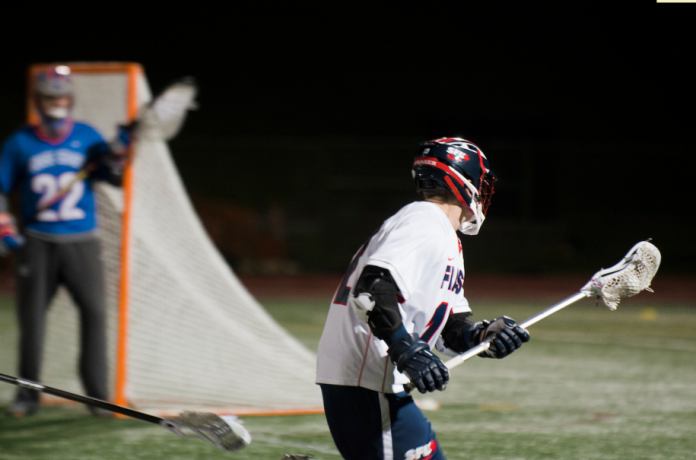
SFU only allowed one goal in the last 20:36 of the game.

With over four minutes spent in their own defensive zone, and three goals scored against them in that time, SFU Lacrosse looked like they were facing a comeback by the Chico State Wildcats. SFU had entered the third quarter up by a dominant score of 7–2, and were now only up 7–5.

It wouldn’t have been the first game SFU gave up after an early lead, either. In games against Boise State and the University of Washington, SFU bolted out to 7–2 and 6–2 leads in the first quarter, only to lose 13–11 and 18–17, respectively.

“We kind of let up in the third,” said sophomore attacker Greg Lunde, who had three goals and an assist. “We’ve been struggling with that a lot this season, so we’ve had good starts and eased off, as seen again in this game.”

But that wasn’t the final result Tuesday night versus Chico State. Instead, SFU cruised to a 10–5 lead by the end of the third quarter, and only allowed one more goal in the remaining 20:36 of the game. In the end, SFU won 13–6 against a non-conference rival who now has more losses than any other team in the league with nine.

Lunde opened the scoring, putting SFU on the scoreboard 4:15 into the game. Tyler Kirkby, assisted by Lunde, made the score 2–0, a little over three minutes later. Kirkby and Lunde led the charge offensively, each putting up three goals, while Kirkby had two assists to Lunde’s one.

SFU played a perfect quarter for 12:28, not allowing a single goal for that span. However, once the Wildcats found the back of the net, they scored a second one just 16 seconds later, erasing the Clan’s first quarter lead. The teams headed into the second quarter tied 2–2.

However, it was the second quarter in which SFU exploded offensively, putting up five goals and not allowing one.

“I thought we started out pretty strong, [but] we weren’t executing as a clip like we were supposed to. But the second quarter got a lot better,” explained Lunde. “I think it was really just good defence and hard work on ground balls, and that led to good execution on offence.”

Tom Newton, Kirkby, and freshman Taylor Martin, the latter of whom scored his first MCLA goal, all put up goals in the second quarter, as did Lunde, who put up two. Lunde’s second goal of the quarter came when he forced a turnover in Chico’s defensive, and went in on a breakaway and made the most of the chance with 38 seconds left in the quarter.

In the course of the game, Alex Thomson, Andrew Branting, and Kael Naylor also put up goals. Branting and Newton also had multi-goal performances, scoring two each.

Goaltender Jeremy Lashar put up a strong game, putting up 11 saves, and during the three-plus minutes of Chico possession in the third quarter, made several key saves.

SFU’s next home game will host the University of Nevada on Tuesday at 6 p.m.

Boxer Briefs

0

Strange occurrences continue to shroud Trottier Observatory; Ghostbuster sighted

[BURNABY] – A student investigating reports of a purple and green alien trapped inside the Trottier observatory seems to have vanished. A video of the misadventure is circulating online, with someone on the audio commenting that “something totally sounded like the proton packs from Ghostbusters,” followed by a trailing-off scream and a flash of green light. Visual details are impossible to make out, as the video seems to have been recorded using a 0.2 megapixel avocado.

Until the fate of the intrepid adventurer can be determined, SFU’s Environmental Health and Safety department has placed the observatory under tighter regulations, warning visitors to “not behave like complete idiots” and “not touch anything else, you morons.” Strangely, the observatory also passed its safety evaluation.

Protesters sick and tired of Manitoba being forgotten by everyone who doesn’t live there

[WINNIPEG] – Students gathered outside Manitoba parliament to protest the lack of public consultation on the proposed Energy East pipeline that would increase oil transported across the province. However, contrary to other movements, the group described themselves as ‘pro pipeline’ so long as their demands were met. Among the list is that if a pipeline were to be constructed, Canadian maps would be changed to include arrows that pointed at Manitoba along with phrases like “this is totally a province,” “Winnipeg has a higher population than Vancouver,” and “stop forgetting we exist.” Further, the group would relax all environmental regulations on the pipeline so long as the pipeline itself is constructed of crude oil.

Canada’s ‘top’ University asks for money, student groups shrug and don’t complain

[MONTREAL] – McGill University shocked the world by declaring that it had no controversy to declare whatsoever. When student and activist groups were approached, they confirmed the reports by saying “Yeah, we’re good for now. Everything’s fine.” All parties are excited for the upcoming fundraiser, formerly known as #McGill24, which aims to raise funds to provide more student programs over a 24-hour period. The event has been renamed several times to #helpImtrappedintheinternet to #howdidIgethere and finally as #stayawayfromtheobservatory.

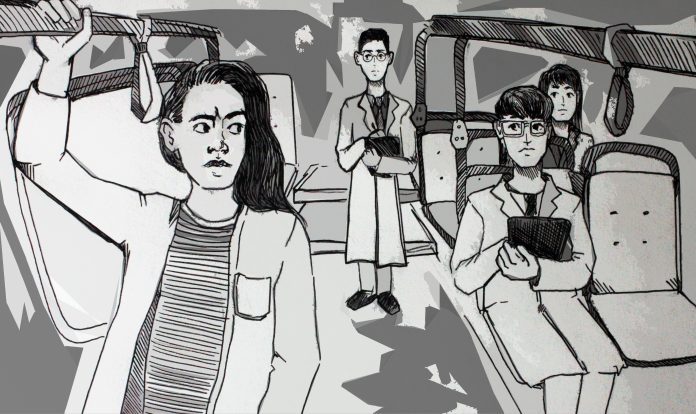
TransLink revealed to be elaborate psychological experiment

0

BREAKING NEWS: A recent controversy has come to light regarding Vancouver’s undisputed transit company, TransLink. According to an anonymous inside source, Metro Vancouver’s statutory transportation authority of 18 years is “a complete sham made to disguise the organization’s true objective: to conduct social experiments on the general public.”

That’s right: all the malfunctions, delays, and shitty planning experienced by TransLink users have actually been purposefully staged to document people’s reactions. Last summer’s TransLink referendum, which resulted in 61.7 percent of voters saying “no” to an alleged $7.5-billion regional transportation plan, was just as phony as its company. “The plebiscite was just a cover for the extra fine print, written in quarter of a pixel font.” An inside source told The Peak. “The real question being posed to the public was: do you not want us to increase on-transit surveillance?”

Due to the majority voting ‘no’ to this question, TransLink has since quadrupled the amount of incognito video cameras and wiretapping on each of their public transport vehicles. These include X-ray cameras that monitor activity in the cerebral cortex in response to classical conditioning methods such as late buses, unresponsive schedule texts, and getting stranded far from home. By cross-analyzing these findings, TransLink has secretly become Canada’s largest hub of metadata collection — a title previously thought to be exclusive to CSIS.

But the scandal doesn’t end there; in pursuit of a meta analysis on the reaction of psychologists themselves, the organization has been periodically hiring professional actors to render behaviour under extreme catharsis. These actors are paid to yell, stomp, throw up on buses, and act like complete assholes, leaving the psychologists to multitask mitigating the situation with driving. “It only makes sense to psychoanalyze the psychologists themselves,” said the source. “How else would we get data on psychologists?”

This brings into question why Vancouverites didn’t see the signs sooner. “People have just blamed the unstable job market for why all of TransLink’s employees had psychology degrees. It’s actually because they’re a guild who have negotiated with every BC government since 1999 to ensure their monopoly over the lower mainland’s public transit in exchange for data on Vancouver’s population.”

This explains why no additional services were provided after the price of fare increase in 2013: the money was allocated towards building their tech and research facilities instead. This ingenious plot has duped all of Vancouver for many years. Our anonymous source chose The Peak to break the story because “well. . . no one else would really listen to me.”
So the next time you’re riding the 135 down Burnaby Mountain only to realize it’s heading towards Production Station, bear this in mind: you’re being watched.