Home Blog Page 78

Hidden Gems: Surrey campus’ secret snacks

0
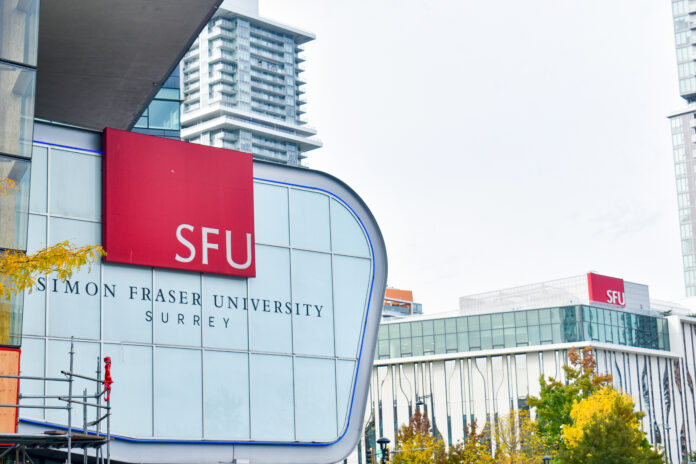
The side of a building holds a red sign reading ‘SFU’. Below it are the words “Simon Fraser University” and Surrey. The tops of tall condominiums are shown in the background.
PHOTO: Amrit Kamaal / The Peak

By: Amrit Kamaal, Peak Associate

Potato Corner
10153 King George Blvd. K101
$520 per serving

Rightfully known as “the world’s best flavoured fries,” this Filipino fry joint is my personal favourite for take-out lunch. What makes Potato Corner special is the amount of detail they put into their wide range of flavours such as sour cream and onion, cheese, and spicier options like BBQ Chili. The fun comes in choosing a shape, with options ranging from loopy, to shoestring, to waffle. It’s the ideal study snack — just select your flavours and shapes and you’ll get your shaken fries in no time. Although they specialize in fries, their menu also includes options like ube (purple yam) desserts, milkshakes, fry-flavoured chicken, and sandwiches. With two more locations in Aberdeen Centre and Burnaby, this chain is becoming a new BC staple. Additionally, they have been featured in many events with their food trucks and beloved mascot Poco the potato. 

Chaiiwala of London
10153 King George Blvd. Unit 452
$1020 per serving 

It’s common to have your mouth watering while watching videos on your feed about street dishes half-way across the world. Although studying abroad is an option, Chaiiwala has you covered with the most delicious, authentic Indian street foods. Chaiiwala is a South Asian café originating in the UK. Over the years, Chaiiwala has made its mark in Surrey especially, with multiple locations opening and expanding across BC. With the days getting shorter and colder, this aesthetic café is the best place to relax and enjoy some chai. The menu offers several meal options such as Indian desserts like gulab jamun (a sweet, spongy milk treat made with dough dipped in rose-scented syrup), street snacks such as pani puri (a deep-fried snack loaded with chickpeas, onions, potatoes, and a liquid made with various chutneys and sauces), and cold treats like falooda

Juice Spot
10115 Whalley Blvd.
$1020 per serving

Reason number 100 why Surrey Campus is the best: we have access to the best hidden gems in all of Metro-Vancouver. Juice Spot is a halal, family-owned business that offers a variety of delicious beverages, baked goods, and wraps. Their menu features cold drinks for study sessions such as their renowned cold-pressed juices, milkshakes, mocktails (if you’re feeling quirky), and more! You can also grab a quick bite along with your drink — grab a quesadilla, samosa, rice bowl, or calzone made with either beef or chicken.

Vancouver events for Latin American Heritage Month

0
A Día de los Muertos calavera (skull)
PHOTO: Brian Wegman / Unsplash

By: Michelle Young, Copy Editor and Hailey Miller, Staff Writer

October is Latin American Heritage Month, with a variety of events happening across Vancouver and throughout the mainland through October 15 to November 3. Latincouver and the Vancouver Latin American Cultural Centre have organized several events that will feature art exhibitions, conversations, and more. Here’s a feature of the many celebrations to engage in throughout Latin American Heritage Month, and immerse yourself in the cultures, creativity, and traditions!

Sing, Don’t Cry Exhibition
When: Oct. 17, 6:00–8:00 p.m.
Where: THIS Gallery, 268 Keefer St., Vancouver

An exhibit by Mexican visual artist Angie Quintanilla Coates and hosted by Miret Rodriguez, “this showcase explores the persistent optimism of Mexican life through bold geometric forms and vivid colours.” The exhibit, held by the Vancouver Latin American Cultural Centre, is inspired by the mantra “canta y no llores” (sing and don’t cry), which “reflects this spirit of persistent joyfulness.”

Across the Americas: Colombia
When: Oct. 21, 5:00 p.m.
Where: University Canada West

Hosted by Latincouver, this event showcases “Colombia’s most beautiful and culturally significant regions.” The journey is an interactive tour that will evoke the senses and engage audience members with the “warmth of Colombian hospitality,” “traditional flavors,” and “the rhythms” of Colombia. 

Traditional Altar Installation — “Día de los Muertos”
When: Oct. 15–Nov. 3, 11:00 a.m.–6:00 p.m.
Where: Ocean Art Works, Granville Island

This exhibition, hosted by Latincouver, “invites the community to honour loved ones with an altar curated by Mexican artist Paloma Morales” to celebrate the Day of the Dead. It will also feature “photos and tributes” as a part of the exhibit, and educational sessions that will explore the “rich heritage” of Día de los Muertos. 

Art Exhibition — “Color Calavera”
When: Oct. 15–Nov. 3, 11:00 a.m.–6:00 p.m.
Where: Latin Hub & Ocean Art Works, Granville Island

Artist Adrián Edgar’s paintings will be featured in this exhibit, which draws on inspiration from the Day of the Dead. Edgar incorporates visuals of skeletons and skulls (in Spanish, calacas and calaveras) in his works. The paintings are enriched with “his vibrant use of colour” as he showcases “the beauty of all aspects of life.”

Self-Portrait of Translation
When: Oct. 24 at 5:30 p.m.
Where: Third floor, The Nest, 1398 Cartwright St., Vancouver

In collaboration with the Vancouver Writers Fest, the Vancouver Latin American Cultural Centre is hosting a conversation between translators George McWhirter and Carmen Rodríguez. They will be discussing McWhirter’s recent translation of Self-Portrait in the Zone of Silence by Mexican author Homero Aridjis. Self-Portrait in the Zone of Silence is a collection of poems that explores “mythical animals, family ghosts, Mexico’s oppressed,” and “naked angels in the metro.”

Live Commemorative Mural — “Harmony” from El Salvador 
When: Nov. 2 and 3, 11:00 a.m.–6:00 p.m.
Where: Day of the Day Market, Granville Island

Engage in harmony alongside this live mural painting curated by graffiti artist Efrain Orellana. With help from the local Latincouver community, this exhibit will be made in harmony with anyone who engages in the mural painting process. The intention is to connect “Indigenous cultures across Latin America and Canada in four creative sessions.”

Eviction to Empowerment discusses lasting impact of student space campaigns at SFU

0
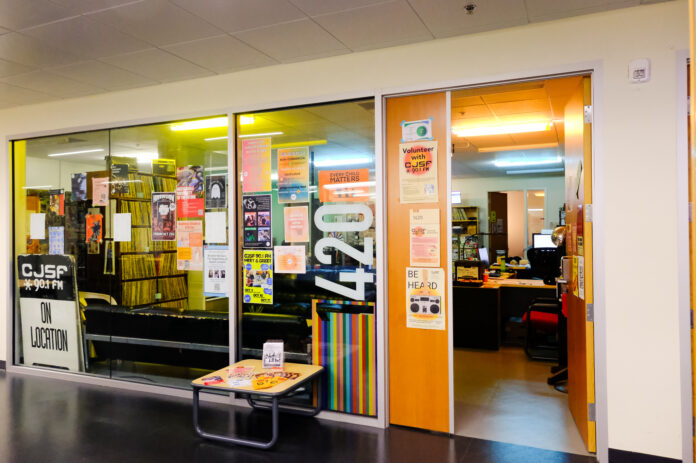
A photo of the CJSF station. Multiple posters and decorations are visible.
PHOTO: Emily Le / The Peak

By: Petra Chase, Editor-in-Chief

On September 18, student-run non-profit Embark Sustainability hosted Eviction to Empowerment, reflecting on a not-to-be-forgotten chapter in recent history at SFU: years of organizing gave independent student societies and equity groups the space they now have in the Student Union Building (SUB). In Embark’s studio at the bottom of the SUB, students packed the room as panelists recalled lessons of collective organizing and steadfast resistance. 

“I probably would’ve dropped out if it wasn’t for SOCA,” said SFU student Balqees Jama, who spoke first on the panel. Students of African and Caribbean Ancestry and its Black Student Centre used to be located at the Rotunda building above the Transportation Centre, when Jama came to SFU. They were housed there along with First Nations, Métis & Inuit Student Association (FNMISA), Out on Campus (OOC), Women’s Centre, SFU Public Interest Research Group (SFPIRG), and campus radio station CJSF. In winter 2018, four of these groups were handed eviction notices by the Simon Fraser Student Society (SFSS), who were their landlords. Jama, exec at-large of SOCA at the time, spearheaded the Black Space Matters campaign to resist eviction alongside then-SOCA president Giovanni HoSang. SOCA was the first group to “publically start resisting.”

FNMISA also put out a statement about the SFSS at the time, saying, “By withholding space in the new SUB, SFSS has denied Indigenous students a consistent, safe space to gather. This denial of space has compromised our ability to succeed academically and maintain our mental, physical, and spiritual health.”

The Save the Rotunda Community coalition kept up the pressure to get leases extended for the time being, and also helped usher six allied representatives onto the SFSS Board at the 2019 election. Hosang, SOCA’s president, became SFSS president. “Considering that [Hosang] wasn’t even one of the ‘insiders,’ the vote is a strong rebuke from the student body against the direction of current and previous several Boards,” the Save the Rotunda Facebook page wrote in response to the results.

But the Board members fighting for equity groups were still in the minority. The following November, with the SUB’s opening underway, the Board rejected a motion from Hosang to allocate space to SOCA, SFPIRG, CJSF, and Embark — four groups that had long-established presences on campus, now with no guaranteed space in the SUB.

The Board members holding the vote attempted compromises, none of which were adequate. They proposed to provide rooms for groups to share and use bookable space in the SUB. As they recalled this, the panelists described the absurdity of one suggestion to divide what’s now Embark’s cozy studio for three different groups to share.

“That Board vote was catastrophic,” explained SFU alum Annie Bhuiyan on the panel. She described SFPIRG as being a safe space for student groups to organize. That’s when some Rotunda groups joined forces to protest. 

The panel also included Magnus Thyvold, who has been station manager at CJSF for over thirteen years. He recalled the SFSS treated the groups like they weren’t valuable enough or had to compete for space in the SUB. 

  “When I met people at SOCA, something clicked. It was very soothing. You didn’t have to be put into a specific box.” — Balqees Jama, SFU student

Groups that operate under the SFSS, which aren’t clubs or student unions, can fit into two categories: constituency groups or societies. Constituency groups, or equity groups, provide support, resources, and community to students who experience systemic discrimination based on their identities. This includes SOCA, FNMISA, Disability and Neurodiversity Alliance (DNA), and OOC. Independent non-profits like Embark and SFPIRG, and media organizations like The Peak and campus radio station CJSF are societies, and provide students with services. For instance, independent media platforms student voices. Embark is a sustainability-driven group that hosts learning events like this one, and helps provide food security to students with programs like their community kitchen, food rescue, and sustainable garden.

These groups all receive funding from the SFSS fee (included in students’ tuition), though they operate independently. While equity groups represent the interests of the student body’s underrepresented groups, they didn’t gain seats on Council until 2020. The campaigns for space would lead to this.

The idea for the Student Union Building is almost as old as the university itself, but it took until the past few years for it to finally come to fruition. In The Peak’s Tartan magazine published in 2015, we reported that the first SUB committee was formed in 1966 to consult students on a space that would “house everything of interest to students.” The building plan was also designed with the intention of having significant space for student organizations, so it came as a shock that vital groups would be left out.

“Doctors and counsellors didn’t have the capacity to understand why this was so distressing for Black students to be kicked out of [their] one safe space in this city,” Jama said. This meant students couldn’t get doctor’s notes for academic concessions, which can be granted when unexpected circumstances bar a student from keeping up with a class. Jama described how SOCA, which has had space on campus since 1997, is vital for connecting Black students to community and resources. “When I met people at SOCA, something clicked. It was very soothing. You didn’t have to be put into a specific box.”

Bhuiyan recalled disrupting a pizza meet-n-greet where SFSS Board members were mingling with club presidents. They silently marched from the Rotunda to the event, displaying the names of the seven Board members who had either voted against or abstained from the motion to allocate sufficient space in the SUB for the Rotunda community. The point of the protest being silent, Bhuiyan explained, was to be non-disruptive, and show students, “These are the people, here are their names, they have evicted students. Make that message very clear that student leaders don’t evict students. 

“You could hear a pin drop,” she said.

Embark’s director of engagement Marie Haddad, who co-hosted the panel, pointed out the lack of transparency at the time. ” Bhuiyan added, consulting and engaging with the Board was like “operating in the shadow.”

With a multi-million dollar budget, denying resources to marginalized groups was “straight up oppression,” Jama said. One of the reasons why SOCA had a silent protest was because they were being called “aggressive,” which is a racist stereotype of Black people, and especially Black men, explained Jama. When HoSang confronted the Board about their “institutional racism,” at the time, a Board member accused him of being “unprofessional.” 

Haddad also spoke on how Jama advocated for Black counsellors on campus. She cited that Jama said, “I didn’t come here to be an organizer, I was just a student fighting for my space.”

What followed the silent protest was a series of public statements from the Board trying to justify their actions, while the coalition worked together to mobilize students and pressure the Board members, from more protests, to posters and flyers, to collecting signatures and talking to press. Four months later, in February 2020, the SFSS Board “begrudgingly” [Bhuiyan] passed a motion to allocate space for the Rotunda groups in the SUB, ahead of its grand opening, which finally happened in September 2021.

The momentum of that organizing didn’t only lead to these groups being neighbours in the bottom floors of the SUB, but major reform on the SFSS. 

The SFSS has progressive roots, but, like most governing bodies, has gone through many political phases. Thyvold explained that there was a rise in right-wing sentiments on campus around 2013 that led to a “centralization of power” on the Board. There was even a time when the President changed the title to CEO.

“They thought they had the vote and that’s that,” he said. Many Board members were interested in these roles to enhance their résumés. “When you get some folks like this involved, all of a sudden, we’re at their mercy, because it becomes more of a business relationship.” 

The campaigns for space coincided with the rise of other progressive movements and campaigns, like Tuition Freeze Now, research assistants unionizing, and the impeachment of a Board member. There was a realization that “we need to do things ourselves if anything is going to get done here,” Jama said. “People were outraged.” 

The SFSS Council, who previously acted only as an advisory group to the Board, were often at odds with the select few on the Board who had the power to make decisions. Council had condemned the Board’s decision not to house Rotunda groups 26–6.

A lot of work went into educating students and electing representatives who cared about equity and listened to the community. The student body voted to restructure the SFSS, so Council members had votes, including equity groups.

Haddad, commended “folks like Balqees” for inspiring her, and helping to make so many changes happen.

 “People don’t know that they have a voice. If there are things they would like to see happening, or shouldn’t be happening, you can speak up about it.” — Magnus Thyvold, CJSF radio station manager

HoSang, who couldn’t attend the panel, sent this reflective statement: “This was a very rough two years,” he said. “A great awakening of our team happened when we realized not everyone will fight for us when we don’t fight for ourselves and build solidarity.”

The panelists also took time to reflect on the connections and memories that were made during those tumultuous years, and how mutual aid helped “lighten the load for each other.”

“Build genuine connections and coalitions. Not in a transactional way,” Jama said. She referenced how the groups would often host casual skill-sharing workshops. She also stressed the importance of acknowledging peoples’ labour, and “allowing people room to grow.

“Call people in instead of calling them out. Especially if you know they’re well-intentioned. Everyone is doing their best.”

It’s been over four years since the spaces campaign, which means that not a lot of newer students know what things were like before. “Archive stuff. Send stuff to The Peak,” Jama said. Eviction to Empowerment is recorded is another example of archiving and reflecting on history.

“It seems to me that things are a lot more quiet on campus,” Thyvold said. “[Students] don’t have high expectations for what the student society, or even our groups, can and should be doing.

“People don’t know that they have a voice. If there are things they would like to see happening, or shouldn’t be happening, you can speak up about it,” he continued.

Two final tips from Jama: “Celebrate your wins” and “try to keep imagining things.”

To find out more about student groups on campus and how to get involved, visit sfss.ca/sub/spaces-and-services/.

Don’t let your climate anxiety breed inaction

0
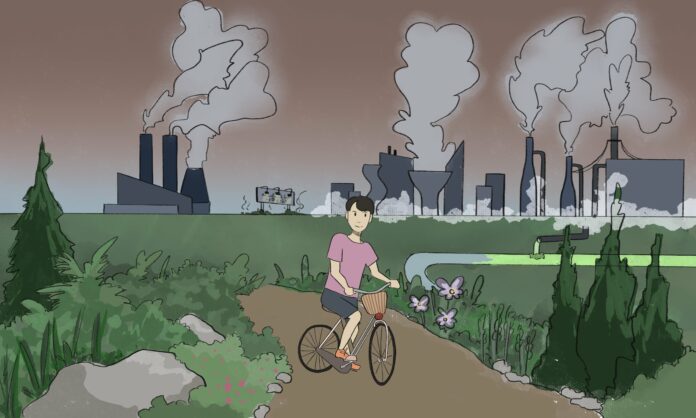
Illustration of a biker on a path. In the background is what appears to be an industrial plant releasing smoke into the skies.
ILLUSTRATION: Victoria Lo / The Peak

By: Emilia Kuznetsova, SFU Student

Climate change is a topic that’s increasingly part of mainstream news and public consciousness. With the effects of climate change being felt all over the world, from wildfires to flooding, there has been a steady rise in climate anxiety. For example, 66% of youth respondents in a Canadian climate survey reported feeling afraid of the future. The reality is that most emissions come from large corporations, with “100 companies responsible for 71% of global emissions.” This is beyond our control as individuals, and can understandably lead to feelings of defeat. But even with something as global and widespread as climate change, our individual choices still matter. 

There is an obvious argument to be made that we as individuals are part of a collective, and that is why our actions matter. As governments continue to develop laws and regulations to reduce greenhouse gases (GHG), individuals are also contributing to significant changes in the status quo. For example, attitudes toward transportation are beginning to shift as more people are adopting sustainable practices like cycling, carpooling, or transiting. According to TransLink, transit users “collectively save 1.3 million kgs of GHGs by choosing transit over driving a gasoline car each day.” It’s clear in this case that our individual choices do indeed add up, even if we don’t see the change in real-time. 

Governments are also significant contributors to climate change, with “China, India, the US and the European Union responsible for 83% of emissions in 2022.” Canada contributes just under 1.5%. However, this doesn’t mean that those living in countries with fewer emissions should sit back and continue with their consumption patterns. The Canadian government’s stated target for 2030 is a reduction of 40% compared to 2005 levels, but this goal is not expected to be met in full due to a lack of strict policies. Global politics and economics certainly complicate collective action, and we often have little say in these decisions. It’s understandable to feel like our choices make no difference — but there are still ways in which individual choices matter.

One of the largest concerns about climate change has been its impact on biodiversity. As species go extinct due to habitat loss or environmental changes, our entire ecosystem faces accelerated challenges. This ultimately impacts humans as well, through things ranging from infectious disease transmission to food scarcity from pollinator extinction. The good news is that even small lifestyle changes can significantly reduce CO2 emissions that amplify these issues. For example, going vegan for just one day a week can save almost 50 kg in CO2 emissions. Reducing our consumption of non-recyclable plastics and electronics can also make a big difference, considering that most yearly phone upgrades are not essential. That’s not to say solving the climate crisis should be solely our responsibility as individuals — but it’s not enough to wait for change when we have the power to make a difference now.

There’s no doubt that each of us is part of something much bigger when it comes to climate change. We make choices every day that positively or negatively impact our carbon footprint. And while climate anxiety is absolutely valid, it isn’t all hopeless — we must recognize that our actions do have an impact on the world around us. The reality is that we face many pressures when it comes to sustainability, and it’s easy to fall into cycles of inaction if we feel like our hard work goes unnoticed. But people need to remember that there are no insignificant actions. Small changes you make do add up and help shift the status quo. We don’t live in a vacuum and everyone has their part to play.

The Bright-er Side: SFU Burnaby in autumn

0
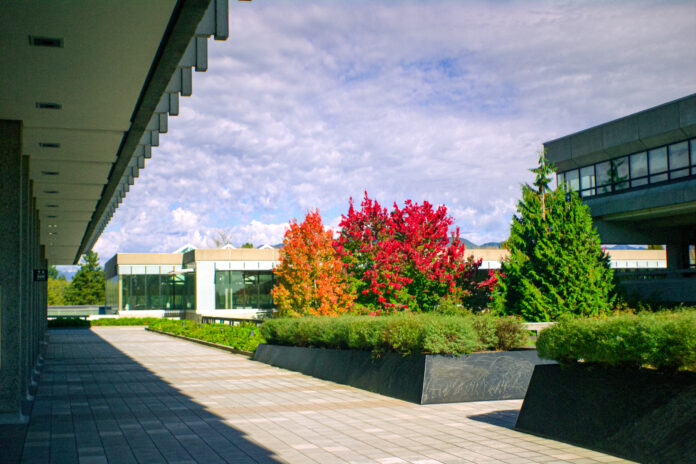
The outside of SFU’s academic quadrangle, with red and orange trees to the right of the walkway
PHOTO: Marshall Henderson / The Peak

By: Yasmin Hassan, Staff Writer

While many associate the colder months with seasonal depression, I couldn’t be happier about the dark and gloomy weather. I relish spending days indoors, in the many nooks and crannies of campus, in a knit sweater and warm boots, or drinking something hot to keep me warm. I even appreciate my commutes to SFU during this season!

I think fall being the harvest season is one of my favourite reasons for enjoying time at school. Having cinnamon and pumpkin flavoured treats and drinks makes studying for the most boring subjects just a little more bearable. My personal favourite would be Renaissance Cafe’s chai latte; it warms every inch of my body. 

Although the weather forces most people indoors, I love seeing the campus covered in fog, with grey misty skies, because it reminds me of a scene from Silent Hill. I think the majority of people enjoy hot sunny weather, but layering in colder weather just makes sense. The age-old proposition: you can’t just rip layers of skin off when you’re melting in 30 degree weather! And it’s true! So, don’t feel too gloomy even though the weather may convince you to. Throw on your favourite sweater, comfy boots, even a scarf, make or buy something hot, get yourself a sweet treat, and enjoy the transitional season in all its glory! 

Council Chats: Numerous by-elections to be held

0
This is an illustration of a graphic that reads “Council Chats.” The image also has two text boxes to symbolise messages being sent.
ILLUSTRATION: Andrea Choi / The Peak

By: Sofia Chassomeris, News Writer

Editor’s note: we recognize that The Peak has an interest in the fee increase discussed at this meeting. The coverage in this article was undertaken by a member of our editorial team who’s not involved or informed by the non-editorial activities of The Peak Publications Society. The Peak is committed to preventing conflict of interest in our ongoing reporting of this issue.

On October 2, The Peak attended the hybrid Simon Fraser Student Society (SFSS) meeting via Zoom. The meeting involved announcing by-elections that would soon be held for seats on several committees, discussion of items outside the agenda, and reports from the executive committee.

By-elections were called for the following committees:

The university and academic affairs (UAA) committee is responsible for communicating with students about university issues and issue-based campaigns while also working with SFU student senators and a Board of Governors Representative. The UAA committee has one vacant seat.

The human resources (HR) and personnel committee guides the president “in their role as the liaison between Council and staff” and ensures that collective agreements are upheld. The HR and personnel committee has one vacant seat.

Member services advisory committee (MSA) advises Council on the “coordination of society member services,” which includes assisting “coordinators on member services, clubs, and Departmental Student Union operations.” The MSA committee has one vacant seat.

The space oversight committee (SPOC) procures and oversees the maintenance of SFSS space, such as maintenance and “future space opportunities.” SFSS includes the Forum Chambers and Student Union Building. The SPOC has one vacant seat. 

The members meetings planning committee (MMPC) is also looking to fill two vacant seats.

Additional motions in the agenda

Following a brief mention that the SFSS and several other affiliate groups are working on fee campaigns, the SFSS passed a motion to form a fee referendum working group. The working group will be made up of “vice-president internal, vice-president equity, vice-president finance, one councillor from the constituency groups, one councillor from a faculty student union, and one additional councillor to be appointed in the motion, as well as representatives from Embark, SFPIRG, and The Peak.”

The SFSS then passed a motion to sign the Graduate Student Society’s joint letter to SFU administration, which calls for the university to “ensure an accessible learning environment for all students, transparency around procedures and policies, and increased student consultation.”

Reports from the executive committee

Chloё Arneson, vice-president equity and sustainability, briefly shared progress on a project involving the koi fish in the AQ pond. She also shared that Council will be finalizing the Steps Forward initiative brought forward by the accessibility committee last year. The accessibility committee is responsible for the society’s accessibility fund. The Steps Forward initiative supports “adults with developmental disabilities to be fully included in all aspects of a post-secondary student experience.” Arneson said further discussion on how the initiative will provide job experience for students with developmental disabilities will take place in the next Council meeting.

Simar Sahota, vice-president finance and services, updated Council on the preparation of the annual finance report for the Annual General Meeting (AGM) on October 30 and documented changes in the budget. The AGM is expected to give SFU students a chance to bring important issues to the SFSS’ attention. 

Sam Killawee, vice-president internal and organizational development, shared that his governance and MMPC committees have been reviewing bylaws, preparing for the AGM, and working on the fee campaigns. Killawee also noted that “between this Council and the last, we had Kickoff, which was really fun!”

Rishu Bagga, vice-president university and academic affairs, updated Council on the start of the SFSS’s food drive, which began on October 1: “It’s been a busy couple of weeks.” The food drive was a joint project with the SFU disability and neurodiversity alliance that collected non-perishable food items until October 11. Bagga said donation boxes were set up in residence and that Council was looking to put them at cornerstone and the Student Union Building as well.

BC Green Party proposes free public transit system as provincial election approaches

0
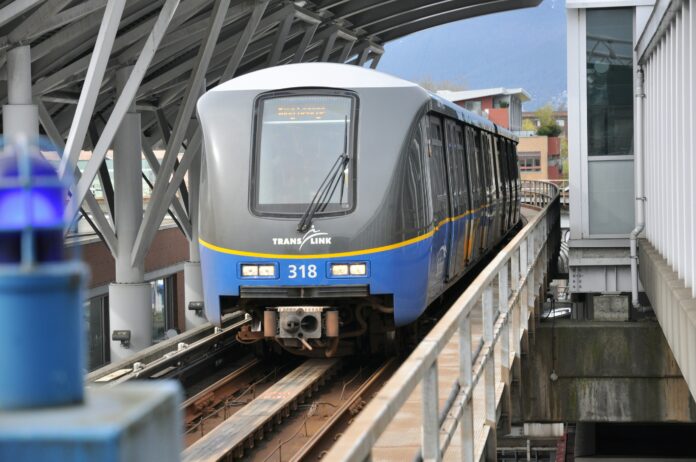
This is the photo of the front of a Skytrain going to King George moving along the tracks.
PHOTO: Diego Mazz / Unsplash

By: Mason Mattu, SFU Student

On September 5, the BC Green Party proposed a new transit policy to make BC operate on a fare-free public transit system. 

“Fast, frequent, and free public transit will shift how people move, reduce household costs, and enable a giant leap forward on meeting our climate goals,” said Sonia Furstenau, leader of the BC Green Party. The Greens have also called for “hourly services on key regional routes, a doubling of city buses within four years, and a tripling within eight years.

“We will expand routes, improve hours, get more buses on the road, and make buses a reliable and easy choice for travel across the province,” stated Furstenau. “By investing in public transit, we’re putting more money back into people’s hands [ . . . ] and building a better quality of life for everyone.” 

Since September 1, 2021, TransLink’s Get on Board program has offered free transit for youth under the age of 12. Compass Card fees for adults are currently $4.90 for three zones, $3.85 for two zones, and $2.60 for one zone. Monthly passes are $193.80 for three zones, $143.50 for two zones, and $107.30 for one zone. UPass is currently $184 each term at SFU from summer 2024 to spring 2025.

The Greens stated the provincial government would have to increase expenditure on transit for the next few years. They explained they would increase taxes for wealthy individuals, create a more equitable carbon tax system, and ensure that corporations pay an adequate price for their emissions. The carbon tax is a “charge placed on greenhouse gas pollution mainly from burning fossil fuels.” Companies benefit from loopholes in the carbon tax system through carbon offsets. 

The Greens also stated the investment would pay off in the long run by mitigating climate change and “the rising costs of fossil fuel dependency.”

In a recent Vancouver is Awesome article, the authors said the time has come for a new transit funding model that can “shift away from the fare box.” Although this policy has been welcomed by some, others are not convinced it will work. 

“It’s not realistic, unless the party is proposing such a significant increase in government revenue, that they would be able to pay a very significant expenditure that would be required to make transit free,” stated Port Coquitlam mayor Brad West in an interview with CBC. “It would require a significant increase in taxation right across the board.” 

West explained that TransLink gains a profit from fares, the fuel tax, and property taxes paid to the provincial government. For every litre of fuel people fill their vehicles with in the TransLink service region, 18.5 cents go to TransLink. A “portion of property taxes collected in the region” also supports transit. TransLink stated they are currently “facing a funding gap of approximately $600 million each year.” If they do not receive an increase in their budget from the government by the end of 2025, British Columbians could see a “significant” cut in transit service across the board. 

Another criticism of the proposed policy is that the Greens have only considered TransLink, which operates in the Lower Mainland. As transit operates under BC Transit in other areas of the province, riders are concerned that the plan may not create fare-free transit outside TransLink’s operating boundaries. 

The BC Conservatives and BC NDP have also promised more funding for transit. John Rustad, leader of the Conservatives, has promised to extend the SkyTrain to Newton in Surrey and create a reliable funding system for TransLink. David Eby, BC Premier and leader of the NDP, has promised free transit for seniors in non-peak hours and the expansion of the Broadway Subway Project further to UBC. The BC NDP also promise “rapid transit to the North Shore and commuter rail services in the Fraser Valley.”

Election day is October 19. 

Four Red Leafs rookies and their journeys to SFU

0
A man swings a golf club over his shoulder while wearing a black baseball cap decorated with an SFU logo.
PHOTO: Courtesy of @sfumgolf on Instagram

By: Tam Nguyen, staff writer

Before this article, I was the amateur who wrote an introduction piece to SFU’s Red Leafs for beginners. As I’m not moving out of my sports amateur rank anytime soon, I consider this piece a sequel of this sport introduction series. So, without further ado, here are four SFU rookies in four different sports, their stories behind joining the Red Leafs, and their achievements so far! 

  1. Tobe Ezeokafor men’s basketball 

Red Leafs basketball offseason signing, Tobe Ezeokafor, stands at 6’5. The guard from Ontario has an impressive profile traced back to his senior year at Fort Erie International Academy. From averaging 19.7 points per game to being named Game MVP at the Nike EYBL Peach Jam Tournament that took place in South Carolina, Ezeokafor is sure to bring lots of size and skill to the Red Leafs lineup. He joined the Red Leafs because the program “is more than just a basketball team. It looked like more of a family.” Ezeokafor is also interested in psychology and business at SFU. His recruiting profile indicates his high free throw percentage (80%), as well as his field goal percentage (55%). 

2. Dariella Lopez women’s soccer 

 
An alum of Burnaby North Secondary School, Dariella Lopez is a 5’7 freshman striker for the women’s soccer team. She’s also a member of the Burnaby Football Club. Lopez played 39 minutes in the team’s September 9 matchup against Stanislaus State. The Red Leafs won 20, with Lopez earning a penalty kick after drawing a foul from her defender. In the team’s game against Montana State Billings on September 28, Lopez scored a goal assisted by senior Emily Smith. We’re looking forward to seeing more of Lopez as the soccer season continues throughout the fall. 

3. Maxwell Corcoran men’s golf

 
Maxwell Corcoran is a golfer from Ottawa, Ontario. Before joining the Red Leafs, he won the 2023 Quebec Junior Boys’ Golf Championship after a close tie with his opponent after 54 holes. He won the championship off a tiebreaking par 4 performance. Corcoran joined the Red Leafs due to SFU’s “extremely strong academic and golf programs.” He also cited his desire to “stay in Canada and play NCAA,” something he can do now that he’s a part of SFU.  

4. Megan Hawkins volleyball 

 
An outside hitter from Kitchener, Ontario, Megan Hawkins is a rising star for the Red Leafs volleyball team. Coming from “one of the top club programs, KW Predators,” she provides “a consistent presence in the back court” by taking care of serve receptions. Hawkins’ NCAA debut saw her execute 18 kills against Cal. State San Marcos. She’s excited to major in education and “being a Red Leaf.” 

Build your perfect Dining Commons meal and we’ll tell you when you should start studying for your midterms

0
Student sitting at a table in the Dining Commons surrounded by half empty cups and plates.
ILLUSTRATION: Yan Ting Leung / The Peak

By: Izzy Cheung, Arts & Culture and Sports Editor

Hello friend! Welcome to SFU’s Dining Commons. Where are you coming from? 

  1. I just finished back-to-back-to-back-to-back-to-back-to-back-to-back-to-back-to-back lectures. 
  2. . . . I don’t actually know.  
  3. I actually just came back from The Peak’s office.
  4. My favourite study spot on campus. I have three midterms next week, and I can’t waste any more time scrolling through TikTok. Brat summer is over! Yay! 

Okay, let’s grab a starter! What will you be having? 

  1. I’m skipping that and going right to the entrées. 
  2. A salad? I don’t know. I’m indecisive. 
  3. Soup, please. It’s warm and gives the best fall vibes. Some sort of butternut squash or tomato soup would be great. 

The Peak: What if we told you that everything is soup? 

What? That makes no sense. How could everything be soup? 

The Peak: Trust us. Everything is soup

d. Maybe a sampler portion of a sushi roll? Yay! 

Entrée time! Which station will you be going to? 

  1. The Stacks. That way, I can build my own sandwich and save half of it for my 7:00 p.m. lecture. 
  2. I don’t know. Please don’t make me make a decision. 
  3. Maybe I’ll have some teppanyaki from The Hot Plate. 

The Peak: Don’t you want some soup instead? Doesn’t it give you the best fall vibes? 

Well, I already had soup as a starter — 

The Peak (in a very not-menacing tone): You should have some soup instead. 

d. I’ll probably have some stir-fry from Yin and Yum. I’ve been scrolling on John Pork’s feed and now the pork is calling to me. Yay! 

Great choice! What would you like to drink? 

  1. See, to make things more efficient, I’ve been drinking my tears so that I don’t have to go and fill my water bottle. Time is of the essence! 
  2. Uhhhhhhhh
  3. I was thinking maybe an apple jui—

The Peak: You should have some soup. 

. . . Okay. 

d. I’ll take a watermelon soda. Wait, we don’t have that here? Why not? Well, that sucks. Now it feels pointless to say yay. 

The moment is finally here . . . it’s time for you to pick a dessert! 

  1. I’m skipping dessert; I don’t have the time. I’ve got a lecture in 10 minutes and it’s all the way in Blusson Hall.  
  2. Don’t make me decide, please! 
  3. I’ll have soft serve ice cream. 

The Peak: You should have some — 

I am. Ice cream is soup. Cereal is soup. Heck, cake is soup. Everything is soup. 

d. Well, I’m not exactly sure. I’m still hung up by the lack of watermelon soda. I understand why Kim was crying during the Kardashian soda drama.

Results: 

If you got mostly A’s . . . 

Don’t study. At all. You, my friend, need a nap. Or a good night’s rest — something longer than an hour. Yes, time is limited for someone as busy as you. But with how you’re living your life, you will burn out soon. Yes, this is a humour article, but please remember to prioritize your health, especially with midterms coming up. 

If you got mostly B’s . . . 

We can tell you’re indecisive, so guess what — it’s up to you! You get to decide when you want to start studying for your midterms. It’s a cruel twist of fate, isn’t it? Enjoy making another decision! 

If you got mostly C’s . . . 

Why would you study for your midterms when you have much bigger issues to worry about? Sure, your degree is important, but none of that matters in the grand scheme of things. As a collective human race, we need to figure out the answer to the question that every being on earth has yet to solve — what is soup? So, no, don’t study for your midterms. 

If you got mostly D’s . . . 

Your hypothetical journey through the dining commons is like the progression of your degree. You start off enthusiastic and eager to make the most of your experience, and then, slowly, you become more and more disappointed with your surroundings. Don’t worry; it happens to all of us. 

Food for thought: Tzatziki is my new comfort food

0
A bowl of creamy white tzatziki dusted in sprouts and green specks.
PHOTO: Courtesy of Cristi Ursea / Unsplash

By: Emilia Kuznetsova, SFU student

When I visited Greece for the first time this year, I met amazing people and visited breathtaking places, but my favorite part was the food and witnessing the importance of sharing meals for Greeks. Restaurants outside of touristic epicenters offer cozy, home-like atmospheres and serve mouthwatering food. Going out with foreigners and locals alike meant that we always ended up sharing a meal at a neighborhood taverna. In my experience, tzatziki is the one dish that truly unites people at mealtimes. It’s served everywhere, it’s delicious, and it’s super easy to share.

Tzatziki is one of those dishes that remains the same throughout all of Greece. All you need is greek yogurt, cucumbers, olive oil, garlic, and some freshly-squeezed lemon juice, ingredients that are not only abundant, but also extremely affordable in the country. Besides, it only takes 15 minutes tops to prepare (although it tastes better if you let it “rest” in the fridge for some time to give the flavors an opportunity to blend and mix). Tzatziki also goes well with pretty much anything, from pita bread, to souvlaki, to hand-cut fries. You can even eat it plain as a quick and healthy snack.

While the exact origin of tzatziki has been heavily debated, it’s believed to have roots in the Middle East or the Ottoman Empire. It first appeared in Greek culture in the fifth century and was known to be a universal accompaniment to chicken, lamb, and beef. 

Regardless of its precise origins, tzatziki has become known as a product of the great Greek melting pot. In the modern age of faster cross-Atlantic travel and cultural exchange, it’s a lot easier for traditional dishes like tzatziki to extend beyond their origins’ borders. Immigrants bring their recipes with them which, in turn, gradually get incorporated into the local cuisines and dishes.