Home Blog Page 7

“Not at all” represented: Unhoused residents respond to Hastings decampment report

0
A collage of police tape, phone, microphone, and video camera expresses the media being barred from reporting. The background consists of newspapers and a “Hastings St.” sign.
COLLAGE: Gudrun Wai-Gunnarsson / The Peak

Written by Hannah Fraser, News Editor

In February, BC’s human rights commissioner Kasari Govender released a report on “the exclusion of media from the April 2023 Hastings decampment.” This two-day decampment was significant in scale, with 94 tents removed and residents forcibly displaced. Despite the City and Vancouver Police Department (VPD) insisting that human rights and press freedom were not violated, the report concludes that “transparency was compromised” by these parties. 

According to the report, the media exclusion zone imposed at the decampment was not in accordance with human rights standards, as it lacked legal authority and “requirements of necessity and proportionality.” While framed as a “safe work zone” intended to address safety concerns, the “impact on media was not adequately considered.”

As well, Govender deemed the City and VPD’s investigation into complaints about the exclusion zone insufficient, citing a lack of independence and serious gaps in the review process. These findings led her to conclude that the restrictions interfered with freedom of the press and had a disproportionate impact on encampment residents — especially Indigenous people and people with disabilities.

Govender told The Peak that these events are part of a “broader pattern that is really concerning around the role of media in this country.” Specifically, “when placed against what we see happening in the US [and] in other places in the world where media exclusion, media oppression is such a key piece of undermining a free and democratic society where human rights are enshrined.” 

Hence, Govender’s hope was for the report to be a “canary in the coal mine of sounding the alarm: if this is happening, we need to be vigilant about this.

“We need to be able to shine a light on what’s happening in communities that could be the most silenced, and make those the most visible,” she said.

However, when The Peak spoke with four unhoused people from the Downtown Eastside about the report, they said their perspectives on the decampment were “not at all” represented. While the report concludes that the decampment disproportionately impacted encampment residents, Crystal, Gordon, Joel, and Cory said it overlooked “a decrease in police violence” as a recommendation. 

“They’ve [the City and VPD] done a lot of things that are tremendously inhumane and void of any logic,” said Gordon. Decampment operations in the Downtown Eastside have frequently involved the use of force, seizure of personal belongings, and displacement without adequate notice or shelter for residents. “It’s unreasonable, and it’s inhumane,” Gordon stated. 

Cory, who was living at the Hastings encampment when the decampment took place, said the report is “only sharing one side of the story, and that’s their side, right? And they’re not getting our side of the story.” Crystal and Gordon said it was “beyond mind-blowing” that the report never addressed their concerns, despite concluding the police’s actions were not justified.

They said the report isn’t going to make a difference in how the City, police, and provincial government approach encampments. “They’re just gonna do what they want to do,” said Joel. Crystal added, “The government’s gonna pay more money just to make it [encampments] look like a toy for us, but it’s not really. It’s just paying for more police.”

“They’ve [the report] missed half of the situation and missed an opportunity to develop locally and within our own community.” — Gordon, unhoused resident of the Downtown Eastside

In the report, the commissioner stated she “wanted to ensure that any restrictions on freedom of the press anywhere in the province comply with law, including human rights protections, especially those involving police actions against marginalized people.” The Peak followed up with the commissioner’s office about whether unhoused voices and concerns were included in the inquiry. The office did not respond directly and reiterated that the inquiry “was not investigating decampment practices and their human rights implications.” They added that “tent encampments are a conspicuous sign of Canada and BC’s lack of progress in fulfilling their commitments to social and economic rights.

The City and VPD released a joint statement in disagreement with the report, noting the “description of a ‘media exclusion zone’ does not reflect the facts, as media access was in fact prioritized, planned for, and communicated in advance.” In a follow-up statement to The Peak, they said they shared information with the media the morning of the decampment on how to access the site, inviting and permitting coverage. They emphasized “significant and intensifying worker and public safety concerns” related to the encampment, and that these “safe work zones” will continue to be established.

Govender said this response was “disappointing because these are recommendations that are, in my view, reasonable recommendations to protect fundamental human rights.”

Issues with the report extended beyond policing. “There are so many buildings in the city that could be used for housing that there’s really no need for people to be on the street in encampments,” said Joel. Advocates and residents of former Downtown Eastside encampments have long called for safe, permanent, and dignified housing as an alternative to repeated displacement. When offered housing, residents are often offered single-room occupancy units that many describe as unlivable. Crystal said she’s currently “locked up” in a room where she is not allowed to leave freely. She has bars on her window, no fire exit, and no heat.

The Ministry of Public Safety and solicitor general, which was also called upon in the report’s recommendations, told The Peak they “continue to review the recommendations laid out in the human rights commissioner’s report.” The attorney general did not respond by the publication deadline.

Gordon said more involvement from neutral, community-based third parties focused on crisis response, first responders, and overdose prevention could have also been mentioned in the report. “They’ve [the report] missed half of the situation and missed an opportunity to develop locally and within our own community — a chance for people to grow past their feelings of worthlessness and addiction and become people that are strong; suited to helping people know how to help themselves as well,” he said.

“We’re still part of the community,” said Crystal. “We always will be. And they did wrong. They did it [the decampment] illegally, and they moved people’s homes.”


SFSS bars recording at Council meetings, deterring student reporting

0
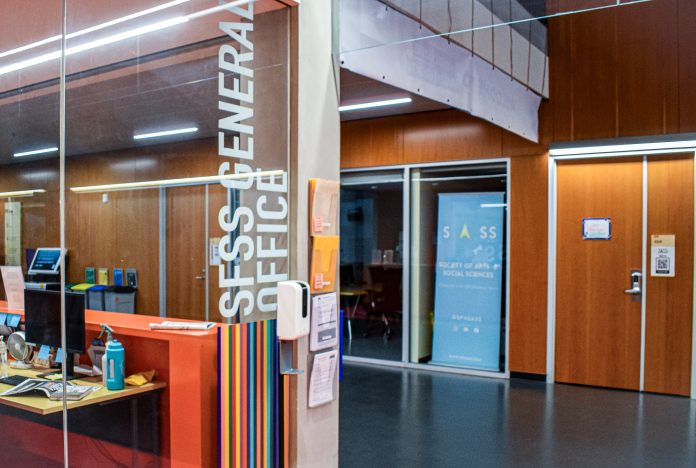
A photo of the exterior of the SFSS office in the student union building.
PHOTO: Mehakdeep Toor / The Peak

Written by Petra Chase, Features Editor with contributions from Jonah Lazar, Staff Writer

Editor’s note: The features editor and a staff writer spoke to the news team to learn more about this ongoing situation. Beyond being interviewed and forwarding us correspondences with the SFSS for fact-checking, the news team was not involved in the production of this article to avoid conflict of interest.

Council Chats is a column in The Peak’s news section that informs readers about Simon Fraser Student Society (SFSS) proceedings. Council, made up of elected executives and representatives, is the highest governing entity of SFU undergraduate students. These biweekly meetings are publicly open to all members of the society — any student who has paid their tuition. However, since the 2025/26 Council year began, The Peak’s news staff state they have been deterred from reporting on their meetings, and raised concerns surrounding the SFSS’ transparency to the student body.

After multiple hurdles to report on Council meetings, the news team was told by SFSS president Landy Liu in September they would no longer be allowed to record Council meetings, evading further discussion. This decision was officially passed by Council on March 11, 2026, six days after The Peak contacted them for a statement. However, according to Peak news editor Hannah Fraser, there has been “unprofessional disorganization” since as early as May, when the current Council’s term began. 

Miscommunication and missing minutes

On May 16, Fraser contacted the SFSS about attending an upcoming Council meeting, as it had been moved from May 15 to May 21 on their website, which Liu confirmed. She also asked whether this meant the entire schedule would be pushed by a week. However, he did not address this. After Hannah followed up on May 18, Liu responded two months later, apologizing and saying the email “was lost in my mailbox.” On May 21, news writer Lucaiah Smith-Miodownik was not allowed to enter the Council meeting over Zoom. Fraser emailed the SFSS for a follow-up, writing to them, “It’s possible that [Smith-Miodownik] request to join was missed by whoever was managing the Zoom, but I’m wondering what happened there.” Despite an apology and note that Peak staff “are welcome to join” future meetings, no reason was given as to why Smith-Miodownik was not allowed into the meeting. 

When contacted for a statement in late February, the SFSS cited “technical issues” and “audio visual challenges.” They stated this was the new executive team’s first meeting and they wanted to promote in-person attendance to “encourage greater engagement.” Despite this, they acknowledged that the delayed response was “unacceptable and should not have happened.”

In September, news writer Niveja Assalaarachchi was assigned to cover a Council meeting on the 10. On the 8, he bumped into SFSS vice-president events and student affairs, Albert Radu, on campus. “We had a very candid conversation,” Assalaarachchi recalled. He claimed he asked Radu what the next Council meeting would be like and Radu responded that the meeting had been cancelled. The rescheduled meeting had not been announced on the website, nor was The Peak informed until Assalaarachchi reached out himself over email to clarify. The SFSS stated, “a notification of cancellation should have been posted publicly” and this was a “shortcoming on the part of SFSS.”

Fraser also noted an inconsistency in Council minutes being shared. SFSS by-law 17 1.b states, “by-laws, policies, and minutes” must be uploaded for members “within three months of their approval.” Meeting minutes for at least eight meetings, from as far back as over five months ago (October 8), have not been posted on the SFSS website at the time of writing. Since joining The Peak in 2024, Fraser said she has consistently received post-meeting documents in her inbox right after each Council meeting. Since September, these minutes, if sent at all, were being sent over a month after the meetings. 

The SFSS recognized their uploading of meeting documents is “frustratingly slow.” They attributed this to the “limited capacity” of the administrative team and “operational demands” in requiring a chair and Council to approve these minutes. They are “currently looking for ways to expedite this process.”

Recording ban

The recording ban informally began on September 24. After Assalaarachchi entered the Council meeting over Zoom, Liu informed him via private message that recording would not be permitted: “I cannot approve the recording today but will share the minutes when it’s done,” Liu said. Assalaarachchi responded, “I was under the impression that The Peak had permission to record meetings?” Liu said, “This was not talked about with myself as chair and we can communicate about this for future meetings over email.” Assalaarachchi told The Peak he was “stressed because without a recording, we would have no reference point as to what happened at the Council meeting” to write the article. Under former SFSS president Emmanuel Adegboyega, and for several previous Councils that we could verify, The Peak did not encounter issues recording Council meetings. 

“As part of our fact-checking process, the editor-in-chief(s), copy editor, and fact checker also review the recording and bring any further concerns about accuracy to my attention.”  — Hannah Fraser, news editor, The Peak 

After the meeting, Fraser emailed Liu to understand the situation, explaining that recordings are needed for fact-checking and “not shared beyond the publication.” It took just over a month and a follow-up email for Liu to respond that the SFSS “will not be permitting The Peak to record our meetings using the Zoom application for this term (until April).” Fraser asked whether this meant The Peak could only record audio from a separate device, rather than the internal Zoom function. In this email, she explained, the sole purpose of a recording is to “ensure accuracy, including quoting SFSS councillors and execs properly, and ensuring we represent events/issues/topics fairly. When a writer sends me their draft Council report, it is not uncommon for me to correct some of their reports due to factual errors. As part of our fact-checking process, the editor-in-chief(s), copy editor, and fact checker also review the recording and bring any further concerns about accuracy to my attention.”

It took another six weeks and a follow-up for Liu to respond, saying he would “provide more updates” following a Council meeting on January 14. However there was no further communication from SFSS. The meeting agenda from January 14 also showed no discussion on the topic. The minutes for the September 24 meeting were not uploaded until December 22.

On February 27, 2026, The Peak contacted the SFSS for a response to the news team’s concerns. The SFSS said they “will continue to prohibit external recordings of their meetings” due to their policy of keeping members’ “personal information confidential.” They expressed that The Peak is not “legally entitled” to a recording, or “formally accountable for what may happen with that information should it be used to harass a member of Council or lead to an exposure of a councillor’s personal information.” 

The statement was delivered from Liu on March 4, who requested we rescind individual names from our article, and instead only refer to “the SFSS.” He added, “We are individuals who advise or work for the Society as a whole. Decision making is done by [Council].” The Peak asked to verify the documented motion of Council’s decision to prohibit recording, and for clarification on “what personal information would be shared in public Council meetings that could be used to harass members. As Council meetings are open to the student body, it is unclear why a recording would lead members of the student body to have more information than what is willingly being shared during the meetings.” No motion was provided but Liu said he would bring the matter to the upcoming Council meeting and “reaffirm its existing position.”

On March 11, the SFSS formally passed a motion to “uphold its obligation to councillor privacy and safety; Be it resolved that Council approves a formal response.” There was no further information provided on what these privacy and safety concerns were. 

Questions around legality and transparency

SFSS councillor and representative of the geography student union Jeffrey Collinson reached out to The Peak after the motion had been passed, stating that he argued against it. He believes the SFSS is concerned with upholding the Personal Information Protection Act, which includes “opinions and views” as personal information. According to section 10, personal opinions may be collected via recording if consent is given, as long as the purpose of the recording is delivered. 

“This is inherently a public-facing position. About $450,000 a year goes towards paying Council and exec, and I think the membership deserves to hear what we’re saying.” — Jeffrey Collinson, geography student union representative, SFSS Council

The SFSS stated they record meetings for the “internal administrative team to be able to capture the meeting minutes accurately.” Collinson claims the SFSS does not ask for consent from attendees to record, so they are also “collecting personal information.” The SFSS stated they collected “a consent form from all registered councillors” at the beginning of the Council term, but did not elaborate on collecting consent from all attendees. I think that councillors are worried about making a slip-up, saying something wrong, and getting sued for slander or getting hate for it,” Collison said. “However, this is inherently a public-facing position. About $450,000 a year goes towards paying Council and execs, and I think the membership deserves to hear what we’re saying.” According to the SFSS’ operating budget, $430,560 goes towards councillor and executive stipends.

Collinson also alleged that the topic of The Peak’s right to record had not been discussed ex-camera by Council prior to the most recent meeting. The SFSS said they “cannot confirm or deny” this. Ex-camera refers to the portion of Council meetings that are open to all members, as opposed to in-camera, which is a confidential discussion among councillors. 

Assalaarachchi stated the current Council is taking a “radical departure from previous SFSS administrations.” The previous Council also used to post Council meeting recordings consistently on SFSS’ YouTube channel, a practice which halted with the current Council. The Peak has never leaked recordings outside of our organization, or used it for purposes beyond fact-checking.

Fraser emphasized that simply attending and taking notes are insufficient for reporting, for instance, if “a writer has miswritten a figure provided in a financial presentation. My corrections and our follow-ups with people to ensure we understood them currently are only possible through reviewing the recording [ . . . ] If meeting minutes aren’t actively updated for the community to reference, then the 2025/26 SFSS team has not allowed the students they represent to understand their operations and future plans effectively.”

The SFSS stated, “All ex-camera activity is fully publicly accessible in-person” and they will continue to provide “communications regarding how to access the Council meetings online.” They added,“The next scheduled Council meeting will take place on March 25, 2026.” 

“Not everyone is sitting through the SFSS’ long meetings,” continued Fraser. “We have sat through 2–3 hour meetings in the past — and it’s all for students.”

The SFSS represents over 25,000 undergraduate students and the decisions they make should be as transparent and open as possible,” Assalaarachchi added. 

The SFSS stated, “The Peak has never been treated differently from all SFSS members with respect to attending meetings and the right to record meetings. The SFSS would welcome the opportunity to meet with The Peak to discuss these issues at greater detail if desired.” 

 It would be an over-reach to interpret accountability as a breach of legislation respecting “personal information,” in my opinion. Media coverage is in the public interest. — David F. Sutherland, media lawyer

Media lawyer David F. Sutherland told The Peak, both SFSS and The Peak “should recognize the benefit of cooperation between the two bodies and a well-informed student body. Individual members of Council should only be named where accountability requires that identification, and, ideally, the individual should be given an opportunity to respond. It would be an over-reach to interpret accountability as a breach of legislation respecting ‘personal information,’ in my opinion. Media coverage is in the public interest. On March 13, BC’s Finance Minister announced an investigation into the Kwantlen Polytechnic University Student Association (KSA) ‘to determine whether there has been any misuse  of funds or other  problematic conduct’ by KSA. No misuse of funds or other problem has been found at KSA and none has even been alleged at SFSS. Accountability serves to avoid any need for such an investigation at SFU.”


Human rights calls for Canada Soccer to condemn the Israel Football Association

0
The outside of BC Place and False Creek are pictured on a bright sunny day.
PHOTO: Ronin / Unsplash

By: Lucaiah Smith-Miodownik, News Writer

This summer may prove to be unlike any other for local soccer fans. Beginning in June, the 2026 men’s FIFA World Cup will commence, with games held across North America. Vancouver will host seven matches, including at least two featuring the home squad, Canada. 

Despite the excitement, some groups are sounding the alarm. Concerns relating to the Palestinian genocide paint a different picture of the global sporting event, one that some people may not know amid the fútbol frenzy. The Peak corresponded with Just Peace Advocates (JPA) for more information.

JPA “is a Canadian human rights organization that focuses particularly on realizing the right to self-determination of the Palestinian and Kashmiri Peoples.” In recent months, the group called upon Canada Soccer, the national governing body of the sport, to protect and uphold these rights. In an open letter, JPA urged Canada Soccer to “publicly demand that FIFA (International Federation of Association Football) and UEFA (Union of European Football Associations) suspend the Israel Football Association (IFA),” and “refuse to host the 2026 World Cup in good faith while Israel continues to enjoy impunity.”

The letter notes that “the IFA organizes soccer activities, namely FIFA-sanctioned games, in illegal settlements in occupied Palestinian territory.” While Israeli teams play, Palestinians are barred from entry. The IFA openly supports the Israel Defense Forces, fostering an environment where players can speak openly in support of genocide. JPA asserted that, by failing to act against the IFA, Canada Soccer is acting in direct opposition to its own bylaws. The governing body states that it “is committed to respecting all internationally recognized human rights and shall strive to promote the protection of these rights.” Moreover, “discrimination of any kind against a country, natural person or group of people on account of race, ancestry, ethnic, national or social origin [ . . . ] is strictly prohibited and punishable by suspension or expulsion and/or other disciplinary measures.”

JPA also explained that, despite the governing body’s apparent hypocrisy, it has, in the past, followed its principles. “In February 2022, Canada Soccer announced it would refuse to play Russia on the basis of its invasion of Ukraine,” the human rights organization stated to The Peak. “The obvious reason that Soccer Canada has not issued a public statement against the IFA or Israel’s actions is what we call the ‘Palestine Exception.’ It’s the result of anti-Palestinian racism,” JPA stated. “The risk is much higher in this case. Soccer Canada did not risk anything to take a stand against Russia. It risks a significant amount of support to speak out against Israel.

“Therefore, their silence is a reflection of their racism, cowardice, and greed.” JPA said they have “not identified any financial/sponsorship connections to date between Canada Soccer and the IFA.”

This lack of action gives “consent for the ongoing genocide,” JPA told The Peak. “The IFA plays on illegally appropriated Palestinian land,”

“Israel attempts to destroy Palestinian football fields, while simultaneously murdering Palestinian athletes. Sport has and always will be political — there is nothing neutral about it.” — Just Peace Advocates

The Peak reached out to Soccer Canada for comment, but did not hear back by the publication deadline.


Movement presents plan for Surrey’s transit future

0
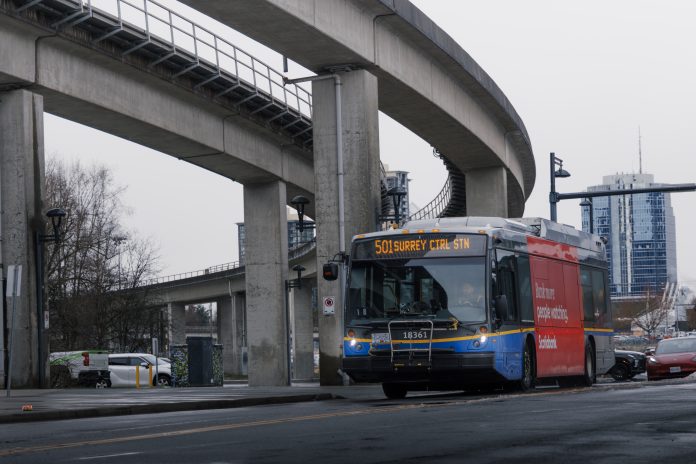
The 501 Surrey Ctrl bus drives along a road, below SkyTrain infrastructure.
PHOTO: J.J. Jang / The Peak

By: Niveja Assalaarachchi, News Writer

Surrey is the Lower Mainland’s fastest-growing city and is expected to surpass Vancouver in population by 2038. Considering this growth, the organization Movement: Metro Vancouver Riders recently released a report highlighting their vision for the future of transit in Surrey.

Movement “empowers transit riders across Metro Vancouver by giving [the] community a strong, unified voice.” Their proposal advocates for three main things: new bus routes for faster and more direct local and regional trips, investments in bus exchanges and bus-priority roads to expand Surrey’s bus infrastructure, and improved pedestrian infrastructure, including new sidewalks and bus shelters.

The Peak spoke with Ahasan Bhuiyan, an SFU engineering student and organizer for Movement involved in the coordination of the report, for more insight. Bhuiyan outlined the plan’s vision, noting that while TransLink and the city were developing their transit plan, they did not focus on riders’ demands enough. So, Movement created their own plan with input from Surrey transit riders through a survey

Bhuiyan noted that the organization was in discussions with TransLink to theorize how Movement’s community-engaged plan could be implemented. He explained that Surrey residents often have lower engagement rates in transit planning as compared to other municipalities, hypothesizing that factors like language barriers could be a reason for this.

Bhuiyan said Movement had previously assisted TransLink in developing the South of Fraser East Area Transit Plan, which had looked at transit development across Surrey, Langley, and other jurisdictions.   

One of the plan’s main goals is to improve transit connectivity in Surrey by creating new bus corridors that cross the municipality north to south and east to west. Bhuiyan spoke to the difficulty Surrey transit riders have in commuting in the city,

saying the system “is very good if you live in Surrey and you want to go to Vancouver for your work, and then you come back home in the evening. But as we mentioned in the report, it’s not particularly good for movement within Surrey.”

“The existing public transit system in Surrey is very good if you live in Surrey and you want to go to Vancouver for your work, and then you come back home in the evening. But as we mentioned in the report, it’s not particularly good for movement within Surrey.”

— Ahasan Bhuiyan, organizer at Movement

The report also specifically examines transit connections from the rest of the Lower Mainland into Surrey. Bhuiyan pointed out that Surrey residents often have to take 3–4 transfers onto other bus routes to get to different parts of Metro Vancouver. To this end, the plan proposes adding new regional bus routes, which would connect areas like Tsawwassen, Ladner, and Coquitlam directly to Surrey, and other areas in the Fraser Valley. 

Reconciliation is forged by authenticity

0
a photo of “Totem Poles” at Brockton Point in winter light, in Stanley Park. The poles represent a number of Indigenous Nations. The poles depict real and mythical events, carved from Western red cedar.
PHOTO: Anthony Maw / Unsplash

By: Niveja Assalaarachchi, News Writer

Content warning: mentions of genocide against Indigenous Peoples and denialism of genocide.

The question of what reconciliation is and what solidarity with Indigenous Peoples can look like is a necessary topic of conversation. How settlers respond to the brutal legacy of colonialism and genocide on Turtle Island is something that must be grappled with. Over the last decade or so, the Canadian government has attempted to make dues with history and acknowledged its genocide of Indigenous Peoples. However, acknowledgement of the genocide at press conferences isn’t sufficient. We need to move towards contributing real effort and understanding between Indigenous Peoples and settlers of different backgrounds. Perhaps we can learn from the acts of solidarity exemplified by different Indigenous Nations on Turtle Island, and other populations outside of it — namely, how both various Indigenous Nations and Irish people have cultivated a solidaristic relationship. 

In the first half of the 19th century, Turtle Island, and Europe were both experiencing sociopolitical events that would determine their history forever. On Turtle Island, the Trail of Tears — the ethnic cleansing of five Indigenous Nations — took place when Indigenous Peoples were forcibly moved to Oklahoma by the US Army. Thousands of Indigenous people died on the Trail of Tears. The genocide resulted in the Indigenous Nations losing their traditional land and experiencing immense trauma. In Europe, British colonization had wreaked havoc on Ireland and the Irish people. Imperial policy forced Irish farmers to grow crops, primarily to export to Great Britain. This had led to farmers farming potatoes, which produced a greater crop yield for less space. However, when crops failed, it led to the Irish famine.

Although Indigenous Nations and the Irish people experienced colonization differently, their stories articulate efforts of solidarity between colonized peoples. In 1847, the Choctaw Nation, fundraised nearly US $170 (about US $7,000 in 2026) to support people in Ireland affected by the famine. This is despite the fact that they were still suffering through the circumstances of the Trail of Tears and genocide. This was not an isolated incident as it was recently uncovered, that several Indigenous Nations whose traditional territories are in what is colonially known as “The Province of Ontario” have also aided by sending fundraised amounts to Ireland.

This kindness, nearly 200 years on, has not been forgotten by the Irish people. Memorials have been held in honour of the kindness that Indigenous Peoples on Turtle Island extended to the Irish people. The Irish have also made efforts to pay tribute to this kind act as announced by the Irish Embassy in Canada, and through educating people of this historical contribution. 

Moreover, many Irish people rallied in support for Native American communities who were particularly afflicted at the start of the COVID-19 pandemic. One such example was the support seen for the Navajo Nation, who were able to receive approximately US $3 million in aid. 

What all of this shows is that solidarity between peoples is not a far and distant goal, it’s a proven process with historical precedent.

I, as a settler from Sri Lanka, a country with its sordid history with its own Indigenous peoples feel that it is up to all settlers to reflect and engage in what it means to live on this land. Whether you’re a third-generation immigrant, or a refugee, it’s important to examine your positionality on unceded land, and see how you can act in solidarity with Indigenous Peoples. 

95% of BC is made up of unceded territories of various Indigenous Nations, taken without any agreement or compensation. To this day, much of the decisions taken over this land is done without consultation — and in some cases directly harms Indigenous Nations. Somehow, we live at a time where some politicians have openly denied the genocide of Indigenous Peoples. This makes the task of reflecting what it means to be a settler on stolen land ever important.

Students are let down by employment insurance

0
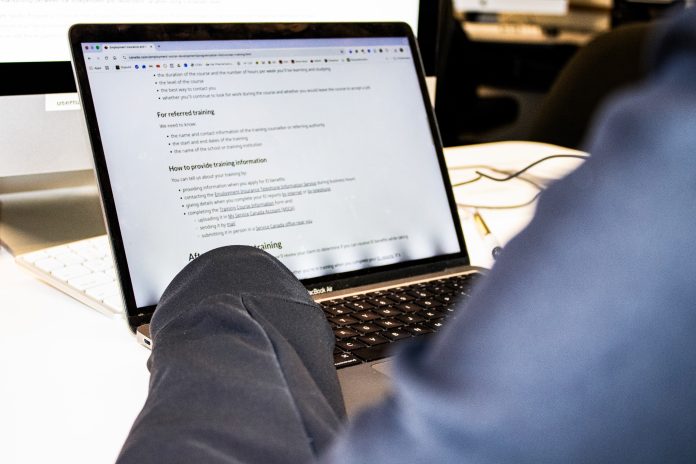
a person sitting in front of their laptop. The screen displays the website for employment insurance, on the training section of the website. One can only see the person’s arms in the photo.
PHOTO: Ali Imran / The Peak

By: Jonah Lazar, Staff Writer

Over the past few years, working students have experienced unsteady support from the federal government when it comes to employment insurance (EI). EI in Canada offers benefits to workers who have become jobless “through no fault of [their] own” — this would include people who have recently been fired, laid off, or had their place of work shut down. Moreover, a person can receive EI while working on their studies (referred to as “training”). This can be done with or without EI’s approval, however, it is subject to inquiry. The criteria also stipulate a minimum of insurable hours from one’s working hours in the previous year, as well as a desire and an attempt at finding work. While the requirements to qualify for EI appear rather straightforward, some people, like students, who meet these criteria are left with no support.

In New Brunswick, an EI program designed for students who had gathered enough insurable hours through seasonal employment was axed in 2022, leaving many students relying upon the service in financial precarity. This program was whisked away with not so much as a word to its former recipients, who found out via student channels rather than an official government announcement. Other reports of students being left high and dry by EI have appeared in Prince Edward Island, where, despite having worked enough insurable hours from summer jobs, students were denied for the express reason that they were currently studying. 

The Government of Canada states that “the EI program is not intended to support students, but to support workers during periods of unemployment and facilitate transitions within the labour market,” as there are other government supports available. Yet, these government supports often boil down to access to student loans, which don’t relieve the pressure on students, but rather, delay it. In many cases, students are also workers. 

This all comes at a time when student-dense cities such as Toronto, Vancouver, and Halifax are floundering under affordability crises. Students aren’t helped either by the rising costs of getting a degree; tuition rate increases are limited to 2% a year, but as post-secondary education struggles to keep up with the loss of 49% of international student tuition, divisive cost-cutting measures are being considered. It’s possible that this could endanger the Tuition Fee Limit Policy. At SFU, where some of us are extending our studies into fifth and sixth years to finish our degrees, one can only imagine that this figure could rise. Students are having to delay graduation for longer due to not having a required course offered at the right semester, or having to deal with a personal issue that comes with a hefty bill. Our tuition includes various fees that aren’t contingent on the number of credits we take. The minimum wage isn’t keeping up with the living wage in BC.   

With the modern realities of costs of living and costs of tuition, the idea of students graduating and then immediately becoming workers is increasingly becoming more difficult. There is a significant overlap of students working to make ends meet, and 9–5 workers studying to advance their careers. These people are as reliant on their paycheque as any other member of society is, and as such should have access to the same protection measures.

Denying EI for student workers and instead suggesting they apply for student loans, despite them having worked enough insurable hours to qualify for EI, is not a fair deal for students. The EI program, which supports workers while rarely demanding payback, is not fairly replaced by the student loan system that often plunges students into a decade and a half of biweekly repayments.

Denying student workers EI because they are pursuing a higher education further entrenches the inaccessibility of education, reserving it as a privilege for the wealthy. 


Squamish man rollerblades around the world to raise $1 million for bees

0
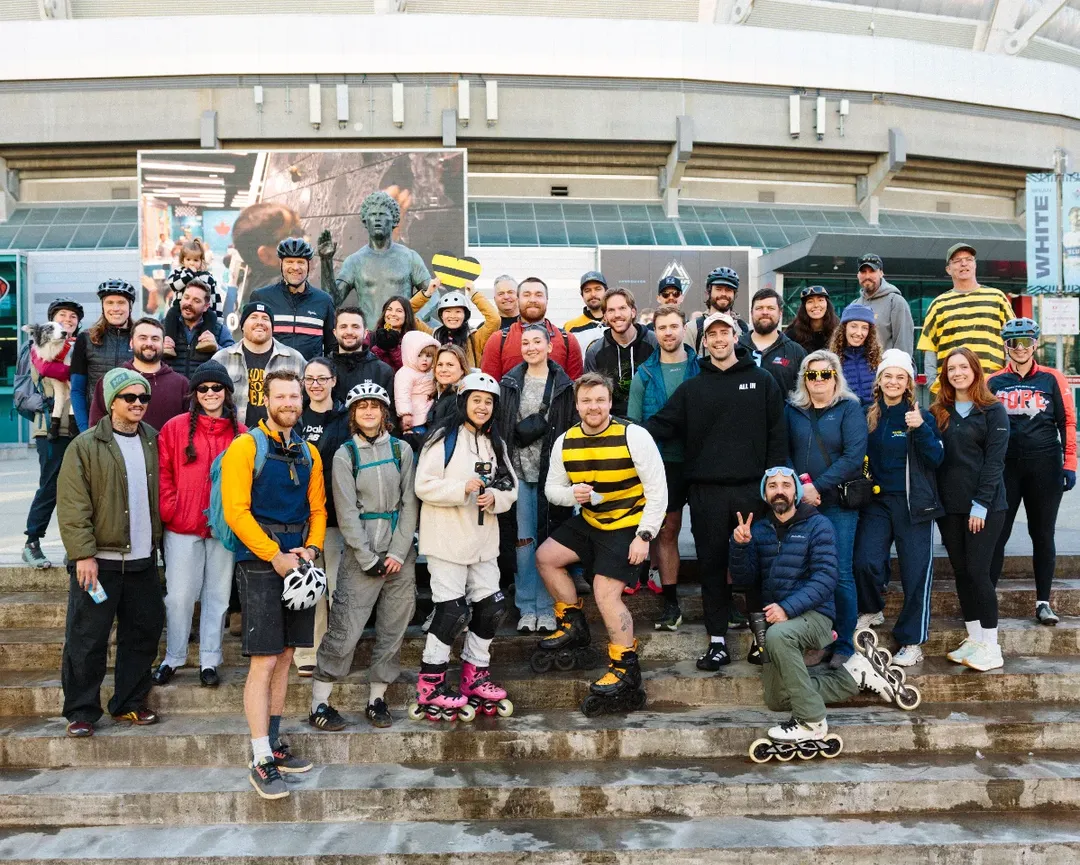
Zach smiles for the camera in a bee-inspired striped shirt alongside a crowd of supporters and the Terry Fox statue in front of BC Place.
PHOTO: Courtesy of @bladingforbees / Instagram

By: Heidi Kwok, Staff Writer

Zach Choboter was on day five of a 6–8 month world-record-breaking journey when he picked up the phone for his interview with The Peak. The inline skater is aiming to raise $1 million for the bees and world hunger relief. 

Choboter took off in Vancouver on March 1. At the time of the interview, he was somewhere on the northern outskirts of Kent, Washington, in good spirits after downing six shots of espresso after a coffee shop mishap. A dangerously high dose of caffeine was the least of his worries, however, as he nearly got hit by a passing vehicle while skating on the shoulder of a treacherous highway. 

Why is he embarking on what some might call an impossible expedition encompassing over 30,000 km across 27 countries and six continents? The answer is in the optimistic slogan of his Blading for Bees World Tour campaign: “For the bees, baby!” 

Choboter felt driven to take on this ambitious mission to raise awareness about the unprecedented decline in pollinator populations due to reasons such as habitat loss, pesticides, diseases, and climate change. Scientists projected up to a 70% loss of honeybee colonies in the US in 2025. The Honey Bee Health Coalition reports that the commercial beekeeping industry lost 1.6 million colonies, at an average decline of 62% between June 2024 and March 2025. Currently, about 35% of the world’s food production depends on pollinators. Scientists predict that if all wild pollinators were to go extinct, native plant species would also disappear, with commercial agriculture facing reduced crop yield, increased food costs, or a shortage of fruits and vegetables for sale in grocery stores. 

“If we help the bees, we help everyone,” Choboter stated. “If we didn’t have honeybees, or wild, or native bees, then our world would be dramatically different, and the food systems would literally collapse. So the easy connection is no bees, no food.

“It doesn’t matter if you’re rich, or you’re poor, or where you’re from in the world. We all need to eat food to survive, which means we need to take care of the bees.”

 — Zach Choboter

Choboter said the idea to skate around the globe was planted as soon as he successfully set a Guinness World Record for the longest journey on roller/inline skates in 2021. At the time, his dad asked him, “Do you think you could just keep going?”

He achieved the record by skating 10,093 km over three months across Canada, which he called a “really big feat.

“It mentally prepared me because I proved to myself that I could do something hard. This is basically the Canadian trip’s older brother or sister,” reflected Choboter. 

This older sibling in question took more than three years of planning. It involved pinpointing the best asphalt routes around the world, strenuous physical training, applying for visas, and more. Safety-wise, Choboter is decked out in cyclist lights. A GPS on his backpack and wrist ensures that five people know his whereabouts at all times, while allowing the public to follow his journey via a real-time map

Choboter said all donations to the campaign will either go towards the Blading for Bees Foundation or partner charities, including the Pollinator Partnership Canada, the United Nations World Food Programme, and Save the Children. Contributors may also choose to support the on-site travelling team to help cover travel expenses. When asked how donations would be allocated, Choboter said the Blading for Bees Foundation’s Board of Directors would distribute them evenly.

Before The Peak left Choboter to continue on with the rest of his journey, he had one last piece of wisdom: “My favourite quote in the world is ‘when the tide comes in, all boats rise.’ So when we all stick together and help each other rise up, we’ll all get better together.”

Vancouver City Council rejects motion for transit snow removal priority

0
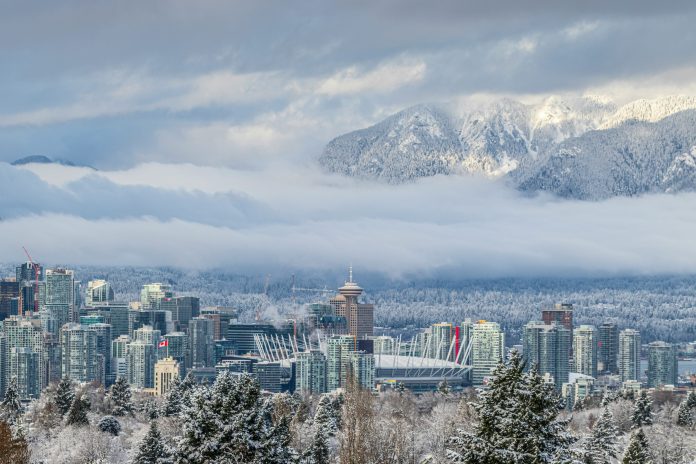
A snowy City of Vancouver and the surrounding mountains are pictured from afar.
PHOTO: Anthony Maw / Unsplash

By: Niveja Assalaarachchi, News Writer

On February 4, Vancouver City Council’s standing committee on city finances and services rejected a motion to prioritize snow removal at transit hotspots. The motion, which was brought forth by OneCity Vancouver councillor Lucy Maloney, was defeated 62. COPE Vancouver councillor Sean Orr was the lone member who voted with Maloney on the proposal.

Maloney’s motion called for the City to collaborate with the Coast Mountain Bus Company to discover areas in the region where buses have struggled during snowy events. The proposal also calls for prioritizing clearing these areas during extreme weather conditions and revising the City’s snow removal and ice treatment policy.

The Peak corresponded with councillor Maloney, who explained why she introduced the motion to Council. “Transit reliability during snowstorms is important because of the people it affects. A bus losing traction during a snow event doesn’t just affect its own passengers and the buses left behind — it can have knock-on effects that cause delays through the entire network,” she said. “This makes it even more crucial than usual that buses keep moving.” 

Transit in the region has historically struggled during extreme weather events. In 2017, a group of students travelling to UBC attempted to push their bus as snowy conditions prevented movement. In 2020, approximately 15 buses were stuck on the Granville Street Bridge as snowfall pummelled Vancouver. Though steps have been taken to address the challenges that harsh weather systems could pose to transit, the risk to transit users and the public remains at large, according to TransLink.

Members who voted against the motion cited the fact that the City already named certain roads used by transit as “first priority zones.” These are zones that have to be cleared in a timeframe of 12 hours when snow hits the region. This led councillor Sarah Kiry-Young of the ABC Vancouver party to call Maloney’s proposal “redundant.” The councillor highlighted how TransLink was already taking steps to address extreme winter conditions, such as giving 70% of their bus fleet winter tires. The Peak reached out to counsellor Kiry-Young and all other counsellors who voted against the proposal for further comment on this issue. None of them responded by the specified deadline. 

The proposal’s failure sparked backlash from the organization Movement: Metro Vancouver Transit Riders. The organization is a non-profit advocating for transit reforms in the region; they assisted Maloney in creating the resolution. The Peak spoke with Michelle Scarr, Movement’s director of operations and strategy, to further understand the proposal and the need for transit reform. 

Scarr said she could not believe that the motion was voted down. She theorized that warmer-than-average weather conditions experienced by the region this winter could have been a factor in the Council’s rejection of bus lane priority during snow removal.

Still, she mentioned how inadequate the current measures are in case of an extreme snow event. “Right now, how the City operates is that there’s only two priority levels for snow removal on roads. Priority one includes all the arterial roads, and priority two is basically all the side streets.” Scarr said the City’s decision to only have two priority designations was ineffective. “We know that when everything is a priority, nothing ends up being the priority”

The motion really sought to make sure those pain points were taken care of to prevent the transit network from collapsing.

— Michelle Scarr, director of operations and strategy at Movement

With the motion’s failure, Scarr said that Movement would alternatively like to see the City implement a “snow backup plan” that would have a predetermined detour route for buses in the case of an extreme weather event. The City’s snow and ice treatment policy does not include this.


The BC health-care system should eliminate barriers to access

0
a woman helping her grandfather use his phone. The grandfather is holding the phone in his hand, while she is explaining how to navigate the phone.
PHOTO: Creativa Images / Adobe Stock

By: Noeka Nimmervoll, Staff Writer

An apple a day might keep the doctor away, but so do barriers to accessing them. Health-care services and personal health information are increasingly going online, which makes it important that services, like booking vaccinations and doctor appointments, stay accessible over the phone or in-person. Yes, digitalization of health-care is beneficial and makes some services more accessible for many. However, the health-care system should have various methods of access so that it wouldn’t leave several groups left behind — including some of the senior population and some Indigenous Peoples (especially those who live in rural areas). 

These populations may face barriers when booking vaccination and doctor appointments, alongside other health services, due to a lack of digital literacy or access to quality internet and technology. Only a few years ago, a woman was directed to book a doctor’s appointment online instead of over the phone, which is what she used to do for her parents-in-law. This is a privacy issue because to book those appointments, she would have had to indirectly share her private records through the online portal. Already, the requirements to access the modern health-care system create a digital divide. Government programs that aim to bridge the digital divide gap are playing catch-up, causing vulnerable populations to experience further challenges in navigating the health-care system. The accessibility of the health-care system to all populations is crucial.  

Technology is expensive, and digital literacy is hard to gain at the drop of a hat. Although accessible over the phone, most health-care assumes some digital competency for access. Important vaccination appointments are mostly booked through an emailing system, ordering prescription medicine with online forms is advertised, and some clinical appointments are increasingly booked via online portals, such as LifeLabs. To navigate these systems, individuals must have stable internet access, as well as adequate knowledge on how these systems work. Although the digitalization of health-care allows for more accessibility in certain cases — such as online doctor appointments that relieve the challenge of travelling for people with disabilities and allow for easy social distancing for immunocompromised individuals — it remains a problem that vulnerable groups has a barrier to access some kinds of health-care. 

Although seniors are increasingly going online, some face issues with usability, such as the small font size on screens, and confidence in navigating technology. There are some digital skills programs partially funded by the government, such as one run by Progressive Intercultural Community Services Society and a few targeted programs implemented. However, there are still barriers to access for some marginalized individuals. To limit these issues from becoming barriers to accessing basic health-care, methods that don’t require technology should remain widely available. Having more staff to help labs and clinics with appointments bookings in-person or over the phone might help — including virtual medical support, who work remotely to support various tasks to streamline the workflow of medical settings. Moreover, creating easy-to-navigate apps and websites would lessen the level of digital literacy needed to access those services. 

It is not only older people who face challenges in this digitalization — Indigenous people may experience unique challenges. Systemic inequality against Indigenous Peoples can contribute to unreliable internet access. 62% of Indigenous rural and remote communities, most significantly in northern BC, do not have stable internet access — some areas even lack basic cell service. Although the government has promised Wi-Fi by 2027 to every remote, underserved household through their Connecting Communities program, there is not enough support to uplift Indigenous individuals to make up for this major digital divide. Indigenous Peoples regularly experience lower quality health-care as it is, due to Canada’s violent colonialism and persistent discriminatory stereotypes of Indigenous Peoples. Senior Indigenous people face a combination of these Indigenous-specific problems and senior-specific issues, causing greater difficulties in their access to health-care. 

Keeping health-care services available in-person and over-the-phone will prevent many vulnerable populations from losing access to essential services. The BC health-care system needs to serve and uplift the entire population, and that means making health-care accessible in various forms to fit the needs of everyone.

People with limited digital literacy or barriers to access basic technology deserve to be connected to the health-care they need.

Climate impacts onslaught by military funding

0
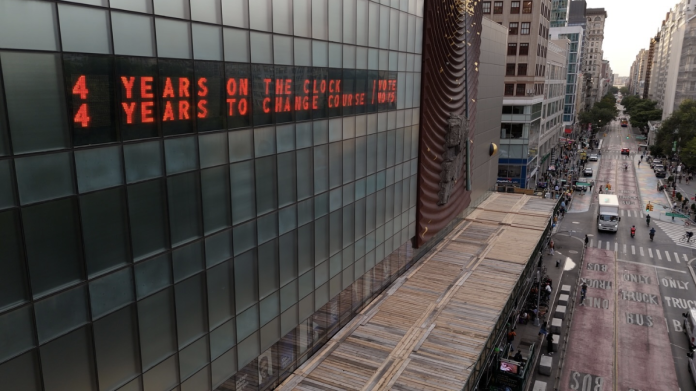
a photo of the art installation of the Climate Clock in New York City. The image shows the digital clock, positioned on a building, and parts of the street. The clock’s screen reads “4 years on the clock, 4 years to change course.”
PHOTO: Courtesy of @climateclock.world / Instagram

By: Maya Barillas Mohan, Staff Writer

The Climate Clock is a live tool that counts down time until the carbon budget is depleted. The carbon budget allots a specific amount of carbon emissions before global warming exceeds 1.5℃ above pre-industrial levels. Once the world exceeds this average temperature, impacts like extreme weather will extend to “breakdowns of major ocean circulation systems,” among plenty other  incredibly destructive and unavoidable harms to nature and, by extension, humanity. Unfortunately, governmental policies prioritize warfare over the dire environmental situation.

Human activities need to be wrangled into a net-zero figure. This would mean the amount of carbon taken out of the atmosphere balances the carbon sent in. Policies to support this need to range from the individualized level to the level of industry and government. To achieve this 1.5℃ figure, emissions must have stopped rising in 2025 and begun to decline, per the 2015 Paris Agreement. The Agreement also requires a 43% decrease in emissions by 2030. Given a current and incendiary increase of military endeavours, the Canadian government’s tendency for political violence, as exemplified by the recent pledge to National Atlantic Treaty Organization’s Defence Investment, are antagonistic to the dire need for timely climate action.  

With the current calculations, the Climate Clock will hit 0 in July 2029, right before the end of this decade. Instead of reshaping policy to strictly comply with the necessary emissions decrease, the Canada Strong 2025 Budget shifts priority from policies that support climate efforts to armed forces spending. Rebuilding, rearming, and reinvesting in the Canadian Armed Forces will cost around $56,622 million while pro-climate legislation is getting cut. The greener homes grant is now closed to applicants, meaning refitting homes with higher efficiency gas pumps and windows must be done out-of-pocket. This is money most households cannot spare, despite a valuable 2–3 tonnes of a yearly greenhouse gas (GHG) reduction per household. The transport sector’s emissions produce around a quarter (23% in 2023) of GHG in Canada, but transit funding has been reallocated in the federal budget to suppress efforts to transition travel from car to public transportation. The carbon cap policy is extinguished under Prime Minister Mark Carney too, swapped for a rate of up to $170/tonne by 2030. Carbon taxes are also ineffective because they are insufficient incentives to industry polluters and price individuals out of their lifestyles. 

Climate change is a multifaceted, global issue that requires a plural approach. Eliminating policies intended to reduce GHG emissions is counterproductive to the rapidly encroaching Climate Clock deadline. Canada’s inflated military enterprises seek to defend every square inch of sovereign territory through infrastructure and equipment.

Other than the absurdity of “defending” unceded land, what territory is there to defend when the Climate Clock is close to running out?

This anxiety is inescapable, as defence upgrades pump out vehicles and aircrafts. Dependence on fossil fuels is exacerbated through Canada’s extensive catalogue of fighter jets, which are famously fuel intensive. Also, the Munitions Supply program is receiving $16 million to integrate northern Ontario into the national defence supply chain — Carney recognizes an increasingly volatile global system as an opportunity to invest heavily in national security. 

I find defence spending contrary to the collaborative ethos of climate change agreements, let alone problematic for environmental reasons. The purpose of weapons and equipment is to cause destruction by design. Explosives leave chemical residue in their wake, impacting sea life and drinking water. Offroad vehicles ruin permafrost, and retired naval vessels pollute oceans.

Defence spending is advertised to be sparked from a desire for safety. I think this feeling of security can instead be found in forming alliances with other countries — using the logic of the Paris Agreement, a common goal can be achieved through collaboration. 

Funding military violence means depriving our earth and global community of a chance to heal; is Canada really stronger for it?