Home Blog Page 641

What’d I Miss?: The Kinder Morgan Pipeline

1
Image courtesy of The National.

By: Simran Randhawa and Gabrielle McLaren

1951

On December 13, after three days of deliberation, the Board of Transportation Commissioners approved the application for a pipeline to be built, connecting Burnaby to Edmonton.

It was established because of the discovery of a large deposit of oil in Alberta in 1947, to open new foreign and domestic markets. The proposition was filed and supported by four parties: the Dominion of Canada, Trans Mountain Oil Pipeline Company, and the provinces of Alberta and B.C. alike.


1952

The Trans Mountain Canada Pipeline Company began constructing the Trans Mountain Canada Pipeline, more widely known as the Kinder Morgan Pipeline to connect Burnaby to Edmonton. It ran for 1,152 km and involved two tank farms — one at each end.

The pipeline is owned by Kinder Morgan, a Texas-based company. Its construction came at a time of unprecedented oil consumption in Canada.


1953

The pipeline began operating — the metaphorical fruit of a $93 million construction project.

The first spill in the pipeline’s history occurs on October 15, the day the pipeline was supposed to open.


1959

The National Energy Board (NEB) is created. They become responsible for: “the construction, operation, and abandonment of pipelines that cross international borders or provincial boundaries, as well as the related pipeline tolls and tariffs,” along with imports and exports of oil and energy.  

Kinder Morgan must legally report any spill that is over 1.5 cubic meters, or that could affect a body of water regardless of size, to the NEB. 82 spills have been reported since 1961. 69.5% of them have taken place at terminals or gas pumping stations.  

The most environmentally disastrous oil spills in the history of the pipeline were caused by faulty welds and other construction defects, human error, and forces of nature.


2013

Kinder Morgan applied for further expansion and establishment of a second pipeline of almost 980 km, most of which would parallel the existing pipeline. The pipeline’s capacity would nearly triple, from 300 000 barrels of oil daily to 890 000. This would also require at least 12 new pumping stations. The pipeline would also potentially be used to transport diluted bitumen.

Bitumen is the heaviest crude oil currently in use, and watchdog groups claim that it is particularly difficult to clean up and dangerous to transport.

According to Kinder Morgan, the project comes as a response to oil shippers, who wanted to reach new markets and exploit Western Canadian oil. Their website states: “With oilsands production expanding in Alberta in the years ahead, new markets and opportunities are emerging. As countries in Asia Pacific begin to develop the same quality of life we enjoy in Canada, they need to secure sources of energy. Canada is a natural trading partner for these countries, and with an expanded Trans Mountain Pipeline system will be in a position to meet their growing needs for years to come . . .”


2014

November 10: A study conducted by Simon Fraser University’s Centre for Public Research Policy claims that the projected economic benefits put forth by Kinder Morgan are grossly overestimated and that the impact would affect the domestic market as well as foreign export.


2015

The Burnaby Fire Department released a report outlining the potential dangers of a tank farm on Burnaby Mountain and the dangers relating to the expansion: earthquakes, flammable crude oil leaks, toxic gases, fires burning for days, exploding tanks causing a chain reaction, or forest fires. . .

For SFU in particular, this would mean that firefighters would be in the dangerous situation of fighting the flames uphill. Those living, working, and studying on the mountain would effectively be trapped.

SFU Safety and Risk Services’ Emergency Preparedness Plan can be found online.


2016

November 28 : SFU Safety and Risk Services release a Trans Mountain Pipeline Update. In the official statement from the president and vice-chancellor of the university, Andrew Petter, he says that the potential health and safety risks are unacceptable to the community and that SFU fully intends to raise these concerns with the Federal Government and Kinder Morgan. The Peak reported that the proposed doubling of the tank farm’s capacity would situate SFU Burnaby in the midst of potential forest fires, toxic fumes, and other health hazards.


November 29: The Canadian Federal Government approved the expansion adding 157 long conditions on the application to address socioeconomic and environmental issues, as well as concerns brought up by Indigenous communities and other communities that deal with the threat of potential spills (as well as issues of Indigenous land rights). Construction is expected to be completed by December 2020, and would be in service thereafter.

Days later, B.C. Premier Christy Clark gave British Columbia’s support for the expansion in 2017 as she believed the new amendments to the conditions proposed by the Federal Government were in line with her conditions.


2017

May: The pipeline becomes a hot-button issue in the provincial election. Clarke’s Liberal government is defeated and replaced by an NDP-Green coalition led by Premier John Horgan, who is firmly anti-pipeline. This will cause friction between BC and Alberta (under Premier Rachel Notley’s leadership), the only two NDP governments in Canada.


October: Despite the Governmental support for this expansion, various court cases have been filed over the years in provincial and federal courts by the City of Burnaby, the City of Vancouver, the Tsleil-Waututh Nation, the Squamish, Kwantlen and Coldwater First Nations as this pipeline and any potential spills threatens their ancestral land and homes.

Chief Ian Campbell of the Squamish First Nation is among many Indigenous leaders who point out that the federal government did not consult First Nations before agreeing to support the pipeline’s expansion. He says: “Sixty years ago when this project was established, we had no legal recourse. That era has come and gone in this country,” he said.


December 7: The NEB allows Kinder Morgan to begin building the pipeline, despite their failure to secure a construction permit from the City of Burnaby.


2018

January

Protests ramp up as construction on the pipeline is set to begin, including protestors blocking worksites.


February 6: Alberta’s NDP Premier Rachel Notley announces that Alberta will no longer import British Columbian wine, as part of the provinces’ ongoing dispute. According to her estimates, Alberta exports 70 million dollars a year to B.C. On February 22, the provinces agree to somewhat of a truce and wine exports resume.


March 15: BC’s Supreme Court grants an injecture to Kinder Morgan, meaning that protesters cannot get within five meters of Kinder Morgan’s construction sites. On June 3rd, this zone will grow and the ten-minute warning period for protestors before police can make arrests is removed.


March 23: Federal Green Party leader Elizabeth May is arrested for protesting against the pipeline. Five days later, she will plead guilty to criminal contempt in court and be charged a 1500$ fine.


April 10 : After over a year of various sanctions being placed on the pipeline, Kinder Morgan suspended “non-essential” actions and activities related to the pipeline, in order to avoid further losses for its stakeholders. Kinder Morgan’s CEO stated that: “While we have succeeded in all legal challenges to date, a company cannot litigate its way to an in-service pipeline amidst jurisdictional differences between governments.”


May 29: Adamment on seeing the pipeline through, the Government of Canada announced its plan to buy the Trans Mountain Pipeline for 4.5 billion dollars in order to ensure its completion.


June 4: ChangeSFU, a non-profit at SFU, had a meeting outside federal MP Terry Beech’s office in North Burnaby to create awareness for the environmental impact of the expansion, and its impact on Indigenous communities and their land rights.

This is not ChangeSFU’s first intervention regarding the pipeline, given the high stakes for SFU students (see above). At another event, Aaron Siebenga, a member of ChangeSFU, has described the Burnaby campus as “ground zero” for Kinder Morgan, and has stressed the importance of student knowledge in regards to the pipeline.


POLITICAL CORNER: Progressive drug legislation is the future

0
Image courtesy of the Toronto Star

Written by: Liam Wilson

Last week, Canada became the second country in the world and the first G7 country to fully legalize marijuana for commercial sale and personal use. As someone who’s never smoked a joint in his life, even I have to say: It’s about damn time.

From Reefer Madness in the 30s, to Ronald Reagan’s infamous statement that, “marijuana . . . is probably the most dangerous drug,” the war on marijuana has a long history. Politicians, teachers, and parents have long preached the dangers of “the devil’s herb.” Never mind the fact that the Centers for Disease Control and Prevention (CDC) found alcohol (which is very much legal) to cause an estimated 88,000 deaths annually in the US, whereas the Society for the Study of Addiction (SSA) found marijuana to cause an estimate of zero deaths.

Thankfully, it looks like the times might finally be changing. With legalization, marijuana will soon be much more accessible in Canada and people will no longer be arrested for possessing small amounts of it. The government is hoping to take billions of dollars out of the black market and give it back to provinces and the federal government. The industry looks set to flourish, with even Snoop Dogg signing on to support the emerging Canadian marijuana market.

It seems that the perspective on drugs and drug users is progressing to a much kinder state within the government and our society. Whether it’s the strong support and positive research surrounding projects such as Insite, or BC’s latest ad campaign which aims to show that people who use drugs are average people that we are around every day, our society’s view of drug users is becoming much more empathetic. If you ask me, the world could use a little more empathy and unity these days.

An east to west and north to south look at Canadian books

0
Image courtesy of Dancing Cat Books

By: Gabrielle McLaren

In school, we had to read Canadian books all the time for English and French class. I’m not going to lie: most of them were bad and made me want to scratch my eyes out. No more of that! CanLit isn’t just cool because Margaret Atwood’s books got on TV: as it turns out, every region of the country has had some cool books to offer all along.

Newfoundland

  • A Newfoundlander in Canada: Always Going Somewhere, Always Coming Home by Alan Doyle — Great Big Sea was the soundtrack of my family’s road trips, so my parents bounced on their lead singer’s autobiography. As it turns out, Doyle is also a really fun writer who will regale you with stories, the contents of which range from selling cod tongue to learning how to play music.

Prince Edward Island

  • Anne of Green Gables et al by Lucy Maud Montgomery — This one seems nearly too obvious, since Montgomery’s fiery ginger orphan is famous across the world, but as one of the first pieces of children’s literature in Canada, it earns its place. You can alternatively check out Montgomery’s other series Emily of New Moon or read Maud, a young adult (YA) fiction adaptation of Montgomery’s life that highlights just how alike Maud and her protagonist really were.

Nova Scotia

  • The Birth House by Ami McKay — This book, set in the era of the Great War, follows Dora Rare. The first daughter of her family in five generations, Dora grows up with boisterous brothers and forges an unlikely friendship with Madame Babineau, an Acadian midwife. The book is very much a coming-of-age story, although it also deals with women’s issues and a look into the early health-care system in Nova Scotia.

New Brunswick

  • Pelagie: The Return to Acadie by Antonine Maillet — This one’s an oldie but a goody, showered with prizes in the 1970s when it first came out. Pélagie is a widow and a survivor of the Great Disruption, when Acadian farmers were deported from Acadia by British troops. A few Acadians hid from the British, a few were sent back to France, and many others were deported to the Thirteen Colonies or tried making their way to Louisiana. Many spent their whole lives searching for family. Pélagie is one of those who decided to make the trip back home, and that is the story Maillet is telling.

Québec

  • Everything they won’t tell you, Mongo by Dany Laferrière — This book reads like a guide from a Haitian immigrant to a young man arriving from Cameroun, explaining how to understand and fit into Québécois society. While there’s a slew of Québécois fiction out there to read, Laferrière is a cool figure of the French-Canadian literary scene, since he is actually the first Haitian or Canadian member of l’Académie française, the council that regulates the French language.

Ontario

  • The Marrow Thieves by Cherie Dimaline — Don’t let its YA classification fool you: The Marrow Thieves follows a group of Indigenous peoples on the run in a dystopian Canada where they are being hunted down by the government for their bone marrow in a world where nobody can dream. Yeah: it’s that dark, that impactful, and that brutally honest.

Manitoba

  • The Tin Flute by Gabrielle Roy — Originally written in French, The Tin Flute is about the strength of familial love, before anything else. It follows a family struggling to make ends meet in the slums of Montreal, as well as abroad during the Second World War. Gabrielle Roy’s former house in Winnipeg is now a museum.

Saskatchewan

  • The High Mountains of Portugal by Yann Martel — Bet you didn’t know that the guy who wrote Life of Pi lived in Saskatoon, of all places. His other novels haven’t been made into fancy CGI movies with cool tigers (yet), so you might not know this book either. The High Mountains of Portugal combines fantastical elements like hunting for treasure with all-too-real pain like grief. It’s whimsical, quirky, and has that untouchable quality that I loved about Life of Pi.

Alberta

  • Green Grass, Running Water by Thomas King — OK, so King isn’t actually Albertan, he’s from California. But he is an amazing author and he did teach at the University of Lethbridge. This book in particular follows the lives of various Blackfoot characters in a timey-wimey, wibbly-wobbly narrative that winds between past and present, myth and world.

British Columbia

  • Do Not Say we Have Nothing by (SFU alumna!) Madeleine Thien — Here’s a book set in Vancouver, and also China, as our protagonist Marie tries to put together the story of her family’s passage through various tight spots of history. When I passed this book to my mom, she could only read it bit by bit because she found it rough and dark.

Yukon

  • The Klondike by Zach Worton — My brother’s teacher recommended this book to him when he said he hated history. For starters, it’s a graphic novel — hurray! His book is part-history lesson, part-biography of the key players of the Klondike Gold Rush (which helped to move along the process of Yukon becoming its own territory), and part-gorgeous illustrations of the kind of natural environment all of this took place in. If you’re more of a novel person, you’ll find descriptions of these very landscapes in Jack London’s work as well.

Northwest Territories

  • A Promise is a Promise by Michael Kusugak and Robert Munsch — Munsch heard the story from Michael Kusugak, an Inuit friend he was staying with during a book tour in the Northwest Territories. The two collaborated on penning Kusugak’s childhood encounter with a monster living under the ice.  

Nunavut

  • Fatty Legs by Christy Jordan-Fenton, Margaret Pokiak-Fenton, and Liz Amini-Holmes — Fatty Legs follows Margaret, a young Inuit girl who begs to go to residential school to learn how to read. Residential school stories are some of the most horrifying in Canada’s history, and the simultaneously gentle but honest format of children’s literature has given a home to many over the years. Fatty Legs uses text, illustrations, and archival photos to bring this very real story to life. You can also check out Shi-shi-etko, When We Were Alone, or Wenjack to read more.

Non-fiction books

The current SFU gym dress code isn’t working (part two)

0
Image courtesy of Simon Fraser University

Written by: Victoria Lopatka, Peak Associate

In my previous article on the topic of dress codes, I spoke about my thoughts on the SFU Fitness Center’s current dress code, and gathered the opinions of regular student gym-goers as well.

A word from SFU Fitness Centre Representatives

I decided to take my questions straight to the people who create and enforce the code. I contacted Nick Sirski, the fitness coordinator at the SFU Fitness Center. I had quite a few unanswered questions: why are crop tops and cut-off shirts prohibited? Can students not be trusted to use common sense and make their own choices? Why do some students get away with breaking the dress code and not others?

“We require all of our members to adhere to a dress code policy for personal hygiene, health, and safety,” said Sirski. “Research indicates that diseases, such as MRSA infections, are spread by bodily fluids, such as sweat, saliva, etc. Requiring users wear shirts during workouts prevents excessive sweat from being spread to the equipment and then to another user. Even though we request users clean the machines after use, not everyone does.”

Sirski added that, when the dress code is explained to members, they often “understand and appreciate” the gym’s efforts to minimize the spread of infectious diseases and promote safety.

Admittedly, this interview left me feeling unsatisfied, and some of my questions unanswered. In speaking with staff members in the gym, similar vague answers of “safety and health” were echoed.

Agha Ali Shamyle, a staff member who has been volunteering at the gym for one month also raised the issue of sweat: “Firstly, let me begin by saying that my views are my own and are in no way associated with SFU Rec. Now, the dress code policy . . . is for hygienic reasons. Different people sweat differently, and one cannot mandate that a gym member cleans up after themselves.”

When asked why he thinks many students have negative opinions on the dress code, he said, “My opinion on the reason why that is would be, and it’s a generalization, that young people are generally uncomfortable with the notion of rules. Same reason why they aren’t a fan of the speed limit on highways, or why students living on residence are not big on the anti-drug, anti-weed, anti-public drinking rules.”

My opinion on this issue

Personally, I’m not against the dress code simply because I am “uncomfortable with the notion of the rules.” In fact, I have no problem with following speed limits on highways and refraining from public drinking. I do, however, have a problem with overly-restrictive and somewhat unnecessary dress codes.

To summarize last week’s coverage, when I first saw the dress code posted, I was confused as to why it would be such a big issue for students to show a few inches of skin on their backs, stomachs or around their armpits. When I discovered that schools like UBC do not have such restrictive dress codes, I was further confused. I am not the only one: most SFU students I spoke to also had negative views on the dress code.

On top of that, many students claim that the dress code is not uniformly upheld, and that staff members seem to have discretion when it comes to who gets dress coded. This could potentially leave room for unfair discrimination against certain students.

If sweating and bacteria is the issue, the SFU Fitness Center should enforce a stricter clean-up policy. Students should be openly informed of the hazards and be encouraged to clean the equipment and mats before and after use. If every student does so, they look out for their own health and learn to be more diligent, creating a safer and healthier environment.

Instead, the SFU Fitness Center simply tells students they can’t wear certain clothes with no explanation. Honestly, the current dress code seems ineffective and overly restrictive. It should either be drastically changed — by making it clear why the rules are in place, or by enforcing one similar to UBC’s — or gotten rid of completely.

SFU grad student writes comic book thesis

1
(Photo courtesy of Meghan Parker)
By: Winona Young, Staff Writer 


After writing a 236-page comic book for her thesis, high school arts teacher Meghan Parker crosses the stage this month to receive her master’s degree in education.

    According to SFU, Parker is reportedly Canada’s first student to complete a master’s thesis in this medium. Her thesis is titled Art Teacher in Process: An Illustrated Exploration of Art, Education and What Matters.

    “My thesis is an autobiographical comic and it’s about myself and my own experiences as a new a high school visual arts teacher,” Parker explained as she sat down in an interview with The Peak.

    Parker’s thesis aimed to explain the significance of art education, and how the arts can benefit communities and societies. She began writing it two years into her career as an arts teacher in North Vancouver. Her thesis encompasses many experiences, such as her response to readings, problems she’s encountered, classroom experiences, and more.

    Created on 11-by-11-inch paper, her comic book is a combination of watercolour, crayon, and pencil, employing different methods of colouring depending on the content of the page.

“[My choice] came from the question in the beginning, ‘Why am I typing about art instead of making art about art?’” – Meghan Parker

Parker’s inspiration for writing a comic book thesis started with an assignment given to her during her undergrad by SFU associate professor Lynn Fels. Parker thought the assignment gave her an opportunity to try a different form of thesis, with the encouragement from her supervisors.

    Parker felt that the medium of her thesis needed to be visual, given its huge emphasis of visual arts education.

“Form and the content are inextricably linked,” she said. “So I don’t think that the things I’m talking about could have been in a solely text form.”

    Parker’s creative process was anything but chronological.

    “It was like writing an essay with all the paragraphs separate then putting them together in a cohesive order,” she explained. For her, writing comics served as a reflection tool.

    Parker has released her thesis online and received a great deal of feedback, both positive and negative.

    “I’ve been getting beautiful emails from people all over the world saying ‘thank you’. . . but there’s also been a bit of conflict with people thinking that scholarship doesn’t look like comic books,” she said.

    But Parker remains optimistic. She believes such conversation is worthwhile, and will open up thinking about the various forms scholarship could take.

    Overall, Parker has learned much about herself, as both an artist and an art teacher after writing her thesis.

    “I gained a confidence ability [sic] to communicate through the comic book form,” she said.

    “A big thing I take away as a teacher is that you enlarge the space of possible, and you allow students achieve what they’re capable of. That’s really what we’re here for.”

     Parker’s thesis is still available to read online on Summit SFU.


With files from CBC.

Social entrepreneur and instructor Alia Sunderji makes change with Luv the Grub

1
Alia Sunderji, image courtesy of Liv & Lola

By: Amal Javed Abdullah, Staff Writer

Fast Facts

Name: Alia Sunderji

Pronouns: She/Her/Hers

Department Affiliation: Beedie School of Business

Businesses: Luv the Grub and Liv & Lola

Hometown: Vancouver, B.C

Hobbies: Hiking, surfing, salsa dancing, and biking

Fun Fact: Sunderji also sings, and some of her songs used to play on the radio.


Alia Sunderji is a powerhouse social entrepreneur and SFU instructor who runs Luv the Grub, a Vancouver-based social enterprise that has both an environmental and socio-economic mission. The Peak sat down with her for a sneak peak behind the magic she puts out through her work.

Partnering with local farmers and produce markets, Sunderji repurposes bumped, bruised and misshapen fruits and vegetables — perfectly good to eat, but still rejected by supermarkets — as ingredients for making jams, chutneys and spreads. She hires individuals with barriers to employment, and her staff is a full spectrum of people with different barriers: refugees, people who have experienced trauma, low-income youth and seniors, transitioning youth, youth with mental illness, individuals with language barriers, and more. Her goal is to create delicious spreads for the local market with local produce while solving local problems.

The idea for Luv the Grub was born when Sunderji was teaching BUS453: Sustainable Innovation. The class focuses on turning socio-economic and environmental issues in the world into opportunities.

“[Students] look for problems, they do ethnography or empathetic research and they really get to understand who it faces and the problem itself very, very intimately. And then they come up with a point of view statement, like ‘these are needs,’ and then they just go into rapid ideation [ to brainstorm] solutions.”

One year, her students’ research stumbled across the issue of food waste. They found that there was produce being discarded because it was not sufficiently in shape to be sent to supermarkets, but was still perfectly edible. Even worse, their research showed that it cost more to dispose of the products than it did to donate them.

Sunderji did some supplemental research of her own, talking to farmers, food and produce importers, and other markets that she felt understood the issue. Sunderji already had a social business in Guatemala, but she was at a point where she was looking for a way to give back locally, in her own community. Everything lined up perfectly, and that’s when inspiration struck: Luv the Grub was born.

Originally, she cold-called farmers and local produce markets in Vancouver, opening up the conversation by asking if they had experienced issues with produce waste, and eventually leading to the ask: would they be interested in either donating their excess unsellable produce or selling it at a discount?

“Almost every person said yes,” Sunderji told us. “It’s a huge issue.”

Poverty alleviation is a big and very personal part of Sunderji’s drive and passion for this project. Her mother came to Canada as a refugee from Uganda Sunderji told us that the dictator at the time — Idi Amin — had ordered the expulsion of all Asians from Uganda, and they were forced to leave their homes, families, and businesses behind to find a new life. In addition, her father died when she was five years old. Watching her mother struggle as a single parent in a new country shaped Sunderji’s view of giving back to the community.

“It means a lot to do good by her… and to be able to help people with similar barriers and to to give people an evenly levelled field to opportunities,” Sunderji commented.

As is the case with every brave soul who embarks on a mission to save the world, once she began the project, Sunderji begin to run into roadblocks. One of the unexpected problems she had not anticipated was how hard it was to come up with new products, having overestimated how much her food innovation background would come in handy. Previously, she had worked as an Associate Brand Manager for Tim Horton’s, coming up with new breakfast items all the time, so she thought that it would be easy once she opened up her own food business. She soon realized that her work had been in marketing, and that now that she was working in operations, she would have to learn everything from the top.

“Even something like learning to scale was tough, being efficient. . .” Sunderji says. She admits that they did waste food at first when they were still experimenting and learning just how long produce lasts, but they were quick to learn how to mitigate the problem.

Another challenge Sunderji faces at the moment is managing all the different hats she has to wear. While she does have employees to create the jams and spreads, she is still the main worker behind everything that goes on at Luv the Grub. Other than hiring and managing, her job title even includes all the small, mundane tasks of her business: getting the necessities for labeling, keeping up her knowledge on food regulation, running the Instagram page . . . While she finds it a struggle to manage everything, she still feels that she’s really lucky.

“When you have a business, you should be very active. Even when I’m being passive, people are still reaching out to carry the product. I think that when you do something that you care about and that you’re passionate about, people see it and then they subscribe to it.”

While it’s only been a year and a half since Luv the Grub has been in business, Sunderji is happy with the success they’ve enjoyed so far. An especial triumph for her is Luv the Grub selling on Granville Island, and seeing the changes in her employees, and how they’re able to progress through their barriers.

“That’s why I do what I do,” Sunderji says emphatically.  “If I’m exhausted, that makes me energized, to be honest. To see that what we’re doing is really helping the people I want it to.” she said.

Something else she’s very proud of is how far the product itself has progressed, to the point that Luv the Grub now has a commercial kitchen. She told us about the pleasure of “hearing from people who love the product not only because of what we do, but the product itself. I don’t want it to be a charity, I want it to be a product that people buy and love it.”

An especially vital stakeholder for Sunderji has been the Drive Youth Employment Services (D-Yes), a youth employment agency that she has worked with for the past eight months.

“They have probably been the most instrumental to everything I do,” Sunderji said. For the last eight months, they have helped Luv the Grub grow by providing a space, connecting Sunderji with employment agencies across Vancouver (including their own), and they were able to find Sunderji a coordinator to supervise the production of the jams and spreads. “They’re probably just the best partner you could ever have.”  

When she’s not busy with all of the above, another one of Sunderji’s roles is teaching business at SFU. She began working as an instructor three years ago, at SFU and at Fraser International College (FIC. She started with BUS453, and is now teaching BUS238, as well as BUS200 (FIC).

“I do it because I love the energy I get from students,” she told us. “Being able to help them … to push them with their ideas is I think the greatest blessing of my career.”

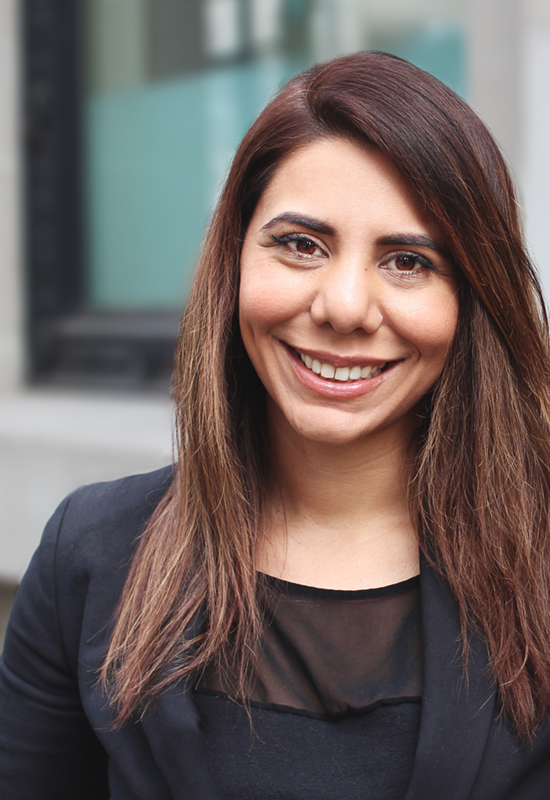
To keep up with Sunderji’s busy career or learn more about Luv the Grub at luvthegrub.com, like them on their Facebook at facebook.com/luvthegrub, or follow them on Instagram at @luvthegrub.


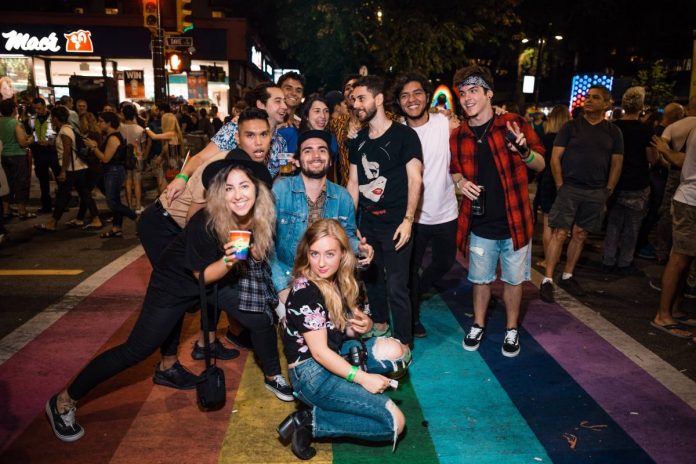
Cancelling the Davie Street Block Party takes away from Pride

0
Image courtesy of Vancouver Pride Society

Written by: Geron Malbas, Peak Associate

A few weeks ago, the Vancouver Pride Society (VPS) announced that they would be cancelling their annual Davie Street Block Party. This was due to the approximate cost of the event being over $100,000, a number which would be unreachable unless more sponsors donated. Because of this cancellation, thousands of people will not be able to start Vancouver’s Pride weekend on a high note, as I have been doing for the past few years.

On one hand, the cost seems like an exorbitant amount for any event to have to pay up without the help of donations. However, seeing as the VPS ended the 2016 year with a $50,354 surplus, I question how the 2017 Block Party and Pride Parade happened without consideration of what needed to be done to maintain a surplus. Now, with only weeks away from this year’s Pride weekend, I begin to think about how much more hollow it will feel.

Pride is like Christmas, but for LGBTQ+ individuals. It’s a time where there is so much love and happiness to go around in the community. It’s a time where I can be with my chosen family of friends who love me for who I am, while I am dressed up as comfortably as I like and being as loud and proud as I want.

My first time at the Block Party was in 2016, and it completely changed my experience going into the Pride weekend. The Block Party gets attendees to stick to Davie Village, AKA Gaybourhood, which centres all of the energy into one area. This is in contrast to the Sunday Pride Parade, where that energy seems to be distributed all around downtown.

The Block Party always filled my body and soul with the required energy to help me survive the entire weekend. The same goes for all of my friends, and probably all of the other people who are excited to start the weekend off right by enthusiastically dancing the Friday night away. I have a number of friends whom I would always drag to the Block Party, even if they were already planning to attend the Pride festivities on Sunday, because of the event’s ability to get people to simply enjoy the vibe of an evening party without the expectation of surviving a full-day experience like Sunday Pride. But now, with this part of Pride being cancelled and reimagined for 2019, I feel like Pride just won’t be the same.

With only weeks away from this year’s Pride weekend, I begin to think about how much more hollow it will feel.”

I feel like its cancellation is a reflection of how much the VPS cares about us. If they were truly considerate of how much impact the Block Party had on individuals, pre-emptive measures to ensure its continuation would have been implemented. In fact, in their 2017 annual report, there is an exorbitant increase in advertising and travel expenses. This begs me to question whether or not Pride is really for the people of Vancouver to enjoy, or for the VPS team to fill their pockets.

Taking away the Block Party removes the opportunity for LGBTQ+ youth to ease into the Pride experience and spend their first Pride weekend meeting new people just like themselves. It’s also worth realizing how many queer vendors and art showcases there are during this party, and how such opportunities to have more exposure are now lost. Not only that, but attendees lose an advantageous opportunity to learn more about Vancouver’s gay community. I utilized the event to get used to being unabashedly gay, but I feel like its exclusion from Pride this year takes away the exciting energy that many people would want to have.

Historical pretexts for ridiculous political sanctions

0
Illustrated by Reslus

By: Alex Bloom, Gabrielle McLaren, Aaron Richardson

UK bans Danish imports in response to late 8th century Viking raids

The island nation passed sanctions on the “Viking homeland,” as secretary of state for foreign affairs Boris Johnson put it, “until Denmark returns all the gold they stole.” When Danish government officials pointed out that there was no such thing as England at the time, Johnson went beet red, and had to be restrained as he shouted, “I know you have the gold!” – AB

Italy bans Mongolian exports to avoid a repeat of the plague at the Siege of Kaffa (1346)  

Where were you when you realised that it was Mongolian warriors catapulting their fallen brothers-in-arms’ infected corpses into the ranks of Roman legionnaires that kick-started the Black Death’s intrusion into Europe? 1346 may seem like a long time ago, but the devastation brought on by the Black Death can still be felt in prospering Western Europe today.

“This is to show the Mongol Empire that we Romans do not forget,” Italian trade minister Marcus Aurelius Caesar pointed out. “Rome will not be defeated again!” – GM

Russia annexes EU as “recompense” for Napoleon’s invasion

The world power launched a full-scale invasion of the rest of Europe, capturing it overnight, despite France vetoing the mission when it was proposed to the security council.

When asked why, Russian President Vladimir Putin stated “we have launched a . . . minor military operation . . . as recompense for the inconvenience caused by Napoleon’s invasion of our country in 1812 . . .” He went on to say, “Yes, we took Paris two years later, but being forced to launch our own counter-offensive only further inconvenienced the Russian people. We demand compensation.”

Several European nations have called on the UN and NATO to intervene, but Russia and the UK have vetoed all such appeals. – AB

Transylvania de-annexes itself from Romania, claiming spoils from the First World War no longer valid

“We honestly thought they wouldn’t notice,” the underground leaders of Transylvania said, shrugging. “I mean, the First World War was so long ago. Does anybody even remember the Austro-Hungarian Empire? No. So why does a secret treaty they signed with the Entente Powers even matter anymore? I mean, even the British Empire was valid back then. That’s how long ago it was. This can’t possibly still be valid.”

The newly elected prime minister of Transylvania shrugged off concerns about Transylvania’s new socio-economic reality. “Ever since Twilight came out, we’ve been debating jumping on the whole vampire bandwagon and making it on our own. This feels right.” – GM

United States declares itself a national security threat due to its involvement in the American Civil War

As our history books tell us, there has been no greater loss of American lives in history than during the American Civil War, and the United States was the sole perpetrator. The American government acknowledges the threat that this radical nation poses to its people, and has labelled the United States as a national security threat in hopes of pre-emptively curbing any future dangers that may arise.

With no foreign involvement, the United States took over 600,000 American lives — which is more American lives lost than in any other military endeavour since. At this time, the United States is perhaps more divided than it has been since the civil war, and the American government does not wish for a repeat of that historical period.  – AR

Fictional Canadian characters that should make us proud

0

By: Natasha Tar

Some real-life Canadian figures disappoint us. They make empty promises, do bad things, and make us regular beaver-loving poutine-eaters doubt what we’re supposedly “standing on guard” for. However, in the fictional world there are plenty of Canadian icons to be proud of. Here are just a few:

Scott Pilgrim

Created by Canadian graphic novelist Bryan Lee O’Malley for his Scott Pilgrim series, Scott is a polite, parka-wearing fellow. Scott’s story takes place in Toronto, where he starts out as a between-jobs goof but matures through the power of love and facing his past mistakes. He’s proof that all of us have the power to grow into “real” responsible adults. The series was adapted into the movie Scott Pilgrim vs. the World, staring the lovable (and also Canadian!) Michael Cera as Scott.

Image courtesy of DC Comics

Equinox

A relatively new DC Comics character, Equinox is a Cree teenager who discovers her powers of flight, earth manipulation, and ice control. She hails from Moose Factory, Ontario, and her story is part of the Justice League United series. Her character not only draws a spotlight to the Cree culture, but to life in an isolated town. Writer Jeff Lemire got most of his inspiration and research from Moose Factory, speaking with residents and students about their experiences so the comic wouldn’t end up like the many past and problematic attempts at Indigenous superheroes.  

Deadpool

Maybe we shouldn’t be proud of him for outstanding morals, but Deadpool is funny and can really kick ass. Although in the comics he’s definitely more sadistic, the Deadpool movies have shown him to be loving and protective to the people closest to him. Vancouverite Ryan Reynolds plays his character in the movies, in which Deadpool jokingly claims he’s from Regina, Saskatchewan. Fun fact: after he said that, Regina residents petitioned for there to be a statue of Deadpool in their city; mayor Michael Fougere said, “Nope.”

Orphan Black characters

Orphan Black is a science fiction/thriller TV series about clones. Sounds cool, right? What makes it cooler is that every single clone is played by one woman: Saskatchewan-born Tatiana Maslany. You really have to see it to believe how she incredibly transforms into several distinctively different Canadian characters through both make-up and acting. Though the show’s characters are talented and diverse, Maslany should take the praise here for personifying them and, according to Vanity Fair, changing make-up and outfits up to four times a day.


Image courtesy of Marvel Comics

Northstar

When you think “Canadian X-Men,” I’m guessing that the Albertan Wolverine would instantly come to mind. Who you may not know about is Northstar, the French-Canadian X-Man who used his super speed to win skiing competitions, among other things. Northstar also happens to be Marvel’s first openly gay superhero, although he wasn’t able to come out for over a decade due to, you guessed it, homophobia in the comic industry. Northstar eventually went on to marry his partner in Astonishing X-Men, yet another first for mainstream comics.

Winnie-the-Pooh

What? Winnie-the-Pooh is Canadian? This was my reaction when I found out my childhood icon’s name “Winnie” was actually short for “Winnipeg.” Winnie is based off a real-life orphan bear cub who was bought by a soldier, Harry Colebourn. Colebourn named the bear “Winnie” after his hometown and cared for the bear until he decided to give it to the zoo. This is where writer A. A. Milne and his son Christopher Robin met the bear, and went on to make him famous. Winnie-the-Pooh has charmed generations of kids, and some have even claimed that Winnie and his friends represent different mental disorders, which could be helpful when teaching kids about them.

Recent celebrity suicides outline room to improve mental health dialogue

1
Image courtesy of Getty

Written by: Alexander Kenny, Peak Associate

In recent weeks, the world lost two iconic celebrities to suicide. It was a shock to all of us, as both appeared to be happy with their lives. The deaths of Kate Spade and Anthony Bourdain stunned me.

Spade was at the helm of a fashion empire built on her eponymous handbags. According to CNN, Spade’s husband, Andy, said he was in “complete shock” after her death — he discussed how she had been getting help for her anxiety and depression, and how the night before she died, she seemed perfectly happy.

Bourdain was a world-renowned chef, having authored multiple books and hosted a few television shows. His most popular show was Anthony Bourdain: Parts Unknown on CNN, which focused on him travelling the world and connecting with people and their cultures through local cuisine. Furthermore, one of his friends said that the last he knew, Bourdain was happy and in love.

There is something to be said about mental health in successful people and feeling like nothing is ever enough. We all naïvely believe that all of our problems will go away once we’ve accomplished our dreams. We trick ourselves into believing that money and success will cure the sadness and emptiness we feel, when in reality, we become emptier after realizing that money can’t fix things that can’t be bought. USA Today discusses how we live in a culture that is too busy trying to “make it” while discarding friendships, family, and self-actualization.

From the outside, their lives sound wonderful and completely fulfilling. These deaths illustrate a key issue; a fulfilling, successful career is only one aspect of life, and does not guarantee wellbeing or overall happiness.

Changing the way we view money and success is not an easy feat, but we can get better at regarding mental illness as more than a stain on our perfect lives. Seeking out professional help and taking antidepressants shouldn’t feel like acts of shame that need to be best-kept secrets.

However, professional help and medication should also not be viewed as cure-alls. A person may be getting a weekly 60-minute session with a professional, but it does not mean that their issues disappear for the rest of the week. Professional help is just a small puzzle piece in the grand scheme of someone’s well-being. Healthy interpersonal relationships are vital to a person’s well-being and perception of themselves.

Unfortunately, as a society, we often struggle to be able to sit down with each other on a regular basis and simply talk about what we’re feeling, especially the emotions deep down that may eventually manifest into something much darker. The dialogue that society creates around mental health should make it so that talking about these topics feels as unrestricted as speaking with a friend over the phone.

Kate Spade and Anthony Bourdain show that regardless of how happy the people around you seems, they could be crumbling on the inside. It will always be necessary for us to check up on each other.

As university students, we probably all have experiences — one way or another — with a classmate or friend who has struggled with their wellbeing. Therefore, we need discussions of mental and emotional well-being to become as routine and comfortable a part of everyday conversation as talking about the weather.

These recent losses have shown that we still have progress to make in regards to our dialogue on mental health. We each have a responsibility to improve it, and we owe it to each other, as classmates, colleagues, and friends. So today, even if your friend seems happy, ask how they’re doing. Give them a hug. It could help more than we give it credit for.