

By: Gabrielle McLaren, Winona Young, and Aaron Richardson
SFU authors’ spotlight
By: Courtney Miller and Nuna Siyala
 With Malice by Eileen Cook (an SFU Writer’s Studio mentor)
“Who we are is what comes out when shit goes bad.” Without giving away too much, this sentence from Eileen Cook’s With Malice sets the stage for the entire novel.
The story starts with the main character, Jill, waking up in a hospital with no recollection of a tragic incident that saw her seriously injured and her best friend killed. The novel is disorientating from the start, as it follows Jill suffering from the loss of her friend Simone and of her memory. We, as readers, are kept in the dark just as much as Jill is, yet news articles, police statements, and even Facebook posts slowly feed us information.
There is a strong sense of betrayal and fear present, and the author makes us feel as if we are in Jill’s shoes. To be locked out of your own mind, especially while you are a suspect in the murder of your best friend, is unthinkable, yet Cook makes us feel like we’re living it. This book is anything but light-hearted, and the fact that the only two people who know the truth about what happened are either dead or amnesiac is nerve-racking. The slow telling of the story only increases the anticipation. We are left to wonder: who is the real victim, and what is the real story?
Admittedly, I was a bit wary of this book, as I’m not usually a fan of mystery-thriller novels, but (forgive the cliché) I was hooked from the very first page. This novel has every element a bookworm is looking for: dry sarcasm and humour, a sense of creepiness that doesn’t let up, teenage drama, international crime, and, of course, romance. You won’t be able to put this book down, so don’t pick it up during exam season. – NS
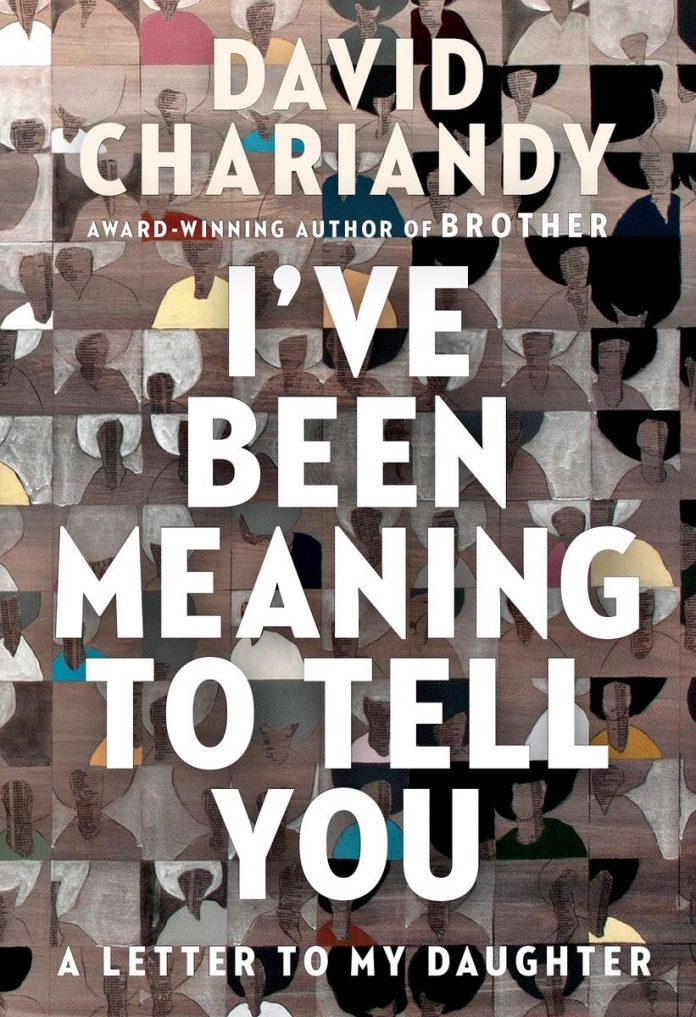
I’ve Been Meaning to Tell You: A Letter to My Daughter by David Chariandy (SFU associate English professor)
As a “person of colour,” how are you supposed to tell your child that no matter who they are and how good they are, they will be judged for the colour of their skin? How do you tell them about your own life, of the memories you’ve chosen not to dwell on from your childhood, where kids would taunt and tease you for the blackness of your skin?
These are some of the questions David Chariandy grapples with, as he strives to talk to his daughter about race, how racism exists in Canada, and how he hopes she’ll never need to experience it, even though she already has.
Every word is chosen with the utmost care and attention to try and convey what might be impossible to describe. Chariandy’s prose is vulnerable and honest, and throughout the book he is soft-spoken as he delves into the politics of race. There is pride, too, in who he is, who his family is, and what they’ve lived through.
This book is Chariandy’s honesty with himself and his loved ones, and his attempt to say what he’s never been able to tell them aloud using the personal comfort of text. It’s Chariandy’s wish for his daughter to understand their family history in terms of racial politics. It’s the hope that although this was one man’s way of having this conversation with his child, it may help others, too.
It’s a profoundly beautiful insight into what it means to have your body turned into a site of racial politics, so grab a copy and learn something from this deeply enlightening read. – CM
Social infrastructure development project initiated by four B.C post-secondary institutions
By: Srijani Datta, Assistant News Editor
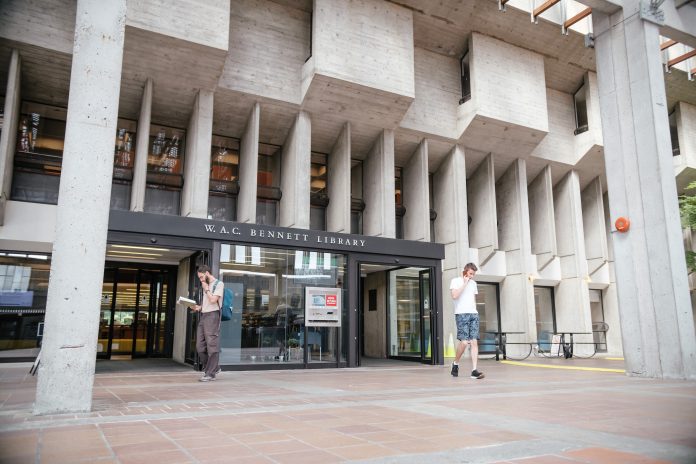
On June 11, Simon Fraser University (SFU), the British Columbia Institute of Technology (BCIT), the University of Northern British Columbia (UNBC), and Vancouver Island University (VIU) committed to establish the B.C. Collaborative for Social Infrastructure. The initiative originated from a roundtable hosted by SFU and McConnell in 2017. The roundtable was attended by presidents of universities and foundation representatives from all over Canada.
The collaborative project is stated to help the institutions involved make palpable and sustainable community impact.
UNBC President Daniel Weeks said, “Each institution will bring its unique knowledge and resources to the discussion and by working together, continue to bring the University mindset of problem solving outside our walls and into the communities we are proud to serve.”
The initiative is supported by the McConnell Family Foundation.The foundation has previously funded Universities Canada to help them establish a nationwide platform for knowledge on social infrastructure development open to different Universities.
SFU president Andrew Petter stated that “Canada’s public post-secondary institutions have a huge opportunity, and I believe our responsibility is to increase the contributions we make to the communities we serve.”
The partner institutes will focus on specific action areas which are reported to include “green and sustainable campus and community building, Indigenous entrepreneurship and social finance, social procurement, and library outreach and community scholar programs.”
Kathy Kinloch, President of BCIT said, “BCIT and our educational partners play a pivotal role in cultivating the talent and applied solutions that will drive our economy, green our planet, and enhance quality of life within our communities.”
The four institutions are set to collaborate on practices and policies that would enable them to identify how initiatives can be increased and enhanced. The collaboration is also aimed at encouraging progress. The institutions further plan to come up with a set of practices that can be later offered to post-secondary institutions across Canada.
“This project will enable SFU and our partners to share best practices and to test some of the many instruments we can leverage to build social infrastructure,” said Petter.
A completely true and historically accurate history of Canada

By: Gabrielle McLaren
1351: Man living his best life taps tree and decides to boil sap on a dare. Discovers how to make maple syrup, changing the pancake game forever.
1400: All is well. The moose just had a baby boom. The bears have settled The Grizzli Wars.
1503: Trudeau family dynasty prophesied to reign as Prime Minister for many moons by a glowing beaver crawling out of a creek. Local Cree nations have no idea what the fuck this means.
1532: Jacques Cartier promises to pay back an Algonquin Chief for his half of their Uber ride and never does, setting the premise for a long history of broken white promises.
1567: British forces abandon hopes of militarizing pinecones in an attempt to accelerate conquest.
1602: Early settlers begin storing milk in plastic bags for safekeeping during long canoe expeditions.
1742: “O Canada” drunkenly composed at a lumberjack camp.
1754: Canadian man first to coin the term “sorry.”
1755: British soldier does not say sorry while deporting the Acadians from New Brunswick.
1763: French nobles are relieved after getting kicked out of North America by British forces, since Québec isn’t picking up any fashion or pâtisserie skills. While wondering what they’ll do with their free time now, they die in the Revolution.
1812: Canadians burn down the White House since Canada is totally a real country by now.
1845: Man on Franklin Expedition drops coffee overboard and invents the Iced Capp.
1867: Britain decides to let colonies have a playdate at Charlottetown and realizes with surprise that they’re actually kind of competent and self-sufficient. Like a surprisingly good art project that your Mom kept on the fridge, Canada is born.
1889: Sir John A Macdonald and Sir George-Étienne Cartier discovered having a torrid affair — in Macdonald’s own house. Damn.
1903: Half of Prince Edward Island breaks off, leaving Canada with a teeny tiny province.
1918: Civilians dying of the Spanish flu refuse life-saving vaccine as civilization crumbles around them immediately following the First World War, citing fear of autism and wishes to live a clean, holistic life cycle.
1921: Men accidentally elect first woman to Parliament on a dare and are horrified to learn that women are politically literate and competent beings.
1924: Economy doing great! Loonie never been stronger!
1938: Two men finally break vicious cycle of holding door for each other for the last twelve years.
1939: Oh fuck.
1950: Denim suit adopted as national dress.
1962: First American movie producer discovers just how much cheaper it is to shoot in Canada.
1965: Parliament adopts the current Canadian flag, once Lester B Pearson’s drawing of an American flag with a big ‘X’ in it is deemed impolite.
1990: First Walmart in Canada opens. Attempts at national identity are abandoned entirely.
2003: Avril Lavigne deemed national treasure by Heritage Canada.
2018: Québec tries to leave Canada again, calling Tim Hortons’ new poutine a blatant cultural disrespect.
Useless Canadian trivia to bring up on Canada Day
By: Gabrielle McLaren, Features Editor
Do I remember what I had for supper last night? Not at all. Do I have a lot of unnecessary trivia about Canada in my head, just in time for Canada Day? You bet. My summer job between first and second year was bringing groups of visitors through the halls of Canada’s Parliament. This included a lot of “hello/bonjour” greetings, explanations of the purpose of the Senate, and episodes of being yelled at for running out of tickets. Now, here I am, ready to share my borderline-useful Canadian trivia with you!
Moose aren’t supposed to live in B.C. They’re actually from the east of the country, but they followed the Canadian Pacific Railroad on its way westward. Moose literally took the train and followed the rails to set up shop west of the Rocky Mountains.
Sir John A. MacDonald, Canada’s first prime minister, was known for many things, from his charm and mad 19th-century dance moves to his incredibly genocidal policies aimed at Indigenous peoples. One of his legacies is his raging alcoholism. “Raging alcoholism” might not be the best way to explain it: MacDonald would be sober for six months, and then disappear for two weeks and leave his friend and colleague George-Étienne Cartier in charge of the country. Like most things about MacDonald, it was sketchy. One day, MacDonald threw up in the House of Commons during debates. MacDonald wiped his mouth and turned to the Speaker of the House, calmly stating: “I get sick sometimes not because of drink or any other cause, except that I am forced to listen to the ranting of my honourable opponent.” That’s Gentleman™ for “suck my dick.”
Prior to his election, former Canadian Prime Minister Pierre Elliot Trudeau was blacklisted from entering the United States because he was considered too socialist, and possibly communist, by the American government.
Love it or hate it, Hawaiian pizza was invented in 1962 by a Canadian restaurant owner. That restauranter, Sam Panopoulos, actually fell in love with pizza during a stop taken in Italy while immigrating from Greece.
Winnie the Pooh is an actual Canadian bear. She started off as an abandoned bear cub until a certain Lieutenant Harry Colebourn stopped in White Rock, Ontario, on his way to England. He wrote in his journal: “August 24, 1914 Left Port Arthur 7AM. In train all day. Bought bear $20.” Yup. He named the bear after his hometown, Winnipeg, and brought her with him as he trained forces for the First World War, where she became a pet for soldiers. While Colebourn was posted in France, he made arrangements for Winnie to stay at the London Zoo. He visited her frequently and, after noticing just how much children and adults loved Winnie, decided to donate her to the zoo instead of bringing her back to Canada (how he was planning to ship a bear across a U-boat infested ocean, I have no idea). One of the visitors who got a chance to see Winnie this way, A.A. Milne, started writing fun little stories once his son fell in love with Winnie. The rest is history.
To keep morale up during his first Canadian winter, Samuel de Champlain founded the Order of the Good Time. Every day, somebody new would be in charge of entertaining those who hadn’t died of scorbut, as well as distributing rations, therefore becoming the Grand Master of the Order of the Good Time. Today, Nova Scotia’s lieutenant-governor now serves as the Grand Master, and anybody visiting his province is entitled to membership as long as they promise: “To have a good time, to remember us fondly, to speak of us kindly, to come back again.”
The first woman to be elected to Parliament was a schoolteacher named Agnes MacPhail in 1921. The first time she addressed the House, half of her male colleagues got up and left since they would have rather not be in the house at all than listen to a woman speak in it. Yikes. MacPhail stuck around in the House for a surprisingly long eighteen years, working on issues ranging from women’s rights, education, child labour, family rights, and prison reform.
In an effort to promote Christianity to Indigenous peoples of Canada, the Catholic Church proclaimed that beavers counted as fish and could therefore be consumed on Fridays and during Lent. Spoiler alert: this did not make colonialism any less bad.
One of the best known Canadian stereotypes is that we apologize too much — but this ended up having legal consequences. In 2009, Ontario passed a law called the Apology Act that prevented lawyers from using an apology as an admission of guilt, but recognized it as a sign of empathy and compassion.
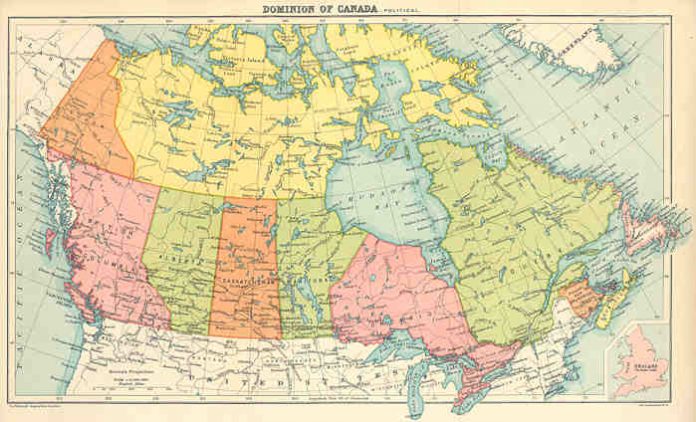
Some of Canada’s national parks are bigger than entire countries. Wood National Buffalo Park (which crosses from Alberta into the Northwest Territories) dwarfs Denmark and Switzerland . . .
When Métis leader Louis Riel was elected to Parliament, he was a wanted man exiled to the United States. He never stepped into the House of Commons as a result (for fear of being arrested), and the rumour at the time was that he’d broken into Parliament in the middle of the night to sign the member’s registry without anybody knowing.
Not only is the Hudson’s Bay the second-biggest bay in the world, but massive ice sheets have literally bended its gravity by denting the Earth due to their sheer size millions of years ago. Scientists believe that the surface of the Earth will bounce back and recover its usual gravity in 5000 years.
Confederation actually began with just the Atlantic provinces wanting to join together, but the province of Canada (modern-day Québec and Ontario) crashed the party. To help warm up the East coasters, the Canadian delegation (including aforementioned alcoholic Sir John A. MacDonald) brought champagne for anyone. Not just champagne, but about $200 000 worth of the stuff in today’s currency, once we adjust for inflation. So what I’m trying to say is that the fathers of Confederation are all drunk in that lovely photo where they’re all sitting in a row in Charlottetown.
On September 11, 2001, hundreds of planes were rerouted and turned away from New York airspace. One of the prime landing sites for airborne flights was the tiny town of Gander, Newfoundland, whose population of 1300 welcomed, housed, fed, and entertained over 7000 stranded passengers from across the world for five days. A steel beam from the World Trade Centre sent to Gander in commemoration is the only part of the remains housed outside of the United States of America.
During the Second World War, Canada gave asylum to Dutch royals. Crown Princess Juliana of the Netherlands was pregnant when she fled the Nazi-occupied Netherlands, anxious about her new child being born outside of the country, and thus losing her right to the Dutch throne. A suite on the maternity floor of the Ottawa Civic Hospital was thus declared international territory, to keep Princess Margriet royal. As a thank-you after the war, Princess Juliana donated 100 000 tulip bulbs to Canada— asking only that a few be planted on Hospital grounds. Not sure what to do with the other thousands of bulbs, the federal government and city of Ottawa decided to host a tulip festival, which is still an annual tradition to this day.
Album versus Album: Katy Perry and Taylor Swift

By: Muhammad-Ahad Ghani
 Witness by Katy Perry (2017)
Katy Perry, who set the bar high with her album Prism (2013), fails to meet expectations with her latest album Witness (2017). Witness is not a terrible album overall — it does contain hits like “Roulette” and “Act My Age” (on the Target edition). Despite that, it also includes misses like “Mind Maze.” Poorly written lyrics such as “you broke me wide open, open sesame” and “your words are like Chinese water torture” sound odd. Despite taking aim at Taylor Swift in “Swish Swish,” Perry doesn’t get far in dissing her. The song does feature one of Nicki Minaj’s strongest verses to date and is worth a listen. However, by relying on other artists’ talents — and collaborating on all three of her singles — Perry makes it obvious that she is struggling to make a hit.
Witness lacks Teenage Dream-esque hits, which is disappointing. Let’s just hope that she’s back to form on her next album, and that it won’t take four years to make.
 Reputation by Taylor Swift (2017)
Taylor Swift has come a long way from 2008’s “Love Story.” Her latest album, Reputation, is her darkest one yet. Swift sheds her girl-next-door image and acknowledges criticism that has plagued her for the past few years by taking ownership of her narrative. Reputation is a cohesive work of art with solid lyrics, particularly in “New Year’s Day,” as well as impressive vocals, like those in “Don’t Blame Me.”
Swift makes bold moves in her album. She swears, a first for her, in her song “I Did Something Bad.” She surprisingly enlists rapper Future on “End Game.” On “This Is Why We Can’t Have Nice Things,” she even seems to diss Kanye West and Kim Kardashian with lyrics like “. . . you stabbed my back while shaking my hand.” While I believe 2014’s 1989 remains her best work to date, Reputation is one that demands a couple of plays to get you hooked.
Verdict:
While neither album delivers career-highs, I’ve got to hand this round to Swift’s Reputation. As Perry took a more in-your-face approach to the promotion of the album, including a four-day all-access Witness World Wide live stream, Swift took the backseat and let the music speak for itself. Where Witness lacks cohesiveness and direction for Perry, Reputation completely rebrands Swift whilst delivering a catalogue of anthemic songs. In conclusion, while Perry remains a bigwig in the music industry and will most likely come back swinging, Swift takes the crown this time around.
Unpublished pages from Maria Campbell’s classic Halfbreed recovered by SFU researchers

By: Srijani Datta, Assistant News Editor
SFU associate professor Deanna Reder and PhD student Alix Shield discovered a complete manuscript of Métis author Maria Campbell’s 1973 classic memoir Halfbreed, including two excised pages from all prints of the book so far. Shield, who made the discovery, discussed the significance of the finding in an interview with The Peak, on June 21, National Indigenous Day.
The two pages, marked in the manuscript with two large red crosses over them, described sexual assault allegations against an RCMP officer that took place when Campbell was 14 years old.
Shield made the discovery on October 18, 2017 in publishing company McClelland & Stewart’s fonds while visiting the McMaster University archives in Hamilton as part of a month-long research trip. Shield mentioned that, due to previous archival works, she and Reder both knew that a particular “incident” involving the RCMP had been cut from Campbell’s manuscript as the publishers thought it to be too “libellous.” She stated, “[Once I] knew that something like that existed, I would try my best to find it.”
Shield explained that even though Campbell herself wanted to talk about the assault in her memoir and had received the support of her legal counsel to do so, the pages were never published. Discussing the reason why the pages were not published, Shield said, “All of the letters between the editors and publishers showed that the decision was made out of fears that the RCMP could get an injunction and attempt to halt the book’s publication. This would mean that all of the money that they (the publishers) had put into the project would go nowhere.”
“The decision to not include the passages was really an example of non-Indigenous editors [and] publishers coming in and making the decision on behalf of the Indigenous authors, which in itself is one example of a larger problem of Canadian publishing, especially in the 20th century,” continued Shield.
“McClelland & Stewart’s decision to remove [the pages] from her memoir took away her power and voice as an Indigenous woman writer.” – Alix Shield
She added that “despite Campbell’s insistence on including the pages, because it was such an important part of her life, McClelland & Stewart’s decision to remove it from her memoir took away her power and voice as an Indigenous woman writer.”
Reder and Shield published an article in the journal Canadian Literature discussing the whole process and making the pages public with Campbell’s permission. Shield told The Peak that “throughout the whole process, Deanna and I have been trying to make Maria feel that her book has been restored to the form that she had intended. The whole process of publishing the article with the excised passages [was] done carefully, respectfully, and with her permission.”
Since the discovery, Shield reports that different publishing houses have expressed interest in republishing the book with the two excised pages. “At this point if Maria wants to republish it, [and] I think she will, there will be a sense of resolution. All those who have read her book so far and have been inspired by it, will be able to read it as a whole, and I think it will bring more peace to Maria at the age of 78,” said Shield.
Shield explained how McClelland & Stewart’s act of deciding for Campbell was indicative of a problem in the field of publishing where non-Indigenous publishers and editors who “could not understand or relate with the writers [. . .] often engaged in destructive editorial practices which ended up shaping the way that books like Halfbreed [were] read.”
Shield mentioned that she wanted to address this problem in her own research on Canadian Indigenous literature as a PhD student: “In my work I want to do something that matters and give credit to writers and storytellers who should have been given credit many years ago. Because I identify as a settler scholar, it is really important to me to keep my positionality in mind with regard to the materials I am working, because that is part of the attempt to decolonize the scholarly system.”
“It is time that the story came to light and the book was restored to its original form, as the author had intended it be,” said Shield.
Need diverse, non-stereotypical characters who grow and solve crime together? Look no further
By: Stefanie Baltasar
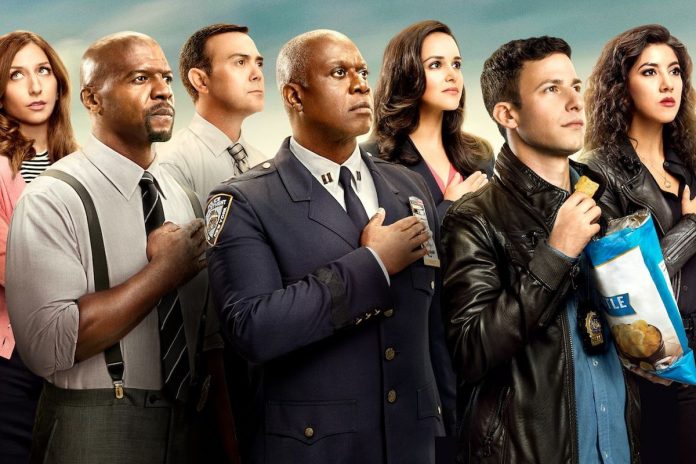
One of the reasons I love the cop comedy Brooklyn Nine-Nine (B99) is that it has a truly diverse cast of characters. They don’t throw in stereotypical characters for the sake of diversity like many other shows do — they round out their ensemble. The personalities may not be completely realistic, but they’re definitely not stereotypical.
For example, Raymond Holt (played by Andre Braugher), a gay, black police captain, has one of the most delightful personalities I’ve had the pleasure of watching, and he’s just one of many three-dimensional characters on the show. Holt is a stoic, overly serious man with a loving husband and a dog named Cheddar. His father-like relationship with another detective, Jake Peralta (Andy Samberg), is one which gradually develops and deepens over the course of the show. Nearly all the characters’ interpersonal relationships undergo growth, from romantic ones to friendships — a great example of the latter being one between a guy and, gasp, a girl that doesn’t become what you might expect.
There isn’t an overarching, on-the-run criminal the characters are trying to hunt down (unless you count Doug Judy, a Pontiac thief), but what really makes the episodes fun are the characters interacting with each other. On of my favourite interactions is between badass motorcyclist Rosa (Stephanie Beatriz) and the desk jockeys Scully (Joel McKinnon Miller) and Hitchcock (Dirk Blocker). Recurring themes, such as the Halloween episodes, are also something viewers can look forward to. There’s a lot of consistency between episodes, such as characters who, despite undergoing a change in a previous episode, still act in-character and naturally let the change become part of their persona.
Although B99 is a cop comedy at heart, it doesn’t shy away from addressing more serious topics like racism and homophobia. These topics come up naturally in episodes, and the way B99 handles them is admirable. I’d like to address that the next sentence is (sort of) a spoiler for season 5. There’s a character who comes out as bisexual to their family, and while the family’s response is not one of acceptance, the cops with whom the character works accept their sexuality. I really loved that episode because it showed how much of a family the characters had become.
All-in-all, I adore this show and the fact that they actually address both negative and positive attitudes towards different ethnicities and sexualities through the show’s characters. These are the issues being addressed today, so they belong in the cop comedy made for our generation. If you are looking for a serious show, something more along the lines of Bones or Law & Order, then this is probably not for you. But if you’re like me and enjoy light-hearted comedy with really good serious moments, then this is definitely the show for you.
Queer representation: what makes it and what breaks it
Written by Gabrielle McLaren, Features Editor
At long last, we have responded to the call for media which represents reality, and we’re seeing more on our screens and pages than white folks and vampires. But that doesn’t mean we’re done, because queer representation in the media (for the sake of this article, let’s say fiction) is far from perfect. While the debate over whether bad representation is better than no representation is ongoing, here are some of the things I look for in the media I consume.
Note on terminology: “queer” is a reclaimed slur with a history of othering members of the LGBTQ2+ community. Its original meaning is literally “strange.” “Queer” can also be used in academia to describe queer studies, queer criticism, queer readings of a text . . . Keeping this in mind, make sure to check with the folks around you to see how they feel about you using this label and applying it to them.
Not-so-great queer representation
- Stories exclusively about coming out: While these stories are extremely important and serve as models for those who are questioning or in the process of coming out, queer folks don’t start being gay once they come out, nor do they stop once the deed is done. I want space cowboy lesbians in space, and trans mermaids, and gay wizards, and ace princesses living their queerest lives. Even if I’m gay 100% of the time, I have too much to do to spend 100% of my time exclusively facing queer issues. Besides, even when you are in the process of coming out, your regular life doesn’t stop. Your own existential dread doesn’t get you out of writing math tests.
- Holding up any stereotypes: The word “stereotype” comes from the printing press, since a stereotype would be used again and again to make the same letter over and over. Needless to say, people aren’t as simple as hunks of metal. Stereotypes in the media aren’t useful: perpetuating them often seems to validate them. Varying portrayals of queer folks help to spread awareness that queer folks are diverse, and they also offer multiple role models for queer kiddos. If the media you seems to rely on stereotypes, I’m going to start questioning how seriously you inserted queerness into your plot.
- Queerness as a plot twist: The basis of this, that a queer person’s existence holds shock value, is heteronormative.
- Characters trying to prove that they’re just like everybody else: For a long time, queer representation focused on proving that the LGBTQ2+ community was not inferior to a heteronormative majority because they were “just like everybody else.” While the sentiment is good, it’s incomplete. Queer folks are different. We face different realities, different experiences, and different obstacles because we are queer, which shape our lives and needs in unique ways. That’s important to recognize and understand if you want to keep up with queer issues and understand queer activists.
How to sell queer representation
- Characters making gay jokes: Seriously, what am I even out of the closet for if not making gay jokes? (Human dignity aside, and all). Example: everyone in Pride (2014).
- Historical fiction with queer characters: Because queer people have been around longer than straight tolerance and acknowledgement. Example: Patsy and Delia in Call the Midwife.
- Unannounced queerness: “Coming out” is a one-way street: straight people never have to do it, but for some reason the world’s entitled to know about queerness in advance. But you can and do exist as a gay person, even in a room full of straights who do not know you or your life. Example: Lord Blackheart and Sir Goldenloin from Nimona, or Adam and Ronan from Raven Boys.
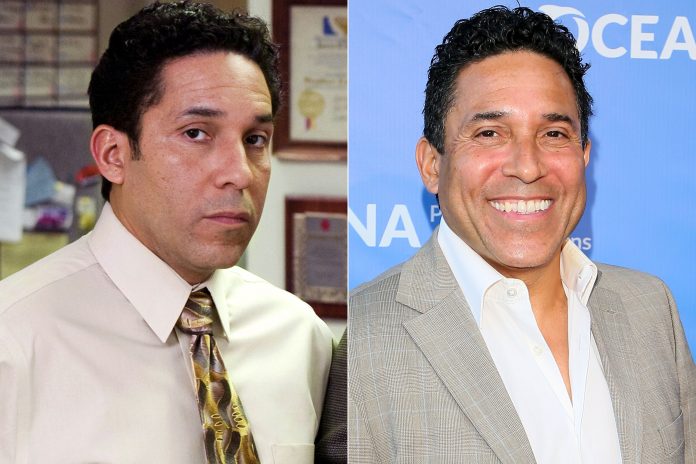
- Characters who compartmentalize their lives: This one is a bit trickier to explain, but for queer people coming out is a lifelong process as opposed to a single event. You come out to every new friend, new job, new class . . . It’s exhausting and not always necessary, so there are some places where your queerness is kept to yourself. There are also people and places where it isn’t safe to come out. Sometimes you might not bring non-queer friends into a queer space because you’d rather spend time with your fellow queers. For example, I have straight friends who aren’t coming to gay bars or drag shows or Pride with me, because it’s not their place, and that’s okay. Example: Oscar from The Office.
Characters who are queer on their own: You’ve surely read a book or seen a movie where a boy falls in love with a boy and realizes that he’s gay. While this happens, there are plenty of folks who are aware and comfortable with their queer identities before their first kiss. Identity is deeply personal, and isn’t policed by the people around you or who you are with. Example: Alex Fierro from Magnus Chase and the Gods of Asgard.

