Home Blog Page 607

Octopath Traveler may be the saviour of JRPGs

0
Image courtesy of nintendo.co.uk

By: Geron Malbas, Promotions Coordinator


As a game reminiscent of old Japanese role-playing games (JRPGs) like Final Fantasy or Chrono Trigger, Octopath Traveler can make players feel all of the nostalgic feelings 90s games had, and recreates it for a millennial audience. Not only is it one of the most beautiful JRPGs in the genre, but it stands out as the kind of game that challenges players creatively and intellectually.

       The game centres on eight different characters who each adventure around the world — hence the name, Octopath — trying to solve their own specific problems. However, all paths ultimately intertwine in such a fashion that the player can assist each traveler’s story.

       Players manage four characters at a time, and each has a unique ability that aids your quest. For example, Cyrus, a scholar, is a magic-user who can speak to NPCs to find out more information. On the other hand, Therion, a thief, can steal items from them. The player must decide what kind of playstyle their team will take: stoic and intuitive, or conniving and aggressive.

      But these aspects of the game are only relevant in the non- combative parts of the game when players are travelling from city to city, interacting with many kinds of NPCs. While the player must play strategically, the game’s turn-based combat dictates its pace: either players are incredibly strategic in causing an enemy’s slow death, or they players can try to use brute-force to ensure an enemy’s quick demise. The beginning of the game is a little slow since players need to determine how each character helps them in both the overworld and in combat, but by the mid-point of the game, it picks up, as players master the art of getting what they want with the resources at their disposal.

       Having invested a solid 60 hours of gameplay into Octopath Traveler, I was quite satisfied with how much fun I had. My biggest gripe is that it required a lot of grinding in order to get to a point where I felt my characters were strong enough to mow enemies down. Also, while the open world made me feel like there was a lot to explore, it became frustrating trying to complete small quests while having little to no direction on where to venture off to in the vast expanse.

        I would definitely recommend this game to Switch owners who enjoy a long-haul game. Patience is definitely a virtue, and this game is definitely not for impatient players who are looking to play casually. With that said, Octopath Traveler made me appreciate the amount of time I put into it, matching my extensive effort with as high a reward. If you like to work hard at something until you see results, then Octopath Traveler will be an absolute treat.

Octopath Traveler is currently available on Nintendo Switch.

Students gather at AQ reflection pond to reflect on their own worthlessness

2
Illustrated by Siloam Yeung

Written by Zach Siddiqui, Copy Editor

Last Tuesday, hundreds of SFU students congregated at the reflecting pond in the Academic Quadrangle (AQ) to peer into the water and ponder whether any of them add any real value to the universe.

“I used to believe in myself, which is why I even came to this school in the first place,” said one student (all interviewees requested anonymity, since they were no longer sure that they had any identity to begin with.) “Now, I know that ‘myself’ is just a social construct whose actions have no practical ramifications on the orgiastic interplay of atoms which light bounces off of to form the illusion of ‘Metro Vancouver.’

“I feel liberated, I guess.”

Students had all sorts of dark and tangentially related epiphanies as they ogled the koi fish cheerfully luxuriating in each other’s piss while floating through the eerily tranquil waters they call home.

One car-owning student recounted how, upon seeing himself in the pond, he understood that it was time to stop selling his bone marrow for money to pay the ever-rising parking rates on the mountain. He had realized that his flesh wasn’t even worth the price they paid. It was actually worth nothing, “in dollars or otherwise.”

Another began to cry as he spoke to us. He had written a philosophy exam earlier that day, and the reflecting pond had revealed that it didn’t matter if he wrote down the right answer when the test called for him to evaluate the validity of an argument about “that bitch Abby and her godforsaken peanut allergy.” All over the world, Reese’s Cups were still killing toddlers on the daily, and he was powerless in the face of that.

A Beedie student and a health sciences student, dissatisfied with their respective portfolios of accomplishments, jumped into the water together in the hopes of validating their lives. They had realized that the only people they had yet to sell down the river for their own benefit were themselves.

Around sunset — no one present could or would tell The Peak the exact time, because by this point the students had accepted that 24-hour days were just another sloppy, meaning-devoid lie sold to them by the Trudeau administration — dozens of professors lined up to show their support for the students, and do their own soul-searching.

“My ex-wife said she left me because she hated me, and I never understood it,” says Dr. Adam Fortune, an engineering professor. “Now that this pond water has shown me that in fact, I hate myself, I finally get it. I have closure about that whole affair, and my busted overhead projectors don’t smell like her any more.”

(Dr. Fortune was fine with being named because even in the depths of his self-loathing, he somehow still manages to be self-centred. Go figure.)

The other professor we asked did not wish to comment, instead asking that The Peak wait until he published his introspective findings in the next edition of his textbook, which he assigns as course reading to his own students every semester. He told The Peak that they would be going for around $150 apiece in the bookstore in January. Then The Peak told him to go shove the prosthetic leg from the nearby Terry Fox statue up his dick-slit.

The students may assemble again on a weekly basis, or they may not. They could not come to a consensus, since investing effort into successfully coordinating plans with each other would have come too close to working productively towards a hope, dream, or goal.

Printing costs at SFU shouldn’t be a thing

0
Photo by Alfred Zhang / The Peak

Written by: Amal Javed Abdullah, Staff Writer

One thing that majorly irks me as an SFU student is the printing fees. Surrey campus charges $0.11 per side for a black-and-white printout, and $0.25 per side for a colour one. At Burnaby campus, it’s $0.11 for black-and-white and $0.30 for colour. Printing class material is a regular part of our academic routine, and we often need to do it at school.

It might be cheaper to print at home, but the costs of a good printer are often way beyond a student budget. Some people’s only option is to pay the school each time for the privilege of doing something that most of our courses require from us. This is especially bad if you’re a student who feels more comfortable working with paper than digital copies, or if you often mess things up and end up needing to print fresh copies of your assignments.

So many students need this utility, both regularly and in emergencies. It feels bad to be putting in credit card information just to print in these cases, or to put time into managing yet another account balance with the school’s printing accounts.

After paying thousands of dollars in tuition per semester, you’d expect some level of leniency on printing fees. SFU should provide free printing for its students and faculty. Before calling this impossible, it’s important to note that other post-secondary institutions do have better printing options. At Douglas College, for example, students get 300 free printouts per semester.

This issue isn’t humongous, and it certainly isn’t at the forefront of my daily struggles as a student. I can’t imagine spending much more than around $30 a semester for paper-heavy degrees, which would add up to about $100 a year and $400 through a bachelor’s degree (though, for the majority of students, the “four-year degree” is a fairytale sitting right next to Santa Claus and the tooth fairy).

But we pay enough for basic utilities in post-secondary: textbooks, food, and in some cases, rent. I don’t think it’s too much to ask that printing be eliminated from that list. It’s minor enough that people who use it would be grateful, and those who don’t may never even notice. Our time and energy should be all we need in our papers and assignments, rather than the cup of coffee we lose every time we print a page.

Research Roundup

0
(Photo courtesy of Wild Nordic)

Written by: Nathaniel Tok, Peak Associate


Climate change causes plant community to change in Arctic regions

A study has found a relationship between the impact of climate change and the growth of new, taller plants in the Arctic and tundra regions. The research has also looked into how warming affects the community structures of cold weather ecosystems and plant traits.

The lead authors of the study, which has been published in Nature, included SFU biology professor David Hik as well as Isla Myers-Smith, Chancellor’s Fellow, University of Edinburgh, who is one of Hik’s former PhD students.

The worldwide study with more than 100 participating researchers found that climate warming helped plants grow taller at arctic or mountainous sites like in the Arctic, Alaskan, Canadian, Icelandic, Scandinavian, and Siberian mountains. This increase in plant height is projected to affect soil temperature, decomposition, and carbon cycling within the ecosystem. Shorter plant species did not appear to be affected by the rise of taller species.

The overall change of tundra plant communities might depend on how wet the tundra becomes. “Our study highlights the importance of accounting for future changes in water availability, as this will likely influence both the magnitude and direction of change for many traits,” noted Hik.


Temperature and salmon found to affect steelhead trout behaviour

On the Keogh River in northern Vancouver Island, SFU biology doctorate student Colin Bailey and biology professor John Reynolds have found that temperature and population levels of salmon, along with other conditions, will cause steelhead trout to alter their life cycle, size, and numbers.

Reynolds, who is also examining the status of plants and animals across Canada, believes the insights of the study will help efforts to conserve steelhead trout. For example, a large influx of salmon returning to the river system will cause steelhead trout to migrate to the sea sooner and more steelheads to breed in rivers. Bailey speculates that the spawning salmon lay eggs in the river, which are a potent and energy-rich food source for the juvenile steelheads.

However, Bailey admits the situation is complex, saying that “these fish seem to be controlled by many different factors at different times.”

For now, research will look at how size and age at entry to the sea affect steelhead life at sea. This research in turn will help researchers see if steelhead rearing conditions affect whether they can return and reproduce themselves.

SFU announces two designated cannabis smoking areas on Burnaby campus

1
(Chris Ho / The Peak)

Written by: Srijani Datta, Assistant News Editor


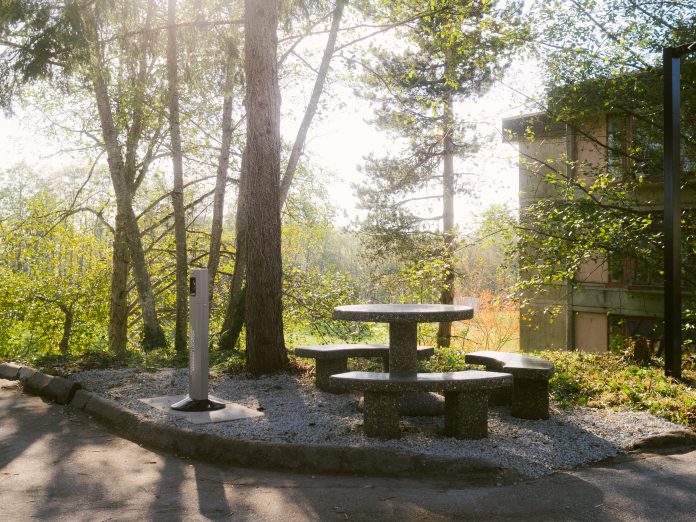
In response to B.C. legalizing cannabis, SFU has designated two temporary areas on Burnaby campus for cannabis-smoking.

One area is at the intersection of the Science Road and South Campus Road; the other is in the campus residential area, between Shell House and McTaggart-Cowan Hall. These areas are separate from the areas designated for smoking tobacco. There will be no such areas at the Surrey and Vancouver campuses, as they are located in urban centres, and therefore fall under municipal smoking regulations.

SFU employees are expected to continue follow existing SFU policies and WorkSafeBC regulations, which ban all substance-induced impairment at work.

SFU administration asks students who must use medical cannabis to register with the Centre for Students with Disabilities. This is meant to help the university “assist in ensuring appropriate accommodations within learning environments.”  said Dr. Tim Rahilly, vice-provost and associate vice-president, students and international, in his emailed announcement.

Rahilly additionally informed that the university will provide “reasonable accommodations for medical cannabis consumption on a case-by-case basis.”

SFU communications and Marketing sent out an emailed Cannabis Policy update on behalf of Sandi de Domenico, AVP Human Resources and Mark LaLonde, Chief Safety Officer. The update mentioned that the University was still reviewing its policies to analyze how best to update it to reflect the changes made by the new legislation.

Rahilly stated that the university’s first priority is to create the “safest conditions possible” for the SFU community, and this will be reflected in the latest policies. He continued that students, faculty and staff will also be consulted on the draft policies. The details of this consultation process will be released over the next few months.

“We are also working on developing a community education/awareness plan to inform our campus community for when our new policy is ready,” said SFU communications associate Justin Wong in an emailed statement to The Peak.

Wong mentioned in his statement that the university aims to have the new policies finalized by early 2019.

Exclusive interview with long-dead SFU dungeoneer

0
Illustrated by Marissa Ouyang

Written by: Alex Bloom

Sandra Swiftfoot is a third-year wizarding student with a minor in roguishness. She died exploring the labyrinthine corridors of SFU over 10 years ago. Thanks to the recent removal of the campus ban on necromancy, The Peak was able to raise Swiftfoot from the dead for an interview.

After some initial whining about being turned into The Peak’s zombie thrall, Swiftfoot agreed to talk to us about her findings.

“I heard a rumour going around that SFU was originally constructed as a prison for evil wizards,” Swiftfoot related. “Bored by the ramblings of my Lawful Good professors and their tired old refrains of ‘never use magic as a weapon,’ or ‘whatever you do, never go into the haunted crypts underneath the school’ I decided to skip my dungeoneering class and head off for a little spelunking of my own. I’m more of a hands-on learner anyway, and I wanted to find out if the rumours were true.”

According to Swiftfoot, she then gained access to the crypts under SFU through a tunnel near the still-unfinished husk of the SUB called “the undergrounds.”

“Once inside, I fought my way past several animated skeletons, a colony of living mould, and a golem made out of solid gold — a forgotten pet of the student society, created as a means of demonstrating their power to spend student dollars however they please.” Swiftfoot then used a Detect Evil spell to guide her towards what she hoped was a prison full of “badass wizards.” What she found next was chilling.

“I had just finished rummaging through the pockets of a deceased first year who foolishly triggered a spike trap, when I found a series of strange markings on the wall. I only found one gold piece, but the markings led me to a doorway with runes inscribed above it.” After using a Decipher Script spell, Sandra saw that the runes spelled out “SUB.”

Inside, she found a fully furnished student union building, complete with a naproom and vending machines full of beer. “Beside a dusty floor-to-ceiling portrait of Archmage Arthur Erickson, I found a note ordering the immediate shutdown of the SUB and the creation of a new one on top of the site.” According to Swiftfoot, the note was dated as being issued in 1990, with the reasons for the closure cited as “inappropriate use of the naproom, binge drinking, and a minor goblin infestation.”


The note also touted the closure as “ . . . an opportunity to build a new SUB, which could take years, provide jobs, and give student politicians the illusion that they’re actually getting something done.”

When asked why she didn’t report her findings immediately, Swiftfoot said “I died, remember? Just before I left, I reached for one of the beers in the vending machine — which was still ice cold, I might add — setting off a poison dart trap which struck me in the leg.” Swiftfoot almost made it out, but eventually succumbed to the poison. Thankfully, her body was recently found by a group of archeology students.

As the interview wrapped up, she stated to The Peak, “Oh yeah, and I also accidentally let out a centuries-old lich who was trapped down there. He said something about ‘engaging the world,’ you might want to look into that too.”

Adulting 101: Fall produce and how to eat it

0
Illustration credit, Tiffany Chan

By: Gabrielle McLaren, Features Editor 

The fall solstice was officially September 21, but the season’s coming doesn’t really feel real until Thanksgiving, Halloween, and midterms start to loom on the horizon. Luckily, you can turn autumn into your best food season yet.


Apple

How to pick: Check for firm apples which aren’t bruised — though scuffs and specks may be normal. While this may be weird to do in the middle of Nesters Market, or wherever you buy your produce if you don’t live at SFU, make sure your apple has a good smell to it too.

What to make: Wash, peel, and slice your apples, and toss them in cinnamon and brown sugar. Wrap your apple slices in Pillsbury Crescent dough triangles and bake following the instructions on the package. Serve hot. Bonus: drizzle with caramel for additional yumminess.


Beets

How to pick: Look for smooth, hard, rounded beets. Dwight Schrute does not approve of beets that have cuts, bruises, moist spots, or shrivelled skin. If you’re going to be cooking or roasting them, try to size them evenly for even cooking.

What to make: My mom loves, loves, loves pickled beets, so you could try your hand at pickling and canning them, since canning makes for a handy gift. You can also peel and slice your beets and dry them out in the oven at 350°F to make beet chips. Bake your chips until the sides of the beets begin to dry out (this should take about 20 minutes), and rotate your sheet in the oven. Keep doing that until they’re completely crispy.


Broccoli

How to pick: You want your broccoli to be bright green, for the florets on top to be clustered together, and for the stalk to be solid.

What to make: Broccoli makes for a great pasta salad. Chop up about two crowns of broccoli and mix that with six ounces of pasta, a chopped-up bell pepper, cheese cubes if you wish, apple slices, and anything else lying around your kitchen, like cranberries, sunflower seeds, carrots . . . You can use a store-bought dressing if you have some, or mix up mayonnaise, olive oil, and dijon mustard. This soup is also delicious and filling for all you meal-preppers.


Brussel sprouts

How to pick: Bright green, no yellow leaves (that means they’re aged), or black spots (don’t panic, but that might be a fungus). Also, make sure the leaves are packed together. If your brussel sprouts are giving you tulip vibes, they’re passing their prime.

What to make: Brussel sprouts are a stupid easy side once you roast them in the oven. Trim and half your brussel sprouts, toss them in olive oil, layer on your baking pan, and sprinkle with salt and pepper. You can dress them up with parmesan cheese, bacon bits, maple syrup . . . It’ll be 16–20 minutes in an oven at 425 degrees Fahrenheit. Feel free to load them up on rice with other veggies and proteins.


Cabbage

How to pick: Your cabbage should be compact, with no leaves flopping off. Colour depends on the kind of cabbage that you’re picking.

What to make: My first job included mixing industrial quantities of coleslaw by hand, so I stay clear of that stuff now. Instead, may I suggest making cabbage rolls.  Cabbage rolls can be deconstructed into no-nonsense one-pot meals, and yes, there are vegan versions out there too.


Carrots

How to pick: The bigger the carrot, the sweeter it’ll be, because it spent more time in the ground and developed more sugar. They should be smooth and firm, and the carrot and leaves should both be deeply coloured.

What to make: These carrot muffins are my favourite (without the raisins, of course). You can also try shredding carrots and tossing them in overnight oats with cinnamon, nutmeg, cloves, and a bit of brown sugar to have carrot cake for breakfast.


Cauliflower

How to pick: No black spots, and the cauliflower should be firmly packed.

What to make: You might have heard about the Pinterest craze that is cauliflower rice. I recommend this roasted veggie pasta for the weeks when your budget needs to be stretched to Elastigirl levels.


Crabapples

How to pick: Like an apple, but smaller. Look for firm, crisp crabapples. The colouring depends on the species of crabapples, so be careful.

What to make: Jelly! It sounds scary but it’s pretty straightforward, delicious on crackers with cream cheese, and makes for a cool gift.


Cranberries

How to pick: You can get cranberries canned or dried in bulk, which is easy. While it’s rarer to get fresh cranberries, fresh cranberries should be bouncy, firm, and deeply coloured.

What to make: Throw them in literally any salad, or just snack on them while you study. Alternatively, make your favourite chocolate chip cookie recipe but substitute your chocolate chips for white chocolate chips and add a cup of cranberries.


Eggplant

How to pick: Your eggplant should be smooth and shiny. If you push your thumb into your eggplant (it’s weird but bear with me), the flesh should give a little but return to the original shape once you stop applying pressure.

What to make: Eggplant and black bean sauce stir fry. You can cheat on this recipe with store-bought black bean sauce — nobody will judge you — and you can also add tofu or chicken to this dish. Serve on rice.  


Ginger

How to pick: Smell really helps here: your ginger should be spicy and spicy. The skin should be thin and there should be no soft spots.

What to make: Now that it’s Fall you’re going to get sick; boiling ginger to make a tea will help. Other than that, this carrot apple ginger soup is foolproof and delicious.


Green Beans

How to pick: Should be bright green and smooth.

What to make: These green beans bundles are a great side or addition to a potluck because, plot twist, people like bacon.


Kale

How to pick: Kale should be moist and unwilted. The smaller the kale leaves, the more tender and mild the kale.

What to make: In a large skillet, caramelize some onions. Chop up one apple, and throw that in. When the apple is softening, drain a can of chickpeas and add it to the skillet. Drizzle the whole thing with maple syrup or agave or honey or whatever you’ve got and mix, before throwing in a bunch of kale, chopped in large chunks. Cover the pan with a lid and give the kale about five minutes to wilt. Delicious hot, but will make for a good leftover.  


Leeks

How to pick: Look for leeks that are light green and white, with as little dark green as possible. Smaller leeks have the best taste, but anything firm with crisp and undamaged leaves will be good to go.

What to make: My roommate and I got really obsessed with this leek and sweet potato and rosemary soup recipe. It freezes amazingly too, so you can make a big batch and treat yourself during exams.


Mushroom

How to pick: This depends on the type of mushroom you’re looking at getting, but make sure that you check the stem and the cap to avoid surprises.

What to make: This wildly depends on what kind of mushrooms you pick up at the grocery store or market, but creamy pastas like this one are killer, and mushrooms combine really well with spinach.


Pumpkin

How to pick: Unlike for jack-o’-lantern purposes, cooking pumpkins should be on the smaller side. It should be brightly coloured with a dried out stem, and when you tap against the pumpkin the sound should be hollow.

What to make: I see your pumpkin spice latte and raise you chocolate pumpkin swirl brownies. Or carrot pumpkin muffins, to which you may add grated apples or chocolate chips or both. I have no shortage of pumpkin recipes. Boom, pumpkin soup. Go find this piece online for links.


Squash

How to pick: Your squash should be heavier than it looks. It sounds dumb, but the idea is that if the squash’s flesh is moist and healthy, it’ll be heavy. If the stem looks damaged or wet, the rest of the vegetable probably isn’t that great either… Also, make sure that your pumpkin’s flesh is dull — shininess usually means that the vegetable was picked too early.

What to make: Butternut squash mac and cheese. Hands down. Here’s a vegan version that can easily be made gluten-free if you have dietary restrictions.


Sweet potatoes

How to pick: You’ll want medium-to-small sweet potatoes (big ones are starchier) boasting evenly and deeply coloured skin.

What to make: Sweet potato fritters. Grate three cups of sweet potatoes and squeeze out all the liquid. This step is super important, because without it, the consistency won’t work. Mix with four whisked eggs, salt, pepper, and paprika. Heat some butter in a saucepan over medium heat, and create little balls with your sweet potato mixture (thicken up with flour as needed). Drop them in, and make sure to flip every five minutes until your fritters look crispy and brown. They’re delicious with spicy mayo, or when topped with avocado. This won’t help you cook or anything, but you should know that this is Michelle Obama’s favourite fall vegetable. So bonus.


Zucchini

How to pick: Once again, the smaller, the better. Big zucchinis are watery and have larger seeds. Look for vibrant colouring, whether your zucchini be green or yellow.

What to make: Disney made you believe that ratatouille was difficult to make, but this is a lie. French ratatouille is usually a kind of stew, but you can also elegantly slice and bake veggies like in the movie, by following this recipe. Don’t be shy about making chocolate zucchini bread for dessert either.


 

SFU women’s soccer coast to 3–0 win against Saint Martin’s Saints

0
Emma Pringle leads the GNAC with 11 goals this season. (Photo courtesy of SFU Athletics)

On Tuesday night, the SFU women’s soccer team hosted the Saint Martin’s Saints. The Clan controlled the game from start to finish, but only Emma Pringle was able to find the back of the net, doing so three times.

In the game’s early moments, the Clan flirted with scoring multiple times, controlling the ball in the Saint Martin’s half. In the 16th minute, Pringle scored the highly anticipated first goal of the game, taking a perfect low-driven cross from Katelyn Erhardsen down the right wing and sliding it into the net.

Shortly after, Pringle controlled a cross from the left side of the field, this time via Jenna-lee Baxter and tapped it in for her second goal of the game, a mirror image of the first. The assist gave Baxter her league-leading 23rd point of the season, in only 13 games so far this season.

The Clan went into halftime with a 2–0 lead, and all the scoring chances in the game.

Pringle completed her hattrick eight minutes into the second half, once again after handling a cross from the wing. This time, her goal required more effort, as she dribbled to her left and chipped the ball over the keeper’s right arm and into the net. Shortly after, she was substituted out — likely to rest her before SFU’s next game on Thursday.

The Clan played out the rest of the game, controlling possession and denying the Saints chance after chance for the remainder of the second half.

Despite controlling the game, head coach Annie Hamel was not quite satisfied with the team’s performance.  

“I thought our overall play wasn’t up to our standard,” Hamel noted. “The decision-making was poor and we got out of good habits because we were playing a lesser opponent, and the girls’ mindset was different because they knew they could get away with more.”

This is the mentality of good teams; they’re always looking to improve. SFU has had a fantastic  start to the season, and are now 9–3–1 overall with a 7–1–1 conference record. The only team they’re trailing in the GNAC is Concordia University, who have a 7–0–1 record.

“The senior leadership is extraordinary,” said Hamel about her team. “The experience the six seniors come with is the difference from the previous years.”

What’s next:

The Clan will now host Seattle Pacific on Thursday night, who are currently fourth in the GNAC with a 5–3–0 record. Kickoff is at 5 p.m.

“The scheduling from the GNAC needs to get sorted because that’s just not safe to play this much in such a short period of time. It will be a tough match-up and certainly a day full of emotions as it is senior day!” said Hamel.

Peak player of the game: Emma Pringle

Whenever a player has a hattrick, they are going to be noticed. Pringle’s three goals were the difference on the night, and now give her a GNAC leading 11 goals. Despite the effort, Hamel still thinks she has more to offer.

“[Pringle] didn’t play her best game. She’s a special player, there’s no doubt, but today she struggled getting into a rhythm. Still, when you’re as special as she is, an off day can still result into three goals.”

Adulthood 101: Voting in the 2018 Burnaby municipal election

0
Illustration credit, Tiffany Chan

By: Michelle Gomez, Staff writer 

The Burnaby election campaigns have been underway for a few weeks now, and this weekend, we’ll be voting for one mayor, eight city councillors, and seven school trustees. The mayoral race mixes old and new faces, and three out of four candidates are independent. While many of the candidates have overlapping interests, each of the four has different priorities and different ideas on how to bring change.


Practical information

Voting day is on Saturday, October 20. You can vote if you’re 18 or older, a Canadian citizen, and a B.C. resident for at least the past six months. You also need to have lived in Burnaby for at least 30 days before voting day.

If you haven’t voted in one of Burnaby’s municipal election before, you must register to vote. Registration is a quick, minutes-long process you can do by phone, mail, fax, email, or here at the Elections BC website. You can also register in person on the day you vote. On voting day, you can vote conveniently at any of the 34 voting locations between 8 a.m. and 8 p.m.


Mayoral candidates

Derek Corrigan

Derek Corrigan, Burnaby’s current mayor, hopes to win his sixth election this year, backed by the NDP-affiliated Burnaby Citizens Association (BCA). His priorities include opposing the Kinder Morgan pipeline project, creating affordable housing, reducing traffic in Burnaby, and sustainable economic growth.

Over his past few mayoral terms, Corrigan has opposed the Kinder Morgan pipeline and has challenged the federal government in court. In his interview with Burnaby Now, Corrigan expresses on multiple occasions the complexities and power dynamics between the three levels of government in Canada, and how he thinks Burnaby can fit into these.

Another issue that Corrigan considers important is affordable housing. He explained in his interview with Burnaby Now that federal and provincial governments do not invest in social housing, and so the burden often falls on municipalities. The problem, in Corrigan’s eyes, is that cities don’t have enough power to do much.

However, he noted that his office has done what they can, including “building 1000 new below-market rental units in 16 new projects,” and taking “advantage of the new provincial rental-zoning authority to maintain and increase affordable rental units.”

Aside from having five mayoral terms’ worth of experience, Corrigan has been an influential public figure in the Lower Mainland. He beat Gregor Robertson to become chair of the Mayors’ Council on Transportation in December, and sits as chair on Metro Vancouver’s Climate Action Committee.

In his candidate profile, Corrigan states that: “In addition to my sincere commitment to help ensure Burnaby has in place policies and programs that reflect citizens’ needs and aspirations, I believe that my years as mayor, dozens of experiences as a community volunteer, and training as a lawyer all help me to achieve this goal.”


Mike Hurley

Mike Hurley, an independent candidate, seems to be Corrigan’s biggest competition. The two are closely tied among voters, according to a poll commissioned by the International Association of Firefighters. Of the decided Burnaby voters polled, 43% supported Corrigan while 42% supported Hurley.

Hurley, a former firefighter, he was president of the Burnaby Fire Fighters and of the B.C. Professional Fire Fighters. He has also been active in the community, helping start charitable programs such as the Healthy Snack Program and the Burn Fund Centre.

Hurley’s mayoral bid has the support of the United Steelworkers and the Greens. In fact, to support Hurley in beating Corrigan, Green candidate Joe Keithley dropped out of the mayoral race.

“I am stepping aside, as I believe the best way to make positive change in Burnaby is to defeat Derek Corrigan and elect a new mayor,” Keithley said in a news release. “I believe that Mike Hurley is the best candidate to achieve that. I recently met with Mike and we both realized that our goals for Burnaby were really not that far apart.”

Hurley’s campaign platform prioritizes affordable housing, health and wellness, and safety in the community. He has released a Housing & Affordability Action Plan and a Health and Wellness Action Plan, both outlining specific measures that he intends to take to improve Burnaby.

In the Health and Wellness Action Plan, he suggests creating a mayor’s council of “top notch doctors, nurses, and wellness professionals,” expanding and upgrading Burnaby Hospital, and setting up health care services that are closer and more accessible to citizens, among other things.

Part of his Housing & Affordability Action Plan includes banning demoviction in the city. More specifically, he wants to “place a moratorium on developments not yet approved until accommodation at the same rent levels can be found for residents who are being forced from their homes,” as Hurley’s website states.

Hurley outlines other goals there too, including public safety. He wants to “make our transit stations, parks, and streets safer and ensure adequate policing.”

Hurley opposes the pipeline, but in a press release, he asserted that “this decision will be made in the courts, not in the Mayor of Burnaby’s office.”


Helen Chang

Helen Chang is another independent candidate for mayor. She was a Burnaby school trustee from 2005 to 2008 and now runs a small business. She has organized community forums on issues like hate crime, school bullying, immigration fraud, medical fraud, and women’s issues, and has done victimology research works on several of those topics. In 2010, she tabled a petition in Parliament for Canada to implement a Hate Statistics Act.

According to her interview with Burnaby Now, Chang’s top priorities for things she’d address as mayor are increase accountability in the Burnaby municipal government (she mentions “loopholes in our system” and “root causes of corruption” in municipal government), housing problems, and the Kinder Morgan pipeline situation. However, she plans to take a different approach on the pipeline than Corrigan’s.

“Instead of wasting time and taxpayers’ money by engaging in litigation where there is almost nil chance to win, I will cooperate with the federal and provincial governments and try to reflect the needs of our communities involved in this project to reach a most reasonable solution for everyone in Burnaby,” she told Burnaby Now.

“For the last 20 years, I’ve been working for myself, our community and people who cannot defend themselves due to systematic corruption and discrimination,” Chang says. “I believe this will make me a good mayor.”


Sylvia Gung

Sylvia Gung is the last independent mayoral candidate. This is her third time running for mayor after receiving less than 1% of the vote in the 2014 election. Her occupation is listed as “newspaper promoter,” and she has spent a lot of time “wandering in Vancouver’s Downtown Eastside, exploring the services and mental health programs provided by various organizations or governments in this painful neighborhood.”

The three main issues that Gung hopes to tackle are corruption in the municipal government, high taxes that she believes should be lower, and enact changes in the school system.

In her previous campaign running for mayor in 2014, Gung controversially proposed a ban on public kissing. She believed that those who engage in public displays of affection are insecure, and that she could “help these people understand themselves.”

In her interview with Burnaby Now, Gung explained her equally controversial desire to abolish municipal elections. She declares that municipal elections are costly and that election procedures are “broken” and “awkward.” Instead, she proposes that: “Replacing election campaigns with the quarterly InfoBurnaby and debate sets will not just hit the hard core of the corruption but will also solve the housing woes.” In her official bio, she notes that “abolishing municipal election campaigns can solve housing problems.” In addition, she also wants to terminate the local school board.

On the question of schools, after volunteering as a parent classroom assistant for a year, she believes that schools should include more physical activity and arts and less “job training” in their curriculum. She also explained to Burnaby Now that “job training includes the essay writing training, which damages each student’s innate curiosity and creativity skills.”

“I have overcome or almost overcome 60 years of debilitating depression,” Gung told Burnaby Now. “My policy is keeping people healthy and happy regardless material wealth, which is the true function of the sustainable government.”

SFU Sports Analytics Club runs successful VanSash event for second consecutive year

0
Roughly 100 students participated at this year's VanSash event. (Photo courtesy of Arshika Chandranath and Justine Crawford)

On Saturday, September 22, the SFU Sports Analytics Club hosted the second instalment of VanSash at SFU Harbour Centre. The event was well received by student participants, as well as judges and mentors from organizations such as the Vancouver Whitecaps and Best Buy.

Students created teams of around four people and entered one of four streams: business beginner, business experienced, soccer beginner, and soccer experienced, based on their experience and skill level. The students used exclusive data from the Vancouver Whitecaps and ORTEC (a data-analyzing company with which the Whitecaps are partnered) to create a project based on the data. At the end of the day, they would present their project to judges and compete for prizes.

SFU Sports Analytics Club co-president Dani Chu MC’ing at the event. (Photo courtesy of Arshika Chandranath and Justine Crawford).

VanSash is run by students, for students, and was created to help students get their foot in the door with professional sports organizations. Roughly 100 students participated at the event this year, with another 20 or more judges, mentors, and organizers attending the event. Originally, the event focused on sports analytics, but newly added business streams “open the door to even more students,” said Dani Chu, the SFU Sports Analytics Club’s co-president.

Students who didn’t know soccer created fascinating projects that captivated Whitecaps representatives and other judges and mentors. For example, one project analyzed traffic flow in BC Place to find ideal spots for merchandise stands.

Soccer-savvy students also built many projects, from an index to rank players’ crossing abilities to a way to find the most frequent scoring locations on corner kicks for different MLS teams.

“This just shows the range of projects that students were able to complete with the data they were given,” said Stephen Jeske, Vancouver Whitecaps club analyst and representative. “The goal for us in the event is two-fold, really. We hoped to get some ideas — and we did! — […] but really, what was more important for us is to give the students the opportunity to apply their learnings to a real-world data set.”

While it was certainly an enjoyable experience for students and organizers, it was also enjoyable for judge/mentor volunteers. “I had a great time at VanSash. My favourite part is just talking to and mentoring the student groups,” said Jeske.

“I love seeing the thought process of each team trying to tackle the problems, and witnessing how they’re able to apply their own unique lens to both the data and challenge at hand is really enjoyable.”

Students were invited to the Vancouver Whitecaps game on the following day and shown on the big screen. (Photo courtesy of Ramona Chu)

Participants were also invited to attend the next day’s Whitecaps game. Winners of the streams were shown on the big screen at BC Place, and given an opportunity to present their projects to Whitecaps representatives. Giving these opportunities to students is one of the main goals of VanSash.

As Jeske mentioned, “not all of the business/soccer analysis problems can be solved in eight hours with a limited data set.” However, students were able to work with data that would be impossible for them to get otherwise, and able to get their foot in the door in an exciting industry.

“One of the key strategic priorities of Vancouver Whitecaps FC is to unite and inspire communities, and I can’t think of a better way to accomplish that goal within the Metro Vancouver statistics/analytics/business student community than through collaboration with this event,” said Jeske.

We will definitely be seeing more connections between SFU students and professional organizations such as the Whitecaps, and VanSash will be a big reason why.