Home Blog Page 6

SFU Canadian Cancer Society hosts 12th annual Relay for Life

0
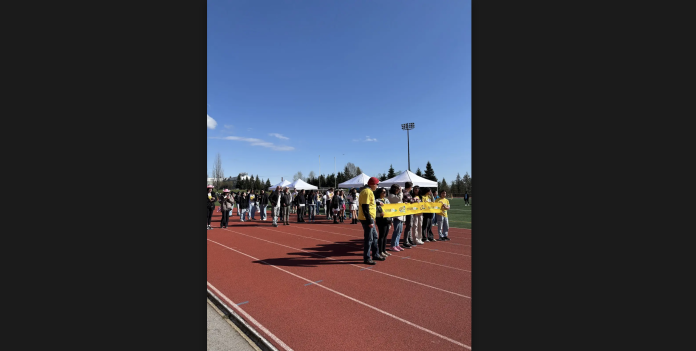
Students, cancer survivors, and other participants stand together on the track of the Terry Fox Field. Some of them are wearing yellow shirts for the event.
PHOTO: Courtesy of Sophie Manio

By: Noeka Nimmervoll, Staff Writer

On March 21, the SFU Canadian Cancer Society (SFUCCS) hosted their annual Relay for Life fundraising event for the Canadian Cancer Society. Relay for Life is a Canada-wide student-led initiative organized at schools across the country. Co-chairs of SFUCCS Rhea Chand, Sukhman Ghuman, and Teona Seabrook organized the event with help from the Simon Fraser Student Society, the Canadian Cancer Society, and several SFU clubs. 

Before the event, participants could register online as individuals or teams and set a fundraising goal to meet, with a recommended goal of $100. Their fundraising progress is tracked on the Online Fundraising Leaderboard, with top fundraising teams and individuals eligible for various prizes, such as tickets to the Capilano Suspension Bridge. On the day of the event, participants walked laps around convocation mall, among other events and entertainment. The Peak spoke with the co-chairs of SFUCCS to learn more.

The event has a community-building aspect that aims to uplift those impacted by cancer. “It’s a great way to show that you’re not alone in any struggle and that we should normalize being vulnerable with each other, because you never know the amount of community that you really have,” Chand expressed. 

Seabrook added, “Throughout someone’s whole life in Canada, on average, one in two people will receive a cancer diagnosis and one in four people is going to die from cancer — usually in old age, but sometimes younger. So almost everyone, if not everyone, knows someone who’s experienced cancer or has gone through a cancer scare, if not, has gone through it themselves.”

They acknowledge the loss that comes with cancer, but also celebrate the victories.

I almost think of Relay for Life like a celebration of life. We’re honouring cancer survivors, people who are currently going through treatment or have gone through treatment in the past, or even the loved ones of those survivors.”

— Sukhman Ghuman, co-chair of SFU Canadian Cancer Society

“So it’s almost like a celebration towards everyone.” 

The group exceeded their $20,000 fundraising goal before the event date. “Reaching $23,000 would mean that our all-time fundraising total at SFU could reach $200,000,” shared Seabrook. 

Proceeds from this year’s Relay for Life will fund cancer research by the Canadian Cancer Society and go towards services such as rides for patients undergoing treatment. “There’s also cancer lodges, [and] there’s a support helpline that gets funded as well,” Ghuman mentioned. The Canadian Cancer Society’s multi-pronged research ranges from highly tailored research in treatment, such as precision medicine, to overview-focused research in cancer prevention, such as population health research. The former evaluates the effects of certain genes on the effectiveness of cancer medicine, and the latter evaluates environmental, social, activity, and diet factors that impact long-term health.

Beyond their annual Relay for Life, the SFUCCS hosts other fundraising events throughout the year, whether it’s selling Krispy Kreme doughnuts or hosting a Barbie movie night with the SFU Women’s Centre during Breast Cancer Awareness Month

The club is also devoted to informing the community. “We have a podcast called Daffodil Diaries that highlights stories about cancer survivors and their journeys. We’re trying to foster a community not only in person, using Relay for Life and our fundraisers — we’re also trying to build an online community and provide that support in any shape or form and putting our name out there that, hey, we do exist,” said Chand. 

You can learn more about the SFUCCS @sfuccs on Instagram or relayforlife.ca/sfu.

Once a tool of empire, cricket has been reclaimed for good

0
a photo of Canada’s cricket team celebrating in a group hug.
PHOTO: Courtesy of Cricket Canada

By: Niveja Assalaarachchi, News Writer

I know what you’re thinking: “Don’t you gotta know what a crumpet is to understand cricket?” For most people at SFU, and in Canada, cricket is seen as an odd sport, often associated with British colonialism. 

Cricket is the world’s second-largest sport, with a majority of the fanbase being situated in South Asia but also in places like the Caribbean, Australia, South Africa, and Aotearoa (colonially known as New Zealand). The story of the global phenomenon known as cricket and its development here in Canada and SFU is a tale of changing trends. It shows how different countries and populations can interpret colonial concepts differently. 

Cricket is a complicated sport and one that many Canadians are not familiar with. Though the game still suffers from the legacies of colonialism, through community, it has grown from a sport that was meant to highlight racial superiority into one that can unite people across different countries and continents. Canada’s growing interest in the sport is proof of how widespread it can be. 

Cricket is said to have originated in the 17th century in England. Britain expanded the game throughout its colonial empire, including here in Canada. Its complicated rules (known as laws in cricket) sought to match the rigid social hierarchy seen in Victorian Britain. In the context of the sport, the best way this could possibly be seen is the fact the umpires decide who gets out and have deferential authority over decisions. Critiquing an umpire’s decision is seen as a major taboo. The game was thus thrust on the colonized as a way to supposedly “civilize” them through entrenching English values. In many ways, cricket was a symbol of white superiority and English cultural imposition.

Ironically, it was also seen as “too complicated” for any non-English person to comprehend so there was a dichotomy in the way the game could be interpreted. In many of Britain’s colonies, this crude imposition was turned around on the British. Many rulers in the Indian subcontinent embraced the game as a way to get closer to the British and that led to mass adoption of the game. Why wouldn’t they? Those across the colonies saw it as a way to beat the British at their own game despite suffering colonial abuse. Today, this has led to the game’s most prolific run scorer and wicket taker to not be from England, but instead from India and Sri Lanka, respectively. Due to this influence, cricket is no longer the game of the British. Ashis Nandy, who’s an Indian psychologist, once said, “Cricket is an Indian game accidentally invented by the English.” 

In Canada, the story of cricket and why it did not get popular is often explained away by the weather and proximity to the United States. The truth is more complicated. Vancouver in particular has had a rich cricketing history. Brockton Oval, located in Stanley Park, which has continuously been used for cricket since the 1890s, was described by the Australian cricketer Don Bradman (often described as the greatest batsman of all time) as “the prettiest ground in the world.” Even though the game began to fall off in the 1950s, universities like UBC had a varsity cricket team into the ’70s. SFU’s own cricket club has been active since nearly the start of the university. In the 1980s and 1990s, SFU cricket club competed in the British Columbia Mainland Cricket League, the province’s premier cricket tournament with two teams. Today, SFU still has a cricket club that hosts weekly meetings and runs cricket tournaments. 

With Canada opening up immigration in the latter half of the 20th century, many people from cricket’s major playing regions came to this country and started playing the sport as a way to connect to home

This has led on the national stage to Canada qualifying for various international tournaments and performed above expectations. In 2003, the Canadians caused an upset when they defeated Bangladesh — a more established side, by 60 runs. In the recently concluded T20 World Cup, Canadian Yuvaraj Samra managed to score a 110 runs against Aotearoa in a thrilling match.

All of this to say, humans have the ability to alter the image of different sports if they want to. Cricket’s colonial past is undoubtedly harmful, but people have subverted the objective of the colonial machine.

So go out, go pick up a cricket bat or head down to SFU’s cricket club to learn the sport because it is fun and entertaining!

Community members concerned about Conservative event at SFU

0
Protestors holding up signs
SCREENSHOT: Courtesy of Rebel News / YouTube

By: Mason Mattu, Section Editor

Content warning: mentions of residential school denialism, transphobia, child sexual abuse, pedophilia, and racism. 

Correction notice: A previous version of this article incorrectly referred to an attendee of the event as a protester. 

On March 6, Conservative member of parliament Jamil Jivani came to SFU Burnaby as part of his Restore the North tour. The tour is held across Canadian university campuses to discuss how attendees can help “restore the promise of Canada” with a conservative approach. Held in the Student Union Building (SUB), the SFU Conservative Club hosted Jivani and other prominent Conservative voices, including controversial member of parliament Aaron Gunn and BC Conservative Party leadership candidates Harman Banghu, Darrell Jones, and Kerry Lynne-Findlay.

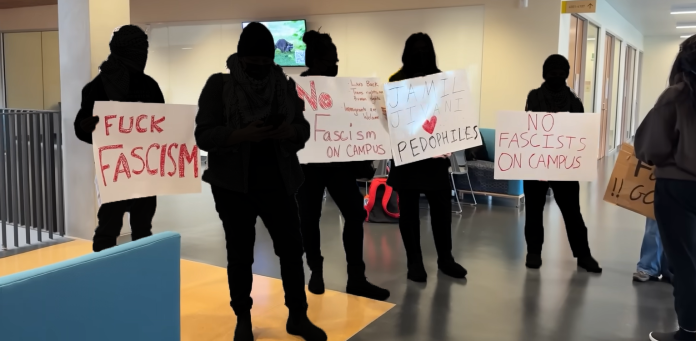
The Simon Fraser Student Society (SFSS) allowed the room to be booked by the campus Conservative Club, despite criticism from those in attendance. Protesters filled the space outside of the room in the SUB, holding signs that displayed slogans such as “Fuck fascism.”

Jivani is against diversity, equity, and inclusion policies and gender-affirming care for youth. Jivani has also been accused of anti-Blackness and racism, whereas Gunn has spread residential school denialism and been accused of using “transphobic, racist, and sexist rhetoric” by the New Democratic Party (NDP).  

“I don’t agree with the Conservative Party, but I’m not opposed to Conservative Party members speaking on campus,” one SFU student organizer, named Dina, told The Peak. “But I do have an issue with these individuals specifically,”

 “I think the viewpoint they’re pushing is fundamentally anti-democratic. It’s dangerous to marginalized communities.”

— Dina, SFU student organizer

She said that at the beginning of the event, protesters chanted, “Trans rights are human rights,” and claimed Jivani responded, “No.” The Peak could not independently verify this claim.

Jivani allegedly engaged in transphobic rhetoric against a transgender woman in the audience. We spoke to this audience member, Cecily, after the event took place. The Peak was not present at the event, and Cecily’s name has been changed to protect her identity.  

In her recollection of the events, Cecily said she asked Jivani the following question: “How is the Conservative Party’s platform [against child sexual abuse] consistent with your choice to meet with US President Donald Trump last month, who was heavily implicated in crimes of child sex trafficking and child rape?” Cecily added that she experienced child sexual abuse. Jivani visited Washington, DC, last month and met with Trump and other senior White House officials in an unsanctioned diplomatic mission in light of Canada’s trade war with the US. During that visit, Jivani accused Canada of having an anti-US “hissy fit.”Cecily claims that, in his response, Jivani said he was “not concerned about what’s happening in other countries.” 

When an attendee asked Jivani to apologize to Cecily later on in the event, Jivani allegedly “became irate,” pointed to her, and asked everyone to “take a look at this belligerent man.” 

Cecily told The Peak she reached out to the SFSS for support on this matter. She said she received a short update over a week after the fact, noting, “an investigation is currently underway.” 

“We had some dialogue with executives from the SFSS directly who told us that they disagreed with the views [of the speakers]. A couple of them made a speech at the beginning of the event about how they support marginalized communities,” Dina said. 

“There has to be a point where, in order to protect freedom and democracy, we have to draw a line somewhere.” Dina questioned the decision to approve the event, noting that the SFSS controls the SUB and the programming within it.

According to SFSS event space booking guidelines, the Society reserves the right to deny the booking of rooms for activities “contrary to SFSS policy, values, and guidelines.” In the SFSS’ issues policies, transphobia is listed as something which the Society aims to dismantle, alongside other forms of systemic oppression.

The Peak reached out to the SFSS for comment, but did not receive a response by the publication deadline. 

Banghu, a speaker at the event whose campaign was still active at the time, wrote this statement on X: “Leftist activists tried to shut us down. They called me and everyone in the room fascists, racists, and bigots. The truth is we were talking about the collapse of our economy, the future of Canada, and whether families will be able to build a life in this country.”

Federal NDP leadership candidate Tanille Johnston wrote in a statement to The Peak,

“Understandably, students are frustrated seeing Conservative politicians come to campus to recruit young organizers while pushing policies that don’t actually address the challenges young people are facing.”

— Tanille Johnston, NDP leadership candidate

Johnston ran against Gunn in the last federal election. “It’s especially troubling when those same politicians are the ones who have downplayed the undeniable harms from the residential school system.

“Universities should be places for engaging debate, but students have every right to call out politicians who spread racist narratives that strive to erase the painful truth of our shared history,” Johnston added. 

“This [event] was clearly not vetted. It began with a member of parliament implying that a protected class did not deserve human rights. The SFSS made the decision to allow this event to happen. I believe that they cannot claim neutrality in this issue — they need to either stand against dehumanizing language or for it,” Cecily said.  

The Peak reached out to the SFU Conservative Club, Jivani, Gunn, Banghu, and Jones for a comment on the event. We did not receive a response before the publication deadline. 

Cecily’s perspective was corroborated by another protester in attendance, alongside a recap video of the event posted to TikTok by the user @franann61. 


Family makes food special

0
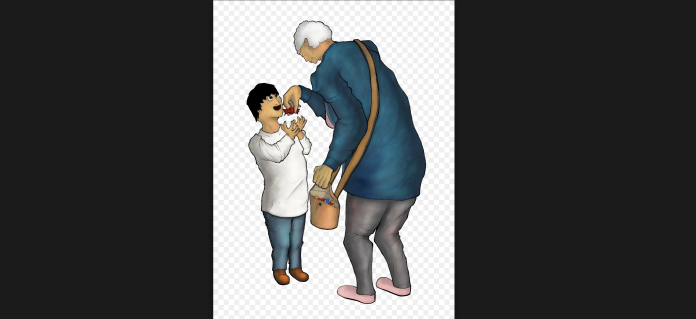
a grandmother handing her grandson a piece of candy. The kid is happy.
ILLUSTRATION: Yan Ting Leung / The Peak

By: Niveja Assalaarachchi, News Writer

When I was a kid, my grandmother would always try to sneak a piece of candy into my pocket, much to my parents’ dismay. Maybe for many people this story might sound trivial, maybe amusing. For me, it meant a great deal. The loving and thoughtful way my grandmother handed me those candies etched itself onto my memory of my childhood.

The bonds we have with the people we cherish can define how we see food. This is because food can connect people together, both to their past and to their future with new memories of bonding. Many people enjoy bonfires with loved ones. Maybe just a meal around a table. The food isn’t the centre of what makes that experience special; the effort and ambiance is what defines it.

When I still lived in Sri Lanka, my grandmother would make a nearly 30 minute daily trek to our house to make our family meals. Her menu, included rice, parippu, beans, chicken and more, wasn’t just delicious, but filled with so much love. If you were wondering if my grandmother’s habit of sneaking food only applied to candies, you would be dead wrong! She loved to sneak an extra egg or two into a meal. I think her dedication to feeding us speaks to a larger story. Food can be one element in how people show love, how people convey effort, and how people ultimately form bonds.

According to a study published in the National Library of Medicine, shared cooking and dining with family “positively influence family well-being.” This is through “strengthening emotional bonds, fostering communication and improving family cohesion.” This illustrates how critical the role your family or even the people you love can have on your relationship to food. Beyond the cuisine, it’s the routines you create through the process of making meals for your loved ones. 

This is something I think I can see with my own family. For example, Easter season has always been special for me since I was little. This is because, every year without fail, my father would bring home a chocolate Easter bunny home. This tradition is something that really defines my childhood.

In my native language of Sinhala, there is a saying: one raises a child like a flower. One has to constantly water, and protect their flower from the elements for a chance of survival and to nourish it. Food is a major aspect of this philosophy. Proper love, care, and attention to detail are essential to nourishment and survival. 

Perhaps many of us take for granted the personal connections that we have with our family or other people that make us feel safe through food.

I am thankful for all the memories I’ve had with my family around plates of food.

I think for a lot of people, these types of conversations shape who they become. For me, I can personally attribute a lot of those conversations to my parents and especially my grandmother. Though she isn’t here anymore, her endless dedication towards her family is something that has shaped me. I can only hope she attains Nibbana.


Mayorship is a responsibility

0
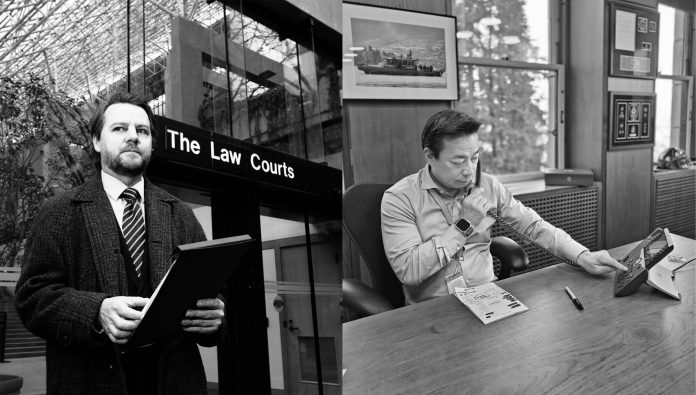
a black and white composite of two photos. One of Ken Sim, the mayor of Vancouver, making a phone call while sitting at a desk. The other is of city councillor Sean Orr, standing in front of the entrance to The Law Court, with a file in his hands.
PHOTOS: Courtesy of @seanorrofficial, @kensimcity / Instagram

By: Jonah Lazar, Staff Writer

Following the public outcry over the lack of transparency in the budget reshufflingthat will see about 400 Vancouverites lose their jobs in favour of lowering property taxes for the wealthymayor of Vancouver Ken Sim is once again in hot water. Vancouver city councillor, Sean Orr, has formally filed a defamation suit against Sim for spreading baseless accusations that he handed out “illegal drugs” in the streets of Vancouver. 

Sim made these comments at a Chinese-language media briefing in early February, when he claimed that Orr had been handing out “illegal drugs” in the streets of Vancouver on Christmas Day. A Better City, or ABC, councillor Lenny Zhou made similar comments weeks later on Chinese social media platform WeChat. The ABC party currently holds a majority in Vancouver’s city council, and is the party of mayor Sim. Orr, who has become one of the most outspoken critics of Sim and ABC, vehemently denied these accusations, labelling them “ridiculous” and “defamatory.” Orr had also pointed out that he wasn’t in Vancouver at the time. 

Orr’s disgust with these comments is well founded. A wholly fabricated public statement such as this coming from the mayor should not be brushed aside; it is an accusation of a very serious crime. This attack has significant ramifications for the public perception of the councillor. This fearmongering is a strategy straight out of the playbook of the MAGA movement south of the border, and is done to gain popular support by portraying Orr as a dangerous individual. Sim’s fabrications and Zhou’s subsequent translation to Mandarin make it seem as though they are deliberately misleading the Chinese Canadian voter base in Vancouver as we approach the October municipal election.

This latest stunt is yet another slap in the face in what is becoming a pattern of apathetic, selfish behaviour from Vancouver’s mayor. In his tumultuous three years at the helm, Sim’s behaviour has been a routine point of contention. Some noteworthy scandals to date include Sim missing over a third of council votes in his first year in office, secretly converting a city hall boardroom into a personal gym, and several code of conduct violations for repeated clashes with councillors and city officials. His declaration of October 3 as Chip Wilson Day celebrates the racist and fatphobic founder of Lululemon and is but a footnote in his long list of self-serving actions. 

Being the mayor of Vancouver is a privilege which necessitates a certain amount of professionalism in conduct, and Sim has repeatedly floundered under these expectations.

His continual lapses in judgment do nothing more to prove that he is staunchly out of touch with many Vancouverites. As we are approaching the municipal elections in October, it is crucial that citizens of Vancouver bear in mind the inappropriate actions of the incumbent mayor when casting their ballots. 


VIMFF: Extreme Ascents focuses in on perils of Everest

0
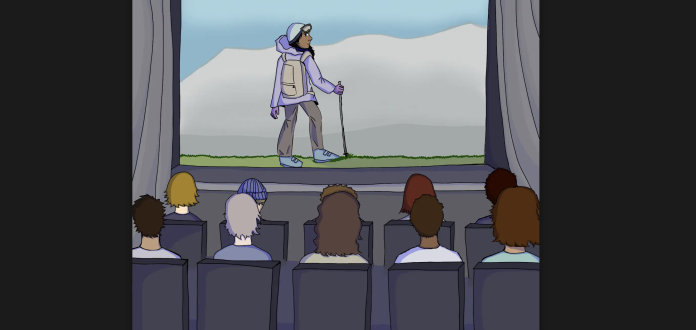
An illustration of a mountaineer climbing a snowy mountain shown on the big screen set in a theatre
ILLUSTRATION: Stella Laurino / The Peak

By: Jonah Lazar, Staff Writer

Content warning: mentions of death.

The Vancouver International Mountain Film Festival, or the VIMFF, has returned to the city for their spring festivities prior to taking the celebration on the road across Canada and the US. The festival spanned two weeks across a host of different cinemas, with each night focusing on different subject matters related to mountain sports. 

I attended the Extreme Ascents showing, expecting an evening of lighthearted, picturesque short films about mountain climbing, as this had been the motif when I attended last October. The North American premiere of the short film K2 Mon Amour, which detailed a French couple’s attempt to paraglide off the second-highest peak on Earth, fulfilled that expectation. Anna, a short memoir about mountaineer Anna Pfaff’s battle with frostbite on the peaks of Alaska, was also screened. However, this night took a darker turn due to the keynote presentation by alpinist and filmmaker Elia Saikaly.

Saikaly has had a 20-year career climbing and filming in the Himalayas — a career which has included five ascents of Everest. While this extensive career in the mountain climbing world has surely provided him with a host of positive, uplifting stories from the mountains, the focus of this presentation was not to sugarcoat the world’s highest points. In this career climbing Everest, Saikaly has witnessed the death of countless Sherpas (an ethnic group native to the Himalayas who have long worked as guides for Himalayan expeditions) and climbers. Deaths, in his mind, which often could have been preventable. 

Everest’s overcrowding crisis often captures international media attention, with sensationalized photos of lineups of climbers snaking their way up towards the summit, and climbers dying of hypothermia as others eager to reach the top pass them by. Saikaly argued that this crisis is far more nuanced than a simple case of traffic. Instead, Saikaly alluded to the blood being on the Nepalese government’s hands, as they have been giving inexperienced tour guides permission to lead expeditions up Everest — putting themselves and their clients in significant danger. “Traffic revealed the fault lines in the leadership,” he stated, before pointing to a photo of his friend Nihal Bagwan, who died during his descent after summiting Everest, and whose body Saikaly recovered later. 

Saikaly continued along this vein of death to explain that death is an integral part of the Everest experience, in that it creates an aura of danger and uncertainty around the mountain that helps maintain its notoriety among mountaineers. Through examples of bodies being filmed for internet fame by climbers and expedition leaders laughing at the deaths of their coworkers, he showed that a harrowing desensitization to death has plagued the Everest community. 

This presentation felt like a breath of fresh air for having not brushed aside death in the mountains as an inescapable fate for those who don’t make it back to base camp.

The mountaineering community, at times, seems to pride itself on the risks associated, and Saikaly’s insight and humanity provided a much-needed critical analysis as to why these deaths are so often overlooked. 

To conclude his presentation, Saikaly reflected on the need for accountability when deaths occur on Everest, and the need for consequences for those who play a part in causing or allowing for the deaths of climbers on the world’s tallest mountain.

Home, belonging, and marginalization at Dr. Umezurike’s book launch

0
A photo of Dr. Uchechukwu Umezurike
PHOTO: Courtesy of Dr. Uchechukwu Peter Umezurike

By: Maya Barillas Mohan, Staff Writer

Dr. Uchechukwu Umezurike, an English professor from the University of Calgary, came to SFU to share his new book. The SFU English department and the Institute for African and Black Diaspora Research and Engagement organized the launch. In the three-hour event, Umezurike celebrated his newly released book Masculinities in Nigerian Fiction: Receptivity and Gender. The Peak spoke with Umezurike to learn more. 

“I feel deeply elated by the reception and support my book has received so far.” Umezurike explained that his positionality as an African immigrant makes him “keenly aware of how diaspora shapes [his] sense of place, belonging, and relationality in this country.” As a part of the English faculty at UCalgary, his research that “encompasses the literature of Africa and the African Diaspora,” connected to his current project. The book addresses “home and belonging,” and how African Canadian writers can challenge a rhetoric which “deepens divisions and polarizes communities.”  

Masculinities in Nigerian Fiction: Receptivity and Gender analyzes some of Nigeria’s most well-known novels to understand their relationships of ethics and masculinity. “The book restates that what connects us most deeply is not social constructs but our common humanity,” Umezurike said. The book analyzes four novels that “portray characters who remain receptive to others’ pains, even as they challenge dominant norms and ideals of gender and sexuality,” and those “who identify with those living on the margins of society.” Through the examination of the “abused, abject, and outcast,” from these books, masculine identity can be redefined. Masculinities in Nigerian Fiction does “not engage with Canadian notions of gender and sexuality.

“We must learn to recognize and identify with the pain of others— regardless of gender or sexual identity.”

Dr. Uchechukwu Umezurike

As Masculinities in Nigerian Fiction “asks that we allow a sense of shared vulnerability to shape how we relate to one another,” Umezurike mused “one can extend this to the Canadian or global context.” In Calgary, he cherished “the warm and thoughtful conversations had with the graduate students at SFU.” This dialogue reminded Umezurike that we must “keep valuing and affirming the study of literature and the humanities.” 

When asked if literature complicates or simplifies attempts to understand multidimensional ideas which branch outside of linear experiences, Umezurike refuted the idea that literature “reveals how complex and layered these experiences are.” Literature “resists attempts to flatten our world into a formula,” and “asks us to think more deeply and compassionately about the many contours of human and nonhuman experiences.” 

Where Umezurike suggested “reality cannot be reduced to binary, simple categories, or neat conclusions,” we can read Masculinities in Nigerian Fiction to understand how “kinship can transcend oppressive social norms.”

Monday Music: For the upcoming Sinhala and Tamil New Year

0
PHOTO: Amila Tennakoon / Wikimedia Commons

By: Niveja Assalaarachchi, News Writer

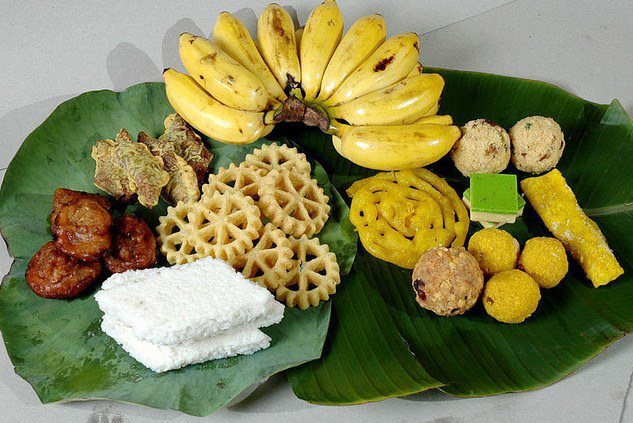
The start of the year is an important time for most, often marked by reflecting on the past year and making new promises. However, for many cultures, January 1 is not traditionally seen as the start of the new year. Sinhalese people of Sri Lanka, the traditional new year (known as Aluth Awurudda/අලුත් අවුරුද්ද) falls on April 13 or 14. This timeframe commemorates the transition from Meena Rashiya (Pisces) to Mesha Rashiya (Aries). In Sri Lanka, the new year also falls in line with the new year for the Tamil people on the island and other new year celebrations in the region, such as Bengala new year, Songkran in Thailand, and Thingyan in Myanmar. As someone from Sri Lanka, I have chosen three songs that are traditionally heard during the new year season!

Avilla Avilla” (ඇවිල්ලා ඇවිල්ලා) by Mohideen Baig and Latha Walpola

This song discusses the arrival of the Sinhala new year and all the joys that come along with it! It includes references to food, such as kiri bath, kokis, and mung kawum, which are typically associated with new year festivities. Baig and Walpola, both venerated legends of the Sinhala music industry, help guide the listener through what the holiday means and the traditions which make it so important. When I listen to this song, it reminds me of all the things that make the new year special. The traditional beats and references help tie people to culture and show how timeless the song is. When you listen to it, you feel a certain sense of joy that this beautiful time of year has come again and you get to rejoice in its tradition.

Koho Mal Waram (කොහෝ මල් වාරම්) by H.R. Jothipala and Sujatha Aththanayaka 

This is a love song! The song tells a story about life in a village during the new year season. During the new year, many Sri Lankan people who have moved to the city often commute back to their villages to celebrate the festival with family and friends. So, this song of old reflects the current realities of the holiday. When I hear this song, I often think back to the beautiful nature of Sri Lanka and especially in the rural areas that the song describes. The upbeat nature of the song is not only something that can cheer me up at any time but it also makes me want to listen to the song outside of the Awurudu season. 

Erabadu Mal Pipila” (එරබදු මල් පිපිලා) by Rajiv Sebastian and Nelu AdhikariIn Sri Lanka, one of the biggest signs that the new year is coming is the blooming of the Erabadu flower. The bright red flower is the focal point of this song and is referenced several times as a part of what makes the Awurudu season so memorable. The beat features the sounds of the Raban, a traditional Sinhala drum which is often played during this time of year. For me, this song reminds me a lot of the symbolism of the holiday and what makes it special for not only my family, but many millions around the world.

Cafés to study at this finals season

0
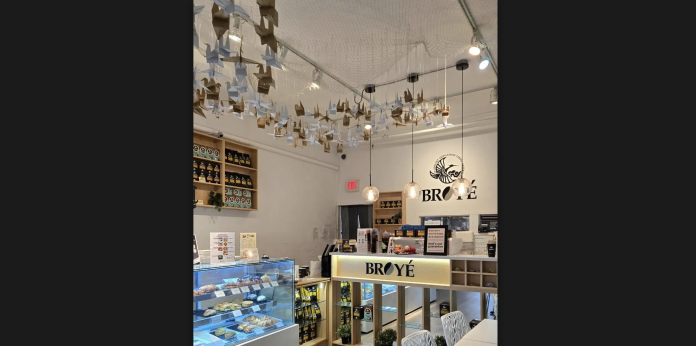
An interior of Café Broyé
PHOTO: Courtesy of @nelsonsoh_ / Instagram

By: Maya Barillas Mohan, Staff Writer

Passion8 

Lougheed branch: Monday–Sunday, 1:00–10:30 p.m.

A few minutes’ walk from Lougheed SkyTrain station

Cambie branch: Monday–Thursday/Sunday, 1:00–11:00 p.m.; Friday–Saturday, 1:00 p.m.–12:00 midnight

Take either the 099 B-Line or the 009 bus (to UBC) via Commercial-Broadway SkyTrain station

If you want to satisfy your sweet tooth and get some focused studying done, Passion8 Dessert Café is a good option. Standout desserts include their croffles, bingsu, lattes, and macarons. The Lougheed branch is open until 10:30 p.m. and the Cambie location until 11:00 p.m. (or 12:00 midnight on Friday and Saturday). It’s a good spot to work late into the night; when I go, a decadent slice of cake or a latte inspired by various twists from around the globe propels me to type faster under ambient lighting. The menu is extensive, so it could be worth going with a friend to try a little bit of everything. 


Eggbomb+

Lougheed: Monday–Sunday: 8:00–10:00 p.m.

A few minutes’ walk from Lougheed SkyTrain station. 

A local personal favourite of the author: this café is open until 10:00 p.m. and decorated with modern neon lighting engraved on the walls. While it is a busy brunch spot by day, it also has an extensive café and dinner menu. Customizations like tapioca pearls or coconut jelly are available for each drink (try a cold brew with pearls!). The space is inviting to spread out your papers and laptop, and you will even have room for a tiramisu croffle or smoked salmon salad on the tabletop. A highlight of this café is its attentive servers. When studying feels bleak, sociality brings you back to a community that cares. 


Broyé

Fraser St. branch: Monday–Friday, 9:00 a.m.–9:00 p.m., Saturday–Sunday: 9:00 a.m.10:00 p.m.

Accessible via 049 bus (from Metrotown to UBC and vice versa)

Hornby St. branch: Monday–Friday, 8:30 a.m.–5:00 p.m.

A few minutes’ walk from Granville SkyTrain station

A Japanese Vietnamese fusion café is also the first place I go for a creative ube coffee. Their website says that “coffee is not complete without good sweets,” so they have a plethora of Japanese desserts. Many of them are Instagram-ready and so is the café space itself. The Fraser Street branch has a hand-painted mural on one side, and the chairs themselves are comfortable enough for entire study marathons. You can try a variety of fragrant coffee or tea drinks.  


Cup and Bun

Hastings St.: Monday–Sunday: 8:00 a.m.–7:00 p.m.

Accessible via the R5 from SFU as well as bus 130 from Brentwood SkyTrain station

Situated on Hastings on the R5 route, this family-owned café prioritizes fresh ingredients and bakes everything on-site. Their commitment to the café as “family” is clear; they credit their team by name on their website, and when I visited, the service felt like my own mom bringing me soup and sandwiches as I prepared for a midterm. Inside, a big mirror makes the cozy space feel spacious and bright, and the live plants remind me that even though my computer is dying, life persists in full colour. Their daily specials change, but the menu has something to suit nearly every preference.

The PNE funhouse is where the government keeps the fucked-up parallel versions of everyone during its off-season

0
PHOTOS: Adil (mirrors), Krakenimages.com (man) / Adobe Stock

By: Heidi Kwok, Staff Writer

I’m driving past the PNE, as I do each morning on my way to work, when I catch a fragrant aroma gently creeping in through my driver-side window. My head swivels towards the scent as if under hypnosis. My nose sniffs the air aggressively, trying to pinpoint the source of the smell. Grilled hot dogs topped with cheddar, smoked paprika . . . am I getting a hint of green jalapeños?

My boss is expecting me in half an hour to discuss a discrepancy in the pension fund, but it can wait — those hot dogs aren’t going to eat themselves. I haven’t had a hot dog that smelled like this since before my wedding! Goddamn you, Sheela, for never letting me eat real food. I brake in the middle of a four-way intersection, shift the gear into park, and quickly get out to track down my hot dogs. I thought this smell only existed during the summer! Ignoring the cacophony of angry honks around me, I let my nose lead the way. I am a person on a mission and no one is going to stop me.

Before I know it, I’m at the entrance of the PNE. It’s off-season. Good. That means no witnesses. I try my hand at parkour (which is just groaning as I throw myself to the other side of the gate) and painfully lunge over the admission turnstiles, accidentally waking the snoozing security guard in the process. Oops.

“What the !@#$%*? Hey!! You can’t be here! The fair’s not open ’till August,” Mr. Grumpypants says. 

Too late — the crime is in motion. I can imagine my wife’s seething expression when she has to come bail me out of jail again for trespassing on private property. Oh lord, will the consequences be SO WORTH IT. 

Like a bloodhound, I trace the scent into a dilapidated building on the outskirts of the fair. Pushing past the doors, I almost turn back and abandon my quest for hot dogs at the sight before me. A dark, eerie corridor with water-stained ceilings and yellow walls covered in overgrown vines; broken glass was strewn across the marble floor. Before I thought of calling the casting director of Pawn Stars to take a look at this relic — I then spotted the tell-tale splotches of ketchup splattered in the far corner — oh, how utterly familiar. I must be getting close to my treasure. 

I once again put my faith in my nose and venture deeper into the corridor. Suddenly, a flash of pink in my peripheral vision catches me off guard. Wait — there it is again! Was that the hot dog vendor?

“Show yourself,” I yell, trying to sound intimidating.

Hearing no reply, I continue to yell into plain air, waving a $5 bill in one hand.

“Please! I just want one of your fine hot dogs! I’ll have all the condiments and no pickles!” I fall to my knees, begging the gods for just one shot. One opportunity. 

In my hot dog-intoxicated trance, I accidentally crash into a crowd of strangers. Apologizing profusely, I pick myself off the ground, only to come face to face with . . . myselves? Hang on. There are three of them. Except, they can’t be me. One has an apple-sized head that sits on top of a comically inflated beer belly combined with legs as long as a giraffe’s. I quit drinking beer a week ago. The “me” in the middle has anime eyes and an enlarged head. I am proud of my stature, but this abomination is compressed, barely reaching 3 ft high. The remaining doppelgänger is missing its torso. In lieu of it, the creature has two heads morphed together where my moustache is supposed to be. A trio of legs juts out from both sides as if it is a spider. I am very confident that I only have two legs. 

I scream in visceral terror while my doppelgängers lash out at me.

Running straight ahead, I stumble into a disorienting maze of transparent panels. My doppelgängers follow no matter how fast I sprint. They catch up to me every so often, sucker-punching me with the force of a concrete floor.

Light! I finally escape into the hot sun of the August afternoon. Dropping to the floor in exhaustion, the words on the building catch my eye: “HOUSE OF MIRRORS.” Uh-uh . . . there ain’t no way. That was a fucking house of horror — a monster house, the portal to hell — I had found the derelict, top-secret government site where they keep the failed clones. As that blood-curdling realization dawned on me, I saw my beautiful Toyota Corolla being towed from the middle of the intersection. “NOOOOOO,” I yelled.