Home Blog Page 511

Columbia StrEAT Festival’s top 10 must-visit food trucks

0
Via Instagram courtesy of Rice Burger

By: Marco Ovies, Peak Associate

The Columbia StrEAT Festival is happening again on July 27 from 4–10 p.m. It’s the largest one-day food truck festival on the continent featuring over 100 different food trucks. In addition to that, there will be numerous beer gardens, swing-dancing lessons, a local farmers’ market, the fashion freeway, and an artisan market. With all those options, you want to make sure you hit up all the best spots. So stress not and keep reading as I map out my top ten most anticipated food trucks visiting the festival this year.
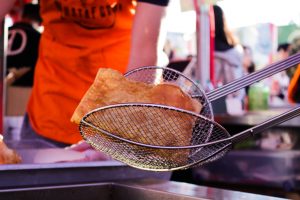
Courtesy of Whatafood
  1. WhataFood

If you’re looking for something different than your typical street food, get prepared for the WhataFood food truck. The menu offers a variety of Brazilian savoury and sweet pastries filled with all kinds of delicious goodies. The truck specializes in pastéis, large rectangular pastries that are among the best known Brazilian street foods. They offer lots of fillings, like beef, calabrese (smoked sausages and sauteéed onions), cheese, and my personal favourite — the S’more Pastel. If you’re looking for a vegan option, be sure to try the sun-dried tomatoes, arugula, and tofu pastéis.

Courtesy of Mr Arancino
  1. Mr. Arancino

This truck takes the traditional Sicilian recipe, risotto, and turns it into a portable delight in the form of a ball. Trust me when I say you won’t be able to get enough of this deliciously gooey treat. The idea had come to Mr. Arancino while studying abroad. He took a trip to Sicily, spent all his money on cooking classes, and returned to Vancouver with this delicacy. Plant-eaters will delight when they see that over half the menu is vegetarian with options like creamy mushroom-filled arancini. But if you’re an avid meat eater, don’t fret: there are still plenty of meatatarian options like the Bacon Pesto Arancini and Pizza Arancini.

Photo via Facebook courtesy of JAPADOG
  1. JAPADOG

What Vancouver street festival would be complete without the JAPADOG stand? This classic food truck will be serving up Lower Mainland classics such as their Terimayo dog with mayo, seaweed, and teriyaki sauce. However, if you decide to skip this truck at the festival, you can always go downtown and try one of their many stands there.

Courtesy of Mario’s Kitchen
  1. Ice Cream by Mario’s Kitchen

This ice cream truck isn’t the one you remember visiting your neighbourhood as a kid. Ice Cream by Mario’s Kitchen are serving up unique gourmet flavors that will satisfy any sweet tooth. Alongside flavors like Raspberry Cheesecake, Rootbeer, and Sea Salt Caramel, you can enjoy classic floats as well. It is the perfect treat to end your day of good eats. 

Via Facebook courtesy of REEL Mac and Cheese
  1. REEL Mac and Cheese

I mean, it’s mac and cheese, need I say more? This food truck is offering up the classic childhood favourite with a fun twist. Try these uniquely named flavors like The Godzilla (topped with nori, teriyaki sauce, and Japanese mayo), Snoop Dogg (beef hot dog and panko breadcrumb topping), and The Jurassic Pork (pulled pork and crispy onions). This truck is the perfect place to visit to open up your palette for the Macaroni and Cheese Festival hitting Vancouver from August 9 to 11.

Photo via Populist
  1. Taters – The Baked Potato Co.

This truck takes the world’s favourite side dish and turns it into something beautiful. Taters gives people the choice of trying one of their premade creations like the Sea Ya Later Tater with lobster, crab, and cod, or the option to create your own with their list of 15 toppings.

Photo via Facebook courtesy of Dogs n Roses.
  1. Dogs n Roses

Japadog is going to have some hot hot dog competition at this festival with Dogs n Roses. This truck’s gourmet spins on your traditional barbecue favourite will have you drooling. I 100% recommend trying out the Salmon Belly smokie or their signature bacon onion rings. Their menu might be small, but each item is packed full of flavour.

Courtesy of Bread and Cheese
  1. Bread and Cheese

It’s right there in the name, and this truck serves up some of the best sandwiches ever. Bread and Cheese is a chef-run gourmet sandwich shop that offers sandwich combinations that will leave you drooling. You can’t go wrong trying their Cubano with pulled pork, Dijon mustard, Swiss cheese, bacon, and pickles. The amount of quality of each ingredient and each handcrafted sandwich is what lands this truck in the number-three spot.
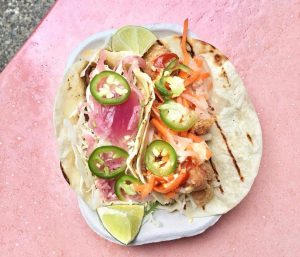
Via Facebook courtesy of Tacofino Vancouver
  1. Tacofino Pink Truck

Not only is Tacofino’s Pink Truck incredibly hard to miss, but it also has some of the best tacos in Vancouver. You can stick with classics such as fish or chicken, or get a bit more adventurous with some of their more interesting fillings such as the Bahn Tofu taco. While these tacos are insanely good, they only hit number two because tacos are super common at any food truck event.

Via Instagram courtesy of Rice Burger
  1. Rice Burger

Trucks like these are what make the food truck business thrive. This fusion of American and Japanese cuisine is, in my opinion, not only the most original idea at the festival, but also the most delicious. These burgers are made with hand pressed rice buns instead of regular bread, and they are not your classic cheeseburger either. Each sandwich has an Asian influence, such as their Korean Spicy Pork or Chicken Katsu. If you’re feeling more adventurous, you can grab the Farmhouse Burger, which is chicken, beef, and pork all crammed together. The pure originality and great taste of these rice burgers is why I give it the number one spot on this list. Make sure to go out of your way to try these once-in-a-lifetime burgers.

What Grinds Our Gears: Aesthetically-pleasing seating that further wrecks my spine

0
This is not the chair I choose to die on. Illustration: Marissa Ouyang/The Peak

By: Gabrielle McLaren, Editor-in-Chief

I don’t know how everybody else teaches themselves entire classes off of Canvas syllabi or churns out essays, but I prepare for war. 

I sit down with my coffee, my playlist, a pile of library books, and a selection of pens. When I flip to a new page in my notebook and open a fresh Word document, oh, it’s on. I will sit down for hours and hours and work obsessively until I’ve made some decent headway. The problem with this set-up is that if you’re stuck with uncomfortable seating, you will never get up again after your mental marathon. 

For whatever reason, Burnaby campus is plagued with savvy-looking but uncomfortable seating. What’s with all the trendy stools that leave my feet hanging? What are these low-sofa situations? Why are the chairs in the James Douglas Study Area just confused patio furniture? What’s with all this seating with no back support? How did this chair even get broken? And who decided on those weird furniture combos where you can’t reach the table when you sit on the chair? 

These questions keep me up at night and also come up time after time as I search for the promised land of “more student spaces” that gets whispered about every now and then . . .  only to find study areas that look cool, but don’t provide a comfortable and usable space. If study places aren’t comfortable spaces for me to sit and work, how am I supposed to use them to study? 

While lack of study space is itself a huge problem on campus, I think that a lack of comfortable and functional study spaces is just as problematic. I don’t personally have any accessibility needs, but I can see a lot of these study spots being inaccessible as well, which ultimately is an even bigger concern than this grandma’s whining. 


SFU’s vibrant cycling community rattled by death of cyclist on Burnaby Mountain

1
Chris Ho/The Peak

By: Gurpreet Kambo, News Team Member

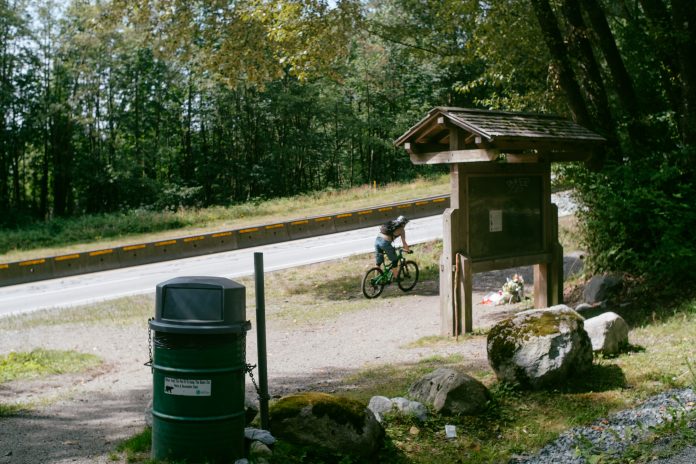
SFU’s Burnaby campus and its cycling community was shaken by the death of a cyclist last month on Burnaby Mountain. On June 29, Charles Masala, 53, passed away while riding his bicycle at Gaglardi Way and University Drive East. Masala was a well-known local engineer and father of two. In light of the unfortunate tragedy, The Peak spoke to members of the SFU community to discuss cyclist safety on Burnaby Mountain.

 “While the recent tragic cyclist accident occurred off-campus and does not seem to be linked to members of the SFU community, the safety of our community members is very important to us, and Safety & Risk Services is reviewing cyclist safety practices on Burnaby campus,” said Angela K. Wilson, SFU’s senior director of media relations and public affairs. “SRS has a role in promoting campus safety, [and] that includes traffic safety, which includes cyclists as well as pedestrians. SFU’s land area of responsibility is within and including the Burnaby campus perimeter ring roads, outside that area would fall under the City of Burnaby’s jurisdiction.” 

Under the Motor Vehicle Act, cyclists are governed by the same rules as vehicle users in terms of road usage.

“We will be reviewing the recent crash to identify the factors that led to it and any immediate changes that may be required,” said the City of Burnaby in a statement to the Burnaby Now. The city currently has no plans to add protected bike routes on Gaglardi Way or University Drive.

While both the City of Burnaby and SFU are reviewing the incident to determine if there are necessary changes to be made, SFU’s vibrant cycling community was shaken by the death of Masala. They, too, have been given reason to reflect on the safety of a cycling commute to and from campus. 

“It hasn’t been as safe as it could be,” said Melanie Hiepler, a world literature student. “[ . . . ] I’ve had a few close calls. One particular encounter with a dump truck comes to mind: it was going extremely fast, and it passed by so close that I could have touched it. Buses are also a concern sometimes.”

The Peak also spoke to various SFU professors who are part of SFU’s cycling community, such as Dr. Ben Adcock, a professor in mathematics, who noted that the accident “gave him a lot of pause.”

“That one hit quite close to home because I did cycle that way quite a lot. It’s fairly steep [and] it’s possible to go pretty fast,” Adcock said. 

“What’s meant to be the bike lane going down is nowhere near wide enough. When I cycle down Burnaby Mountain, I tend to take a whole lane by myself, especially on Gaglardi, which is faster, and there’s more traffic,” he continued. “After this person was killed, there was a call for a proper separated bike lane [in a local paper], and that absolutely needs to be there.” 

Another professor in the department of mathematics, Dr. Amarpreet Rattan, finds riding down Burnaby Mountain scary. “I don’t like to go too fast. I ride braking a lot on the way down. The place where I feel least safe is actually on [Burnaby Mountain]. There’s a few spots when you’re going up the hill, where traffic comes quite close to you.” Rattan said. 

The proximity of traffic to cyclists was a recurring concern among members of SFU’s cycling community. Mathematics professor Dr. J.F. Williams pointed out that changing car designs have actually made roads less safe for cyclists and pedestrians. 

“[There are] more SUVs, bigger vehicles, more vehicles that have limited visibility, that are designed to protect the passengers of the vehicle at all costs,” says Williams. “The number of people killed on the roads is more or less constant in the past decade in the U.S. The partition has really changed though: people in cars are safer, people outside of cars are less safe.”

Williams also suggested that although the cycling infrastructure in Metro Vancouver has improved, much of it “was clearly laid out by people looking at a map who weren’t necessarily cyclists,” adding that he found it to be “very clear [ . . . ] that whoever designed this has never ridden a bicycle.” He also noted that Gaglardi Way is very narrow and it would be expensive to get a separate bike lane. 

Despite the cost, Hiepler agreed that separate bike lanes are one way to improve safety. 

“Gaglardi Way is narrow in some places, which puts cyclists very close to vehicle traffic. Factor in wind and vehicles’ excessive speeds, and it can quickly feel scary,” she said. “Some drivers are very courteous and move into the left lane when they pass me, but many just whiz by. I often don’t hear them coming, so it’s startling. Separate protected bike lanes would make for a much safer commute.” 

Protecting cyclists is an issue beyond SFU as well. The Peak spoke to Amelia Potvin, Executive Director of the Greater Victoria Bike to Work Society, about basic cycling safety. The society is a non-profit that promotes cycling as a means of transportation, including providing courses on urban cycling skills and safety.

“The concept of sharing the roads with vehicles is quite complex,” said Potvin. “The key principles of safe cycling, we break them down to MVPC. Maneuverability, visibility, predictability, and communication.” (see below)

With regards to cycling on a mountain, such as at SFU, Potvin suggested that cadence, or the speed of a cyclist’s pedaling, is really important. “You want to keep that up to a fair pace, because as soon as you start to not pedal fast enough, you become less stable and you lose balance a little,” she said.

However, Potvin added that the responsibility should not solely rely on cyclists, who are the more vulnerable ones on the road. 

“I think it’s also important to flip this conversation onto the responsibility of motor vehicle drivers,” she argued. “After all, the cyclist does have the right to use the road [and] it’s the motorist’s responsibility to pass safely. It’s important for motor vehicle drivers to also understand their responsibilities and the risks they’re taking by driving at high speeds.”


THE 4 BASICS OF BIKING

According to Amelia Potvin, the Executive Director of the Greater Victoria Bike to Work Society, basic cycling safety can be broken down into four principles.

Maneuverability

  • Leave your options open so that you can maneuver to avoid potential hazards.

Visibility

  • See and be seen.
  • The Motor Vehicle Act requires that you have both rear and front lights.
  • Wear reflective elements to help yourself be seen.
  • Make sure you have sightlines and that you are well-positioned to see along the sightline, to navigate and negotiate traffic conditions.

Predictability

  • Follow the rules of the road.
  • As a cyclist, you have the same responsibilities as other road users–they need to be predictable.
  • Be aware of body language and avoid impulsive maneuvers.

Communication

  • There are many ways to communicate with other road users, including pedestrians.
  • Shoulder-checking, signalling, using voice, using a bell, and eye contact are all means of communication.


Addressing student well-being must account for the burdens of student life

0
Yoga and puppy therapy are nice . . . if you have the time to spare. Photo: Andres Chavarriaga / The Peak

By: Nicole Magas, Opinions Editor

It’s a common refrain, meant to be a balm on the stressed souls of university students: don’t forget to take some time for self-care. Public health campaigns urge students to make time for exercise, meditation, and puppy therapy. We’re cautioned to visit the doctor as soon as we feel something may be wrong, and told to remember to take a break every hour from our sedentary studies to stretch.

Don’t get me wrong, it’s great that the university has an active interest in the health and well-being of its students. However, with the way the university system itself is currently structured, these efforts amount to platitudes next to the systemic pressures faced by post-secondary students.

It is often hard for university students to take time out of their study schedules for self-care. The university recommends that students devote two to three hours of studying outside of class time per unit, per week. So a student taking the minimum nine credits each to qualify as full-time would usually clock nine hours of in-class time, plus an additional 18 to 27 hours of studying. This means at least 27–36 hours total — a figure that is obviously much higher for students taking more than three classes, classes with a higher unit count, or classes with more demanding coursework. 

To be fair, it isn’t always necessary to put that much effort into studying in order to graduate from SFU. However, for students who rely on scholarships or need competitive GPAs for graduate school, such a studying schedule is not just suggested; it is mandatory. 

Other hidden time sinks in university include the daily commute, which most students at our widely dispersed commuter school are familiar with. Similarly, students’ time is also crunched by the hours they need to work to meet the cost of living, which even student aid doesn’t necessarily fund adequately. Most post-secondary students in British Columbia must devote some number of hours working each week to make ends meet. This also does not include volunteer or social hours.

In short, it comes down to a choice: do you spend your time on becoming successful in university, working to pay for university, or on meditative yoga? Looking at the options, it’s easy to see why students may not feel able to prioritize their mental or physical health.

When students are forced to take time to visit a doctor for an ailment, the necessity of providing proof of illness via a doctor’s note can also be problematic. Setting aside the cost of obtaining a note from clinics and specialists off campus, there are limits to how useful this may end up being. Many students operate on tight schedules, and pushing assignments back a few days, even to recover from an illness, typically means a doubling of the subsequent week’s workload. This also assumes that the illness takes place outside of the end-of-semester exam period when professors are more restricted in how much time they can offer in extensions, given their own deadlines for submitting grades.

At this point, students have the option to withdraw under extenuating circumstances (WE), but this, like any other withdrawal, involves quitting the class entirely. WE also only applies in cases of extreme hardship, and requires WE office approval. This could potentially affect student aid and scholarships, and requires additional paperwork to apply for a tuition reimbursement. It also extends the length of time a student is in school, as it would require those classes to be retaken. 

Additionally, the need to provide proof of illness via a doctor’s note does not necessarily account for the exhaustion and anxiety created by carrying the emotional load of a personal illness. Stress has been proven to interfere with learning and memory, but these secondary characteristics of an illness or injury are harder to capture in a doctor’s note describing a single event. 

Thus, it doesn’t matter if a doctor’s note buys a student a week of recovery time. It still doesn’t address how performance may have been affected leading up to or following the recovery, especially if treatment was delayed or is protracted. Students lucky enough to have an understanding professor may have this additional burden of illness accounted for, but this is hardly codified university policy.

In short, the academic and financial burdens carried by university students make it such that they may be less willing or able to prioritize health and well-being. The efforts made by SFU to promote better mental and physical health among its students don’t adequately address these structural barriers. Thus, while well-meaning, students may ultimately end up being more stressed by trying to fit these additional elements into an inflexible system. 

This is unfortunate, as university is only a temporary state, while the experience of living in one’s body lasts a lifetime. 


Burnaby campus security heightens after student reports assault

2
Police sketch of suspect, courtesy of Burnaby RCMP

By: Gurpreet Kambo, News Team Member

SFU’s Burnaby campus community is on high alert due to an incident on the evening of July 14. 

According to alerts issued by SFU News and by Burnaby RCMP, a 19-year-old woman was walking in the forested area on the northwest side of campus, near University Drive West and West Campus Road, when she noticed an unknown man following her. He approached, tried to engage her in conversation, then tried to grab her hand and pull her into the bushes. 

The student was able to escape and ran to the parking lot of the nearby Horizons Restaurant, where she sought help from others. She reported that the suspect followed and continued to try and engage with her, before leaving in a grey or black Acura vehicle.

Burnaby RCMP released a sketch of the alleged perpetrator, and described the suspect as a “South Asian male, approximately 19-23 years old, 5’9, brown eyes, and wearing a black turban, blue long sleeve shirt, grey sweat pants and black sandals.”

In light of the incident, signs were posted around campus and on nearby trails, alerting community members about the assault. According to a report by CTV News, SFU has also increased security presence around campus. 

Burnaby RCMP asked that anyone who might be able to identify the suspect or who may have additional information about the incident,  contact them at 604-646-9999 or Crimestoppers at either 1-800-222-TIPS or www.solvecrime.ca.

Resources for students 

In the event of an emergency situation on campus, SFU recommends calling 911, and/or the campus security emergency line at 778-782-4500. If the phone call is made from one of the direct-line security phones or blue emergency phones located around campus, security will be able to immediately know the caller’s location.

SFU also currently provides a 24/7 service called Safe Walk, where students can be accompanied by campus security to their destination anywhere on Burnaby campus, within a two-block radius of Vancouver campus, or to nearby bus stops on Surrey campus. To request a Safe Walk escort, call the Campus Security non-emergency number at 778-782-7991

Students who wish to access counselling and support services can call SFU’s Women’s Centre at 778-782-3870, SFU’s Health & Counselling Centre at 778-782-5781, or SFU’s Sexual Violence Support and Prevention Office at 778-782-7233. 

Panhandling fines in Salmon Arm make things worse for B.C. homeless population

0
Vancouver has the potential to be a great city, but not while our homeless numbers are in the thousands. Photo: Jon Hernandez/CBC

By: Kelly Chia, Staff Writer

Step a few blocks outside of SFU’s Vancouver or Surrey campuses, and Metro Vancouver’s homeless crisis becomes painfully obvious. 

The uncertainty of living day to day without stable housing is stressful enough. Yet by-laws have been introduced to punish homeless people further, like the recent $50 fine in Salmon Arm (the latest region to enforce B.C.’s Safe Streets Act) for panhandling curbside, within 15 metres of a bank machine, in a car, or within a public plaza. 

Instead of squeezing money from those who might not even have it, we need to focus on finding permanent shelter and housing solutions for our city’s homeless population. The way Vancouver displaces its homeless population is a large stain on our collective conscience, and we need to demand more of our local and federal leaders to address this issue. 

Currently, no vacant housing units are renting for under $750 in Vancouver, suggesting a strong link between homelessness and the expensive housing market. While B.C. is investing in rent subsidies to offset the expensive rental rates, these programs are geared toward seniors and low-income families, and aren’t enough to permanently house the number of homeless people in the city. As of June 12, 2019, Vancouver had a homeless population of 2,223 people

We also need to acknowledge that Indigenous people are over-represented in the 2019 count: despite only accounting for 2% of the population in Vancouver, more than a third of people counted in the total number of homeless people identified as Indigenous. 

Kennedy Stewart, Vancouver’s mayor, praised the provincial government’s $66 million investment in creating temporary modular housing units, but urged the federal government to pitch in as well. Since October of last year, the federal government has contributed only $300,000 for low-income housing in Vancouver. But the homeless crisis is increasing so rapidly that just to keep up with the ever increasing number of homeless people, Vancouver would need 1,000 new units a year. 

What does it say about our city that year after year, Vancouver is less and less affordable for its residents to live in? That rather than ensuring safe accommodations for the people who cannot afford absurd housing rates, we allow them to slip through the cracks? It says that as a society, we have a baseline for who deserves to live comfortably, and who we are comfortable evicting and endangering. 

This is unacceptable. We must demand that federal action against our inhospitable housing market be a priority in the upcoming election. We must ask our federal leaders to pledge to secure more funding to permanently house B.C.’s homeless population so that we can finally proudly say that the West Coast is the best place to live for all people.


SFU students need to take earthquake preparedness seriously before an emergency situation

0
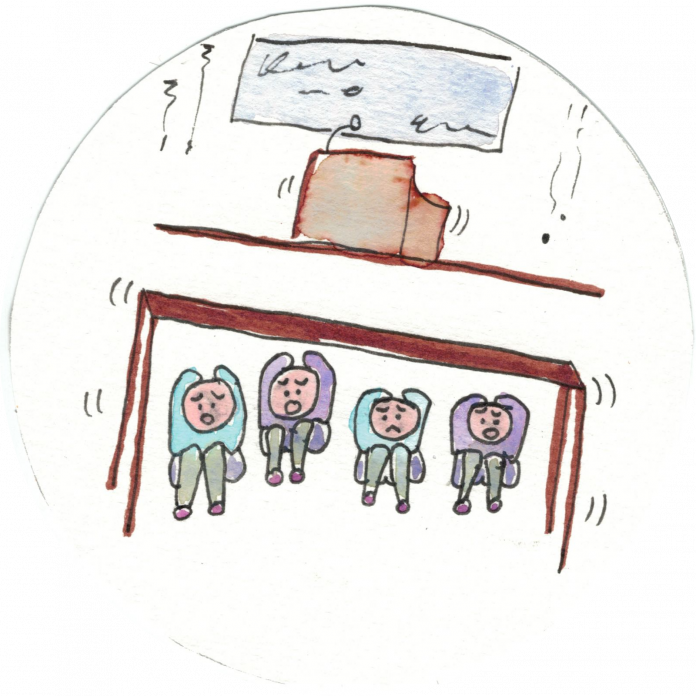
The worst time to be thinking about building your emergency kit is during a high-magnitude quake. Illustration by: Momo Lin/The Peak

By: Jamie Hill, SFU Student

Recent tectonic activity has put emergency preparedness back on the minds of British Columbians — and that’s an important opportunity to revisit how prepared we are for earthquakes.

Two major earthquakes hit southern California on July 4 and 5, damaging buildings, cutting off power and communication, and forcing many residents to evacuate their homes. Around the same time, B.C. was also treated to shaky ground with three consecutive earthquakes near Bella Bella. Though these minor earthquakes on our coast were unconnected to those in California, they’re an important reminder for those of us who aren’t prepared for a major earthquake here in the Lower Mainland. Prepared or not, it’s time to remind ourselves that we live on unstable ground. 

Although B.C. is within the Ring of Fire, an area notorious for its earthquakes, many British Columbians aren’t fully prepared for the risks of a destructive quake. According to a 2017 survey conducted by the provincial government, only 13% of B.C. residents have a “complete” emergency plan. Of Vancouverites who don’t have a plan in place, around a quarter blame laziness.

These emergency plans are especially important for SFU students, who may find themselves on a campus that is unfamiliar or far from home when an earthquake occurs. Imagine being on Burnaby Mountain when the “big one” hits: How would you protect yourself? Where would you go once the earthquake has passed? Without transit or cell service, how would you get down the mountain? How would you get in contact with your loved ones?

Luckily, preparing for an emergency doesn’t have to be difficult. Look through SFU’s earthquake procedures and participate in the ShakeOut BC Annual Earthquake Drill. Explore information specific to your city or your accessibility needs. If you can, prepare an emergency kit with enough supplies to last you through the first few days after a significant quake. Most importantly, make a plan with your loved ones and roommates about what to do in an emergency, so you know how to get in contact with each other and where to meet if communication has been cut off. 

Students rarely plan a week in advance, let alone for an emergency, but going unprepared can have disastrous consequences in the event of a high-magnitude quake. It’s also worth noting that it’s hard to predict when a major earthquake is coming, even though we’re due for one, which means updating your supplies and emergency plans over time is vital. 

These recent local quakes were minor; treat them as an opportunity to prepare for the ones that aren’t.

SFU Snap 2.0: The Latest and Greatest Features

0
Illustration by Momo Lin

Written by: Tiffany Chang, Peak Associate
Illustrated by:Momo Lin

The SFU Snap app everyone downloads as first-years is great, but what if we had a newer version that connected to Wi-Fi even less often? 

The “Construction Fence Labyrinth” game: This awesome game allows students to show off our creativity by designing new labyrinths for construction fences in Convocation Mall! All you have to do after clicking on the game is drag virtual fence sections and position them however you want on a grid that represents the Burnaby campus. And the best part? Your finished design is automatically entered into the running to win a daily contest afterwards! Whichever person’s design determined as the best one will be shown to the construction workers so they can actually use it for a day! 

The “Better Enrolment Date” counter: This is a running counter that shows every single student who has a better enrolment date than you. It’s a reminder of how all the good courses are being filled up by those lucky stiffs while you’re very angrily waiting for your time to arrive. 

The “Help” feature: A standard “help” feature that has McFogg the dog as an icon. It’s essentially the office assistant “Clippy” from Microsoft, but instead of helping, it gives you esoteric platitudes fit for your academic life. Such as “the darkness in you heart does not wallow underneath the gleaming quality of water fountains,” or “The wisdom you bring into the world will be squandered in court.”

The “Dirty Bathrooms” tracker: This one gives workers at SFU a comment platform where they can describe in excruciating detail how disgusting the bathrooms are. If there are puddles of God-knows-what on the floor or disturbing garbage they’ve found, this is the place to find out! The feature does not allow the workers to notify when the washrooms have actually been cleaned, because a built-in algorithm prevents people from engaging in any communication that positively contributes to students’ quality of life by deleting said communication right away. So, in the end, it truly enhances the experience of knowing already that we’re walking into a john with unflushed toilets or of being welcomed with nasty smells, now that people are completely aware of all the other nauseating things in said johns. 

The “No Studying Area” feature: During busy times of the school year like midterms or finals, sometimes it’s not easy to find a place to study or eat. This feature is a large collection of photos taken over the years, showing a bird’s-eye view of all the study areas entirely taken up.

SFU Name Generator

0
Illustration curtesy of Flickr

Written by: Kitty Cheung, Staff Writer 

First Initial:

A – Spicy

B – Depressing

C – Grey

D – Dank

E – Sleeping

F – Grimy

G – Engaging

H – Reddit-Scrolling

I – Concrete

J – Sleep-Deprived

K – Caffeine-Addicted

L – Studious

M – Renaissance

N – Concrete

O – NCAA
P – No-Headphones
Q – Cranky

R – President 

S – Skipper
T – Academically-Advised

U – Mountainous

V – Bothered

W – TA

X – Tim

Y – Irritated

Z – Final


Last Initial:

A – Quadrangle

B – Avocado

C – 145

D – Tuition

E – Mezzanine

F – Snow-Hazard

G – Transit

H – Pond Water

I – Koi

J – Raccoon

K – Office Hours

L – Canvas Discussions

M – Alternating-Construction-Pathways

N – SFU Snap

O – MyExperience

P – Cornerstone

Q – UniverCity

R – Bus Loop

S – Convo mall

T – Canvas Discussion

U – Construction Noise

V – Not-So-Quiet-Study-Floor

W – Co-Op Workshop

X – Term Paper

Y – Temporary Tiles

Z – SUB


Number of Years at SFU:

1 – Petter

2 – Erikson

3 – McQuadrangle

4 – Woodward

5 – Fraser

6+ – Goldcorp