Home Blog Page 51

CONFESSIONALS: I work out from home so no one can see me fall

0
Woman in black workout clothes, squatting in her living room. She is surrounded by plants and she looks very focused.
PHOTO: MART PRODUCTION / Pexels

By: C Icart, Humour Editor

Health and fitness trends come and go. If you’re old enough, you start to see them repeating. Look me in the eye right now and tell me that Naughty Girl Fitness is not just a sexier version of Jazzercise (which still exists, BTW!). So, I was scrolling on the socials, and almost every fitness influencer ever was trying to catch my attention by focusing the camera on their shorts tucked in alllllll the way up their crack like their booty hole is a black hole just sucking allllll the fabric in. Obviously, once I am bootymatized, it is easier to sell me supplements and TV dinners rebranded for gym rats. Of course, there’s also the misogynistic gymbros who are definitely not on any “enhancers” who speak to you condescendingly while showing you their meals that look like WWII rations that have been chewed up and spat back out. Finally, we cannot forget about the people standing in the grocery store aisles pulling random packaged food off the shelf and arguing that every single ingredient in them is a poison that the minister of health himself put in there while cackling evilly. 

In a sea of reformer Pilates, marathon training, and before and after content, the word “mobility” kept sticking out. Everyone is talking about how training mobility will help you prevent injuries and help with everyday movement and holy moly, I factchecked it, and they’re right! So, I went on YouTube and looked up mobility exercises (we do fitness on a budget, a $0 budget, to be more precise, in this house). Practicing several times a week has taught me that I don’t know how to move at all. You know that feeling when you meet someone who can wiggle their ears, so then you try to wiggle your ears, but you just look constipated because you don’t even know what part of your brain you’re supposed to use to communicate with your ear muscles? That’s me doing mobility in my room. The YouTube person is demonstrating the exercise and I am fully locked in attempting to follow along, but I am not moving. 

My main focus right now is getting my deep squat. If people are taught to poop in this position, how hard can it be? Well, if there were secret cameras in my house, whatever creep would be operating them would be able to make an epic compilation video of me crashing to the ground. In fact, the Toronto Zoo has a compilation video of giant pandas falling that perfectly encapsulates what happens to me when I try to straighten my spine in a deep squat. Long story short, I’m not getting a gym membership anytime soon, no one can see me like this! 

Local Black businesses

0
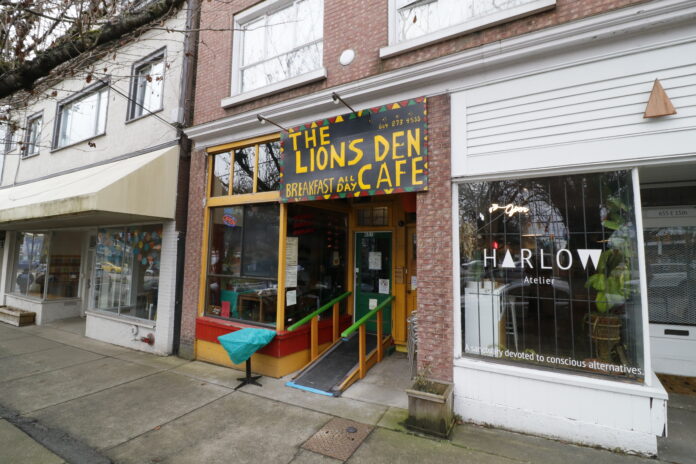
A cute red-brick storefront with a black, yellow, red, and green sign reading “The Lion’s Den Cafe.”
PHOTO: Kate Connor / The Peak

By: Phone Min Thant, Staff Writer

Whether you’re shopping for clothes or dining out with your loved ones, what better way is there to celebrate Black History Month than by supporting local Black-owned businesses? A good thing about Vancouver is that there are many such places — these ones are all accessible by transit! So, put on your jackets and winter boots, and get ready to check out these treasure troves.

Miscellany Thrift and Vintage

323 E Broadway, Vancouver
Opening hours: MondaySaturday, 11:00 a.m.6:00 p.m. and Sundays 11:00 a.m.–5:00 p.m.
Closest bus stop: WB E Broadway at Scotia St. using bus 009 (Alma)

Not to be confused with Miscellany Finds (which is also a fantastic option for Black-owned thrifting), this cozy and unassuming store offers you a huge range of clothes and trinkets, as well as household and decorative items. These aren’t just any clothes — Miscellany stocks brands personally chosen by their staff. Their founder, Zainab Bernard, is a well-recognized figure in the Hastings-Sunrise community for the “safety and support” she provided to them before that location was forced to shut down for development projects. The store has been a provider of employment opportunities for women and others who struggle to find jobs due to issues such as addiction or past-incarceration. They also donate a part of their earnings to local community initiatives such as “local elementary schools and local businesses.”

Ethos Myth Jewellery and Design

736 Granville St., Vancouver
Opening hours: WednesdaySaturday, 1:00 p.m.7:00 p.m.
Closest SkyTrain Station: Granville Station

Looking for personal, hand-crafted jewellery for birthday or anniversary gifts? Founded by Michella Domo, a goldsmith with over a decade of experience, Ethos uses ethical raw materials with their own mastery of goldsmithing to create rings, bracelets, necklaces, and many more. Ethos also has a repair and recycling service where you can bring in your own jewellery and family heirlooms, as well as reimagine “company logos, concept prototypes, family crest collections, and bespoke wedding bands” using their traditionally modern jewellerymaking methods. So, the next time you’re looking for handmade gifts that will last a lifetime, support a local jeweller like Ethos. 

Kasandy

1660 Duranleau St., Granville Island, Vancouver
Opening hours: MondaySunday, 10:00 a.m.7:00 p.m.
Closest bus stop: 2nd Ave. at Anderson St. using bus 050 (Waterfront)

Located on the busy Granville Island, Kasandy is an artisan business selling fair trade hand-crafted items made by local craftspeople from Kenya and East Africa. Kasandy is not only a business, but also a social effort to bridge small-scale crafts trade from Africa to the rest of the world. While the majority of their products are sourced from East African artisans, 20% of the products they sell are produced in-house. Kasandy offers a huge range of items, from clothing and footwear to furniture, tea, and coffee. They also have a non-profit initiative aimed at promoting artisan exposure, education opportunities for Black women, and support for child adoption. 

The Lion’s Den Cafe 

651 East 15th Ave., Vancouver
Opening hours: WednesdayFriday, 11:00 a.m.6:00 p.m. and SaturdaySunday, 11:30 a.m.6:00 p.m.
Closest bus stop: WB Kingsway at Fraser St. using bus 019 (Stanley Park)

The Lion’s Den Cafe is a “Japaribbean” (Japanese Caribbean) fusion restaurant, owned and run by Ken Brooks (who was born in the Bahamas) and Junko Tanabe (Brooks’s Japanese wife). The mosaic of what are seemingly two different cuisines brings out the best in both of them, making this local gem a community favourite in East Hastings. Although it may be cliché to recommend the jerk chicken in a Caribbean restaurant, I am going to do just that for Lion’s Den — it’s that good! Lion’s Den is not only a hidden gem but also a rallying point for locals, as seen back in 2017 when the community helped the owners keep the doors open after Brooks suffered a stroke. It’s still running strong in 2025.

Comic: Stix the burnt out candle issue #3 Deck: Bamboozled

0
COMIC: Yildiz Subuk / The Peak

The epic highs and lows of SFU football

0
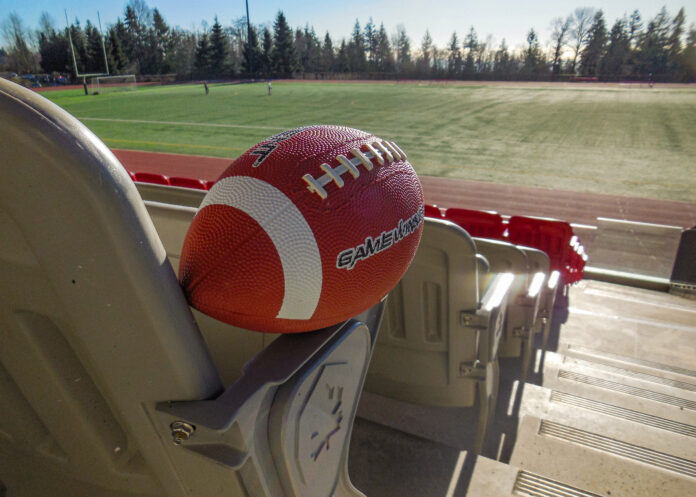
A football sits on the armrest of a seat overlooking Terry Fox field.
PHOTO: Shirlyn Zobayed / The Peak

By: Kaja Antic, Sports Writer

For over 50 years, one of SFU’s shining athletic qualities was the school football team. For much of its history it was the only Canadian university to play in American gridiron football competition. That all came to a grinding halt on April 4, 2023, when SFU president Joy Johnson announced SFU’s football team would become a relic of the school’s past.

The team was one of SFU’s inaugural athletic programs, starting play in 1965, the year the school opened. This was the second collegiate football program in BC, and the only to compete with American rules over the Canadian version. For the first 37 years of its existence, SFU participated in National Association of Intercollegiate Athletics (NAIA) competition, primarily playing against American opponents. 

From 1965 until 2001, SFU played 337 games in the NAIA, with a 0.439 win percentage. The NAIA era was when SFU arguably had its most success, as the program earned their only undefeated season while playing in the American competition in 1970. The team also had 12 seasons out of 37 with winning records — a feat they only achieved twice after leaving the NAIA.

While the team spent a lot of their time playing American organizations, 1967 saw the first edition of the Shrum Bowl — the cross-town rivalry between SFU and BC’s only other collegiate football program, the UBC Thunderbirds. SFU holds the advantage in the all-time record with 17 wins to UBC’s 16, with one tie in 1969.

In 2002, SFU left NAIA competition to join Canadian Inter-University Sport, now known as USports. With this move, SFU switched its play to the Canadian rules of football, along with primarily competing against Canadian schools for the first time in program history. 

SFU’s time in Canadian competition was a roller coaster of playoff participation matched with winless years. The team’s 2003 season was arguably the most successful in program history from an awards standpoint, as SFU won the Hardy Trophy — earned by the champion of the Canada West conference — by defeating the University of Alberta Golden Bears. The only other time the team earned a postseason appearance — along with a winning record — was the 2008 campaign, when SFU lost in the Hardy Cup matchup for the Canada West championship trophy to the University of Calgary Dinos

The team’s time in Canadian competition was also the first time the program went winless for multiple consecutive years. In the three seasons between October 23, 2004 and August 23, 2008, SFU’s football team did not win a single game out of 25 attempts. In eight years of Canadian competition, SFU had a 0.279 win percentage, with one Hardy Trophy to show for it. 

When SFU was granted NCAA Division II eligibility for 2010–11, the football program joined the Great Northwest Athletic Conference (GNAC), returning to American competition and American football rules. The team had 12 seasons in the NCAA until the program’s cancellation, in which they managed 18 wins and 101 losses.

“The team’s 2003 season was arguably the most successful in program history from an awards standpoint, as SFU made it through to winning the Hardy Trophy — earned by the champion of the Canada West conference — by defeating the University of Alberta Golden Bears.”

The program also had their second years-long losing streak while in GNAC competition, after going winless from October 18, 2014 to September 1, 2018. Even then, the 2018 win was against a non-conference opponent, meaning SFU did not claim a victory against a GNAC program until over a year later on October 19, 2019 — almost five years to the day since their last GNAC victory.

The 2020 season was cancelled due to COVID-19, and when GNAC football resumed in 2021, there were only three schools left to participate in the conference competition — SFU, Central Washington, and Western Oregon. The 2021 campaign saw SFU earn only one win, though the team made history in another aspect, with kicker Kristie Elliott becoming the first Canadian woman to play and score in an NCAA football game. When the GNAC stopped sponsoring football at the conclusion of the 2021 season, the three football programs moved to the Texas-based Lone Star Conference (LSC) as football-only affiliate members.

The first — and only — season SFU used the Red Leafs moniker saw the team earn just one win through 10 games in 2022. Out of the nine played against LSC competition, SFU would net its singular win hosting West Texas A&M for what would evidently be its last-ever conference match. The Red Leafs played their final game on December 2, 2022, in a BC Lions-backed revival of the Shrum Bowl, in which UBC bested the Burnaby Mountain hosts 18–17

Once again, the Red Leafs were meant to compete in the LSC for the 2023 campaign. The February 1, 2023 announcement when SFU revealed the school would not be offered an LSC affiliate agreement past the 2023–24 season still mentioned the then-upcoming 2023 season, even while the team was without a conference for the prospective years following. UBC was meant to host the 35th Shrum Bowl that December, a historic marker for the longtime rivalry.

On April 4, 2023, all of that hope was dashed.

Varsity football’s time on Burnaby Mountain had run out, the Red Leafs falling without a competition to play in. After 57 seasons of triumphs and tribulations, SFU football was coming to an unceremonious end. 

There was, and still is, a push to revive and revitalize this historic program, though none without significant barriers. Returning to USports or NAIA competition would create issues due to SFU’s NCAA affiliation, and the NCAA regulations wouldn’t allow for the team to switch to Division I or Division III.

After 524 games played, SFU had notched 185 wins across three different collegiate divisions, two different sets of gridiron rules, and nearly six decades. Though the program has officially come to a close, its near-60 year legacy cannot be forgotten in SFU’s athletic history. Even though the program has come to a tumultuous end, it’s still an important marker on SFU’s overall athletics history. SFU was the only Canadian team playing American rules against the southern country built on college football, putting Burnaby Mountain on the map for kilometres, or miles, to see.


Need to Know, Need to Go: Month of March

0
A standing microphone overlooks a blurry crowd.
PHOTO: Bruno Cervera / Unsplash

By: Osna Hadef, SFU Student

Treat Show Comedy
China Cloud Studios, 524 Main St., Vancouver
March 1, 7:30 p.m. and 9:00 p.m.
Tickets: $18 online via Eventbrite, $20 at the door

If you want to start the month with laughs, you shouldn’t miss out on this comedy show. Treat Show Comedy is a series of improv shows occurring on the first Saturday of each month, with shows listed until June. These specials are co-produced by Blind Tiger Comedy, which aims to bring underrepresented comedic voices to light. 

Ramadan Fest BC
Cloverdale Fairgrounds, 1760717905 62 Ave., Surrey
March 59, 4:00 p.m.3:00 a.m.
Tickets: $6.64 through Eventbrite

This is the West Coast’s first Ramadan festival, put on by Salaam Events. With over 130 vendors of all kinds, expect to have difficulty choosing what to eat among all the Halal food options from many cuisines. For five nights, experience a full Ramadan festival complete with decorations and a bazaar. The event is not only for the Muslim community and those who are fasting, but to everyone who wants to try the diverse food options and check out Ramadan lights. 

CelticFest Vancouver: St. Patrick’s Day Ceilidh 2025
Hellenic Community Centre, 4500 Arbutus St., Vancouver
March 14, 7:00 p.m.11:00 p.m.
Tickets: $30 for ages 19 to 64, find out more via Eventbrite 

Kick off your St. Patrick’s weekend and celebrate Irish heritage and culture. Hosted by Vancouver’s longest-running Celtic band, the Blackthorn, this event will include music and dancing featuring the O’Brien Irish Dance, and Shot of Scotch Vancouver Company. The St. Patrick’s Day Ceilidh is one of many electric events featured as part of CelticFest Vancouver, which will run from March 7 to 17.

Glam Retro Roller Skate — All Ages Skate Party 
100 N Renfrew St., Vancouver 
March 22, 5:00 p.m.7:00 p.m. for all ages, 8:00 p.m.11:00 p.m. for adults  
Tickets: $25.29 through Eventbrite 

Want to experience a taste of the ‘80s? This retro-inspired skate party is perfect for you. Whether you’re going with a group, on a date, or by yourself, be sure to have a blast with DJ Prototype at the rink from 8:00 p.m. to 11:00 p.m. For those who have a birthday around that time, this is an amazing idea for a celebration as you can also book your own party table. 

Vancouver Pop-Ups: Spring Market
Heritage Hall, 3102 Main St., Vancouver
March 30, 11:00 p.m.4:00 p.m.
Tickets: Free

To celebrate the spring, Vancouver Pop-Ups has organized a market bringing together over 40 local businesses and vendors. You will find a vibrant collection of handmade goods and crafts from local artisans and designers. There will also be food vendors where you can buy snacks and refreshments. If you end up being one of the first 30 customers after opening, you’ll receive a $10 voucher. 

Trump’s anti-DEI military initiative blatantly attempts to erase Black American contributions

0
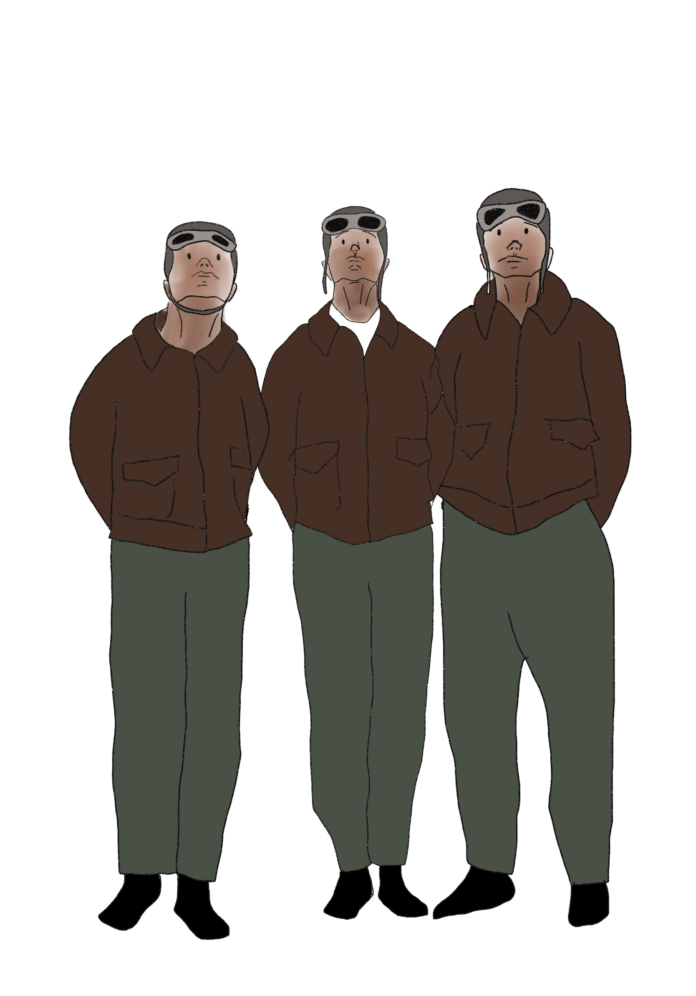
this is an illustration of the Tuskegee airmen; three Black soldiers looking up to the skies.
ILLUSTRATION: Winnie Shen / The Peak

By: Phone Min Thant, Staff Writer

In the wake of US President Donald Trump’s personal vendettas, obsessions, and destructive thinking lies the sputtering corpse of one of his longest-standing victims: Diversity, Equity, and Inclusivity (DEI) policy. Every aspect of DEI in the American workforce was collectively termed “illegal” and terminated just days after the inauguration. 

DEI helps combat discriminatory regulations in daily workplace processes. It has been around since the mid 1960s with the passage of anti-discrimination laws and supports striving for a more equitable labour environment. Apart from hiring, it also incorporated important issues such as paid maternity leave and respecting pronouns, and allowed for the celebration of non-Christian traditions. 

As alarming as it may sound, one particular item on the Trump administration’s DEI purge list has been the history of the Tuskegee airmen, the first African American aerial unit in the US Armed Forces. Following a comment from defence secretary Pete Hegseth that there will be “no more DEI” inside the US defence sector, the US Air Force scrapped basic training material for new personnel containing a documentary on the Tuskegee airmen.

Trump and his supporters no doubt brand themselves as patriots. Still, they are so willing to dismantle and erase a critical part of the country’s military history. If the administration is patriotic, then shouldn’t the armed forces celebrate and learn from the victories of its forefathers? The issue is, and has always been, one of ignoring the contributions of Black people and re-narrating the concept of American history as an all-white affair.

The issue is, and has always been, one of ignoring the contributions of Black people and re-narrating the concept of American history as an all-white affair.

In the same vein, Trump also signed an executive order scaling back racial education in K12 schools, citing the dismantling of “radical, anti-American ideologies.” Books containing themes of race and racism have been pulled from the shelves of school libraries. Since the 2020 election, Trump has also scrutinized the 1619 Project, a landmark book aimed at remerging the contributions of Black Americans to US history, labelling it astoxic propaganda” and “ideological poison.” All this effort goes towards targeting Critical Race Theory, which studies the legal production and prevalence of racism in institutions and national history. The executive order was followed by Hegseth cancelling celebrations of Black History Month (as well as other events celebrating diversity) inside the defence department.

This effort at combating the discussion of race is one of self-defense, an attempt to maintain the unwavering patriotic image of whiteness in America. Hegseth recently changed the name of US military base Fort Liberty (formerly Fort Bragg, in commemoration of a Confederate leader), back to Fort Bragg. Hegseth was able to overturn the 2023 decision by claiming the new name honours Private Roland Bragg, a distinguished soldier during World War II. This stands in stark contrast to the banning of the documentary on the Tuskegee airmen — both important to the country’s history, the white figure honoured and the Black figures neglected. In the name of “American Greatness,” Mount Denali (an Indigenous Athabascan word meaning “the tall one”) has also been renamed to Mount McKinley, another prominent white figure from history. 

Although the decision to take off the curriculum materials containing the Tuskegee airmen has been reversed following much criticism, the initial decision, as well as the banning of diverse educational materials show this whole issue has never been about sustaining the military or national “unity.” In his latest book, Hegseth explicitly stated that “all the ‘diversity’ recruiting messages made certain kids — white kids — feel like they’re not wanted” and implied that racism inside the military is a “lie.” Trump’s views on racism and xenophobia have been recorded since his first term, and his latest racist and ableist remarks of those “responsible” for the Washington aviation accident show that his views have not changed. He will take no accountability as a leader and has no qualms scapegoating the people he cares the least for. 

This attempt at erasing and minimizing Black history shows that the new administration cares deeply about institutionalizing racism in national policy and reinforcing the white-washed portrait of America. Not only this, the further marginalization of women, the 2SLGBTQIA+ community, immigrants, and disabled people through taking down DEI only spell an anxious outlook for four more years.

Leftist politicians shouldn’t abandon their communities

0
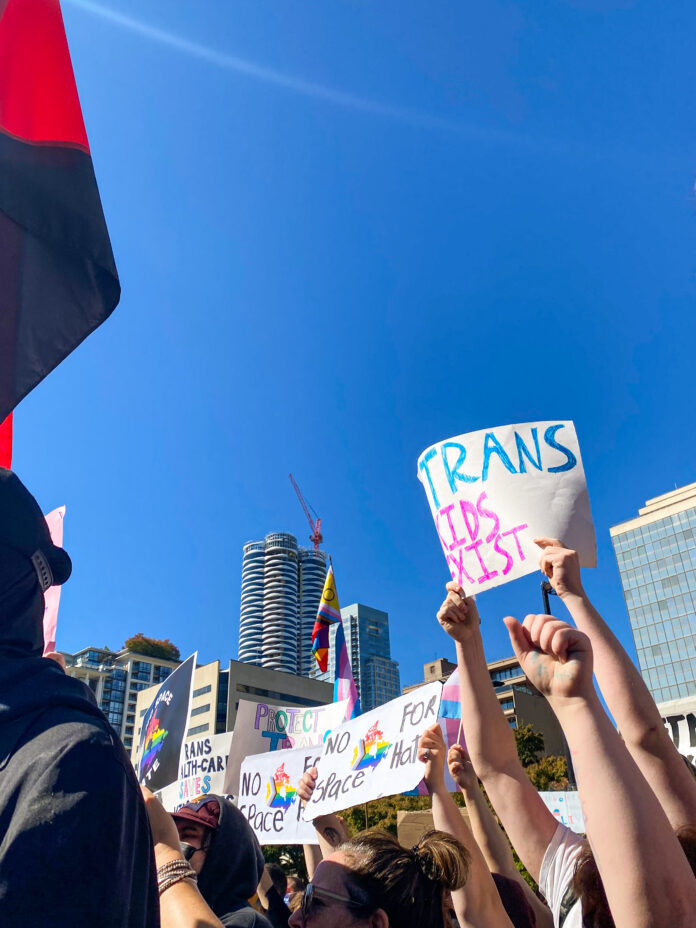
This is a photo of counter-protestors at an anti-SOGI rally, marching for the protection of queer kids
PHOTO: Gudrun Wai-Gunnarsson / The Peak

By: Mason Mattu, News Writer

In a relatively unsuccessful move to gain support, former vice-president and 2024 presidential nominee Kamala Harris focused her campaign strategy on pandering to independent and centrist voters. Harris attempted to bridge the gap by enlisting the support of Republicans such as Liz Cheney and Adam Kinzinger. Oh yeah, Liz Cheney, daughter of a literal war criminal, will definitely convince people to vote for you! Way to go, Harris. While building a centrist coalition to back her campaign, Harris neglected left-wing Democrats who became ever-so more dissociated with the Democratic Party. 

Voters who cared about issues related to Palestine, for example, were left behind by a Harris campaign that refused to take accountability for the US’ complicity in the genocide. This led to a strong show of support for independent candidates such as Jill Stein, especially in Muslim communities.

Let’s come back north of the border. This same abandonment of leftist communities can be seen here in BC. The BC New Democratic Party (NDP) has always touted environmental action as a key part of the province’s agenda. While they say this is the case, the BCNDP continues to support the expansion of mines and liquified natural gas infrastructure, particularly in wake of Trump’s tariff threats. David Eby wears a mask of climate change heroism, but is in reality causing voters to sway away from the BCNDP and join ranks of the BC Green Party

While there is very little statistical evidence about the transformation of former BCNDP voters to BC Green voters, the idea is Eby and his party are shifting their policies away from its previously strong environmentalist base. 

Centrists do not need to be approached with toned-down ideas. Instead, it would be beneficial for leftist politicians to come to them and try to change their minds.

In using the examples of Harris and Eby, I am not suggesting that reaching out to moderates is a bad thing. In order to win an election, it is absolutely necessary for a left-wing candidate to speak and reach out to moderate voters. However, this doesn’t mean that the moral and ideological foundations of a party should be compromised. 

Centrists do not need to be approached with toned-down ideas. Instead, it would be beneficial for leftist politicians to come to them and try to change their minds. Before you ask if this is even possible, I ask you to remember Bernie Sanders2016 Democratic presidential nomination campaign. In a shocking turn of events, conservatives supported Sanders’ 2016 campaign as they believed he embodied “conservative values.” 

Sanders did not make concessions in his policy to appeal to conservatives. Instead, he saw conservatives the same way he saw leftists, as people who could change their minds if given proper information and resources. However, this becomes increasingly more difficult as political campaigns fabricate or misinterpret the positions of their opponents. In an era rife with disinformation, it is important that we actually hold events and town halls that show people the receipts and facts. Even if it is to debunk how a candidate’s policies aren’t actually socialist, leftist politicians should provide compassionate aid to help clear the air. Another example of this can be seen during a FOX News Town Hall, where the audience verbally agreed with Sanders’ proposals for proposals such as tuition-free colleges and universal healthcare. Think about that one more time — a FOX News audience. 

If we take this approach and apply it to a general election candidate, we may have ourselves a winning campaign. It is the way candidates present their platforms to centrists or conservatives that will end up changing tides. Merely making concessions to these groups is meaningless, as there is a good chance that you’ll lose your party’s leftist base or be unsuccessful in courting moderate voters in this period of electoral disinformation. 

UmbraCity or UmbraSyndicate?

0
Man in a suit and a top hat holding a yellow UmbraCity umbrella and a stack of cash. He is standing next to an UmbraCity kiosk.
ILLUSTRATION: Yan Ting Leung / The Peak

By: Thievius Raccoonus, SFU Student

UmbraCity has set up its oddly dystopian-looking kiosks across Vancouver, allowing consumers to rent umbrellas when unexpected rain decides to fuck up their day. The Canadian company has been putting the “EH” in umbrella ella since 2015. Thanks to UmbraCity, Vancouverites can stay dry and cool or prevent people from getting near them (umbrellas make good weapons).

It remains a bit of a mystery when UmbraCity hit SFU campuses. It feels like these kiosks are slowly multiplying by the day, almost as if every corner you turn, they will appear. It leads one to wonder, how many people want to rent umbrellas? In a city where the rain is just as unpredictable as our hockey team, aren’t we all prepared for the rain? I approach all Canucks games optimistically, but brace myself for potential last-minute disappointment. I think about the weather the same way, so I keep an umbrella on me, even when it’s not raining. So why would renting an umbrella be a good business model?

At first, I thought UmbraCity was a money laundering scheme, but after some digging around, I have uncovered something quite sinister . . . 

UmbraCity is trying to slowly build an umbrella monopoly. They know we all depend on umbrellas. After interviewing a whistleblower, it was revealed to me that the company’s plan is broken up into three phases:

  1. Introduce the ridiculous idea of renting umbrellas
  2. Push policymaking to a point where owning umbrellas is illegal
  3. Make everyone dependant on renting umbrellas

This dystopian business model is materializing right under our noses and speaking up may result in more than just some shade. Forcing people to rent umbrellas kills umbrella diversity. We may be approaching a reality where the only shield against the rain comes in the colour yellow. Say goodbye to cute Hello Kitty umbrellas that WE all love and BUY (not just me).

Renting umbrellas is an unreasonable expense. If you can’t afford to rent an umbrella, might as well accept that you will get soaked. There are serious concerns around staying protected, especially in alleys. People urinate there and that puts those of us without an umbrella at risk. Right? Being afraid of being peed on is something WE can ALL relate to. Can we rely on UmbraCity to keep us dry?

The whistle blower informed me that anyone that speaks up is putting their lives at risk. There is an Umbrella syndicate, killing anyone that questions the company. They are literally dead set on their monopoly. As of now, five people from the company have mysteriously disappeared . . . Where are they now? Are their organs recycled into the very fabric of the banal yellow umbrellas that multiply by the day? It’s time we start asking questions and ensure we stop the rise of umbrella fascism.

No Other Land takes a haunting look at the horrors of Israeli occupation

0
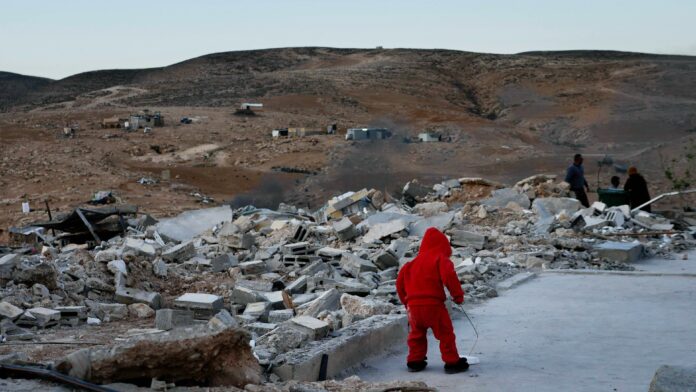
A small figure in all red stands amid concrete rubble and barren, brown hills.
IMAGE: Courtesy of Basel Adra, Hamdan Ballal, Yuval Abraham, and Rachel Szor

By: Yildiz Subuk, Staff Writer

Content warning: mentions of genocide. 

No Other Land had been on my watch list since the day I heard about it. The lack of distribution for this film has been frustrating, as there aren’t many theatres that want to show it, and the film is not on any major streaming sites. This highlights how important it is to have films like this available for anyone to see. I had the privilege of watching the documentary at the Middle East and North Africa film festival on January 30. 

No Other Land tells the story of a Palestinian village, Masafer Yatta, documented by Palestinian Basel Arda and his friend, Israeli journalist Yuval Abraham. These two young men risk their lives to capture the injustices the community faces. Since the 1980s, the residents of Masafer Yata have lived under the constant threat of Israeli occupation, as the government has attempted to evict and displace the population to make the village a training zone for the Israeli army. 

As I entered the theatre, I saw many people wearing keffiyehs, a garment that has become a symbol of Palestinian solidarity. Before the film played, it was clear the subject matter demanded the utmost respect and compassion from the audience. Once the credits rolled, everyone was speechless. The absence of discussion was rooted in devastation — all that was audible were sniffles.

Without even needing to state it, this documentary highlights the often hidden truth of apartheid. You can debate all you want about what actions are just, but you cannot ignore the truth, especially when it’s all caught on camera. The camera is an important factor in this film. On many occasions, we hear the two filmmakers, as well as the village, say things like “we are recording you” or “make sure you are filming.” The documentary is more than just a film to them — it is their defence. The things residents of Masafer Yatta face could be heavily overlooked if it wasn’t for the camera and Arda’s efforts to capture the injustices.

“Instead of using excessive cuts, the film lets each moment unfold organically, often letting the camera linger on a detail or action while also ensuring we hear the words of resistance shouted by the Palestinians advocating for themselves.”

No Other Land breaks the conventions of documentary filmmaking. It is an expertly crafted work of real-time footage. Interview components are substituted for conversations taking place while the camera is turned on. We get more from the film by simply seeing the people caught on footage, living their lives and existing. From the opening shot, it establishes a haunting context, making every moment of it feel urgent, even when it’s just a shot of people eating and conversing. The dread is inescapable. Through the tenacious hand-held footage, the film heightens the viewer’s perception of the reality. Instead of using excessive cuts, it lets each moment unfold organically, often letting the camera linger on a detail or action while also ensuring we hear the words of resistance shouted by the Palestinians advocating for themselves.

The relationship between the two filmmakers also displays an important dynamic. Abraham represents the outsider peering into the injustice. He represents the audience. He is shocked, horrified, and angry. On the other hand, Arda has become almost numb to his reality. He is unable to escape the violent oppression he and his community are subjected to. Abraham and Arda live two different lives, but once they intersect, the truth becomes more clear. 

No Other Land is more than just technical brilliance or a powerful story, but also a vital work of truthful reporting. It is an essential work of documentary media that gives us a first-hand look into the ethnic cleansing faced by Palestinian communities, and allows these communities to show the world the horrors they face. Instead of being a film that presents a hopeless premise, it is one that uses the medium to resist. What is documented is not just oppression, but also a fight. The people of Masafer Yatta refuse to give up. Most importantly, they remind us our attention is important. 

The VIFF Centre, located near the Yaletown-Roundhouse SkyTrain station, is currently screening the film until February 25. Book tickets here. You can also catch it at the Rio Theatre on February 28. 

Gitxaała and Ehattesaht First Nations rally to enforce UNDRIP

0
This is a photo of the entrance to a court that has “The Law Courts” written in black on the side of a concrete wall. Lots of little shrubs can be seen on the building.
PHOTO: Amirul Anirban / The Peak

By: Lucaiah Smith-Miodownik, News Writer

In the spring of 2023, the Gitxaała and Ehattesaht Nations took to BC’s Supreme Court to challenge the policy surrounding mining minerals like gold, silver, and copper. The Nations argued the “free-entry” system in practice is “outdated and unconstitutional” as it violates the government’s duty to consult Indigenous Peoples. This system — which is currently on pause due to the court’s ruling — allows individuals or companies to “stake claims on those minerals.” 

For the Gitxaała and Ehattesaht Nations, the policy is a “colonial holdover.” During BC’s gold rush era, from 1858 to the mid-1860s, settlers would claim land by driving a wooden stake into the ground. In the digital age, proof of age and the payment of a small fee are required for a claim.

The free-entry system does not require consultation with First Nations when it comes to mining on their unceded territory. In spring 2023, the court found that the Mineral Tenure Act, which previously abided by this free-entry system, had to be altered. Indigenous Watchdog reported BC agreed to freeze any current mining claims and pause the ability to generate new ones for five and three years, respectively, from March 7, 2024. This was “a partial victory” for Gitxaała and Ehattesaht.

The First Nations recently found themselves back in court on January 20 fighting for the Mineral Tenure Act to be labelled as “inconsistent with the United Nations Declaration on the Rights of Indigenous Peoples (UNDRIP).” According to Indigenous Watchdog, UNDRIP was adopted into ‘BC’ law” with consultation in 2019. The Government of Canada website states UNDRIP is designed to outline “collective and individual rights that constitute the minimum standards to protect the rights of Indigenous Peoples and to contribute to their survival, dignity, and well-being.”

These court cases “cost hundreds of thousands, if not millions of dollars, and many Nations don’t have the resources to be able to pay out of pocket for that,” Leslie Anne St. Amour, campaigns director at RAVEN Trust, told The Peak. RAVEN “raises legal defence funds for Indigenous Nations who are in court to protect land, air, and water for future generations.”

“We owe it to our children, to those yet to be born within the Gitxaała Nation. We do it with one voice and in the spirit of being of one heart.” — Linda Innes, Chief Councillor, Gitxaała Nation

The Declaration on the Rights of Indigenous Peoples Act (DRIPA) is a provincial act that sets UNDRIP “as the province’s framework for reconciliation.” The point of intersection between the DRIPA and UNDRIP has become the subject of debate. Specifically, whether DRIPA should be considered a political promise or legal obligation.

While the court did affirm the “duty to consult” First Nations before making mining claims, it also found that DRIPA “didn’t work the way Gitxaała was arguing it should,” St. Amour explained. The Gitxaała Nation “argued that regardless of whether or not the Mineral Tenure Act violated the duty to consult, it also violated DRIPA,” St. Amour said. The court ruled otherwise, asserting that DRIPA can’t be used “to create a legal action” because “it’s not enforceable,”  according to St. Amour.

She further explained that DRIPA required BC to lay out a plan to align the Act with UNDRIP, but since the two were not yet aligned, there was no “actionable issue.” She said the government is “often really careful to not say ‘this implements UNDRIP into Canadian law,’ but they would say things like ‘we’re bringing UNDRIP to BC, we’re incorporating it.’” In other words, Canada considers UNDRIP in their policies, but it is not Canadian law. To this end, St. Amour also acknowledged the complexities of applying international law in a provincial context, which might cause the government to be careful. 

Ultimately, the push to align DRIPA is about making sure that “all First Nations will have access to the courts if BC does not uphold its DRIPA commitments, and to ensure that all BC laws are interpreted consistently within Indigenous rights affirmed in UNDRIP,” according to Indigenous Watchdog. And, as Chief Councillor of the Gitxaała Nation Linda Innes said, “We owe it to our children, to those yet to be born within the Gitxaała Nation. We do it with one voice and in the spirit of being of one heart.”

For now, BC is still working on amending the Mineral Tenure Act. As for the most recent hearing, Gitxaała and Ehattesaht are waiting for the court to release a decision. Depending on the outcome, St. Amour said a possible next step may be to appeal to the Supreme Court.

Those interested in learning more or donating to RAVEN trust can do so at their website, raventrust.com