Home Blog Page 5

The dance of the diaspora: A conversation with Alvin Tolentino

0
Courtesy of Alvin Erasga Tolentino

By: Phone Min Thant, Arts & Culture Editor  

It was a cold October afternoon for myself and many other Southeast Asian studies scholars attending the 2025 Canadian Council for Southeast Asian Studies (CCSEAS) Conference. In the momentary relief of a catered lunch, I had my first introduction to Alvin Erasga Tolentino, whose speech piqued my interest, prompting me to network with him later on. A month later, I found myself speaking to Tolentino again — this time on Zoom — to learn more about his life and experiences in dance, and about his dance company, Co.ERASGA.

This interview has been edited for concision and clarity.

Please tell me a little bit about yourself and a short history of Co.ERASGA.

I am a Filipino Canadian contemporary choreographer, dancer, and founding director of Company ERASGA Dance, based in the Coast Salish lands. In 1999, I founded Co.ERASGA, which officially became a non-profit dance company in 2000. The company reflects my interests in the work of Asian Canadians in the diaspora, especially in the performing arts, and my desire to highlight the cultural heritage of other artists in Canada working in the same intersection. A large part of our big mandate is to support artists of colour, especially the Asian artists in the community. 


What are the artistic and cultural inspirations behind the Dance Society and behind your inspirations to start Co.ERASGA in 1999?

I was always drawn to dance as a child, and a lot of that had to do with the fact that dance is so embedded into the culture of Filipinos. When I immigrated to Canada in 1983, I wanted to continue the practice of dance, and it was here that I was introduced to contemporary dance. I really enjoyed the experimentation that is inherent in the work of contemporary dance, and I built the company because I felt that I was the very first Filipino Canadian who had a contemporary dance company. The company is a platform where different artists of all generations can come in and collaborate to do different kinds of work.

We’ve done huge work on community outreach that really serves the Asian diaspora, and to dismantle the notion of art as an elite thing. That’s something that I’m trying to instill in the company, to allow a space for community members and share stories of migration and immigrants.

– Alvin Erasga Tolentino, Founding Director of Co.ERASGA


The milestone that celebrated Co.ERASGA’s 25th anniversary was the performance of Eternal Gestures at the Dance House. Could you tell me about the performance and your experiences performing it back in October?

For the 25th anniversary, I really wanted to offer something that is quite deep in terms of my great respect and interest towards Indigenous ways of knowing and learning. I’ve had a lot of great relationships with some renowned contemporary Indigenous artists here in our community, and with them, I wanted to honour the notion of respect for mothers, matriarchs, sisters, and women. And so, I worked alongside three Indigenous female contemporary choreographers based on Coast Salish lands: Michelle Olson and Starr Muranko, directors of Raven Spirit Dance, and Margaret Grenier, the artistic director for the Dancers of Damelahamid. Eternal Gestures is also a continuation of the work that I do towards environmental stewardship in exploring how art can be a voice for climate action, and how we can take care of this land that we’re in. 


Throughout your time at Co.ERASGA, what did you find the most rewarding for you personally?

I think that building relationships with fellow artists is so critical to me, because we’re all in the same pathway, but we’re also carrying very different ways of understanding the work that we do for ourselves, the community, and the international platform. And so I get to know more about people and their culture when there’s collaboration. To me, it’s really been a very fruitful, nurturing, and enriching experience building relationships and collaborations with a lot of artists. It’s a real education for me when I can collaborate with other people, because there’s always something to learn in collaboration. And I’m just amazed about that and discovering ways of working in the studio, in the theatre, and on tours. It’s also really important for Co.ERASGA to acknowledge that we have this reciprocity with the community that is really integral — that’s one of the important parts of why I make art, because I have an audience.


Are there any future events that our readers should look out for?

We are about to go on a tour in Yokohama, Japan for a three-night performance from December 8 to 10. 

Keep track of Tolentino’s and Co.ERASGA’s activities in the new year by visiting their website and following them on their social media: @alvinerasgat and @co.erasga.
 

Be True to Your School: An Exhibition for the SCA’s 50th year

0
PHOTO: Sam Saunders / Wikimedia Commons

By: Ashima Shukla, Staff Writer 

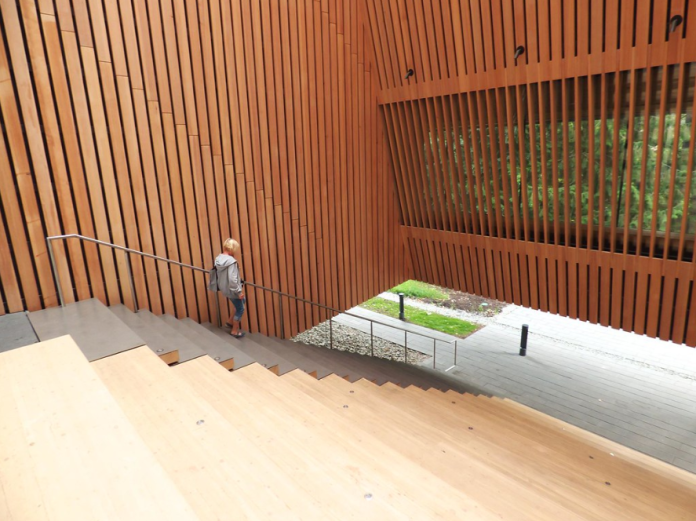
Be True to Your School is an online exhibition and silent auction celebrating SFU’s School of Contemporary Arts’ (SCA) 50th anniversary. Launched online on November 12, it features the work of 50 visual artists whose practices have emerged from or were shaped by the SCA. All proceeds from the silent auction will go to supporting student-led programming at the Audain Gallery

The works on auction are rich, intimate, and politically attuned. Sena Cleave’s And Such Matter (2024) is an inquiry into the forms of care and labour that sustain life. The blue mesh used to weave this piece is taken from Cleave’s grandparents’ fruit-farming work, while the pine needles draw on Japanese symbolism, where pine, plum, and bamboo stand for resilience through the winter. As the pine needles dry and warp over time, the piece becomes a dynamic material record of both impermanence and continuity. 

A different visual grammar shapes Lauren Crazybull’s Red Selfie in measuring cup (2023) of red-filtered paintings exploring the constraints placed on Indigenous representation. Crazybull reflects how Indigenous Peoples continue to be seen through projections that flatten the complexity of lived experiences. And even so, she suggests that these inherited signs can be negotiated and that colonial legacies can be transformed into space for new understandings of Indigeneity to emerge. 

Some of my other favourites are Aakansha Gosh’s Rooms Inside Me 1 (2021) and Elizabeth Milton’s FPA 111 Changed My Life (2025). Susan Schuppli’s Nature Represents Itself (2018) also stands out. It is a reprinted Landsat satellite image originally part of installations examining the Deepwater Horizon disaster. Her work asks what becomes visible or invisible in a slow ecological catastrophe, and how visuals distribute attention, responsibility, and justice. 

Taken together, Be True to Your School prompts a difficult question. Is this exhibition-turned-fundraiser an indication that cultural institutions are now being asked to justify their own existence? That SFU’s SCA is celebrating its 50th anniversary while also crowdsourcing support for student programming feels painfully on the nose for Canada in 2025. And I wonder, what does it mean when even the institutions historically upheld by wealth and empire now crowdsource support for emerging artists? 

I see this exhibition as both a warning and an invitation, a reminder of what is at stake, and what we stand to lose if we fail to imagine more sustainable futures for cultural education. In this sense, this exhibition/fundraiser also offers possibilities: where art institutions reclaim their role not as bastions of prestige but as generative spaces for critical cultural dialogue and experimentation.

If we choose to reimagine the future of art and cultural production as a place where student-artists are supported in breaking disciplinary boundaries, and where political and aesthetic questions can be freely asked, then exhibitions like this one become more than measures of austerity.  

Perhaps the value of this exhibition is not only in the funds raised but also in the questions invoked. It is an invitation for SCA and the Audain Gallery to reimagine their role in Vancouver’s cultural space. 

The exhibition and auction are live online until December 13. 


Inclusivity and innovation of movement and film at F-O-R-M 2025

0
PHOTO: Clara Xu / The Peak

By: Clara Xu, SFU Student

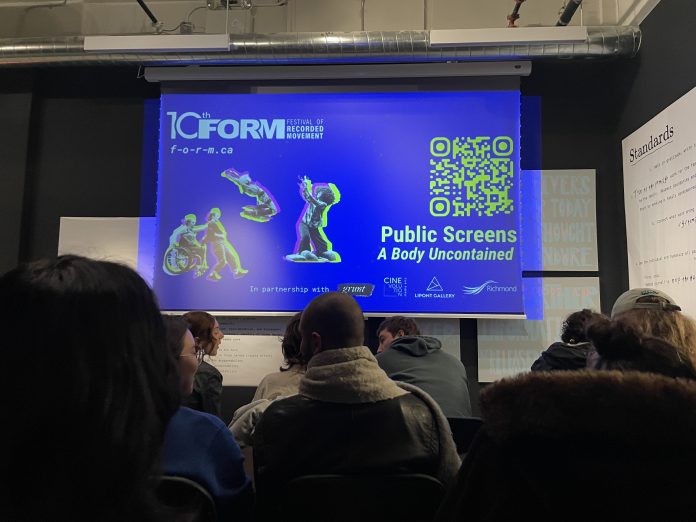
The 10th annual Festival of Recorded Movement, also known as the F-O-R-M Festival, ran in Vancouver from November 7 to 22. As a hybrid film festival, F-O-R-M programming prioritized youth artists and artists from intersectional and marginalized communities. As a member of the F-O-R-M Youth Jury, my responsibilities were to watch all of the youth films, select a winner for the Youth Impact Award, and provide a write-up discussing my reasoning for my selections. Being a part of the festival gave me such a great opportunity to express my creative opinions, and to explore a selection of groundbreaking art.

Through the F-O-R-M digital library, I watched the program Dreammaking in Frame — a collection of films playing in a dreamlike stance. Each film created this effect in different manners. Dreamscapes played with videos and audio full of texture, creating sensations in the body like when one listens to ASMR. Chrome and Ai Ki Do: The Art of Peace portrayed reflective flashback scenes with slower framerates, while using back lighting and side lighting to highlight the martial artists’ posture and movements. TATATA superimposed clips upon clips of short videos on top of each other, creating shadowy figures and silhouettes. I felt most awed by A Ki Do: The Art of Peace, when the filmmakers used a montage of moving figures, such as car headlights on city streets, billowing clouds, crashing waves, and, finally, a single drop of water in a lake, to guide the viewer through the martial artist’s emotional state as he performed his moves.

I also attended the live watch party of Public Screens: A Body Uncontained — a series of eight contrasting short films. These films have been screened on loop in art galleries, outdoor screens, and cultural centres across Metro Vancouver, making this program more accessible and flexible to audiences both in terms of time and space. These films were short and sweet, focusing on topics including migration and dancing in a wheelchair. I felt most connected to the films that quickly and firmly established their characters and inciting events, and that followed through with a clear narrative structure throughout the entire film.

Every film at F-O-R-M tells a deeply unique story, reflecting each artist’s cultural background, lived experiences, and wishes for the future.

As we move through our lives, we must always be conscious of the visible and hidden pieces of identity that make the whole of each person, a lesson I learned after my experiences at the festival.

Hallmark presents: Love on the Mountaintop

0
PHOTO: Harmeet Gill / The Peak

By: Mason Mattu, Humour Editor and an executive producer with Hallmark 

MAGGIE BENSTON CENTRE – REGISTRAR SERVICES DESK 

SIMON FRASER UNIVERSITY 

HOLLY is conversing with REGISTRAR OFFICE LADY. The room is grey with no Christmas decorations in sight. 

HOLLY

(to REGISTRAR OFFICE LADY) 

Yes, that’s Holly. H-O-L-L-Y. I know, you probably haven’t met many people around here with my name — I’m kinda named after Christmas! I said goodbye to the small-town life and moved to New York to start a career in professional Christmas tree tinsel placing at Macy’s. I had to make it as a small-town Burnaby girl with passion, a Christmasy name, and my $500,000 trust fund from grand papa! Then, my boss told me that I had to come back to my wee little small town to get a university degree, or my job would go to Tinsel Jolly Smitherseen, my worst enemy! I’m looking to enroll in Tinselology? 

REGISTRAR OFFICE LADY 

(to HOLLY, overly emotive expressions) 

I hate to break it to you, but we don’t have any of those festive degrees. Our new donor made it illegal to have any holiday decorations or vibes on campus! Concrete only. 

A man enters the frame. 

BARTHOLEMEWL  

(to HOLLY, brushing his hair) 

Holly Jolly Mistletoe Macy’s? Is that you? Why, I haven’t seen you since — 

HOLLY AND BARTHOLEMEWL

(to each other, at the same time) 

The Huffle-Pinkle-Tonkle-Wizzle-Burnaby North High School Christmas Baking Contest of ‘09???

Both HOLLY and BARTHOLEMEWL look at each other passionately. Holly applies chapstick. 

HOLLY 

(to BARTHOLEMEWL) 

Bartholemewl, you stole my special cupcake batter so your sister could win the contest. And to think we were going to get married after high school . . . 

BARTHOLEMEWL 

(to HOLLY) 

Let us let bygones be bygones, beautiful. I overheard that you were in a rivalry with Tinsel Jolly Smitherseen. The Smitherseen family is evil — they want to buy the university and UniverCity and turn it into a Halloween pumpkin patch! And the university will stay a concrete jungle forever! 

HOLLY

(to BARTHOLEMEWL, gasping and hyperventilating) 

They can’t Halloween-ify my new campus! 

BARTHOLEMEWL 

(interrupting HOLLY)

I have a plan that will save Christmas. We’ll decorate the campus with so many Christmas decorations. Then, we’ll trick all the faculties to put Christmas trees in convocation mall . . . tell them that it’s for forest fire awareness week. 

HOLLY 

(to BARTHOLEMEWL) 

Put our past aside and save this little small town from being smushed by those anti-Christmas birches

REGISTRAR OFFICE LADY 

(to both HOLLY and BARTHOLEMEWL)

You’re the only one who can save Christmas! 

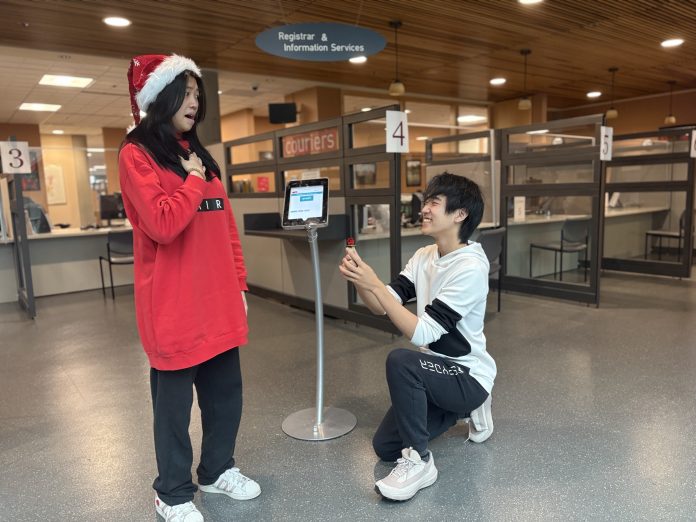
BARTHOLEMEWL kneels down on one knee. He is holding a ring pop in his hand. Holly gasps. 

BARTHOLEMEWL 

(to Holly)

Holly, I know that if we do this together, we can save SFU. You really roast my chestnuts when I’m around you . . . I’d like a second chance. Let’s get married and save this school together! Holly Jolly Mistletoe Macy’s — will you merry me? 

 HOLLY

(to the sky)

You mean we have to put our past aside and save this town and our relationship? And throughout our adventure, we’ll face ups and downs that will lead the audience to think we’re going to split up but we end up together in the end? YES! 

HOLLY and BARTHOLEMEWL share a peck (not a kiss — this would go against Hallmark’s commitment to not highlighting premarital sex). The ring pop is placed on HOLLY’s hand. 

Catch the rest of  Love on the Mountaintop, exclusively streaming at Images Theatre on December 24! 

The Clausgate Scandal: How Big Beverage tried to cancel Christmas

0
ILLUSTRATION: Victoria Lo / The Peak

By: Zainab Salam, Reporter in Hiding 

By the time the headline “Santa Claus Hates Everyone” ricocheted across the internet and news outlets, the world had already begun cancelling Christmas. Children sobbed into their half-eaten gingerbread men. Christmas influencers rebranded as “seasonally ambivalent creators.” One particular parenting blogger recommended replacing Santa with a “more emotionally available snowman,” noting that Frosty at least “shows up when he says he will and respects boundaries.”

But as any good investigative publication knows, when a story smells fishy, it usually isn’t because of herring snacks at the North Pole. And so began our descent into what we now refer to as The Clausgate Scandal.

The original interview, published by the aggressively festive tabloid The Daily Spinner, claimed Santa had gone “full festive nihilist” during a rare on-the-sleigh interview. The reporter interviewing Mr. Claus claimed that the jolly man had growled, “I despise joy. I resent children.” The Daily Spinner had reported on this incident, describing Mr. Claus’ resentment as a “deep festering hatred for anything festive.” Further alleging that his “ho ho hos” had taken on a “menacing, vaguely capitalist undertone.” 

Here at our publication, Real News, we doubted such reporting as it doesn’t align with Mr. Claus’ personal brand of peppermint and generosity. After all, this is a man who once led unionization efforts to secure dental benefits for the elves. As such, we’ve launched an investigation into The Daily Spinner and their reporter. Once we began our closer inspection, cracks appeared faster than a poorly baked sugar cookie that seemed to crumple before touching it. Audio forensics here at this prestigious publication revealed suspicious editing of the interview footage: long pauses, reversed “ho ho hos,” and what experts described as “a suspicious overlay of a disgruntled mall Santa Claus from a suburban strip mall in Burnaby.”

Moreover, financial records obtained through a whistleblowing elf reveal that The Daily Spinner and its reporter were discreetly compensated by Coke. Our team managed to briefly intercept Mr. Claus while he was practising his Christmas delivery route, somewhere above rural Manitoba. He vehemently denied the allegations while attempting to reroute a mildly rebellious reindeer.

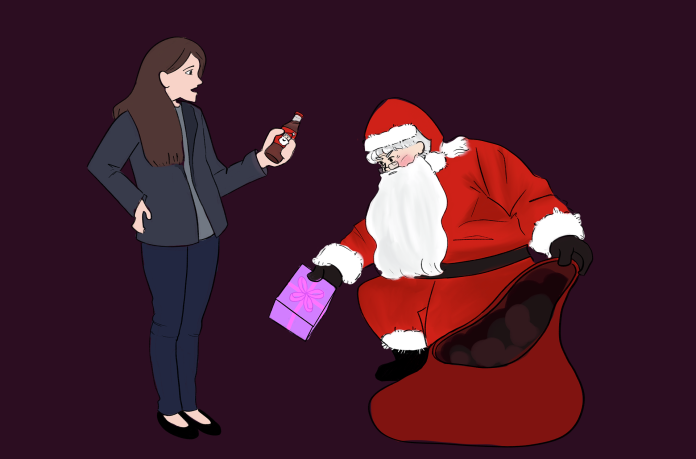
“I never said I hate everyone,” he clarified. “I said I hate having artificial intelligence (AI) duplicating my likeness onto beverages without consent. And now they used AI to edit my voice? Ho, ho, NO!”

For decades, Mr. Claus’ image has been plastered across Coke cans, bottles, and other products. As a self-described “hardcore Trotskyist,” Mr. Claus expressed that he was simply “tired of this shit.” For the first time in his life, he had filed a subpoena against Coke to get rid of the AI-generated Santas from the brand’s cans and ads

This, of course, created an enormous problem for Mr. Claus — his residential address was leaked. WikiLeaks leaked his information all over the internet, causing the Russian government to threaten a takeover of his home and toy-making factory unless Mr. Claus pays taxes to the financially-ill Russian government. 

This explains why Mr. Claus was so aggressive with the reporter from The Daily Spinner. He told me that he fears that the Russian government and Big Beverage is after him, causing him to respond to all approaching individuals with a bottle of pepper spray ready to go. For Mr. Claus, Christmas Day will go on as usual unless Big Beverage shuts down his operation. “It’s not a front, I swear to God,” Santa told us, despite us not asking him anything in that nature.  

Grandma got run over (more like splashed so badly that she fell flat on her face) by a reindeer!

0
ILLUSTRATION: Yan Ting Leung / The Peak

By: Heidi Kwok, Staff Writer

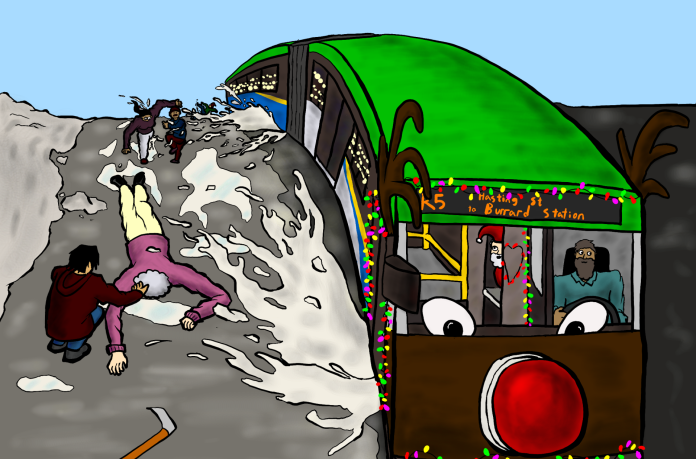
A 92-year-old grandmother was swept off her feet earlier this morning by what bystanders initially identified as a rogue reindeer the size of a school bus skidding down Hastings Street. The oversized reindeer was first spotted by unsuspecting pedestrians at 6:00 a.m. last Wednesday. According to eyewitness statements, the reindeer had been spreading festive mayhem and destruction all across the Lower Mainland by terrorizing pedestrians and treating the city as its own personal, giant ice skating rink. While terribly shaken up, Grandma, thankfully, survived the ordeal with only a few minor bruises.

It was only after closer inspection by transit police at a roadside safety stop that the “reindeer” was revealed to be an R5 RapidBus completely dolled up, from roof to bumper, in Christmas decorations. The reindeer bus was released for good behaviour from the TransLink bus depot last week. In its newfound freedom, it has reportedly developed a particular fondness for barreling through puddles next to sidewalks and drenching defenceless young children, elderly dog walkers, and anyone holding a cup of coffee. The grandmother in question had been minding her own business, carrying out her sacred duty of handing out homemade gingerbread cookies to her neighbours, when the bus scooped her up along for a merry sleigh ride. She had fallen and couldn’t get up

Throughout the week, early-morning commuters caught fleeting glimpses of the bus as it was busy breaking speed limits and openly taunting transit police by recklessly weaving through traffic. Meanwhile, in the late evenings, the bus either prowled the streets in search of its next victim or lurked silently in dark alleyways, its presence betrayed only by the flickering incandescent LED Christmas lights that cast a sickly, morbid glow against the pavement. 

For the unlucky few who witnessed the creature up close, their souls were forever scarred. In a poor imitation of a reindeer, the bus sported soulless, unblinking eyes, and an overinflated red nose so garish that it brought Pennywise the Clown to shame. A towering set of twisted antlers, unmistakably evocative of Krampus, completed the set-up. 

When finally detained and questioned by authorities, the reindeer bus insisted it was acting in self-defense. It claimed to have escaped the elf overlords at the TransLink headquarters and accused the transit company’s CEO of sitting on a “throne of lies.” The bus refused to cooperate further without a lawyer and union representative present.

Meanwhile, Grandma led an army of bingo-night seniors down Hastings Street to restore her dignity by unleashing a wave of fury rarely seen (except during annual Black Friday lineups at the local big box retailer). They mapped the reindeer bus’s common escape routes and eventually ambushed it outside an auto shop, where it had stopped momentarily to gaze wistfully at the new line of Slip&Slide 4000 platinum fitted tires. To the bus’ dismay, the seniors descended on the bus, delivering swift whacks to the exterior using everything from floral-printed walkers to umbrellas and dentures. 

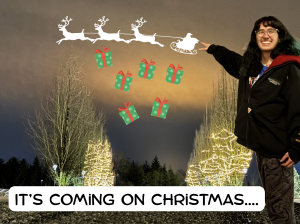
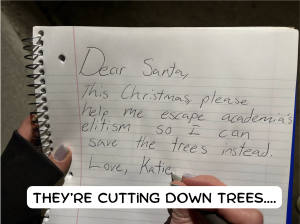
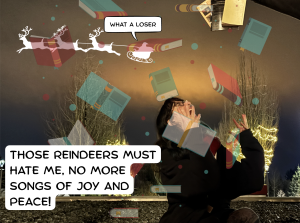
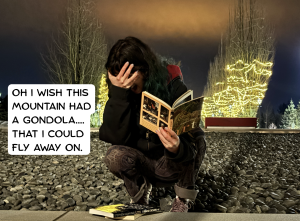
Comic: It’s coming on Christmas . . .

0
UpNorthMemories - Don Harrison / Flickr

Photography/creative geniusesness: Jack Baron (Contributor), Katie Walkley (Peak Associate), Mason Mattu (Humour Editor)


Metro Vancouver passes pared-down budget

0
A wide shot of downtown Vancouver on a bright sunny day is pictured. False Creek and the mountains are also pictured.
PHOTO: Luke Lawreszuk / Unsplash

By: Niveja Assalaarachchi, News Writer

On October 31, the Metro Vancouver Regional District passed its budget for the 2026 fiscal year. It focuses on “drinking water, waste management, solid waste management, regional planning, regional parks, and more,” according to a Metro Vancouver press release. 

Initially, the draft budget faced public scrutiny due to significant projected increases in spending. It would have raised average household costs by up to 5% compared to the previous year. However, following the completion of a financial review on April 9, the Board approved a plan that eliminated nearly $364 million in operating savings and $1.1 billion in capital expenditures from the budget. This occurred by “lowering debt servicing costs through reducing capital infrastructure spending, adjusting project timelines, and optimizing work plans.” These steps reduced the burden on households from $918 to an average of $897

Despite the efforts to reduce spending, critics have questioned whether these cuts address the region’s underlying financial pressures (such as the cost of living) and raised concerns about long-term infrastructure investment and the future of transit projects. The Peak interviewed Kennedy Stewart, an associate professor of public policy, to learn more. Stewart also served as the mayor of Vancouver from 2018 to 2022 and was a member of parliament. 

Stewart condemned the budget, stating it would only benefit the richest in the region and would lead to massive service cuts, disproportionately affecting renters and lower-income residents. He also pointed out that the timing of the budget was inappropriate, with the Canada-US trade war and lower-than-anticipated growth in the global economy creating uncertainty. Stewart wished the budget would allow for an environment where people would not be overtaxed or experience any service cuts.  

Among the budget’s various cuts, Stewart highlighted a service for “general government zero waste collaboration initiatives” that was eliminated for the upcoming year. He said the district’s direction “reflects the political agendas of the mayors and the councillors sitting on that Board. They are very keen to reduce services.” Here, Stewart referenced climate change and transit proposals that he and the community fought hard for.

“We are seeing a very herky-jerky kind of approach to policy making” 

— Kennedy Stewart, former mayor of Vancouver and SFU associate professor

Metro Vancouver covers 21 municipalities and other local government authorities in the Lower Mainland. The body has faced heavy criticism for its slow speed in developing projects and infighting between municipalities. This situation has led to Vancouver’s mayor, Ken Sim, boycotting all regional district meetings, and the Surrey City Council passing a resolution disavowing some of the policies brought forward by the Board.

Stewart also argued that, through his experience as mayor, the separation of the Lower Mainland into different local authorities has driven away investment from the region as a whole.

Considering this, he has advocated for amalgamating all the municipalities of the Lower Mainland into one, leading to the eventual abolishment of the regional district. “I think it’s completely outlived its usefulness now,” Stewart said. “You have all the little mayors from little municipalities with very little capacity in their own organizations trying to navigate billion-dollar contracts, and failing.” So, “it’s not a recipe for success and the province should really review this.” Former BC premier Mike Harcourt and leader of the BC Conservatives John Rustad also share this perspective.

First Nations Health Authority reports on phase one of “Indigenizing Harm Reduction” study

0
Two people extend their arms from opposite sides of the photo and hold hands in the middle. The photo reflects the community support aspect of the study.
PHOTO: Ruthson Zimmerman / Unsplash

By: Lucaiah Smith-Miodownik, News Writer

Content warning: mentions of substance use and death. 

Across Canada, the toxic drug crisis persists as a social issue faced by thousands of citizens each year. In BC alone, over 14,500 people have died from toxic drug use since 2016. First Nations people bear the brunt of these casualties. From January to June 2024, they had 6.7 times the rate of death compared to other BC residents. At the same time, Canadian governments have historically outlawed or otherwise restricted First Nations’ health and wellness practices, with this disproportion and systemic racism applying to Indigenous Peoples in general.

Now, the First Nations Health Authority (FNHA) is working to combat the toxic drug crisis through an Indigenous approach to harm reduction. The BC-focused organization “works with First Nations, government partners, and others to support First Nations individuals, families, and communities to achieve the highest level of health and wellness.” In 2018, the FNHA initiated the “Indigenizing Harm Reduction” study. Partnering with SFU for funding, the project “seeks to determine the current community needs, priorities, and wise practices in harm reduction, with the goal of developing a provincial harm reduction framework specific to BC First Nations.” The Peak reached out to the FNHA for an interview, but did not hear back by the publication deadline.

Most recently, the FNHA released the first phase of their project. Researchers carried out a literature review of existing Indigenous harm reduction methods in the US, Canada, Australia, and Aotearoa (New Zealand). Then, they conducted interviews with “56 service providers and people with lived and/or living experience of substance use.” Four unique aspects of First Nations harm reduction emerged: relational practice, wholistic health, strengths-based approaches, and person-centred care.

Relational practice involves harm reduction that is “rooted in relationships, connection, and love.” The report noted First Nations harm reduction “acknowledges that a relational approach to care is foundational in building trust and creating a sense of safety for our relatives who use substances.”

Wholistic health involves “providing care that wraps around the person to support their physical, spiritual, mental, and emotional wellness on their healing journey.”

Additionally, strengths-based approaches “draw on the ancestral strengths of culture, community, and kinship to provide unconditional and inclusive care for all community members.”

And lastly, person-centred care “respects an individual’s needs, priorities, and autonomy in determining their care plan and allows for the flexibility to meet each individual’s unique needs.”

The study also asked First Nations communities, organizations, and agencies to analyze the FNHA’s “Framework for Action,” a four-pillar system for addressing the toxic drug crisis. The third pillar, “create an accessible range of treatment options,” was referenced by 68.6% of respondents as a priority.

“Participants often spoke of the need for a full spectrum of options, including culture and land-based programming, to tailor care to the individual” 

 — First Nations Health Authority

Moving forward, phase two of the study “will involve community-based research to assess the effectiveness of community-led interventions to reduce harm and promote healing.”


Cultural appropriation isn’t quirky, it’s deeply problematic

0
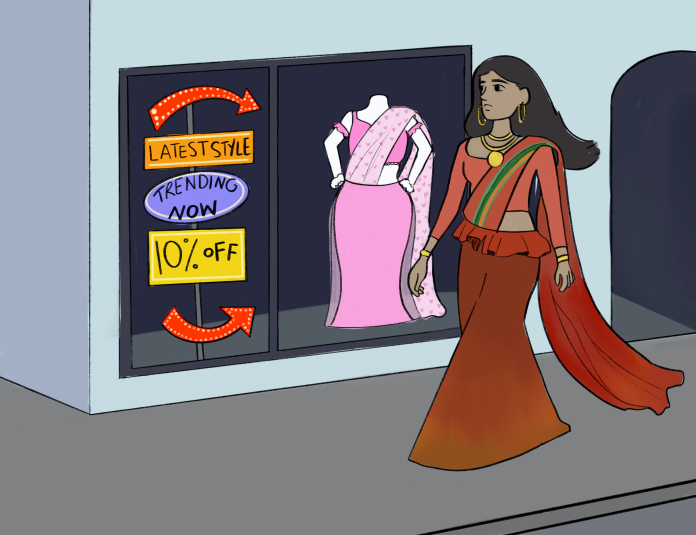
a woman walking down the street wearing an Osariya (saree) going past a shop with a sign that advertises a similar dress, but is advertised as a "new" thing.
Fall 2025 Editor Tracker Fall 2025 Editor Tracker 100% 10 L12 ILLUSTRATION: Victoria Lo / The Peak ILLUSTRATION: Victoria Lo / The Peak

By: Niveja Assalaarachchi, News Writer

What is a culture? Various things: customs, food, language, and among many other significant aspects — clothing. Clothing visually represents its people and is shaped by the environment it’s crafted and worn in, in addition to resources and trade with other cultures. For these reasons, cultural clothing speaks to the rich histories of humans. Yet, these same cultural expressions are being taken and repurposed in ways that strip them of their origins. 

As a South Asian, I often think about the colourful dresses that are found throughout the subcontinent. From the Osariya variant of the saree in Sri Lanka, to the lehenga choli in India, these items of clothing are iconic. Increasingly, however, these garments are not being worn while respecting their rich history, but are being co-opted into something that deprives them of their origins.

Recently, the brand Reformation released its “blouse and skirt set.” The set drew the condemnation of many online who saw the articles of clothing too closely resembling a lehenga. However, this was not the first time such cultural appropriation has happened in recent history. Last year, the fashion rental brand Bipty tried to whitewash dupattas into “Scandinavian scarves,” (which aren’t really a thing). And one can’t forget the long-term theft of Indigenous clothing, where there are countless examples of sacred cultural motifs being commercialized in a way that does not credit or benefit the original community.     

Sadly, appropriation goes beyond clothing, and extends to sacred belief systems. As a Buddhist, I can attest to growing up seeing the Buddha associated with things that had nothing to do with the faith. From Buddha-themed restaurants, to spas, to individual menu items. This idea that Buddhism is “exotic” was first popularized in the West during the early 2000s, along with warped Western interpretations of “zen.” Unfortunately, since then, this fetishized idea of Buddhism has festered, perpetuating the use of the Buddha in places it never should be seen in. For example, Buddhism strongly warns against drinking, and yet there are Buddha-themed bars

Really, appropriation runs deep, and shows a serious lack of respect and effort to try and to learn about the culture it targets. Unfortunately, the disservice appropriators cause themselves runs even deeper. Think of all that is lost because they refuse to learn about a faith or a culture. What’s even worse is the hypocrisy of it. While marginalized groups often face racist attacks for simply practicing their culture, it can be co-opted and used to appear “exotic” by people who would not face the same level of scrutiny. 

Guess what though?

Cultures are not “new.” They’re reflections of people’s values and rich histories. So, if you want to wear clothing or use parts of other cultures, do it respectfully!