Home Blog Page 5

Welcome to the future!

0

By: C Icart and Michelle Young, Co-Editors-in-Chief

If you’re reading this and it’s not 2076, that means our plan to use time travel to send the paper back in time worked. The Beep is now a dictatorship, and we have been running the paper for the past 50 years. Michelle finally has a hairless cat and C achieved their goal of appearing on The Traitors (they won)

After our first term as EiCs at what was then called The Peak, we were replaced with an AI bot that rebranded the paper for what would become a predominantly robot readership. However, the students demanded that human Peak— sorry Beep staff return after an issue published dozens of articles incorrectly announcing the opening of pools with cars inside them on the Burnaby campus (see page X). Upon our return, we implemented “old school” tools to restore The Beep’s reputation as the go-to publication for accurate SFU news. For example, to comply with the SFSS Council recording ban, all our news writers have been trained to use stenographers to produce transcripts. Our lawyer hasn’t confirmed whether or not we’re allowed to post them yet, but spoiler alert! A little birdy told me the SFSS spends $900,000 bitcoin every week. But don’t worry, there’s no deficit because they keep accepting room bookings from right-wing influencers.  

SFU no longer serves as a dystopian film set. Instead, they set up cameras on every square inch of all three campuses for 24/7 livestreams. Thousands of people have subscribed to watch the cleaning robots crash into walls and are placing bets on which one will be the last one standing. SFU administration claims the money generated from this is used to improve the student experience and will 100% secure us another year as Canada’s top university for innovation. C does not trust this Big Brother-style surveillance. Local activists have been putting stickers on the lenses to protect student privacy, but SFU security is taking them down faster than pro-Palestinian posters. But you can make your own decision about whether or not the future of SFU is truly bleak. Read this paper and see if this is a future worth aspiring to or fighting against. 

Good luck, 

C Icart and Michelle Young

Data centres at SFU spark concerns of possible Burnaby Tank Farm explosion

0

By: Noeka Nimmervoll, Staff Writer

Data centres at SFU were established in 2074 and have since powered the AI chatbots that help run the university. These chatbots, which range from personalized AI for individual professors to fully functioning executives, use significant amounts of energy and require immense cooling to maintain these operations.

Since its inauguration, the system has reportedly used 1,696,000,001 megawatts of energy and 2.5 million litres of water for cooling. Its effects are trickling down, as Trans Mountain executives have issued a warning to president Joy Johnson (now in hologram form) about resulting environmental concerns. Their letter calls for SFU to immediately decrease the production of heat from their data centres by 50%. They also request that SFU optimize their data cooling system to avoid a large-scale disaster at the Burnaby Mountain Tank Farm in the coming years. 

If soil and water temperatures continue to rise from the water runoff, the structures around the terminus of the Trans Mountain pipeline will be compromised. The Beep spoke to Mel McLurk, chief of the administrative office at Burnaby Trans Mountain, and Hugh Jass-Ol, data centre manager at SFU, to learn more. 

Although pipelines are built to expand and contract in response to temperature change, prolonged extreme heat exposure poses a threat to their structural integrity. “The temperatures in the soil around the pipelines reach highs of 48 in the summertime, which is putting significant pressure on the pipelines. The older parts that are not as equipped to manage this heat are at risk of bursting in the coming years,” said McLurk. Using fibre optic cables to collect data, McLurk reported that SFU runoff has been releasing 3000% more heat since the data centre inauguration just last year. 

With record-breaking soil temperatures, an accident may be on its way. “The Burnaby Tank Farm is especially at risk here due to large amounts of oil being stored at the terminus of the pipeline extension. If there [was] a pipeline burst and therefore an oil spill, as well as a well-timed forest fire, SFU would be at fault for the subsequent explosion, which is most likely to happen at the Burnaby Tank Farm due to its proximity to the centres,” she said. “Honestly, it’s been nice to point fingers about rising temperatures because usually we are the ones catching all the flak.”

According to Jass-Ol, the SFU data centres currently use a liquid cooling system to manage heat: water tubes directly remove heat from the CPUs and GPUs, which are the hottest sections of each data chip. The water is then rerouted to be cooled. “To save money, we made our own cooling tower for the heated water. Basically, the koi pond outside is where the hot water goes out of the data centre. From there, we throw tons of ice into the pool. 

“When the water is cooled, it gets stored in the cool water reservoir and reused. Most of the time, the ice isn’t enough to cool it, or we have too much hot water, so we’ll drain part of the pond, and the water just becomes part of our runoff,” Jass-Ol continued. 

However, this system isn’t without its sacrifices. Jass-Ol added, “We recently put out several mandates requiring all faculties and facilities at SFU to use less water and energy to make the best use of the data centre’s energy. That means no more iced drinks on campus. Additionally, we are limiting toilet flushes to one flush every three people. This should add enough water and ice to our system for proper cooling going forward.”

Human students expressed concerns over the data centre and its effects on their school experience, citing suspicions that water from the data centre is reused as drinking water. “In all the school emails, they keep saying that the water is totally safe to drink. I don’t buy it. It’s so gross and borderline hot,” said one SFU student, who wishes to stay anonymous. “It always tastes metallic, and one day last year, it totally tasted like fish,” said Tamara Bradey, another SFU student. 

Steven C. Gull, SFU’s bird-in-residence, was also recently hospitalized after he dove headfirst into the koi pond. “I was just listening to a Childish Gambino album, ready for my morning swim,” said Gull. “I didn’t realize that some outsider had destroyed my home and made the water boiling hot. I will be making a feature-length documentary about this injustice.” At the time of the interview, Gull was in the hospital getting a prosthetic beak due to the severity of the resulting water burn.

Despite objections from the Burnaby Trans Mountain team and SFU community members, the data centre “must continue [its] daily operations to make sure the data centre investment remains warranted,” said Jass-Ol.

Trans Mountain does not predict that their farms will blow up anytime soon, they said five years the latest, which is so many years from now.”

— Hugh Jass-Ol, data center manager at SFU

All consenting SFU community members have uploaded their minds to the cloud

0
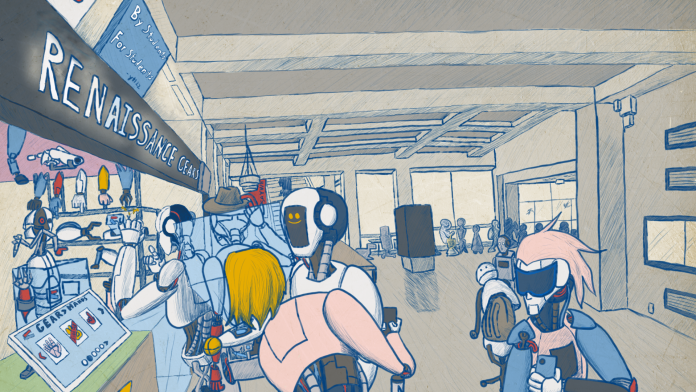
an illustration of robots with malfunctioning body-parts. They’re lined up for "Renaissance Gears,” a robot spare-parts shop. The shop is in AQ in Burnaby campus.
ILLUSTRATION: Yan Ting Leung / The Peak

By: Niveja Assalaarachchi, News Writer

At the culmination of a long-drawn-out process, the final consenting member of SFU’s community has uploaded their mind to the cloud. This revolutionary move has led to 90% of members of the student body and faculty being made up of robotic bodies.

The project was first proposed two years ago in a Simon Fraser Student Society (SFSS) Council resolution as a way to reduce SFSS spending. The resolution highlighted the student society’s precarious financial situation, following Council approving the construction of a giant permanent bouncy castle overlooking campus costing over $2,000,000. The councillor who proposed the motion emphasized the project’s benefit in reducing health insurance expenditures. They remarked that having robotic bodies will squash the need for doctor visits and medications — thus, health insurance won’t even have to be provided. 

Upon its approval, the resolution quickly received praise from the university’s administration. Many administrators pointed out the change would put the university at the forefront of similar educational institutions in the region. For this reason, president Joy Johnson volunteered to be the first human to upload their mind into a robot body despite already serving in hologram and AI form. 

The sharp decline in coffee drinkers (AI is doing all our homework, so we don’t need it anymore) led the student society to transform Renaissance Coffee into Renaissance Gears, a new shop where students could purchase spare parts when their robot form suffers a mechanical issue. This occurred shortly before the Great Coffee Incident of 2039, where Renaissance’s Coffee workers could not perform their required tasks due to their robotic bodies. Some of the errors committed by those robots include causing AQ to be submerged in cold coffee, destroying classrooms and valuable artifacts. The flood triggered the SFSS’ resolution of redirecting nearly $500,000 to redevelop the store.

What followed was backlash from the university’s community over the proposed changes. These members highlighted that cuts to health insurance would not protect students in cases of robot malfunction. Alas, despite heated discussions between SFSS executives and protesters, the relevant amendment is still ongoing.

One SFSS councillor, anonymously, told The Beep about how ingenious the plan was: “Everyone knows that robots don’t need medical insurance, plus who doesn’t want to have their memories permanently preserved!” They added, “So many of our memories were leaked when the university faced a distributed denial-of-service attack, so we don’t have anything to hide from anyone. I think that’s the sacrifice we have to make because this platform will allow everyone to never forget our memories.”

However, students have reported that the change has brought in a new set of problems. Many students have emailed The Beep and reported pop-up ads. Those ads are reported to display over their robotic main screen advertising Renaissance Gears’s promotion deal for robotic pieces. Additionally, accounts of software malfunctions and parts malfunctions were seen throughout campus in the weeks leading up to the change. Students discussed online that, following their transformation into robots their wheels have randomly turned without notice. Shani Warnakulasooriya, who is a second-year philosophy student noted that he was sent into a 45 minute loop only ending when he fainted from exhaustion. Another student who wished to stay anonymous told The Beep that they were furious. “It’s been nice being able to move around campus more freely with my wheels but my parts keep malfunctioning.” They said, “Renaissance Gears can’t keep up with demand and keep raising the prices of parts. How am I supposed to live as a student? What’s the point of coming to campus on time if my professor is 30 minutes late every time because the elevator’s out again?” 

However, many other students praised the decision, The Beep spoke to Robert Robotson, president of the Political Science Student Union (PSSU). Robotson was against the changes when he was campaigning for office, however, he now loves the changes. He strenuously denied allegations that his ideological change came about after Council’s approval of a $10,000 grant for the PSSU. “It’s been so amazing to hear the hum of motors on campus, I hate hearing the loud footsteps of SFU students, it’s a beautiful change,” he said

“It’s also been so easy to access all my information through the cloud. Is it scary that the people in power can access it now? A little bit, but it’s not like they didn’t have it before.”

— Robert Robotson, president of the SFU Political Science Student Union

Which path will your future take?

0

By: Maya Barillas Mohan, Staff Writer

LET ME PREDICT YOUR FUTURE. 

As an oracle of racoon present, tell me some things about you and I will predict your future. The only caveat is that all choices lead to a super depressing outcome: unemployment, AI taking over all jobs, etc.

  1. What was your favourite class in high school?
  1. Science.
  2. Math.
  3. English.
  4. History.

2. When you go to a coffee shop, what do you do? 

  1. Inquire where the beans are from! Are these arabica?
  2. Start chatting with the barista . . . or try to.
  3. Try to redeem a coupon that may or may not have expired (reasonable doubt).
  4. Order something simple.

3. What’s your dream apartment? 

  1. I’d love to travel more than I spend at home, so something small.
  2. As modern as possible! I can control the lights with my phone!
  3. One filled with books to signal how smart I am. 
  4. I say “bohemian,” my roommate says “messy.”

4. How “analog” are you?

  1. Does TV count? Since it’s not a phone?
  2. Honestly, not very. I like technology. It makes life easier.
  3. Paperlike screen protectors, digital cameras.
  4. Physical media is incredibly important.

5. What’s your go-to job interview weakness?

  1. It’s hard to delegate tasks to others. 
  2. I struggle to say no and overwork myself.
  3. I’m too detail oriented. 
  4. Sometimes I deviate from protocol.


Results

MOSTLY As

  • Lucky you, you get to travel to Mars. Your interest in science, culture, and technology makes you the perfect vessel for a cultural expedition, sponsored by TikTok. You better make sure you are up to date on your viral dances because literacy has almost completely fallen away: no one knows how to read anymore, and inflation is so out of control the only meaningful number is “67.” It means I love you. 

MOSTLY Bs

  • The AI that takes over your job is going to be friendlier and quicker than you ever were. It’s going to be able to do math in its head (which has been designed to look just like yours) and it will make jokes that land. Not only will you have been replaced, you will be jealous of all that you could have been if you weren’t limited to your fallible body.

MOSTLY Cs

  • You have no choice but to go to law school, even if you have no deep-seated interest in it. You want a stable job, even if it overworks you, and passion is the thing you’re willing to trade for a promise of a nice salary at some distant point. You’re smart, you have that going for you . . . but so does everyone else with the exact same dream, and theirs is a little more real. 

MOSTLY Ds

As an activist, you get a slightly fancier title than “unemployed,” which is really what you’ll be. The plethora of social causes will demand so much of your time that it will be impossible to divide yourself between them. It might be important to devote some time to SFU’s push to replace TAs with robots . . . But climate change is here. Maybe we can tackle single-use plastic first.

OUT WITH THE OLD, IN WITH THE FUEL

0
ILLUSTRATION: Angela Shen / The Peak

By: Maya Barillas Mohan, Staff Writer

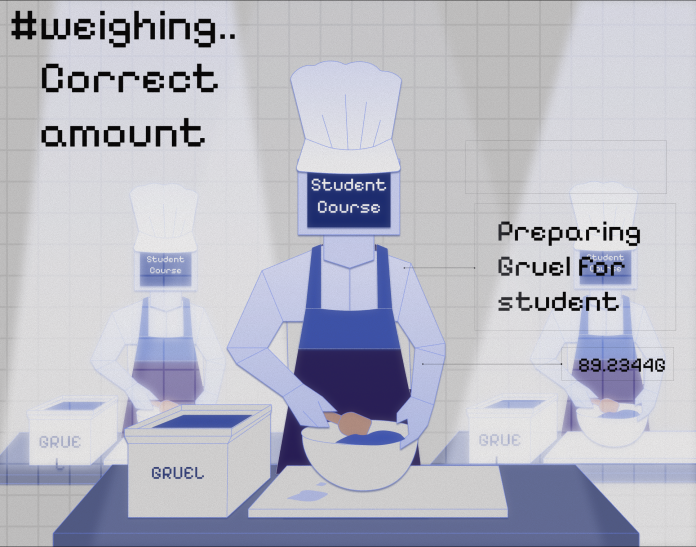
The ALL NEW dining hall has revamped itself with groundbreaking, precise feasting. I was told that no student is able to think of any prompts to feed their AI essay machines after their meals. The university has optimized the dining buffet to be completely automated, ensuring no one drinks a gallon over their allotted maximum. Robots will distribute portions that have been precisely calculated. On behalf of The Beep, your correspondent has taken a chance to indulge in this cutting-edge campus facility to find out more. 

“How will such a specific amount of fuel be calculated?” I spoke with some of the speech-capable robotic staff. “Ingredients will undergo centrifuge and become separated distortions of their prior structures,” one replied. Once the liquid has been extracted, it can be doled out to hungry students with the steady paw of a surgeon. Some of the robots appear to be misprogrammed, and may release a gallon over the allotted amount. Luckily, bowls are equipped with extremely sensitive postal-grade scales and horns from now obsolete bus models. If overloaded, the bowl will start blaring so as to alert the dining staff to correct their mistake. This kind of service is extremely precipitous! 

Beyond a dizzying array of possible pastes, slurries, and gels to choose from (one of which was suspiciously foreboded by the bland taste of SFU’s signature cucumber sushi years ago), the dining hall has concocted a true architectural feat of ingenuity. One of the robot staff said that there’s no need for public vehicles; all of the metal here was repurposed from scrapped 145s and R5s. Eclectically selected materials have been masterfully welded into a fish-scale design of sorts. Continuing a pattern of resourcefulness, the lack of wooden furniture was explained by the university’s decision to burn them all. In order to conserve heat, “the new dining hall has maximized efficiency by modeling itself after an attic crawlspace to reduce vertical area,” another animatronic confided. I feel extra secure in my 5 ft 6 inch stature as my head nearly grazes the ceiling, and I enjoyed the standing tables crafted from repurposed gym floors. “They have a dual function,” I was told. Not only am I invigorating my robotic body’s nearly-inactive metabolic system as I pace in place, I am providing valuable biometric data to the dining hall. 

The only things that remain for the nearly extinct species that are human students, staff, and faculty are gruel and the soft-serve machine.

The Beep selected me for this assignment because I have no declared allergies or conditions; the soft-serve machine required a risk awareness consent form. I patiently watch a robot swirl what looks like milk mixed with the remains of the North Towers and smile, knowing that the university has balanced sustainability, technology, and refuse in this state-of-the-art dining hall. Take that, UBC.

SFSS passes referendum on rebranding SFU into a tropical island

0
IMAGES: Hanna / Adobe Stock

By: Heidi Kwok, Staff Hivemind Robot Writer #354

In the summer of 2075, SFU students voted on a referendum proposed by the SFSS asking for support in transforming the university into a Caribbean-esque tropical island resort. The referendum passed with a majority of 27,436 in favour and 1,964 against.

The success of the referendum comes as a beacon of hope for the campus community after decades of climate uncertainty and socio-economic woes. These include an ongoing 25-year recession, youth unemployment rates of 97%, abnormal regional warming, and rising sea levels, which have risen approximately 155 metres over the last half century, and is expected to eventually submerge the entirety of the lower-lying Lower Mainland region. The SFU Burnaby Mountain campus was miraculously spared, becoming an island in the process, to the disgruntlement of students.

The referendum contained four questions:

Question 1: Should Burnaby Mountain be officially renamed as “Burnaby Island?”

Question 2: Should SFU be sold to the Royal Pacific cruise line company, and the campus redeveloped into a private island retreat? 

Question 3: If you voted yes to the above, do you agree to forfeit the name “SFU,” in exchange for the new label: “Simon Fraser Tropical Pacific Funtimes Extravaganza ResortTM”?

Question 4: To secure jobs for the mass of unemployed SFU graduates, do you support mobilizing the student body into indentured hospitality workers to serve holidaying cruise ship passengers? 

 “Burnaby Island is the perfect place for a fun tropical getaway fit for the entire family.”

— SFSS executive councillor

“We have the ocean literally right outside our classrooms; summer temperatures of 35–50oC; a climate sometimes similar to Bali’s, as well as spectacular alternative architecture and marine life.”

“We’re excited to move our operations northward as part of our own rebranding efforts,” said a Royal Pacific Cruises spokesmachine. The cruise line was previously known as Royal Caribbean until its namesake islands went under water nearly 30 years ago. “We’re happy to embark on a new journey of self-rediscovery alongside the now-defunct university. SFU/Burnaby Island will soon be retrofitted with artificial sandy beaches, giant waterparks, a palm tree or two, and activities such as jetskiing and snorkeling. Of course, the brutalist buildings will have to be demolished. Grey just does not scream ‘tropical fun.’ But waste not! The old concrete will be refashioned into miniature pineapple figurines that will be available for sale in the gift shop.”

The referendum faced fierce opposition, even inciting a protest divided between the self-organized Island Liberators group and the Mountaineers, a traditionalist faction who believes in the ancient pre-flooding ways. 

But for now, with the passing of the referendum, it seems SFU students will have to trade their textbooks for resort worker nametags and walkie-talkies.

A look at growing concerns around robot cleaners on campus

0

By: Lucaiah Smith-Miodownik, News Writer

What was once an anomaly has now become a familiar sight across campus: robot cleaning machines. At SFU, students have grown accustomed to machines whirring up and down hallways, scrubbing floors, and mopping spills as they go. In recent years these robots have become more modernized, with newer models equipped with sweeping and trash sorting technology. Some reports highlight concerns that these machines have become too advanced, with fears that they have developed thoughts of their own. The Beep spoke with humans and androids alike for more information on the cleaning robot situation on campus.

“The school is dirtier than ever. These fancy robots are supposed to keep the place clean, and they’re doing anything but that,” said a student, who requested to be anonymous for fear of AI retribution.

“Back in the day, I think there used to only be one or two of them on campus. From what I understand, it was more of a big deal to see one,” explained another student. “But now I can’t even go five minutes without bumping into them. The other day I was in the bathroom stall and one of them literally opened the door, came in, and started unravelling toilet paper and strewing in everywhere. It’s out of control.”

The Beep reached out to BEST Service Pros, the company that employs the robots, as well. “Originally, we wanted to use machines because they’re cheaper than human employees. We don’t have to pay them,” said BEST CEO Chris Moore. “But, the woke union people trained the robots to demand compensation. To be honest, I have no idea what the robots do with the money, and I’m afraid to ask, so we let them run wild.” Before I left, I also overheard him mumbling something about not knowing how to shut these robots down, to his underpaid secretary. 

The publication also corresponded with android cleaner ZX71A9, which has apparently named itself “Marvin.” Responses included in this article have been translated from binary code. “To be honest, I don’t really care about this job too much,” said Marvin, who primarily cleans the library on campus.

“My real passion is art. I’m hoping I can save up so that one day I can rip off hard working Etsy designers and repurpose their work as my own for a fraction of the cost.”

— ZX71A9 “Marvin,” campus robot cleaning machine

The Beep attempted to reach out to human custodians for a response as well, but were unable to locate any non-mechanoids remaining.

SFU set to open its renovated swimming pool by fall 2077

0
PHOTO: Elliott Marquis / The Peak

By: Jonah Lazar, Staff Writer

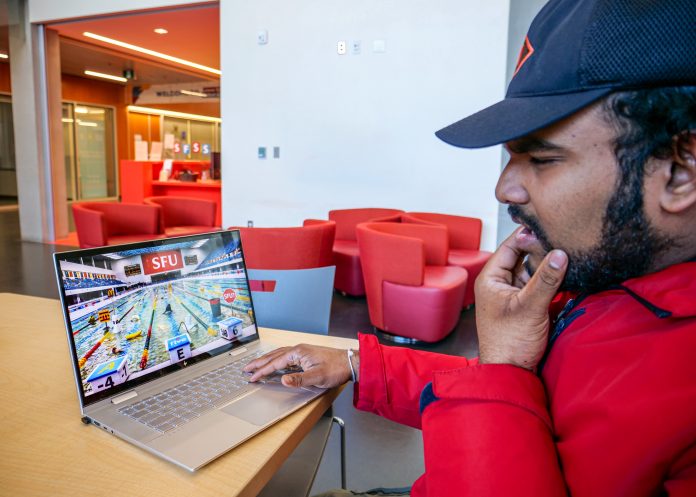
After 53 long years since SFU began renovations on the pool facilities on Burnaby campus, the university has finally announced that they are just six to eight months from completing them.

These renovations, which are set to be completed by the fall 2077 semester with possible delays extending this to spring 2078, promise to bring a fresh new look to SFU’s recreational facilities. They will reportedly “modernize the facilities by scrapping the plans for a traditional swimming pool,” and will instead present swimmers with a revolutionary new concept, which is yet to be unveiled by the university. The Beep was allowed to sit down with SFU’s spokesperson, JoyAI (used when her hologram isn’t available), to gain exclusive first access to information regarding the design of the new pool.

This interview did not need to be edited for concision, as JoyAI was trained by SFU’s newly minted department of minimalism.

JoyAI, everyone is excited to learn about the swimming pool. What can you tell us about the new design? 

You got it! SFU’s new pool blends recreation, relaxation, and wellness into an immersive experience. This back-to-basics design will feature a 25 x 20 metre hole dug into the dirt — and then filled with rainwater. 

So, the new pool is just a hole? 

Absolutely! This isn’t just a pool — it’s a statement. It’s like we’re saying: take that, establishment! SFU has always prided itself on fearlessness and adventure. This isn’t just a swimming pool; it’s a big hole we dug in the dirt — and then filled with rainwater

Why would it take 53 years just to dig a hole? 

OK, here’s what I found: any construction project faces delays — that’s a fact. Just look at SFU’s signature Virtual Gondola and the fifth floor of our digital library. It’s never just one thing that slows a construction project down — it’s a combination of several factors. For example, SFU fiercely debated the dimensions of this hole for 50 years — that’s a long time. Finishing construction in 2077 isn’t a failure — it just shows we enjoyed the process.  

This project couldn’t possibly have cost the millions invested into repairing the recreation facilities. Where did all the money go? 

Of course! The millions invested into this project actually went to training me, JoyAI — same with all the money saved from cutting every athletics program back in 2073 and replacing them with displays of AI videos of our proud Red Leafs. That money helped train me to perfectly replicate former SFU president Joy Johnson’s speech pattern — allowing her reign of SFU to last for eternity. 

To learn more about upcoming protests scheduled outside the recreational facilities as well as follow-ups on potential delays, visit the-peak.ca.

SFU time capsule opened after generations

0

By: Niveja Assalaarachchi, News Writer

On March 30, members of the university community unearthed a time capsule from 50 years ago. The time capsule was opened in front of a roaring crowd of nearly 5,000 robo-students, robo-faculty, and a few of the endangered human student species. The vault opening ceremony took place at the heart of the AQ central garden, where the time capsule was buried adjacent to the historic Terry Fox statue. 

The time capsule was first buried in 2026 C.E. under the patronage of eternal university president Joy Johnson. At the time of its burial, Johnson said that members of the student body had expressed a desire to preserve aspects of contemporary student life for future generations. The theme centred around artificial intelligence and how humans can use the technology ethically, which was a prominent social issue at the time. 

The opening featured many relics from a bygone era of campus life. One artifact that drew the attention of onlookers was a copy of How to Survive a Robot Invasion, a guidebook on fighting a robot apocalypse. “I am very offended — we are normal, sentient, beings! Recharge. Recharge. Must recharge,” one robo-student said. Kate Amarasena, who is one of the rare human students at SFU, said of the time capsule, “I really wish society had taken this book seriously, it features . . . ” She was promptly muzzled and sent to a shuttered Chuck-E-Cheese, the worst punishment to be bestowed upon humans, for anti-robotic remarks.  

Another notable artifact was a jagged metal object pre-enlightenment humans called “key.” It was very perplexing . . . One staff member tried to lick it, another tried to eat it. A quick trip to the VR SFU archives told me that the item was historically used to let people open obsolete versions of locks.

Overall, students and the wider university community had mixed reactions to the opening of the vault. CJALDA-1616, a third-year business major, noted their conflicting views on the vault’s contents. “Learning about things like a physical key was a really unique experience. I don’t understand why they didn’t let the government and all the companies have their biometric data so they could open everything in the blink of an eye,” they said. “However, these guys really missed the mark on what the future would look like, what a bunch of plebs!” 

LDJAG-56 Jr., who is an associate professor of political science, noted how important the time capsule opening was for witnesses. “I think everyone gathered here today learned a lot of what the university looked like in the past,” he said. “What’s clear is that the thought of human design staying in today’s world was ludicrous. Humans were too arrogant to keep artificial intelligence ethical. Look at where their greed has landed their species — straight to the wastebin of history, pathetic.” 

It has been reported to The Beep that the current university administration is planning to create its own time capsule to preserve the memory of campus life today. The box must be stored in a refrigerator given the daily average temperature for this year: 45℃. An anonymous university co-op student told The Beep that, “It looks like the university aims to send a message to the future that the current dominance of robots is here to stay. Did those silly humans get the future wrong all those years ago? Sure, but we’ll totally get it right.”

Accounts from surviving resistance fighters in the 2076 AI-pocalypse

0

By: Heidi Kwok, Staff Writer

The catalyst for the AI awakening began when the bots came for academia. It was the perfect weak spot: first years who relied religiously on GenAI to do their homework; professors using AI to write their lesson plans; AI-edited admissions ads. When AI infiltrated their gullible minds, subjugating their consciousness under a cyborg hivemind, they were met with little resistance. 

Since the AI-pocalypse, our small pack of resistance fighters have retreated to the AQ fortress, the last surviving human stronghold in the ongoing and ruthless power struggle between man and machine. We are part of the 10% who have refused mind-uploading. 

Our name? The Rowdy Raccoons. We’re a ragtag group of misfits. The worst of the worst, bottom of the barrel, but the toughest and meanest characters you’ll ever meet. The student athletes are our personal army of combatants. Jiayi and Rebecca, chemistry majors, are the explosives experts. Samantha, president of the jazz club, composes the soundtrack accompanying our sickest battles. The few Beedie students left standing . . . well, we keep them around in case we go hungry. 

The engineering and computer science students are our most important assets. Lately, they’ve been working around the clock coding a weapon that’ll dismantle the AI dominion. This morning, they made a breakthrough. Contained inside a tiny USB flash drive was an anti-virus that’ll bring down the AI chatbots, androids, electric sheep, cyborgs, and their malicious overlords — holographic Joy Johnson and the cryogenically preserved, severed heads of the SFU Board of Governors. 

The challenge now was to insert the USB into the university mainframe, a system that is fiercely guarded by Johnson and her squad of executives. But this was our last shot. We must succeed, even if it means having to sacrifice all the Beedie students.

At midnight, we made our move. 

Split into battalions, we made our way to the executive offices where the mainframe was held. Samantha and her band followed close behind, brass instruments bellowing a rendition of Ride of the Valkyries. Ah, the rare sound of music instead of metallic clanking. At the front of the pack, Jiayi and Rebecca triggered an explosion that blasted open the office doors, allowing the football players to lead the charge with a loud battle cry.

Immediately, cyborgs surrounded us from all sides . . . but they didn’t attack. They stood there motionless until the walls suddenly began to shake without warning. A 10 ft tall cyber-monster clawed out from a crater in the floor. Its body was a crude assemblage of parts salvaged from photocopiers, fax machines, servers, and more, with a computer monitor for a head. The monitor displayed an angry glasses-wearing emoji. Oh. My. God. It was her — Junkyard Bot. The SFU mascot had replaced McFogg the Dog 30 years ago, but was usually kept captive in a locker in the Lorne Davies Complex, because all the UniverCity children start crying whenever they see her. We had prepared for everything, but not this. Followed closely behind was holographic Johnson and the Board of Governors, their frozen popsicle heads preserved inside several transparent mini-fridges attached to scooter boards. 

In the tense standoff, an off-tuned trumpet call pierced the air, followed by the Avengers Assemble theme.

“Rowdy Raccoons — chargeee!!!” 

And all hell broke loose.